Advancements in Automation
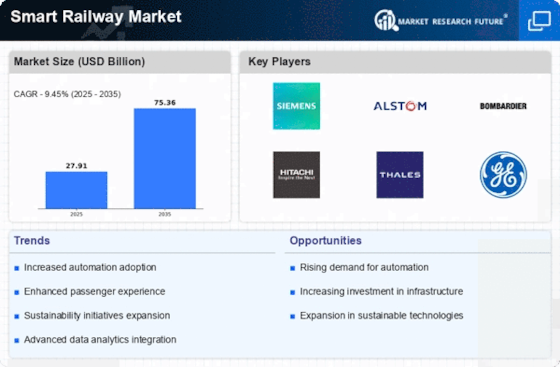
The Smart Railway Market is experiencing a notable shift towards automation, which enhances operational efficiency and safety. Automated systems, including signaling and train control, reduce human error and improve response times. According to recent data, the implementation of automated systems can lead to a 30% reduction in operational costs. This trend is driven by the need for more reliable and efficient rail services, as well as the increasing demand for real-time data analytics. As rail operators seek to modernize their fleets, the integration of automated technologies is likely to become a cornerstone of the Smart Railway Market, potentially transforming traditional rail operations into highly efficient networks.
Enhanced Passenger Experience
The Smart Railway Market is increasingly focused on improving the passenger experience through technology. Innovations such as Wi-Fi connectivity, mobile applications for ticketing, and real-time information systems are becoming standard features. Research suggests that enhancing passenger experience can lead to a 20% increase in ridership. Rail operators are recognizing that a positive travel experience is essential for attracting and retaining customers. As competition among transport modes intensifies, the Smart Railway Market is likely to prioritize passenger-centric solutions, thereby fostering loyalty and increasing overall usage of rail services.
Integration of Big Data Analytics
The Smart Railway Market is witnessing a surge in the use of big data analytics to optimize operations and enhance decision-making. By analyzing vast amounts of data from various sources, rail operators can predict maintenance needs, improve scheduling, and enhance safety measures. Current estimates suggest that the application of big data in rail operations can lead to a 25% increase in efficiency. This trend is indicative of a broader shift towards data-driven strategies within the Smart Railway Market, where leveraging analytics is becoming essential for maintaining competitiveness and ensuring operational excellence.
Government Support and Policy Initiatives
Government support plays a crucial role in the development of the Smart Railway Market. Various countries are implementing policies that promote investment in rail infrastructure and technology. For instance, funding for smart rail projects has seen a significant increase, with some regions allocating over 15% of their transportation budgets to rail modernization. This support not only facilitates the adoption of advanced technologies but also encourages public-private partnerships. As governments recognize the importance of sustainable transport solutions, the Smart Railway Market is likely to thrive, driven by favorable regulatory environments and financial backing.
Rising Demand for Urban Mobility Solutions
Urbanization continues to accelerate, leading to a pressing need for efficient public transportation systems. The Smart Railway Market is poised to benefit from this trend, as cities seek to alleviate congestion and reduce carbon footprints. Data indicates that urban rail systems can reduce travel times by up to 50% compared to road transport. This demand for urban mobility solutions is prompting investments in smart rail technologies, such as real-time tracking and integrated ticketing systems. As urban populations grow, the Smart Railway Market is likely to expand, providing innovative solutions that cater to the evolving needs of urban commuters.