×
Request Free Sample ×

Kindly complete the form below to receive a free sample of this Report

* Please use a valid business email

Leading companies partner with us for data-driven Insights

clients tt-cursor
Hero Background

Mitral Valve Stenosis Market

ID: MRFR/MED/5098-HCR
100 Pages
Kinjoll Dey
October 2025

Mitral Valve Stenosis Market Research Report Information By Diagnostic Test (Electrocardiogram, Transthoracic Echocardiogram, Cardiac Catheterization), by Treatment (Medication, Procedure), by End User (Hospital, Diagnostic Centers) - Forecast till 2035

Share:
Download PDF ×

We do not share your information with anyone. However, we may send you emails based on your report interest from time to time. You may contact us at any time to opt-out.

Mitral Valve Stenosis Market Infographic
×
Mitral Valve Stenosis Market Infographic Full View
Purchase Options

Mitral Valve Stenosis Market Summary

As per MRFR analysis, the Mitral Valve Stenosis Market Size was estimated at 2728.44 USD Million in 2024. The Mitral Valve Stenosis industry is projected to grow from 2996.81 USD Million in 2025 to 6852.39 USD Million by 2035, exhibiting a compound annual growth rate (CAGR) of 8.69 during the forecast period 2025 - 2035.

Key Market Trends & Highlights

The Mitral Valve Stenosis Market is poised for growth driven by technological advancements and increasing patient awareness.

  • Technological advancements in treatment are reshaping the Mitral Valve Stenosis Market, particularly in North America.
  • Increased patient awareness is contributing to a higher demand for interventions in the Rheumatic Mitral Valve Stenosis segment, which remains the largest.
  • The Asia-Pacific region is emerging as the fastest-growing market, driven by rising healthcare investments and improved access to treatments.
  • Rising incidence of Mitral Valve Stenosis and advancements in surgical techniques are key drivers propelling market expansion.

Market Size & Forecast

2024 Market Size 2728.44 (USD Million)
2035 Market Size 6852.39 (USD Million)
CAGR (2025 - 2035) 8.69%

Major Players

Abbott (US), Medtronic (US), Boston Scientific (US), Edwards Lifesciences (US), Janssen Pharmaceuticals (US), Bayer (DE), Stryker (US), Terumo Corporation (JP), LivaNova (GB)

Mitral Valve Stenosis Market Trends

The Mitral Valve Stenosis Market is currently experiencing notable developments driven by advancements in medical technology and an increasing understanding of cardiovascular diseases. The growing prevalence of mitral valve stenosis, often linked to rheumatic fever and age-related degeneration, has led to heightened awareness among healthcare professionals and patients alike. This awareness is fostering a demand for innovative treatment options, including minimally invasive surgical techniques and advanced imaging technologies. Furthermore, the integration of telemedicine and digital health solutions is transforming patient management, allowing for more personalized care and improved outcomes. In addition, the Mitral Valve Stenosis Market is influenced by ongoing research and clinical trials aimed at enhancing therapeutic strategies. Pharmaceutical companies are exploring novel drug therapies that target the underlying causes of mitral valve stenosis, potentially offering new avenues for treatment. The collaboration between healthcare providers, researchers, and technology firms is likely to accelerate the development of effective solutions. As the market evolves, stakeholders must remain vigilant to emerging trends and adapt their strategies accordingly to meet the changing needs of patients and healthcare systems.

Technological Advancements in Treatment

The Mitral Valve Stenosis Market is witnessing a surge in technological innovations, particularly in the realm of minimally invasive procedures. These advancements are enhancing surgical outcomes and reducing recovery times, thereby appealing to both patients and healthcare providers. The introduction of novel devices and techniques is likely to reshape treatment paradigms.

Increased Patient Awareness

There is a growing awareness among patients regarding mitral valve stenosis and its implications. This heightened consciousness is driving individuals to seek medical advice sooner, which may lead to earlier diagnosis and intervention. Consequently, healthcare systems are adapting to accommodate this influx of patients.

Focus on Personalized Medicine

The Mitral Valve Stenosis Market is gradually shifting towards personalized medicine, where treatment plans are tailored to individual patient profiles. This approach is supported by advancements in genetic research and biomarker identification, which could enhance the efficacy of therapies and improve patient outcomes.

Mitral Valve Stenosis Market Drivers

Market Growth Projections

The Global Mitral Valve Stenosis Market Industry is projected to experience substantial growth over the coming years. With a market value of 0.73 USD Billion anticipated in 2024, the industry is on track to reach an estimated 5.37 USD Billion by 2035. This growth trajectory indicates a compound annual growth rate of 19.92% from 2025 to 2035. Such projections highlight the increasing demand for effective treatment options and the ongoing advancements in medical technology. As the market evolves, stakeholders are likely to explore new opportunities for innovation and collaboration, further driving the industry's expansion.

Advancements in Medical Technology

Technological advancements play a crucial role in shaping the Global Mitral Valve Stenosis Market Industry. Innovations in minimally invasive surgical techniques and catheter-based interventions have transformed treatment approaches, leading to improved patient outcomes. For instance, transcatheter mitral valve repair and replacement procedures are gaining traction, offering alternatives to traditional open-heart surgery. These advancements not only enhance the safety and efficacy of treatments but also contribute to the market's growth. As the industry adapts to these technological changes, the market is poised for significant expansion, with a projected compound annual growth rate of 19.92% from 2025 to 2035.

Increasing Awareness and Screening

The Global Mitral Valve Stenosis Market Industry benefits from heightened awareness and screening initiatives aimed at early detection of heart conditions. Public health campaigns and educational programs are instrumental in informing both healthcare providers and patients about the symptoms and risks associated with mitral valve stenosis. This increased awareness leads to earlier diagnosis and timely intervention, which is critical for improving patient outcomes. As more individuals undergo screening, the demand for treatment options is likely to rise, further propelling market growth. The proactive approach to managing heart health is expected to have a lasting impact on the industry.

Rising Prevalence of Mitral Valve Stenosis

The Global Mitral Valve Stenosis Market Industry is experiencing growth due to the increasing prevalence of mitral valve stenosis, particularly among the aging population. As individuals age, the risk of developing heart conditions, including mitral valve stenosis, escalates. Current estimates suggest that by 2024, the market value will reach approximately 0.73 USD Billion, reflecting the urgent need for effective treatment options. This trend is expected to continue, with projections indicating a market value of 5.37 USD Billion by 2035. The growing number of patients requiring intervention drives innovation and investment in medical technologies, thereby enhancing the overall market landscape.

Regulatory Support for Innovative Therapies

Regulatory bodies are increasingly supportive of innovative therapies within the Global Mitral Valve Stenosis Market Industry. Streamlined approval processes for new devices and treatments encourage manufacturers to invest in research and development. This regulatory environment fosters innovation, enabling the introduction of cutting-edge solutions that address unmet medical needs. As a result, the market is expected to expand significantly, with a projected value of 5.37 USD Billion by 2035. The collaboration between regulatory agencies and industry stakeholders is crucial for ensuring that patients benefit from the latest advancements in mitral valve stenosis treatment.

Growing Investment in Healthcare Infrastructure

Investment in healthcare infrastructure is a driving force behind the Global Mitral Valve Stenosis Market Industry. Governments and private entities are increasingly allocating resources to enhance healthcare facilities and improve access to advanced cardiac care. This trend is particularly evident in developing regions, where the establishment of specialized cardiac centers is on the rise. Enhanced infrastructure facilitates better diagnosis, treatment, and follow-up care for patients with mitral valve stenosis. As healthcare systems evolve, the market is likely to witness substantial growth, supported by improved patient access to innovative therapies and interventions.

Market Segment Insights

By Type of Mitral Valve Stenosis: Rheumatic Mitral Valve Stenosis (Largest) vs. Congenital Mitral Valve Stenosis (Fastest-Growing)

In the Mitral Valve Stenosis Market, Rheumatic Mitral Valve Stenosis holds the largest market share, primarily due to its prevalence in developing regions where rheumatic fever is more common. This condition often leads to chronic heart issues requiring surgical intervention, significantly contributing to its market dominance. In contrast, Congenital Mitral Valve Stenosis is emerging as the fastest-growing segment, attributed to advancements in prenatal diagnostics and increased awareness of congenital heart defects. As early detection becomes more feasible, this segment is poised for significant growth, as more patients receive timely interventions.

Rheumatic Mitral Valve Stenosis (Dominant) vs. Congenital Mitral Valve Stenosis (Emerging)

Rheumatic Mitral Valve Stenosis is characterized by its chronic nature, often resulting from rheumatic fever, and is prevalent among older adults in developing countries. This segment's dominance reflects an ongoing need for surgical treatments and valve replacements to alleviate symptoms and improve quality of life. Conversely, Congenital Mitral Valve Stenosis, which arises from developmental issues in utero, is increasingly recognized as a significant health concern. With a rising incidence due to better detection methods and healthcare access, this emerging segment is gaining traction, emphasizing the importance of early treatment options and continuous monitoring.

By Diagnosis Method: Echocardiography (Largest) vs. Cardiac Catheterization (Fastest-Growing)

In the Mitral Valve Stenosis Market, echocardiography holds the largest share as a preferred diagnosis method due to its non-invasive nature and ability to provide detailed heart imaging. This method is widely adopted in clinical practices, leading to its dominance. In contrast, cardiac catheterization, while traditionally more invasive, is gaining traction as it offers precise diagnostic insights and allows for potential therapeutic interventions, thus showing rapid growth in recent years. The growth trends in the diagnosis methods segment are significantly influenced by technological advancements and increasing awareness about mitral valve diseases. Healthcare providers are increasingly investing in advanced diagnostic tools, driving the shift toward cardiac catheterization for its accuracy. Additionally, rising incidences of heart-related disorders and the emphasis on preventive care propel the adoption of multiple diagnostic techniques, including electrocardiograms and chest X-rays, as supplementary tools in patient assessment.

Diagnosis Methods: Echocardiography (Dominant) vs. Cardiac Catheterization (Emerging)

Echocardiography remains the dominant diagnostic tool in the Mitral Valve Stenosis Market due to its ability to provide real-time imaging without the risks associated with invasive procedures. It allows for comprehensive evaluations of the heart's structure and function, making it indispensable in initial assessments. On the other hand, cardiac catheterization, while entering the market as an emerging method, offers unmatched accuracy and the possibility of immediate therapeutic interventions. This method is increasingly favored for its diagnostic precision. As healthcare evolves, the combination of these technologies enhances diagnostic pathways, ensuring effective management of mitral valve stenosis.

By Treatment Approach: Surgical Intervention (Largest) vs. Transcatheter Mitral Valve Replacement (Fastest-Growing)

In the Mitral Valve Stenosis market, the treatment approaches exhibit a diversified market share distribution. Surgical intervention remains the largest segment, leveraging its established practices and methodologies effective in treating severe cases. Following this, Transcatheter Mitral Valve Replacement is gaining traction among healthcare providers, contributing to a notable share as patients and physicians seek less invasive options. Meanwhile, Percutaneous Mitral Balloon Valvotomy, while recognized, has a more niche appeal, often preferred in specific patient demographics. Medications, though vital, represent a supportive role rather than a primary treatment option, indicating a clear preference for surgical and interventional methods among clinicians. Currently, growth trends in the Mitral Valve Stenosis treatment segment are driven by the increasing elderly population and heightened awareness of treatment options. Patients are progressively opting for less invasive alternatives, fueling the uptake of Transcatheter Mitral Valve Replacement, which is becoming a go-to option due to its favorable outcomes and minimal recovery time. Additionally, advancements in technology and techniques are catalyzing the expansion of surgical interventions, while ongoing research into medications continues to enhance patient management, suggesting a balanced yet progressively shifting landscape in treatment preferences.

Surgical Intervention: Dominant vs. Transcatheter Mitral Valve Replacement: Emerging

Surgical intervention is the dominant approach in the Mitral Valve Stenosis market, characterized by its comprehensive methodologies such as mitral valve repair and replacement. This approach is well-established among healthcare providers and reinforces its position as the preferred method for severe cases. The experience of surgeons and historical success rates play a crucial role in patient confidence. On the other hand, Transcatheter Mitral Valve Replacement is emerging rapidly, standing out for its innovative and minimally invasive technique. This option is particularly attractive to patients with high surgical risks, propelled by a growing body of evidence demonstrating its safety and effectiveness. As these two treatment approaches evolve, their interplay will shape the future decisions made by practitioners and the management of Mitral Valve Stenosis.

By Patient Demographics: Age Group (Largest) vs. Gender (Fastest-Growing)

In the Mitral Valve Stenosis Market, the distribution of patient demographics plays a crucial role. The largest age group affected tends to be older adults, particularly those over 70, representing a significant portion of the patient population. Conversely, gender differences indicate that females are increasingly being diagnosed, contributing to a notable shift in market dynamics. This demographic analysis reveals key trends shaping treatment approaches and market strategies.

Age Group: 70+ (Dominant) vs. Gender: Female (Emerging)

The age group of patients over 70 years dominates the Mitral Valve Stenosis Market due to the natural increase in prevalence associated with aging. This group faces various health challenges, making early detection and treatment crucial. On the other hand, the female demographic is emerging as a critical focus area, reflecting a growing awareness and diagnosis rate among women. Factors such as lifestyle changes, increased healthcare access, and awareness are contributing to this trend, indicating a shift in how the market addresses the needs of these specific patient populations.

Get more detailed insights about Mitral Valve Stenosis Market

Regional Insights

North America : Market Leader in Innovation

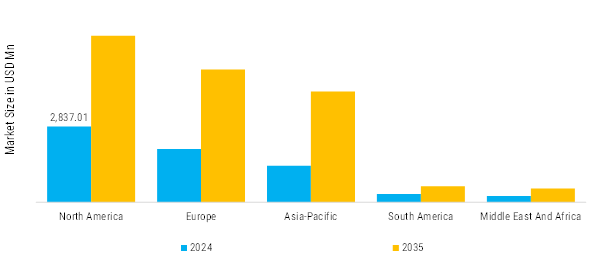
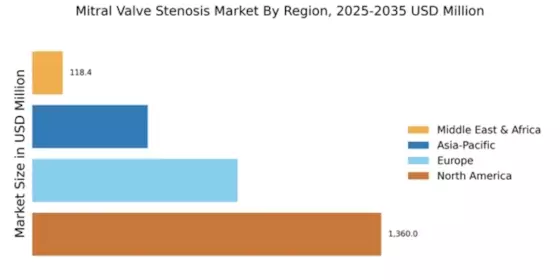
North America is poised to maintain its leadership in the Mitral Valve Stenosis market, holding a significant market size of $1360.0M in 2025. The region benefits from advanced healthcare infrastructure, high prevalence of cardiovascular diseases, and increasing awareness about treatment options. Regulatory support from agencies like the FDA further catalyzes market growth, ensuring rapid approval of innovative therapies and devices. The competitive landscape is robust, with key players such as Abbott, Medtronic, and Boston Scientific leading the charge. The U.S. is the primary market, driven by a high demand for minimally invasive procedures and advanced surgical techniques. The presence of major manufacturers and ongoing clinical trials for new therapies are expected to enhance market dynamics, solidifying North America's position as a hub for Mitral Valve Stenosis treatment.

Europe : Emerging Market with Potential

Europe's Mitral Valve Stenosis market is projected to reach $800.0M by 2025, driven by an aging population and increasing incidence of heart diseases. Regulatory frameworks in countries like Germany and France are evolving to support innovative treatment options, enhancing patient access to advanced therapies. The region's focus on improving healthcare outcomes and reducing hospital stays is also a significant growth driver. Leading countries include Germany, France, and the UK, where key players like Bayer and Edwards Lifesciences are actively involved. The competitive landscape is characterized by a mix of established companies and emerging startups, fostering innovation. Collaborative efforts between healthcare providers and manufacturers are expected to enhance the availability of cutting-edge solutions, positioning Europe as a vital player in the Mitral Valve Stenosis market.

Asia-Pacific : Rapidly Growing Healthcare Sector

The Asia-Pacific Mitral Valve Stenosis market is estimated at $450.0M in 2025, reflecting a growing demand for cardiovascular treatments. Factors such as rising disposable incomes, increasing healthcare expenditure, and a surge in lifestyle-related diseases are propelling market growth. Additionally, government initiatives aimed at improving healthcare infrastructure are expected to further stimulate demand for advanced medical devices and therapies. Countries like Japan, China, and India are leading the charge, with a notable presence of key players such as Terumo Corporation. The competitive landscape is evolving, with both multinational corporations and local manufacturers vying for market share. The region's focus on enhancing healthcare access and affordability is likely to create significant opportunities for growth in the Mitral Valve Stenosis market.

Middle East and Africa : Untapped Market Potential

The Middle East and Africa (MEA) Mitral Valve Stenosis market is valued at $118.44M in 2025, with significant growth potential driven by increasing awareness of cardiovascular diseases and improving healthcare infrastructure. The region is witnessing a rise in healthcare investments, which is expected to enhance access to advanced medical technologies and treatment options. Regulatory bodies are also beginning to streamline approval processes for innovative therapies, further supporting market growth. Leading countries in the MEA region include South Africa and the UAE, where there is a growing presence of international players. The competitive landscape is characterized by a mix of established companies and emerging local firms. As healthcare systems evolve, the demand for effective Mitral Valve Stenosis treatments is anticipated to rise, presenting opportunities for market expansion.

Mitral Valve Stenosis Market Regional Image

Key Players and Competitive Insights

The Mitral Valve Stenosis Market is characterized by a competitive landscape that is increasingly shaped by innovation, strategic partnerships, and regional expansions. Key players such as Abbott (US), Medtronic (US), and Edwards Lifesciences (US) are at the forefront, leveraging their technological expertise and market presence to drive growth. Abbott (US) focuses on enhancing its product portfolio through continuous innovation, particularly in minimally invasive solutions, which aligns with the growing demand for less invasive surgical options. Meanwhile, Medtronic (US) emphasizes strategic acquisitions to bolster its capabilities in cardiac therapies, thereby enhancing its competitive positioning. Edwards Lifesciences (US) is also notable for its commitment to research and development, particularly in transcatheter heart valve technologies, which positions it favorably in a market that increasingly values advanced therapeutic options.The business tactics employed by these companies reflect a concerted effort to optimize supply chains and localize manufacturing, which is crucial in a moderately fragmented market. This competitive structure allows for a diverse range of products and services, catering to varying patient needs and preferences. The collective influence of these key players not only shapes market dynamics but also drives innovation and efficiency across the sector.

In October Abbott (US) announced the launch of its latest transcatheter mitral valve replacement system, which is designed to improve patient outcomes through enhanced delivery mechanisms. This strategic move is significant as it underscores Abbott's commitment to innovation and positions the company to capture a larger share of the growing market for minimally invasive cardiac procedures. The introduction of this technology is likely to enhance patient recovery times and reduce hospital stays, aligning with current healthcare trends that prioritize patient-centric solutions.

In November Medtronic (US) completed the acquisition of a leading digital health company specializing in remote patient monitoring for cardiac patients. This acquisition is pivotal as it integrates advanced digital solutions into Medtronic's existing product offerings, potentially transforming patient management in mitral valve stenosis. By leveraging digital health technologies, Medtronic aims to enhance patient engagement and adherence to treatment protocols, which could lead to improved clinical outcomes and operational efficiencies.

In December Edwards Lifesciences (US) announced a strategic partnership with a prominent research institution to advance the development of next-generation mitral valve therapies. This collaboration is indicative of the company's focus on innovation through research, which is essential in a rapidly evolving market. By aligning with academic expertise, Edwards Lifesciences is likely to accelerate the development of novel therapies that could redefine treatment paradigms in mitral valve stenosis.

As of December the competitive trends in the Mitral Valve Stenosis Market are increasingly defined by digitalization, sustainability, and the integration of artificial intelligence (AI) in product development and patient management. Strategic alliances are becoming more prevalent, fostering innovation and enhancing the capabilities of key players. The shift from price-based competition to a focus on technological advancement and supply chain reliability is evident, suggesting that future competitive differentiation will hinge on the ability to innovate and deliver superior patient outcomes.

Key Companies in the Mitral Valve Stenosis Market include

Industry Developments

Medtronic, a medical device company based in both the United States and Ireland, recently recruited the first patient in its Expand TAVR II pivotal trial. Expand TAVR II will test the self-expanding, supra-annular Evolut transcatheter aortic valve replacement (TAVR) platform in patients with mild, symptomatic aortic stenosis (AS), a population not currently included in TAVR guidelines or criteria. It will enroll up to 650 patients at up to 100 global sites, with an objective to evaluate the safety and efficacy of Evolut TAVR over a ten-year period.

Medtronic and GE Healthcare have established a partnership to address the specific needs and demand for care in ambulatory surgery centers (ASCs) and office-based laboratories (OBLs). Customers will have access to a diverse product selection, financial solutions, and great service as a result of this new partnership. The partnership intends to improve efficiency, workflow, and clinical results for GE Healthcare's ASCs and OBLs.

Intended Audience

    • Pharmaceutical Companies
    • Medical Device Manufacturers
    • Research and Development (R&D) Companies
    • Diagnostic Laboratories
    • Government Research Institute
    • Academic Institutes and Universities

Future Outlook

Mitral Valve Stenosis Market Future Outlook

The Mitral Valve Stenosis Market is projected to grow at an 8.69% CAGR from 2024 to 2035, driven by technological advancements, increasing prevalence, and enhanced treatment options.

New opportunities lie in:

  • Development of minimally invasive surgical techniques for valve repair.
  • Expansion of telemedicine platforms for remote patient monitoring.
  • Investment in AI-driven diagnostic tools for early detection.

By 2035, the Mitral Valve Stenosis Market is expected to achieve substantial growth and innovation.

Market Segmentation

Mitral Valve Stenosis Market Diagnosis Method Outlook

  • Echocardiography
  • Cardiac Catheterization
  • Electrocardiogram
  • Chest X-ray

Mitral Valve Stenosis Market Treatment Approach Outlook

  • Surgical Intervention
  • Percutaneous Mitral Balloon Valvotomy
  • Medications
  • Transcatheter Mitral Valve Replacement

Mitral Valve Stenosis Market Patient Demographics Outlook

  • Age Group
  • Gender
  • Comorbidities
  • Socioeconomic Status

Mitral Valve Stenosis Market Type of Mitral Valve Stenosis Outlook

  • Rheumatic Mitral Valve Stenosis
  • Congenital Mitral Valve Stenosis
  • Degenerative Mitral Valve Stenosis
  • Functional Mitral Valve Stenosis

Report Scope

MARKET SIZE 20242728.44(USD Million)
MARKET SIZE 20252996.81(USD Million)
MARKET SIZE 20356852.39(USD Million)
COMPOUND ANNUAL GROWTH RATE (CAGR)8.69% (2025 - 2035)
REPORT COVERAGERevenue Forecast, Competitive Landscape, Growth Factors, and Trends
BASE YEAR2024
Market Forecast Period2025 - 2035
Historical Data2019 - 2024
Market Forecast UnitsUSD Million
Key Companies ProfiledAbbott (US), Medtronic (US), Boston Scientific (US), Edwards Lifesciences (US), Janssen Pharmaceuticals (US), Bayer (DE), Stryker (US), Terumo Corporation (JP), LivaNova (GB)
Segments CoveredType of Mitral Valve Stenosis, Diagnosis Method, Treatment Approach, Patient Demographics
Key Market OpportunitiesAdvancements in minimally invasive surgical techniques enhance treatment options in the Mitral Valve Stenosis Market.
Key Market DynamicsRising demand for minimally invasive procedures drives innovation in Mitral Valve Stenosis treatment technologies and solutions.
Countries CoveredNorth America, Europe, APAC, South America, MEA

Market Highlights

Author
Kinjoll Dey
Research Analyst Level I

He is an extremely curious individual currently working in Healthcare and Medical Devices Domain. Kinjoll is comfortably versed in data centric research backed by healthcare educational background. He leverages extensive data mining and analytics tools such as Primary and Secondary Research, Statistical Analysis, Machine Learning, Data Modelling. His key role also involves Technical Sales Support, Client Interaction and Project management within the Healthcare team. Lastly, he showcases extensive affinity towards learning new skills and remain fascinated in implementing them.

Leave a Comment

FAQs

What would drive the mitral valve stenosis market?

Rheumatic diseases are the main reason behind mitral valve stenosis market.

What would prevent the mitral valve stenosis market growth?

Government regulations regarding product approval and high-cost procedures can prevent mitral valve stenosis market growth.

Which region would dominate the global mitral valve stenosis market?

North America would dominate mitral valve stenosis market.

Which region would be the fastest-growing mitral valve stenosis market?

Asia Pacific would be the fastest-growing region in mitral valve stenosis market.

Which treatment segment would dominate the mitral valve stenosis market?

The procedure segment would lead the mitral valve stenosis market.

Download Free Sample

Kindly complete the form below to receive a free sample of this Report

Compare Licence

×
Features License Type
Single User Multiuser License Enterprise User
Price $4,950 $5,950 $7,250
Maximum User Access Limit 1 User Upto 10 Users Unrestricted Access Throughout the Organization
Free Customization
Direct Access to Analyst
Deliverable Format
Platform Access
Discount on Next Purchase 10% 15% 15%
Printable Versions