×
Hero Background
English
Chinese
French
Japanese
Korean
German
Spanish

Population Health Management Market Size

ID: MRFR/HS/2250-HCR
200 Pages
Rahul Gotadki
October 2025

The Population health management market Size was valued at USD 68.4 billion in 2021 and is projected to grow from USD 81.5 billion in 2022 to USD 396.13 billion by 2032, exhibiting a compound annual growth rate (CAGR) of 19.2% during the forecast period (2023 - 2032).

Share:
Download PDF ×

We do not share your information with anyone. However, we may send you emails based on your report interest from time to time. You may contact us at any time to opt-out.

Population Health Management Market Infographic
Purchase Options

Population Health Management Size

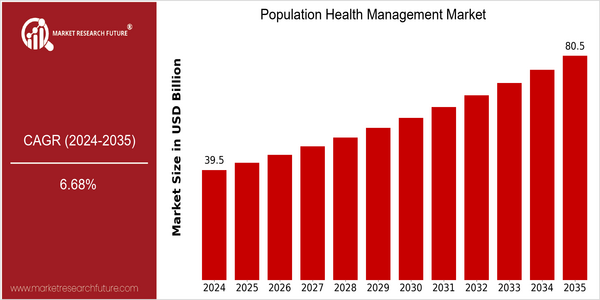
Market Size Snapshot

Year Value
2024 USD 39.52 Billion
2035 USD 80.5 Billion
CAGR (2025-2035) 6.68 %

Note – Market size depicts the revenue generated over the financial year

The population health management (PHM) market is poised to grow at a substantial rate. In 2024, it is estimated to be worth $39.52 billion, and it is expected to be worth $80.5 billion by 2035. This growth is based on a CAGR of 6.68% between 2025 and 2035. The growing emphasis on value-based care, combined with the rising prevalence of chronic diseases, is pushing health care organizations to adopt PHM solutions that can optimize the cost of care while improving outcomes. Further, advancements in data analytics, artificial intelligence, and telehealth are enabling more effective population health strategies, enabling health care organizations to better manage patient populations and improve care delivery. The leading companies in the PHM market, such as Cerner, Allscripts, and IBM Watson Health, are launching new products and entering strategic partnerships to expand their offerings and market share. Recent collaborations between these companies and other technology companies are expected to drive market growth and improve care delivery.
home-ubuntu-www-mrf_ne_design-batch-5-cp-population-health-management-market size

Regional Market Size

Regional Deep Dive

The population health management market is experiencing significant growth across regions, driven by the growing emphasis on value-based care, advancements in health care technology, and the need to improve patient outcomes. North America is characterized by a strong health care system and high penetration of digital health solutions. Europe is seeing a shift toward more integrated care models, while the Asia-Pacific region is rapidly expanding due to increasing health care spending and a rapidly aging population. Middle East and Africa are focused on improving access to and the quality of health care, while Latin America is leveraging technology to improve health data management and patient engagement.

Europe

  • The European Union's Digital Health Initiative aims to standardize health data across member states, facilitating better population health management and interoperability among healthcare systems.
  • Organizations such as NHS England are pioneering integrated care systems that focus on population health management, emphasizing preventive care and chronic disease management.

Asia Pacific

  • Countries like Japan and Australia are increasingly adopting telehealth solutions as part of their population health management strategies, driven by the need to address aging populations and chronic diseases.
  • The Indian government has launched the Ayushman Bharat scheme, which aims to provide comprehensive health coverage and improve health outcomes through effective population health management initiatives.

Latin America

  • Brazil's Ministry of Health is promoting the use of digital health technologies to enhance population health management, particularly in remote and underserved areas.
  • Mexico is seeing a rise in partnerships between public and private sectors to develop innovative population health management solutions, addressing the challenges of chronic diseases and healthcare access.

North America

  • The U.S. government has implemented the Medicare Access and CHIP Reauthorization Act (MACRA), which incentivizes healthcare providers to adopt population health management strategies, thereby driving market growth.
  • Key players like Cerner Corporation and Optum are investing heavily in AI and data analytics to enhance their population health management solutions, leading to improved patient outcomes and operational efficiencies.

Middle East And Africa

  • The UAE's Ministry of Health and Prevention is implementing a national health strategy that emphasizes population health management to improve healthcare delivery and patient outcomes.
  • In South Africa, the National Health Insurance (NHI) initiative is focused on enhancing access to healthcare services, which is expected to drive the adoption of population health management practices.

Did You Know?

“Approximately 80% of healthcare costs in the U.S. are attributed to chronic diseases, highlighting the critical need for effective population health management strategies.” — Centers for Disease Control and Prevention (CDC)

Segmental Market Size

The population health management market plays a crucial role in enhancing the health outcomes of a group of people. This market is currently experiencing a positive growth, mainly driven by the growing demand for individualized health care, the emergence of value-based care and the technological advancements in data analysis and telehealth solutions. The shift towards preventive care models and the need for improved chronic disease management are also expected to play a key role in the growth of the population health management market. At present, population health management solutions are being widely adopted by the leading companies in the United States and Europe. These solutions are mainly used for risk stratification, care management and patient engagement, especially in the management of chronic disease populations. In the recent past, the emergence of the CoViD-19 epidemic has also accelerated the adoption of digital health solutions. In addition, government mandates for interoperability and data sharing are also expected to drive the growth of this market. Artificial intelligence, machine learning and cloud-based platforms are playing a crucial role in the evolution of population health management strategies, enabling health care organizations to deliver more effective and efficient care.

Future Outlook

The population health management market is expected to grow at a CAGR of 6.77% from 2024 to 2035. This growth is based on the growing trend of value-based care, which encourages health care professionals to focus on patient outcomes rather than the number of services they provide. PHM solutions are expected to grow as the health care system moves toward more integrated care models. PHM solutions are expected to reach a penetration rate of over 60% in major health care markets by 2035, driven by the need to improve patient engagement and chronic disease management. In addition, technological innovations, such as the integration of artificial intelligence and big data, are expected to change the way health care professionals analyze population health data. These innovations will lead to more precise risk stratification and more personalized care plans, which will increase the effectiveness of the intervention. Also, government initiatives to promote health equity and reduce health disparities will further stimulate market growth. Telehealth and remote patient monitoring will also play an important role in the success of population health management. In addition, the development of population health management will help the health care system to meet the changing needs of different populations.

Population Health Management Market Size Graph
Author
Rahul Gotadki
Assistant Manager

He holds an experience of about 7+ years in Market Research and Business Consulting, working under the spectrum of Life Sciences and Healthcare domains. Rahul conceptualizes and implements a scalable business strategy and provides strategic leadership to the clients. His expertise lies in market estimation, competitive intelligence, pipeline analysis, customer assessment, etc. In addition to the above, his other responsibility includes strategic tracking of high growth markets & advising clients on the potential areas of focus they could direct their business initiatives

Leave a Comment

FAQs

What is the current valuation of the Population Health Management Market?

The Population Health Management Market was valued at 39.52 USD Billion in 2024.

What is the projected market size for the Population Health Management Market by 2035?

The market is projected to reach 80.49 USD Billion by 2035.

What is the expected CAGR for the Population Health Management Market from 2025 to 2035?

The expected CAGR during the forecast period 2025 - 2035 is 6.68%.

Which companies are considered key players in the Population Health Management Market?

Key players include Optum, Cerner, Epic Systems, Allscripts, IBM Watson Health, McKesson, Philips Healthcare, Medtronic, and Cognizant.

What are the main components of the Population Health Management Market?

The main components are software, services, and hardware, with software valued between 15.0 and 30.0 USD Billion.

How is the Population Health Management Market segmented by deployment mode?

The market is segmented into on-premise, cloud-based, and hybrid deployment modes, with on-premise valued between 15.0 and 30.0 USD Billion.

What are the primary end users of Population Health Management solutions?

Primary end users include healthcare providers, payers, employers, and government, with healthcare providers valued between 15.0 and 30.0 USD Billion.

Market Summary

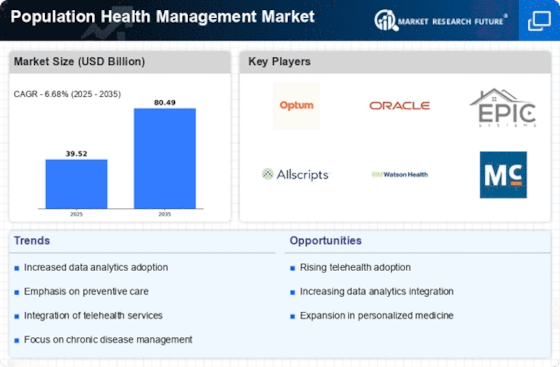
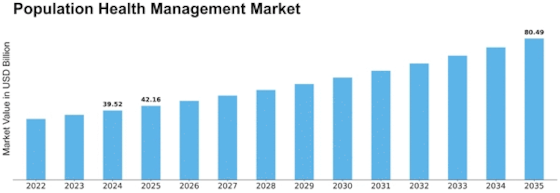
As per MRFR analysis, the Population Health Management Market Size was estimated at 39.52 USD Billion in 2024. The Population Health Management industry is projected to grow from 42.16 USD Billion in 2025 to 80.49 USD Billion by 2035, exhibiting a compound annual growth rate (CAGR) of 6.68 during the forecast period 2025 - 2035.

Key Market Trends & Highlights

The Population Health Management Market is experiencing robust growth driven by technological advancements and a shift towards value-based care.

  • The integration of advanced technologies is reshaping the Population Health Management Market landscape, particularly in North America. A growing emphasis on value-based care is influencing healthcare strategies across the Asia-Pacific region. Addressing social determinants of health is becoming increasingly critical in both software and services segments. Rising demand for preventive care and increased healthcare expenditure are key drivers propelling market expansion.

Market Size & Forecast

2024 Market Size 39.52 (USD Billion)
2035 Market Size 80.49 (USD Billion)
CAGR (2025 - 2035) 6.68%
Largest Regional Market Share in 2024 North America

Major Players

<p><a href="https://www.optum.co.uk/population-health.html">Optum</a> (US), Cerner (US), Epic Systems (US), Allscripts (US), IBM Watson Health (US), McKesson (US), Philips Healthcare (NL), Medtronic (US), <a href="https://www.cognizant.com/us/en/industries/healthcare-technology-solutions/trizetto/duals">Cognizant (</a>US)</p>

Market Trends

The Population Health Management Market is currently experiencing a transformative phase, driven by the increasing emphasis on value-based care and the integration of advanced technologies. Healthcare providers are increasingly adopting data analytics and digital health solutions to enhance patient outcomes and streamline operations. This shift towards a more proactive approach in managing population health appears to be influenced by the growing recognition of the importance of preventive care and chronic disease management. As stakeholders seek to improve care coordination and reduce healthcare costs, the demand for innovative Population Health Management Market solutions is likely to rise. Moreover, the market seems to be evolving in response to changing regulatory landscapes and the need for improved health equity. Organizations are focusing on addressing social determinants of health, which may lead to more tailored interventions and community-based initiatives. The integration of artificial intelligence and machine learning into Population Health Management Market strategies could further enhance predictive analytics capabilities, allowing for more effective identification of at-risk populations. Overall, the Population Health Management Market is poised for growth as it adapts to the dynamic healthcare environment and strives to meet the diverse needs of populations worldwide.

Integration of Advanced Technologies

The Population Health Management Market is witnessing a notable trend towards the incorporation of advanced technologies, such as artificial intelligence and machine learning. These innovations facilitate enhanced data analytics, enabling healthcare providers to identify at-risk populations more effectively and tailor interventions accordingly.

Focus on Value-Based Care

There is a growing emphasis on value-based care within the Population Health Management Market. This approach prioritizes patient outcomes over service volume, encouraging healthcare organizations to adopt strategies that improve care quality while managing costs.

Addressing Social Determinants of Health

The market is increasingly recognizing the importance of social determinants of health in shaping health outcomes. Organizations are focusing on community-based initiatives and tailored interventions to address these factors, thereby promoting health equity and improving overall population health.

Population Health Management Market Market Drivers

Growing Focus on Health Equity

The growing focus on health equity is emerging as a crucial driver in the Population Health Management Market. There is an increasing recognition of the disparities in health outcomes among different population groups, prompting healthcare organizations to address social determinants of health. Initiatives aimed at promoting health equity are gaining traction, as stakeholders seek to ensure that all individuals have access to quality healthcare services. This focus is likely to lead to the development of targeted population health management programs that address the unique needs of underserved communities. By prioritizing health equity, organizations can improve overall population health and reduce healthcare disparities. This trend is expected to shape the future of the population health management market, as equity-driven strategies become integral to healthcare delivery.

Increased Healthcare Expenditure

Healthcare expenditure continues to rise, which significantly influences the Population Health Management Market. According to recent data, healthcare spending is expected to surpass USD 10 trillion by 2025, driven by the need for improved health services and management of chronic diseases. This increase in spending is likely to facilitate the adoption of advanced population health management solutions, as healthcare providers seek to optimize resource allocation and enhance patient care. Furthermore, the focus on managing chronic conditions, which account for a substantial portion of healthcare costs, is prompting organizations to invest in population health initiatives. By leveraging data analytics and technology, healthcare systems can better understand patient needs and improve health outcomes, thereby justifying the rising expenditures in the sector.

Rising Demand for Preventive Care

The increasing emphasis on preventive care is a pivotal driver in the Population Health Management Market. As healthcare systems shift from reactive to proactive approaches, there is a growing recognition of the importance of managing population health to prevent diseases before they occur. This shift is evidenced by the rising investments in preventive health programs, which are projected to reach USD 200 billion by 2026. Such investments are likely to enhance the capabilities of healthcare providers to monitor and manage health outcomes effectively. Consequently, organizations are adopting population health management strategies to identify at-risk populations and implement targeted interventions, thereby improving overall health outcomes and reducing healthcare costs. This trend underscores the critical role of population health management in fostering a healthier society.

Regulatory Support for Value-Based Care

Regulatory frameworks increasingly support value-based care models, which serve as a significant driver for the Population Health Management Market. Governments and health organizations are implementing policies that incentivize healthcare providers to focus on patient outcomes rather than service volume. This shift is evident in various reimbursement models that reward providers for improving population health metrics. As a result, healthcare organizations are adopting population health management strategies to align with these regulatory changes. The integration of value-based care principles is expected to enhance care coordination and patient engagement, ultimately leading to better health outcomes. This regulatory support is likely to accelerate the growth of the population health management market as stakeholders seek to comply with evolving standards.

Technological Advancements in Data Analytics

Technological advancements in data analytics are transforming the Population Health Management Market. The ability to collect, analyze, and interpret vast amounts of health data is becoming increasingly sophisticated, enabling healthcare providers to identify trends and patterns in population health. Innovations such as artificial intelligence and machine learning are enhancing predictive analytics capabilities, allowing organizations to anticipate health issues before they escalate. This trend is reflected in the projected growth of the health analytics market, which is expected to reach USD 50 billion by 2027. As healthcare providers harness these technologies, they can implement more effective population health management strategies, leading to improved patient outcomes and reduced costs. The integration of advanced analytics into population health initiatives is likely to be a game-changer in the industry.

Market Segment Insights

By Component: Software (Largest) vs. Services (Fastest-Growing)

<p>In the Population Health Management Market, the component segment is primarily dominated by software solutions, accounting for a significant share. Software implements various data analytics and management tools that are essential for effective population health programs. Meanwhile, services, encompassing consulting and support, have emerged as a substantial force in the marketplace, showing rapid growth as organizations increasingly seek expertise to effectively implement these systems.</p>

<p>Software (Dominant) vs. Services (Emerging)</p>

<p>Software solutions lead the Population Health Management Market due to their critical role in data analytics and patient management. These tools facilitate improved decision-making, population stratification, and engagement strategies, catering to healthcare providers' needs. Conversely, services are witnessing a surge in demand as organizations realize the need for specialized guidance and support. This offers tailored implementations, training, and ongoing support, positioning them as an emerging component that complements software solutions in driving effective population health initiatives.</p>

By Deployment Mode: Cloud-Based (Largest) vs. Hybrid (Fastest-Growing)

<p>In the Population Health Management Market, the deployment mode segment is primarily driven by the adoption of cloud-based solutions, which currently hold the largest market share. Organizations prefer cloud-based models for their flexibility, scalability, and cost-effectiveness, enabling them to manage population health data more efficiently. On-premise deployment, while stable, is gradually losing traction due to high capital expenditure and maintenance costs associated with scaling operations.</p>

<p>On-Premise (Dominant) vs. Cloud-Based (Emerging)</p>

<p>The on-premise deployment mode has been a dominant player in the Population Health Management Market, primarily appealing to organizations that prioritize data security and control. These models require significant upfront investment and ongoing IT support but offer robust customization capabilities. Cloud-based solutions, however, are emerging rapidly, appealing to a broader range of healthcare providers due to their lower entry costs and enhanced collaborative features. As technology evolves, the hybrid model is gaining traction, combining the strengths of both deployment types, allowing healthcare organizations to balance control and flexibility efficiently.</p>

By End User: Healthcare Providers (Largest) vs. Payers (Fastest-Growing)

<p>In the Population Health Management Market, Healthcare Providers represent the largest share, as they are at the forefront of patient care and health outcomes. This segment encompasses hospitals, clinics, and various healthcare organizations that prioritize patient engagement and data management. On the other hand, Payers are rapidly increasing their share due to growing demand for cost-effective health management solutions that emphasize preventive care and data analytics.</p>

<p>Healthcare Providers (Dominant) vs. Payers (Emerging)</p>

<p>Healthcare Providers are integral to the Population Health Management Market, leading in terms of implementation and usage of health management strategies. They leverage technology to enhance patient care, improve population health outcomes, and optimize operational efficiencies. Their strong focus on patient-centered care and the increasing use of data analytics place them in a dominant market position. Conversely, Payers are emerging rapidly by adopting population health management approaches that align with value-based care. They focus on managing costs and improving health outcomes for their covered populations, making them essential players in this evolving landscape.</p>

By Application: Chronic Disease Management (Largest) vs. Population Health Analytics (Fastest-Growing)

<p>In the Population Health Management Market, the application segment is primarily dominated by Chronic Disease Management, which captures the largest share among the various applications. This reflects a strong focus on managing ongoing health conditions such as diabetes and hypertension, where targeted interventions can significantly improve patient outcomes. Following this, Population Health Analytics is rapidly gaining traction due to its increasing importance in providing actionable insights for improving health system efficiency and patient care.</p>

<p>Chronic Disease Management (Dominant) vs. Population Health Analytics (Emerging)</p>

<p>Chronic Disease Management plays a crucial role in the Population Health Management Market by helping healthcare providers deliver tailored treatment plans that focus on long-term patient engagement and care adherence. It comprises various strategies that support patients with chronic conditions through monitoring, education, and necessary interventions. In contrast, Population Health Analytics serves as an emerging segment that leverages data to identify trends and patterns across populations. This application uses advanced analytics to enhance decision-making processes, thus facilitating improved medical outcomes and operational efficiencies within health systems.</p>

Get more detailed insights about Population Health Management Market Research Report -Forecast To 2035

Regional Insights

North America : Healthcare Innovation Leader

North America is the largest market for Population Health Management Market, holding approximately 45% of the global share. The region's growth is driven by advanced healthcare infrastructure, increasing adoption of digital health technologies, and supportive government regulations. The demand for integrated care solutions and value-based care models further propels market expansion, with the U.S. being the primary contributor, followed by Canada with around 10% market share. The competitive landscape in North America is robust, featuring key players such as Optum, Cerner, and Epic Systems. These companies leverage advanced analytics and AI to enhance patient outcomes and streamline operations. The presence of major healthcare systems and a focus on improving population health metrics create a fertile ground for innovation and investment in this sector.

Europe : Emerging Market Dynamics

Europe is witnessing significant growth in the Population Health Management Market, accounting for approximately 30% of the global share. The region benefits from increasing healthcare expenditures, a rising aging population, and a shift towards preventive care. Regulatory frameworks, such as the European Health Data Space, are catalyzing the adoption of health management solutions, with countries like Germany and the UK leading the charge, holding around 12% and 8% market shares respectively. Leading countries in Europe are investing heavily in digital health initiatives, with key players like Philips Healthcare and Cerner expanding their footprints. The competitive landscape is characterized by collaborations between technology firms and healthcare providers, aiming to enhance patient engagement and data interoperability. This synergy is crucial for addressing the complex healthcare needs of the population.

Asia-Pacific : Rapidly Growing Healthcare Sector

Asia-Pacific is rapidly emerging as a significant player in the Population Health Management Market, holding about 20% of the global share. The region's growth is fueled by increasing investments in healthcare infrastructure, a rising prevalence of chronic diseases, and government initiatives aimed at improving healthcare access. Countries like China and India are at the forefront, with China accounting for approximately 12% of the market share, driven by its vast population and healthcare reforms. The competitive landscape in Asia-Pacific is evolving, with local and international players vying for market share. Companies like IBM Watson Health and Medtronic are expanding their operations in the region, focusing on tailored solutions that address specific health challenges. The emphasis on digital health technologies and data analytics is reshaping the healthcare landscape, making it a dynamic market for population health management solutions.

Middle East and Africa : Untapped Market Potential

The Middle East and Africa region is gradually emerging in the Population Health Management Market, currently holding about 5% of the global share. The growth is driven by increasing healthcare investments, a rising burden of chronic diseases, and government initiatives aimed at enhancing healthcare delivery. Countries like South Africa and the UAE are leading the market, with South Africa holding approximately 3% of the share, supported by ongoing healthcare reforms and investments in digital health technologies. The competitive landscape in this region is characterized by a mix of local and international players, with companies like Cognizant and Philips Healthcare making significant inroads. The focus on improving healthcare access and quality is driving demand for innovative health management solutions. As the region continues to develop its healthcare infrastructure, opportunities for growth in population health management are expected to expand significantly.

Key Players and Competitive Insights

The Population Health Management Market is currently characterized by a dynamic competitive landscape, driven by the increasing emphasis on value-based care and the integration of advanced technologies. Key players such as Optum (US), Cerner (US), and IBM Watson Health (US) are strategically positioning themselves through innovation and partnerships. Optum (US) focuses on leveraging data analytics to enhance patient outcomes, while Cerner (US) emphasizes interoperability and the seamless exchange of health information. IBM Watson Health (US) is investing heavily in artificial intelligence to provide actionable insights for healthcare providers, thereby shaping a competitive environment that prioritizes technological advancement and patient-centric solutions.

In terms of business tactics, companies are increasingly localizing their operations and optimizing supply chains to enhance efficiency and responsiveness. The Population Health Management Market appears moderately fragmented, with a mix of established players and emerging startups. The collective influence of these key players is significant, as they drive innovation and set industry standards, thereby shaping the overall market structure.

In August 2025, Optum (US) announced a strategic partnership with a leading telehealth provider to expand its digital health offerings. This move is likely to enhance Optum's capabilities in remote patient monitoring and telemedicine, aligning with the growing demand for accessible healthcare solutions. By integrating telehealth services, Optum aims to improve patient engagement and outcomes, reinforcing its position as a leader in the market.

In September 2025, Cerner (US) launched a new cloud-based platform designed to facilitate real-time data sharing among healthcare providers. This initiative is significant as it addresses the critical need for interoperability in healthcare systems. By enabling seamless data exchange, Cerner is likely to enhance care coordination and improve patient outcomes, thereby solidifying its competitive edge in the Population Health Management Market.

In October 2025, IBM Watson Health (US) unveiled an AI-driven analytics tool aimed at predicting patient health risks. This development is crucial as it empowers healthcare providers to proactively manage patient care and allocate resources more effectively. The integration of AI into population health management strategies may lead to improved health outcomes and reduced costs, positioning IBM Watson Health as a frontrunner in the application of advanced technologies in healthcare.

As of October 2025, the most prominent trends shaping competition in the Population Health Management Market include digitalization, sustainability, and the integration of artificial intelligence. Strategic alliances among key players are increasingly defining the landscape, as companies seek to enhance their technological capabilities and expand their service offerings. Looking ahead, competitive differentiation is expected to evolve from traditional price-based competition to a focus on innovation, technology integration, and supply chain reliability, reflecting the industry's shift towards value-based care.

Key Companies in the Population Health Management Market market include

Industry Developments

  • Q2 2024: Lichfield District Council partners with Impera Analytics Ltd to enhance population health management In May 2024, Lichfield District Council in Staffordshire, England, announced a collaboration with Impera Analytics Ltd to implement advanced data analytics for improved population health management and resource allocation.

Future Outlook

Population Health Management Market Future Outlook

<p>The Population Health Management Market is projected to grow at a 6.68% CAGR from 2024 to 2035, driven by technological advancements, increasing chronic diseases, and a focus on value-based care.</p>

New opportunities lie in:

  • <p>Integration of AI-driven analytics for predictive health insights.</p><p>Development of personalized health management applications.</p><p>Expansion of <a href="https://www.marketresearchfuture.com/reports/telehealth-market-900">telehealth</a> services to enhance patient engagement.</p>

<p>By 2035, the market is expected to be robust, driven by innovation and strategic partnerships.</p>

Market Segmentation

Population Health Management Market End User Outlook

  • Healthcare Providers
  • Payers
  • Employers
  • Government

Population Health Management Market Component Outlook

  • Software
  • Services
  • Hardware

Population Health Management Market Application Outlook

  • Chronic Disease Management
  • Population Health Analytics
  • Healthcare Coordination

Population Health Management Market Deployment Mode Outlook

  • On-Premise
  • Cloud-Based
  • Hybrid

Report Scope

MARKET SIZE 202439.52(USD Billion)
MARKET SIZE 202542.16(USD Billion)
MARKET SIZE 203580.49(USD Billion)
COMPOUND ANNUAL GROWTH RATE (CAGR)6.68% (2024 - 2035)
REPORT COVERAGERevenue Forecast, Competitive Landscape, Growth Factors, and Trends
BASE YEAR2024
Market Forecast Period2025 - 2035
Historical Data2019 - 2024
Market Forecast UnitsUSD Billion
Key Companies ProfiledMarket analysis in progress
Segments CoveredMarket segmentation analysis in progress
Key Market OpportunitiesIntegration of advanced analytics and artificial intelligence enhances patient engagement in the Population Health Management Market.
Key Market DynamicsRising demand for data analytics tools drives innovation in Population Health Management solutions and enhances patient outcomes.
Countries CoveredNorth America, Europe, APAC, South America, MEA

FAQs

What is the current valuation of the Population Health Management Market?

The Population Health Management Market was valued at 39.52 USD Billion in 2024.

What is the projected market size for the Population Health Management Market by 2035?

The market is projected to reach 80.49 USD Billion by 2035.

What is the expected CAGR for the Population Health Management Market from 2025 to 2035?

The expected CAGR during the forecast period 2025 - 2035 is 6.68%.

Which companies are considered key players in the Population Health Management Market?

Key players include Optum, Cerner, Epic Systems, Allscripts, IBM Watson Health, McKesson, Philips Healthcare, Medtronic, and Cognizant.

What are the main components of the Population Health Management Market?

The main components are software, services, and hardware, with software valued between 15.0 and 30.0 USD Billion.

How is the Population Health Management Market segmented by deployment mode?

The market is segmented into on-premise, cloud-based, and hybrid deployment modes, with on-premise valued between 15.0 and 30.0 USD Billion.

What are the primary end users of Population Health Management solutions?

Primary end users include healthcare providers, payers, employers, and government, with healthcare providers valued between 15.0 and 30.0 USD Billion.

  1. SECTION I: EXECUTIVE SUMMARY AND KEY HIGHLIGHTS
    1. EXECUTIVE SUMMARY
      1. Market Overview
      2. Key Findings
      3. Market Segmentation
      4. Competitive Landscape
      5. Challenges and Opportunities
      6. Future Outlook 2 SECTION II: SCOPING, METHODOLOGY AND MARKET STRUCTURE
    2. MARKET INTRODUCTION
      1. Definition
      2. Scope of the study
    3. RESEARCH METHODOLOGY
      1. Overview
      2. Data Mining
      3. Secondary Research
      4. Primary Research
      5. Forecasting Model
      6. Market Size Estimation
      7. Data Triangulation
      8. Validation 3 SECTION III: QUALITATIVE ANALYSIS
    4. MARKET DYNAMICS
      1. Overview
      2. Drivers
      3. Restraints
      4. Opportunities
    5. MARKET FACTOR ANALYSIS
      1. Value chain Analysis
      2. Porter's Five Forces Analysis
      3. COVID-19 Impact Analysis
    6. Healthcare, BY Component (USD Billion)
      1. Software
      2. Services
      3. Hardware
    7. Healthcare, BY Deployment Mode (USD Billion)
      1. On-Premise
      2. Cloud-Based
      3. Hybrid
    8. Healthcare, BY End User (USD Billion)
      1. Healthcare Providers
      2. Payers
      3. Employers
      4. Government
    9. Healthcare, BY Application (USD Billion)
      1. Chronic Disease Management
      2. Population Health Analytics
      3. Healthcare Coordination
    10. Healthcare, BY Region (USD Billion)
      1. North America
      2. Europe
      3. APAC
      4. South America
      5. MEA
    11. Competitive Landscape
      1. Overview
      2. Competitive Analysis
      3. Market share Analysis
      4. Major Growth Strategy in the Healthcare
      5. Competitive Benchmarking
      6. Leading Players in Terms of Number of Developments in the Healthcare
      7. Key developments and growth strategies
      8. Major Players Financial Matrix
    12. Company Profiles
      1. Optum (US)
      2. Cerner (US)
      3. Epic Systems (US)
      4. Allscripts (US)
      5. IBM Watson Health (US)
      6. McKesson (US)
      7. Philips Healthcare (NL)
      8. Medtronic (US)
      9. Cognizant (US)
    13. Appendix
      1. References
      2. Related Reports 6 LIST OF FIGURES
    14. MARKET SYNOPSIS
    15. NORTH AMERICA MARKET ANALYSIS
    16. US MARKET ANALYSIS BY COMPONENT
    17. US MARKET ANALYSIS BY DEPLOYMENT MODE
    18. US MARKET ANALYSIS BY END USER
    19. US MARKET ANALYSIS BY APPLICATION
    20. CANADA MARKET ANALYSIS BY COMPONENT
    21. CANADA MARKET ANALYSIS BY DEPLOYMENT MODE
    22. CANADA MARKET ANALYSIS BY END USER
    23. CANADA MARKET ANALYSIS BY APPLICATION
    24. EUROPE MARKET ANALYSIS
    25. GERMANY MARKET ANALYSIS BY COMPONENT
    26. GERMANY MARKET ANALYSIS BY DEPLOYMENT MODE
    27. GERMANY MARKET ANALYSIS BY END USER
    28. GERMANY MARKET ANALYSIS BY APPLICATION
    29. UK MARKET ANALYSIS BY COMPONENT
    30. UK MARKET ANALYSIS BY DEPLOYMENT MODE
    31. UK MARKET ANALYSIS BY END USER
    32. UK MARKET ANALYSIS BY APPLICATION
    33. FRANCE MARKET ANALYSIS BY COMPONENT
    34. FRANCE MARKET ANALYSIS BY DEPLOYMENT MODE
    35. FRANCE MARKET ANALYSIS BY END USER
    36. FRANCE MARKET ANALYSIS BY APPLICATION
    37. RUSSIA MARKET ANALYSIS BY COMPONENT
    38. RUSSIA MARKET ANALYSIS BY DEPLOYMENT MODE
    39. RUSSIA MARKET ANALYSIS BY END USER
    40. RUSSIA MARKET ANALYSIS BY APPLICATION
    41. ITALY MARKET ANALYSIS BY COMPONENT
    42. ITALY MARKET ANALYSIS BY DEPLOYMENT MODE
    43. ITALY MARKET ANALYSIS BY END USER
    44. ITALY MARKET ANALYSIS BY APPLICATION
    45. SPAIN MARKET ANALYSIS BY COMPONENT
    46. SPAIN MARKET ANALYSIS BY DEPLOYMENT MODE
    47. SPAIN MARKET ANALYSIS BY END USER
    48. SPAIN MARKET ANALYSIS BY APPLICATION
    49. REST OF EUROPE MARKET ANALYSIS BY COMPONENT
    50. REST OF EUROPE MARKET ANALYSIS BY DEPLOYMENT MODE
    51. REST OF EUROPE MARKET ANALYSIS BY END USER
    52. REST OF EUROPE MARKET ANALYSIS BY APPLICATION
    53. APAC MARKET ANALYSIS
    54. CHINA MARKET ANALYSIS BY COMPONENT
    55. CHINA MARKET ANALYSIS BY DEPLOYMENT MODE
    56. CHINA MARKET ANALYSIS BY END USER
    57. CHINA MARKET ANALYSIS BY APPLICATION
    58. INDIA MARKET ANALYSIS BY COMPONENT
    59. INDIA MARKET ANALYSIS BY DEPLOYMENT MODE
    60. INDIA MARKET ANALYSIS BY END USER
    61. INDIA MARKET ANALYSIS BY APPLICATION
    62. JAPAN MARKET ANALYSIS BY COMPONENT
    63. JAPAN MARKET ANALYSIS BY DEPLOYMENT MODE
    64. JAPAN MARKET ANALYSIS BY END USER
    65. JAPAN MARKET ANALYSIS BY APPLICATION
    66. SOUTH KOREA MARKET ANALYSIS BY COMPONENT
    67. SOUTH KOREA MARKET ANALYSIS BY DEPLOYMENT MODE
    68. SOUTH KOREA MARKET ANALYSIS BY END USER
    69. SOUTH KOREA MARKET ANALYSIS BY APPLICATION
    70. MALAYSIA MARKET ANALYSIS BY COMPONENT
    71. MALAYSIA MARKET ANALYSIS BY DEPLOYMENT MODE
    72. MALAYSIA MARKET ANALYSIS BY END USER
    73. MALAYSIA MARKET ANALYSIS BY APPLICATION
    74. THAILAND MARKET ANALYSIS BY COMPONENT
    75. THAILAND MARKET ANALYSIS BY DEPLOYMENT MODE
    76. THAILAND MARKET ANALYSIS BY END USER
    77. THAILAND MARKET ANALYSIS BY APPLICATION
    78. INDONESIA MARKET ANALYSIS BY COMPONENT
    79. INDONESIA MARKET ANALYSIS BY DEPLOYMENT MODE
    80. INDONESIA MARKET ANALYSIS BY END USER
    81. INDONESIA MARKET ANALYSIS BY APPLICATION
    82. REST OF APAC MARKET ANALYSIS BY COMPONENT
    83. REST OF APAC MARKET ANALYSIS BY DEPLOYMENT MODE
    84. REST OF APAC MARKET ANALYSIS BY END USER
    85. REST OF APAC MARKET ANALYSIS BY APPLICATION
    86. SOUTH AMERICA MARKET ANALYSIS
    87. BRAZIL MARKET ANALYSIS BY COMPONENT
    88. BRAZIL MARKET ANALYSIS BY DEPLOYMENT MODE
    89. BRAZIL MARKET ANALYSIS BY END USER
    90. BRAZIL MARKET ANALYSIS BY APPLICATION
    91. MEXICO MARKET ANALYSIS BY COMPONENT
    92. MEXICO MARKET ANALYSIS BY DEPLOYMENT MODE
    93. MEXICO MARKET ANALYSIS BY END USER
    94. MEXICO MARKET ANALYSIS BY APPLICATION
    95. ARGENTINA MARKET ANALYSIS BY COMPONENT
    96. ARGENTINA MARKET ANALYSIS BY DEPLOYMENT MODE
    97. ARGENTINA MARKET ANALYSIS BY END USER
    98. ARGENTINA MARKET ANALYSIS BY APPLICATION
    99. REST OF SOUTH AMERICA MARKET ANALYSIS BY COMPONENT
    100. REST OF SOUTH AMERICA MARKET ANALYSIS BY DEPLOYMENT MODE
    101. REST OF SOUTH AMERICA MARKET ANALYSIS BY END USER
    102. REST OF SOUTH AMERICA MARKET ANALYSIS BY APPLICATION
    103. MEA MARKET ANALYSIS
    104. GCC COUNTRIES MARKET ANALYSIS BY COMPONENT
    105. GCC COUNTRIES MARKET ANALYSIS BY DEPLOYMENT MODE
    106. GCC COUNTRIES MARKET ANALYSIS BY END USER
    107. GCC COUNTRIES MARKET ANALYSIS BY APPLICATION
    108. SOUTH AFRICA MARKET ANALYSIS BY COMPONENT
    109. SOUTH AFRICA MARKET ANALYSIS BY DEPLOYMENT MODE
    110. SOUTH AFRICA MARKET ANALYSIS BY END USER
    111. SOUTH AFRICA MARKET ANALYSIS BY APPLICATION
    112. REST OF MEA MARKET ANALYSIS BY COMPONENT
    113. REST OF MEA MARKET ANALYSIS BY DEPLOYMENT MODE
    114. REST OF MEA MARKET ANALYSIS BY END USER
    115. REST OF MEA MARKET ANALYSIS BY APPLICATION
    116. KEY BUYING CRITERIA OF HEALTHCARE
    117. RESEARCH PROCESS OF MRFR
    118. DRO ANALYSIS OF HEALTHCARE
    119. DRIVERS IMPACT ANALYSIS: HEALTHCARE
    120. RESTRAINTS IMPACT ANALYSIS: HEALTHCARE
    121. SUPPLY / VALUE CHAIN: HEALTHCARE
    122. HEALTHCARE, BY COMPONENT, 2024 (% SHARE)
    123. HEALTHCARE, BY COMPONENT, 2024 TO 2035 (USD Billion)
    124. HEALTHCARE, BY DEPLOYMENT MODE, 2024 (% SHARE)
    125. HEALTHCARE, BY DEPLOYMENT MODE, 2024 TO 2035 (USD Billion)
    126. HEALTHCARE, BY END USER, 2024 (% SHARE)
    127. HEALTHCARE, BY END USER, 2024 TO 2035 (USD Billion)
    128. HEALTHCARE, BY APPLICATION, 2024 (% SHARE)
    129. HEALTHCARE, BY APPLICATION, 2024 TO 2035 (USD Billion)
    130. BENCHMARKING OF MAJOR COMPETITORS 7 LIST OF TABLES
    131. LIST OF ASSUMPTIONS
    132. North America MARKET SIZE ESTIMATES; FORECAST
      1. BY COMPONENT, 2025-2035 (USD Billion)
      2. BY DEPLOYMENT MODE, 2025-2035 (USD Billion)
      3. BY END USER, 2025-2035 (USD Billion)
      4. BY APPLICATION, 2025-2035 (USD Billion)
    133. US MARKET SIZE ESTIMATES; FORECAST
      1. BY COMPONENT, 2025-2035 (USD Billion)
      2. BY DEPLOYMENT MODE, 2025-2035 (USD Billion)
      3. BY END USER, 2025-2035 (USD Billion)
      4. BY APPLICATION, 2025-2035 (USD Billion)
    134. Canada MARKET SIZE ESTIMATES; FORECAST
      1. BY COMPONENT, 2025-2035 (USD Billion)
      2. BY DEPLOYMENT MODE, 2025-2035 (USD Billion)
      3. BY END USER, 2025-2035 (USD Billion)
      4. BY APPLICATION, 2025-2035 (USD Billion)
    135. Europe MARKET SIZE ESTIMATES; FORECAST
      1. BY COMPONENT, 2025-2035 (USD Billion)
      2. BY DEPLOYMENT MODE, 2025-2035 (USD Billion)
      3. BY END USER, 2025-2035 (USD Billion)
      4. BY APPLICATION, 2025-2035 (USD Billion)
    136. Germany MARKET SIZE ESTIMATES; FORECAST
      1. BY COMPONENT, 2025-2035 (USD Billion)
      2. BY DEPLOYMENT MODE, 2025-2035 (USD Billion)
      3. BY END USER, 2025-2035 (USD Billion)
      4. BY APPLICATION, 2025-2035 (USD Billion)
    137. UK MARKET SIZE ESTIMATES; FORECAST
      1. BY COMPONENT, 2025-2035 (USD Billion)
      2. BY DEPLOYMENT MODE, 2025-2035 (USD Billion)
      3. BY END USER, 2025-2035 (USD Billion)
      4. BY APPLICATION, 2025-2035 (USD Billion)
    138. France MARKET SIZE ESTIMATES; FORECAST
      1. BY COMPONENT, 2025-2035 (USD Billion)
      2. BY DEPLOYMENT MODE, 2025-2035 (USD Billion)
      3. BY END USER, 2025-2035 (USD Billion)
      4. BY APPLICATION, 2025-2035 (USD Billion)
    139. Russia MARKET SIZE ESTIMATES; FORECAST
      1. BY COMPONENT, 2025-2035 (USD Billion)
      2. BY DEPLOYMENT MODE, 2025-2035 (USD Billion)
      3. BY END USER, 2025-2035 (USD Billion)
      4. BY APPLICATION, 2025-2035 (USD Billion)
    140. Italy MARKET SIZE ESTIMATES; FORECAST
      1. BY COMPONENT, 2025-2035 (USD Billion)
      2. BY DEPLOYMENT MODE, 2025-2035 (USD Billion)
      3. BY END USER, 2025-2035 (USD Billion)
      4. BY APPLICATION, 2025-2035 (USD Billion)
    141. Spain MARKET SIZE ESTIMATES; FORECAST
      1. BY COMPONENT, 2025-2035 (USD Billion)
      2. BY DEPLOYMENT MODE, 2025-2035 (USD Billion)
      3. BY END USER, 2025-2035 (USD Billion)
      4. BY APPLICATION, 2025-2035 (USD Billion)
    142. Rest of Europe MARKET SIZE ESTIMATES; FORECAST
      1. BY COMPONENT, 2025-2035 (USD Billion)
      2. BY DEPLOYMENT MODE, 2025-2035 (USD Billion)
      3. BY END USER, 2025-2035 (USD Billion)
      4. BY APPLICATION, 2025-2035 (USD Billion)
    143. APAC MARKET SIZE ESTIMATES; FORECAST
      1. BY COMPONENT, 2025-2035 (USD Billion)
      2. BY DEPLOYMENT MODE, 2025-2035 (USD Billion)
      3. BY END USER, 2025-2035 (USD Billion)
      4. BY APPLICATION, 2025-2035 (USD Billion)
    144. China MARKET SIZE ESTIMATES; FORECAST
      1. BY COMPONENT, 2025-2035 (USD Billion)
      2. BY DEPLOYMENT MODE, 2025-2035 (USD Billion)
      3. BY END USER, 2025-2035 (USD Billion)
      4. BY APPLICATION, 2025-2035 (USD Billion)
    145. India MARKET SIZE ESTIMATES; FORECAST
      1. BY COMPONENT, 2025-2035 (USD Billion)
      2. BY DEPLOYMENT MODE, 2025-2035 (USD Billion)
      3. BY END USER, 2025-2035 (USD Billion)
      4. BY APPLICATION, 2025-2035 (USD Billion)
    146. Japan MARKET SIZE ESTIMATES; FORECAST
      1. BY COMPONENT, 2025-2035 (USD Billion)
      2. BY DEPLOYMENT MODE, 2025-2035 (USD Billion)
      3. BY END USER, 2025-2035 (USD Billion)
      4. BY APPLICATION, 2025-2035 (USD Billion)
    147. South Korea MARKET SIZE ESTIMATES; FORECAST
      1. BY COMPONENT, 2025-2035 (USD Billion)
      2. BY DEPLOYMENT MODE, 2025-2035 (USD Billion)
      3. BY END USER, 2025-2035 (USD Billion)
      4. BY APPLICATION, 2025-2035 (USD Billion)
    148. Malaysia MARKET SIZE ESTIMATES; FORECAST
      1. BY COMPONENT, 2025-2035 (USD Billion)
      2. BY DEPLOYMENT MODE, 2025-2035 (USD Billion)
      3. BY END USER, 2025-2035 (USD Billion)
      4. BY APPLICATION, 2025-2035 (USD Billion)
    149. Thailand MARKET SIZE ESTIMATES; FORECAST
      1. BY COMPONENT, 2025-2035 (USD Billion)
      2. BY DEPLOYMENT MODE, 2025-2035 (USD Billion)
      3. BY END USER, 2025-2035 (USD Billion)
      4. BY APPLICATION, 2025-2035 (USD Billion)
    150. Indonesia MARKET SIZE ESTIMATES; FORECAST
      1. BY COMPONENT, 2025-2035 (USD Billion)
      2. BY DEPLOYMENT MODE, 2025-2035 (USD Billion)
      3. BY END USER, 2025-2035 (USD Billion)
      4. BY APPLICATION, 2025-2035 (USD Billion)
    151. Rest of APAC MARKET SIZE ESTIMATES; FORECAST
      1. BY COMPONENT, 2025-2035 (USD Billion)
      2. BY DEPLOYMENT MODE, 2025-2035 (USD Billion)
      3. BY END USER, 2025-2035 (USD Billion)
      4. BY APPLICATION, 2025-2035 (USD Billion)
    152. South America MARKET SIZE ESTIMATES; FORECAST
      1. BY COMPONENT, 2025-2035 (USD Billion)
      2. BY DEPLOYMENT MODE, 2025-2035 (USD Billion)
      3. BY END USER, 2025-2035 (USD Billion)
      4. BY APPLICATION, 2025-2035 (USD Billion)
    153. Brazil MARKET SIZE ESTIMATES; FORECAST
      1. BY COMPONENT, 2025-2035 (USD Billion)
      2. BY DEPLOYMENT MODE, 2025-2035 (USD Billion)
      3. BY END USER, 2025-2035 (USD Billion)
      4. BY APPLICATION, 2025-2035 (USD Billion)
    154. Mexico MARKET SIZE ESTIMATES; FORECAST
      1. BY COMPONENT, 2025-2035 (USD Billion)
      2. BY DEPLOYMENT MODE, 2025-2035 (USD Billion)
      3. BY END USER, 2025-2035 (USD Billion)
      4. BY APPLICATION, 2025-2035 (USD Billion)
    155. Argentina MARKET SIZE ESTIMATES; FORECAST
      1. BY COMPONENT, 2025-2035 (USD Billion)
      2. BY DEPLOYMENT MODE, 2025-2035 (USD Billion)
      3. BY END USER, 2025-2035 (USD Billion)
      4. BY APPLICATION, 2025-2035 (USD Billion)
    156. Rest of South America MARKET SIZE ESTIMATES; FORECAST
      1. BY COMPONENT, 2025-2035 (USD Billion)
      2. BY DEPLOYMENT MODE, 2025-2035 (USD Billion)
      3. BY END USER, 2025-2035 (USD Billion)
      4. BY APPLICATION, 2025-2035 (USD Billion)
    157. MEA MARKET SIZE ESTIMATES; FORECAST
      1. BY COMPONENT, 2025-2035 (USD Billion)
      2. BY DEPLOYMENT MODE, 2025-2035 (USD Billion)
      3. BY END USER, 2025-2035 (USD Billion)
      4. BY APPLICATION, 2025-2035 (USD Billion)
    158. GCC Countries MARKET SIZE ESTIMATES; FORECAST
      1. BY COMPONENT, 2025-2035 (USD Billion)
      2. BY DEPLOYMENT MODE, 2025-2035 (USD Billion)
      3. BY END USER, 2025-2035 (USD Billion)
      4. BY APPLICATION, 2025-2035 (USD Billion)
    159. South Africa MARKET SIZE ESTIMATES; FORECAST
      1. BY COMPONENT, 2025-2035 (USD Billion)
      2. BY DEPLOYMENT MODE, 2025-2035 (USD Billion)
      3. BY END USER, 2025-2035 (USD Billion)
      4. BY APPLICATION, 2025-2035 (USD Billion)
    160. Rest of MEA MARKET SIZE ESTIMATES; FORECAST
      1. BY COMPONENT, 2025-2035 (USD Billion)
      2. BY DEPLOYMENT MODE, 2025-2035 (USD Billion)
      3. BY END USER, 2025-2035 (USD Billion)
      4. BY APPLICATION, 2025-2035 (USD Billion)
    161. PRODUCT LAUNCH/PRODUCT DEVELOPMENT/APPROVAL
    162. ACQUISITION/PARTNERSHIP

Population Health Management Market Segmentation

Population Health Management Market By Component (USD Billion, 2019-2035)

Software

Services

Hardware

Population Health Management Market By Deployment Mode (USD Billion, 2019-2035)

On-Premise

Cloud-Based

Hybrid

Population Health Management Market By End User (USD Billion, 2019-2035)

Healthcare Providers

Payers

Employers

Government

Population Health Management Market By Application (USD Billion, 2019-2035)

Chronic Disease Management

Population Health Analytics

Healthcare Coordination

Population Health Management Market By Regional (USD Billion, 2019-2035)

North America

Europe

South America

Asia Pacific

Middle East and Africa

Population Health Management Market Regional Outlook (USD Billion, 2019-2035)

North America Outlook (USD Billion, 2019-2035)

North America Population Health Management Market by Component Type

Software

Services

Hardware

North America Population Health Management Market by Deployment Mode Type

On-Premise

Cloud-Based

Hybrid

North America Population Health Management Market by End User Type

Healthcare Providers

Payers

Employers

Government

North America Population Health Management Market by Application Type

Chronic Disease Management

Population Health Analytics

Healthcare Coordination

North America Population Health Management Market by Regional Type

US

Canada

US Outlook (USD Billion, 2019-2035)

US Population Health Management Market by Component Type

Software

Services

Hardware

US Population Health Management Market by Deployment Mode Type

On-Premise

Cloud-Based

Hybrid

US Population Health Management Market by End User Type

Healthcare Providers

Payers

Employers

Government

US Population Health Management Market by Application Type

Chronic Disease Management

Population Health Analytics

Healthcare Coordination

CANADA Outlook (USD Billion, 2019-2035)

CANADA Population Health Management Market by Component Type

Software

Services

Hardware

CANADA Population Health Management Market by Deployment Mode Type

On-Premise

Cloud-Based

Hybrid

CANADA Population Health Management Market by End User Type

Healthcare Providers

Payers

Employers

Government

CANADA Population Health Management Market by Application Type

Chronic Disease Management

Population Health Analytics

Healthcare Coordination

Europe Outlook (USD Billion, 2019-2035)

Europe Population Health Management Market by Component Type

Software

Services

Hardware

Europe Population Health Management Market by Deployment Mode Type

On-Premise

Cloud-Based

Hybrid

Europe Population Health Management Market by End User Type

Healthcare Providers

Payers

Employers

Government

Europe Population Health Management Market by Application Type

Chronic Disease Management

Population Health Analytics

Healthcare Coordination

Europe Population Health Management Market by Regional Type

Germany

UK

France

Russia

Italy

Spain

Rest of Europe

GERMANY Outlook (USD Billion, 2019-2035)

GERMANY Population Health Management Market by Component Type

Software

Services

Hardware

GERMANY Population Health Management Market by Deployment Mode Type

On-Premise

Cloud-Based

Hybrid

GERMANY Population Health Management Market by End User Type

Healthcare Providers

Payers

Employers

Government

GERMANY Population Health Management Market by Application Type

Chronic Disease Management

Population Health Analytics

Healthcare Coordination

UK Outlook (USD Billion, 2019-2035)

UK Population Health Management Market by Component Type

Software

Services

Hardware

UK Population Health Management Market by Deployment Mode Type

On-Premise

Cloud-Based

Hybrid

UK Population Health Management Market by End User Type

Healthcare Providers

Payers

Employers

Government

UK Population Health Management Market by Application Type

Chronic Disease Management

Population Health Analytics

Healthcare Coordination

FRANCE Outlook (USD Billion, 2019-2035)

FRANCE Population Health Management Market by Component Type

Software

Services

Hardware

FRANCE Population Health Management Market by Deployment Mode Type

On-Premise

Cloud-Based

Hybrid

FRANCE Population Health Management Market by End User Type

Healthcare Providers

Payers

Employers

Government

FRANCE Population Health Management Market by Application Type

Chronic Disease Management

Population Health Analytics

Healthcare Coordination

RUSSIA Outlook (USD Billion, 2019-2035)

RUSSIA Population Health Management Market by Component Type

Software

Services

Hardware

RUSSIA Population Health Management Market by Deployment Mode Type

On-Premise

Cloud-Based

Hybrid

RUSSIA Population Health Management Market by End User Type

Healthcare Providers

Payers

Employers

Government

RUSSIA Population Health Management Market by Application Type

Chronic Disease Management

Population Health Analytics

Healthcare Coordination

ITALY Outlook (USD Billion, 2019-2035)

ITALY Population Health Management Market by Component Type

Software

Services

Hardware

ITALY Population Health Management Market by Deployment Mode Type

On-Premise

Cloud-Based

Hybrid

ITALY Population Health Management Market by End User Type

Healthcare Providers

Payers

Employers

Government

ITALY Population Health Management Market by Application Type

Chronic Disease Management

Population Health Analytics

Healthcare Coordination

SPAIN Outlook (USD Billion, 2019-2035)

SPAIN Population Health Management Market by Component Type

Software

Services

Hardware

SPAIN Population Health Management Market by Deployment Mode Type

On-Premise

Cloud-Based

Hybrid

SPAIN Population Health Management Market by End User Type

Healthcare Providers

Payers

Employers

Government

SPAIN Population Health Management Market by Application Type

Chronic Disease Management

Population Health Analytics

Healthcare Coordination

REST OF EUROPE Outlook (USD Billion, 2019-2035)

REST OF EUROPE Population Health Management Market by Component Type

Software

Services

Hardware

REST OF EUROPE Population Health Management Market by Deployment Mode Type

On-Premise

Cloud-Based

Hybrid

REST OF EUROPE Population Health Management Market by End User Type

Healthcare Providers

Payers

Employers

Government

REST OF EUROPE Population Health Management Market by Application Type

Chronic Disease Management

Population Health Analytics

Healthcare Coordination

APAC Outlook (USD Billion, 2019-2035)

APAC Population Health Management Market by Component Type

Software

Services

Hardware

APAC Population Health Management Market by Deployment Mode Type

On-Premise

Cloud-Based

Hybrid

APAC Population Health Management Market by End User Type

Healthcare Providers

Payers

Employers

Government

APAC Population Health Management Market by Application Type

Chronic Disease Management

Population Health Analytics

Healthcare Coordination

APAC Population Health Management Market by Regional Type

China

India

Japan

South Korea

Malaysia

Thailand

Indonesia

Rest of APAC

CHINA Outlook (USD Billion, 2019-2035)

CHINA Population Health Management Market by Component Type

Software

Services

Hardware

CHINA Population Health Management Market by Deployment Mode Type

On-Premise

Cloud-Based

Hybrid

CHINA Population Health Management Market by End User Type

Healthcare Providers

Payers

Employers

Government

CHINA Population Health Management Market by Application Type

Chronic Disease Management

Population Health Analytics

Healthcare Coordination

INDIA Outlook (USD Billion, 2019-2035)

INDIA Population Health Management Market by Component Type

Software

Services

Hardware

INDIA Population Health Management Market by Deployment Mode Type

On-Premise

Cloud-Based

Hybrid

INDIA Population Health Management Market by End User Type

Healthcare Providers

Payers

Employers

Government

INDIA Population Health Management Market by Application Type

Chronic Disease Management

Population Health Analytics

Healthcare Coordination

JAPAN Outlook (USD Billion, 2019-2035)

JAPAN Population Health Management Market by Component Type

Software

Services

Hardware

JAPAN Population Health Management Market by Deployment Mode Type

On-Premise

Cloud-Based

Hybrid

JAPAN Population Health Management Market by End User Type

Healthcare Providers

Payers

Employers

Government

JAPAN Population Health Management Market by Application Type

Chronic Disease Management

Population Health Analytics

Healthcare Coordination

SOUTH KOREA Outlook (USD Billion, 2019-2035)

SOUTH KOREA Population Health Management Market by Component Type

Software

Services

Hardware

SOUTH KOREA Population Health Management Market by Deployment Mode Type

On-Premise

Cloud-Based

Hybrid

SOUTH KOREA Population Health Management Market by End User Type

Healthcare Providers

Payers

Employers

Government

SOUTH KOREA Population Health Management Market by Application Type

Chronic Disease Management

Population Health Analytics

Healthcare Coordination

MALAYSIA Outlook (USD Billion, 2019-2035)

MALAYSIA Population Health Management Market by Component Type

Software

Services

Hardware

MALAYSIA Population Health Management Market by Deployment Mode Type

On-Premise

Cloud-Based

Hybrid

MALAYSIA Population Health Management Market by End User Type

Healthcare Providers

Payers

Employers

Government

MALAYSIA Population Health Management Market by Application Type

Chronic Disease Management

Population Health Analytics

Healthcare Coordination

THAILAND Outlook (USD Billion, 2019-2035)

THAILAND Population Health Management Market by Component Type

Software

Services

Hardware

THAILAND Population Health Management Market by Deployment Mode Type

On-Premise

Cloud-Based

Hybrid

THAILAND Population Health Management Market by End User Type

Healthcare Providers

Payers

Employers

Government

THAILAND Population Health Management Market by Application Type

Chronic Disease Management

Population Health Analytics

Healthcare Coordination

INDONESIA Outlook (USD Billion, 2019-2035)

INDONESIA Population Health Management Market by Component Type

Software

Services

Hardware

INDONESIA Population Health Management Market by Deployment Mode Type

On-Premise

Cloud-Based

Hybrid

INDONESIA Population Health Management Market by End User Type

Healthcare Providers

Payers

Employers

Government

INDONESIA Population Health Management Market by Application Type

Chronic Disease Management

Population Health Analytics

Healthcare Coordination

REST OF APAC Outlook (USD Billion, 2019-2035)

REST OF APAC Population Health Management Market by Component Type

Software

Services

Hardware

REST OF APAC Population Health Management Market by Deployment Mode Type

On-Premise

Cloud-Based

Hybrid

REST OF APAC Population Health Management Market by End User Type

Healthcare Providers

Payers

Employers

Government

REST OF APAC Population Health Management Market by Application Type

Chronic Disease Management

Population Health Analytics

Healthcare Coordination

South America Outlook (USD Billion, 2019-2035)

South America Population Health Management Market by Component Type

Software

Services

Hardware

South America Population Health Management Market by Deployment Mode Type

On-Premise

Cloud-Based

Hybrid

South America Population Health Management Market by End User Type

Healthcare Providers

Payers

Employers

Government

South America Population Health Management Market by Application Type

Chronic Disease Management

Population Health Analytics

Healthcare Coordination

South America Population Health Management Market by Regional Type

Brazil

Mexico

Argentina

Rest of South America

BRAZIL Outlook (USD Billion, 2019-2035)

BRAZIL Population Health Management Market by Component Type

Software

Services

Hardware

BRAZIL Population Health Management Market by Deployment Mode Type

On-Premise

Cloud-Based

Hybrid

BRAZIL Population Health Management Market by End User Type

Healthcare Providers

Payers

Employers

Government

BRAZIL Population Health Management Market by Application Type

Chronic Disease Management

Population Health Analytics

Healthcare Coordination

MEXICO Outlook (USD Billion, 2019-2035)

MEXICO Population Health Management Market by Component Type

Software

Services

Hardware

MEXICO Population Health Management Market by Deployment Mode Type

On-Premise

Cloud-Based

Hybrid

MEXICO Population Health Management Market by End User Type

Healthcare Providers

Payers

Employers

Government

MEXICO Population Health Management Market by Application Type

Chronic Disease Management

Population Health Analytics

Healthcare Coordination

ARGENTINA Outlook (USD Billion, 2019-2035)

ARGENTINA Population Health Management Market by Component Type

Software

Services

Hardware

ARGENTINA Population Health Management Market by Deployment Mode Type

On-Premise

Cloud-Based

Hybrid

ARGENTINA Population Health Management Market by End User Type

Healthcare Providers

Payers

Employers

Government

ARGENTINA Population Health Management Market by Application Type

Chronic Disease Management

Population Health Analytics

Healthcare Coordination

REST OF SOUTH AMERICA Outlook (USD Billion, 2019-2035)

REST OF SOUTH AMERICA Population Health Management Market by Component Type

Software

Services

Hardware

REST OF SOUTH AMERICA Population Health Management Market by Deployment Mode Type

On-Premise

Cloud-Based

Hybrid

REST OF SOUTH AMERICA Population Health Management Market by End User Type

Healthcare Providers

Payers

Employers

Government

REST OF SOUTH AMERICA Population Health Management Market by Application Type

Chronic Disease Management

Population Health Analytics

Healthcare Coordination

MEA Outlook (USD Billion, 2019-2035)

MEA Population Health Management Market by Component Type

Software

Services

Hardware

MEA Population Health Management Market by Deployment Mode Type

On-Premise

Cloud-Based

Hybrid

MEA Population Health Management Market by End User Type

Healthcare Providers

Payers

Employers

Government

MEA Population Health Management Market by Application Type

Chronic Disease Management

Population Health Analytics

Healthcare Coordination

MEA Population Health Management Market by Regional Type

GCC Countries

South Africa

Rest of MEA

GCC COUNTRIES Outlook (USD Billion, 2019-2035)

GCC COUNTRIES Population Health Management Market by Component Type

Software

Services

Hardware

GCC COUNTRIES Population Health Management Market by Deployment Mode Type

On-Premise

Cloud-Based

Hybrid

GCC COUNTRIES Population Health Management Market by End User Type

Healthcare Providers

Payers

Employers

Government

GCC COUNTRIES Population Health Management Market by Application Type

Chronic Disease Management

Population Health Analytics

Healthcare Coordination

SOUTH AFRICA Outlook (USD Billion, 2019-2035)

SOUTH AFRICA Population Health Management Market by Component Type

Software

Services

Hardware

SOUTH AFRICA Population Health Management Market by Deployment Mode Type

On-Premise

Cloud-Based

Hybrid

SOUTH AFRICA Population Health Management Market by End User Type

Healthcare Providers

Payers

Employers

Government

SOUTH AFRICA Population Health Management Market by Application Type

Chronic Disease Management

Population Health Analytics

Healthcare Coordination

REST OF MEA Outlook (USD Billion, 2019-2035)

REST OF MEA Population Health Management Market by Component Type

Software

Services

Hardware

REST OF MEA Population Health Management Market by Deployment Mode Type

On-Premise

Cloud-Based

Hybrid

REST OF MEA Population Health Management Market by End User Type

Healthcare Providers

Payers

Employers

Government

REST OF MEA Population Health Management Market by Application Type

Chronic Disease Management

Population Health Analytics

Healthcare Coordination

Infographic

Free Sample Request

Kindly complete the form below to receive a free sample of this Report

Get Free Sample

Customer Strories

Compare Licence

×
Features License Type
Single User Multiuser License Enterprise User
Price $4,950 $5,950 $7,250
Maximum User Access Limit 1 User Upto 10 Users Unrestricted Access Throughout the Organization
Free Customization
Direct Access to Analyst
Deliverable Format
Platform Access
Discount on Next Purchase 10% 15% 15%
Printable Versions