×
Hero Background
English
Chinese
French
Japanese
Korean
German
Spanish

Pituitary Cancer Market Analysis

ID: MRFR/Pharma/1126-HCR
90 Pages
Rahul Gotadki
October 2025

Pituitary Cancer Market Research Report Information By Cancer Type (Adrenocorticotropic Hormone-Secreting [ACTH] Tumor, Growth Hormone-Secreting Tumor, Prolactin-Secreting Tumor and Thyroid-Stimulating Hormone-Secreting Tumor), Treatment Type (Chemotherapy, Surgery, Radiation Therapy and others), End User (Hospitals Clinics, Research Academic Institutes and others) and Region (Americas, Europe, Asia-Pacific and Middle East Africa) - Forecast till 2035

Share:
Download PDF ×

We do not share your information with anyone. However, we may send you emails based on your report interest from time to time. You may contact us at any time to opt-out.

Pituitary Cancer Market Infographic
Purchase Options

Market Analysis

In-depth Analysis of Pituitary Cancer Market Industry Landscape

Pituitary cancer is a kind of cancer that is rare and therefore presents a unique challenge to the field of oncology. There are various factors that shape the market dynamics of this type of cancer, such as its low incidence rate combined with complexities in its diagnosis and treatment. Pituitary cancer being an unusual malignancy does not receive much attention like other cancers; hence, there is limited research funding and scarcity of therapeutic options. Therefore, scientists and pharmaceutical companies have turned their focus in niche markets concerning development of targeted therapies based on identifying specific genomic and molecular characteristics that define pituitary tumors.

The diagnostic landscape is one major area underpinning the market dynamics. Despite the subtlety of symptoms coupled with similarity between benign and malignant tumours, early diagnosis remains challenging. This has seen advanced imaging techniques together with molecular diagnostics being developed for purposes of bettering early detection strategies alongside more accurate classification methods. Thus as these technologies advance, they can potentially change the market dynamics through helping clinicians to identify pituitary cancer in early stages hence leading to effective therapy.

Another crucial component in market dynamics is medical treatment for pituitary cancer. In consideration that it’s very rare, little has been done in terms of developing dedicated treatment options. Surgery, radiation therapy and pharmacotherapy are some existing modalities; each having its limitations and challenges. The pharmaceutical industry is actively researching new treatments such as targeted therapies or immunotherapies meant to address specific molecular pathways involved in pituitary tumor growth. However, the small patient population poses a financial hurdle towards drug developers thus requiring innovative approaches capable of facilitating investment into specialized research projects.

The patient experience shapes the market dynamics around pituitary cancer significantly. Typically diagnosed at advanced stages due to its rarity, this affects overall prognosis thereby affecting survival rates as well.Patients’ advocacy groups including support networks act as important stakeholders which call for increased awareness creation so that new diagnostic procedures could be discovered as well more treatment options. Collaboration among these advocacy groups, healthcare providers and pharmaceuticals can make the market dynamics better therefore enabling pituitary cancer patients to have a better care.

Moreover, regulatory frameworks and reimbursement policies significantly influence the market dynamics of pituitary cancer. The regulatory landscape should adjust in order to suit peculiarities of therapies being developed for rare diseases by facilitating fast approval while upholding high safety measures. Similarly, reimbursement policies play a crucial role in ensuring that patients have access to innovative treatments without imposing undue financial burdens on healthcare systems.


Author
Rahul Gotadki
Assistant Manager

He holds an experience of about 7+ years in Market Research and Business Consulting, working under the spectrum of Life Sciences and Healthcare domains. Rahul conceptualizes and implements a scalable business strategy and provides strategic leadership to the clients. His expertise lies in market estimation, competitive intelligence, pipeline analysis, customer assessment, etc. In addition to the above, his other responsibility includes strategic tracking of high growth markets & advising clients on the potential areas of focus they could direct their business initiatives

Leave a Comment

FAQs

What is the projected market valuation for the Pituitary Cancer Market in 2035?

The projected market valuation for the Pituitary Cancer Market in 2035 is 0.8242 USD Billion.

What was the overall market valuation for the Pituitary Cancer Market in 2024?

The overall market valuation for the Pituitary Cancer Market in 2024 was 0.3363 USD Billion.

What is the expected CAGR for the Pituitary Cancer Market during the forecast period 2025 - 2035?

The expected CAGR for the Pituitary Cancer Market during the forecast period 2025 - 2035 is 8.49%.

Which companies are key players in the Pituitary Cancer Market?

Key players in the Pituitary Cancer Market include Novartis AG, Bristol-Myers Squibb Company, Eli Lilly and Company, and others.

What are the market segments for Pituitary Cancer based on tumor type?

Market segments for Pituitary Cancer based on tumor type include ACTH-secreting tumors, growth hormone-secreting tumors, and prolactin-secreting tumors.

Market Summary

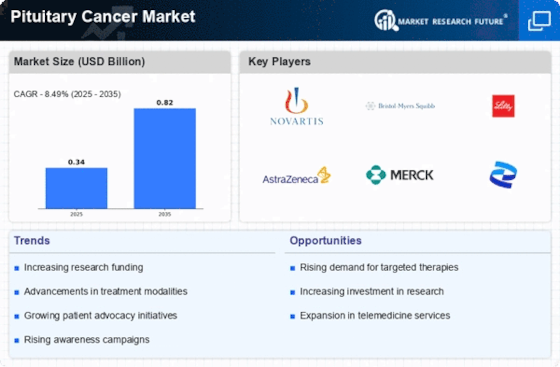
As per MRFR analysis, the Pituitary Cancer Market Size was estimated at 0.3363 USD Billion in 2024. The Pituitary Cancer industry is projected to grow from 0.3649 in 2025 to 0.8242 by 2035, exhibiting a compound annual growth rate (CAGR) of 8.49 during the forecast period 2025 - 2035.

Key Market Trends & Highlights

The Pituitary Cancer Market is experiencing notable advancements and growth driven by innovative treatment approaches and increasing awareness.

  • North America remains the largest market for pituitary cancer treatments, driven by advanced healthcare infrastructure.
  • The Asia-Pacific region is emerging as the fastest-growing market, fueled by rising healthcare investments and awareness.
  • Growth Hormone-Secreting Tumors represent the largest segment, while Prolactin-Secreting Tumors are witnessing the fastest growth in incidence.
  • Key market drivers include the rising incidence of pituitary tumors and advancements in treatment modalities, which are shaping the market landscape.

Market Size & Forecast

2024 Market Size 0.3363 (USD Billion)
2035 Market Size 0.8242 (USD Billion)
CAGR (2025 - 2035) 8.49%
Largest Regional Market Share in 2024 Americas

Major Players

<p>Novartis AG (CH), Bristol-Myers Squibb Company (US), Eli Lilly and Company (US), AstraZeneca PLC (GB), Merck & Co., Inc. (US), Pfizer Inc. (US), Roche Holding AG (CH), Sanofi S.A. (FR), Amgen Inc. (US)</p>

Market Trends

The Pituitary Cancer Market is currently experiencing a notable evolution, driven by advancements in diagnostic techniques and treatment modalities. The increasing awareness surrounding pituitary tumors has led to enhanced screening practices, which may contribute to earlier detection and improved patient outcomes. Furthermore, the integration of personalized medicine into treatment protocols appears to be gaining traction, as therapies are tailored to individual patient profiles, potentially increasing efficacy and minimizing adverse effects. This shift towards more customized approaches suggests a promising future for patient care in this domain. In addition, the landscape of research and development within the Pituitary Cancer Market is expanding, with numerous clinical trials underway to explore novel therapeutic agents. The collaboration between academic institutions and pharmaceutical companies seems to foster innovation, potentially leading to breakthroughs in treatment options. Moreover, the growing emphasis on patient-centric care indicates a shift in focus towards improving quality of life for individuals affected by this condition. As the market continues to evolve, stakeholders must remain vigilant to emerging trends and adapt strategies accordingly.

Advancements in Diagnostic Techniques

The Pituitary Cancer Market is witnessing a surge in innovative diagnostic methods, which may enhance the accuracy of tumor identification. Techniques such as advanced imaging and biomarker discovery are likely to play a crucial role in facilitating early detection, thereby improving treatment outcomes.

Personalized Treatment Approaches

There is a discernible trend towards personalized medicine within the Pituitary Cancer Market. Tailoring treatment regimens to individual patient characteristics appears to optimize therapeutic efficacy and reduce side effects, reflecting a broader shift in oncology towards customized care.

Increased Research and Development

The landscape of research in the Pituitary Cancer Market is expanding, with a growing number of clinical trials exploring new therapeutic options. This increase in R&D efforts suggests a commitment to discovering innovative treatments that could significantly impact patient care.

Pituitary Cancer Market Market Drivers

Growing Awareness and Education

The growing awareness and education surrounding pituitary cancer are pivotal in shaping the Pituitary Cancer Market. Increased efforts by healthcare organizations and advocacy groups to educate the public about the symptoms and risks associated with pituitary tumors have led to earlier diagnoses. This heightened awareness is crucial, as early detection often correlates with improved treatment outcomes. Furthermore, educational initiatives aimed at healthcare professionals ensure that they are equipped with the latest information regarding diagnosis and management. As awareness continues to rise, it is anticipated that more patients will seek medical attention, thereby increasing the demand for diagnostic and therapeutic services within the Pituitary Cancer Market.

Advancements in Treatment Modalities

Innovations in treatment modalities are significantly influencing the Pituitary Cancer Market. Recent advancements in surgical techniques, radiation therapy, and pharmacological interventions have improved patient outcomes. For instance, minimally invasive surgical approaches have become more prevalent, allowing for reduced recovery times and lower complication rates. Additionally, the development of targeted therapies and immunotherapies has shown promise in treating pituitary cancer, potentially leading to better survival rates. As these treatment options become more widely available, healthcare providers are likely to adopt them, further driving market growth. The ongoing research into novel therapeutic agents suggests a dynamic landscape for the Pituitary Cancer Market, with the potential for new entrants and increased competition.

Rising Incidence of Pituitary Tumors

The increasing incidence of pituitary tumors is a primary driver of the Pituitary Cancer Market. Recent data indicates that pituitary tumors account for approximately 10-15% of all primary brain tumors. This rise in cases is attributed to factors such as enhanced diagnostic capabilities and greater awareness among healthcare professionals and patients. As more individuals are diagnosed, the demand for effective treatment options and management strategies intensifies. Consequently, pharmaceutical companies and healthcare providers are likely to invest more in research and development, aiming to introduce innovative therapies. This trend not only reflects the growing need for targeted treatments but also highlights the potential for market expansion within the Pituitary Cancer Market.

Investment in Research and Development

Investment in research and development is a critical driver of the Pituitary Cancer Market. Pharmaceutical companies and research institutions are increasingly allocating resources to explore new treatment options and improve existing therapies. This trend is evidenced by the growing number of clinical trials focused on pituitary cancer, which have surged in recent years. The commitment to understanding the molecular mechanisms underlying pituitary tumors may lead to the discovery of novel therapeutic targets. As a result, the market is likely to witness the introduction of innovative drugs and treatment protocols, enhancing the overall landscape of the Pituitary Cancer Market. This investment not only fosters scientific advancement but also holds the potential for improved patient outcomes.

Regulatory Support and Policy Initiatives

Regulatory support and policy initiatives play a significant role in shaping the Pituitary Cancer Market. Governments and health authorities are increasingly recognizing the need for comprehensive cancer care, leading to the implementation of policies that promote research, funding, and access to treatment. Initiatives aimed at streamlining the approval process for new therapies can accelerate the availability of innovative treatments for pituitary cancer patients. Furthermore, supportive reimbursement policies can enhance patient access to necessary interventions, thereby driving market growth. As regulatory frameworks evolve to better support cancer care, the Pituitary Cancer Market is likely to benefit from increased investment and a more favorable environment for the development and distribution of effective treatment options.

Market Segment Insights

By Type: Growth Hormone-Secreting Tumor (Largest) vs. Prolactin-Secreting Tumor (Fastest-Growing)

<p>In the Pituitary Cancer Market, the market share is predominantly held by Growth Hormone-Secreting Tumors, which exhibit significant prevalence among pituitary adenomas. Prolactin-Secreting Tumors follow closely, accounting for a substantial share as well. The distribution indicates a competitive landscape where both segments thrive but differ in dynamics. Factors contributing to their market shares include clinical presentation, diagnostic advancements, and patient demographics, leading to varied treatment approaches for these tumor types. The growth trends in this segment are driven by an increase in early detection rates through improved imaging technologies and awareness regarding pituitary disorders. Additionally, the rising prevalence of obesity and related endocrine disorders has spurred interest in Growth Hormone-Secreting Tumors, while emerging therapies and innovative treatment regimens are accelerating the market for Prolactin-Secreting Tumors. These trends signify a robust outlook for both segments within the evolving landscape of pituitary cancer treatments.</p>

<p>Growth Hormone-Secreting Tumor (Dominant) vs. Prolactin-Secreting Tumor (Emerging)</p>

<p>Growth Hormone-Secreting Tumors remain the dominant segment within the Pituitary Cancer Market, primarily owing to their significant impact on growth patterns and metabolic processes in affected individuals. Their prevalence necessitates ongoing research, leading to more tailored treatment protocols and a deeper understanding of their biological behavior. In contrast, Prolactin-Secreting Tumors are emerging rapidly due to advancements in medical technology and pharmacological therapies that enhance management strategies. This segment is now recognized for its potential to impact reproductive health and quality of life in patients, thus driving increased awareness and the development of innovative treatment options. The competitive dynamics between these segments continue to evolve as research and therapeutic options advance.</p>

By Treatment Type: Surgery (Largest) vs. Radiation Therapy (Fastest-Growing)

<p>In the Pituitary Cancer Market, treatment types exhibit a diverse range of utilization with surgery, including craniotomy and endoscopic trans nasal transsphenoidal surgery, commanding the largest market share due to their effectiveness in tumor removal. Chemotherapy and radiation therapies also play crucial roles, serving as adjunct treatments for patients post-surgery. This distribution illustrates a strong preference for surgical intervention, which is favored for achieving maximum tumor reduction and improving patient outcomes. Growth trends in this segment are notably influenced by advancements in surgical technology and radiation techniques. The emerging methods in radiation therapy, such as intensity-modulated radiation therapy (IMRT) and proton beam therapy, are gaining traction. Factors driving growth include increasing awareness, improving diagnostic capabilities, and the rising incidence of pituitary tumors, leading to more targeted and effective treatment options.</p>

<p>Surgery: Craniotomy (Dominant) vs. Radiation Therapy: IMRT (Emerging)</p>

<p>In the context of the pituitary cancer market, craniotomy stands as the dominant surgical approach, widely recognized for its comprehensive tumor excision capabilities, which significantly enhance patient prognosis. On the other hand, radiation therapy techniques such as IMRT are emerging as vital adjuncts, particularly for patients who are not candidates for surgery or prefer less invasive options. IMRT allows for precise targeting of tumors, minimizing damage to surrounding healthy tissue, thus reducing side effects. The decision between these treatment modalities typically hinges on tumor size, location, and patient health status. As treatment protocols evolve, the collaboration between surgical and radiation practitioners becomes critical in tailoring personalized patient management strategies.</p>

By End-User: Hospitals & Clinics (Largest) vs. Specialty Clinics (Fastest-Growing)

<p>In the Pituitary Cancer Market, the end-user segment comprises primarily of Hospitals & Clinics and Specialty Clinics. Hospitals & Clinics dominate the market with significant patient flows and comprehensive services for pituitary cancer treatments. These facilities not only provide advanced diagnostic options but also offer a range of therapeutic interventions, which contribute to their large market share. Specialty Clinics, while not as large in market share compared to Hospitals & Clinics, are emerging robustly, catering specifically to pituitary cancer patients and demonstrating increasing preference among patients seeking tailored care and specialized treatment.</p>

<p>Hospitals & Clinics (Dominant) vs. Specialty Clinics (Emerging)</p>

<p>Hospitals & Clinics represent the dominant force in the Pituitary Cancer Market, offering a wide range of services including diagnostics, surgery, and follow-up care. Their extensive resources and multidisciplinary teams allow them to manage complex cases effectively, making them the preferred choice for many patients. Conversely, Specialty Clinics are emerging as important players, focusing exclusively on pituitary-related conditions. These clinics are gaining traction due to their specialized knowledge, cutting-edge treatment options, and personalized patient care. This specialization enables them to attract a dedicated patient base, particularly among those seeking specific therapies or second opinions, thus fostering growth in this segment.</p>

Get more detailed insights about Pituitary Cancer Market Research Report - Forecast till 2035

Regional Insights

North America : Leading Market for Innovation

North America is the largest market for pituitary cancer treatments, accounting for approximately 45% of the global market share. The region's growth is driven by advanced healthcare infrastructure, increasing awareness of pituitary disorders, and significant investments in research and development. Regulatory support from agencies like the FDA further catalyzes market expansion, ensuring timely access to innovative therapies. The United States is the primary contributor, with a robust presence of key players such as Novartis AG, Bristol-Myers Squibb, and Merck & Co. The competitive landscape is characterized by ongoing clinical trials and collaborations aimed at developing novel treatment options. Canada also plays a significant role, with increasing healthcare expenditure and supportive policies enhancing patient access to therapies.

Europe : Emerging Market with Growth Potential

Europe is witnessing a growing pituitary cancer market, holding approximately 30% of the global share. The region benefits from a well-established healthcare system, increasing investment in oncology research, and a rising incidence of pituitary tumors. Regulatory frameworks, such as the European Medicines Agency's guidelines, are pivotal in facilitating the approval of new therapies, thus driving market growth. Leading countries include Germany, France, and the UK, where healthcare policies support innovative treatments. The competitive landscape features major players like Roche and Sanofi, who are actively involved in research and development. Collaborative efforts among pharmaceutical companies and academic institutions are enhancing the availability of advanced treatment options for patients across Europe.

Asia-Pacific : Rapidly Growing Healthcare Sector

The Asia-Pacific region is rapidly emerging in the pituitary cancer market, accounting for about 20% of the global share. Key growth drivers include increasing healthcare investments, rising awareness of pituitary disorders, and a growing patient population. Countries like China and India are witnessing significant advancements in healthcare infrastructure, which are crucial for market expansion. Regulatory bodies are also becoming more supportive of new drug approvals, enhancing market dynamics. China leads the region, with a burgeoning pharmaceutical industry and a focus on oncology. India follows closely, with increasing collaborations between local and international companies. The presence of key players such as Eli Lilly and AstraZeneca is notable, as they invest in research and development to cater to the growing demand for effective treatments in the region.

Middle East and Africa : Untapped Market with Opportunities

The Middle East and Africa region represents an untapped market for pituitary cancer treatments, holding approximately 5% of the global share. The growth is driven by increasing healthcare investments, rising awareness of cancer treatment options, and improving healthcare infrastructure. Regulatory bodies are gradually enhancing their frameworks to support the introduction of new therapies, which is crucial for market development. Leading countries include South Africa and the UAE, where healthcare initiatives are focused on improving cancer care. The competitive landscape is still developing, with opportunities for both local and international players to enter the market. Companies like Amgen are exploring partnerships to expand their reach and provide innovative solutions for patients in this region.

Key Companies in the Pituitary Cancer Market market include

Industry Developments

Tiburio Therapeutics Inc. was founded by Cydan to research therapies for uncommon neuroendocrine tumors and endocrine illnesses.

The National Institute of Diabetes and Digestive and Kidney Diseases has awarded Crinetics Pharmaceuticals, Inc. a Phase IIB Small Business Innovation Research (SBIR) grant for up to USD 2.8 million.


Future Outlook

Pituitary Cancer Market Future Outlook

<p>The Pituitary Cancer Market is projected to grow at an 8.49% CAGR from 2024 to 2035, driven by advancements in treatment modalities and increasing awareness.</p>

New opportunities lie in:

  • <p>Development of targeted therapies for specific pituitary tumors.</p>
  • <p>Expansion of telemedicine services for remote patient monitoring.</p>
  • <p>Investment in AI-driven diagnostic tools for early detection.</p>

<p>By 2035, the market is expected to achieve substantial growth, reflecting enhanced treatment options and patient engagement.</p>

Market Segmentation

Pituitary Cancer Market Type Outlook

  • Adrenocorticotropic Hormone-Secreting (ACTH) Tumor
  • Growth Hormone-Secreting Tumor
  • Prolactin-Secreting Tumor
  • Thyroid-Stimulating Hormone-Secreting Tumor

Pituitary Cancer Market End-User Outlook

  • Hospitals & Clinics
  • Specialty Clinics
  • Others

Pituitary Cancer Market Treatment Type Outlook

  • Chemotherapy
  • Surgery
  • Endoscopic Trans Nasal Transsphenoidal Surgery
  • Craniotomy
  • Radiation Therapy
  • Stereotactic Radiosurgery
  • External Beam Radiation
  • Intensity-Modulated Radiation Therapy (IMRT)
  • Proton Beam Therapy
  • Others

Report Scope

MARKET SIZE 20240.3363(USD Billion)
MARKET SIZE 20250.3649(USD Billion)
MARKET SIZE 20350.8242(USD Billion)
COMPOUND ANNUAL GROWTH RATE (CAGR)8.49% (2024 - 2035)
REPORT COVERAGERevenue Forecast, Competitive Landscape, Growth Factors, and Trends
BASE YEAR2024
Market Forecast Period2025 - 2035
Historical Data2019 - 2024
Market Forecast UnitsUSD Billion
Key Companies ProfiledMarket analysis in progress
Segments CoveredMarket segmentation analysis in progress
Key Market OpportunitiesAdvancements in targeted therapies and personalized medicine enhance treatment options in the Pituitary Cancer Market.
Key Market DynamicsRising demand for targeted therapies drives innovation and competition in the pituitary cancer treatment landscape.
Countries CoveredNorth America, Europe, APAC, South America, MEA

FAQs

What is the projected market valuation for the Pituitary Cancer Market in 2035?

The projected market valuation for the Pituitary Cancer Market in 2035 is 0.8242 USD Billion.

What was the overall market valuation for the Pituitary Cancer Market in 2024?

The overall market valuation for the Pituitary Cancer Market in 2024 was 0.3363 USD Billion.

What is the expected CAGR for the Pituitary Cancer Market during the forecast period 2025 - 2035?

The expected CAGR for the Pituitary Cancer Market during the forecast period 2025 - 2035 is 8.49%.

Which companies are key players in the Pituitary Cancer Market?

Key players in the Pituitary Cancer Market include Novartis AG, Bristol-Myers Squibb Company, Eli Lilly and Company, and others.

What are the market segments for Pituitary Cancer based on tumor type?

Market segments for Pituitary Cancer based on tumor type include ACTH-secreting tumors, growth hormone-secreting tumors, and prolactin-secreting tumors.

  1. SECTION I: EXECUTIVE SUMMARY AND KEY HIGHLIGHTS
    1. EXECUTIVE SUMMARY
      1. Market Overview
      2. Key Findings
      3. Market Segmentation
      4. Competitive Landscape
      5. Challenges and Opportunities
      6. Future Outlook
  2. SECTION II: SCOPING, METHODOLOGY AND MARKET STRUCTURE
    1. MARKET INTRODUCTION
      1. Definition
      2. Scope of the study
    2. RESEARCH METHODOLOGY
      1. Overview
      2. Data Mining
      3. Secondary Research
      4. Primary Research
      5. Forecasting Model
      6. Market Size Estimation
      7. Data Triangulation
      8. Validation
  3. SECTION III: QUALITATIVE ANALYSIS
    1. MARKET DYNAMICS
      1. Overview
      2. Drivers
      3. Restraints
      4. Opportunities
    2. MARKET FACTOR ANALYSIS
      1. Value chain Analysis
      2. Porter's Five Forces Analysis
      3. COVID-19 Impact Analysis
  4. SECTION IV: QUANTITATIVE ANALYSIS
    1. Healthcare, BY Type (USD Billion)
      1. Adrenocorticotropic Hormone-Secreting (ACTH) Tumor
      2. Growth Hormone-Secreting Tumor
      3. Prolactin-Secreting Tumor
      4. Thyroid-Stimulating Hormone-Secreting Tumor
    2. Healthcare, BY Treatment Type (USD Billion)
      1. Chemotherapy
      2. Surgery
      3. Endoscopic Trans Nasal Transsphenoidal Surgery
      4. Craniotomy
      5. Radiation Therapy
      6. Stereotactic Radiosurgery
      7. External Beam Radiation
      8. Intensity-Modulated Radiation Therapy (IMRT)
      9. Proton Beam Therapy
      10. Others
    3. Healthcare, BY End-User (USD Billion)
      1. Hospitals & Clinics
      2. Specialty Clinics
      3. Others
    4. Healthcare, BY Region (USD Billion)
      1. North America
      2. Europe
      3. APAC
      4. South America
      5. MEA
  5. SECTION V: COMPETITIVE ANALYSIS
    1. Competitive Landscape
      1. Overview
      2. Competitive Analysis
      3. Market share Analysis
      4. Major Growth Strategy in the Healthcare
      5. Competitive Benchmarking
      6. Leading Players in Terms of Number of Developments in the Healthcare
      7. Key developments and growth strategies
      8. Major Players Financial Matrix
    2. Company Profiles
      1. Novartis AG (CH)
      2. Bristol-Myers Squibb Company (US)
      3. Eli Lilly and Company (US)
      4. AstraZeneca PLC (GB)
      5. Merck & Co., Inc. (US)
      6. Pfizer Inc. (US)
      7. Roche Holding AG (CH)
      8. Sanofi S.A. (FR)
      9. Amgen Inc. (US)
    3. Appendix
      1. References
      2. Related Reports
  6. LIST OF FIGURES
    1. MARKET SYNOPSIS
    2. NORTH AMERICA MARKET ANALYSIS
    3. US MARKET ANALYSIS BY TYPE
    4. US MARKET ANALYSIS BY TREATMENT TYPE
    5. US MARKET ANALYSIS BY END-USER
    6. CANADA MARKET ANALYSIS BY TYPE
    7. CANADA MARKET ANALYSIS BY TREATMENT TYPE
    8. CANADA MARKET ANALYSIS BY END-USER
    9. EUROPE MARKET ANALYSIS
    10. GERMANY MARKET ANALYSIS BY TYPE
    11. GERMANY MARKET ANALYSIS BY TREATMENT TYPE
    12. GERMANY MARKET ANALYSIS BY END-USER
    13. UK MARKET ANALYSIS BY TYPE
    14. UK MARKET ANALYSIS BY TREATMENT TYPE
    15. UK MARKET ANALYSIS BY END-USER
    16. FRANCE MARKET ANALYSIS BY TYPE
    17. FRANCE MARKET ANALYSIS BY TREATMENT TYPE
    18. FRANCE MARKET ANALYSIS BY END-USER
    19. RUSSIA MARKET ANALYSIS BY TYPE
    20. RUSSIA MARKET ANALYSIS BY TREATMENT TYPE
    21. RUSSIA MARKET ANALYSIS BY END-USER
    22. ITALY MARKET ANALYSIS BY TYPE
    23. ITALY MARKET ANALYSIS BY TREATMENT TYPE
    24. ITALY MARKET ANALYSIS BY END-USER
    25. SPAIN MARKET ANALYSIS BY TYPE
    26. SPAIN MARKET ANALYSIS BY TREATMENT TYPE
    27. SPAIN MARKET ANALYSIS BY END-USER
    28. REST OF EUROPE MARKET ANALYSIS BY TYPE
    29. REST OF EUROPE MARKET ANALYSIS BY TREATMENT TYPE
    30. REST OF EUROPE MARKET ANALYSIS BY END-USER
    31. APAC MARKET ANALYSIS
    32. CHINA MARKET ANALYSIS BY TYPE
    33. CHINA MARKET ANALYSIS BY TREATMENT TYPE
    34. CHINA MARKET ANALYSIS BY END-USER
    35. INDIA MARKET ANALYSIS BY TYPE
    36. INDIA MARKET ANALYSIS BY TREATMENT TYPE
    37. INDIA MARKET ANALYSIS BY END-USER
    38. JAPAN MARKET ANALYSIS BY TYPE
    39. JAPAN MARKET ANALYSIS BY TREATMENT TYPE
    40. JAPAN MARKET ANALYSIS BY END-USER
    41. SOUTH KOREA MARKET ANALYSIS BY TYPE
    42. SOUTH KOREA MARKET ANALYSIS BY TREATMENT TYPE
    43. SOUTH KOREA MARKET ANALYSIS BY END-USER
    44. MALAYSIA MARKET ANALYSIS BY TYPE
    45. MALAYSIA MARKET ANALYSIS BY TREATMENT TYPE
    46. MALAYSIA MARKET ANALYSIS BY END-USER
    47. THAILAND MARKET ANALYSIS BY TYPE
    48. THAILAND MARKET ANALYSIS BY TREATMENT TYPE
    49. THAILAND MARKET ANALYSIS BY END-USER
    50. INDONESIA MARKET ANALYSIS BY TYPE
    51. INDONESIA MARKET ANALYSIS BY TREATMENT TYPE
    52. INDONESIA MARKET ANALYSIS BY END-USER
    53. REST OF APAC MARKET ANALYSIS BY TYPE
    54. REST OF APAC MARKET ANALYSIS BY TREATMENT TYPE
    55. REST OF APAC MARKET ANALYSIS BY END-USER
    56. SOUTH AMERICA MARKET ANALYSIS
    57. BRAZIL MARKET ANALYSIS BY TYPE
    58. BRAZIL MARKET ANALYSIS BY TREATMENT TYPE
    59. BRAZIL MARKET ANALYSIS BY END-USER
    60. MEXICO MARKET ANALYSIS BY TYPE
    61. MEXICO MARKET ANALYSIS BY TREATMENT TYPE
    62. MEXICO MARKET ANALYSIS BY END-USER
    63. ARGENTINA MARKET ANALYSIS BY TYPE
    64. ARGENTINA MARKET ANALYSIS BY TREATMENT TYPE
    65. ARGENTINA MARKET ANALYSIS BY END-USER
    66. REST OF SOUTH AMERICA MARKET ANALYSIS BY TYPE
    67. REST OF SOUTH AMERICA MARKET ANALYSIS BY TREATMENT TYPE
    68. REST OF SOUTH AMERICA MARKET ANALYSIS BY END-USER
    69. MEA MARKET ANALYSIS
    70. GCC COUNTRIES MARKET ANALYSIS BY TYPE
    71. GCC COUNTRIES MARKET ANALYSIS BY TREATMENT TYPE
    72. GCC COUNTRIES MARKET ANALYSIS BY END-USER
    73. SOUTH AFRICA MARKET ANALYSIS BY TYPE
    74. SOUTH AFRICA MARKET ANALYSIS BY TREATMENT TYPE
    75. SOUTH AFRICA MARKET ANALYSIS BY END-USER
    76. REST OF MEA MARKET ANALYSIS BY TYPE
    77. REST OF MEA MARKET ANALYSIS BY TREATMENT TYPE
    78. REST OF MEA MARKET ANALYSIS BY END-USER
    79. KEY BUYING CRITERIA OF HEALTHCARE
    80. RESEARCH PROCESS OF MRFR
    81. DRO ANALYSIS OF HEALTHCARE
    82. DRIVERS IMPACT ANALYSIS: HEALTHCARE
    83. RESTRAINTS IMPACT ANALYSIS: HEALTHCARE
    84. SUPPLY / VALUE CHAIN: HEALTHCARE
    85. HEALTHCARE, BY TYPE, 2024 (% SHARE)
    86. HEALTHCARE, BY TYPE, 2024 TO 2035 (USD Billion)
    87. HEALTHCARE, BY TREATMENT TYPE, 2024 (% SHARE)
    88. HEALTHCARE, BY TREATMENT TYPE, 2024 TO 2035 (USD Billion)
    89. HEALTHCARE, BY END-USER, 2024 (% SHARE)
    90. HEALTHCARE, BY END-USER, 2024 TO 2035 (USD Billion)
    91. BENCHMARKING OF MAJOR COMPETITORS
  7. LIST OF TABLES
    1. LIST OF ASSUMPTIONS
    2. North America MARKET SIZE ESTIMATES; FORECAST
      1. BY TYPE, 2025-2035 (USD Billion)
      2. BY TREATMENT TYPE, 2025-2035 (USD Billion)
      3. BY END-USER, 2025-2035 (USD Billion)
    3. US MARKET SIZE ESTIMATES; FORECAST
      1. BY TYPE, 2025-2035 (USD Billion)
      2. BY TREATMENT TYPE, 2025-2035 (USD Billion)
      3. BY END-USER, 2025-2035 (USD Billion)
    4. Canada MARKET SIZE ESTIMATES; FORECAST
      1. BY TYPE, 2025-2035 (USD Billion)
      2. BY TREATMENT TYPE, 2025-2035 (USD Billion)
      3. BY END-USER, 2025-2035 (USD Billion)
    5. Europe MARKET SIZE ESTIMATES; FORECAST
      1. BY TYPE, 2025-2035 (USD Billion)
      2. BY TREATMENT TYPE, 2025-2035 (USD Billion)
      3. BY END-USER, 2025-2035 (USD Billion)
    6. Germany MARKET SIZE ESTIMATES; FORECAST
      1. BY TYPE, 2025-2035 (USD Billion)
      2. BY TREATMENT TYPE, 2025-2035 (USD Billion)
      3. BY END-USER, 2025-2035 (USD Billion)
    7. UK MARKET SIZE ESTIMATES; FORECAST
      1. BY TYPE, 2025-2035 (USD Billion)
      2. BY TREATMENT TYPE, 2025-2035 (USD Billion)
      3. BY END-USER, 2025-2035 (USD Billion)
    8. France MARKET SIZE ESTIMATES; FORECAST
      1. BY TYPE, 2025-2035 (USD Billion)
      2. BY TREATMENT TYPE, 2025-2035 (USD Billion)
      3. BY END-USER, 2025-2035 (USD Billion)
    9. Russia MARKET SIZE ESTIMATES; FORECAST
      1. BY TYPE, 2025-2035 (USD Billion)
      2. BY TREATMENT TYPE, 2025-2035 (USD Billion)
      3. BY END-USER, 2025-2035 (USD Billion)
    10. Italy MARKET SIZE ESTIMATES; FORECAST
      1. BY TYPE, 2025-2035 (USD Billion)
      2. BY TREATMENT TYPE, 2025-2035 (USD Billion)
      3. BY END-USER, 2025-2035 (USD Billion)
    11. Spain MARKET SIZE ESTIMATES; FORECAST
      1. BY TYPE, 2025-2035 (USD Billion)
      2. BY TREATMENT TYPE, 2025-2035 (USD Billion)
      3. BY END-USER, 2025-2035 (USD Billion)
    12. Rest of Europe MARKET SIZE ESTIMATES; FORECAST
      1. BY TYPE, 2025-2035 (USD Billion)
      2. BY TREATMENT TYPE, 2025-2035 (USD Billion)
      3. BY END-USER, 2025-2035 (USD Billion)
    13. APAC MARKET SIZE ESTIMATES; FORECAST
      1. BY TYPE, 2025-2035 (USD Billion)
      2. BY TREATMENT TYPE, 2025-2035 (USD Billion)
      3. BY END-USER, 2025-2035 (USD Billion)
    14. China MARKET SIZE ESTIMATES; FORECAST
      1. BY TYPE, 2025-2035 (USD Billion)
      2. BY TREATMENT TYPE, 2025-2035 (USD Billion)
      3. BY END-USER, 2025-2035 (USD Billion)
    15. India MARKET SIZE ESTIMATES; FORECAST
      1. BY TYPE, 2025-2035 (USD Billion)
      2. BY TREATMENT TYPE, 2025-2035 (USD Billion)
      3. BY END-USER, 2025-2035 (USD Billion)
    16. Japan MARKET SIZE ESTIMATES; FORECAST
      1. BY TYPE, 2025-2035 (USD Billion)
      2. BY TREATMENT TYPE, 2025-2035 (USD Billion)
      3. BY END-USER, 2025-2035 (USD Billion)
    17. South Korea MARKET SIZE ESTIMATES; FORECAST
      1. BY TYPE, 2025-2035 (USD Billion)
      2. BY TREATMENT TYPE, 2025-2035 (USD Billion)
      3. BY END-USER, 2025-2035 (USD Billion)
    18. Malaysia MARKET SIZE ESTIMATES; FORECAST
      1. BY TYPE, 2025-2035 (USD Billion)
      2. BY TREATMENT TYPE, 2025-2035 (USD Billion)
      3. BY END-USER, 2025-2035 (USD Billion)
    19. Thailand MARKET SIZE ESTIMATES; FORECAST
      1. BY TYPE, 2025-2035 (USD Billion)
      2. BY TREATMENT TYPE, 2025-2035 (USD Billion)
      3. BY END-USER, 2025-2035 (USD Billion)
    20. Indonesia MARKET SIZE ESTIMATES; FORECAST
      1. BY TYPE, 2025-2035 (USD Billion)
      2. BY TREATMENT TYPE, 2025-2035 (USD Billion)
      3. BY END-USER, 2025-2035 (USD Billion)
    21. Rest of APAC MARKET SIZE ESTIMATES; FORECAST
      1. BY TYPE, 2025-2035 (USD Billion)
      2. BY TREATMENT TYPE, 2025-2035 (USD Billion)
      3. BY END-USER, 2025-2035 (USD Billion)
    22. South America MARKET SIZE ESTIMATES; FORECAST
      1. BY TYPE, 2025-2035 (USD Billion)
      2. BY TREATMENT TYPE, 2025-2035 (USD Billion)
      3. BY END-USER, 2025-2035 (USD Billion)
    23. Brazil MARKET SIZE ESTIMATES; FORECAST
      1. BY TYPE, 2025-2035 (USD Billion)
      2. BY TREATMENT TYPE, 2025-2035 (USD Billion)
      3. BY END-USER, 2025-2035 (USD Billion)
    24. Mexico MARKET SIZE ESTIMATES; FORECAST
      1. BY TYPE, 2025-2035 (USD Billion)
      2. BY TREATMENT TYPE, 2025-2035 (USD Billion)
      3. BY END-USER, 2025-2035 (USD Billion)
    25. Argentina MARKET SIZE ESTIMATES; FORECAST
      1. BY TYPE, 2025-2035 (USD Billion)
      2. BY TREATMENT TYPE, 2025-2035 (USD Billion)
      3. BY END-USER, 2025-2035 (USD Billion)
    26. Rest of South America MARKET SIZE ESTIMATES; FORECAST
      1. BY TYPE, 2025-2035 (USD Billion)
      2. BY TREATMENT TYPE, 2025-2035 (USD Billion)
      3. BY END-USER, 2025-2035 (USD Billion)
    27. MEA MARKET SIZE ESTIMATES; FORECAST
      1. BY TYPE, 2025-2035 (USD Billion)
      2. BY TREATMENT TYPE, 2025-2035 (USD Billion)
      3. BY END-USER, 2025-2035 (USD Billion)
    28. GCC Countries MARKET SIZE ESTIMATES; FORECAST
      1. BY TYPE, 2025-2035 (USD Billion)
      2. BY TREATMENT TYPE, 2025-2035 (USD Billion)
      3. BY END-USER, 2025-2035 (USD Billion)
    29. South Africa MARKET SIZE ESTIMATES; FORECAST
      1. BY TYPE, 2025-2035 (USD Billion)
      2. BY TREATMENT TYPE, 2025-2035 (USD Billion)
      3. BY END-USER, 2025-2035 (USD Billion)
    30. Rest of MEA MARKET SIZE ESTIMATES; FORECAST
      1. BY TYPE, 2025-2035 (USD Billion)
      2. BY TREATMENT TYPE, 2025-2035 (USD Billion)
      3. BY END-USER, 2025-2035 (USD Billion)
    31. PRODUCT LAUNCH/PRODUCT DEVELOPMENT/APPROVAL
    32. ACQUISITION/PARTNERSHIP

Pituitary Cancer Market Segmentation

Market Segmentation Overview

  • Detailed segmentation data will be available in the full report
  • Comprehensive analysis by multiple parameters
  • Regional and country-level breakdowns
  • Market size forecasts by segment
Infographic

Free Sample Request

Kindly complete the form below to receive a free sample of this Report

Get Free Sample

Customer Strories

Compare Licence

×
Features License Type
Single User Multiuser License Enterprise User
Price $4,950 $5,950 $7,250
Maximum User Access Limit 1 User Upto 10 Users Unrestricted Access Throughout the Organization
Free Customization
Direct Access to Analyst
Deliverable Format
Platform Access
Discount on Next Purchase 10% 15% 15%
Printable Versions