Regulatory Compliance
Regulatory frameworks and compliance requirements are increasingly influencing the Global Physical Security Market Industry. Governments worldwide are implementing stringent regulations to ensure the safety and security of public spaces and critical infrastructure. Organizations must adhere to these regulations, which often necessitate investments in physical security measures. As a result, the demand for security solutions that meet compliance standards is on the rise. This trend is expected to contribute to a compound annual growth rate of 7.84% from 2025 to 2035, as businesses prioritize compliance alongside security enhancements.
Rising Security Concerns
The Global Physical Security Market Industry experiences heightened demand due to increasing security concerns across various sectors. Organizations are increasingly investing in physical security measures to protect their assets, employees, and sensitive information. For instance, the rise in theft and vandalism incidents has prompted businesses to enhance their security protocols. In 2024, the market is projected to reach 235.94 USD Billion, reflecting a growing recognition of the importance of robust physical security solutions. This trend is likely to continue as threats evolve, necessitating ongoing investment in advanced security technologies.
Market Growth Projections
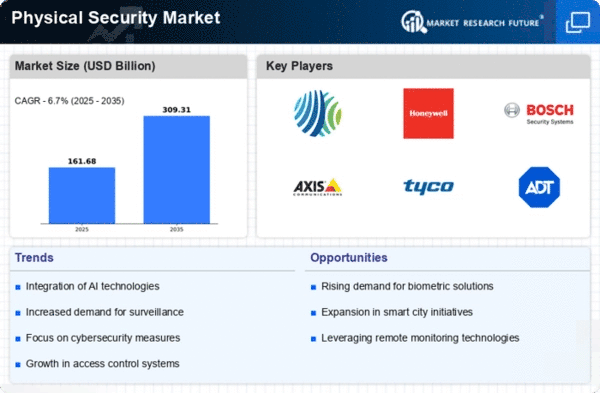
The Global Physical Security Market Industry is poised for substantial growth, with projections indicating a market value of 235.94 USD Billion in 2024 and an anticipated increase to 541.32 USD Billion by 2035. This trajectory suggests a compound annual growth rate of 7.84% from 2025 to 2035, reflecting the increasing emphasis on security across various sectors. The growth is driven by factors such as rising security concerns, technological advancements, and regulatory compliance, all of which contribute to the evolving landscape of physical security solutions.
Technological Advancements
Technological innovations play a pivotal role in shaping the Global Physical Security Market Industry. The integration of advanced technologies such as artificial intelligence, biometrics, and IoT devices enhances security capabilities. For example, AI-powered surveillance systems can analyze vast amounts of data in real-time, identifying potential threats more effectively. As organizations seek to leverage these technologies, the market is expected to grow significantly, with projections indicating a value of 541.32 USD Billion by 2035. This growth underscores the necessity for businesses to adopt cutting-edge solutions to stay ahead of emerging security challenges.
Globalization and Urbanization
The ongoing trends of globalization and urbanization significantly impact the Global Physical Security Market Industry. As businesses expand their operations internationally and urban areas grow, the need for comprehensive security solutions becomes more pronounced. Urban centers often face unique security challenges, including increased crime rates and the need for crowd management. Consequently, organizations are compelled to invest in tailored security strategies that address these challenges. This shift is likely to drive market growth, as companies seek to protect their assets and personnel in diverse environments.
Increased Investment in Infrastructure
The Global Physical Security Market Industry is witnessing increased investment in infrastructure projects, which inherently require robust security measures. Governments and private entities are allocating substantial resources to develop and maintain infrastructure, including transportation, energy, and communication systems. These projects necessitate comprehensive security strategies to safeguard against potential threats, such as terrorism or sabotage. As infrastructure investment continues to rise, so too does the demand for physical security solutions, further propelling market growth. This trend aligns with the broader economic development goals of nations, emphasizing the importance of security in sustaining progress.