Request Free Sample ×

Kindly complete the form below to receive a free sample of this Report

* Please use a valid business email

Leading companies partner with us for data-driven Insights

clients tt-cursor
Hero Background
English
Chinese
French
Japanese
Korean
German
Spanish

Parking Management Market Size

ID: MRFR/ICT/2341-CR
100 Pages
Aarti Dhapte
July 2025

Parking Management Market Size, Share and Trends Analysis Report By Application (Parking Guidance System, Parking Reservation System, Parking Meter Management), By Parking Type (On-Street Parking, Off-Street Parking, Multi-Level Parking), By Deployment Type (Cloud Based, On-Premises, Hybrid), By End User (Government, Commercial, Residential) and By Regional (North America, Europe, South America, Asia Pacific, Middle East and Africa) - Forecast to 2035

Share:
Download PDF ×

We do not share your information with anyone. However, we may send you emails based on your report interest from time to time. You may contact us at any time to opt-out.

Parking Management Market Infographic
Purchase Options

Parking Management Size

Parking Management Market Growth Projections and Opportunities

A variety of factors affect the design, operation, and use of parking facilities in the dynamic environment within which the Parking Management sector exists. Urbanization growth, technological change, and increased need for effective parking solutions are some of the market dynamics dictating Parking Management. Technological innovation is one of several main catalysts for change in the Parking Management market. Smart sensors, license plate recognition systems, and mobile applications are advanced technologies that have completely overhauled traditional parking systems. Additionally, the global focus on sustainability and environmental preservation has had an impact on this industry's dynamics. Many cities have embraced eco-friendly practices, while new forms of Parking Management have emerged to support such initiatives. Sustainable urban areas can be improved through smart parking solutions that encourage the adoption of electric vehicles (EVs) and optimize the usage of parking spaces while minimizing traffic congestion in a city. Incorporated into environmentally conscious car park models include features supporting green transportation. The driving force behind Parking Management market recognition is changing customer behavior. In relation to car parks, users want convenience, transparency, and ease of entrance as well as exit points. These applications enable citizens to find pay or book in advance for slots before any visitation on modern Parking Management systems relied upon heavily today. At the same time, Government regulations and urban planning policies also influence the dynamics of the Parking Management market. Traffic congestion management has become a priority among many cities; hence, they have introduced different traffic flow rules together with limiting construction approvals, particularly at business centers where congestion is more likely to occur mostly during peak hours but not limited to them, including emission reduction measures. The ones that gain significance in this market are those parking management system providers who meet these regulatory requirements aligned towards broader urban development objectives. It becomes important for mobility solution vendors to adhere to government regulations regarding things like pricing structures or access requirements when it comes to park-related issues. Another factor influencing how the Parking Management Industry works is its competitive landscape. Providers of solutions differentiate themselves in various ways, including via innovations, strategic alliances, and a range of services. Such integrated Parking Management systems form a coalescence that combines with other smart city initiatives such as traffic management and public transportation systems. Additionally, economic factors impact the Parking Management market dynamics. They have been driven by economic growth, urban development projects as well as investments in smart city infrastructure that has led to high demand for advanced parking solutions. Developing countries are improving their car parks' infrastructure to meet the ever-increasing vehicle ownership rates due to continued global urbanization, shifting mobility patterns amongst people living there, and consequently changing mobility patterns. Economic considerations like cost-effectiveness or return on investment guide decisions made by both public and private sector entities involved in Parking Management.
Parking Management Market Size Graph
Author
Author Profile
Aarti Dhapte
AVP - Research

A consulting professional focused on helping businesses navigate complex markets through structured research and strategic insights. I partner with clients to solve high-impact business problems across market entry strategy, competitive intelligence, and opportunity assessment. Over the course of my experience, I have led and contributed to 100+ market research and consulting engagements, delivering insights across multiple industries and geographies, and supporting strategic decisions linked to $500M+ market opportunities. My core expertise lies in building robust market sizing, forecasting, and commercial models (top-down and bottom-up), alongside deep-dive competitive and industry analysis. I have played a key role in shaping go-to-market strategies, investment cases, and growth roadmaps, enabling clients to make confident, data-backed decisions in dynamic markets.

Leave a Comment

FAQs

What is the current valuation of the Parking Management Market as of 2024?

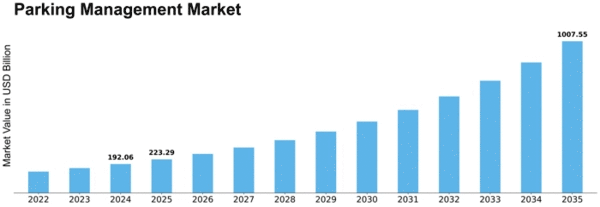
<p>The Parking Management Market was valued at 192.06 USD Billion in 2024.</p>

What is the projected market size for the Parking Management Market by 2035?

<p>The market is projected to reach 1007.55 USD Billion by 2035.</p>

What is the expected CAGR for the Parking Management Market during the forecast period 2025 - 2035?

<p>The expected CAGR for the Parking Management Market during 2025 - 2035 is 16.26%.</p>

Which segment of the Parking Management Market had the highest valuation in 2024?

<p>In 2024, the Off-Street Parking segment had the highest valuation at 57.93 USD Billion.</p>

What are the key players in the Parking Management Market?

<p>Key players include APCOA Parking Holdings GmbH, ParkMobile LLC, SP Plus Corporation, and Indigo.</p>

How does the Parking Guidance Systems segment perform in terms of valuation?

<p>The Parking Guidance Systems segment was valued at 36.51 USD Billion in 2024.</p>

What is the valuation of the Mobile Payment Solutions segment in the Parking Management Market?

<p>The Mobile Payment Solutions segment was valued at 40.0 USD Billion in 2024.</p>

Which end-use segment is projected to grow the most by 2035?

<p>The Transportation end-use segment is projected to grow significantly, reaching 532.55 USD Billion by 2035.</p>

What is the valuation of the License Plate Recognition technology segment in 2024?

<p>The License Plate Recognition technology segment was valued at 72.06 USD Billion in 2024.</p>

What services are included in the Parking Management Services segment?

<p>The Parking Management Services segment was valued at 76.83 USD Billion in 2024, encompassing various management solutions.</p>

Market Summary

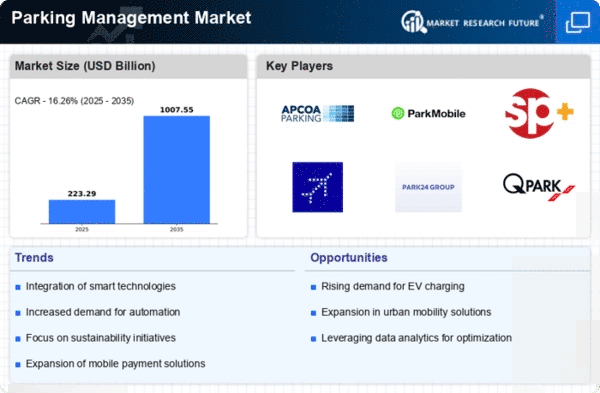
As per MRFR analysis, the Parking Management Market Size was estimated at 192.06 USD Billion in 2024. The Parking Management industry is projected to grow from 223.3 USD Billion in 2025 to 1007.55 USD Billion by 2035, exhibiting a compound annual growth rate (CAGR) of 16.26% during the forecast period 2025 - 2035.

Key Market Trends & Highlights

The Parking Management Market is experiencing a transformative shift towards smart and sustainable solutions.

  • Smart parking solutions are gaining traction, particularly in North America, as cities seek to optimize space utilization. Sustainability initiatives are becoming increasingly prominent, with a focus on reducing carbon footprints in urban areas. Data-driven decision making is reshaping strategies in parking lot management, the largest segment of the market. Technological advancements and urbanization are key drivers, fueling growth in automated parking systems and mobile payment solutions.

Market Size & Forecast

2024 Market Size 192.06 (USD Billion)
2035 Market Size 1007.55 (USD Billion)
CAGR (2025 - 2035) 16.26%
Largest Regional Market Share in 2024 North America

Major Players

APCOA Parking Holdings GmbH (DE), ParkMobile LLC (US), SP Plus Corporation (US), Indigo (FR), Park24 Co Ltd (JP), Q-Park (NL), Saba Infraestructuras (ES), Central Parking System (US), Impark (CA)

Market Trends

The Parking Management Market is currently experiencing a transformative phase, driven by advancements in technology and the increasing need for efficient urban mobility solutions. As cities expand and populations grow, the demand for effective parking solutions becomes more pronounced. Innovations such as smart parking systems, which utilize sensors and mobile applications, are reshaping how users interact with parking facilities. These systems not only enhance user experience but also optimize space utilization, thereby addressing the challenges of congestion and limited parking availability. Furthermore, the integration of data analytics into parking management is enabling operators to make informed decisions, improving operational efficiency and revenue generation. In addition to technological advancements, sustainability considerations are becoming increasingly relevant within the Parking Management Market. Stakeholders are recognizing the importance of eco-friendly practices, such as electric vehicle charging stations and green parking facilities. This shift towards sustainability is not merely a trend but appears to be a fundamental change in how parking solutions are designed and implemented. As urban planners and policymakers prioritize environmental impact, the Parking Management Market is likely to evolve, incorporating more sustainable practices that align with broader goals of reducing carbon footprints and promoting greener cities.

Smart Parking Solutions

The expansion of global parking management solutions is driven by the rapid growth of smart parking technologies. The emergence of smart parking technologies is revolutionizing the Parking Management Market. These solutions utilize sensors, mobile applications, and data analytics to provide real-time information about available parking spaces and acts like a digital parking marketplace. Additionally, operators implement parking revenue management to streamline collection processes and minimize financial leakage.

Sustainability Initiatives

Sustainability is becoming a central theme in the Parking Management Market. Stakeholders are increasingly focusing on eco-friendly practices, such as the installation of electric vehicle charging stations and the development of green parking facilities. This trend reflects a broader commitment to reducing environmental impact and promoting sustainable urban development.

Integration of Payment Technologies

Innovation within the parking management industry is shifting toward contactless payments and automated entry. The integration of advanced payment technologies is transforming the Parking Management Market. Contactless payment systems and mobile wallets help with seamless transactions for users. This trend enhances the overall parking experience, making it more efficient and user-friendly, while also streamlining revenue collection for operators.

Parking Management Market Market Drivers

Increasing Urbanization

The Global Parking Management Market Industry is experiencing a surge in demand due to rapid urbanization. As cities expand, the need for efficient parking solutions becomes paramount. Urban areas are projected to house 68% of the global population by 2050, leading to increased vehicle ownership and, consequently, a higher demand for parking spaces. This trend necessitates advanced parking management systems to optimize space utilization and reduce congestion. The market is expected to grow from 6.19 USD Billion in 2024 to 12.5 USD Billion by 2035, reflecting a compound annual growth rate of 6.6% from 2025 to 2035.

Market Growth Projections

The Global Parking Management Market Industry is poised for substantial growth, with projections indicating a rise from 6.19 USD Billion in 2024 to 12.5 USD Billion by 2035. This growth trajectory suggests a compound annual growth rate of 6.6% from 2025 to 2035. The increasing demand for efficient parking solutions, driven by urbanization, technological advancements, and regulatory frameworks, is likely to fuel this expansion. As cities continue to evolve and adapt to changing mobility patterns, the parking management sector is expected to play a pivotal role in enhancing urban infrastructure.

Technological Advancements

Technological innovations are driving the Global Parking Management Market Industry towards greater efficiency and user satisfaction. The integration of smart technologies, such as IoT and AI, allows for real-time monitoring and management of parking spaces. These advancements enable dynamic pricing models and automated payment systems, enhancing the user experience. For instance, cities implementing smart parking solutions report a reduction in search time for parking by up to 30%. As technology continues to evolve, it is likely that the market will see increased adoption of these systems, further propelling growth.

Rising Environmental Concerns

Growing awareness of environmental issues is influencing the Global Parking Management Market Industry. As cities grapple with pollution and traffic congestion, there is a pressing need for sustainable parking solutions. Eco-friendly parking management systems that promote electric vehicle charging and reduce carbon footprints are gaining traction. For instance, cities are increasingly integrating green parking solutions, such as solar-powered parking meters and electric vehicle charging stations, into their infrastructure. This shift towards sustainability not only addresses environmental concerns but also aligns with global efforts to combat climate change, potentially enhancing market growth.

Government Initiatives and Regulations

Government policies and regulations play a crucial role in shaping the Global Parking Management Market Industry. Many governments are implementing stricter regulations to manage urban traffic and reduce emissions. Initiatives such as low-emission zones and parking restrictions in congested areas encourage the adoption of efficient parking management solutions. For example, cities like London and San Francisco have introduced policies that promote smart parking technologies to alleviate congestion. These regulatory frameworks are likely to drive market growth as municipalities seek to comply with environmental standards while improving urban mobility.

Shift Towards E-commerce and Delivery Services

The rise of e-commerce and delivery services is reshaping the Global Parking Management Market Industry. With the increasing volume of deliveries, there is a growing need for efficient parking solutions to accommodate delivery vehicles. Urban areas are witnessing a surge in demand for designated loading zones and smart parking systems that facilitate quick drop-offs. This trend is likely to continue as e-commerce sales are projected to grow significantly in the coming years. Consequently, parking management systems that cater to the needs of delivery services are expected to see increased adoption, driving market growth.

Market Segment Insights

By Application: On-Street Parking (Largest) vs. Parking Guidance Systems (Fastest-Growing)

<p>The Parking Management Market is increasingly characterized by a diverse range of applications that cater to the needs of urban environments. On-Street Parking takes the largest share as it directly addresses the demand for accessible and flexible parking solutions. Its prevalence is driven by urban congestion, where finding available parking on streets becomes crucial for residents and visitors alike. Meanwhile, Parking Guidance Systems have emerged as an innovative solution that streamlines parking processes, showcasing their rapid ascent in market share. These systems utilize real-time data to direct drivers to available spaces, enhancing user experience and optimizing space utilization. Growth trends within the Parking Management Market reflect a shift towards technological advancements and smart city initiatives. The increasing demand for efficiency in parking operations fuels investments in systems that offer convenience and management capabilities. Parking Reservation Systems are gaining traction as consumers prefer guaranteed spaces, driving their popularity among urban planners. Meanwhile, the integration of IoT technologies enhances Parking Guidance Systems, making them a vital part of modern urban mobility strategies that aim to reduce traffic congestion and elevate the quality of urban life.</p>

<p>On-Street Parking (Dominant) vs. Parking Reservation Systems (Emerging)</p>

<p>On-Street Parking remains the dominant application within the Parking Management Market, as it effectively adapts to the changing landscape of urban mobility. Its significance is compounded by the consistent need for accessible parking solutions, particularly in dense urban areas. On-Street Parking offers flexibility and convenience, catering to a wide range of users, including residents, commuters, and visitors. The introduction of technology within this segment, such as mobile payment options and real-time availability updates, enhances its appeal. Conversely, Parking Reservation Systems represent an emerging trend in the market, appealing to consumers who seek guaranteed parking spaces ahead of time. This application is becoming increasingly popular due to its ability to mitigate anxiety around finding parking in crowded areas, thus providing a forward-thinking alternative to traditional methods.</p>

By End Use: Commercial (Largest) vs. Residential (Fastest-Growing)

<p>The Parking Management Market is prominently divided into four key end-use segments: Commercial, Residential, Government, and Transportation. Among these, the Commercial segment holds the largest market share, driven by the increasing number of businesses and facilities requiring efficient parking solutions. The Residential segment, while smaller in comparison, has been experiencing a surge in demand due to urbanization and the growing trend of smart home technologies, making it the fastest-growing segment in the market.</p>

<p>Commercial (Dominant) vs. Residential (Emerging)</p>

<p>The Commercial end-use segment is dominant in the Parking Management Market due to the necessity of organized parking in commercial establishments such as shopping centers, corporate offices, and airports. Its substantial demand is propelled by rising urban populations and increasing vehicle ownership rates. On the other hand, the Residential segment is emerging strongly, supported by the rapid growth in residential construction and smart parking solutions. This shift towards automated systems reflects consumer preferences for convenience and technology integration, signaling a significant trend towards improving parking accessibility in residential areas.</p>

By Technology: Automated Parking Systems (Largest) vs. Mobile Payment Solutions (Fastest-Growing)

<p>In the Parking Management Market, the distribution of market share among the technology segment values reveals a strong preference for Automated Parking Systems, which dominates the market due to their efficiency and ability to maximize space utilization. Following closely, Mobile Payment Solutions are on the rise, catering to the evolving needs of consumers for seamless payment processes and convenience. Both segments are essential to modern parking management, each addressing critical user demands in urban settings. Growth trends indicate that the demand for Automated Parking Systems is driven largely by urbanization and the increasing need for space efficient solutions. Meanwhile, Mobile Payment Solutions are seeing rapid adoption thanks to advancements in technology and consumer preference for contactless payment methods. As cities adapt to higher population densities, these technologies are set to play pivotal roles in shaping the future of parking management, contributing to smarter urban environments.</p>

<p>Technology: Automated Parking Systems (Dominant) vs. Mobile Payment Solutions (Emerging)</p>

<p>Automated Parking Systems are characterized by their innovative design, enabling the storage of vehicles without the need for human intervention. This technology not only maximizes space but also increases efficiency in parking operations, making it a dominant force in the Parking Management Market. On the other hand, Mobile Payment Solutions are emerging rapidly, offering users a convenient and fast method for paying parking fees via mobile applications. This trend reflects the growing importance of customer experience and technology in parking solutions. As cities continue to evolve, both segments are likely to integrate further, offering innovative solutions that meet the rising expectations of urban dwellers.</p>

By Service Type: Parking Management Services (Largest) vs. Software Solutions (Fastest-Growing)

<p>The Parking Management Market comprises various service types, with Parking Management Services holding the largest share due to their widespread adoption in urban areas and commercial complexes. Following closely are Software Solutions, gaining traction as technological innovations streamline parking operations and enhance customer experience. With an increasing number of vehicles and the urbanization trend, these segments collectively drive significant market activity, allowing for a variety of parking management methodologies to emerge.</p>

<p>Parking Management Services (Dominant) vs. Consulting Services (Emerging)</p>

<p>Parking Management Services represent a dominant force in the market, offering scalable solutions that include ticketing systems, enforcement services, and basic maintenance. These services cater to a diverse clientele, including municipalities and private parking operators, by providing efficient revenue collection and traffic management. In contrast, Consulting Services are emerging as a valuable asset, assisting organizations in optimizing their parking space usage and enhancing operational efficiency. With the growing need for smart city solutions, consulting firms are positioning themselves as experts in integrating technology with traditional management practices, making them invaluable in an increasingly competitive landscape.</p>

By Payment Method: Credit Card (Largest) vs. Mobile Payment (Fastest-Growing)

<p>In the Parking Management Market, the payment methods exhibit varying levels of adoption and market share. Cash remains a significant player, though its prevalence has been declining due to the rise of digital alternatives. Credit cards dominate the market, with a substantial share due to their convenience and widespread acceptance. Meanwhile, mobile payments are rapidly gaining traction, driven by the increased use of smartphones and the demand for more flexible payment options.</p>

<p>Credit Card (Dominant) vs. Mobile Payment (Emerging)</p>

<p>Credit cards have established themselves as the dominant payment method in the Parking Management Market, appealing to users for their ease of use and security features. With robust infrastructure supporting card transactions, parking facilities prefer credit cards for their reliability. On the other hand, mobile payments are emerging as a transformative force in this segment. With growing smartphone penetration and innovations in mobile wallet technologies, mobile payments allow for seamless transactions and enhanced user experience, appealing especially to tech-savvy customers. As urban environments continue to evolve, the preference for mobile solutions is projected to rise, positioning it as a crucial driver of change in the market.</p>

Get more detailed insights about Parking Management Market Research Report - Forecast 2035

Regional Insights

North America : Market Leader in Parking Solutions

North America is poised to maintain its leadership in the Parking Management Market, holding a significant market share of 80.0 in 2024. The growth is driven by increasing urbanization, rising vehicle ownership, and the need for efficient parking solutions. Regulatory support for smart city initiatives and sustainable transport policies further catalyze market expansion. The demand for advanced parking technologies, including mobile payment systems and real-time availability tracking, is on the rise, enhancing user experience and operational efficiency. The competitive landscape in North America is robust, featuring key players such as ParkMobile LLC, SP Plus Corporation, and Central Parking System. The U.S. stands out as the largest market, driven by technological advancements and a growing focus on smart infrastructure. Canada also contributes significantly, with companies like Impark leading the charge. The presence of these major players fosters innovation and competition, ensuring a dynamic market environment.

Europe : Emerging Market with Growth Potential

Europe's Parking Management Market is experiencing notable growth, with a market size of 50.0 in 2024. The region benefits from stringent regulations aimed at reducing congestion and promoting sustainable transport solutions. Initiatives such as the European Green Deal are driving demand for smart parking technologies that enhance urban mobility. The increasing adoption of electric vehicles (EVs) and the need for efficient charging infrastructure are also key growth drivers, as cities adapt to changing transportation needs. Leading countries in this region include Germany, France, and the Netherlands, where companies like APCOA Parking Holdings GmbH and Q-Park are making significant strides. The competitive landscape is characterized by a mix of established players and innovative startups, all vying for market share. The focus on integrating parking solutions with public transport systems is expected to further enhance market dynamics, making Europe a vibrant hub for parking management innovations.

Asia-Pacific : Rapidly Growing Market Dynamics

The Asia-Pacific region is witnessing rapid growth in the Parking Management Market, with a market size of 55.0 in 2024. Factors such as increasing urbanization, rising disposable incomes, and a growing number of vehicles are driving demand for efficient parking solutions. Governments are implementing smart city initiatives and investing in infrastructure to enhance urban mobility, which is further propelling market growth. The integration of technology in parking management, including mobile apps and automated systems, is becoming increasingly prevalent in this region. Countries like Japan, China, and India are leading the charge, with key players such as Park24 Co Ltd and Saba Infraestructuras establishing a strong presence. The competitive landscape is marked by a mix of local and international companies, all striving to innovate and capture market share. As cities continue to expand, the need for effective parking management solutions will only intensify, making Asia-Pacific a critical market for future growth.

Middle East and Africa: Untapped Market Potential

The Middle East and Africa region is emerging as a potential market for Parking Management, with a market size of 7.06. The growth is driven by increasing urbanization and the need for efficient parking solutions in rapidly developing cities. Governments are beginning to recognize the importance of modern parking management systems to enhance urban mobility and reduce congestion, leading to a gradual shift in regulatory frameworks. Countries like the UAE and South Africa are at the forefront of this transformation, with key players such as Saba Infrastructures and Central Parking System exploring opportunities in the region. The competitive landscape is still developing, but the increasing focus on smart city initiatives is expected to attract more investments and drive growth in the parking management sector.

Key Players and Competitive Insights

The Parking Management Market is currently characterized by a dynamic competitive landscape, driven by technological advancements and evolving consumer preferences. Key players such as APCOA Parking Holdings GmbH (DE), ParkMobile LLC (US), and Indigo (FR) are at the forefront, each adopting distinct strategies to enhance their market positioning. APCOA Parking Holdings GmbH (DE) focuses on digital transformation, leveraging smart parking solutions to optimize space utilization. Meanwhile, ParkMobile LLC (US) emphasizes partnerships with municipalities to expand its mobile payment solutions, thereby enhancing user convenience. Indigo (FR) is actively pursuing sustainability initiatives, integrating electric vehicle (EV) charging stations into its parking facilities, which aligns with the growing demand for eco-friendly solutions. Collectively, these strategies contribute to a competitive environment that is increasingly centered around innovation and customer-centric services.In terms of business tactics, companies are localizing their operations and optimizing supply chains to enhance efficiency. The market structure appears moderately fragmented, with several players vying for market share. However, the influence of major companies is substantial, as they set benchmarks for service quality and technological integration. This competitive structure fosters an environment where smaller players must innovate to remain relevant, thereby driving overall market growth.
In November SP Plus Corporation (US) announced a strategic partnership with a leading technology firm to develop an AI-driven parking management system. This initiative aims to streamline operations and improve customer experience by utilizing predictive analytics to manage parking space availability. The strategic importance of this move lies in its potential to enhance operational efficiency and reduce costs, positioning SP Plus Corporation (US) as a leader in technological innovation within the market.
In October Q-Park (NL) launched a new initiative to integrate contactless payment systems across its facilities. This strategic action not only caters to the growing consumer preference for seamless transactions but also aligns with global trends towards digital payment solutions. The implementation of contactless payments is likely to enhance customer satisfaction and operational efficiency, thereby strengthening Q-Park's competitive edge.
In September Park24 Co Ltd (JP) expanded its footprint in the Asian market by acquiring a local parking management company. This acquisition is strategically significant as it allows Park24 Co Ltd (JP) to leverage local expertise and expand its service offerings. The move is indicative of a broader trend where companies seek to enhance their market presence through strategic acquisitions, thereby fostering growth and diversification.
As of December the competitive trends in the Parking Management Market are increasingly defined by digitalization, sustainability, and the integration of AI technologies. Strategic alliances are becoming more prevalent, as companies recognize the value of collaboration in enhancing service offerings and operational capabilities. Looking ahead, competitive differentiation is likely to evolve from traditional price-based competition to a focus on innovation, technology integration, and supply chain reliability. This shift underscores the importance of adaptability and forward-thinking strategies in navigating the complexities of the market.

Key Companies in the Parking Management Market include

Industry Developments

There have been some big changes in the Parking Management Market lately, especially in terms of how technology is changing and how companies are working together. Companies like APCOA PARKING and Indigo have added more services to their offerings, focusing on digital solutions that make the user experience better.

The use of smart sensors and IoT technology is being integrated into the payment tools which help companies like ParkMobile, and T2 Systems gain more market share. Sources in the industry say that the most important companies in this area have seen their value grow by double digits in the past year.

Other companies, like Amano McGann, have also heavily invested into research and development to come up with new ideas in response to the growing need for automated and efficient parking management systems The market has changed a lot in favor of automation and contactless payment technologies, which is in line with changing customer expectations for ease of use and speed. Reports from 2022 say that the growth of cities and the continued rise in car ownership have made parking infrastructure investments even more attractive, making the market a dynamic and competitive place for businesses.

Future Outlook

Parking Management Market Future Outlook

The Parking Management Market is projected to grow at a 16.26% CAGR from 2025 to 2035, driven by urbanization, technological advancements, and increasing demand for efficient parking solutions.

New opportunities lie in:

  • <p>Integration of AI-driven parking analytics platforms Development of mobile payment solutions for parking fees Expansion of smart parking infrastructure in urban areas</p>

By 2035, the market is expected to be robust, driven by innovation and increased urban mobility.

Market Segmentation

Parking Management Market End User Outlook

  • Municipalities
  • Commercial Establishments
  • Residential Complexes
  • Transportation Hubs

Parking Management Market Technology Outlook

  • Automated Parking Systems
  • Mobile Payment Solutions
  • Parking Guidance Systems
  • License Plate Recognition

Parking Management Market Application Outlook

  • Parking Lot Management
  • On-Street Parking Management
  • Off-Street Parking Management
  • Valet Parking Management

Parking Management Market Service Type Outlook

  • Installation Services
  • Maintenance Services
  • Consulting Services
  • Software Solutions

Report Scope

MARKET SIZE 2024 192.06(USD Billion)
MARKET SIZE 2025 223.3(USD Billion)
MARKET SIZE 2035 1007.55(USD Billion)
COMPOUND ANNUAL GROWTH RATE (CAGR) 16.26% (2025 - 2035)
REPORT COVERAGE Revenue Forecast, Competitive Landscape, Growth Factors, and Trends
BASE YEAR 2024
Market Forecast Period 2025 - 2035
Historical Data 2019 - 2024
Market Forecast Units USD Billion
Key Companies Profiled APCOA Parking Holdings GmbH (DE), ParkMobile LLC (US), SP Plus Corporation (US), Indigo (FR), Park24 Co Ltd (JP), Q-Park (NL), Saba Infraestructuras (ES), Central Parking System (US), Impark (CA)
Segments Covered Application, Technology, End User, Service Type
Key Market Opportunities Integration of smart technologies enhances efficiency in the Parking Management Market.
Key Market Dynamics Technological advancements and regulatory changes drive innovation and competition in the Parking Management Market.
Countries Covered North America, Europe, APAC, South America, MEA

FAQs

What is the current valuation of the Parking Management Market as of 2024?

<p>The Parking Management Market was valued at 192.06 USD Billion in 2024.</p>

What is the projected market size for the Parking Management Market by 2035?

<p>The market is projected to reach 1007.55 USD Billion by 2035.</p>

What is the expected CAGR for the Parking Management Market during the forecast period 2025 - 2035?

<p>The expected CAGR for the Parking Management Market during 2025 - 2035 is 16.26%.</p>

Which segment of the Parking Management Market had the highest valuation in 2024?

<p>In 2024, the Off-Street Parking segment had the highest valuation at 57.93 USD Billion.</p>

What are the key players in the Parking Management Market?

<p>Key players include APCOA Parking Holdings GmbH, ParkMobile LLC, SP Plus Corporation, and Indigo.</p>

How does the Parking Guidance Systems segment perform in terms of valuation?

<p>The Parking Guidance Systems segment was valued at 36.51 USD Billion in 2024.</p>

What is the valuation of the Mobile Payment Solutions segment in the Parking Management Market?

<p>The Mobile Payment Solutions segment was valued at 40.0 USD Billion in 2024.</p>

Which end-use segment is projected to grow the most by 2035?

<p>The Transportation end-use segment is projected to grow significantly, reaching 532.55 USD Billion by 2035.</p>

What is the valuation of the License Plate Recognition technology segment in 2024?

<p>The License Plate Recognition technology segment was valued at 72.06 USD Billion in 2024.</p>

What services are included in the Parking Management Services segment?

<p>The Parking Management Services segment was valued at 76.83 USD Billion in 2024, encompassing various management solutions.</p>

  1. SECTION I: EXECUTIVE SUMMARY AND KEY HIGHLIGHTS
    1. | 1.1 EXECUTIVE SUMMARY
    2. | | 1.1.1 Market Overview
    3. | | 1.1.2 Key Findings
    4. | | 1.1.3 Market Segmentation
    5. | | 1.1.4 Competitive Landscape
    6. | | 1.1.5 Challenges and Opportunities
    7. | | 1.1.6 Future Outlook
  2. SECTION II: SCOPING, METHODOLOGY AND MARKET STRUCTURE
    1. | 2.1 MARKET INTRODUCTION
    2. | | 2.1.1 Definition
    3. | | 2.1.2 Scope of the study
    4. | | | 2.1.2.1 Research Objective
    5. | | | 2.1.2.2 Assumption
    6. | | | 2.1.2.3 Limitations
    7. | 2.2 RESEARCH METHODOLOGY
    8. | | 2.2.1 Overview
    9. | | 2.2.2 Data Mining
    10. | | 2.2.3 Secondary Research
    11. | | 2.2.4 Primary Research
    12. | | | 2.2.4.1 Primary Interviews and Information Gathering Process
    13. | | | 2.2.4.2 Breakdown of Primary Respondents
    14. | | 2.2.5 Forecasting Model
    15. | | 2.2.6 Market Size Estimation
    16. | | | 2.2.6.1 Bottom-Up Approach
    17. | | | 2.2.6.2 Top-Down Approach
    18. | | 2.2.7 Data Triangulation
    19. | | 2.2.8 Validation
  3. SECTION III: QUALITATIVE ANALYSIS
    1. | 3.1 MARKET DYNAMICS
    2. | | 3.1.1 Overview
    3. | | 3.1.2 Drivers
    4. | | 3.1.3 Restraints
    5. | | 3.1.4 Opportunities
    6. | 3.2 MARKET FACTOR ANALYSIS
    7. | | 3.2.1 Value chain Analysis
    8. | | 3.2.2 Porter's Five Forces Analysis
    9. | | | 3.2.2.1 Bargaining Power of Suppliers
    10. | | | 3.2.2.2 Bargaining Power of Buyers
    11. | | | 3.2.2.3 Threat of New Entrants
    12. | | | 3.2.2.4 Threat of Substitutes
    13. | | | 3.2.2.5 Intensity of Rivalry
    14. | | 3.2.3 COVID-19 Impact Analysis
    15. | | | 3.2.3.1 Market Impact Analysis
    16. | | | 3.2.3.2 Regional Impact
    17. | | | 3.2.3.3 Opportunity and Threat Analysis
  4. SECTION IV: QUANTITATIVE ANALYSIS
    1. | 4.1 Information and Communications Technology, BY Application (USD Billion)
    2. | | 4.1.1 On-Street Parking
    3. | | 4.1.2 Off-Street Parking
    4. | | 4.1.3 Parking Guidance Systems
    5. | | 4.1.4 Parking Reservation Systems
    6. | 4.2 Information and Communications Technology, BY End Use (USD Billion)
    7. | | 4.2.1 Commercial
    8. | | 4.2.2 Residential
    9. | | 4.2.3 Government
    10. | | 4.2.4 Transportation
    11. | 4.3 Information and Communications Technology, BY Technology (USD Billion)
    12. | | 4.3.1 Automated Parking Systems
    13. | | 4.3.2 Mobile Payment Solutions
    14. | | 4.3.3 Cloud-Based Parking Management
    15. | | 4.3.4 License Plate Recognition
    16. | 4.4 Information and Communications Technology, BY Service Type (USD Billion)
    17. | | 4.4.1 Parking Management Services
    18. | | 4.4.2 Consulting Services
    19. | | 4.4.3 Maintenance Services
    20. | | 4.4.4 Software Solutions
    21. | 4.5 Information and Communications Technology, BY Payment Method (USD Billion)
    22. | | 4.5.1 Cash
    23. | | 4.5.2 Credit Card
    24. | | 4.5.3 Mobile Payment
    25. | | 4.5.4 Subscription-Based
    26. | 4.6 Information and Communications Technology, BY Region (USD Billion)
    27. | | 4.6.1 North America
    28. | | | 4.6.1.1 US
    29. | | | 4.6.1.2 Canada
    30. | | 4.6.2 Europe
    31. | | | 4.6.2.1 Germany
    32. | | | 4.6.2.2 UK
    33. | | | 4.6.2.3 France
    34. | | | 4.6.2.4 Russia
    35. | | | 4.6.2.5 Italy
    36. | | | 4.6.2.6 Spain
    37. | | | 4.6.2.7 Rest of Europe
    38. | | 4.6.3 APAC
    39. | | | 4.6.3.1 China
    40. | | | 4.6.3.2 India
    41. | | | 4.6.3.3 Japan
    42. | | | 4.6.3.4 South Korea
    43. | | | 4.6.3.5 Malaysia
    44. | | | 4.6.3.6 Thailand
    45. | | | 4.6.3.7 Indonesia
    46. | | | 4.6.3.8 Rest of APAC
    47. | | 4.6.4 South America
    48. | | | 4.6.4.1 Brazil
    49. | | | 4.6.4.2 Mexico
    50. | | | 4.6.4.3 Argentina
    51. | | | 4.6.4.4 Rest of South America
    52. | | 4.6.5 MEA
    53. | | | 4.6.5.1 GCC Countries
    54. | | | 4.6.5.2 South Africa
    55. | | | 4.6.5.3 Rest of MEA
  5. SECTION V: COMPETITIVE ANALYSIS
    1. | 5.1 Competitive Landscape
    2. | | 5.1.1 Overview
    3. | | 5.1.2 Competitive Analysis
    4. | | 5.1.3 Market share Analysis
    5. | | 5.1.4 Major Growth Strategy in the Information and Communications Technology
    6. | | 5.1.5 Competitive Benchmarking
    7. | | 5.1.6 Leading Players in Terms of Number of Developments in the Information and Communications Technology
    8. | | 5.1.7 Key developments and growth strategies
    9. | | | 5.1.7.1 New Product Launch/Service Deployment
    10. | | | 5.1.7.2 Merger & Acquisitions
    11. | | | 5.1.7.3 Joint Ventures
    12. | | 5.1.8 Major Players Financial Matrix
    13. | | | 5.1.8.1 Sales and Operating Income
    14. | | | 5.1.8.2 Major Players R&D Expenditure. 2023
    15. | 5.2 Company Profiles
    16. | | 5.2.1 APCOA Parking Holdings GmbH (DE)
    17. | | | 5.2.1.1 Financial Overview
    18. | | | 5.2.1.2 Products Offered
    19. | | | 5.2.1.3 Key Developments
    20. | | | 5.2.1.4 SWOT Analysis
    21. | | | 5.2.1.5 Key Strategies
    22. | | 5.2.2 ParkMobile LLC (US)
    23. | | | 5.2.2.1 Financial Overview
    24. | | | 5.2.2.2 Products Offered
    25. | | | 5.2.2.3 Key Developments
    26. | | | 5.2.2.4 SWOT Analysis
    27. | | | 5.2.2.5 Key Strategies
    28. | | 5.2.3 SP Plus Corporation (US)
    29. | | | 5.2.3.1 Financial Overview
    30. | | | 5.2.3.2 Products Offered
    31. | | | 5.2.3.3 Key Developments
    32. | | | 5.2.3.4 SWOT Analysis
    33. | | | 5.2.3.5 Key Strategies
    34. | | 5.2.4 Indigo (FR)
    35. | | | 5.2.4.1 Financial Overview
    36. | | | 5.2.4.2 Products Offered
    37. | | | 5.2.4.3 Key Developments
    38. | | | 5.2.4.4 SWOT Analysis
    39. | | | 5.2.4.5 Key Strategies
    40. | | 5.2.5 Park24 Co Ltd (JP)
    41. | | | 5.2.5.1 Financial Overview
    42. | | | 5.2.5.2 Products Offered
    43. | | | 5.2.5.3 Key Developments
    44. | | | 5.2.5.4 SWOT Analysis
    45. | | | 5.2.5.5 Key Strategies
    46. | | 5.2.6 Q-Park (NL)
    47. | | | 5.2.6.1 Financial Overview
    48. | | | 5.2.6.2 Products Offered
    49. | | | 5.2.6.3 Key Developments
    50. | | | 5.2.6.4 SWOT Analysis
    51. | | | 5.2.6.5 Key Strategies
    52. | | 5.2.7 Saba Infraestructuras (ES)
    53. | | | 5.2.7.1 Financial Overview
    54. | | | 5.2.7.2 Products Offered
    55. | | | 5.2.7.3 Key Developments
    56. | | | 5.2.7.4 SWOT Analysis
    57. | | | 5.2.7.5 Key Strategies
    58. | | 5.2.8 Central Parking System (US)
    59. | | | 5.2.8.1 Financial Overview
    60. | | | 5.2.8.2 Products Offered
    61. | | | 5.2.8.3 Key Developments
    62. | | | 5.2.8.4 SWOT Analysis
    63. | | | 5.2.8.5 Key Strategies
    64. | | 5.2.9 Interparking (BE)
    65. | | | 5.2.9.1 Financial Overview
    66. | | | 5.2.9.2 Products Offered
    67. | | | 5.2.9.3 Key Developments
    68. | | | 5.2.9.4 SWOT Analysis
    69. | | | 5.2.9.5 Key Strategies
    70. | 5.3 Appendix
    71. | | 5.3.1 References
    72. | | 5.3.2 Related Reports
  6. LIST OF FIGURES
    1. | 6.1 MARKET SYNOPSIS
    2. | 6.2 NORTH AMERICA MARKET ANALYSIS
    3. | 6.3 US MARKET ANALYSIS BY APPLICATION
    4. | 6.4 US MARKET ANALYSIS BY END USE
    5. | 6.5 US MARKET ANALYSIS BY TECHNOLOGY
    6. | 6.6 US MARKET ANALYSIS BY SERVICE TYPE
    7. | 6.7 US MARKET ANALYSIS BY PAYMENT METHOD
    8. | 6.8 CANADA MARKET ANALYSIS BY APPLICATION
    9. | 6.9 CANADA MARKET ANALYSIS BY END USE
    10. | 6.10 CANADA MARKET ANALYSIS BY TECHNOLOGY
    11. | 6.11 CANADA MARKET ANALYSIS BY SERVICE TYPE
    12. | 6.12 CANADA MARKET ANALYSIS BY PAYMENT METHOD
    13. | 6.13 EUROPE MARKET ANALYSIS
    14. | 6.14 GERMANY MARKET ANALYSIS BY APPLICATION
    15. | 6.15 GERMANY MARKET ANALYSIS BY END USE
    16. | 6.16 GERMANY MARKET ANALYSIS BY TECHNOLOGY
    17. | 6.17 GERMANY MARKET ANALYSIS BY SERVICE TYPE
    18. | 6.18 GERMANY MARKET ANALYSIS BY PAYMENT METHOD
    19. | 6.19 UK MARKET ANALYSIS BY APPLICATION
    20. | 6.20 UK MARKET ANALYSIS BY END USE
    21. | 6.21 UK MARKET ANALYSIS BY TECHNOLOGY
    22. | 6.22 UK MARKET ANALYSIS BY SERVICE TYPE
    23. | 6.23 UK MARKET ANALYSIS BY PAYMENT METHOD
    24. | 6.24 FRANCE MARKET ANALYSIS BY APPLICATION
    25. | 6.25 FRANCE MARKET ANALYSIS BY END USE
    26. | 6.26 FRANCE MARKET ANALYSIS BY TECHNOLOGY
    27. | 6.27 FRANCE MARKET ANALYSIS BY SERVICE TYPE
    28. | 6.28 FRANCE MARKET ANALYSIS BY PAYMENT METHOD
    29. | 6.29 RUSSIA MARKET ANALYSIS BY APPLICATION
    30. | 6.30 RUSSIA MARKET ANALYSIS BY END USE
    31. | 6.31 RUSSIA MARKET ANALYSIS BY TECHNOLOGY
    32. | 6.32 RUSSIA MARKET ANALYSIS BY SERVICE TYPE
    33. | 6.33 RUSSIA MARKET ANALYSIS BY PAYMENT METHOD
    34. | 6.34 ITALY MARKET ANALYSIS BY APPLICATION
    35. | 6.35 ITALY MARKET ANALYSIS BY END USE
    36. | 6.36 ITALY MARKET ANALYSIS BY TECHNOLOGY
    37. | 6.37 ITALY MARKET ANALYSIS BY SERVICE TYPE
    38. | 6.38 ITALY MARKET ANALYSIS BY PAYMENT METHOD
    39. | 6.39 SPAIN MARKET ANALYSIS BY APPLICATION
    40. | 6.40 SPAIN MARKET ANALYSIS BY END USE
    41. | 6.41 SPAIN MARKET ANALYSIS BY TECHNOLOGY
    42. | 6.42 SPAIN MARKET ANALYSIS BY SERVICE TYPE
    43. | 6.43 SPAIN MARKET ANALYSIS BY PAYMENT METHOD
    44. | 6.44 REST OF EUROPE MARKET ANALYSIS BY APPLICATION
    45. | 6.45 REST OF EUROPE MARKET ANALYSIS BY END USE
    46. | 6.46 REST OF EUROPE MARKET ANALYSIS BY TECHNOLOGY
    47. | 6.47 REST OF EUROPE MARKET ANALYSIS BY SERVICE TYPE
    48. | 6.48 REST OF EUROPE MARKET ANALYSIS BY PAYMENT METHOD
    49. | 6.49 APAC MARKET ANALYSIS
    50. | 6.50 CHINA MARKET ANALYSIS BY APPLICATION
    51. | 6.51 CHINA MARKET ANALYSIS BY END USE
    52. | 6.52 CHINA MARKET ANALYSIS BY TECHNOLOGY
    53. | 6.53 CHINA MARKET ANALYSIS BY SERVICE TYPE
    54. | 6.54 CHINA MARKET ANALYSIS BY PAYMENT METHOD
    55. | 6.55 INDIA MARKET ANALYSIS BY APPLICATION
    56. | 6.56 INDIA MARKET ANALYSIS BY END USE
    57. | 6.57 INDIA MARKET ANALYSIS BY TECHNOLOGY
    58. | 6.58 INDIA MARKET ANALYSIS BY SERVICE TYPE
    59. | 6.59 INDIA MARKET ANALYSIS BY PAYMENT METHOD
    60. | 6.60 JAPAN MARKET ANALYSIS BY APPLICATION
    61. | 6.61 JAPAN MARKET ANALYSIS BY END USE
    62. | 6.62 JAPAN MARKET ANALYSIS BY TECHNOLOGY
    63. | 6.63 JAPAN MARKET ANALYSIS BY SERVICE TYPE
    64. | 6.64 JAPAN MARKET ANALYSIS BY PAYMENT METHOD
    65. | 6.65 SOUTH KOREA MARKET ANALYSIS BY APPLICATION
    66. | 6.66 SOUTH KOREA MARKET ANALYSIS BY END USE
    67. | 6.67 SOUTH KOREA MARKET ANALYSIS BY TECHNOLOGY
    68. | 6.68 SOUTH KOREA MARKET ANALYSIS BY SERVICE TYPE
    69. | 6.69 SOUTH KOREA MARKET ANALYSIS BY PAYMENT METHOD
    70. | 6.70 MALAYSIA MARKET ANALYSIS BY APPLICATION
    71. | 6.71 MALAYSIA MARKET ANALYSIS BY END USE
    72. | 6.72 MALAYSIA MARKET ANALYSIS BY TECHNOLOGY
    73. | 6.73 MALAYSIA MARKET ANALYSIS BY SERVICE TYPE
    74. | 6.74 MALAYSIA MARKET ANALYSIS BY PAYMENT METHOD
    75. | 6.75 THAILAND MARKET ANALYSIS BY APPLICATION
    76. | 6.76 THAILAND MARKET ANALYSIS BY END USE
    77. | 6.77 THAILAND MARKET ANALYSIS BY TECHNOLOGY
    78. | 6.78 THAILAND MARKET ANALYSIS BY SERVICE TYPE
    79. | 6.79 THAILAND MARKET ANALYSIS BY PAYMENT METHOD
    80. | 6.80 INDONESIA MARKET ANALYSIS BY APPLICATION
    81. | 6.81 INDONESIA MARKET ANALYSIS BY END USE
    82. | 6.82 INDONESIA MARKET ANALYSIS BY TECHNOLOGY
    83. | 6.83 INDONESIA MARKET ANALYSIS BY SERVICE TYPE
    84. | 6.84 INDONESIA MARKET ANALYSIS BY PAYMENT METHOD
    85. | 6.85 REST OF APAC MARKET ANALYSIS BY APPLICATION
    86. | 6.86 REST OF APAC MARKET ANALYSIS BY END USE
    87. | 6.87 REST OF APAC MARKET ANALYSIS BY TECHNOLOGY
    88. | 6.88 REST OF APAC MARKET ANALYSIS BY SERVICE TYPE
    89. | 6.89 REST OF APAC MARKET ANALYSIS BY PAYMENT METHOD
    90. | 6.90 SOUTH AMERICA MARKET ANALYSIS
    91. | 6.91 BRAZIL MARKET ANALYSIS BY APPLICATION
    92. | 6.92 BRAZIL MARKET ANALYSIS BY END USE
    93. | 6.93 BRAZIL MARKET ANALYSIS BY TECHNOLOGY
    94. | 6.94 BRAZIL MARKET ANALYSIS BY SERVICE TYPE
    95. | 6.95 BRAZIL MARKET ANALYSIS BY PAYMENT METHOD
    96. | 6.96 MEXICO MARKET ANALYSIS BY APPLICATION
    97. | 6.97 MEXICO MARKET ANALYSIS BY END USE
    98. | 6.98 MEXICO MARKET ANALYSIS BY TECHNOLOGY
    99. | 6.99 MEXICO MARKET ANALYSIS BY SERVICE TYPE
    100. | 6.100 MEXICO MARKET ANALYSIS BY PAYMENT METHOD
    101. | 6.101 ARGENTINA MARKET ANALYSIS BY APPLICATION
    102. | 6.102 ARGENTINA MARKET ANALYSIS BY END USE
    103. | 6.103 ARGENTINA MARKET ANALYSIS BY TECHNOLOGY
    104. | 6.104 ARGENTINA MARKET ANALYSIS BY SERVICE TYPE
    105. | 6.105 ARGENTINA MARKET ANALYSIS BY PAYMENT METHOD
    106. | 6.106 REST OF SOUTH AMERICA MARKET ANALYSIS BY APPLICATION
    107. | 6.107 REST OF SOUTH AMERICA MARKET ANALYSIS BY END USE
    108. | 6.108 REST OF SOUTH AMERICA MARKET ANALYSIS BY TECHNOLOGY
    109. | 6.109 REST OF SOUTH AMERICA MARKET ANALYSIS BY SERVICE TYPE
    110. | 6.110 REST OF SOUTH AMERICA MARKET ANALYSIS BY PAYMENT METHOD
    111. | 6.111 MEA MARKET ANALYSIS
    112. | 6.112 GCC COUNTRIES MARKET ANALYSIS BY APPLICATION
    113. | 6.113 GCC COUNTRIES MARKET ANALYSIS BY END USE
    114. | 6.114 GCC COUNTRIES MARKET ANALYSIS BY TECHNOLOGY
    115. | 6.115 GCC COUNTRIES MARKET ANALYSIS BY SERVICE TYPE
    116. | 6.116 GCC COUNTRIES MARKET ANALYSIS BY PAYMENT METHOD
    117. | 6.117 SOUTH AFRICA MARKET ANALYSIS BY APPLICATION
    118. | 6.118 SOUTH AFRICA MARKET ANALYSIS BY END USE
    119. | 6.119 SOUTH AFRICA MARKET ANALYSIS BY TECHNOLOGY
    120. | 6.120 SOUTH AFRICA MARKET ANALYSIS BY SERVICE TYPE
    121. | 6.121 SOUTH AFRICA MARKET ANALYSIS BY PAYMENT METHOD
    122. | 6.122 REST OF MEA MARKET ANALYSIS BY APPLICATION
    123. | 6.123 REST OF MEA MARKET ANALYSIS BY END USE
    124. | 6.124 REST OF MEA MARKET ANALYSIS BY TECHNOLOGY
    125. | 6.125 REST OF MEA MARKET ANALYSIS BY SERVICE TYPE
    126. | 6.126 REST OF MEA MARKET ANALYSIS BY PAYMENT METHOD
    127. | 6.127 KEY BUYING CRITERIA OF INFORMATION AND COMMUNICATIONS TECHNOLOGY
    128. | 6.128 RESEARCH PROCESS OF MRFR
    129. | 6.129 DRO ANALYSIS OF INFORMATION AND COMMUNICATIONS TECHNOLOGY
    130. | 6.130 DRIVERS IMPACT ANALYSIS: INFORMATION AND COMMUNICATIONS TECHNOLOGY
    131. | 6.131 RESTRAINTS IMPACT ANALYSIS: INFORMATION AND COMMUNICATIONS TECHNOLOGY
    132. | 6.132 SUPPLY / VALUE CHAIN: INFORMATION AND COMMUNICATIONS TECHNOLOGY
    133. | 6.133 INFORMATION AND COMMUNICATIONS TECHNOLOGY, BY APPLICATION, 2024 (% SHARE)
    134. | 6.134 INFORMATION AND COMMUNICATIONS TECHNOLOGY, BY APPLICATION, 2024 TO 2035 (USD Billion)
    135. | 6.135 INFORMATION AND COMMUNICATIONS TECHNOLOGY, BY END USE, 2024 (% SHARE)
    136. | 6.136 INFORMATION AND COMMUNICATIONS TECHNOLOGY, BY END USE, 2024 TO 2035 (USD Billion)
    137. | 6.137 INFORMATION AND COMMUNICATIONS TECHNOLOGY, BY TECHNOLOGY, 2024 (% SHARE)
    138. | 6.138 INFORMATION AND COMMUNICATIONS TECHNOLOGY, BY TECHNOLOGY, 2024 TO 2035 (USD Billion)
    139. | 6.139 INFORMATION AND COMMUNICATIONS TECHNOLOGY, BY SERVICE TYPE, 2024 (% SHARE)
    140. | 6.140 INFORMATION AND COMMUNICATIONS TECHNOLOGY, BY SERVICE TYPE, 2024 TO 2035 (USD Billion)
    141. | 6.141 INFORMATION AND COMMUNICATIONS TECHNOLOGY, BY PAYMENT METHOD, 2024 (% SHARE)
    142. | 6.142 INFORMATION AND COMMUNICATIONS TECHNOLOGY, BY PAYMENT METHOD, 2024 TO 2035 (USD Billion)
    143. | 6.143 BENCHMARKING OF MAJOR COMPETITORS
  7. LIST OF TABLES
    1. | 7.1 LIST OF ASSUMPTIONS
    2. | | 7.1.1
    3. | 7.2 North America MARKET SIZE ESTIMATES; FORECAST
    4. | | 7.2.1 BY APPLICATION, 2025-2035 (USD Billion)
    5. | | 7.2.2 BY END USE, 2025-2035 (USD Billion)
    6. | | 7.2.3 BY TECHNOLOGY, 2025-2035 (USD Billion)
    7. | | 7.2.4 BY SERVICE TYPE, 2025-2035 (USD Billion)
    8. | | 7.2.5 BY PAYMENT METHOD, 2025-2035 (USD Billion)
    9. | 7.3 US MARKET SIZE ESTIMATES; FORECAST
    10. | | 7.3.1 BY APPLICATION, 2025-2035 (USD Billion)
    11. | | 7.3.2 BY END USE, 2025-2035 (USD Billion)
    12. | | 7.3.3 BY TECHNOLOGY, 2025-2035 (USD Billion)
    13. | | 7.3.4 BY SERVICE TYPE, 2025-2035 (USD Billion)
    14. | | 7.3.5 BY PAYMENT METHOD, 2025-2035 (USD Billion)
    15. | 7.4 Canada MARKET SIZE ESTIMATES; FORECAST
    16. | | 7.4.1 BY APPLICATION, 2025-2035 (USD Billion)
    17. | | 7.4.2 BY END USE, 2025-2035 (USD Billion)
    18. | | 7.4.3 BY TECHNOLOGY, 2025-2035 (USD Billion)
    19. | | 7.4.4 BY SERVICE TYPE, 2025-2035 (USD Billion)
    20. | | 7.4.5 BY PAYMENT METHOD, 2025-2035 (USD Billion)
    21. | 7.5 Europe MARKET SIZE ESTIMATES; FORECAST
    22. | | 7.5.1 BY APPLICATION, 2025-2035 (USD Billion)
    23. | | 7.5.2 BY END USE, 2025-2035 (USD Billion)
    24. | | 7.5.3 BY TECHNOLOGY, 2025-2035 (USD Billion)
    25. | | 7.5.4 BY SERVICE TYPE, 2025-2035 (USD Billion)
    26. | | 7.5.5 BY PAYMENT METHOD, 2025-2035 (USD Billion)
    27. | 7.6 Germany MARKET SIZE ESTIMATES; FORECAST
    28. | | 7.6.1 BY APPLICATION, 2025-2035 (USD Billion)
    29. | | 7.6.2 BY END USE, 2025-2035 (USD Billion)
    30. | | 7.6.3 BY TECHNOLOGY, 2025-2035 (USD Billion)
    31. | | 7.6.4 BY SERVICE TYPE, 2025-2035 (USD Billion)
    32. | | 7.6.5 BY PAYMENT METHOD, 2025-2035 (USD Billion)
    33. | 7.7 UK MARKET SIZE ESTIMATES; FORECAST
    34. | | 7.7.1 BY APPLICATION, 2025-2035 (USD Billion)
    35. | | 7.7.2 BY END USE, 2025-2035 (USD Billion)
    36. | | 7.7.3 BY TECHNOLOGY, 2025-2035 (USD Billion)
    37. | | 7.7.4 BY SERVICE TYPE, 2025-2035 (USD Billion)
    38. | | 7.7.5 BY PAYMENT METHOD, 2025-2035 (USD Billion)
    39. | 7.8 France MARKET SIZE ESTIMATES; FORECAST
    40. | | 7.8.1 BY APPLICATION, 2025-2035 (USD Billion)
    41. | | 7.8.2 BY END USE, 2025-2035 (USD Billion)
    42. | | 7.8.3 BY TECHNOLOGY, 2025-2035 (USD Billion)
    43. | | 7.8.4 BY SERVICE TYPE, 2025-2035 (USD Billion)
    44. | | 7.8.5 BY PAYMENT METHOD, 2025-2035 (USD Billion)
    45. | 7.9 Russia MARKET SIZE ESTIMATES; FORECAST
    46. | | 7.9.1 BY APPLICATION, 2025-2035 (USD Billion)
    47. | | 7.9.2 BY END USE, 2025-2035 (USD Billion)
    48. | | 7.9.3 BY TECHNOLOGY, 2025-2035 (USD Billion)
    49. | | 7.9.4 BY SERVICE TYPE, 2025-2035 (USD Billion)
    50. | | 7.9.5 BY PAYMENT METHOD, 2025-2035 (USD Billion)
    51. | 7.10 Italy MARKET SIZE ESTIMATES; FORECAST
    52. | | 7.10.1 BY APPLICATION, 2025-2035 (USD Billion)
    53. | | 7.10.2 BY END USE, 2025-2035 (USD Billion)
    54. | | 7.10.3 BY TECHNOLOGY, 2025-2035 (USD Billion)
    55. | | 7.10.4 BY SERVICE TYPE, 2025-2035 (USD Billion)
    56. | | 7.10.5 BY PAYMENT METHOD, 2025-2035 (USD Billion)
    57. | 7.11 Spain MARKET SIZE ESTIMATES; FORECAST
    58. | | 7.11.1 BY APPLICATION, 2025-2035 (USD Billion)
    59. | | 7.11.2 BY END USE, 2025-2035 (USD Billion)
    60. | | 7.11.3 BY TECHNOLOGY, 2025-2035 (USD Billion)
    61. | | 7.11.4 BY SERVICE TYPE, 2025-2035 (USD Billion)
    62. | | 7.11.5 BY PAYMENT METHOD, 2025-2035 (USD Billion)
    63. | 7.12 Rest of Europe MARKET SIZE ESTIMATES; FORECAST
    64. | | 7.12.1 BY APPLICATION, 2025-2035 (USD Billion)
    65. | | 7.12.2 BY END USE, 2025-2035 (USD Billion)
    66. | | 7.12.3 BY TECHNOLOGY, 2025-2035 (USD Billion)
    67. | | 7.12.4 BY SERVICE TYPE, 2025-2035 (USD Billion)
    68. | | 7.12.5 BY PAYMENT METHOD, 2025-2035 (USD Billion)
    69. | 7.13 APAC MARKET SIZE ESTIMATES; FORECAST
    70. | | 7.13.1 BY APPLICATION, 2025-2035 (USD Billion)
    71. | | 7.13.2 BY END USE, 2025-2035 (USD Billion)
    72. | | 7.13.3 BY TECHNOLOGY, 2025-2035 (USD Billion)
    73. | | 7.13.4 BY SERVICE TYPE, 2025-2035 (USD Billion)
    74. | | 7.13.5 BY PAYMENT METHOD, 2025-2035 (USD Billion)
    75. | 7.14 China MARKET SIZE ESTIMATES; FORECAST
    76. | | 7.14.1 BY APPLICATION, 2025-2035 (USD Billion)
    77. | | 7.14.2 BY END USE, 2025-2035 (USD Billion)
    78. | | 7.14.3 BY TECHNOLOGY, 2025-2035 (USD Billion)
    79. | | 7.14.4 BY SERVICE TYPE, 2025-2035 (USD Billion)
    80. | | 7.14.5 BY PAYMENT METHOD, 2025-2035 (USD Billion)
    81. | 7.15 India MARKET SIZE ESTIMATES; FORECAST
    82. | | 7.15.1 BY APPLICATION, 2025-2035 (USD Billion)
    83. | | 7.15.2 BY END USE, 2025-2035 (USD Billion)
    84. | | 7.15.3 BY TECHNOLOGY, 2025-2035 (USD Billion)
    85. | | 7.15.4 BY SERVICE TYPE, 2025-2035 (USD Billion)
    86. | | 7.15.5 BY PAYMENT METHOD, 2025-2035 (USD Billion)
    87. | 7.16 Japan MARKET SIZE ESTIMATES; FORECAST
    88. | | 7.16.1 BY APPLICATION, 2025-2035 (USD Billion)
    89. | | 7.16.2 BY END USE, 2025-2035 (USD Billion)
    90. | | 7.16.3 BY TECHNOLOGY, 2025-2035 (USD Billion)
    91. | | 7.16.4 BY SERVICE TYPE, 2025-2035 (USD Billion)
    92. | | 7.16.5 BY PAYMENT METHOD, 2025-2035 (USD Billion)
    93. | 7.17 South Korea MARKET SIZE ESTIMATES; FORECAST
    94. | | 7.17.1 BY APPLICATION, 2025-2035 (USD Billion)
    95. | | 7.17.2 BY END USE, 2025-2035 (USD Billion)
    96. | | 7.17.3 BY TECHNOLOGY, 2025-2035 (USD Billion)
    97. | | 7.17.4 BY SERVICE TYPE, 2025-2035 (USD Billion)
    98. | | 7.17.5 BY PAYMENT METHOD, 2025-2035 (USD Billion)
    99. | 7.18 Malaysia MARKET SIZE ESTIMATES; FORECAST
    100. | | 7.18.1 BY APPLICATION, 2025-2035 (USD Billion)
    101. | | 7.18.2 BY END USE, 2025-2035 (USD Billion)
    102. | | 7.18.3 BY TECHNOLOGY, 2025-2035 (USD Billion)
    103. | | 7.18.4 BY SERVICE TYPE, 2025-2035 (USD Billion)
    104. | | 7.18.5 BY PAYMENT METHOD, 2025-2035 (USD Billion)
    105. | 7.19 Thailand MARKET SIZE ESTIMATES; FORECAST
    106. | | 7.19.1 BY APPLICATION, 2025-2035 (USD Billion)
    107. | | 7.19.2 BY END USE, 2025-2035 (USD Billion)
    108. | | 7.19.3 BY TECHNOLOGY, 2025-2035 (USD Billion)
    109. | | 7.19.4 BY SERVICE TYPE, 2025-2035 (USD Billion)
    110. | | 7.19.5 BY PAYMENT METHOD, 2025-2035 (USD Billion)
    111. | 7.20 Indonesia MARKET SIZE ESTIMATES; FORECAST
    112. | | 7.20.1 BY APPLICATION, 2025-2035 (USD Billion)
    113. | | 7.20.2 BY END USE, 2025-2035 (USD Billion)
    114. | | 7.20.3 BY TECHNOLOGY, 2025-2035 (USD Billion)
    115. | | 7.20.4 BY SERVICE TYPE, 2025-2035 (USD Billion)
    116. | | 7.20.5 BY PAYMENT METHOD, 2025-2035 (USD Billion)
    117. | 7.21 Rest of APAC MARKET SIZE ESTIMATES; FORECAST
    118. | | 7.21.1 BY APPLICATION, 2025-2035 (USD Billion)
    119. | | 7.21.2 BY END USE, 2025-2035 (USD Billion)
    120. | | 7.21.3 BY TECHNOLOGY, 2025-2035 (USD Billion)
    121. | | 7.21.4 BY SERVICE TYPE, 2025-2035 (USD Billion)
    122. | | 7.21.5 BY PAYMENT METHOD, 2025-2035 (USD Billion)
    123. | 7.22 South America MARKET SIZE ESTIMATES; FORECAST
    124. | | 7.22.1 BY APPLICATION, 2025-2035 (USD Billion)
    125. | | 7.22.2 BY END USE, 2025-2035 (USD Billion)
    126. | | 7.22.3 BY TECHNOLOGY, 2025-2035 (USD Billion)
    127. | | 7.22.4 BY SERVICE TYPE, 2025-2035 (USD Billion)
    128. | | 7.22.5 BY PAYMENT METHOD, 2025-2035 (USD Billion)
    129. | 7.23 Brazil MARKET SIZE ESTIMATES; FORECAST
    130. | | 7.23.1 BY APPLICATION, 2025-2035 (USD Billion)
    131. | | 7.23.2 BY END USE, 2025-2035 (USD Billion)
    132. | | 7.23.3 BY TECHNOLOGY, 2025-2035 (USD Billion)
    133. | | 7.23.4 BY SERVICE TYPE, 2025-2035 (USD Billion)
    134. | | 7.23.5 BY PAYMENT METHOD, 2025-2035 (USD Billion)
    135. | 7.24 Mexico MARKET SIZE ESTIMATES; FORECAST
    136. | | 7.24.1 BY APPLICATION, 2025-2035 (USD Billion)
    137. | | 7.24.2 BY END USE, 2025-2035 (USD Billion)
    138. | | 7.24.3 BY TECHNOLOGY, 2025-2035 (USD Billion)
    139. | | 7.24.4 BY SERVICE TYPE, 2025-2035 (USD Billion)
    140. | | 7.24.5 BY PAYMENT METHOD, 2025-2035 (USD Billion)
    141. | 7.25 Argentina MARKET SIZE ESTIMATES; FORECAST
    142. | | 7.25.1 BY APPLICATION, 2025-2035 (USD Billion)
    143. | | 7.25.2 BY END USE, 2025-2035 (USD Billion)
    144. | | 7.25.3 BY TECHNOLOGY, 2025-2035 (USD Billion)
    145. | | 7.25.4 BY SERVICE TYPE, 2025-2035 (USD Billion)
    146. | | 7.25.5 BY PAYMENT METHOD, 2025-2035 (USD Billion)
    147. | 7.26 Rest of South America MARKET SIZE ESTIMATES; FORECAST
    148. | | 7.26.1 BY APPLICATION, 2025-2035 (USD Billion)
    149. | | 7.26.2 BY END USE, 2025-2035 (USD Billion)
    150. | | 7.26.3 BY TECHNOLOGY, 2025-2035 (USD Billion)
    151. | | 7.26.4 BY SERVICE TYPE, 2025-2035 (USD Billion)
    152. | | 7.26.5 BY PAYMENT METHOD, 2025-2035 (USD Billion)
    153. | 7.27 MEA MARKET SIZE ESTIMATES; FORECAST
    154. | | 7.27.1 BY APPLICATION, 2025-2035 (USD Billion)
    155. | | 7.27.2 BY END USE, 2025-2035 (USD Billion)
    156. | | 7.27.3 BY TECHNOLOGY, 2025-2035 (USD Billion)
    157. | | 7.27.4 BY SERVICE TYPE, 2025-2035 (USD Billion)
    158. | | 7.27.5 BY PAYMENT METHOD, 2025-2035 (USD Billion)
    159. | 7.28 GCC Countries MARKET SIZE ESTIMATES; FORECAST
    160. | | 7.28.1 BY APPLICATION, 2025-2035 (USD Billion)
    161. | | 7.28.2 BY END USE, 2025-2035 (USD Billion)
    162. | | 7.28.3 BY TECHNOLOGY, 2025-2035 (USD Billion)
    163. | | 7.28.4 BY SERVICE TYPE, 2025-2035 (USD Billion)
    164. | | 7.28.5 BY PAYMENT METHOD, 2025-2035 (USD Billion)
    165. | 7.29 South Africa MARKET SIZE ESTIMATES; FORECAST
    166. | | 7.29.1 BY APPLICATION, 2025-2035 (USD Billion)
    167. | | 7.29.2 BY END USE, 2025-2035 (USD Billion)
    168. | | 7.29.3 BY TECHNOLOGY, 2025-2035 (USD Billion)
    169. | | 7.29.4 BY SERVICE TYPE, 2025-2035 (USD Billion)
    170. | | 7.29.5 BY PAYMENT METHOD, 2025-2035 (USD Billion)
    171. | 7.30 Rest of MEA MARKET SIZE ESTIMATES; FORECAST
    172. | | 7.30.1 BY APPLICATION, 2025-2035 (USD Billion)
    173. | | 7.30.2 BY END USE, 2025-2035 (USD Billion)
    174. | | 7.30.3 BY TECHNOLOGY, 2025-2035 (USD Billion)
    175. | | 7.30.4 BY SERVICE TYPE, 2025-2035 (USD Billion)
    176. | | 7.30.5 BY PAYMENT METHOD, 2025-2035 (USD Billion)
    177. | 7.31 PRODUCT LAUNCH/PRODUCT DEVELOPMENT/APPROVAL
    178. | | 7.31.1
    179. | 7.32 ACQUISITION/PARTNERSHIP
    180. | | 7.32.1

Information and Communications Technology Market Segmentation

Information and Communications Technology By Application (USD Billion, 2025-2035)

  • On-Street Parking
  • Off-Street Parking
  • Parking Guidance Systems
  • Parking Reservation Systems

Information and Communications Technology By End Use (USD Billion, 2025-2035)

  • Commercial
  • Residential
  • Government
  • Transportation

Information and Communications Technology By Technology (USD Billion, 2025-2035)

  • Automated Parking Systems
  • Mobile Payment Solutions
  • Cloud-Based Parking Management
  • License Plate Recognition

Information and Communications Technology By Service Type (USD Billion, 2025-2035)

  • Parking Management Services
  • Consulting Services
  • Maintenance Services
  • Software Solutions

Information and Communications Technology By Payment Method (USD Billion, 2025-2035)

  • Cash
  • Credit Card
  • Mobile Payment
  • Subscription-Based
Infographic

Free Sample Request

Kindly complete the form below to receive a free sample of this Report

Get Free Sample

Customer Strories

Compare Licence

×
Features License Type
Single User Multiuser License Enterprise User
Price $4,950 $5,950 $7,250
Maximum User Access Limit 1 User Upto 10 Users Unrestricted Access Throughout the Organization
Free Customization
Direct Access to Analyst
Deliverable Format
Platform Access
Discount on Next Purchase 10% 15% 15%
Printable Versions