Request Free Sample ×

Kindly complete the form below to receive a free sample of this Report

* Please use a valid business email

Leading companies partner with us for data-driven Insights

clients tt-cursor
Hero Background
English
Chinese
French
Japanese
Korean
German
Spanish

New-Born Screening Market Analysis

ID: MRFR/MED/5099-CR
200 Pages
Rahul Gotadki
April 2025

Newborn Screening Market Research Report By Test Type (Disorders Screening, Genetic Screening, Hearing Screening, Congenital Heart Disease Screening), By Technology (Mass Spectrometry, Liquid Chromatography, Immunoassays, DNA Sequencing), By End User (Hospitals, Diagnostic Laboratories, Research Institutions), By Region (North America, Europe, Asia Pacific, Latin America, Middle East and Africa) and By Regional (North America, Europe, South America, Asia Pacific, Middle East and Africa) - Growth & Industry Forecast 2025 To 2035

Share:
Download PDF ×

We do not share your information with anyone. However, we may send you emails based on your report interest from time to time. You may contact us at any time to opt-out.

New-Born Screening Market Infographic
Purchase Options

Market Analysis

In-depth Analysis of New-Born Screening Market Industry Landscape

The growth of the newborn screening industry is driven by diverse factors that interact together, making its dynamics very complex. For example, Newborn Screening is an essential component of the healthcare system aimed at detecting life-threatening diseases at the initial stages in neonates. One key driver behind its growth is increasing awareness among parents and medical practitioners about the advantages resulting after having an early diagnosis, with intervention initiated at the earliest moment possible before complications set in. Major advances in screening methods have had a substantial effect on market dynamics. This has increased the accuracy and efficiency of newborn screening by constantly developing new technologies like tandem mass spectrometry, DNA-based testing, and next-generation sequencing. As a result, the number of disorders that may be detected has been expanded while simplifying the process to make it more affordable. Automation and data management solutions have also been integrated, which have stimulated the growth of the newborn screening market by making workflow faster and reducing turnaround time. Government initiatives and policies shape the newborn screening market. In many nations, there are mandatory programs for such screenings that increase the number of newborns tested. It is common for industry players to collaborate or partner with each other, thereby fostering market growth through shared expertise, resources, and technological advancements. This has led to the creation of comprehensive screening solutions that address a broader spectrum of diseases. Furthermore, research institutes form strategic alliances with stakeholders in this sector, hence enhancing knowledge concerning genetic and metabolic problems, leading to further development within newborn screening innovations. The other factor that greatly influences market dynamics is the economic landscape. Thus, the availability and price of newborn screening services are directly influenced by economic development and an increase in healthcare spending. With economic growth, there is more capacity for investment in advanced screening technologies and infrastructure, hence bolstering market expansion. Besides, rising incomes among individuals have enabled many more families to undertake newborn screening, hence increasing market size further. Challenges, however, exist within the newborn screening market. Ethical considerations such as privacy issues and false positives need to be addressed so as to screen babies effectively.


Author
Author Profile
Rahul Gotadki
Research Manager

He holds an experience of about 9+ years in Market Research and Business Consulting, working under the spectrum of Life Sciences and Healthcare domains. Rahul conceptualizes and implements a scalable business strategy and provides strategic leadership to the clients. His expertise lies in market estimation, competitive intelligence, pipeline analysis, customer assessment, etc.

Leave a Comment

FAQs

What is the projected market valuation of the Newborn Screening Market by 2035?

<p>The Newborn Screening Market is projected to reach a valuation of 1.248 USD Billion by 2035.</p>

What was the market valuation of the Newborn Screening Market in 2024?

<p>In 2024, the Newborn Screening Market was valued at 0.58 USD Billion.</p>

What is the expected CAGR for the Newborn Screening Market during the forecast period 2025 - 2035?

<p>The expected CAGR for the Newborn Screening Market during the forecast period 2025 - 2035 is 7.21%.</p>

Which companies are considered key players in the Newborn Screening Market?

<p>Key players in the Newborn Screening Market include PerkinElmer, Thermo Fisher Scientific, Abbott Laboratories, and Roche Diagnostics.</p>

What are the main segments of the Newborn Screening Market?

<p>The main segments of the Newborn Screening Market include Test Type, Technology, and End User.</p>

How much is the Disorders Screening segment expected to grow by 2035?

<p>The Disorders Screening segment is expected to grow from 0.2 USD Billion in 2024 to 0.45 USD Billion by 2035.</p>

What is the projected growth for the Genetic Screening segment by 2035?

<p>The Genetic Screening segment is projected to increase from 0.15 USD Billion in 2024 to 0.3 USD Billion by 2035.</p>

Which technology segment is anticipated to have the highest growth in the Newborn Screening Market?

<p>The Immunoassays technology segment is anticipated to grow from 0.18 USD Billion in 2024 to 0.4 USD Billion by 2035.</p>

What is the expected market size for hospitals as end users in the Newborn Screening Market by 2035?

<p>The market size for hospitals as end users is expected to reach 0.55 USD Billion by 2035.</p>

How does the market for Diagnostic Laboratories compare to Research Institutions in 2035?

<p>By 2035, the market for Diagnostic Laboratories is expected to be 0.45 USD Billion, while Research Institutions are projected at 0.25 USD Billion.</p>

Market Summary

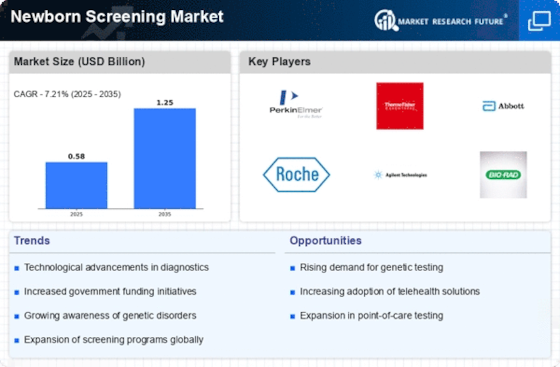
According to Market Research Future analysis, the Newborn Screening Market size was valued at USD 0.58 Billion in 2024. The market is projected to grow from USD 0.6218 Billion in 2025 to USD 1.248 Billion by 2035, registering a CAGR of 7.2% during the forecast period 2025–2035. North America led the New-Born Screening Market with over 53% share, generating around USD 0.3 Billion in revenue.
 
The Newborn Screening Market is expanding due to rising prevalence of congenital disorders and increasing emphasis on early disease detection. Key trends include advancements in genetic screening technologies, government-led universal screening programs, and growing awareness among parents, enabling timely interventions that improve infant health outcomes and reduce long-term healthcare burden globally.
 
According to the World Health Organization, newborn screening enables early detection of serious conditions, helping prevent disability and premature death through timely intervention.

Key Market Trends & Highlights

The Newborn Screening Market is poised for substantial growth driven by technological advancements and increasing awareness.

  • Technological advancements in screening methods are enhancing the accuracy and efficiency of newborn screening processes. North America remains the largest market, while the Asia-Pacific region is emerging as the fastest-growing area for newborn screening. Disorders screening continues to dominate the market, whereas congenital heart disease screening is witnessing rapid growth. Key market drivers include the rising incidence of congenital disorders and government initiatives supporting expanded screening programs.

Market Size & Forecast

2024 Market Size 0.58 (USD Billion)
2035 Market Size 1.248 (USD Billion)
CAGR (2025 - 2035) 7.21%
Largest Regional Market Share in 2024 North America

Major Players

Companies such as PerkinElmer (US), <a href="https://www.thermofisher.com/in/en/home.html">Thermo Fisher Scientific</a> (US), Abbott Laboratories (US), <a href="https://www.roche.ch/en/stories/world-rare-disease-day">Roche Diagnostics</a> (CH), Agilent Technologies (US), Bio-Rad Laboratories (US), Newborn Screening Laboratory (US), Natus Medical Incorporated (US), Mayo Clinic Laboratories (US) are some of the major participants in the global market.

Market Trends

The Newborn Screening Market is currently experiencing a transformative phase, driven by advancements in technology and an increasing awareness of the importance of early detection of congenital disorders. This market encompasses a range of tests designed to identify potential health issues in newborns shortly after birth. The growing emphasis on preventive healthcare and the rising incidence of genetic disorders are contributing to the expansion of this market.

Furthermore, the integration of innovative technologies, such as next-generation sequencing and digital health solutions, appears to enhance the accuracy and efficiency of screening processes. As healthcare systems worldwide prioritize early intervention, the demand for comprehensive newborn screening programs is likely to rise, fostering collaboration among healthcare providers, policymakers, and technology developers. In addition, regulatory frameworks are evolving to support the implementation of more extensive screening protocols.

 Governments and health organizations are increasingly recognizing the value of newborn screening in reducing long-term healthcare costs and improving quality of life for affected individuals. This shift in perspective may lead to expanded funding and resources allocated to newborn screening initiatives. Overall, the Newborn Screening Market seems poised for growth, with a focus on innovation, collaboration, and improved health outcomes for newborns.

Technological Advancements

The Newborn Screening Market is witnessing a surge in technological innovations that enhance testing capabilities. Techniques such as next-generation sequencing and multiplex assays are becoming more prevalent, allowing for the simultaneous detection of multiple disorders. These advancements not only improve the accuracy of results but also reduce the time required for diagnosis, thereby facilitating timely interventions.

According to the World Health Organization, over 120 countries have implemented digital health strategies, supporting advanced technologies like genomic sequencing in early diagnostics.

Increased Awareness and Advocacy

There is a growing awareness among parents and healthcare professionals regarding the significance of newborn screening. Advocacy groups are playing a crucial role in educating the public about the benefits of early detection of congenital conditions. This heightened awareness is likely to drive demand for comprehensive screening programs, as families seek to ensure the health and well-being of their newborns.

The UNICEF highlights that early childhood health interventions, including newborn screening, are critical as millions of infants are affected by preventable or treatable conditions annually, driving awareness initiatives.

Regulatory Support and Policy Development

The landscape of the Newborn Screening Market is being shaped by evolving regulatory frameworks that support expanded screening initiatives. Governments are increasingly recognizing the importance of early detection in improving health outcomes and reducing long-term healthcare costs. This regulatory support may lead to increased funding and resources for newborn screening programs, further driving market growth.

Pan American Health Organization are actively promoting standardized newborn screening policies across regions to improve early detection and long-term health outcomes.

New-Born Screening Market Market Drivers

Expansion of Screening Panels

The expansion of newborn screening panels is a notable trend influencing the Newborn Screening Market. Many healthcare systems are broadening their screening panels to include a wider range of disorders, driven by advancements in technology and increased understanding of genetic conditions.
 
This expansion allows for the early detection of conditions that were previously undetectable, thus improving health outcomes for affected infants. As more disorders are added to screening panels, the market is likely to see a surge in demand for testing services and related technologies. This trend not only enhances the efficacy of newborn screening but also underscores the evolving nature of the Newborn Screening Market.

Government Initiatives and Funding

Government initiatives aimed at improving public health outcomes significantly influence the Newborn Screening Market. Many countries have implemented policies mandating newborn screening for specific disorders, thereby increasing the number of infants screened annually. For instance, funding programs and grants are often allocated to support the development and implementation of screening programs.
 
This financial backing not only facilitates the expansion of existing programs but also encourages research into new screening technologies. As a result, the market is likely to experience sustained growth, driven by these supportive governmental actions that prioritize early detection and intervention.

Growing Parental Awareness and Education

Parental awareness regarding the importance of newborn screening is a vital driver for the Newborn Screening Market. As parents become more informed about the potential benefits of early detection of congenital disorders, they are more likely to advocate for comprehensive screening for their newborns.
 
Educational campaigns and advocacy groups play a significant role in disseminating information about the advantages of newborn screening, which can lead to timely interventions and improved health outcomes. This heightened awareness is expected to increase the demand for screening services, thereby contributing to the overall growth of the Newborn Screening Market.

Rising Incidence of Congenital Disorders

The increasing prevalence of congenital disorders is a primary driver for the Newborn Screening Market. Statistics indicate that approximately 1 in 33 infants is born with a congenital disorder, necessitating early detection and intervention.
 
This rising incidence compels healthcare systems to adopt comprehensive screening programs to identify conditions such as metabolic disorders, genetic syndromes, and endocrine disorders. As awareness grows regarding the benefits of early diagnosis, healthcare providers are likely to expand their screening capabilities. Consequently, this trend is expected to bolster the demand for advanced screening technologies and services, thereby propelling the Newborn Screening Market forward.

Technological Innovations in Screening Methods

Technological advancements play a crucial role in shaping the Newborn Screening Market. Innovations such as tandem mass spectrometry and genetic sequencing have revolutionized the ability to detect a wide array of disorders from a single blood sample.
 
These technologies not only enhance the accuracy and efficiency of screenings but also reduce the time required for results. As a result, healthcare providers are increasingly adopting these advanced methods, leading to a projected growth rate of around 10% in the market. The integration of artificial intelligence and machine learning in data analysis further augments the potential of these technologies, making them indispensable in the Newborn Screening Market.

Market Segment Insights

By Test Type: Disorders Screening (Largest) vs. Congenital Heart Disease Screening (Fastest-Growing)

The Newborn Screening Market is primarily driven by various test types, with Disorders Screening holding the largest market share. This segment encompasses a broad spectrum of inherited disorders, enabling prompt interventions that significantly enhance neonatal health outcomes. It is followed by Genetic Screening, Hearing Screening, and Congenital Heart Disease Screening, each catering to critical health requirements for newborns. As public awareness and healthcare initiatives grow, the share distribution among these test types continues to evolve, reflecting the importance of comprehensive newborn screening practices. As healthcare organizations strive to improve early detection methods, growth within the Newborn Screening Market is notable. Congenital Heart Disease Screening is emerging as the fastest-growing segment due to the increasing prevalence of congenital heart defects and rising initiatives aimed at early identification. Factors contributing to this growth include enhanced technological advancements in diagnostic tools, increased healthcare expenditure, and stronger regulatory support for newborn screening programs, creating a favorable environment for market expansion.

Hearing Screening (Dominant) vs. Genetic Screening (Emerging)

Hearing Screening has established itself as a dominant segment in the Newborn Screening Market due to its critical role in identifying hearing impairments shortly after birth. Early detection through hearing screenings enables timely interventions, which dramatically improve language development and educational outcomes for affected children. In contrast, Genetic Screening has emerged as a vital component of comprehensive newborn screening protocols. With advancements in genome sequencing and growing understanding of genetic disorders, this segment is gaining traction, as it allows for the identification of hereditary conditions and personalized healthcare strategies. Both segments play essential roles in ensuring healthier futures for newborns, underscoring the increasing emphasis on early detection and preventive healthcare in contemporary medical practices.

By Technology: Mass Spectrometry (Largest) vs. DNA Sequencing (Fastest-Growing)

In the Newborn Screening Market, the technology segment is increasingly dominated by Mass Spectrometry, which holds the largest share in terms of market adoption and reliability. Liquid Chromatography and Immunoassays also contribute significantly, although they fall behind in comparison to Mass Spectrometry's widespread acceptance. DNA Sequencing, while currently smaller in market share, is gaining attention due to its advanced capabilities and precision. Growth trends indicate a shift towards more sophisticated technologies, driven by the need for accurate diagnostics in newborn screening. As healthcare providers emphasize early detection of metabolic and genetic disorders, technologies like DNA Sequencing are emerging rapidly. Innovation and ongoing research are expected to further enhance these technologies, leading to greater investment and adoption in the coming years.

Mass Spectrometry (Dominant) vs. DNA Sequencing (Emerging)

Mass Spectrometry has established itself as the dominant technology in the Newborn Screening Market due to its effectiveness in detecting a wide range of metabolic disorders with high sensitivity and specificity. Healthcare providers prefer it for its reliability and comprehensive screening capabilities, making it a crucial component of newborn screening programs worldwide. On the other hand, DNA Sequencing is categorized as an emerging technology, reflecting its growing role in identifying genetic disorders at a molecular level. As advancements in this field continue, it shows promise for enhancing diagnostic accuracy and personalizing treatment options for newborns, thereby carving out a significant niche in the market.

By End User: Hospitals (Largest) vs. Diagnostic Laboratories (Fastest-Growing)

In the Newborn Screening Market, hospitals constitute the largest end user segment, capturing a significant share of the overall market. These institutions are crucial for implementing comprehensive screening programs due to their access to neonatal care units and a larger patient base. Conversely, diagnostic laboratories are rapidly growing, driven by the increasing demand for advanced screening technologies and a rise in the prevalence of congenital disorders that necessitate early detection for effective management.

Hospitals (Dominant) vs. Research Institutions (Emerging)

Hospitals serve as the dominant end user in the Newborn Screening Market, equipped with the resources to provide immediate screening and follow-up care, thereby ensuring timely treatment for newborns. Their infrastructure allows for the integration of screening tests into routine maternal and neonatal care. On the other hand, research institutions are emerging as significant contributors to the market, focusing on the development and validation of innovative screening technologies. These institutions play a pivotal role in advancing research, leading to breakthroughs that enhance screening accuracy and expand the range of detectable conditions, responding to the growing demand for personalized healthcare.

Get more detailed insights about Newborn Screening Market Research Report - Forecast till 2035

Regional Insights

The Newborn Screening Market gained a significant traction, with particular growth observed in the Regional segment, which includes North America, Europe, APAC, South America, and the Middle East and Africa (MEA). In 2024, the market reached 2.13 USD Billion, with North America leads in the New-Born Screening Market, accounting for over 53% of the global revenue in 2024, showcasing its dominance due to advanced healthcare infrastructure and awareness of newborn diseases. Europe follows closely, valued at 0.65 USD Billion, benefiting from stringent regulatory frameworks enhancing screening programs.

The Asia-Pacific (APAC) region, riding on rising healthcare investments, reached 0.45 USD Billion in 2024. Meanwhile, South America and MEA, although smaller markets at 0.05 USD Billion and 0.13 USD Billion respectively, illustrate growth potential driven by increasing healthcare accessibility and innovation in reproductive health solutions. The importance of these regions in the Newborn Screening Market is reflected in their commitment to improving infant care, thus presenting various opportunities for expansion and market growth as global awareness regarding early disease detection continues to rise.

Key Players and Competitive Insights

The Newborn Screening Market has become increasingly competitive as awareness regarding early detection and treatment of congenital and genetic disorders continues to rise. This market includes a range of screening tests and technologies that are essential for identifying conditions that can significantly impact a child’s health and development.
 
With advancements in technology, the efficacy and accuracy of these screening tools have improved, fostering a dynamic industry landscape. In this competitive environment, companies engage in strategic collaborations, mergers, and acquisitions to expand their market presence while differentiating their offerings through innovation and product development. As a result, stakeholders are focused on leveraging advanced research and development along with effective marketing strategies to capture a larger share of this growing market.

Neogen Corporation


Neogen Corporation has established itself as a notable player in the Newborn Screening Market, highlighting its strengths in innovative solutions that emphasize safety and health. The company is recognized for its commitment to developing high-quality products that ensure accurate and prompt diagnosis of newborn conditions. Neogen Corporation’s extensive portfolio addresses critical needs in the screening market, which is vital for early interventions.
 
The company's ability to leverage its expertise in biosciences, combined with its strong research and development capabilities, has allowed it to maintain a competitive edge. With a global footprint and strategic partnerships in various regions, Neogen Corporation effectively positions itself as a trusted provider in newborn healthcare, addressing the challenges linked to infant screening and improving overall patient outcomes.

Abbott Laboratories


Abbott Laboratories holds a significant position in the Newborn Screening Market, renowned for its comprehensive range of technologies and tools that facilitate early diagnosis of metabolic and genetic disorders. The company offers key products such as diagnostic instruments and reagents that play a critical role in newborn screening programs across diverse healthcare settings. Abbott Laboratories has a robust market presence due to its continuous investment in research and development, resulting in cutting-edge innovations tailored to meet the evolving needs of healthcare providers.
 
The strength of the company lies in its established relationships with healthcare systems and regulators, enabling it to effectively navigate the complexities of the global market. Additionally, Abbott Laboratories has actively pursued mergers and acquisitions to enhance its product offerings and expand its reach, solidifying its status as a leading entity in the newborn screening industry on a global scale.

Key Companies in the New-Born Screening Market include

Industry Developments

Newborn Screening Market Industry Developments

The Newborn Screening Market has seen significant developments recently, particularly with advancements in genetic testing and technologies aimed at enhancing screening programs. Companies like Neogen Corporation and Abbott Laboratories have been increasing their innovation in the field, focusing on providing comprehensive screening tests for newborns. In September 2023, Roche Diagnostics launched a new portfolio aimed at boosting newborn screening efficiency, showcasing a commitment to improving early detection rates.

In terms of mergers and acquisitions, LifeLabs acquired a smaller biotechnology company in August 2023, focusing on expanding its capabilities in newborn screening assays, a move that signals growth and consolidation in the sector. Furthermore, the market valuation for companies like BD and Thermo Fisher Scientific has shown a steady increase, attributed to the rising awareness of genetic disorders and the growing demand for early diagnostic solutions.

Over the past two to three years, notable changes have included regulatory updates in countries globally, aimed at enhancing newborn screening programs to facilitate better healthcare outcomes, ensuring higher compliance with international standards.

Future Outlook

New-Born Screening Market Future Outlook

The Newborn Screening Market is projected to reach USD 1.248 Billion by 2035, growing at a CAGR of 7.2%, driven by technological advancements, increased awareness, and government initiatives.

New opportunities lie in:

  • <p>Integration of AI-driven diagnostic tools for enhanced accuracy. Expansion of telehealth services for remote screening access. Development of comprehensive screening panels for rare diseases.</p>

By 2035, the market is expected to be robust, driven by innovation and expanded service offerings.

Market Segmentation

New-Born Screening Market End User Outlook

  • Hospitals
  • Diagnostic Laboratories
  • Research Institutions

New-Born Screening Market Test Type Outlook

  • Disorders Screening
  • Genetic Screening
  • Hearing Screening
  • Congenital Heart Disease Screening

New-Born Screening Market Technology Outlook

  • Mass Spectrometry
  • Liquid Chromatography
  • Immunoassays
  • DNA Sequencing

Report Scope

MARKET SIZE 2024 0.58(USD Billion)
MARKET SIZE 2025 0.6218(USD Billion)
MARKET SIZE 2035 1.248(USD Billion)
COMPOUND ANNUAL GROWTH RATE (CAGR) 7.21% (2025 - 2035)
REPORT COVERAGE Revenue Forecast, Competitive Landscape, Growth Factors, and Trends
BASE YEAR 2024
Market Forecast Period 2025 - 2035
Historical Data 2019 - 2024
Market Forecast Units USD Billion
Key Companies Profiled PerkinElmer (US), Thermo Fisher Scientific (US), Abbott Laboratories (US), Roche Diagnostics (CH), Agilent Technologies (US), Bio-Rad Laboratories (US), Newborn Screening Laboratory (US), Natus Medical Incorporated (US), Mayo Clinic Laboratories (US)
Segments Covered Test Type, Technology, End User, Region, Regional
Key Market Opportunities Integration of advanced genetic testing technologies enhances early detection capabilities in the Newborn Screening Market.
Key Market Dynamics Technological advancements and regulatory changes drive innovation and competition in the newborn screening market.
Countries Covered North America, Europe, APAC, South America, MEA

FAQs

What is the projected market valuation of the Newborn Screening Market by 2035?

<p>The Newborn Screening Market is projected to reach a valuation of 1.248 USD Billion by 2035.</p>

What was the market valuation of the Newborn Screening Market in 2024?

<p>In 2024, the Newborn Screening Market was valued at 0.58 USD Billion.</p>

What is the expected CAGR for the Newborn Screening Market during the forecast period 2025 - 2035?

<p>The expected CAGR for the Newborn Screening Market during the forecast period 2025 - 2035 is 7.21%.</p>

Which companies are considered key players in the Newborn Screening Market?

<p>Key players in the Newborn Screening Market include PerkinElmer, Thermo Fisher Scientific, Abbott Laboratories, and Roche Diagnostics.</p>

What are the main segments of the Newborn Screening Market?

<p>The main segments of the Newborn Screening Market include Test Type, Technology, and End User.</p>

How much is the Disorders Screening segment expected to grow by 2035?

<p>The Disorders Screening segment is expected to grow from 0.2 USD Billion in 2024 to 0.45 USD Billion by 2035.</p>

What is the projected growth for the Genetic Screening segment by 2035?

<p>The Genetic Screening segment is projected to increase from 0.15 USD Billion in 2024 to 0.3 USD Billion by 2035.</p>

Which technology segment is anticipated to have the highest growth in the Newborn Screening Market?

<p>The Immunoassays technology segment is anticipated to grow from 0.18 USD Billion in 2024 to 0.4 USD Billion by 2035.</p>

What is the expected market size for hospitals as end users in the Newborn Screening Market by 2035?

<p>The market size for hospitals as end users is expected to reach 0.55 USD Billion by 2035.</p>

How does the market for Diagnostic Laboratories compare to Research Institutions in 2035?

<p>By 2035, the market for Diagnostic Laboratories is expected to be 0.45 USD Billion, while Research Institutions are projected at 0.25 USD Billion.</p>

  1. SECTION I: EXECUTIVE SUMMARY AND KEY HIGHLIGHTS |
    1. EXECUTIVE SUMMARY | |
      1. Market Overview | |
      2. Key Findings | |
      3. Market Segmentation | |
      4. Competitive Landscape | |
      5. Challenges and Opportunities | |
      6. Future Outlook 2
  2. SECTION II: SCOPING, METHODOLOGY AND MARKET STRUCTURE |
    1. MARKET INTRODUCTION | |
      1. Definition | |
      2. Scope of the study | | |
    2. RESEARCH METHODOLOGY | |
      1. Overview | |
      2. Data Mining | |
      3. Secondary Research | |
      4. Primary Research | | |
      5. Forecasting Model | |
      6. Market Size Estimation | | |
      7. Data Triangulation | |
      8. Validation 3
  3. SECTION III: QUALITATIVE ANALYSIS |
    1. MARKET DYNAMICS | |
      1. Overview | |
      2. Drivers | |
      3. Restraints | |
      4. Opportunities |
    2. MARKET FACTOR ANALYSIS | |
      1. Value chain Analysis | |
      2. Porter's Five Forces Analysis | | |
      3. COVID-19 Impact Analysis | | |
  4. SECTION IV: QUANTITATIVE ANALYSIS |
    1. Healthcare, BY Test Type (USD Billion) | |
      1. Disorders Screening | |
      2. Genetic Screening | |
      3. Hearing Screening | |
      4. Congenital Heart Disease Screening |
    2. Healthcare, BY Technology (USD Billion) | |
      1. Mass Spectrometry | |
      2. Liquid Chromatography | |
      3. Immunoassays | |
      4. DNA Sequencing |
    3. Healthcare, BY End User (USD Billion) | |
      1. Hospitals | |
      2. Diagnostic Laboratories | |
      3. Research Institutions |
    4. Healthcare, BY Region (USD Billion) | |
      1. North America | | |
      2. Europe | | |
      3. APAC | | |
      4. South America | | |
      5. MEA | | |
  5. SECTION V: COMPETITIVE ANALYSIS |
    1. Competitive Landscape | |
      1. Overview | |
      2. Competitive Analysis | |
      3. Market share Analysis | |
      4. Major Growth Strategy in the Healthcare | |
      5. Competitive Benchmarking | |
      6. Leading Players in Terms of Number of Developments in the Healthcare | |
      7. Key developments and growth strategies | | |
      8. Major Players Financial Matrix | | |
    2. Company Profiles | |
      1. PerkinElmer (US) | | |
      2. Thermo Fisher Scientific (US) | | |
      3. Abbott Laboratories (US) | | |
      4. Roche Diagnostics (CH) | | |
      5. Agilent Technologies (US) | | |
      6. Bio-Rad Laboratories (US) | | |
      7. Newborn Screening Laboratory (US) | | |
      8. Natus Medical Incorporated (US) | | |
      9. Mayo Clinic Laboratories (US) | | |
    3. Appendix | |
      1. References | |
      2. Related Reports 6 LIST OF FIGURES |
    4. MARKET SYNOPSIS |
    5. NORTH AMERICA MARKET ANALYSIS |
    6. US MARKET ANALYSIS BY TEST TYPE |
    7. US MARKET ANALYSIS BY TECHNOLOGY |
    8. US MARKET ANALYSIS BY END USER |
    9. CANADA MARKET ANALYSIS BY TEST TYPE |
    10. CANADA MARKET ANALYSIS BY TECHNOLOGY |
    11. CANADA MARKET ANALYSIS BY END USER |
    12. EUROPE MARKET ANALYSIS |
    13. GERMANY MARKET ANALYSIS BY TEST TYPE |
    14. GERMANY MARKET ANALYSIS BY TECHNOLOGY |
    15. GERMANY MARKET ANALYSIS BY END USER |
    16. UK MARKET ANALYSIS BY TEST TYPE |
    17. UK MARKET ANALYSIS BY TECHNOLOGY |
    18. UK MARKET ANALYSIS BY END USER |
    19. FRANCE MARKET ANALYSIS BY TEST TYPE |
    20. FRANCE MARKET ANALYSIS BY TECHNOLOGY |
    21. FRANCE MARKET ANALYSIS BY END USER |
    22. RUSSIA MARKET ANALYSIS BY TEST TYPE |
    23. RUSSIA MARKET ANALYSIS BY TECHNOLOGY |
    24. RUSSIA MARKET ANALYSIS BY END USER |
    25. ITALY MARKET ANALYSIS BY TEST TYPE |
    26. ITALY MARKET ANALYSIS BY TECHNOLOGY |
    27. ITALY MARKET ANALYSIS BY END USER |
    28. SPAIN MARKET ANALYSIS BY TEST TYPE |
    29. SPAIN MARKET ANALYSIS BY TECHNOLOGY |
    30. SPAIN MARKET ANALYSIS BY END USER |
    31. REST OF EUROPE MARKET ANALYSIS BY TEST TYPE |
    32. REST OF EUROPE MARKET ANALYSIS BY TECHNOLOGY |
    33. REST OF EUROPE MARKET ANALYSIS BY END USER |
    34. APAC MARKET ANALYSIS |
    35. CHINA MARKET ANALYSIS BY TEST TYPE |
    36. CHINA MARKET ANALYSIS BY TECHNOLOGY |
    37. CHINA MARKET ANALYSIS BY END USER |
    38. INDIA MARKET ANALYSIS BY TEST TYPE |
    39. INDIA MARKET ANALYSIS BY TECHNOLOGY |
    40. INDIA MARKET ANALYSIS BY END USER |
    41. JAPAN MARKET ANALYSIS BY TEST TYPE |
    42. JAPAN MARKET ANALYSIS BY TECHNOLOGY |
    43. JAPAN MARKET ANALYSIS BY END USER |
    44. SOUTH KOREA MARKET ANALYSIS BY TEST TYPE |
    45. SOUTH KOREA MARKET ANALYSIS BY TECHNOLOGY |
    46. SOUTH KOREA MARKET ANALYSIS BY END USER |
    47. MALAYSIA MARKET ANALYSIS BY TEST TYPE |
    48. MALAYSIA MARKET ANALYSIS BY TECHNOLOGY |
    49. MALAYSIA MARKET ANALYSIS BY END USER |
    50. THAILAND MARKET ANALYSIS BY TEST TYPE |
    51. THAILAND MARKET ANALYSIS BY TECHNOLOGY |
    52. THAILAND MARKET ANALYSIS BY END USER |
    53. INDONESIA MARKET ANALYSIS BY TEST TYPE |
    54. INDONESIA MARKET ANALYSIS BY TECHNOLOGY |
    55. INDONESIA MARKET ANALYSIS BY END USER |
    56. REST OF APAC MARKET ANALYSIS BY TEST TYPE |
    57. REST OF APAC MARKET ANALYSIS BY TECHNOLOGY |
    58. REST OF APAC MARKET ANALYSIS BY END USER |
    59. SOUTH AMERICA MARKET ANALYSIS |
    60. BRAZIL MARKET ANALYSIS BY TEST TYPE |
    61. BRAZIL MARKET ANALYSIS BY TECHNOLOGY |
    62. BRAZIL MARKET ANALYSIS BY END USER |
    63. MEXICO MARKET ANALYSIS BY TEST TYPE |
    64. MEXICO MARKET ANALYSIS BY TECHNOLOGY |
    65. MEXICO MARKET ANALYSIS BY END USER |
    66. ARGENTINA MARKET ANALYSIS BY TEST TYPE |
    67. ARGENTINA MARKET ANALYSIS BY TECHNOLOGY |
    68. ARGENTINA MARKET ANALYSIS BY END USER |
    69. REST OF SOUTH AMERICA MARKET ANALYSIS BY TEST TYPE |
    70. REST OF SOUTH AMERICA MARKET ANALYSIS BY TECHNOLOGY |
    71. REST OF SOUTH AMERICA MARKET ANALYSIS BY END USER |
    72. MEA MARKET ANALYSIS |
    73. GCC COUNTRIES MARKET ANALYSIS BY TEST TYPE |
    74. GCC COUNTRIES MARKET ANALYSIS BY TECHNOLOGY |
    75. GCC COUNTRIES MARKET ANALYSIS BY END USER |
    76. SOUTH AFRICA MARKET ANALYSIS BY TEST TYPE |
    77. SOUTH AFRICA MARKET ANALYSIS BY TECHNOLOGY |
    78. SOUTH AFRICA MARKET ANALYSIS BY END USER |
    79. REST OF MEA MARKET ANALYSIS BY TEST TYPE |
    80. REST OF MEA MARKET ANALYSIS BY TECHNOLOGY |
    81. REST OF MEA MARKET ANALYSIS BY END USER |
    82. KEY BUYING CRITERIA OF HEALTHCARE |
    83. RESEARCH PROCESS OF MRFR |
    84. DRO ANALYSIS OF HEALTHCARE |
    85. DRIVERS IMPACT ANALYSIS: HEALTHCARE |
    86. RESTRAINTS IMPACT ANALYSIS: HEALTHCARE |
    87. SUPPLY / VALUE CHAIN: HEALTHCARE |
    88. HEALTHCARE, BY TEST TYPE, 2024 (% SHARE) |
    89. HEALTHCARE, BY TEST TYPE, 2024 TO 2035 (USD Billion) |
    90. HEALTHCARE, BY TECHNOLOGY, 2024 (% SHARE) |
    91. HEALTHCARE, BY TECHNOLOGY, 2024 TO 2035 (USD Billion) |
    92. HEALTHCARE, BY END USER, 2024 (% SHARE) |
    93. HEALTHCARE, BY END USER, 2024 TO 2035 (USD Billion) |
    94. BENCHMARKING OF MAJOR COMPETITORS 7 LIST OF TABLES |
    95. LIST OF ASSUMPTIONS | |
      1. |
    96. North America MARKET SIZE ESTIMATES; FORECAST | |
      1. BY TEST TYPE, 2025-2035 (USD Billion) | |
      2. BY TECHNOLOGY, 2025-2035 (USD Billion) | |
      3. BY END USER, 2025-2035 (USD Billion) |
    97. US MARKET SIZE ESTIMATES; FORECAST | |
      1. BY TEST TYPE, 2025-2035 (USD Billion) | |
      2. BY TECHNOLOGY, 2025-2035 (USD Billion) | |
      3. BY END USER, 2025-2035 (USD Billion) |
    98. Canada MARKET SIZE ESTIMATES; FORECAST | |
      1. BY TEST TYPE, 2025-2035 (USD Billion) | |
      2. BY TECHNOLOGY, 2025-2035 (USD Billion) | |
      3. BY END USER, 2025-2035 (USD Billion) |
    99. Europe MARKET SIZE ESTIMATES; FORECAST | |
      1. BY TEST TYPE, 2025-2035 (USD Billion) | |
      2. BY TECHNOLOGY, 2025-2035 (USD Billion) | |
      3. BY END USER, 2025-2035 (USD Billion) |
    100. Germany MARKET SIZE ESTIMATES; FORECAST | |
      1. BY TEST TYPE, 2025-2035 (USD Billion) | |
      2. BY TECHNOLOGY, 2025-2035 (USD Billion) | |
      3. BY END USER, 2025-2035 (USD Billion) |
    101. UK MARKET SIZE ESTIMATES; FORECAST | |
      1. BY TEST TYPE, 2025-2035 (USD Billion) | |
      2. BY TECHNOLOGY, 2025-2035 (USD Billion) | |
      3. BY END USER, 2025-2035 (USD Billion) |
    102. France MARKET SIZE ESTIMATES; FORECAST | |
      1. BY TEST TYPE, 2025-2035 (USD Billion) | |
      2. BY TECHNOLOGY, 2025-2035 (USD Billion) | |
      3. BY END USER, 2025-2035 (USD Billion) |
    103. Russia MARKET SIZE ESTIMATES; FORECAST | |
      1. BY TEST TYPE, 2025-2035 (USD Billion) | |
      2. BY TECHNOLOGY, 2025-2035 (USD Billion) | |
      3. BY END USER, 2025-2035 (USD Billion) |
    104. Italy MARKET SIZE ESTIMATES; FORECAST | |
      1. BY TEST TYPE, 2025-2035 (USD Billion) | |
      2. BY TECHNOLOGY, 2025-2035 (USD Billion) | |
      3. BY END USER, 2025-2035 (USD Billion) |
    105. Spain MARKET SIZE ESTIMATES; FORECAST | |
      1. BY TEST TYPE, 2025-2035 (USD Billion) | |
      2. BY TECHNOLOGY, 2025-2035 (USD Billion) | |
      3. BY END USER, 2025-2035 (USD Billion) |
    106. Rest of Europe MARKET SIZE ESTIMATES; FORECAST | |
      1. BY TEST TYPE, 2025-2035 (USD Billion) | |
      2. BY TECHNOLOGY, 2025-2035 (USD Billion) | |
      3. BY END USER, 2025-2035 (USD Billion) |
    107. APAC MARKET SIZE ESTIMATES; FORECAST | |
      1. BY TEST TYPE, 2025-2035 (USD Billion) | |
      2. BY TECHNOLOGY, 2025-2035 (USD Billion) | |
      3. BY END USER, 2025-2035 (USD Billion) |
    108. China MARKET SIZE ESTIMATES; FORECAST | |
      1. BY TEST TYPE, 2025-2035 (USD Billion) | |
      2. BY TECHNOLOGY, 2025-2035 (USD Billion) | |
      3. BY END USER, 2025-2035 (USD Billion) |
    109. India MARKET SIZE ESTIMATES; FORECAST | |
      1. BY TEST TYPE, 2025-2035 (USD Billion) | |
      2. BY TECHNOLOGY, 2025-2035 (USD Billion) | |
      3. BY END USER, 2025-2035 (USD Billion) |
    110. Japan MARKET SIZE ESTIMATES; FORECAST | |
      1. BY TEST TYPE, 2025-2035 (USD Billion) | |
      2. BY TECHNOLOGY, 2025-2035 (USD Billion) | |
      3. BY END USER, 2025-2035 (USD Billion) |
    111. South Korea MARKET SIZE ESTIMATES; FORECAST | |
      1. BY TEST TYPE, 2025-2035 (USD Billion) | |
      2. BY TECHNOLOGY, 2025-2035 (USD Billion) | |
      3. BY END USER, 2025-2035 (USD Billion) |
    112. Malaysia MARKET SIZE ESTIMATES; FORECAST | |
      1. BY TEST TYPE, 2025-2035 (USD Billion) | |
      2. BY TECHNOLOGY, 2025-2035 (USD Billion) | |
      3. BY END USER, 2025-2035 (USD Billion) |
    113. Thailand MARKET SIZE ESTIMATES; FORECAST | |
      1. BY TEST TYPE, 2025-2035 (USD Billion) | |
      2. BY TECHNOLOGY, 2025-2035 (USD Billion) | |
      3. BY END USER, 2025-2035 (USD Billion) |
    114. Indonesia MARKET SIZE ESTIMATES; FORECAST | |
      1. BY TEST TYPE, 2025-2035 (USD Billion) | |
      2. BY TECHNOLOGY, 2025-2035 (USD Billion) | |
      3. BY END USER, 2025-2035 (USD Billion) |
    115. Rest of APAC MARKET SIZE ESTIMATES; FORECAST | |
      1. BY TEST TYPE, 2025-2035 (USD Billion) | |
      2. BY TECHNOLOGY, 2025-2035 (USD Billion) | |
      3. BY END USER, 2025-2035 (USD Billion) |
    116. South America MARKET SIZE ESTIMATES; FORECAST | |
      1. BY TEST TYPE, 2025-2035 (USD Billion) | |
      2. BY TECHNOLOGY, 2025-2035 (USD Billion) | |
      3. BY END USER, 2025-2035 (USD Billion) |
    117. Brazil MARKET SIZE ESTIMATES; FORECAST | |
      1. BY TEST TYPE, 2025-2035 (USD Billion) | |
      2. BY TECHNOLOGY, 2025-2035 (USD Billion) | |
      3. BY END USER, 2025-2035 (USD Billion) |
    118. Mexico MARKET SIZE ESTIMATES; FORECAST | |
      1. BY TEST TYPE, 2025-2035 (USD Billion) | |
      2. BY TECHNOLOGY, 2025-2035 (USD Billion) | |
      3. BY END USER, 2025-2035 (USD Billion) |
    119. Argentina MARKET SIZE ESTIMATES; FORECAST | |
      1. BY TEST TYPE, 2025-2035 (USD Billion) | |
      2. BY TECHNOLOGY, 2025-2035 (USD Billion) | |
      3. BY END USER, 2025-2035 (USD Billion) |
    120. Rest of South America MARKET SIZE ESTIMATES; FORECAST | |
      1. BY TEST TYPE, 2025-2035 (USD Billion) | |
      2. BY TECHNOLOGY, 2025-2035 (USD Billion) | |
      3. BY END USER, 2025-2035 (USD Billion) |
    121. MEA MARKET SIZE ESTIMATES; FORECAST | |
      1. BY TEST TYPE, 2025-2035 (USD Billion) | |
      2. BY TECHNOLOGY, 2025-2035 (USD Billion) | |
      3. BY END USER, 2025-2035 (USD Billion) |
    122. GCC Countries MARKET SIZE ESTIMATES; FORECAST | |
      1. BY TEST TYPE, 2025-2035 (USD Billion) | |
      2. BY TECHNOLOGY, 2025-2035 (USD Billion) | |
      3. BY END USER, 2025-2035 (USD Billion) |
    123. South Africa MARKET SIZE ESTIMATES; FORECAST | |
      1. BY TEST TYPE, 2025-2035 (USD Billion) | |
      2. BY TECHNOLOGY, 2025-2035 (USD Billion) | |
      3. BY END USER, 2025-2035 (USD Billion) |
    124. Rest of MEA MARKET SIZE ESTIMATES; FORECAST | |
      1. BY TEST TYPE, 2025-2035 (USD Billion) | |
      2. BY TECHNOLOGY, 2025-2035 (USD Billion) | |
      3. BY END USER, 2025-2035 (USD Billion) |
    125. PRODUCT LAUNCH/PRODUCT DEVELOPMENT/APPROVAL | |
      1. |
    126. ACQUISITION/PARTNERSHIP | |

Healthcare Market Segmentation

Healthcare By Test Type (USD Billion, 2025-2035)

  • Disorders Screening
  • Genetic Screening
  • Hearing Screening
  • Congenital Heart Disease Screening

Healthcare By Technology (USD Billion, 2025-2035)

  • Mass Spectrometry
  • Liquid Chromatography
  • Immunoassays
  • DNA Sequencing

Healthcare By End User (USD Billion, 2025-2035)

  • Hospitals
  • Diagnostic Laboratories
  • Research Institutions
Infographic

Free Sample Request

Kindly complete the form below to receive a free sample of this Report

Get Free Sample

Customer Strories

Compare Licence

×
Features License Type
Single User Multiuser License Enterprise User
Price $4,950 $5,950 $7,250
Maximum User Access Limit 1 User Upto 10 Users Unrestricted Access Throughout the Organization
Free Customization
Direct Access to Analyst
Deliverable Format
Platform Access
Discount on Next Purchase 10% 15% 15%
Printable Versions
%>