Request Free Sample ×

Kindly complete the form below to receive a free sample of this Report

* Please use a valid business email

Leading companies partner with us for data-driven Insights

clients tt-cursor
Hero Background
English
Chinese
French
Japanese
Korean
German
Spanish

Neonatal Intensive Care Market Trends

ID: MRFR/HC/6044-CR
197 Pages
Vikita Thakur
December 2024

Neonatal Intensive Care Market Research Report Information, By Product (Incubator, Warmer, Respiratory Equipment, Phototherapy Equipment, Surgical & Monitoring Equipment), By End-User (Hospitals, and Maternal-Fetal Medicine Centers) And by Region (North America, Europe, Asia-Pacific, And Rest of The World) –Market Forecast Till 2035

Share:
Download PDF ×

We do not share your information with anyone. However, we may send you emails based on your report interest from time to time. You may contact us at any time to opt-out.

Neonatal Intensive Care Market Infographic
Purchase Options

Market Trends

Key Emerging Trends in the Neonatal Intensive Care Market

The Neonatal Intensive Care Market is experiencing dynamic tendencies influenced by technological advancements, increasing untimely births, and a developing emphasis on specialized take care of newborns. Here, we discover key market tendencies shaping the Neonatal Intensive Care landscape. One of the dominant traits inside the Neonatal Intensive Care market is the escalating prevalence of preterm births globally. With a better variety of infants requiring specialized scientific interest, there may be a growing demand for advanced devices and technologies within Neonatal Intensive Care devices (NICUs). There is a growing trend toward customized medicinal drugs in neonatology. Tailored treatment plans and interventions primarily based on the man or woman's neonatal needs, genetic elements, and medical histories are becoming extra accepted, contributing to stepped-forward results and decreased dangers. The Neonatal Intensive Care marketplace is witnessing a shift in the direction of mild ventilation strategies to minimize lung harm in premature toddlers. Innovative respiratory assist technology intends to offer effective airflow while decreasing the hazard of headaches associated with traditional strategies. Similar to the fetal care marketplace, the Neonatal Intensive Care area is embracing artificial intelligence for information evaluation, predictive analytics, and early detection of capability fitness troubles. AI programs decorate decision-making tactics, permitting healthcare vendors to supply more proactive and personalized care. A top-notch trend in Neonatal Intensive Care is the extended emphasis on family-focused care. Healthcare providers are recognizing the importance of concerning dad and mom within the care process, fostering conversation, and providing assistance to families with babies in NICUs. Neonatal nutrition is a key focus vicinity, with ongoing improvements in nutritional help for preterm infants. Specialized formulation, fortified breast milk, and superior feeding techniques are being advanced to cope with the specific nutritional necessities of neonates within the NICU. Collaboration among healthcare institutions, research groups, and industry players is on the rise. These partnerships facilitate joint studies and improvement efforts, leading to the creation of revolutionary solutions and advancements in Neonatal Intensive Care practices. Adherence to regulatory standards and the establishment of standardized protocols are crucial trends in the Neonatal Intensive Care market. Manufacturers and healthcare establishments are focusing on ensuring compliance with safety rules to beautify the best and reliability of neonatal care systems. The marketplace is witnessing efforts to increase recognition and training about neonatal care among healthcare professionals and dads and moms. Training packages, informational campaigns, and academic sources make contributions to improved understanding and greater care for neonates.

Author
Author Profile
Vikita Thakur
Senior Research Analyst

She holds an experience of about 5+ years in market research and business consulting projects for sectors such as life sciences, medical devices, and healthcare IT. She possesses a robust background in data analysis, market estimation, competitive intelligence, pipeline analysis market trend identification, and consumer behavior insights. Her expertise lies in technical Sales support, client interaction and project management, designing and implementing market research studies, conducting competitive analysis, and synthesizing complex data into actionable recommendations that drive business growth.

Leave a Comment

FAQs

What is the current valuation of the Neonatal Intensive Care Market?

<p>The Neonatal Intensive Care Market was valued at 10.49 USD Billion in 2024.</p>

What is the projected market size for the Neonatal Intensive Care Market by 2035?

<p>The market is projected to reach 20.38 USD Billion by 2035.</p>

What is the expected CAGR for the Neonatal Intensive Care Market from 2025 to 2035?

<p>The expected CAGR during the forecast period 2025 - 2035 is 6.22%.</p>

Which product segment is anticipated to have the highest growth in the Neonatal Intensive Care Market?

<p>The Surgical and Monitoring Equipment segment is expected to grow from 3.69 USD Billion to 6.88 USD Billion.</p>

How does the Incubator segment perform in the Neonatal Intensive Care Market?

<p>The Incubator segment was valued at 2.1 USD Billion in 2024 and is projected to grow to 4.0 USD Billion by 2035.</p>

What are the key players in the Neonatal Intensive Care Market?

Key players include GE Healthcare, Philips, Medtronic, Dräger, and Natus Medical.

What is the market size for Respiratory Equipment in the Neonatal Intensive Care Market?

The Respiratory Equipment segment was valued at 2.0 USD Billion in 2024 and is expected to reach 4.0 USD Billion by 2035.

Which end-user segment shows significant growth potential in the Neonatal Intensive Care Market?

The Hospitals segment is projected to grow from 6.29 USD Billion in 2024 to 12.0 USD Billion by 2035.

What is the expected growth for Phototherapy Equipment in the Neonatal Intensive Care Market?

The Phototherapy Equipment segment is anticipated to increase from 1.2 USD Billion to 2.5 USD Billion by 2035.

How does the Maternal-Fetal Medicine Centers segment compare in size to Hospitals in the Neonatal Intensive Care Market?

The Maternal-Fetal Medicine Centers segment was valued at 4.2 USD Billion in 2024, significantly lower than the Hospitals segment.

Market Summary

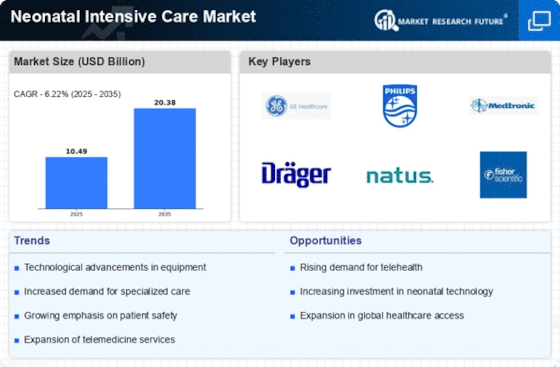
According to MRFR analysis, the Neonatal Intensive Care Market Size was valued at USD 10.49 Billion in 2024. The market is projected to grow from USD 11.14 Billion in 2025 to USD 20.38 Billion by 2035, registering a CAGR of 6.22% during the forecast 2025–2035. North America led the market with over 44.80% share, generating around USD 4.70 billion in revenue. 
 
The Neonatal Intensive Care Market is expanding due to rising preterm births, increasing neonatal complications, and growing demand for advanced critical care for newborns. Key trends include adoption of advanced monitoring systems, improved respiratory support technologies, and expanding neonatal care infrastructure, supported by government and global health initiatives to reduce infant mortality. 
 
The UNICEF reports that approximately 2.3 million newborns die within the first month of life each year, highlighting the critical need for specialized neonatal care.

Key Market Trends & Highlights

The Neonatal Intensive Care Market is poised for substantial growth driven by technological advancements and increasing demand for specialized services.

  • Technological advancements in neonatal care are enhancing patient outcomes and operational efficiency. Telemedicine integration is becoming increasingly prevalent, facilitating remote monitoring and consultations. North America remains the largest market, while the Asia-Pacific region is emerging as the fastest-growing area for neonatal intensive care. The rising prevalence of neonatal conditions and government support for healthcare funding are key drivers propelling market expansion.

Market Size & Forecast

2024 Market Size 10.49 (USD Billion)
2035 Market Size 20.38 (USD Billion)
CAGR (2025 - 2035) 6.22%
Largest Regional Market Share in 2024 North America

Major Players

Companies such as GE Healthcare (US), Philips (NL), <a href="https://www.medtronic.com/en-us/healthcare-professionals/specialties/acute-care-monitoring/product-portfolio/neonatal-intensive-care-unit.html">Medtronic</a> (US), Dräger (DE), Natus Medical (US), Fisher &amp; Paykel Healthcare (NZ), Masimo (US), Smiths Medical (US), Becton Dickinson (US) are some of the major participants in the Global Neonatal Intensive Care Market.

Market Trends

The Neonatal Intensive Care Market is currently experiencing a transformative phase, driven by advancements in medical technology and an increasing awareness of neonatal health. The demand for specialized care for premature and critically ill infants is rising, prompting healthcare facilities to enhance their capabilities. Innovations in monitoring equipment, respiratory support systems, and neonatal transport solutions are becoming more prevalent, suggesting a shift towards more efficient and effective care practices.

Furthermore, the integration of telemedicine in neonatal care appears to be gaining traction, allowing for remote consultations and improved access to specialists, which could potentially enhance patient outcomes. In addition to technological advancements, the Neonatal Intensive Care Market is influenced by evolving healthcare policies and funding initiatives aimed at improving maternal and child health. Governments and organizations are increasingly recognizing the importance of neonatal care, leading to the establishment of guidelines and standards that promote best practices. This focus on quality care may drive investments in training healthcare professionals and upgrading facilities, thereby fostering a more robust market environment. As the landscape continues to evolve, stakeholders must remain vigilant to adapt to emerging trends and challenges that may shape the future of neonatal care.

Technological Advancements

The Neonatal Intensive Care Market is witnessing a surge in technological innovations, particularly in monitoring and treatment equipment. Enhanced devices for vital sign monitoring, advanced incubators, and improved respiratory support systems are becoming commonplace. These advancements not only improve the quality of care but also facilitate better outcomes for vulnerable infants.

Additionally, the UNICEF reports that increased access to essential neonatal equipment and interventions can significantly reduce mortality, while the Centers for Disease Control and Prevention highlights the expanding adoption of advanced monitoring and life-support systems in neonatal intensive care units to improve survival outcomes.

Telemedicine Integration

The integration of telemedicine into neonatal care is emerging as a significant trend. This approach allows healthcare providers to offer remote consultations, enabling timely interventions and expert guidance. Such developments may enhance access to specialized care, particularly in underserved regions, thereby improving overall neonatal health.

The World Health Organization reports that over 120 countries have implemented digital health strategies, supporting the rapid adoption of telemedicine across healthcare services, including neonatal care. Furthermore, initiatives supported by UNICEF and Pan American Health Organization promote digital health solutions to expand access to specialized care in remote and underserved regions, improving early diagnosis and timely interventions.

Policy and Funding Initiatives

Evolving healthcare policies and increased funding for neonatal care are shaping the market landscape. Governments and organizations are prioritizing maternal and child health, leading to the establishment of guidelines that promote best practices. This focus on quality care is likely to drive investments in training and facility upgrades.

According to the World Health Organization and United Nations Population Fund, maternal and newborn health remains a global priority, with programs targeting reductions in neonatal mortality as part of the Sustainable Development Goals. Additionally, organizations such as the Global Fund and Gavi, the Vaccine Alliance support large-scale healthcare funding initiatives across more than 100 countries, strengthening healthcare infrastructure, workforce training, and access to essential neonatal care services.

Neonatal Intensive Care Market Market Drivers

Government Support and Funding

Government initiatives and funding programs aimed at improving maternal and neonatal health are pivotal in shaping the Neonatal Intensive Care Market. Various countries have implemented policies to enhance healthcare infrastructure, particularly in underserved areas, which directly impacts the availability of NICUs.
 
Increased funding for neonatal care programs is likely to facilitate the expansion of services and improve access to advanced medical technologies. As governments prioritize maternal and child health, the Neonatal Intensive Care Market is expected to benefit from enhanced resources and support, ultimately leading to better health outcomes for neonates.

Increased Awareness and Education

Growing awareness regarding neonatal health issues and the importance of specialized care is influencing the Neonatal Intensive Care Market. Educational initiatives aimed at healthcare professionals and parents are fostering a better understanding of neonatal conditions and the necessity for timely interventions.
 
This heightened awareness is likely to lead to earlier hospitalizations and increased utilization of NICUs, thereby driving market demand. Furthermore, public health campaigns emphasizing the significance of prenatal care and neonatal screening are expected to contribute to the growth of the Neonatal Intensive Care Market, as more families seek access to specialized services for their newborns.

Rising Prevalence of Neonatal Conditions

The increasing incidence of neonatal conditions, such as prematurity and congenital anomalies, is a primary driver of the Neonatal Intensive Care Market. According to recent data, approximately 15 million infants are born preterm each year, leading to a heightened demand for specialized neonatal care.
 
This trend necessitates advanced medical interventions and technologies, thereby propelling market growth. The need for neonatal intensive care units (NICUs) is expected to rise, as healthcare providers aim to improve survival rates and long-term outcomes for these vulnerable populations. As a result, investments in NICU infrastructure and equipment are likely to increase, further stimulating the Neonatal Intensive Care Market.

Technological Innovations in Neonatal Care

Technological advancements play a crucial role in shaping the Neonatal Intensive Care Market. Innovations such as advanced monitoring systems, incubators, and respiratory support devices have significantly improved the quality of care provided to neonates. For instance, the introduction of non-invasive monitoring technologies has enhanced patient safety and comfort, while also reducing the risk of complications.
 
The market for neonatal medical devices is projected to grow substantially, driven by the demand for more effective and efficient care solutions. As healthcare facilities adopt these technologies, the Neonatal Intensive Care Market is likely to experience robust growth, reflecting the ongoing commitment to improving neonatal health outcomes.

Growing Demand for Specialized Healthcare Services

The rising demand for specialized healthcare services, particularly in neonatal care, is a significant driver of the Neonatal Intensive Care Market. As healthcare systems evolve, there is an increasing recognition of the need for tailored interventions for neonates, who require unique medical attention.
 
This trend is reflected in the expansion of NICUs and the development of specialized training programs for healthcare professionals. The market is likely to see a surge in investments aimed at enhancing the quality of neonatal care, as hospitals strive to meet the growing expectations of families and healthcare providers. Consequently, the Neonatal Intensive Care Market is poised for continued growth.

Market Segment Insights

By Product: Incubator (Largest) vs. Warmer (Fastest-Growing)

In the Neonatal Intensive Care Market, incubators hold the largest market share due to their critical role in maintaining controlled environments for premature and ill newborns. They ensure proper thermal regulation and safety, making them indispensable in neonatal units. Warmer devices also play a vital role, particularly in the early stages of neonatal care, but they account for a smaller share of the market compared to incubators. Despite their smaller market share, warmers are gaining traction for their effectiveness and ease of use in a variety of clinical scenarios. Growth trends within the product segment show a rising demand for advanced neonatal equipment driven by increased awareness of neonatal health issues and technological advancements. Innovations in product design and functionality, along with enhanced portability and user-friendly features, contribute to the growth of warmers, particularly in outpatient and home care settings. The increasing birth rates and the growing prevalence of preterm births are also expected to propel the market for neonatal care products as healthcare systems prioritize investing in better care solutions for vulnerable newborns.

Incubator (Dominant) vs. Respiratory Equipment (Emerging)

<a href="https://www.marketresearchfuture.com/reports/incubators-device-market-42774">Incubators</a> are recognized as the dominant force in the Neonatal Intensive Care Market, providing essential thermal stability and protection for vulnerable infants. They are equipped with advanced monitoring systems and can be tailored for individual patient needs, making them vital for critical care. In contrast, respiratory equipment is becoming an emerging segment, reflecting the rising incidences of respiratory complications in neonates. This segment includes devices such as CPAP machines and ventilators, which aid in providing respiratory support. The emergence of innovative respiratory technologies, focusing on lower invasiveness and enhanced outcomes, is driving the growth in this segment. Both incubators and respiratory equipment are crucial, yet they serve different, complementary roles in ensuring the health and well-being of newborns.

By End User: Hospitals (Largest) vs. Maternal-Fetal Medicine Centers (Fastest-Growing)

In the Neonatal Intensive Care Market, hospitals represent the largest segment. This dominance is attributed to their extensive resources, infrastructure, and the ability to provide comprehensive neonatal care. Maternal-fetal medicine centers, while smaller in market share, are rapidly gaining prominence, offering specialized care for complex pregnancies. This shift indicates a growing recognition of the importance of tailored care environments for high-risk mothers and infants. The growth trends in this segment are influenced by an increasing prevalence of premature births and neonatal complications, which necessitate advanced care solutions. Additionally, heightened awareness about neonatal health and advancements in medical technology are driving more expectant mothers towards specialized centers. As a result, maternal-fetal medicine centers are becoming a critical part of the prenatal care continuum, reflecting their emerging role in the healthcare landscape.

Hospitals (Dominant) vs. Maternal-Fetal Medicine Centers (Emerging)

Hospitals play a dominant role in the Neonatal Intensive Care Market, providing extensive facilities for critical care and integration with various medical disciplines. Their ability to house advanced technology and a specialized workforce enables them to cater to a large volume of neonatal cases. These institutions, often equipped with the latest medical equipment, ensure comprehensive care for premature and critically ill infants, making them a cornerstone of neonatal health. Conversely, maternal-fetal medicine centers are emerging as vital players in this market. They focus on high-risk pregnancies, offering targeted interventions and personalized care strategies. The rise of these centers reflects growing consumer demand for specialized services and proactive management of neonatal health issues during pregnancy. Their collaborative approach with hospitals enhances patient outcomes and contributes to the overall growth of the Neonatal Intensive Care Market.

Get more detailed insights about Neonatal Intensive Care Market Research Report – Forecast till 2035

Regional Insights

North America : Leading Innovation and Care

North America leads in the Neonatal Intensive Care Market Size, accounting for over 44.80% of the global revenue in 2024. The region benefits from advanced healthcare infrastructure, high healthcare expenditure, and a growing prevalence of preterm births. Regulatory support from agencies like the FDA further drives innovation in neonatal care technologies, enhancing patient outcomes and safety. 

The United States and Canada are the leading countries in this region, with significant investments in neonatal care technologies. Key players such as GE Healthcare, Medtronic, and Natus Medical dominate the market, focusing on innovative solutions to improve neonatal health. The competitive landscape is characterized by continuous advancements in technology and a strong emphasis on research and development, ensuring high-quality care for vulnerable infants.

Europe : Expanding Healthcare Initiatives

North America leads in the Neonatal Intensive Care Market Size, accounting for over 44.80% of the global revenue in 2024. The region is witnessing a rise in demand for advanced neonatal care solutions driven by increasing awareness of neonatal health issues and supportive government policies. Initiatives aimed at reducing infant mortality rates are catalyzing investments in healthcare infrastructure and technology.

Leading countries in Europe include Germany, France, and the UK, where healthcare systems are increasingly adopting innovative neonatal care technologies. The competitive landscape features major players like Philips and Dräger, who are focusing on developing advanced monitoring and therapeutic solutions. The presence of strong regulatory frameworks ensures that products meet high safety and efficacy standards, fostering a robust market environment.

Asia-Pacific : Emerging Market Potential

Asia-Pacific is an emerging powerhouse in the neonatal intensive care market, holding about 20% of the global share. The region is experiencing rapid growth due to increasing healthcare investments, rising birth rates, and a growing awareness of neonatal health. Governments are implementing policies to enhance maternal and child health, which is driving demand for advanced neonatal care technologies.

Countries like China, India, and Japan are at the forefront of this growth, with significant investments in healthcare infrastructure. The competitive landscape is evolving, with both local and international players, including Fisher & Paykel Healthcare and Masimo, expanding their presence. The focus is on developing cost-effective solutions to cater to the diverse needs of the population, ensuring better health outcomes for newborns.

Middle East and Africa : Growing Healthcare Investments

The Middle East and Africa region is witnessing a gradual increase in the neonatal intensive care market, accounting for approximately 5% of the global share. The growth is driven by rising healthcare investments, improving healthcare infrastructure, and increasing awareness of neonatal health issues. Governments are prioritizing maternal and child health, leading to enhanced funding for neonatal care initiatives.

Countries such as South Africa and the UAE are leading the way in adopting advanced neonatal care technologies. The competitive landscape is characterized by a mix of local and international players, focusing on providing affordable and effective solutions. Key players are increasingly collaborating with governments and NGOs to improve healthcare access and outcomes for newborns in this region.

Key Players and Competitive Insights

The Neonatal Intensive Care Market is characterized by a dynamic competitive landscape, driven by technological advancements and an increasing focus on improving neonatal outcomes. Key players such as GE Healthcare (US), Philips (NL), and Medtronic (US) are at the forefront, each adopting distinct strategies to enhance their market positioning. GE Healthcare (US) emphasizes innovation in monitoring technologies, while Philips (NL) focuses on integrated solutions that enhance patient care. Medtronic (US) appears to be leveraging its extensive portfolio to expand its reach in emerging markets, thereby shaping a competitive environment that is increasingly reliant on technological differentiation and comprehensive care solutions.
 
The market structure is moderately fragmented, with a mix of established players and emerging companies vying for market share. Key business tactics include localizing manufacturing to reduce costs and optimize supply chains, which is particularly relevant in the context of global economic fluctuations. The collective influence of these major players fosters a competitive atmosphere where innovation and operational efficiency are paramount, allowing them to respond swiftly to market demands and regulatory changes.
 
In August 2025, Philips (NL) announced the launch of a new neonatal monitoring system designed to enhance real-time data analytics for healthcare providers. This strategic move is significant as it aligns with the growing trend towards digital health solutions, enabling clinicians to make informed decisions quickly, thereby improving patient outcomes. The integration of advanced analytics into neonatal care represents a pivotal shift towards data-driven healthcare. In September 2025, Medtronic (US) expanded its product line by introducing a novel respiratory support device specifically tailored for premature infants.
 
This development not only underscores Medtronic's commitment to innovation but also highlights its strategic focus on addressing critical needs within the neonatal segment. By enhancing its product offerings, Medtronic positions itself as a leader in specialized neonatal care, potentially increasing its market share. In July 2025, Dräger (DE) entered into a partnership with a leading telehealth provider to enhance remote monitoring capabilities for neonatal patients. This collaboration is indicative of a broader trend towards integrating telemedicine into neonatal care, allowing for continuous monitoring and timely interventions. Such strategic alliances are likely to redefine care delivery models, making them more efficient and responsive to patient needs.
 
As of October 2025, the competitive trends in the Neonatal Intensive Care Market are increasingly defined by digitalization, sustainability, and the integration of artificial intelligence. Strategic alliances are becoming more prevalent, facilitating the sharing of resources and expertise among key players. Looking ahead, competitive differentiation is expected to evolve from traditional price-based competition to a focus on innovation, technological advancements, and supply chain reliability, ultimately enhancing the quality of care provided to the most vulnerable patients.

Key Companies in the Neonatal Intensive Care Market include

Industry Developments

  • Q2 2024: GE HealthCare Launches New Giraffe OmniBed Carestation for Neonatal Intensive Care Market Units GE HealthCare announced the launch of its next-generation Giraffe OmniBed Carestation, an advanced incubator and warmer system designed to improve outcomes for premature and critically ill infants in NICUs.
  • Q2 2024: Dräger Unveils Babylog VN800 Ventilator for Neonatal Intensive Care Market Dräger introduced the Babylog VN800, a new ventilator specifically designed for neonatal and pediatric intensive care, featuring advanced lung-protective ventilation modes and enhanced monitoring capabilities.
  • Q3 2024: Philips Receives FDA Clearance for Avalon CL Fetal and Maternal Pod and Patch in U.S. Philips announced FDA clearance for its Avalon CL Fetal and Maternal Pod and Patch, enabling wireless monitoring of mothers and babies in labor and delivery, including use in neonatal intensive care settings.
  • Q2 2024: Masimo Launches Stork Wireless Home Baby Monitoring System Masimo launched Stork, a wireless baby monitoring system that provides hospital-grade vital sign monitoring for use in both home and neonatal intensive care environments.
  • Q1 2024: Natus Medical Acquires Babybe, Expanding Neonatal Intensive Care Market Portfolio Natus Medical completed the acquisition of Babybe, a company specializing in neonatal care technology that enables mother-infant bonding in NICUs, strengthening Natus' position in the neonatal intensive care market.
  • Q2 2024: Medtronic Receives CE Mark for SonarMed Airway Monitoring System for Neonates Medtronic announced it has received CE Mark approval for its SonarMed airway monitoring system, designed to provide real-time monitoring of endotracheal tube position in neonates and infants in intensive care.
  • Q3 2024: Vyaire Medical Launches bellavista™ 1000e Neonatal Ventilator Vyaire Medical launched the bellavista™ 1000e ventilator, expanding its neonatal intensive care product line with advanced features for the respiratory support of premature and critically ill infants.
  • Q2 2024: SLE Limited Announces Partnership with Nihon Kohden for Neonatal Ventilation Solutions SLE Limited entered into a strategic partnership with Nihon Kohden to co-develop and distribute advanced neonatal ventilation solutions for intensive care units globally.
  • Q1 2024: Atom Medical Opens New Manufacturing Facility for Neonatal Intensive Care Market Equipment in Malaysia Atom Medical inaugurated a new manufacturing facility in Malaysia to increase production capacity for neonatal intensive care equipment, aiming to meet growing global demand.
  • Q2 2024: Fisher & Paykel Healthcare Appoints New CEO to Drive Neonatal Care Expansion Fisher & Paykel Healthcare appointed a new CEO, signaling a strategic focus on expanding its neonatal intensive care product offerings and global market presence.
  • Q3 2024: Inspire Medical Systems Announces FDA Breakthrough Device Designation for Neonatal Apnea Therapy Inspire Medical Systems received FDA Breakthrough Device Designation for its novel therapy targeting neonatal apnea, a significant step toward regulatory approval and commercialization in NICUs.
  • Q2 2024: Mindray Launches BeneFusion n Series Infusion Pumps for Neonatal Intensive Care Market Mindray introduced the BeneFusion n Series, a new line of infusion pumps designed specifically for the precise medication and fluid delivery needs of neonates in intensive care units.

Future Outlook

Neonatal Intensive Care Market Future Outlook

The Neonatal Intensive Care Market size is projected to reach USD 20.38 Billion by 2035, growing at a CAGR of 6.22%.

New opportunities lie in:

  • <p>Development of telemedicine platforms for remote neonatal monitoring. Investment in advanced incubators with integrated IoT capabilities. Expansion of training programs for neonatal care specialists in emerging markets.</p>

By 2035, the Neonatal Intensive Care Market is expected to be robust, reflecting substantial growth and innovation.

Market Segmentation

Neonatal Intensive Care Market Product Outlook

  • Incubator
  • Warmer
  • Respiratory Equipment
  • Phototherapy Equipment
  • Surgical and Monitoring Equipment

Neonatal Intensive Care Market End User Outlook

  • Hospitals
  • Maternal-Fetal Medicine Centers

Report Scope

MARKET SIZE 2024 10.49(USD Billion)
MARKET SIZE 2025 11.14(USD Billion)
MARKET SIZE 2035 20.38(USD Billion)
COMPOUND ANNUAL GROWTH RATE (CAGR) 6.22% (2025 - 2035)
REPORT COVERAGE Revenue Forecast, Competitive Landscape, Growth Factors, and Trends
BASE YEAR 2024
Market Forecast Period 2025 - 2035
Historical Data 2019 - 2024
Market Forecast Units USD Billion
Key Companies Profiled GE Healthcare (US), Philips (NL), Medtronic (US), Dräger (DE), Natus Medical (US), Fisher & Paykel Healthcare (NZ), Masimo (US), Smiths Medical (US), Becton Dickinson (US)
Segments Covered Product, End-User, Region
Key Market Opportunities Integration of advanced monitoring technologies enhances patient outcomes in the Neonatal Intensive Care Market.
Key Market Dynamics Technological advancements and regulatory changes drive innovation and competition in the Neonatal Intensive Care Market.
Countries Covered North America, Europe, APAC, South America, MEA

FAQs

What is the current valuation of the Neonatal Intensive Care Market?

<p>The Neonatal Intensive Care Market was valued at 10.49 USD Billion in 2024.</p>

What is the projected market size for the Neonatal Intensive Care Market by 2035?

<p>The market is projected to reach 20.38 USD Billion by 2035.</p>

What is the expected CAGR for the Neonatal Intensive Care Market from 2025 to 2035?

<p>The expected CAGR during the forecast period 2025 - 2035 is 6.22%.</p>

Which product segment is anticipated to have the highest growth in the Neonatal Intensive Care Market?

<p>The Surgical and Monitoring Equipment segment is expected to grow from 3.69 USD Billion to 6.88 USD Billion.</p>

How does the Incubator segment perform in the Neonatal Intensive Care Market?

<p>The Incubator segment was valued at 2.1 USD Billion in 2024 and is projected to grow to 4.0 USD Billion by 2035.</p>

What are the key players in the Neonatal Intensive Care Market?

Key players include GE Healthcare, Philips, Medtronic, Dräger, and Natus Medical.

What is the market size for Respiratory Equipment in the Neonatal Intensive Care Market?

The Respiratory Equipment segment was valued at 2.0 USD Billion in 2024 and is expected to reach 4.0 USD Billion by 2035.

Which end-user segment shows significant growth potential in the Neonatal Intensive Care Market?

The Hospitals segment is projected to grow from 6.29 USD Billion in 2024 to 12.0 USD Billion by 2035.

What is the expected growth for Phototherapy Equipment in the Neonatal Intensive Care Market?

The Phototherapy Equipment segment is anticipated to increase from 1.2 USD Billion to 2.5 USD Billion by 2035.

How does the Maternal-Fetal Medicine Centers segment compare in size to Hospitals in the Neonatal Intensive Care Market?

The Maternal-Fetal Medicine Centers segment was valued at 4.2 USD Billion in 2024, significantly lower than the Hospitals segment.

  1. SECTION I: EXECUTIVE SUMMARY AND KEY HIGHLIGHTS |
    1. EXECUTIVE SUMMARY | |
      1. Market Overview | |
      2. Key Findings | |
      3. Market Segmentation | |
      4. Competitive Landscape | |
      5. Challenges and Opportunities | |
      6. Future Outlook 2
  2. SECTION II: SCOPING, METHODOLOGY AND MARKET STRUCTURE |
    1. MARKET INTRODUCTION | |
      1. Definition | |
      2. Scope of the study | | |
    2. RESEARCH METHODOLOGY | |
      1. Overview | |
      2. Data Mining | |
      3. Secondary Research | |
      4. Primary Research | | |
      5. Forecasting Model | |
      6. Market Size Estimation | | |
      7. Data Triangulation | |
      8. Validation 3
  3. SECTION III: QUALITATIVE ANALYSIS |
    1. MARKET DYNAMICS | |
      1. Overview | |
      2. Drivers | |
      3. Restraints | |
      4. Opportunities |
    2. MARKET FACTOR ANALYSIS | |
      1. Value chain Analysis | |
      2. Porter's Five Forces Analysis | | |
      3. COVID-19 Impact Analysis | | |
  4. SECTION IV: QUANTITATIVE ANALYSIS |
    1. Healthcare, BY Product (USD Billion) | |
      1. Incubator | |
      2. Warmer | |
      3. Respiratory Equipment | |
      4. Phototherapy Equipment | |
      5. Surgical and Monitoring Equipment |
    2. Healthcare, BY End User (USD Billion) | |
      1. Hospitals | |
      2. Maternal-Fetal Medicine Centers |
    3. Healthcare, BY Region (USD Billion) | |
      1. North America | | |
      2. Europe | | |
      3. APAC | | |
      4. South America | | |
      5. MEA | | |
  5. SECTION V: COMPETITIVE ANALYSIS |
    1. Competitive Landscape | |
      1. Overview | |
      2. Competitive Analysis | |
      3. Market share Analysis | |
      4. Major Growth Strategy in the Healthcare | |
      5. Competitive Benchmarking | |
      6. Leading Players in Terms of Number of Developments in the Healthcare | |
      7. Key developments and growth strategies | | |
      8. Major Players Financial Matrix | | |
    2. Company Profiles | |
      1. GE Healthcare (US) | | |
      2. Philips (NL) | | |
      3. Medtronic (US) | | |
      4. Dräger (DE) | | |
      5. Natus Medical (US) | | |
      6. Fisher & Paykel Healthcare (NZ) | | |
      7. Masimo (US) | | |
      8. Smiths Medical (US) | | |
      9. Becton Dickinson (US) | | |
    3. Appendix | |
      1. References | |
      2. Related Reports 6 LIST OF FIGURES |
    4. MARKET SYNOPSIS |
    5. NORTH AMERICA MARKET ANALYSIS |
    6. US MARKET ANALYSIS BY PRODUCT |
    7. US MARKET ANALYSIS BY END USER |
    8. CANADA MARKET ANALYSIS BY PRODUCT |
    9. CANADA MARKET ANALYSIS BY END USER |
    10. EUROPE MARKET ANALYSIS |
    11. GERMANY MARKET ANALYSIS BY PRODUCT |
    12. GERMANY MARKET ANALYSIS BY END USER |
    13. UK MARKET ANALYSIS BY PRODUCT |
    14. UK MARKET ANALYSIS BY END USER |
    15. FRANCE MARKET ANALYSIS BY PRODUCT |
    16. FRANCE MARKET ANALYSIS BY END USER |
    17. RUSSIA MARKET ANALYSIS BY PRODUCT |
    18. RUSSIA MARKET ANALYSIS BY END USER |
    19. ITALY MARKET ANALYSIS BY PRODUCT |
    20. ITALY MARKET ANALYSIS BY END USER |
    21. SPAIN MARKET ANALYSIS BY PRODUCT |
    22. SPAIN MARKET ANALYSIS BY END USER |
    23. REST OF EUROPE MARKET ANALYSIS BY PRODUCT |
    24. REST OF EUROPE MARKET ANALYSIS BY END USER |
    25. APAC MARKET ANALYSIS |
    26. CHINA MARKET ANALYSIS BY PRODUCT |
    27. CHINA MARKET ANALYSIS BY END USER |
    28. INDIA MARKET ANALYSIS BY PRODUCT |
    29. INDIA MARKET ANALYSIS BY END USER |
    30. JAPAN MARKET ANALYSIS BY PRODUCT |
    31. JAPAN MARKET ANALYSIS BY END USER |
    32. SOUTH KOREA MARKET ANALYSIS BY PRODUCT |
    33. SOUTH KOREA MARKET ANALYSIS BY END USER |
    34. MALAYSIA MARKET ANALYSIS BY PRODUCT |
    35. MALAYSIA MARKET ANALYSIS BY END USER |
    36. THAILAND MARKET ANALYSIS BY PRODUCT |
    37. THAILAND MARKET ANALYSIS BY END USER |
    38. INDONESIA MARKET ANALYSIS BY PRODUCT |
    39. INDONESIA MARKET ANALYSIS BY END USER |
    40. REST OF APAC MARKET ANALYSIS BY PRODUCT |
    41. REST OF APAC MARKET ANALYSIS BY END USER |
    42. SOUTH AMERICA MARKET ANALYSIS |
    43. BRAZIL MARKET ANALYSIS BY PRODUCT |
    44. BRAZIL MARKET ANALYSIS BY END USER |
    45. MEXICO MARKET ANALYSIS BY PRODUCT |
    46. MEXICO MARKET ANALYSIS BY END USER |
    47. ARGENTINA MARKET ANALYSIS BY PRODUCT |
    48. ARGENTINA MARKET ANALYSIS BY END USER |
    49. REST OF SOUTH AMERICA MARKET ANALYSIS BY PRODUCT |
    50. REST OF SOUTH AMERICA MARKET ANALYSIS BY END USER |
    51. MEA MARKET ANALYSIS |
    52. GCC COUNTRIES MARKET ANALYSIS BY PRODUCT |
    53. GCC COUNTRIES MARKET ANALYSIS BY END USER |
    54. SOUTH AFRICA MARKET ANALYSIS BY PRODUCT |
    55. SOUTH AFRICA MARKET ANALYSIS BY END USER |
    56. REST OF MEA MARKET ANALYSIS BY PRODUCT |
    57. REST OF MEA MARKET ANALYSIS BY END USER |
    58. KEY BUYING CRITERIA OF HEALTHCARE |
    59. RESEARCH PROCESS OF MRFR |
    60. DRO ANALYSIS OF HEALTHCARE |
    61. DRIVERS IMPACT ANALYSIS: HEALTHCARE |
    62. RESTRAINTS IMPACT ANALYSIS: HEALTHCARE |
    63. SUPPLY / VALUE CHAIN: HEALTHCARE |
    64. HEALTHCARE, BY PRODUCT, 2024 (% SHARE) |
    65. HEALTHCARE, BY PRODUCT, 2024 TO 2035 (USD Billion) |
    66. HEALTHCARE, BY END USER, 2024 (% SHARE) |
    67. HEALTHCARE, BY END USER, 2024 TO 2035 (USD Billion) |
    68. BENCHMARKING OF MAJOR COMPETITORS 7 LIST OF TABLES |
    69. LIST OF ASSUMPTIONS | |
      1. |
    70. North America MARKET SIZE ESTIMATES; FORECAST | |
      1. BY PRODUCT, 2025-2035 (USD Billion) | |
      2. BY END USER, 2025-2035 (USD Billion) |
    71. US MARKET SIZE ESTIMATES; FORECAST | |
      1. BY PRODUCT, 2025-2035 (USD Billion) | |
      2. BY END USER, 2025-2035 (USD Billion) |
    72. Canada MARKET SIZE ESTIMATES; FORECAST | |
      1. BY PRODUCT, 2025-2035 (USD Billion) | |
      2. BY END USER, 2025-2035 (USD Billion) |
    73. Europe MARKET SIZE ESTIMATES; FORECAST | |
      1. BY PRODUCT, 2025-2035 (USD Billion) | |
      2. BY END USER, 2025-2035 (USD Billion) |
    74. Germany MARKET SIZE ESTIMATES; FORECAST | |
      1. BY PRODUCT, 2025-2035 (USD Billion) | |
      2. BY END USER, 2025-2035 (USD Billion) |
    75. UK MARKET SIZE ESTIMATES; FORECAST | |
      1. BY PRODUCT, 2025-2035 (USD Billion) | |
      2. BY END USER, 2025-2035 (USD Billion) |
    76. France MARKET SIZE ESTIMATES; FORECAST | |
      1. BY PRODUCT, 2025-2035 (USD Billion) | |
      2. BY END USER, 2025-2035 (USD Billion) |
    77. Russia MARKET SIZE ESTIMATES; FORECAST | |
      1. BY PRODUCT, 2025-2035 (USD Billion) | |
      2. BY END USER, 2025-2035 (USD Billion) |
    78. Italy MARKET SIZE ESTIMATES; FORECAST | |
      1. BY PRODUCT, 2025-2035 (USD Billion) | |
      2. BY END USER, 2025-2035 (USD Billion) |
    79. Spain MARKET SIZE ESTIMATES; FORECAST | |
      1. BY PRODUCT, 2025-2035 (USD Billion) | |
      2. BY END USER, 2025-2035 (USD Billion) |
    80. Rest of Europe MARKET SIZE ESTIMATES; FORECAST | |
      1. BY PRODUCT, 2025-2035 (USD Billion) | |
      2. BY END USER, 2025-2035 (USD Billion) |
    81. APAC MARKET SIZE ESTIMATES; FORECAST | |
      1. BY PRODUCT, 2025-2035 (USD Billion) | |
      2. BY END USER, 2025-2035 (USD Billion) |
    82. China MARKET SIZE ESTIMATES; FORECAST | |
      1. BY PRODUCT, 2025-2035 (USD Billion) | |
      2. BY END USER, 2025-2035 (USD Billion) |
    83. India MARKET SIZE ESTIMATES; FORECAST | |
      1. BY PRODUCT, 2025-2035 (USD Billion) | |
      2. BY END USER, 2025-2035 (USD Billion) |
    84. Japan MARKET SIZE ESTIMATES; FORECAST | |
      1. BY PRODUCT, 2025-2035 (USD Billion) | |
      2. BY END USER, 2025-2035 (USD Billion) |
    85. South Korea MARKET SIZE ESTIMATES; FORECAST | |
      1. BY PRODUCT, 2025-2035 (USD Billion) | |
      2. BY END USER, 2025-2035 (USD Billion) |
    86. Malaysia MARKET SIZE ESTIMATES; FORECAST | |
      1. BY PRODUCT, 2025-2035 (USD Billion) | |
      2. BY END USER, 2025-2035 (USD Billion) |
    87. Thailand MARKET SIZE ESTIMATES; FORECAST | |
      1. BY PRODUCT, 2025-2035 (USD Billion) | |
      2. BY END USER, 2025-2035 (USD Billion) |
    88. Indonesia MARKET SIZE ESTIMATES; FORECAST | |
      1. BY PRODUCT, 2025-2035 (USD Billion) | |
      2. BY END USER, 2025-2035 (USD Billion) |
    89. Rest of APAC MARKET SIZE ESTIMATES; FORECAST | |
      1. BY PRODUCT, 2025-2035 (USD Billion) | |
      2. BY END USER, 2025-2035 (USD Billion) |
    90. South America MARKET SIZE ESTIMATES; FORECAST | |
      1. BY PRODUCT, 2025-2035 (USD Billion) | |
      2. BY END USER, 2025-2035 (USD Billion) |
    91. Brazil MARKET SIZE ESTIMATES; FORECAST | |
      1. BY PRODUCT, 2025-2035 (USD Billion) | |
      2. BY END USER, 2025-2035 (USD Billion) |
    92. Mexico MARKET SIZE ESTIMATES; FORECAST | |
      1. BY PRODUCT, 2025-2035 (USD Billion) | |
      2. BY END USER, 2025-2035 (USD Billion) |
    93. Argentina MARKET SIZE ESTIMATES; FORECAST | |
      1. BY PRODUCT, 2025-2035 (USD Billion) | |
      2. BY END USER, 2025-2035 (USD Billion) |
    94. Rest of South America MARKET SIZE ESTIMATES; FORECAST | |
      1. BY PRODUCT, 2025-2035 (USD Billion) | |
      2. BY END USER, 2025-2035 (USD Billion) |
    95. MEA MARKET SIZE ESTIMATES; FORECAST | |
      1. BY PRODUCT, 2025-2035 (USD Billion) | |
      2. BY END USER, 2025-2035 (USD Billion) |
    96. GCC Countries MARKET SIZE ESTIMATES; FORECAST | |
      1. BY PRODUCT, 2025-2035 (USD Billion) | |
      2. BY END USER, 2025-2035 (USD Billion) |
    97. South Africa MARKET SIZE ESTIMATES; FORECAST | |
      1. BY PRODUCT, 2025-2035 (USD Billion) | |
      2. BY END USER, 2025-2035 (USD Billion) |
    98. Rest of MEA MARKET SIZE ESTIMATES; FORECAST | |
      1. BY PRODUCT, 2025-2035 (USD Billion) | |
      2. BY END USER, 2025-2035 (USD Billion) |
    99. PRODUCT LAUNCH/PRODUCT DEVELOPMENT/APPROVAL | |
      1. |
    100. ACQUISITION/PARTNERSHIP | |

Healthcare Market Segmentation

Healthcare By Product (USD Billion, 2025-2035)

  • Incubator
  • Warmer
  • Respiratory Equipment
  • Phototherapy Equipment
  • Surgical and Monitoring Equipment

Healthcare By End User (USD Billion, 2025-2035)

  • Hospitals
  • Maternal-Fetal Medicine Centers
Infographic

Free Sample Request

Kindly complete the form below to receive a free sample of this Report

Get Free Sample

Customer Strories

Compare Licence

×
Features License Type
Single User Multiuser License Enterprise User
Price $4,950 $5,950 $7,250
Maximum User Access Limit 1 User Upto 10 Users Unrestricted Access Throughout the Organization
Free Customization
Direct Access to Analyst
Deliverable Format
Platform Access
Discount on Next Purchase 10% 15% 15%
Printable Versions