Request Free Sample ×

Kindly complete the form below to receive a free sample of this Report

* Please use a valid business email

Leading companies partner with us for data-driven Insights

clients tt-cursor
Hero Background

Natural Functional Food Market

ID: MRFR/FnB/2738-HCR
110 Pages
Sakshi Gupta
April 2026

Natural Functional Food Market Size, Share, Industry Trend & Analysis Research Report Information by Product Type (Carotenoids, Dietary Fibers, Minerals, Fatty Acids, Vitamins, Prebiotics & Probiotics), Application (Bakery & Cereals, Dairy Products, Frozen & Chilled Foods, Soy Products and others), Distribution Channel (Store-Based & Non-Store Based) and Region Natural Functional Food Market-Forecast till 2035

Share:
Download PDF ×

We do not share your information with anyone. However, we may send you emails based on your report interest from time to time. You may contact us at any time to opt-out.

Natural Functional Food Market Infographic
Purchase Options

Natural Functional Food Market Summary

As per MRFR analysis, the Natural Functional Food Market Size was estimated at 301.13 USD Billion in 2024. The Natural Functional Food industry is projected to grow from 324.73 USD Billion in 2025 to 616.59 USD Billion by 2035, exhibiting a compound annual growth rate (CAGR) of 6.69% during the forecast period 2025 - 2035.

Key Market Trends & Highlights

The Natural Functional Food Market is experiencing robust growth driven by evolving consumer preferences and technological advancements.

  • The market witnesses a notable rise in plant-based products, reflecting a shift towards healthier dietary choices.
  • Personalized nutrition is gaining traction, as consumers increasingly seek tailored dietary solutions to meet their individual health needs.
  • Functional beverages dominate the market, while dietary supplements, particularly prebiotics, are emerging as the fastest-growing segment.
  • Key drivers include growing health consciousness and innovation in food technology, particularly in North America and Asia-Pacific.

Market Size & Forecast

2024 Market Size 301.13 (USD Billion)
2035 Market Size 616.59 (USD Billion)
CAGR (2025 - 2035) 6.69%

Major Players

Nestle (CH), PepsiCo (US), Danone (FR), Kraft Heinz (US), General Mills (US), Unilever (GB), Coca-Cola (US), Herbalife (US), Abbott Laboratories (US)

Our Impact
Enabled $4.3B Revenue Impact for Fortune 500 and Leading Multinationals
Partnering with 2000+ Global Organizations Each Year
30K+ Citations by Top-Tier Firms in the Industry

Natural Functional Food Market Trends

The Natural Functional Food Market is currently experiencing a dynamic evolution, driven by a growing consumer awareness regarding health and wellness. This market encompasses a diverse range of products that are perceived to offer health benefits beyond basic nutrition. As individuals increasingly seek to enhance their well-being through dietary choices, the demand for natural ingredients and functional foods is on the rise. This trend is further fueled by a shift towards preventive healthcare, where consumers are more inclined to invest in foods that support their overall health rather than merely treating ailments. Moreover, the Natural Functional Food Market is witnessing innovation in product development, with manufacturers exploring new formulations that cater to specific health needs. This includes the incorporation of probiotics, prebiotics, and various superfoods that are believed to contribute to improved health outcomes. The emphasis on clean labels and transparency in sourcing is also becoming more pronounced, as consumers prefer products that are free from artificial additives and preservatives. As the market continues to evolve, it appears poised for sustained growth, reflecting a broader societal shift towards healthier lifestyles and informed dietary choices.

Rise of Plant-Based Products

The Natural Functional Food Market is increasingly characterized by a surge in plant-based offerings. Consumers are gravitating towards foods derived from plants, which are often perceived as healthier alternatives. This trend aligns with a broader movement towards sustainability and ethical consumption, as individuals seek to reduce their environmental footprint while enhancing their nutritional intake.

Focus on Personalized Nutrition

Another notable trend within the Natural Functional Food Market is the growing emphasis on personalized nutrition. Consumers are becoming more aware of their unique dietary needs and preferences, leading to a demand for tailored food products. This shift suggests that manufacturers may need to innovate and create offerings that cater to specific health conditions or lifestyle choices.

Increased Demand for Functional Beverages

The Natural Functional Food Market is also witnessing a notable rise in the popularity of functional beverages. These drinks, which often contain added nutrients or health-promoting ingredients, are appealing to consumers seeking convenient ways to enhance their health. This trend indicates a shift in consumer behavior, as individuals look for easy-to-consume options that align with their wellness goals.

Natural Functional Food Market Drivers

Aging Population

The Global Natural Functional Food Market Industry is significantly influenced by the aging population, which tends to prioritize health and wellness. As the demographic of older adults expands, there is a corresponding increase in demand for functional foods that address age-related health issues. Products that promote cognitive function, heart health, and digestive wellness are particularly sought after. This demographic shift is expected to contribute to the market's growth, with projections indicating a market size of 36.0 USD Billion by 2035. The aging population's focus on preventive health measures is likely to drive innovation and diversification within the functional food sector.

Rising Health Consciousness

The Global Natural Functional Food Market Industry experiences a notable surge in demand driven by increasing health consciousness among consumers. Individuals are becoming more aware of the nutritional benefits of functional foods, which are perceived to enhance health and well-being. This trend is reflected in the projected market size of 22.9 USD Billion in 2024, indicating a robust interest in products that offer health benefits beyond basic nutrition. Consumers are actively seeking foods fortified with vitamins, minerals, and probiotics, which are believed to support immune function and overall health. As awareness grows, the industry is likely to expand further, catering to a more health-oriented consumer base.

Growing Demand for Plant-Based Products

The Global Natural Functional Food Market Industry is witnessing a growing demand for plant-based products, driven by shifting consumer preferences towards healthier and more sustainable food options. As more individuals adopt vegetarian and vegan diets, the market for plant-based functional foods is expanding. These products are often perceived as healthier alternatives, offering various health benefits such as improved digestion and reduced risk of chronic diseases. The rise in plant-based diets is expected to contribute to the market's growth, with a projected CAGR of 4.18% from 2025 to 2035. This trend reflects a broader societal shift towards sustainability and health-conscious eating.

Technological Advancements in Food Processing

Technological advancements in food processing are playing a crucial role in shaping the Global Natural Functional Food Market Industry. Innovations such as improved extraction methods and enhanced preservation techniques allow for the development of functional foods that retain their nutritional value while offering extended shelf life. These advancements facilitate the incorporation of various bioactive compounds into food products, enhancing their health benefits. As a result, consumers are presented with a wider array of options that meet their health needs. The ongoing evolution of food technology is likely to support the market's growth trajectory, aligning with the increasing consumer demand for high-quality functional foods.

Increased Investment in Research and Development

Increased investment in research and development is a key driver of the Global Natural Functional Food Market Industry. Companies are dedicating resources to explore new functional ingredients and their health benefits, leading to the introduction of innovative products. This focus on R&D not only enhances product offerings but also helps in meeting the evolving consumer demands for transparency and efficacy in functional foods. As businesses strive to differentiate themselves in a competitive market, the emphasis on scientific validation of health claims is likely to foster consumer trust and drive market growth.

Market Segment Insights

By Application: Functional Foods (Largest) vs. Nutraceuticals (Fastest-Growing)

The Natural Functional Food Market is characterized by diverse applications, with Functional Foods holding the largest market share. This segment encompasses products that promote health and well-being, thereby appealing to health-conscious consumers. Following closely, Nutraceuticals represent a significant share, offering products enriched with vitamins and minerals. The demand in these segments reflects a growing interest in preventive healthcare and wellness, driving the market dynamics effectively. The growth trends in the Natural Functional Food Market are driven by several factors, including a rising consumer focus on health and wellness, increasing adoption of preventive healthcare measures, and the ongoing trend towards clean label products. Nutraceuticals are emerging rapidly, supported by scientific research validating their health benefits. As consumers become more informed about nutrition, these products are expected to witness continued growth over the forecast period.

Functional Foods (Dominant) vs. Dietary Supplements (Emerging)

Functional Foods represent the dominant force in the Natural Functional Food Market, offering a wide array of products that incorporate ingredients designed to enhance health beyond basic nutrition. This segment addresses consumer needs for both taste and functionality, with innovations in flavor and ingredient formulation catering to a broad audience. Dietary Supplements, on the other hand, are classified as an emerging segment, rapidly gaining traction as consumers look for convenience in meeting their nutritional needs. These supplements often target specific health concerns and are marketed towards specific demographics, offering tailored solutions. Together, these segments illustrate a diverse market landscape, accommodating both traditional food preferences and modern health-conscious trends.

By End Use: Health Conscious Consumers (Largest) vs. Athletes (Fastest-Growing)

The Natural Functional Food Market shows a diverse segmentation based on end use. Health Conscious Consumers represent the largest group, significantly impacted by the increasing awareness regarding the importance of nutrition and well-being. This segment's growth is driven by a rise in preventive health measures and the inclination towards healthier dietary choices, enhancing their market share considerably. On the other hand, the Athletes segment is identified as the fastest-growing group, fueled by the expanding fitness and wellness trend globally. The growing participation in sports and fitness activities, coupled with an emphasis on performance enhancement through nutrition, signifies that athletes are increasingly turning to natural functional foods to meet their dietary needs and enhance their performance. The rise of clean eating and natural products aligns well with their needs and preferences.

Health Conscious Consumers (Dominant) vs. Athletes (Emerging)

Health Conscious Consumers dominate the Natural Functional Food Market with their focus on wholesome nutrition and preventive care. This segment is characterized by an extensive awareness of health issues and a proactive approach to dietary choices that prioritize organic and functional products. They often seek foods that provide specific health benefits, leading to an increased preference for rice, proteins, probiotics, and fiber-rich functional foods. In contrast, the Athletes segment is emerging rapidly, driven by the younger demographic's fervor for fitness and performance. Their choice of functional foods is centered around improving athletic performance, endurance, muscle recovery, and maintaining optimal health. They are attracted to nutrient-dense, high-protein, and performance-boosting functional foods that cater to their rigorous training regimes and enhance their overall sports experience.

By Ingredient Type: Probiotics (Largest) vs. Prebiotics (Fastest-Growing)

The Natural Functional Food Market is witnessing significant market share distribution among various ingredient types. Probiotics hold a dominant position due to their well-established health benefits and consumer awareness. This segment capitalizes on the growing trend towards gut health, making them widely preferred in various food and beverage categories. Prebiotics, while a smaller segment in terms of market share, are rapidly gaining traction, driven by increasing consumer demand for digestive health products and the rise of clean label trends in food ingredients. In terms of growth trends, the probiotics segment continues to thrive as consumers seek products that promote digestive wellness. The increasing incorporation of probiotics into everyday foods, such as yogurts and functional beverages, is augmenting their popularity. On the other hand, prebiotics are emerging as a significant growth driver, spurred by heightened awareness about the health benefits of fiber-rich foods. This, combined with innovations in product development, is propelling their rapid market expansion, differentiating them as a dynamic segment with promising prospects.

Probiotics: Dominant vs. Prebiotics: Emerging

Probiotics are recognized as a dominant force in the Natural Functional Food Market, largely due to their proven efficacy and consumer familiarity. They play a crucial role in promoting gut health and overall well-being, leading to their extensive inclusion in various food products like yogurts and health drinks. The segment benefits from strong marketing and consumer education initiatives, enhancing their visibility and reinforcing their market position. On the other hand, prebiotics, though emerging, are carving out their niche as consumer interest in gut health expands. They complement probiotics by nourishing beneficial gut bacteria, positioning them as essential components of functional foods. With innovative product offerings and growing market awareness, prebiotics are set for significant growth, appealing to health-conscious consumers looking for holistic dietary solutions.

By Distribution Channel: Supermarkets (Largest) vs. Online Retail (Fastest-Growing)

In the Natural Functional Food Market, the distribution channel landscape is predominantly shaped by supermarkets, which hold the largest share due to their wide reach and established consumer trust. These retail giants benefit from significant footfall, enabling them to display a diverse range of natural functional food products. Meanwhile, online retail has been gaining momentum, reflecting a shift in consumer purchasing habits towards digital platforms, particularly among younger demographics seeking convenience and variety. Growth trends reveal that while supermarkets remain dominant, online retail is the segment showing the fastest growth. Factors contributing to this trend include increasing internet penetration, the rise of mobile shopping apps, and the pandemic-induced shifts in consumer preferences. Health-conscious consumers are increasingly seeking flexibility and a wider selection of products, driving them towards online platforms that offer direct delivery options and detailed product information.

Supermarkets (Dominant) vs. Online Retail (Emerging)

Supermarkets represent the dominant distribution channel in the Natural Functional Food Market, providing consumers with instant access to a wide range of health-oriented products alongside mainstream groceries. Their strategic location in urban and suburban areas, coupled with promotions and loyalty programs, enhances their attractiveness. Additionally, Supermarkets often collaborate with consumer brands for in-store promotions, providing visibility to the health benefits of natural functional foods. Conversely, Online Retail is classified as an emerging channel, appealing to tech-savvy consumers who prefer the convenience of shopping from home. The online landscape allows for specialized retailers to thrive, connecting consumers with niche products that may not be available in physical stores. This segment is characterized by enhanced user experiences, such as personalized recommendations and subscription services, shaping the future of natural functional food distribution.

By Form: Powder (Largest) vs. Liquid (Fastest-Growing)

In the Natural Functional Food Market, the form segment is primarily dominated by Powder products, which have established a strong foothold among consumers due to their convenience and versatility. Liquid forms follow, capturing a significant share as they appeal to consumers seeking quick and easy consumption options. Capsules and tablets, while still relevant, represent smaller portions of the market, with consumers increasingly favoring more natural and less processed forms of functional food delivery.

Powder (Dominant) vs. Liquid (Emerging)

Powder forms are widely recognized as the dominant segment in the Natural Functional Food Market, appreciated for their diverse applications and easy incorporation into various diets and recipes. They are particularly popular among health-conscious consumers who prefer versatile options for smoothies and shakes. On the other hand, liquid forms are emerging rapidly, driven by trends in convenience and on-the-go consumption. They offer a palatable way to deliver nutrition without the need for preparation. Convenience, taste, and innovative flavors are key drivers for the growth of the liquid segment, attracting a diverse customer base.

Get more detailed insights about Natural Functional Food Market

Regional Insights

North America : Market Leader in Natural Foods

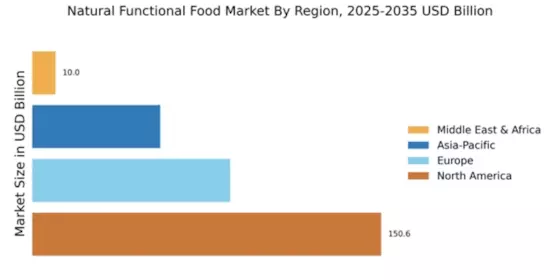
North America continues to lead the Natural Functional Food Market, holding a significant market share of 150.56 million. The growth is driven by increasing consumer awareness regarding health benefits, coupled with a rising demand for organic and natural products. Regulatory support for health claims on food labels further catalyzes market expansion, as consumers seek transparency in food sourcing and ingredients. The competitive landscape is robust, with key players like Nestle, PepsiCo, and Kraft Heinz dominating the market. The U.S. stands out as the largest contributor, driven by innovative product launches and strategic partnerships. Companies are increasingly focusing on health-oriented products, leveraging trends in wellness and nutrition to capture consumer interest. This dynamic environment positions North America as a pivotal region in the global market.

Europe : Emerging Market with Growth Potential

Europe's Natural Functional Food Market is valued at 85.34 million, reflecting a growing consumer preference for healthier food options. The region is witnessing a shift towards organic and functional foods, driven by increasing health consciousness and regulatory frameworks promoting clean labeling. The European Union's stringent regulations on food safety and health claims are pivotal in shaping market dynamics, ensuring consumer trust and product integrity. Leading countries like Germany, France, and the UK are at the forefront of this market, with a competitive landscape featuring major players such as Danone and Unilever. The presence of innovative startups focusing on niche health products is also notable. As consumers increasingly prioritize sustainability and health, the market is expected to expand, supported by favorable regulations and a proactive approach to health and wellness.

Asia-Pacific : Rapid Growth in Health Awareness

The Asia-Pacific region, with a market size of 55.23 million, is experiencing rapid growth in the Natural Functional Food sector. This surge is primarily driven by increasing health awareness among consumers, coupled with rising disposable incomes. Regulatory initiatives promoting health and wellness are also contributing to market expansion, as governments encourage the consumption of functional foods to combat lifestyle-related diseases. Countries like China, Japan, and India are leading the charge, with a competitive landscape that includes both local and international players. Companies such as Herbalife and Abbott Laboratories are capitalizing on the growing demand for health-oriented products. The region's diverse consumer base and evolving dietary preferences present significant opportunities for innovation and market penetration, making it a key area for future growth.

Middle East and Africa : Emerging Market with Untapped Potential

The Middle East and Africa (MEA) region, with a market size of 10.0 million, is an emerging player in the Natural Functional Food Market. The growth is driven by increasing urbanization, changing dietary habits, and a rising awareness of health and wellness. Regulatory bodies are beginning to implement guidelines that support the development of functional foods, which is expected to enhance market growth in the coming years. Countries like South Africa and the UAE are leading the market, with a growing number of local and international brands entering the space. The competitive landscape is evolving, with companies focusing on innovative products that cater to local tastes and preferences. As the region continues to develop economically, the demand for natural and functional foods is anticipated to rise, presenting significant opportunities for market players.

Natural Functional Food Market Regional Image

Key Players and Competitive Insights

The Natural Functional Food Market is currently characterized by a dynamic competitive landscape, driven by increasing consumer awareness regarding health and wellness. Major players are actively engaging in innovation and strategic partnerships to enhance their product offerings. Nestlé (CH) has positioned itself as a leader in this sector, focusing on the development of plant-based functional foods that cater to the growing demand for sustainable nutrition. Meanwhile, PepsiCo (US) is leveraging its extensive distribution network to introduce functional beverages that incorporate probiotics and vitamins, thereby appealing to health-conscious consumers. These strategies collectively contribute to a competitive environment that emphasizes product differentiation and consumer-centric innovation.In terms of business tactics, companies are increasingly localizing manufacturing to reduce supply chain vulnerabilities and enhance responsiveness to regional market demands. The competitive structure of the market appears moderately fragmented, with a mix of large multinational corporations and smaller niche players. This fragmentation allows for diverse product offerings, yet the influence of key players like Danone (FR) and Unilever (GB) remains substantial, as they continue to set industry standards through their extensive research and development initiatives.

In November Danone (FR) announced a strategic partnership with a leading biotechnology firm to develop a new line of functional dairy products enriched with prebiotics. This collaboration is significant as it not only enhances Danone's product portfolio but also aligns with the growing consumer preference for gut health solutions. The integration of advanced biotechnology into their offerings may provide a competitive edge in a market increasingly focused on health benefits.

In October Unilever (GB) launched a new range of plant-based functional snacks aimed at the health-conscious demographic. This initiative reflects Unilever's commitment to sustainability and innovation, as the snacks are designed to be both nutritious and environmentally friendly. The launch is likely to resonate with consumers seeking healthier snack alternatives, thereby reinforcing Unilever's market position.

In September Kraft Heinz (US) expanded its functional food line by introducing a series of fortified sauces and condiments. This move is indicative of a broader trend where traditional food categories are being reimagined to include health benefits, thus appealing to a wider audience. By enhancing everyday products with functional ingredients, Kraft Heinz is tapping into the growing demand for convenience without compromising on health.

As of December the competitive trends in the Natural Functional Food Market are increasingly defined by digitalization, sustainability, and the integration of artificial intelligence in product development. Strategic alliances are becoming more prevalent, as companies recognize the value of collaboration in driving innovation. Looking ahead, it is anticipated that competitive differentiation will evolve, shifting from price-based strategies to a focus on innovation, technology, and supply chain reliability. This transition underscores the importance of agility and responsiveness in meeting the ever-changing consumer preferences.

Key Companies in the Natural Functional Food Market include

Industry Developments

    • January 2024- GlaxoSmithKline (GSK) Pharmaceuticals has introduced a multi-channel movement to raise awarenessabout vaccinations that offer crucial protection to children who are one to two years of age. The Indian Academy of Pediatrics (IAP) prescribes seven vaccinations for children of this age group: first dose of hepatitis A and chickenpox, second dose of meningitis and MMR, booster doses of PCV and DTP Hib IPV, and a yearly dose of flu. Though immunization coverage in the first year is sharp in India, drop-out rates in the second year are rising, as per the company statement. A substantial number of children in the country remain partially vaccinated. GSK's movement encourages parents to continue the immunization schedule even in the 2nd year of their kids’ lives to guarantee continued protection against such preventable diseases through vaccination.
    • May 2024- Danonehas hit an agreement to purchase Functional Formularies, a US whole foods tube-feeding business. The France-based dairy giant has snapped up the Ohio-based firm from private equity business Swander Pace Capital for an unidentified fee. The movement has presented Danone's medical nutrition product range, which builds products for people with special medical requirements, adding to its enteral tube-feeding ranges. The deputy CEO and CFO at Danone, Juergen Esser, said that they are sure that with the addition of the highly greatly segregated product range of Functional Formularies, which matches their existing Real Food Blends branded range, they are even better placed to support the nutritional requirements of tube-fed families and patients. Danone's medical nutrition business is a segment of its wider "specialized nutrition" division, which also involves products for infants like baby food and formula. The business states medical nutrition products account for around 40% of the division's sales.

In the forecast period, the expansion among Asia pacific key players is high. Innovation and new product launches are factors contributing to growth.

The key players in the market are discovering the next-gen microbe to integrate with functional foods.

Report Outlook

    • Market overview highlights
    • Analysis based upon COVID 19
    • Explanation upon the Market Dynamics
    • Value chain analysis
    • Market segmentation overview
    • The regional analysis
    • Competitive landscape analysis
    • Recent Developments

Future Outlook

Natural Functional Food Market Future Outlook

The Natural Functional Food Market is projected to grow at a 6.69% CAGR from 2025 to 2035, driven by increasing health awareness, demand for clean-label products, and innovation in food technology.

New opportunities lie in:

  • Development of personalized nutrition platforms leveraging AI analytics.
  • Expansion of plant-based functional food lines targeting health-conscious consumers.
  • Strategic partnerships with wellness influencers for brand promotion and outreach.

By 2035, the market is expected to be robust, reflecting evolving consumer preferences and innovative product offerings.

Market Segmentation

Natural Functional Food Market Application Outlook

  • Nutraceuticals
  • Functional Beverages
  • Functional Foods
  • Dietary Supplements

Natural Functional Food Market Ingredient Type Outlook

  • Probiotics
  • Prebiotics
  • Omega Fatty Acids
  • Vitamins
  • Minerals

Natural Functional Food Market Formulation Type Outlook

  • Powder
  • Liquid
  • Capsule
  • Tablet

Natural Functional Food Market Distribution Channel Outlook

  • Online Retail
  • Supermarkets
  • Health Food Stores
  • Pharmacies

Natural Functional Food Market Consumer Demographics Outlook

  • Age
  • Gender
  • Income Level
  • Health Consciousness

Report Scope

MARKET SIZE 2024 301.13(USD Billion)
MARKET SIZE 2025 324.73(USD Billion)
MARKET SIZE 2035 616.59(USD Billion)
COMPOUND ANNUAL GROWTH RATE (CAGR) 6.69% (2025 - 2035)
REPORT COVERAGE Revenue Forecast, Competitive Landscape, Growth Factors, and Trends
BASE YEAR 2024
Market Forecast Period 2025 - 2035
Historical Data 2019 - 2024
Market Forecast Units USD Billion
Key Companies Profiled Nestle (CH), PepsiCo (US), Danone (FR), Kraft Heinz (US), General Mills (US), Unilever (GB), Coca-Cola (US), Herbalife (US), Abbott Laboratories (US)
Segments Covered Application, Ingredient Type, Distribution Channel, Consumer Demographics, Formulation Type
Key Market Opportunities Growing consumer demand for plant-based ingredients enhances opportunities in the Natural Functional Food Market.
Key Market Dynamics Rising consumer demand for health-oriented products drives innovation and competition in the Natural Functional Food Market.
Countries Covered North America, Europe, APAC, South America, MEA

Market Highlights

Author
Author
Author Profile
Sakshi Gupta LinkedIn
Team Lead - Research
Currently a Team Lead in consumer goods, FMCG, and F&B, she translates rigorous research into decisive strategy. She develops GTM roadmaps, pricing architectures, and competitive benchmarks for companies across Europe, the US, and APAC. She synthesize insights, align cross-functional teams, and drive execution from brief to measurable outcomes. She leads end-to-end engagements with crisp analysis, compelling storytelling, and a strong command of Power BI, Tableau, SQL, and advanced research platforms.
Leave a Comment

FAQs

What is the current valuation of the Natural Functional Food Market?

As of 2024, the market valuation stands at 301.13 USD Billion.

What is the projected market size for the Natural Functional Food Market by 2035?

The market is expected to reach a valuation of 616.59 USD Billion by 2035.

What is the expected CAGR for the Natural Functional Food Market during the forecast period 2025 - 2035?

The market is anticipated to grow at a CAGR of 6.69% from 2025 to 2035.

Which companies are considered key players in the Natural Functional Food Market?

Key players include Nestle, PepsiCo, Danone, Kraft Heinz, General Mills, Unilever, Coca-Cola, Herbalife, and Amway.

What are the main segments of the Natural Functional Food Market by application?

The main segments include Nutraceuticals, Functional Beverages, Functional Foods, and Dietary Supplements.

How much was the market size for Functional Foods in 2024?

In 2024, the market size for Functional Foods was 100.0 USD Billion.

What is the projected market size for Dietary Supplements by 2035?

By 2035, the market size for Dietary Supplements is projected to reach 126.59 USD Billion.

What are the primary distribution channels for Natural Functional Foods?

Primary distribution channels include Online Retail, Supermarkets, Health Food Stores, and Specialty Stores.

What is the expected market size for Probiotics in 2035?

The market size for Probiotics is expected to reach 120.0 USD Billion by 2035.

Who are the target consumers in the Natural Functional Food Market?

Target consumers include Health Conscious Consumers, Athletes, Individuals with Dietary Restrictions, and the Elderly Population.
Download Free Sample

Kindly complete the form below to receive a free sample of this Report

Compare Licence

×
Features License Type
Single User Multiuser License Enterprise User
Price $4,950 $5,950 $7,250
Maximum User Access Limit 1 User Upto 10 Users Unrestricted Access Throughout the Organization
Free Customization
Direct Access to Analyst
Deliverable Format
Platform Access
Discount on Next Purchase 10% 15% 15%
Printable Versions
%>