Request Free Sample ×

Kindly complete the form below to receive a free sample of this Report

* Please use a valid business email

Leading companies partner with us for data-driven Insights

clients tt-cursor
Hero Background
English
Chinese
French
Japanese
Korean
German
Spanish

Molecular Sieves Market Trends

ID: MRFR/CnM/6965-CR
215 Pages
Chitranshi Jaiswal
August 2021

Molecular Sieves Market Research Report Information by Type (4A, 3A, 5A, 13X, Zeolite Y, and Others), by Shape (Beads, Pellets, and Powder), by Product (Zeolites, Activated Carbon, Clay, and Others), by End-use (Oil & Gas, Automotive, Packaging, Coatings, Wastewater Treatment, Detergents, and Others), And By Region (North America, Europe, Asia-Pacific, And Rest Of The World) –Market Forecast Till 2035

Share:
Download PDF ×

We do not share your information with anyone. However, we may send you emails based on your report interest from time to time. You may contact us at any time to opt-out.

Molecular Sieves Market Infographic
Purchase Options

Market Trends

Key Emerging Trends in the Molecular Sieves Market

The molecular sieves market is witnessing dynamic trends and shifts, influenced by various factors shaping the industry landscape. Here's a comprehensive overview of the market trends in paragraph form with pointer format:

Growing Demand in Oil & Gas Industry: The oil and gas sector is a significant driver of the molecular sieves market, with increasing demand for efficient separation and purification processes. Molecular sieves are utilized for the removal of contaminants, moisture, and impurities from natural gas and petrochemical feedstocks, ensuring high-quality end products. As the global demand for oil and gas continues to rise, particularly in emerging economies, the demand for molecular sieves for refining and gas processing applications is expected to escalate.

Rising Adoption in Chemical Manufacturing: Molecular sieves play a crucial role in various chemical manufacturing processes, including dehydration, adsorption, and catalysis. They are used for drying solvents, separating different components in gas streams, and facilitating chemical reactions by providing a selective environment for desired molecules. With the expansion of the chemical industry, driven by increasing industrialization and demand for specialty chemicals, the market for molecular sieves is experiencing steady growth.

Focus on Environmental Remediation: Environmental remediation and wastewater treatment are emerging as key applications driving the demand for molecular sieves. These sieves are utilized for the removal of contaminants, heavy metals, and pollutants from industrial wastewater and groundwater, contributing to environmental protection and regulatory compliance. With growing concerns about water quality and environmental sustainability, the demand for molecular sieves in remediation applications is expected to rise.

Advancements in Zeolite-Based Molecular Sieves: Zeolite-based molecular sieves dominate the market due to their high selectivity, stability, and adsorption capacity. Manufacturers are investing in research and development to enhance the performance characteristics of zeolite-based molecular sieves, such as improving pore size distribution, surface area, and thermal stability. Innovations in synthesis techniques and modifications of zeolite structures are driving the development of customized molecular sieves tailored to specific applications.

Shift towards Green Chemistry: The molecular sieves market is witnessing a shift towards green chemistry and sustainable manufacturing practices. Manufacturers are exploring eco-friendly alternatives and greener production processes to minimize environmental impact and reduce energy consumption. This trend aligns with the growing emphasis on sustainability across industries and regulatory frameworks, driving the adoption of environmentally responsible solutions in molecular sieve applications.

Focus on Energy-Efficient Solutions: Energy efficiency is a key consideration in the selection of molecular sieves for various applications. Manufacturers are developing energy-efficient molecular sieve formulations and processes to minimize energy consumption during adsorption and regeneration cycles. Additionally, advancements in heat recovery and process optimization are improving the overall energy efficiency of molecular sieve-based systems, appealing to industries seeking to reduce operational costs and environmental footprint.

Market Expansion in Asia-Pacific Region: The Asia-Pacific region is emerging as a lucrative market for molecular sieves, driven by rapid industrialization, urbanization, and infrastructure development. Countries such as China, India, and Southeast Asian nations are experiencing robust growth in industries such as oil and gas, chemicals, and water treatment, fueling the demand for molecular sieves. Moreover, favorable government initiatives and investments in environmental protection and infrastructure development are further propelling market growth in the region.

Focus on Product Customization and Tailored Solutions: With diverse applications across industries, there is a growing demand for customized molecular sieve products tailored to specific requirements. Manufacturers are offering a range of product grades, pore sizes, and formulations to cater to the varied needs of end-users. This focus on product customization and tailored solutions is enhancing customer satisfaction and driving market competitiveness in the molecular sieves industry.


Author
Author Profile
Chitranshi Jaiswal
Team Lead - Research

Chitranshi is a Team Leader in the Chemicals & Materials (CnM) and Energy & Power (EnP) domains, with 6+ years of experience in market research. She leads and mentors teams to deliver cross-domain projects that equip clients with actionable insights and growth strategies. She is skilled in market estimation, forecasting, competitive benchmarking, and both primary & secondary research, enabling her to turn complex data into decision-ready insights. An engineer and MBA professional, she combines technical expertise with strategic acumen to solve dynamic market challenges. Chitranshi has successfully managed projects that support market entry, investment planning, and competitive positioning, while building strong client relationships. Certified in Advanced Excel & Power BI she leverages data-driven approaches to ensure accuracy, clarity, and impactful outcomes.

Leave a Comment

FAQs

What is the current valuation of the Molecular Sieves Market as of 2024?

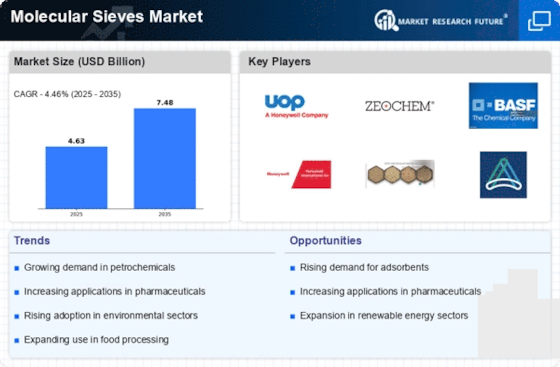
<p>The Molecular Sieves Market was valued at 4.63 USD Billion in 2024.</p>

What is the projected market size for the Molecular Sieves Market in 2035?

<p>The market is projected to reach 7.484 USD Billion by 2035.</p>

What is the expected CAGR for the Molecular Sieves Market during the forecast period 2025 - 2035?

<p>The expected CAGR for the Molecular Sieves Market during 2025 - 2035 is 4.46%.</p>

Which companies are considered key players in the Molecular Sieves Market?

<p>Key players include UOP LLC, Zeochem AG, BASF SE, Honeywell International Inc., and others.</p>

What are the main product segments in the Molecular Sieves Market?

<p>Main product segments include Zeolites, Activated Carbon, and Clay, among others.</p>

How did the 4A molecular sieves perform in terms of market valuation?

<p>The 4A molecular sieves segment was valued at 1.15 USD Billion in 2024 and is expected to grow to 1.85 USD Billion.</p>

What is the market valuation for the beads shape segment of molecular sieves?

The beads shape segment was valued at 1.5 USD Billion in 2024 and is projected to reach 2.4 USD Billion.

What end-user industries are driving the demand for molecular sieves?

Key end-user industries include Oil &amp; Gas, Automotive, and Wastewater Treatment.

What is the projected growth for the 13X molecular sieves segment?

The 13X molecular sieves segment was valued at 1.2 USD Billion in 2024 and is expected to grow to 1.9 USD Billion.

How does the performance of the pellets shape segment compare to others?

The pellets shape segment was valued at 1.8 USD Billion in 2024 and is projected to grow to 2.8 USD Billion, indicating strong demand.

Market Summary

As per Market Research Future analysis, the Molecular Sieves Market Size was estimated at 5.2 USD Billion in 2024. The Molecular Sieves industry is projected to grow from USD 5.6 Billion in 2025 to USD 10.7 Billion by 2035, exhibiting a compound annual growth rate (CAGR) of 6.80% during the forecast period 2025 - 2035

Key Market Trends & Highlights

The Molecular Sieves Market is poised for robust growth driven by technological advancements and increasing applications across various industries.

  • North America remains the largest market for molecular sieves, driven by its established petrochemical sector. Asia-Pacific is emerging as the fastest-growing region, fueled by rapid industrialization and urbanization. The 4A segment continues to dominate the market, while the 5A segment is witnessing the highest growth rates due to its versatility. Rising demand in the petrochemical industry and advancements in adsorption technology are key drivers propelling market expansion.

Market Size & Forecast

2024 Market Size 5.2 (USD Billion)
2035 Market Size 10.7 (USD Billion)
CAGR (2025 - 2035) 6.80%
Largest Regional Market Share in 2024 North America

Major Players

Arkema Group, Honeywell International, BASF SE, Zeochem AG, Tosoh Corporation

Market Trends

The Molecular Sieves Market is currently experiencing a dynamic evolution, driven by various factors that influence its growth trajectory. The increasing demand for efficient separation and purification processes across industries such as petrochemicals, pharmaceuticals, and environmental applications appears to be a primary catalyst. Furthermore, advancements in technology and the development of innovative materials are likely to enhance the performance of molecular sieves, thereby expanding their applicability. As industries seek to optimize processes and reduce costs, the adoption of molecular sieves is expected to gain momentum, reflecting a shift towards more sustainable practices.

In addition, the growing awareness regarding environmental concerns and the need for energy-efficient solutions may further propel the molecular sieves market. Companies are increasingly focusing on reducing their carbon footprint, which could lead to a heightened interest in molecular sieves as a means to achieve these objectives. The interplay of these factors suggests a promising outlook for the market, with potential opportunities for growth and innovation in the coming years. Stakeholders are likely to explore new applications and enhance existing technologies to meet the evolving demands of various sectors, particularly in regions such as the US molecular sieves market, where industrial demand remains strong.

Technological Advancements

Recent innovations in molecular sieve technology are reshaping the landscape of the market. Enhanced materials and improved manufacturing processes are likely to lead to more efficient and effective products. This trend suggests that companies may invest in research and development to create advanced molecular sieves that cater to specific industry needs.

Sustainability Focus

The increasing emphasis on sustainable practices across industries is influencing the Molecular Sieves Market. Companies are seeking solutions that not only improve efficiency but also minimize environmental impact. This trend indicates a potential shift towards eco-friendly molecular sieve options, aligning with global sustainability goals.

Diverse Applications

The versatility of molecular sieves is becoming more apparent as they find applications in various sectors. From gas separation to water purification, the expanding range of uses suggests that the market may continue to grow as new applications are discovered. This trend highlights the adaptability of molecular sieves in meeting diverse industrial requirements.

Molecular Sieves Market Market Drivers

Growth in Natural Gas Processing

Natural gas processing is another pivotal driver for the molecular sieves market. The increasing reliance on natural gas as a cleaner energy source has led to heightened demand for efficient processing technologies. Molecular sieves are employed to remove water, carbon dioxide, and other contaminants from natural gas, ensuring its purity and quality. As countries strive to transition to more sustainable energy solutions, the natural gas sector is projected to expand significantly. Reports indicate that the natural gas processing segment could contribute to a considerable share of the molecular sieves market, with growth rates potentially reaching 5 to 7% annually over the next few years. This growth underscores the importance of molecular sieves in facilitating cleaner energy production.

Expanding Applications in Healthcare

The healthcare sector is emerging as a vital driver for the molecular sieves market. With the increasing focus on drug purity and safety, molecular sieves are being utilized in various applications, including the production of pharmaceuticals and medical devices. Their ability to selectively adsorb specific molecules makes them invaluable in ensuring the quality of healthcare products. As the healthcare industry continues to expand, driven by an aging population and rising health awareness, the demand for molecular sieves is expected to grow. Market projections suggest that the healthcare segment could account for a notable share of the molecular sieves market, with growth rates potentially reaching 5% annually as manufacturers seek to enhance product safety and efficacy.

Advancements in Adsorption Technology

Technological advancements in adsorption technology are reshaping the molecular sieves market. Innovations in the design and manufacturing of molecular sieves have led to enhanced performance characteristics, such as increased adsorption capacity and selectivity. These advancements enable molecular sieves to cater to a broader range of applications, including air separation, gas drying, and solvent recovery. As industries seek more efficient and cost-effective solutions, the demand for high-performance molecular sieves is expected to rise. Market analysts project that the introduction of next-generation molecular sieves could lead to a market growth rate of approximately 6% annually, reflecting the industry's adaptability to evolving technological landscapes.

Rising Demand in Petrochemical Industry

The petrochemical industry is experiencing a notable surge in demand for molecular sieves, primarily due to their critical role in the purification and separation processes. Molecular sieves are utilized to remove impurities and enhance the quality of petrochemical products, which is essential for meeting stringent regulatory standards. As the petrochemical sector expands, driven by increasing energy needs and the growth of the plastics market, the molecular sieves market is likely to witness substantial growth. Recent estimates suggest that the petrochemical sector could account for a significant portion of the molecular sieves market, potentially exceeding 30% of total demand by 2025. This trend indicates a robust opportunity for manufacturers and suppliers within the molecular sieves market.

Regulatory Compliance and Environmental Standards

The molecular sieves market is significantly influenced by stringent regulatory compliance and environmental standards. Industries are increasingly required to adhere to regulations aimed at reducing emissions and improving product quality. Molecular sieves play a crucial role in meeting these standards by effectively removing contaminants and ensuring the purity of various products. As regulatory frameworks become more rigorous, the demand for molecular sieves is likely to increase, particularly in sectors such as pharmaceuticals, food processing, and petrochemicals. It is estimated that compliance-related demand could drive a growth rate of around 4 to 5% in the molecular sieves market, highlighting the importance of these materials in achieving sustainability goals.

Market Segment Insights

By Type: 4A (Largest) vs. 5A (Fastest-Growing)

In the Molecular Sieves Market, the type segment is characterized by a diverse range of products, with 4A molecular sieves holding the largest market share. This segment is followed by 5A, which has emerged as the fastest-growing category. Other players include 3A, 13X, zeolite Y, and various others, each contributing to a comprehensive market landscape. Together, these types cater to various industrial applications, providing essential functionalities like adsorption and separation. Growth trends within the molecular sieves segment are driven by increasing demand from industries such as petrochemicals, pharmaceuticals, and environmental applications. The rapid technological advancements in sieve production processes are also enhancing performance characteristics. Furthermore, the rising focus on energy efficiency and sustainable practices has positioned 5A molecular sieves, known for their effective adsorption capabilities, as a key player in the industry's growth trajectory.

4A: Dominant vs. 5A: Emerging

4A molecular sieves are recognized as the dominant type in the market due to their exceptional adsorption properties and versatility. They are extensively utilized in applications requiring moisture removal and gas drying, particularly in petrochemical and natural gas industries. On the other hand, 5A molecular sieves are emerging rapidly, appealing to sectors requiring selective adsorption for larger molecules. Their ability to separate and purify a variety of substances makes them increasingly valuable in the chemical and petrochemical sectors. The distinct characteristics of 4A and 5A facilitate their utilization in complementary applications, driving their continued relevance and growth within the molecular sieves market.

By Shape: Beads (Largest) vs. Pellets (Fastest-Growing)

In the Molecular Sieves Market, the shape segment is predominantly composed of beads, which command the largest market share due to their widespread application in various industries, including petrochemicals, gas, and air filtration. Beads are favored for their superior adsorption properties and uniform size, making them ideal for separation processes. Meanwhile, pellets, though currently a smaller market share compared to beads, are rapidly gaining traction, particularly in the catalyst sector where their shape optimizes catalytic performance and enhances reaction efficiency.

Beads (Dominant) vs. Pellets (Emerging)

Beads dominate the Molecular Sieves Market primarily due to their efficiency and versatility. They are utilized in a variety of applications such as drying agents and adsorbents, providing consistent performance in diverse settings. The high demand from industries focusing on productivity and precision drives their preference. On the other hand, pellets are emerging as a strong contender, offering specific advantages in catalytic applications. Their unique structural attributes enhance reactivity, leading to increased efficiency in chemical processes. As innovation continues, the pellet segment is expected to capture a greater share of the market, appealing to industries looking for optimized solutions.

By Product: Zeolites (Largest) vs. Activated Carbon (Fastest-Growing)

The molecular sieves market showcases a varied distribution among different product segments. <a title="zeolites" href="https://www.marketresearchfuture.com/reports/zeolites-market-11942" target="_blank" rel="noopener">Zeolites</a> are the largest players in this space, appreciated for their versatility in industrial applications such as gas separation, catalysis, and adsorption. <a title="activated carbon" href="https://www.marketresearchfuture.com/reports/activated-carbon-market-1744" target="_blank" rel="noopener">Activated Carbon</a> follows closely behind, renowned for its efficiency in air and water purification. Clay dominates the lower market share, utilized primarily in niche applications, while the 'Others' category, though smaller, includes innovative products evolving to meet specific market needs. Each segment displays unique qualities that cater to diverse user requirements within the industry. Market trends indicate a rising adoption of activated carbon due to increasing environmental concerns and stringent regulations regarding air and water quality. Meanwhile, zeolites continue to benefit from ongoing technological advancements that enhance their performance in industrial processes. The push for sustainable materials aligns well with the growth of activated carbon, while zeolites reinforce their market position by expanding into new application areas. The ongoing demand for efficient filtration and purification solutions propels both segments forward, suggesting a competitive landscape fueled by innovation and sustainability efforts.

Zeolites (Dominant) vs. Clay (Emerging)

Zeolites stand out as the dominant product in the molecular sieves market, celebrated for their excellent ion-exchange capabilities and stability, making them indispensable in numerous applications such as petrochemical refining and wastewater treatment. Their high surface area and uniform pore size also render them effective in selectively adsorbing specific molecules. On the other hand, clay, though smaller in market share, represents an emerging product category that is gaining traction due to its natural abundance and cost-effectiveness. As applications exploring bio-sourced materials grow, clay is finding niche applications mainly in the construction and cosmetics sectors. The evolving landscape suggests that while zeolites maintain leadership, clay is gradually making its presence felt, driven by innovations that enhance its functionalities for various industrial uses.

By End-user: Oil & Gas (Largest) vs. Wastewater Treatment (Fastest-Growing)

The molecular sieves market is primarily dominated by the Oil &amp; Gas sector, which accounts for a significant portion of the overall market share due to the high demand for gas purification and separation processes. This segment utilizes molecular sieves extensively to remove impurities and ensure high-quality end products, thus maintaining its leading position in this industry. Other notable segments include Automotive, Packaging, and Coatings, each contributing to the market but at a relatively smaller scale compared to Oil &amp; Gas and Wastewater Treatment. In recent years, Wastewater Treatment has emerged as the fastest-growing segment within the molecular sieves market. This growth is attributed to increasing regulatory standards for wastewater quality and treatment processes. Additionally, the rising awareness of environmental sustainability and the need for efficient recycling systems have further propelled the demand for molecular sieves in this sector, effectively driving innovation and investment into new technologies for advanced wastewater treatment solutions.

Oil &amp; Gas (Dominant) vs. Wastewater Treatment (Emerging)

The Oil &amp; Gas sector remains the dominant force in the molecular sieves market, primarily due to its critical role in natural gas processing and petrochemical applications. Molecular sieves are pivotal in the dehydration of natural gas and the removal of acidic impurities, ensuring the integrity and quality of finished products. This requirement for high purification standards ensures continuous investment in molecular sieve technology within this sector. Conversely, Wastewater Treatment represents an emerging segment that is rapidly gaining traction due to increasing global focus on sustainable practices and environmental regulations. This segment leverages molecular sieves for effective pollutant removal and resource recovery, indicating a shift towards more innovative and eco-friendly treatment solutions.

Get more detailed insights about Molecular Sieves Market Research Report—Global Forecast till 2035

Regional Insights

North America : Innovation and Demand Surge

North America is the largest market for molecular sieves, holding approximately 40% of the global share. The region's growth is driven by increasing demand in the petrochemical and natural gas industries, alongside stringent environmental regulations promoting cleaner technologies. The presence of major players like UOP LLC and Honeywell International Inc. further fuels market expansion, supported by ongoing innovations in molecular sieve applications. The United States dominates the North American market, with significant contributions from Canada. The competitive landscape is characterized by a mix of established companies and emerging players, focusing on product development and strategic partnerships. Key players such as Molecular Sieves Market Inc. and Alberta Innovates are actively involved in research and development, enhancing the region's position in the global market.

Europe : Regulatory Framework and Growth

Europe is the second-largest market for molecular sieves, accounting for around 30% of the global market share. The region's growth is propelled by stringent environmental regulations and a shift towards sustainable industrial practices. Countries like Germany and the UK are leading the charge, with increasing investments in advanced materials and technologies that utilize molecular sieves for various applications, including air separation and gas purification. Germany stands out as a key player in the European market, with companies like BASF SE and Merck KGaA leading the way. The competitive landscape is marked by innovation and collaboration among industry players, focusing on enhancing product efficiency and sustainability. The European Union's commitment to reducing carbon emissions further supports the demand for molecular sieves, fostering a favorable market environment.

Asia-Pacific : Rapid Growth and Industrialization

Asia-Pacific is witnessing rapid growth in the molecular sieves market, driven by industrialization and increasing demand from the petrochemical and pharmaceutical sectors. The region holds approximately 25% of the global market share, with countries like China and Japan leading the way. The growing focus on energy efficiency and environmental sustainability is further propelling the adoption of molecular sieves in various applications, including air and water treatment. China is the largest market in the region, supported by significant investments in infrastructure and manufacturing capabilities. The competitive landscape features both local and international players, with companies like Tosoh Corporation and Zeochem AG actively participating in the market. The region's growth is also supported by government initiatives aimed at promoting advanced materials and technologies, enhancing the overall market dynamics.

Middle East and Africa : Resource-Rich and Emerging Market

The Middle East and Africa region is emerging as a potential market for molecular sieves, holding about 5% of the global share. The growth is primarily driven by the oil and gas industry, where molecular sieves are essential for refining processes and gas separation. Countries like Saudi Arabia and South Africa are investing in infrastructure and technology, which is expected to boost demand for molecular sieves in the coming years. Saudi Arabia is at the forefront of this market, with significant investments in petrochemical projects. The competitive landscape is evolving, with both local and international players looking to establish a foothold. Companies are focusing on developing innovative solutions tailored to the region's unique needs, which could enhance market penetration and growth opportunities in the future.

Key Players and Competitive Insights

The Molecular Sieves Market is currently characterized by a dynamic competitive landscape, driven by increasing demand across various sectors such as petrochemicals, pharmaceuticals, and environmental applications. Key players are actively engaging in strategies that emphasize innovation, regional expansion, and partnerships to enhance their market positioning. For instance, UOP LLC (US) has been focusing on technological advancements in molecular sieve applications, particularly in refining and petrochemical processes, which positions them as a leader in the market. Similarly, BASF SE (DE) is leveraging its extensive research capabilities to develop high-performance molecular sieves, thereby reinforcing its competitive edge in the chemical industry.In terms of business tactics, companies are increasingly localizing manufacturing to reduce costs and improve supply chain efficiency. This trend is particularly evident in the moderately fragmented structure of the market, where several players are vying for market share. The collective influence of these key players, including Honeywell International Inc. (US) and Merck KGaA (DE), is shaping a competitive environment that encourages innovation and operational excellence.
In August Honeywell International Inc. (US) announced a strategic partnership with a leading technology firm to enhance its molecular sieve production capabilities through advanced automation. This move is likely to streamline operations and reduce production costs, thereby allowing Honeywell to offer more competitive pricing while maintaining high-quality standards. Such partnerships are indicative of a broader trend towards digital transformation within the industry.
In September BASF SE (DE) unveiled a new line of environmentally friendly molecular sieves designed to meet stringent regulatory requirements in Europe. This initiative not only aligns with global sustainability goals but also positions BASF as a forward-thinking player in the market, appealing to environmentally conscious consumers and industries. The strategic importance of this launch lies in its potential to capture a growing segment of the market that prioritizes sustainability.Furthermore, in July 2025, Zeochem AG (CH) expanded its production facility in Switzerland to increase output capacity for its high-performance molecular sieves. This expansion is expected to enhance Zeochem's ability to meet rising global demand, particularly in the automotive and aerospace sectors. The strategic significance of this move is underscored by the company's commitment to maintaining a competitive supply chain and ensuring product availability in key markets.
As of October the competitive trends in the Molecular Sieves Market are increasingly defined by digitalization, sustainability, and the integration of artificial intelligence in production processes. Strategic alliances are becoming more prevalent, as companies recognize the need to collaborate to enhance innovation and operational efficiency. Looking ahead, the competitive differentiation in this market is likely to evolve from traditional price-based competition to a focus on technological advancements, sustainable practices, and reliable supply chains, reflecting the changing priorities of consumers and industries alike.

Key Companies in the Molecular Sieves Market include

Industry Developments

October 2021: Carbon Capture Inc. reported the completion of a USD thirty-five million Series A fundraising round. The money will be used to establish initial installations of the company's sustainable energy-powered Direct Air Capture devices across the United States.

September 2021: Following collaborative cooperation, Shell, a key participant in the energy business, established a partnership with catalyst specialist BASF's Sorbead Adsorption Technologies in its carbon fall program. The collaboration involves evaluating the use of Sorbead technologies across post-combustion CCS (carbon capture and storage) operations.

May 2021: Honeywell International announced that it will provide USD 3 million in assistance to India through the Covid-19 procedure. Personnel from the company constructed critical care units with protective gear, air, and beds. DRDO and the Indian Institute of Petroleum also use the company's molecular sieve adsorbents.

Future Outlook

Molecular Sieves Market Future Outlook

The Molecular Sieves Market is projected to grow at 6.80% CAGR from 2025 to 2035, driven by increasing demand in petrochemical and gas separation applications.

New opportunities lie in:

  • <p>Expansion into emerging markets with tailored molecular sieve solutions. Development of advanced molecular sieves for renewable energy applications. Strategic partnerships with key players in the pharmaceutical industry.</p>

By 2035, the market is expected to achieve robust growth, solidifying its position as a critical component in various industries.

Market Segmentation

Molecular Sieves Market Type Outlook

  • 4A
  • 3A
  • 5A
  • 13X
  • zeolite Y
  • Others

Molecular Sieves Market Shape Outlook

  • Beads
  • Pellets
  • Powder

Molecular Sieves Market Product Outlook

  • Zeolites
  • Activated Carbon
  • Clay
  • Others

Molecular Sieves Market End-user Outlook

  • Oil & Gas
  • Automotive
  • Packaging
  • Coatings
  • Wastewater Treatment
  • Detergents
  • Others

Report Scope

MARKET SIZE 2024 5.2(USD Billion)
MARKET SIZE 2025 5.6(USD Billion)
MARKET SIZE 2035 10.7(USD Billion)
COMPOUND ANNUAL GROWTH RATE (CAGR) 6.80% (2025 - 2035)
REPORT COVERAGE Revenue Forecast, Competitive Landscape, Growth Factors, and Trends
BASE YEAR 2024
Market Forecast Period 2025 - 2035
Historical Data 2019 - 2024
Market Forecast Units USD Billion
Key Companies Profiled Arkema Group, Honeywell International, BASF SE, Zeochem AG, Tosoh Corporation
Segments Covered Type, Shape, Product, End-use, Region
Key Market Opportunities Growing demand for energy-efficient separation processes in various industries enhances the Molecular Sieves Market potential.
Key Market Dynamics Rising demand for efficient gas separation technologies drives innovation and competition in the molecular sieves market.
Countries Covered North America, Europe, APAC, South America, MEA

FAQs

What is the current valuation of the Molecular Sieves Market as of 2024?

<p>The Molecular Sieves Market was valued at 4.63 USD Billion in 2024.</p>

What is the projected market size for the Molecular Sieves Market in 2035?

<p>The market is projected to reach 7.484 USD Billion by 2035.</p>

What is the expected CAGR for the Molecular Sieves Market during the forecast period 2025 - 2035?

<p>The expected CAGR for the Molecular Sieves Market during 2025 - 2035 is 4.46%.</p>

Which companies are considered key players in the Molecular Sieves Market?

<p>Key players include UOP LLC, Zeochem AG, BASF SE, Honeywell International Inc., and others.</p>

What are the main product segments in the Molecular Sieves Market?

<p>Main product segments include Zeolites, Activated Carbon, and Clay, among others.</p>

How did the 4A molecular sieves perform in terms of market valuation?

<p>The 4A molecular sieves segment was valued at 1.15 USD Billion in 2024 and is expected to grow to 1.85 USD Billion.</p>

What is the market valuation for the beads shape segment of molecular sieves?

The beads shape segment was valued at 1.5 USD Billion in 2024 and is projected to reach 2.4 USD Billion.

What end-user industries are driving the demand for molecular sieves?

Key end-user industries include Oil &amp; Gas, Automotive, and Wastewater Treatment.

What is the projected growth for the 13X molecular sieves segment?

The 13X molecular sieves segment was valued at 1.2 USD Billion in 2024 and is expected to grow to 1.9 USD Billion.

How does the performance of the pellets shape segment compare to others?

The pellets shape segment was valued at 1.8 USD Billion in 2024 and is projected to grow to 2.8 USD Billion, indicating strong demand.

  1. SECTION I: EXECUTIVE SUMMARY AND KEY HIGHLIGHTS |
    1. EXECUTIVE SUMMARY | |
      1. Market Overview | |
      2. Key Findings | |
      3. Market Segmentation | |
      4. Competitive Landscape | |
      5. Challenges and Opportunities | |
      6. Future Outlook 2
  2. SECTION II: SCOPING, METHODOLOGY AND MARKET STRUCTURE |
    1. MARKET INTRODUCTION | |
      1. Definition | |
      2. Scope of the study | | |
    2. RESEARCH METHODOLOGY | |
      1. Overview | |
      2. Data Mining | |
      3. Secondary Research | |
      4. Primary Research | | |
      5. Forecasting Model | |
      6. Market Size Estimation | | |
      7. Data Triangulation | |
      8. Validation 3
  3. SECTION III: QUALITATIVE ANALYSIS |
    1. MARKET DYNAMICS | |
      1. Overview | |
      2. Drivers | |
      3. Restraints | |
      4. Opportunities |
    2. MARKET FACTOR ANALYSIS | |
      1. Value chain Analysis | |
      2. Porter's Five Forces Analysis | | |
      3. COVID-19 Impact Analysis | | |
  4. SECTION IV: QUANTITATIVE ANALYSIS |
    1. Chemicals and Materials, BY Type (USD Billion) | |
      1. 4A | |
      2. 3A | |
      3. 5A | |
      4. 13X | |
      5. zeolite Y | |
      6. Others |
    2. Chemicals and Materials, BY Shape (USD Billion) | |
      1. Beads | |
      2. Pellets | |
      3. Powder |
    3. Chemicals and Materials, BY Product (USD Billion) | |
      1. Zeolites | |
      2. Activated Carbon | |
      3. Clay | |
      4. Others |
    4. Chemicals and Materials, BY End-user (USD Billion) | |
      1. Oil & Gas | |
      2. Automotive | |
      3. Packaging | |
      4. Coatings | |
      5. Wastewater Treatment | |
      6. Detergents | |
      7. Others |
    5. Chemicals and Materials, BY Region (USD Billion) | |
      1. North America | | |
      2. Europe | | |
      3. APAC | | |
      4. South America | | |
      5. MEA | | |
  5. SECTION V: COMPETITIVE ANALYSIS |
    1. Competitive Landscape | |
      1. Overview | |
      2. Competitive Analysis | |
      3. Market share Analysis | |
      4. Major Growth Strategy in the Chemicals and Materials | |
      5. Competitive Benchmarking | |
      6. Leading Players in Terms of Number of Developments in the Chemicals and Materials | |
      7. Key developments and growth strategies | | |
      8. Major Players Financial Matrix | | |
    2. Company Profiles | |
      1. UOP LLC (US) | | |
      2. Zeochem AG (CH) | | |
      3. BASF SE (DE) | | |
      4. Honeywell International Inc. (US) | | |
      5. Molecular Sieves Inc. (US) | | |
      6. Alberta Innovates (CA) | | |
      7. Merck KGaA (DE) | | |
      8. Tosoh Corporation (JP) | | |
      9. W.R. Grace & Co. (US) | | |
    3. Appendix | |
      1. References | |
      2. Related Reports 6 LIST OF FIGURES |
    4. MARKET SYNOPSIS |
    5. NORTH AMERICA MARKET ANALYSIS |
    6. US MARKET ANALYSIS BY TYPE |
    7. US MARKET ANALYSIS BY SHAPE |
    8. US MARKET ANALYSIS BY PRODUCT |
    9. US MARKET ANALYSIS BY END-USER |
    10. CANADA MARKET ANALYSIS BY TYPE |
    11. CANADA MARKET ANALYSIS BY SHAPE |
    12. CANADA MARKET ANALYSIS BY PRODUCT |
    13. CANADA MARKET ANALYSIS BY END-USER |
    14. EUROPE MARKET ANALYSIS |
    15. GERMANY MARKET ANALYSIS BY TYPE |
    16. GERMANY MARKET ANALYSIS BY SHAPE |
    17. GERMANY MARKET ANALYSIS BY PRODUCT |
    18. GERMANY MARKET ANALYSIS BY END-USER |
    19. UK MARKET ANALYSIS BY TYPE |
    20. UK MARKET ANALYSIS BY SHAPE |
    21. UK MARKET ANALYSIS BY PRODUCT |
    22. UK MARKET ANALYSIS BY END-USER |
    23. FRANCE MARKET ANALYSIS BY TYPE |
    24. FRANCE MARKET ANALYSIS BY SHAPE |
    25. FRANCE MARKET ANALYSIS BY PRODUCT |
    26. FRANCE MARKET ANALYSIS BY END-USER |
    27. RUSSIA MARKET ANALYSIS BY TYPE |
    28. RUSSIA MARKET ANALYSIS BY SHAPE |
    29. RUSSIA MARKET ANALYSIS BY PRODUCT |
    30. RUSSIA MARKET ANALYSIS BY END-USER |
    31. ITALY MARKET ANALYSIS BY TYPE |
    32. ITALY MARKET ANALYSIS BY SHAPE |
    33. ITALY MARKET ANALYSIS BY PRODUCT |
    34. ITALY MARKET ANALYSIS BY END-USER |
    35. SPAIN MARKET ANALYSIS BY TYPE |
    36. SPAIN MARKET ANALYSIS BY SHAPE |
    37. SPAIN MARKET ANALYSIS BY PRODUCT |
    38. SPAIN MARKET ANALYSIS BY END-USER |
    39. REST OF EUROPE MARKET ANALYSIS BY TYPE |
    40. REST OF EUROPE MARKET ANALYSIS BY SHAPE |
    41. REST OF EUROPE MARKET ANALYSIS BY PRODUCT |
    42. REST OF EUROPE MARKET ANALYSIS BY END-USER |
    43. APAC MARKET ANALYSIS |
    44. CHINA MARKET ANALYSIS BY TYPE |
    45. CHINA MARKET ANALYSIS BY SHAPE |
    46. CHINA MARKET ANALYSIS BY PRODUCT |
    47. CHINA MARKET ANALYSIS BY END-USER |
    48. INDIA MARKET ANALYSIS BY TYPE |
    49. INDIA MARKET ANALYSIS BY SHAPE |
    50. INDIA MARKET ANALYSIS BY PRODUCT |
    51. INDIA MARKET ANALYSIS BY END-USER |
    52. JAPAN MARKET ANALYSIS BY TYPE |
    53. JAPAN MARKET ANALYSIS BY SHAPE |
    54. JAPAN MARKET ANALYSIS BY PRODUCT |
    55. JAPAN MARKET ANALYSIS BY END-USER |
    56. SOUTH KOREA MARKET ANALYSIS BY TYPE |
    57. SOUTH KOREA MARKET ANALYSIS BY SHAPE |
    58. SOUTH KOREA MARKET ANALYSIS BY PRODUCT |
    59. SOUTH KOREA MARKET ANALYSIS BY END-USER |
    60. MALAYSIA MARKET ANALYSIS BY TYPE |
    61. MALAYSIA MARKET ANALYSIS BY SHAPE |
    62. MALAYSIA MARKET ANALYSIS BY PRODUCT |
    63. MALAYSIA MARKET ANALYSIS BY END-USER |
    64. THAILAND MARKET ANALYSIS BY TYPE |
    65. THAILAND MARKET ANALYSIS BY SHAPE |
    66. THAILAND MARKET ANALYSIS BY PRODUCT |
    67. THAILAND MARKET ANALYSIS BY END-USER |
    68. INDONESIA MARKET ANALYSIS BY TYPE |
    69. INDONESIA MARKET ANALYSIS BY SHAPE |
    70. INDONESIA MARKET ANALYSIS BY PRODUCT |
    71. INDONESIA MARKET ANALYSIS BY END-USER |
    72. REST OF APAC MARKET ANALYSIS BY TYPE |
    73. REST OF APAC MARKET ANALYSIS BY SHAPE |
    74. REST OF APAC MARKET ANALYSIS BY PRODUCT |
    75. REST OF APAC MARKET ANALYSIS BY END-USER |
    76. SOUTH AMERICA MARKET ANALYSIS |
    77. BRAZIL MARKET ANALYSIS BY TYPE |
    78. BRAZIL MARKET ANALYSIS BY SHAPE |
    79. BRAZIL MARKET ANALYSIS BY PRODUCT |
    80. BRAZIL MARKET ANALYSIS BY END-USER |
    81. MEXICO MARKET ANALYSIS BY TYPE |
    82. MEXICO MARKET ANALYSIS BY SHAPE |
    83. MEXICO MARKET ANALYSIS BY PRODUCT |
    84. MEXICO MARKET ANALYSIS BY END-USER |
    85. ARGENTINA MARKET ANALYSIS BY TYPE |
    86. ARGENTINA MARKET ANALYSIS BY SHAPE |
    87. ARGENTINA MARKET ANALYSIS BY PRODUCT |
    88. ARGENTINA MARKET ANALYSIS BY END-USER |
    89. REST OF SOUTH AMERICA MARKET ANALYSIS BY TYPE |
    90. REST OF SOUTH AMERICA MARKET ANALYSIS BY SHAPE |
    91. REST OF SOUTH AMERICA MARKET ANALYSIS BY PRODUCT |
    92. REST OF SOUTH AMERICA MARKET ANALYSIS BY END-USER |
    93. MEA MARKET ANALYSIS |
    94. GCC COUNTRIES MARKET ANALYSIS BY TYPE |
    95. GCC COUNTRIES MARKET ANALYSIS BY SHAPE |
    96. GCC COUNTRIES MARKET ANALYSIS BY PRODUCT |
    97. GCC COUNTRIES MARKET ANALYSIS BY END-USER |
    98. SOUTH AFRICA MARKET ANALYSIS BY TYPE |
    99. SOUTH AFRICA MARKET ANALYSIS BY SHAPE |
    100. SOUTH AFRICA MARKET ANALYSIS BY PRODUCT |
    101. SOUTH AFRICA MARKET ANALYSIS BY END-USER |
    102. REST OF MEA MARKET ANALYSIS BY TYPE |
    103. REST OF MEA MARKET ANALYSIS BY SHAPE |
    104. REST OF MEA MARKET ANALYSIS BY PRODUCT |
    105. REST OF MEA MARKET ANALYSIS BY END-USER |
    106. KEY BUYING CRITERIA OF CHEMICALS AND MATERIALS |
    107. RESEARCH PROCESS OF MRFR |
    108. DRO ANALYSIS OF CHEMICALS AND MATERIALS |
    109. DRIVERS IMPACT ANALYSIS: CHEMICALS AND MATERIALS |
    110. RESTRAINTS IMPACT ANALYSIS: CHEMICALS AND MATERIALS |
    111. SUPPLY / VALUE CHAIN: CHEMICALS AND MATERIALS |
    112. CHEMICALS AND MATERIALS, BY TYPE, 2024 (% SHARE) |
    113. CHEMICALS AND MATERIALS, BY TYPE, 2024 TO 2035 (USD Billion) |
    114. CHEMICALS AND MATERIALS, BY SHAPE, 2024 (% SHARE) |
    115. CHEMICALS AND MATERIALS, BY SHAPE, 2024 TO 2035 (USD Billion) |
    116. CHEMICALS AND MATERIALS, BY PRODUCT, 2024 (% SHARE) |
    117. CHEMICALS AND MATERIALS, BY PRODUCT, 2024 TO 2035 (USD Billion) |
    118. CHEMICALS AND MATERIALS, BY END-USER, 2024 (% SHARE) |
    119. CHEMICALS AND MATERIALS, BY END-USER, 2024 TO 2035 (USD Billion) |
    120. BENCHMARKING OF MAJOR COMPETITORS 7 LIST OF TABLES |
    121. LIST OF ASSUMPTIONS | |
      1. |
    122. North America MARKET SIZE ESTIMATES; FORECAST | |
      1. BY TYPE, 2025-2035 (USD Billion) | |
      2. BY SHAPE, 2025-2035 (USD Billion) | |
      3. BY PRODUCT, 2025-2035 (USD Billion) | |
      4. BY END-USER, 2025-2035 (USD Billion) |
    123. US MARKET SIZE ESTIMATES; FORECAST | |
      1. BY TYPE, 2025-2035 (USD Billion) | |
      2. BY SHAPE, 2025-2035 (USD Billion) | |
      3. BY PRODUCT, 2025-2035 (USD Billion) | |
      4. BY END-USER, 2025-2035 (USD Billion) |
    124. Canada MARKET SIZE ESTIMATES; FORECAST | |
      1. BY TYPE, 2025-2035 (USD Billion) | |
      2. BY SHAPE, 2025-2035 (USD Billion) | |
      3. BY PRODUCT, 2025-2035 (USD Billion) | |
      4. BY END-USER, 2025-2035 (USD Billion) |
    125. Europe MARKET SIZE ESTIMATES; FORECAST | |
      1. BY TYPE, 2025-2035 (USD Billion) | |
      2. BY SHAPE, 2025-2035 (USD Billion) | |
      3. BY PRODUCT, 2025-2035 (USD Billion) | |
      4. BY END-USER, 2025-2035 (USD Billion) |
    126. Germany MARKET SIZE ESTIMATES; FORECAST | |
      1. BY TYPE, 2025-2035 (USD Billion) | |
      2. BY SHAPE, 2025-2035 (USD Billion) | |
      3. BY PRODUCT, 2025-2035 (USD Billion) | |
      4. BY END-USER, 2025-2035 (USD Billion) |
    127. UK MARKET SIZE ESTIMATES; FORECAST | |
      1. BY TYPE, 2025-2035 (USD Billion) | |
      2. BY SHAPE, 2025-2035 (USD Billion) | |
      3. BY PRODUCT, 2025-2035 (USD Billion) | |
      4. BY END-USER, 2025-2035 (USD Billion) |
    128. France MARKET SIZE ESTIMATES; FORECAST | |
      1. BY TYPE, 2025-2035 (USD Billion) | |
      2. BY SHAPE, 2025-2035 (USD Billion) | |
      3. BY PRODUCT, 2025-2035 (USD Billion) | |
      4. BY END-USER, 2025-2035 (USD Billion) |
    129. Russia MARKET SIZE ESTIMATES; FORECAST | |
      1. BY TYPE, 2025-2035 (USD Billion) | |
      2. BY SHAPE, 2025-2035 (USD Billion) | |
      3. BY PRODUCT, 2025-2035 (USD Billion) | |
      4. BY END-USER, 2025-2035 (USD Billion) |
    130. Italy MARKET SIZE ESTIMATES; FORECAST | |
      1. BY TYPE, 2025-2035 (USD Billion) | |
      2. BY SHAPE, 2025-2035 (USD Billion) | |
      3. BY PRODUCT, 2025-2035 (USD Billion) | |
      4. BY END-USER, 2025-2035 (USD Billion) |
    131. Spain MARKET SIZE ESTIMATES; FORECAST | |
      1. BY TYPE, 2025-2035 (USD Billion) | |
      2. BY SHAPE, 2025-2035 (USD Billion) | |
      3. BY PRODUCT, 2025-2035 (USD Billion) | |
      4. BY END-USER, 2025-2035 (USD Billion) |
    132. Rest of Europe MARKET SIZE ESTIMATES; FORECAST | |
      1. BY TYPE, 2025-2035 (USD Billion) | |
      2. BY SHAPE, 2025-2035 (USD Billion) | |
      3. BY PRODUCT, 2025-2035 (USD Billion) | |
      4. BY END-USER, 2025-2035 (USD Billion) |
    133. APAC MARKET SIZE ESTIMATES; FORECAST | |
      1. BY TYPE, 2025-2035 (USD Billion) | |
      2. BY SHAPE, 2025-2035 (USD Billion) | |
      3. BY PRODUCT, 2025-2035 (USD Billion) | |
      4. BY END-USER, 2025-2035 (USD Billion) |
    134. China MARKET SIZE ESTIMATES; FORECAST | |
      1. BY TYPE, 2025-2035 (USD Billion) | |
      2. BY SHAPE, 2025-2035 (USD Billion) | |
      3. BY PRODUCT, 2025-2035 (USD Billion) | |
      4. BY END-USER, 2025-2035 (USD Billion) |
    135. India MARKET SIZE ESTIMATES; FORECAST | |
      1. BY TYPE, 2025-2035 (USD Billion) | |
      2. BY SHAPE, 2025-2035 (USD Billion) | |
      3. BY PRODUCT, 2025-2035 (USD Billion) | |
      4. BY END-USER, 2025-2035 (USD Billion) |
    136. Japan MARKET SIZE ESTIMATES; FORECAST | |
      1. BY TYPE, 2025-2035 (USD Billion) | |
      2. BY SHAPE, 2025-2035 (USD Billion) | |
      3. BY PRODUCT, 2025-2035 (USD Billion) | |
      4. BY END-USER, 2025-2035 (USD Billion) |
    137. South Korea MARKET SIZE ESTIMATES; FORECAST | |
      1. BY TYPE, 2025-2035 (USD Billion) | |
      2. BY SHAPE, 2025-2035 (USD Billion) | |
      3. BY PRODUCT, 2025-2035 (USD Billion) | |
      4. BY END-USER, 2025-2035 (USD Billion) |
    138. Malaysia MARKET SIZE ESTIMATES; FORECAST | |
      1. BY TYPE, 2025-2035 (USD Billion) | |
      2. BY SHAPE, 2025-2035 (USD Billion) | |
      3. BY PRODUCT, 2025-2035 (USD Billion) | |
      4. BY END-USER, 2025-2035 (USD Billion) |
    139. Thailand MARKET SIZE ESTIMATES; FORECAST | |
      1. BY TYPE, 2025-2035 (USD Billion) | |
      2. BY SHAPE, 2025-2035 (USD Billion) | |
      3. BY PRODUCT, 2025-2035 (USD Billion) | |
      4. BY END-USER, 2025-2035 (USD Billion) |
    140. Indonesia MARKET SIZE ESTIMATES; FORECAST | |
      1. BY TYPE, 2025-2035 (USD Billion) | |
      2. BY SHAPE, 2025-2035 (USD Billion) | |
      3. BY PRODUCT, 2025-2035 (USD Billion) | |
      4. BY END-USER, 2025-2035 (USD Billion) |
    141. Rest of APAC MARKET SIZE ESTIMATES; FORECAST | |
      1. BY TYPE, 2025-2035 (USD Billion) | |
      2. BY SHAPE, 2025-2035 (USD Billion) | |
      3. BY PRODUCT, 2025-2035 (USD Billion) | |
      4. BY END-USER, 2025-2035 (USD Billion) |
    142. South America MARKET SIZE ESTIMATES; FORECAST | |
      1. BY TYPE, 2025-2035 (USD Billion) | |
      2. BY SHAPE, 2025-2035 (USD Billion) | |
      3. BY PRODUCT, 2025-2035 (USD Billion) | |
      4. BY END-USER, 2025-2035 (USD Billion) |
    143. Brazil MARKET SIZE ESTIMATES; FORECAST | |
      1. BY TYPE, 2025-2035 (USD Billion) | |
      2. BY SHAPE, 2025-2035 (USD Billion) | |
      3. BY PRODUCT, 2025-2035 (USD Billion) | |
      4. BY END-USER, 2025-2035 (USD Billion) |
    144. Mexico MARKET SIZE ESTIMATES; FORECAST | |
      1. BY TYPE, 2025-2035 (USD Billion) | |
      2. BY SHAPE, 2025-2035 (USD Billion) | |
      3. BY PRODUCT, 2025-2035 (USD Billion) | |
      4. BY END-USER, 2025-2035 (USD Billion) |
    145. Argentina MARKET SIZE ESTIMATES; FORECAST | |
      1. BY TYPE, 2025-2035 (USD Billion) | |
      2. BY SHAPE, 2025-2035 (USD Billion) | |
      3. BY PRODUCT, 2025-2035 (USD Billion) | |
      4. BY END-USER, 2025-2035 (USD Billion) |
    146. Rest of South America MARKET SIZE ESTIMATES; FORECAST | |
      1. BY TYPE, 2025-2035 (USD Billion) | |
      2. BY SHAPE, 2025-2035 (USD Billion) | |
      3. BY PRODUCT, 2025-2035 (USD Billion) | |
      4. BY END-USER, 2025-2035 (USD Billion) |
    147. MEA MARKET SIZE ESTIMATES; FORECAST | |
      1. BY TYPE, 2025-2035 (USD Billion) | |
      2. BY SHAPE, 2025-2035 (USD Billion) | |
      3. BY PRODUCT, 2025-2035 (USD Billion) | |
      4. BY END-USER, 2025-2035 (USD Billion) |
    148. GCC Countries MARKET SIZE ESTIMATES; FORECAST | |
      1. BY TYPE, 2025-2035 (USD Billion) | |
      2. BY SHAPE, 2025-2035 (USD Billion) | |
      3. BY PRODUCT, 2025-2035 (USD Billion) | |
      4. BY END-USER, 2025-2035 (USD Billion) |
    149. South Africa MARKET SIZE ESTIMATES; FORECAST | |
      1. BY TYPE, 2025-2035 (USD Billion) | |
      2. BY SHAPE, 2025-2035 (USD Billion) | |
      3. BY PRODUCT, 2025-2035 (USD Billion) | |
      4. BY END-USER, 2025-2035 (USD Billion) |
    150. Rest of MEA MARKET SIZE ESTIMATES; FORECAST | |
      1. BY TYPE, 2025-2035 (USD Billion) | |
      2. BY SHAPE, 2025-2035 (USD Billion) | |
      3. BY PRODUCT, 2025-2035 (USD Billion) | |
      4. BY END-USER, 2025-2035 (USD Billion) |
    151. PRODUCT LAUNCH/PRODUCT DEVELOPMENT/APPROVAL | |
      1. |
    152. ACQUISITION/PARTNERSHIP | |

Chemicals and Materials Market Segmentation

Chemicals and Materials By Type (USD Billion, 2025-2035)

  • 4A
  • 3A
  • 5A
  • 13X
  • zeolite Y
  • Others

Chemicals and Materials By Shape (USD Billion, 2025-2035)

  • Beads
  • Pellets
  • Powder

Chemicals and Materials By Product (USD Billion, 2025-2035)

  • Zeolites
  • Activated Carbon
  • Clay
  • Others

Chemicals and Materials By End-user (USD Billion, 2025-2035)

  • Oil & Gas
  • Automotive
  • Packaging
  • Coatings
  • Wastewater Treatment
  • Detergents
  • Others
Infographic

Free Sample Request

Kindly complete the form below to receive a free sample of this Report

Get Free Sample

Customer Strories

Compare Licence

×
Features License Type
Single User Multiuser License Enterprise User
Price $4,950 $5,950 $7,250
Maximum User Access Limit 1 User Upto 10 Users Unrestricted Access Throughout the Organization
Free Customization
Direct Access to Analyst
Deliverable Format
Platform Access
Discount on Next Purchase 10% 15% 15%
Printable Versions