×
Request Free Sample ×

Kindly complete the form below to receive a free sample of this Report

* Please use a valid business email

Leading companies partner with us for data-driven Insights

clients tt-cursor
Hero Background
English
Chinese
French
Japanese
Korean
German
Spanish

Microcarriers Market Share

ID: MRFR/LS/5446-HCR
90 Pages
Kinjoll Dey
October 2025

Microcarriers Market Research Report Information By Product Type (Equipment {Bioreactors, Culture Vessels, Cell Counters, Filtration Systems, and Other Equipment}, Consumables {Media [Serum-Based Media, Serum-Free Media, and Other Media], Reagents, Microcarrier Beads {Cationic Microcarriers, Collagen-coated Microcarriers, Protein-coated Microcarriers, and Other Microcarrier Beads}), By Application (Vaccine Manufacturing, Cell Therapy, Biologics Manufacturing, and Other Applications), By End User (Pharmaceutical & Biotechnology Companies,... read more

Share:
Download PDF ×

We do not share your information with anyone. However, we may send you emails based on your report interest from time to time. You may contact us at any time to opt-out.

Microcarriers Market Infographic
×
Microcarriers Market Infographic Full View
Purchase Options

Market Share

Microcarriers Market Share Analysis

The Microcarriers Market serves a critical role in biopharmaceutical manufacturing, providing a platform for the growth of cells used in the production of vaccines, cell therapies, and biologics. In this competitive arena, companies employ various market share positioning strategies to establish themselves and gain a competitive advantage.

Product differentiation is a prominent strategy in the Microcarriers Market. Companies strive to differentiate their microcarrier products by offering unique features, such as surface coatings, geometries, or materials optimized for specific cell types and applications. For instance, some companies develop microcarriers with specialized surface chemistries that promote cell adhesion, proliferation, and differentiation, enhancing cell yield and productivity in bioreactor cultures. By emphasizing these distinctive features, companies aim to attract biopharmaceutical manufacturers seeking innovative solutions that deliver superior performance and efficiency compared to conventional microcarriers.

Cost leadership is another effective strategy employed by companies in the Microcarriers Market. Companies endeavor to become the low-cost providers of microcarrier products without compromising on quality or performance. By optimizing manufacturing processes, sourcing raw materials efficiently, and implementing economies of scale, companies can offer competitive pricing, making their microcarriers more accessible to biopharmaceutical companies with budget constraints. Additionally, cost leadership strategies enable companies to penetrate price-sensitive segments of the market and gain market share by providing cost-effective alternatives to higher-priced competitors.

Market segmentation is also crucial for market share positioning in the Microcarriers Market. Companies analyze the diverse needs and preferences of biopharmaceutical manufacturers to tailor their microcarrier products to specific market segments. For example, companies may develop specialized microcarriers optimized for the expansion of different cell types, such as stem cells, immune cells, or adherent cells, to address the specific requirements of various bioproduction processes. By catering to specific segments, companies can effectively target niche markets and establish a strong presence, thereby increasing their market share.

Collaboration and partnerships play a significant role in market share positioning strategies within the Microcarriers Market. Companies may collaborate with biopharmaceutical companies, research institutions, or technology partners to enhance their product offerings, expand their market reach, or access new distribution channels. Strategic partnerships enable companies to leverage complementary expertise, resources, and networks, ultimately strengthening their competitive position in the market. For example, a microcarrier manufacturer may collaborate with a bioprocessing equipment supplier to develop integrated solutions that optimize cell culture processes and improve overall biomanufacturing efficiency.

Continuous innovation is paramount for maintaining and growing market share in the dynamic Microcarriers Market. Companies invest in research and development to enhance the performance, functionality, and scalability of their microcarrier products. By staying at the forefront of technological advancements and addressing evolving customer needs, companies can differentiate their products, attract new customers, and retain existing ones. Innovation also enables companies to anticipate market trends, such as the increasing demand for single-use technologies or the development of next-generation microcarriers with advanced functionalities, and position their offerings accordingly to capture market share.


Author
Kinjoll Dey
Research Analyst Level I

He is an extremely curious individual currently working in Healthcare and Medical Devices Domain. Kinjoll is comfortably versed in data centric research backed by healthcare educational background. He leverages extensive data mining and analytics tools such as Primary and Secondary Research, Statistical Analysis, Machine Learning, Data Modelling. His key role also involves Technical Sales Support, Client Interaction and Project management within the Healthcare team. Lastly, he showcases extensive affinity towards learning new skills and remain fascinated in implementing them.

Leave a Comment

FAQs

What is the study period of the microcarriers market report?

The microcarriers market forecast period is 2023-2032

What is the microcarriers market growth rate?

The market is expected to register a CAGR of ~6.42% over the next 10 years, according to microcarriers market research.

Which region has the highest market growth rate?

Asia-Pacific is expected to register the highest CAGR during 2023 - 2032

Which region has the largest share of the market?

North America held the largest share in 2021

What is the expected microcarriers market size by 2030?

The market size is expected to be USD 1.57 Billion by 2032.

Who are the key players in the market?

Sartorius AG, Merck KGaA, Danaher Corporation, Thermo Fisher Scientific, Inc., HiMedia Laboratories Pvt. Ltd., and Eppendorf SE are the major companies operating ly market.

Market Summary

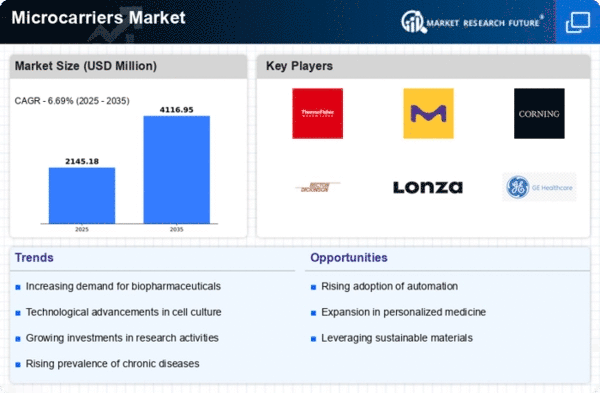
As per MRFR analysis, the Microcarriers Market Size was estimated at 2010.67 USD Million in 2024. The Microcarriers industry is projected to grow from 2168.22 USD Million in 2025 to 4116.95 USD Million by 2035, exhibiting a compound annual growth rate (CAGR) of 6.69 during the forecast period 2025 - 2035.

Key Market Trends & Highlights

The Microcarriers Market is poised for substantial growth driven by technological advancements and increasing applications in biopharmaceuticals.

  • Technological advancements in cell culture are enhancing the efficiency of microcarrier production.
  • North America remains the largest market, while Asia-Pacific is recognized as the fastest-growing region in the microcarriers sector.
  • Vaccine production dominates the market, whereas cell therapy is emerging as the fastest-growing segment.
  • The rising focus on cell-based therapies and the growing demand for stem cell research are key drivers propelling market expansion.

Market Size & Forecast

2024 Market Size 2010.67 (USD Million)
2035 Market Size 4116.95 (USD Million)
CAGR (2025 - 2035) 6.69%
Largest Regional Market Share in 2024 North America

Major Players

Thermo Fisher Scientific (US), Merck KGaA (DE), Corning Incorporated (US), Becton, Dickinson and Company (US), Lonza Group AG (CH), GE Healthcare (US), Sartorius AG (DE), Eppendorf AG (DE), Fujifilm Holdings Corporation (JP)

Market Trends

The Microcarriers Market is currently experiencing a notable evolution, driven by advancements in biopharmaceutical production and regenerative medicine. These small, spherical particles serve as a substrate for cell culture, facilitating the growth of various cell types. As the demand for biopharmaceuticals continues to rise, the need for efficient and scalable cell culture systems becomes increasingly critical. This trend is further supported by the growing emphasis on personalized medicine, which necessitates the development of tailored therapies that rely on robust cell culture techniques. Moreover, the integration of automation and digital technologies into the manufacturing processes is likely to enhance productivity and reduce operational costs, thereby attracting more stakeholders to this sector. In addition to technological advancements, the Microcarriers Market is also influenced by the increasing focus on research and development activities across academic and industrial settings. The exploration of novel applications, such as gene therapy and tissue engineering, is expanding the scope of microcarrier utilization. Furthermore, collaborations between research institutions and commercial entities are fostering innovation and accelerating the introduction of new products. As the landscape of the Microcarriers Market continues to evolve, it appears poised for sustained growth, driven by a combination of scientific progress and market demand for advanced therapeutic solutions.

Technological Advancements in Cell Culture

The Microcarriers Market is witnessing a surge in technological innovations that enhance cell culture processes. These advancements include the development of novel microcarrier materials and surface modifications that improve cell attachment and growth. Such innovations are likely to optimize production efficiency and scalability, making them attractive to biopharmaceutical manufacturers.

Rising Demand for Personalized Medicine

The increasing focus on personalized medicine is significantly impacting the Microcarriers Market. As therapies become more tailored to individual patient needs, the requirement for versatile and efficient cell culture systems grows. This trend suggests a shift towards microcarriers that can support diverse cell types and applications.

Collaborative Research Initiatives

Collaborations between academic institutions and industry players are fostering innovation within the Microcarriers Market. These partnerships are likely to accelerate research and development efforts, leading to the introduction of new microcarrier products and applications. Such initiatives may enhance the overall growth trajectory of the market.

Microcarriers Market Market Drivers

Market Growth Projections

The Global Microcarriers Market Industry is poised for substantial growth, with projections indicating a market value of 0.92 USD Billion in 2024, potentially reaching 1.82 USD Billion by 2035. This growth trajectory suggests a compound annual growth rate (CAGR) of 6.42% from 2025 to 2035. The increasing adoption of microcarriers in biopharmaceutical manufacturing, coupled with advancements in technology and regulatory support, contributes to this optimistic outlook. As the industry evolves, the demand for innovative solutions in cell culture is likely to drive further expansion in the microcarriers market.

Rising Demand for Biopharmaceuticals

The Global Microcarriers Market Industry experiences a surge in demand for biopharmaceuticals, driven by advancements in cell culture technologies. As the biopharmaceutical sector expands, microcarriers play a pivotal role in enhancing the production of vaccines and therapeutic proteins. In 2024, the market is valued at 0.92 USD Billion, reflecting the increasing reliance on microcarriers for efficient cell growth and product yield. This trend is expected to continue, with projections indicating a market growth to 1.82 USD Billion by 2035, suggesting a robust compound annual growth rate (CAGR) of 6.42% from 2025 to 2035.

Growing Focus on Personalized Medicine

The shift towards personalized medicine significantly impacts the Global Microcarriers Market Industry. As healthcare moves towards tailored therapies, the demand for efficient cell culture systems that can support the production of personalized treatments increases. Microcarriers Market provide a versatile platform for growing diverse cell types, facilitating the development of customized therapies. This trend aligns with the broader movement in healthcare towards individualized treatment plans, which are anticipated to drive the demand for microcarriers. The ability to produce specific cell lines efficiently is likely to enhance the market's growth trajectory in the coming years.

Technological Advancements in Cell Culture

Technological innovations in cell culture techniques significantly influence the Global Microcarriers Market Industry. The introduction of advanced microcarrier materials and surface modifications enhances cell attachment and growth, thereby improving overall productivity. These advancements facilitate the scalability of bioprocesses, making them more efficient and cost-effective. As a result, manufacturers are increasingly adopting these technologies to meet the growing demands of the biopharmaceutical sector. The continuous evolution of microcarrier technology is likely to drive market expansion, as companies seek to optimize their production processes and reduce costs.

Increased Investment in Research and Development

Investment in research and development within the biopharmaceutical sector is a crucial driver for the Global Microcarriers Market Industry. As companies strive to innovate and develop new therapies, the need for efficient cell culture systems becomes paramount. Increased funding for R&D initiatives enables the exploration of novel microcarrier applications, enhancing their utility in various therapeutic areas. This trend is indicative of a broader commitment to advancing biopharmaceutical manufacturing processes, which is expected to bolster market growth in the coming years. The focus on R&D is likely to yield new products and applications, further expanding the microcarriers market.

Regulatory Support for Biopharmaceutical Manufacturing

Regulatory frameworks supporting biopharmaceutical manufacturing play a vital role in shaping the Global Microcarriers Market Industry. Governments worldwide are increasingly recognizing the importance of biopharmaceuticals in healthcare, leading to streamlined approval processes and guidelines that encourage innovation. This regulatory support fosters a conducive environment for the development and commercialization of new therapies, thereby driving demand for microcarriers. As regulatory bodies continue to adapt to the evolving landscape of biopharmaceuticals, the market for microcarriers is expected to benefit from increased production capabilities and enhanced product quality.

Market Segment Insights

By Application: Vaccine Production (Largest) vs. Cell Therapy (Fastest-Growing)

The Microcarriers Market is witnessing a robust segmentation in the application areas, with Vaccine Production holding the largest share. This segment benefits from the increasing demand for vaccines amidst global health crises, leading to its dominant position. In contrast, Cell Therapy, while currently smaller in market share, is emerging rapidly due to advancements in regenerative medicine and therapies that utilize living cells. This divergence highlights the evolution of market priorities in the healthcare sector. The growth trends in the Microcarriers Market are influenced by several key drivers. Vaccine Production remains stable, bolstered by ongoing initiatives to enhance vaccine accessibility and production efficiency. Conversely, Cell Therapy is gaining momentum as research and clinical trials proliferate, supported by innovative biotechnologies. This segment reflects a shift towards personalized medicine and the need for scalable solutions in cell-based therapies, positioning it for swift growth in the coming years.

Vaccine Production (Dominant) vs. Gene Therapy (Emerging)

In the Microcarriers Market, Vaccine Production stands as the dominant application, driven by established manufacturing processes and increasing global healthcare demands. This segment leverages a well-optimized framework, allowing for the efficient production of vaccines, which remains critical in response to various health emergencies. Conversely, Gene Therapy is an emerging application, showcasing vast potential as research shifts towards genetic modifications for disease treatment. While still developing, it is characterized by rapid innovation and the promise of revolutionary treatments that target the underlying causes of genetic disorders. This contrast illustrates a market transitioning from traditional applications to breakthroughs anchored in genetic and cellular advancements.

By Type: Animal Cell Microcarriers (Largest) vs. Plant Cell Microcarriers (Fastest-Growing)

In the Microcarriers Market, Animal Cell Microcarriers hold the largest share, predominating due to their extensive applications in pharmaceuticals, vaccines, and biomanufacturing. This segment benefits from the increasing demand for biologics and cell therapies, which utilize these microcarriers for cell culture and growth purposes. On the other hand, Plant Cell Microcarriers are observing rapid growth, fueled by advancements in agricultural biotechnology and the rising demand for plant-based products. This segment is gaining traction as more researchers seek environmentally friendly alternatives in cultivation. The growth trends indicate a robust future for both segments, driven by technological advancements and increased research activities. The use of microcarriers in various bioprocesses ensures their relevance in the market. Additionally, factors such as the innovation in cultivation techniques and the rising need for effective drug production methods contribute to the expansion of these segments. The versatility of Animal Cell Microcarriers continues to secure their market position, while Plant Cell Microcarriers are poised to capture a larger market share with their emerging significance in sustainable agriculture practices.

Animal Cell Microcarriers (Dominant) vs. Bacterial Cell Microcarriers (Emerging)

Animal Cell Microcarriers remain dominant in the Microcarriers Market due to their critical role in supporting cell growth and production for various biological applications. They are preferred for their compatibility with a range of cell types and scalability in bioprocessing, making them essential in biopharmaceutical manufacturing and regenerative medicine. Conversely, Bacterial Cell Microcarriers are emerging, attracting attention for their potential in producing vaccines and microbial fermentation processes. This segment is characterized by innovations in cultivation technologies and a growing inclination towards bio-based products. The unique characteristics of bacterial cells, including their rapid growth and economic feasibility, position them as strong alternatives in cell culture applications, capturing increasing interest from researchers and manufacturers alike.

By Material: Polystyrene (Largest) vs. Glass (Fastest-Growing)

The Microcarriers Market shows a clear dominance of Polystyrene as the largest material segment. Its superior properties such as high surface area and ease of functionalization contribute to its widespread usage among biopharmaceutical companies. In contrast, Glass microcarriers, although smaller in market share, are emerging rapidly due to their favorable biocompatibility and ability to provide a stable environment for cell culture applications. This trend highlights a varied preference depending on specific applications within the industry. Moreover, the growth trends within the Microcarriers Market are significantly influenced by advancements in biomanufacturing and cell-based therapies. Polystyrene continues to lead the market, but the increasing demand for more biocompatible materials has propelled Glass microcarriers into the spotlight, marking them as the fastest-growing segment. With evolving technology and increasing investments in regenerative medicine, other materials like Polyethylene and Silicone are also gaining traction, showcasing a broader shift towards diverse material options that support various cell culture requirements.

Polystyrene (Dominant) vs. Silicone (Emerging)

Polystyrene microcarriers are recognized as the dominant player in the Microcarriers Market due to their excellent mechanical properties, high surface-to-volume ratio, and versatility in supporting different cell types. They facilitate efficient cell attachment and proliferation, which is essential for various applications in the biopharmaceutical sector. On the other hand, Silicone microcarriers are emerging as a notable alternative, driven by their unique elasticity and flexibility, which can enhance cell growth and ease of handling. Although they lag behind Polystyrene in terms of market share, their innovative properties are making them increasingly popular, particularly for applications requiring adaptable conditions for cell culture. This dynamic showcases the ongoing evolution and diversification of materials in the microcarrier space.

By Scale of Operation: Laboratory Scale (Largest) vs. Industrial Scale (Fastest-Growing)

In the Microcarriers Market, the scale of operation is segmented into Laboratory Scale, Pilot Scale, and Industrial Scale. The Laboratory Scale segment captures the largest market share, driven by its essential role in research and development activities. Experimental setups in laboratories heavily rely on microcarriers for cell culture processes in biopharmaceutical development. This prominence is contrasted by the growing demand in the Industrial Scale segment, which is becoming increasingly vital as production requirements rise in the biotechnology sector.

Laboratory Scale (Dominant) vs. Industrial Scale (Emerging)

The Laboratory Scale segment remains dominant in the Microcarriers Market due to its foundational role in biopharmaceutical processes. Researchers favor this scale for its flexibility and ability to facilitate experimental setups, which are crucial for developing novel therapies and vaccines. Conversely, the Industrial Scale is emerging rapidly as manufacturers seek to scale up their production capabilities without compromising the quality of cell cultures. This segment benefits from advancements in bioprocessing technologies and increased investments in large-scale production, making it a significant area of growth as companies seek to optimize yield and reduce operational costs.

By End User: Biopharmaceutical Companies (Largest) vs. Research Institutions (Fastest-Growing)

In the Microcarriers Market, the end-user segment is primarily dominated by Biopharmaceutical Companies, which hold a substantial share due to their increasing reliance on advanced cell culture techniques for biopharmaceutical production. Research Institutions also play a significant role, as they utilize microcarriers for various studies, contributing notably to market dynamics, driven by innovations and technological advancements in cell culture methodologies.

Biopharmaceutical Companies (Dominant) vs. Research Institutions (Emerging)

Biopharmaceutical Companies are at the forefront of the Microcarriers Market, leveraging microcarriers for the large-scale cultivation of cells aimed at therapeutic developments. Their dominance stems from the growing demand for monoclonal antibodies and cell-based therapies. Conversely, Research Institutions, emerging as crucial players, are intensifying their use of microcarriers for innovative research projects. They are increasingly deploying these systems to support advancements in regenerative medicine and personalized therapies, thus showing a promising growth trajectory fueled by funding and academic partnerships.

Get more detailed insights about Microcarriers Market Research Report - Global Forecast till 2035

Regional Insights

North America : Market Leader in Microcarriers

North America continues to lead the microcarriers market, holding a significant share of 1005.34M in 2024. The region's growth is driven by increasing demand for biopharmaceuticals and advancements in cell culture technologies. Regulatory support from agencies like the FDA further catalyzes innovation and market expansion, ensuring compliance and safety in bioprocessing. The rising prevalence of chronic diseases also fuels the need for effective therapeutic solutions, enhancing market dynamics. The competitive landscape in North America is robust, featuring key players such as Thermo Fisher Scientific, Corning Incorporated, and GE Healthcare. These companies are at the forefront of technological advancements, offering innovative microcarrier solutions. The U.S. is the leading country, with a strong focus on research and development, while Canada is also emerging as a significant player in the biomanufacturing sector. This competitive environment fosters collaboration and investment, driving further growth in the region.

Europe : Emerging Hub for Innovation

Europe's microcarriers market is poised for growth, with a market size of 600.4M in 2024. The region benefits from a strong regulatory framework that encourages innovation in biopharmaceuticals and cell therapy. Initiatives from the European Medicines Agency (EMA) promote the development of advanced therapies, enhancing market potential. The increasing focus on personalized medicine and regenerative therapies is also driving demand for microcarriers, positioning Europe as a key player in the global market. Leading countries in Europe include Germany, the UK, and France, where major companies like Merck KGaA and Sartorius AG are actively involved in microcarrier production. The competitive landscape is characterized by strategic partnerships and collaborations among industry players, fostering innovation and expanding product offerings. The presence of well-established research institutions further supports the growth of the microcarriers market in Europe, making it a vibrant hub for biotechnological advancements.

Asia-Pacific : Rapidly Growing Market Potential

The Asia-Pacific microcarriers market is experiencing rapid growth, with a market size of 300.2M in 2024. Factors such as increasing investments in biopharmaceutical research and development, along with a growing population, are driving demand for microcarriers in the region. Additionally, supportive government policies aimed at enhancing healthcare infrastructure are further propelling market growth. The rise of biotechnology firms in countries like China and India is also contributing to the expansion of the microcarriers market. China and Japan are the leading countries in this region, with significant contributions from local companies and multinational corporations. Key players like Fujifilm Holdings Corporation and Lonza Group AG are actively involved in the market, focusing on innovative solutions tailored to regional needs. The competitive landscape is evolving, with an increasing number of startups entering the market, fostering innovation and driving competition in the microcarriers sector.

Middle East and Africa : Emerging Market with Potential

The Middle East and Africa microcarriers market, valued at 104.73M in 2024, is gradually emerging as a significant player in the global landscape. The region is witnessing growth driven by increasing investments in healthcare and biotechnology sectors. Governments are implementing policies to enhance research capabilities and improve healthcare infrastructure, which is crucial for the development of biopharmaceuticals. The rising prevalence of diseases is also pushing the demand for effective therapeutic solutions, thereby boosting the microcarriers market. Leading countries in this region include South Africa and the UAE, where there is a growing presence of biopharmaceutical companies. The competitive landscape is characterized by collaborations between local firms and international players, aiming to leverage expertise and resources. As the market matures, there is a strong potential for growth, with increasing focus on innovation and technology adoption in the microcarriers sector.

Key Players and Competitive Insights

The Microcarriers Market is currently characterized by a dynamic competitive landscape, driven by increasing demand for biopharmaceuticals and advancements in cell culture technologies. Key players such as Thermo Fisher Scientific (US), Merck KGaA (DE), and Corning Incorporated (US) are strategically positioned to leverage their extensive product portfolios and innovative capabilities. For instance, Thermo Fisher Scientific (US) focuses on enhancing its bioprocessing solutions, which appears to be a response to the growing need for efficient cell culture systems. Meanwhile, Merck KGaA (DE) emphasizes its commitment to sustainability and digital transformation, which may enhance its competitive edge in the market. Collectively, these strategies indicate a trend towards innovation and operational efficiency, shaping a competitive environment that is increasingly reliant on technological advancements.In terms of business tactics, companies are localizing manufacturing and optimizing supply chains to enhance responsiveness to market demands. The Microcarriers Market is moderately fragmented, with several key players exerting considerable influence. This structure allows for a diverse range of offerings, yet the collective actions of major companies like Becton, Dickinson and Company (US) and Lonza Group AG (CH) suggest a trend towards consolidation, as these firms seek to enhance their market positions through strategic partnerships and acquisitions.In November 2025, Becton, Dickinson and Company (US) announced a strategic partnership with a leading biotechnology firm to co-develop advanced microcarrier technologies aimed at improving cell therapy production. This collaboration is likely to bolster Becton Dickinson's position in the market by expanding its technological capabilities and enhancing its product offerings. Such partnerships may also facilitate access to new customer segments, thereby driving revenue growth.In October 2025, Lonza Group AG (CH) unveiled a new line of microcarriers designed specifically for the production of viral vectors. This strategic move appears to align with the increasing demand for gene therapies and personalized medicine, positioning Lonza as a key player in this niche segment. The introduction of these specialized products may not only enhance Lonza's competitive positioning but also reflect a broader trend towards customization in the Microcarriers Market.In September 2025, Corning Incorporated (US) expanded its manufacturing capabilities by investing in a new facility dedicated to the production of microcarriers. This investment seems to be a proactive measure to meet the rising global demand for cell culture products. By increasing production capacity, Corning is likely to strengthen its market presence and improve supply chain reliability, which is becoming increasingly critical in today's competitive landscape.As of December 2025, current trends in the Microcarriers Market are heavily influenced by digitalization, sustainability, and the integration of AI technologies. Strategic alliances are playing a pivotal role in shaping the competitive landscape, as companies seek to combine resources and expertise to drive innovation. The shift from price-based competition to a focus on technological advancement and supply chain reliability is evident, suggesting that future competitive differentiation will hinge on the ability to innovate and adapt to evolving market demands.

Key Companies in the Microcarriers Market include

Industry Developments

  • Q2 2024: Sartorius and Sanofi Announce Partnership to Develop and Commercialize Bioprocessing Platform Sartorius and Sanofi entered into a partnership to develop and commercialize a new platform aimed at streamlining and optimizing downstream bioprocessing operations, with a focus on enhancing efficiency in biopharmaceutical production using microcarrier-based technologies.

Future Outlook

Microcarriers Market Future Outlook

The Microcarriers Market is projected to grow at a 6.69% CAGR from 2024 to 2035, driven by advancements in biopharmaceuticals, increased demand for cell culture, and technological innovations.

New opportunities lie in:

  • Development of specialized microcarrier products for stem cell applications.
  • Expansion into emerging markets with tailored microcarrier solutions.
  • Integration of AI-driven analytics for optimized cell culture processes.

By 2035, the Microcarriers Market is expected to achieve robust growth, positioning itself as a key player in biopharmaceutical manufacturing.

Market Segmentation

Microcarriers Market Type Outlook

  • Animal Cell Microcarriers
  • Plant Cell Microcarriers
  • Bacterial Cell Microcarriers
  • Fungal Cell Microcarriers

Microcarriers Market End User Outlook

  • Biopharmaceutical Companies
  • Research Institutions
  • Contract Manufacturing Organizations
  • Academic Institutions

Microcarriers Market Material Outlook

  • Polystyrene
  • Polyethylene
  • Glass
  • Silicone

Microcarriers Market Application Outlook

  • Vaccine Production
  • Cell Therapy
  • Gene Therapy
  • Bioproduction
  • Tissue Engineering

Microcarriers Market Scale of Operation Outlook

  • Laboratory Scale
  • Pilot Scale
  • Industrial Scale

Report Scope

MARKET SIZE 20242010.67(USD Million)
MARKET SIZE 20252168.22(USD Million)
MARKET SIZE 20354116.95(USD Million)
COMPOUND ANNUAL GROWTH RATE (CAGR)6.69% (2025 - 2035)
REPORT COVERAGERevenue Forecast, Competitive Landscape, Growth Factors, and Trends
BASE YEAR2024
Market Forecast Period2025 - 2035
Historical Data2019 - 2024
Market Forecast UnitsUSD Million
Key Companies ProfiledThermo Fisher Scientific (US), Merck KGaA (DE), Corning Incorporated (US), Becton, Dickinson and Company (US), Lonza Group AG (CH), GE Healthcare (US), Sartorius AG (DE), Eppendorf AG (DE), Fujifilm Holdings Corporation (JP)
Segments CoveredApplication, Type, Material, Scale of Operation, End User
Key Market OpportunitiesAdvancements in bioprocessing technologies enhance scalability in the Microcarriers Market.
Key Market DynamicsRising demand for biopharmaceuticals drives innovation and competition in the microcarriers market.
Countries CoveredNorth America, Europe, APAC, South America, MEA

FAQs

What is the study period of the microcarriers market report?

The microcarriers market forecast period is 2023-2032

What is the microcarriers market growth rate?

The market is expected to register a CAGR of ~6.42% over the next 10 years, according to microcarriers market research.

Which region has the highest market growth rate?

Asia-Pacific is expected to register the highest CAGR during 2023 - 2032

Which region has the largest share of the market?

North America held the largest share in 2021

What is the expected microcarriers market size by 2030?

The market size is expected to be USD 1.57 Billion by 2032.

Who are the key players in the market?

Sartorius AG, Merck KGaA, Danaher Corporation, Thermo Fisher Scientific, Inc., HiMedia Laboratories Pvt. Ltd., and Eppendorf SE are the major companies operating ly market.

  1. SECTION I: EXECUTIVE SUMMARY AND KEY HIGHLIGHTS
    1. | 1.1 EXECUTIVE SUMMARY
  2. SECTION II: SCOPING, METHODOLOGY AND MARKET STRUCTURE
    1. | 2.1 MARKET INTRODUCTION
    2. | 2.2 RESEARCH METHODOLOGY
  3. SECTION III: QUALITATIVE ANALYSIS
    1. | 3.1 MARKET DYNAMICS
    2. | 3.2 MARKET FACTOR ANALYSIS
  4. SECTION IV: QUANTITATIVE ANALYSIS
    1. | 4.1 Healthcare, BY Application (USD Million)
    2. | 4.2 Healthcare, BY Type (USD Million)
    3. | 4.3 Healthcare, BY Material (USD Million)
    4. | 4.4 Healthcare, BY Scale of Operation (USD Million)
    5. | 4.5 Healthcare, BY End User (USD Million)
    6. | 4.6 Healthcare, BY Region (USD Million)
  5. SECTION V: COMPETITIVE ANALYSIS
    1. | 5.1 Competitive Landscape
    2. | 5.2 Company Profiles
    3. | 5.3 Appendix

Microcarriers Market Segmentation

Market Segmentation Overview

  • Detailed segmentation data will be available in the full report
  • Comprehensive analysis by multiple parameters
  • Regional and country-level breakdowns
  • Market size forecasts by segment
Infographic

Free Sample Request

Kindly complete the form below to receive a free sample of this Report

Get Free Sample

Customer Strories

Compare Licence

×
Features License Type
Single User Multiuser License Enterprise User
Price $4,950 $5,950 $7,250
Maximum User Access Limit 1 User Upto 10 Users Unrestricted Access Throughout the Organization
Free Customization
Direct Access to Analyst
Deliverable Format
Platform Access
Discount on Next Purchase 10% 15% 15%
Printable Versions