×
Hero Background
English
Chinese
French
Japanese
Korean
German
Spanish

Kyphosis Market Share

ID: MRFR/MED/1228-HCR
90 Pages
Kinjoll Dey
October 2025

Kyphosis Market Research Report Information By Type (Postural Kyphosis, Scheuermann's Kyphosis, Congenital Kyphosis), Diagnostic Test & Diseases (X-ray, Biopsy, Aspirin, Ibuprofen, Naproxen, Spinal Fusion), End User (Hospitals, Diagnostic Centres, Research Organizations) - Forecast till 2035

Share:
Download PDF ×

We do not share your information with anyone. However, we may send you emails based on your report interest from time to time. You may contact us at any time to opt-out.

Kyphosis Market Infographic
Purchase Options

Market Share

Kyphosis Market Share Analysis

Kyphosis Market is a clinical industry focused in on the treatment of spinal disfigurements, especially kyphosis. This condition includes a strange shape of the spine that can prompt different medical problems. In this cutthroat market, organizations utilize assorted procedures to get and extend their share. Kyphosis Market players frequently separate themselves through item separation. This includes offering extraordinary elements, further developed innovations, or restrictive treatment draws near. Organizations draw in a bigger client base and keep an upper hand. Effective piece of the pie situating in the Kyphosis Market includes designated advertising efforts. Organizations center around teaching both medical care experts and patients about their therapy techniques and items. By making awareness and understanding, these organizations position themselves as pioneers in the field, affecting both the clinical local area and purchasers. A few organizations take on an expense initiative technique to acquire an upper hand. By improving creation processes and overseeing functional expenses proficiently, these organizations can offer serious valuing for their items and administrations. Practical arrangements draw in a bigger client base and add to a higher share. Laying areas of strength for out with medical care experts and patients is vital for supported achievement. Kyphosis Market organizations put resources into powerful CRM frameworks to guarantee customized collaborations and custom-made arrangements. Building trust and reliability upgrades client maintenance and can prompt positive informal exchange references. Remaining at the bleeding edge of clinical progressions is fundamental in the Kyphosis Market. Organizations put vigorously in innovative work to present better than ever treatment choices. Being seen as pioneers in development builds up piece of the pie situating and draws in both clinical experts and patients looking for state of the art arrangements.


Author
Kinjoll Dey
Research Analyst Level I

He is an extremely curious individual currently working in Healthcare and Medical Devices Domain. Kinjoll is comfortably versed in data centric research backed by healthcare educational background. He leverages extensive data mining and analytics tools such as Primary and Secondary Research, Statistical Analysis, Machine Learning, Data Modelling. His key role also involves Technical Sales Support, Client Interaction and Project management within the Healthcare team. Lastly, he showcases extensive affinity towards learning new skills and remain fascinated in implementing them.

Leave a Comment

Market Summary

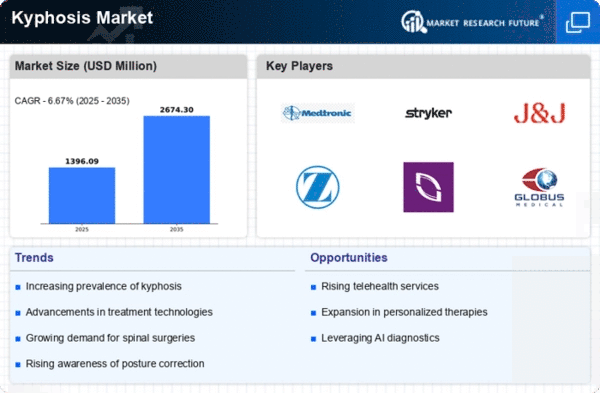
As per MRFR analysis, the Kyphosis Market Size was estimated at 1308.79 USD Million in 2024. The Kyphosis industry is projected to grow from 1411.08 USD Million in 2025 to 2674.3 USD Million by 2035, exhibiting a compound annual growth rate (CAGR) of 6.67 during the forecast period 2025 - 2035.

Key Market Trends & Highlights

The Kyphosis Market is experiencing notable growth driven by technological advancements and increasing awareness.

  • Technological advancements in treatment are reshaping the landscape of the Kyphosis Market, particularly in North America.
  • The rise in preventive care initiatives is fostering a shift towards non-surgical treatment options, which are the fastest-growing segment.
  • Integration of telemedicine is enhancing patient access and engagement, especially in the Asia-Pacific region.
  • The increasing prevalence of Kyphosis and advancements in surgical techniques are key drivers propelling market expansion.

Market Size & Forecast

2024 Market Size 1308.79 (USD Million)
2035 Market Size 2674.3 (USD Million)
CAGR (2025 - 2035) 6.67%
Largest Regional Market Share in 2024 North America

Major Players

<p>Medtronic (US), Stryker (US), DePuy Synthes (US), Zimmer Biomet (US), NuVasive (US), Globus Medical (US), Amedica Corporation (US), Orthofix Medical (US), K2M Group Holdings (US)</p>

Market Trends

The Kyphosis Market is currently experiencing notable transformations driven by advancements in medical technology and an increasing awareness of spinal health. As the global population ages, the prevalence of kyphosis is likely to rise, prompting a greater demand for effective treatment options. Healthcare providers are increasingly focusing on innovative therapies, including minimally invasive surgical techniques and non-surgical interventions, which appear to enhance patient outcomes. Furthermore, the integration of telemedicine into treatment protocols may facilitate better access to care, particularly for individuals in remote areas. This shift towards patient-centered care is indicative of a broader trend within the healthcare sector, emphasizing the importance of personalized treatment plans. In addition, the growing emphasis on preventive measures and early diagnosis is shaping the landscape of the Kyphosis Market. Educational initiatives aimed at promoting spinal health are becoming more prevalent, potentially leading to earlier interventions and improved quality of life for patients. The collaboration between healthcare professionals and technology developers is fostering the creation of advanced diagnostic tools, which may aid in the timely identification of kyphosis. Overall, the Kyphosis Market appears poised for growth, driven by a combination of technological advancements, increased awareness, and a focus on holistic patient care.

Technological Advancements in Treatment

The Kyphosis Market is witnessing a surge in innovative treatment options, particularly through the development of minimally invasive surgical techniques. These advancements are likely to enhance recovery times and reduce complications, making procedures more appealing to patients. Additionally, the emergence of new non-surgical therapies, such as physical therapy and bracing, is providing alternative solutions for managing kyphosis.

Rise in Preventive Care Initiatives

There is a growing trend towards preventive care within the Kyphosis Market, as healthcare providers emphasize the importance of early diagnosis and intervention. Educational programs aimed at raising awareness about spinal health are becoming more common, potentially leading to a decrease in the severity of kyphosis cases. This proactive approach may improve patient outcomes and reduce long-term healthcare costs.

Integration of Telemedicine

The integration of telemedicine into the Kyphosis Market is transforming how patients access care. Remote consultations and follow-up appointments are becoming increasingly popular, allowing individuals to receive expert advice without the need for travel. This trend may enhance patient engagement and adherence to treatment plans, ultimately contributing to better management of kyphosis.

Kyphosis Market Market Drivers

Rising Geriatric Population

The Global Kyphosis Market Industry is significantly influenced by the rising geriatric population, as older adults are more susceptible to spinal deformities. With advancements in healthcare, life expectancy is increasing, leading to a larger demographic of elderly individuals. This population often experiences conditions such as osteoporosis, which can exacerbate kyphosis. Consequently, the demand for effective treatment options is expected to rise, further propelling market growth. As healthcare systems adapt to cater to this demographic, the market is likely to see an increase in specialized services and products tailored to the needs of older patients.

Growing Awareness and Education

There is a notable increase in awareness and education regarding kyphosis and its implications on overall health within the Global Kyphosis Market Industry. Healthcare campaigns and community outreach programs are effectively informing the public about the importance of early diagnosis and treatment. This heightened awareness is likely to lead to more individuals seeking medical advice and intervention, thereby driving market growth. Educational initiatives targeting both healthcare professionals and patients are crucial in fostering a better understanding of kyphosis, which may contribute to improved treatment rates and outcomes.

Increasing Prevalence of Kyphosis

The Global Kyphosis Market Industry is experiencing growth due to the rising prevalence of kyphosis among various age groups. Factors such as aging populations and sedentary lifestyles contribute to the increasing incidence of spinal deformities. In 2024, the market is valued at 0.27 USD Billion, reflecting a growing awareness of spinal health. As more individuals seek treatment options, the demand for medical devices and therapies is expected to rise, potentially leading to a market valuation of 1.0 USD Billion by 2035. This trend indicates a compound annual growth rate (CAGR) of 12.68% from 2025 to 2035.

Advancements in Treatment Technologies

Technological advancements in treatment modalities are propelling the Global Kyphosis Market Industry forward. Innovations in surgical techniques, such as minimally invasive procedures and improved spinal implants, enhance patient outcomes and reduce recovery times. These advancements not only attract more patients but also encourage healthcare providers to adopt new technologies. The integration of robotics and artificial intelligence in surgical planning and execution further optimizes treatment efficacy. As a result, the market is poised for substantial growth, with a projected increase in demand for advanced treatment options over the coming years.

Regulatory Support and Reimbursement Policies

Regulatory support and favorable reimbursement policies are playing a pivotal role in shaping the Global Kyphosis Market Industry. Governments and health organizations are increasingly recognizing the need for comprehensive treatment options for spinal deformities. As a result, policies that facilitate access to care and reimbursement for kyphosis treatments are being implemented. This support encourages healthcare providers to offer innovative solutions and enhances patient access to necessary therapies. The positive regulatory environment is expected to stimulate market growth, as more individuals can seek timely and effective treatment for kyphosis.

Market Segment Insights

By Application: Surgical Treatment (Largest) vs. Non-Surgical Treatment (Fastest-Growing)

<p>In the Kyphosis Market, the application segment exhibits diverse treatment options, with surgical treatment accounting for the largest share. This encompasses various procedures aimed at correcting spinal deformities due to kyphosis. Non-surgical treatment is also a significant portion of the market, focusing on alternative approaches that encourage recovery without invasive procedures. Other categories like physical therapy and medication contribute less but remain crucial for comprehensive care and management of kyphosis. Growth trends within this segment indicate a robust increase in the non-surgical treatment approaches, largely attributed to a rising preference for minimally invasive options. Advances in technology and increased awareness on the importance of early intervention are driving this shift. Additionally, as patient demographics evolve, so too does the demand for more personalized care plans that integrate both surgical and non-surgical treatments effectively.</p>

<p>Surgical Treatment: Dominant vs. Physical Therapy: Emerging</p>

<p>Surgical treatment in the Kyphosis Market stands as the dominant force, offering interventions such as spinal fusion and vertebroplasty, which are preferred for severe cases. These procedures not only alleviate pain but also restore normal spinal alignment, thereby enhancing the quality of life for patients. On the other hand, physical therapy is emerging as a pivotal aspect of the treatment paradigm, focusing on rehabilitation and strength-building. This approach is becoming increasingly popular due to its non-invasive nature and the holistic benefits it offers, including improved flexibility and mobility. Together, these segments highlight a comprehensive treatment landscape where surgical methods are essential for more severe cases, while physical therapy increasingly caters to preventive care and recovery.</p>

By End Use: Hospitals (Largest) vs. Rehabilitation Centers (Fastest-Growing)

<p>The end-use segment of the Kyphosis market demonstrates a diverse distribution among various healthcare providers. Hospitals currently dominate this market segment, being the primary destination for kyphosis surgery and treatment due to their advanced facilities and specialized medical teams. Clinics and rehabilitation centers also contribute significantly, yet they hold a smaller share compared to hospitals. Home care solutions are increasingly regarded as an essential part of patient recovery and management, reflecting a shift in how care is delivered.</p>

<p>Hospitals (Dominant) vs. Rehabilitation Centers (Emerging)</p>

<p>Hospitals remain the dominant force in the Kyphosis market, offering comprehensive care through specialized departments equipped with advanced surgical tools and rehabilitation services. They cater to a wide range of patients with varying degrees of kyphosis and have access to a multidisciplinary approach that includes surgeons, physiotherapists, and pain management specialists. On the other hand, rehabilitation centers are emerging as quick growth areas in this market, focusing on recovery processes post-treatment. With the increasing emphasis on outpatient services and home-based rehabilitation, these centers are adapting rapidly to meet the needs of patients, offering tailored programs that support recovery and enhance the quality of life.</p>

By Type of Kyphosis: Postural Kyphosis (Largest) vs. Scheuermann's Kyphosis (Fastest-Growing)

<p>In the Kyphosis Market, Postural Kyphosis holds the largest share due to its prevalence among adolescents and adults who experience slumping and poor posture over time. This type, often corrected through physical therapy and lifestyle modifications, accounts for a significant segment of patients seeking treatment. In contrast, Scheuermann's Kyphosis, characterized by a more rigid spinal deformity that commonly arises during adolescence, shows rapid growth in market interest as awareness of spinal health increases among younger populations and preventative measures gain traction.</p>

<p>Postural Kyphosis (Dominant) vs. Scheuermann's Kyphosis (Emerging)</p>

<p>Postural Kyphosis is recognized for being the dominant form of kyphosis, typically resulting from lifestyle factors such as prolonged sitting and poor ergonomics. Its characteristics include flexibility and the potential for rehabilitation through exercise and awareness campaigns. On the other hand, Scheuermann's Kyphosis is an emerging category, defined by a structural abnormality of the spine that could lead to additional complications if left untreated. This type attracts growing attention from healthcare providers and patients alike, as its early identification and treatment can lead to improved outcomes. The increasing focus on adolescent spine health and preventative measures positions Scheuermann's Kyphosis as a significant area of concern within the market.</p>

By Age Group: Adults (Largest) vs. Children (Fastest-Growing)

<p>In the Kyphosis Market, the age group of adults represents the largest segment, predominantly due to the prevalence of kyphosis in this demographic. Factors contributing to this include degenerative changes associated with aging and conditions such as osteoporosis, which are more common in adults. Moreover, the growing awareness and diagnosis of spinal deformities in adults have led to an increased market share for treatments and interventions tailored to this group. Conversely, the children segment is emerging as the fastest-growing demographic in the Kyphosis Market. This growth can be attributed to the rising incidence of adolescent kyphosis, often due to postural issues and increased sedentary behavior in younger populations. The focus on education and preventive measures regarding spinal health in schools is also contributing to the growth of this segment, promoting earlier diagnosis and treatment options for children and adolescents.</p>

<p>Adults (Dominant) vs. Children (Emerging)</p>

<p>The adults segment in the Kyphosis Market remains dominant due to a larger patient population, largely influenced by age-related spinal changes and lifestyle factors. Adults often seek various treatment options, such as physical therapy, braces, and surgical interventions, reflecting a matured engagement with the healthcare system. On the other hand, children represent an emerging segment; the increasing prevalence of postural kyphosis linked to modern lifestyle choices has sparked growing concern among parents and healthcare professionals. This has resulted in a pivotal focus on awareness campaigns and early treatment initiatives. The need for specialized pediatric care and the growing understanding of juvenile orthopedic conditions positions children as a critical market segment that could drive future growth.</p>

By Severity Level: Moderate Kyphosis (Largest) vs. Severe Kyphosis (Fastest-Growing)

<p>The Kyphosis Market is segmented by severity levels including Mild, Moderate, and Severe Kyphosis. In terms of market share distribution, Moderate Kyphosis represents the largest segment among these due to its higher prevalence and recognition in clinical settings. Patients suffering from Moderate Kyphosis often seek treatments such as physical therapy and corrective surgeries, contributing to a robust demand in this segment. Conversely, Severe Kyphosis, while smaller in market share, is gaining traction as awareness grows around the severity of its impact and treatment options available. As healthcare providers increasingly focus on severe conditions, this segment is witnessing substantial attention. Looking at growth trends, Moderate Kyphosis continues to benefit from established treatment protocols and a steady influx of patients, ensuring its dominance in the market. On the other hand, Severe Kyphosis is emerging as a critical area for growth due to rising rates of diagnosis and the development of advanced therapeutic interventions. Factors contributing to this growth include an aging population that is more prone to spinal issues, as well as enhanced healthcare technologies that provide improved outcomes. With increased research and advancements, Severe Kyphosis is set to capture a larger share of the market in the coming years.</p>

<p>Moderate Kyphosis (Dominant) vs. Severe Kyphosis (Emerging)</p>

<p>Moderate Kyphosis, being the dominant segment in the Kyphosis Market, consists of individuals widely seeking clinical intervention due to its noticeable impacts on health and lifestyle. This segment is characterized by its range of treatment options that are widely accepted and readily available, including non-surgical methods such as physiotherapy and surgical interventions for more pronounced cases. In contrast, Severe Kyphosis is regarded as an emerging segment that focuses on patients with extreme curvature and severe symptoms necessitating urgent medical attention. With advancing medical technologies and an emphasis on better patient outcomes, the Severe Kyphosis segment is progressively gaining recognition, pushing healthcare systems to develop specialized treatment solutions to cater to this critical condition.</p>

Get more detailed insights about Kyphosis Market Research Report – Global Forecast till 2035

Regional Insights

North America : Market Leader in Kyphosis Care

North America is poised to maintain its leadership in the Kyphosis market, holding a significant market share of $650.0M in 2024. The region's growth is driven by an aging population, increasing prevalence of spinal disorders, and advancements in surgical techniques. Regulatory support and reimbursement policies further enhance market accessibility, fostering innovation and adoption of new technologies. The competitive landscape is robust, with key players like Medtronic, Stryker, and DePuy Synthes leading the charge. The U.S. remains the largest market, supported by a well-established healthcare infrastructure and high healthcare expenditure. The presence of major companies ensures a continuous flow of innovative products, catering to the growing demand for effective Kyphosis treatments.

Europe : Emerging Market with Growth Potential

Europe's Kyphosis market is valued at $350.0M, reflecting a growing demand for spinal treatments driven by an increasing elderly population and rising awareness of spinal health. Regulatory frameworks across countries are evolving to support innovative therapies, enhancing patient access to advanced treatment options. The market is also influenced by technological advancements in minimally invasive procedures, which are gaining traction among healthcare providers. Leading countries such as Germany, France, and the UK are at the forefront of this market, with a competitive landscape featuring key players like Zimmer Biomet and Globus Medical. The presence of established healthcare systems and a focus on research and development further bolster the market's growth. "The European market is witnessing a significant shift towards innovative spinal solutions, driven by patient needs and technological advancements," European Spine Journal.

Asia-Pacific : Rapidly Growing Market Dynamics

The Asia-Pacific region is experiencing a notable surge in the Kyphosis market, valued at $250.0M. Factors such as increasing urbanization, rising healthcare expenditure, and a growing elderly population are driving demand for spinal treatments. Additionally, government initiatives aimed at improving healthcare infrastructure are facilitating market growth. The region is also witnessing a shift towards advanced surgical techniques and technologies, enhancing treatment outcomes. Countries like Japan, China, and India are leading the market, with a competitive landscape that includes both local and international players. The presence of key companies such as NuVasive and Orthofix Medical is crucial in addressing the rising demand for effective Kyphosis solutions. The focus on research and development is expected to further propel market growth in the coming years.

Middle East and Africa : Emerging Market with Challenges

The Middle East and Africa (MEA) region, with a market size of $58.79M, is gradually emerging in the Kyphosis sector. The growth is primarily driven by increasing awareness of spinal health and the rising prevalence of spinal disorders. However, challenges such as limited healthcare infrastructure and varying regulatory environments can hinder market expansion. Efforts to improve healthcare access and quality are essential for fostering growth in this region. Countries like South Africa and the UAE are leading the market, with a focus on enhancing healthcare services. The competitive landscape is evolving, with both local and international players striving to establish a foothold. The presence of key companies is crucial for addressing the unique challenges faced in the MEA region. "The MEA region is on the brink of significant growth in the healthcare sector, particularly in specialized fields like spinal care," World Health Organization.

Key Players and Competitive Insights

The Kyphosis Market is currently characterized by a competitive landscape that is both dynamic and multifaceted. Key growth drivers include an increasing prevalence of spinal deformities, advancements in surgical techniques, and a growing demand for minimally invasive procedures. Major players such as Medtronic (US), Stryker (US), and DePuy Synthes (US) are strategically positioned to leverage these trends. Medtronic (US) focuses on innovation through the development of advanced spinal implants, while Stryker (US) emphasizes partnerships with healthcare providers to enhance patient outcomes. DePuy Synthes (US) is actively pursuing mergers and acquisitions to expand its product portfolio, thereby shaping a competitive environment that is increasingly reliant on technological advancements and strategic collaborations.

In terms of business tactics, companies are localizing manufacturing to reduce costs and optimize supply chains, which is particularly relevant in the context of global economic fluctuations. The market structure appears moderately fragmented, with several key players exerting influence over various segments. This fragmentation allows for a diverse range of products and services, catering to different patient needs and preferences, while also fostering competition among established and emerging companies.

In November 2025, Medtronic (US) announced the launch of a new line of spinal implants designed specifically for kyphosis correction, which integrates AI technology to enhance surgical precision. This strategic move not only underscores Medtronic's commitment to innovation but also positions the company to capture a larger market share by addressing the growing demand for advanced surgical solutions. The integration of AI into surgical procedures may significantly improve patient outcomes and operational efficiency, thereby reinforcing Medtronic's competitive edge.

In October 2025, Stryker (US) entered into a strategic partnership with a leading telehealth provider to enhance remote patient monitoring for spinal surgery patients. This collaboration aims to streamline post-operative care and improve patient engagement, reflecting a broader trend towards digital health solutions. By leveraging telehealth capabilities, Stryker (US) is likely to enhance its service offerings, thereby differentiating itself in a competitive market that increasingly values patient-centric approaches.

In September 2025, DePuy Synthes (US) completed the acquisition of a smaller firm specializing in minimally invasive spinal surgery technologies. This acquisition is indicative of DePuy Synthes' strategy to bolster its product portfolio and expand its market presence. By integrating innovative technologies from the acquired firm, DePuy Synthes (US) may enhance its competitive positioning and respond more effectively to the evolving needs of healthcare providers and patients alike.

As of December 2025, current competitive trends in the Kyphosis Market are increasingly defined by digitalization, sustainability, and the integration of AI technologies. Strategic alliances are playing a crucial role in shaping the landscape, as companies seek to enhance their capabilities and market reach. The competitive differentiation is likely to evolve from traditional price-based competition towards a focus on innovation, technological advancements, and supply chain reliability. This shift suggests that companies that prioritize research and development, alongside strategic partnerships, will be better positioned to thrive in an increasingly complex market.

Key Companies in the Kyphosis Market market include

Industry Developments

According to the information that has been circulated by the American Association of Neurological Surgeons, around 75,000 people are experiencing vertebral compression fractures every year. For instance, recently the prominent company - Merit Medical introduced two products for vertebral compression fracture, ‘Diamond TOUCH’ and ‘Stability’.

The syringe as a treatment has the capability of injecting cement as well as inflating and deflating the interventional devices. Hence, this is a major market factor that is expected to boost the demand for the vertebroplasty and kyphoplasty markets.

The growing prevalence of vertebral compression fracture, and according to the study of Osteoporosis International, in 2017, around 30% - 50% of people worldwide had witnessed a vertebral compression fracture.

Also, according to the study of the Journal of Spine Surgery published in 2019, the kyphoplasty treatment that was performed for vertebral height restoration showed significant outcomes. Therefore, these prominent market factors are expected to propel the growth of the vertebroplasty and kyphoplasty market in this segment.


Future Outlook

Kyphosis Market Future Outlook

<p>The Kyphosis Market is projected to grow at a 6.67% CAGR from 2024 to 2035, driven by increasing awareness, technological advancements, and an aging population.</p>

New opportunities lie in:

  • <p>Development of advanced spinal braces utilizing smart technology.</p>
  • <p>Expansion of telehealth services for remote patient monitoring.</p>
  • <p>Investment in regenerative medicine for kyphosis treatment solutions.</p>

<p>By 2035, the Kyphosis Market is expected to achieve substantial growth, reflecting evolving healthcare needs.</p>

Market Segmentation

Kyphosis Market End Use Outlook

  • Hospitals
  • Clinics
  • Rehabilitation Centers
  • Home Care

Kyphosis Market Age Group Outlook

  • Children
  • Adolescents
  • Adults
  • Elderly

Kyphosis Market Application Outlook

  • Surgical Treatment
  • Non-Surgical Treatment
  • Physical Therapy
  • Medication

Kyphosis Market Severity Level Outlook

  • Mild Kyphosis
  • Moderate Kyphosis
  • Severe Kyphosis

Kyphosis Market Type of Kyphosis Outlook

  • Postural Kyphosis
  • Scheuermann's Kyphosis
  • Congenital Kyphosis
  • Degenerative Kyphosis

Report Scope

MARKET SIZE 20241308.79(USD Million)
MARKET SIZE 20251411.08(USD Million)
MARKET SIZE 20352674.3(USD Million)
COMPOUND ANNUAL GROWTH RATE (CAGR)6.67% (2024 - 2035)
REPORT COVERAGERevenue Forecast, Competitive Landscape, Growth Factors, and Trends
BASE YEAR2024
Market Forecast Period2025 - 2035
Historical Data2019 - 2024
Market Forecast UnitsUSD Million
Key Companies ProfiledMedtronic (US), Stryker (US), DePuy Synthes (US), Zimmer Biomet (US), NuVasive (US), Globus Medical (US), Amedica Corporation (US), Orthofix Medical (US), K2M Group Holdings (US)
Segments CoveredApplication, End Use, Type of Kyphosis, Age Group, Severity Level
Key Market OpportunitiesAdvancements in minimally invasive surgical techniques enhance treatment options in the Kyphosis Market.
Key Market DynamicsRising demand for minimally invasive surgical techniques drives innovation in the kyphosis treatment market.
Countries CoveredNorth America, Europe, APAC, South America, MEA

FAQs

  1. Definition
    1. Scope of the Study
      1. Research Objective
      2. Assumptions
      3. Limitations
    2. Overview
    3. Primary Research
    4. Secondary Research
    5. Market Size Estimation
    6. Drivers
    7. Restraints
    8. Opportunities
    9. Porter’s Five Forces Analysis
      1. Bargaining Power of Suppliers
      2. Bargaining Power of Buyers
      3. Threat of New Entrants
      4. Threat of Substitutes
      5. Intensity of Rivalry
    10. Value Chain Analysis
      1. R&D and Designing
      2. Manufacturing
      3. Distribution & Sales
      4. Post-Sales Review
  2. Chapter 6. Global Kyphosis Market, by Type
    1. Overview
    2. Postural kyphosis
  3. Market Estimates & Forecast, by Region, 2020-2027
  4. Market Estimates & Forecast, by Country, 2020-2027
    1. Scheuermann's Kyphosis
  5. Market Estimates & Forecast, by Region, 2020-2027
  6. Market Estimates & Forecast, by Country, 2020-2027
    1. Congenital kyphosis
  7. Market Estimates & Forecast, by Region, 2020-2027
  8. Market Estimates & Forecast, by Country, 2020-2027
  9. Chapter 7. Global Kyphosis Market, by Diagnostic Test & Treatment
    1. Overview
    2. Diagnostic Test
  10. Market Estimates & Forecast, by Region, 2020-2027
  11. Market Estimates & Forecast, by Country, 2020-2027
  12. Imaging
  13. Market Estimates & Forecast, by Region, 2020-2027
  14. Market Estimates & Forecast, by Country, 2020-2027
  15. X-ray
  16. Market Estimates & Forecast, by Region, 2020-2027
  17. Market Estimates & Forecast, by Country, 2020-2027
  18. MRI Scan
  19. Market Estimates & Forecast, by Region, 2020-2027
  20. Market Estimates & Forecast, by Country, 2020-2027
  21. CT Scan
  22. Market Estimates & Forecast, by Region, 2020-2027
  23. Market Estimates & Forecast, by Country, 2020-2027
  24. Others
  25. Market Estimates & Forecast, by Region, 2020-2027
  26. Market Estimates & Forecast, by Country, 2020-2027
  27. Biopsy
  28. Market Estimates & Forecast, by Region, 2020-2027
  29. Market Estimates & Forecast, by Country, 2020-2027
  30. Others
  31. Market Estimates & Forecast, by Region, 2020-2027
  32. Market Estimates & Forecast, by Country, 2020-2027
    1. Treatment
  33. Market Estimates & Forecast, by Region, 2020-2027
  34. Market Estimates & Forecast, by Country, 2020-2027
  35. Medications
  36. Market Estimates & Forecast, by Region, 2020-2027
  37. Market Estimates & Forecast, by Country, 2020-2027
  38. Nonsteroidal anti-inflammatory drugs (NSAIDs)
  39. Market Estimates & Forecast, by Region, 2020-2027
  40. Market Estimates & Forecast, by Country, 2020-2027
  41. Aspirin
  42. Market Estimates & Forecast, by Region, 2020-2027
  43. Market Estimates & Forecast, by Country, 2020-2027
  44. Ibuprofen
  45. Market Estimates & Forecast, by Region, 2020-2027
  46. Market Estimates & Forecast, by Country, 2020-2027
  47. Naproxen
  48. Market Estimates & Forecast, by Region, 2020-2027
  49. Market Estimates & Forecast, by Country, 2020-2027
  50. Others
  51. Market Estimates & Forecast, by Region, 2020-2027
  52. Market Estimates & Forecast, by Country, 2020-2027
  53. Surgery
  54. Market Estimates & Forecast, by Region, 2020-2027
  55. Market Estimates & Forecast, by Country, 2020-2027
  56. Spinal Fusion
  57. Market Estimates & Forecast, by Region, 2020-2027
  58. Market Estimates & Forecast, by Country, 2020-2027
  59. Osteotomy
  60. Market Estimates & Forecast, by Region, 2020-2027
  61. Market Estimates & Forecast, by Country, 2020-2027
  62. Bracing
  63. Market Estimates & Forecast, by Region, 2020-2027
  64. Market Estimates & Forecast, by Country, 2020-2027
  65. Chapter 8. Global Kyphosis Market, by End-User
    1. Overview
    2. Hospitals & Clinics
  66. Market Estimates & Forecast, by Region, 2020-2027
  67. Market Estimates & Forecast, by Country, 2020-2027
    1. Diagnostic Centers
  68. Market Estimates & Forecast, by Region, 2020-2027
  69. Market Estimates & Forecast, by Country, 2020-2027
    1. Academic & Research Organizations
  70. Market Estimates & Forecast, by Region, 2020-2027
  71. Market Estimates & Forecast, by Country, 2020-2027
  72. Chapter 10. Global Kyphosis Market, by Region
    1. Overview
    2. Americas
      1. North America
      2. Latin America
    3. Europe
      1. Western Europe
      2. Eastern Europe
    4. Asia-Pacific
      1. Japan
      2. China
      3. India
      4. Australia
      5. South Korea
      6. Rest of Asia-Pacific
    5. Middle East & Africa
      1. Middle East
      2. Africa
    6. Chapter 11. Company Landscape
    7. Overview
    8. Competitive Analysis
    9. Chapter 12. Company Profile
    10. Amneal Pharmaceuticals LLC
      1. Company Overview
      2. Products/Services Offered
      3. Financial Overview
      4. Key Developments
      5. SWOT Analysis
      6. Key Strategies
    11. Aurobindo Pharma Limited
      1. Company Overview
      2. Products/Services Offered
      3. Financial Overview
      4. Key Developments
      5. SWOT Analysis
      6. Key Strategies
    12. B. Braun Melsungen AG
      1. Company Overview
      2. Products/Services Offered
      3. Financial Overview
      4. Key Development
      5. SWOT Analysis
      6. Key Strategies
    13. Integra LifeSciences
      1. Company Overview
      2. Products/Services Offered
      3. Financial Overview
      4. Key Development
      5. SWOT Analysis
      6. Key Strategies
    14. Integra Lifesciences Holdings Corp
      1. Company Overview
      2. Products/Services Offered
      3. Financial overview
      4. Key Developments
      5. SWOT Analysis
      6. Key Strategies
    15. Johnson and Johnson (DePuy Synthes)
      1. Company Overview
      2. Products/Services Offered
      3. Financial Overview
      4. Key Developments
      5. SWOT Analysis
      6. Key Strategies
    16. Medtronic Plc.
      1. Overview
      2. Products/Services Offered
      3. Financial Overview
      4. Key Developments
      5. SWOT Analysis
      6. Key Strategies
    17. MicroPort Scientific Corporation
      1. Overview
      2. Products/Services Offered
      3. Financial Overview
      4. Key Developments
      5. SWOT Analysis
      6. Key Strategies
    18. Nuvasive Inc.
      1. Overview
      2. Products/Services Offered
      3. Financial Overview
      4. Key Developments
      5. SWOT Analysis
      6. Key Strategies
    19. Orthofix Holdings, Inc.
      1. Overview
      2. Products/Services Offered
      3. Financial Overview
      4. Key Developments
      5. SWOT Analysis
      6. Key Strategies
    20. Perrigo Company
      1. Overview
      2. Products/Services Offered
      3. Financial Overview
      4. Key Developments
      5. SWOT Analysis
      6. Key Strategies
    21. Stryker Corporation
      1. Overview
      2. Products/Services Offered
      3. Financial Overview
      4. Key Developments
      5. SWOT Analysis
      6. Key Strategies
    22. Teva Pharmaceuticals USA, Inc.
      1. Overview
      2. Products/Services Offered
      3. Financial Overview
      4. Key Developments
      5. SWOT Analysis
      6. Key Strategies
    23. Zimmer Biomet Holdings. Inc.
      1. Overview
      2. Products/Services Offered
      3. Financial Overview
      4. Key Developments
      5. SWOT Analysis
      6. Key Strategies
    24. Others
    25. Chapter 13 Appendix
    26. References
    27. Related Reports
  73. LIST OF TABLES
  74. Global Kyphosis Market Synopsis, 2020-2027
  75. Global Kyphosis Market Estimates and Forecast, 2020-2027 (USD Million)
  76. Global Kyphosis Market, by Type, 2020-2027 (USD Million)
  77. Global Kyphosis Market, by Diagnostic Test & Treatment, 2020-2027 (USD Million)
  78. Global Kyphosis Market, by End User, 2020-2027 (USD Million)
  79. Global Kyphosis Market, by Region, 2020-2027 (USD Million)
  80. Americas: Kyphosis Market, by Region, 2020 and 2025
  81. Americas: Kyphosis Market, by Type, 2020-2027 (USD Million)
  82. Americas: Kyphosis Market, by Diagnostic Test & Treatment, 2020-2027 (USD Million)
  83. Americas Kyphosis Market, by End User, 2020-2027 (USD Million)
  84. North America: Kyphosis Market, by Country, 2020-2027 (USD Million)
  85. North America: Kyphosis Market, by Type, 2020-2027 (USD Million)
  86. North America: Kyphosis Market, by Diagnostic Test & Treatment, 2020-2027 (USD Million)
  87. North Americas Kyphosis Market, by End User, 2020-2027 (USD Million)
  88. US: Kyphosis Market, by Type, 2020-2027 (USD Million)
  89. US: Kyphosis Market, by Diagnostic Test & Treatment, 2020-2027 (USD Million)
  90. US: Kyphosis Market, by End User, 2020-2027 (USD Million)
  91. Canada: Kyphosis Market, by Type, 2020-2027 (USD Million)
  92. Canada: Kyphosis Market, by Diagnostic Test & Treatment, 2020-2027 (USD Million)
  93. Canada: Kyphosis Market, by End User, 2020-2027 (USD Million)
  94. Latin America: Kyphosis Market, by Type, 2020-2027 (USD Million)
  95. Latin America: Kyphosis Market, by Diagnostic Test & Treatment, 2020-2027 (USD Million)
  96. Latin America: Kyphosis Market, by End User, 2020-2027 (USD Million)
  97. Europe: Kyphosis Market, by Region, 2020-2027 (USD Million)
  98. Europe: Kyphosis Market, by Type, 2020-2027 (USD Million)
  99. Europe: Kyphosis Market, by Diagnostic Test & Treatment, 2020-2027 (USD Million)
  100. Europe: Kyphosis Market, by End User, 2020-2027 (USD Million)
  101. Western Europe: Kyphosis Market, by Country, 2020-2027 (USD Million)
  102. Western Europe: Kyphosis Market, by Type, 2020-2027 (USD Million)
  103. Western Europe: Kyphosis Market, by Diagnostic Test & Treatment, 2020-2027 (USD Million)
  104. Western Europe: Kyphosis Market, by End User, 2020-2027 (USD Million)
  105. Eastern Europe: Kyphosis Market, by Type, 2020-2027 (USD Million)
  106. Eastern Europe: Kyphosis Market, by Diagnostic Test & Treatment, 2020-2027 (USD Million)
  107. Eastern Europe: Kyphosis Market, by End User, 2020-2027 (USD Million)
  108. Asia-Pacific: Kyphosis Market, by Country, 2020-2027 (USD Million)
  109. Asia-Pacific: Kyphosis Market, by Type, 2020-2027 (USD Million)
  110. Asia-Pacific: Kyphosis Market, by Diagnostic Test & Treatment, 2020-2027 (USD Million)
  111. Asia-Pacific: Kyphosis Market, by End User, 2020-2027 (USD Million)
  112. Middle East & Africa: Kyphosis Market, by Region, 2020-2027 (USD Million)
  113. Middle East & Africa: Kyphosis Market, by Type, 2020-2027 (USD Million)
  114. Middle East & Africa: Kyphosis Market, by Diagnostic Test & Treatment, 2020-2027 (USD Million)
  115. Middle East & Africa: Kyphosis Market, by End User, 2020-2027 (USD Million)
  116. LIST OF FIGURES
  117. Research Process
  118. Market Structure for Global Kyphosis Market
  119. Market Dynamics for Global Kyphosis Market
  120. Global Kyphosis Market Share, by Type, 2020 (%)
  121. Global Kyphosis Market Share, by Type, 2020 (USD Million)
  122. Global Kyphosis Market Share, by Diagnostic Test & Treatment, 2020 (%)
  123. Global Kyphosis Market Share, by Diagnostic Test & Treatment, 2020 (USD Million)
  124. Global Kyphosis Market Share, by End User, 2020 (%)
  125. Global Kyphosis Market Share, by End User, 2020 (USD Million)
  126. Global Kyphosis Market Share, by Region, 2020 (%)
  127. Americas: Kyphosis Market Share, by Region, 2020 (%)
  128. North America: Kyphosis Market Share, by Country, 2020 (%)
  129. Europe: Kyphosis Market Share, by Region, 2020 (%)
  130. Asia-Pacific: Kyphosis Market Share, by Country, 2020 (%)
  131. Middle East & Africa: Kyphosis Market Share, by Region, 2020 (%)
  132. Global Kyphosis Market: Company Share Analysis, 2020 (%)
  133. Amneal Pharmaceuticals LLC: Key Financials
  134. Amneal Pharmaceuticals LLC: Segmental Revenue
  135. Amneal Pharmaceuticals LLC: Geographical Revenue
  136. Aurobindo Pharma Limited: Key Financials
  137. Aurobindo Pharma Limited: Segmental Revenue
  138. Aurobindo Pharma Limited: Geographical Revenue
  139. B. Braun Melsungen AG: Key Financials
  140. B. Braun Melsungen AG: Segmental Revenue
  141. B. Braun Melsungen AG: Geographical Revenue
  142. Integra LifeSciences: Key Financials
  143. Integra LifeSciences: Segmental Revenue
  144. Integra LifeSciences: Geographical Revenue
  145. Integra Lifesciences Holdings Corp: Key Financials
  146. Integra Lifesciences Holdings Corp: Segmental Revenue
  147. Integra Lifesciences Holdings Corp: Geographical Revenue
  148. Johnson and Johnson (DePuy Synthes): Key Financials
  149. Johnson and Johnson (DePuy Synthes): Segmental Revenue
  150. Johnson and Johnson (DePuy Synthes): Geographical Revenue
  151. Medtronic Plc.: Key Financials
  152. Medtronic Plc.: Segmental Revenue
  153. Medtronic Plc.: Geographical Revenue
  154. MicroPort Scientific Corporation: Key Financials
  155. MicroPort Scientific Corporation: Segmental Revenue
  156. MicroPort Scientific Corporation: Geographical Revenue
  157. Nuvasive Inc.: Key Financials
  158. Nuvasive Inc.: Segmental Revenue
  159. Nuvasive Inc.: Geographical Revenue

Kyphosis Market Segmentation

Market Segmentation Overview

  • Detailed segmentation data will be available in the full report
  • Comprehensive analysis by multiple parameters
  • Regional and country-level breakdowns
  • Market size forecasts by segment
Infographic

Free Sample Request

Kindly complete the form below to receive a free sample of this Report

Get Free Sample

Customer Strories

Compare Licence

×
Features License Type
Single User Multiuser License Enterprise User
Price $4,950 $5,950 $7,250
Maximum User Access Limit 1 User Upto 10 Users Unrestricted Access Throughout the Organization
Free Customization
Direct Access to Analyst
Deliverable Format
Platform Access
Discount on Next Purchase 10% 15% 15%
Printable Versions