Request Free Sample ×

Kindly complete the form below to receive a free sample of this Report

* Please use a valid business email

Leading companies partner with us for data-driven Insights

clients tt-cursor
Hero Background
English
Chinese
French
Japanese
Korean
German
Spanish

Japan Beauty Market Share

ID: MRFR/CG/11050-HCR
128 Pages
Pradeep Nandi
April 2026

Japan Beauty Market Size, Share, Industry Trend & Analysis Research Report: Information By Product Type [Personal Care {Hair Care (Shampoo, Conditioners, Other Products), Skin Care (Facial Care Products, Body Care Products, Lip Care Products), Bath and Shower (Shower Gels, Soaps, Other Products), Oral Care (Toothbrushes, Toothpaste, Mouthwashes and Rinses, Other Products), Men's Grooming Products, Deodrants and Antiperspirants)}, and Cosmetics/Make-up Products {Colour Cosmetics (Facial Make-up Products, Eye Make-up Products, Lip and Nail Make-up Products, Hair Styling and Coloring Products}], By Category (Premium Products and Mass Products), By Distribution Channel (Specialist Retail Stores, Supermarkets/Hypermarkets, Convenience Stores, Pharmacies/Drug Stores, Online Retail Channels, and Other Distribution Channels) – Forecast Till 2035

Share:
Download PDF ×

We do not share your information with anyone. However, we may send you emails based on your report interest from time to time. You may contact us at any time to opt-out.

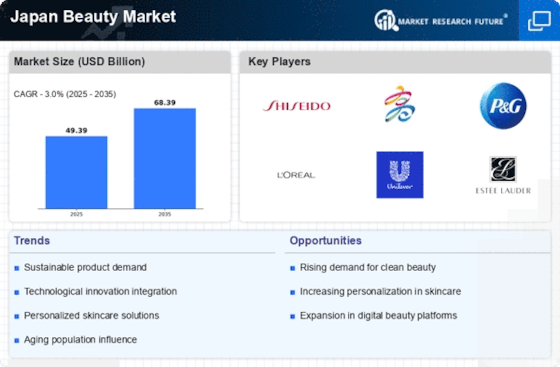
Japan Beauty Market Infographic
Purchase Options

Market Share

Japan Beauty Market Share Analysis

In the ever-evolving landscape of oral care, product innovation has emerged as a driving force, leading market players to introduce specialized toothpaste that addresses specific dental concerns. This strategic approach not only caters to the diverse needs of consumers but also contributes significantly to the growth of the global toothpaste market. Notable innovations by key players are reshaping the industry, with a focus on preventive care and targeted solutions for prevalent dental issues. Product Innovation: A Catalyst for Market Evolution: GlaxoSmithKline, a major player in the pharmaceutical and consumer health industry, exemplifies the impact of product innovation with the launch of Sensodyne Rapid Relief toothpaste. This specialized toothpaste is designed to minimize or alleviate the growing incidences of tooth sensitivity, a common dental issue affecting a substantial portion of the population. By offering a targeted solution, GlaxoSmithKline addresses a specific oral health concern, meeting the demand for products that cater to preventive and therapeutic needs. Whitening Toothpaste on the Rise: The rising trend of dental whitening has become a significant driver for the toothpaste market. Consumers increasingly seek toothpaste formulations that not only maintain oral health but also contribute to the aesthetic aspect of their smiles. Ranir, a prominent provider of oral care products, has capitalized on this trend by offering tooth-whitening toothpaste under its Rembrandt brand. This strategic move aligns with the evolving preferences of consumers, reflecting a growing desire for toothpaste that goes beyond traditional oral care to include cosmetic benefits. Meeting Preventive Needs with Specialized Solutions: The surge in demand for specialized toothpaste is closely linked to the preventive approach adopted by consumers regarding their oral health. Specialized formulations, such as those targeting sensitivity or offering whitening benefits, resonate with individuals seeking proactive solutions to address specific dental problems. These innovations represent a paradigm shift from conventional toothpaste, aligning with the global trend toward preventive healthcare. Dentist Recommendations Driving Consumer Choices: Dentists play a pivotal role in influencing consumer choices regarding oral care products. Increasingly, dental professionals recommend specific toothpaste formulations tailored to address the unique dental needs of their patients. This personalized approach not only enhances patient compliance but also acts as a catalyst for the sales of specialized toothpaste. The trust placed in dentist-recommended products further amplifies the market growth, as consumers prioritize oral care regimens endorsed by healthcare professionals. The Intersection of Innovation and Market Dynamics: The convergence of product innovation and market dynamics is reshaping consumer behavior and expectations. Specialized toothpaste has become more than a basic oral care product; it is now a preventive measure, a solution to specific issues, and a reflection of evolving consumer preferences. As individuals prioritize overall wellness, including oral health, the demand for toothpaste with targeted benefits is expected to rise, propelling market growth. The global toothpaste market is undergoing a transformative phase fueled by product innovation and a shift toward preventive oral care. Specialized formulations, whether designed for sensitivity or tooth whitening, are capturing the attention of consumers who seek comprehensive oral health solutions. As market players continue to introduce innovative products that cater to specific dental needs, the industry is poised for sustained growth, driven by a consumer base increasingly aware of the importance of preventive oral care and influenced by the recommendations of dental professionals.

Author
Author Profile
Pradeep Nandi
Senior Research Analyst

I have a bachelor's degree in mechanical engineering and an MBA. I have more than two years of expertise in the retail, food, and beverage, chemical, and material industries, and hence have developed a sound cross-domain expertise. A firm believer in lifelong learning and sharing of knowledge. Having a proclivity for hatching ideas and trying to absorb as much information as possible in a short amount of time. Introducing corporates to the data and insight, which enables them to move from probability to possibility, has been my key areas of interest. 

Leave a Comment

FAQs

What is the current valuation of the Japan beauty market?

<p>As of 2024, the Japan beauty market was valued at 27.14 USD Billion.</p>

What is the projected market size for the Japan beauty market by 2035?

<p>The Japan beauty market is projected to reach 37.26 USD Billion by 2035.</p>

What is the expected CAGR for the Japan beauty market during the forecast period 2025 - 2035?

<p>The expected CAGR for the Japan beauty market during the forecast period 2025 - 2035 is 2.92%.</p>

Which product segment holds the largest market share in the Japan beauty market?

<p>The skincare segment, valued at 12.0 USD Billion, holds the largest market share in the Japan beauty market.</p>

How does the makeup segment perform in the Japan beauty market?

<p>The makeup segment is projected to grow from 7.0 USD Billion to 9.0 USD Billion by 2035.</p>

What are the key distribution channels for beauty products in Japan?

<p>Key distribution channels include department stores, online retail, and specialty stores, with department stores valued at 12.0 USD Billion.</p>

How does consumer demographics influence the Japan beauty market?

<p>Consumer demographics, particularly age and gender, are projected to contribute significantly, with age-related sales expected to rise from 8.0 USD Billion to 11.0 USD Billion.</p>

Which companies are leading the Japan beauty market?

<p>Key players in the Japan beauty market include Shiseido, Kao, and L'Oreal, among others.</p>

What is the projected growth for the haircare segment in the Japan beauty market?

<p>The haircare segment is expected to grow from 5.0 USD Billion to 7.0 USD Billion by 2035.</p>

What role does online retail play in the Japan beauty market?

<p>Online retail is anticipated to grow from 5.0 USD Billion to 8.0 USD Billion, indicating a rising trend in e-commerce for beauty products.</p>

Market Summary

As per analysis, the Japan beauty market is projected to grow from USD 27.14 Billion in 2024 to USD 37.26 Billion by 2035, exhibiting a compound annual growth rate (CAGR) of 2.92% during the forecast period (2025 - 2035).

Key Market Trends & Highlights

The Japan beauty market is experiencing a transformative shift towards sustainability and personalization.

  • The skincare segment remains the largest, driven by a cultural emphasis on skincare routines.
  • Makeup is the fastest-growing segment, reflecting changing consumer preferences and trends.
  • Digital transformation in beauty retail is reshaping how consumers engage with brands and products.
  • Key market drivers include the growing demand for anti-aging products and the influence of K-Beauty trends.

Market Size & Forecast

2024 Market Size 27.14 (USD Billion)
2035 Market Size 37.26 (USD Billion)
CAGR (2025 - 2035) 2.92%

Major Players

<p>Shiseido (JP), Kao (JP), Procter & Gamble (US), L'Oreal (FR), Unilever (GB), Amorepacific (KR), Estée Lauder (US), Coty (US), Beiersdorf (DE), Revlon (US)</p>

Market Trends

The japan beauty market is characterized by its unique blend of traditional practices and modern innovations. This sector encompasses a wide array of products, including skincare, cosmetics, hair care, and fragrances, reflecting the diverse preferences of Japanese consumers. The market appears to be influenced by cultural values that emphasize natural beauty and holistic wellness. As a result, there is a growing inclination towards products that incorporate organic ingredients and sustainable practices. Furthermore, the rise of digital platforms has transformed how consumers engage with beauty brands, leading to an increase in online shopping and social media influence. In recent years, the japan beauty market has also witnessed a shift towards inclusivity and diversity. Brands are increasingly recognizing the importance of catering to a broader range of skin tones and types, which may enhance customer loyalty and satisfaction. Additionally, the focus on anti-aging solutions continues to be a driving force, as consumers seek products that promote youthful skin. Overall, the landscape of the japan beauty market is evolving, with trends suggesting a blend of tradition and modernity that resonates with contemporary consumers.

Rise of Clean Beauty

The japan beauty market is experiencing a notable shift towards clean beauty products. Consumers are increasingly prioritizing items that are free from harmful chemicals and synthetic ingredients. This trend reflects a growing awareness of health and environmental issues, prompting brands to reformulate their offerings to align with these values.

Digital Transformation in Beauty Retail

The advent of digital technology has significantly altered the landscape of the japan beauty market. Online shopping and social media platforms are becoming essential channels for brand engagement and consumer interaction. This transformation allows brands to reach a wider audience and tailor their marketing strategies to meet the preferences of tech-savvy consumers.

Focus on Personalization

Personalization is emerging as a key trend within the japan beauty market. Brands are increasingly leveraging data and consumer insights to create tailored products and experiences. This approach not only enhances customer satisfaction but also fosters a deeper connection between consumers and brands, as individuals seek products that cater specifically to their unique needs.

Japan Beauty Market Market Drivers

Influence of K-Beauty Trends

The Japan beauty market is increasingly influenced by the popularity of K-beauty trends. Korean beauty products, known for their innovative formulations and unique packaging, have gained substantial traction among Japanese consumers. This influence is evident in the rising sales of K-beauty products, which have reportedly increased by over 30% in the past year. Japanese consumers are drawn to the multi-step skincare routines and the emphasis on hydration and skin health that K-beauty promotes. As a result, local brands are adapting their offerings to incorporate similar trends, leading to a fusion of Japanese and Korean beauty philosophies. This cross-cultural exchange not only enriches the Japan beauty market but also encourages brands to innovate and diversify their product lines to meet evolving consumer preferences.

Cultural Emphasis on Skincare

The Japan beauty market is characterized by a strong cultural emphasis on skincare, which is deeply rooted in Japanese traditions. Skincare routines are often viewed as a form of self-care and personal expression, leading to a robust demand for high-quality skincare products. The market for skincare is projected to reach approximately 1.5 trillion yen by 2026, driven by consumers' desire for effective and luxurious products. Japanese consumers are particularly discerning, often seeking products that incorporate traditional ingredients such as rice bran and green tea. This cultural appreciation for skincare not only fuels the growth of the skincare segment but also influences the overall beauty market. Brands are increasingly focusing on creating products that resonate with these cultural values, thereby enhancing their appeal within the Japan beauty market.

Growing Demand for Anti-Aging Products

The Japan beauty market is witnessing a notable increase in the demand for anti-aging products. This trend is largely driven by the aging population, with approximately 28% of the population aged 65 and older as of 2025. Consumers are increasingly seeking products that promise to reduce wrinkles, enhance skin elasticity, and promote a youthful appearance. The anti-aging segment is projected to grow significantly, with market analysts estimating a compound annual growth rate (CAGR) of around 5% over the next five years. This growth is further fueled by advancements in skincare technology and the introduction of innovative ingredients, which appeal to the discerning Japanese consumer. As a result, brands are focusing on developing high-quality, effective anti-aging solutions to capture this lucrative segment of the Japan beauty market.

Rise of E-commerce and Online Shopping

The Japan beauty market is experiencing a significant transformation due to the rise of e-commerce and online shopping platforms. As of January 2026, online sales of beauty products account for approximately 25% of the total market share, reflecting a shift in consumer purchasing behavior. The convenience of online shopping, coupled with the ability to access a wider range of products, has led to increased consumer engagement. Brands are investing in digital marketing strategies to enhance their online presence and attract tech-savvy consumers. Additionally, the integration of augmented reality (AR) technology in online shopping experiences allows consumers to virtually try products before purchasing, further driving sales. This trend is expected to continue, as more consumers embrace the convenience and accessibility of e-commerce in the Japan beauty market.

Sustainability and Eco-Friendly Products

Sustainability has emerged as a pivotal driver in the Japan beauty market, with consumers increasingly prioritizing eco-friendly products. A survey conducted in 2025 indicated that over 60% of Japanese consumers are willing to pay a premium for sustainable beauty products. This shift is prompting brands to adopt environmentally responsible practices, such as using recyclable packaging and sourcing natural ingredients. The Japanese government has also introduced policies aimed at reducing plastic waste, further encouraging the beauty industry to align with sustainability goals. As a result, many brands are reformulating their products to minimize environmental impact, which not only appeals to eco-conscious consumers but also enhances brand loyalty. The growing emphasis on sustainability is likely to shape the future landscape of the Japan beauty market.

Market Segment Insights

By Product Type: Skincare (Largest) vs. Makeup (Fastest-Growing)

<p>In the Japan beauty market, 'Skincare' continues to dominate, capturing the largest share among various product categories. This segment reflects a deep cultural emphasis on skincare routines and high-quality ingredients, comprising a significant portion of consumers' beauty expenditures. In contrast, 'Makeup' has emerged as the fastest-growing segment, driven by social media influence and the rising popularity of curated personal aesthetics. Consumers are increasingly integrating makeup as a part of their everyday routines, contributing to its swift rise.</p>

<p>Skincare: Essential Care (Dominant) vs. Makeup: Trendy Aesthetics (Emerging)</p>

<p>The Skincare segment remains a cornerstone of the Japan beauty market, symbolizing a commitment to meticulous skin health and beauty traditions. Characterized by premium formulations, ingredient transparency, and diverse product offerings, it serves a wide demographic looking for tailored solutions. Conversely, the Makeup segment showcases trendy aesthetics driven by consumer trends and social media. This emerging area focuses on innovative products that resonate with younger consumers, emphasizing personalization and creativity. The interplay between skincare as a foundational element and makeup as an expression of individuality is shaping future market dynamics.</p>

By Consumer Demographics: Age (Largest) vs. Gender (Fastest-Growing)

<p>In the Japan beauty market, the distribution among consumer demographics reveals that the age segment plays a dominant role, with the largest share held by consumers aged 20-39. This group is particularly influential, often driving trends and preferences for beauty products. Despite this, the gender demographic is gaining traction at a rapid pace, especially with the rise of men’s grooming products, indicating a significant shift within the market’s consumer base.</p>

<p>Age: 20-39 (Dominant) vs. Gender: Female (Emerging)</p>

<p>The age segment of 20-39 years dominates the Japan beauty market, characterized by a blend of youthful enthusiasm and growing interest in skincare and cosmetics. This group is known for its inclination towards high-quality products and brand loyalty, thus playing a crucial role in shaping market trends. On the other hand, the female demographic, while historically the largest consumer segment, is now facing a competitive challenge from emerging gender demographics. Women continue to exert influence on beauty trends, but the rising popularity of male-targeted products reflects an evolving market landscape where traditional gender roles in beauty consumption are being redefined.</p>

By Distribution Channel: Online Retail (Largest) vs. Department Stores (Fastest-Growing)

<p>In the Japan beauty market, the distribution landscape is diverse, with significant contributions from various channels. Online retail stands out as the largest segment, capitalizing on the shift towards digital shopping, particularly accelerated by the pandemic. <a href="https://www.marketresearchfuture.com/reports/department-store-market-41461" target="_blank" title="department store">Department stores</a>, while traditionally strong, are seeing a resurgence as consumers seek in-person experiences. Specialty stores, pharmacies, and direct sales also play critical roles, though they occupy smaller shares in comparison.</p>

<p>Online Retail (Dominant) vs. Department Stores (Emerging)</p>

<p>Online retail has emerged as the dominant distribution channel within the Japan beauty market, reflecting a significant shift in consumer preferences towards convenience and accessibility. This channel offers extensive product ranges and personalized shopping experiences, appealing particularly to younger consumers. Meanwhile, department stores, while historically a staple for beauty products, are pivoting to enhance their offerings and customer experiences. As an emerging segment, they are focusing on integrating digital elements with traditional shopping to attract a broader audience, thus bridging the gap between physical and online sales. Together, these segments illustrate the evolving landscape of beauty product distribution in Japan.</p>

Get more detailed insights about Japan Beauty Market Research Report – Forecast till 2035

Regional Insights

Key Players and Competitive Insights

The competitive dynamics of the beauty market in Japan are characterized by a blend of innovation, strategic partnerships, and a focus on sustainability. Major players such as Shiseido (JP), Kao (JP), and L'Oréal (FR) are at the forefront, each employing distinct strategies to enhance their market presence. Shiseido (JP) emphasizes innovation in product development, particularly in skincare, while Kao (JP) focuses on sustainability and eco-friendly products. L'Oréal (FR) leverages its global reach to introduce localized products that cater to Japanese consumers' unique preferences. Collectively, these strategies contribute to a competitive environment that is both dynamic and responsive to consumer demands.

Key business tactics within this market include localizing manufacturing and optimizing supply chains to enhance efficiency and responsiveness. The competitive structure appears moderately fragmented, with several key players holding substantial market shares. This fragmentation allows for a diverse range of products and brands, fostering competition that drives innovation and consumer choice.

In December 2025, Shiseido (JP) announced a partnership with a leading tech firm to integrate AI into its product development processes. This strategic move is likely to enhance Shiseido's ability to tailor products to consumer preferences, thereby strengthening its market position. The integration of AI may also streamline operations, reducing time-to-market for new products.

In November 2025, Kao (JP) launched a new line of eco-friendly beauty products, which aligns with its commitment to sustainability. This initiative not only caters to the growing consumer demand for environmentally responsible products but also positions Kao as a leader in sustainable beauty. The launch is expected to resonate well with eco-conscious consumers, potentially increasing market share.

In October 2025, L'Oréal (FR) expanded its digital marketing efforts by collaborating with popular Japanese influencers to promote its latest skincare line. This strategy reflects a broader trend of leveraging social media and influencer partnerships to engage younger consumers. By tapping into the influencer market, L'Oréal aims to enhance brand visibility and drive sales in a competitive landscape.

As of January 2026, current trends in the beauty market include a strong emphasis on digitalization, sustainability, and the integration of AI technologies. Strategic alliances are increasingly shaping the competitive landscape, allowing companies to pool resources and expertise. Looking ahead, competitive differentiation is likely to evolve, with a shift from price-based competition to a focus on innovation, technology, and supply chain reliability. This evolution suggests that companies that prioritize these areas may gain a competitive edge in the rapidly changing beauty market.

Key Companies in the Japan Beauty Market include

Industry Developments

Future Outlook

Japan Beauty Market Future Outlook

The Japan beauty market is projected to grow at a 2.92% CAGR from 2025 to 2035, driven by innovation, sustainability, and digital transformation.

New opportunities lie in:

  • Expansion of personalized <a href="https://www.marketresearchfuture.com/reports/skincare-market-14012" target="_blank" title="skincare">skincare</a> solutions through AI technology.
  • Development of eco-friendly packaging to attract environmentally conscious consumers.
  • Integration of augmented reality for virtual try-on experiences in retail.

By 2035, the Japan beauty market is expected to be robust, driven by innovation and consumer engagement.

Market Segmentation

Japan Beauty Market Product Type Outlook

  • Skincare
  • Makeup
  • Haircare
  • Fragrance
  • Personal Care

Japan Beauty Market Distribution Channel Outlook

  • Online Retail
  • Department Stores
  • Specialty Stores
  • Pharmacies
  • Direct Sales

Japan Beauty Market Consumer Demographics Outlook

  • Age
  • Gender
  • Income Level
  • Occupation
  • Lifestyle

Report Scope

MARKET SIZE 2024 27.14(USD Billion)
MARKET SIZE 2025 28.01(USD Billion)
MARKET SIZE 2035 37.26(USD Billion)
COMPOUND ANNUAL GROWTH RATE (CAGR) 2.92% (2024 - 2035)
REPORT COVERAGE Revenue Forecast, Competitive Landscape, Growth Factors, and Trends
BASE YEAR 2024
Market Forecast Period 2025 - 2035
Historical Data 2019 - 2024
Market Forecast Units USD Billion
Key Companies Profiled Shiseido (JP), Kao (JP), Procter & Gamble (US), L'Oreal (FR), Unilever (GB), Amorepacific (KR), Estée Lauder (US), Coty (US), Beiersdorf (DE), Revlon (US)
Segments Covered Product Type, Consumer Demographics, Distribution Channel
Key Market Opportunities Growing demand for sustainable and innovative beauty products in the japan beauty market.
Key Market Dynamics Rising consumer demand for sustainable beauty products drives innovation and competition in Japan's beauty market.
Countries Covered Japan

FAQs

What is the current valuation of the Japan beauty market?

<p>As of 2024, the Japan beauty market was valued at 27.14 USD Billion.</p>

What is the projected market size for the Japan beauty market by 2035?

<p>The Japan beauty market is projected to reach 37.26 USD Billion by 2035.</p>

What is the expected CAGR for the Japan beauty market during the forecast period 2025 - 2035?

<p>The expected CAGR for the Japan beauty market during the forecast period 2025 - 2035 is 2.92%.</p>

Which product segment holds the largest market share in the Japan beauty market?

<p>The skincare segment, valued at 12.0 USD Billion, holds the largest market share in the Japan beauty market.</p>

How does the makeup segment perform in the Japan beauty market?

<p>The makeup segment is projected to grow from 7.0 USD Billion to 9.0 USD Billion by 2035.</p>

What are the key distribution channels for beauty products in Japan?

<p>Key distribution channels include department stores, online retail, and specialty stores, with department stores valued at 12.0 USD Billion.</p>

How does consumer demographics influence the Japan beauty market?

<p>Consumer demographics, particularly age and gender, are projected to contribute significantly, with age-related sales expected to rise from 8.0 USD Billion to 11.0 USD Billion.</p>

Which companies are leading the Japan beauty market?

<p>Key players in the Japan beauty market include Shiseido, Kao, and L'Oreal, among others.</p>

What is the projected growth for the haircare segment in the Japan beauty market?

<p>The haircare segment is expected to grow from 5.0 USD Billion to 7.0 USD Billion by 2035.</p>

What role does online retail play in the Japan beauty market?

<p>Online retail is anticipated to grow from 5.0 USD Billion to 8.0 USD Billion, indicating a rising trend in e-commerce for beauty products.</p>

  1. SECTION I: EXECUTIVE SUMMARY AND KEY HIGHLIGHTS
    1. | 1.1 EXECUTIVE SUMMARY
    2. | | 1.1.1 Market Overview
    3. | | 1.1.2 Key Findings
    4. | | 1.1.3 Market Segmentation
    5. | | 1.1.4 Competitive Landscape
    6. | | 1.1.5 Challenges and Opportunities
    7. | | 1.1.6 Future Outlook
  2. SECTION II: SCOPING, METHODOLOGY AND MARKET STRUCTURE
    1. | 2.1 MARKET INTRODUCTION
    2. | | 2.1.1 Definition
    3. | | 2.1.2 Scope of the study
    4. | | | 2.1.2.1 Research Objective
    5. | | | 2.1.2.2 Assumption
    6. | | | 2.1.2.3 Limitations
    7. | 2.2 RESEARCH METHODOLOGY
    8. | | 2.2.1 Overview
    9. | | 2.2.2 Data Mining
    10. | | 2.2.3 Secondary Research
    11. | | 2.2.4 Primary Research
    12. | | | 2.2.4.1 Primary Interviews and Information Gathering Process
    13. | | | 2.2.4.2 Breakdown of Primary Respondents
    14. | | 2.2.5 Forecasting Model
    15. | | 2.2.6 Market Size Estimation
    16. | | | 2.2.6.1 Bottom-Up Approach
    17. | | | 2.2.6.2 Top-Down Approach
    18. | | 2.2.7 Data Triangulation
    19. | | 2.2.8 Validation
  3. SECTION III: QUALITATIVE ANALYSIS
    1. | 3.1 MARKET DYNAMICS
    2. | | 3.1.1 Overview
    3. | | 3.1.2 Drivers
    4. | | 3.1.3 Restraints
    5. | | 3.1.4 Opportunities
    6. | 3.2 MARKET FACTOR ANALYSIS
    7. | | 3.2.1 Value chain Analysis
    8. | | 3.2.2 Porter's Five Forces Analysis
    9. | | | 3.2.2.1 Bargaining Power of Suppliers
    10. | | | 3.2.2.2 Bargaining Power of Buyers
    11. | | | 3.2.2.3 Threat of New Entrants
    12. | | | 3.2.2.4 Threat of Substitutes
    13. | | | 3.2.2.5 Intensity of Rivalry
    14. | | 3.2.3 COVID-19 Impact Analysis
    15. | | | 3.2.3.1 Market Impact Analysis
    16. | | | 3.2.3.2 Regional Impact
    17. | | | 3.2.3.3 Opportunity and Threat Analysis
  4. SECTION IV: QUANTITATIVE ANALYSIS
    1. | 4.1 Consumer and Retail, BY Product Type (USD Billion)
    2. | | 4.1.1 Skincare
    3. | | 4.1.2 Makeup
    4. | | 4.1.3 Haircare
    5. | | 4.1.4 Fragrance
    6. | | 4.1.5 Personal Care
    7. | 4.2 Consumer and Retail, BY Consumer Demographics (USD Billion)
    8. | | 4.2.1 Age
    9. | | 4.2.2 Gender
    10. | | 4.2.3 Income Level
    11. | | 4.2.4 Occupation
    12. | | 4.2.5 Lifestyle
    13. | 4.3 Consumer and Retail, BY Distribution Channel (USD Billion)
    14. | | 4.3.1 Online Retail
    15. | | 4.3.2 Department Stores
    16. | | 4.3.3 Specialty Stores
    17. | | 4.3.4 Pharmacies
    18. | | 4.3.5 Direct Sales
  5. SECTION V: COMPETITIVE ANALYSIS
    1. | 5.1 Competitive Landscape
    2. | | 5.1.1 Overview
    3. | | 5.1.2 Competitive Analysis
    4. | | 5.1.3 Market share Analysis
    5. | | 5.1.4 Major Growth Strategy in the Consumer and Retail
    6. | | 5.1.5 Competitive Benchmarking
    7. | | 5.1.6 Leading Players in Terms of Number of Developments in the Consumer and Retail
    8. | | 5.1.7 Key developments and growth strategies
    9. | | | 5.1.7.1 New Product Launch/Service Deployment
    10. | | | 5.1.7.2 Merger & Acquisitions
    11. | | | 5.1.7.3 Joint Ventures
    12. | | 5.1.8 Major Players Financial Matrix
    13. | | | 5.1.8.1 Sales and Operating Income
    14. | | | 5.1.8.2 Major Players R&D Expenditure. 2023
    15. | 5.2 Company Profiles
    16. | | 5.2.1 Shiseido (JP)
    17. | | | 5.2.1.1 Financial Overview
    18. | | | 5.2.1.2 Products Offered
    19. | | | 5.2.1.3 Key Developments
    20. | | | 5.2.1.4 SWOT Analysis
    21. | | | 5.2.1.5 Key Strategies
    22. | | 5.2.2 Kao (JP)
    23. | | | 5.2.2.1 Financial Overview
    24. | | | 5.2.2.2 Products Offered
    25. | | | 5.2.2.3 Key Developments
    26. | | | 5.2.2.4 SWOT Analysis
    27. | | | 5.2.2.5 Key Strategies
    28. | | 5.2.3 Procter & Gamble (US)
    29. | | | 5.2.3.1 Financial Overview
    30. | | | 5.2.3.2 Products Offered
    31. | | | 5.2.3.3 Key Developments
    32. | | | 5.2.3.4 SWOT Analysis
    33. | | | 5.2.3.5 Key Strategies
    34. | | 5.2.4 L'Oreal (FR)
    35. | | | 5.2.4.1 Financial Overview
    36. | | | 5.2.4.2 Products Offered
    37. | | | 5.2.4.3 Key Developments
    38. | | | 5.2.4.4 SWOT Analysis
    39. | | | 5.2.4.5 Key Strategies
    40. | | 5.2.5 Unilever (GB)
    41. | | | 5.2.5.1 Financial Overview
    42. | | | 5.2.5.2 Products Offered
    43. | | | 5.2.5.3 Key Developments
    44. | | | 5.2.5.4 SWOT Analysis
    45. | | | 5.2.5.5 Key Strategies
    46. | | 5.2.6 Amorepacific (KR)
    47. | | | 5.2.6.1 Financial Overview
    48. | | | 5.2.6.2 Products Offered
    49. | | | 5.2.6.3 Key Developments
    50. | | | 5.2.6.4 SWOT Analysis
    51. | | | 5.2.6.5 Key Strategies
    52. | | 5.2.7 Estée Lauder (US)
    53. | | | 5.2.7.1 Financial Overview
    54. | | | 5.2.7.2 Products Offered
    55. | | | 5.2.7.3 Key Developments
    56. | | | 5.2.7.4 SWOT Analysis
    57. | | | 5.2.7.5 Key Strategies
    58. | | 5.2.8 Coty (US)
    59. | | | 5.2.8.1 Financial Overview
    60. | | | 5.2.8.2 Products Offered
    61. | | | 5.2.8.3 Key Developments
    62. | | | 5.2.8.4 SWOT Analysis
    63. | | | 5.2.8.5 Key Strategies
    64. | | 5.2.9 Beiersdorf (DE)
    65. | | | 5.2.9.1 Financial Overview
    66. | | | 5.2.9.2 Products Offered
    67. | | | 5.2.9.3 Key Developments
    68. | | | 5.2.9.4 SWOT Analysis
    69. | | | 5.2.9.5 Key Strategies
    70. | | 5.2.10 Revlon (US)
    71. | | | 5.2.10.1 Financial Overview
    72. | | | 5.2.10.2 Products Offered
    73. | | | 5.2.10.3 Key Developments
    74. | | | 5.2.10.4 SWOT Analysis
    75. | | | 5.2.10.5 Key Strategies
    76. | 5.3 Appendix
    77. | | 5.3.1 References
    78. | | 5.3.2 Related Reports
  6. LIST OF FIGURES
    1. | 6.1 MARKET SYNOPSIS
    2. | 6.2 JAPAN MARKET ANALYSIS BY PRODUCT TYPE
    3. | 6.3 JAPAN MARKET ANALYSIS BY CONSUMER DEMOGRAPHICS
    4. | 6.4 JAPAN MARKET ANALYSIS BY DISTRIBUTION CHANNEL
    5. | 6.5 KEY BUYING CRITERIA OF CONSUMER AND RETAIL
    6. | 6.6 RESEARCH PROCESS OF MRFR
    7. | 6.7 DRO ANALYSIS OF CONSUMER AND RETAIL
    8. | 6.8 DRIVERS IMPACT ANALYSIS: CONSUMER AND RETAIL
    9. | 6.9 RESTRAINTS IMPACT ANALYSIS: CONSUMER AND RETAIL
    10. | 6.10 SUPPLY / VALUE CHAIN: CONSUMER AND RETAIL
    11. | 6.11 CONSUMER AND RETAIL, BY PRODUCT TYPE, 2024 (% SHARE)
    12. | 6.12 CONSUMER AND RETAIL, BY PRODUCT TYPE, 2024 TO 2035 (USD Billion)
    13. | 6.13 CONSUMER AND RETAIL, BY CONSUMER DEMOGRAPHICS, 2024 (% SHARE)
    14. | 6.14 CONSUMER AND RETAIL, BY CONSUMER DEMOGRAPHICS, 2024 TO 2035 (USD Billion)
    15. | 6.15 CONSUMER AND RETAIL, BY DISTRIBUTION CHANNEL, 2024 (% SHARE)
    16. | 6.16 CONSUMER AND RETAIL, BY DISTRIBUTION CHANNEL, 2024 TO 2035 (USD Billion)
    17. | 6.17 BENCHMARKING OF MAJOR COMPETITORS
  7. LIST OF TABLES
    1. | 7.1 LIST OF ASSUMPTIONS
    2. | | 7.1.1
    3. | 7.2 Japan MARKET SIZE ESTIMATES; FORECAST
    4. | | 7.2.1 BY PRODUCT TYPE, 2026-2035 (USD Billion)
    5. | | 7.2.2 BY CONSUMER DEMOGRAPHICS, 2026-2035 (USD Billion)
    6. | | 7.2.3 BY DISTRIBUTION CHANNEL, 2026-2035 (USD Billion)
    7. | 7.3 PRODUCT LAUNCH/PRODUCT DEVELOPMENT/APPROVAL
    8. | | 7.3.1
    9. | 7.4 ACQUISITION/PARTNERSHIP
    10. | | 7.4.1

Japan Consumer and Retail Market Segmentation

Consumer and Retail By Product Type (USD Billion, 2026-2035)

  • Skincare
  • Makeup
  • Haircare
  • Fragrance
  • Personal Care

Consumer and Retail By Consumer Demographics (USD Billion, 2026-2035)

  • Age
  • Gender
  • Income Level
  • Occupation
  • Lifestyle

Consumer and Retail By Distribution Channel (USD Billion, 2026-2035)

  • Online Retail
  • Department Stores
  • Specialty Stores
  • Pharmacies
  • Direct Sales
Infographic

Free Sample Request

Kindly complete the form below to receive a free sample of this Report

Get Free Sample

Customer Strories

Compare Licence

×
Features License Type
Single User Multiuser License Enterprise User
Price $4,950 $5,950 $7,250
Maximum User Access Limit 1 User Upto 10 Users Unrestricted Access Throughout the Organization
Free Customization
Direct Access to Analyst
Deliverable Format
Platform Access
Discount on Next Purchase 10% 15% 15%
Printable Versions