


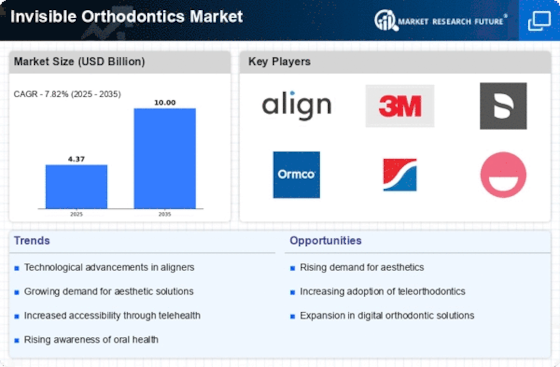
Invisible Orthodontics Size
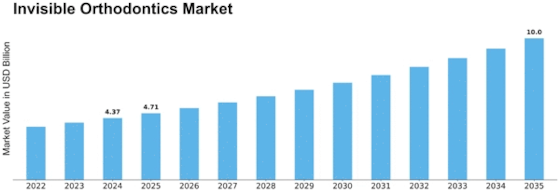
Invisible Orthodontics Market Growth Projections and Opportunities
Rising Demand : Growing preference for discreet orthodontic treatment due to aesthetic concerns drives market growth.
Technological Advancements : Innovations such as clear aligner systems and 3D imaging technology enhance treatment efficacy and patient comfort, stimulating market expansion.
Increasing Awareness : Greater awareness about the benefits of invisible orthodontics among consumers and healthcare professionals contributes to market growth.
Expanding Patient Pool : Rising prevalence of malocclusion and dental misalignment issues globally broadens the potential market for invisible orthodontic solutions.
Aging Population : With an aging population, there's a higher demand for orthodontic treatments, including invisible options, to address age-related dental concerns.
Cosmetic Considerations : Growing emphasis on personal appearance and self-esteem encourages individuals to opt for orthodontic treatments that are less visible, boosting market demand.
Cost-Effectiveness : Increasing affordability and availability of invisible orthodontic treatments compared to traditional braces attract more consumers, fostering market growth.
Regulatory Environment : Stringent regulations governing the manufacturing and marketing of orthodontic devices influence market dynamics and product development strategies.
Competitive Landscape : Presence of key market players investing in research and development activities to introduce innovative products intensifies competition within the market.
Consumer Preferences : Shifting consumer preferences towards minimally invasive and aesthetically pleasing orthodontic solutions drive manufacturers to focus on product customization and patient-centric approaches.
Digitalization of Dentistry : Adoption of digital technologies in orthodontic practice, such as CAD/CAM systems and teledentistry, streamlines treatment processes and expands market reach.
Geographical Trends : Variation in orthodontic treatment preferences and healthcare infrastructure across regions influence market dynamics and penetration strategies.
Collaborations and Partnerships : Strategic collaborations between orthodontic providers, dental clinics, and technology companies facilitate market expansion and product innovation.
Insurance Coverage : Availability of insurance coverage for invisible orthodontic treatments affects patient affordability and market demand in regions with comprehensive dental insurance schemes.
Post-Pandemic Trends : Changing consumer behaviors and preferences due to the COVID-19 pandemic, such as increased interest in remote monitoring and contactless treatment options, reshape the market landscape.





















Leave a Comment