×
Request Free Sample ×

Kindly complete the form below to receive a free sample of this Report

* Please use a valid business email

Leading companies partner with us for data-driven Insights

clients tt-cursor
Hero Background

Influencer Marketing Market

ID: MRFR/ICT/6936-CR
110 Pages
Shubham Munde
November 2022

Influencer Marketing Market Size, Share & Trends Analysis Research Report Information by Component (Solution/Platform and Services), Organization Size (Small & Medium Enterprise (SME) and Large Enterprise), End-User (Fashion, Luxury & Cosmetics, Retail & E-Commerce, Consumer Goods, Advertising & Public Relation, Food & Beverages, Travel & Tourism, Automobile, and Others), and Region (North America, Europe, Asia-Pacific, Middle East & Africa, and South America)—Forecast Till 2035

Share:
Download PDF ×

We do not share your information with anyone. However, we may send you emails based on your report interest from time to time. You may contact us at any time to opt-out.

Influencer Marketing Market Infographic
Purchase Options

Influencer Marketing Market Summary

As per MRFR analysis, the Influencer Marketing was estimated at 71.64 USD Billion in 2024. The Influencer Marketing industry is projected to grow from 92.57 USD Billion in 2025 to 1201.62 USD Billion by 2035, exhibiting a compound annual growth rate (CAGR) of 29.22 during the forecast period 2025 - 2035.

Key Market Trends & Highlights

The Influencer Marketing Market is experiencing a transformative shift towards authenticity and diverse content formats.

  • The rise of authenticity is reshaping influencer partnerships, particularly in North America, where consumer trust is paramount.
  • Micro and nano influencers are gaining traction, dominating the market due to their perceived relatability and engagement.
  • The integration of new content formats, such as short videos and live streams, is becoming increasingly prevalent in the Asia-Pacific region.
  • Increased social media usage and evolving consumer preferences are driving the market, particularly within the social media marketing and micro influencer segments.

Market Size & Forecast

2024 Market Size 71.64 (USD Billion)
2035 Market Size 1201.62 (USD Billion)
CAGR (2025 - 2035) 29.22%

Major Players

Influencity (ES), AspireIQ (US), Traackr (US), Upfluence (FR), Klear (US), BuzzSumo (GB), NinjaOutreach (US), HypeAuditor (RU), Fohr (US)

Influencer Marketing Market Trends

The Influencer Marketing Market is currently experiencing a dynamic evolution, characterized by the increasing integration of technology and social media platforms. Brands are increasingly recognizing the value of authentic connections that influencers foster with their audiences. This shift appears to be driven by a growing demand for personalized marketing strategies that resonate with consumers on a deeper level. As a result, companies are investing more resources into influencer partnerships, seeking to leverage the trust and credibility that influencers have cultivated over time. Furthermore, the rise of micro and nano influencers suggests a potential shift in focus from traditional celebrity endorsements to more relatable figures who can engage niche audiences effectively. In addition, the Influencer Marketing Market seems to be adapting to changing consumer behaviors and preferences. The emergence of new platforms and content formats, such as short-form videos and live streaming, indicates a trend towards more interactive and engaging content. Brands are likely to explore innovative ways to collaborate with influencers, utilizing these formats to enhance audience engagement. This evolution may lead to a more diversified influencer landscape, where various types of influencers coexist, each catering to specific segments of the market. Overall, the Influencer Marketing Market is poised for continued growth, driven by technological advancements and shifting consumer expectations.

Rise of Authenticity

The Influencer Marketing Market is witnessing a notable trend towards authenticity, as consumers increasingly seek genuine connections with brands. Influencers who maintain transparency and honesty in their endorsements are likely to foster stronger relationships with their followers, leading to higher engagement rates and brand loyalty.

Shift to Micro and Nano Influencers

There appears to be a growing preference for micro and nano influencers within the Influencer Marketing Market. These individuals often possess highly engaged audiences and can deliver targeted messaging, making them appealing to brands looking for cost-effective marketing solutions that yield substantial returns.

Integration of New Content Formats

The Influencer Marketing Market is evolving with the integration of new content formats, such as live streaming and short-form videos. This trend suggests that brands are exploring innovative ways to engage audiences, utilizing diverse platforms to enhance their marketing strategies and reach.

Influencer Marketing Market Drivers

Expansion of E-commerce

The expansion of e-commerce significantly influences the Global Influencer Marketing Market Industry, as online shopping becomes increasingly prevalent. Influencers serve as vital conduits between brands and consumers, driving traffic to e-commerce platforms through engaging content. As more brands recognize the potential of influencer partnerships in boosting online sales, the market is poised for substantial growth. The projected increase in market value to 1201.6 USD Billion by 2035 highlights the critical role that influencers play in shaping consumer behavior within the e-commerce landscape.

Globalization of Brands

The globalization of brands contributes to the evolution of the Global Influencer Marketing Market Industry, as companies seek to reach diverse audiences across various regions. Influencers with international appeal can help brands navigate cultural nuances and establish a presence in new markets. This trend is particularly relevant as brands expand their operations globally, necessitating tailored marketing strategies that resonate with local consumers. The anticipated growth of the market to 1201.6 USD Billion by 2035 reflects the increasing importance of influencer marketing in a globalized economy.

Rising Digital Engagement

The Global Influencer Marketing Market Industry experiences a surge in digital engagement as consumers increasingly turn to social media platforms for product recommendations. In 2024, the market is valued at 71.9 USD Billion, reflecting a growing reliance on influencers to drive purchasing decisions. This trend is particularly pronounced among younger demographics, who often seek authentic connections with brands through influencers. As social media usage continues to rise, brands are likely to allocate more resources to influencer partnerships, enhancing their visibility and credibility in the marketplace.

Shift Towards Authenticity

Authenticity emerges as a key driver in the Global Influencer Marketing Market Industry, as consumers demand genuine interactions with brands. Influencers who maintain transparency and relatability are more likely to foster trust among their followers. This shift is evidenced by the increasing preference for micro and nano influencers, who often boast higher engagement rates compared to traditional celebrities. As brands recognize the value of authentic endorsements, the market is projected to grow significantly, with estimates suggesting a rise to 1201.6 USD Billion by 2035, indicating a robust trajectory fueled by consumer trust.

Technological Advancements

Technological advancements play a pivotal role in shaping the Global Influencer Marketing Market Industry. Innovations in data analytics and artificial intelligence enable brands to identify suitable influencers and measure campaign effectiveness with unprecedented precision. These tools facilitate targeted marketing strategies, allowing brands to optimize their influencer partnerships. As technology continues to evolve, the market is expected to witness a compound annual growth rate of 29.18% from 2025 to 2035. This growth underscores the importance of leveraging technology to enhance influencer marketing strategies and drive consumer engagement.

Market Segment Insights

By Application: Social Media Marketing (Largest) vs. Content Creation (Fastest-Growing)

In the Influencer Marketing Market, Social Media Marketing holds the largest share, dominating the space as brands increasingly recognize the power of social networks like Instagram, TikTok, and Facebook. This method allows for direct engagement with audiences, creating a powerful tool for brands aiming to expand their reach and connect with potential customers on platforms they frequently use. Leading influencer marketing platforms like AspireIQ, Traackr, and Upfluence are shaping campaign execution with advanced analytics and AI-driven workflows. These platforms help brands identify, vet, and manage influencer collaborations at scale. B2B influencer marketing is increasingly adopted by professional services and tech brands to elevate thought leadership and nurture high-value client relationships. Platforms like LinkedIn are emerging as key channels for targeted, credibility-driven B2B influencer campaigns.


Social Media Marketing (Dominant) vs. Content Creation (Emerging)


Social Media Marketing is the dominant force in influencer marketing, leveraging the extensive followings of popular influencers to elevate brand visibility. It excels in creating authentic connections with audiences, prompting user interaction and engagement. On the other hand, Content Creation is rapidly emerging as a crucial segment, driven by the growing need for high-quality, relatable content that resonates with target demographics. Brands now prioritize creating engaging narratives and visuals that influencers craft, making it essential for ongoing campaigns and consumer trust.

By Influencer Type: Micro Influencer (Largest) vs. Celebrity Influencer (Fastest-Growing)

In the influencer marketing market, Micro Influencers hold the largest market share due to their ability to create authentic connections with niche audiences. Relying on a smaller yet highly engaged follower base, these influencers drive significant engagement rates, making them a favored choice for brands focusing on targeted promotion. Meanwhile, Celebrity Influencers, while often commanding significant fees, are witnessing rapid growth as brands seek to leverage their widespread recognition and reach. This dual dynamic shapes the landscape of influencer marketing strategies. The growth trends in this segment are primarily driven by the increasing demand for authentic marketing experiences. Micro Influencers are increasingly perceived as trustworthy figures, and their recommendations resonate more effectively with consumers compared to celebrities. Conversely, the appeal of Celebrity Influencers is fueled by their broad reach and the aspirational lifestyles they portray. As brands navigate this evolving landscape, the strategic deployment of both types can yield substantial returns, with a balanced approach maximizing impact across diverse demographics.


Micro Influencer (Dominant) vs. Celebrity Influencer (Emerging)


Micro Influencers are characterized by their smaller follower counts, typically ranging from 1,000 to 100,000, but they excel in engagement and authenticity. This segment is favored by brands seeking niche marketing strategies and lower-cost collaborations that deliver high return on investment. Their ability to cultivate loyal communities drives strong conversion rates. In contrast, Celebrity Influencers represent an emerging trend due to their expansive reach and ability to generate buzz. With massive followings often exceeding a million, they can amplify brand messages across vast audiences, appealing to mainstream consumers. However, their effectiveness may vary, as audiences increasingly desire genuine connections. The interplay between these two segments highlights the evolving landscape of influencer marketing, where both authenticity and reach play critical roles.

By Platform: Instagram (Largest) vs. TikTok (Fastest-Growing)

In the Influencer Marketing Market, Instagram continues to hold the largest share, with a well-established presence that fosters relationships between brands and influencers. The platform's visual-centric approach and versatile content formats allow influencers to engage audiences effectively, solidifying its top position amongst various platforms. However, TikTok has seen rapid adoption and an increasing market share, particularly among younger demographics, driven by its unique algorithm that promotes content virality and instant engagement.


Instagram: (Dominant) vs. TikTok: (Emerging)


Instagram's dominance in the influencer marketing space can be attributed to its robust features such as Stories, IGTV, and Reels, which facilitate diverse content creation and brand storytelling. This platform's emphasis on aesthetic visuals and lifestyle-oriented content aligns well with influencer marketing strategies, enabling brands to connect with target audiences on a more profound level. On the other hand, TikTok, as an emerging player, leverages short-form video content to capture the attention of Gen Z and millennial users. Its innovative use of trends and challenges encourages user participation, making it an appealing platform for brands seeking to engage with a digital-savvy and trend-conscious audience.

By Engagement Type: Sponsored Posts (Largest) vs. Affiliate Marketing (Fastest-Growing)

In the Influencer Marketing Market, Sponsored Posts dominate the engagement type segment, accounting for a significant share of overall marketing efforts. They leverage influencer reach and credibility to communicate brand messages effectively, resulting in higher engagement rates. Alternatively, Affiliate Marketing is rapidly gaining traction, as brands shift their focus towards performance-based strategies that reward influencers for driving sales and conversions. This approach is particularly appealing in a landscape where ROI and accountability are increasingly prioritized. Growth trends in the engagement type segment are heavily driven by the rise of digital platforms and the increasing sophistication of influencer partnerships. Influencers are diversifying their engagement tactics, particularly in Affiliate Marketing, where transparency and authenticity are paramount. Brands are recognizing the value of long-term partnerships and mutually beneficial relationships, which are fueling the rapid expansion of this segment and increasing competition among influencer marketing strategies.


Sponsored Posts (Dominant) vs. Affiliate Marketing (Emerging)


Sponsored Posts are considered the dominant engagement type in influencer marketing due to their straightforward approach and measurable outcomes. Brands typically pay influencers to create content that aligns with their marketing goals, ensuring that messages reach targeted audiences effectively. This segment thrives on established influencer-brand relationships, delivering a consistent return on investment. In contrast, Affiliate Marketing is emerging as a favorite among marketers seeking direct links between influencer actions and sales results. This model incentivizes influencers to promote products in exchange for commissions, leveraging their authentic voices to drive conversions. The shift towards this performance-based model highlights a growing trend where brands seek accountability and measurable customer engagement. As such, Sponsored Posts remain steadfast, while Affiliate Marketing shows promising growth potential.

By Target Audience: Millennials (Largest) vs. Generation Z (Fastest-Growing)

In the Influencer Marketing Market, Millennials hold the largest share among target audiences, leveraging their significant online presence and purchasing power. This demographic is keenly engaged with brands that resonate with their values, making them highly attractive for influencer collaborations. Generation Z, on the other hand, is emerging rapidly, representing the fastest-growing segment as they continuously reshape the digital landscape with their unique consumption patterns and preferences. This generation's keen inclination towards authentic content and micro-influencers amplifies their market potential.


Millennials: Dominant vs. Generation Z: Emerging


Millennials have established themselves as the dominant force in the Influencer Marketing landscape, characterized by their preference for meaningful engagement with brands that align with their values. Their familiarity with social media platforms makes them valuable allies for marketers aiming to reach a broad audience. Conversely, Generation Z is the emerging powerhouse, distinguished by their penchant for authentic interactions and a preference for new platforms like TikTok. This younger audience values transparency, leading brands to adapt their strategies to connect genuinely. The growing influence of this demographic is prompting marketers to rethink their approaches, ensuring they remain relevant in an ever-evolving market.

Get more detailed insights about Influencer Marketing Market

Regional Insights

North America : Market Leader in Innovation

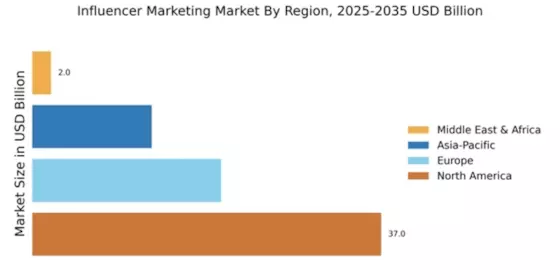
North America continues to lead the Influencer Marketing Market, holding a significant share of 36.98% in 2024. The region's growth is driven by high digital engagement, a robust advertising ecosystem, and increasing investments in social media platforms. Regulatory support for digital marketing practices further fuels demand, as brands seek innovative ways to connect with consumers through influencers. The competitive landscape is characterized by major players such as AspireIQ, Traackr, and Klear, which are leveraging advanced analytics and AI to optimize influencer partnerships. The U.S. remains the largest market, with Canada and Mexico also contributing to growth. The presence of key players enhances the region's attractiveness, making it a hub for influencer marketing strategies.

Europe : Emerging Hub for Brands

Europe's Influencer Marketing Market is poised for growth, with a market size of €20.0 million. The region benefits from a diverse consumer base and increasing brand investments in influencer collaborations. Regulatory frameworks, such as the EU's GDPR, are shaping marketing strategies, ensuring transparency and consumer trust, which are crucial for sustained growth in this sector. Leading countries like the UK, Germany, and France are at the forefront, with brands increasingly turning to influencers for authentic engagement. Key players such as Upfluence and BuzzSumo are enhancing their offerings to meet the evolving demands of brands. The competitive landscape is vibrant, with a mix of established firms and emerging startups driving innovation in influencer marketing.

Asia-Pacific : Rapidly Growing Market Potential

The Asia-Pacific region is witnessing a surge in influencer marketing, with a market size of $12.0 million. This growth is fueled by the rapid adoption of social media platforms and a young, tech-savvy population. Brands are increasingly recognizing the value of influencer partnerships to reach diverse consumer segments, driving demand for innovative marketing strategies across the region. Countries like China, India, and Japan are leading the charge, with local influencers gaining significant traction. The competitive landscape features both global players and local startups, creating a dynamic environment for influencer marketing. Key players such as HypeAuditor and NinjaOutreach are capitalizing on this trend, offering tailored solutions to brands looking to enhance their market presence.

Middle East and Africa : Emerging Market Opportunities

The Middle East and Africa (MEA) region is gradually emerging in the influencer marketing landscape, with a market size of $2.66 million. The growth is driven by increasing internet penetration and a young demographic eager to engage with brands through social media. Local regulations are evolving to support digital marketing, creating a conducive environment for influencer collaborations. Countries like South Africa and the UAE are leading the way, with brands recognizing the potential of influencer marketing to connect with consumers. The competitive landscape is still developing, with local influencers gaining prominence. Key players are beginning to establish a foothold, paving the way for future growth in this promising market.

Key Players and Competitive Insights

The Influencer marketing company is currently characterized by a dynamic competitive landscape, driven by the increasing integration of digital platforms and the growing demand for authentic brand engagement. Key players such as Influencity (ES), AspireIQ (US), and Traackr (US) are strategically positioning themselves through innovative solutions and partnerships. Influencity (ES) focuses on enhancing its analytics capabilities, which allows brands to measure the effectiveness of their influencer campaigns more accurately. Meanwhile, AspireIQ (US) emphasizes community-driven marketing, fostering deeper connections between brands and influencers, which appears to resonate well with consumers seeking authenticity. Traackr (US) has been enhancing its data-driven approach, leveraging AI to optimize influencer selection and campaign performance, thereby shaping a competitive environment that prioritizes measurable outcomes and strategic alignment with brand values.

The market structure is moderately fragmented, with numerous players vying for market share. This fragmentation is indicative of a diverse range of strategies employed by companies, including localized marketing efforts and supply chain optimization. The collective influence of these key players fosters a competitive atmosphere where innovation and adaptability are paramount. Companies are increasingly localizing their strategies to cater to regional preferences, which may enhance their market penetration and customer loyalty.

In November 2025, Influencity (ES) announced a partnership with a leading social media platform to integrate advanced analytics tools directly into their influencer marketing suite. This strategic move is likely to enhance the user experience by providing brands with real-time insights into campaign performance, thereby solidifying Influencity's position as a leader in data-driven influencer marketing solutions. The partnership may also facilitate greater collaboration between brands and influencers, fostering a more integrated marketing approach.

In October 2025, AspireIQ (US) launched a new feature that allows brands to create and manage influencer campaigns directly from their mobile devices. This innovation reflects a growing trend towards mobile-first marketing strategies, enabling brands to respond swiftly to market changes and engage with influencers on-the-go. The introduction of this feature may significantly enhance user engagement and streamline campaign management, positioning AspireIQ as a forward-thinking player in the market.

In September 2025, Traackr (US) expanded its platform capabilities by incorporating machine learning algorithms to better predict influencer performance based on historical data. This enhancement is indicative of a broader trend towards AI integration within the influencer marketing space, suggesting that companies are increasingly relying on technology to drive decision-making processes. By leveraging predictive analytics, Traackr may provide brands with a competitive edge in selecting the right influencers for their campaigns.

As of December 2025, the Influencer Marketing Market is witnessing trends that emphasize digitalization, sustainability, and the integration of AI technologies. Strategic alliances are becoming increasingly vital, as companies seek to enhance their service offerings and expand their market reach. The competitive differentiation is likely to evolve from traditional price-based competition towards a focus on innovation, technological advancements, and supply chain reliability. This shift suggests that companies that prioritize these elements may be better positioned to thrive in an ever-evolving market landscape. 

Recent influencer marketing news highlights evolving industry dynamics such as rising skepticism toward AI influencers and shifts in audience engagement strategies. These developments underscore how brands are refining campaign approaches to balance innovation with authenticity.

Key Companies in the Influencer Marketing Market market include

Industry Developments

  • Q2 2025: Later Launches AI-Powered Influencer Campaign Management Platform Later, a leading influencer marketing platform, announced the launch of a new AI-powered tool designed to automate campaign management and performance analytics for brands and creators.
  • Q1 2025: Sprout Social Appoints Layla Revis as Vice President of Social, Content and Brand Marketing Sprout Social, a major player in influencer marketing analytics, named Layla Revis as its new VP to lead its influencer and content marketing strategy.
  • Q2 2024: Influencer.co Raises $15 Million Series B to Expand Creator Monetization Tools Influencer.co, a platform connecting brands with social media creators, secured $15 million in Series B funding to develop new monetization features and expand internationally.
  • Q1 2025: Brandwatch Partners with TikTok to Launch Integrated Influencer Analytics Suite Brandwatch announced a strategic partnership with TikTok to provide brands with advanced analytics and campaign measurement tools for influencer marketing on the platform.
  • Q2 2025: Meta Launches Creator Marketplace in Europe to Boost Brand-Influencer Collaborations Meta expanded its Creator Marketplace to European markets, enabling brands to connect and contract with influencers directly through its platform.
  • Q1 2025: YouTube Unveils New Revenue-Sharing Model for Shorts Creators YouTube introduced a new revenue-sharing program for Shorts creators, aiming to attract more influencers and brands to its short-form video platform.
  • Q2 2024: Sprinklr Acquires Tagger Media to Expand Influencer Marketing Market Capabilities Sprinklr, a customer experience management platform, acquired Tagger Media, a leading influencer marketing software provider, to enhance its social media and influencer campaign offerings.
  • Q1 2025: Influencity Secures $10 Million in Funding to Accelerate AI-Driven Influencer Discovery Influencity, a SaaS platform for influencer marketing, raised $10 million to further develop its AI-powered influencer discovery and campaign management tools.
  • Q2 2025: TikTok Partners with Shopify to Launch In-App Shopping for Influencer Campaigns TikTok and Shopify announced a partnership enabling influencers to sell products directly through TikTok videos, integrating e-commerce with influencer marketing.
  • Q1 2024: AspireIQ Launches Brand Safety Suite for Influencer Campaigns AspireIQ, an influencer marketing platform, launched a new suite of brand safety tools to help brands vet creators and ensure compliance with advertising standards.
  • Q2 2024: IZEA Announces Partnership with Amazon Ads to Expand Influencer Commerce IZEA, a pioneer in influencer marketing, partnered with Amazon Ads to enable brands to leverage influencers for direct product sales through Amazon’s advertising ecosystem.
  • Q1 2025: Snapchat Launches Spotlight Collab, Connecting Brands with Top Creators Snapchat introduced Spotlight Collab, a new feature that allows brands to directly collaborate with top creators for sponsored content and influencer campaigns.

Future Outlook

Influencer Marketing Market Future Outlook

The Influencer Marketing Market is projected to grow at a 29.22% CAGR from 2024 to 2035, driven by digital engagement, social media proliferation, and evolving consumer preferences.

New opportunities lie in:

  • Development of AI-driven influencer selection platforms
  • Expansion into emerging markets with localized influencer strategies
  • Creation of performance-based compensation models for influencers

By 2035, the market is expected to be robust, reflecting substantial growth and innovation.

Market Segmentation

Influencer Marketing Market Platform Outlook

  • Instagram
  • YouTube
  • TikTok
  • Facebook
  • Twitter

Influencer Marketing Market Application Outlook

  • Social Media Marketing
  • Content Creation
  • Brand Promotion
  • Product Launch
  • Event Marketing

Influencer Marketing Market Engagement Type Outlook

  • Sponsored Posts
  • Affiliate Marketing
  • Product Reviews
  • Giveaways
  • Brand Collaborations

Influencer Marketing Market Influencer Type Outlook

  • Micro Influencer
  • Macro Influencer
  • Mega Influencer
  • Celebrity Influencer
  • Niche Influencer

Influencer Marketing Market Target Audience Outlook

  • Millennials
  • Generation Z
  • Generation X
  • Baby Boomers
  • Professionals

Report Scope

MARKET SIZE 2024 71.64(USD Billion)
MARKET SIZE 2025 92.57(USD Billion)
MARKET SIZE 2035 1201.62(USD Billion)
COMPOUND ANNUAL GROWTH RATE (CAGR) 29.22% (2024 - 2035)
REPORT COVERAGE Revenue Forecast, Competitive Landscape, Growth Factors, and Trends
BASE YEAR 2024
Market Forecast Period 2025 - 2035
Historical Data 2019 - 2024
Market Forecast Units USD Billion
Key Companies Profiled Influencity (ES), AspireIQ (US), Traackr (US), Upfluence (FR), Klear (US), BuzzSumo (GB), NinjaOutreach (US), HypeAuditor (RU), Fohr (US)
Segments Covered Application, Influencer Type, Platform, Engagement Type, Target Audience
Key Market Opportunities Integration of artificial intelligence for enhanced targeting and personalization in the Influencer Marketing Market.
Key Market Dynamics Rising consumer demand for authentic content drives brands to invest more in influencer partnerships and collaborations.
Countries Covered North America, Europe, APAC, South America, MEA

Market Highlights

Author
Shubham Munde
Research Analyst Level II

With a technical background in information technology & semiconductors, Shubham has 4.5+ years of experience in market research and analytics with the tasks of data mining, analysis, and project execution. He is the POC for our clients, for their consulting projects running under the ICT/Semiconductor domain. Shubham holds a Bachelor’s in Information and Technology and a Master of Business Administration (MBA). Shubham has executed over 150 research projects for our clients under the brand name Market Research Future in the last 2 years. His core skill is building the research respondent relation for gathering the primary information from industry and market estimation for niche markets. He is having expertise in conducting secondary & primary research, market estimations, market projections, competitive analysis, analysing current market trends and market dynamics, deep-dive analysis on market scenarios, consumer behaviour, technological impact analysis, consulting, analytics, etc. He has worked on fortune 500 companies' syndicate and consulting projects along with several government projects. He has worked on the projects of top tech brands such as IBM, Google, Microsoft, AWS, Meta, Oracle, Cisco Systems, Samsung, Accenture, VMware, Schneider Electric, Dell, HP, Ericsson, and so many others. He has worked on Metaverse, Web 3.0, Zero-Trust security, cyber-security, blockchain, quantum computing, robotics, 5G technology, High-Performance computing, data centers, AI, automation, IT equipment, sensors, semiconductors, consumer electronics and so many tech domain projects.

Leave a Comment

FAQs

What is the CAGR of the Influencer Marketing Market in the upcoming period?

At 29.22% CAGR is expected to transform the market.

Which region is a major driver in the Influencer Marketing market?

The North America regional market is projected to be the major driver of the market.

What segments are utilized for better understanding the Influencer Marketing market?

The segments in the market are component, organization size, and end-user

Who are the contenders in the Influencer Marketing market?

The key contenders in the market are Buzzoole, Scrunch, Social Beat Digital Marketing LLP, Onalytica, Hypr Brands, Launchmetrics, Traackr, Izea Worldwide Inc, Quotient Technology Inc., Upfluence, Mavrck, Klear, Aspire, Lumanu Inc., and The Influential Network, Inc.

Download Free Sample

Kindly complete the form below to receive a free sample of this Report

Compare Licence

×
Features License Type
Single User Multiuser License Enterprise User
Price $4,950 $5,950 $7,250
Maximum User Access Limit 1 User Upto 10 Users Unrestricted Access Throughout the Organization
Free Customization
Direct Access to Analyst
Deliverable Format
Platform Access
Discount on Next Purchase 10% 15% 15%
Printable Versions