×
Request Free Sample ×

Kindly complete the form below to receive a free sample of this Report

* Please use a valid business email

Leading companies partner with us for data-driven Insights

clients tt-cursor
Hero Background

inflight shopping market

ID: MRFR/AD/65251-CR
200 Pages
MRFR Team
December 2025

Share:
Download PDF ×

We do not share your information with anyone. However, we may send you emails based on your report interest from time to time. You may contact us at any time to opt-out.

inflight shopping market Infographic
Purchase Options

inflight shopping market Summary

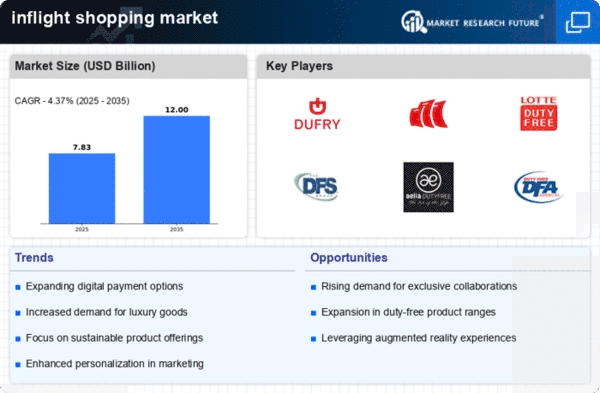
As per MRFR analysis, the inflight shopping market size was estimated at 7.5 USD Billion in 2024. The inflight shopping industry is projected to grow from 7.83 USD Billion in 2025 to 12.0 USD Billion by 2035, exhibiting a compound annual growth rate (CAGR) of 4.37 during the forecast period 2025 - 2035.

Key Market Trends & Highlights

The inflight shopping market is evolving towards a more personalized and sustainable approach, driven by technological advancements and changing consumer preferences.

  • Personalization of offerings is becoming increasingly prevalent, catering to the unique preferences of travelers.
  • Digital integration is enhancing the shopping experience, particularly in North America, the largest market for inflight shopping.
  • Sustainability focus is gaining traction, especially among luxury goods, which remain the largest segment in this market.
  • Evolving consumer preferences and partnerships with luxury brands are key drivers propelling growth in both the North American and Asia-Pacific regions.

Market Size & Forecast

2024 Market Size 7.5 (USD Billion)
2035 Market Size 12.0 (USD Billion)
CAGR (2025 - 2035) 4.37%

Major Players

Dufry AG (CH), Heinemann Duty Free (DE), Lotte Duty Free (KR), DFS Group (HK), Aelia Duty Free (FR), Duty Free Americas (US), Travel Retail Norway (NO), World Duty Free Group (ES), Inflight Sales Group (NL)

inflight shopping market Trends

The inflight shopping market is currently experiencing a transformation driven by evolving consumer preferences and advancements in technology. Passengers increasingly seek unique and personalized shopping experiences while traveling, leading airlines to enhance their product offerings. This shift appears to be influenced by a growing demand for luxury items, exclusive merchandise, and local products that reflect the destination's culture. Furthermore, the integration of digital platforms into the inflight shopping experience is becoming more prevalent, allowing travelers to browse and purchase items seamlessly during their flights. In addition, sustainability is emerging as a crucial factor in the inflight shopping market. Airlines are recognizing the importance of eco-friendly products and practices, which may resonate with environmentally conscious consumers. This trend suggests that airlines could potentially attract a broader customer base by aligning their offerings with sustainable values. As the inflight shopping market continues to evolve, it seems poised for growth, driven by innovation and a deeper understanding of passenger needs and preferences.

Personalization of Offerings

Airlines are increasingly tailoring their inflight shopping experiences to meet individual passenger preferences. This trend indicates a shift towards personalized product selections, enhancing customer satisfaction and engagement.

Digital Integration

The incorporation of digital technology into the inflight shopping market is becoming more pronounced. Passengers can now access online catalogs and make purchases through mobile devices, streamlining the shopping process.

Sustainability Focus

There is a growing emphasis on eco-friendly products within the inflight shopping market. Airlines are likely to prioritize sustainable merchandise, appealing to environmentally aware travelers.

Market Segment Insights

By Product Category: Luxury Goods (Largest) vs. Electronics (Fastest-Growing)

The inflight shopping market has seen a diverse distribution across various product categories. Currently, Luxury Goods hold the largest market share, appealing to travelers looking to make exclusive purchases while flying. In contrast, Electronics, while traditionally not as dominant, are rapidly gaining traction among airline passengers, driven by technological advancements and increasing consumer demand for portable devices during travel. The growth trends within the inflight shopping market indicate a significant rise in demand for Electronics, notably smart gadgets and accessories. This surge can be attributed to the growing reliance on technology for entertainment and connectivity during flights. Meanwhile, Luxury Goods continue to attract affluent travelers seeking high-end brands, suggesting a dual growth dynamic in this segment fueled by differentiated consumer needs.

Luxury Goods (Dominant) vs. Electronics (Emerging)

Luxury Goods dominate the inflight shopping market, characterized by iconic brands and premium offerings that cater to affluent travelers. These products, ranging from designer handbags to fine jewelry, are positioned as exclusive purchases that enhance the travel experience. The allure of brand prestige and the opportunity to buy items not available in standard retail outlets solidify their status. On the other hand, Electronics represent an emerging category, gaining momentum thanks to innovations that appeal to tech-savvy consumers. Products such as tablets, headphones, and mobile accessories are increasingly popular for their ability to enhance the in-flight experience. As airlines invest in digital platforms for onboard shopping, the growing trend of purchasing high-tech gadgets during flights is reshaping consumer behavior, signalling a shift in priorities among travelers.

By Customer Demographics: Business Travelers (Largest) vs. Family Travelers (Fastest-Growing)

In the inflight shopping market, customer demographics play a crucial role in shaping purchasing behaviors. Business travelers hold the largest market share, driven by their need for convenience and luxury goods while traveling. Family travelers, on the other hand, represent a rapidly growing segment due to the increasing trend of family vacations and leisure travel. Their preferences significantly influence the product offerings and marketing strategies adopted by airlines. Growth trends in this segment are largely attributed to changing consumer lifestyles and increased disposable income. Business travelers continue to prioritize quality and exclusivity, while family travelers are drawn to value deals and family-oriented products. These dynamics are pushing brands to adapt their offerings, catering specifically to the needs of these demographics, thus enriching the inflight shopping experience for all.

Business Travelers: Dominant vs. Leisure Travelers: Emerging

Business travelers are characterized by their preference for premium products, often associated with luxury brands. This demographic typically seeks high-quality items that enhance their travel experience, such as electronics and exclusive merchandise. Meanwhile, leisure travelers, although emerging, are increasingly influencing the inflight shopping market by prioritizing affordability and convenience. They often look for travel-related products that add value to their leisure experiences, such as duty-free items and travel accessories. The distinction between these two segments underscores the need for airlines to tailor their product offerings to meet the diverse needs of their customer base, ensuring an appealing shopping experience for both business and leisure travelers.

By Purchase Behavior: Impulse Buyers (Largest) vs. Planned Purchases (Fastest-Growing)

In the inflight shopping market, purchase behavior is a crucial factor influencing consumer decisions. Impulse buyers constitute the largest segment, driven by the unique retail environment of airplanes. They often make decisions quickly, attracted by promotions and visibility of products while in flight. On the other hand, planned purchases are gaining traction and currently portray the fastest growing segment. This group includes passengers who research and decide on their purchases beforehand, indicating a shift towards more intentional consumerism within inflight shopping. Growth trends in these segments reflect larger consumer patterns. The rise of impulse buying can be attributed to the enhanced merchandising strategies employed by airlines, such as product placement and limited-time offers. Planned purchases are being spurred by increasing digital engagement, as passengers use airline apps to browse products before their flights. This indicates a balance in consumer behavior, where both impulsive and planned shopping coexist and appeal to diverse passenger needs.

Impulse Buyers (Dominant) vs. Planned Purchases (Emerging)

Impulse buyers are a dominant force in the inflight shopping market, characterized by their spontaneous purchasing decisions stimulated by the unique environment of air travel. Marketing strategies such as product showcases, promotions, and strategic placement significantly enhance visibility, driving these last-minute purchases. This segment thrives on capturing passenger attention when they are in a relaxed and receptive state. Conversely, planned purchases represent an emerging trend, defined by consumers who engage in pre-flight research. This group tends to be more discerning, often valuing quality and brand reputation over immediate gratification. The growth of this segment indicates a shift towards a more thoughtful consumer base in inflight shopping, blending traditional impulse strategies with a more structured purchasing approach.

By Payment Method: Credit Card (Largest) vs. Mobile Payment (Fastest-Growing)

In the inflight shopping market, credit cards hold a significant share as the predominant payment method, favored for their widespread acceptance and ease of use during flights. Mobile payments, while currently smaller in share compared to credit cards, are rapidly gaining traction, especially among younger travelers who prefer convenience and speed in their transactions. Other methods, such as cash, loyalty points, and gift cards, contribute to the diversity of payment options but do not match the dominance of these two methods.

Credit Card (Dominant) vs. Mobile Payment (Emerging)

Credit cards continue to dominate the inflight shopping payments landscape due to their established infrastructure and user familiarity, offering seamless transactions during flights. Their ability to provide rewards and benefits aligns with customer expectations for value. Conversely, mobile payments are on the rise, representing a growing segment as technological advancements make them more accessible. With features such as one-click payments and enhanced security, mobile payments appeal to the tech-savvy traveler. This shift indicates a transition toward digital solutions, with airlines and retailers adapting to meet these evolving consumer preferences.

Get more detailed insights about inflight shopping market

Regional Insights

North America : Market Leader in Inflight Shopping

North America is poised to maintain its leadership in the inflight shopping market, holding a significant market share of 3.0 in 2025. Key growth drivers include a robust travel industry, increasing disposable incomes, and a growing preference for luxury goods among travelers. Regulatory support for duty-free shopping and streamlined customs processes further enhance market dynamics, making it an attractive region for both consumers and retailers. The competitive landscape is characterized by major players such as Duty Free Americas and Dufry AG, which dominate the market with extensive product offerings and strategic partnerships with airlines. The U.S. and Canada are the leading countries, benefiting from high passenger volumes and a strong demand for premium products. The presence of established brands and innovative retail strategies positions North America as a formidable force in the inflight shopping sector.

Europe : Diverse Market with Growth Potential

Europe's inflight shopping market, valued at 2.5, is experiencing a resurgence driven by increasing air travel and a shift towards experiential shopping. The region benefits from a diverse consumer base and a strong emphasis on luxury goods, which are highly sought after by international travelers. Regulatory frameworks supporting duty-free shopping are also pivotal in stimulating market growth, as they encourage higher spending among passengers. Leading countries such as Germany, France, and the UK are at the forefront of this market, with key players like Heinemann Duty Free and Aelia Duty Free enhancing their offerings. The competitive landscape is marked by innovation in product selection and customer engagement strategies, ensuring that European inflight shopping remains appealing. The region's unique blend of cultural influences further enriches the shopping experience, making it a vital market for retailers.

Asia-Pacific : Rapid Growth in Emerging Markets

The Asia-Pacific region, with a market size of 1.8, is rapidly emerging as a key player in the inflight shopping sector. Factors such as rising middle-class populations, increased air travel, and a growing appetite for luxury goods are driving demand. Regulatory support for duty-free shopping is also enhancing the market's appeal, as governments recognize the economic benefits of tourism and retail sectors. Countries like South Korea, China, and Japan are leading the charge, with Lotte Duty Free and DFS Group establishing strong footholds. The competitive landscape is vibrant, with a mix of local and international players vying for market share. Innovative marketing strategies and tailored product offerings are essential for success in this diverse region, as consumer preferences continue to evolve rapidly.

Middle East and Africa : Emerging Market with Untapped Potential

The Middle East and Africa (MEA) region, with a market size of 0.2, presents significant growth opportunities in the inflight shopping market. Factors such as increasing air travel, a burgeoning tourism sector, and a growing interest in luxury goods are driving demand. Regulatory frameworks are gradually evolving to support duty-free shopping, which is expected to enhance the market's attractiveness to both consumers and retailers. Leading countries in this region include the UAE and South Africa, where key players like Travel Retail Norway and World Duty Free Group are making strides. The competitive landscape is still developing, with opportunities for new entrants to capture market share. As the region continues to invest in its aviation infrastructure and tourism initiatives, the inflight shopping market is likely to see substantial growth in the coming years.

Key Players and Competitive Insights

The inflight shopping market is currently characterized by a dynamic competitive landscape, driven by evolving consumer preferences and technological advancements. Key players such as Dufry AG (CH), Heinemann Duty Free (DE), and Lotte Duty Free (KR) are strategically positioning themselves to capitalize on these trends. Dufry AG (CH) has focused on expanding its digital presence, enhancing customer engagement through personalized shopping experiences. Meanwhile, Heinemann Duty Free (DE) emphasizes sustainability in its product offerings, aligning with the growing consumer demand for eco-friendly options. Lotte Duty Free (KR) appears to be leveraging its strong brand recognition in Asia to expand its market share, particularly in the premium segment, thereby shaping a competitive environment that increasingly values innovation and customer-centric strategies.

In terms of business tactics, companies are increasingly localizing manufacturing and optimizing supply chains to enhance efficiency and responsiveness to market demands. The competitive structure of the inflight shopping market is moderately fragmented, with several key players exerting influence over various segments. This fragmentation allows for niche players to thrive, while larger companies leverage economies of scale to maintain competitive pricing and product variety.

In November 2025, Dufry AG (CH) announced a partnership with a leading tech firm to integrate AI-driven analytics into its inflight shopping platforms. This strategic move is expected to enhance inventory management and personalize customer experiences, potentially increasing sales conversion rates. The integration of AI signifies a shift towards data-driven decision-making, which could redefine customer engagement strategies in the inflight shopping sector.

In October 2025, Heinemann Duty Free (DE) launched a new line of sustainable luxury products, which has been well-received by environmentally conscious travelers. This initiative not only aligns with The inflight shopping market. The introduction of these products may attract a new demographic of consumers who prioritize sustainability in their purchasing decisions.

In September 2025, Lotte Duty Free (KR) expanded its product range to include exclusive collaborations with high-end brands, enhancing its appeal to affluent travelers. This strategic expansion into premium offerings is likely to bolster Lotte's market position, as it caters to the growing demand for luxury goods among inflight shoppers. Such collaborations may also foster brand loyalty and increase customer retention in a competitive market.

As of December 2025, the inflight shopping market is witnessing trends such as digitalization, sustainability, and the integration of AI technologies. Strategic alliances among key players are shaping the competitive landscape, fostering innovation and enhancing customer experiences. The shift from price-based competition to a focus on technological advancements and supply chain reliability is becoming increasingly evident. Companies that prioritize innovation and sustainability are likely to differentiate themselves in this evolving market, suggesting a future where competitive advantage hinges on the ability to adapt to changing consumer expectations.


Key Companies in the inflight shopping market market include

Future Outlook

inflight shopping market Future Outlook

The inflight shopping market is projected to grow at a 4.37% CAGR from 2024 to 2035, driven by enhanced digital platforms and evolving consumer preferences.

New opportunities lie in:

  • Integration of augmented reality for product visualization
  • Development of exclusive airline-branded merchandise
  • Expansion of loyalty programs linked to inflight purchases

By 2035, the inflight shopping market is expected to achieve robust growth and increased consumer engagement.

Market Segmentation

inflight-shopping-market Payment Method Outlook

  • Credit Card
  • Mobile Payment
  • Cash
  • Loyalty Points
  • Gift Cards

inflight-shopping-market Product Category Outlook

  • Luxury Goods
  • Electronics
  • Cosmetics
  • Fashion Accessories
  • Food and Beverages

inflight-shopping-market Purchase Behavior Outlook

  • Impulse Buyers
  • Planned Purchases
  • Gift Shoppers
  • Brand Loyalists
  • Bargain Seekers

inflight-shopping-market Customer Demographics Outlook

  • Business Travelers
  • Leisure Travelers
  • Family Travelers
  • Frequent Flyers
  • Occasional Flyers

Report Scope

MARKET SIZE 20247.5(USD Billion)
MARKET SIZE 20257.83(USD Billion)
MARKET SIZE 203512.0(USD Billion)
COMPOUND ANNUAL GROWTH RATE (CAGR)4.37% (2024 - 2035)
REPORT COVERAGERevenue Forecast, Competitive Landscape, Growth Factors, and Trends
BASE YEAR2024
Market Forecast Period2025 - 2035
Historical Data2019 - 2024
Market Forecast UnitsUSD Billion
Key Companies ProfiledDufry AG (CH), Heinemann Duty Free (DE), Lotte Duty Free (KR), DFS Group (HK), Aelia Duty Free (FR), Duty Free Americas (US), Travel Retail Norway (NO), World Duty Free Group (ES), Inflight Sales Group (NL)
Segments CoveredProduct Category, Customer Demographics, Purchase Behavior, Payment Method
Key Market OpportunitiesIntegration of digital payment solutions enhances consumer engagement in the inflight shopping market.
Key Market DynamicsEvolving consumer preferences drive innovation in inflight shopping, enhancing product offerings and competitive strategies among airlines.
Countries CoveredNorth America, Europe, APAC, South America, MEA

Leave a Comment

Download Free Sample

Kindly complete the form below to receive a free sample of this Report

Compare Licence

×
Features License Type
Single User Multiuser License Enterprise User
Price $4,950 $5,950 $7,250
Maximum User Access Limit 1 User Upto 10 Users Unrestricted Access Throughout the Organization
Free Customization
Direct Access to Analyst
Deliverable Format
Platform Access
Discount on Next Purchase 10% 15% 15%
Printable Versions