Request Free Sample ×

Kindly complete the form below to receive a free sample of this Report

* Please use a valid business email

Leading companies partner with us for data-driven Insights

clients tt-cursor
Hero Background
English
Chinese
French
Japanese
Korean
German
Spanish

Immunosuppressive Drugs Market Share

ID: MRFR/Pharma/6756-HCR
111 Pages
Vikita Thakur
March 2026

Immunosuppressive Drugs Market Research Report Information By Drug Type (Calcineurin Inhibitors, Corticosteroids, Antiproliferative Agents, mTOR Inhibitors, Others), Route of Administration (Intravenous, Oral, Others), Application (Autoimmune Disease, Organ Transplant, Kidney Transplant, Heart Transplant, Others) and End User (Hospitals and Clinics, Organ Transplant Centers, Others) -Forecast to 2035.

Share:
Download PDF ×

We do not share your information with anyone. However, we may send you emails based on your report interest from time to time. You may contact us at any time to opt-out.

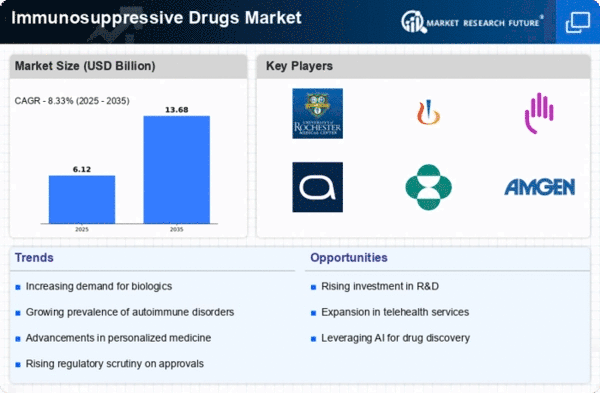
Immunosuppressive Drugs Market Infographic
Purchase Options

Market Share

Immunosuppressive Drugs Market Share Analysis

In the complex landscape of Immunosuppressive Drugs Market, companies use a contingent variety of methods to attain market-share and to cater to the complicated medical needs of patients who undergo organ transplantation or people who suffer from autoimmune diseases. One of the main approaches refers to diverse of drugs by innovation. The pharmaceutical industry spends huge resources on creating new drugs for immunosuppression including improved effectiveness profile, fewer adverse effects, and specific mechanisms of action. Through the development of cutting-edge solutions, staying in a competitive market and assisting medical practitioners with more sophisticated tools to control the immune system is the goal of these firms.

While cost leadership is the next decisive stride in the Immunosuppressive Drugs sector. Some firms concentrate on cheap drug production of immunomodulatory drugs which comply with treatment quality. These tactics are essential since patients and health systems strive for affordable solutions that give long-term answer for immune system management. Companies thrive in the immunosuppressive drug segment by fine tuning their manufacturing processes, economically negotiating supplier contracts and implementing cost efficient distribution routes. This results in lower prices and more access to life saving medications.

Market segmentation has become a very important tool for the strategizing of the Immunosuppressive Drugs Market. Companies relate their medications to the respective segments, for example post-transplant immunosuppression, rheumatoid arthritis or inflammatory bowel disease. The targeted approach enables the drug makers to attend the broad spectrum of immune-related diseases and patients' health concerns providing the high-quality products that will be appreciated by health care professionals and people with this specific medical condition.

Mutual connections and joint efforts are often a part of the Immunosuppressive Drugs Market. Transplantation centers, rheumatology clinics, or research institutions tend to be the key partners of the pharma companies when the aim is the improvement of the immunosuppressive drugs. Building close partnerships with the main stakeholders of healthcare industry permits companies to acquire new knowledge about clinical practices, gain accessibility to real world patient data and make sure the successful integration of their medications onto treatment regimen.

Brands and image management are vital drivers of market share for the Immunosuppressive Drugs Market. Organizations allocate funds to strive for brand novelty extending to factors such as safety, efficacy, and patient well-being. Trust building and credibility are a must in this market where both patients and healthcare professionals are expected to trust the drugs used for successful transplantation or autoimmune disease management.


Author
Author Profile
Vikita Thakur
Senior Research Analyst

She holds an experience of about 5+ years in market research and business consulting projects for sectors such as life sciences, medical devices, and healthcare IT. She possesses a robust background in data analysis, market estimation, competitive intelligence, pipeline analysis market trend identification, and consumer behavior insights. Her expertise lies in technical Sales support, client interaction and project management, designing and implementing market research studies, conducting competitive analysis, and synthesizing complex data into actionable recommendations that drive business growth.

Leave a Comment

FAQs

What is the current valuation of the Immunosuppressive Drugs Market as of 2024?

<p>The Immunosuppressive Drugs Market was valued at 5.65 USD Billion in 2024.</p>

What is the projected market valuation for the Immunosuppressive Drugs Market in 2035?

<p>The market is projected to reach 13.68 USD Billion by 2035.</p>

What is the expected CAGR for the Immunosuppressive Drugs Market during the forecast period 2025 - 2035?

<p>The expected CAGR for the Immunosuppressive Drugs Market during 2025 - 2035 is 8.33%.</p>

Which companies are considered key players in the Immunosuppressive Drugs Market?

<p>Key players in the market include AbbVie, Roche, Novartis, Bristol-Myers Squibb, Merck & Co., Amgen, Pfizer, Astellas Pharma, and Gilead Sciences.</p>

What are the primary applications of immunosuppressive drugs in the market?

<p>The primary applications include Organ Transplantation, Autoimmune Diseases, Cancer Treatment, and Chronic Inflammatory Diseases.</p>

How does the market segment by drug class for immunosuppressive drugs?

The market segments by drug class include Calcineurin Inhibitors, Antimetabolites, Corticosteroids, and mTOR Inhibitors.

What routes of administration are prevalent in the Immunosuppressive Drugs Market?

The prevalent routes of administration are Oral, Intravenous, and Subcutaneous.

How is the Immunosuppressive Drugs Market segmented by patient type?

The market is segmented by patient type into Adult Patients, Pediatric Patients, and Geriatric Patients.

What therapeutic areas are targeted by immunosuppressive drugs?

The therapeutic areas targeted include Rheumatology, Nephrology, Hematology, and Oncology.

What was the market valuation for Chronic Inflammatory Diseases in 2024?

The market valuation for Chronic Inflammatory Diseases was 1.95 USD Billion in 2024, projected to grow to 4.68 USD Billion by 2035.

Market Summary

As per MRFR analysis, the Immunosuppressive Drugs Market Size was estimated at 5.65 USD Billion in 2024. The Immunosuppressive Drugs industry is projected to grow from 6.19 USD Billion in 2025 to 13.68 USD Billion by 2035, exhibiting a compound annual growth rate (CAGR) of 8.33% during the forecast period 2025 - 2035.

Key Market Trends & Highlights

The Immunosuppressive Drugs Market is experiencing robust growth driven by rising autoimmune disorders and advancements in biotechnology.

  • The market is witnessing a rise in autoimmune disorders, which is significantly influencing demand for immunosuppressive therapies.
  • North America remains the largest market, while the Asia-Pacific region is emerging as the fastest-growing area for immunosuppressive drugs.
  • Organ transplantation continues to be the largest segment, whereas the autoimmune diseases segment is expanding rapidly due to increasing patient awareness.
  • Key market drivers include the increase in organ transplantation procedures and the rising incidence of autoimmune diseases, which are propelling market growth.

Market Size & Forecast

2024 Market Size 5.65 (USD Billion)
2035 Market Size 13.68 (USD Billion)
CAGR (2025 - 2035) 8.33%
Largest Regional Market Share in 2024 North America

Major Players

Roche (CH), Novartis (CH), Bristol-Myers Squibb (US), AbbVie (US), Merck & Co. (US), Amgen (US), Pfizer (US), Astellas Pharma (JP), Sanofi (FR)

Market Trends

The Immunosuppressive Drugs Market is currently experiencing notable transformations driven by various factors. The increasing prevalence of autoimmune diseases and organ transplant procedures has led to a heightened demand for effective immunosuppressive therapies. As healthcare systems evolve, there is a growing emphasis on personalized medicine, which appears to be influencing the development of targeted immunosuppressive agents. Furthermore, advancements in biotechnology and pharmaceutical research are likely to enhance the efficacy and safety profiles of these drugs, potentially leading to improved patient outcomes. Regulatory bodies are also adapting to these changes, which may facilitate faster approvals for innovative therapies, thereby impacting market dynamics. In addition, The Immunosuppressive Drugs is shaped by the rising awareness of treatment options among patients and healthcare providers. This awareness is fostering a more informed patient population, which could lead to increased adherence to prescribed therapies. Moreover, the expansion of healthcare access in emerging markets may present new opportunities for growth. As the market continues to evolve, stakeholders must remain vigilant to emerging trends and adapt their strategies accordingly to maintain a competitive edge.

Rise in Autoimmune Disorders

The Immunosuppressive Drugs Market is witnessing a surge in demand due to the increasing incidence of autoimmune disorders. Conditions such as rheumatoid arthritis and lupus require long-term immunosuppressive therapy, which is driving market growth. This trend suggests a need for ongoing research and development to address the complexities of these diseases.

Advancements in Biotechnology

Recent advancements in biotechnology are significantly influencing the Immunosuppressive Drugs Market. Innovative drug formulations and delivery systems are emerging, which may enhance the therapeutic efficacy of existing treatments. This trend indicates a shift towards more sophisticated and targeted approaches in immunosuppressive therapy.

Growing Patient Awareness

There is a notable increase in patient awareness regarding immunosuppressive therapies. As individuals become more informed about their treatment options, they are likely to engage more actively in their healthcare decisions. This trend could lead to improved adherence to treatment regimens and better health outcomes.

Immunosuppressive Drugs Market Market Drivers

Market Growth Projections

The Global Immunosuppressive Drugs Market Industry is projected to experience substantial growth over the next decade. With an estimated value of 5.12 USD Billion in 2024, the market is expected to reach 12.4 USD Billion by 2035, reflecting a robust compound annual growth rate of 8.37% from 2025 to 2035. This growth trajectory indicates a strong demand for immunosuppressive therapies driven by various factors, including the rising prevalence of autoimmune diseases, advancements in drug development, and increasing organ transplantation procedures. The market's expansion is indicative of the critical role immunosuppressive drugs play in modern medicine.

Growing Awareness and Education

The increasing awareness and education regarding autoimmune diseases and organ transplantation are pivotal for the Global Immunosuppressive Drugs Market Industry. Enhanced public knowledge leads to earlier diagnosis and treatment, which is essential for managing these conditions effectively. Healthcare providers are also becoming more informed about the latest treatment options, contributing to improved patient outcomes. Campaigns and initiatives aimed at educating both patients and healthcare professionals are likely to drive demand for immunosuppressive therapies. This heightened awareness is expected to support the growth of the Global Immunosuppressive Drugs Market Industry in the coming years.

Advancements in Drug Development

Innovations in drug development are significantly impacting the Global Immunosuppressive Drugs Market Industry. The emergence of biologics and targeted therapies offers new avenues for treating complex conditions. These advancements not only enhance efficacy but also reduce side effects compared to traditional therapies. For example, monoclonal antibodies have revolutionized treatment protocols for various autoimmune diseases. The ongoing research and development efforts are expected to yield more effective immunosuppressive agents, thereby expanding the market. The Global Immunosuppressive Drugs Market Industry is anticipated to grow at a CAGR of 8.37% from 2025 to 2035, indicating a robust pipeline of new therapies.

Regulatory Support and Approvals

Regulatory support and streamlined approval processes for immunosuppressive drugs are vital for the Global Immunosuppressive Drugs Market Industry. Governments and health authorities are increasingly recognizing the need for effective treatments for autoimmune diseases and transplant patients. Initiatives to expedite the approval of new therapies can significantly enhance market dynamics. For instance, the U.S. Food and Drug Administration has implemented programs to facilitate faster access to innovative treatments. This supportive regulatory environment is likely to encourage pharmaceutical companies to invest in research and development, thereby expanding the Global Immunosuppressive Drugs Market Industry.

Rising Prevalence of Autoimmune Diseases

The increasing incidence of autoimmune diseases globally drives the Global Immunosuppressive Drugs Market Industry. Conditions such as rheumatoid arthritis, lupus, and multiple sclerosis are becoming more prevalent, necessitating effective treatment options. For instance, the World Health Organization reports a rising trend in autoimmune disorders, which may lead to a higher demand for immunosuppressive therapies. As the global population ages, the burden of these diseases is likely to escalate, further propelling market growth. The Global Immunosuppressive Drugs Market Industry is projected to reach 5.12 USD Billion in 2024, reflecting the urgent need for innovative therapeutic solutions.

Increasing Organ Transplantation Procedures

The rise in organ transplantation procedures globally serves as a crucial driver for the Global Immunosuppressive Drugs Market Industry. As more individuals require organ transplants due to chronic diseases, the demand for immunosuppressive drugs to prevent organ rejection becomes paramount. According to the Global Observatory on Donation and Transplantation, the number of organ transplants has steadily increased, necessitating effective immunosuppressive regimens. This trend is likely to continue, with the market expected to reach 12.4 USD Billion by 2035. The need for tailored immunosuppressive therapies to improve transplant outcomes underscores the importance of this market.

Market Segment Insights

By Application: Organ Transplantation (Largest) vs. Autoimmune Diseases (Fastest-Growing)

In the Immunosuppressive Drugs Market, the segment distribution highlights Organ Transplantation as the largest application area, accounting for a significant share of the market. This is attributed to the growing number of organ transplants performed worldwide, necessitating effective immunosuppressive therapies to prevent organ rejection. Following closely is the Autoimmune Diseases segment, which is rapidly expanding as awareness and diagnosis of autoimmune disorders increase, prompting a surge in demand for immunosuppressive treatments. The growth trends in this segment are driven by advancements in drug development, leading to more effective and targeted immunosuppressive therapies. As healthcare providers enhance patient management strategies for both Organ Transplantation and Autoimmune Diseases, the demand for innovative treatment options will continue to rise. Factors such as the increasing incidence of autoimmune diseases and an aging population are expected to profoundly impact the growth of the Immunosuppressive Drugs Market, fostering a competitive landscape among emerging therapies.

Organ Transplantation (Dominant) vs. Cancer Treatment (Emerging)

The Organ Transplantation segment is characterized by its dominant position in the Immunosuppressive Drugs Market due to the critical need for effective immunosuppressant medications to ensure transplant success and prevent rejection. This segment benefits from established treatment protocols and a strong foundation of clinical research supporting its efficacy. Conversely, Cancer Treatment represents an emerging segment within this market, driven by the increasing recognition of the role immunosuppressants can play in managing cancer therapies. This segment is experiencing rapid development as researchers explore combinations of immunosuppressive drugs with novel cancer treatments, aiming to enhance patient outcomes while minimizing adverse effects. As the landscape of cancer treatment evolves, the demand for targeted immunosuppressive therapies will likely grow, creating new opportunities for innovation.

By Drug Class: Calcineurin Inhibitors (Largest) vs. Antimetabolites (Fastest-Growing)

<p>In the Immunosuppressive Drugs Market, Calcineurin Inhibitors represent the largest segment, primarily used for preventing organ rejection in transplant procedures. Their dominance stems from their established efficacy and long-standing usage, making them a cornerstone of immunosuppressive therapy. In contrast, Antimetabolites have emerged as the fastest-growing segment, driven by increasing adoption and new drug formulations that enhance their effectiveness and safety profiles. Their growth signifies a shift towards more targeted therapies in managing autoimmune and transplant-related conditions. The growth trends in the market highlight a strategic focus on innovation and patient-centric approaches. Factors such as rising incidences of transplant surgeries, an increasing prevalence of chronic autoimmune conditions, and advancements in drug development are propelling the demand for Antimetabolites. Furthermore, regulatory approvals for newer agents are catalyzing market expansion. Meanwhile, Calcineurin Inhibitors continue to evolve through formulation improvements, further solidifying their leading position even in the face of growing competition from newer drug classes.</p>

<p>Calcineurin Inhibitors (Dominant) vs. mTOR Inhibitors (Emerging)</p>

<p>Calcineurin Inhibitors play a dominant role in the Immunosuppressive Drugs Market due to their extensive clinical history and established use in organ transplantation. These drugs work by inhibiting the activation of T-cells, crucial for the immune response, thereby effectively preventing organ rejection. On the other hand, mTOR Inhibitors, while now recognized as an emerging class, are gaining momentum owing to their unique mechanisms that offer alternative pathways for immunosuppression. They not only serve in transplant medicine but also show promise in treating certain cancers and autoimmune diseases. As researchers explore dual therapy options involving both classes, the synergy between Calcineurin Inhibitors and mTOR Inhibitors highlights a dynamic shift towards personalized medicine, catering to diverse patient needs.</p>

By Route of Administration: Oral (Largest) vs. Intravenous (Fastest-Growing)

The route of administration for immunosuppressive drugs plays a significant role in their market distribution. Currently, the oral route stands out as the dominant method due to its ease of administration and patient compliance, capturing a substantial share of the market. In contrast, intravenous (IV) administration is gaining traction, attributed to its effectiveness in critical care settings that demand rapid therapeutic action.

Oral (Dominant) vs. Intravenous (Emerging)

The oral route is characterized by its convenience and popularity among patients. It facilitates consistent medication adherence, particularly for long-term immunosuppressive therapies. Conversely, intravenous administration, while less common, presents a faster onset of action, making it ideal for patients requiring immediate immunosuppression. The growing emphasis on personalized medicine is driving innovation in intravenous formulations, enhancing their appeal in hospital settings. As the landscape evolves, oral medications remain a favored choice, but intravenous options are emerging as essential for acute management.

By Patient Type: Adult Patients (Largest) vs. Pediatric Patients (Fastest-Growing)

<p>The Immunosuppressive Drugs Market exhibits a diverse distribution across patient types, with Adult Patients commanding the largest share. This demographic, often requiring long-term management of chronic diseases, relies heavily on immunosuppressive therapies, which have become essential in treating conditions such as autoimmune diseases and organ transplants. Pediatric Patients, though smaller in market share, are witnessing increased demand for tailored immunosuppressive treatments as awareness about pediatric-specific health needs grows.</p>

<p>Adult Patients (Dominant) vs. Pediatric Patients (Emerging)</p>

<p>Adult Patients represent the dominant segment within the Immunosuppressive Drugs Market due to the prevalence of chronic conditions that necessitate long-term immunosuppression. This includes diseases like rheumatoid arthritis and organ transplants that mature in adulthood. The segment emphasizes the need for potent and effective therapies. Conversely, Pediatric Patients are emerging as a vital segment, with increasing recognition of their unique healthcare needs. As the understanding of pediatric autoimmune diseases advances, the demand for specially formulated immunosuppressive drugs is growing, highlighting a shift towards developing age-appropriate treatment options.</p>

By Therapeutic Area: Rheumatology (Largest) vs. Oncology (Fastest-Growing)

<p>In the immunosuppressive drugs market, rheumatology holds the largest market share, driven by the rising prevalence of autoimmune diseases. This therapeutic area includes treatments for conditions such as rheumatoid arthritis and lupus, contributing significantly to sales. Meanwhile, nephrology and hematology also maintain substantial portions of the market, but their shares are lower in comparison to rheumatology. On the other hand, oncology has emerged as a significant player, with a rapidly growing share fueled by increased incidence rates of cancers and ongoing advancements in therapeutics. The growth trends for this segment indicate a dynamic shift towards oncology as the fastest-growing area within the immunosuppressive drugs market. This can be attributed to the growing interest in targeted therapies and biological agents that improve treatment efficacy and patient outcomes in cancer. Additionally, increasing patient awareness and advancements in research capabilities have resulted in an uptick in therapy initiation, thereby further driving the oncology segment's growth. As healthcare systems evolve, the emphasis on personalized medicine will continue to bolster oncology's prominence in the market.</p>

<p>Rheumatology (Dominant) vs. Oncology (Emerging)</p>

<p>Rheumatology remains a dominant segment in the immunosuppressive drugs market, characterized by a well-established framework of therapies aimed at managing chronic autoimmune diseases. The treatments often involve conventional synthetic drugs as well as novel biologic agents, optimizing patient care and improving quality of life for millions. Rheumatology's significance is underscored by the increasing number of diagnosed cases, highlighting the importance of sustained research and development within this area. In contrast, oncology is recognized as an emerging segment fueled by innovation in drug development and a focus on immunotherapy for various cancers. The oncology segment is seeing an influx of advanced therapies, such as CAR-T cell therapy and checkpoint inhibitors, which promise enhanced efficacy and reshaping of treatment paradigms. As immunosuppressive treatments in oncology gain traction, their adoption rates are expected to rise exponentially, paving the way for a transformative impact within the healthcare ecosystem.</p>

Get more detailed insights about Immunosuppressive Drugs Market Research Report - Forecast till 2035

Regional Insights

North America : Market Leader in Immunosuppressants

North America is poised to maintain its leadership in the immunosuppressive drugs market, holding a significant share of 2.83 billion in 2024. The region's growth is driven by increasing incidences of autoimmune diseases and organ transplants, alongside robust healthcare infrastructure. Regulatory support and advancements in drug development further catalyze market expansion, making it a focal point for innovation and investment in the pharmaceutical sector. The United States stands as the largest market, with key players like AbbVie, Bristol-Myers Squibb, and Merck & Co. leading the charge. The competitive landscape is characterized by continuous research and development efforts, aimed at enhancing drug efficacy and safety. The presence of major pharmaceutical companies ensures a steady supply of innovative therapies, catering to the growing demand for immunosuppressive treatments.

Europe : Emerging Market with Growth Potential

Europe's immunosuppressive drugs market is valued at 1.7 billion, reflecting a growing demand driven by rising cases of chronic diseases and transplant procedures. Regulatory frameworks in the EU promote innovation while ensuring patient safety, which is crucial for market growth. The region is witnessing an increase in collaborations between pharmaceutical companies and research institutions, enhancing the development of new therapies and improving patient access to essential medications. Leading countries such as Germany, France, and the UK are at the forefront of this market, supported by a strong healthcare system and a high prevalence of autoimmune disorders. Major players like Roche and Novartis are actively involved in expanding their product portfolios, ensuring competitive advantage. The European market is characterized by a mix of established brands and emerging biotech firms, fostering a dynamic environment for growth.

Asia-Pacific : Rapidly Growing Market Segment

The Asia-Pacific region, with a market size of 0.9 billion, is experiencing rapid growth in the immunosuppressive drugs sector. Factors such as increasing healthcare expenditure, rising awareness of autoimmune diseases, and a growing aging population are driving demand. Regulatory bodies in countries like Japan and Australia are facilitating market entry for new drugs, enhancing the competitive landscape and improving patient access to treatments. Countries like Japan, China, and India are leading the charge in this market, with significant investments in healthcare infrastructure and research. Key players such as Astellas Pharma and Pfizer are expanding their presence, focusing on innovative therapies tailored to regional needs. The competitive environment is marked by collaborations and partnerships aimed at accelerating drug development and distribution, positioning the Asia-Pacific region as a vital player in the global market.

Middle East and Africa : Emerging Market with Challenges

The Middle East and Africa (MEA) region, with a market size of 0.22 billion, presents unique challenges and opportunities in the immunosuppressive drugs market. Factors such as limited healthcare infrastructure and varying regulatory environments impact market growth. However, increasing awareness of autoimmune diseases and the rising prevalence of organ transplants are driving demand for immunosuppressive therapies. Efforts to improve healthcare access and affordability are crucial for market expansion in this region. Countries like South Africa and the UAE are emerging as key players in the market, with growing investments in healthcare and pharmaceutical sectors. The presence of international pharmaceutical companies is enhancing the availability of innovative treatments. However, the market remains fragmented, with a need for stronger regulatory frameworks to ensure the safe and effective use of immunosuppressive drugs.

Key Players and Competitive Insights

The Immunosuppressive Drugs Market is characterized by a dynamic competitive landscape, driven by increasing incidences of autoimmune diseases and organ transplants. Key players such as Roche (CH), Novartis (CH), and AbbVie (US) are strategically positioned to leverage innovation and expand their product portfolios. Roche (CH) focuses on developing biologics and personalized medicine, while Novartis (CH) emphasizes its commitment to research and development, particularly in gene therapies. AbbVie (US), known for its blockbuster drug Humira, is diversifying its offerings through acquisitions and partnerships, thereby enhancing its competitive edge. Collectively, these strategies foster a robust environment where innovation and strategic collaborations are paramount.In terms of business tactics, companies are increasingly localizing manufacturing to enhance supply chain efficiency and reduce costs. The market structure appears moderately fragmented, with several players vying for market share. However, the influence of major companies is substantial, as they often set the pace for innovation and market trends. This competitive structure allows for a blend of established players and emerging companies, creating a vibrant ecosystem.

In November Roche (CH) announced a collaboration with a leading biotech firm to develop a novel immunosuppressive agent aimed at reducing transplant rejection rates. This strategic partnership is likely to enhance Roche's research capabilities and accelerate the development of new therapies, positioning the company favorably in a competitive market.

In October Novartis (CH) launched a new digital platform designed to streamline patient access to its immunosuppressive therapies. This initiative not only reflects Novartis's commitment to digital transformation but also aims to improve patient outcomes by facilitating better adherence to treatment regimens. Such advancements may significantly enhance the company's market presence.

In September AbbVie (US) completed the acquisition of a smaller biotech firm specializing in next-generation immunosuppressive therapies. This acquisition is expected to bolster AbbVie's pipeline and diversify its offerings, thereby reinforcing its competitive position in the market. The integration of innovative therapies could provide AbbVie with a unique advantage in addressing unmet medical needs.

As of December current trends in the Immunosuppressive Drugs Market indicate a shift towards digitalization, sustainability, and the integration of artificial intelligence in drug development. Strategic alliances are increasingly shaping the competitive landscape, allowing companies to pool resources and expertise. Looking ahead, competitive differentiation is likely to evolve from traditional price-based competition to a focus on innovation, technological advancements, and supply chain reliability. This transition underscores the importance of agility and responsiveness in meeting the evolving needs of patients and healthcare providers.

Key Companies in the Immunosuppressive Drugs Market include

Industry Developments

November 2023Novartis receives FDA approval for its new oral immunosuppressant, Kynviq® (ledipasvir/sofosbuvir), for the treatment of chronic hepatitis C virus (HCV) infection in adults with compensated liver disease who have not received prior antiviral treatment. Kynviq® is a combination of ledipasvir, an NS5A inhibitor, and sofosbuvir, an NS5B inhibitor.GlaxoSmithKline (GSK) announces that it has submitted a New Drug Application (NDA) to the FDA for its investigational drug, Benlysta® (belimumab), for the treatment of systemic lupus erythematosus (SLE).

Benlysta® is a monoclonal antibody that targets B-lymphocytes, a type of white blood cell that plays a role in the development of SLE.Bristol Myers Squibb (BMS) announces that it has received FDA approval for its new drug, Opdivo® (nivolumab), for the treatment of microsatellite instability-high (MSI-H) or mismatch repair deficient (dMMR) metastatic colorectal cancer (mCRC). Opdivo® is a checkpoint inhibitor that targets PD-1, a protein that helps cancer cells evade the immune system.

October 2023Sanofi announces that it has received FDA approval for its new drug, Dupixent® (dupilumab), for the treatment of moderate-to-severe atopic dermatitis in adolescents and adults who are candidates for systemic therapy. Dupixent® is a biologic drug that targets the IL-4 and IL-13 signaling pathways, which play a role in the inflammation associated with atopic dermatitis.Pfizer announces that it has submitted a New Drug Application (NDA) to the FDA for its investigational drug, Xeljanz® (tofacitinib), for the treatment of ulcerative colitis (UC).

Xeljanz® is a small molecule that inhibits Janus kinase (JAK), a protein that plays a role in inflammation.AbbVie announces that it has received FDA approval for its new drug, Rinvoq® (upadacitinib), for the treatment of rheumatoid arthritis (RA) in adults who have not responded adequately to or are intolerant of methotrexate. Rinvoq® is a small molecule that inhibits Janus kinase (JAK), a protein that plays a role in inflammation.

Intended Audience

This report will be beneficial for every stakeholder of the immunosuppressive drugs market such as:

  • Manufacturers of immunosuppressive drugs
  • Medical research and development institutes
  • Traders and distributors
  • Medical professionals
  • Patients

Future Outlook

Immunosuppressive Drugs Market Future Outlook

The Immunosuppressive Drugs Market is projected to grow at an 8.33% CAGR from 2025 to 2035, driven by increasing autoimmune diseases, organ transplants, and advancements in drug formulations.

New opportunities lie in:

  • Development of personalized immunosuppressive therapies for specific patient profiles.
  • Expansion into emerging markets with tailored pricing strategies.
  • Investment in digital health platforms for remote patient monitoring and adherence.

By 2035, the Immunosuppressive Drugs Market is expected to achieve substantial growth and innovation.

Market Segmentation

Immunosuppressive Drugs Market End User Outlook

  • Hospitals
  • Specialty Clinics
  • Homecare Settings

Immunosuppressive Drugs Market Drug Type Outlook

  • Calcineurin Inhibitors
  • Antiproliferative Agents
  • mTOR Inhibitors
  • Corticosteroids

Immunosuppressive Drugs Market Application Outlook

  • Organ Transplantation
  • Autoimmune Diseases
  • Cancer Treatment
  • Chronic Inflammatory Diseases

Immunosuppressive Drugs Market Route of Administration Outlook

  • Oral
  • Intravenous
  • Subcutaneous

Report Scope

MARKET SIZE 2024 5.65(USD Billion)
MARKET SIZE 2025 6.19(USD Billion)
MARKET SIZE 2035 13.68(USD Billion)
COMPOUND ANNUAL GROWTH RATE (CAGR) 8.33% (2025 - 2035)
REPORT COVERAGE Revenue Forecast, Competitive Landscape, Growth Factors, and Trends
BASE YEAR 2024
Market Forecast Period 2025 - 2035
Historical Data 2019 - 2024
Market Forecast Units USD Billion
Key Companies Profiled Roche (CH), Novartis (CH), Bristol-Myers Squibb (US), AbbVie (US), Merck & Co. (US), Amgen (US), Pfizer (US), Astellas Pharma (JP), Sanofi (FR)
Segments Covered Application, Drug Type, Route of Administration, End User
Key Market Opportunities Advancements in personalized medicine enhance treatment efficacy in the Immunosuppressive Drugs Market.
Key Market Dynamics Rising demand for personalized medicine drives innovation and competition in the immunosuppressive drugs market.
Countries Covered North America, Europe, APAC, South America, MEA

FAQs

What is the current valuation of the Immunosuppressive Drugs Market as of 2024?

<p>The Immunosuppressive Drugs Market was valued at 5.65 USD Billion in 2024.</p>

What is the projected market valuation for the Immunosuppressive Drugs Market in 2035?

<p>The market is projected to reach 13.68 USD Billion by 2035.</p>

What is the expected CAGR for the Immunosuppressive Drugs Market during the forecast period 2025 - 2035?

<p>The expected CAGR for the Immunosuppressive Drugs Market during 2025 - 2035 is 8.33%.</p>

Which companies are considered key players in the Immunosuppressive Drugs Market?

<p>Key players in the market include AbbVie, Roche, Novartis, Bristol-Myers Squibb, Merck & Co., Amgen, Pfizer, Astellas Pharma, and Gilead Sciences.</p>

What are the primary applications of immunosuppressive drugs in the market?

<p>The primary applications include Organ Transplantation, Autoimmune Diseases, Cancer Treatment, and Chronic Inflammatory Diseases.</p>

How does the market segment by drug class for immunosuppressive drugs?

The market segments by drug class include Calcineurin Inhibitors, Antimetabolites, Corticosteroids, and mTOR Inhibitors.

What routes of administration are prevalent in the Immunosuppressive Drugs Market?

The prevalent routes of administration are Oral, Intravenous, and Subcutaneous.

How is the Immunosuppressive Drugs Market segmented by patient type?

The market is segmented by patient type into Adult Patients, Pediatric Patients, and Geriatric Patients.

What therapeutic areas are targeted by immunosuppressive drugs?

The therapeutic areas targeted include Rheumatology, Nephrology, Hematology, and Oncology.

What was the market valuation for Chronic Inflammatory Diseases in 2024?

The market valuation for Chronic Inflammatory Diseases was 1.95 USD Billion in 2024, projected to grow to 4.68 USD Billion by 2035.

  1. SECTION I: EXECUTIVE SUMMARY AND KEY HIGHLIGHTS
    1. | 1.1 EXECUTIVE SUMMARY
    2. | | 1.1.1 Market Overview
    3. | | 1.1.2 Key Findings
    4. | | 1.1.3 Market Segmentation
    5. | | 1.1.4 Competitive Landscape
    6. | | 1.1.5 Challenges and Opportunities
    7. | | 1.1.6 Future Outlook
  2. SECTION II: SCOPING, METHODOLOGY AND MARKET STRUCTURE
    1. | 2.1 MARKET INTRODUCTION
    2. | | 2.1.1 Definition
    3. | | 2.1.2 Scope of the study
    4. | | | 2.1.2.1 Research Objective
    5. | | | 2.1.2.2 Assumption
    6. | | | 2.1.2.3 Limitations
    7. | 2.2 RESEARCH METHODOLOGY
    8. | | 2.2.1 Overview
    9. | | 2.2.2 Data Mining
    10. | | 2.2.3 Secondary Research
    11. | | 2.2.4 Primary Research
    12. | | | 2.2.4.1 Primary Interviews and Information Gathering Process
    13. | | | 2.2.4.2 Breakdown of Primary Respondents
    14. | | 2.2.5 Forecasting Model
    15. | | 2.2.6 Market Size Estimation
    16. | | | 2.2.6.1 Bottom-Up Approach
    17. | | | 2.2.6.2 Top-Down Approach
    18. | | 2.2.7 Data Triangulation
    19. | | 2.2.8 Validation
  3. SECTION III: QUALITATIVE ANALYSIS
    1. | 3.1 MARKET DYNAMICS
    2. | | 3.1.1 Overview
    3. | | 3.1.2 Drivers
    4. | | 3.1.3 Restraints
    5. | | 3.1.4 Opportunities
    6. | 3.2 MARKET FACTOR ANALYSIS
    7. | | 3.2.1 Value chain Analysis
    8. | | 3.2.2 Porter's Five Forces Analysis
    9. | | | 3.2.2.1 Bargaining Power of Suppliers
    10. | | | 3.2.2.2 Bargaining Power of Buyers
    11. | | | 3.2.2.3 Threat of New Entrants
    12. | | | 3.2.2.4 Threat of Substitutes
    13. | | | 3.2.2.5 Intensity of Rivalry
    14. | | 3.2.3 COVID-19 Impact Analysis
    15. | | | 3.2.3.1 Market Impact Analysis
    16. | | | 3.2.3.2 Regional Impact
    17. | | | 3.2.3.3 Opportunity and Threat Analysis
  4. SECTION IV: QUANTITATIVE ANALYSIS
    1. | 4.1 Healthcare, BY Application (USD Billion)
    2. | | 4.1.1 Organ Transplantation
    3. | | 4.1.2 Autoimmune Diseases
    4. | | 4.1.3 Cancer Treatment
    5. | | 4.1.4 Chronic Inflammatory Diseases
    6. | 4.2 Healthcare, BY Drug Class (USD Billion)
    7. | | 4.2.1 Calcineurin Inhibitors
    8. | | 4.2.2 Antimetabolites
    9. | | 4.2.3 Corticosteroids
    10. | | 4.2.4 mTOR Inhibitors
    11. | 4.3 Healthcare, BY Route of Administration (USD Billion)
    12. | | 4.3.1 Oral
    13. | | 4.3.2 Intravenous
    14. | | 4.3.3 Subcutaneous
    15. | 4.4 Healthcare, BY Patient Type (USD Billion)
    16. | | 4.4.1 Adult Patients
    17. | | 4.4.2 Pediatric Patients
    18. | | 4.4.3 Geriatric Patients
    19. | 4.5 Healthcare, BY Therapeutic Area (USD Billion)
    20. | | 4.5.1 Rheumatology
    21. | | 4.5.2 Nephrology
    22. | | 4.5.3 Hematology
    23. | | 4.5.4 Oncology
    24. | 4.6 Healthcare, BY Region (USD Billion)
    25. | | 4.6.1 North America
    26. | | | 4.6.1.1 US
    27. | | | 4.6.1.2 Canada
    28. | | 4.6.2 Europe
    29. | | | 4.6.2.1 Germany
    30. | | | 4.6.2.2 UK
    31. | | | 4.6.2.3 France
    32. | | | 4.6.2.4 Russia
    33. | | | 4.6.2.5 Italy
    34. | | | 4.6.2.6 Spain
    35. | | | 4.6.2.7 Rest of Europe
    36. | | 4.6.3 APAC
    37. | | | 4.6.3.1 China
    38. | | | 4.6.3.2 India
    39. | | | 4.6.3.3 Japan
    40. | | | 4.6.3.4 South Korea
    41. | | | 4.6.3.5 Malaysia
    42. | | | 4.6.3.6 Thailand
    43. | | | 4.6.3.7 Indonesia
    44. | | | 4.6.3.8 Rest of APAC
    45. | | 4.6.4 South America
    46. | | | 4.6.4.1 Brazil
    47. | | | 4.6.4.2 Mexico
    48. | | | 4.6.4.3 Argentina
    49. | | | 4.6.4.4 Rest of South America
    50. | | 4.6.5 MEA
    51. | | | 4.6.5.1 GCC Countries
    52. | | | 4.6.5.2 South Africa
    53. | | | 4.6.5.3 Rest of MEA
  5. SECTION V: COMPETITIVE ANALYSIS
    1. | 5.1 Competitive Landscape
    2. | | 5.1.1 Overview
    3. | | 5.1.2 Competitive Analysis
    4. | | 5.1.3 Market share Analysis
    5. | | 5.1.4 Major Growth Strategy in the Healthcare
    6. | | 5.1.5 Competitive Benchmarking
    7. | | 5.1.6 Leading Players in Terms of Number of Developments in the Healthcare
    8. | | 5.1.7 Key developments and growth strategies
    9. | | | 5.1.7.1 New Product Launch/Service Deployment
    10. | | | 5.1.7.2 Merger & Acquisitions
    11. | | | 5.1.7.3 Joint Ventures
    12. | | 5.1.8 Major Players Financial Matrix
    13. | | | 5.1.8.1 Sales and Operating Income
    14. | | | 5.1.8.2 Major Players R&D Expenditure. 2023
    15. | 5.2 Company Profiles
    16. | | 5.2.1 AbbVie (US)
    17. | | | 5.2.1.1 Financial Overview
    18. | | | 5.2.1.2 Products Offered
    19. | | | 5.2.1.3 Key Developments
    20. | | | 5.2.1.4 SWOT Analysis
    21. | | | 5.2.1.5 Key Strategies
    22. | | 5.2.2 Roche (CH)
    23. | | | 5.2.2.1 Financial Overview
    24. | | | 5.2.2.2 Products Offered
    25. | | | 5.2.2.3 Key Developments
    26. | | | 5.2.2.4 SWOT Analysis
    27. | | | 5.2.2.5 Key Strategies
    28. | | 5.2.3 Novartis (CH)
    29. | | | 5.2.3.1 Financial Overview
    30. | | | 5.2.3.2 Products Offered
    31. | | | 5.2.3.3 Key Developments
    32. | | | 5.2.3.4 SWOT Analysis
    33. | | | 5.2.3.5 Key Strategies
    34. | | 5.2.4 Bristol-Myers Squibb (US)
    35. | | | 5.2.4.1 Financial Overview
    36. | | | 5.2.4.2 Products Offered
    37. | | | 5.2.4.3 Key Developments
    38. | | | 5.2.4.4 SWOT Analysis
    39. | | | 5.2.4.5 Key Strategies
    40. | | 5.2.5 Merck & Co. (US)
    41. | | | 5.2.5.1 Financial Overview
    42. | | | 5.2.5.2 Products Offered
    43. | | | 5.2.5.3 Key Developments
    44. | | | 5.2.5.4 SWOT Analysis
    45. | | | 5.2.5.5 Key Strategies
    46. | | 5.2.6 Amgen (US)
    47. | | | 5.2.6.1 Financial Overview
    48. | | | 5.2.6.2 Products Offered
    49. | | | 5.2.6.3 Key Developments
    50. | | | 5.2.6.4 SWOT Analysis
    51. | | | 5.2.6.5 Key Strategies
    52. | | 5.2.7 Pfizer (US)
    53. | | | 5.2.7.1 Financial Overview
    54. | | | 5.2.7.2 Products Offered
    55. | | | 5.2.7.3 Key Developments
    56. | | | 5.2.7.4 SWOT Analysis
    57. | | | 5.2.7.5 Key Strategies
    58. | | 5.2.8 Astellas Pharma (JP)
    59. | | | 5.2.8.1 Financial Overview
    60. | | | 5.2.8.2 Products Offered
    61. | | | 5.2.8.3 Key Developments
    62. | | | 5.2.8.4 SWOT Analysis
    63. | | | 5.2.8.5 Key Strategies
    64. | | 5.2.9 Gilead Sciences (US)
    65. | | | 5.2.9.1 Financial Overview
    66. | | | 5.2.9.2 Products Offered
    67. | | | 5.2.9.3 Key Developments
    68. | | | 5.2.9.4 SWOT Analysis
    69. | | | 5.2.9.5 Key Strategies
    70. | 5.3 Appendix
    71. | | 5.3.1 References
    72. | | 5.3.2 Related Reports
  6. LIST OF FIGURES
    1. | 6.1 MARKET SYNOPSIS
    2. | 6.2 NORTH AMERICA MARKET ANALYSIS
    3. | 6.3 US MARKET ANALYSIS BY APPLICATION
    4. | 6.4 US MARKET ANALYSIS BY DRUG CLASS
    5. | 6.5 US MARKET ANALYSIS BY ROUTE OF ADMINISTRATION
    6. | 6.6 US MARKET ANALYSIS BY PATIENT TYPE
    7. | 6.7 US MARKET ANALYSIS BY THERAPEUTIC AREA
    8. | 6.8 CANADA MARKET ANALYSIS BY APPLICATION
    9. | 6.9 CANADA MARKET ANALYSIS BY DRUG CLASS
    10. | 6.10 CANADA MARKET ANALYSIS BY ROUTE OF ADMINISTRATION
    11. | 6.11 CANADA MARKET ANALYSIS BY PATIENT TYPE
    12. | 6.12 CANADA MARKET ANALYSIS BY THERAPEUTIC AREA
    13. | 6.13 EUROPE MARKET ANALYSIS
    14. | 6.14 GERMANY MARKET ANALYSIS BY APPLICATION
    15. | 6.15 GERMANY MARKET ANALYSIS BY DRUG CLASS
    16. | 6.16 GERMANY MARKET ANALYSIS BY ROUTE OF ADMINISTRATION
    17. | 6.17 GERMANY MARKET ANALYSIS BY PATIENT TYPE
    18. | 6.18 GERMANY MARKET ANALYSIS BY THERAPEUTIC AREA
    19. | 6.19 UK MARKET ANALYSIS BY APPLICATION
    20. | 6.20 UK MARKET ANALYSIS BY DRUG CLASS
    21. | 6.21 UK MARKET ANALYSIS BY ROUTE OF ADMINISTRATION
    22. | 6.22 UK MARKET ANALYSIS BY PATIENT TYPE
    23. | 6.23 UK MARKET ANALYSIS BY THERAPEUTIC AREA
    24. | 6.24 FRANCE MARKET ANALYSIS BY APPLICATION
    25. | 6.25 FRANCE MARKET ANALYSIS BY DRUG CLASS
    26. | 6.26 FRANCE MARKET ANALYSIS BY ROUTE OF ADMINISTRATION
    27. | 6.27 FRANCE MARKET ANALYSIS BY PATIENT TYPE
    28. | 6.28 FRANCE MARKET ANALYSIS BY THERAPEUTIC AREA
    29. | 6.29 RUSSIA MARKET ANALYSIS BY APPLICATION
    30. | 6.30 RUSSIA MARKET ANALYSIS BY DRUG CLASS
    31. | 6.31 RUSSIA MARKET ANALYSIS BY ROUTE OF ADMINISTRATION
    32. | 6.32 RUSSIA MARKET ANALYSIS BY PATIENT TYPE
    33. | 6.33 RUSSIA MARKET ANALYSIS BY THERAPEUTIC AREA
    34. | 6.34 ITALY MARKET ANALYSIS BY APPLICATION
    35. | 6.35 ITALY MARKET ANALYSIS BY DRUG CLASS
    36. | 6.36 ITALY MARKET ANALYSIS BY ROUTE OF ADMINISTRATION
    37. | 6.37 ITALY MARKET ANALYSIS BY PATIENT TYPE
    38. | 6.38 ITALY MARKET ANALYSIS BY THERAPEUTIC AREA
    39. | 6.39 SPAIN MARKET ANALYSIS BY APPLICATION
    40. | 6.40 SPAIN MARKET ANALYSIS BY DRUG CLASS
    41. | 6.41 SPAIN MARKET ANALYSIS BY ROUTE OF ADMINISTRATION
    42. | 6.42 SPAIN MARKET ANALYSIS BY PATIENT TYPE
    43. | 6.43 SPAIN MARKET ANALYSIS BY THERAPEUTIC AREA
    44. | 6.44 REST OF EUROPE MARKET ANALYSIS BY APPLICATION
    45. | 6.45 REST OF EUROPE MARKET ANALYSIS BY DRUG CLASS
    46. | 6.46 REST OF EUROPE MARKET ANALYSIS BY ROUTE OF ADMINISTRATION
    47. | 6.47 REST OF EUROPE MARKET ANALYSIS BY PATIENT TYPE
    48. | 6.48 REST OF EUROPE MARKET ANALYSIS BY THERAPEUTIC AREA
    49. | 6.49 APAC MARKET ANALYSIS
    50. | 6.50 CHINA MARKET ANALYSIS BY APPLICATION
    51. | 6.51 CHINA MARKET ANALYSIS BY DRUG CLASS
    52. | 6.52 CHINA MARKET ANALYSIS BY ROUTE OF ADMINISTRATION
    53. | 6.53 CHINA MARKET ANALYSIS BY PATIENT TYPE
    54. | 6.54 CHINA MARKET ANALYSIS BY THERAPEUTIC AREA
    55. | 6.55 INDIA MARKET ANALYSIS BY APPLICATION
    56. | 6.56 INDIA MARKET ANALYSIS BY DRUG CLASS
    57. | 6.57 INDIA MARKET ANALYSIS BY ROUTE OF ADMINISTRATION
    58. | 6.58 INDIA MARKET ANALYSIS BY PATIENT TYPE
    59. | 6.59 INDIA MARKET ANALYSIS BY THERAPEUTIC AREA
    60. | 6.60 JAPAN MARKET ANALYSIS BY APPLICATION
    61. | 6.61 JAPAN MARKET ANALYSIS BY DRUG CLASS
    62. | 6.62 JAPAN MARKET ANALYSIS BY ROUTE OF ADMINISTRATION
    63. | 6.63 JAPAN MARKET ANALYSIS BY PATIENT TYPE
    64. | 6.64 JAPAN MARKET ANALYSIS BY THERAPEUTIC AREA
    65. | 6.65 SOUTH KOREA MARKET ANALYSIS BY APPLICATION
    66. | 6.66 SOUTH KOREA MARKET ANALYSIS BY DRUG CLASS
    67. | 6.67 SOUTH KOREA MARKET ANALYSIS BY ROUTE OF ADMINISTRATION
    68. | 6.68 SOUTH KOREA MARKET ANALYSIS BY PATIENT TYPE
    69. | 6.69 SOUTH KOREA MARKET ANALYSIS BY THERAPEUTIC AREA
    70. | 6.70 MALAYSIA MARKET ANALYSIS BY APPLICATION
    71. | 6.71 MALAYSIA MARKET ANALYSIS BY DRUG CLASS
    72. | 6.72 MALAYSIA MARKET ANALYSIS BY ROUTE OF ADMINISTRATION
    73. | 6.73 MALAYSIA MARKET ANALYSIS BY PATIENT TYPE
    74. | 6.74 MALAYSIA MARKET ANALYSIS BY THERAPEUTIC AREA
    75. | 6.75 THAILAND MARKET ANALYSIS BY APPLICATION
    76. | 6.76 THAILAND MARKET ANALYSIS BY DRUG CLASS
    77. | 6.77 THAILAND MARKET ANALYSIS BY ROUTE OF ADMINISTRATION
    78. | 6.78 THAILAND MARKET ANALYSIS BY PATIENT TYPE
    79. | 6.79 THAILAND MARKET ANALYSIS BY THERAPEUTIC AREA
    80. | 6.80 INDONESIA MARKET ANALYSIS BY APPLICATION
    81. | 6.81 INDONESIA MARKET ANALYSIS BY DRUG CLASS
    82. | 6.82 INDONESIA MARKET ANALYSIS BY ROUTE OF ADMINISTRATION
    83. | 6.83 INDONESIA MARKET ANALYSIS BY PATIENT TYPE
    84. | 6.84 INDONESIA MARKET ANALYSIS BY THERAPEUTIC AREA
    85. | 6.85 REST OF APAC MARKET ANALYSIS BY APPLICATION
    86. | 6.86 REST OF APAC MARKET ANALYSIS BY DRUG CLASS
    87. | 6.87 REST OF APAC MARKET ANALYSIS BY ROUTE OF ADMINISTRATION
    88. | 6.88 REST OF APAC MARKET ANALYSIS BY PATIENT TYPE
    89. | 6.89 REST OF APAC MARKET ANALYSIS BY THERAPEUTIC AREA
    90. | 6.90 SOUTH AMERICA MARKET ANALYSIS
    91. | 6.91 BRAZIL MARKET ANALYSIS BY APPLICATION
    92. | 6.92 BRAZIL MARKET ANALYSIS BY DRUG CLASS
    93. | 6.93 BRAZIL MARKET ANALYSIS BY ROUTE OF ADMINISTRATION
    94. | 6.94 BRAZIL MARKET ANALYSIS BY PATIENT TYPE
    95. | 6.95 BRAZIL MARKET ANALYSIS BY THERAPEUTIC AREA
    96. | 6.96 MEXICO MARKET ANALYSIS BY APPLICATION
    97. | 6.97 MEXICO MARKET ANALYSIS BY DRUG CLASS
    98. | 6.98 MEXICO MARKET ANALYSIS BY ROUTE OF ADMINISTRATION
    99. | 6.99 MEXICO MARKET ANALYSIS BY PATIENT TYPE
    100. | 6.100 MEXICO MARKET ANALYSIS BY THERAPEUTIC AREA
    101. | 6.101 ARGENTINA MARKET ANALYSIS BY APPLICATION
    102. | 6.102 ARGENTINA MARKET ANALYSIS BY DRUG CLASS
    103. | 6.103 ARGENTINA MARKET ANALYSIS BY ROUTE OF ADMINISTRATION
    104. | 6.104 ARGENTINA MARKET ANALYSIS BY PATIENT TYPE
    105. | 6.105 ARGENTINA MARKET ANALYSIS BY THERAPEUTIC AREA
    106. | 6.106 REST OF SOUTH AMERICA MARKET ANALYSIS BY APPLICATION
    107. | 6.107 REST OF SOUTH AMERICA MARKET ANALYSIS BY DRUG CLASS
    108. | 6.108 REST OF SOUTH AMERICA MARKET ANALYSIS BY ROUTE OF ADMINISTRATION
    109. | 6.109 REST OF SOUTH AMERICA MARKET ANALYSIS BY PATIENT TYPE
    110. | 6.110 REST OF SOUTH AMERICA MARKET ANALYSIS BY THERAPEUTIC AREA
    111. | 6.111 MEA MARKET ANALYSIS
    112. | 6.112 GCC COUNTRIES MARKET ANALYSIS BY APPLICATION
    113. | 6.113 GCC COUNTRIES MARKET ANALYSIS BY DRUG CLASS
    114. | 6.114 GCC COUNTRIES MARKET ANALYSIS BY ROUTE OF ADMINISTRATION
    115. | 6.115 GCC COUNTRIES MARKET ANALYSIS BY PATIENT TYPE
    116. | 6.116 GCC COUNTRIES MARKET ANALYSIS BY THERAPEUTIC AREA
    117. | 6.117 SOUTH AFRICA MARKET ANALYSIS BY APPLICATION
    118. | 6.118 SOUTH AFRICA MARKET ANALYSIS BY DRUG CLASS
    119. | 6.119 SOUTH AFRICA MARKET ANALYSIS BY ROUTE OF ADMINISTRATION
    120. | 6.120 SOUTH AFRICA MARKET ANALYSIS BY PATIENT TYPE
    121. | 6.121 SOUTH AFRICA MARKET ANALYSIS BY THERAPEUTIC AREA
    122. | 6.122 REST OF MEA MARKET ANALYSIS BY APPLICATION
    123. | 6.123 REST OF MEA MARKET ANALYSIS BY DRUG CLASS
    124. | 6.124 REST OF MEA MARKET ANALYSIS BY ROUTE OF ADMINISTRATION
    125. | 6.125 REST OF MEA MARKET ANALYSIS BY PATIENT TYPE
    126. | 6.126 REST OF MEA MARKET ANALYSIS BY THERAPEUTIC AREA
    127. | 6.127 KEY BUYING CRITERIA OF HEALTHCARE
    128. | 6.128 RESEARCH PROCESS OF MRFR
    129. | 6.129 DRO ANALYSIS OF HEALTHCARE
    130. | 6.130 DRIVERS IMPACT ANALYSIS: HEALTHCARE
    131. | 6.131 RESTRAINTS IMPACT ANALYSIS: HEALTHCARE
    132. | 6.132 SUPPLY / VALUE CHAIN: HEALTHCARE
    133. | 6.133 HEALTHCARE, BY APPLICATION, 2024 (% SHARE)
    134. | 6.134 HEALTHCARE, BY APPLICATION, 2024 TO 2035 (USD Billion)
    135. | 6.135 HEALTHCARE, BY DRUG CLASS, 2024 (% SHARE)
    136. | 6.136 HEALTHCARE, BY DRUG CLASS, 2024 TO 2035 (USD Billion)
    137. | 6.137 HEALTHCARE, BY ROUTE OF ADMINISTRATION, 2024 (% SHARE)
    138. | 6.138 HEALTHCARE, BY ROUTE OF ADMINISTRATION, 2024 TO 2035 (USD Billion)
    139. | 6.139 HEALTHCARE, BY PATIENT TYPE, 2024 (% SHARE)
    140. | 6.140 HEALTHCARE, BY PATIENT TYPE, 2024 TO 2035 (USD Billion)
    141. | 6.141 HEALTHCARE, BY THERAPEUTIC AREA, 2024 (% SHARE)
    142. | 6.142 HEALTHCARE, BY THERAPEUTIC AREA, 2024 TO 2035 (USD Billion)
    143. | 6.143 BENCHMARKING OF MAJOR COMPETITORS
  7. LIST OF TABLES
    1. | 7.1 LIST OF ASSUMPTIONS
    2. | | 7.1.1
    3. | 7.2 North America MARKET SIZE ESTIMATES; FORECAST
    4. | | 7.2.1 BY APPLICATION, 2025-2035 (USD Billion)
    5. | | 7.2.2 BY DRUG CLASS, 2025-2035 (USD Billion)
    6. | | 7.2.3 BY ROUTE OF ADMINISTRATION, 2025-2035 (USD Billion)
    7. | | 7.2.4 BY PATIENT TYPE, 2025-2035 (USD Billion)
    8. | | 7.2.5 BY THERAPEUTIC AREA, 2025-2035 (USD Billion)
    9. | 7.3 US MARKET SIZE ESTIMATES; FORECAST
    10. | | 7.3.1 BY APPLICATION, 2025-2035 (USD Billion)
    11. | | 7.3.2 BY DRUG CLASS, 2025-2035 (USD Billion)
    12. | | 7.3.3 BY ROUTE OF ADMINISTRATION, 2025-2035 (USD Billion)
    13. | | 7.3.4 BY PATIENT TYPE, 2025-2035 (USD Billion)
    14. | | 7.3.5 BY THERAPEUTIC AREA, 2025-2035 (USD Billion)
    15. | 7.4 Canada MARKET SIZE ESTIMATES; FORECAST
    16. | | 7.4.1 BY APPLICATION, 2025-2035 (USD Billion)
    17. | | 7.4.2 BY DRUG CLASS, 2025-2035 (USD Billion)
    18. | | 7.4.3 BY ROUTE OF ADMINISTRATION, 2025-2035 (USD Billion)
    19. | | 7.4.4 BY PATIENT TYPE, 2025-2035 (USD Billion)
    20. | | 7.4.5 BY THERAPEUTIC AREA, 2025-2035 (USD Billion)
    21. | 7.5 Europe MARKET SIZE ESTIMATES; FORECAST
    22. | | 7.5.1 BY APPLICATION, 2025-2035 (USD Billion)
    23. | | 7.5.2 BY DRUG CLASS, 2025-2035 (USD Billion)
    24. | | 7.5.3 BY ROUTE OF ADMINISTRATION, 2025-2035 (USD Billion)
    25. | | 7.5.4 BY PATIENT TYPE, 2025-2035 (USD Billion)
    26. | | 7.5.5 BY THERAPEUTIC AREA, 2025-2035 (USD Billion)
    27. | 7.6 Germany MARKET SIZE ESTIMATES; FORECAST
    28. | | 7.6.1 BY APPLICATION, 2025-2035 (USD Billion)
    29. | | 7.6.2 BY DRUG CLASS, 2025-2035 (USD Billion)
    30. | | 7.6.3 BY ROUTE OF ADMINISTRATION, 2025-2035 (USD Billion)
    31. | | 7.6.4 BY PATIENT TYPE, 2025-2035 (USD Billion)
    32. | | 7.6.5 BY THERAPEUTIC AREA, 2025-2035 (USD Billion)
    33. | 7.7 UK MARKET SIZE ESTIMATES; FORECAST
    34. | | 7.7.1 BY APPLICATION, 2025-2035 (USD Billion)
    35. | | 7.7.2 BY DRUG CLASS, 2025-2035 (USD Billion)
    36. | | 7.7.3 BY ROUTE OF ADMINISTRATION, 2025-2035 (USD Billion)
    37. | | 7.7.4 BY PATIENT TYPE, 2025-2035 (USD Billion)
    38. | | 7.7.5 BY THERAPEUTIC AREA, 2025-2035 (USD Billion)
    39. | 7.8 France MARKET SIZE ESTIMATES; FORECAST
    40. | | 7.8.1 BY APPLICATION, 2025-2035 (USD Billion)
    41. | | 7.8.2 BY DRUG CLASS, 2025-2035 (USD Billion)
    42. | | 7.8.3 BY ROUTE OF ADMINISTRATION, 2025-2035 (USD Billion)
    43. | | 7.8.4 BY PATIENT TYPE, 2025-2035 (USD Billion)
    44. | | 7.8.5 BY THERAPEUTIC AREA, 2025-2035 (USD Billion)
    45. | 7.9 Russia MARKET SIZE ESTIMATES; FORECAST
    46. | | 7.9.1 BY APPLICATION, 2025-2035 (USD Billion)
    47. | | 7.9.2 BY DRUG CLASS, 2025-2035 (USD Billion)
    48. | | 7.9.3 BY ROUTE OF ADMINISTRATION, 2025-2035 (USD Billion)
    49. | | 7.9.4 BY PATIENT TYPE, 2025-2035 (USD Billion)
    50. | | 7.9.5 BY THERAPEUTIC AREA, 2025-2035 (USD Billion)
    51. | 7.10 Italy MARKET SIZE ESTIMATES; FORECAST
    52. | | 7.10.1 BY APPLICATION, 2025-2035 (USD Billion)
    53. | | 7.10.2 BY DRUG CLASS, 2025-2035 (USD Billion)
    54. | | 7.10.3 BY ROUTE OF ADMINISTRATION, 2025-2035 (USD Billion)
    55. | | 7.10.4 BY PATIENT TYPE, 2025-2035 (USD Billion)
    56. | | 7.10.5 BY THERAPEUTIC AREA, 2025-2035 (USD Billion)
    57. | 7.11 Spain MARKET SIZE ESTIMATES; FORECAST
    58. | | 7.11.1 BY APPLICATION, 2025-2035 (USD Billion)
    59. | | 7.11.2 BY DRUG CLASS, 2025-2035 (USD Billion)
    60. | | 7.11.3 BY ROUTE OF ADMINISTRATION, 2025-2035 (USD Billion)
    61. | | 7.11.4 BY PATIENT TYPE, 2025-2035 (USD Billion)
    62. | | 7.11.5 BY THERAPEUTIC AREA, 2025-2035 (USD Billion)
    63. | 7.12 Rest of Europe MARKET SIZE ESTIMATES; FORECAST
    64. | | 7.12.1 BY APPLICATION, 2025-2035 (USD Billion)
    65. | | 7.12.2 BY DRUG CLASS, 2025-2035 (USD Billion)
    66. | | 7.12.3 BY ROUTE OF ADMINISTRATION, 2025-2035 (USD Billion)
    67. | | 7.12.4 BY PATIENT TYPE, 2025-2035 (USD Billion)
    68. | | 7.12.5 BY THERAPEUTIC AREA, 2025-2035 (USD Billion)
    69. | 7.13 APAC MARKET SIZE ESTIMATES; FORECAST
    70. | | 7.13.1 BY APPLICATION, 2025-2035 (USD Billion)
    71. | | 7.13.2 BY DRUG CLASS, 2025-2035 (USD Billion)
    72. | | 7.13.3 BY ROUTE OF ADMINISTRATION, 2025-2035 (USD Billion)
    73. | | 7.13.4 BY PATIENT TYPE, 2025-2035 (USD Billion)
    74. | | 7.13.5 BY THERAPEUTIC AREA, 2025-2035 (USD Billion)
    75. | 7.14 China MARKET SIZE ESTIMATES; FORECAST
    76. | | 7.14.1 BY APPLICATION, 2025-2035 (USD Billion)
    77. | | 7.14.2 BY DRUG CLASS, 2025-2035 (USD Billion)
    78. | | 7.14.3 BY ROUTE OF ADMINISTRATION, 2025-2035 (USD Billion)
    79. | | 7.14.4 BY PATIENT TYPE, 2025-2035 (USD Billion)
    80. | | 7.14.5 BY THERAPEUTIC AREA, 2025-2035 (USD Billion)
    81. | 7.15 India MARKET SIZE ESTIMATES; FORECAST
    82. | | 7.15.1 BY APPLICATION, 2025-2035 (USD Billion)
    83. | | 7.15.2 BY DRUG CLASS, 2025-2035 (USD Billion)
    84. | | 7.15.3 BY ROUTE OF ADMINISTRATION, 2025-2035 (USD Billion)
    85. | | 7.15.4 BY PATIENT TYPE, 2025-2035 (USD Billion)
    86. | | 7.15.5 BY THERAPEUTIC AREA, 2025-2035 (USD Billion)
    87. | 7.16 Japan MARKET SIZE ESTIMATES; FORECAST
    88. | | 7.16.1 BY APPLICATION, 2025-2035 (USD Billion)
    89. | | 7.16.2 BY DRUG CLASS, 2025-2035 (USD Billion)
    90. | | 7.16.3 BY ROUTE OF ADMINISTRATION, 2025-2035 (USD Billion)
    91. | | 7.16.4 BY PATIENT TYPE, 2025-2035 (USD Billion)
    92. | | 7.16.5 BY THERAPEUTIC AREA, 2025-2035 (USD Billion)
    93. | 7.17 South Korea MARKET SIZE ESTIMATES; FORECAST
    94. | | 7.17.1 BY APPLICATION, 2025-2035 (USD Billion)
    95. | | 7.17.2 BY DRUG CLASS, 2025-2035 (USD Billion)
    96. | | 7.17.3 BY ROUTE OF ADMINISTRATION, 2025-2035 (USD Billion)
    97. | | 7.17.4 BY PATIENT TYPE, 2025-2035 (USD Billion)
    98. | | 7.17.5 BY THERAPEUTIC AREA, 2025-2035 (USD Billion)
    99. | 7.18 Malaysia MARKET SIZE ESTIMATES; FORECAST
    100. | | 7.18.1 BY APPLICATION, 2025-2035 (USD Billion)
    101. | | 7.18.2 BY DRUG CLASS, 2025-2035 (USD Billion)
    102. | | 7.18.3 BY ROUTE OF ADMINISTRATION, 2025-2035 (USD Billion)
    103. | | 7.18.4 BY PATIENT TYPE, 2025-2035 (USD Billion)
    104. | | 7.18.5 BY THERAPEUTIC AREA, 2025-2035 (USD Billion)
    105. | 7.19 Thailand MARKET SIZE ESTIMATES; FORECAST
    106. | | 7.19.1 BY APPLICATION, 2025-2035 (USD Billion)
    107. | | 7.19.2 BY DRUG CLASS, 2025-2035 (USD Billion)
    108. | | 7.19.3 BY ROUTE OF ADMINISTRATION, 2025-2035 (USD Billion)
    109. | | 7.19.4 BY PATIENT TYPE, 2025-2035 (USD Billion)
    110. | | 7.19.5 BY THERAPEUTIC AREA, 2025-2035 (USD Billion)
    111. | 7.20 Indonesia MARKET SIZE ESTIMATES; FORECAST
    112. | | 7.20.1 BY APPLICATION, 2025-2035 (USD Billion)
    113. | | 7.20.2 BY DRUG CLASS, 2025-2035 (USD Billion)
    114. | | 7.20.3 BY ROUTE OF ADMINISTRATION, 2025-2035 (USD Billion)
    115. | | 7.20.4 BY PATIENT TYPE, 2025-2035 (USD Billion)
    116. | | 7.20.5 BY THERAPEUTIC AREA, 2025-2035 (USD Billion)
    117. | 7.21 Rest of APAC MARKET SIZE ESTIMATES; FORECAST
    118. | | 7.21.1 BY APPLICATION, 2025-2035 (USD Billion)
    119. | | 7.21.2 BY DRUG CLASS, 2025-2035 (USD Billion)
    120. | | 7.21.3 BY ROUTE OF ADMINISTRATION, 2025-2035 (USD Billion)
    121. | | 7.21.4 BY PATIENT TYPE, 2025-2035 (USD Billion)
    122. | | 7.21.5 BY THERAPEUTIC AREA, 2025-2035 (USD Billion)
    123. | 7.22 South America MARKET SIZE ESTIMATES; FORECAST
    124. | | 7.22.1 BY APPLICATION, 2025-2035 (USD Billion)
    125. | | 7.22.2 BY DRUG CLASS, 2025-2035 (USD Billion)
    126. | | 7.22.3 BY ROUTE OF ADMINISTRATION, 2025-2035 (USD Billion)
    127. | | 7.22.4 BY PATIENT TYPE, 2025-2035 (USD Billion)
    128. | | 7.22.5 BY THERAPEUTIC AREA, 2025-2035 (USD Billion)
    129. | 7.23 Brazil MARKET SIZE ESTIMATES; FORECAST
    130. | | 7.23.1 BY APPLICATION, 2025-2035 (USD Billion)
    131. | | 7.23.2 BY DRUG CLASS, 2025-2035 (USD Billion)
    132. | | 7.23.3 BY ROUTE OF ADMINISTRATION, 2025-2035 (USD Billion)
    133. | | 7.23.4 BY PATIENT TYPE, 2025-2035 (USD Billion)
    134. | | 7.23.5 BY THERAPEUTIC AREA, 2025-2035 (USD Billion)
    135. | 7.24 Mexico MARKET SIZE ESTIMATES; FORECAST
    136. | | 7.24.1 BY APPLICATION, 2025-2035 (USD Billion)
    137. | | 7.24.2 BY DRUG CLASS, 2025-2035 (USD Billion)
    138. | | 7.24.3 BY ROUTE OF ADMINISTRATION, 2025-2035 (USD Billion)
    139. | | 7.24.4 BY PATIENT TYPE, 2025-2035 (USD Billion)
    140. | | 7.24.5 BY THERAPEUTIC AREA, 2025-2035 (USD Billion)
    141. | 7.25 Argentina MARKET SIZE ESTIMATES; FORECAST
    142. | | 7.25.1 BY APPLICATION, 2025-2035 (USD Billion)
    143. | | 7.25.2 BY DRUG CLASS, 2025-2035 (USD Billion)
    144. | | 7.25.3 BY ROUTE OF ADMINISTRATION, 2025-2035 (USD Billion)
    145. | | 7.25.4 BY PATIENT TYPE, 2025-2035 (USD Billion)
    146. | | 7.25.5 BY THERAPEUTIC AREA, 2025-2035 (USD Billion)
    147. | 7.26 Rest of South America MARKET SIZE ESTIMATES; FORECAST
    148. | | 7.26.1 BY APPLICATION, 2025-2035 (USD Billion)
    149. | | 7.26.2 BY DRUG CLASS, 2025-2035 (USD Billion)
    150. | | 7.26.3 BY ROUTE OF ADMINISTRATION, 2025-2035 (USD Billion)
    151. | | 7.26.4 BY PATIENT TYPE, 2025-2035 (USD Billion)
    152. | | 7.26.5 BY THERAPEUTIC AREA, 2025-2035 (USD Billion)
    153. | 7.27 MEA MARKET SIZE ESTIMATES; FORECAST
    154. | | 7.27.1 BY APPLICATION, 2025-2035 (USD Billion)
    155. | | 7.27.2 BY DRUG CLASS, 2025-2035 (USD Billion)
    156. | | 7.27.3 BY ROUTE OF ADMINISTRATION, 2025-2035 (USD Billion)
    157. | | 7.27.4 BY PATIENT TYPE, 2025-2035 (USD Billion)
    158. | | 7.27.5 BY THERAPEUTIC AREA, 2025-2035 (USD Billion)
    159. | 7.28 GCC Countries MARKET SIZE ESTIMATES; FORECAST
    160. | | 7.28.1 BY APPLICATION, 2025-2035 (USD Billion)
    161. | | 7.28.2 BY DRUG CLASS, 2025-2035 (USD Billion)
    162. | | 7.28.3 BY ROUTE OF ADMINISTRATION, 2025-2035 (USD Billion)
    163. | | 7.28.4 BY PATIENT TYPE, 2025-2035 (USD Billion)
    164. | | 7.28.5 BY THERAPEUTIC AREA, 2025-2035 (USD Billion)
    165. | 7.29 South Africa MARKET SIZE ESTIMATES; FORECAST
    166. | | 7.29.1 BY APPLICATION, 2025-2035 (USD Billion)
    167. | | 7.29.2 BY DRUG CLASS, 2025-2035 (USD Billion)
    168. | | 7.29.3 BY ROUTE OF ADMINISTRATION, 2025-2035 (USD Billion)
    169. | | 7.29.4 BY PATIENT TYPE, 2025-2035 (USD Billion)
    170. | | 7.29.5 BY THERAPEUTIC AREA, 2025-2035 (USD Billion)
    171. | 7.30 Rest of MEA MARKET SIZE ESTIMATES; FORECAST
    172. | | 7.30.1 BY APPLICATION, 2025-2035 (USD Billion)
    173. | | 7.30.2 BY DRUG CLASS, 2025-2035 (USD Billion)
    174. | | 7.30.3 BY ROUTE OF ADMINISTRATION, 2025-2035 (USD Billion)
    175. | | 7.30.4 BY PATIENT TYPE, 2025-2035 (USD Billion)
    176. | | 7.30.5 BY THERAPEUTIC AREA, 2025-2035 (USD Billion)
    177. | 7.31 PRODUCT LAUNCH/PRODUCT DEVELOPMENT/APPROVAL
    178. | | 7.31.1
    179. | 7.32 ACQUISITION/PARTNERSHIP
    180. | | 7.32.1

Healthcare Market Segmentation

Healthcare By Application (USD Billion, 2025-2035)

  • Organ Transplantation
  • Autoimmune Diseases
  • Cancer Treatment
  • Chronic Inflammatory Diseases

Healthcare By Drug Class (USD Billion, 2025-2035)

  • Calcineurin Inhibitors
  • Antimetabolites
  • Corticosteroids
  • mTOR Inhibitors

Healthcare By Route of Administration (USD Billion, 2025-2035)

  • Oral
  • Intravenous
  • Subcutaneous

Healthcare By Patient Type (USD Billion, 2025-2035)

  • Adult Patients
  • Pediatric Patients
  • Geriatric Patients

Healthcare By Therapeutic Area (USD Billion, 2025-2035)

  • Rheumatology
  • Nephrology
  • Hematology
  • Oncology
Infographic

Free Sample Request

Kindly complete the form below to receive a free sample of this Report

Get Free Sample

Customer Strories

Compare Licence

×
Features License Type
Single User Multiuser License Enterprise User
Price $4,950 $5,950 $7,250
Maximum User Access Limit 1 User Upto 10 Users Unrestricted Access Throughout the Organization
Free Customization
Direct Access to Analyst
Deliverable Format
Platform Access
Discount on Next Purchase 10% 15% 15%
Printable Versions