×
Request Free Sample ×

Kindly complete the form below to receive a free sample of this Report

* Please use a valid business email

Leading companies partner with us for data-driven Insights

clients tt-cursor
Hero Background
English
Chinese
French
Japanese
Korean
German
Spanish

Hip Implants Market Trends

ID: MRFR/HC/6976-HCR
111 Pages
Rahul Gotadki
October 2025

Hip Implants Market Research Report Information By Product (Total Hip implants, Fixed-Bearing Hip Implants, Mobile-Bearing Total Hip Implants, Partial Hip implants, Hip Resurfacing Implants and Revision Hip implants), By End-User (Hospitals, Orthopedic Clinics and Ambulatory Surgical Centers), By Material (Metal-on-Polyethylene, Ceramic-on-Metal, Metal-on-Metal, Ceramic-on-Polyethylene and Ceramic-on-Ceramic), And By Region (North America, Europe, Asia-Pacific, And Rest Of The World) –Market Forecast Till 2035

Share:
Download PDF ×

We do not share your information with anyone. However, we may send you emails based on your report interest from time to time. You may contact us at any time to opt-out.

Hip Implants Market Infographic
×
Hip Implants Market Infographic Full View
Purchase Options

Market Trends

Key Emerging Trends in the Hip Implants Market

One of the distinguished trends in the hip implant market is the increasing prevalence of hip-associated problems among the aging population. As human beings age, the threat of hip problems consisting of osteoarthritis rises, riding the demand for hip substitute surgeries and implants. The increasing participation in sports activities and bodily activities has led to a surge in hip injuries in a few of the more youthful population. With the globalization of healthcare offerings, access to advanced hip implant tactics has ended up being of greater significance. Emerging economies are witnessing a growing demand for hip implants as healthcare infrastructure improves, and cognizance of approximately available remedy options will increase. The market is witnessing a shift towards personalized and customized hip implants. Advances in the imaging era allow for unique measurements and custom fittings, ensuring a higher match for sufferers and decreasing the risk of complications. Stringent regulatory standards and extended scrutiny of the protection and efficacy of clinical gadgets have ended up a giant trend. Manufacturers are focusing on compliance with regulatory requirements to make sure products are excellent and patient protection. There is an important upward thrust within the number of hip implant surgeries executed on an outpatient foundation. This trend is attributed to advanced surgical strategies, decreased health facility stays, and a growing choice for ambulatory care, influencing the overall market dynamics. As healthcare expenses continue to be a difficulty globally, there may be a growing demand for fee-effective hip implant solutions. Manufacturers are running toward developing implants that offer superb overall performance at less expensive charges, addressing the financial considerations of both healthcare vendors and sufferers. Patients have become more knowledgeable about available remedy options, ways to pay greater attention and educational tasks. This expanded information empowers people to make informed choices regarding their healthcare, contributing to the general increase in the hip implant market.

Author
Rahul Gotadki
Assistant Manager

He holds an experience of about 7+ years in Market Research and Business Consulting, working under the spectrum of Life Sciences and Healthcare domains. Rahul conceptualizes and implements a scalable business strategy and provides strategic leadership to the clients. His expertise lies in market estimation, competitive intelligence, pipeline analysis, customer assessment, etc. In addition to the above, his other responsibility includes strategic tracking of high growth markets & advising clients on the potential areas of focus they could direct their business initiatives

Leave a Comment

FAQs

What is the projected growth of the Hip Implants market?

The Hip Implants market is the expected increase in total market value of 14.93 USD billion over a defined forecast period 2025–2035. It is driven by factors such as demand trends, technological advances, regulatory changes, and geographic expansion.

What is the size of the Hip Implants market?

Hip Implants market size was valued at approximately 10.18 billion USD in 2024. This figure will reach 14.93 billion USD covering all regions (America, Europe, Asia, MEA and ROW), focusing its segments / services / distribution channels till 2035.

What is the CAGR of the Hip Implants market?

Hip Implants market is expected to grow at a CAGR of 3.54% between 2025 and 2035.

How much will the Hip Implants market be worth by 2035?

Hip Implants market is expected to be worth of 14.93 billion USD, reflecting growth driven by usage, technology and global demands by the end of 2035.

How will the Hip Implants market perform over the next 10 years?

Over the next 10 years the Hip Implants market is expected to shift from usd billion 10.18 to 14.93 billion USD, led by adoption of advanced tech, demographic trends, regulatory approvals, with potential headwinds from 2025 to 2035.

Which region held the largest market share in the hip implants market?

North America had the largest share in the market

Market Summary

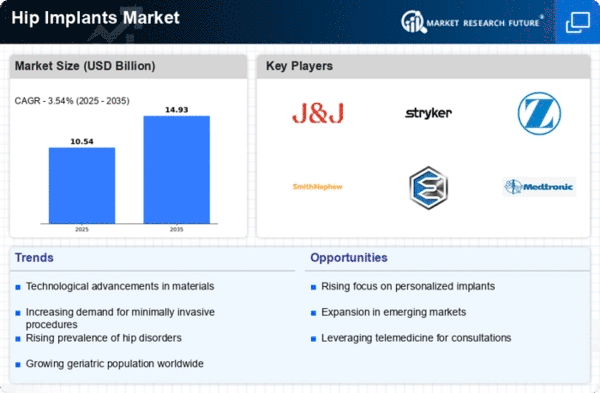
As per MRFR analysis, the Hip Implants Market Size was estimated at 10.18 USD Billion in 2024. The Hip Implants industry is projected to grow from 10.54 USD Billion in 2025 to 14.93 USD Billion by 2035, exhibiting a compound annual growth rate (CAGR) of 3.54 during the forecast period 2025 - 2035.

Key Market Trends & Highlights

The Hip Implants Market is experiencing robust growth driven by technological advancements and increasing healthcare demands.

  • North America remains the largest market for hip implants, driven by a high prevalence of hip-related disorders.
  • The Asia-Pacific region is emerging as the fastest-growing market, fueled by rising healthcare investments and an expanding patient base.
  • Total Hip Replacement continues to dominate the market, while Partial Hip Replacement is witnessing the fastest growth due to its minimally invasive nature.
  • Key market drivers include the aging population and rising healthcare expenditure, which are significantly influencing demand for hip implants.

Market Size & Forecast

2024 Market Size 10.18 (USD Billion)
2035 Market Size 14.93 (USD Billion)
CAGR (2025 - 2035) 3.54%
Largest Regional Market Share in 2024 North America

Major Players

DePuy Synthes (US), Stryker (US), Zimmer Biomet (US), Smith & Nephew (GB), Exactech (US), Medtronic (US), B. Braun (DE), Wright Medical (US), Aesculap (DE)

Market Trends

The Hip Implants Market is currently experiencing a dynamic evolution, driven by advancements in technology and increasing demand for orthopedic solutions. Innovations in materials and design are enhancing the performance and longevity of hip implants, which appears to be a key factor influencing patient choices. Furthermore, the growing prevalence of hip-related disorders, coupled with an aging population, suggests a sustained need for effective surgical interventions. As healthcare systems adapt to these trends, the market is likely to witness a shift towards more personalized and minimally invasive procedures, which may improve recovery times and overall patient satisfaction. In addition, the competitive landscape of the Hip Implants Market is becoming increasingly complex, with numerous players striving to differentiate their offerings. Collaborations between manufacturers and healthcare providers are emerging, potentially leading to improved product development and patient outcomes. Regulatory frameworks are also evolving, which may impact the approval processes for new technologies. Overall, the Hip Implants Market appears poised for growth, with a focus on innovation, patient-centric solutions, and enhanced surgical techniques.

Technological Advancements

The Hip Implants Market is witnessing rapid technological advancements that enhance the functionality and durability of implants. Innovations in materials, such as the use of ceramics and advanced polymers, are likely to improve wear resistance and biocompatibility, potentially leading to better patient outcomes.

Minimally Invasive Techniques

There is a growing trend towards minimally invasive surgical techniques within the Hip Implants Market. These approaches may reduce recovery times and postoperative complications, appealing to both patients and healthcare providers seeking efficient solutions.

Personalized Medicine

The concept of personalized medicine is gaining traction in the Hip Implants Market. Tailoring implants to individual patient anatomy and needs could enhance the effectiveness of treatments, suggesting a shift towards more customized surgical options.

Hip Implants Market Market Drivers

Market Growth Projections

The Global Hip Implants Market Industry is projected to experience substantial growth over the coming years. By 2024, the market is anticipated to reach 10.2 USD Billion, with further growth expected to 14.9 USD Billion by 2035. This trajectory suggests a robust demand for hip implants driven by various factors, including demographic changes and advancements in medical technology. The compound annual growth rate (CAGR) of 3.54% from 2025 to 2035 indicates a steady expansion of the market, reflecting the increasing need for hip replacement surgeries and the ongoing development of innovative implant solutions.

Technological Advancements

Technological innovations in hip implant design and materials are transforming the Global Hip Implants Market Industry. The introduction of minimally invasive surgical techniques, coupled with advanced materials such as ceramics and titanium alloys, enhances the durability and performance of implants. These advancements not only improve patient outcomes but also reduce recovery times, making hip replacement surgeries more appealing. For example, the development of 3D printing technology allows for customized implants tailored to individual patient anatomy, which could potentially lead to better fit and function. Such innovations are likely to contribute to the market's growth, with projections indicating a CAGR of 3.54% from 2025 to 2035.

Rising Geriatric Population

The increasing geriatric population globally is a primary driver of the Global Hip Implants Market Industry. As individuals age, the incidence of hip-related ailments, such as osteoarthritis and fractures, tends to rise significantly. For instance, by 2024, the global market is projected to reach 10.2 USD Billion, largely due to the growing number of elderly individuals requiring hip replacement surgeries. This demographic shift necessitates advanced medical solutions, thereby propelling demand for hip implants. Furthermore, the World Health Organization indicates that the population aged 65 and older is expected to double by 2050, further emphasizing the need for effective orthopedic interventions.

Rising Healthcare Expenditure

The growing healthcare expenditure across various regions is positively influencing the Global Hip Implants Market Industry. Governments and private sectors are investing significantly in healthcare infrastructure, which includes orthopedic services. This increase in funding allows for better access to advanced medical technologies and surgical procedures, thereby facilitating more hip replacement surgeries. For instance, countries with robust healthcare systems are witnessing a surge in hip implant procedures, reflecting the willingness to invest in quality healthcare. As healthcare spending continues to rise, the demand for hip implants is expected to grow, aligning with the overall expansion of the healthcare market.

Awareness and Education Initiatives

Awareness and education initiatives regarding hip health and available treatment options are crucial drivers of the Global Hip Implants Market Industry. Healthcare organizations and professionals are increasingly focusing on educating the public about the importance of early diagnosis and treatment of hip disorders. Campaigns aimed at promoting healthy lifestyles and preventive measures are likely to lead to earlier interventions, which may require hip implants. As patients become more informed about their options, the demand for hip replacement surgeries is expected to rise. This growing awareness is essential for fostering a proactive approach to hip health, ultimately contributing to market growth.

Increasing Prevalence of Hip Disorders

The rising prevalence of hip disorders, including arthritis and traumatic injuries, is a significant factor driving the Global Hip Implants Market Industry. As lifestyles become more sedentary and obesity rates increase, the incidence of hip-related conditions is likely to escalate. According to health statistics, millions of individuals worldwide suffer from hip pain, leading to a greater demand for surgical interventions. This trend is expected to sustain the market's growth trajectory, with estimates suggesting that by 2035, the market could reach 14.9 USD Billion. The increasing awareness of treatment options among patients further fuels the demand for hip implants, as more individuals seek solutions for their hip-related ailments.


Market Segment Insights

By Application: Total Hip Replacement (Largest) vs. Partial Hip Replacement (Fastest-Growing)

The Hip Implants Market exhibits a prominent distribution among its application segments. Total Hip Replacement (THR) holds the largest market share, primarily driven by its widespread adoption in the treatment of severe hip damage due to osteoarthritis and other degenerative conditions. Partial Hip Replacement (PHR), while retaining a smaller share compared to THR, is gaining traction as a viable option for specific patient demographics, especially the elderly who require less invasive procedures.

Total Hip Replacement (Dominant) vs. Partial Hip Replacement (Emerging)

Total Hip Replacement has established itself as the dominant procedure in the Hip Implants Market due to its extensive clinical success and broad acceptance among orthopedic surgeons. It involves the complete replacement of the hip joint, thus providing significant pain relief and improved mobility. On the other hand, Partial Hip Replacement serves as an emerging option, especially appealing to patients with localized hip joint damage. It involves replacing only the damaged portion, leading to shorter recovery times and reduced surgical risks. The growing preference for minimally invasive techniques is propelling the adoption of both segments, while THR continues to benefit from ongoing technological advancements.

By Material: Metal (Largest) vs. Ceramic (Fastest-Growing)

In the Hip Implants Market, the material segment showcases a diverse distribution, where metal components are the largest portion, favored for their durability and strength. Metal, particularly titanium and cobalt-chrome, accounts for the majority share in hip implant manufacturing, providing patients with reliable and long-lasting solutions. In contrast, ceramic materials, known for their wear resistance and biocompatibility, are emerging rapidly, catering to a growing segment of patients seeking alternatives to metal implants. The market trends indicate a shift towards more advanced materials as patient preferences evolve. The demand for ceramic implants is being driven by a rise in minimally invasive procedures and increased awareness regarding the benefits of ceramic technology, thus positioning them as the fastest-growing option within the materials segment.

Material: Metal (Dominant) vs. Composite (Emerging)

Metal remains the dominant choice in the hip implants market due to its unparalleled strength and reliability, making it suitable for high-load-bearing applications. Its long history of successful use in orthopedic surgeries further solidifies its leadership in this segment. On the other hand, composite materials are emerging in the market, offering a unique blend of properties that can reduce weight while maintaining structural integrity. Composites are appealing due to their potential for customization and improved biomaterial properties. As research and technology advance, composite hips are becoming a compelling option for both surgeons and patients, offering new possibilities in surgical outcomes and patient satisfaction.

By End Use: Hospitals (Largest) vs. Ambulatory Surgical Centers (Fastest-Growing)

In the Hip Implants Market, hospitals hold the largest share, providing the most extensive facilities and resources for hip replacement surgeries. Their capacity to perform complex procedures and offer post-operative care makes them the preferred choice for many patients. In contrast, ambulatory surgical centers are gaining ground due to their efficiency and lower costs, catering to patients seeking outpatient surgery options where recovery times are minimized. The increasing preference for minimally invasive procedures highlights their growing role in the market.

Hospitals (Dominant) vs. Ambulatory Surgical Centers (Emerging)

Hospitals, as the dominant segment in the Hip Implants Market, benefit from their comprehensive infrastructure, skilled medical personnel, and specialized surgical teams. Patients prioritize hospitals for their reputation and access to advanced technologies, allowing for better surgical outcomes. On the other hand, ambulatory surgical centers are emerging as a competitive alternative, particularly for elective surgeries that do not necessitate overnight stays. Their increasing popularity is driven by patient preferences for convenience, reduced costs, and the efficiency of care, making them a significant growth factor in the sector.

By Fixation Type: Cemented (Largest) vs. Cementless (Fastest-Growing)

The hip implants market is predominantly segmented into three fixation types: Cemented, Cementless, and Hybrid. Among these, the Cemented fixation type boasts the largest market share, attributed to its established efficacy and long-standing usage in hip replacement procedures. The Cementless segment, although smaller, has shown significant growth potential, appealing to a younger demographic and favorable for surgeons prioritizing bone integration. The Hybrid category combines methods, attracting surgeons for specific patient needs, though it currently holds a smaller share in comparison. In terms of growth trends, the Cementless fixation segment is emerging as the fastest-growing choice in the hip implants market. This trend is driven by technological advancements, increased awareness about minimally invasive surgeries, and a focus on enhancing post-operative outcomes. Market dynamics indicate a shifting preference towards Cementless options as they promote better osseointegration, appealing to patients looking for longer-lasting solutions. Moreover, the aging population seeking hip replacements contributes to the rising demand and innovation in all fixation types, paving the way for hybrid models that cater to varied patient needs.

Cemented (Dominant) vs. Cementless (Emerging)

The Cemented fixation method has long been the cornerstone of hip implant solutions, characterized by its reliability and proven results. It involves using bone cement to adhere the implant securely within a patient’s bone structure, ensuring stability and immediate load-bearing capacity. This method is particularly favored in older patients or those with weakened bone quality, where immediate stability is crucial. Conversely, the Cementless category is emerging as a favored choice among younger patients and surgeons advocating for bone integration without cement. It relies on a rough surface allowing the bone to grow into the implant, fostering greater long-term stability and minimizing wear. As the focus on longevity and recovery times intensifies, Cementless implants are increasingly seen as a viable alternative, marking a significant shift in preferences within the hip implants landscape.

By Patient Demographics: Age (Largest) vs. Gender (Fastest-Growing)

In the Hip Implants Market, age demographics significantly influence customer preferences and purchasing behavior. The largest segment comprises patients aged 60 and above, who are often key candidates for hip implant surgeries due to increased prevalence of hip conditions with age. Meanwhile, the younger cohorts, particularly those aged 40 to 59, represent a growing segment as hip issues in active lifestyles become more common, driving interest in advanced implant options tailored for these demographics.

Age (Dominant) vs. Gender (Emerging)

The dominant age segment in the Hip Implants Market consists of patients aged 60 and above, characterized by their higher susceptibility to hip-related ailments, necessitating surgical interventions. These individuals often prefer durable and reliable implant solutions, aligning with their expectations for longevity and performance. Conversely, the emerging gender segment showcases a significant rise in hip implant procedures among women, attributed to increased awareness and proactive healthcare approaches among female patients. This shift underscores the importance of gender-specific research and development, as women generally face unique risks and recovery profiles connected to hip surgeries.

Get more detailed insights about Hip Implants Market Research Report - Global Forecast till 2035

Regional Insights

North America : Market Leader in Hip Implants

North America is poised to maintain its leadership in the hip implants market, holding a significant share of 5.5 billion in 2024. The region's growth is driven by an aging population, increasing prevalence of hip disorders, and advancements in implant technology. Regulatory support and favorable reimbursement policies further enhance market dynamics, fostering innovation and accessibility for patients. The competitive landscape is characterized by major players such as DePuy Synthes, Stryker, and Zimmer Biomet, which dominate the market with their innovative products and extensive distribution networks. The U.S. remains the largest market, supported by robust healthcare infrastructure and high healthcare expenditure. This competitive environment encourages continuous improvement and development of new technologies, ensuring North America's position as a hub for hip implant advancements.

Europe : Emerging Market with Growth Potential

Europe's hip implants market is valued at 3.0 billion, reflecting a growing demand driven by an increasing elderly population and rising awareness of joint health. Regulatory frameworks in countries like Germany and France are evolving to support innovative solutions, enhancing patient access to advanced hip implant technologies. The region is also witnessing a shift towards minimally invasive surgical techniques, which are gaining traction among healthcare providers. Leading countries in this market include Germany, France, and the UK, where key players like Smith & Nephew and B. Braun are making significant contributions. The competitive landscape is marked by collaborations and mergers aimed at enhancing product offerings and market reach. As the market continues to expand, Europe is expected to play a crucial role in the global hip implants sector, driven by innovation and regulatory support.

Asia-Pacific : Rapidly Growing Market Segment

The Asia-Pacific region, valued at 1.8 billion, is experiencing rapid growth in the hip implants market, driven by increasing healthcare expenditure and a rising geriatric population. Countries like China and India are witnessing a surge in demand for hip replacement surgeries, fueled by urbanization and lifestyle changes. Regulatory bodies are also enhancing frameworks to facilitate the introduction of advanced medical technologies, further propelling market growth. China and India are leading the charge in this region, with significant investments from key players such as Medtronic and Wright Medical. The competitive landscape is evolving, with local manufacturers emerging alongside established global brands. As healthcare systems improve and awareness of joint health increases, the Asia-Pacific market is set to become a vital player in the global hip implants industry, offering substantial opportunities for growth.

Middle East and Africa : Emerging Market with Challenges

The Middle East and Africa region, valued at 0.88 billion, presents a unique landscape for the hip implants market, characterized by emerging demand and significant challenges. Factors such as increasing urbanization, rising disposable incomes, and a growing elderly population are driving the need for hip replacement surgeries. However, regulatory hurdles and limited access to advanced healthcare facilities pose challenges to market growth. Countries like South Africa and the UAE are leading the market, with key players such as Aesculap and Exactech making inroads. The competitive environment is gradually evolving, with a focus on improving healthcare infrastructure and increasing awareness of joint health. As the region continues to develop, it holds potential for growth in the hip implants market, albeit with challenges that need to be addressed.

Key Players and Competitive Insights

The Hip Implants Market is characterized by a dynamic competitive landscape, driven by technological advancements, an aging population, and increasing demand for minimally invasive surgical procedures. Major players such as DePuy Synthes (US), Stryker (US), and Zimmer Biomet (US) are at the forefront, each adopting distinct strategies to enhance their market positioning. DePuy Synthes (US) focuses on innovation through the development of advanced materials and designs, while Stryker (US) emphasizes strategic acquisitions to broaden its product portfolio. Zimmer Biomet (US) is actively pursuing digital transformation initiatives, integrating AI and data analytics into its operations, which collectively shapes a competitive environment that is increasingly reliant on technological differentiation.Key business tactics within the Hip Implants Market include localizing manufacturing to reduce costs and optimize supply chains. The market structure appears moderately fragmented, with several key players exerting influence over various segments. This fragmentation allows for niche players to thrive, while larger companies leverage their scale to dominate market share. The collective influence of these key players fosters a competitive atmosphere where innovation and operational efficiency are paramount.

In November Stryker (US) announced the launch of its new robotic-assisted surgical system, which is designed to enhance precision in hip implant procedures. This strategic move is likely to position Stryker as a leader in the growing segment of robotic surgery, potentially increasing its market share and reinforcing its commitment to innovation. The introduction of this technology may also lead to improved patient outcomes, thereby enhancing the company's reputation in the market.

In October Zimmer Biomet (US) unveiled a partnership with a leading AI firm to develop predictive analytics tools aimed at optimizing surgical outcomes for hip implant patients. This collaboration signifies a strategic shift towards data-driven decision-making in surgical procedures, which could enhance operational efficiencies and patient care. By integrating AI into its offerings, Zimmer Biomet is likely to differentiate itself in a competitive landscape increasingly focused on technological advancements.

In September DePuy Synthes (US) completed the acquisition of a smaller firm specializing in advanced biomaterials for hip implants. This acquisition is indicative of a broader trend towards consolidation in the market, as larger players seek to enhance their product offerings and technological capabilities. By integrating these advanced materials into its portfolio, DePuy Synthes may improve the performance and longevity of its implants, thereby appealing to both surgeons and patients.

As of December current competitive trends in the Hip Implants Market are heavily influenced by digitalization, sustainability, and AI integration. Strategic alliances are increasingly shaping the landscape, allowing companies to pool resources and expertise to drive innovation. The competitive differentiation appears to be shifting from price-based competition to a focus on technological advancements, supply chain reliability, and enhanced patient outcomes. This evolution suggests that companies that prioritize innovation and operational excellence will likely emerge as leaders in the market.

Key Companies in the Hip Implants Market include

Industry Developments

March 2023 Exactech, a well-known manufacturer of medical devices with a focus on orthopaedic implants and surgical equipment, recently announced the addition of a new customized shoulder implant to its line of products. The new implant, known as the Alteon® Cup Humeral Resurfacing, is made to suit each patient specifically and enhance clinical results.

February 2023  Johnson & Johnson and Zhongchao Inc., a major Chinese supplier of online medical education and healthcare information, have renewed their collaboration. The two businesses will continue to collaborate on the creation of cutting-edge healthcare products for the Chinese market.

May 2022 To aid with hip and knee replacement, Parkash Hospital in Amritsar introduced the United States Food and Drug Administration-approved Mako Robotic-Arm Assisted Technology.

March 2022 For complete hip and hemiarthroplasty surgeries, Stryker's Joint Replacement Division introduced the Insignia Hip Stem, which was designed to maximize patient fit and surgeon ease of installation in muscle-sparing techniques.

Future Outlook

Hip Implants Market Future Outlook

The Hip Implants Market is projected to grow at a 3.54% CAGR from 2024 to 2035, driven by technological advancements, increasing geriatric population, and rising prevalence of hip disorders.

New opportunities lie in:

  • Expansion into emerging markets with tailored product offerings.
  • Development of biodegradable hip implants for sustainability.
  • Investment in telemedicine platforms for post-operative care management.

By 2035, the Hip Implants Market is expected to achieve robust growth, reflecting evolving healthcare needs.

Market Segmentation

Hip Implants Market End Use Outlook

  • Hospitals
  • Ambulatory Surgical Centers
  • Orthopedic Clinics

Hip Implants Market Material Outlook

  • Metal
  • Ceramic
  • Polyethylene
  • Composite

Hip Implants Market Application Outlook

  • Total Hip Replacement
  • Partial Hip Replacement
  • Hip Resurfacing

Hip Implants Market Fixation Type Outlook

  • Cemented
  • Cementless
  • Hybrid

Hip Implants Market Patient Demographics Outlook

  • Age
  • Gender
  • Activity Level

Report Scope

MARKET SIZE 202410.18(USD Billion)
MARKET SIZE 202510.54(USD Billion)
MARKET SIZE 203514.93(USD Billion)
COMPOUND ANNUAL GROWTH RATE (CAGR)3.54% (2025 - 2035)
REPORT COVERAGERevenue Forecast, Competitive Landscape, Growth Factors, and Trends
BASE YEAR2024
Market Forecast Period2025 - 2035
Historical Data2019 - 2024
Market Forecast UnitsUSD Billion
Key Companies ProfiledDePuy Synthes (US), Stryker (US), Zimmer Biomet (US), Smith & Nephew (GB), Exactech (US), Medtronic (US), B. Braun (DE), Wright Medical (US), Aesculap (DE)
Segments CoveredApplication, Material, End Use, Fixation Type, Patient Demographics
Key Market OpportunitiesIntegration of advanced materials and minimally invasive techniques enhances patient outcomes in the Hip Implants Market.
Key Market DynamicsTechnological advancements and regulatory changes drive innovation and competition in the hip implants market.
Countries CoveredNorth America, Europe, APAC, South America, MEA

FAQs

What is the projected growth of the Hip Implants market?

The Hip Implants market is the expected increase in total market value of 14.93 USD billion over a defined forecast period 2025–2035. It is driven by factors such as demand trends, technological advances, regulatory changes, and geographic expansion.

What is the size of the Hip Implants market?

Hip Implants market size was valued at approximately 10.18 billion USD in 2024. This figure will reach 14.93 billion USD covering all regions (America, Europe, Asia, MEA and ROW), focusing its segments / services / distribution channels till 2035.

What is the CAGR of the Hip Implants market?

Hip Implants market is expected to grow at a CAGR of 3.54% between 2025 and 2035.

How much will the Hip Implants market be worth by 2035?

Hip Implants market is expected to be worth of 14.93 billion USD, reflecting growth driven by usage, technology and global demands by the end of 2035.

How will the Hip Implants market perform over the next 10 years?

Over the next 10 years the Hip Implants market is expected to shift from usd billion 10.18 to 14.93 billion USD, led by adoption of advanced tech, demographic trends, regulatory approvals, with potential headwinds from 2025 to 2035.

Which region held the largest market share in the hip implants market?

North America had the largest share in the market

  1. SECTION I: EXECUTIVE SUMMARY AND KEY HIGHLIGHTS
    1. | 1.1 EXECUTIVE SUMMARY
  2. SECTION II: SCOPING, METHODOLOGY AND MARKET STRUCTURE
    1. | 2.1 MARKET INTRODUCTION
    2. | 2.2 RESEARCH METHODOLOGY
  3. SECTION III: QUALITATIVE ANALYSIS
    1. | 3.1 MARKET DYNAMICS
    2. | 3.2 MARKET FACTOR ANALYSIS
  4. SECTION IV: QUANTITATIVE ANALYSIS
    1. | 4.1 Healthcare, BY Application (USD Billion)
    2. | 4.2 Healthcare, BY Material (USD Billion)
    3. | 4.3 Healthcare, BY End Use (USD Billion)
    4. | 4.4 Healthcare, BY Fixation Type (USD Billion)
    5. | 4.5 Healthcare, BY Patient Demographics (USD Billion)
    6. | 4.6 Healthcare, BY Region (USD Billion)
  5. SECTION V: COMPETITIVE ANALYSIS
    1. | 5.1 Competitive Landscape
    2. | 5.2 Company Profiles
    3. | 5.3 Appendix

Hip Implants Market Segmentation

Market Segmentation Overview

  • Detailed segmentation data will be available in the full report
  • Comprehensive analysis by multiple parameters
  • Regional and country-level breakdowns
  • Market size forecasts by segment
Infographic

Free Sample Request

Kindly complete the form below to receive a free sample of this Report

Get Free Sample

Customer Strories

Compare Licence

×
Features License Type
Single User Multiuser License Enterprise User
Price $4,950 $5,950 $7,250
Maximum User Access Limit 1 User Upto 10 Users Unrestricted Access Throughout the Organization
Free Customization
Direct Access to Analyst
Deliverable Format
Platform Access
Discount on Next Purchase 10% 15% 15%
Printable Versions