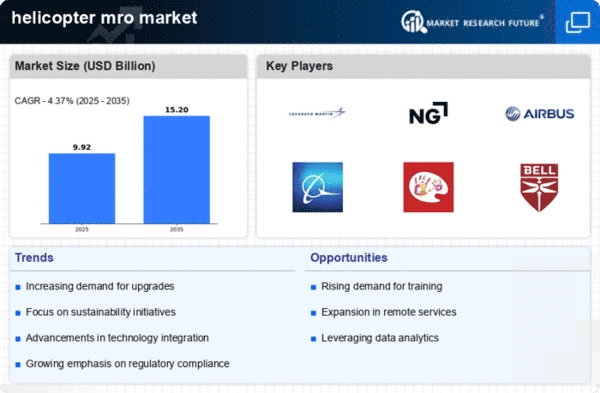
The helicopter MRO market is characterized by a competitive landscape that is increasingly shaped by technological advancements and strategic partnerships. Key growth drivers include the rising demand for helicopter services across various sectors, including emergency medical services, law enforcement, and offshore oil and gas operations. Major players such as Lockheed Martin (US), Airbus (FR), and Sikorsky (US) are strategically positioned to leverage their extensive experience and technological capabilities. Lockheed Martin (US) focuses on innovation and digital transformation, while Airbus (FR) emphasizes regional expansion and sustainability initiatives. Sikorsky (US), a subsidiary of Lockheed Martin, is also enhancing its operational focus on advanced maintenance solutions, which collectively shapes a competitive environment that is both dynamic and multifaceted.
In terms of business tactics, companies are increasingly localizing manufacturing and optimizing supply chains to enhance efficiency and responsiveness. The market appears moderately fragmented, with a mix of established players and emerging companies vying for market share. The collective influence of these key players is significant, as they drive innovation and set industry standards, thereby influencing the overall market structure.
In November 2025, Lockheed Martin (US) announced a strategic partnership with a leading technology firm to develop AI-driven predictive maintenance solutions for helicopters. This initiative is expected to enhance operational efficiency and reduce downtime, thereby providing a competitive edge in the MRO sector. The integration of AI into maintenance practices signifies a shift towards more proactive and data-driven approaches, which could redefine service delivery in the industry.
In October 2025, Airbus (FR) unveiled its new sustainability initiative aimed at reducing the carbon footprint of its helicopter fleet. This initiative includes the development of hybrid-electric propulsion systems and the implementation of eco-friendly materials in manufacturing processes. Such strategic moves not only align with global sustainability goals but also position Airbus as a leader in environmentally responsible aviation, potentially attracting a broader customer base.
In September 2025, Sikorsky (US) launched a new digital platform designed to streamline MRO operations and enhance customer engagement. This platform integrates real-time data analytics and customer feedback mechanisms, allowing for more tailored service offerings. The strategic importance of this development lies in its potential to improve customer satisfaction and loyalty, which are critical in a competitive market.
As of December 2025, current trends in the helicopter MRO market are heavily influenced by digitalization, sustainability, and AI integration. Strategic alliances are becoming increasingly vital, as companies seek to pool resources and expertise to navigate the complexities of modern aviation. The competitive differentiation is likely to evolve from traditional price-based competition to a focus on innovation, technology, and supply chain reliability. This shift underscores the importance of adaptability and forward-thinking strategies in maintaining a competitive edge in the helicopter MRO market.





















Leave a Comment