×
Request Free Sample ×

Kindly complete the form below to receive a free sample of this Report

* Please use a valid business email

Leading companies partner with us for data-driven Insights

clients tt-cursor
Hero Background
English
Chinese
French
Japanese
Korean
German
Spanish

Fast Moving Consumer Goods Market Trends

ID: MRFR/CG/10445-CR
128 Pages
Snehal Singh
December 2024

Fast-moving consumer goods Market Size, Share, Industry Trend & Analysis Research Report: Information by Type (Food & Beverages, Tobacco Products, Beauty & Personal Care, Healthcare, Home Care, Electronics, Office Supplies), Production Type (Inhouse, Contract Based), Distribution Channel (Store Based, Non-Store Based) Forecast Till 2032

Share:
Download PDF ×

We do not share your information with anyone. However, we may send you emails based on your report interest from time to time. You may contact us at any time to opt-out.

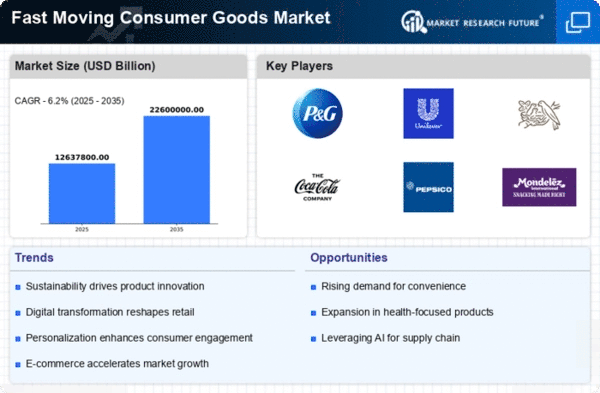
Fast Moving Consumer Goods Market Infographic
Purchase Options

Market Trends

Key Emerging Trends in the Fast Moving Consumer Goods Market

Market share positioning strategies are integral for businesses operating in the fast-moving consumer goods (FMCG) market, where competition is fierce and consumer preferences evolve rapidly. These strategies are employed to establish a distinct position within the market, enabling companies to capture a significant portion of market share. In the realm of FMCG, several effective positioning strategies are commonly utilized to gain a competitive edge and attract customers.

One of the primary positioning strategies in the FMCG market is differentiation. Differentiation involves offering unique features, formulations, or packaging that set a product apart from competitors. For example, FMCG companies may develop products with innovative flavors, convenient packaging formats, or sustainable ingredients to appeal to environmentally conscious consumers. By emphasizing these distinctive features, companies can position their products as preferred choices in the market, appealing to consumers who prioritize convenience, quality, or sustainability.

Targeting specific market segments is another key positioning strategy in the FMCG market. Rather than attempting to appeal to all consumers, companies may focus their efforts on niche segments with specific needs or preferences. For instance, a company might tailor its FMCG products for health-conscious consumers by offering low-sugar or gluten-free options, or for busy families by providing time-saving meal solutions. By understanding the unique requirements of different consumer segments, companies can tailor their marketing efforts and product offerings to effectively meet those needs.

Pricing strategy plays a crucial role in market share positioning within the FMCG market. Companies may position their products as either premium or value offerings based on factors such as brand equity, product quality, and target market preferences. For example, FMCG brands may justify premium pricing by emphasizing superior quality, premium ingredients, or brand heritage. Conversely, companies may opt for competitive pricing strategies to appeal to price-sensitive consumers and gain market share through affordability.

Branding and marketing efforts are essential components of market share positioning in the FMCG market. Companies invest in building strong brands that convey trust, reliability, and relevance to consumers. Effective branding strategies help companies establish emotional connections with their target audience and differentiate themselves from competitors. For instance, FMCG brands may use storytelling, social media engagement, and celebrity endorsements to create brand loyalty and preference among consumers.

Distribution channels and partnerships are critical aspects of market share positioning in the FMCG market. Companies must ensure that their products are readily available to consumers through a variety of channels, including supermarkets, convenience stores, online retailers, and vending machines. By partnering with distributors, retailers, and e-commerce platforms, companies can expand their reach and access new customer segments. Additionally, strategic partnerships with complementary brands or organizations can create opportunities for cross-promotion and co-branding initiatives, further strengthening the positioning of the products in the market.

Author
Snehal Singh
Assistant Manager - Research

High acumen in analyzing complex macro & micro markets with more than 6 years of work experience in the field of market research. By implementing her analytical skills in forecasting and estimation into market research reports, she has expertise in Packaging, Construction, and Equipment domains. She handles a team size of 20-25 resources and ensures smooth running of the projects, associated marketing activities, and client servicing.

Leave a Comment

FAQs

What is the current valuation of the US-India FMCG market as of 2024?

The overall market valuation was 2,856,000 USD Billion in 2024.

What is the projected market valuation for the US-India FMCG sector by 2035?

The projected valuation for 2035 is 5,211,987.56 USD Billion.

What is the expected CAGR for the US-India FMCG market during the forecast period 2025 - 2035?

The expected CAGR for the US-India FMCG market during the forecast period 2025 - 2035 is 5.62%.

Which companies are considered key players in the US-India FMCG market?

Key players in the market include Procter & Gamble, Unilever, Nestle, Coca-Cola, PepsiCo, Hindustan Unilever, ITC Limited, Britannia Industries, Dabur India, and Marico Limited.

Market Summary

As per Analysis, Fast Moving Consumer Goods Market is projected to grow from USD 2,856.00 Billion in 2024 to USD 3,032.40 Billion in 2025, exhibiting a compound annual growth rate (CAGR) of 5.62% during the forecast period (2025 - 2035).

Key Market Trends & Highlights

The US-India FMCG market is currently experiencing a dynamic shift towards sustainability and digital engagement.

  • The Food and Beverages segment remains the largest contributor to the FMCG market, driven by evolving consumer preferences. Health and Wellness products are emerging as the fastest-growing segment, reflecting a heightened focus on personal well-being. Supermarkets continue to dominate traditional retail, while Online Retail is rapidly gaining traction among tech-savvy consumers. E-commerce growth and health and wellness trends are pivotal drivers shaping the future landscape of the FMCG market.

Market Size & Forecast

2024 Market Size 2856000.0 (USD Billion)
2035 Market Size 5211987.56 (USD Billion)
CAGR (2025 - 2035) 5.62%

Major Players

<p>Procter &amp; Gamble (US), Unilever (GB), Nestle (CH), Coca-Cola (US), PepsiCo (US), Hindustan Unilever (IN), ITC Limited (IN), Britannia Industries (IN), Dabur India (IN), Marico Limited (IN)</p>

Market Trends

The US India FMCG market is characterized by a dynamic interplay of consumer preferences, regulatory frameworks, and economic factors. As of January 2026, the market exhibits a growing inclination towards sustainable and health-conscious products. This shift is driven by an increasing awareness among consumers regarding the environmental impact of their purchases and a desire for healthier lifestyle choices. Retailers and manufacturers are responding by innovating their product lines to include organic, natural, and eco-friendly options, which appear to resonate well with the evolving consumer base. Furthermore, the digital transformation within the retail sector is reshaping how products are marketed and sold, with e-commerce platforms gaining traction. This trend suggests that convenience and accessibility are becoming paramount for consumers in the US India FMCG market. In addition to sustainability and digitalization, the market is witnessing a rise in demand for personalized shopping experiences. Brands are leveraging data analytics to understand consumer behavior better and tailor their offerings accordingly. This approach not only enhances customer satisfaction but also fosters brand loyalty. As the market continues to evolve, it is likely that these trends will further influence the strategies of businesses operating within the US India FMCG sector, compelling them to adapt to the changing landscape and consumer expectations.

Sustainability Focus

The US India FMCG market is increasingly prioritizing sustainable practices. Consumers are gravitating towards products that are environmentally friendly, prompting brands to innovate with eco-conscious packaging and sourcing.

Digital Transformation

E-commerce is reshaping the US India FMCG market, with online shopping becoming a preferred method for many consumers. This shift necessitates that brands enhance their digital presence and optimize their supply chains.

Personalized Consumer Experiences

There is a growing trend towards personalized shopping experiences in the US India FMCG market. Brands are utilizing data analytics to tailor their offerings, thereby improving customer engagement and loyalty.

Fast Moving Consumer Goods Market Market Drivers

E-commerce Growth

The US India FMCG market is experiencing a notable shift towards e-commerce, driven by changing consumer preferences and technological advancements. In 2025, e-commerce sales in the FMCG sector accounted for approximately 25% of total retail sales in the United States, indicating a significant trend towards online shopping. This growth is further fueled by the increasing penetration of smartphones and internet access, particularly among younger demographics. As consumers seek convenience and a wider range of products, companies in the US India FMCG market are investing heavily in their online platforms. This shift not only enhances customer engagement but also allows for better data collection and analysis, enabling firms to tailor their offerings more effectively. The rise of e-commerce is likely to continue reshaping the competitive landscape of the US India FMCG market.

Changing Demographics

The changing demographics of the US population are significantly influencing the US India FMCG market. With an increasingly diverse consumer base, companies are adapting their product offerings to cater to various cultural preferences and dietary needs. For example, the rise of plant-based diets and ethnic foods reflects the growing demand for products that resonate with multicultural consumers. Market data indicates that the ethnic food segment is expected to grow by 10% annually through 2026. This demographic shift necessitates a nuanced understanding of consumer behavior and preferences, prompting companies to engage in targeted marketing strategies. As the US India FMCG market continues to evolve, understanding these demographic changes will be crucial for brands aiming to capture market share and foster customer loyalty.

Health and Wellness Trends

The US India FMCG market is increasingly influenced by a growing consumer focus on health and wellness. In recent years, there has been a marked shift towards products that promote health benefits, such as organic foods, functional beverages, and natural personal care items. According to market data, the health and wellness segment is projected to grow at a compound annual growth rate (CAGR) of 8% through 2026. This trend is driven by heightened awareness of health issues and a desire for healthier lifestyles among consumers. As a result, companies in the US India FMCG market are reformulating products to meet these demands, often highlighting clean labels and transparency in ingredient sourcing. This focus on health not only caters to consumer preferences but also positions brands favorably in a competitive market.

Sustainability Initiatives

Sustainability has emerged as a critical driver in the US India FMCG market, with consumers increasingly prioritizing environmentally friendly products. In 2025, approximately 60% of consumers reported that they are willing to pay more for sustainable products, reflecting a significant shift in purchasing behavior. Companies are responding by adopting sustainable practices, such as reducing plastic packaging and sourcing ingredients responsibly. This trend is not only beneficial for the environment but also enhances brand loyalty among consumers who value corporate social responsibility. The US India FMCG market is witnessing a rise in brands that emphasize sustainability in their marketing strategies, which could potentially lead to increased market share and consumer trust. As sustainability becomes a core value for many consumers, it is likely to shape product development and marketing strategies in the industry.

Technological Advancements

Technological advancements are playing a pivotal role in transforming the US India FMCG market. Innovations such as artificial intelligence, machine learning, and big data analytics are enabling companies to optimize supply chains, enhance customer experiences, and improve product offerings. For instance, predictive analytics allows firms to anticipate consumer demand more accurately, reducing waste and improving efficiency. In 2025, it was estimated that 70% of FMCG companies in the US were investing in technology to streamline operations and enhance customer engagement. This trend suggests that technology is not merely a tool but a fundamental component of strategic planning in the US India FMCG market. As technology continues to evolve, it is likely to drive further innovation and competition within the industry.

Market Segment Insights

By Product Category: Food and Beverages (Largest) vs. Health and Wellness (Fastest-Growing)

<p>In the US-India FMCG market, the Food and Beverages category holds the largest share and establishes itself as a cornerstone of consumer spending. This segment includes a diverse range of products, from staple items to gourmet treats, demonstrating its widespread appeal and critical importance in everyday consumer choices. Meanwhile, Personal Care and Household Care segments also contribute significantly, reflecting changing consumer habits towards hygiene and home care products. However, Food and Beverages consistently remains the predominant force driving market dynamics.</p>

<p>Food and Beverages: Dominant vs. Health and Wellness: Emerging</p>

<p>The Food and Beverages segment stands out as the dominant category in the US-India FMCG market, characterized by incessant innovations and consumer preferences for quality and convenience. With increasing disposable incomes and urbanization, this sector is witnessing a shift towards healthier alternatives, organic products, and convenient meal options. In contrast, the Health and Wellness segment is emerging as a vital player, driven by rising health consciousness among consumers. This segment encompasses products such as dietary supplements and natural health foods, attracting a growing segment of health-oriented consumers looking for holistic wellness solutions. Both categories are pivotal in shaping market trends and catering to evolving consumer needs.</p>

By Distribution Channel: Supermarkets (Largest) vs. Online Retail (Fastest-Growing)

<p>Supermarkets continue to dominate the distribution channel segment in the US and India FMCG markets, boasting the largest market share. They provide a wide array of products and benefit from an extensive network of locations that facilitate easy access for consumers. Convenience stores and traditional grocery stores also contribute significantly to market share, although at a smaller scale compared to supermarkets. Online retail has emerged as a robust contender, driven by changing consumer habits and the growing preference for convenience and accessibility.</p>

<p>Supermarkets (Dominant) vs. Online Retail (Emerging)</p>

<p>Supermarkets play a pivotal role in the US and India FMCG markets, showcasing a comprehensive array of products and competitive pricing that appeal to a broad consumer base. They have established customer loyalty through their vast offerings and nationwide reach. On the other hand, Online Retail is rapidly changing the landscape as an emerging distribution channel driven by digital transformation and increasing internet penetration. This segment is gaining traction with younger demographics who prioritize convenience, leading to a shift in shopping behaviors as consumers increasingly opt for the ease of online purchasing over traditional methods.</p>

By Consumer Demographics: Age Group (Largest) vs. Income Level (Fastest-Growing)

<p>In the US and India FMCG market, the age group of 25-40 years holds the largest market share. This demographic is highly influential due to their purchasing power and trendsetting capabilities, making them a primary target for many FMCG brands. Additionally, consumers aged 18-24 are a rapidly growing segment as they increasingly engage with online shopping and social media, driving innovative marketing strategies for brands aiming to capture their attention. On the other hand, income level is experiencing significant growth, particularly among the middle-income group. This demographic shift is fueled by increasing employment rates and urban migration, leading to higher disposable incomes. Consequently, FMCG companies are adapting their product lines and marketing approaches to cater to this emerging consumer base, which craves quality and variety in their shopping experience.</p>

<p>Age Group (Dominant) vs. Income Level (Emerging)</p>

<p>The Age Group of 25-40 years stands out as the dominant demographic in the US and India FMCG market. This segment is characterized by a balanced blend of career establishment and family formation, which reflects in their purchasing decisions. As dual-income households become more prevalent, this age group prioritizes convenience and quality when choosing FMCG products. In contrast, the Emerging Income Level category, primarily those in the lower to middle-income brackets, is becoming increasingly influential due to rising urbanization and economic development. These consumers are seeking affordable yet quality products, leading to a growing market for budget-friendly yet aspirational FMCG brands that cater to their evolving needs.</p>

Get more detailed insights about Fast Moving Consumer Goods (FMCG) Market Research Report-Global Forecast till 2035

Regional Insights

North America : Market Leader in FMCG

North America continues to lead the Fast Moving Consumer Goods (FMCG) market, holding a significant share of 5000.0. The region's growth is driven by a robust economy, high consumer spending, and a strong retail infrastructure. Regulatory support for innovation and sustainability initiatives further fuels demand, as consumers increasingly seek eco-friendly products. The market is expected to maintain its momentum as e-commerce and digital marketing strategies evolve, catering to changing consumer preferences. The competitive landscape in North America is characterized by the presence of major players such as Procter & Gamble, Coca-Cola, and PepsiCo. These companies leverage advanced supply chain management and marketing strategies to capture market share. The U.S. remains the largest market, followed by Canada and Mexico, with a growing emphasis on health-conscious and organic products. The ongoing trend towards convenience and online shopping is reshaping the FMCG sector, making it essential for companies to adapt swiftly to consumer demands.

Europe : Diverse and Competitive Market

Europe's FMCG market, valued at 3500.0, is characterized by diverse consumer preferences and a competitive landscape. The region benefits from strong regulatory frameworks that promote food safety and sustainability, driving demand for organic and locally sourced products. The rise of e-commerce and digital retailing has also transformed shopping habits, with consumers increasingly favoring online platforms for convenience. As sustainability becomes a priority, companies are innovating to meet eco-friendly standards, enhancing market growth. Leading countries in Europe include Germany, France, and the UK, where major players like Unilever and Nestle dominate the market. The competitive environment is marked by a mix of global giants and local brands, each vying for consumer loyalty. The emphasis on health and wellness products is reshaping the product offerings, with a notable increase in demand for plant-based and organic options. As the market evolves, companies must remain agile to adapt to changing consumer trends and regulatory requirements.

Asia-Pacific : Emerging Market Potential

The Asia-Pacific region, with a market size of 2900.0, is witnessing rapid growth in the FMCG sector, driven by urbanization, rising disposable incomes, and changing consumer lifestyles. The demand for convenience products is on the rise, as busy urban populations seek quick and easy solutions. Regulatory frameworks are evolving to support product safety and quality, which is crucial for building consumer trust in emerging markets. The region's growth is further supported by the expansion of e-commerce platforms, making products more accessible to consumers. Key players in the Asia-Pacific market include multinational corporations like Nestle and local brands that cater to regional tastes. Countries such as China, India, and Japan are leading the charge, with significant investments in marketing and distribution channels. The competitive landscape is dynamic, with companies focusing on innovation and localization to meet diverse consumer needs. As the market matures, the emphasis on health and wellness products is expected to grow, shaping future trends in the FMCG sector.

Middle East and Africa : Untapped Market Opportunities

The Middle East and Africa (MEA) region, valued at 600.0, presents untapped opportunities in the FMCG market. The growth is driven by a young population, increasing urbanization, and rising disposable incomes. Regulatory bodies are working to enhance food safety standards, which is crucial for consumer confidence. The demand for diverse product offerings is growing, particularly in urban areas where consumers are seeking quality and convenience. E-commerce is also gaining traction, providing new avenues for market expansion. Leading countries in the MEA region include South Africa, Nigeria, and the UAE, where both local and international brands are competing for market share. Key players like Coca-Cola and Unilever are investing in the region to capitalize on its growth potential. The competitive landscape is evolving, with a focus on adapting products to meet local tastes and preferences. As the market develops, companies must navigate regulatory challenges while leveraging opportunities for innovation and expansion.

Key Players and Competitive Insights

The US India FMCG market exhibits a dynamic competitive landscape characterized by rapid growth and evolving consumer preferences. Key players such as Procter & Gamble (US), Hindustan Unilever (IN), and Nestle (CH) are actively shaping the market through strategic initiatives. Procter & Gamble (US) focuses on innovation and sustainability, aiming to enhance its product portfolio while reducing environmental impact. Hindustan Unilever (IN) emphasizes regional expansion and digital transformation, leveraging e-commerce platforms to reach a broader consumer base. Nestle (CH) is increasingly investing in health and wellness products, aligning with the growing consumer demand for nutritious options. Collectively, these strategies contribute to a competitive environment that prioritizes innovation and consumer-centric approaches.


In terms of business tactics, localization of manufacturing and supply chain optimization are pivotal. The market structure appears moderately fragmented, with several key players exerting influence. Localized production not only reduces costs but also enhances responsiveness to regional consumer preferences. This strategy, coupled with optimized supply chains, allows companies to maintain competitive pricing while ensuring product availability across diverse markets.


In December 2025, Procter & Gamble (US) announced a partnership with a leading Indian e-commerce platform to enhance its online presence. This strategic move is likely to bolster its market share by tapping into the growing trend of online shopping, particularly among younger consumers. By leveraging digital channels, Procter & Gamble (US) aims to create a more direct relationship with consumers, thereby enhancing brand loyalty and driving sales.


In November 2025, Hindustan Unilever (IN) launched a new line of eco-friendly personal care products, reflecting its commitment to sustainability. This initiative not only aligns with global trends towards environmentally conscious consumption but also positions Hindustan Unilever (IN) as a leader in sustainable practices within the FMCG sector. The introduction of these products is expected to attract environmentally aware consumers, potentially increasing market penetration.


In October 2025, Nestle (CH) expanded its health-focused product range by acquiring a local health food brand in India. This acquisition is strategically significant as it allows Nestle (CH) to diversify its offerings and cater to the increasing demand for health-oriented products. By integrating this brand into its portfolio, Nestle (CH) is likely to enhance its competitive edge in the health and wellness segment, appealing to health-conscious consumers.


As of January 2026, current competitive trends in the FMCG market are increasingly defined by digitalization, sustainability, and the integration of AI technologies. Strategic alliances among key players are shaping the landscape, fostering innovation and enhancing operational efficiencies. The shift from price-based competition to a focus on innovation, technology, and supply chain reliability is evident. Companies that prioritize these aspects are likely to differentiate themselves in a crowded market, ensuring long-term success.

Key Companies in the Fast Moving Consumer Goods Market include

Industry Developments

Future Outlook

Fast Moving Consumer Goods Market Future Outlook

<p>The US-India FMCG market is projected to grow at a 5.62% CAGR from 2025 to 2035, driven by urbanization, digitalization, and changing consumer preferences.</p>

New opportunities lie in:

  • <p>Expansion of e-commerce platforms for FMCG distribution. Development of sustainable packaging solutions to attract eco-conscious consumers. Investment in AI-driven supply chain optimization for efficiency.</p>

<p>By 2035, the market is expected to be robust, reflecting strong growth and innovation.</p>

Market Segmentation

Fast Moving Consumer Goods Market Product Category Outlook

  • Food and Beverages
  • Personal Care
  • Household Care
  • Health and Wellness
  • Baby Care

Fast Moving Consumer Goods Market Distribution Channel Outlook

  • Supermarkets
  • Convenience Stores
  • Online Retail
  • Traditional Grocery Stores
  • Wholesale

Fast Moving Consumer Goods Market Consumer Demographics Outlook

  • Age Group
  • Income Level
  • Family Size
  • Lifestyle
  • Urban vs Rural

Report Scope

MARKET SIZE 2024 2856000.0(USD Billion)
MARKET SIZE 2025 3032400.0(USD Billion)
MARKET SIZE 2035 5211987.56(USD Billion)
COMPOUND ANNUAL GROWTH RATE (CAGR) 5.62% (2024 - 2035)
REPORT COVERAGE Revenue Forecast, Competitive Landscape, Growth Factors, and Trends
BASE YEAR 2024
Market Forecast Period 2025 - 2035
Historical Data 2019 - 2024
Market Forecast Units USD Billion
Key Companies Profiled Procter & Gamble (US), Unilever (GB), Nestle (CH), Coca-Cola (US), PepsiCo (US), Hindustan Unilever (IN), ITC Limited (IN), Britannia Industries (IN), Dabur India (IN), Marico Limited (IN)
Segments Covered Product Category, Distribution Channel, Consumer Demographics
Key Market Opportunities Growing demand for sustainable and health-conscious products in the us india fmcg market presents significant opportunities.
Key Market Dynamics Rising consumer demand for sustainable products drives innovation in the US India FMCG market.
Countries Covered US

FAQs

What is the current valuation of the US-India FMCG market as of 2024?

The overall market valuation was 2,856,000 USD Billion in 2024.

What is the projected market valuation for the US-India FMCG sector by 2035?

The projected valuation for 2035 is 5,211,987.56 USD Billion.

What is the expected CAGR for the US-India FMCG market during the forecast period 2025 - 2035?

The expected CAGR for the US-India FMCG market during the forecast period 2025 - 2035 is 5.62%.

Which companies are considered key players in the US-India FMCG market?

Key players in the market include Procter &amp; Gamble, Unilever, Nestle, Coca-Cola, PepsiCo, Hindustan Unilever, ITC Limited, Britannia Industries, Dabur India, and Marico Limited.

  1. SECTION I: EXECUTIVE SUMMARY AND KEY HIGHLIGHTS
    1. EXECUTIVE SUMMARY
      1. Market Overview
      2. Key Findings
      3. Market Segmentation
      4. Competitive Landscape
      5. Challenges and Opportunities
      6. Future Outlook
  2. SECTION II: SCOPING, METHODOLOGY AND MARKET STRUCTURE
    1. MARKET INTRODUCTION
      1. Definition
      2. Scope of the study
    2. RESEARCH METHODOLOGY
      1. Overview
      2. Data Mining
      3. Secondary Research
      4. Primary Research
      5. Forecasting Model
      6. Market Size Estimation
      7. Data Triangulation
      8. Validation
  3. SECTION III: QUALITATIVE ANALYSIS
    1. MARKET DYNAMICS
      1. Overview
      2. Drivers
      3. Restraints
      4. Opportunities
    2. MARKET FACTOR ANALYSIS
      1. Value chain Analysis
      2. Porter's Five Forces Analysis
      3. COVID-19 Impact Analysis
  4. SECTION IV: QUANTITATIVE ANALYSIS
    1. Consumer and Retail, BY Product Type (USD Billion)
      1. Beverages
      2. Food
      3. Personal Care
      4. Household Care
      5. Health Care
    2. Consumer and Retail, BY Distribution Channel (USD Billion)
      1. Supermarkets
      2. Convenience Stores
      3. Online Retail
      4. Pharmacies
      5. Specialty Stores
    3. Consumer and Retail, BY Consumer Demographics (USD Billion)
      1. Age Group
      2. Income Level
      3. Gender
      4. Family Size
      5. Lifestyle
    4. Consumer and Retail, BY Packaging Type (USD Billion)
      1. Flexible Packaging
      2. Rigid Packaging
      3. Glass Packaging
      4. Metal Packaging
      5. Paper Packaging
    5. Consumer and Retail, BY Usage Frequency (USD Billion)
      1. Daily Use
      2. Weekly Use
      3. Occasional Use
      4. Seasonal Use
      5. One-Time Use
    6. Consumer and Retail, BY Region (USD Billion)
      1. North America
      2. Europe
      3. APAC
      4. South America
      5. MEA
  5. SECTION V: COMPETITIVE ANALYSIS
    1. Competitive Landscape
      1. Overview
      2. Competitive Analysis
      3. Market share Analysis
      4. Major Growth Strategy in the Consumer and Retail
      5. Competitive Benchmarking
      6. Leading Players in Terms of Number of Developments in the Consumer and Retail
      7. Key developments and growth strategies
      8. Major Players Financial Matrix
    2. Company Profiles
      1. Procter & Gamble (US)
      2. Unilever (GB)
      3. Nestle (CH)
      4. Coca-Cola (US)
      5. PepsiCo (US)
      6. Mondelez International (US)
      7. Johnson & Johnson (US)
      8. Colgate-Palmolive (US)
      9. Kimberly-Clark (US)
      10. Reckitt Benckiser (GB)
    3. Appendix
      1. References
      2. Related Reports

Consumer and Retail Market Segmentation

Consumer and Retail By Product Type (USD Billion, 2025-2035)

  • Beverages
  • Food
  • Personal Care
  • Household Care
  • Health Care

Consumer and Retail By Distribution Channel (USD Billion, 2025-2035)

  • Supermarkets
  • Convenience Stores
  • Online Retail
  • Pharmacies
  • Specialty Stores

Consumer and Retail By Consumer Demographics (USD Billion, 2025-2035)

  • Age Group
  • Income Level
  • Gender
  • Family Size
  • Lifestyle

Consumer and Retail By Packaging Type (USD Billion, 2025-2035)

  • Flexible Packaging
  • Rigid Packaging
  • Glass Packaging
  • Metal Packaging
  • Paper Packaging

Consumer and Retail By Usage Frequency (USD Billion, 2025-2035)

  • Daily Use
  • Weekly Use
  • Occasional Use
  • Seasonal Use
  • One-Time Use
Infographic

Free Sample Request

Kindly complete the form below to receive a free sample of this Report

Get Free Sample

Customer Strories

Compare Licence

×
Features License Type
Single User Multiuser License Enterprise User
Price $4,950 $5,950 $7,250
Maximum User Access Limit 1 User Upto 10 Users Unrestricted Access Throughout the Organization
Free Customization
Direct Access to Analyst
Deliverable Format
Platform Access
Discount on Next Purchase 10% 15% 15%
Printable Versions