×
Request Free Sample ×

Kindly complete the form below to receive a free sample of this Report

* Please use a valid business email

Leading companies partner with us for data-driven Insights

clients tt-cursor
Hero Background
English
Chinese
French
Japanese
Korean
German
Spanish

Europe CRO Market Trends

ID: MRFR/HC/11110-HCR
128 Pages
Rahul Gotadki
February 2026

Europe CRO Market Research Report Information By Service Type (Early Phase Development Services, Clinical, Laboratory Service, and Others), By Application (Oncology, Neurology, Cardiology, Infectious Disease, Metabolic Disorder, Renal/Nephrology, and Others), By End-user (Pharmaceutical & Biotech Companies, Medical Device Companies, Academic & Research Institutes, and Others), And By Region (Germany, France, UK, Italy, Spain, and Rest of Europe) –Market Forecast Till 2035

Share:
Download PDF ×

We do not share your information with anyone. However, we may send you emails based on your report interest from time to time. You may contact us at any time to opt-out.

Europe CRO Market Infographic
Purchase Options

Market Trends

Key Emerging Trends in the Europe CRO Market

The renal dialysis market has seen a significant increase in research and development (R&D) spending focused on creating new and improved dialysis products. With the growing number of people affected by chronic kidney disease (CKD) and end-stage renal disease (ESRD), there is a strong demand for better and more efficient dialysis solutions. To meet this demand, healthcare companies and research institutions have been investing heavily in R&D. These efforts have led to impressive advancements in dialysis technology, including machines, filters, and related accessories, which have enhanced the overall performance and patient experience. Breakthroughs in technology, such as wearable and portable dialysis devices, have emerged from these initiatives, offering patients greater mobility and convenience. For example, in April 2023, Medtronic plc and DaVita Inc launched Mozarc Medical, which aims to revolutionize home dialysis by improving accessibility, ease of use, and clinical performance.

Moreover, there has been a focus on improving the compatibility of dialysis equipment and reducing complications associated with treatment, leading to the development of better dialysis membranes and catheters. There has also been a growing interest in bioartificial kidneys and regenerative medicine approaches, seeking to develop long-term solutions that can restore kidney function. Increased R&D spending has also paved the way for precision medicine approaches, customizing dialysis treatments based on individual patient needs, including their genetic and molecular profiles.

Additionally, the integration of artificial intelligence and machine learning in dialysis technologies has enabled real-time monitoring and personalized treatment optimization. Research efforts are not only focused on technical aspects but also on understanding patient psychology and improving their overall quality of life during dialysis therapy. As a result of these sustained R&D investments, the renal dialysis market is experiencing a revolution, bringing forth a new generation of advanced and patient-centric dialysis products that hold the promise of transforming the lives of millions of CKD and ESRD patients worldwide.


Author
Rahul Gotadki
Research Manager

He holds an experience of about 9+ years in Market Research and Business Consulting, working under the spectrum of Life Sciences and Healthcare domains. Rahul conceptualizes and implements a scalable business strategy and provides strategic leadership to the clients. His expertise lies in market estimation, competitive intelligence, pipeline analysis, customer assessment, etc.

Leave a Comment

FAQs

What is the current valuation of the Europe CRO Market as of 2024?

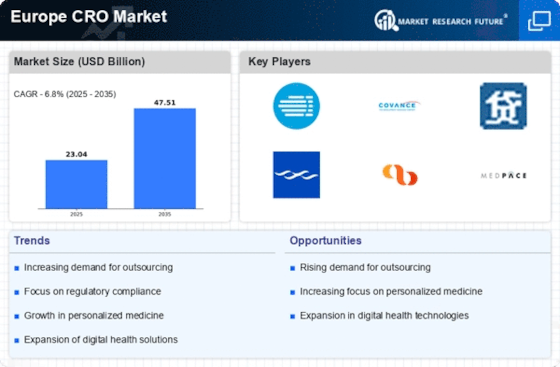
<p>The overall market valuation was 23.04 USD Billion in 2024.</p>

What is the projected market size for the Europe CRO Market by 2035?

<p>The projected valuation for the Europe CRO Market is 47.51 USD Billion by 2035.</p>

What is the expected CAGR for the Europe CRO Market during the forecast period 2025 - 2035?

<p>The expected CAGR for the Europe CRO Market during the forecast period 2025 - 2035 is 6.8%.</p>

Which service type segment is expected to show significant growth in the Europe CRO Market?

<p>The Clinical segment, valued at 10.0 to 20.0 USD Billion, is expected to show significant growth.</p>

What are the key applications driving the Europe CRO Market?

<p>Key applications include Oncology, Neurology, and Cardiology, with valuations ranging from 3.0 to 10.0 USD Billion.</p>

Who are the leading players in the Europe CRO Market?

Key players include IQVIA, Covance, and Charles River, among others.

What is the market size for pharmaceutical and biotech companies in the Europe CRO Market?

The market size for pharmaceutical and biotech companies is projected between 9.22 and 19.05 USD Billion.

How does the market for medical device companies compare to other end-users in the Europe CRO Market?

The market for medical device companies is valued between 5.76 and 11.8 USD Billion, indicating substantial demand.

What is the valuation range for laboratory services in the Europe CRO Market?

The valuation range for laboratory services is between 5.0 and 10.0 USD Billion.

What trends are anticipated in the Europe CRO Market by 2035?

Trends suggest continued growth across various segments, particularly in oncology and clinical services.

Market Summary

As per analysis, the Europe Contract Research Organization Market is projected to grow from USD 23.6 Billion in 2024 to USD 44.81 Billion by 2035, exhibiting a compound annual growth rate (CAGR) of 6.0% during the forecast period (2025 - 2035).

Key Market Trends & Highlights

The Europe Contract Research Organization Market is experiencing a dynamic shift towards specialized services and technological integration.

  • Germany remains the largest market for Contract Research Organizations, driven by robust biopharmaceutical activities.
  • The UK is emerging as the fastest-growing region, reflecting a surge in demand for innovative research solutions.
  • Clinical trials dominate the market, while laboratory services are witnessing rapid growth due to evolving research needs.
  • Regulatory support and the growing biopharmaceutical sector are key drivers propelling market expansion.

Market Size & Forecast

2024 Market Size 23.6 (USD Billion)
2035 Market Size 44.81 (USD Billion)
CAGR (2025 - 2035) 6.0%

Major Players

<p>IQVIA (GB), Covance (GB), PAREXEL International (GB), Charles River Laboratories (US), Syneos Health (US), Medpace (US), PPD (US), Clinipace (US), Wuxi AppTec (CN)</p>

Market Trends

The Europe Contract Research Organization Market is currently experiencing a dynamic evolution, driven by various factors that shape the landscape of clinical research and development. The increasing complexity of clinical trials, coupled with the rising demand for innovative therapies, has led to a heightened reliance on contract research organizations (CROs) to facilitate these processes. As pharmaceutical and biotechnology companies seek to optimize their resources, CROs in Europe are positioned to offer specialized expertise, advanced technologies, and efficient project management. This trend appears to be fostering a collaborative environment where sponsors and CROs work closely to navigate regulatory challenges and streamline trial execution. Moreover, the regulatory framework in Europe is evolving, with an emphasis on enhancing patient safety and expediting drug approval processes. This regulatory shift may encourage more companies to engage CROs for their clinical trial needs, as these organizations possess the knowledge and experience to ensure compliance with stringent guidelines. Additionally, the growing focus on personalized medicine and the integration of digital health solutions into clinical trials suggest that the Europe Contract Research Organization Market is likely to expand further. As the market adapts to these changes, it seems poised for continued growth, driven by innovation and collaboration among stakeholders in the healthcare ecosystem.

Increased Demand for Specialized Services

The Europe Contract Research Organization Market is witnessing a notable shift towards specialized services. As the complexity of clinical trials escalates, sponsors are increasingly seeking CROs that offer tailored solutions, such as expertise in rare diseases or advanced data analytics. This trend indicates a growing recognition of the need for specialized knowledge to navigate intricate regulatory landscapes and optimize trial outcomes.

Emphasis on Patient-Centric Approaches

There is a discernible movement within the Europe Contract Research Organization Market towards patient-centric methodologies. CROs are increasingly prioritizing patient engagement and incorporating feedback into trial designs. This focus on the patient experience not only enhances recruitment and retention rates but also aligns with regulatory expectations for patient involvement in clinical research.

Integration of Digital Technologies

The integration of digital technologies into clinical trials is becoming a defining characteristic of the Europe Contract Research Organization Market. CROs are adopting innovative tools such as electronic data capture, telemedicine, and mobile health applications to streamline processes and improve data quality. This trend suggests a shift towards more efficient and flexible trial designs, potentially leading to faster drug development timelines.

Europe CRO Market Market Drivers

Expansion of Outsourcing Trends

The trend of outsourcing research and development activities is gaining momentum within the Europe Contract Research Organization Market. Pharmaceutical and biotechnology companies are increasingly recognizing the benefits of partnering with CROs to reduce costs and enhance operational efficiency. In 2025, it is projected that over 50% of clinical trials in Europe will be outsourced to CROs, reflecting a significant shift in how companies approach research. This outsourcing trend allows firms to focus on core competencies while leveraging the expertise and resources of CROs. Additionally, the competitive landscape is evolving, with CROs offering a wider range of services, including regulatory support and data management. As companies continue to seek cost-effective solutions, the demand for CRO services is likely to grow, further solidifying their role in the European research ecosystem.

Growing Biopharmaceutical Sector

The biopharmaceutical sector in Europe is experiencing substantial growth, which significantly impacts the Europe Contract Research Organization Market. In 2025, biopharmaceuticals accounted for over 30% of the total pharmaceutical market in Europe, reflecting a shift towards biologics and personalized medicine. This trend necessitates specialized research services, which CROs are well-positioned to provide. As biopharmaceutical companies increasingly outsource clinical trials to CROs, the demand for their services is likely to rise. Additionally, the complexity of biopharmaceutical development, including the need for advanced technologies and expertise, further underscores the importance of CROs in this sector. The collaboration between biopharmaceutical firms and CROs is expected to enhance research efficiency and accelerate the time-to-market for new therapies.

Regulatory Support and Compliance

The Europe Contract Research Organization Market benefits from robust regulatory frameworks that facilitate clinical trials and research activities. The European Medicines Agency (EMA) provides guidelines that ensure compliance with safety and efficacy standards. This regulatory support is crucial for CROs, as it enhances their credibility and operational efficiency. In 2025, the number of clinical trials conducted in Europe reached approximately 1,200, indicating a growing reliance on CROs to navigate complex regulatory landscapes. Furthermore, the harmonization of regulations across EU member states simplifies processes for CROs, allowing them to operate more effectively across borders. This regulatory environment not only fosters innovation but also attracts global pharmaceutical companies to collaborate with European CROs, thereby driving market growth.

Increased Focus on Patient Engagement

The Europe Contract Research Organization Market is witnessing a paradigm shift towards patient-centric approaches in clinical research. There is a growing recognition of the importance of patient engagement in the design and execution of clinical trials. In 2025, approximately 60% of CROs in Europe reported implementing strategies to enhance patient involvement, such as using digital platforms for communication and feedback. This focus on patient engagement not only improves recruitment and retention rates but also ensures that trials are more aligned with patient needs and preferences. As regulatory bodies increasingly emphasize patient-centricity, CROs that prioritize this approach are likely to enhance their reputation and attract more clients. This trend is expected to drive growth in the CRO market as companies seek to improve trial outcomes and patient satisfaction.

Technological Advancements in Research

Technological advancements are transforming the Europe Contract Research Organization Market, enabling more efficient and effective research methodologies. The integration of artificial intelligence, machine learning, and data analytics into clinical trials is becoming increasingly prevalent. These technologies allow CROs to streamline processes, enhance data accuracy, and improve patient recruitment strategies. In 2025, it is estimated that over 40% of clinical trials in Europe utilize some form of digital technology, indicating a significant shift towards tech-driven research. This trend not only reduces costs but also shortens timelines, making CROs more attractive partners for pharmaceutical companies. As technology continues to evolve, CROs that adopt innovative solutions are likely to gain a competitive edge in the market.

Market Segment Insights

By Service Type: Clinical (Largest) vs. Early Phase Development Services (Fastest-Growing)

<p>In the Europe CRO Market, the service type segment exhibits a diverse landscape. Clinical services currently command the largest market share, driven by the increasing demand for clinical trials amidst evolving regulatory environments. This segment's dominance is bolstered by a growing number of pharmaceutical companies and research institutions seeking comprehensive support in their trial processes. Meanwhile, Early Phase Development Services are emerging as the fastest-growing segment, reflecting the industry's shift towards innovative drug design and development. The demand for preclinical testing and phase I trials, facilitated by advancements in technology and methodology, underpins this segment's accelerated growth. The emphasis on efficiency and speed in bringing new therapeutics to market is creating strong opportunities for growth in this area.</p>

<p>Clinical Services (Dominant) vs. Early Phase Development Services (Emerging)</p>

<p>Clinical services represent the dominant segment within the Europe CRO market, characterized by extensive expertise in managing clinical trials from Phase I through Phase IV. These services are crucial for pharmaceutical and biotech companies to ensure compliance and achieve successful trial outcomes. On the other hand, Early Phase Development Services are emerging rapidly, focusing on the initial stages of drug development which require highly specialized skills in areas such as formulation and bioanalysis. This segment is particularly appealing as it caters to a trend of increasing investment in drug discovery and development. Both segments are essential for fostering innovation, ensuring quality, and minimizing time to market in the competitive landscape of the CRO sector.</p>

By Application: Oncology (Largest) vs. Neurology (Fastest-Growing)

<p>In the Europe Contract Research Organization (CRO) market, the application segment is diverse, with oncology holding the largest market share. Understanding and treating oncology has attracted significant investment and focus, making it the predominant application in clinical research. Other applications such as neurology, cardiology, and infectious diseases follow, showcasing a balanced approach to drug development and research. Neurology is rapidly gaining traction, driven by the increasing prevalence of neurological disorders and the growing focus on innovative treatment options. The growth trends within this segment indicate a shift towards specialized research, particularly in neurology, which is quickly becoming a pivotal area due to an aging population and the rise in mental health concerns. Advances in data analytics and personalized medicine are also propelling the growth of these applications, as CROs adapt to meet the evolving needs of pharmaceutical companies and healthcare providers. Investment in these areas reflects a strategic focus on diseases with significant unmet needs, ensuring continued progress in the CRO landscape.</p>

<p>Oncology (Dominant) vs. Infectious Disease (Emerging)</p>

<p>Oncology remains the dominant application within the Europe CRO market, characterized by robust investment in clinical trials and a steady pipeline of innovative therapies. This segment benefits from a well-established framework of research and development, with numerous CROs specializing in oncology trials. As the oncology field evolves, companies are increasingly focusing on personalized therapies and targeted treatments, enhancing the effectiveness of research methodologies. In contrast, infectious diseases are emerging as a significant area of focus, propelled by the recent emphasis on public health and the urgent need for new treatments and vaccines. This trend has stimulated investment and research activity, particularly in light of recent pandemic challenges, positioning infectious disease research as a crucial and growing component of the CRO landscape.</p>

By End-user: Pharmaceutical & Biotech Companies (Largest) vs. Medical Device Companies (Fastest-Growing)

<p>In the Europe CRO market, the end-user segment displays a diverse landscape, with Pharmaceutical and Biotech Companies holding the largest share. This sector is robust, driving a significant portion of market demand with a growing focus on drug development and regulatory services. In contrast, Medical Device Companies, while currently a smaller segment, are experiencing rapid growth, propelled by increased investments in innovative medical technologies and a rising number of clinical trials, thus adapting to evolving healthcare needs.</p>

<p>Pharmaceutical & Biotech Companies: Dominant vs. Medical Device Companies: Emerging</p>

<p>Pharmaceutical and Biotech Companies are the dominant players in the Europe CRO market, characterized by their substantial budgets dedicated to R&D and a strong pipeline of clinical trials. They benefit from a well-established infrastructure and regulatory knowledge, making them key clients for CRO services. On the other hand, Medical Device Companies represent an emerging segment with significant growth potential. Their rise is driven by the demand for innovative medical solutions and advancements in technology. These companies are increasingly relying on CROs for clinical testing and regulatory compliance, enhancing their operational efficiency and speed to market.</p>

By Study Phase: Phase III (Largest) vs. Phase I (Fastest-Growing)

<p>In the Europe Contract Research Organization market, Phase III studies dominate the study phase segment due to their critical role in extensive clinical trials that validate efficacy and safety for regulatory approval. Phase II studies follow, focusing on the drug's efficacy but with a smaller participant pool. Phase I studies, although primarily assessing safety, are gaining traction as the fastest-growing segment, highlighting evolving drug development strategies and the increasing complexity of modern Therapeutics. Phase IV studies are essential post-market but traditionally attract less focus compared to Phases I-III.</p>

<p>Phase III: Dominant vs. Phase I: Emerging</p>

<p>Phase III clinical trials are pivotal in the drug development continuum, often determining a product's market viability. Known for their larger sample sizes and comprehensive efficacy assessments, they attract significant investment from pharmaceutical companies. In contrast, Phase I studies, primarily focusing on safety and dosage, are rapidly emerging as essential components of clinical development, particularly for novel therapies. The growth in Phase I studies can be attributed to advances in technology and a shift towards more innovative treatment modalities, which require thorough initial safety assessments before advancing to larger trials. This strategic focus has positioned Phase I as a critical exploration phase that is gaining momentum in the evolving landscape of the Europe Contract Research Organization market.</p>

By Geographical Focus: Western Europe (Largest) vs. Eastern Europe (Fastest-Growing)

<p>The Europe Contract Research Organization Market shows a significant distribution of market share across various geographical segments. Western Europe stands out as the largest segment due to its well-established pharmaceutical and biotech industries, coupled with a robust regulatory framework that supports drug development. In contrast, Eastern Europe, while smaller in terms of total share, is emerging as a critical player due to its growing investments and favorable conditions for clinical trials.</p>

<p>Western Europe: Dominant vs. Eastern Europe: Emerging</p>

<p>Western Europe serves as the dominant region in the Europe Contract Research Organization Market, characterized by its mature infrastructure, experienced workforce, and established client bases in large pharmaceutical companies. This region benefits from advanced technological capabilities and a regulatory environment conducive to conducting clinical trials successfully. In comparison, Eastern Europe is labeled as an emerging market, driven by increasing investments in healthcare and research. Factors like cost-effectiveness, a rising number of clinical trial sites, and access to diverse patient populations make it a strategically advantageous region for CROs looking to expand their operations.</p>

Get more detailed insights about Europe CRO Market Research Report—Global Forecast till 2035

Regional Insights

Germany : Strong Growth and Innovation Hub

Key markets include major cities like Berlin, Munich, and Frankfurt, which host numerous pharmaceutical companies and research institutions. The competitive landscape features prominent players such as IQVIA, Covance, and PAREXEL International, all of which have established significant operations in the region. Local market dynamics are characterized by a collaborative environment between academia and industry, fostering innovation in sectors like biotechnology and medical devices.

UK : Innovation and Regulatory Support

Key markets include London, Cambridge, and Manchester, which are hubs for pharmaceutical research and development. The competitive landscape is dominated by major players like IQVIA and PAREXEL International, alongside emerging local firms. The business environment is dynamic, with a focus on collaboration between universities and industry, particularly in sectors like gene therapy and digital health solutions.

France : Strong Regulatory Frameworks

Key markets include Paris, Lyon, and Marseille, which are central to pharmaceutical research and development. The competitive landscape features significant players like PAREXEL International and Charles River Laboratories. The local market dynamics are characterized by a collaborative approach between public and private sectors, particularly in the fields of oncology and neurology, fostering innovation and growth.

Russia : Regulatory Changes and Opportunities

Key markets include Moscow and St. Petersburg, which are central to pharmaceutical research. The competitive landscape is evolving, with both local and international players like Medpace and PPD establishing a presence. The business environment is improving, with a focus on developing local capabilities in sectors such as oncology and infectious diseases, creating new opportunities for growth.

Italy : Focus on Clinical Trials and Research

Key markets include Milan, Rome, and Bologna, which are hubs for pharmaceutical research. The competitive landscape features players like Charles River Laboratories and PAREXEL International. The local market dynamics are characterized by a collaborative environment between research institutions and industry, particularly in sectors like regenerative medicine and rare diseases, fostering innovation and growth.

Spain : Regulatory Support and Growth Potential

Key markets include Madrid and Barcelona, which are central to pharmaceutical research. The competitive landscape features players like IQVIA and Covance, alongside local firms. The business environment is evolving, with a focus on collaboration between public institutions and private companies, particularly in sectors like oncology and infectious diseases, creating new opportunities for growth.

Rest of Europe : Diverse Markets and Unique Challenges

Key markets include smaller nations like Belgium, Switzerland, and the Netherlands, which have emerging pharmaceutical sectors. The competitive landscape is fragmented, with a mix of local and international players. Local market dynamics vary significantly, with some countries focusing on specific therapeutic areas, such as rare diseases or personalized medicine, creating unique challenges and opportunities for CROs.

Key Players and Competitive Insights

The Contract Research Organization Market in Europe is characterized by a dynamic competitive landscape, driven by increasing demand for clinical trials and the need for efficient drug development processes. Key players such as IQVIA (GB), Covance (GB), and PAREXEL International (GB) are strategically positioned to leverage their extensive experience and technological capabilities. These companies focus on innovation and digital transformation, which are essential for enhancing operational efficiency and meeting the evolving needs of pharmaceutical clients. Their collective strategies contribute to a moderately fragmented market structure, where competition is intensified by the presence of both large multinational corporations and specialized niche players.

In terms of business tactics, companies are increasingly localizing their operations to better serve regional markets and optimize supply chains. This approach not only reduces operational costs but also enhances responsiveness to client needs. The competitive structure of the market appears to be moderately fragmented, with a mix of established players and emerging firms. The influence of key players is significant, as they set industry standards and drive advancements in clinical research methodologies.

In December 2025, IQVIA (GB) announced a strategic partnership with a leading biotechnology firm to enhance its capabilities in real-world evidence generation. This collaboration is expected to bolster IQVIA's position in the market by providing clients with more comprehensive data analytics solutions, thereby improving decision-making processes in drug development. The strategic importance of this partnership lies in its potential to integrate advanced analytics with clinical trial data, which could lead to more efficient and effective drug development pathways.

In November 2025, Covance (GB) expanded its laboratory services by acquiring a specialized testing facility in Germany. This acquisition is likely to enhance Covance's service offerings in the European market, particularly in the areas of bioanalytical testing and pharmacokinetics. The strategic move underscores Covance's commitment to expanding its footprint in Europe and meeting the growing demand for specialized testing services, which is crucial for the success of clinical trials.

In October 2025, PAREXEL International (GB) launched a new digital platform aimed at streamlining the clinical trial process. This platform is designed to facilitate better communication between stakeholders and improve patient recruitment strategies. The introduction of this digital solution reflects PAREXEL's focus on leveraging technology to enhance operational efficiency and reduce time-to-market for new therapies. Such innovations are essential in a competitive landscape where speed and efficiency are paramount.

As of January 2026, current trends in the Contract Research Organization Market include a strong emphasis on digitalization, sustainability, and the integration of artificial intelligence (AI) into clinical research processes. Strategic alliances among key players are shaping the competitive landscape, fostering innovation and collaboration. Looking ahead, it is anticipated that competitive differentiation will increasingly hinge on technological advancements and supply chain reliability, rather than solely on price. This shift suggests a transformative evolution in how companies compete, with a greater focus on delivering innovative solutions that enhance the overall efficiency of drug development.

Key Companies in the Europe CRO Market include

Industry Developments

Future Outlook

Europe CRO Market Future Outlook

The Europe Contract Research Organization Market is projected to grow at a 6.0% CAGR from 2025 to 2035, driven by increasing R&D investments and demand for outsourcing.

New opportunities lie in:

  • Expansion of specialized clinical trial services for rare diseases.
  • Development of integrated data management platforms for real-time analytics.
  • Partnerships with biotech firms for accelerated drug development processes.

By 2035, the market is expected to solidify its position as a leader in clinical research services.

Market Segmentation

Europe CRO Market End User Outlook

  • Pharmaceutical Companies
  • Biotechnology Companies
  • Medical Device Companies
  • Academic Institutions

Europe CRO Market Study Phase Outlook

  • Phase I
  • Phase II
  • Phase III
  • Phase IV

Europe CRO Market Service Type Outlook

  • Clinical Trials
  • Preclinical Services
  • Laboratory Services
  • Consulting Services

Europe CRO Market Therapeutic Area Outlook

  • Oncology
  • Cardiology
  • Neurology
  • Infectious Diseases

Europe CRO Market Geographical Focus Outlook

  • Western Europe
  • Northern Europe
  • Southern Europe
  • Eastern Europe

Report Scope

MARKET SIZE 2024 23.6(USD Billion)
MARKET SIZE 2025 25.17(USD Billion)
MARKET SIZE 2035 44.81(USD Billion)
COMPOUND ANNUAL GROWTH RATE (CAGR) 6.0% (2024 - 2035)
REPORT COVERAGE Revenue Forecast, Competitive Landscape, Growth Factors, and Trends
BASE YEAR 2024
Market Forecast Period 2025 - 2035
Historical Data 2019 - 2024
Market Forecast Units USD Billion
Key Companies Profiled IQVIA (GB), Covance (GB), PAREXEL International (GB), Charles River Laboratories (US), Syneos Health (US), Medpace (US), PPD (US), Clinipace (US), Wuxi AppTec (CN)
Segments Covered Service Type, Therapeutic Area, End User, Study Phase, Geographical Focus
Key Market Opportunities Integration of advanced data analytics in clinical trials enhances efficiency in the Europe Contract Research Organization Market.
Key Market Dynamics Growing emphasis on regulatory compliance drives demand for specialized services in the Europe Contract Research Organization Market.
Countries Covered Germany, UK, France, Russia, Italy, Spain, Rest of Europe

FAQs

What is the current valuation of the Europe CRO Market as of 2024?

<p>The overall market valuation was 23.04 USD Billion in 2024.</p>

What is the projected market size for the Europe CRO Market by 2035?

<p>The projected valuation for the Europe CRO Market is 47.51 USD Billion by 2035.</p>

What is the expected CAGR for the Europe CRO Market during the forecast period 2025 - 2035?

<p>The expected CAGR for the Europe CRO Market during the forecast period 2025 - 2035 is 6.8%.</p>

Which service type segment is expected to show significant growth in the Europe CRO Market?

<p>The Clinical segment, valued at 10.0 to 20.0 USD Billion, is expected to show significant growth.</p>

What are the key applications driving the Europe CRO Market?

<p>Key applications include Oncology, Neurology, and Cardiology, with valuations ranging from 3.0 to 10.0 USD Billion.</p>

Who are the leading players in the Europe CRO Market?

Key players include IQVIA, Covance, and Charles River, among others.

What is the market size for pharmaceutical and biotech companies in the Europe CRO Market?

The market size for pharmaceutical and biotech companies is projected between 9.22 and 19.05 USD Billion.

How does the market for medical device companies compare to other end-users in the Europe CRO Market?

The market for medical device companies is valued between 5.76 and 11.8 USD Billion, indicating substantial demand.

What is the valuation range for laboratory services in the Europe CRO Market?

The valuation range for laboratory services is between 5.0 and 10.0 USD Billion.

What trends are anticipated in the Europe CRO Market by 2035?

Trends suggest continued growth across various segments, particularly in oncology and clinical services.

  1. SECTION I: EXECUTIVE SUMMARY AND KEY HIGHLIGHTS
    1. | 1.1 EXECUTIVE SUMMARY
    2. | | 1.1.1 Market Overview
    3. | | 1.1.2 Key Findings
    4. | | 1.1.3 Market Segmentation
    5. | | 1.1.4 Competitive Landscape
    6. | | 1.1.5 Challenges and Opportunities
    7. | | 1.1.6 Future Outlook
  2. SECTION II: SCOPING, METHODOLOGY AND MARKET STRUCTURE
    1. | 2.1 MARKET INTRODUCTION
    2. | | 2.1.1 Definition
    3. | | 2.1.2 Scope of the study
    4. | | | 2.1.2.1 Research Objective
    5. | | | 2.1.2.2 Assumption
    6. | | | 2.1.2.3 Limitations
    7. | 2.2 RESEARCH METHODOLOGY
    8. | | 2.2.1 Overview
    9. | | 2.2.2 Data Mining
    10. | | 2.2.3 Secondary Research
    11. | | 2.2.4 Primary Research
    12. | | | 2.2.4.1 Primary Interviews and Information Gathering Process
    13. | | | 2.2.4.2 Breakdown of Primary Respondents
    14. | | 2.2.5 Forecasting Model
    15. | | 2.2.6 Market Size Estimation
    16. | | | 2.2.6.1 Bottom-Up Approach
    17. | | | 2.2.6.2 Top-Down Approach
    18. | | 2.2.7 Data Triangulation
    19. | | 2.2.8 Validation
  3. SECTION III: QUALITATIVE ANALYSIS
    1. | 3.1 MARKET DYNAMICS
    2. | | 3.1.1 Overview
    3. | | 3.1.2 Drivers
    4. | | 3.1.3 Restraints
    5. | | 3.1.4 Opportunities
    6. | 3.2 MARKET FACTOR ANALYSIS
    7. | | 3.2.1 Value chain Analysis
    8. | | 3.2.2 Porter's Five Forces Analysis
    9. | | | 3.2.2.1 Bargaining Power of Suppliers
    10. | | | 3.2.2.2 Bargaining Power of Buyers
    11. | | | 3.2.2.3 Threat of New Entrants
    12. | | | 3.2.2.4 Threat of Substitutes
    13. | | | 3.2.2.5 Intensity of Rivalry
    14. | | 3.2.3 COVID-19 Impact Analysis
    15. | | | 3.2.3.1 Market Impact Analysis
    16. | | | 3.2.3.2 Regional Impact
    17. | | | 3.2.3.3 Opportunity and Threat Analysis
  4. SECTION IV: QUANTITATIVE ANALYSIS
    1. | 4.1 Healthcare, BY Service Type (USD Billion)
    2. | | 4.1.1 Early Phase Development Services
    3. | | 4.1.2 Clinical
    4. | | 4.1.3 Laboratory Services
    5. | | 4.1.4 Others
    6. | 4.2 Healthcare, BY Application (USD Billion)
    7. | | 4.2.1 Oncology
    8. | | 4.2.2 Neurology
    9. | | 4.2.3 Cardiology
    10. | | 4.2.4 Infectious Disease
    11. | | 4.2.5 Metabolic Disorder
    12. | | 4.2.6 Renal/Nephrology
    13. | | 4.2.7 Others
    14. | 4.3 Healthcare, BY End-user (USD Billion)
    15. | | 4.3.1 Pharmaceutical & Biotech Companies
    16. | | 4.3.2 Medical Device Companies
    17. | | 4.3.3 Academic & Research Institutes
    18. | | 4.3.4 Others
    19. | 4.4 Healthcare, BY Region (USD Billion)
    20. | | 4.4.1 North America
    21. | | | 4.4.1.1 US
    22. | | | 4.4.1.2 Canada
    23. | | 4.4.2 Europe
    24. | | | 4.4.2.1 Germany
    25. | | | 4.4.2.2 UK
    26. | | | 4.4.2.3 France
    27. | | | 4.4.2.4 Russia
    28. | | | 4.4.2.5 Italy
    29. | | | 4.4.2.6 Spain
    30. | | | 4.4.2.7 Rest of Europe
    31. | | 4.4.3 APAC
    32. | | | 4.4.3.1 China
    33. | | | 4.4.3.2 India
    34. | | | 4.4.3.3 Japan
    35. | | | 4.4.3.4 South Korea
    36. | | | 4.4.3.5 Malaysia
    37. | | | 4.4.3.6 Thailand
    38. | | | 4.4.3.7 Indonesia
    39. | | | 4.4.3.8 Rest of APAC
    40. | | 4.4.4 South America
    41. | | | 4.4.4.1 Brazil
    42. | | | 4.4.4.2 Mexico
    43. | | | 4.4.4.3 Argentina
    44. | | | 4.4.4.4 Rest of South America
    45. | | 4.4.5 MEA
    46. | | | 4.4.5.1 GCC Countries
    47. | | | 4.4.5.2 South Africa
    48. | | | 4.4.5.3 Rest of MEA
  5. SECTION V: COMPETITIVE ANALYSIS
    1. | 5.1 Competitive Landscape
    2. | | 5.1.1 Overview
    3. | | 5.1.2 Competitive Analysis
    4. | | 5.1.3 Market share Analysis
    5. | | 5.1.4 Major Growth Strategy in the Healthcare
    6. | | 5.1.5 Competitive Benchmarking
    7. | | 5.1.6 Leading Players in Terms of Number of Developments in the Healthcare
    8. | | 5.1.7 Key developments and growth strategies
    9. | | | 5.1.7.1 New Product Launch/Service Deployment
    10. | | | 5.1.7.2 Merger & Acquisitions
    11. | | | 5.1.7.3 Joint Ventures
    12. | | 5.1.8 Major Players Financial Matrix
    13. | | | 5.1.8.1 Sales and Operating Income
    14. | | | 5.1.8.2 Major Players R&D Expenditure. 2023
    15. | 5.2 Company Profiles
    16. | | 5.2.1 IQVIA (GB)
    17. | | | 5.2.1.1 Financial Overview
    18. | | | 5.2.1.2 Products Offered
    19. | | | 5.2.1.3 Key Developments
    20. | | | 5.2.1.4 SWOT Analysis
    21. | | | 5.2.1.5 Key Strategies
    22. | | 5.2.2 Covance (GB)
    23. | | | 5.2.2.1 Financial Overview
    24. | | | 5.2.2.2 Products Offered
    25. | | | 5.2.2.3 Key Developments
    26. | | | 5.2.2.4 SWOT Analysis
    27. | | | 5.2.2.5 Key Strategies
    28. | | 5.2.3 PPD (US)
    29. | | | 5.2.3.1 Financial Overview
    30. | | | 5.2.3.2 Products Offered
    31. | | | 5.2.3.3 Key Developments
    32. | | | 5.2.3.4 SWOT Analysis
    33. | | | 5.2.3.5 Key Strategies
    34. | | 5.2.4 Charles River (US)
    35. | | | 5.2.4.1 Financial Overview
    36. | | | 5.2.4.2 Products Offered
    37. | | | 5.2.4.3 Key Developments
    38. | | | 5.2.4.4 SWOT Analysis
    39. | | | 5.2.4.5 Key Strategies
    40. | | 5.2.5 Syneos Health (US)
    41. | | | 5.2.5.1 Financial Overview
    42. | | | 5.2.5.2 Products Offered
    43. | | | 5.2.5.3 Key Developments
    44. | | | 5.2.5.4 SWOT Analysis
    45. | | | 5.2.5.5 Key Strategies
    46. | | 5.2.6 Medpace (US)
    47. | | | 5.2.6.1 Financial Overview
    48. | | | 5.2.6.2 Products Offered
    49. | | | 5.2.6.3 Key Developments
    50. | | | 5.2.6.4 SWOT Analysis
    51. | | | 5.2.6.5 Key Strategies
    52. | | 5.2.7 PRA Health Sciences (US)
    53. | | | 5.2.7.1 Financial Overview
    54. | | | 5.2.7.2 Products Offered
    55. | | | 5.2.7.3 Key Developments
    56. | | | 5.2.7.4 SWOT Analysis
    57. | | | 5.2.7.5 Key Strategies
    58. | | 5.2.8 Eurofins Scientific (LU)
    59. | | | 5.2.8.1 Financial Overview
    60. | | | 5.2.8.2 Products Offered
    61. | | | 5.2.8.3 Key Developments
    62. | | | 5.2.8.4 SWOT Analysis
    63. | | | 5.2.8.5 Key Strategies
    64. | | 5.2.9 Clinipace (US)
    65. | | | 5.2.9.1 Financial Overview
    66. | | | 5.2.9.2 Products Offered
    67. | | | 5.2.9.3 Key Developments
    68. | | | 5.2.9.4 SWOT Analysis
    69. | | | 5.2.9.5 Key Strategies
    70. | 5.3 Appendix
    71. | | 5.3.1 References
    72. | | 5.3.2 Related Reports
  6. LIST OF FIGURES
    1. | 6.1 MARKET SYNOPSIS
    2. | 6.2 NORTH AMERICA MARKET ANALYSIS
    3. | 6.3 US MARKET ANALYSIS BY SERVICE TYPE
    4. | 6.4 US MARKET ANALYSIS BY APPLICATION
    5. | 6.5 US MARKET ANALYSIS BY END-USER
    6. | 6.6 CANADA MARKET ANALYSIS BY SERVICE TYPE
    7. | 6.7 CANADA MARKET ANALYSIS BY APPLICATION
    8. | 6.8 CANADA MARKET ANALYSIS BY END-USER
    9. | 6.9 EUROPE MARKET ANALYSIS
    10. | 6.10 GERMANY MARKET ANALYSIS BY SERVICE TYPE
    11. | 6.11 GERMANY MARKET ANALYSIS BY APPLICATION
    12. | 6.12 GERMANY MARKET ANALYSIS BY END-USER
    13. | 6.13 UK MARKET ANALYSIS BY SERVICE TYPE
    14. | 6.14 UK MARKET ANALYSIS BY APPLICATION
    15. | 6.15 UK MARKET ANALYSIS BY END-USER
    16. | 6.16 FRANCE MARKET ANALYSIS BY SERVICE TYPE
    17. | 6.17 FRANCE MARKET ANALYSIS BY APPLICATION
    18. | 6.18 FRANCE MARKET ANALYSIS BY END-USER
    19. | 6.19 RUSSIA MARKET ANALYSIS BY SERVICE TYPE
    20. | 6.20 RUSSIA MARKET ANALYSIS BY APPLICATION
    21. | 6.21 RUSSIA MARKET ANALYSIS BY END-USER
    22. | 6.22 ITALY MARKET ANALYSIS BY SERVICE TYPE
    23. | 6.23 ITALY MARKET ANALYSIS BY APPLICATION
    24. | 6.24 ITALY MARKET ANALYSIS BY END-USER
    25. | 6.25 SPAIN MARKET ANALYSIS BY SERVICE TYPE
    26. | 6.26 SPAIN MARKET ANALYSIS BY APPLICATION
    27. | 6.27 SPAIN MARKET ANALYSIS BY END-USER
    28. | 6.28 REST OF EUROPE MARKET ANALYSIS BY SERVICE TYPE
    29. | 6.29 REST OF EUROPE MARKET ANALYSIS BY APPLICATION
    30. | 6.30 REST OF EUROPE MARKET ANALYSIS BY END-USER
    31. | 6.31 APAC MARKET ANALYSIS
    32. | 6.32 CHINA MARKET ANALYSIS BY SERVICE TYPE
    33. | 6.33 CHINA MARKET ANALYSIS BY APPLICATION
    34. | 6.34 CHINA MARKET ANALYSIS BY END-USER
    35. | 6.35 INDIA MARKET ANALYSIS BY SERVICE TYPE
    36. | 6.36 INDIA MARKET ANALYSIS BY APPLICATION
    37. | 6.37 INDIA MARKET ANALYSIS BY END-USER
    38. | 6.38 JAPAN MARKET ANALYSIS BY SERVICE TYPE
    39. | 6.39 JAPAN MARKET ANALYSIS BY APPLICATION
    40. | 6.40 JAPAN MARKET ANALYSIS BY END-USER
    41. | 6.41 SOUTH KOREA MARKET ANALYSIS BY SERVICE TYPE
    42. | 6.42 SOUTH KOREA MARKET ANALYSIS BY APPLICATION
    43. | 6.43 SOUTH KOREA MARKET ANALYSIS BY END-USER
    44. | 6.44 MALAYSIA MARKET ANALYSIS BY SERVICE TYPE
    45. | 6.45 MALAYSIA MARKET ANALYSIS BY APPLICATION
    46. | 6.46 MALAYSIA MARKET ANALYSIS BY END-USER
    47. | 6.47 THAILAND MARKET ANALYSIS BY SERVICE TYPE
    48. | 6.48 THAILAND MARKET ANALYSIS BY APPLICATION
    49. | 6.49 THAILAND MARKET ANALYSIS BY END-USER
    50. | 6.50 INDONESIA MARKET ANALYSIS BY SERVICE TYPE
    51. | 6.51 INDONESIA MARKET ANALYSIS BY APPLICATION
    52. | 6.52 INDONESIA MARKET ANALYSIS BY END-USER
    53. | 6.53 REST OF APAC MARKET ANALYSIS BY SERVICE TYPE
    54. | 6.54 REST OF APAC MARKET ANALYSIS BY APPLICATION
    55. | 6.55 REST OF APAC MARKET ANALYSIS BY END-USER
    56. | 6.56 SOUTH AMERICA MARKET ANALYSIS
    57. | 6.57 BRAZIL MARKET ANALYSIS BY SERVICE TYPE
    58. | 6.58 BRAZIL MARKET ANALYSIS BY APPLICATION
    59. | 6.59 BRAZIL MARKET ANALYSIS BY END-USER
    60. | 6.60 MEXICO MARKET ANALYSIS BY SERVICE TYPE
    61. | 6.61 MEXICO MARKET ANALYSIS BY APPLICATION
    62. | 6.62 MEXICO MARKET ANALYSIS BY END-USER
    63. | 6.63 ARGENTINA MARKET ANALYSIS BY SERVICE TYPE
    64. | 6.64 ARGENTINA MARKET ANALYSIS BY APPLICATION
    65. | 6.65 ARGENTINA MARKET ANALYSIS BY END-USER
    66. | 6.66 REST OF SOUTH AMERICA MARKET ANALYSIS BY SERVICE TYPE
    67. | 6.67 REST OF SOUTH AMERICA MARKET ANALYSIS BY APPLICATION
    68. | 6.68 REST OF SOUTH AMERICA MARKET ANALYSIS BY END-USER
    69. | 6.69 MEA MARKET ANALYSIS
    70. | 6.70 GCC COUNTRIES MARKET ANALYSIS BY SERVICE TYPE
    71. | 6.71 GCC COUNTRIES MARKET ANALYSIS BY APPLICATION
    72. | 6.72 GCC COUNTRIES MARKET ANALYSIS BY END-USER
    73. | 6.73 SOUTH AFRICA MARKET ANALYSIS BY SERVICE TYPE
    74. | 6.74 SOUTH AFRICA MARKET ANALYSIS BY APPLICATION
    75. | 6.75 SOUTH AFRICA MARKET ANALYSIS BY END-USER
    76. | 6.76 REST OF MEA MARKET ANALYSIS BY SERVICE TYPE
    77. | 6.77 REST OF MEA MARKET ANALYSIS BY APPLICATION
    78. | 6.78 REST OF MEA MARKET ANALYSIS BY END-USER
    79. | 6.79 KEY BUYING CRITERIA OF HEALTHCARE
    80. | 6.80 RESEARCH PROCESS OF MRFR
    81. | 6.81 DRO ANALYSIS OF HEALTHCARE
    82. | 6.82 DRIVERS IMPACT ANALYSIS: HEALTHCARE
    83. | 6.83 RESTRAINTS IMPACT ANALYSIS: HEALTHCARE
    84. | 6.84 SUPPLY / VALUE CHAIN: HEALTHCARE
    85. | 6.85 HEALTHCARE, BY SERVICE TYPE, 2024 (% SHARE)
    86. | 6.86 HEALTHCARE, BY SERVICE TYPE, 2024 TO 2035 (USD Billion)
    87. | 6.87 HEALTHCARE, BY APPLICATION, 2024 (% SHARE)
    88. | 6.88 HEALTHCARE, BY APPLICATION, 2024 TO 2035 (USD Billion)
    89. | 6.89 HEALTHCARE, BY END-USER, 2024 (% SHARE)
    90. | 6.90 HEALTHCARE, BY END-USER, 2024 TO 2035 (USD Billion)
    91. | 6.91 BENCHMARKING OF MAJOR COMPETITORS
  7. LIST OF TABLES
    1. | 7.1 LIST OF ASSUMPTIONS
    2. | | 7.1.1
    3. | 7.2 North America MARKET SIZE ESTIMATES; FORECAST
    4. | | 7.2.1 BY SERVICE TYPE, 2025-2035 (USD Billion)
    5. | | 7.2.2 BY APPLICATION, 2025-2035 (USD Billion)
    6. | | 7.2.3 BY END-USER, 2025-2035 (USD Billion)
    7. | 7.3 US MARKET SIZE ESTIMATES; FORECAST
    8. | | 7.3.1 BY SERVICE TYPE, 2025-2035 (USD Billion)
    9. | | 7.3.2 BY APPLICATION, 2025-2035 (USD Billion)
    10. | | 7.3.3 BY END-USER, 2025-2035 (USD Billion)
    11. | 7.4 Canada MARKET SIZE ESTIMATES; FORECAST
    12. | | 7.4.1 BY SERVICE TYPE, 2025-2035 (USD Billion)
    13. | | 7.4.2 BY APPLICATION, 2025-2035 (USD Billion)
    14. | | 7.4.3 BY END-USER, 2025-2035 (USD Billion)
    15. | 7.5 Europe MARKET SIZE ESTIMATES; FORECAST
    16. | | 7.5.1 BY SERVICE TYPE, 2025-2035 (USD Billion)
    17. | | 7.5.2 BY APPLICATION, 2025-2035 (USD Billion)
    18. | | 7.5.3 BY END-USER, 2025-2035 (USD Billion)
    19. | 7.6 Germany MARKET SIZE ESTIMATES; FORECAST
    20. | | 7.6.1 BY SERVICE TYPE, 2025-2035 (USD Billion)
    21. | | 7.6.2 BY APPLICATION, 2025-2035 (USD Billion)
    22. | | 7.6.3 BY END-USER, 2025-2035 (USD Billion)
    23. | 7.7 UK MARKET SIZE ESTIMATES; FORECAST
    24. | | 7.7.1 BY SERVICE TYPE, 2025-2035 (USD Billion)
    25. | | 7.7.2 BY APPLICATION, 2025-2035 (USD Billion)
    26. | | 7.7.3 BY END-USER, 2025-2035 (USD Billion)
    27. | 7.8 France MARKET SIZE ESTIMATES; FORECAST
    28. | | 7.8.1 BY SERVICE TYPE, 2025-2035 (USD Billion)
    29. | | 7.8.2 BY APPLICATION, 2025-2035 (USD Billion)
    30. | | 7.8.3 BY END-USER, 2025-2035 (USD Billion)
    31. | 7.9 Russia MARKET SIZE ESTIMATES; FORECAST
    32. | | 7.9.1 BY SERVICE TYPE, 2025-2035 (USD Billion)
    33. | | 7.9.2 BY APPLICATION, 2025-2035 (USD Billion)
    34. | | 7.9.3 BY END-USER, 2025-2035 (USD Billion)
    35. | 7.10 Italy MARKET SIZE ESTIMATES; FORECAST
    36. | | 7.10.1 BY SERVICE TYPE, 2025-2035 (USD Billion)
    37. | | 7.10.2 BY APPLICATION, 2025-2035 (USD Billion)
    38. | | 7.10.3 BY END-USER, 2025-2035 (USD Billion)
    39. | 7.11 Spain MARKET SIZE ESTIMATES; FORECAST
    40. | | 7.11.1 BY SERVICE TYPE, 2025-2035 (USD Billion)
    41. | | 7.11.2 BY APPLICATION, 2025-2035 (USD Billion)
    42. | | 7.11.3 BY END-USER, 2025-2035 (USD Billion)
    43. | 7.12 Rest of Europe MARKET SIZE ESTIMATES; FORECAST
    44. | | 7.12.1 BY SERVICE TYPE, 2025-2035 (USD Billion)
    45. | | 7.12.2 BY APPLICATION, 2025-2035 (USD Billion)
    46. | | 7.12.3 BY END-USER, 2025-2035 (USD Billion)
    47. | 7.13 APAC MARKET SIZE ESTIMATES; FORECAST
    48. | | 7.13.1 BY SERVICE TYPE, 2025-2035 (USD Billion)
    49. | | 7.13.2 BY APPLICATION, 2025-2035 (USD Billion)
    50. | | 7.13.3 BY END-USER, 2025-2035 (USD Billion)
    51. | 7.14 China MARKET SIZE ESTIMATES; FORECAST
    52. | | 7.14.1 BY SERVICE TYPE, 2025-2035 (USD Billion)
    53. | | 7.14.2 BY APPLICATION, 2025-2035 (USD Billion)
    54. | | 7.14.3 BY END-USER, 2025-2035 (USD Billion)
    55. | 7.15 India MARKET SIZE ESTIMATES; FORECAST
    56. | | 7.15.1 BY SERVICE TYPE, 2025-2035 (USD Billion)
    57. | | 7.15.2 BY APPLICATION, 2025-2035 (USD Billion)
    58. | | 7.15.3 BY END-USER, 2025-2035 (USD Billion)
    59. | 7.16 Japan MARKET SIZE ESTIMATES; FORECAST
    60. | | 7.16.1 BY SERVICE TYPE, 2025-2035 (USD Billion)
    61. | | 7.16.2 BY APPLICATION, 2025-2035 (USD Billion)
    62. | | 7.16.3 BY END-USER, 2025-2035 (USD Billion)
    63. | 7.17 South Korea MARKET SIZE ESTIMATES; FORECAST
    64. | | 7.17.1 BY SERVICE TYPE, 2025-2035 (USD Billion)
    65. | | 7.17.2 BY APPLICATION, 2025-2035 (USD Billion)
    66. | | 7.17.3 BY END-USER, 2025-2035 (USD Billion)
    67. | 7.18 Malaysia MARKET SIZE ESTIMATES; FORECAST
    68. | | 7.18.1 BY SERVICE TYPE, 2025-2035 (USD Billion)
    69. | | 7.18.2 BY APPLICATION, 2025-2035 (USD Billion)
    70. | | 7.18.3 BY END-USER, 2025-2035 (USD Billion)
    71. | 7.19 Thailand MARKET SIZE ESTIMATES; FORECAST
    72. | | 7.19.1 BY SERVICE TYPE, 2025-2035 (USD Billion)
    73. | | 7.19.2 BY APPLICATION, 2025-2035 (USD Billion)
    74. | | 7.19.3 BY END-USER, 2025-2035 (USD Billion)
    75. | 7.20 Indonesia MARKET SIZE ESTIMATES; FORECAST
    76. | | 7.20.1 BY SERVICE TYPE, 2025-2035 (USD Billion)
    77. | | 7.20.2 BY APPLICATION, 2025-2035 (USD Billion)
    78. | | 7.20.3 BY END-USER, 2025-2035 (USD Billion)
    79. | 7.21 Rest of APAC MARKET SIZE ESTIMATES; FORECAST
    80. | | 7.21.1 BY SERVICE TYPE, 2025-2035 (USD Billion)
    81. | | 7.21.2 BY APPLICATION, 2025-2035 (USD Billion)
    82. | | 7.21.3 BY END-USER, 2025-2035 (USD Billion)
    83. | 7.22 South America MARKET SIZE ESTIMATES; FORECAST
    84. | | 7.22.1 BY SERVICE TYPE, 2025-2035 (USD Billion)
    85. | | 7.22.2 BY APPLICATION, 2025-2035 (USD Billion)
    86. | | 7.22.3 BY END-USER, 2025-2035 (USD Billion)
    87. | 7.23 Brazil MARKET SIZE ESTIMATES; FORECAST
    88. | | 7.23.1 BY SERVICE TYPE, 2025-2035 (USD Billion)
    89. | | 7.23.2 BY APPLICATION, 2025-2035 (USD Billion)
    90. | | 7.23.3 BY END-USER, 2025-2035 (USD Billion)
    91. | 7.24 Mexico MARKET SIZE ESTIMATES; FORECAST
    92. | | 7.24.1 BY SERVICE TYPE, 2025-2035 (USD Billion)
    93. | | 7.24.2 BY APPLICATION, 2025-2035 (USD Billion)
    94. | | 7.24.3 BY END-USER, 2025-2035 (USD Billion)
    95. | 7.25 Argentina MARKET SIZE ESTIMATES; FORECAST
    96. | | 7.25.1 BY SERVICE TYPE, 2025-2035 (USD Billion)
    97. | | 7.25.2 BY APPLICATION, 2025-2035 (USD Billion)
    98. | | 7.25.3 BY END-USER, 2025-2035 (USD Billion)
    99. | 7.26 Rest of South America MARKET SIZE ESTIMATES; FORECAST
    100. | | 7.26.1 BY SERVICE TYPE, 2025-2035 (USD Billion)
    101. | | 7.26.2 BY APPLICATION, 2025-2035 (USD Billion)
    102. | | 7.26.3 BY END-USER, 2025-2035 (USD Billion)
    103. | 7.27 MEA MARKET SIZE ESTIMATES; FORECAST
    104. | | 7.27.1 BY SERVICE TYPE, 2025-2035 (USD Billion)
    105. | | 7.27.2 BY APPLICATION, 2025-2035 (USD Billion)
    106. | | 7.27.3 BY END-USER, 2025-2035 (USD Billion)
    107. | 7.28 GCC Countries MARKET SIZE ESTIMATES; FORECAST
    108. | | 7.28.1 BY SERVICE TYPE, 2025-2035 (USD Billion)
    109. | | 7.28.2 BY APPLICATION, 2025-2035 (USD Billion)
    110. | | 7.28.3 BY END-USER, 2025-2035 (USD Billion)
    111. | 7.29 South Africa MARKET SIZE ESTIMATES; FORECAST
    112. | | 7.29.1 BY SERVICE TYPE, 2025-2035 (USD Billion)
    113. | | 7.29.2 BY APPLICATION, 2025-2035 (USD Billion)
    114. | | 7.29.3 BY END-USER, 2025-2035 (USD Billion)
    115. | 7.30 Rest of MEA MARKET SIZE ESTIMATES; FORECAST
    116. | | 7.30.1 BY SERVICE TYPE, 2025-2035 (USD Billion)
    117. | | 7.30.2 BY APPLICATION, 2025-2035 (USD Billion)
    118. | | 7.30.3 BY END-USER, 2025-2035 (USD Billion)
    119. | 7.31 PRODUCT LAUNCH/PRODUCT DEVELOPMENT/APPROVAL
    120. | | 7.31.1
    121. | 7.32 ACQUISITION/PARTNERSHIP
    122. | | 7.32.1

Healthcare Market Segmentation

Healthcare By Service Type (USD Billion, 2025-2035)

  • Early Phase Development Services
  • Clinical
  • Laboratory Services
  • Others

Healthcare By Application (USD Billion, 2025-2035)

  • Oncology
  • Neurology
  • Cardiology
  • Infectious Disease
  • Metabolic Disorder
  • Renal/Nephrology
  • Others

Healthcare By End-user (USD Billion, 2025-2035)

  • Pharmaceutical & Biotech Companies
  • Medical Device Companies
  • Academic & Research Institutes
  • Others
Infographic

Free Sample Request

Kindly complete the form below to receive a free sample of this Report

Get Free Sample

Customer Strories

Compare Licence

×
Features License Type
Single User Multiuser License Enterprise User
Price $4,950 $5,950 $7,250
Maximum User Access Limit 1 User Upto 10 Users Unrestricted Access Throughout the Organization
Free Customization
Direct Access to Analyst
Deliverable Format
Platform Access
Discount on Next Purchase 10% 15% 15%
Printable Versions