Request Free Sample ×

Kindly complete the form below to receive a free sample of this Report

* Please use a valid business email

Leading companies partner with us for data-driven Insights

clients tt-cursor
Hero Background

Downstream Processing Market

ID: MRFR/HC/9186-HCR
120 Pages
Rahul Gotadki
April 2026

Downstream Processing Market Research Report By Application (Biopharmaceuticals, Food and Beverage, Water and Wastewater Treatment, Biofuels, Cosmetics), By Technique (Chromatography, Filtration, Ultrafiltration, Centrifugation, Precipitation), By Product (Reagents, Equipment, Consumables, Membranes, Filters), By End Use (Pharmaceutical, Biotechnology, Food Industry, Environmental, Cosmetic Industry) and By Regional (North America, Europe, South America, Asia Pacific, Middle East and Africa) - Growth & Industry Forecast 2025 To 2035

Share:
Download PDF ×

We do not share your information with anyone. However, we may send you emails based on your report interest from time to time. You may contact us at any time to opt-out.

Downstream Processing Market Infographic
Purchase Options

Downstream Processing Market Summary

As per MRFR analysis, the Downstream Processing Market Size was estimated at 28.97 USD Billion in 2024. The Downstream Processing industry is projected to grow from 33.64 USD Billion in 2025 to 149.96 USD Billion by 2035, exhibiting a compound annual growth rate (CAGR) of 16.12% during the forecast period 2025 - 2035.

Key Market Trends & Highlights

The Downstream Processing Market is experiencing robust growth driven by technological advancements and sustainability initiatives.

  • Automation and digitalization are reshaping downstream processing operations, enhancing efficiency and productivity.
  • Sustainability initiatives are increasingly influencing market strategies, with companies prioritizing eco-friendly practices.
  • Collaborative innovations among industry players are fostering advancements in processing techniques and solutions.
  • The rising demand for biopharmaceuticals and increasing investment in research and development are key drivers propelling market growth, particularly in North America and the Asia-Pacific region.

Market Size & Forecast

2024 Market Size 28.97 (USD Billion)
2035 Market Size 149.96 (USD Billion)
CAGR (2025 - 2035) 16.12%

Major Players

Thermo Fisher Scientific (US), Merck KGaA (DE), GE Healthcare (US), Sartorius AG (DE), Danaher Corporation (US), Pall Corporation (US), Boehringer Ingelheim (DE), Eppendorf AG (DE), Waters Corporation (US)

Our Impact
Enabled $4.3B Revenue Impact for Fortune 500 and Leading Multinationals
Partnering with 2000+ Global Organizations Each Year
30K+ Citations by Top-Tier Firms in the Industry

Downstream Processing Market Trends

The Downstream Processing Market is currently experiencing a transformative phase, driven by advancements in biopharmaceutical manufacturing and increasing demand for high-purity products. This sector encompasses various processes, including purification, filtration, and concentration, which are essential for the production of biologics and vaccines. As the industry evolves, there is a noticeable shift towards automation and digitalization, enhancing efficiency and reducing operational costs. Furthermore, the growing emphasis on sustainability is prompting companies to adopt greener technologies and practices, which may reshape traditional methodologies in downstream processing. In addition, the Downstream Processing Market is witnessing a surge in collaborations and partnerships among key players. These alliances often aim to leverage complementary strengths, thereby accelerating innovation and improving product offerings. The integration of advanced technologies, such as artificial intelligence and machine learning, is also becoming more prevalent, potentially revolutionizing data analysis and process optimization. Overall, the landscape of the Downstream Processing Market appears dynamic, with various factors influencing its trajectory and growth potential.

Automation and Digitalization

The trend towards automation and digitalization in the Downstream Processing Market is gaining momentum. Companies are increasingly implementing automated systems to streamline operations, enhance productivity, and minimize human error. This shift not only improves efficiency but also allows for real-time monitoring and data collection, which can lead to better decision-making.

Sustainability Initiatives

Sustainability initiatives are becoming a focal point within the Downstream Processing Market. Organizations are exploring eco-friendly technologies and practices to reduce their environmental footprint. This trend reflects a broader commitment to corporate social responsibility and may influence consumer preferences, as stakeholders increasingly favor sustainable products.

Collaborative Innovations

Collaborative innovations are emerging as a key trend in the Downstream Processing Market. Partnerships between companies, research institutions, and technology providers are fostering the development of novel solutions. These collaborations aim to combine expertise and resources, potentially accelerating advancements in purification and separation technologies.

Downstream Processing Market Drivers

Market Growth Projections

The Global Downstream Processing Market Industry is poised for substantial growth, with projections indicating a market value of 12.8 USD Billion by 2035. This growth trajectory reflects a compound annual growth rate of 5.3% from 2025 to 2035. The increasing demand for biopharmaceuticals, coupled with technological advancements and regulatory support, is expected to drive this expansion. As companies invest in innovative processing techniques and sustainable practices, the market is likely to witness a transformation that aligns with evolving healthcare needs and environmental considerations.

Regulatory Support and Compliance

Regulatory support significantly influences the Global Downstream Processing Market Industry, as stringent guidelines ensure product safety and efficacy. Regulatory bodies worldwide are increasingly focusing on harmonizing standards, which facilitates smoother market entry for biopharmaceutical products. Compliance with these regulations necessitates robust downstream processing methods to meet quality requirements. The emphasis on regulatory compliance drives investments in advanced processing technologies, thereby enhancing the overall market landscape. As the industry adapts to evolving regulations, the demand for efficient downstream processing solutions is likely to rise, contributing to the market's growth trajectory.

Rising Demand for Biopharmaceuticals

The Global Downstream Processing Market Industry experiences a notable surge in demand for biopharmaceuticals, driven by the increasing prevalence of chronic diseases and the need for innovative therapies. As of 2024, the market is valued at approximately 7.25 USD Billion, reflecting the industry's response to the growing healthcare needs. Biopharmaceuticals, including monoclonal antibodies and vaccines, require sophisticated downstream processing techniques to ensure purity and efficacy. This trend is expected to continue, with projections indicating a market growth to 12.8 USD Billion by 2035, suggesting a robust compound annual growth rate of 5.3% from 2025 to 2035.

Growing Focus on Sustainable Practices

Sustainability is becoming increasingly important within the Global Downstream Processing Market Industry. Companies are recognizing the need to adopt environmentally friendly practices in their production processes. This includes minimizing waste, reducing energy consumption, and utilizing renewable resources. The shift towards sustainability not only aligns with global environmental goals but also appeals to consumers and stakeholders who prioritize eco-friendly products. As the industry embraces sustainable practices, it is likely to enhance its reputation and competitiveness, thereby contributing to the overall growth of the market.

Increasing Investment in Research and Development

Investment in research and development is a pivotal driver for the Global Downstream Processing Market Industry. Pharmaceutical companies are allocating substantial resources to develop novel therapies, which necessitate advanced downstream processing capabilities. This focus on R&D not only fosters innovation but also enhances the efficiency of biopharmaceutical production. As companies strive to bring new products to market, the demand for sophisticated downstream processing techniques is expected to escalate. The anticipated growth in the market, from 7.25 USD Billion in 2024 to 12.8 USD Billion by 2035, underscores the importance of R&D in shaping the future of downstream processing.

Technological Advancements in Processing Techniques

Technological advancements play a crucial role in shaping the Global Downstream Processing Market Industry. Innovations such as single-use technologies and continuous processing systems enhance efficiency and reduce contamination risks. These advancements not only streamline operations but also lower production costs, making biopharmaceutical manufacturing more accessible. Companies are increasingly adopting automated systems to improve scalability and flexibility in production. As the industry evolves, the integration of artificial intelligence and machine learning into downstream processing is anticipated to further optimize workflows, thereby supporting the projected growth of the market.

Market Segment Insights

By Application: Chromatography (Largest) vs. Filtration (Fastest-Growing)

In the Downstream Processing Market, Chromatography stands as the largest application segment, dominating the market share due to its widespread use in the purification and separation processes of biopharmaceuticals. This method widely utilized across a range of end-use industries, ensures high specificity and efficiency, making it a preferred choice for many manufacturers. Filtration, on the other hand, has emerged as the fastest-growing segment, encouraged by its increasing adoption in various applications such as sterile filtration and removal of contaminants, driving demand across pharmaceutical and bioprocessing sectors.

Chromatography: Dominant vs. Filtration: Emerging

Chromatography, with its established presence, focuses on precise separation techniques that cater to the complex needs of drug development and production. It's characterized by its versatility in handling various biological compounds, ensuring high purity and yield. Meanwhile, Filtration is rapidly gaining traction as an emerging application, especially in ultra- and micro-filtration methods, designed to streamline processes and maximize efficiency. This segment benefits from technological advancements leading to enhanced membrane capabilities. The growing need for cost-effective and scalable solutions in downstream processing further bolsters Filtration's position, creating a robust dual landscape of dominance and growth.

By End Use: Pharmaceuticals (Largest) vs. Biotechnology (Fastest-Growing)

In the Downstream Processing Market, Pharmaceuticals holds the largest market share, driven by the increasing demand for advanced therapeutic solutions. This segment has established itself as the backbone of the downstream market due to rigorous regulations and the high level of investment in research and development. In contrast, Biotechnology has emerged as a significant contender, with a growing emphasis on innovative bioprocessing techniques that cater to both therapeutic and diagnostic needs, thus enhancing its market presence.

Pharmaceuticals (Dominant) vs. Biotechnology (Emerging)

The Pharmaceuticals segment is the dominant force in the Downstream Processing Market, largely influenced by the need for sophisticated processing techniques to manufacture complex drugs. Key factors include stringent regulatory requirements and a demand for high-quality standards, leading to increased investment in downstream processing technologies. Conversely, the Biotechnology segment is considered emerging and is rapidly gaining traction, propelled by innovations in bioprocessing and a surge in drug development pipelines. This segment benefits from the ongoing trend towards biologics, biosimilars, and gene therapies, positioning itself as a critical player in the future landscape of downstream processing. Their distinct characteristics showcase the evolving dynamics of the market.

By Technology: Ultrafiltration (Largest) vs. Reverse Osmosis (Fastest-Growing)

The Downstream Processing Market exhibits a diverse landscape driven by various technologies. Ultrafiltration holds the largest share of the market due to its reliability and efficiency in separating solids from liquids. In contrast, Reverse Osmosis is rapidly gaining traction as industries seek more effective purification methods, marking it as the fastest-growing technology in this segment. Both technologies cater to distinct applications, impacting their respective market distributions significantly. Growth trends in the technology segment are shaped by the rising demand for clean water, stringent regulations on wastewater treatment, and advancing membrane technologies. As industries prioritize sustainability and operational efficiency, Ultrafiltration is solidifying its position while Reverse Osmosis is poised for exponential growth driven by innovation and increasing application in desalination and wastewater treatment. Both technologies reflect the evolving needs of the Downstream Processing Market, showcasing a dynamic interplay of established practices and emerging solutions.

Ultrafiltration: Dominant vs. Reverse Osmosis: Emerging

Ultrafiltration is well-established within the Downstream Processing Market, primarily favored for its efficacy in removing macromolecules and particulates, making it vital in food and beverage, pharmaceutical, and bioprocessing sectors. Its dominance is attributed to its versatility and operational affordability, ensuring consistent demand. On the other hand, Reverse Osmosis is emerging as a powerful contender, particularly in the realm of water purification and desalination. Its ability to achieve high purification levels makes it increasingly relevant, especially with the growing necessity for water treatment solutions. As sustainability becomes a focal point for many industries, the integration of these technologies could foster advancements in efficiency, offering a balanced approach to resource management and environmental impact.

By Scale of Operation: Commercial Scale (Largest) vs. Industrial Scale (Fastest-Growing)

In the Downstream Processing Market, the scale of operation is categorized into four main types: Laboratory Scale, Pilot Scale, Industrial Scale, and Commercial Scale. The Commercial Scale segment currently holds the largest market share, driven by the high demand for large-scale production capabilities in various industries. Following closely is the Industrial Scale segment, which has been gaining traction due to advancements in processing technologies and increasing investments in large-scale facilities.

Commercial Scale (Dominant) vs. Industrial Scale (Emerging)

The Commercial Scale segment is characterized by substantial operational capabilities designed for mass production, making it indispensable in the Downstream Processing Market. It caters to the needs of diverse industries aiming for efficiency and high output. Meanwhile, the Industrial Scale segment is emerging rapidly, leveraging technological advancements that enable enhanced processing efficiency and cost-effectiveness. This segment attracts interest due to its potential for innovation and increased production capabilities, appealing to companies looking to expand their operations. As facilities upgrade to meet modern quality and output standards, the Industrial Scale segment is poised for significant growth.

By Product Type: Bioreactors (Largest) vs. Separation Equipment (Fastest-Growing)

The Downstream Processing Market is comprised of various product types including bioreactors, separation equipment, purification equipment, and storage systems. Bioreactors hold the largest market share, attributed to their pivotal role in the cultivation of cells for therapeutic formulations. Following closely, separation equipment, purification equipment, and storage systems contribute significantly, but they lag behind in terms of market share.

Bioreactors (Dominant) vs. Separation Equipment (Emerging)

Bioreactors are vital for the biopharmaceutical industry as they facilitate the production of biotherapeutics by nurturing cells and microorganisms through controlled environments. Their dominance in the market stems from increasing demands for biopharmaceuticals and vaccines. On the other hand, separation equipment is rapidly emerging as a critical segment, driven by the growing need for efficiency in the isolation of biomolecules. This segment is leveraging advanced technologies such as membrane filtration and centrifugation, indicating a trend toward automation and increased productivity in downstream processing.

Get more detailed insights about Downstream Processing Market

Regional Insights

North America : Market Leader in Downstream Processing

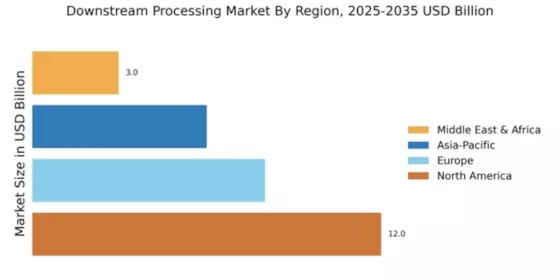
Downstream research suggests that North America continues to lead the downstream processing market, holding a significant share of 12.0 in 2024. The region's growth is driven by increasing demand for biopharmaceuticals, advancements in technology, and supportive regulatory frameworks. The presence of major players and a robust healthcare infrastructure further catalyze market expansion, with a focus on innovation and efficiency in production processes. The United States is the primary contributor to this market, with key players like Thermo Fisher Scientific, GE Healthcare, and Danaher Corporation driving competition. The competitive landscape is characterized by strategic partnerships and mergers, enhancing product offerings and market reach. As companies invest in R&D, the region is poised for sustained growth, ensuring its position as a global leader in downstream processing.

Europe : Emerging Hub for Bioprocessing

Europe's downstream processing market is poised for growth, with a market size of 8.0 in 2024. The region benefits from a robust regulatory environment that encourages innovation and investment in biopharmaceuticals. Increasing demand for personalized medicine and biologics is driving the need for advanced processing technologies. Additionally, government initiatives aimed at supporting biomanufacturing are expected to further boost market dynamics. Germany, France, and the UK are leading countries in this sector, hosting major players like Merck KGaA and Sartorius AG. The competitive landscape is marked by a focus on sustainability and efficiency, with companies investing in green technologies. Collaborations between academia and industry are fostering innovation, ensuring that Europe remains a key player in The Downstream Processing.

Asia-Pacific : Rapidly Growing Market Potential

The Asia-Pacific region is witnessing a significant surge in the downstream processing market, with a size of 6.0 in 2024. This growth is fueled by increasing investments in biopharmaceutical manufacturing and a rising demand for biologics. Countries in this region are enhancing their regulatory frameworks to attract foreign investments and promote local manufacturing capabilities. The focus on improving healthcare infrastructure is also a critical driver of market expansion. China and India are at the forefront of this growth, with numerous local and international players establishing operations. Companies like Pall Corporation and Eppendorf AG are expanding their presence in the region, contributing to a competitive landscape that emphasizes innovation and cost-effectiveness. The increasing collaboration between governments and private sectors is expected to further enhance the market's growth trajectory.

Middle East and Africa : Emerging Market with Potential

The Middle East and Africa (MEA) region is emerging as a potential market for downstream processing, with a market size of 2.97 in 2024. The growth is driven by increasing healthcare investments and a rising demand for biopharmaceuticals. Governments are focusing on improving healthcare infrastructure and regulatory frameworks to attract investments in biomanufacturing. This shift is expected to create new opportunities for market players in the region. Countries like South Africa and the UAE are leading the way in biopharmaceutical development, with a growing number of local and international companies entering the market. The competitive landscape is characterized by collaborations and partnerships aimed at enhancing technological capabilities. As the region continues to develop its biomanufacturing sector, it presents significant growth opportunities for key players in the downstream processing market.

Downstream Processing Market Regional Image

Key Players and Competitive Insights

The Downstream Processing Market is characterized by a dynamic competitive landscape, driven by the increasing demand for biopharmaceuticals and the need for efficient purification processes. Key players such as Thermo Fisher Scientific (US), Merck KGaA (DE), and GE Healthcare (US) are strategically positioned to leverage innovation and technological advancements. These companies focus on enhancing their product portfolios through research and development, while also pursuing strategic partnerships to expand their market reach. The collective efforts of these firms contribute to a moderately fragmented market structure, where competition is intensified by the continuous introduction of advanced processing technologies.In terms of business tactics, companies are increasingly localizing manufacturing to reduce lead times and optimize supply chains. This approach not only enhances operational efficiency but also allows for better responsiveness to regional market demands. The competitive structure of the market remains moderately fragmented, with several key players exerting significant influence. The interplay between these companies fosters a competitive environment that encourages innovation and the adoption of cutting-edge technologies.
In November Thermo Fisher Scientific (US) announced the launch of a new line of chromatography systems designed to enhance the efficiency of downstream processing. This strategic move is expected to solidify the company's position as a leader in the market, as it addresses the growing need for faster and more reliable purification methods. The introduction of these systems aligns with the broader trend of digital transformation within the industry, emphasizing the importance of automation and data integration in processing workflows.Similarly, in October 2025, Merck KGaA (DE) expanded its bioprocessing capabilities by acquiring a specialized technology firm focused on single-use systems. This acquisition is likely to enhance Merck's product offerings and strengthen its competitive edge in the downstream processing segment. By integrating innovative single-use technologies, the company aims to streamline operations and reduce contamination risks, which are critical factors in biopharmaceutical manufacturing.
In December GE Healthcare (US) unveiled a new digital platform aimed at optimizing bioprocessing workflows through advanced analytics and machine learning. This initiative reflects the growing trend of AI integration in the industry, as companies seek to leverage data-driven insights to improve efficiency and reduce costs. The platform is expected to provide customers with real-time monitoring capabilities, thereby enhancing decision-making processes in downstream operations.
As of December the competitive trends in the Downstream Processing Market are increasingly defined by digitalization, sustainability, and the integration of AI technologies. Strategic alliances among key players are shaping the landscape, fostering collaboration that drives innovation. Looking ahead, the emphasis on competitive differentiation is likely to shift from price-based strategies to a focus on technological advancements, supply chain reliability, and sustainable practices. This evolution underscores the necessity for companies to adapt and innovate in order to maintain their competitive positions in a rapidly changing market.

Key Companies in the Downstream Processing Market include

Industry Developments

The Downstream Processing Market has witnessed significant developments recently, particularly with companies such as Fujifilm Diosynth Biotechnologies, Thermo Fisher Scientific, and Sartorius expanding their capabilities in biomanufacturing.

Merck KGaA, through its life sciences division MilliporeSigma, announced several significant global expansions in 2023 that were designed to enhance its bioprocessing capabilities. It is worth noting that the company allocated €300 million in May 2023 to construct a bioprocessing raw materials facility in Daejeon, South Korea, in order to satisfy the increasing global demand for biologics manufacturing. Furthermore, in July 2023, Merck announced a €23 million investment to expand its Lenexa, Kansas site, thereby establishing it as a North American Center of Excellence for dry-powder cell culture media production.

Merck's strategy to enhance the availability of primary materials and downstream processing for biopharmaceutical production is reflected in these actions.GE Healthcare's bioprocessing division, which is currently operating under the Cytiva brand, has maintained its commitment to the development of technologies that optimize bioprocess workflows. Cytiva continues to be a significant innovator in the downstream processing market, providing advanced purification systems, single-use technologies, and automation tools that facilitate quicker, more scalable biologics production. Despite the absence of particular notable announcements in September 2023. Their emphasis on end-to-end bioprocess solutions is resulting in increased efficiency in both upstream and downstream operations.

Future Outlook

Downstream Processing Market Future Outlook

The Downstream Processing Market is projected to grow at a 16.12% CAGR from 2025 to 2035, driven by technological advancements, increasing demand for biopharmaceuticals, and regulatory support.

New opportunities lie in:

  • Investment in automated downstream processing technologies to enhance efficiency. Development of sustainable bioprocessing solutions to meet environmental regulations. Expansion into emerging markets with tailored downstream processing services.

By 2035, the Downstream Processing Market is expected to achieve substantial growth and innovation.

Market Segmentation

Downstream Processing Market End Use Outlook

  • Pharmaceuticals
  • Biotechnology
  • Food and Beverage
  • Environmental
  • Cosmetics

Downstream Processing Market Technology Outlook

  • Membrane Technology
  • Chromatography Technology
  • Filtration Technology
  • Centrifugation Technology
  • Precipitation Technology

Downstream Processing Market Application Outlook

  • Chromatography
  • Filtration
  • Centrifugation
  • Precipitation
  • Ultrafiltration

Downstream Processing Market Product Type Outlook

  • Bioreactors
  • Separation Equipment
  • Purification Equipment
  • Filtration Systems

Downstream Processing Market Scale of Operation Outlook

  • Laboratory Scale
  • Pilot Scale
  • Industrial Scale
  • Commercial Scale

Report Scope

MARKET SIZE 2024 28.97(USD Billion)
MARKET SIZE 2025 33.64(USD Billion)
MARKET SIZE 2035 149.96(USD Billion)
COMPOUND ANNUAL GROWTH RATE (CAGR) 16.12% (2025 - 2035)
REPORT COVERAGE Revenue Forecast, Competitive Landscape, Growth Factors, and Trends
BASE YEAR 2024
Market Forecast Period 2025 - 2035
Historical Data 2019 - 2024
Market Forecast Units USD Billion
Key Companies Profiled Thermo Fisher Scientific (US), Merck KGaA (DE), GE Healthcare (US), Sartorius AG (DE), Danaher Corporation (US), Pall Corporation (US), Boehringer Ingelheim (DE), Eppendorf AG (DE), Waters Corporation (US)
Segments Covered Application, End Use, Technology, Scale of Operation, Product Type
Key Market Opportunities Integration of advanced automation technologies enhances efficiency in the Downstream Processing Market.
Key Market Dynamics Technological advancements and regulatory changes drive innovation and efficiency in the downstream processing market.
Countries Covered North America, Europe, APAC, South America, MEA

Market Highlights

Author
Author
Author Profile
Rahul Gotadki LinkedIn
Research Manager
He holds an experience of about 9+ years in Market Research and Business Consulting, working under the spectrum of Life Sciences and Healthcare domains. Rahul conceptualizes and implements a scalable business strategy and provides strategic leadership to the clients. His expertise lies in market estimation, competitive intelligence, pipeline analysis, customer assessment, etc.
Leave a Comment

FAQs

What is the current valuation of the Downstream Processing Market as of 2024?

<p>The Downstream Processing Market was valued at 28.97 USD Billion in 2024.</p>

What is the projected market size for the Downstream Processing Market in 2035?

<p>The market is projected to reach 149.96 USD Billion by 2035.</p>

What is the expected CAGR for the Downstream Processing Market during the forecast period 2025 - 2035?

<p>The expected CAGR for the Downstream Processing Market during 2025 - 2035 is 16.12%.</p>

Which segment of the Downstream Processing Market had the highest valuation in 2024?

<p>In 2024, the Filtration segment had the highest valuation at 7.0 USD Billion.</p>

What are the key applications driving the Downstream Processing Market?

<p>Key applications include Pharmaceuticals, Biotechnology, and Food and Beverage, with valuations of 8.69, 6.0, and 7.0 USD Billion respectively in 2024.</p>

Which technology segment is expected to show significant growth in the Downstream Processing Market?

<p>Reverse Osmosis, valued at 8.0 USD Billion in 2024, is expected to show significant growth.</p>

What is the market size for Commercial Scale operations in the Downstream Processing Market?

<p>The Commercial Scale operations segment was valued at 10.97 USD Billion in 2024.</p>

Who are the leading players in the Downstream Processing Market?

<p>Key players include Thermo Fisher Scientific, Merck KGaA, and GE Healthcare, among others.</p>

What is the valuation of the Purification Equipment segment in 2024?

<p>The Purification Equipment segment was valued at 9.18 USD Billion in 2024.</p>

How does the market for Biotechnology compare to that of Pharmaceuticals in 2024?

<p>In 2024, the Biotechnology segment was valued at 6.0 USD Billion, while the Pharmaceuticals segment was valued at 8.69 USD Billion.</p>

Download Free Sample

Kindly complete the form below to receive a free sample of this Report

Compare Licence

×
Features License Type
Single User Multiuser License Enterprise User
Price $4,950 $5,950 $7,250
Maximum User Access Limit 1 User Upto 10 Users Unrestricted Access Throughout the Organization
Free Customization
Direct Access to Analyst
Deliverable Format
Platform Access
Discount on Next Purchase 10% 15% 15%
Printable Versions
%>