×
Request Free Sample ×

Kindly complete the form below to receive a free sample of this Report

* Please use a valid business email

Leading companies partner with us for data-driven Insights

clients tt-cursor
Hero Background
English
Chinese
French
Japanese
Korean
German
Spanish

Dynamic Glazing Market Share

ID: MRFR/CnM/2705-HCR
145 Pages
Chitranshi Jaiswal
October 2025

Dynamic Glazing Market Research Report Information by Technology (Polymer Dispersed Liquid Crystals (PDLC), Suspended Particle Device, Photochromic, Thermochromic, Electrochromic), By Application (Day Lighting Performance, Glare Control, Energy Savings, Heat Gain), By End-Use (Residential, Commercial, Transportation and Others) and By Region – Forecast To 2035

Share:
Download PDF ×

We do not share your information with anyone. However, we may send you emails based on your report interest from time to time. You may contact us at any time to opt-out.

Dynamic Glazing Market Infographic
×
Dynamic Glazing Market Infographic Full View
Purchase Options

Market Share

Dynamic Glazing Market Share Analysis

In the rapidly advancing Dynamic Glazing Market, companies employ a variety of strategies to secure their market share and establish a strong positioning. One primary strategy involves product differentiation. Dynamic glazing manufacturers focus on offering a diverse range of products with different features, technologies, and applications to cater to the specific needs of various industries and projects. By providing options such as electrochromic, thermochromic, and photochromic dynamic glazing solutions, companies can target different market segments and appeal to a broad spectrum of customers with varying requirements for energy efficiency, daylight control, and aesthetic preferences. This strategy of product differentiation enables companies to stand out in the market by offering tailored solutions that meet specific architectural, environmental, and performance needs.

In this type of dynamic glazing, the occupant has no control over the tint level of the glass. On the basis of end users, dynamic glazing market is being segmented as residential, commercial, transportation and others. Among them,, the commercial segment is expected to grow the highest with its increasing applications in marine, aviation, hospitals, and other commercial building applications. These also help in eliminating the need for extensive use of curtains, thereby driving the growth of the market.

Pricing strategy is another critical aspect of market share positioning in the Dynamic Glazing Market. Companies often adopt different pricing strategies based on factors such as product performance, technology sophistication, and target market segments. Some companies may opt for a premium pricing strategy, positioning their dynamic glazing products as high-quality, advanced solutions targeted at customers who prioritize energy efficiency and are willing to pay a premium price for superior performance and comfort. Conversely, other companies may choose a value-based pricing strategy, offering competitive prices to gain market share rapidly, especially in price-sensitive market segments such as commercial buildings or residential construction. Additionally, promotional pricing tactics such as discounts, rebates, or financing options are also utilized to attract customers and increase market share.

Distribution channels play a crucial role in market share positioning for dynamic glazing manufacturers. Companies need to ensure their products are readily available to customers through efficient distribution channels. This involves partnering with architects, designers, glaziers, and building contractors with a wide reach and strong distribution networks. Additionally, companies may also invest in their distribution infrastructure, including regional warehouses and logistics facilities strategically located to ensure timely delivery of products to customers across different geographic regions. By optimizing their distribution channels, companies can enhance their market presence and gain a competitive edge over rivals.

Branding and marketing strategies are instrumental in establishing a strong market share positioning in the Dynamic Glazing Market. Building a reputable brand image helps companies differentiate themselves from competitors and influence customer perceptions positively. Dynamic glazing manufacturers invest in branding initiatives that highlight the unique features, benefits, and applications of their products, as well as their commitment to sustainability and innovation. This could include obtaining certifications related to product performance and environmental standards, showcasing case studies of successful projects using dynamic glazing, and engaging in educational initiatives to raise awareness about the benefits of using dynamic glazing in building design. Additionally, effective marketing strategies such as targeted advertising, digital marketing campaigns, and participation in industry events and trade shows help companies increase brand visibility and reach a wider audience, ultimately driving market share growth.

Innovation and product development are also crucial components of market share positioning strategies in the Dynamic Glazing Market. Companies strive to differentiate themselves by continuously innovating and introducing new dynamic glazing solutions with enhanced properties and performance characteristics. This could involve developing advanced materials and coatings for improved solar control, glare reduction, and thermal insulation, or integrating smart technologies for automated control and optimization of daylighting and energy efficiency. By staying ahead of the curve in terms of product innovation and technological advancements, companies can capture market share by offering cutting-edge solutions that meet the evolving needs of customers in various industries, including commercial real estate, healthcare, education, and hospitality.

Strategic partnerships and collaborations are another avenue for market share positioning in the Dynamic Glazing Market. Collaborating with architects, designers, building owners, and industry partners allows companies to showcase their products in real-world applications and gain credibility. Strategic partnerships with glass manufacturers, technology providers, and research institutions can also help companies gain access to new materials, processes, and innovations. By leveraging the strengths of partners and collaborating on joint marketing efforts, companies can strengthen their market share positioning and achieve sustainable growth in the competitive Dynamic Glazing Market.

Author
Chitranshi Jaiswal
Research Analyst Level I

In her 3 years of experience in the market research field, she has handled critical cross-domain projects. She has an in-depth knowledge of market estimation & analysis, problem-solving, primary as well as secondary research, and team management.She holds an engineering degree and is an MBA professional from a well-known university, capable of evaluating the market and competitive conditions. An exceptional strategist with excellent communication skills and a passion for delivering cutting-edge & practical insights for the market. Proficient in multi-tasking, and can successfully deal with competing demands, while maintaining complete confidentiality. Generated business through active client and project development, networking, and high-quality responses. Her knowledge and skills have helped in making solid business decisions, securing funding from investors, and avoiding business failures.

Leave a Comment

FAQs

What is dynamic glazing and in which all applications it is used in (industrial applications)?

Dynamic glazing products possess the ability to change performance properties. These products are used in construction activities; for instance, the dynamic glazed windows and doors can automatically respond or control environmental signals.

At what CAGR is the dynamic glazing market projected to grow in the forecast period (2024-2035)?

Dynamic Glazing Market is projected to be worth USD 4630 Million by 2035, registering a CAGR of 6.2% during the forecast period (2025 - 2035).

What is the leading segment in the dynamic glazing market?

All segments of the dynamic glazing market are showing impressive rise; however, on the basis of technology, the sub-segment - thermochromic is expected to grow significantly during the forecast period. Among end-users, the sub-segment commercial is expected to grow exponentially.

What are the key driving forces behind the growth of the global dynamic glazing market?

Benefits that dynamic glazing materials can offer, such as the reduction in consumption and hence the cost of energy and promoting a sustainable design for the building infrastructure.

Who are the top players in the global dynamic glazing market?

Beautex Industries Pvt. Ltd (India), Guardian Industries (US), Corning Inc. (US), Research Frontiers, Inc. (US), Saint-Gobain SA (France), Pleotint LLC (US), GPD Group (US), PPG Industries, Inc. (US), Nippon Sheet Glass Co., Ltd.(Japan), and GlasNovations, Ltd. (UK) are some of the players leading the global dynamic glazing market.

Market Summary

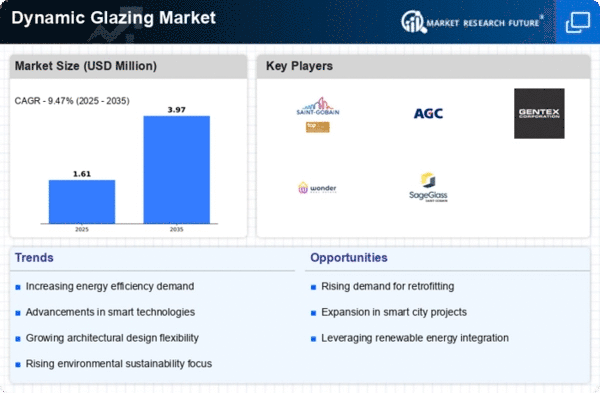
As per MRFR analysis, the Dynamic Glazing Market Size was estimated at 1.47 USD Million in 2024. The Dynamic Glazing industry is projected to grow from 1.61 in 2025 to 3.97 by 2035, exhibiting a compound annual growth rate (CAGR) of 9.47 during the forecast period 2025 - 2035.

Key Market Trends & Highlights

The Dynamic Glazing Market is poised for substantial growth driven by technological advancements and sustainability initiatives.

  • Technological advancements are enhancing the functionality and appeal of dynamic glazing solutions.
  • North America remains the largest market, while Asia-Pacific is recognized as the fastest-growing region in this sector.
  • The residential segment dominates the market, whereas the automotive segment is experiencing rapid growth.
  • Rising demand for energy efficiency and growing awareness of environmental impact are key drivers propelling market expansion.

Market Size & Forecast

2024 Market Size 1.47 (USD Million)
2035 Market Size 3.97 (USD Million)
CAGR (2025 - 2035) 9.47%
Largest Regional Market Share in 2024 North America

Major Players

Saint-Gobain (FR), AGC Inc. (JP), Gentex Corporation (US), View Inc. (US), SageGlass (US), Soladigm (US), EControl-Glas (DE), Glass Apps (US), NanoTech Coatings (US)

Market Trends

The Dynamic Glazing Market is currently experiencing a notable transformation, driven by advancements in technology and increasing awareness of energy efficiency. This sector encompasses various products that adjust their light transmission properties in response to environmental conditions, thereby enhancing comfort and reducing energy consumption. As sustainability becomes a priority for both consumers and businesses, the demand for dynamic glazing solutions is likely to rise. Furthermore, the integration of smart technologies into building designs appears to be a significant factor influencing market growth. Architects and developers are increasingly incorporating dynamic glazing into their projects to meet modern aesthetic and functional requirements. In addition to technological advancements, regulatory frameworks are evolving to support energy-efficient building practices. Governments worldwide are implementing stricter building codes and standards that encourage the use of innovative materials, including dynamic glazing. This trend suggests a growing recognition of the role that such technologies play in reducing carbon footprints and promoting sustainable development. As the Dynamic Glazing Market continues to expand, it is poised to attract investments and foster collaborations among key stakeholders, including manufacturers, architects, and policymakers, all aiming to create a more sustainable built environment.

Technological Advancements

The Dynamic Glazing Market is witnessing rapid technological innovations that enhance the functionality and efficiency of glazing products. These advancements include the development of electrochromic and thermochromic materials, which allow for real-time adjustments to light and heat transmission. Such technologies not only improve user comfort but also contribute to energy savings, making them increasingly attractive to consumers and businesses alike.

Sustainability Initiatives

There is a growing emphasis on sustainability within the Dynamic Glazing Market, driven by both consumer demand and regulatory pressures. As organizations strive to reduce their environmental impact, dynamic glazing solutions are being recognized for their potential to lower energy consumption and improve building performance. This trend indicates a shift towards more eco-friendly construction practices.

Integration with Smart Technologies

The integration of dynamic glazing with smart building technologies is becoming more prevalent in the market. This trend involves the use of sensors and automation systems that optimize the performance of glazing based on real-time environmental conditions. Such innovations not only enhance energy efficiency but also improve the overall user experience in residential and commercial spaces.

Dynamic Glazing Market Market Drivers

Technological Advancements

Technological innovations play a pivotal role in the expansion of the Global Dynamic Glazing Market Industry. Recent advancements in materials and manufacturing processes have led to the development of more efficient and responsive dynamic glazing products. For instance, the integration of smart technologies allows for real-time adjustments to light and heat, enhancing user comfort and energy savings. As these technologies evolve, they are likely to attract more investments and applications across various sectors. The anticipated growth from 2024 to 2035, with a projected market size of 6.25 USD Billion, indicates that ongoing research and development will continue to drive market dynamics.

Growing Demand for Energy Efficiency

The Global Dynamic Glazing Market Industry experiences a notable surge in demand driven by the increasing emphasis on energy efficiency in buildings. As energy costs rise, both residential and commercial sectors are seeking solutions that reduce energy consumption. Dynamic glazing technologies, which adjust their tint based on sunlight exposure, offer a promising solution. In 2024, the market is projected to reach 3.49 USD Billion, reflecting a growing trend towards sustainable building practices. This shift is further supported by government incentives aimed at promoting energy-efficient technologies, suggesting a robust future for dynamic glazing as a key component in energy-efficient architecture.

Diverse Applications Across Various Sectors

The versatility of dynamic glazing technologies contributes to their expanding presence in the Global Dynamic Glazing Market Industry. These products find applications in a wide range of sectors, including residential, commercial, and automotive industries. For example, dynamic glazing is increasingly utilized in skyscrapers to enhance energy efficiency and aesthetic appeal. Additionally, the automotive sector is adopting these technologies to improve passenger comfort and vehicle efficiency. This diverse applicability not only broadens the market scope but also encourages innovation and competition among manufacturers, indicating a dynamic future for the industry.

Rising Awareness of Indoor Environmental Quality

There is a growing recognition of the importance of indoor environmental quality (IEQ) in the Global Dynamic Glazing Market Industry. Enhanced IEQ is linked to occupant health, productivity, and overall well-being, prompting architects and builders to integrate dynamic glazing solutions into their designs. These technologies help regulate natural light and temperature, thereby improving comfort levels within buildings. As awareness of IEQ continues to rise, the demand for dynamic glazing is expected to increase, further propelling market growth. This trend aligns with the broader movement towards healthier living and working environments, suggesting a promising outlook for the dynamic glazing sector.

Regulatory Support for Sustainable Building Practices

The Global Dynamic Glazing Market Industry benefits significantly from regulatory frameworks that promote sustainable building practices. Governments worldwide are increasingly implementing stringent building codes and standards aimed at reducing carbon footprints. These regulations often encourage the adoption of dynamic glazing technologies, which contribute to energy savings and improved indoor environments. As a result, the market is likely to see accelerated growth, with a compound annual growth rate of 5.45% projected from 2025 to 2035. This regulatory support not only enhances market viability but also aligns with global sustainability goals, fostering a conducive environment for dynamic glazing adoption.

Market Segment Insights

By Application: Residential (Largest) vs. Automotive (Fastest-Growing)

The dynamic glazing market shows a diverse application landscape, with the residential segment commanding the largest market share due to increasing demand for energy-efficient and aesthetic building solutions. This segment benefits from a growing focus on sustainable construction practices among homeowners and builders alike, leading to heightened interest in smart windows that enhance comfort and reduce energy consumption. On the other hand, the automotive segment is emerging as the fastest-growing segment in dynamic glazing, largely driven by the rise of electric vehicles and heated discussions around advanced driver-assistance systems. As vehicles increasingly integrate high-tech features, dynamic glazing is becoming a pivotal component in enhancing passenger comfort and energy efficiency, creating unprecedented growth opportunities within this application sector.

Residential (Dominant) vs. Automotive (Emerging)

The residential application segment in the dynamic glazing market is characterized by its focus on energy efficiency and consumer preferences for modern aesthetics. Homeowners are increasingly opting for dynamic glazing solutions that provide both functional benefits, such as temperature regulation, and enhanced visual appeal. This trend is amplified as residential constructions align with green building initiatives. Conversely, the automotive segment represents an emerging market within dynamic glazing, driven by innovation in vehicle design and technology. As automotive manufacturers prioritize lightweight materials that improve fuel efficiency while offering dynamic features like tinting and glare reduction, this segment is rapidly evolving. The adoption of dynamic glazing in cars is expected to redefine passenger experiences, making it a crucial area for future growth.

By Technology: Electrochromic (Largest) vs. Photochromic (Fastest-Growing)

In the Dynamic Glazing Market, the distribution of market share among technologies demonstrates a clear hierarchy of dominance. Electrochromic technology holds the largest share, benefiting from its widespread application in automotive and architectural sectors. Photochromic technology, while smaller in market share, is gaining momentum and is increasingly integrated into consumer products such as eyewear and smart windows, reflecting a growing trend toward adaptive technologies. The overall growth trajectory of the dynamic glazing segment is being driven by a combination of technological advancements and increasing demand for energy-efficient solutions. As consumers and industries focus on sustainability and proactive environmental measures, the demand for dynamic glazing is expected to rise. Emerging technologies like thermochromic and suspended particle glazings are also surfacing as innovative solutions, although they currently trail behind in market share compared to the established technologies.

Electrochromic (Dominant) vs. Photochromic (Emerging)

Electrochromic technology is characterized by its ability to change transparency when an electrical charge is applied, providing significant energy savings by regulating heat and light. This segment has established itself as the dominant force in the dynamic glazing market, particularly in applications requiring precise control over light and temperature. Conversely, photochromic technology, which adjusts its tint in response to UV light exposure, is emerging in various markets but has not yet matched the popularity of electrochromic solutions. However, its growth potential is notable, especially in the consumer product domain. As aesthetic preferences evolve, photochromic glazing is likely to find broader applications in areas such as residential and commercial buildings, enhancing its market position.

By End Use: Building Facades (Largest) vs. Automotive Glazing (Fastest-Growing)

In the Dynamic Glazing Market, the distribution of market share among end-use segments showcases a diverse landscape. Building facades hold the largest share of the market, primarily driven by increasing demand for energy-efficient and aesthetically pleasing architectural solutions. Meanwhile, other segments like windows, skylights, and doors contribute significantly, each serving unique market needs. Automotive glazing, albeit smaller in its share, is rapidly growing, indicative of shifting trends in vehicle design and functionality.

Building Facades (Dominant) vs. Automotive Glazing (Emerging)

Building facades represent the dominant segment in the Dynamic Glazing Market, primarily due to their critical role in architectural design and energy efficiency. With architects and builders increasingly prioritizing sustainability, dynamic glazing solutions for facades enhance building performance by adapting to sunlight and thermal conditions. Conversely, automotive glazing is emerging as a fast-growing segment, fueled by innovations in vehicle technology and consumer preferences for enhanced comfort and safety features. The integration of smart glazing technologies in vehicles not only improves aesthetics but also plays a key role in energy conservation, indicating a robust future for this segment.

Get more detailed insights about Dynamic Glazing Market Research Report - Forecast to 2035

Regional Insights

North America : Market Leader in Dynamic Glazing

North America is poised to maintain its leadership in the dynamic glazing market, holding a significant market share of 70% in 2024. The region's growth is driven by increasing demand for energy-efficient building solutions and stringent regulations promoting sustainable construction practices. The adoption of smart technologies in architecture further fuels this trend, making dynamic glazing a preferred choice for modern buildings. The competitive landscape in North America is robust, with key players such as Saint-Gobain, Gentex Corporation, and View Inc. leading the charge. The U.S. is the primary market, supported by favorable government initiatives and investments in green technologies. The presence of innovative companies and a strong focus on R&D are pivotal in shaping the future of dynamic glazing in this region.

Europe : Emerging Market with Growth Potential

Europe is witnessing a burgeoning dynamic glazing market, with a market share of 40% in 2024. The region's growth is propelled by increasing awareness of energy efficiency and sustainability in construction. Regulatory frameworks, such as the EU's Green Deal, are catalyzing investments in innovative building materials, including dynamic glazing, to meet stringent energy performance standards. Leading countries in this market include Germany, France, and the UK, where companies like AGC Inc. and EControl-Glas are making significant strides. The competitive landscape is characterized by a mix of established players and emerging startups, all vying for market share. The focus on smart building technologies and energy-efficient solutions positions Europe as a key player in The Dynamic Glazing.

Asia-Pacific : Rapid Growth in Emerging Economies

The Asia-Pacific region is experiencing rapid growth in the dynamic glazing market, with a market share of 30% in 2024. This growth is driven by urbanization, increasing disposable incomes, and a rising demand for energy-efficient buildings. Governments in countries like China and India are implementing policies to promote sustainable construction, further boosting the adoption of dynamic glazing technologies. China is the leading market in the region, supported by significant investments in infrastructure and smart city initiatives. Key players such as AGC Inc. and NanoTech Coatings are expanding their presence in this dynamic landscape. The competitive environment is evolving, with both local and international companies striving to capture market opportunities in this burgeoning sector.

Middle East and Africa : Emerging Market with Unique Challenges

The Middle East and Africa (MEA) region is at the nascent stage of the dynamic glazing market, holding a market share of 7% in 2024. The growth potential is significant, driven by increasing investments in infrastructure and a growing emphasis on energy efficiency in building designs. However, challenges such as economic fluctuations and regulatory inconsistencies may hinder rapid adoption. Countries like the UAE and South Africa are leading the way in dynamic glazing adoption, with a focus on luxury and energy-efficient buildings. The competitive landscape is gradually evolving, with both local and international players, including SageGlass and Soladigm, entering the market. The region's unique climatic conditions also present opportunities for innovative glazing solutions tailored to local needs.

Key Players and Competitive Insights

The Dynamic Glazing Market is currently characterized by a competitive landscape that is both innovative and rapidly evolving. Key growth drivers include increasing demand for energy-efficient building solutions, advancements in smart glass technology, and a heightened focus on sustainability. Major players such as Saint-Gobain (France), AGC Inc. (Japan), and View Inc. (US) are strategically positioned to leverage these trends. Saint-Gobain (France) emphasizes innovation through its extensive R&D investments, while AGC Inc. (Japan) focuses on expanding its product portfolio to include advanced glazing solutions. View Inc. (US) is particularly noted for its digital transformation initiatives, integrating AI and IoT into its product offerings, which collectively shape a competitive environment that prioritizes technological advancement and sustainability.In terms of business tactics, companies are increasingly localizing manufacturing to reduce lead times and optimize supply chains. The market structure appears moderately fragmented, with a mix of established players and emerging startups. This fragmentation allows for diverse offerings but also intensifies competition among key players, as they strive to differentiate themselves through unique value propositions and innovative solutions.

In November Saint-Gobain (France) announced a strategic partnership with a leading tech firm to develop next-generation dynamic glazing solutions that utilize AI for enhanced energy efficiency. This collaboration is expected to bolster Saint-Gobain's market position by integrating cutting-edge technology into its product line, thereby appealing to environmentally conscious consumers and businesses.

In October AGC Inc. (Japan) launched a new line of electrochromic glass that adapts to varying light conditions, enhancing user comfort and energy savings. This product introduction not only showcases AGC's commitment to innovation but also positions the company as a leader in the smart glass segment, potentially increasing its market share in the dynamic glazing sector.

In September View Inc. (US) secured a major contract for the installation of its smart glass technology in a high-profile commercial project. This contract underscores View's strategic focus on expanding its footprint in the commercial sector, which is likely to drive revenue growth and enhance brand visibility in a competitive market.

As of December current competitive trends are heavily influenced by digitalization, sustainability, and the integration of AI technologies. Strategic alliances are becoming increasingly vital, as companies seek to pool resources and expertise to innovate more effectively. The competitive differentiation is expected to evolve from traditional price-based competition to a focus on innovation, technological advancements, and supply chain reliability, indicating a shift towards a more sophisticated and value-driven market landscape.

Key Companies in the Dynamic Glazing Market include

Industry Developments

In the year 2021, dynamic Glass has broadcasted the achievement of Colorado Window Systems, Inc., a leading glazing and glass service provider, in a deal that will cover Dynamic Glass' facility capabilities across Colorado. CWS was recognized in 2003 and has developed an intense reputation for providing unusual quality and service to Colorado's premier general contractors for low-rise and mid-commercial projects. The company provides new resident and construction development services mostly across the retail, office, healthcare, flying, government, and education sectors.

Report Overview 

Future Outlook

Dynamic Glazing Market Future Outlook

The Dynamic Glazing Market is projected to grow at a 9.47% CAGR from 2024 to 2035, driven by advancements in energy efficiency, sustainability, and smart building technologies.

New opportunities lie in:

  • Integration of dynamic glazing in smart home systems
  • Development of energy-efficient retrofitting solutions
  • Expansion into emerging markets with tailored products

By 2035, the market is expected to achieve substantial growth, driven by innovation and increasing demand.

Market Segmentation

Dynamic Glazing Market End Use Outlook

  • Building Facades
  • Windows
  • Skylights
  • Doors
  • Automotive Glazing

Dynamic Glazing Market Technology Outlook

  • Electrochromic
  • Photochromic
  • Thermochromic
  • Liquid Crystal
  • Suspended Particle

Dynamic Glazing Market Application Outlook

  • Residential
  • Commercial
  • Automotive
  • Aerospace
  • Marine

Report Scope

MARKET SIZE 20241.47(USD Million)
MARKET SIZE 20251.61(USD Million)
MARKET SIZE 20353.97(USD Million)
COMPOUND ANNUAL GROWTH RATE (CAGR)9.47% (2025 - 2035)
REPORT COVERAGERevenue Forecast, Competitive Landscape, Growth Factors, and Trends
BASE YEAR2024
Market Forecast Period2025 - 2035
Historical Data2019 - 2024
Market Forecast UnitsUSD Million
Key Companies ProfiledSaint-Gobain (FR), AGC Inc. (JP), Gentex Corporation (US), View Inc. (US), SageGlass (US), Soladigm (US), EControl-Glas (DE), Glass Apps (US), NanoTech Coatings (US)
Segments CoveredApplication, Technology, End Use
Key Market OpportunitiesIntegration of smart technologies enhances energy efficiency in the Dynamic Glazing Market.

Key Market DynamicsTechnological advancements and regulatory changes drive the adoption of dynamic glazing in energy-efficient building designs.
Countries CoveredNorth America, Europe, APAC, South America, MEA

FAQs

What is dynamic glazing and in which all applications it is used in (industrial applications)?

Dynamic glazing products possess the ability to change performance properties. These products are used in construction activities; for instance, the dynamic glazed windows and doors can automatically respond or control environmental signals.

At what CAGR is the dynamic glazing market projected to grow in the forecast period (2024-2035)?

Dynamic Glazing Market is projected to be worth USD 4630 Million by 2035, registering a CAGR of 6.2% during the forecast period (2025 - 2035).

What is the leading segment in the dynamic glazing market?

All segments of the dynamic glazing market are showing impressive rise; however, on the basis of technology, the sub-segment - thermochromic is expected to grow significantly during the forecast period. Among end-users, the sub-segment commercial is expected to grow exponentially.

What are the key driving forces behind the growth of the global dynamic glazing market?

Benefits that dynamic glazing materials can offer, such as the reduction in consumption and hence the cost of energy and promoting a sustainable design for the building infrastructure.

Who are the top players in the global dynamic glazing market?

Beautex Industries Pvt. Ltd (India), Guardian Industries (US), Corning Inc. (US), Research Frontiers, Inc. (US), Saint-Gobain SA (France), Pleotint LLC (US), GPD Group (US), PPG Industries, Inc. (US), Nippon Sheet Glass Co., Ltd.(Japan), and GlasNovations, Ltd. (UK) are some of the players leading the global dynamic glazing market.

  1. SECTION I: EXECUTIVE SUMMARY AND KEY HIGHLIGHTS
    1. | 1.1 EXECUTIVE SUMMARY
  2. SECTION II: SCOPING, METHODOLOGY AND MARKET STRUCTURE
    1. | 2.1 MARKET INTRODUCTION
    2. | 2.2 RESEARCH METHODOLOGY
  3. SECTION III: QUALITATIVE ANALYSIS
    1. | 3.1 MARKET DYNAMICS
    2. | 3.2 MARKET FACTOR ANALYSIS
  4. SECTION IV: QUANTITATIVE ANALYSIS
    1. | 4.1 Chemicals and Materials, BY Application (USD Million)
    2. | 4.2 Chemicals and Materials, BY Technology (USD Million)
    3. | 4.3 Chemicals and Materials, BY End Use (USD Million)
    4. | 4.4 Chemicals and Materials, BY Region (USD Million)
  5. SECTION V: COMPETITIVE ANALYSIS
    1. | 5.1 Competitive Landscape
    2. | 5.2 Company Profiles
    3. | 5.3 Appendix

Dynamic Glazing Market Segmentation

Market Segmentation Overview

  • Detailed segmentation data will be available in the full report
  • Comprehensive analysis by multiple parameters
  • Regional and country-level breakdowns
  • Market size forecasts by segment
Infographic

Free Sample Request

Kindly complete the form below to receive a free sample of this Report

Get Free Sample

Customer Strories

Compare Licence

×
Features License Type
Single User Multiuser License Enterprise User
Price $4,950 $5,950 $7,250
Maximum User Access Limit 1 User Upto 10 Users Unrestricted Access Throughout the Organization
Free Customization
Direct Access to Analyst
Deliverable Format
Platform Access
Discount on Next Purchase 10% 15% 15%
Printable Versions