×
Request Free Sample ×

Kindly complete the form below to receive a free sample of this Report

* Please use a valid business email

Leading companies partner with us for data-driven Insights

clients tt-cursor
Hero Background

Diagnostic Imaging Services Market

ID: MRFR/MED/5720-HCR
200 Pages
Rahul Gotadki
February 2026

Diagnostic Imaging Services Market Research Report: Size, Share, Trend Analysis By Procedure Type (X-ray, Ultrasound, Magnetic Resonance Imaging, Computed Tomography, Nuclear Medicine), By End Users (Hospitals, Diagnostic Centers, Outpatient Imaging Centers, Research Laboratories), By Imaging Modality (Analog Imaging, Digital Imaging, Hybrid Imaging), By Applications (Cardiology, Oncology, Neurology, Orthopedics) and By Regional (North America, Europe, South America, Asia Pacific, Middle East and Africa) - Growth Outlook & Industry Forecast 2025 To 2035

Share:
Download PDF ×

We do not share your information with anyone. However, we may send you emails based on your report interest from time to time. You may contact us at any time to opt-out.

Diagnostic Imaging Services Market Infographic
Purchase Options

Diagnostic Imaging Services Market Summary

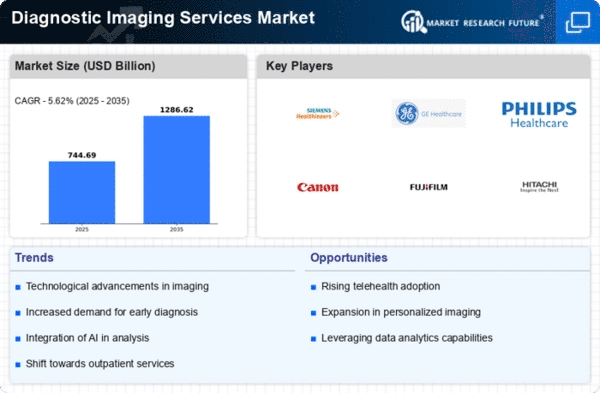
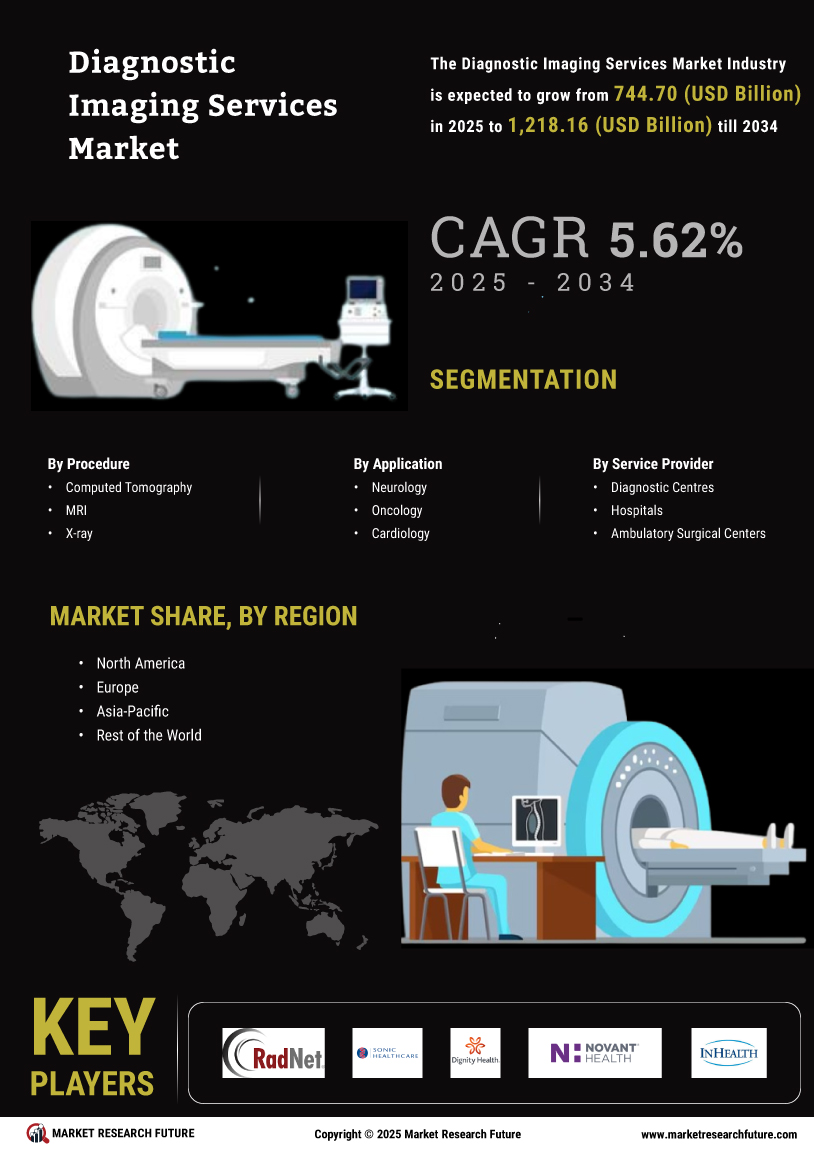
As per MRFR analysis, the Diagnostic Imaging Services Market was estimated at 705.07 USD Billion in 2024. The Diagnostic Imaging Services industry is projected to grow from 744.7 USD Billion in 2025 to 1286.62 USD Billion by 2035, exhibiting a compound annual growth rate (CAGR) of 5.62 during the forecast period 2025 - 2035.

Key Market Trends & Highlights

The market is poised for substantial growth driven by technological advancements and an increasing focus on preventive care.

  • Technological advancements are revolutionizing imaging techniques, enhancing diagnostic accuracy and efficiency.
  • The market is witnessing a notable shift towards outpatient services, reflecting changing patient preferences and healthcare delivery models.
  • Preventive care is gaining traction, leading to increased demand for diagnostic imaging services across various demographics.
  • Key drivers include the rising incidence of chronic diseases and the expansion of outpatient imaging facilities, particularly in North America and Asia-Pacific.

Market Size & Forecast

2024 Market Size 705.07 (USD Billion)
2035 Market Size 1286.62 (USD Billion)
CAGR (2025 - 2035) 5.62%

Major Players

Siemens Healthineers (DE), GE Healthcare (US), Philips Healthcare (NL), Canon Medical Systems (JP), Fujifilm Holdings (JP), Hitachi Medical Systems (JP), Hologic (US), Agfa-Gevaert Group (BE), Radiology Partners (US)

Our Impact
Enabled $4.3B Revenue Impact for Fortune 500 and Leading Multinationals
Partnering with 2000+ Global Organizations Each Year
30K+ Citations by Top-Tier Firms in the Industry

Diagnostic Imaging Services Market Trends

Currently, the Diagnostic Imaging Services Market is experiencing a transformative phase, characterized by rapid advancements in technology and an increasing demand for precise diagnostic tools. The integration of artificial intelligence and machine learning into imaging modalities is enhancing the accuracy and efficiency of diagnoses, thereby improving patient outcomes. Furthermore, the growing prevalence of chronic diseases necessitates regular imaging services, which in turn drives market growth. As healthcare providers strive to offer more comprehensive services, the emphasis on early detection and preventive care is becoming more pronounced, leading to an expansion of diagnostic imaging capabilities. In addition to technological advancements, the Diagnostic Imaging Services Market is witnessing a shift towards outpatient services. Patients increasingly prefer receiving care in outpatient settings due to convenience and reduced costs. This trend is prompting healthcare facilities to adapt their service delivery models, focusing on accessibility and patient-centered care. Moreover, the rising awareness of the importance of early diagnosis is likely to further propel the demand for imaging services. As the market evolves, stakeholders must remain vigilant to emerging trends and adapt their strategies accordingly to maintain competitiveness and meet the changing needs of patients and healthcare providers.

Technological Advancements

The Diagnostic Imaging Services Market is significantly influenced by ongoing technological innovations. The incorporation of advanced imaging techniques, such as digital radiography and 3D imaging, enhances diagnostic accuracy and reduces patient exposure to radiation. Furthermore, the integration of artificial intelligence in image analysis is streamlining workflows and improving diagnostic precision, which may lead to better patient outcomes.

Shift Towards Outpatient Services

There is a noticeable trend towards outpatient diagnostic imaging services, driven by patient preferences for convenience and cost-effectiveness. This shift encourages healthcare providers to develop more accessible imaging facilities, allowing patients to receive timely care without the need for hospital admission. As a result, outpatient imaging centers are likely to proliferate, reshaping the service landscape.

Increased Focus on Preventive Care

The growing emphasis on preventive healthcare is shaping the Diagnostic Imaging Services Market. As awareness of the benefits of early diagnosis rises, patients are more inclined to seek imaging services for routine screenings. This trend is prompting healthcare providers to expand their imaging offerings, thereby enhancing the overall quality of care and potentially reducing long-term healthcare costs.

Diagnostic Imaging Services Market Drivers

Aging Population

The Global Diagnostic Imaging Services Market Industry is also propelled by the aging population, which typically requires more frequent medical evaluations and imaging services. As individuals age, they are more susceptible to various health conditions that necessitate diagnostic imaging for accurate assessment and treatment. According to the United Nations, the global population aged 65 and older is expected to double by 2050, indicating a substantial increase in the demand for healthcare services, including diagnostic imaging. This demographic shift suggests a sustained growth trajectory for the market, as healthcare systems adapt to the needs of an older population, potentially reaching a market size of 60 USD Billion by 2035.

Market Growth Projections

The Global Diagnostic Imaging Services Market Industry is poised for substantial growth, with projections indicating a market size of 39.0 USD Billion in 2024 and an anticipated increase to 60 USD Billion by 2035. The compound annual growth rate of 4.01% from 2025 to 2035 suggests a steady expansion trajectory, driven by various factors such as technological advancements, increasing chronic disease prevalence, and an aging population. These growth projections highlight the potential for innovation and investment within the diagnostic imaging sector, as stakeholders seek to capitalize on emerging opportunities in this evolving landscape.

Technological Advancements

The Global Diagnostic Imaging Services Market Industry is experiencing rapid technological advancements, which enhance the accuracy and efficiency of imaging procedures. Innovations such as artificial intelligence and machine learning are being integrated into imaging systems, leading to improved diagnostic capabilities. For instance, AI algorithms can analyze imaging data more quickly than traditional methods, potentially reducing the time required for diagnosis. This trend is expected to drive the market's growth, with the industry projected to reach 39.0 USD Billion in 2024. As technology continues to evolve, it is likely that the market will see further enhancements in imaging modalities, thereby expanding its applications in various medical fields.

Rising Healthcare Expenditure

The Global Diagnostic Imaging Services Market Industry is positively impacted by the rising healthcare expenditure across various regions. Increased investment in healthcare infrastructure and technology is facilitating the adoption of advanced diagnostic imaging services. Governments and private sectors are allocating more funds to enhance healthcare facilities, which includes acquiring state-of-the-art imaging equipment. For instance, countries are witnessing a trend of increased healthcare budgets, which is likely to support the growth of the diagnostic imaging market. With a projected compound annual growth rate of 4.01% from 2025 to 2035, the market is expected to expand significantly, reaching 60 USD Billion by 2035.

Growing Demand for Preventive Healthcare

The Global Diagnostic Imaging Services Market Industry is experiencing a growing demand for preventive healthcare, which emphasizes early detection and intervention. Patients and healthcare providers are increasingly recognizing the importance of regular screenings and diagnostic imaging to identify health issues before they escalate. This trend is reflected in the rising number of imaging procedures performed annually, as more individuals seek preventive care. As awareness of preventive healthcare continues to grow, the market is likely to expand, with the industry projected to reach 39.0 USD Billion in 2024. This shift towards preventive measures may lead to a more proactive approach in healthcare, further driving the demand for diagnostic imaging services.

Increasing Prevalence of Chronic Diseases

The Global Diagnostic Imaging Services Market Industry is significantly influenced by the rising prevalence of chronic diseases, which necessitate advanced diagnostic tools for effective management. Conditions such as cardiovascular diseases, diabetes, and cancer are becoming more common, leading to a higher demand for imaging services. For example, the World Health Organization indicates that cancer cases are expected to rise by 70% over the next two decades. This growing patient population is likely to drive the market, with projections suggesting that the industry could reach 60 USD Billion by 2035. Consequently, healthcare providers are increasingly investing in diagnostic imaging technologies to meet this rising demand.

Market Segment Insights

By Application: Oncology (Largest) vs. Cardiology (Fastest-Growing)

In the Diagnostic Imaging Services Market, the application segment demonstrates a dynamic landscape where Oncology holds the largest market share. This is largely due to the increasing prevalence of cancer globally, requiring more advanced imaging technologies for early detection and treatment planning. In contrast, Cardiology is recognized as the fastest-growing segment, driven by the rising incidence of heart diseases and the need for innovative diagnostic solutions to monitor cardiac health. Neurology, Orthopedics, and Gastroenterology also contribute to the market, although to a lesser extent compared to these leading applications.

Oncology (Dominant) vs. Cardiology (Emerging)

Oncology, as the dominant application segment within the Diagnostic Imaging Services Market, capitalizes on the demand for precise imaging techniques such as PET and MRI in cancer detection and treatment monitoring. The rapid advancements in technologies promote accurate assessments, thus reinforcing its position. Meanwhile, Cardiology is emerging as a significant player due to technological innovations in imaging modalities, such as echocardiography and CT angiography, aimed at improving the diagnosis and management of cardiovascular diseases. The growing focus on preventive and personalized medicine in Cardiology is bolstered by ongoing research and development, paving the way for new imaging techniques that enhance patient outcomes.

By Modality: Magnetic Resonance Imaging (Largest) vs. Computed Tomography (Fastest-Growing)

In the Diagnostic Imaging Services Market, the distribution of market share among modalities reveals Magnetic Resonance Imaging (MRI) as the dominant technology, due to its capacity to provide detailed images of soft tissues, making it invaluable in diagnostics. Following close behind is Computed Tomography (CT), known for its speed and accuracy in capturing cross-sectional images of the body, which is driving its substantial adoption in emergency and routine diagnostics.

Imaging Technology: MRI (Dominant) vs. CT (Emerging)

Magnetic Resonance Imaging (MRI) remains the dominant imaging modality, favored for its detailed soft tissue visualization and absence of ionizing radiation, enhancing safety profiles for patients. It is extensively used in neurology, orthopedics, and oncology. On the other hand, Computed Tomography (CT) is rapidly emerging, particularly appreciated in acute care and trauma settings due to its quick imaging capabilities and ability to provide comprehensive internal visuals. The increasing demand for advanced imaging solutions in hospitals and clinics, along with technological advancements that make CT scanners faster and more efficient, positions CT for significant growth.

By End Use: Hospitals (Largest) vs. Diagnostic Imaging Centers (Fastest-Growing)

In the Diagnostic Imaging Services Market, hospitals hold a significant market share due to their comprehensive service offerings and advanced technological capabilities. They provide a wide range of imaging services, attracting a substantial patient base that relies on both emergency and elective diagnostic procedures. On the other hand, diagnostic imaging centers are growing rapidly, capitalizing on the demand for outpatient services and the trend towards specialized care. Their ability to offer convenient, accessible imaging services positions them well in the market.

Hospitals (Dominant) vs. Diagnostic Imaging Centers (Emerging)

Hospitals are characterized by their integrated approach to healthcare, where diagnostic imaging plays a crucial role in patient diagnosis and treatment. They possess advanced MRI, CT, and ultrasound technologies, often operating 24/7 to meet diverse patient needs. In contrast, diagnostic imaging centers are becoming an emerging force by providing focused, high-quality imaging services without the overhead of a full-scale hospital. These centers attract patients seeking quick and specialized services, often lead by expert radiologists. The growth of outpatient care is driving the expansion of these centers, making them increasingly competitive in the diagnostic imaging landscape.

Get more detailed insights about Diagnostic Imaging Services Market

Regional Insights

North America : Market Leader in Innovation

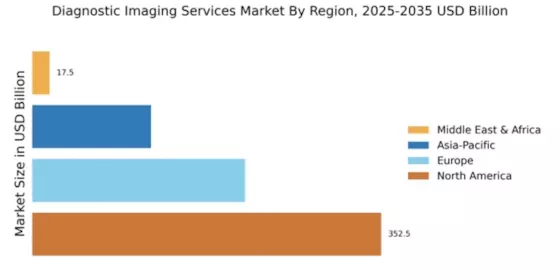
North America continues to lead the Diagnostic Imaging Services Market, holding a significant share of 352.54M in 2024. The growth is driven by advanced healthcare infrastructure, increasing prevalence of chronic diseases, and a rising demand for early diagnosis. Regulatory support, including initiatives to enhance healthcare access, further propels market expansion. The region's focus on technological advancements in imaging modalities is also a key growth driver. The competitive landscape in North America is robust, featuring major players like Siemens Healthineers, GE Healthcare, and Philips Healthcare. The U.S. stands out as the largest market, supported by high healthcare spending and a strong emphasis on research and development. The presence of leading companies fosters innovation, ensuring that North America remains at the forefront of diagnostic imaging services.

Europe : Emerging Market with Growth Potential

Europe's Diagnostic Imaging Services Market is valued at 215.0M, reflecting a growing demand for advanced imaging technologies. Factors such as an aging population, increasing healthcare expenditure, and a focus on preventive healthcare are driving this growth. Regulatory frameworks in various countries are evolving to support the integration of innovative imaging solutions, enhancing patient care and operational efficiency. Leading countries in this region include Germany, France, and the UK, where significant investments in healthcare infrastructure are evident. Key players like Philips Healthcare and Siemens Healthineers are actively expanding their presence. The competitive landscape is characterized by collaborations and partnerships aimed at enhancing service delivery and technological advancements. "The European market is witnessing a shift towards personalized medicine, which is driving demand for advanced imaging technologies."

Asia-Pacific : Rapidly Growing Healthcare Sector

The Asia-Pacific region is experiencing rapid growth in the Diagnostic Imaging Services Market, valued at 120.0M. This growth is fueled by increasing healthcare investments, rising awareness of early disease detection, and a growing population. Governments are implementing policies to improve healthcare access, which is further driving demand for diagnostic imaging services. The region's focus on technological advancements is also a significant catalyst for market growth. Countries like China, Japan, and India are leading the market, with substantial investments in healthcare infrastructure and technology. The competitive landscape features key players such as Canon Medical Systems and Fujifilm Holdings, who are expanding their offerings to meet the growing demand. The presence of these companies is fostering innovation and enhancing service delivery across the region.

Middle East and Africa : Emerging Market with Challenges

The Middle East and Africa region, with a market size of 17.53M, is gradually developing its Diagnostic Imaging Services Market. The growth is driven by increasing healthcare investments, a rising prevalence of chronic diseases, and a focus on improving healthcare infrastructure. However, challenges such as limited access to advanced technologies and regulatory hurdles remain. Governments are working to enhance healthcare access, which is expected to drive future growth in the sector. Leading countries in this region include South Africa and the UAE, where investments in healthcare are on the rise. The competitive landscape is evolving, with both local and international players seeking to establish a foothold. Companies like Hologic and Agfa-Gevaert Group are expanding their presence, contributing to the overall growth of diagnostic imaging services in the region.

Diagnostic Imaging Services Market Regional Image

Key Players and Competitive Insights

The Diagnostic Imaging Services Market is characterized by a dynamic competitive landscape, driven by technological advancements, increasing demand for early disease detection, and a growing emphasis on patient-centric care. Major players such as Siemens Healthineers (DE), GE Healthcare (US), and Philips Healthcare (NL) are at the forefront, each adopting distinct strategies to enhance their market positioning. Siemens Healthineers (DE) focuses on innovation through the development of advanced imaging technologies, while GE Healthcare (US) emphasizes strategic partnerships to expand its service offerings. Philips Healthcare (NL) is actively pursuing digital transformation initiatives, integrating AI and data analytics into its imaging solutions, thereby shaping a competitive environment that prioritizes technological prowess and service diversification.
Key business tactics within the market include localizing manufacturing to reduce costs and enhance supply chain efficiency. The competitive structure appears moderately fragmented, with a mix of established players and emerging companies vying for market share. The collective influence of these key players fosters a competitive atmosphere where innovation and operational efficiency are paramount.
In November 2025, Siemens Healthineers (DE) announced the launch of its latest MRI system, which incorporates AI-driven features aimed at improving diagnostic accuracy and patient throughput. This strategic move underscores the company's commitment to innovation and positions it to capture a larger share of the market by addressing the growing demand for advanced imaging solutions. The integration of AI not only enhances the quality of diagnostics but also streamlines workflows, potentially leading to increased operational efficiency for healthcare providers.
In October 2025, GE Healthcare (US) entered into a partnership with a leading telehealth provider to enhance remote diagnostic capabilities. This collaboration is strategically significant as it aligns with the increasing trend towards telemedicine, allowing GE Healthcare to expand its reach and offer integrated solutions that cater to the evolving needs of healthcare systems. By leveraging telehealth, the company aims to improve access to diagnostic imaging services, particularly in underserved regions.
In September 2025, Philips Healthcare (NL) unveiled a new cloud-based platform designed to facilitate data sharing and collaboration among healthcare professionals. This initiative reflects the company's focus on digital transformation and the integration of technology into healthcare delivery. By enabling seamless access to imaging data, Philips Healthcare enhances clinical decision-making and fosters a collaborative environment among healthcare providers, which is increasingly vital in today's interconnected healthcare landscape.
As of December 2025, current competitive trends in the Diagnostic Imaging Services Market are heavily influenced by digitalization, sustainability, and the integration of AI technologies. Strategic alliances are becoming increasingly important, as companies seek to enhance their capabilities and expand their service offerings. The competitive differentiation is likely to evolve from traditional price-based competition towards a focus on innovation, technological advancements, and supply chain reliability. This shift suggests that companies that prioritize R&D and strategic partnerships will be better positioned to thrive in an increasingly complex market.

Key Companies in the Diagnostic Imaging Services Market include

Industry Developments

  • Q2 2024: RadNet Acquires Five Imaging Centers in Southern California RadNet, Inc. announced the acquisition of five outpatient imaging centers in Southern California, expanding its footprint and service capacity in the region. The acquisition is part of RadNet’s ongoing strategy to consolidate and grow its diagnostic imaging services network.
  • Q2 2024: Akumin Appoints New Chief Executive Officer Akumin Inc. announced the appointment of a new CEO, effective May 2024, to lead the company’s next phase of growth in diagnostic imaging services across North America.
  • Q2 2024: Rayus Radiology Opens Advanced Imaging Center in Dallas Rayus Radiology opened a new state-of-the-art imaging center in Dallas, Texas, featuring the latest MRI and CT technology to enhance diagnostic capabilities and patient access.
  • Q2 2024: LucidHealth Announces Strategic Partnership with Major Midwest Health System LucidHealth entered into a multi-year partnership with a leading Midwest health system to provide comprehensive radiology and diagnostic imaging services, aiming to improve turnaround times and diagnostic accuracy.
  • Q3 2024: US Radiology Specialists Acquires Capitol Imaging Services US Radiology Specialists completed the acquisition of Capitol Imaging Services, expanding its presence in the Gulf Coast region and adding over 20 imaging centers to its national network.
  • Q3 2024: Siemens Healthineers Receives FDA Clearance for New AI-Powered CT Scanner Siemens Healthineers announced FDA clearance for its new AI-powered CT scanner, designed to improve image quality and reduce scan times in diagnostic imaging services.
  • Q3 2024: MedQuest Associates Launches Mobile Imaging Service in Georgia MedQuest Associates launched a new mobile imaging service in Georgia, providing on-site MRI and CT scans to underserved rural communities.
  • Q4 2024: GE HealthCare Completes Acquisition of AI Imaging Startup GE HealthCare completed the acquisition of a leading AI imaging startup, aiming to integrate advanced artificial intelligence solutions into its diagnostic imaging services portfolio.
  • Q4 2024: Envision Radiology Wins Multi-Year Imaging Contract with Major Insurer Envision Radiology secured a multi-year contract to provide diagnostic imaging services for a major national health insurer, expanding patient access to advanced imaging modalities.
  • Q1 2025: Philips Launches Next-Generation Ultrasound System for Diagnostic Imaging Philips introduced a next-generation ultrasound system designed for faster, more accurate diagnostic imaging, targeting hospitals and outpatient imaging centers globally.
  • Q1 2025: RadNet Announces $200 Million Investment to Expand AI Imaging Capabilities RadNet announced a $200 million investment to expand its artificial intelligence imaging capabilities, including new software platforms and partnerships with technology firms.
  • Q2 2025: Akumin Files for IPO on NASDAQ Akumin Inc. filed for an initial public offering on the NASDAQ, aiming to raise capital to further expand its diagnostic imaging services network across the United States.

Future Outlook

Diagnostic Imaging Services Market Future Outlook

It is projected to grow at a 5.62% CAGR from 2025 to 2035, driven by technological advancements, increasing healthcare expenditure, and rising demand for early disease detection.

New opportunities lie in:

  • Expansion of tele-radiology services to enhance remote diagnostics.
  • Development of AI-driven imaging software for improved accuracy.
  • Investment in portable imaging devices for point-of-care applications.

By 2035, the market is expected to be robust, driven by innovation and increased accessibility.

Market Segmentation

Diagnostic Imaging Services Market End Use Outlook

  • Hospitals
  • Diagnostic Imaging Centers
  • Outpatient Facilities
  • Research Institutions

Diagnostic Imaging Services Market Modality Outlook

  • Magnetic Resonance Imaging
  • Computed Tomography
  • Ultrasound
  • X-ray
  • Nuclear Medicine

Diagnostic Imaging Services Market Application Outlook

  • Oncology
  • Cardiology
  • Neurology
  • Orthopedics
  • Gastroenterology

Report Scope

MARKET SIZE 2024 705.07(USD Billion)
MARKET SIZE 2025 744.7(USD Billion)
MARKET SIZE 2035 1286.62(USD Billion)
COMPOUND ANNUAL GROWTH RATE (CAGR) 5.62% (2025 - 2035)
REPORT COVERAGE Revenue Forecast, Competitive Landscape, Growth Factors, and Trends
BASE YEAR 2024
Market Forecast Period 2025 - 2035
Historical Data 2019 - 2024
Market Forecast Units USD Billion
Key Companies Profiled Siemens Healthineers (DE), GE Healthcare (US), Philips Healthcare (NL), Canon Medical Systems (JP), Fujifilm Holdings (JP), Hitachi Medical Systems (JP), Hologic (US), Agfa-Gevaert Group (BE), Radiology Partners (US)
Segments Covered Application, Modality, End Use
Key Market Opportunities Integration of artificial intelligence in diagnostic imaging enhances accuracy and efficiency in patient care.
Key Market Dynamics Technological advancements and regulatory changes drive competitive dynamics in the Diagnostic Imaging Services Market.
Countries Covered North America, Europe, APAC, South America, MEA

Market Highlights

Author
Rahul Gotadki
Assistant Manager

He holds an experience of about 7+ years in Market Research and Business Consulting, working under the spectrum of Life Sciences and Healthcare domains. Rahul conceptualizes and implements a scalable business strategy and provides strategic leadership to the clients. His expertise lies in market estimation, competitive intelligence, pipeline analysis, customer assessment, etc. In addition to the above, his other responsibility includes strategic tracking of high growth markets & advising clients on the potential areas of focus they could direct their business initiatives

Leave a Comment

FAQs

What is the projected growth of the Diagnostic Imaging Services market?

The Diagnostic Imaging Services market is the expected increase in total market value of 1286.62 USD billion over a defined forecast period 2025–2035. It is driven by factors such as demand trends, technological advances, regulatory changes, and geographic expansion.

What is the size of the Diagnostic Imaging Services market?

Diagnostic Imaging Services market size was valued at approximately 705.07 billion USD in 2024. This figure will reach 1286.62 billion USD covering all regions (America, Europe, Asia, MEA and ROW), focusing its segments / services / distribution channels till 2035.

What is the CAGR of the Diagnostic Imaging Services market?

Diagnostic Imaging Services market is expected to grow at a CAGR of 5.62% between 2025 and 2035.

How much will the Diagnostic Imaging Services market be worth by 2035?

Diagnostic Imaging Services market is expected to be worth of 1286.62 billion USD, reflecting growth driven by usage, technology and global demands by the end of 2035.

How will the Diagnostic Imaging Services market perform over the next 10 years?

Over the next 10 years the Diagnostic Imaging Services market is expected to shift from usd billion 705.07 to 1286.62 billion USD, led by adoption of advanced tech, demographic trends, regulatory approvals, with potential headwinds from 2025 to 2035.

What will be the market size of the Diagnostic Imaging Services Market by 2035?

By 2035, the market size of the Diagnostic Imaging Services Market is expected to reach 60.0 billion USD.

Which region is expected to hold the largest market share in the Diagnostic Imaging Services Market in 2024?

In 2024, North America is expected to hold the largest market share at 15.5 billion USD.

What are the projected market valuations for the Ultrasound segment in 2024 and 2035?

The Ultrasound segment is projected to be valued at 8.0 billion USD in 2024 and 12.0 billion USD by 2035.

Who are the key players in the Diagnostic Imaging Services Market?

Notable players include Radiology Partners and RadNet, in the Diagnostic Imaging Services Market.

What is the expected market value for the Magnetic Resonance Imaging segment in 2035?

The Magnetic Resonance Imaging segment is expected to reach a market value of 13.0 billion USD by 2035.

Download Free Sample

Kindly complete the form below to receive a free sample of this Report

Compare Licence

×
Features License Type
Single User Multiuser License Enterprise User
Price $4,950 $5,950 $7,250
Maximum User Access Limit 1 User Upto 10 Users Unrestricted Access Throughout the Organization
Free Customization
Direct Access to Analyst
Deliverable Format
Platform Access
Discount on Next Purchase 10% 15% 15%
Printable Versions