×
Request Free Sample ×

Kindly complete the form below to receive a free sample of this Report

* Please use a valid business email

Leading companies partner with us for data-driven Insights

clients tt-cursor
Hero Background
English
Chinese
French
Japanese
Korean
German
Spanish

Diabetic Ulcer Treatment Market Size

ID: MRFR/HC/6888-HCR
111 Pages
Rahul Gotadki
October 2025

Diabetic Ulcer Treatment Market Research Report: Size, Share, Trend Analysis By Treatment Type (Wound Care Dressings, Antimicrobial Therapy, Growth Factors, Skin Substitutes), By End Users (Hospitals, Clinics, Home Care Settings), By Cause of Diabetes (Type 1 Diabetes, Type 2 Diabetes, Gestational Diabetes), By Distribution Channel (Pharmacies, Online Stores, Hospitals) and By Regional (North America, Europe, South America, Asia Pacific, Middle East and Africa) - Growth Outlook & Industry Forecast 2025 To 2035

Share:
Download PDF ×

We do not share your information with anyone. However, we may send you emails based on your report interest from time to time. You may contact us at any time to opt-out.

Diabetic Ulcer Treatment Market Infographic
×
Diabetic Ulcer Treatment Market Infographic Full View
Purchase Options

Diabetic Ulcer Treatment Size

Diabetic Ulcer Treatment Market Growth Projections and Opportunities

Several market aspects affect the Diabetic Ulcer Treatment Market's dynamics and growth. The global rise of diabetes drives this industry. Ageing populations are more likely to develop diabetes and accompanying diseases such diabetic ulcers, which boosts the market.

Advanced medical technologies and treatment alternatives also shape the industry. Pharmaceutical and medical device firms produce new diabetic ulcer treatments through research and development. This rush of new and improved treatments expands the market, giving healthcare practitioners several diabetic ulcer treatment alternatives.

Healthcare infrastructure and facilities in established and emerging nations are important market considerations. Diabetic ulcer diagnosis and treatment require skilled healthcare. Improved healthcare infrastructure can reduce diabetic ulcer severity and improve patient outcomes with early management. Conversely, regions with insufficient healthcare resources may struggle to manage diabetic ulcer patients, affecting market development.

Government and insurance reimbursement rules and healthcare spending also affect the Diabetic Ulcer Treatment Market. Positive reimbursement schemes might motivate people to seek medical attention and follow treatment regimens. However, poor reimbursement may prevent therapy acceptance, impacting market growth. Effective payment mechanisms are crucial since diabetes and its consequences cost healthcare systems globally.

Diabetic Ulcer Treatment Market is influenced by patient awareness and education. Awareness of diabetes dangers, early identification, and treatment choices might encourage proactive healthcare-seeking in diabetics. The market benefits from healthcare professionals' education on preventative measures and foot care, which improves diabetic ulcer treatment.

Pharmaceutical, research, and healthcare alliances drive market growth. Collaborations allow the sharing of resources, experience, and inventive ideas to create new treatments. Stakeholder collaboration promotes diabetic ulcer therapy advances, benefiting patients and growing the market.

Competition and regulations impact the Diabetic Ulcer Treatment Market. Healthcare providers and people can trust treatment alternatives due to strict regulatory regulations. Innovation and a dynamic market environment result from corporations investing in R&D due to competition. Market participants aim to exceed regulatory criteria to obtain a competitive edge and become diabetic ulcer therapy leaders.
Diabetic Ulcer Treatment Market Size Graph
Author
Rahul Gotadki
Assistant Manager

He holds an experience of about 7+ years in Market Research and Business Consulting, working under the spectrum of Life Sciences and Healthcare domains. Rahul conceptualizes and implements a scalable business strategy and provides strategic leadership to the clients. His expertise lies in market estimation, competitive intelligence, pipeline analysis, customer assessment, etc. In addition to the above, his other responsibility includes strategic tracking of high growth markets & advising clients on the potential areas of focus they could direct their business initiatives

Leave a Comment

FAQs

What is the projected growth of the Diabetic Ulcer Treatment market?

The Diabetic Ulcer Treatment market is the expected increase in total market value of 11.28 USD billion over a defined forecast period 2025–2035. It is driven by factors such as demand trends, technological advances, regulatory changes, and geographic expansion.

What is the size of the Diabetic Ulcer Treatment market?

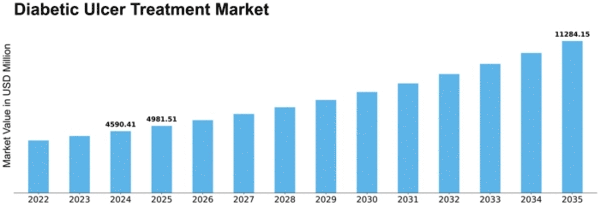
Diabetic Ulcer Treatment market size was valued at approximately 4.59 billion USD in 2024. This figure will reach 11.28 billion USD covering all regions (America, Europe, Asia, MEA and ROW), focusing its segments / services / distribution channels till 2035.

What is the CAGR of the Diabetic Ulcer Treatment market?

Diabetic Ulcer Treatment market is expected to grow at a CAGR of 8.52% between 2025 and 2035.

How much will the Diabetic Ulcer Treatment market be worth by 2035?

Diabetic Ulcer Treatment market is expected to be worth of 11.28 billion USD, reflecting growth driven by usage, technology and global demands by the end of 2035.

How will the Diabetic Ulcer Treatment market perform over the next 10 years?

Over the next 10 years the Diabetic Ulcer Treatment market is expected to shift from usd billion 4.59 to 11.28 billion USD, led by adoption of advanced tech, demographic trends, regulatory approvals, with potential headwinds from 2025 to 2035.

What is the projected market size for the Diabetic Ulcer Treatment Market by 2035?

By 2035, the Diabetic Ulcer Treatment Market is projected to reach a value of 12.0 USD Billion.

Which region is expected to dominate the Diabetic Ulcer Treatment Market in 2024?

North America is expected to dominate the Diabetic Ulcer Treatment Market with a valuation of 2.5 USD Billion in 2024.

Who are some of the major players in the Diabetic Ulcer Treatment Market?

Key players in the Diabetic Ulcer Treatment Market include Coloplast, Smith & Nephew, Medtronic, and 3M.

How is the market growth rate varying across different regions?

For 2024, North America is valued at 2.5 USD Billion, while the Asia Pacific region is valued at 1.5 USD Billion.

Market Summary

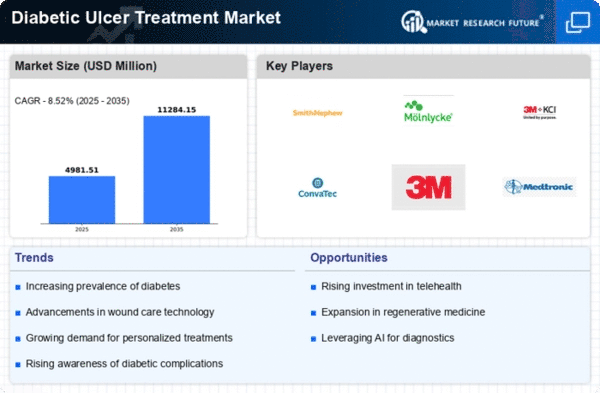
As per MRFR analysis, the Diabetic Ulcer Treatment Market Size was estimated at 4590.41 USD Million in 2024. The Diabetic Ulcer Treatment industry is projected to grow from 4981.52 in 2025 to 11284.15 by 2035, exhibiting a compound annual growth rate (CAGR) of 8.52 during the forecast period 2025 - 2035.

Key Market Trends & Highlights

The Diabetic Ulcer Treatment Market is experiencing robust growth driven by technological advancements and increasing healthcare awareness.

  • Technological advancements in wound care are enhancing treatment efficacy and patient outcomes.
  • There is a notable shift towards personalized treatment approaches, catering to individual patient needs.
  • Integration of digital health solutions is becoming prevalent, facilitating remote monitoring and management.
  • The rising prevalence of diabetes and advancements in wound care technologies are key drivers propelling market growth.

Market Size & Forecast

2024 Market Size 4590.41 (USD Million)
2035 Market Size 11284.15 (USD Million)
CAGR (2025 - 2035) 8.52%
Largest Regional Market Share in 2024 North America

Major Players

<p>Smith & Nephew (GB), Mölnlycke Health Care (SE), Acelity (US), ConvaTec (GB), 3M (US), Medtronic (US), B. Braun Melsungen AG (DE), Hollister Incorporated (US), Derma Sciences (US), KCI Medical (US)</p>

Market Trends

The Diabetic Ulcer Treatment Market is currently experiencing a notable evolution, driven by an increasing prevalence of diabetes worldwide. This condition often leads to complications such as diabetic ulcers, which necessitate effective treatment options. The market appears to be expanding as healthcare providers and patients seek advanced therapies that promote healing and prevent further complications. Innovations in wound care technologies, including advanced dressings and bioengineered tissues, are likely to play a crucial role in shaping treatment protocols. Furthermore, the growing awareness of diabetic foot care among patients and healthcare professionals suggests a shift towards proactive management strategies. In addition, the Diabetic Ulcer Treatment Market is influenced by the rising demand for personalized medicine. Tailored treatment plans that consider individual patient needs and conditions may enhance healing outcomes. The integration of telemedicine and digital health solutions is also emerging as a potential game-changer, allowing for remote monitoring and timely interventions. As the market continues to evolve, stakeholders must remain vigilant to emerging trends and adapt their strategies accordingly to meet the changing landscape of diabetic ulcer management.

Technological Advancements in Wound Care

The Diabetic Ulcer Treatment Market is witnessing a surge in technological innovations, particularly in wound care products. Advanced dressings, such as hydrocolloids and alginates, are gaining traction due to their ability to maintain a moist environment conducive to healing. Additionally, the development of bioengineered tissues and skin substitutes is likely to enhance treatment efficacy, offering new hope for patients with chronic ulcers.

Shift Towards Personalized Treatment Approaches

There is a discernible trend towards personalized treatment strategies within the Diabetic Ulcer Treatment Market. Healthcare providers are increasingly recognizing the importance of tailoring interventions to individual patient profiles. This approach may lead to improved healing rates and reduced recurrence of ulcers, as treatments are designed to address specific patient needs and underlying conditions.

Integration of Digital Health Solutions

The integration of digital health technologies is emerging as a transformative force in the Diabetic Ulcer Treatment Market. Telemedicine platforms and mobile health applications are facilitating remote patient monitoring and education. This trend not only enhances patient engagement but also allows for timely interventions, potentially reducing the incidence of severe complications associated with diabetic ulcers.

Diabetic Ulcer Treatment Market Market Drivers

Rising Prevalence of Diabetes

The increasing prevalence of diabetes globally is a primary driver for the Global Diabetic Ulcer Treatment Market Industry. As of 2024, approximately 537 million adults are living with diabetes, a figure projected to rise significantly in the coming years. This surge in diabetes cases correlates with a higher incidence of diabetic ulcers, necessitating effective treatment options. The Global Diabetic Ulcer Treatment Market Industry is expected to reach 6.57 USD Billion in 2024, reflecting the urgent need for innovative therapies and management strategies to address this growing health concern.

Market Segment Insights

By Treatment Type: Wound Dressings (Largest) vs. Biologics (Fastest-Growing)

<p>In the Diabetic Ulcer Treatment Market, 'Wound Dressings' constitute the largest segment, reflecting a widespread reliance on various types of dressings for effective wound management. Key players have been innovative in design, ensuring that these dressings facilitate healing while minimizing infection risk. Conversely, 'Biologics' have emerged rapidly, encompassing advanced solutions like growth factors and skin substitutes, which are gaining traction among healthcare providers for their efficacy in promoting wound healing. The growth trends within this segment are driven by an aging population and a rising number of diabetes cases globally. Increased awareness and advancements in wound care technology have also contributed to the heightened demand for specialized treatments. The expanding pipeline of biologics shows promise, appealing to clinicians seeking advanced interventions that address complex diabetic ulcers more effectively.</p>

<p>Wound Dressings (Dominant) vs. Topical Agents (Emerging)</p>

<p>Wound Dressings are a dominant force in the Diabetic Ulcer Treatment Market, known for their effective management of ulcerated wounds through various forms and materials, such as hydrogels, foams, and alginates. These dressings not only protect the wound from external contamination but also maintain a moist environment conducive to healing. Established companies consistently invest in R&D to enhance the performance of these dressings, ensuring they meet the diverse needs of patients. In contrast, Topical Agents represent an emerging segment, encompassing a variety of antimicrobial foams, gels, and ointments formulated to support healing and eradicate infection. The versatility and efficacy of these topical solutions position them as vital adjuncts in treatment protocols, appealing significantly to a growing segment of healthcare professionals.</p>

By End User: Hospitals (Largest) vs. Home Care Settings (Fastest-Growing)

<p>In the Diabetic Ulcer Treatment Market, hospitals are the largest end user segment, dominating the overall market share due to their comprehensive facilities and resources dedicated to advanced wound care. Specialty clinics, while significant, maintain a smaller market share in comparison to hospitals and home care settings. Long-term care facilities also contribute moderately to the market, catering primarily to elderly patients with chronic wounds.</p>

<p>Hospitals (Dominant) vs. Home Care Settings (Emerging)</p>

<p>Hospitals are a dominant force in the diabetic ulcer treatment market, providing large-scale treatment options that include specialized wound care services, surgical interventions, and access to multidisciplinary care teams. They offer advanced technologies and extensive patient monitoring, contributing to effectively managing diabetic ulcers. On the other hand, home care settings are emerging rapidly, driven by the growing preference for at-home care among patients. With an increasing number of patients being treated for diabetic ulcers at home, this segment benefits from the convenience, personalized care, and lower costs associated with home treatment options, making it an increasingly essential part of the care continuum.</p>

By Wound Type: Neuropathic Ulcers (Largest) vs. Venous Ulcers (Fastest-Growing)

<p>In the Diabetic Ulcer Treatment Market, Neuropathic Ulcers hold the largest market share due to their common occurrence among patients with diabetes, making them a focal point for treatment strategies. Venous Ulcers, while smaller in current market share, are gaining traction as a significant portion of diabetic ulcer cases, driven by shifts in clinical practices and patient management protocols. This balance between the two underscores the need for targeted therapeutic solutions in the management of diabetic wounds.</p>

<p>Neuropathic Ulcers (Dominant) vs. Ischemic Ulcers (Emerging)</p>

<p>Neuropathic Ulcers are recognized as the dominant segment in the diabetic ulcer treatment landscape, primarily due to their complex nature and association with diabetic neuropathy. They typically require comprehensive care strategies, including advanced dressings and adjunct therapies, which cater to the specific needs of patients. In contrast, Ischemic Ulcers represent an emerging category that is capturing attention due to their increasing recognition in diabetic care dynamics. As awareness grows about the impact of tissue perfusion on wound healing, treatment methods are evolving, incorporating vascular assessment and intervention, which positions Ischemic Ulcers as an important focus for future therapeutic advancements.</p>

By Stage of Ulcer: Stage III (Largest) vs. Stage II (Fastest-Growing)

<p>Within the diabetic ulcer treatment market, the segmentation based on the stage of ulcer reveals a clear distribution of market share. Stage III ulcers hold the largest portion of the market due to their prevalent incidence among diabetic patients, representing a critical phase that necessitates advanced treatment options. In contrast, Stage II ulcers are experiencing the fastest growth in this market segment, as rising awareness towards early treatment and preventative healthcare is inducing a surge in diagnosis and management.</p>

<p>Stage III (Dominant) vs. Stage II (Emerging)</p>

<p>Stage III ulcers are recognized as the dominant segment in the diabetic ulcer treatment market, primarily due to their extensive treatment requirements that involve advanced interventions. These ulcers often exhibit deeper tissue damage, necessitating tailored therapeutic approaches and technologies to foster healing. Meanwhile, Stage II ulcers are emerging as a significant segment, fueled by increasing healthcare initiatives aimed at early detection and management, as well as the growing adoption of innovative treatment solutions. The focus on preventive measures in diabetes care is likely to bolster the growth of Stage II treatments, making them a pivotal area for market development.</p>

Get more detailed insights about Diabetic Ulcer Treatment Market Research Report - Global Forecast till 2035

Regional Insights

North America : Market Leader in Treatment

North America is poised to maintain its leadership in the Diabetic Ulcer Treatment Market, holding a significant market size of $2290.2M. Key growth drivers include an increasing prevalence of diabetes, advancements in wound care technologies, and supportive healthcare policies. The region's robust healthcare infrastructure and rising awareness about diabetic complications further fuel demand for effective treatment solutions. The United States stands out as the leading country, with major players like Smith & Nephew, Acelity, and Medtronic driving innovation and market growth. The competitive landscape is characterized by strategic partnerships and product launches aimed at enhancing treatment efficacy. As the market evolves, the focus on patient-centric solutions and advanced wound care products will likely shape the future of diabetic ulcer management.

Europe : Emerging Market Dynamics

Europe's Diabetic Ulcer Treatment Market is projected to reach $1150.1M, driven by an aging population and increasing diabetes cases. Regulatory support for advanced wound care products and a growing emphasis on preventive healthcare are key factors propelling market growth. The region's healthcare systems are increasingly adopting innovative treatment modalities, enhancing patient outcomes and satisfaction. Leading countries such as Germany, France, and the UK are at the forefront of this market, with significant contributions from companies like Mölnlycke Health Care and ConvaTec. The competitive landscape is marked by a mix of established players and emerging startups, focusing on research and development to introduce novel therapies. As the market matures, collaboration between healthcare providers and manufacturers will be crucial for addressing the rising demand for effective diabetic ulcer treatments.

Asia-Pacific : Rapidly Growing Market

The Asia-Pacific Diabetic Ulcer Treatment Market is estimated at $830.0M, reflecting a growing awareness of diabetes management and wound care. Factors such as increasing healthcare expenditure, rising diabetes prevalence, and government initiatives to improve healthcare access are driving market growth. The region is witnessing a shift towards advanced treatment options, including bioengineered products and smart wound dressings. Countries like China, India, and Japan are leading the market, with significant investments from key players such as 3M and B. Braun Melsungen AG. The competitive landscape is evolving, with local manufacturers emerging alongside global giants, enhancing the availability of diverse treatment options. As the market develops, the focus on affordability and accessibility will be essential for meeting the needs of the growing diabetic population.

Middle East and Africa : Untapped Market Potential

The Middle East and Africa Diabetic Ulcer Treatment Market is valued at $320.11M, with significant growth potential driven by increasing diabetes rates and a rising awareness of wound care. The region faces challenges such as limited healthcare infrastructure and access to advanced treatment options, but ongoing investments in healthcare are expected to improve the situation. Government initiatives aimed at enhancing healthcare services are also contributing to market growth. Countries like South Africa and the UAE are leading the market, with a growing presence of international players like Hollister and KCI Medical. The competitive landscape is characterized by a mix of local and global companies, focusing on innovative solutions to address the unique challenges of diabetic ulcer treatment in the region. As healthcare systems evolve, the demand for effective and affordable treatment options will likely increase.

Key Players and Competitive Insights

The Diabetic Ulcer Treatment Market is characterized by a competitive landscape that is increasingly shaped by innovation, strategic partnerships, and a focus on patient-centric solutions. Key players such as Smith & Nephew (GB), Mölnlycke Health Care (SE), and Acelity (US) are actively pursuing strategies that emphasize technological advancements and enhanced product offerings. For instance, Smith & Nephew (GB) has been focusing on expanding its advanced wound care portfolio, which is indicative of a broader trend towards specialized treatment solutions that cater to the unique needs of diabetic ulcer patients. This strategic positioning not only enhances their market presence but also contributes to a more competitive environment where innovation is paramount.

In terms of business tactics, companies are increasingly localizing manufacturing and optimizing supply chains to enhance efficiency and responsiveness to market demands. The competitive structure of the market appears moderately fragmented, with several key players exerting influence over various segments. This fragmentation allows for a diverse range of products and solutions, catering to different patient needs and preferences, while also fostering a competitive atmosphere that encourages continuous improvement and innovation.

In November 2025, Mölnlycke Health Care (SE) announced the launch of a new line of antimicrobial dressings specifically designed for diabetic ulcers. This strategic move is significant as it not only expands their product range but also addresses the growing demand for effective infection control in wound management. By leveraging advanced materials and technology, Mölnlycke aims to enhance patient outcomes and solidify its position as a leader in the wound care sector.

In October 2025, Acelity (US) entered into a strategic partnership with a leading telehealth provider to integrate digital health solutions into its wound care management offerings. This collaboration is noteworthy as it reflects a shift towards digital transformation in healthcare, enabling more personalized and efficient treatment plans for diabetic ulcer patients. The integration of telehealth services is likely to enhance patient engagement and adherence to treatment protocols, thereby improving overall outcomes.

In December 2025, 3M (US) unveiled a new AI-driven analytics platform aimed at optimizing wound care management. This initiative underscores the growing trend of AI integration within the healthcare sector, particularly in wound care. By utilizing data analytics, 3M seeks to provide healthcare professionals with actionable insights that can lead to better decision-making and improved patient care.

As of December 2025, the competitive trends in the Diabetic Ulcer Treatment Market are increasingly defined by digitalization, sustainability, and the integration of advanced technologies. Strategic alliances are playing a crucial role in shaping the current landscape, allowing companies to pool resources and expertise to drive innovation. Looking ahead, it is anticipated that competitive differentiation will evolve, with a notable shift from price-based competition towards a focus on innovation, technology, and supply chain reliability. This evolution suggests that companies that prioritize these aspects will likely gain a competitive edge in the market.

Key Companies in the Diabetic Ulcer Treatment Market include

Industry Developments

In recent months, the Diabetic Ulcer Treatment Market has seen significant advancements and developments. Companies such as Coloplast, Smith and Nephew, and Medtronic have continued to innovate their product offerings, contributing to an increased market valuation that highlights the growing demand for effective treatment solutions. For instance, in September 2023, Medtronic announced the launch of a new advanced wound care product that promises enhanced healing capabilities and faster recovery times. Additionally, in October 2023, Smith and Nephew expanded its product line by acquiring a cutting-edge technology focused on bioengineered wound dressings, further solidifying its market position. 

The overall market dynamics are influenced by a rising prevalence of diabetes globally, leading to a spike in diabetic ulcers, thereby warranting effective treatment methods. The total market size for diabetic ulcer treatment is expected to reach unprecedented levels in the coming years, driven by the increasing patient population and advancements in wound care technology. The last two to three years have reaffirmed the importance of innovation within this sector, creating a robust environment for both existing players and new entrants.

Future Outlook

Diabetic Ulcer Treatment Market Future Outlook

<p>The Diabetic Ulcer Treatment Market is projected to grow at 8.52% CAGR from 2024 to 2035, driven by increasing diabetes prevalence, technological advancements, and enhanced healthcare access.</p>

New opportunities lie in:

  • <p>Development of advanced wound care dressings with antimicrobial properties.</p>
  • <p>Integration of telehealth solutions for remote patient monitoring and consultations.</p>
  • <p>Expansion of personalized treatment plans utilizing AI-driven analytics.</p>

<p>By 2035, the market is expected to achieve substantial growth, reflecting evolving treatment paradigms and increased patient demand.</p>

Market Segmentation

Diabetic Ulcer Treatment Market End User Outlook

  • Hospitals
  • Home Care Settings
  • Specialty Clinics
  • Long-term Care Facilities

Diabetic Ulcer Treatment Market Wound Type Outlook

  • Neuropathic Ulcers
  • Ischemic Ulcers
  • Venous Ulcers
  • Mixed Ulcers

Diabetic Ulcer Treatment Market Stage of Ulcer Outlook

  • Stage I
  • Stage II
  • Stage III
  • Stage IV

Diabetic Ulcer Treatment Market Treatment Type Outlook

  • Wound Dressings
  • Topical Agents
  • Surgical Procedures
  • Negative Pressure Wound Therapy
  • Biologics

Report Scope

MARKET SIZE 20244590.41(USD Million)
MARKET SIZE 20254981.52(USD Million)
MARKET SIZE 203511284.15(USD Million)
COMPOUND ANNUAL GROWTH RATE (CAGR)8.52% (2024 - 2035)
REPORT COVERAGERevenue Forecast, Competitive Landscape, Growth Factors, and Trends
BASE YEAR2024
Market Forecast Period2025 - 2035
Historical Data2019 - 2024
Market Forecast UnitsUSD Million
Key Companies ProfiledSmith & Nephew (GB), Mölnlycke Health Care (SE), Acelity (US), ConvaTec (GB), 3M (US), Medtronic (US), B. Braun Melsungen AG (DE), Hollister Incorporated (US), Derma Sciences (US), KCI Medical (US)
Segments CoveredTreatment Type, End User, Wound Type, Stage of Ulcer
Key Market OpportunitiesIntegration of advanced wound care technologies enhances treatment efficacy in the Diabetic Ulcer Treatment Market.
Key Market DynamicsRising demand for advanced wound care products drives innovation and competition in the diabetic ulcer treatment market.
Countries CoveredNorth America, Europe, APAC, South America, MEA

FAQs

What is the projected growth of the Diabetic Ulcer Treatment market?

The Diabetic Ulcer Treatment market is the expected increase in total market value of 11.28 USD billion over a defined forecast period 2025–2035. It is driven by factors such as demand trends, technological advances, regulatory changes, and geographic expansion.

What is the size of the Diabetic Ulcer Treatment market?

Diabetic Ulcer Treatment market size was valued at approximately 4.59 billion USD in 2024. This figure will reach 11.28 billion USD covering all regions (America, Europe, Asia, MEA and ROW), focusing its segments / services / distribution channels till 2035.

What is the CAGR of the Diabetic Ulcer Treatment market?

Diabetic Ulcer Treatment market is expected to grow at a CAGR of 8.52% between 2025 and 2035.

How much will the Diabetic Ulcer Treatment market be worth by 2035?

Diabetic Ulcer Treatment market is expected to be worth of 11.28 billion USD, reflecting growth driven by usage, technology and global demands by the end of 2035.

How will the Diabetic Ulcer Treatment market perform over the next 10 years?

Over the next 10 years the Diabetic Ulcer Treatment market is expected to shift from usd billion 4.59 to 11.28 billion USD, led by adoption of advanced tech, demographic trends, regulatory approvals, with potential headwinds from 2025 to 2035.

What is the projected market size for the Diabetic Ulcer Treatment Market by 2035?

By 2035, the Diabetic Ulcer Treatment Market is projected to reach a value of 12.0 USD Billion.

Which region is expected to dominate the Diabetic Ulcer Treatment Market in 2024?

North America is expected to dominate the Diabetic Ulcer Treatment Market with a valuation of 2.5 USD Billion in 2024.

Who are some of the major players in the Diabetic Ulcer Treatment Market?

Key players in the Diabetic Ulcer Treatment Market include Coloplast, Smith &amp; Nephew, Medtronic, and 3M.

How is the market growth rate varying across different regions?

For 2024, North America is valued at 2.5 USD Billion, while the Asia Pacific region is valued at 1.5 USD Billion.

  1. SECTION I: EXECUTIVE SUMMARY AND KEY HIGHLIGHTS
    1. | 1.1 EXECUTIVE SUMMARY
  2. SECTION II: SCOPING, METHODOLOGY AND MARKET STRUCTURE
    1. | 2.1 MARKET INTRODUCTION
    2. | 2.2 RESEARCH METHODOLOGY
  3. SECTION III: QUALITATIVE ANALYSIS
    1. | 3.1 MARKET DYNAMICS
    2. | 3.2 MARKET FACTOR ANALYSIS
  4. SECTION IV: QUANTITATIVE ANALYSIS
    1. | 4.1 Healthcare, BY Treatment Type (USD Million)
    2. | 4.2 Healthcare, BY End User (USD Million)
    3. | 4.3 Healthcare, BY Wound Type (USD Million)
    4. | 4.4 Healthcare, BY Stage of Ulcer (USD Million)
    5. | 4.5 Healthcare, BY Region (USD Million)
  5. SECTION V: COMPETITIVE ANALYSIS
    1. | 5.1 Competitive Landscape
    2. | 5.2 Company Profiles
    3. | 5.3 Appendix

Diabetic Ulcer Treatment Market Segmentation

Market Segmentation Overview

  • Detailed segmentation data will be available in the full report
  • Comprehensive analysis by multiple parameters
  • Regional and country-level breakdowns
  • Market size forecasts by segment
Infographic

Free Sample Request

Kindly complete the form below to receive a free sample of this Report

Get Free Sample

Customer Strories

Compare Licence

×
Features License Type
Single User Multiuser License Enterprise User
Price $4,950 $5,950 $7,250
Maximum User Access Limit 1 User Upto 10 Users Unrestricted Access Throughout the Organization
Free Customization
Direct Access to Analyst
Deliverable Format
Platform Access
Discount on Next Purchase 10% 15% 15%
Printable Versions