Request Free Sample ×

Kindly complete the form below to receive a free sample of this Report

* Please use a valid business email

Leading companies partner with us for data-driven Insights

clients tt-cursor
Hero Background
English
Chinese
French
Japanese
Korean
German
Spanish

Companion Diagnostic Market Trends

ID: MRFR/MED/2231-CR
168 Pages
Satyendra Maurya
Last Updated: April 02, 2026

Companion Diagnostics Market Research Report: Size, Share, Trend Analysis By Product & Service (Assays, Kits, & Reagents and Software & Services), by Technology (Polymerase Chain Reaction (PCR), Next-Generation Sequencing (NGS), In Situ Hybridization (ISH), Immunohistochemistry (IHC), and Others), by Indication (Cancer [Lung Cancer, Breast Cancer, Colorectal Cancer, Gastric Cancer, Melanoma, and Others], Neurological Diseases, Infectious Diseases, Cardiovascular Diseases, and Others), By End Users (Pharmaceutical & Biopharmaceutical Companies, Contract Research Organizations, Laboratories, and Others), and By Region (North America, Europe, Asia-Pacific, and Rest of the World)) - Growth Outlook & Industry Forecast 2025 To 2035

Share:
Download PDF ×

We do not share your information with anyone. However, we may send you emails based on your report interest from time to time. You may contact us at any time to opt-out.

Companion Diagnostic Market Infographic
Purchase Options

Market Trends

Key Emerging Trends in the Companion Diagnostic Market

To find out if certain medicines should be used to treat lung cancer, partner diagnostic tests, or CDXs, must be done. People with lung cancer have a better chance of living if they get partner tests as part of their first treatment. People around the world are getting more non-small cell lung cancer (NSCLC), and more oncology partner diagnostic tests are being made for the disease. This means that the group is likely to grow. The US Food and Drug Administration (FDA) gave the Oncomine Dx Target Test from Thermo Fisher Scientific the all-clear before it came out in August 2022. Doctors can use this companion test (CDx) to find people with non-small cell lung cancer (NSCLC) whose tumors have HER2 (ERBB2) activating mutations (SNVs & Exon 20 Insertion) and who may be good candidates for ENHERTU (fam-trastuzumab deruxtecan-nxki). ENTER is an ADC, which is an antibody made to fight HER2. It was made by Daiichi Sankyo and AstraZeneca together. The most common type of cancer in this area is lung cancer. The Lung Cancer Research Foundation said in 2022 that 236,740 people in the US had been diagnosed with lung cancer. It takes more blood tests to find partners who have lung cancer because of this. The market is expected to get bigger over the next few years. Because of these things, the market in the area is likely to keep growing over the next few years. Custom drugs are becoming really interesting to people all over the world. A growing number of people around the world are being diagnosed with cancer. It's not true, according to the Australian Institute of Health and Welfare. Every day in December 2021, 413 people in Australia were told they had cancer, and 135 people died. More companies are working together to make tests and measurements better and cut costs. Many new uses have been found for it to help with brain issues, cancer, and heart disease. It is safe to say that the above things are impacting the growth of the partner testing company. People think the market will grow, but it might take longer than they thought. This is because it costs a lot to make new medicines and, in many places, it's hard to get money for clinical research.

Author
Author Profile
Satyendra Maurya
Research Analyst

An accomplished research analyst with high proficiency in market forecasting, data visualization, competitive benchmarking, and others. He holds a pronounced track record in research and consulting projects for sectors such as life sciences, medical devices, and healthcare IT. His capabilities in qualitative and quantitative analysis have resulted in positive client outcomes. Working on niche market trends, opportunities, sales, and forecasted value is part of his skill set.

Leave a Comment

FAQs

What is the current valuation of the Companion Diagnostic Market as of 2024?

<p>The Companion Diagnostic Market was valued at 6.05 USD Billion in 2024.</p>

What is the projected market size for the Companion Diagnostic Market in 2035?

<p>The market is projected to reach 13.3 USD Billion by 2035.</p>

What is the expected CAGR for the Companion Diagnostic Market during the forecast period 2025 - 2035?

<p>The expected CAGR for the Companion Diagnostic Market during 2025 - 2035 is 7.38%.</p>

Which application segment is anticipated to dominate the Companion Diagnostic Market?

<p>The Oncology application segment is expected to dominate, with a valuation increase from 2.5 to 5.5 USD Billion.</p>

How does the Infectious Disease segment perform in the Companion Diagnostic Market?

<p>The Infectious Disease segment is projected to grow from 1.2 to 2.5 USD Billion.</p>

What technologies are driving growth in the Companion Diagnostic Market?

<p>Key technologies include Polymerase Chain Reaction and Next Generation Sequencing, with valuations expected to rise significantly.</p>

Which end-use segment is likely to see the highest growth in the Companion Diagnostic Market?

<p>Hospitals are likely to see the highest growth, with a projected increase from 1.5 to 3.2 USD Billion.</p>

Who are the key players in the Companion Diagnostic Market?

Key players include Roche, Thermo Fisher Scientific, and Abbott Laboratories, among others.

What is the projected growth for the Cardiology application segment?

The Cardiology segment is expected to grow from 0.8 to 1.8 USD Billion.

How does the market for Genetic Testing compare to other segments?

The Genetic Testing segment is projected to increase from 1.0 to 2.0 USD Billion, indicating robust growth.

Market Summary

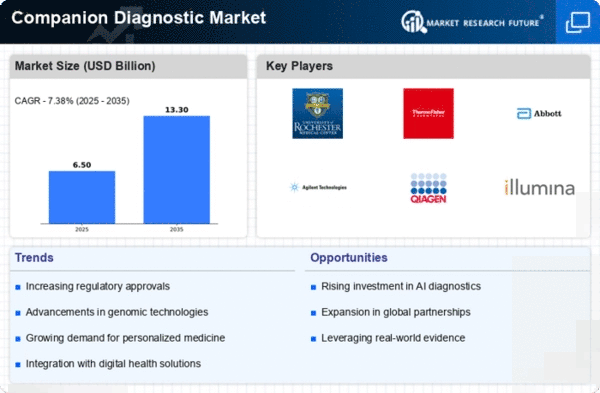
According to MRFR analysis, the Companion Diagnostic Market Size was valued at USD 6.05 Billion in 2024. The market is projected to grow from USD 6.57 Billion in 2025 to USD 13.3 Billion by 2035, registering a CAGR of 7.38% during the forecast 2025–2035. North America led the market with over 49.59% share, generating around USD 3 billion in revenue.    
 
The Companion Diagnostics Market is primarily driven by rising adoption of personalized medicine and increasing use of targeted therapies, enabling precise patient stratification, improved treatment efficacy, and optimized clinical outcomes, thereby accelerating demand for advanced diagnostic solutions across oncology and chronic diseases globally.
 
According to the World Health Organization (WHO), cancer accounts for nearly 10 million deaths annually, emphasizing the need for precise diagnostics. This growing burden is accelerating adoption of companion diagnostics to guide targeted therapies, improve treatment outcomes, and enhance precision medicine approaches worldwide.

Key Market Trends & Highlights

The Companion Diagnostic Market is poised for substantial growth driven by technological advancements and increasing demand for personalized medicine.

  • Hospitals account for 64% share, driven by advanced diagnostic infrastructure and high testing volumes. North America holds 49.59% share, while Europe accounts for 30% share valued at USD 1.8 billion in 2024. Oncology dominates with 59% share, driven by increasing global cancer burden and targeted therapy adoption. PCR technology leads with 62% share, supported by widespread use in genetic and molecular diagnostics.

Market Size & Forecast

2024 Market Size 6.05 (USD Billion)
2035 Market Size 13.3 (USD Billion)
CAGR (2025 - 2035) 7.38%
Largest Regional Market Share in 2024 North America

Major Players

Companies such as Roche (CH), Thermo Fisher Scientific (US), Abbott Laboratories (US), Agilent Technologies (US), Qiagen (DE), Illumina (US), Myriad Genetics (US), Hoffmann-La Roche (CH), BioMérieux (FR) are some of the major participants in the global market.

Market Trends

The Companion Diagnostic Market is currently experiencing a transformative phase, driven by advancements in personalized medicine and the increasing integration of genomic technologies. This market appears to be expanding as healthcare providers and pharmaceutical companies recognize the value of companion diagnostics in enhancing treatment efficacy and patient outcomes. The growing emphasis on precision medicine suggests a shift towards tailored therapies, which may lead to a more targeted approach in disease management.

Furthermore, regulatory bodies are likely to play a crucial role in shaping the landscape of this market, as they establish guidelines that govern the development and approval of companion diagnostics. In addition, the rising prevalence of chronic diseases and the demand for more effective therapeutic options are propelling the growth of the Companion Diagnostic Market. Collaborations between diagnostic companies and biopharmaceutical firms seem to be increasing, fostering innovation and the development of novel diagnostic tests. As the market evolves, it is essential to monitor the trends that influence its trajectory, as they may provide insights into future opportunities and challenges within this dynamic sector.

Integration of Artificial Intelligence

The incorporation of artificial intelligence in the Companion Diagnostic Market appears to enhance the accuracy and efficiency of diagnostic tests. AI technologies may facilitate the analysis of complex data sets, leading to improved patient stratification and treatment decisions. This trend suggests a potential for more rapid development cycles and the ability to identify novel biomarkers.

The Institute for Health Metrics and Evaluation (IHME) highlights the increasing global burden of chronic diseases requiring advanced diagnostic approaches. AI integration enhances biomarker identification and patient stratification, enabling more accurate and efficient diagnostics, thereby accelerating adoption of companion diagnostics in precision medicine.

Regulatory Advancements

Recent regulatory changes seem to be streamlining the approval processes for companion diagnostics, which could encourage innovation and expedite market entry for new tests. This trend indicates a growing recognition of the importance of these diagnostics in personalized medicine, potentially leading to increased investment in research and development.

The European Centre for Disease Prevention and Control (ECDC) emphasizes strengthening regulatory frameworks to support innovation in healthcare technologies. Streamlined approval processes for advanced diagnostics are improving accessibility, encouraging investment, and accelerating development of companion diagnostics across European healthcare systems.

Collaborative Ecosystems

The formation of collaborative ecosystems among stakeholders in the Companion Diagnostic Market appears to be on the rise. Partnerships between diagnostic companies, pharmaceutical firms, and research institutions may foster innovation and accelerate the development of integrated diagnostic solutions, enhancing the overall effectiveness of treatment strategies.

The Pan American Health Organization (PAHO) highlights increasing collaboration across healthcare sectors to improve disease diagnosis and treatment. Partnerships between pharmaceutical and diagnostic companies are accelerating development of targeted therapies and companion diagnostics, improving treatment precision and healthcare outcomes.


Companion Diagnostic Market Market Drivers

Market Growth Projections

The Global Companion Diagnostics Market Industry is poised for remarkable growth, with projections indicating a market value of 36.8 USD Billion in 2024 and an anticipated increase to 308.0 USD Billion by 2035. This trajectory suggests a compound annual growth rate (CAGR) of 21.32% from 2025 to 2035, reflecting the increasing integration of companion diagnostics into clinical practice.
 
The growth is driven by various factors, including advancements in technology, rising chronic disease prevalence, and regulatory support for personalized medicine. Such projections highlight the dynamic nature of the market and its potential to reshape healthcare delivery.

Increasing Investment in R&D

Investment in research and development is a critical driver of the Global Companion Diagnostics Market Industry. Pharmaceutical companies and biotechnology firms are allocating substantial resources to develop innovative companion diagnostics that can enhance treatment efficacy and patient outcomes.
 
This trend is supported by collaborations between industry stakeholders and academic institutions, fostering an environment conducive to innovation. As a result, the market is poised for significant growth, with projections indicating a market value of 36.8 USD Billion in 2024. The emphasis on R&D is likely to yield breakthroughs that further advance the field of personalized medicine.

Advancements in Genomic Technologies

Technological advancements in genomics are significantly influencing the Global Companion Diagnostics Market Industry. Innovations such as next-generation sequencing and CRISPR gene editing are enabling more precise identification of biomarkers associated with various diseases.
 
These technologies enhance the development of companion diagnostics, allowing for tailored treatment plans that improve patient outcomes. As a result, the market is expected to expand, with projections indicating a growth to 308.0 USD Billion by 2035. The integration of these advanced technologies into clinical practice is likely to drive demand for companion diagnostics, thereby reshaping the landscape of personalized medicine.

Growing Demand for Targeted Therapies

The demand for targeted therapies is a significant factor propelling the Global Companion Diagnostics Market Industry. As healthcare providers increasingly recognize the benefits of personalized treatment approaches, the need for companion diagnostics that can identify the most effective therapies for specific patient populations becomes paramount.
 
This shift towards precision medicine is evident in the rising number of targeted therapies approved by regulatory agencies. The market's growth is underscored by the projected increase in value to 308.0 USD Billion by 2035, reflecting the ongoing transformation in treatment paradigms that prioritize individualized care.

Rising Prevalence of Chronic Diseases

The Global Companion Diagnostics Market Industry is experiencing growth driven by the increasing prevalence of chronic diseases such as cancer, diabetes, and cardiovascular disorders. As these conditions become more widespread, the demand for personalized medicine rises, necessitating the development of companion diagnostics that can identify suitable therapies for individual patients.
 
For instance, the rise in cancer cases has led to a greater need for targeted therapies, which companion diagnostics can facilitate. This trend is reflected in the projected market value of 36.8 USD Billion in 2024, indicating a robust growth trajectory as healthcare systems adapt to these challenges.

Regulatory Support for Personalized Medicine

Regulatory bodies are increasingly supporting the development of personalized medicine, which is a key driver for the Global Companion Diagnostics Market Industry. Initiatives aimed at streamlining the approval process for companion diagnostics encourage innovation and investment in this sector.
 
For example, the FDA has established pathways that expedite the review of companion diagnostics alongside their corresponding therapies. This regulatory environment fosters collaboration between pharmaceutical companies and diagnostic developers, enhancing the market's growth potential. As the industry evolves, the supportive regulatory framework is likely to contribute to the anticipated CAGR of 21.32% from 2025 to 2035.

Market Segment Insights

By Application: Oncology (Largest) vs. Infectious Disease (Fastest-Growing)

In the Companion Diagnostic Market, the application segment is primarily dominated by oncology, given the rising prevalence of cancer and an increasing number of targeted therapies. Oncology diagnostics hold a significant market share of 59% due to the necessity of personalized medicine in cancer treatment, allowing healthcare providers to make informed decisions. Following closely behind is the infectious disease segment, which has been gaining traction in recent years as the need for rapid and accurate diagnostics grows. This trend has spurred innovation, with new companion diagnostics being developed to address various infectious pathogens. Growth trends in the Companion Diagnostic Market are being driven by advancements in technology, increasing investments in research and development, and a growing emphasis on <a title="precision medicine" href="https://www.marketresearchfuture.com/reports/precision-medicine-market-925" target="_blank" rel="noopener">precision medicine</a>. The oncology segment continues to spearhead the market, driven by the demand for tailored therapies, whereas the infectious disease segment is emerging rapidly due to the global focus on pandemic preparedness and rapid testing capabilities. This interplay between established and emerging applications indicates a promising future for the Companion Diagnostic Market as it adapts to evolving healthcare needs.

Oncology (Dominant) vs. Neurology (Emerging)

Oncology remains the dominant application in the Companion Diagnostic Market, characterized by sophisticated testing methods that enable precise identification of biomarkers for cancer treatment. This segment leverages advanced technologies such as next-generation sequencing and liquid biopsy platforms, fostering a robust pipeline of companion diagnostics tailored for various cancer types. As healthcare transitions toward more personalized approaches, oncological diagnostics will likely expand further. In contrast, neurology is an emerging application with significant potential, aimed at enhancing the diagnosis and treatment of neurological disorders. While still developing, advancements in neuroimaging and biomarker identification are opening new avenues for companion diagnostics in this field, addressing critical needs for accurate and timely diagnostics.

By Technology: Polymerase Chain Reaction (Largest) vs. Next Generation Sequencing (Fastest-Growing)

The Companion Diagnostic Market's technology segment is primarily dominated by Polymerase Chain Reaction (PCR) holding market share of 62%, which has established itself as the largest player due to its widespread application in detecting specific genetic material. Following PCR, Next Generation Sequencing (NGS) has emerged prominently, steadily gaining traction with an increasing market share. Other noteworthy technologies include Immunohistochemistry, In Situ Hybridization, and Microarrays, but they currently hold smaller market shares compared to PCR and NGS.

Technology: PCR (Dominant) vs. NGS (Emerging)

Polymerase Chain Reaction (PCR) serves as the dominant technology in the Companion Diagnostic Market, favored for its reliability and precision in amplifying DNA sequences. Its established presence supports not only traditional diagnostic methods but also paves the way for personalized medicine. In contrast, Next Generation Sequencing (NGS) is rapidly emergent, illustrating broad applications in genomics and oncology diagnostics. Its ability to analyze multiple genes simultaneously positions NGS as a catalyst for innovation, appealing to laboratories aiming for efficiency and comprehensive insights into patient-specific therapies. Both technologies continue to evolve, enhancing the precision of companion diagnostics.

By End Use: Hospitals (Largest) vs. Diagnostic Laboratories (Fastest-Growing)

In the Companion Diagnostic Market, hospitals hold a significant market share of 64%, serving as the largest segment due to their integral role in patient care and diagnostics. They are equipped with advanced technologies and skilled personnel to provide comprehensive testing and treatment options tailored to individual patients' needs. In contrast, diagnostic laboratories are rapidly expanding their market presence, driven by the growing demand for precision medicine and personalized healthcare solutions, which positions them as the fastest-growing segment of the market.

Hospitals (Dominant) vs. Diagnostic Laboratories (Emerging)

Hospitals are a cornerstone of the Companion Diagnostic Market, leveraging their established infrastructure and resources to deliver critical diagnostics aligned with patient treatment plans. Their dominant position is bolstered by their capacity to conduct a wide range of tests, manage large patient volumes, and facilitate direct access to specialists for immediate care decisions. On the other hand, diagnostic laboratories are emerging as essential players in this field, focusing on innovative testing methods and technologies that aid in quicker and more accurate diagnostic results. Their agility in adopting new methodologies and collaborations with biotech firms enhances their potential for growth, catering to the rising demand for companion diagnostics that support tailored therapeutic interventions.

Get more detailed insights about Companion Diagnostics Market Research Report - Forecast till 2035

Regional Insights

North America : Market Leader in Diagnostics

North America accounted for the largest share of the global Companion Diagnostics Market size, reaching USD 3 billion in 2024. The region's growth is driven by increasing demand for personalized medicine, advancements in genomic technologies, and supportive regulatory frameworks. The FDA's initiatives to expedite the approval of companion diagnostics further enhance market dynamics, fostering innovation and accessibility. 

The United States stands as the primary contributor, with major players like Roche, Thermo Fisher Scientific, and Abbott Laboratories leading the competitive landscape. The presence of advanced healthcare infrastructure and substantial investments in R&D bolster the market. As the region continues to embrace precision medicine, the competitive environment is expected to intensify, with collaborations and partnerships becoming more prevalent.

Growth is driven by strong adoption of personalized medicine, advanced healthcare infrastructure, and significant investments in genomic technologies. The Centers for Disease Control and Prevention (CDC) reports that cancer remains a leading cause of death in the U.S., with millions of new cases annually. This high burden is driving demand for companion diagnostics to support targeted therapies and precision treatment strategies.

Europe : Emerging Market Potential

Europe is witnessing a burgeoning Companion Diagnostic Market, projected to reach $1.8B by 2025. The region benefits from a robust regulatory environment, with the European Medicines Agency (EMA) actively promoting the integration of diagnostics in therapeutic pathways. Increasing prevalence of chronic diseases and a shift towards personalized medicine are key growth drivers, alongside government initiatives to enhance healthcare access.

 Leading countries such as Germany, France, and the UK are at the forefront, with significant contributions from companies like Qiagen and Illumina. The competitive landscape is characterized by a mix of established players and innovative startups, fostering a dynamic market. The emphasis on precision medicine and tailored therapies is expected to drive further investments and collaborations in the coming years.

Growth is driven by supportive regulatory frameworks, increasing focus on precision medicine, and rising prevalence of chronic diseases. According to the World Health Organization (WHO), chronic diseases account for the majority of deaths in Europe, increasing demand for advanced diagnostics. Growing investments in healthcare innovation are accelerating adoption of companion diagnostics to enhance treatment accuracy and patient outcomes.

Asia-Pacific : Rapidly Growing Market

The Asia-Pacific region is emerging as a significant player in the Companion Diagnostic Market, with a projected size of $1.1B by 2025. Factors such as increasing healthcare expenditure, rising awareness of personalized medicine, and government support for biotechnology are driving market growth. Regulatory bodies are also enhancing frameworks to facilitate the approval of innovative diagnostic solutions, contributing to a favorable market environment.

Countries like China, Japan, and India are leading the charge, with a growing presence of key players such as Myriad Genetics and Agilent Technologies. The competitive landscape is evolving, with local companies increasingly entering the market. As the region continues to invest in healthcare infrastructure and research, the demand for companion diagnostics is expected to surge, creating new opportunities for growth.

Middle East and Africa : Untapped Market Opportunities

The Middle East and Africa (MEA) region represents an untapped market for companion diagnostics, with a market size of $0.13B projected for 2025. The growth in this region is driven by increasing investments in healthcare infrastructure, rising prevalence of chronic diseases, and a growing focus on personalized medicine. Regulatory bodies are beginning to establish frameworks to support the development and approval of diagnostic tools, which is crucial for market expansion.

Countries such as South Africa and the UAE are leading the way, with a mix of local and international players entering the market. The competitive landscape is still developing, but there is significant potential for growth as awareness of companion diagnostics increases. As healthcare systems evolve, the demand for innovative diagnostic solutions is expected to rise, paving the way for new entrants and collaborations.


Key Players and Competitive Insights

The Companion Diagnostic Market is currently characterized by a dynamic competitive landscape, driven by advancements in personalized medicine and the increasing demand for targeted therapies. Key players such as Roche (CH), Thermo Fisher Scientific (US), and Illumina (US) are at the forefront, leveraging their extensive research capabilities and technological innovations to enhance their market positions. Roche (CH) focuses on integrating diagnostics with therapeutic development, thereby creating a seamless approach to patient care.
 
Meanwhile, Thermo Fisher Scientific (US) emphasizes its commitment to expanding its product portfolio through strategic acquisitions and partnerships, which enhances its capabilities in genomic and proteomic analysis. Illumina (US) continues to innovate in sequencing technologies, positioning itself as a leader in genomic diagnostics, which is crucial for the development of companion diagnostics.The business tactics employed by these companies reflect a concerted effort to optimize supply chains and localize manufacturing to meet regional demands. The market structure appears moderately fragmented, with a mix of established players and emerging companies vying for market share. This fragmentation is indicative of the diverse applications of companion diagnostics across various therapeutic areas, which collectively influence the competitive dynamics of the market.
 

In November Roche (CH) announced a collaboration with a leading biotechnology firm to develop a novel companion diagnostic for a promising oncology therapy. This strategic partnership is expected to enhance Roche's capabilities in precision medicine, allowing for more tailored treatment options for patients. The collaboration underscores Roche's commitment to integrating diagnostics with therapeutic advancements, thereby reinforcing its competitive edge in the market.
 

In October Thermo Fisher Scientific (US) launched a new platform designed to streamline the development of companion diagnostics. This platform aims to reduce the time and cost associated with bringing new diagnostics to market, which is particularly relevant in the fast-paced environment of personalized medicine. The introduction of this platform is likely to strengthen Thermo Fisher's position as a key player in the companion diagnostic space, as it enhances the efficiency of diagnostic development processes.
 

In September Illumina (US) expanded its partnership with a major pharmaceutical company to co-develop a suite of companion diagnostics for multiple cancer therapies. This expansion reflects Illumina's strategy to deepen its involvement in the oncology space, where the demand for precise diagnostics is rapidly growing. By aligning with pharmaceutical companies, Illumina is not only enhancing its product offerings but also solidifying its role as a critical player in the development of targeted therapies.
 

As of December the Companion Diagnostic Market is witnessing trends that emphasize digitalization, sustainability, and the integration of artificial intelligence (AI) into diagnostic processes. Strategic alliances among key players are increasingly shaping the competitive landscape, fostering innovation and collaboration. The shift from price-based competition to a focus on technological advancements and supply chain reliability is evident, suggesting that future competitive differentiation will hinge on the ability to innovate and adapt to evolving market demands.

Key Companies in the Companion Diagnostic Market include

Industry Developments

December 2021: QIAGEN N.V. (Germany) partnered with Denovo Biopharma (US) to develop companion diagnostic tests for the treatment of diffuse large B-cell lymphoma.

October 2021: Agilent Technologies, Inc. (US) PD-L1 IHC 22C3 pharmadx assay got approval in the European Union for use in triple-negative breast cancer.

September 2021: Food Drug and Administration approved tissue based NGS companion diagnostics for Takeda's targeted therapy for NSCLC patients with EGFR Exon 20 insertion mutations.

Future Outlook

Companion Diagnostic Market Future Outlook

The Companion Diagnostic Market size is projected to reach USD 13.3 Billion by 2035, growing at a CAGR of 7.38%.

New opportunities lie in:

  • <p>Development of AI-driven diagnostic platforms for enhanced accuracy. Expansion of partnerships with pharmaceutical companies for co-development. Investment in <a title="telehealth" href="https://www.marketresearchfuture.com/reports/telehealth-market-900" target="_blank" rel="noopener">telehealth</a> solutions for remote diagnostic services.</p>

By 2035, the Companion Diagnostic Market is expected to be robust, reflecting substantial growth and innovation.

Market Segmentation

Companion Diagnostic Market End Use Outlook

  • Hospitals
  • Diagnostic Laboratories
  • Research Institutions
  • Pharmaceutical Companies
  • Biotechnology Companies

Companion Diagnostic Market Technology Outlook

  • Polymerase Chain Reaction
  • Next Generation Sequencing
  • In Situ Hybridization
  • Immunohistochemistry
  • Microarray

Companion Diagnostic Market Application Outlook

  • Oncology
  • Infectious Disease
  • Cardiology
  • Neurology
  • Genetic Testing

Report Scope

MARKET SIZE 2024 6.05(USD Billion)
MARKET SIZE 2025 6.57(USD Billion)
MARKET SIZE 2035 13.3(USD Billion)
COMPOUND ANNUAL GROWTH RATE (CAGR) 7.38% (2025 - 2035)
REPORT COVERAGE Revenue Forecast, Competitive Landscape, Growth Factors, and Trends
BASE YEAR 2024
Market Forecast Period 2025 - 2035
Historical Data 2019 - 2024
Market Forecast Units USD Billion
Key Companies Profiled Roche (CH), Thermo Fisher Scientific (US), Abbott Laboratories (US), Agilent Technologies (US), Qiagen (DE), Illumina (US), Myriad Genetics (US), Hoffmann-La Roche (CH), BioMérieux (FR)
Segments Covered Application, Technology, End Use
Key Market Opportunities Integration of artificial intelligence in Companion Diagnostic Market enhances personalized medicine and patient outcomes.
Key Market Dynamics Rising demand for personalized medicine drives innovation and regulatory adaptations in the Companion Diagnostic Market.
Countries Covered North America, Europe, APAC, South America, MEA

FAQs

What is the current valuation of the Companion Diagnostic Market as of 2024?

<p>The Companion Diagnostic Market was valued at 6.05 USD Billion in 2024.</p>

What is the projected market size for the Companion Diagnostic Market in 2035?

<p>The market is projected to reach 13.3 USD Billion by 2035.</p>

What is the expected CAGR for the Companion Diagnostic Market during the forecast period 2025 - 2035?

<p>The expected CAGR for the Companion Diagnostic Market during 2025 - 2035 is 7.38%.</p>

Which application segment is anticipated to dominate the Companion Diagnostic Market?

<p>The Oncology application segment is expected to dominate, with a valuation increase from 2.5 to 5.5 USD Billion.</p>

How does the Infectious Disease segment perform in the Companion Diagnostic Market?

<p>The Infectious Disease segment is projected to grow from 1.2 to 2.5 USD Billion.</p>

What technologies are driving growth in the Companion Diagnostic Market?

<p>Key technologies include Polymerase Chain Reaction and Next Generation Sequencing, with valuations expected to rise significantly.</p>

Which end-use segment is likely to see the highest growth in the Companion Diagnostic Market?

<p>Hospitals are likely to see the highest growth, with a projected increase from 1.5 to 3.2 USD Billion.</p>

Who are the key players in the Companion Diagnostic Market?

Key players include Roche, Thermo Fisher Scientific, and Abbott Laboratories, among others.

What is the projected growth for the Cardiology application segment?

The Cardiology segment is expected to grow from 0.8 to 1.8 USD Billion.

How does the market for Genetic Testing compare to other segments?

The Genetic Testing segment is projected to increase from 1.0 to 2.0 USD Billion, indicating robust growth.

  1. SECTION I: EXECUTIVE SUMMARY AND KEY HIGHLIGHTS |
    1. EXECUTIVE SUMMARY | |
      1. Market Overview | |
      2. Key Findings | |
      3. Market Segmentation | |
      4. Competitive Landscape | |
      5. Challenges and Opportunities | |
      6. Future Outlook 2
  2. SECTION II: SCOPING, METHODOLOGY AND MARKET STRUCTURE |
    1. MARKET INTRODUCTION | |
      1. Definition | |
      2. Scope of the study | | |
    2. RESEARCH METHODOLOGY | |
      1. Overview | |
      2. Data Mining | |
      3. Secondary Research | |
      4. Primary Research | | |
      5. Forecasting Model | |
      6. Market Size Estimation | | |
      7. Data Triangulation | |
      8. Validation 3
  3. SECTION III: QUALITATIVE ANALYSIS |
    1. MARKET DYNAMICS | |
      1. Overview | |
      2. Drivers | |
      3. Restraints | |
      4. Opportunities |
    2. MARKET FACTOR ANALYSIS | |
      1. Value chain Analysis | |
      2. Porter's Five Forces Analysis | | |
      3. COVID-19 Impact Analysis | | |
  4. SECTION IV: QUANTITATIVE ANALYSIS |
    1. Healthcare, BY Application (USD Billion) | |
      1. Oncology | |
      2. Infectious Disease | |
      3. Cardiology | |
      4. Neurology | |
      5. Genetic Testing |
    2. Healthcare, BY Technology (USD Billion) | |
      1. Polymerase Chain Reaction | |
      2. Next Generation Sequencing | |
      3. In Situ Hybridization | |
      4. Immunohistochemistry | |
      5. Microarray |
    3. Healthcare, BY End Use (USD Billion) | |
      1. Hospitals | |
      2. Diagnostic Laboratories | |
      3. Research Institutions | |
      4. Pharmaceutical Companies | |
      5. Contract Research Organizations |
    4. Healthcare, BY Region (USD Billion) | |
      1. North America | | |
      2. Europe | | |
      3. APAC | | |
      4. South America | | |
      5. MEA | | |
  5. SECTION V: COMPETITIVE ANALYSIS |
    1. Competitive Landscape | |
      1. Overview | |
      2. Competitive Analysis | |
      3. Market share Analysis | |
      4. Major Growth Strategy in the Healthcare | |
      5. Competitive Benchmarking | |
      6. Leading Players in Terms of Number of Developments in the Healthcare | |
      7. Key developments and growth strategies | | |
      8. Major Players Financial Matrix | | |
    2. Company Profiles | |
      1. Roche (CH) | | |
      2. Thermo Fisher Scientific (US) | | |
      3. Abbott Laboratories (US) | | |
      4. Agilent Technologies (US) | | |
      5. Qiagen (DE) | | |
      6. Illumina (US) | | |
      7. Myriad Genetics (US) | | |
      8. Hologic (US) | | |
      9. BioMérieux (FR) | | |
    3. Appendix | |
      1. References | |
      2. Related Reports 6 LIST OF FIGURES |
    4. MARKET SYNOPSIS |
    5. NORTH AMERICA MARKET ANALYSIS |
    6. US MARKET ANALYSIS BY APPLICATION |
    7. US MARKET ANALYSIS BY TECHNOLOGY |
    8. US MARKET ANALYSIS BY END USE |
    9. CANADA MARKET ANALYSIS BY APPLICATION |
    10. CANADA MARKET ANALYSIS BY TECHNOLOGY |
    11. CANADA MARKET ANALYSIS BY END USE |
    12. EUROPE MARKET ANALYSIS |
    13. GERMANY MARKET ANALYSIS BY APPLICATION |
    14. GERMANY MARKET ANALYSIS BY TECHNOLOGY |
    15. GERMANY MARKET ANALYSIS BY END USE |
    16. UK MARKET ANALYSIS BY APPLICATION |
    17. UK MARKET ANALYSIS BY TECHNOLOGY |
    18. UK MARKET ANALYSIS BY END USE |
    19. FRANCE MARKET ANALYSIS BY APPLICATION |
    20. FRANCE MARKET ANALYSIS BY TECHNOLOGY |
    21. FRANCE MARKET ANALYSIS BY END USE |
    22. RUSSIA MARKET ANALYSIS BY APPLICATION |
    23. RUSSIA MARKET ANALYSIS BY TECHNOLOGY |
    24. RUSSIA MARKET ANALYSIS BY END USE |
    25. ITALY MARKET ANALYSIS BY APPLICATION |
    26. ITALY MARKET ANALYSIS BY TECHNOLOGY |
    27. ITALY MARKET ANALYSIS BY END USE |
    28. SPAIN MARKET ANALYSIS BY APPLICATION |
    29. SPAIN MARKET ANALYSIS BY TECHNOLOGY |
    30. SPAIN MARKET ANALYSIS BY END USE |
    31. REST OF EUROPE MARKET ANALYSIS BY APPLICATION |
    32. REST OF EUROPE MARKET ANALYSIS BY TECHNOLOGY |
    33. REST OF EUROPE MARKET ANALYSIS BY END USE |
    34. APAC MARKET ANALYSIS |
    35. CHINA MARKET ANALYSIS BY APPLICATION |
    36. CHINA MARKET ANALYSIS BY TECHNOLOGY |
    37. CHINA MARKET ANALYSIS BY END USE |
    38. INDIA MARKET ANALYSIS BY APPLICATION |
    39. INDIA MARKET ANALYSIS BY TECHNOLOGY |
    40. INDIA MARKET ANALYSIS BY END USE |
    41. JAPAN MARKET ANALYSIS BY APPLICATION |
    42. JAPAN MARKET ANALYSIS BY TECHNOLOGY |
    43. JAPAN MARKET ANALYSIS BY END USE |
    44. SOUTH KOREA MARKET ANALYSIS BY APPLICATION |
    45. SOUTH KOREA MARKET ANALYSIS BY TECHNOLOGY |
    46. SOUTH KOREA MARKET ANALYSIS BY END USE |
    47. MALAYSIA MARKET ANALYSIS BY APPLICATION |
    48. MALAYSIA MARKET ANALYSIS BY TECHNOLOGY |
    49. MALAYSIA MARKET ANALYSIS BY END USE |
    50. THAILAND MARKET ANALYSIS BY APPLICATION |
    51. THAILAND MARKET ANALYSIS BY TECHNOLOGY |
    52. THAILAND MARKET ANALYSIS BY END USE |
    53. INDONESIA MARKET ANALYSIS BY APPLICATION |
    54. INDONESIA MARKET ANALYSIS BY TECHNOLOGY |
    55. INDONESIA MARKET ANALYSIS BY END USE |
    56. REST OF APAC MARKET ANALYSIS BY APPLICATION |
    57. REST OF APAC MARKET ANALYSIS BY TECHNOLOGY |
    58. REST OF APAC MARKET ANALYSIS BY END USE |
    59. SOUTH AMERICA MARKET ANALYSIS |
    60. BRAZIL MARKET ANALYSIS BY APPLICATION |
    61. BRAZIL MARKET ANALYSIS BY TECHNOLOGY |
    62. BRAZIL MARKET ANALYSIS BY END USE |
    63. MEXICO MARKET ANALYSIS BY APPLICATION |
    64. MEXICO MARKET ANALYSIS BY TECHNOLOGY |
    65. MEXICO MARKET ANALYSIS BY END USE |
    66. ARGENTINA MARKET ANALYSIS BY APPLICATION |
    67. ARGENTINA MARKET ANALYSIS BY TECHNOLOGY |
    68. ARGENTINA MARKET ANALYSIS BY END USE |
    69. REST OF SOUTH AMERICA MARKET ANALYSIS BY APPLICATION |
    70. REST OF SOUTH AMERICA MARKET ANALYSIS BY TECHNOLOGY |
    71. REST OF SOUTH AMERICA MARKET ANALYSIS BY END USE |
    72. MEA MARKET ANALYSIS |
    73. GCC COUNTRIES MARKET ANALYSIS BY APPLICATION |
    74. GCC COUNTRIES MARKET ANALYSIS BY TECHNOLOGY |
    75. GCC COUNTRIES MARKET ANALYSIS BY END USE |
    76. SOUTH AFRICA MARKET ANALYSIS BY APPLICATION |
    77. SOUTH AFRICA MARKET ANALYSIS BY TECHNOLOGY |
    78. SOUTH AFRICA MARKET ANALYSIS BY END USE |
    79. REST OF MEA MARKET ANALYSIS BY APPLICATION |
    80. REST OF MEA MARKET ANALYSIS BY TECHNOLOGY |
    81. REST OF MEA MARKET ANALYSIS BY END USE |
    82. KEY BUYING CRITERIA OF HEALTHCARE |
    83. RESEARCH PROCESS OF MRFR |
    84. DRO ANALYSIS OF HEALTHCARE |
    85. DRIVERS IMPACT ANALYSIS: HEALTHCARE |
    86. RESTRAINTS IMPACT ANALYSIS: HEALTHCARE |
    87. SUPPLY / VALUE CHAIN: HEALTHCARE |
    88. HEALTHCARE, BY APPLICATION, 2024 (% SHARE) |
    89. HEALTHCARE, BY APPLICATION, 2024 TO 2035 (USD Billion) |
    90. HEALTHCARE, BY TECHNOLOGY, 2024 (% SHARE) |
    91. HEALTHCARE, BY TECHNOLOGY, 2024 TO 2035 (USD Billion) |
    92. HEALTHCARE, BY END USE, 2024 (% SHARE) |
    93. HEALTHCARE, BY END USE, 2024 TO 2035 (USD Billion) |
    94. BENCHMARKING OF MAJOR COMPETITORS 7 LIST OF TABLES |
    95. LIST OF ASSUMPTIONS | |
      1. |
    96. North America MARKET SIZE ESTIMATES; FORECAST | |
      1. BY APPLICATION, 2025-2035 (USD Billion) | |
      2. BY TECHNOLOGY, 2025-2035 (USD Billion) | |
      3. BY END USE, 2025-2035 (USD Billion) |
    97. US MARKET SIZE ESTIMATES; FORECAST | |
      1. BY APPLICATION, 2025-2035 (USD Billion) | |
      2. BY TECHNOLOGY, 2025-2035 (USD Billion) | |
      3. BY END USE, 2025-2035 (USD Billion) |
    98. Canada MARKET SIZE ESTIMATES; FORECAST | |
      1. BY APPLICATION, 2025-2035 (USD Billion) | |
      2. BY TECHNOLOGY, 2025-2035 (USD Billion) | |
      3. BY END USE, 2025-2035 (USD Billion) |
    99. Europe MARKET SIZE ESTIMATES; FORECAST | |
      1. BY APPLICATION, 2025-2035 (USD Billion) | |
      2. BY TECHNOLOGY, 2025-2035 (USD Billion) | |
      3. BY END USE, 2025-2035 (USD Billion) |
    100. Germany MARKET SIZE ESTIMATES; FORECAST | |
      1. BY APPLICATION, 2025-2035 (USD Billion) | |
      2. BY TECHNOLOGY, 2025-2035 (USD Billion) | |
      3. BY END USE, 2025-2035 (USD Billion) |
    101. UK MARKET SIZE ESTIMATES; FORECAST | |
      1. BY APPLICATION, 2025-2035 (USD Billion) | |
      2. BY TECHNOLOGY, 2025-2035 (USD Billion) | |
      3. BY END USE, 2025-2035 (USD Billion) |
    102. France MARKET SIZE ESTIMATES; FORECAST | |
      1. BY APPLICATION, 2025-2035 (USD Billion) | |
      2. BY TECHNOLOGY, 2025-2035 (USD Billion) | |
      3. BY END USE, 2025-2035 (USD Billion) |
    103. Russia MARKET SIZE ESTIMATES; FORECAST | |
      1. BY APPLICATION, 2025-2035 (USD Billion) | |
      2. BY TECHNOLOGY, 2025-2035 (USD Billion) | |
      3. BY END USE, 2025-2035 (USD Billion) |
    104. Italy MARKET SIZE ESTIMATES; FORECAST | |
      1. BY APPLICATION, 2025-2035 (USD Billion) | |
      2. BY TECHNOLOGY, 2025-2035 (USD Billion) | |
      3. BY END USE, 2025-2035 (USD Billion) |
    105. Spain MARKET SIZE ESTIMATES; FORECAST | |
      1. BY APPLICATION, 2025-2035 (USD Billion) | |
      2. BY TECHNOLOGY, 2025-2035 (USD Billion) | |
      3. BY END USE, 2025-2035 (USD Billion) |
    106. Rest of Europe MARKET SIZE ESTIMATES; FORECAST | |
      1. BY APPLICATION, 2025-2035 (USD Billion) | |
      2. BY TECHNOLOGY, 2025-2035 (USD Billion) | |
      3. BY END USE, 2025-2035 (USD Billion) |
    107. APAC MARKET SIZE ESTIMATES; FORECAST | |
      1. BY APPLICATION, 2025-2035 (USD Billion) | |
      2. BY TECHNOLOGY, 2025-2035 (USD Billion) | |
      3. BY END USE, 2025-2035 (USD Billion) |
    108. China MARKET SIZE ESTIMATES; FORECAST | |
      1. BY APPLICATION, 2025-2035 (USD Billion) | |
      2. BY TECHNOLOGY, 2025-2035 (USD Billion) | |
      3. BY END USE, 2025-2035 (USD Billion) |
    109. India MARKET SIZE ESTIMATES; FORECAST | |
      1. BY APPLICATION, 2025-2035 (USD Billion) | |
      2. BY TECHNOLOGY, 2025-2035 (USD Billion) | |
      3. BY END USE, 2025-2035 (USD Billion) |
    110. Japan MARKET SIZE ESTIMATES; FORECAST | |
      1. BY APPLICATION, 2025-2035 (USD Billion) | |
      2. BY TECHNOLOGY, 2025-2035 (USD Billion) | |
      3. BY END USE, 2025-2035 (USD Billion) |
    111. South Korea MARKET SIZE ESTIMATES; FORECAST | |
      1. BY APPLICATION, 2025-2035 (USD Billion) | |
      2. BY TECHNOLOGY, 2025-2035 (USD Billion) | |
      3. BY END USE, 2025-2035 (USD Billion) |
    112. Malaysia MARKET SIZE ESTIMATES; FORECAST | |
      1. BY APPLICATION, 2025-2035 (USD Billion) | |
      2. BY TECHNOLOGY, 2025-2035 (USD Billion) | |
      3. BY END USE, 2025-2035 (USD Billion) |
    113. Thailand MARKET SIZE ESTIMATES; FORECAST | |
      1. BY APPLICATION, 2025-2035 (USD Billion) | |
      2. BY TECHNOLOGY, 2025-2035 (USD Billion) | |
      3. BY END USE, 2025-2035 (USD Billion) |
    114. Indonesia MARKET SIZE ESTIMATES; FORECAST | |
      1. BY APPLICATION, 2025-2035 (USD Billion) | |
      2. BY TECHNOLOGY, 2025-2035 (USD Billion) | |
      3. BY END USE, 2025-2035 (USD Billion) |
    115. Rest of APAC MARKET SIZE ESTIMATES; FORECAST | |
      1. BY APPLICATION, 2025-2035 (USD Billion) | |
      2. BY TECHNOLOGY, 2025-2035 (USD Billion) | |
      3. BY END USE, 2025-2035 (USD Billion) |
    116. South America MARKET SIZE ESTIMATES; FORECAST | |
      1. BY APPLICATION, 2025-2035 (USD Billion) | |
      2. BY TECHNOLOGY, 2025-2035 (USD Billion) | |
      3. BY END USE, 2025-2035 (USD Billion) |
    117. Brazil MARKET SIZE ESTIMATES; FORECAST | |
      1. BY APPLICATION, 2025-2035 (USD Billion) | |
      2. BY TECHNOLOGY, 2025-2035 (USD Billion) | |
      3. BY END USE, 2025-2035 (USD Billion) |
    118. Mexico MARKET SIZE ESTIMATES; FORECAST | |
      1. BY APPLICATION, 2025-2035 (USD Billion) | |
      2. BY TECHNOLOGY, 2025-2035 (USD Billion) | |
      3. BY END USE, 2025-2035 (USD Billion) |
    119. Argentina MARKET SIZE ESTIMATES; FORECAST | |
      1. BY APPLICATION, 2025-2035 (USD Billion) | |
      2. BY TECHNOLOGY, 2025-2035 (USD Billion) | |
      3. BY END USE, 2025-2035 (USD Billion) |
    120. Rest of South America MARKET SIZE ESTIMATES; FORECAST | |
      1. BY APPLICATION, 2025-2035 (USD Billion) | |
      2. BY TECHNOLOGY, 2025-2035 (USD Billion) | |
      3. BY END USE, 2025-2035 (USD Billion) |
    121. MEA MARKET SIZE ESTIMATES; FORECAST | |
      1. BY APPLICATION, 2025-2035 (USD Billion) | |
      2. BY TECHNOLOGY, 2025-2035 (USD Billion) | |
      3. BY END USE, 2025-2035 (USD Billion) |
    122. GCC Countries MARKET SIZE ESTIMATES; FORECAST | |
      1. BY APPLICATION, 2025-2035 (USD Billion) | |
      2. BY TECHNOLOGY, 2025-2035 (USD Billion) | |
      3. BY END USE, 2025-2035 (USD Billion) |
    123. South Africa MARKET SIZE ESTIMATES; FORECAST | |
      1. BY APPLICATION, 2025-2035 (USD Billion) | |
      2. BY TECHNOLOGY, 2025-2035 (USD Billion) | |
      3. BY END USE, 2025-2035 (USD Billion) |
    124. Rest of MEA MARKET SIZE ESTIMATES; FORECAST | |
      1. BY APPLICATION, 2025-2035 (USD Billion) | |
      2. BY TECHNOLOGY, 2025-2035 (USD Billion) | |
      3. BY END USE, 2025-2035 (USD Billion) |
    125. PRODUCT LAUNCH/PRODUCT DEVELOPMENT/APPROVAL | |
      1. |
    126. ACQUISITION/PARTNERSHIP | |

Healthcare Market Segmentation

Healthcare By Application (USD Billion, 2025-2035)

  • Oncology
  • Infectious Disease
  • Cardiology
  • Neurology
  • Genetic Testing

Healthcare By Technology (USD Billion, 2025-2035)

  • Polymerase Chain Reaction
  • Next Generation Sequencing
  • In Situ Hybridization
  • Immunohistochemistry
  • Microarray

Healthcare By End Use (USD Billion, 2025-2035)

  • Hospitals
  • Diagnostic Laboratories
  • Research Institutions
  • Pharmaceutical Companies
  • Contract Research Organizations
Infographic

Free Sample Request

Kindly complete the form below to receive a free sample of this Report

Get Free Sample

Customer Strories

Compare Licence

×
Features License Type
Single User Multiuser License Enterprise User
Price $4,950 $5,950 $7,250
Maximum User Access Limit 1 User Upto 10 Users Unrestricted Access Throughout the Organization
Free Customization
Direct Access to Analyst
Deliverable Format
Platform Access
Discount on Next Purchase 10% 15% 15%
Printable Versions