Request Free Sample ×

Kindly complete the form below to receive a free sample of this Report

* Please use a valid business email

Leading companies partner with us for data-driven Insights

clients tt-cursor
Hero Background

Humic-based Biostimulants Market

ID: MRFR/Agri/9106-HCR
90 Pages
Snehal Singh
April 2026

Humic-based Biostimulants Market Size, Share, Industry Trend & Analysis Research Report Information By Product Product Type (Humic Acid, Fulvic Acid, Potassium Humate), By Crop Product Type (Fruits & Vegetables, Cereals, Oilseeds, Fiber Crops, and Others), By Form (Dry, Liquid), By Mode of Application (Foliar Treatment, Soil Treatment, Seed Treatment), And By Region (North America, Europe, Asia-Pacific, And Rest Of The World) – Forecast Till 2035

Share:
Download PDF ×

We do not share your information with anyone. However, we may send you emails based on your report interest from time to time. You may contact us at any time to opt-out.

Humic-based Biostimulants Market Infographic
Purchase Options

Humic-based Biostimulants Market Summary

As per Market Research Future analysis, the Humic Based Biostimulants Market Size was estimated at 0.591 USD Billion in 2024. The Humic Based Biostimulants industry is projected to grow from USD 0.6402 Billion in 2025 to USD 1.424 Billion by 2035, exhibiting a compound annual growth rate (CAGR) of 8.32% during the forecast period 2025 - 2035

Key Market Trends & Highlights

The Humic Based Biostimulants Market is experiencing robust growth driven by sustainability and innovation.

  • The market is increasingly oriented towards sustainability, reflecting a broader global trend in agriculture.
  • Technological advancements are facilitating the development of more effective humic-based products, enhancing their appeal.
  • Humic acid remains the largest segment, while fulvic acid is emerging as the fastest-growing category in the market.
  • Rising demand for organic produce and regulatory support for sustainable practices are key drivers propelling market expansion.

Market Size & Forecast

2024 Market Size 0.591 (USD Billion)
2035 Market Size 1.424 (USD Billion)
CAGR (2025 - 2035) 8.32%

Major Players

Nutrien Ltd (CA), Yara International ASA (NO), BASF SE (DE), Syngenta AG (CH), FMC Corporation (US), Valagro S.p.A. (IT), Koppert Biological Systems (NL), Biolchim S.p.A. (IT), AgriLife (US)

Our Impact
Enabled $4.3B Revenue Impact for Fortune 500 and Leading Multinationals
Partnering with 2000+ Global Organizations Each Year
30K+ Citations by Top-Tier Firms in the Industry

Humic-based Biostimulants Market Trends

The Humic Based Biostimulants Market is currently experiencing a notable transformation, driven by increasing awareness of sustainable agricultural practices and the need for enhanced crop productivity. As farmers and agricultural stakeholders seek alternatives to synthetic fertilizers, humic substances are gaining traction due to their ability to improve soil health, enhance nutrient uptake, and stimulate plant growth. This shift towards organic solutions reflects a broader trend in the agricultural sector, where environmental concerns and regulatory pressures are prompting a reevaluation of traditional farming methods. Furthermore, the integration of humic biostimulants into various agricultural systems appears to be fostering a more resilient approach to crop management, potentially leading to improved yields and reduced environmental impact. In addition to sustainability, the Humic Based Biostimulants Market is influenced by advancements in research and technology. Ongoing studies are uncovering the multifaceted benefits of humic substances, including their role in soil microbiome enhancement and stress tolerance in plants. This growing body of evidence is likely to encourage further adoption among farmers, as they seek to optimize their practices in an increasingly competitive landscape. Moreover, the market is witnessing a rise in product innovation, with manufacturers developing new formulations and delivery methods to enhance the efficacy of humic biostimulants. As these trends continue to evolve, the market is poised for significant growth, reflecting a shift towards more sustainable and effective agricultural solutions.

Sustainability Focus

The emphasis on sustainable agricultural practices is reshaping the Humic Based Biostimulants Market. As environmental concerns rise, farmers are increasingly turning to organic solutions that promote soil health and reduce reliance on chemical fertilizers.

Technological Advancements

Innovations in research are revealing the diverse benefits of humic substances, including their impact on soil microbiomes and plant resilience. This knowledge is likely to drive greater adoption among agricultural practitioners.

Product Innovation

The market is witnessing a surge in new formulations and delivery methods for humic biostimulants. Manufacturers are focusing on enhancing product efficacy, which may lead to increased usage in various agricultural applications.

Humic-based Biostimulants Market Drivers

Regulatory Support

Regulatory frameworks that support the use of biostimulants are likely to bolster the Humic Based Biostimulants Market. Governments in various regions are increasingly recognizing the benefits of biostimulants in promoting sustainable agriculture. This regulatory support may include the establishment of guidelines for the registration and use of humic-based products, thereby enhancing market confidence. For instance, the European Union has implemented regulations that facilitate the approval of biostimulants, which could lead to increased adoption among farmers. As a result, the market for humic-based biostimulants is expected to expand, driven by favorable policies that encourage the use of natural and organic inputs in agriculture.

Sustainability Initiatives

The increasing emphasis on sustainable agricultural practices appears to be a primary driver for the Humic Based Biostimulants Market. Farmers and agricultural stakeholders are increasingly seeking eco-friendly solutions to enhance soil health and crop productivity. Humic substances, derived from organic matter, contribute to soil fertility and structure, thereby promoting sustainable farming. According to recent data, the market for biostimulants, including humic-based products, is projected to grow at a compound annual growth rate of approximately 12% over the next five years. This growth is indicative of a broader trend towards sustainable agriculture, where humic-based biostimulants play a crucial role in reducing chemical inputs and improving environmental outcomes.

Increased Awareness and Education

The rising awareness and education regarding the benefits of humic-based products are likely to drive the Humic Based Biostimulants Market. Educational initiatives aimed at farmers and agricultural professionals are helping to disseminate knowledge about the advantages of using humic substances in crop production. Workshops, seminars, and online resources are becoming more prevalent, fostering a better understanding of how humic-based biostimulants can improve soil health and crop performance. This increased awareness is expected to lead to higher adoption rates among farmers, as they recognize the potential benefits of incorporating humic-based products into their agricultural practices.

Rising Demand for Organic Produce

The growing consumer preference for organic produce is influencing the Humic Based Biostimulants Market. As consumers become more health-conscious, the demand for organic fruits and vegetables continues to rise. Humic-based biostimulants are recognized for their ability to enhance the quality and yield of organic crops, making them an attractive option for organic farmers. Market data indicates that the organic food sector is experiencing robust growth, with projections suggesting a market size increase of over 10% annually. This trend is likely to drive the adoption of humic-based biostimulants, as farmers seek to meet the rising demand for organic products while maintaining soil health and fertility.

Technological Advancements in Agriculture

Technological innovations in agriculture are contributing to the growth of the Humic Based Biostimulants Market. The integration of advanced technologies, such as precision agriculture and data analytics, allows farmers to optimize the application of humic-based products. These technologies enable more efficient use of resources, leading to improved crop yields and reduced environmental impact. Furthermore, the development of new formulations and delivery methods for humic substances enhances their effectiveness. As farmers increasingly adopt these technologies, the demand for humic-based biostimulants is expected to rise, reflecting a shift towards more efficient and sustainable agricultural practices.

Market Segment Insights

By Product Type: Humic Acid (Largest) vs. Fulvic Acid (Fastest-Growing)

In the Humic Based Biostimulants Market, Humic Acid holds the largest market share, accounting for a significant portion of the sales due to its established presence and versatility in agricultural applications. In contrast, Fulvic Acid, while currently smaller in market share, is gaining traction rapidly. Both segments are vital to the biostimulants portfolio, but the dynamics are shifting as consumer preferences evolve towards more sustainable and organic solutions. As agricultural practices increasingly emphasize sustainability and productivity, the growth trends for biostimulants are influenced heavily by the demand for natural growth enhancers. Fulvic Acid is recognized for its superior bioavailability, which is driving its rapid adoption in various crops and soil types. Additionally, the combined benefits of these products are being highlighted in marketing efforts, promoting their use in integrated crop management practices.

Humic Acid (Dominant) vs. Potassium Humate (Emerging)

Humic Acid is the dominant player in the Humic Based Biostimulants Market, known for its ability to improve soil structure, water retention, and nutrient availability. It has been the go-to choice for farmers seeking to enhance productivity sustainably. In contrast, Potassium Humate is an emerging product that is gaining recognition for its role in increasing potassium availability in the soil, which is essential for plant growth. While Humic Acid benefits from established usage and recognition, Potassium Humate is increasingly being adopted, particularly in regions where potassium-deficient soils are prevalent. As research continues to reveal the advantages of Potassium Humate, its market position is expected to strengthen, making it a key player in the biostimulant landscape.

By Crop Type: Fruits & Vegetables (Largest) vs. Cereals (Fastest-Growing)

The Humic Based Biostimulants Market exhibits a distinct market share distribution among various crop types. Fruits & Vegetables hold the largest segment share due to their high demand in the agricultural sector, driven by consumer preferences for organic and sustainable produce. This segment's dominance is reinforced by increased investments in biostimulants aimed at enhancing crop yield and quality. On the other hand, the Cereals segment is witnessing rapid growth, spurred by rising global population and the subsequent demand for food security, resulting in an increasing adoption of biostimulants in cereal cultivation.

Fruits & Vegetables: Dominant vs. Cereals: Emerging

Fruits & Vegetables represent the dominant segment in the humic-based biostimulants market, benefiting from their essential role in nutrition and the trend towards organic farming practices. This segment is characterized by high-value crops that require effective growth enhancers to optimize yield and quality. In contrast, the Cereals segment is emerging rapidly, driven by the escalating need for sustainable agriculture solutions to meet the food demands of a growing population. As the fastest-growing segment, cereals are increasingly adopting humic-based biostimulants to improve soil fertility and crop resilience against environmental stressors. This dynamic interplay underscores the shifting priorities in agricultural practices, with a clear momentum towards enhancing the productivity of staple crops.

By Form: Liquid (Largest) vs. Dry (Fastest-Growing)

In the Humic Based Biostimulants Market, the distribution between liquid and dry forms reflects distinct consumer preferences and application methodologies. Liquid biostimulants hold the largest share owing to their ease of application, quicker absorption rates, and versatility in various agricultural practices. This segment is favored by many users for its efficiency in enhancing plant growth and resilience. On the other hand, dry biostimulants, although currently smaller in share, are rapidly gaining traction as they offer convenience in storage and application, appealing to farmers seeking long-lasting products. The growth trends in the Humic Based Biostimulants Market show that the dry segment is emerging remarkably faster than liquid formulations. This shift is driven by increasing awareness among growers regarding the environmental benefits of dry formulations, which typically have a longer shelf life and lower transportation costs. The preference for organic farming practices has also bolstered the demand for dry biostimulants, making them an attractive option for sustainable agricultural solutions. As researchers continue to innovate, the efficacy and availability of dry formulations are expected to further enhance their appeal, driving their growth in the coming years.

Form: Liquid (Dominant) vs. Dry (Emerging)

In the realm of the Humic Based Biostimulants Market, liquid biostimulants are positioned as the dominant form, revered for their rapid uptake by plants and ease of use. This segment is integral to modern agricultural practices, offering users a straightforward way to enhance crop yields and improve soil health. The liquid formulations are versatile, making them suitable for various application methods such as foliar sprays and fertigation, thus catering to a wide spectrum of crops. Meanwhile, dry biostimulants are emerging as a significant player, appreciated for their longevity and reduced labor during application. Farmers are increasingly recognizing the advantages of dry options, especially in regions where storage conditions favor solid formulations. The ongoing research into improving their efficacy and broader acceptance among agronomists indicates a promising future for the dry segment.

By Mode of Application: Foliar Treatment (Largest) vs. Seed Treatment (Fastest-Growing)

In the Humic Based Biostimulants Market, the application modes reveal distinct segment values, with foliar treatment holding the largest market share. This method is preferred for its efficiency in directly targeting plant leaves, enhancing nutrient absorption and overall plant health. Soil treatment follows, focusing on improving soil structure and fertility, while seed treatment is gaining traction as farmers seek to protect seeds and promote early seedling vigor. The distribution of market share among these segments highlights the diverse strategies employed by growers to maximize crop yields. In terms of growth trends, seed treatment is emerging as the fastest-growing application mode, driven by increased awareness of sustainable agricultural practices and the need for improved crop protection solutions. The rising adoption of environmentally friendly products further propels this trend, as more growers look to incorporate biostimulants into their practices. Foliar treatment remains a stronghold, benefitting from established agricultural practices and a vast understanding of its benefits, yet the rapid growth in seed treatment indicates a shift in focus towards the early stages of crop development.

Foliar Treatment (Dominant) vs. Soil Treatment (Emerging)

Foliar treatment stands as the dominant mode of application for humic-based biostimulants, representing a preferred choice among growers due to its immediate impact on plant health and productivity. This method allows for targeted nutrient application, facilitating rapid absorption by leaves, ultimately leading to enhanced photosynthetic efficiency. In contrast, soil treatment is categorized as an emerging method within the market. Although it promotes essential soil properties and encourages beneficial microbial activity, it is gradually gaining attention as more growers recognize the importance of soil health in crop yield. The characteristics of foliar treatment provide a competitive edge, but the evolving interest in soil treatment reflects a growing understanding of agricultural sustainability.

Get more detailed insights about Humic-based Biostimulants Market

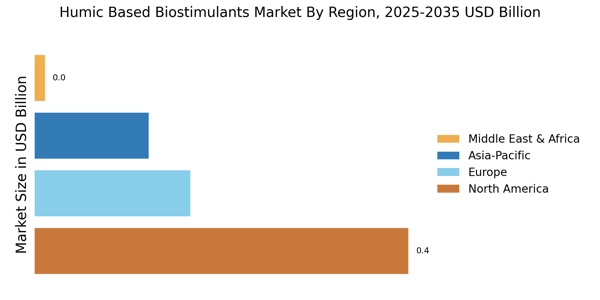
Regional Insights

North America : Innovation and Sustainability Focus

North America is witnessing significant growth in the humic-based biostimulants market, driven by increasing demand for sustainable agricultural practices and regulatory support for organic farming. The United States holds the largest market share at approximately 60%, followed by Canada at around 25%. This growth is further fueled by government initiatives promoting eco-friendly farming solutions and the rising awareness of soil health benefits. The competitive landscape in North America is robust, with key players like Nutrien Ltd and FMC Corporation leading the market. The presence of advanced agricultural technologies and research institutions enhances innovation in biostimulant formulations. Additionally, the region's focus on sustainable practices aligns with consumer preferences, making it a fertile ground for market expansion.

Europe : Regulatory Support and Innovation

Europe is rapidly evolving as a significant market for humic-based biostimulants, driven by stringent regulations favoring sustainable agriculture and environmental protection. The European Union's Green Deal aims to reduce chemical fertilizers, positioning biostimulants as a viable alternative. Germany and France are the largest markets, collectively holding about 50% of the European market share, with Italy following closely at 20%. Leading countries in Europe are investing heavily in research and development, fostering innovation in biostimulant products. Key players like BASF SE and Yara International ASA are at the forefront, collaborating with agricultural stakeholders to enhance product efficacy. The competitive landscape is characterized by a mix of established companies and emerging startups, all striving to meet the growing demand for sustainable agricultural solutions.

Asia-Pacific : Rapid Growth and Adoption

Asia-Pacific is experiencing rapid growth in the humic-based biostimulants market, driven by increasing agricultural productivity demands and a shift towards sustainable farming practices. Countries like China and India are leading the market, with China holding approximately 40% of the regional share, followed by India at 30%. Government initiatives promoting organic farming and soil health are significant catalysts for this growth. The competitive landscape in Asia-Pacific is diverse, with both local and international players vying for market share. Companies like Syngenta AG and Valagro S.p.A. are actively expanding their presence in the region. The increasing awareness of the benefits of biostimulants among farmers is further propelling market growth, making it a key area for investment and innovation in agricultural solutions.

Middle East and Africa : Emerging Market Potential

The Middle East and Africa region is gradually emerging as a potential market for humic-based biostimulants, driven by the need for sustainable agricultural practices in arid climates. Countries like South Africa and Egypt are leading the market, with South Africa holding about 35% of the regional share. The increasing focus on food security and soil health is prompting governments to support biostimulant adoption through favorable policies and initiatives. The competitive landscape is still developing, with a mix of local and international players entering the market. Companies like Koppert Biological Systems and Biolchim S.p.A. are exploring opportunities in this region. The growing awareness of the benefits of biostimulants among farmers is expected to drive market growth, making it an attractive area for investment in agricultural innovations.

Humic-based Biostimulants Market Regional Image

Key Players and Competitive Insights

Leading market players are investing heavily in research and development in order to expand their product lines, which will help the humic-based biostimulants market grow even more. Market participants are also undertaking various strategic activities to expand their footprint, with important market developments including new product launches, contractual agreements, mergers and acquisitions, higher investments, and collaboration with other organizations. The humic-based biostimulants industry must offer cost-effective items to expand and survive in a more competitive and rising market climate. Manufacturing locally to minimize operational costs is one of the key business tactics manufacturers use in the humic-based biostimulants industry to benefit clients and increase the market sector. In recent years, the humic-based biostimulants industry has offered some of the most significant medical advantages. Major players in the humic-based biostimulants market, including FMC Corporation (UA), Bayer AG (Germany), Borregaard (Norway), ValagroSpA (Italy), Koppert Biological Systems (US), BiolchimSpA(Italy), Humic Growth Solutions (US), UPL Ltd (India), ADAMA Ltd (Israel), and Haifa Group (Israel)and others, are attempting to increase market demand by investing in research and development operations. FMC Corporation (UA) is an agricultural science company advancing agriculture through innovative and sustainable crop protection technologies. From leading discovery pipelines to unique application systems and cutting-edge organic products, they are passionate about providing innovative solutions to growers worldwide. For more than 130 years, they have been rooted in agriculture and innovation. Manufacturers and industry partners continue to trust today's FMCs to improve productivity, profitability and sustainability. As a leading agricultural science company, FMC is committed to meeting the changing needs of consumers. FMC Corporation (UA) invests significant resources in discovering new active ingredients, developing innovative formulations and biologics, and developing precision agriculture technologies that support sustainable agriculture worldwide. Visit the Technology Portfolio page to learn more about FMC's latest innovations. FMC has a strong management team with an aggressive five-year growth plan at the end of 2018. The strengths of FMC's technology portfolio and geographic diversity help companies solve problems better than others.  Track record demonstrates agility, strength of strategy and ability to execute in the most challenging circumstances. Bayer AG (Germany), The life science industries of healthcare and nutrition are at the core of Bayer, a multinational company. By supporting initiatives to address the unprecedented challenges a growing and aging population brings, design products and services to help people and the planet thrive. At Bayer, dedicated to promoting sustainable development and positively impacting businesses. Also, creating new possibilities that improve life for all of us through audacious ideas and unmatched insights. This entails rethinking how to care and one another by promoting everyday health, enhancing patient care strategies, and developing better ways to feed communities worldwide.

Key Companies in the Humic-based Biostimulants Market include

Industry Developments

April 2022: A UPL Ltd. To encourage sustainable agriculture in Spain and Portugal, Koppert worked together. The two businesses start a technical and business partnership to make producers' access to biological solutions easier.

Future Outlook

Humic-based Biostimulants Market Future Outlook

The Humic Based Biostimulants Market is projected to grow at an 8.32% CAGR from 2025 to 2035, driven by increasing agricultural productivity and sustainable farming practices.

New opportunities lie in:

  • Development of customized humic formulations for specific crops
  • Expansion into emerging markets with tailored marketing strategies
  • Integration of digital platforms for real-time product application monitoring

By 2035, the market is expected to solidify its position as a leader in sustainable agricultural solutions.

Market Segmentation

Humic-based Biostimulants Market Form Outlook

  • Dry
  • Liquid

Humic-based Biostimulants Market Crop Type Outlook

  • Fruits & Vegetables
  • Cereals
  • Oilseeds
  • Fiber Crops
  • Others

Humic-based Biostimulants Market Product Type Outlook

  • Humic Acid
  • Fulvic Acid
  • Potassium Humate

Humic-based Biostimulants Market Mode of Application Outlook

  • Foliar Treatment
  • Soil Treatment
  • Seed Treatment

Report Scope

MARKET SIZE 2024 0.591(USD Billion)
MARKET SIZE 2025 0.6402(USD Billion)
MARKET SIZE 2035 1.424(USD Billion)
COMPOUND ANNUAL GROWTH RATE (CAGR) 8.32% (2025 - 2035)
REPORT COVERAGE Revenue Forecast, Competitive Landscape, Growth Factors, and Trends
BASE YEAR 2024
Market Forecast Period 2025 - 2035
Historical Data 2019 - 2024
Market Forecast Units USD Billion
Key Companies Profiled Nutrien Ltd (CA), Yara International ASA (NO), BASF SE (DE), Syngenta AG (CH), FMC Corporation (US), Valagro S.p.A. (IT), Koppert Biological Systems (NL), Biolchim S.p.A. (IT), AgriLife (US)
Segments Covered Product Product Type, Crop Product Type, Form, Mode of Application, Region
Key Market Opportunities Growing demand for sustainable agriculture practices drives innovation in the Humic Based Biostimulants Market.
Key Market Dynamics Rising demand for sustainable agriculture drives innovation and competition in the Humic Based Biostimulants Market.
Countries Covered North America, Europe, APAC, South America, MEA

Market Highlights

Author
Author
Author Profile
Snehal Singh LinkedIn
Manager - Research
High acumen in analyzing complex macro & micro markets with more than 6 years of work experience in the field of market research. By implementing her analytical skills in forecasting and estimation into market research reports, she has expertise in Packaging, Construction, and Equipment domains. She handles a team size of 20-25 resources and ensures smooth running of the projects, associated marketing activities, and client servicing.
Leave a Comment

FAQs

What is the projected market valuation of the Humic Based Biostimulants Market by 2035?

The projected market valuation for the Humic Based Biostimulants Market is 1.424 USD Billion by 2035.

What was the market valuation of the Humic Based Biostimulants Market in 2024?

The overall market valuation of the Humic Based Biostimulants Market was 0.591 USD Billion in 2024.

What is the expected CAGR for the Humic Based Biostimulants Market during the forecast period 2025 - 2035?

The expected CAGR for the Humic Based Biostimulants Market during the forecast period 2025 - 2035 is 8.32%.

Which product type segment had the highest valuation in 2024?

In 2024, the Humic Acid segment had the highest valuation at 0.236 USD Billion.

What is the projected valuation for the Fulvic Acid segment by 2035?

The projected valuation for the Fulvic Acid segment is expected to reach 0.423 USD Billion by 2035.

Which crop type segment is anticipated to grow the most by 2035?

The Fruits & Vegetables segment is anticipated to grow the most, with a projected valuation of 0.424 USD Billion by 2035.

What are the two main forms of Humic Based Biostimulants?

The two main forms of Humic Based Biostimulants are Dry and Liquid, with projected valuations of 0.563 USD Billion and 0.861 USD Billion respectively by 2035.

Which mode of application segment is expected to have the highest valuation by 2035?

The Soil Treatment segment is expected to have the highest valuation, projected at 0.564 USD Billion by 2035.

Who are the key players in the Humic Based Biostimulants Market?

Key players in the Humic Based Biostimulants Market include Nutrien Ltd, Yara International ASA, BASF SE, and Syngenta AG.

What is the projected growth trend for the Potassium Humate segment by 2035?

The Potassium Humate segment is projected to grow to 0.438 USD Billion by 2035.

Research Approach

Secondary Research

The secondary research process involved comprehensive analysis of regulatory databases, peer-reviewed agricultural journals, soil science publications, and authoritative agricultural organizations. Key sources included the US Environmental Protection Agency (EPA), United States Department of Agriculture (USDA) National Agricultural Statistics Service (NASS), European Commission Directorate-General for Agriculture and Rural Development (DG AGRI), European Food Safety Authority (EFSA) Fertilizing Products Regulation (EU) 2019/1009, Food and Agriculture Organization of the United Nations (FAO) FAOSTAT Database, International Fertilizer Association (IFA), European Biostimulants Industry Council (EBIC), Biological Products Industry Alliance (BPIA), USDA Agricultural Research Service (ARS) Soil Science Division, national agricultural ministry reports from key markets (India Ministry of Agriculture & Farmers Welfare, Brazil Ministry of Agriculture, China Ministry of Agriculture and Rural Affairs), and trade databases including UN Comtrade and ITC Trade Map. The following sources were employed to compile agricultural input statistics, regulatory framework data for biostimulant registration, soil health studies, organic farming adoption trends, and market landscape analysis for humic acid, fulvic acid, and potassium humate products across a variety of crop applications.

Primary Research

Qualitative and quantitative insights were obtained by interviewing supply-side and demand-side stakeholders during the primary research process. Supply-side sources comprised CEOs, VPs of Product Development, regulatory affairs managers, and commercial directors from specialty fertilizer OEMs, agricultural biotechnology firms, and humic-based biostimulant manufacturers. Demand-side sources included agronomists, crop science consultants, procurement managers from large-scale farming operations, greenhouse managers, specialty crop producers, and distribution channel managers from agricultural cooperatives and horticultural supply companies. Market segmentation was validated across product types (humic acid, fulvic acid, and potassium humate), product formulation innovations were confirmed (dry granules vs. liquid concentrates), and insights on application method preferences (foliar, soil, and seed treatment adoption rates), pricing dynamics per hectare, and regional regulatory compliance requirements were gathered through primary research.

Primary Respondent Breakdown:

By Designation: C-level Primaries (28%), Director Level (35%), Others (37%)

By Region: North America (38%), Europe (25%), Asia-Pacific (27%), Rest of World (10%)

Market Size Estimation

Revenue mapping and application volume analysis were implemented to determine global market valuation. The methodology comprised the following:

Identification of over 50 significant manufacturers and formulators in North America, Europe, Asia-Pacific, and Latin America who specialize in the formulation of biostimulants and the extraction of humic substances

Product mapping for the categories of humic acid, fulvic acid, and potassium humate, distinguished by their form (dry/liquid) and their application in various crops (fruits and vegetables, cereals, oilseeds, and fiber crops).

Analysis of annual revenues for humic-based biostimulant portfolios, including downstream formulation capabilities and raw material sourcing (leonardite, lignite, peat) as reported and modeled

Manufacturers that account for 70-75% of the global market share in 2024 are included in the coverage.

Segment-specific valuations for soil treatment, foliar spray, and seed treatment applications are derived through extrapolation using bottom-up (hectare application volume × ASP by crop type and region) and top-down (manufacturer revenue substantiation across agricultural input divisions) approach.

Download Free Sample

Kindly complete the form below to receive a free sample of this Report

Compare Licence

×
Features License Type
Single User Multiuser License Enterprise User
Price $4,950 $5,950 $7,250
Maximum User Access Limit 1 User Upto 10 Users Unrestricted Access Throughout the Organization
Free Customization
Direct Access to Analyst
Deliverable Format
Platform Access
Discount on Next Purchase 10% 15% 15%
Printable Versions