×
Request Free Sample ×

Kindly complete the form below to receive a free sample of this Report

* Please use a valid business email

Leading companies partner with us for data-driven Insights

clients tt-cursor
Hero Background
English
Chinese
French
Japanese
Korean
German
Spanish

Brain Computer Interface Market Size

ID: MRFR/ICT/6940-CR
200 Pages
Aarti Dhapte
July 2025

Brain-Computer Interface Market Size, Share and Trends Analysis Report By Application (Medical, Gaming, Communication, Military, Research), By Technology (Non-Invasive, Invasive, Semi-Invasive), By End Use (Healthcare, Entertainment, Education, Defense, Research Institutions) and By Regional (North America, Europe, South America, Asia Pacific, Middle East and Africa) - Forecast to 2035

Share:
Download PDF ×

We do not share your information with anyone. However, we may send you emails based on your report interest from time to time. You may contact us at any time to opt-out.

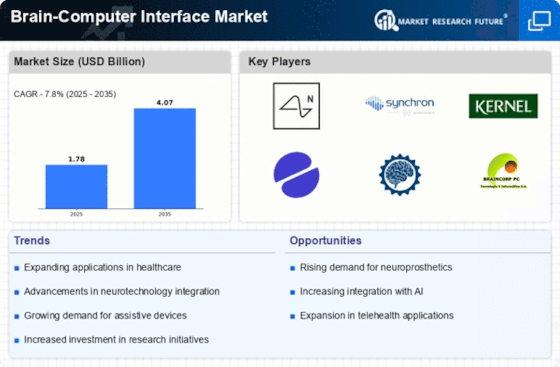
Brain Computer Interface Market Infographic
×
Brain Computer Interface Market Infographic Full View
Purchase Options

Brain Computer Interface Size

Brain Computer Interface Market Growth Projections and Opportunities

The Brain-Computer Interface (BCI) market is experiencing a sized boom, pushed by means of numerous market elements that shape its trajectory. One of the number one drivers is the increasing incidence of neurological issues and disabilities. As the global populace increases, the incidence of conditions, including paralysis and neurodegenerative sicknesses, rises, creating a good-sized demand for revolutionary answers like BCIs. These devices provide the capability to restore conversation and mobility for individuals with extreme neurological impairments, thereby addressing a crucial need inside the healthcare area.

Technological advancements play a pivotal role in the enlargement of the BCI marketplace. Ongoing research and improvement efforts have led to the creation of more sophisticated and user-pleasant BCIs. Improved signal processing algorithms, more advantageous neuroimaging strategies, and the mixing of artificial intelligence contribute to the improvement of greater green and dependable BCIs. These technological breakthroughs no longer most effectively enhance the performance of current devices but also pave the manner for the advent of recent packages, increasing the marketplace's scope past scientific use to consist of gaming, digital truth, and different industries. Government projects and investments assist in bolstering the boom of the BCI market.

Recognizing the societal and monetary effects of Brain-Computer Interfaces, numerous governments around the world are investing in research and development programs. Funding tasks aimed toward advancing BCI technologies now not only accelerate innovation but also make those gadgets more accessible to a broader population. This economic backing provides a critical catalyst for market growth, encouraging mounted businesses and startups to invest in BCI studies and product improvement.

A surge in strategic partnerships and collaborations characterizes the aggressive panorama of the BCI marketplace. Established-era companies are increasingly partnering with healthcare institutions and research businesses to leverage their blended know-how. These collaborations facilitate the combination of BCIs into existing healthcare systems and help streamline the regulatory approval manner. Moreover, partnerships enable corporations to pool resources and percentage information, accelerating the tempo of innovation and market penetration. Regulatory considerations and ethical worries also form the trajectory of the BCI marketplace.

As BCIs move from experimental stages to commercialization, regulatory bodies play an essential role in ensuring the safety and efficacy of these devices. Striking the right stability between innovation and affected person protection is a delicate venture, and regulatory frameworks need to evolve to keep tempo with technological advancements. Additionally, ethical considerations associated with privacy, facts security, and the potential misuse of BCI technology affect marketplace dynamics, necessitating a thoughtful and accountable method by way of enterprise stakeholders.
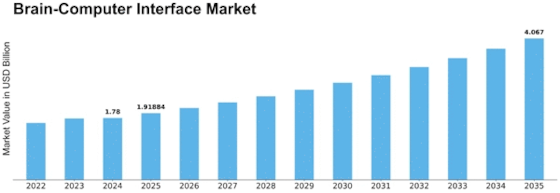

Brain Computer Interface Market Size Graph
Author
Aarti Dhapte
Team Lead - Research

She holds an experience of about 6+ years in Market Research and Business Consulting, working under the spectrum of Information Communication Technology, Telecommunications and Semiconductor domains. Aarti conceptualizes and implements a scalable business strategy and provides strategic leadership to the clients. Her expertise lies in market estimation, competitive intelligence, pipeline analysis, customer assessment, etc.

Leave a Comment

FAQs

What is the current valuation of the US brain-computer interface market?

<p>The US brain-computer interface market was valued at 427.2 USD Million in 2024.</p>

What is the projected market size for the US brain-computer interface market by 2035?

<p>The market is projected to reach 904.8 USD Million by 2035.</p>

What is the expected CAGR for the US brain-computer interface market during the forecast period?

<p>The expected CAGR for the market from 2025 to 2035 is 7.06%.</p>

Which companies are considered key players in the US brain-computer interface market?

<p>Key players include Neuralink, Synchron, Kernel, Paradromics, Blackrock Neurotech, Cerebrum, Emotiv, and BrainCo.</p>

What are the primary applications of brain-computer interfaces in the US market?

<p>The primary applications include Medical, Gaming, Communication, Military, and Research.</p>

How does the market segment by end use in the US brain-computer interface market?

<p>The market segments by end use include Healthcare, Entertainment, Education, Defense, and Industrial.</p>

What technologies are utilized in the US brain-computer interface market?

<p>Technologies include Invasive, Non-Invasive, Partially Invasive, Electroencephalography, and Functional Magnetic Resonance Imaging.</p>

Who are the main user types of brain-computer interfaces in the US market?

<p>Main user types include Patients, Researchers, Gamers, Military Personnel, and Healthcare Professionals.</p>

What product types are available in the US brain-computer interface market?

<p>Product types include Hardware, Software, Accessories, Services, and Platforms.</p>

What was the valuation of the medical application segment in the US brain-computer interface market in 2024?

<p>The medical application segment was valued at 100.0 USD Million in 2024.</p>

Market Summary

As per analysis, the (US) brain computer interface market is projected to grow from USD 427.2 Million in 2024 to USD 904.8 Million by 2035, exhibiting a compound annual growth rate (CAGR) of 7.06% during the forecast period (2025 - 2035).

Key Market Trends & Highlights

The US brain-computer interface market is poised for substantial growth driven by technological advancements and increasing applications in healthcare and entertainment.

  • The medical segment remains the largest contributor to the US brain-computer interface market, reflecting a strong focus on neurorehabilitation solutions. The gaming segment is emerging as the fastest-growing area, indicating a rising interest in immersive experiences and interactive technologies. Healthcare applications are expanding rapidly, suggesting a shift towards integrating brain-computer interfaces in mental health solutions. Key market drivers include the growing demand for neurorehabilitation solutions and advancements in technology and innovation.

Market Size & Forecast

2024 Market Size 427.2 (USD Million)
2035 Market Size 904.8 (USD Million)
CAGR (2025 - 2035) 7.06%

Major Players

Neuralink (US), Synchron (US), Kernel (US), Paradromics (US), Blackrock Neurotech (US), Cerebrum (US), Emotiv (US), BrainCo (US)

Market Trends

The US brain computer interface market is currently experiencing a transformative phase, characterized by rapid advancements in technology and increasing interest from various sectors. This market encompasses a range of applications, including healthcare, gaming, and communication, which are driving innovation and investment. The integration of artificial intelligence and machine learning into brain-computer interfaces is enhancing their functionality, making them more accessible and user-friendly. As a result, there is a growing demand for devices that can facilitate direct communication between the human brain and external systems, potentially revolutionizing how individuals interact with technology. Moreover, the regulatory landscape in the US is evolving to accommodate the unique challenges posed by brain-computer interface technologies. Government agencies are actively working to establish guidelines that ensure safety and efficacy while promoting innovation. This regulatory support, combined with increasing funding for research and development, suggests a promising future for the US brain computer interface market. As stakeholders from various industries collaborate to explore new applications, the market is poised for significant growth, potentially leading to breakthroughs that could enhance quality of life and expand human capabilities.

Increased Investment in Research and Development

There is a noticeable surge in funding directed towards research and development within the Brain-Computer Interface Market. This trend indicates a growing recognition of the technology's potential to revolutionize various fields, particularly in healthcare and assistive technologies. As more stakeholders enter the market, the competition is likely to drive innovation and accelerate the pace of advancements. The adoption of BCI defence applications is increasing, particularly in military communication, cognitive monitoring, and advanced training systems.

Expansion of Healthcare Applications

The Brain-Computer Interface Market is witnessing an expansion in its application areas, moving beyond traditional uses in medical settings. Industries such as gaming, education, and communication are increasingly exploring the integration of brain-computer interfaces to enhance user engagement and interaction. This diversification suggests a broader acceptance and understanding of the technology's capabilities. The market includes several brain machine interface companies developing both invasive and non-invasive solutions for medical and consumer applications.

Emergence of Ethical Considerations

A significant trend within the Brain-Computer Interface Market is the emphasis on user-centric design principles. Developers are prioritizing the creation of interfaces that are intuitive and accessible, aiming to improve user experience and satisfaction. This focus on usability may lead to wider adoption and acceptance of brain-computer interfaces across different demographics. The brain computer interface market size by 2030 is expected to reflect consistent expansion, supported by growing adoption in healthcare and gaming applications.

Brain Computer Interface Market Market Drivers

Rising Consumer Awareness and Acceptance

Rising consumer awareness and acceptance of brain computer interface technologies are driving growth in the US brain computer interface market. As public understanding of BCIs improves, individuals are becoming more open to adopting these technologies for various applications, including gaming, communication, and assistive devices. Educational campaigns and media coverage have played a significant role in demystifying BCIs, leading to increased interest among potential users. Market Research Future indicates that consumer acceptance is a key factor influencing the adoption of BCI technologies, with a growing number of individuals expressing willingness to engage with these systems. This trend suggests a promising future for the industry, as heightened consumer interest may lead to increased investment and innovation in BCI solutions.

Advancements in Technology and Innovation

Technological advancements play a pivotal role in shaping the US brain computer interface market. Innovations in signal processing, machine learning, and neuroimaging techniques have significantly enhanced the efficacy and usability of BCIs. For instance, the integration of artificial intelligence in BCIs allows for more accurate interpretation of neural signals, thereby improving user experience and functionality. The market is projected to grow at a compound annual growth rate (CAGR) of over 15% from 2025 to 2030, driven by these technological breakthroughs. Furthermore, collaborations between tech companies and research institutions are fostering an environment ripe for innovation, leading to the development of more sophisticated and user-friendly BCI systems. This trend indicates a robust future for the industry as it continues to evolve and adapt to the needs of various user demographics.

Increased Focus on Mental Health Solutions

The US brain computer interface market is witnessing an increased focus on mental health solutions, driven by a growing recognition of the importance of mental well-being. With mental health disorders affecting millions of Americans, there is a pressing need for innovative therapeutic interventions. BCIs are emerging as potential tools for addressing conditions such as depression, anxiety, and PTSD by enabling real-time monitoring and modulation of brain activity. The National Institute of Mental Health reports that nearly one in five adults in the US live with a mental illness, underscoring the urgency for effective treatment options. As mental health awareness continues to rise, the demand for BCIs tailored to mental health applications is likely to expand, presenting new opportunities for growth within the industry.

Regulatory Support and Funding Initiatives

Regulatory support and funding initiatives are crucial drivers of the US brain computer interface market. Government agencies, such as the National Science Foundation and the National Institutes of Health, are increasingly investing in BCI research and development. These initiatives aim to foster innovation and accelerate the commercialization of BCI technologies. For example, the Brain Research through Advancing Innovative Neurotechnologies (BRAIN) Initiative has allocated significant funding to support projects that explore the potential of BCIs in various applications. This regulatory backing not only enhances the credibility of BCI technologies but also encourages private sector investment, thereby propelling the market forward. As funding continues to flow into the industry, it is likely to stimulate further advancements and broaden the scope of BCI applications.

Growing Demand for Neurorehabilitation Solutions

The US brain computer interface market is experiencing a notable surge in demand for neurorehabilitation solutions. This growth is primarily driven by an increasing prevalence of neurological disorders, such as stroke and traumatic brain injuries, which necessitate innovative rehabilitation methods. According to the National Institutes of Health, approximately 795,000 people in the US experience a stroke annually, highlighting the urgent need for effective rehabilitation technologies. Brain computer interfaces (BCIs) offer promising avenues for restoring motor functions and enhancing cognitive abilities in affected individuals. As healthcare providers and patients alike seek advanced therapeutic options, the market for BCIs in neurorehabilitation is poised for substantial expansion, potentially leading to improved patient outcomes and quality of life.

Market Segment Insights

By Application: Medical (Largest) vs. Gaming (Fastest-Growing)

In the US brain-computer interface (BCI) market, the application segments showcase a diverse distribution of use cases. The medical sector currently holds the largest share, driven by the increasing demand for advanced neurological treatments and rehabilitation technologies. Other applications, such as gaming, also contribute significantly to the market dynamics. While emerging applications like communication and military are gaining traction, they still represent a smaller portion compared to the medical and gaming sectors.

Medical (Dominant) vs. Gaming (Emerging)

The medical application of brain-computer interfaces is dominant, focusing primarily on therapeutic interventions for conditions like paralysis, stroke recovery, and neurological disorders. This segment leverages advanced technologies to provide patients with new means of communication and mobility, thus driving significant investment and research. Conversely, the gaming segment, considered emerging, is rapidly gaining popularity, with the rise of immersive experiences and interactive technologies. Developers are exploring BCI for enhanced gaming experiences, fostering user engagement through brain-sensing technologies. Both segments underscore the innovative potential of BCI in transforming user interactions within their respective fields.

By End Use: Healthcare (Largest) vs. Entertainment (Fastest-Growing)

In the US brain-computer interface market, the end use segment showcases a diverse landscape where healthcare leads the pack. This sector benefits from significant investments driven by the growing demand for assistive technologies and rehabilitation therapies. Healthcare applications, including neurofeedback and cognitive enhancement, capture the largest share due to their critical role in treating various neurological disorders. Meanwhile, entertainment, while smaller in comparison, is rapidly gaining traction, particularly with the rise of immersive virtual reality experiences that leverage brain-computer interfaces to engage users on a deeper level.

Healthcare: Neurofeedback (Dominant) vs. Entertainment: Gaming (Emerging)

In the US brain-computer interface market, the healthcare segment, particularly neurofeedback, stands as the dominant player due to its profound impact on mental health treatment and cognitive improvement. This approach is widely adopted in therapeutic contexts, helping individuals manage conditions such as anxiety, ADHD, and PTSD. On the other hand, the entertainment segment is emerging swiftly, driven by innovations in gaming technologies that utilize brain-computer interfaces for more immersive gameplay. This growing trend is reshaping user experiences as gamers seek tailored interactions based on their cognitive responses, thereby enhancing engagement and satisfaction.

By Technology: Invasive (Largest) vs. Non-Invasive (Fastest-Growing)

In the US brain-computer interface market, the technology segment is multifaceted, comprising invasive, non-invasive, partially invasive, electroencephalography, and functional magnetic resonance imaging methods. Among these, invasive technologies currently hold the largest market share due to their effectiveness in providing high-resolution neural signals, making them suitable for clinical applications. Non-invasive methods, while smaller in share, are gaining traction and increasingly preferred for their safety and ease of application, which plays a significant role in attracting a broader user base and thus reshaping market dynamics.

Technology: Invasive (Dominant) vs. Non-Invasive (Emerging)

Invasive brain-computer interfaces (BCIs) involve the implantation of devices directly into the brain, allowing for high fidelity and precise neural signal acquisition. This technology is especially dominant in medical applications, aiding individuals with severe neurological impairments. On the other hand, non-invasive BCIs utilize external sensors to capture brain activity without surgical procedures. Despite holding a currently smaller share, non-invasive systems are rapidly emerging due to advancements in technology and an increasing focus on user safety. Their ability to facilitate interaction without the risks associated with surgery positions them favorably for future growth in consumer markets.

By User Type: Patients (Largest) vs. Gamers (Fastest-Growing)

In the US brain-computer interface market, the segment distribution indicates that 'Patients' represent the largest user base, primarily due to the increasing adoption of BCI technology for medical rehabilitation and neuroprosthetics. This demographic's reliance on BCI provides substantial market share, driven by the growing awareness of neurological conditions and advances in technology that cater to therapeutic applications. On the other hand, the 'Gamers' segment is rapidly growing as immersive gaming experiences become more prevalent and accessible. The allure of enhanced gaming interactions through BCI technology is attracting a young and tech-savvy consumer base, indicating a notable shift in market dynamics.

Patients (Dominant) vs. Gamers (Emerging)

The 'Patients' segment in the US BCI market is characterized by its focus on addressing various neurological disorders, leading to significant advancements in therapeutic solutions. This demographic often benefits from personalized rehabilitation programs and devices that enhance their quality of life. In contrast, the 'Gamers' segment is emerging as a dynamic force within the industry, driven by technological innovations that facilitate engaging and interactive entertainment experiences. The integration of BCI in gaming is appealing to a diverse age group interested in novel gaming formats, resulting in a growing market presence. While 'Patients' dominate in traditional long-term applications, 'Gamers' signify a shift towards consumer entertainment, highlighting the versatility and potential of BCI technologies.

By Product Type: Software (Largest) vs. Hardware (Fastest-Growing)

In the US brain-computer interface market, software is positioned as the largest segment, representing the backbone of functionality and user interaction. Its crucial role in interpreting neural signals and enabling communication with devices makes it indispensable. The software segment is complemented by hardware, which, although smaller in terms of market share, plays a pivotal part in device performance. As processing capabilities and integration with AI technology improve, hardware is expected to elevate its standing significantly in the near term.

Software (Dominant) vs. Hardware (Emerging)

The software segment serves as the dominant force in the US brain-computer interface market, providing critical applications ranging from medical uses to gaming. It offers versatility and constant innovation to enhance user experience. On the other hand, hardware is emerging rapidly, driven by advancements in neuroscience and electrical engineering. This segment includes sensors, electrodes, and other physical components essential for capturing brain activity. As they become more sophisticated and affordable, hardware is expected to become a vital area of focus, enabling widespread adoption of brain-computer interfaces.

Get more detailed insights about Brain-Computer Interface Market Research Report - Global Forecast to 2035

Regional Insights

North America : Innovation and Investment Hub

North America is the largest market for brain-computer interfaces (BCIs), holding approximately 45% of the global market share. The region benefits from significant investments in research and development, driven by a robust technology ecosystem and increasing demand for advanced healthcare solutions. Regulatory support from agencies like the FDA further catalyzes innovation, allowing for rapid advancements in BCI technologies. The United States is the primary player in this market, hosting key companies such as Neuralink, Synchron, and Kernel. The competitive landscape is characterized by a mix of startups and established firms, all vying for market share. The presence of leading universities and research institutions also fosters collaboration and innovation, making North America a focal point for BCI advancements.

Europe : Emerging Market with Regulations

Europe is the second-largest market for brain-computer interfaces, accounting for approximately 30% of the global market share. The region is witnessing a surge in demand driven by advancements in neurotechnology and increasing applications in healthcare and gaming. Regulatory frameworks established by the European Medicines Agency (EMA) are facilitating the safe integration of BCIs into clinical settings, thus enhancing market growth. Leading countries in Europe include Germany, the UK, and France, which are home to several innovative companies and research institutions. The competitive landscape is evolving, with firms like Emotiv and Kernel making significant strides. Collaborative efforts between academia and industry are also prominent, fostering a rich environment for BCI development and commercialization.

Asia-Pacific : Rapidly Growing Technology Sector

Asia-Pacific is rapidly emerging as a significant player in the brain-computer interface market, holding about 20% of the global market share. The region's growth is fueled by increasing investments in technology and healthcare, alongside a rising demand for advanced neurotechnological solutions. Countries like China and Japan are at the forefront, supported by favorable government policies and initiatives aimed at enhancing technological innovation. China is leading the charge in BCI research and development, with numerous startups and established companies entering the market. Japan also plays a crucial role, focusing on applications in gaming and rehabilitation. The competitive landscape is diverse, with a mix of local and international players, creating a dynamic environment for growth and innovation in the BCI sector.

Middle East and Africa : Emerging Market with Potential

The Middle East and Africa region is in the nascent stages of developing its brain-computer interface market, currently holding about 5% of the global market share. However, there is significant potential for growth driven by increasing investments in healthcare technology and a rising interest in neurotechnology applications. Governments in the region are beginning to recognize the importance of innovation in healthcare, which could serve as a catalyst for market expansion. Countries like South Africa and the UAE are leading the way in exploring BCI technologies, with initiatives aimed at integrating these solutions into healthcare and education. The competitive landscape is still developing, with a few local startups and international players beginning to establish a presence. As awareness and investment grow, the region is poised for significant advancements in the BCI market.

Key Players and Competitive Insights

The Brain-Computer Interface (BCI) Market is currently characterized by rapid innovation and a dynamic competitive landscape, driven by advancements in neuroscience and technology. Leading brain computer interface companies such as Neuralink, Synchron, and Kernel are actively investing in innovation to strengthen their market presence. Several BCI companies are focusing on strategic partnerships and regulatory approvals to accelerate commercialization of advanced neurotechnologies. Each BCI company adopts unique development strategies, ranging from invasive implant solutions to non-invasive wearable interfaces.
Key players such as Neuralink (US), Synchron (US), and Kernel (US) are at the forefront, each adopting distinct strategies to enhance their market positioning. Neuralink (US) focuses on innovation through its cutting-edge neuroprosthetics, aiming to revolutionize treatment for neurological disorders. Synchron (US), on the other hand, emphasizes partnerships with healthcare institutions to facilitate clinical trials, thereby accelerating the adoption of its minimally invasive BCI technology. Kernel (US) is strategically investing in research and development to enhance its cognitive enhancement products, indicating a strong commitment to innovation and market leadership.
The business tactics employed by these companies reflect a concerted effort to optimize operations and enhance market presence. Localizing manufacturing and optimizing supply chains are prevalent strategies, particularly as companies seek to mitigate risks associated with global supply chain disruptions. The market structure appears moderately fragmented, with several players vying for dominance, yet the collective influence of major companies is shaping a competitive environment that encourages collaboration and innovation.
In December 2025, Neuralink (US) announced a groundbreaking partnership with a leading medical research institution to conduct advanced clinical trials for its brain implant technology. This strategic move is likely to enhance Neuralink's credibility and accelerate the pathway to regulatory approval, positioning the company favorably in the market. Similarly, in November 2025, Synchron (US) secured a significant investment from a venture capital firm, which is expected to bolster its research initiatives and expand its operational capabilities. This influx of capital may enable Synchron to enhance its product offerings and accelerate market penetration.
Kernel (US) made headlines in October 2025 by launching a new cognitive enhancement device aimed at improving mental performance. This product introduction not only diversifies Kernel's portfolio but also reflects a growing trend towards consumer-oriented applications of BCI technology. The strategic importance of this launch lies in its potential to capture a broader audience, thereby expanding Kernel's market share.
As of January 2026, the competitive trends within the US brain computer interface market are increasingly defined by digitalization, AI integration, and a focus on sustainability. Strategic alliances are becoming more prevalent, as companies recognize the value of collaboration in driving innovation and enhancing product offerings. The competitive differentiation is likely to evolve from traditional price-based competition towards a landscape where innovation, technological advancements, and supply chain reliability take precedence. This shift suggests that companies that prioritize R&D and strategic partnerships will be better positioned to thrive in the dynamic market environment.

Key Companies in the Brain Computer Interface Market include

Industry Developments

The Brain-Computer Interface Market has witnessed significant advancements recently. In September 2023, Neuralink received FDA approval to begin human trials for its implantable brain device, aiming to help paralyzed individuals regain movement, marking a crucial milestone for the company and the industry. Concurrently, Synchron announced successful preliminary results for its implant, aiming to assist individuals with severe motor impairments.

In terms of market growth, BrainCo and Emotiv have expanded their product lines, enhancing user engagement through wearable BCI technologies, contributing to an uptick in market valuation.

Notably, in May 2023, Blackrock Neurotech entered a partnership with a leading research institution to enhance neural data analytics, positioning itself strongly in the market. There have also been past events, such as Paradromics securing funding in December 2022, enabling the advancement of high-data-rate brain interfaces.

The continued interest from major investors and partnerships aims to propel the Brain-Computer Interface technology forward on a global scale, addressing diverse applications in healthcare, gaming, and cognitive enhancement. The concerted efforts of these companies reflect a dynamic arena where innovation is reshaping interaction between technology and human cognitive functions.


Future Outlook

Brain Computer Interface Market Future Outlook

The US brain-computer interface market is projected to grow at a 7.06% CAGR from 2025 to 2035, driven by technological advancements, increasing healthcare applications, and rising demand for assistive devices.

New opportunities lie in:

  • <p>Development of advanced neuroprosthetics for rehabilitation Integration of AI algorithms for enhanced user experience Expansion into consumer electronics for gaming and entertainment</p>

By 2035, the market is expected to be robust, driven by innovation and diverse applications.

Market Segmentation

Brain Computer Interface Market End Use Outlook

  • Healthcare
  • Entertainment
  • Education
  • Defense
  • Industrial

Brain Computer Interface Market User Type Outlook

  • Patients
  • Researchers
  • Gamers
  • Military Personnel
  • Healthcare Professionals

Brain Computer Interface Market Technology Outlook

  • Invasive
  • Non-Invasive
  • Partially Invasive
  • Electroencephalography
  • Functional Magnetic Resonance Imaging

Brain Computer Interface Market Application Outlook

  • Medical
  • Gaming
  • Communication
  • Military
  • Research

Brain Computer Interface Market Product Type Outlook

  • Hardware
  • Software
  • Accessories
  • Services
  • Platforms

Report Scope

MARKET SIZE 2024 427.2(USD Million)
MARKET SIZE 2025 460.56(USD Million)
MARKET SIZE 2035 904.8(USD Million)
COMPOUND ANNUAL GROWTH RATE (CAGR) 7.06% (2024 - 2035)
REPORT COVERAGE Revenue Forecast, Competitive Landscape, Growth Factors, and Trends
BASE YEAR 2024
Market Forecast Period 2025 - 2035
Historical Data 2019 - 2024
Market Forecast Units USD Million
Key Companies Profiled Neuralink (US), Synchron (US), Kernel (US), Paradromics (US), Blackrock Neurotech (US), Cerebrum (US), Emotiv (US), BrainCo (US)
Segments Covered Application, End Use, Technology, User Type, Product Type
Key Market Opportunities Advancements in neurotechnology and regulatory support drive innovation in the us brain computer interface market.
Key Market Dynamics Technological advancements drive competitive forces in the US brain-computer interface market, enhancing user experience and applications.
Countries Covered US

FAQs

What is the current valuation of the US brain-computer interface market?

<p>The US brain-computer interface market was valued at 427.2 USD Million in 2024.</p>

What is the projected market size for the US brain-computer interface market by 2035?

<p>The market is projected to reach 904.8 USD Million by 2035.</p>

What is the expected CAGR for the US brain-computer interface market during the forecast period?

<p>The expected CAGR for the market from 2025 to 2035 is 7.06%.</p>

Which companies are considered key players in the US brain-computer interface market?

<p>Key players include Neuralink, Synchron, Kernel, Paradromics, Blackrock Neurotech, Cerebrum, Emotiv, and BrainCo.</p>

What are the primary applications of brain-computer interfaces in the US market?

<p>The primary applications include Medical, Gaming, Communication, Military, and Research.</p>

How does the market segment by end use in the US brain-computer interface market?

<p>The market segments by end use include Healthcare, Entertainment, Education, Defense, and Industrial.</p>

What technologies are utilized in the US brain-computer interface market?

<p>Technologies include Invasive, Non-Invasive, Partially Invasive, Electroencephalography, and Functional Magnetic Resonance Imaging.</p>

Who are the main user types of brain-computer interfaces in the US market?

<p>Main user types include Patients, Researchers, Gamers, Military Personnel, and Healthcare Professionals.</p>

What product types are available in the US brain-computer interface market?

<p>Product types include Hardware, Software, Accessories, Services, and Platforms.</p>

What was the valuation of the medical application segment in the US brain-computer interface market in 2024?

<p>The medical application segment was valued at 100.0 USD Million in 2024.</p>

  1. EXECUTIVE SUMMARY
    1. Market Overview
    2. Key Findings
    3. Market Segmentation
    4. Competitive Landscape
    5. Challenges and Opportunities
    6. Future Outlook
  2. MARKET INTRODUCTION
    1. Definition
    2. Scope of the study
      1. Research Objective
      2. Assumption
      3. Limitations
  3. RESEARCH METHODOLOGY
    1. Overview
    2. Data Mining
    3. Secondary Research
    4. Primary Research
      1. Primary Interviews and Information Gathering Process
      2. Breakdown of Primary Respondents
    5. Forecasting Model
    6. Market Size Estimation
      1. Bottom-Up Approach
      2. Top-Down Approach
    7. Data Triangulation
    8. Validation
  4. MARKET DYNAMICS
    1. Overview
    2. Drivers
    3. Restraints
    4. Opportunities
  5. MARKET FACTOR ANALYSIS
    1. Value chain Analysis
    2. Porter''s Five Forces Analysis
      1. Bargaining Power of Suppliers
      2. Bargaining Power of Buyers
      3. Threat of New Entrants
      4. Threat of Substitutes
      5. Intensity of Rivalry
    3. COVID-19 Impact Analysis
      1. Market Impact Analysis
      2. Regional Impact
      3. Opportunity and Threat Analysis
  6. Brain-Computer Interface Market, BY Application (USD Billion)
    1. Medical
    2. Gaming
    3. Communication
    4. Military
    5. Research
  7. Brain-Computer Interface Market, BY Technology (USD Billion)
    1. Non-Invasive
    2. Invasive
    3. Semi-Invasive
  8. Brain-Computer Interface Market, BY End Use (USD Billion)
    1. Healthcare
    2. Entertainment
    3. Education
    4. Defense
    5. Research Institutions
  9. Brain-Computer Interface Market, BY Regional (USD Billion)
    1. North America
      1. US
      2. Canada
    2. Europe
      1. Germany
      2. UK
      3. France
      4. Russia
      5. Italy
      6. Spain
      7. Rest of Europe
    3. APAC
      1. China
      2. India
      3. Japan
      4. South Korea
      5. Malaysia
      6. Thailand
      7. Indonesia
      8. Rest of APAC
    4. South America
      1. Brazil
      2. Mexico
      3. Argentina
      4. Rest of South America
    5. MEA
      1. GCC Countries
      2. South Africa
      3. Rest of MEA
  10. Competitive Landscape
    1. Overview
    2. Competitive Analysis
    3. Market share Analysis
    4. Major Growth Strategy in the Brain-Computer Interface Market
    5. Competitive Benchmarking
    6. Leading Players in Terms of Number of Developments in the Brain-Computer Interface Market
    7. Key developments and growth strategies
      1. New Product Launch/Service Deployment
      2. Merger & Acquisitions
      3. Joint Ventures
    8. Major Players Financial Matrix
      1. Sales and Operating Income
      2. Major Players R&D Expenditure. 2023
  11. Company Profiles
    1. Kyndi
      1. Financial Overview
      2. Products Offered
      3. Key Developments
      4. SWOT Analysis
      5. Key Strategies
    2. Kernel
      1. Financial Overview
      2. Products Offered
      3. Key Developments
      4. SWOT Analysis
      5. Key Strategies
    3. MindMaze
      1. Financial Overview
      2. Products Offered
      3. Key Developments
      4. SWOT Analysis
      5. Key Strategies
    4. G.TEC
      1. Financial Overview
      2. Products Offered
      3. Key Developments
      4. SWOT Analysis
      5. Key Strategies
    5. CTRLLabs
      1. Financial Overview
      2. Products Offered
      3. Key Developments
      4. SWOT Analysis
      5. Key Strategies
    6. Synchron
      1. Financial Overview
      2. Products Offered
      3. Key Developments
      4. SWOT Analysis
      5. Key Strategies
    7. Emotiv
      1. Financial Overview
      2. Products Offered
      3. Key Developments
      4. SWOT Analysis
      5. Key Strategies
    8. OpenBCI
      1. Financial Overview
      2. Products Offered
      3. Key Developments
      4. SWOT Analysis
      5. Key Strategies
    9. Paradromics
      1. Financial Overview
      2. Products Offered
      3. Key Developments
      4. SWOT Analysis
      5. Key Strategies
    10. BrainCo
      1. Financial Overview
      2. Products Offered
      3. Key Developments
      4. SWOT Analysis
      5. Key Strategies
    11. Blackrock Neurotech
      1. Financial Overview
      2. Products Offered
      3. Key Developments
      4. SWOT Analysis
      5. Key Strategies
    12. Neurable
      1. Financial Overview
      2. Products Offered
      3. Key Developments
      4. SWOT Analysis
      5. Key Strategies
    13. NextMind
      1. Financial Overview
      2. Products Offered
      3. Key Developments
      4. SWOT Analysis
      5. Key Strategies
    14. Cognixion
      1. Financial Overview
      2. Products Offered
      3. Key Developments
      4. SWOT Analysis
      5. Key Strategies
    15. Neuralink
      1. Financial Overview
      2. Products Offered
      3. Key Developments
      4. SWOT Analysis
      5. Key Strategies
  12. Appendix
    1. References
    2. Related Reports
    3. LIST Of tables
  13. LIST OF ASSUMPTIONS
  14. North America Brain-Computer Interface Market SIZE ESTIMATES & FORECAST, BY APPLICATION, 2019-2035 (USD Billions)
  15. North America Brain-Computer Interface Market SIZE ESTIMATES & FORECAST, BY TECHNOLOGY, 2019-2035 (USD Billions)
  16. North America Brain-Computer Interface Market SIZE ESTIMATES & FORECAST, BY END USE, 2019-2035 (USD Billions)
  17. North America Brain-Computer Interface Market SIZE ESTIMATES & FORECAST, BY REGIONAL, 2019-2035 (USD Billions)
  18. US Brain-Computer Interface Market SIZE ESTIMATES & FORECAST, BY APPLICATION, 2019-2035 (USD Billions)
  19. US Brain-Computer Interface Market SIZE ESTIMATES & FORECAST, BY TECHNOLOGY, 2019-2035 (USD Billions)
  20. US Brain-Computer Interface Market SIZE ESTIMATES & FORECAST, BY END USE, 2019-2035 (USD Billions)
  21. US Brain-Computer Interface Market SIZE ESTIMATES & FORECAST, BY REGIONAL, 2019-2035 (USD Billions)
  22. Canada Brain-Computer Interface Market SIZE ESTIMATES & FORECAST, BY APPLICATION, 2019-2035 (USD Billions)
  23. Canada Brain-Computer Interface Market SIZE ESTIMATES & FORECAST, BY TECHNOLOGY, 2019-2035 (USD Billions)
  24. Canada Brain-Computer Interface Market SIZE ESTIMATES & FORECAST, BY END USE, 2019-2035 (USD Billions)
  25. Canada Brain-Computer Interface Market SIZE ESTIMATES & FORECAST, BY REGIONAL, 2019-2035 (USD Billions)
  26. Europe Brain-Computer Interface Market SIZE ESTIMATES & FORECAST, BY APPLICATION, 2019-2035 (USD Billions)
  27. Europe Brain-Computer Interface Market SIZE ESTIMATES & FORECAST, BY TECHNOLOGY, 2019-2035 (USD Billions)
  28. Europe Brain-Computer Interface Market SIZE ESTIMATES & FORECAST, BY END USE, 2019-2035 (USD Billions)
  29. Europe Brain-Computer Interface Market SIZE ESTIMATES & FORECAST, BY REGIONAL, 2019-2035 (USD Billions)
  30. Germany Brain-Computer Interface Market SIZE ESTIMATES & FORECAST, BY APPLICATION, 2019-2035 (USD Billions)
  31. Germany Brain-Computer Interface Market SIZE ESTIMATES & FORECAST, BY TECHNOLOGY, 2019-2035 (USD Billions)
  32. Germany Brain-Computer Interface Market SIZE ESTIMATES & FORECAST, BY END USE, 2019-2035 (USD Billions)
  33. Germany Brain-Computer Interface Market SIZE ESTIMATES & FORECAST, BY REGIONAL, 2019-2035 (USD Billions)
  34. UK Brain-Computer Interface Market SIZE ESTIMATES & FORECAST, BY APPLICATION, 2019-2035 (USD Billions)
  35. UK Brain-Computer Interface Market SIZE ESTIMATES & FORECAST, BY TECHNOLOGY, 2019-2035 (USD Billions)
  36. UK Brain-Computer Interface Market SIZE ESTIMATES & FORECAST, BY END USE, 2019-2035 (USD Billions)
  37. UK Brain-Computer Interface Market SIZE ESTIMATES & FORECAST, BY REGIONAL, 2019-2035 (USD Billions)
  38. France Brain-Computer Interface Market SIZE ESTIMATES & FORECAST, BY APPLICATION, 2019-2035 (USD Billions)
  39. France Brain-Computer Interface Market SIZE ESTIMATES & FORECAST, BY TECHNOLOGY, 2019-2035 (USD Billions)
  40. France Brain-Computer Interface Market SIZE ESTIMATES & FORECAST, BY END USE, 2019-2035 (USD Billions)
  41. France Brain-Computer Interface Market SIZE ESTIMATES & FORECAST, BY REGIONAL, 2019-2035 (USD Billions)
  42. Russia Brain-Computer Interface Market SIZE ESTIMATES & FORECAST, BY APPLICATION, 2019-2035 (USD Billions)
  43. Russia Brain-Computer Interface Market SIZE ESTIMATES & FORECAST, BY TECHNOLOGY, 2019-2035 (USD Billions)
  44. Russia Brain-Computer Interface Market SIZE ESTIMATES & FORECAST, BY END USE, 2019-2035 (USD Billions)
  45. Russia Brain-Computer Interface Market SIZE ESTIMATES & FORECAST, BY REGIONAL, 2019-2035 (USD Billions)
  46. Italy Brain-Computer Interface Market SIZE ESTIMATES & FORECAST, BY APPLICATION, 2019-2035 (USD Billions)
  47. Italy Brain-Computer Interface Market SIZE ESTIMATES & FORECAST, BY TECHNOLOGY, 2019-2035 (USD Billions)
  48. Italy Brain-Computer Interface Market SIZE ESTIMATES & FORECAST, BY END USE, 2019-2035 (USD Billions)
  49. Italy Brain-Computer Interface Market SIZE ESTIMATES & FORECAST, BY REGIONAL, 2019-2035 (USD Billions)
  50. Spain Brain-Computer Interface Market SIZE ESTIMATES & FORECAST, BY APPLICATION, 2019-2035 (USD Billions)
  51. Spain Brain-Computer Interface Market SIZE ESTIMATES & FORECAST, BY TECHNOLOGY, 2019-2035 (USD Billions)
  52. Spain Brain-Computer Interface Market SIZE ESTIMATES & FORECAST, BY END USE, 2019-2035 (USD Billions)
  53. Spain Brain-Computer Interface Market SIZE ESTIMATES & FORECAST, BY REGIONAL, 2019-2035 (USD Billions)
  54. Rest of Europe Brain-Computer Interface Market SIZE ESTIMATES & FORECAST, BY APPLICATION, 2019-2035 (USD Billions)
  55. Rest of Europe Brain-Computer Interface Market SIZE ESTIMATES & FORECAST, BY TECHNOLOGY, 2019-2035 (USD Billions)
  56. Rest of Europe Brain-Computer Interface Market SIZE ESTIMATES & FORECAST, BY END USE, 2019-2035 (USD Billions)
  57. Rest of Europe Brain-Computer Interface Market SIZE ESTIMATES & FORECAST, BY REGIONAL, 2019-2035 (USD Billions)
  58. APAC Brain-Computer Interface Market SIZE ESTIMATES & FORECAST, BY APPLICATION, 2019-2035 (USD Billions)
  59. APAC Brain-Computer Interface Market SIZE ESTIMATES & FORECAST, BY TECHNOLOGY, 2019-2035 (USD Billions)
  60. APAC Brain-Computer Interface Market SIZE ESTIMATES & FORECAST, BY END USE, 2019-2035 (USD Billions)
  61. APAC Brain-Computer Interface Market SIZE ESTIMATES & FORECAST, BY REGIONAL, 2019-2035 (USD Billions)
    1. Table 50
    2. '

Brain-Computer Interface Market Segmentation

Brain-Computer Interface Market By Application (USD Billion, 2019-2035)

Medical

Gaming

Communication

Military

Research


Brain-Computer Interface Market By Technology (USD Billion, 2019-2035)

Non-Invasive

Invasive

Semi-Invasive


Brain-Computer Interface Market By End Use (USD Billion, 2019-2035)

Healthcare

Entertainment

Education

Defense

Research Institutions


Brain-Computer Interface Market By Regional (USD Billion, 2019-2035)

North America

Europe

South America

Asia Pacific

Middle East and Africa


Brain-Computer Interface Market Regional Outlook (USD Billion, 2019-2035)


North America Outlook (USD Billion, 2019-2035)

North America Brain-Computer Interface Market by Application Type

Medical

Gaming

Communication

Military

Research

North America Brain-Computer Interface Market by Technology Type

Non-Invasive

Invasive

Semi-Invasive

North America Brain-Computer Interface Market by End Use Type

Healthcare

Entertainment

Education

Defense

Research Institutions

North America Brain-Computer Interface Market by Regional Type

US

Canada

US Outlook (USD Billion, 2019-2035)

US Brain-Computer Interface Market by Application Type

Medical

Gaming

Communication

Military

Research

US Brain-Computer Interface Market by Technology Type

Non-Invasive

Invasive

Semi-Invasive

US Brain-Computer Interface Market by End Use Type

Healthcare

Entertainment

Education

Defense

Research Institutions

CANADA Outlook (USD Billion, 2019-2035)

CANADA Brain-Computer Interface Market by Application Type

Medical

Gaming

Communication

Military

Research

CANADA Brain-Computer Interface Market by Technology Type

Non-Invasive

Invasive

Semi-Invasive

CANADA Brain-Computer Interface Market by End Use Type

Healthcare

Entertainment

Education

Defense

Research Institutions

Europe Outlook (USD Billion, 2019-2035)

Europe Brain-Computer Interface Market by Application Type

Medical

Gaming

Communication

Military

Research

Europe Brain-Computer Interface Market by Technology Type

Non-Invasive

Invasive

Semi-Invasive

Europe Brain-Computer Interface Market by End Use Type

Healthcare

Entertainment

Education

Defense

Research Institutions

Europe Brain-Computer Interface Market by Regional Type

Germany

UK

France

Russia

Italy

Spain

Rest of Europe

GERMANY Outlook (USD Billion, 2019-2035)

GERMANY Brain-Computer Interface Market by Application Type

Medical

Gaming

Communication

Military

Research

GERMANY Brain-Computer Interface Market by Technology Type

Non-Invasive

Invasive

Semi-Invasive

GERMANY Brain-Computer Interface Market by End Use Type

Healthcare

Entertainment

Education

Defense

Research Institutions

UK Outlook (USD Billion, 2019-2035)

UK Brain-Computer Interface Market by Application Type

Medical

Gaming

Communication

Military

Research

UK Brain-Computer Interface Market by Technology Type

Non-Invasive

Invasive

Semi-Invasive

UK Brain-Computer Interface Market by End Use Type

Healthcare

Entertainment

Education

Defense

Research Institutions

FRANCE Outlook (USD Billion, 2019-2035)

FRANCE Brain-Computer Interface Market by Application Type

Medical

Gaming

Communication

Military

Research

FRANCE Brain-Computer Interface Market by Technology Type

Non-Invasive

Invasive

Semi-Invasive

FRANCE Brain-Computer Interface Market by End Use Type

Healthcare

Entertainment

Education

Defense

Research Institutions

RUSSIA Outlook (USD Billion, 2019-2035)

RUSSIA Brain-Computer Interface Market by Application Type

Medical

Gaming

Communication

Military

Research

RUSSIA Brain-Computer Interface Market by Technology Type

Non-Invasive

Invasive

Semi-Invasive

RUSSIA Brain-Computer Interface Market by End Use Type

Healthcare

Entertainment

Education

Defense

Research Institutions

ITALY Outlook (USD Billion, 2019-2035)

ITALY Brain-Computer Interface Market by Application Type

Medical

Gaming

Communication

Military

Research

ITALY Brain-Computer Interface Market by Technology Type

Non-Invasive

Invasive

Semi-Invasive

ITALY Brain-Computer Interface Market by End Use Type

Healthcare

Entertainment

Education

Defense

Research Institutions

SPAIN Outlook (USD Billion, 2019-2035)

SPAIN Brain-Computer Interface Market by Application Type

Medical

Gaming

Communication

Military

Research

SPAIN Brain-Computer Interface Market by Technology Type

Non-Invasive

Invasive

Semi-Invasive

SPAIN Brain-Computer Interface Market by End Use Type

Healthcare

Entertainment

Education

Defense

Research Institutions

REST OF EUROPE Outlook (USD Billion, 2019-2035)

REST OF EUROPE Brain-Computer Interface Market by Application Type

Medical

Gaming

Communication

Military

Research

REST OF EUROPE Brain-Computer Interface Market by Technology Type

Non-Invasive

Invasive

Semi-Invasive

REST OF EUROPE Brain-Computer Interface Market by End Use Type

Healthcare

Entertainment

Education

Defense

Research Institutions

APAC Outlook (USD Billion, 2019-2035)

APAC Brain-Computer Interface Market by Application Type

Medical

Gaming

Communication

Military

Research

APAC Brain-Computer Interface Market by Technology Type

Non-Invasive

Invasive

Semi-Invasive

APAC Brain-Computer Interface Market by End Use Type

Healthcare

Entertainment

Education

Defense

Research Institutions

APAC Brain-Computer Interface Market by Regional Type

China

India

Japan

South Korea

Malaysia

Thailand

Indonesia

Rest of APAC

CHINA Outlook (USD Billion, 2019-2035)

CHINA Brain-Computer Interface Market by Application Type

Medical

Gaming

Communication

Military

Research

CHINA Brain-Computer Interface Market by Technology Type

Non-Invasive

Invasive

Semi-Invasive

CHINA Brain-Computer Interface Market by End Use Type

Healthcare

Entertainment

Education

Defense

Research Institutions

INDIA Outlook (USD Billion, 2019-2035)

INDIA Brain-Computer Interface Market by Application Type

Medical

Gaming

Communication

Military

Research

INDIA Brain-Computer Interface Market by Technology Type

Non-Invasive

Invasive

Semi-Invasive

INDIA Brain-Computer Interface Market by End Use Type

Healthcare

Entertainment

Education

Defense

Research Institutions

JAPAN Outlook (USD Billion, 2019-2035)

JAPAN Brain-Computer Interface Market by Application Type

Medical

Gaming

Communication

Military

Research

JAPAN Brain-Computer Interface Market by Technology Type

Non-Invasive

Invasive

Semi-Invasive

JAPAN Brain-Computer Interface Market by End Use Type

Healthcare

Entertainment

Education

Defense

Research Institutions

SOUTH KOREA Outlook (USD Billion, 2019-2035)

SOUTH KOREA Brain-Computer Interface Market by Application Type

Medical

Gaming

Communication

Military

Research

SOUTH KOREA Brain-Computer Interface Market by Technology Type

Non-Invasive

Invasive

Semi-Invasive

SOUTH KOREA Brain-Computer Interface Market by End Use Type

Healthcare

Entertainment

Education

Defense

Research Institutions

MALAYSIA Outlook (USD Billion, 2019-2035)

MALAYSIA Brain-Computer Interface Market by Application Type

Medical

Gaming

Communication

Military

Research

MALAYSIA Brain-Computer Interface Market by Technology Type

Non-Invasive

Invasive

Semi-Invasive

MALAYSIA Brain-Computer Interface Market by End Use Type

Healthcare

Entertainment

Education

Defense

Research Institutions

THAILAND Outlook (USD Billion, 2019-2035)

THAILAND Brain-Computer Interface Market by Application Type

Medical

Gaming

Communication

Military

Research

THAILAND Brain-Computer Interface Market by Technology Type

Non-Invasive

Invasive

Semi-Invasive

THAILAND Brain-Computer Interface Market by End Use Type

Healthcare

Entertainment

Education

Defense

Research Institutions

INDONESIA Outlook (USD Billion, 2019-2035)

INDONESIA Brain-Computer Interface Market by Application Type

Medical

Gaming

Communication

Military

Research

INDONESIA Brain-Computer Interface Market by Technology Type

Non-Invasive

Invasive

Semi-Invasive

INDONESIA Brain-Computer Interface Market by End Use Type

Healthcare

Entertainment

Education

Defense

Research Institutions

REST OF APAC Outlook (USD Billion, 2019-2035)

REST OF APAC Brain-Computer Interface Market by Application Type

Medical

Gaming

Communication

Military

Research

REST OF APAC Brain-Computer Interface Market by Technology Type

Non-Invasive

Invasive

Semi-Invasive

REST OF APAC Brain-Computer Interface Market by End Use Type

Healthcare

Entertainment

Education

Defense

Research Institutions

South America Outlook (USD Billion, 2019-2035)

South America Brain-Computer Interface Market by Application Type

Medical

Gaming

Communication

Military

Research

South America Brain-Computer Interface Market by Technology Type

Non-Invasive

Invasive

Semi-Invasive

South America Brain-Computer Interface Market by End Use Type

Healthcare

Entertainment

Education

Defense

Research Institutions

South America Brain-Computer Interface Market by Regional Type

Brazil

Mexico

Argentina

Rest of South America

BRAZIL Outlook (USD Billion, 2019-2035)

BRAZIL Brain-Computer Interface Market by Application Type

Medical

Gaming

Communication

Military

Research

BRAZIL Brain-Computer Interface Market by Technology Type

Non-Invasive

Invasive

Semi-Invasive

BRAZIL Brain-Computer Interface Market by End Use Type

Healthcare

Entertainment

Education

Defense

Research Institutions

MEXICO Outlook (USD Billion, 2019-2035)

MEXICO Brain-Computer Interface Market by Application Type

Medical

Gaming

Communication

Military

Research

MEXICO Brain-Computer Interface Market by Technology Type

Non-Invasive

Invasive

Semi-Invasive

MEXICO Brain-Computer Interface Market by End Use Type

Healthcare

Entertainment

Education

Defense

Research Institutions

ARGENTINA Outlook (USD Billion, 2019-2035)

ARGENTINA Brain-Computer Interface Market by Application Type

Medical

Gaming

Communication

Military

Research

ARGENTINA Brain-Computer Interface Market by Technology Type

Non-Invasive

Invasive

Semi-Invasive

ARGENTINA Brain-Computer Interface Market by End Use Type

Healthcare

Entertainment

Education

Defense

Research Institutions

REST OF SOUTH AMERICA Outlook (USD Billion, 2019-2035)

REST OF SOUTH AMERICA Brain-Computer Interface Market by Application Type

Medical

Gaming

Communication

Military

Research

REST OF SOUTH AMERICA Brain-Computer Interface Market by Technology Type

Non-Invasive

Invasive

Semi-Invasive

REST OF SOUTH AMERICA Brain-Computer Interface Market by End Use Type

Healthcare

Entertainment

Education

Defense

Research Institutions

MEA Outlook (USD Billion, 2019-2035)

MEA Brain-Computer Interface Market by Application Type

Medical

Gaming

Communication

Military

Research

MEA Brain-Computer Interface Market by Technology Type

Non-Invasive

Invasive

Semi-Invasive

MEA Brain-Computer Interface Market by End Use Type

Healthcare

Entertainment

Education

Defense

Research Institutions

MEA Brain-Computer Interface Market by Regional Type

GCC Countries

South Africa

Rest of MEA

GCC COUNTRIES Outlook (USD Billion, 2019-2035)

GCC COUNTRIES Brain-Computer Interface Market by Application Type

Medical

Gaming

Communication

Military

Research

GCC COUNTRIES Brain-Computer Interface Market by Technology Type

Non-Invasive

Invasive

Semi-Invasive

GCC COUNTRIES Brain-Computer Interface Market by End Use Type

Healthcare

Entertainment

Education

Defense

Research Institutions

SOUTH AFRICA Outlook (USD Billion, 2019-2035)

SOUTH AFRICA Brain-Computer Interface Market by Application Type

Medical

Gaming

Communication

Military

Research

SOUTH AFRICA Brain-Computer Interface Market by Technology Type

Non-Invasive

Invasive

Semi-Invasive

SOUTH AFRICA Brain-Computer Interface Market by End Use Type

Healthcare

Entertainment

Education

Defense

Research Institutions

REST OF MEA Outlook (USD Billion, 2019-2035)

REST OF MEA Brain-Computer Interface Market by Application Type

Medical

Gaming

Communication

Military

Research

REST OF MEA Brain-Computer Interface Market by Technology Type

Non-Invasive

Invasive

Semi-Invasive

REST OF MEA Brain-Computer Interface Market by End Use Type

Healthcare

Entertainment

Education

Defense

Research Institutions

Infographic

Free Sample Request

Kindly complete the form below to receive a free sample of this Report

Get Free Sample

Customer Strories

Compare Licence

×
Features License Type
Single User Multiuser License Enterprise User
Price $4,950 $5,950 $7,250
Maximum User Access Limit 1 User Upto 10 Users Unrestricted Access Throughout the Organization
Free Customization
Direct Access to Analyst
Deliverable Format
Platform Access
Discount on Next Purchase 10% 15% 15%
Printable Versions