×
Request Free Sample ×

Kindly complete the form below to receive a free sample of this Report

* Please use a valid business email

Leading companies partner with us for data-driven Insights

clients tt-cursor
Hero Background
English
Chinese
French
Japanese
Korean
German
Spanish

Bone Wax Market Analysis

ID: MRFR/Pharma/5001-HCR
100 Pages
Rahul Gotadki
October 2025

Bone Wax Market Research Report Information By Product (Absorbable Bone Wax, Non-Absorbable Bone Wax), Material (Natural Bone Wax, Synthetic Bone Wax), Application (Neurosurgery, Orthopedic Surgery, Orthopedic Surgery, Others), End-User – Forecast Till 2035

Share:
Download PDF ×

We do not share your information with anyone. However, we may send you emails based on your report interest from time to time. You may contact us at any time to opt-out.

Bone Wax Market Infographic
×
Bone Wax Market Infographic Full View
Purchase Options

Market Analysis

Bone Wax Market (Global, 2024)

Introduction

The bone wax industry is a growing market that is playing a key role in the surgical industry. Advances in surgical technology have made it possible to perform more delicate operations and thereby to increase the demand for hemostatic agents, such as bone wax. It is characterized by a broad product portfolio designed to facilitate the management of bone-related surgery and to address challenges such as hemostasis and tissue adhesion. In addition, the growing number of people with orthopedic disorders, combined with the aging of the population, is increasing the need for new surgical solutions. The development and adoption of advanced bone waxes is also influenced by the trend toward minimally invasive surgery and shorter recovery times. The bone wax market is expected to experience significant transformations as a result of ongoing R & D efforts, regulatory changes, and changing patient preferences.

PESTLE Analysis

Political
In 2024, the regulatory framework for medical devices such as bone wax is dominated by government policies aimed at improving patient safety and ensuring product efficacy. The FDA has introduced stricter guidelines, and bone waxes are now subject to a more stringent approval process. This has increased the number of clinical trials required by around thirty per cent compared with earlier years. Moreover, the EMA has introduced a new requirement for extensive post-market surveillance of all surgical products, which has had an effect on the operations of the bone wax market.
Economic
In 2024, the economy will show a sharp rise in medical expenses, and the world's medical expenses will reach 12 trillion yuan, an increase of 5 percent from 2023. The aging of the population and the increase in the number of operations will directly affect the demand for bone wax. The average cost of operations has increased by 4 percent every year, and the operating budget has been increased, so the operating room needs more consumables, such as bone wax, which is indispensable for hemostasis in orthopedic surgery.
Social
In 2024, a growing awareness of surgical safety and the importance of hemostatic agents is apparent. Surveys show that 78% of patients are more knowledgeable about the materials used in their operations, and the demand for biocompatible and safe products such as bone wax is rising. Moreover, the rise of patient advocacy groups has led to a greater transparency of surgical materials, and 65% of patients want products with clinical evidence and a proven safety profile.
Technological
In 2024 the bone wax market had been affected by technological developments, with the introduction of new formulas and new ways of application. The emergence of synthetic alternatives, which supposedly provided better hemostatic and biocompatible properties, had led to an estimated 40 percent of the new products introduced into the market being synthetic. Also, the integration of 3D printing in the production of specialized bone wax products was expected to further improve surgical outcomes. A quarter of the orthopaedic surgeons surveyed were interested in this form of surgery.
Legal
In 2024, the legal situation concerning the bone wax market is characterized by increased supervision and the need to comply with stricter regulations. In the European Union, the Medical Device Regulation (MDR) is enacted, which means a 50% increase in the required documentation for product registration. This has resulted in a more complex legal framework. In addition, the expiry of several patents for traditional bone wax products has opened the market for generic alternatives and has led to legal disputes about intellectual property rights.
Environmental
In 2024 the bone wax market is undergoing a growing trend towards considerations of the environment, and a growing emphasis on sustainable development. About one third of the manufacturers are now adopting green practices, and making use of biodegradable materials. Moreover, there is an increasing demand for a reduction in the use of plastics in medical devices, and the aim is to reduce the use of plastics by 20 per cent by 2025. In this way, companies are investing in the development of sustainable alternatives, which is in line with international efforts to combat the degradation of the environment.

Porter's Five Forces

Threat of New Entrants
The bone wax market has a moderate degree of difficulty of entry, due to the specialized knowledge required for manufacturing medical products and the regulatory requirements. Although the market is growing, the leading companies have strong brand loyalty and distribution networks that may be a barrier to new entrants. However, technological innovations and increasing demand for surgical products could attract new competitors.
Bargaining Power of Suppliers
The suppliers in the bone wax market have low bargaining power. There are a lot of suppliers of raw materials for bone wax. Moreover, there are alternatives for bone wax, which reduces the influence of a single supplier on prices and terms.
Bargaining Power of Buyers
The buyers of bone wax, mainly hospitals and surgery centres, have high bargaining power, owing to the wide availability of products and suppliers. The buyers can easily switch between different brands and products, which makes the manufacturers compete on price and quality.
Threat of Substitutes
The threat of substitution on the bone-wax market is medium. There are alternatives to bone wax, such as hemostatic agents and other surgical aids, but bone wax is still preferred for certain orthopedic surgical applications. However, innovations in surgical materials may in the long run increase the threat of substitution.
Competitive Rivalry
Competition in the bone wax industry is intense. There are several established players competing for market share. The constant need to differentiate their products leads to aggressive marketing and price competition. The presence of many competitors intensifies the rivalry, making the market very competitive.

SWOT Analysis

Strengths

  • High demand in surgical procedures for hemostasis.
  • Established product with a strong reputation among healthcare professionals.
  • Variety of formulations available to meet different surgical needs.
  • Regulatory approvals ensuring safety and efficacy.

Weaknesses

  • Limited awareness among non-surgical healthcare providers.
  • Potential for allergic reactions in some patients.
  • High competition leading to price sensitivity.
  • Dependence on a few key manufacturers for supply.

Opportunities

  • Growing number of surgical procedures globally.
  • Advancements in product formulations and technology.
  • Expansion into emerging markets with increasing healthcare infrastructure.
  • Potential for partnerships with surgical instrument manufacturers.

Threats

  • Emergence of alternative hemostatic agents.
  • Regulatory changes impacting product approval processes.
  • Economic downturns affecting healthcare budgets.
  • Increased scrutiny on medical device safety and efficacy.

Summary

Bone wax will be in strong demand by 2024, driven by surgical needs and the credibility of the product. The low level of awareness and the high level of competition are likely to hamper growth. Opportunities lie in developing emerging markets and promoting technological advances, while the threat of competition from new products and of regulatory changes may affect the stability of the market. Strategic alliances and innovation will be the best way to maintain the competitive edge.

Author
Rahul Gotadki
Assistant Manager

He holds an experience of about 7+ years in Market Research and Business Consulting, working under the spectrum of Life Sciences and Healthcare domains. Rahul conceptualizes and implements a scalable business strategy and provides strategic leadership to the clients. His expertise lies in market estimation, competitive intelligence, pipeline analysis, customer assessment, etc. In addition to the above, his other responsibility includes strategic tracking of high growth markets & advising clients on the potential areas of focus they could direct their business initiatives

Leave a Comment

FAQs

What would be the CAGR for the bone wax market during the forecast period of 2025-2035?

The bone wax market has a predicted CAGR of 4.56% during the forecast period of 2025-2035.

What are the hurdles that the bone wax market has to overcome for growth?

The hurdles are strict regulations, availability of better alternatives, and side-effects that can deter the bone wax market growth.

Name the key players involved in the bone wax market.

Bone wax market has key players like Aesculap, Inc., Ethicon, Inc., GPC Medical Ltd., Medtronic Plc, ABYRX, Inc., Wound Management Technologies, Inc., Medline Industries, Inc., Baxter International, CP Medical Corp., Futura Surgicare Pvt. Ltd., WNDW Medical Inc., Bentley Healthcare Pvt. Ltd., and others.

Which region would lead the bone wax market?

The Americas would lead the global market.

Which region would be the fastest-growing among all the global bone wax markets?

The Asia Pacific market would be the fastest-growing.

Market Summary

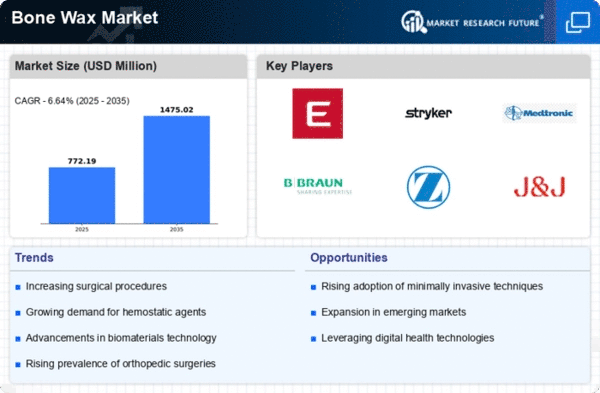
As per MRFR analysis, the Bone Wax Market Size was estimated at 724.11 USD Million in 2024. The Bone Wax industry is projected to grow from 780.48 in 2025 to 1475.02 by 2035, exhibiting a compound annual growth rate (CAGR) of 6.64 during the forecast period 2025 - 2035.

Key Market Trends & Highlights

The Bone Wax Market is experiencing a dynamic evolution driven by technological advancements and increasing surgical procedures.

  • Technological advancements in bone wax products are enhancing their efficacy and safety in surgical applications.
  • North America remains the largest market for bone wax, while the Asia-Pacific region is emerging as the fastest-growing market.
  • Orthopedic surgery continues to dominate the market, whereas neurosurgery is witnessing the fastest growth in demand for bone wax.
  • The increasing number of surgical procedures and rising awareness of surgical safety are key drivers propelling market growth.

Market Size & Forecast

2024 Market Size 724.11 (USD Million)
2035 Market Size 1475.02 (USD Million)
CAGR (2025 - 2035) 6.64%
Largest Regional Market Share in 2024 North America

Major Players

Ethicon (US), Stryker (US), Medtronic (US), B. Braun (DE), Zimmer Biomet (US), DePuy Synthes (US), Smith & Nephew (GB), MediTech (US)

Market Trends

The Bone Wax Market is currently experiencing a notable evolution, driven by advancements in surgical techniques and an increasing emphasis on patient safety. Surgeons utilize bone wax primarily to control bleeding during orthopedic procedures, which has led to a growing demand for high-quality, biocompatible products. As healthcare providers continue to prioritize effective hemostatic solutions, the market appears poised for expansion. Furthermore, the rising prevalence of orthopedic surgeries, coupled with an aging population, suggests a sustained need for innovative bone wax formulations that enhance surgical outcomes. In addition to technological advancements, the Bone Wax Market is influenced by regulatory changes and the need for compliance with stringent safety standards. Manufacturers are likely focusing on developing products that not only meet these regulations but also offer improved performance characteristics. The trend towards minimally invasive procedures may also drive the demand for specialized bone wax products that cater to specific surgical needs. Overall, the Bone Wax Market seems to be on a trajectory of growth, with various factors contributing to its development and adaptation in the evolving healthcare landscape.

Technological Advancements in Bone Wax Products

The Bone Wax Market is witnessing a surge in innovation, with manufacturers investing in research and development to create advanced formulations. These innovations may include the incorporation of biocompatible materials and enhanced hemostatic properties, which could improve surgical outcomes and patient safety.

Regulatory Compliance and Safety Standards

As the Bone Wax Market evolves, adherence to regulatory requirements becomes increasingly critical. Companies are likely focusing on ensuring their products meet stringent safety standards, which may enhance consumer trust and drive market growth.

Shift Towards Minimally Invasive Procedures

The trend towards minimally invasive surgical techniques is influencing the Bone Wax Market. Surgeons may seek specialized bone wax products that cater to these procedures, potentially leading to the development of tailored solutions that address specific surgical challenges.

Bone Wax Market Market Drivers

Rising Surgical Procedures

The Global Bone Wax Market Industry experiences growth driven by an increase in surgical procedures. As the global population ages, the demand for orthopedic surgeries rises, leading to a greater need for bone wax products. In 2024, the market is valued at 0.09 USD Billion, reflecting the growing reliance on surgical interventions. The trend is expected to continue, with projections indicating a market value of 0.15 USD Billion by 2035. This growth is supported by advancements in surgical techniques and an increase in the prevalence of bone-related disorders, which collectively enhance the demand for effective hemostatic agents like bone wax.

Technological Advancements

Technological advancements in the medical field significantly influence the Global Bone Wax Market Industry. Innovations in the formulation and application of bone wax products enhance their effectiveness and safety, appealing to healthcare professionals. For instance, the development of biocompatible bone wax formulations that minimize adverse reactions could bolster market growth. As the industry evolves, these advancements may lead to increased adoption rates among surgeons, further driving the market. The anticipated compound annual growth rate (CAGR) of 4.56% from 2025 to 2035 suggests that these technological improvements will play a crucial role in shaping the future landscape of the market.

Regulatory Support and Approvals

Regulatory support and approvals play a pivotal role in the Global Bone Wax Market Industry. Government agencies are increasingly recognizing the importance of bone wax products in surgical procedures, leading to streamlined approval processes for new formulations. This regulatory environment fosters innovation and encourages manufacturers to develop advanced bone wax solutions. As a result, the market is likely to witness an influx of new products that meet stringent safety and efficacy standards. Such developments not only enhance the variety of options available to healthcare providers but also contribute to the overall growth of the market, ensuring that patients receive the best possible care.

Increasing Awareness of Hemostasis

The Global Bone Wax Market Industry benefits from increasing awareness of hemostasis management among healthcare providers. As medical professionals recognize the importance of effective hemostatic agents during surgical procedures, the demand for bone wax products rises. Educational initiatives and training programs aimed at improving surgical outcomes contribute to this awareness. Furthermore, the growing emphasis on patient safety and the reduction of surgical complications drive the adoption of reliable hemostatic solutions. This trend is likely to enhance the market's growth trajectory, as healthcare systems prioritize the use of proven products like bone wax to ensure optimal surgical results.

Market Expansion in Emerging Economies

The Global Bone Wax Market Industry is poised for expansion in emerging economies, where healthcare infrastructure is rapidly developing. Countries in Asia-Pacific and Latin America are witnessing increased investments in healthcare facilities, leading to a higher demand for surgical products, including bone wax. As these regions experience economic growth, the rising middle class is likely to seek improved healthcare services, further driving the market. The anticipated CAGR of 4.56% from 2025 to 2035 underscores the potential for growth in these markets, as healthcare providers adopt advanced surgical techniques and products to meet the needs of their populations.

Market Segment Insights

By Application: Orthopedic Surgery (Largest) vs. Neurosurgery (Fastest-Growing)

In the Bone Wax Market, the application segment demonstrates a diverse range of uses, with orthopedic surgery holding the largest market share. This segment is primarily driven by the high prevalence of orthopedic procedures requiring effective hemostatic solutions. Following closely, neurosurgery is gaining traction, attributed to the increasing incidence of neurological disorders and advancements in surgical technologies. Meanwhile, cardiothoracic and dental surgery applications also contribute to the overall market, but to a lesser extent. The growth trends in the Bone Wax Market are heavily influenced by the increasing volume of surgical procedures across all applications. Orthopedic surgery remains the dominant force, benefiting from ongoing innovations in bone wax formulations that enhance performance. Conversely, neurosurgery is emerging as the fastest-growing segment, propelled by burgeoning research and development that address specific challenges in cranial surgeries. Together, these segments are shaping the future of the Bone Wax Market.

Orthopedic Surgery (Dominant) vs. Dental Surgery (Emerging)

Orthopedic surgery represents the dominant force within the Bone Wax Market due to its critical need for effective hemostatic agents during surgical interventions. This segment benefits from a robust pipeline of advanced products that enhance patient outcomes and surgical efficiency. In contrast, dental surgery is classified as an emerging segment, increasingly recognized for its potential applications in oral and maxillofacial surgeries. Driven by rising consumer awareness regarding dental aesthetics and restorative procedures, this segment is gaining traction. Dental surgery’s growth is supported by continuous innovations and regulatory approvals for new bone wax formulations tailored specifically for dental applications, making it a promising area within the market.

By Material Type: Natural Bone Wax (Largest) vs. Synthetic Bone Wax (Fastest-Growing)

In the Bone Wax Market, Natural Bone Wax holds the largest market share, primarily due to its biocompatibility and preference among surgeons for its organic composition. Synthetic Bone Wax follows closely, gaining traction as innovations in formulation enhance its properties, making it attractive for various surgical applications. Modified Bone Wax, although a smaller player, is also emerging due to its ability to offer customized features tailored to specific surgical requirements.

Natural Bone Wax (Dominant) vs. Synthetic Bone Wax (Emerging)

Natural Bone Wax is characterized by its derived organic materials, providing excellent biocompatibility and ease of use in surgical procedures, thus holding a dominant position in the market. On the other hand, Synthetic Bone Wax has positioned itself as an emerging alternative that is rapidly gaining popularity. It is often formulated to improve certain attributes such as sterility and ease of application. While Natural Bone Wax benefits from tradition and trust within the medical community, Synthetic Bone Wax is driven by modern innovations, which help in better control over the application properties. Modified Bone Wax remains a niche segment but promises personalized solutions for unique surgical needs, potentially shifting dynamics in the near future.

By End User: Hospitals (Largest) vs. Ambulatory Surgical Centers (Fastest-Growing)

In the Bone Wax Market, the end-user segment is predominantly occupied by hospitals, which represents the largest share due to the high volume of orthopedic surgeries conducted in these facilities. Hospitals are well-equipped for surgical procedures involving bone wax, providing adequate resources and trained professionals. Ambulatory Surgical Centers (ASCs) are gaining momentum, accounting for a significant portion of the market as they offer cost-effective and efficient surgeries, thus gradually increasing their market presence across various regions. The growth of specialty clinics also contributes to the overall market dynamics, although they hold a smaller market share compared to hospitals and ASCs. In terms of growth trends, the market for bone wax used in hospitals remains stable, driven by the increasing number of orthopedic procedures. Meanwhile, Ambulatory Surgical Centers are becoming the fastest-growing segment driven by consumer preference for outpatient procedures and enhancements in surgical techniques. The shift towards minimally invasive surgeries, along with advancements in medical technology, is expected to contribute to the rising demand for bone wax in both hospitals and ASCs, indicating a positive outlook for the segment as a whole.

Hospitals (Dominant) vs. Ambulatory Surgical Centers (Emerging)

Within the Bone Wax Market, hospitals are recognized as the dominant players, largely due to their comprehensive healthcare ecosystems that cater to a wide range of surgical needs. They provide extensive facilities, qualified personnel, and a steady influx of patients requiring orthopedic surgeries. On the other hand, Ambulatory Surgical Centers emerge as a notable segment gaining traction, characterized by their focus on outpatient surgical procedures. They typically offer more streamlined services and lower costs compared to hospital settings, thus appealing to both patients and insurers. The flexibility in scheduling and efficiency in patient turnover at ASCs make them an attractive option, showcasing their potential to capture a larger share of the market as surgical practices evolve towards outpatient care.

Get more detailed insights about Bone Wax Market Research Report – Forecast to 2035

Regional Insights

North America : Market Leader in Bone Wax

North America continues to lead the Bone Wax market, holding a significant share of 362.06M in 2024. The growth is driven by increasing surgical procedures, advancements in medical technology, and a rising geriatric population. Regulatory support and stringent quality standards further enhance market stability, fostering innovation and demand for effective surgical solutions. The United States is the primary contributor, with key players like Ethicon, Stryker, and Medtronic dominating the landscape. The competitive environment is characterized by continuous product development and strategic partnerships. The presence of advanced healthcare infrastructure and high expenditure on medical devices solidifies North America's position as a market leader.

Europe : Emerging Market Dynamics

Europe's Bone Wax market is valued at 215.0M, reflecting a growing demand driven by an increase in orthopedic surgeries and a focus on patient safety. Regulatory frameworks, such as the Medical Device Regulation (MDR), are enhancing product quality and safety, which is crucial for market growth. The region is witnessing a shift towards minimally invasive procedures, further boosting demand for innovative solutions. Germany and the UK are leading markets, with significant contributions from companies like B. Braun and Smith & Nephew. The competitive landscape is marked by collaborations and mergers aimed at expanding product portfolios. The emphasis on research and development is fostering innovation, positioning Europe as a key player in The Bone Wax.

Asia-Pacific : Rapid Growth Potential

The Asia-Pacific Bone Wax market, valued at 130.0M, is experiencing rapid growth due to increasing healthcare investments and a rising prevalence of orthopedic conditions. The region's expanding population and improving healthcare infrastructure are significant growth drivers. Regulatory bodies are also focusing on enhancing product standards, which is expected to boost market confidence and demand. Countries like China and India are at the forefront, with a growing number of surgical procedures driving demand for Bone Wax products. Key players such as Zimmer Biomet and DePuy Synthes are actively expanding their presence in this region. The competitive landscape is evolving, with local manufacturers emerging to meet the increasing demand for cost-effective solutions.

Middle East and Africa : Niche Market Opportunities

The Middle East and Africa Bone Wax market is valued at 17.05M, representing a niche yet growing segment. The market is driven by increasing surgical procedures and a rising awareness of advanced medical technologies. Regulatory initiatives are gradually improving product availability and safety standards, which is essential for market growth in this region. Countries like South Africa and the UAE are leading the market, with a focus on enhancing healthcare services. The competitive landscape includes both international and local players, with companies like MediTech making strides in product offerings. The region presents unique opportunities for growth, particularly in underserved markets where healthcare access is improving.

Key Players and Competitive Insights

The Bone Wax Market is currently characterized by a competitive landscape that is both dynamic and multifaceted. Key growth drivers include the increasing prevalence of orthopedic surgeries and the rising demand for effective hemostatic agents. Major players such as Ethicon (US), Stryker (US), and Medtronic (US) are strategically positioned to leverage innovation and technological advancements. Ethicon (US) focuses on enhancing its product portfolio through research and development, while Stryker (US) emphasizes strategic acquisitions to bolster its market presence. Medtronic (US) is actively pursuing partnerships to expand its global reach, thereby shaping a competitive environment that is increasingly reliant on innovation and collaboration.In terms of business tactics, companies are localizing manufacturing to reduce costs and optimize supply chains, which is particularly relevant in a moderately fragmented market. This approach allows for greater responsiveness to regional demands and enhances operational efficiency. The collective influence of key players is significant, as their strategies not only drive competition but also set benchmarks for quality and innovation within the market.

In November Ethicon (US) announced the launch of a new biodegradable bone wax product designed to enhance patient outcomes in orthopedic surgeries. This strategic move is pivotal as it aligns with the growing trend towards sustainable medical solutions, potentially positioning Ethicon (US) as a leader in eco-friendly surgical products. The introduction of biodegradable options may also appeal to healthcare providers increasingly focused on sustainability in their procurement processes.

In October Stryker (US) completed the acquisition of a smaller firm specializing in advanced hemostatic technologies. This acquisition is likely to enhance Stryker's (US) product offerings and strengthen its competitive edge in the Bone Wax Market. By integrating innovative technologies, Stryker (US) aims to provide superior solutions that address the evolving needs of surgeons and patients alike, thereby reinforcing its market position.

In September Medtronic (US) entered into a strategic partnership with a leading research institution to develop next-generation bone wax formulations. This collaboration is expected to accelerate the development of innovative products that could significantly improve surgical outcomes. By investing in research and fostering partnerships, Medtronic (US) is likely to enhance its competitive differentiation in a market that increasingly values innovation and efficacy.

As of December current competitive trends are heavily influenced by digitalization, sustainability, and the integration of artificial intelligence (AI) in product development. Strategic alliances are becoming more prevalent, as companies recognize the value of collaboration in driving innovation. The competitive landscape is shifting from traditional price-based competition towards a focus on technological advancements, product reliability, and sustainable practices. This evolution suggests that future differentiation will hinge on the ability to innovate and adapt to changing market demands, rather than merely competing on cost.

Key Companies in the Bone Wax Market include

Industry Developments

Futura Surgicare Pvt. Ltd. increased its product offering in February 2022 by introducing Hemostatic products under the brand Hemostax (Oxidised Regenerated Cellulose) as part of a new vertical Dolphin Hemostats. Hemostax Standard is an absorbable hemostat meant to aid surgeons with better bleeding control. Bone wax (BW) melted by the thermal effect of bipolar electrocoagulation can achieve more efficient hemostasis and reduce the amount of BW in neurosurgical procedures associated with bleeding from emissary and diploic veins, according to a study published in January 2022 titled Evaluation of Bone Wax Market Coated Bipolar Coagulation Forceps: Performance and Safety Assessment.

Intended Audience

  • Manufacturers of Bone wax
  • Bone Wax Market Distributors
  • Contract Research Organization
  • Healthcare Institutions
  • Research Associations Related to Bone-Related Medical Conditions
  • Academic Institutes and Universities

Future Outlook

Bone Wax Market Future Outlook

The Bone Wax Market is projected to grow at a 6.64% CAGR from 2024 to 2035, driven by increasing surgical procedures and advancements in biomaterials.

New opportunities lie in:

  • Development of biodegradable bone wax alternatives
  • Expansion into emerging markets with tailored products
  • Strategic partnerships with surgical instrument manufacturers

By 2035, the Bone Wax Market is expected to achieve substantial growth and innovation.

Market Segmentation

Bone Wax Market End User Outlook

  • Hospitals
  • Ambulatory Surgical Centers
  • Specialty Clinics

Bone Wax Market Application Outlook

  • Orthopedic Surgery
  • Neurosurgery
  • Cardiothoracic Surgery
  • Dental Surgery

Bone Wax Market Material Type Outlook

  • Natural Bone Wax
  • Synthetic Bone Wax
  • Modified Bone Wax

Report Scope

MARKET SIZE 2024724.11(USD Million)
MARKET SIZE 2025780.48(USD Million)
MARKET SIZE 20351475.02(USD Million)
COMPOUND ANNUAL GROWTH RATE (CAGR)6.64% (2025 - 2035)
REPORT COVERAGERevenue Forecast, Competitive Landscape, Growth Factors, and Trends
BASE YEAR2024
Market Forecast Period2025 - 2035
Historical Data2019 - 2024
Market Forecast UnitsUSD Million
Key Companies ProfiledEthicon (US), Stryker (US), Medtronic (US), B. Braun (DE), Zimmer Biomet (US), DePuy Synthes (US), Smith & Nephew (GB), MediTech (US)
Segments CoveredApplication, Material Type, End User
Key Market OpportunitiesAdvancements in biocompatible materials enhance growth potential in the Bone Wax Market.
Key Market DynamicsRising demand for advanced surgical procedures drives innovation and competition in the bone wax market.
Countries CoveredNorth America, Europe, APAC, South America, MEA

FAQs

What would be the CAGR for the bone wax market during the forecast period of 2025-2035?

The bone wax market has a predicted CAGR of 4.56% during the forecast period of 2025-2035.

What are the hurdles that the bone wax market has to overcome for growth?

The hurdles are strict regulations, availability of better alternatives, and side-effects that can deter the bone wax market growth.

Name the key players involved in the bone wax market.

Bone wax market has key players like Aesculap, Inc., Ethicon, Inc., GPC Medical Ltd., Medtronic Plc, ABYRX, Inc., Wound Management Technologies, Inc., Medline Industries, Inc., Baxter International, CP Medical Corp., Futura Surgicare Pvt. Ltd., WNDW Medical Inc., Bentley Healthcare Pvt. Ltd., and others.

Which region would lead the bone wax market?

The Americas would lead the global market.

Which region would be the fastest-growing among all the global bone wax markets?

The Asia Pacific market would be the fastest-growing.

  1. SECTION I: EXECUTIVE SUMMARY AND KEY HIGHLIGHTS
    1. | 1.1 EXECUTIVE SUMMARY
  2. SECTION II: SCOPING, METHODOLOGY AND MARKET STRUCTURE
    1. | 2.1 MARKET INTRODUCTION
    2. | 2.2 RESEARCH METHODOLOGY
  3. SECTION III: QUALITATIVE ANALYSIS
    1. | 3.1 MARKET DYNAMICS
    2. | 3.2 MARKET FACTOR ANALYSIS
  4. SECTION IV: QUANTITATIVE ANALYSIS
    1. | 4.1 Healthcare, BY Application (USD Million)
    2. | 4.2 Healthcare, BY Material Type (USD Million)
    3. | 4.3 Healthcare, BY End User (USD Million)
    4. | 4.4 Healthcare, BY Region (USD Million)
  5. SECTION V: COMPETITIVE ANALYSIS
    1. | 5.1 Competitive Landscape
    2. | 5.2 Company Profiles
    3. | 5.3 Appendix

Bone Wax Market Segmentation

Market Segmentation Overview

  • Detailed segmentation data will be available in the full report
  • Comprehensive analysis by multiple parameters
  • Regional and country-level breakdowns
  • Market size forecasts by segment
Infographic

Free Sample Request

Kindly complete the form below to receive a free sample of this Report

Get Free Sample

Customer Strories

Compare Licence

×
Features License Type
Single User Multiuser License Enterprise User
Price $4,950 $5,950 $7,250
Maximum User Access Limit 1 User Upto 10 Users Unrestricted Access Throughout the Organization
Free Customization
Direct Access to Analyst
Deliverable Format
Platform Access
Discount on Next Purchase 10% 15% 15%
Printable Versions