×
Request Free Sample ×

Kindly complete the form below to receive a free sample of this Report

* Please use a valid business email

Leading companies partner with us for data-driven Insights

clients tt-cursor
Hero Background

Glass Curtain Wall Market

ID: MRFR/PCM/8732-HCR
128 Pages
Garvit Vyas
October 2025

Glass Curtain Wall Market Research Report Information By Type (Unitized Systems and Stick Systems), By Glazing Application (Exterior Glazed and Interior Glazed), By End User (Commercial, Residential and Public) And By Region (North America, Europe, Asia-Pacific, And Rest Of The World) –Market Forecast Till 2035

Share:
Download PDF ×

We do not share your information with anyone. However, we may send you emails based on your report interest from time to time. You may contact us at any time to opt-out.

Glass Curtain Wall Market Infographic
×
Glass Curtain Wall Market Infographic Full View
Purchase Options

Glass Curtain Wall Market Summary

As per MRFR analysis, the Glass Curtain Wall Market Size was estimated at 54.8 USD Billion in 2024. The Glass Curtain Wall industry is projected to grow from 58.8 USD Billion in 2025 to 118.98 USD Billion by 2035, exhibiting a compound annual growth rate (CAGR) of 7.3 during the forecast period 2025 - 2035.

Key Market Trends & Highlights

The Glass Curtain Wall Market is experiencing a robust growth trajectory driven by sustainability and technological advancements.

  • The market is increasingly oriented towards sustainability, with a strong emphasis on eco-friendly materials and practices.
  • Technological advancements are enhancing the performance and aesthetic versatility of glass curtain walls, appealing to modern architectural demands.
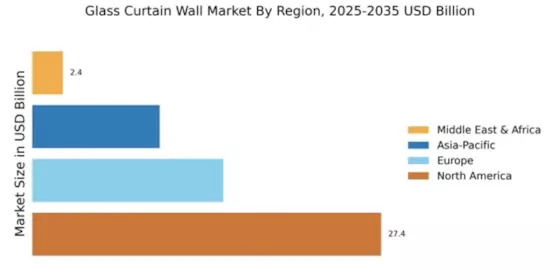
  • North America remains the largest market, while the Asia-Pacific region is recognized as the fastest-growing area for glass curtain wall applications.
  • Key market drivers include sustainability initiatives and urbanization trends, which are propelling demand in both commercial and residential segments.

Market Size & Forecast

2024 Market Size 54.8 (USD Billion)
2035 Market Size 118.98 (USD Billion)
CAGR (2025 - 2035) 7.3%

Major Players

Saint-Gobain (FR), Schüco International KG (DE), Kawneer (US), Alumil (GR), Reynaers Aluminium (BE), YKK AP (JP), Sapa Group (NO), Curtain Wall Systems (US), Mitsubishi Plastics (JP)

Glass Curtain Wall Market Trends

The Glass Curtain Wall Market is currently experiencing a transformative phase, driven by a confluence of architectural innovation and sustainability imperatives. As urbanization accelerates, the demand for aesthetically pleasing and energy-efficient building facades has surged. This market appears to be characterized by a growing preference for lightweight materials that offer enhanced thermal performance and durability. Furthermore, advancements in glazing technologies are likely to play a pivotal role in shaping the future landscape of this sector, as they enable the integration of smart features that enhance building functionality and occupant comfort. In addition to aesthetic considerations, environmental concerns are increasingly influencing design choices within the Glass Curtain Wall Market. The emphasis on reducing carbon footprints and promoting energy efficiency is prompting architects and builders to adopt materials that align with sustainable practices. This trend suggests a shift towards the use of recycled and eco-friendly materials, which may not only meet regulatory requirements but also appeal to environmentally conscious consumers. As the market evolves, it seems poised to embrace innovations that harmonize form and function, ultimately redefining the standards for modern architecture.

Sustainability Focus

The Glass Curtain Wall Market is witnessing a pronounced shift towards sustainable building practices. This trend emphasizes the use of eco-friendly materials and energy-efficient designs, reflecting a broader commitment to environmental stewardship. Architects and developers are increasingly prioritizing solutions that minimize energy consumption and reduce waste, aligning with global sustainability goals.

Technological Advancements

Technological innovations are reshaping the Glass Curtain Wall Market, particularly through the integration of smart technologies. These advancements enable enhanced energy management, improved insulation, and greater adaptability to environmental conditions. As a result, buildings equipped with intelligent curtain wall systems are likely to offer superior performance and comfort for occupants.

Aesthetic Versatility

The demand for aesthetic versatility in building designs is driving trends within the Glass Curtain Wall Market. Architects are exploring diverse styles and finishes, allowing for greater creativity in facade design. This trend not only enhances the visual appeal of structures but also enables customization to meet specific architectural visions.

Glass Curtain Wall Market Drivers

Rising Urbanization

The Global Glass Curtain Wall Market Industry is experiencing substantial growth due to increasing urbanization across the globe. As more people migrate to urban areas, the demand for commercial and residential buildings rises, leading to a greater need for modern architectural solutions. Glass curtain walls are favored for their aesthetic appeal and energy efficiency, making them a popular choice among architects and builders. In 2024, the market is projected to reach 54.8 USD Billion, reflecting the growing trend of high-rise buildings and urban developments. This trend is expected to continue, with the market potentially expanding to 119.0 USD Billion by 2035.

Technological Advancements

Technological advancements in glass manufacturing and installation techniques are significantly influencing the Global Glass Curtain Wall Market Industry. Innovations such as self-cleaning glass, smart glass, and enhanced structural integrity are making glass curtain walls more appealing to builders and architects. These advancements not only improve the aesthetic value of buildings but also contribute to energy savings and sustainability. As the industry embraces these technologies, the market is poised for growth, with projections indicating a potential increase to 119.0 USD Billion by 2035. This evolution in technology is likely to redefine architectural possibilities in urban environments.

Energy Efficiency Regulations

Stringent energy efficiency regulations are driving the Global Glass Curtain Wall Market Industry as governments worldwide implement policies to reduce carbon footprints. These regulations often mandate the use of energy-efficient materials in construction, which includes glass curtain walls that offer superior thermal performance. The integration of advanced technologies, such as low-emissivity coatings and insulated glazing, enhances energy efficiency, making these systems more attractive to developers. As a result, the market is likely to witness a compound annual growth rate of 7.3% from 2025 to 2035, indicating a robust shift towards sustainable building practices.

Increased Investment in Infrastructure

Increased investment in infrastructure development is a key factor propelling the Global Glass Curtain Wall Market Industry. Governments and private entities are allocating substantial funds towards the construction of commercial and residential projects, which often incorporate glass curtain walls for their modern appeal and functionality. This influx of investment is particularly noticeable in emerging economies, where urban development is accelerating. As a result, the market is projected to reach 54.8 USD Billion in 2024, with expectations for continued growth as infrastructure projects expand globally. This trend underscores the importance of glass curtain walls in contemporary construction.

Aesthetic Appeal and Design Flexibility

The aesthetic appeal and design flexibility offered by glass curtain walls are pivotal drivers of the Global Glass Curtain Wall Market Industry. Architects increasingly prefer these systems for their ability to create visually striking facades that enhance the overall appearance of buildings. The transparency and lightness of glass allow for innovative designs that can adapt to various architectural styles. This trend is particularly evident in commercial buildings, where the desire for modern and inviting spaces is paramount. As urbanization continues to rise, the demand for aesthetically pleasing structures is expected to propel the market forward, contributing to its growth trajectory.

Market Segment Insights

By Application: Commercial Buildings (Largest) vs. Residential Buildings (Fastest-Growing)

The Glass Curtain Wall Market is characterized by a diverse application landscape, with commercial buildings holding the largest market share. This segment's prevails due to the high demand for aesthetic appeal, energy efficiency, and natural light integration in office spaces and shopping centers. Conversely, the residential buildings segment is experiencing rapid growth driven by increasing urbanization, evolving residential design trends, and rising consumer preferences for modern housing solutions that offer visual connectivity to the outdoors. In addition to commercial and residential buildings, institutional and industrial buildings are noteworthy contributors to the market. Institutional buildings, including hospitals and schools, demand high-performance glass wall systems that comply with regulatory standards, while industrial applications focus on durability and functionality. As sustainability becomes more important, there is growing adoption of energy-efficient technologies across all segments, spurring further growth in the market.

Commercial Buildings: Dominant vs. Residential Buildings: Emerging

The commercial buildings segment is dominant in the Glass Curtain Wall Market, characterized by extensive use of glass in high-rise structures, corporate offices, and retail spaces. These buildings leverage glass for enhanced aesthetics and energy efficiency, boasting features such as thermal insulation and sound attenuation. Emerging as a rapidly growing segment, residential buildings reflect changing consumer preferences towards modern designs. Architects and builders are increasingly incorporating glass curtain walls to maximize light and create seamless indoor-outdoor transitions, appealing to millennials and environmentally conscious buyers. As construction practices evolve, both segments present unique opportunities, with the commercial sector continuing to lead while residential buildings rapidly gain traction amidst rising demand.

By Material Type: Glass (Largest) vs. Aluminum (Fastest-Growing)

In the Glass Curtain Wall Market, the material type segment encompasses several options, including aluminum, glass, steel, and composite materials. Glass holds the largest market share due to its aesthetic appeal and energy efficiency benefits. Following glass, aluminum has a significant presence due to its lightweight and durable properties, while steel and composite materials are competing yet hold smaller shares of the market. The market dynamics reflect a strong preference for glass-driven designs in modern architecture, leading to its dominant position.

Aluminum (Dominant) vs. Composite Materials (Emerging)

Aluminum is recognized as a dominant material in the Glass Curtain Wall Market, primarily due to its corrosion resistance, lightweight nature, and structural integrity. It is extensively used for frames and supports due to its ability to withstand various environmental conditions, making it a preferred choice among architects and builders. In contrast, composite materials are seen as emerging within this segment, offering innovative solutions to combine different materials for enhanced performance. While composites are still gaining traction, they are increasingly recognized for their potential in improving thermal efficiency and reducing ecological footprints, which could position them favorably for future growth.

By Installation Type: New Construction (Largest) vs. Renovation (Fastest-Growing)

In the Glass Curtain Wall Market, the 'By Installation Type' segment showcases distinct characteristics among its values: New Construction holds the largest market share, driven by ongoing urban developments and architectural innovations. In contrast, the Renovation segment has been experiencing rapid growth, fueled by an increasing number of retrofit projects in existing buildings, as sustainability and energy efficiency become paramount. Meanwhile, Retrofitting, though a significant player, continues to lag behind in terms of sheer market volume compared to the aforementioned categories. Overall, these distributions highlight the dynamic evolution of the glass curtain wall landscape as demands shift toward newer construction and retrofitted solutions. The growth trends within the installation types reveal a compelling narrative for each value segment. The New Construction market benefits from substantial investments in smart city projects and new commercial infrastructures, indicating a robust trajectory in demand. Renovation is swiftly emerging, primarily driven by strict regulations and a proactive stance toward energy-efficient upgrades in older buildings. Retrofitting is essential but tends to follow behind these tendencies, as it requires careful planning and funding. Together, these trends underscore the diversified opportunities and competitive pressures that define the Glass Curtain Wall Market.

New Construction (Dominant) vs. Renovation (Emerging)

In the Glass Curtain Wall Market, New Construction stands as the dominant installation type due to its pivotal role in shaping modern architectural landscapes. This segment is characterized by cutting-edge designs, larger project scopes, and a higher demand for innovative materials, which cater to contemporary aesthetic and functional requirements. On the other hand, Renovation emerges as a key player, tapping into an urgent need for sustainability through retrofitting existing structures. This segment focuses on optimizing energy performance and modernizing outdated buildings, making it responsive to environmental regulations and market demand for green building solutions. Collectively, these two segments reflect the evolving priorities within the market, balancing growth with sustainable practices.

By Glazing Type: Double Glazing (Largest) vs. Low-E Glass (Fastest-Growing)

The Glass Curtain Wall Market showcases a diverse range of glazing types, with double glazing currently holding the largest market share. This segment is widely favored for its insulation properties and energy efficiency, making it a top choice among consumers. Following closely is Low-E Glass, which is gaining traction rapidly due to its advanced thermal performance and increasing demand for energy-efficient building materials, catering to modern architectural needs.

Double Glazing (Dominant) vs. Low-E Glass (Emerging)

Double glazing is characterized by two panes of glass with an insulating space in between, offering superior thermal performance and noise reduction, which makes it a preferred choice in commercial and residential buildings. In contrast, Low-E Glass, with its thin metallic coating, reflects infrared light while allowing visible light to pass through, dramatically improving energy efficiency. Despite being an emerging technology, Low-E Glass is witnessing significant growth due to rising awareness of sustainability and the need for energy-efficient solutions, positioning it as a strong competitor in the market.

Get more detailed insights about Glass Curtain Wall Market

Regional Insights

North America : Market Leader in Glass Solutions

North America is poised to maintain its leadership in the Glass Curtain Wall Market, holding a significant market share of 27.39% as of 2024. The region's growth is driven by increasing urbanization, a surge in commercial construction, and stringent energy efficiency regulations. The demand for sustainable building materials is also on the rise, further propelling market expansion. Regulatory frameworks promoting green building practices are key catalysts for this growth. The competitive landscape in North America is robust, featuring key players such as Kawneer (US) and Saint-Gobain (FR). The U.S. stands out as the leading country, with a strong focus on innovative glass technologies and energy-efficient solutions. The presence of established companies and ongoing investments in R&D are enhancing the region's market dynamics, ensuring a steady supply of advanced glass curtain wall systems.

Glass Curtain Wall Market Regional Image

Key Players and Competitive Insights

The Glass Curtain Wall Market is currently characterized by a dynamic competitive landscape, driven by factors such as urbanization, sustainability initiatives, and advancements in building technologies. Key players like Saint-Gobain (FR), Schüco International KG (DE), and Kawneer (US) are strategically positioned to leverage these trends. Saint-Gobain (FR) focuses on innovation in energy-efficient solutions, while Schüco International KG (DE) emphasizes sustainable building practices and digital transformation. Kawneer (US) is enhancing its operational capabilities through strategic partnerships and regional expansions, collectively shaping a competitive environment that prioritizes technological advancement and sustainability.In terms of business tactics, companies are increasingly localizing manufacturing to reduce lead times and optimize supply chains. The market structure appears moderately fragmented, with several key players exerting influence over regional markets. This fragmentation allows for a diverse range of products and services, catering to varying customer needs while fostering competition among established and emerging players.

In November Saint-Gobain (FR) announced the launch of a new line of high-performance glass products designed to enhance energy efficiency in commercial buildings. This strategic move underscores the company's commitment to sustainability and positions it favorably in a market increasingly focused on reducing carbon footprints. The introduction of these products is likely to strengthen Saint-Gobain's market share and appeal to environmentally conscious consumers.

In October Schüco International KG (DE) unveiled a digital platform aimed at streamlining the design and installation processes for curtain wall systems. This initiative reflects the company's focus on digital transformation, enabling architects and builders to optimize their workflows. By enhancing user experience and operational efficiency, Schüco is likely to gain a competitive edge in a market that values innovation and technological integration.

In September Kawneer (US) entered into a strategic partnership with a leading technology firm to develop smart curtain wall systems that integrate IoT capabilities. This collaboration is indicative of a broader trend towards the integration of technology in building materials, potentially revolutionizing how curtain walls are designed and utilized. Such advancements may not only enhance building performance but also attract a new segment of tech-savvy clients.

As of December current competitive trends in the Glass Curtain Wall Market are heavily influenced by digitalization, sustainability, and the integration of AI technologies. Strategic alliances are becoming increasingly vital, as companies seek to enhance their product offerings and operational efficiencies. The competitive differentiation is likely to evolve from traditional price-based competition to a focus on innovation, technology, and supply chain reliability, suggesting a transformative shift in how companies position themselves in the market.

Key Companies in the Glass Curtain Wall Market include

Industry Developments

January 2023: AGC Inc. partnered with the Japanese construction company Shimizu Corporation to develop a new type of glass curtain wall that is resistant to earthquakes and typhoons. This partnership is expected to lead to the development of new and innovative glass curtain wall products that can be used in high-risk areas.

March 2023: Saint-Gobain and AGC Inc. announced a partnership to develop and commercialize new glass curtain wall technologies. This partnership will combine the two companies' expertise in glass, adhesives, and other building materials to create innovative new products and solutions.

August 2021: Dynamic Glass acquired Colorado Window Systems, Inc. (CWS), a leading glass and glazing service provider to the greater Denver metropolitan area. This acquisition expanded Dynamic Glass' service capabilities in Colorado and strengthened its position in the US market. December 2023: Schüco International KG, a leading manufacturer of building envelopes, unveils its latest innovation: a self-cleaning glass curtain wall system that utilizes nano-coating technology to repel dirt and water. This technology promises to reduce maintenance costs and improve the long-term durability of the system.

In October 2023, Oldcastle BuildingEnvelope, a Dallas-based company that supplies architectural glass, aluminum, and hardware worldwide, introduced Reliance-TC LT as a new addition to its existing line of curtain wall solutions called Reliance. The product is referred to by the manufacturer as a curtain wall that is high-performance, lightweight, cost-competitive, and well-suited for IECC Zones 4-8. According to OBE, the double-pane curtain wall has a U-factor level of 0.29, which offers excellent thermal insulation against harsh climates in the U.S. and Canada. Additionally, it sets new industry norms in this area.

Reliance-TC LT is designed as an advancement of the Reliance-LT Curtain Wall, allowing installers to utilize their expertise in fabricating and installing that system.

Future Outlook

Glass Curtain Wall Market Future Outlook

The Glass Curtain Wall Market is projected to grow at a 7.3% CAGR from 2024 to 2035, driven by urbanization, energy efficiency demands, and technological advancements.

New opportunities lie in:

  • Integration of smart glass technologies for energy efficiency
  • Expansion into emerging markets with tailored solutions
  • Development of modular curtain wall systems for rapid installation

By 2035, the market is expected to achieve robust growth, reflecting evolving architectural trends and sustainability initiatives.

Market Segmentation

Glass Curtain Wall Market Application Outlook

  • Commercial Buildings
  • Residential Buildings
  • Institutional Buildings
  • Industrial Buildings

Glass Curtain Wall Market Glazing Type Outlook

  • Double Glazing
  • Triple Glazing
  • Low-E Glass
  • Tempered Glass

Glass Curtain Wall Market Material Type Outlook

  • Aluminum
  • Glass
  • Steel
  • Composite Materials

Glass Curtain Wall Market Installation Type Outlook

  • New Construction
  • Renovation
  • Retrofitting

Report Scope

MARKET SIZE 202454.8(USD Billion)
MARKET SIZE 202558.8(USD Billion)
MARKET SIZE 2035118.98(USD Billion)
COMPOUND ANNUAL GROWTH RATE (CAGR)7.3% (2025 - 2035)
REPORT COVERAGERevenue Forecast, Competitive Landscape, Growth Factors, and Trends
BASE YEAR2024
Market Forecast Period2025 - 2035
Historical Data2019 - 2024
Market Forecast UnitsUSD Billion
Key Companies ProfiledSaint-Gobain (FR), Schüco International KG (DE), Kawneer (US), Alumil (GR), Reynaers Aluminium (BE), YKK AP (JP), Sapa Group (NO), Curtain Wall Systems (US), Mitsubishi Plastics (JP)
Segments CoveredApplication, Material Type, Installation Type, Glazing Type
Key Market OpportunitiesIntegration of smart glass technology enhances energy efficiency in the Glass Curtain Wall Market.
Key Market DynamicsRising demand for energy-efficient buildings drives innovation in glass curtain wall technologies and sustainable materials.
Countries CoveredNorth America, Europe, APAC, South America, MEA

FAQs

How much is the Glass Curtain Wall market?

The Glass Curtain Wall market size was valued at USD 54.80 Billion in 2024.

What is growth rate of the Glass Curtain Wall market?

Glass Curtain Wall Market is projected to grow at a CAGR of 7.3% during the forecast period, 2025-2035

Which region has largest market share in the Glass Curtain Wall market?

North America held the largest share in the market

Who are key market players in the Glass Curtain Wall market?

The key market players in market are AGC Inc., Central Glass Co., Ltd., AVIC Sanxin Co., Ltd., Xinyi Glass Holdings Limited, SCHOTT AG, China Glass Holdings Ltd., Nippon Sheet Glass Company, Limited, Saint-Gobain Group, Vitro, S.A.B. de C.V., and Guardian Industries Holdings, LLC.

Which type led the Glass Curtain Wall market?

The unitized systems category dominated the market in 2022.

Which end user held the largest market share in the Glass Curtain Wall market?

The commercial held the largest share in the market.

Download Free Sample

Kindly complete the form below to receive a free sample of this Report

Compare Licence

×
Features License Type
Single User Multiuser License Enterprise User
Price $4,950 $5,950 $7,250
Maximum User Access Limit 1 User Upto 10 Users Unrestricted Access Throughout the Organization
Free Customization
Direct Access to Analyst
Deliverable Format
Platform Access
Discount on Next Purchase 10% 15% 15%
Printable Versions