Request Free Sample ×

Kindly complete the form below to receive a free sample of this Report

* Please use a valid business email

Leading companies partner with us for data-driven Insights

clients tt-cursor
Hero Background
English
Chinese
French
Japanese
Korean
German
Spanish

Bioinformatics Market Share

ID: MRFR/HC/1664-HCR
200 Pages
Rahul Gotadki
Last Updated: April 06, 2026

Bioinformatics Market Research Report: Size, Share, Trend Analysis By Applications (Genomics, Proteomics, Metabolomics, Translational Bioinformatics, Cheminformatics), By Deployment Type (On-Premise, Cloud-Based, Web-Based), By End-user (Academics, Pharmaceutical Companies, Biotechnology Companies, Research Organizations), By Product Type (Bioinformatics Tools, Bioinformatics Services, Bioinformatics Platforms), and By Regional (North America, Europe, South America, Asia Pacific, Middle East and Africa) - Growth Outlook & Industry Forecast 2025 To 2035

Share:
Download PDF ×

We do not share your information with anyone. However, we may send you emails based on your report interest from time to time. You may contact us at any time to opt-out.

Bioinformatics Market Infographic
Purchase Options

Market Share

Bioinformatics Market Share Analysis

To grasp market share positioning strategies, it's vital to understand the bioinformatics market's dynamics. This field intersects biology, computer science, and information technology, offering solutions for biological data management, analysis, and interpretation.

Identifying Target Segments : Market share strategies begin with identifying target segments within bioinformatics. This may include pharmaceutical companies, academic research institutions, biotechnology firms, and healthcare providers seeking genomic insights for precision medicine.

Product Differentiation : Successful market positioning hinges on product differentiation. Bioinformatics companies must highlight unique features, such as proprietary algorithms, user-friendly interfaces, or integration with other tools, to stand out in a crowded market.

Customization for Specific Needs : Tailoring solutions to meet specific customer needs can enhance market share. Offering customizable platforms or modules allows clients to address their unique challenges effectively.

Strategic Partnerships : Collaborating with key players in the life sciences industry can bolster market presence. Partnerships with pharmaceutical giants or research organizations not only expand reach but also lend credibility to bioinformatics solutions.

Focus on Data Security and Compliance : Given the sensitive nature of genomic data, prioritizing robust security measures and compliance with regulatory standards is paramount. Assuring clients of data confidentiality and adherence to HIPAA or GDPR regulations can build trust and attract market share.

Investment in R&D : Continuous innovation is essential for staying ahead in the bioinformatics market. Investing in research and development to enhance algorithms, improve data analysis capabilities, or explore emerging technologies like machine learning and artificial intelligence can attract tech-savvy customers.

User Training and Support : Providing comprehensive training and ongoing technical support fosters customer loyalty. Ensuring that users can maximize the utility of bioinformatics tools encourages repeat business and positive word-of-mouth referrals.

Global Expansion Strategies : Expanding beyond regional boundaries into global markets can unlock new opportunities for market share growth. Understanding cultural nuances, language preferences, and regulatory landscapes in target regions is crucial for successful expansion.

Value-Based Pricing : Adopting a value-based pricing model, where the cost reflects the perceived value delivered to customers, can justify premium pricing. Demonstrating tangible benefits such as accelerated drug discovery or personalized treatment recommendations strengthens the value proposition.

Brand Building and Thought Leadership : Establishing a strong brand presence and thought leadership position instills confidence in potential clients. Publishing white papers, participating in industry conferences, and engaging in scientific collaborations elevate brand visibility and credibility.

Agile Marketing Strategies : In a rapidly evolving field like bioinformatics, agility in marketing is key. Leveraging digital channels, targeted advertising, and content marketing to reach niche audiences ensures effective market penetration.

Continuous Market Analysis : Regularly analyzing market trends, competitor strategies, and customer feedback informs adaptive market positioning. Being responsive to shifting dynamics enables bioinformatics companies to capitalize on emerging opportunities and mitigate threats.

Sustainable Growth Practices : Prioritizing sustainable practices, whether in terms of environmental responsibility or ethical data usage, resonates with increasingly conscientious customers. Aligning market positioning with values of sustainability and social responsibility can attract like-minded clientele.

Measuring and Iterating : Finally, measuring the effectiveness of market positioning strategies through key performance indicators (KPIs) and customer satisfaction metrics allows for continuous improvement. Iterating based on insights gained from analytics ensures relevance and resilience in the competitive bioinformatics landscape.

Author
Author Profile
Rahul Gotadki
Research Manager

He holds an experience of about 9+ years in Market Research and Business Consulting, working under the spectrum of Life Sciences and Healthcare domains. Rahul conceptualizes and implements a scalable business strategy and provides strategic leadership to the clients. His expertise lies in market estimation, competitive intelligence, pipeline analysis, customer assessment, etc.

Leave a Comment

FAQs

What is the current valuation of the Bioinformatics Market as of 2024?

<p>The Bioinformatics Market was valued at 3.12 USD Billion in 2024.</p>

What is the projected market size for the market in 2035?

The market is projected to reach 10.51 USD Billion by 2035.

What is the expected CAGR for the Bioinformatics Market during the forecast period 2025 - 2035?

The expected CAGR for the market during the forecast period 2025 - 2035 is 11.67%.

Which companies are considered key players in the market?

Key players in the Bioinformatics Market include Illumina, Thermo Fisher Scientific, Qiagen, and Agilent Technologies.

What are the main application segments of the Bioinformatics Market?

<p>The main application segments include Genomics, Proteomics, Metabolomics, Translational Bioinformatics, and Cheminformatics.</p>

How does the deployment type affect the Bioinformatics Market valuation?

<p>In 2024, the Cloud-Based deployment type was valued at 1.24 USD Billion, indicating a growing preference for cloud solutions.</p>

What is the valuation of Bioinformatics Services in 2024?

<p>Bioinformatics Services were valued at 1.24 USD Billion in 2024, reflecting their importance in the market.</p>

Which end-user segment holds the largest market share in Bioinformatics?

<p>Pharmaceutical Companies represent the largest end-user segment, with a valuation of 1.24 USD Billion in 2024.</p>

What is the projected growth for Bioinformatics Tools by 2035?

<p>Bioinformatics Tools are expected to grow significantly, with a projected valuation of 3.12 USD Billion by 2035.</p>

How does the Bioinformatics Market's growth compare across different product types?

<p>In 2024, Bioinformatics Platforms were valued at 0.95 USD Billion, suggesting a diverse growth trajectory across product types.</p>

Market Summary

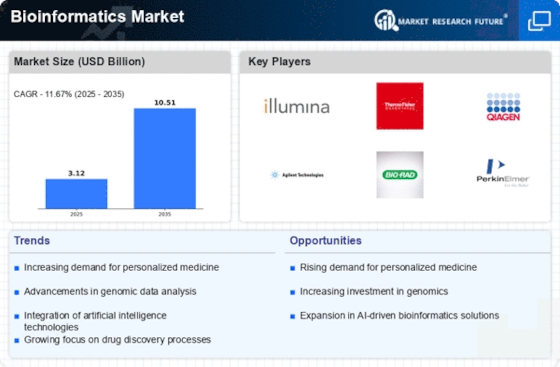
According to Market Research Future analysis, the Bioinformatics Market size was valued at USD 3.12 Billion in 2024. The market is projected to grow from USD 3.484 Billion in 2025 to USD 10.51 Billion by 2035, exhibiting a CAGR of 11.6% during the forecast period 2025-2035. North America led the market with over 45% share, generating around USD 1.4 billion in revenue.
 
Rapid expansion of genomics, precision medicine, and large-scale biological data generation is driving the market. Increasing use of AI-based analytics and next-generation sequencing enables faster interpretation of complex datasets, improving disease research, drug discovery, and personalized healthcare outcomes globally.
 
According to WHO, noncommunicable diseases cause 41 million deaths annually, representing 74% of global mortality, increasing demand for advanced computational biology tools. Rising genomic data generation, exceeding 2 exabytes annually in healthcare research datasets (global estimates from biomedical studies), strengthens adoption of bioinformatics solutions for faster disease modeling and precision medicine development.

Key Market Trends & Highlights

The bioinformatics market is experiencing robust growth driven by technological advancements and increasing demand for personalized healthcare solutions.

  • North America holds over 45% bioinformatics market share in 2024, driven by genomic research and advanced healthcare infrastructure. Europe accounts for 30% market share in 2024, supported by EMA frameworks and growing genomic medicine adoption. Genomics dominates bioinformatics with 62% share in 2024, fueled by precision medicine and sequencing advancements globally. Cloud-based deployment leads with 67% share in 2024, enabling scalable genomic data processing and AI integration. Academics dominate end-user segment with 58% share in 2024, supported by global funded genomic research initiatives.

Market Size & Forecast

2024 Market Size 3.12 (USD Billion)
2035 Market Size 10.51 (USD Billion)
CAGR (2025 - 2035) 11.67%
Largest Regional Market Share in 2024 North America

Major Players

Companies such as Illumina (US), <a href="https://www.thermofisher.com/blog/behindthebench/bioinformatics/">Thermo Fisher Scientific</a> (US), Qiagen (DE), Agilent Technologies (US), Bio-Rad Laboratories (US), PerkinElmer (US), BGI Genomics (CN), <a href="https://diagnostics.roche.com/global/en/healthcare-transformers/article/bioinformatics-in-personalized-medicine.html">Roche</a> (CH), Genomatix (DE) are some of the major participants in the global market.

Market Trends

The Bioinformatics Market is currently experiencing a transformative phase, driven by advancements in technology and an increasing demand for personalized medicine. The integration of artificial intelligence and machine learning into bioinformatics tools is enhancing data analysis capabilities, allowing researchers to derive insights from complex biological data more efficiently. Furthermore, the growing emphasis on genomics and proteomics is propelling the need for sophisticated bioinformatics solutions, as these fields require extensive computational resources to manage and interpret vast datasets. 

As a result, stakeholders in the market are focusing on developing innovative software and platforms that cater to the evolving needs of researchers and healthcare professionals. In addition, collaborations between academic institutions and industry players are becoming more prevalent, fostering an environment conducive to innovation. This synergy is likely to accelerate the development of new bioinformatics applications, particularly in drug discovery and development. 

Moreover, the rising awareness of the importance of data security and privacy in handling sensitive biological information is prompting companies to invest in robust security measures. The total market size is surging as health-conscious consumers invest in deep-tech solutions for preventive wellness and anti-aging. 

Overall, the market appears poised for substantial growth, with a myriad of opportunities emerging as technology continues to evolve and reshape the landscape of biological research and healthcare delivery.

Integration of Cutting-edge Technology

The incorporation of artificial intelligence into bioinformatics tools is revolutionizing data analysis. This trend enhances the ability to process and interpret complex biological datasets, leading to more accurate insights and faster research outcomes. Real-time bioinformatics data streams from advanced wearables allow for the precise adjustment of fasting protocols based on metabolic fluctuations.

WHO highlights that noncommunicable diseases account for 41 million deaths annually, driving demand for AI-enabled biomedical data interpretation. Integration of artificial intelligence improves genomic and proteomic analysis speed by significantly reducing diagnostic time in large-scale datasets, supporting faster disease detection and treatment optimization in healthcare systems worldwide.

Focus on Personalized Medicine

There is a growing emphasis on personalized medicine within the market. Biohackers utilize personalized bioinformatics data from multi-omics testing to identify unique genetic markers that influence their response to specific nootropics. This shift necessitates advanced bioinformatics solutions that can analyze individual genetic profiles, thereby tailoring treatments to specific patient needs.

WHO reports that cancer alone caused 10 million deaths in 2020, emphasizing the need for precision-based treatment strategies. Personalized medicine supported by bioinformatics enables genomic profiling for targeted therapies, improving survival outcomes and reducing treatment failure rates in complex diseases across global healthcare systems.

Collaborative Research Initiatives

Collaborations between academic institutions and industry are increasingly common. Partnerships within the bioinformatics industry has led to the development of open-source platforms that democratize access to complex protein modeling software. These partnerships foster innovation and accelerate the development of new bioinformatics applications, particularly in drug discovery and development.

According to CDC, collaborative global surveillance programs monitor over 1.7 million infectious disease cases annually in the U.S. alone, requiring integrated data platforms. Cross-institutional research collaborations enhance genomic data sharing and accelerate bioinformatics innovation, improving outbreak response, drug discovery, and translational biomedical research efficiency.

Bioinformatics Market Market Drivers

Advancements in Computational Biology

Advancements in computational biology are significantly influencing the Bioinformatics Market Industry. The development of sophisticated algorithms and software tools enables researchers to analyze complex biological data more efficiently. For instance, machine learning techniques are increasingly applied to predict protein structures and interactions, which is crucial for drug discovery.
 
The computational biology segment is expected to witness substantial growth, with estimates suggesting it could account for over 40% of the overall market by 2025. This trend underscores the importance of computational methods in managing and interpreting vast datasets, thereby propelling the market Industry forward.

Increased Investment in Biotechnology

Increased investment in biotechnology is a major catalyst for the Bioinformatics Market Industry. Governments and private entities are channeling substantial funds into biotechnological research and development, recognizing its potential to revolutionize healthcare. In 2025, investments in biotechnology are anticipated to exceed 200 billion USD, with a significant portion allocated to bioinformatics solutions.
 
This influx of capital fosters innovation and the development of new bioinformatics tools, which are essential for analyzing biological data. As a result, the market Industry is likely to experience accelerated growth, driven by the demand for advanced analytical capabilities in biotechnology.

Rising Demand for Genomic Data Analysis

The increasing demand for genomic data analysis is a pivotal driver in the Bioinformatics Market Industry. As healthcare systems evolve, the need for precise genomic information to tailor treatments is paramount. The market for genomic data analysis is projected to reach approximately 30 billion USD by 2026, reflecting a compound annual growth rate of around 10%.
 
This surge is largely attributed to advancements in sequencing technologies and the growing prevalence of genetic disorders. Consequently, bioinformatics tools that facilitate the analysis and interpretation of genomic data are becoming indispensable. The integration of these tools into clinical workflows enhances the ability to deliver personalized medicine, thereby driving the growth of the market Industry.

Growing Adoption of Cloud-Based Solutions

The growing adoption of cloud-based solutions is transforming the Bioinformatics Market Industry. Cloud computing offers scalable resources and cost-effective data storage, which are essential for managing the large volumes of data generated in bioinformatics research. By 2025, it is estimated that cloud-based bioinformatics solutions will account for nearly 25% of the market share.
 
This shift allows researchers to collaborate more effectively and access powerful computational resources without the need for extensive local infrastructure. Consequently, the market Industry is poised for growth as organizations increasingly leverage cloud technologies to enhance their research capabilities.

Regulatory Support for Bioinformatics Innovations

Regulatory support for bioinformatics innovations plays a crucial role in shaping the Bioinformatics Market Industry. Governments are recognizing the importance of bioinformatics in advancing healthcare and are implementing policies that encourage research and development. For instance, regulatory frameworks that facilitate the approval of bioinformatics tools and applications are being established.
 
This supportive environment is likely to stimulate innovation and attract investments, thereby fostering growth in the market Industry. As regulatory bodies continue to adapt to the rapid advancements in technology, the market is expected to expand, driven by the increasing acceptance of bioinformatics solutions in clinical and research settings.

Market Segment Insights

By Application: Genomics (Largest) vs. Proteomics (Fastest-Growing)

The application segment is mainly led by genomics, accounting for the largest Bioinformatics Market share of 62%, driven by rising regulatory approvals for genomic studies and significant investments in genomic research. The rise of personalized medicine and advancements in genomic sequencing technologies has further solidified genomics' leading position, making it a critical component of bioinformatics solutions that support drug discovery and developmental research. Conversely, proteomics is emerging rapidly as a significant driver of market growth. This growth is attributed to the expanding use of proteomic technologies in <a href="https://www.marketresearchfuture.com/reports/biomarker-market-1941">biomarker</a> discovery and disease diagnostics, fueled by rising healthcare expenditures and the need for innovative therapeutic solutions targeting protein-level interactions. The growth trends within this segment reflect a robust interest in both basic and applied biosciences, with genomics seeing wide acceptance across various healthcare sectors. Proteomics is experiencing the fastest growth, driven by technological advancements, cost reductions in mass spectrometry, and collaborations between research institutions and pharmaceutical companies. Additionally, the increasing prevalence of chronic diseases necessitates further research into protein functions and interactions, contributing to proteomics' expansion. This dynamic interplay between genomics and proteomics not only enhances our understanding of biological systems but also paves the way for groundbreaking discoveries in translational medicine.

Genomics (Dominant) vs. Metabolomics (Emerging)

Genomics remains a dominant force in the bioinformatics application segment, characterized by its extensive use in genetic research and the development of biomarkers for various diseases. It serves as the foundational element for personalized medicine, enabling tailored therapeutic strategies based on individual genetic profiles. Conversely, <a title="metabolomics" href="https://www.marketresearchfuture.com/reports/metabolomics-market-43428" target="_blank" rel="noopener">metabolomics</a> is rapidly emerging, focusing on the chemical processes involving metabolites within the biological systems. This segment's growth is driven by its applications in drug discovery, toxicology, and nutritional studies. With its ability to provide insights into metabolic pathways and disease states, metabolomics is gaining traction among researchers aiming to develop holistic approaches to health and disease management. As technology advances and research expands, the interplay between these segments will shape the future landscape of bioinformatics.

By Deployment Type: Cloud-Based (Largest) vs. On-Premise (Fastest-Growing)

The deployment type segmentation highlights a strong shift toward cloud-based solutions, which currently dominate the bioinformatics market share at 67%, driven by their flexibility and ease of accessibility. Organizations prefer cloud solutions for their ability to integrate and process large datasets efficiently. On-premise solutions, while historically dominant, are facing increased competition from cloud-based offerings, as bioinformatics companies shift towards more scalable and collaborative models. The growth trends in this segment are significantly influenced by advancements in technology and the increasing need for real-time data processing capabilities. The demand for cloud-based bioinformatics solutions is growing rapidly as more institutions recognize the benefits of scaling operations. Meanwhile, on-premise systems are evolving, focusing on integrating advanced analytics and personalized research capabilities to support diverse applications in the life sciences industry.

Cloud-Based (Dominant) vs. On-Premise (Emerging)

Cloud-based bioinformatics solutions are dominating the market thanks to their ability to offer scalable resources and reduce infrastructure costs for organizations. These solutions enable researchers and companies to access, analyze, and share bioinformatics data effectively across geographical boundaries, fostering collaboration and innovation. On-premise solutions, although emerging as important players, are adapting to include hybrid models that blend local processing capabilities with cloud functionalities. This adaptation is vital for organizations that require stringent data security and control while still looking to leverage cloud advantages. As bioinformatics continues to evolve, both deployment types are expected to coexist, each catering to specific market needs and customer preferences.

By End-user: Academics (Largest) vs. Pharmaceutical Companies (Fastest-Growing)

The distribution of market share among end-users reveals important insights, with academics holding the largest Bioinformatics Market share of 58%, driven by their extensive use of bioinformatics tools for research activities and educational advancement. This segment benefits from funding and grants that promote high-tech research, making it a cornerstone of the market. In contrast, pharmaceutical companies, while smaller in share, are witnessing rapid growth driven by their increasing reliance on bioinformatics for drug discovery and personalized medicine.

Academics (Dominant) vs. Pharmaceutical Companies (Emerging)

Academics are the dominant players in the market share, utilizing advanced computational methods and software for research, education, and innovation. They underpin a significant portion of the market's activities, supported by institutional funding and partnerships with technology providers. On the other hand, pharmaceutical companies represent an emerging segment that is rapidly gaining traction. Their integration of bioinformatics into drug development processes enhances efficiency and precision in targeting diseases. As regulatory environments evolve and the focus on personalized medicine escalates, pharmaceutical companies are embracing bioinformatics, focusing on data-driven insights to optimize research and accelerate pipelines.

By Product Type: Bioinformatics Tools (Largest) vs. Bioinformatics Services (Fastest-Growing)

The distribution of Bioinformatics Market share 64% shows that Bioinformatics Tools holds the largest segment, highlighting its crucial role in data analysis and computational biology. This segment has established a robust footprint due to the demand for sophisticated software and applications designed to interpret biological data efficiently. Following closely, Bioinformatics Services, which provides custom analysis and consulting, is gaining traction and is poised for significant growth, driven by increasing dependencies on expert insights to navigate complex biological datasets.

Bioinformatics Tools (Dominant) vs. Bioinformatics Services (Emerging)

Bioinformatics Tools represent a dominant force in the market, characterized by a wide array of software solutions that offer functionalities from genomic sequencing to molecular modeling. Their robust capability to streamline data processing and enhance research productivity makes them indispensable for biotechnological and pharmaceutical applications. On the other hand, Bioinformatics Services, as an emerging segment, leverages expertise for tailored solutions in data interpretation and analytics. With the rising complexity of biological data, organizations increasingly seek these services, positioning them for rapid growth as they address specific client needs and offer specialized insights that tools alone cannot provide.

Get more detailed insights about Bioinformatics Market Research Report- Forecast to 2035

Regional Insights

North America : Innovation and Investment Hub

North America dominated the global Bioinformatics Market in 2024, reaching a market size of USD 1.4 billion. The region benefits from significant investments in research and development, driven by a robust healthcare infrastructure and increasing demand for personalized medicine. Integrated digital health ecosystems are a major contributor to the expanding market size in the North American sectors.

Regulatory support from agencies like the FDA further catalyzes market growth, ensuring compliance and safety in bioinformatics applications. The United States dominates the North American bioinformatics landscape, with key players such as Illumina, Thermo Fisher Scientific, and Bio-Rad Laboratories leading the charge. The competitive environment is characterized by continuous innovation and strategic partnerships, enhancing the capabilities of bioinformatics solutions. Canada also plays a significant role, contributing to advancements in genomics and data analytics, thereby solidifying North America's position as a leader in the market.

According to CDC, chronic diseases cause 6 in 10 deaths in the United States annually, creating strong demand for predictive analytics and genomic tools. Additionally, advanced disease surveillance systems track millions of clinical data points annually, supporting rapid bioinformatics integration in healthcare research and precision medicine development.

Europe : Emerging Bioinformatics Market Powerhouse

Europe is the second-largest market for bioinformatics, accounting for approximately 30% of the global share. The region's growth is propelled by increasing investments in genomics and personalized medicine, alongside supportive regulatory frameworks from the European Medicines Agency (EMA). Initiatives aimed at enhancing data sharing and collaboration among member states further stimulate market demand and innovation in bioinformatics solutions.

Germany and the United Kingdom are the leading countries in Europe's bioinformatics sector, hosting major players like Qiagen and Agilent Technologies. The competitive landscape is marked by a mix of established firms and innovative startups, fostering a dynamic environment for technological advancements. Collaborative research initiatives and public-private partnerships are also prevalent, enhancing the region's capabilities in bioinformatics and ensuring its competitive edge in the global market.

ECDC reports that infectious diseases account for significant healthcare burden in Europe, with surveillance covering hundreds of thousands of cases annually across member states. Combined with EMA-supported genomic medicine programs, this strengthens adoption of bioinformatics platforms for disease monitoring, drug discovery, and cross-border health data integration.

Asia-Pacific : Rapidly Growing Bioinformatics Market Sector

Asia-Pacific is witnessing rapid growth in the market, holding approximately 20% of the global share. The region's expansion is driven by increasing investments in biotechnology and healthcare, coupled with a rising demand for personalized medicine. Countries like China and India are at the forefront, supported by government initiatives aimed at enhancing research capabilities and fostering innovation in bioinformatics technologies.

China is a key player in the Asia-Pacific bioinformatics landscape, with companies like BGI Genomics leading the charge. India is also emerging as a significant market, with a growing number of startups focusing on bioinformatics solutions. The competitive environment is characterized by collaborations between academic institutions and industry players, driving advancements in genomics and data analytics, thereby positioning Asia-Pacific as a vital player in The market.

Middle East and Africa : Untapped Potential in Bioinformatics Market

The Middle East and Africa region is gradually emerging in the market, currently holding about 5% of the global share. The growth is primarily driven by increasing investments in healthcare infrastructure and a rising focus on genomics research. Governments in countries like South Africa and the UAE are initiating programs to enhance research capabilities, which is expected to catalyze market growth in the coming years.

South Africa is leading the bioinformatics sector in the region, with a growing number of research institutions and collaborations aimed at advancing genomics and bioinformatics applications. The competitive landscape is still developing, with opportunities for both local and international players to establish a presence. As the region continues to invest in healthcare and research, the market is poised for significant growth, attracting attention from global stakeholders.

Key Players and Competitive Insights

The Bioinformatics Market is currently characterized by a dynamic competitive landscape, driven by rapid advancements in technology and increasing demand for personalized medicine. Key players such as Illumina (US), Thermo Fisher Scientific (US), and Roche (CH) are at the forefront, leveraging their extensive research capabilities and innovative product offerings to maintain a competitive edge. Illumina (US) focuses on enhancing its sequencing technologies, while Thermo Fisher Scientific (US) emphasizes its comprehensive portfolio of bioinformatics solutions. Roche (CH) is strategically investing in digital health initiatives, indicating a shift towards integrated healthcare solutions.
 
Collectively, these strategies not only enhance their market positioning but also contribute to a more competitive environment, where innovation and technological advancements are paramount. In terms of business tactics, companies are increasingly localizing manufacturing and optimizing supply chains to enhance operational efficiency. The market appears moderately fragmented, with a mix of established players and emerging startups. This structure allows for diverse offerings and fosters competition, as companies strive to differentiate themselves through unique value propositions. The collective influence of key players is significant, as they set industry standards and drive technological advancements that shape market dynamics.
 
In August 2025, Illumina (US) announced a partnership with a leading healthcare provider to integrate its genomic sequencing technology into routine clinical practice. This strategic move is likely to enhance patient outcomes by enabling more precise diagnostics and personalized treatment plans. The collaboration underscores Illumina's commitment to expanding the application of its technologies in real-world settings, thereby solidifying its leadership position in the market.
 
In September 2025, Thermo Fisher Scientific (US) launched a new cloud-based bioinformatics platform designed to streamline data analysis for researchers. This initiative reflects the growing trend towards digital transformation in the life sciences sector. By providing researchers with advanced tools for data management and analysis, Thermo Fisher aims to enhance productivity and accelerate scientific discovery, positioning itself as a key player in the evolving bioinformatics landscape. 
 
In July 2025, Roche (CH) unveiled a new suite of bioinformatics tools aimed at improving drug discovery processes. This launch is indicative of Roche's strategic focus on integrating bioinformatics into its research and development pipeline. By enhancing its capabilities in data analysis and interpretation, Roche is likely to expedite the development of novel therapeutics, thereby reinforcing its competitive stance in the pharmaceutical sector.
 
As of October 2025, the market is witnessing trends such as increased digitalization, sustainability initiatives, and the integration of artificial intelligence in data analysis. Strategic alliances among key players are shaping the competitive landscape, fostering innovation and collaboration. Looking ahead, it is anticipated that competitive differentiation will increasingly hinge on technological advancements and supply chain reliability, rather than solely on price. Companies that prioritize innovation and adaptability are likely to thrive in this evolving market.

Key Companies in the Bioinformatics Market include

Industry Developments

After growing its genomic database tenfold since October 2024, Basecamp Research, a biotech company formed in the UK and run by Glen Gowers and Oliver Vince, revealed in May 31, 2025, that it was expanding its environmental DNA sequencing program.

According to the business, more than a million new species have been found in far-flung places like Antarctica and Malta, greatly improving AI protein-folding models and expanding the use of large serine recombinase (LSR) gene editing for intricate disease applications.

In a trade update published on January 13, 2025, Oxford Nanopore reported an 11% year-over-year increase in sales to £183 million and an 8.9% increase in share prices. The company attributed this growth to successful product launches, larger contracts, and projected break-even adjusted profitability by 2027 and positive cash flow by 2028.

In an effort to improve single-cell genomic research and boost profit margins with anticipated double-digit adjusted profit growth through 2027, Illumina and the Broad Institute announced a partnership to create CRISPR-based PerturbSeq sequencing kits on August 13, 2024.

Thermo Fisher Scientific unveiled Olink Reveal, a cutting-edge proteomics platform, in January 2025 with the goal of simplifying biomarker discovery processes and lowering testing expenses. Furthermore, Genedata announced in July 2024 that it had been acquired by Danaher Group, placing its business bioinformatics suite under a significant life sciences organization and setting it up for quicker worldwide adoption.

Future Outlook

Bioinformatics Market Future Outlook

The Bioinformatics Market size is projected to reach USD 10.51 Billion by 2035, growing at a CAGR of 11.67%, driven by advancements in <a title="genomics" href="https://www.marketresearchfuture.com/reports/genomics-market-12283" target="_blank" rel="noopener">genomics</a>, personalized medicine, and data analytics. The current wave of bioinformatics growth reflects a shift from reactive healthcare to proactive, individualized human enhancement. This shift has become a strong and influential factor in propelling the future of this market.

New opportunities lie in:

  • <p>Development of AI-driven bioinformatics platforms for drug discovery. Expansion of cloud-based bioinformatics solutions for data management. Integration of bioinformatics in precision agriculture for crop improvement.</p>

By 2035, the Bioinformatics Market is expected to be a pivotal sector, reflecting robust growth and innovation.

Market Segmentation

Bioinformatics Market End-user Outlook

  • Academics
  • Pharmaceutical Companies
  • Biotechnology Companies
  • Research Organizations

Bioinformatics Market Application Outlook

  • Genomics
  • Proteomics
  • Metabolomics
  • Translational Bioinformatics
  • Cheminformatics

Bioinformatics Market Product Type Outlook

  • Bioinformatics Tools
  • Bioinformatics Services
  • Bioinformatics Platforms

Bioinformatics Market Deployment Type Outlook

  • On-Premise
  • Cloud-Based
  • Web-Based

Report Scope

MARKET SIZE 2024 3.12(USD Billion)
MARKET SIZE 2025 3.484(USD Billion)
MARKET SIZE 2035 10.51(USD Billion)
COMPOUND ANNUAL GROWTH RATE (CAGR) 11.67% (2025 - 2035)
REPORT COVERAGE Revenue Forecast, Competitive Landscape, Growth Factors, and Trends
BASE YEAR 2024
Market Forecast Period 2025 - 2035
Historical Data 2019 - 2024
Market Forecast Units USD Billion
Key Companies Profiled Illumina (US), Thermo Fisher Scientific (US), Qiagen (DE), Agilent Technologies (US), Bio-Rad Laboratories (US), PerkinElmer (US), BGI Genomics (CN), Roche (CH), Genomatix (DE)
Segments Covered Applications, Deployment Type, End-user, Product Type, Regional
Key Market Opportunities Integration of artificial intelligence in genomic data analysis enhances precision medicine in the Bioinformatics Market.
Key Market Dynamics Rising demand for personalized medicine drives innovation and competition in the bioinformatics sector.
Countries Covered North America, Europe, APAC, South America, MEA

FAQs

What is the current valuation of the Bioinformatics Market as of 2024?

<p>The Bioinformatics Market was valued at 3.12 USD Billion in 2024.</p>

What is the projected market size for the market in 2035?

The market is projected to reach 10.51 USD Billion by 2035.

What is the expected CAGR for the Bioinformatics Market during the forecast period 2025 - 2035?

The expected CAGR for the market during the forecast period 2025 - 2035 is 11.67%.

Which companies are considered key players in the market?

Key players in the Bioinformatics Market include Illumina, Thermo Fisher Scientific, Qiagen, and Agilent Technologies.

What are the main application segments of the Bioinformatics Market?

<p>The main application segments include Genomics, Proteomics, Metabolomics, Translational Bioinformatics, and Cheminformatics.</p>

How does the deployment type affect the Bioinformatics Market valuation?

<p>In 2024, the Cloud-Based deployment type was valued at 1.24 USD Billion, indicating a growing preference for cloud solutions.</p>

What is the valuation of Bioinformatics Services in 2024?

<p>Bioinformatics Services were valued at 1.24 USD Billion in 2024, reflecting their importance in the market.</p>

Which end-user segment holds the largest market share in Bioinformatics?

<p>Pharmaceutical Companies represent the largest end-user segment, with a valuation of 1.24 USD Billion in 2024.</p>

What is the projected growth for Bioinformatics Tools by 2035?

<p>Bioinformatics Tools are expected to grow significantly, with a projected valuation of 3.12 USD Billion by 2035.</p>

How does the Bioinformatics Market's growth compare across different product types?

<p>In 2024, Bioinformatics Platforms were valued at 0.95 USD Billion, suggesting a diverse growth trajectory across product types.</p>

  1. SECTION I: EXECUTIVE SUMMARY AND KEY HIGHLIGHTS |
    1. EXECUTIVE SUMMARY | |
      1. Market Overview | |
      2. Key Findings | |
      3. Market Segmentation | |
      4. Competitive Landscape | |
      5. Challenges and Opportunities | |
      6. Future Outlook 2
  2. SECTION II: SCOPING, METHODOLOGY AND MARKET STRUCTURE |
    1. MARKET INTRODUCTION | |
      1. Definition | |
      2. Scope of the study | | |
    2. RESEARCH METHODOLOGY | |
      1. Overview | |
      2. Data Mining | |
      3. Secondary Research | |
      4. Primary Research | | |
      5. Forecasting Model | |
      6. Market Size Estimation | | |
      7. Data Triangulation | |
      8. Validation 3
  3. SECTION III: QUALITATIVE ANALYSIS |
    1. MARKET DYNAMICS | |
      1. Overview | |
      2. Drivers | |
      3. Restraints | |
      4. Opportunities |
    2. MARKET FACTOR ANALYSIS | |
      1. Value chain Analysis | |
      2. Porter's Five Forces Analysis | | |
      3. COVID-19 Impact Analysis | | |
  4. SECTION IV: QUANTITATIVE ANALYSIS |
    1. Healthcare, BY Application (USD Billion) | |
      1. Genomics | |
      2. Proteomics | |
      3. Metabolomics | |
      4. Translational Bioinformatics | |
      5. Cheminformatics |
    2. Healthcare, BY Deployment Type (USD Billion) | |
      1. On-Premise | |
      2. Cloud-Based | |
      3. Web-Based |
    3. Healthcare, BY End-user (USD Billion) | |
      1. Academics | |
      2. Pharmaceutical Companies | |
      3. Biotechnology Companies | |
      4. Research Organizations |
    4. Healthcare, BY Product Type (USD Billion) | |
      1. Bioinformatics Tools | |
      2. Bioinformatics Services | |
      3. Bioinformatics Platforms |
    5. Healthcare, BY Region (USD Billion) | |
      1. North America | | |
      2. Europe | | |
      3. APAC | | |
      4. South America | | |
      5. MEA | | |
  5. SECTION V: COMPETITIVE ANALYSIS |
    1. Competitive Landscape | |
      1. Overview | |
      2. Competitive Analysis | |
      3. Market share Analysis | |
      4. Major Growth Strategy in the Healthcare | |
      5. Competitive Benchmarking | |
      6. Leading Players in Terms of Number of Developments in the Healthcare | |
      7. Key developments and growth strategies | | |
      8. Major Players Financial Matrix | | |
    2. Company Profiles | |
      1. Illumina (US) | | |
      2. Thermo Fisher Scientific (US) | | |
      3. Qiagen (DE) | | |
      4. Agilent Technologies (US) | | |
      5. Bio-Rad Laboratories (US) | | |
      6. PerkinElmer (US) | | |
      7. BGI Genomics (CN) | | |
      8. Roche (CH) | | |
      9. Genomatix (DE) | | |
    3. Appendix | |
      1. References | |
      2. Related Reports 6 LIST OF FIGURES |
    4. MARKET SYNOPSIS |
    5. NORTH AMERICA MARKET ANALYSIS |
    6. US MARKET ANALYSIS BY APPLICATION |
    7. US MARKET ANALYSIS BY DEPLOYMENT TYPE |
    8. US MARKET ANALYSIS BY END-USER |
    9. US MARKET ANALYSIS BY PRODUCT TYPE |
    10. CANADA MARKET ANALYSIS BY APPLICATION |
    11. CANADA MARKET ANALYSIS BY DEPLOYMENT TYPE |
    12. CANADA MARKET ANALYSIS BY END-USER |
    13. CANADA MARKET ANALYSIS BY PRODUCT TYPE |
    14. EUROPE MARKET ANALYSIS |
    15. GERMANY MARKET ANALYSIS BY APPLICATION |
    16. GERMANY MARKET ANALYSIS BY DEPLOYMENT TYPE |
    17. GERMANY MARKET ANALYSIS BY END-USER |
    18. GERMANY MARKET ANALYSIS BY PRODUCT TYPE |
    19. UK MARKET ANALYSIS BY APPLICATION |
    20. UK MARKET ANALYSIS BY DEPLOYMENT TYPE |
    21. UK MARKET ANALYSIS BY END-USER |
    22. UK MARKET ANALYSIS BY PRODUCT TYPE |
    23. FRANCE MARKET ANALYSIS BY APPLICATION |
    24. FRANCE MARKET ANALYSIS BY DEPLOYMENT TYPE |
    25. FRANCE MARKET ANALYSIS BY END-USER |
    26. FRANCE MARKET ANALYSIS BY PRODUCT TYPE |
    27. RUSSIA MARKET ANALYSIS BY APPLICATION |
    28. RUSSIA MARKET ANALYSIS BY DEPLOYMENT TYPE |
    29. RUSSIA MARKET ANALYSIS BY END-USER |
    30. RUSSIA MARKET ANALYSIS BY PRODUCT TYPE |
    31. ITALY MARKET ANALYSIS BY APPLICATION |
    32. ITALY MARKET ANALYSIS BY DEPLOYMENT TYPE |
    33. ITALY MARKET ANALYSIS BY END-USER |
    34. ITALY MARKET ANALYSIS BY PRODUCT TYPE |
    35. SPAIN MARKET ANALYSIS BY APPLICATION |
    36. SPAIN MARKET ANALYSIS BY DEPLOYMENT TYPE |
    37. SPAIN MARKET ANALYSIS BY END-USER |
    38. SPAIN MARKET ANALYSIS BY PRODUCT TYPE |
    39. REST OF EUROPE MARKET ANALYSIS BY APPLICATION |
    40. REST OF EUROPE MARKET ANALYSIS BY DEPLOYMENT TYPE |
    41. REST OF EUROPE MARKET ANALYSIS BY END-USER |
    42. REST OF EUROPE MARKET ANALYSIS BY PRODUCT TYPE |
    43. APAC MARKET ANALYSIS |
    44. CHINA MARKET ANALYSIS BY APPLICATION |
    45. CHINA MARKET ANALYSIS BY DEPLOYMENT TYPE |
    46. CHINA MARKET ANALYSIS BY END-USER |
    47. CHINA MARKET ANALYSIS BY PRODUCT TYPE |
    48. INDIA MARKET ANALYSIS BY APPLICATION |
    49. INDIA MARKET ANALYSIS BY DEPLOYMENT TYPE |
    50. INDIA MARKET ANALYSIS BY END-USER |
    51. INDIA MARKET ANALYSIS BY PRODUCT TYPE |
    52. JAPAN MARKET ANALYSIS BY APPLICATION |
    53. JAPAN MARKET ANALYSIS BY DEPLOYMENT TYPE |
    54. JAPAN MARKET ANALYSIS BY END-USER |
    55. JAPAN MARKET ANALYSIS BY PRODUCT TYPE |
    56. SOUTH KOREA MARKET ANALYSIS BY APPLICATION |
    57. SOUTH KOREA MARKET ANALYSIS BY DEPLOYMENT TYPE |
    58. SOUTH KOREA MARKET ANALYSIS BY END-USER |
    59. SOUTH KOREA MARKET ANALYSIS BY PRODUCT TYPE |
    60. MALAYSIA MARKET ANALYSIS BY APPLICATION |
    61. MALAYSIA MARKET ANALYSIS BY DEPLOYMENT TYPE |
    62. MALAYSIA MARKET ANALYSIS BY END-USER |
    63. MALAYSIA MARKET ANALYSIS BY PRODUCT TYPE |
    64. THAILAND MARKET ANALYSIS BY APPLICATION |
    65. THAILAND MARKET ANALYSIS BY DEPLOYMENT TYPE |
    66. THAILAND MARKET ANALYSIS BY END-USER |
    67. THAILAND MARKET ANALYSIS BY PRODUCT TYPE |
    68. INDONESIA MARKET ANALYSIS BY APPLICATION |
    69. INDONESIA MARKET ANALYSIS BY DEPLOYMENT TYPE |
    70. INDONESIA MARKET ANALYSIS BY END-USER |
    71. INDONESIA MARKET ANALYSIS BY PRODUCT TYPE |
    72. REST OF APAC MARKET ANALYSIS BY APPLICATION |
    73. REST OF APAC MARKET ANALYSIS BY DEPLOYMENT TYPE |
    74. REST OF APAC MARKET ANALYSIS BY END-USER |
    75. REST OF APAC MARKET ANALYSIS BY PRODUCT TYPE |
    76. SOUTH AMERICA MARKET ANALYSIS |
    77. BRAZIL MARKET ANALYSIS BY APPLICATION |
    78. BRAZIL MARKET ANALYSIS BY DEPLOYMENT TYPE |
    79. BRAZIL MARKET ANALYSIS BY END-USER |
    80. BRAZIL MARKET ANALYSIS BY PRODUCT TYPE |
    81. MEXICO MARKET ANALYSIS BY APPLICATION |
    82. MEXICO MARKET ANALYSIS BY DEPLOYMENT TYPE |
    83. MEXICO MARKET ANALYSIS BY END-USER |
    84. MEXICO MARKET ANALYSIS BY PRODUCT TYPE |
    85. ARGENTINA MARKET ANALYSIS BY APPLICATION |
    86. ARGENTINA MARKET ANALYSIS BY DEPLOYMENT TYPE |
    87. ARGENTINA MARKET ANALYSIS BY END-USER |
    88. ARGENTINA MARKET ANALYSIS BY PRODUCT TYPE |
    89. REST OF SOUTH AMERICA MARKET ANALYSIS BY APPLICATION |
    90. REST OF SOUTH AMERICA MARKET ANALYSIS BY DEPLOYMENT TYPE |
    91. REST OF SOUTH AMERICA MARKET ANALYSIS BY END-USER |
    92. REST OF SOUTH AMERICA MARKET ANALYSIS BY PRODUCT TYPE |
    93. MEA MARKET ANALYSIS |
    94. GCC COUNTRIES MARKET ANALYSIS BY APPLICATION |
    95. GCC COUNTRIES MARKET ANALYSIS BY DEPLOYMENT TYPE |
    96. GCC COUNTRIES MARKET ANALYSIS BY END-USER |
    97. GCC COUNTRIES MARKET ANALYSIS BY PRODUCT TYPE |
    98. SOUTH AFRICA MARKET ANALYSIS BY APPLICATION |
    99. SOUTH AFRICA MARKET ANALYSIS BY DEPLOYMENT TYPE |
    100. SOUTH AFRICA MARKET ANALYSIS BY END-USER |
    101. SOUTH AFRICA MARKET ANALYSIS BY PRODUCT TYPE |
    102. REST OF MEA MARKET ANALYSIS BY APPLICATION |
    103. REST OF MEA MARKET ANALYSIS BY DEPLOYMENT TYPE |
    104. REST OF MEA MARKET ANALYSIS BY END-USER |
    105. REST OF MEA MARKET ANALYSIS BY PRODUCT TYPE |
    106. KEY BUYING CRITERIA OF HEALTHCARE |
    107. RESEARCH PROCESS OF MRFR |
    108. DRO ANALYSIS OF HEALTHCARE |
    109. DRIVERS IMPACT ANALYSIS: HEALTHCARE |
    110. RESTRAINTS IMPACT ANALYSIS: HEALTHCARE |
    111. SUPPLY / VALUE CHAIN: HEALTHCARE |
    112. HEALTHCARE, BY APPLICATION, 2024 (% SHARE) |
    113. HEALTHCARE, BY APPLICATION, 2024 TO 2035 (USD Billion) |
    114. HEALTHCARE, BY DEPLOYMENT TYPE, 2024 (% SHARE) |
    115. HEALTHCARE, BY DEPLOYMENT TYPE, 2024 TO 2035 (USD Billion) |
    116. HEALTHCARE, BY END-USER, 2024 (% SHARE) |
    117. HEALTHCARE, BY END-USER, 2024 TO 2035 (USD Billion) |
    118. HEALTHCARE, BY PRODUCT TYPE, 2024 (% SHARE) |
    119. HEALTHCARE, BY PRODUCT TYPE, 2024 TO 2035 (USD Billion) |
    120. BENCHMARKING OF MAJOR COMPETITORS 7 LIST OF TABLES |
    121. LIST OF ASSUMPTIONS | |
      1. |
    122. North America MARKET SIZE ESTIMATES; FORECAST | |
      1. BY APPLICATION, 2025-2035 (USD Billion) | |
      2. BY DEPLOYMENT TYPE, 2025-2035 (USD Billion) | |
      3. BY END-USER, 2025-2035 (USD Billion) | |
      4. BY PRODUCT TYPE, 2025-2035 (USD Billion) |
    123. US MARKET SIZE ESTIMATES; FORECAST | |
      1. BY APPLICATION, 2025-2035 (USD Billion) | |
      2. BY DEPLOYMENT TYPE, 2025-2035 (USD Billion) | |
      3. BY END-USER, 2025-2035 (USD Billion) | |
      4. BY PRODUCT TYPE, 2025-2035 (USD Billion) |
    124. Canada MARKET SIZE ESTIMATES; FORECAST | |
      1. BY APPLICATION, 2025-2035 (USD Billion) | |
      2. BY DEPLOYMENT TYPE, 2025-2035 (USD Billion) | |
      3. BY END-USER, 2025-2035 (USD Billion) | |
      4. BY PRODUCT TYPE, 2025-2035 (USD Billion) |
    125. Europe MARKET SIZE ESTIMATES; FORECAST | |
      1. BY APPLICATION, 2025-2035 (USD Billion) | |
      2. BY DEPLOYMENT TYPE, 2025-2035 (USD Billion) | |
      3. BY END-USER, 2025-2035 (USD Billion) | |
      4. BY PRODUCT TYPE, 2025-2035 (USD Billion) |
    126. Germany MARKET SIZE ESTIMATES; FORECAST | |
      1. BY APPLICATION, 2025-2035 (USD Billion) | |
      2. BY DEPLOYMENT TYPE, 2025-2035 (USD Billion) | |
      3. BY END-USER, 2025-2035 (USD Billion) | |
      4. BY PRODUCT TYPE, 2025-2035 (USD Billion) |
    127. UK MARKET SIZE ESTIMATES; FORECAST | |
      1. BY APPLICATION, 2025-2035 (USD Billion) | |
      2. BY DEPLOYMENT TYPE, 2025-2035 (USD Billion) | |
      3. BY END-USER, 2025-2035 (USD Billion) | |
      4. BY PRODUCT TYPE, 2025-2035 (USD Billion) |
    128. France MARKET SIZE ESTIMATES; FORECAST | |
      1. BY APPLICATION, 2025-2035 (USD Billion) | |
      2. BY DEPLOYMENT TYPE, 2025-2035 (USD Billion) | |
      3. BY END-USER, 2025-2035 (USD Billion) | |
      4. BY PRODUCT TYPE, 2025-2035 (USD Billion) |
    129. Russia MARKET SIZE ESTIMATES; FORECAST | |
      1. BY APPLICATION, 2025-2035 (USD Billion) | |
      2. BY DEPLOYMENT TYPE, 2025-2035 (USD Billion) | |
      3. BY END-USER, 2025-2035 (USD Billion) | |
      4. BY PRODUCT TYPE, 2025-2035 (USD Billion) |
    130. Italy MARKET SIZE ESTIMATES; FORECAST | |
      1. BY APPLICATION, 2025-2035 (USD Billion) | |
      2. BY DEPLOYMENT TYPE, 2025-2035 (USD Billion) | |
      3. BY END-USER, 2025-2035 (USD Billion) | |
      4. BY PRODUCT TYPE, 2025-2035 (USD Billion) |
    131. Spain MARKET SIZE ESTIMATES; FORECAST | |
      1. BY APPLICATION, 2025-2035 (USD Billion) | |
      2. BY DEPLOYMENT TYPE, 2025-2035 (USD Billion) | |
      3. BY END-USER, 2025-2035 (USD Billion) | |
      4. BY PRODUCT TYPE, 2025-2035 (USD Billion) |
    132. Rest of Europe MARKET SIZE ESTIMATES; FORECAST | |
      1. BY APPLICATION, 2025-2035 (USD Billion) | |
      2. BY DEPLOYMENT TYPE, 2025-2035 (USD Billion) | |
      3. BY END-USER, 2025-2035 (USD Billion) | |
      4. BY PRODUCT TYPE, 2025-2035 (USD Billion) |
    133. APAC MARKET SIZE ESTIMATES; FORECAST | |
      1. BY APPLICATION, 2025-2035 (USD Billion) | |
      2. BY DEPLOYMENT TYPE, 2025-2035 (USD Billion) | |
      3. BY END-USER, 2025-2035 (USD Billion) | |
      4. BY PRODUCT TYPE, 2025-2035 (USD Billion) |
    134. China MARKET SIZE ESTIMATES; FORECAST | |
      1. BY APPLICATION, 2025-2035 (USD Billion) | |
      2. BY DEPLOYMENT TYPE, 2025-2035 (USD Billion) | |
      3. BY END-USER, 2025-2035 (USD Billion) | |
      4. BY PRODUCT TYPE, 2025-2035 (USD Billion) |
    135. India MARKET SIZE ESTIMATES; FORECAST | |
      1. BY APPLICATION, 2025-2035 (USD Billion) | |
      2. BY DEPLOYMENT TYPE, 2025-2035 (USD Billion) | |
      3. BY END-USER, 2025-2035 (USD Billion) | |
      4. BY PRODUCT TYPE, 2025-2035 (USD Billion) |
    136. Japan MARKET SIZE ESTIMATES; FORECAST | |
      1. BY APPLICATION, 2025-2035 (USD Billion) | |
      2. BY DEPLOYMENT TYPE, 2025-2035 (USD Billion) | |
      3. BY END-USER, 2025-2035 (USD Billion) | |
      4. BY PRODUCT TYPE, 2025-2035 (USD Billion) |
    137. South Korea MARKET SIZE ESTIMATES; FORECAST | |
      1. BY APPLICATION, 2025-2035 (USD Billion) | |
      2. BY DEPLOYMENT TYPE, 2025-2035 (USD Billion) | |
      3. BY END-USER, 2025-2035 (USD Billion) | |
      4. BY PRODUCT TYPE, 2025-2035 (USD Billion) |
    138. Malaysia MARKET SIZE ESTIMATES; FORECAST | |
      1. BY APPLICATION, 2025-2035 (USD Billion) | |
      2. BY DEPLOYMENT TYPE, 2025-2035 (USD Billion) | |
      3. BY END-USER, 2025-2035 (USD Billion) | |
      4. BY PRODUCT TYPE, 2025-2035 (USD Billion) |
    139. Thailand MARKET SIZE ESTIMATES; FORECAST | |
      1. BY APPLICATION, 2025-2035 (USD Billion) | |
      2. BY DEPLOYMENT TYPE, 2025-2035 (USD Billion) | |
      3. BY END-USER, 2025-2035 (USD Billion) | |
      4. BY PRODUCT TYPE, 2025-2035 (USD Billion) |
    140. Indonesia MARKET SIZE ESTIMATES; FORECAST | |
      1. BY APPLICATION, 2025-2035 (USD Billion) | |
      2. BY DEPLOYMENT TYPE, 2025-2035 (USD Billion) | |
      3. BY END-USER, 2025-2035 (USD Billion) | |
      4. BY PRODUCT TYPE, 2025-2035 (USD Billion) |
    141. Rest of APAC MARKET SIZE ESTIMATES; FORECAST | |
      1. BY APPLICATION, 2025-2035 (USD Billion) | |
      2. BY DEPLOYMENT TYPE, 2025-2035 (USD Billion) | |
      3. BY END-USER, 2025-2035 (USD Billion) | |
      4. BY PRODUCT TYPE, 2025-2035 (USD Billion) |
    142. South America MARKET SIZE ESTIMATES; FORECAST | |
      1. BY APPLICATION, 2025-2035 (USD Billion) | |
      2. BY DEPLOYMENT TYPE, 2025-2035 (USD Billion) | |
      3. BY END-USER, 2025-2035 (USD Billion) | |
      4. BY PRODUCT TYPE, 2025-2035 (USD Billion) |
    143. Brazil MARKET SIZE ESTIMATES; FORECAST | |
      1. BY APPLICATION, 2025-2035 (USD Billion) | |
      2. BY DEPLOYMENT TYPE, 2025-2035 (USD Billion) | |
      3. BY END-USER, 2025-2035 (USD Billion) | |
      4. BY PRODUCT TYPE, 2025-2035 (USD Billion) |
    144. Mexico MARKET SIZE ESTIMATES; FORECAST | |
      1. BY APPLICATION, 2025-2035 (USD Billion) | |
      2. BY DEPLOYMENT TYPE, 2025-2035 (USD Billion) | |
      3. BY END-USER, 2025-2035 (USD Billion) | |
      4. BY PRODUCT TYPE, 2025-2035 (USD Billion) |
    145. Argentina MARKET SIZE ESTIMATES; FORECAST | |
      1. BY APPLICATION, 2025-2035 (USD Billion) | |
      2. BY DEPLOYMENT TYPE, 2025-2035 (USD Billion) | |
      3. BY END-USER, 2025-2035 (USD Billion) | |
      4. BY PRODUCT TYPE, 2025-2035 (USD Billion) |
    146. Rest of South America MARKET SIZE ESTIMATES; FORECAST | |
      1. BY APPLICATION, 2025-2035 (USD Billion) | |
      2. BY DEPLOYMENT TYPE, 2025-2035 (USD Billion) | |
      3. BY END-USER, 2025-2035 (USD Billion) | |
      4. BY PRODUCT TYPE, 2025-2035 (USD Billion) |
    147. MEA MARKET SIZE ESTIMATES; FORECAST | |
      1. BY APPLICATION, 2025-2035 (USD Billion) | |
      2. BY DEPLOYMENT TYPE, 2025-2035 (USD Billion) | |
      3. BY END-USER, 2025-2035 (USD Billion) | |
      4. BY PRODUCT TYPE, 2025-2035 (USD Billion) |
    148. GCC Countries MARKET SIZE ESTIMATES; FORECAST | |
      1. BY APPLICATION, 2025-2035 (USD Billion) | |
      2. BY DEPLOYMENT TYPE, 2025-2035 (USD Billion) | |
      3. BY END-USER, 2025-2035 (USD Billion) | |
      4. BY PRODUCT TYPE, 2025-2035 (USD Billion) |
    149. South Africa MARKET SIZE ESTIMATES; FORECAST | |
      1. BY APPLICATION, 2025-2035 (USD Billion) | |
      2. BY DEPLOYMENT TYPE, 2025-2035 (USD Billion) | |
      3. BY END-USER, 2025-2035 (USD Billion) | |
      4. BY PRODUCT TYPE, 2025-2035 (USD Billion) |
    150. Rest of MEA MARKET SIZE ESTIMATES; FORECAST | |
      1. BY APPLICATION, 2025-2035 (USD Billion) | |
      2. BY DEPLOYMENT TYPE, 2025-2035 (USD Billion) | |
      3. BY END-USER, 2025-2035 (USD Billion) | |
      4. BY PRODUCT TYPE, 2025-2035 (USD Billion) |
    151. PRODUCT LAUNCH/PRODUCT DEVELOPMENT/APPROVAL | |
      1. |
    152. ACQUISITION/PARTNERSHIP | |

Healthcare Market Segmentation

Healthcare By Application (USD Billion, 2025-2035)

  • Genomics
  • Proteomics
  • Metabolomics
  • Translational Bioinformatics
  • Cheminformatics

Healthcare By Deployment Type (USD Billion, 2025-2035)

  • On-Premise
  • Cloud-Based
  • Web-Based

Healthcare By End-user (USD Billion, 2025-2035)

  • Academics
  • Pharmaceutical Companies
  • Biotechnology Companies
  • Research Organizations

Healthcare By Product Type (USD Billion, 2025-2035)

  • Bioinformatics Tools
  • Bioinformatics Services
  • Bioinformatics Platforms
Infographic

Free Sample Request

Kindly complete the form below to receive a free sample of this Report

Get Free Sample

Customer Strories

Compare Licence

×
Features License Type
Single User Multiuser License Enterprise User
Price $4,950 $5,950 $7,250
Maximum User Access Limit 1 User Upto 10 Users Unrestricted Access Throughout the Organization
Free Customization
Direct Access to Analyst
Deliverable Format
Platform Access
Discount on Next Purchase 10% 15% 15%
Printable Versions