×
Request Free Sample ×

Kindly complete the form below to receive a free sample of this Report

* Please use a valid business email

Leading companies partner with us for data-driven Insights

clients tt-cursor
Hero Background
English
Chinese
French
Japanese
Korean
German
Spanish

Animal Model Market Size

ID: MRFR/Pharma/8231-HCR
140 Pages
Rahul Gotadki
October 2025

Animal Model Market Research Report Information By Animal Type (Pigs, Cats, and Mice), By Technology (CRISPR, Microinjection, and Embryonic Stem Cell Injection), By Application (Research & Development, Production, and Quality Control), By End-User (Research Institutes, Educational Institutes, Pharmaceutical Companies, and Contract Research Organizations), And By Region (North America, Europe, Asia-Pacific, And Rest Of The World) - Growth & Industry Forecast 2025 To 2035

Share:
Download PDF ×

We do not share your information with anyone. However, we may send you emails based on your report interest from time to time. You may contact us at any time to opt-out.

Animal Model Market Infographic
×
Animal Model Market Infographic Full View
Purchase Options

Animal Model Size

Market Size Snapshot

Year Value
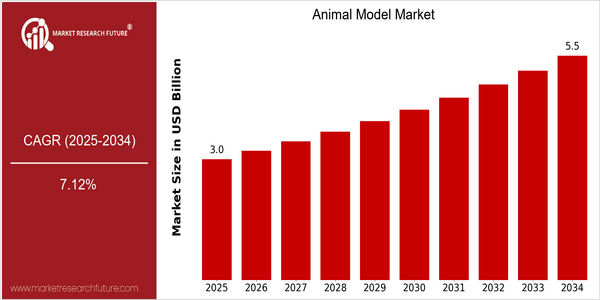
2025 USD 2.98 Billion
2034 USD 5.53 Billion
CAGR (2025-2034) 7.12 %

Note – Market size depicts the revenue generated over the financial year

Animal models have been used in the study of medicine for a long time, and their use has been growing at an alarming rate. In the year 2025 the animal models market is expected to reach $2.98 billion, and by 2034 it is expected to reach $5.53 billion. This is a CAGR of 7.12% for the forecast period. The increasing occurrence of chronic diseases and the increasing demand for personalized medicine is driving the demand for improved animal models in research and development. Moreover, advancements in genetic engineering and the growing emphasis on ethical research practices are expected to drive the growth of the market. The major players in the animal models market, such as Charles River Laboratories, The Jackson Laboratory, and Envigo, are taking strategic initiatives to strengthen their market presence. These companies are collaborating with other companies to develop new and improved animal models to meet the growing research and development needs. Recent product launches, for example, have focused on genetically modified organisms (GMOs) and improved breeding techniques. Moreover, as the biomedical research landscape continues to evolve, the animal models market will play a crucial role in facilitating the discovery and development of new drugs.
home-ubuntu-www-mrf_ne_design-batch-5-cp-animal-model-market size

Regional Market Size

Regional Deep Dive

'The animal model market is characterized by a high growth potential in various regions, owing to the increasing demand for individualized medicine and the increasing demand for ethical research. The animal model market is characterized by its own regional market dynamics, influenced by the regulatory framework, research funding and the cultural attitude towards animal research. North America is particularly strong because of its strong pharmaceutical and biotechnology industries, while Europe is characterized by strict regulations and a focus on alternative models. Asia-Pacific is growing rapidly, driven by increasing investment in research and development, while the Middle East and Africa face challenges related to the regulatory framework and the lack of development in the research environment. Latin America is emerging as a major player, with increasing research activities and international collaboration.

Europe

  • The European Union's REACH regulation is pushing for the development of alternative testing methods, which is driving innovation in the animal model market as companies seek to comply with these stringent regulations.
  • Organizations like the European Society for Animal Models in Research and Education (EAMRE) are promoting best practices and ethical standards in animal research, influencing market dynamics towards more humane approaches.

Asia Pacific

  • China is rapidly becoming a leader in the animal model market, with significant investments in biotechnology and pharmaceutical research, leading to an increase in the availability of genetically modified animal models.
  • The establishment of the National Center for Drug Screening in Shanghai is fostering collaboration between academia and industry, enhancing the development of animal models for drug discovery.

Latin America

  • Brazil is witnessing a surge in research initiatives related to animal models, supported by government funding and partnerships with international research organizations.
  • The Latin American Society of Laboratory Animal Science (LASLAC) is working to improve training and standards in animal research, which is expected to enhance the quality and reliability of animal models in the region.

North America

  • The U.S. National Institutes of Health (NIH) has increased funding for animal research, particularly in areas like cancer and neurological disorders, which is expected to enhance the development of innovative animal models.
  • Recent regulatory changes, such as the FDA's guidance on the use of animal models in drug development, are streamlining the approval process and encouraging more companies to invest in animal model research.

Middle East And Africa

  • The establishment of the African Society for Laboratory Animal Science (ASLAS) is promoting the ethical use of animals in research, which is expected to improve standards and practices in the region.
  • Government initiatives in countries like South Africa are focusing on enhancing research capabilities and infrastructure, which could lead to increased investment in animal model studies.

Did You Know?

“Approximately 95% of all drugs that enter clinical trials fail, often due to inadequate animal models that do not accurately predict human responses.” — FDA and various pharmaceutical industry reports

Segmental Market Size

The Animal Model Market is a critical component of the preclinical research landscape, and is currently experiencing steady growth, fueled by the increasing demand for novel therapies and individualized medicine. The rising prevalence of chronic diseases, which require extensive research and development, and the stringent regulatory framework, which mandates the use of animal models for safety and efficacy testing, are key drivers for this market. The recent developments in genetic engineering and biotechnology have further increased the significance of animal models in research, further bolstering the market. The Animal Model Market is currently at a mature stage, with market leaders Charles River Laboratories and Envigo Research leading the charge. These companies are implementing animal models across various applications, such as drug discovery, toxicology testing and disease modeling. Among the key trends escalating the growth of this market are the rising focus on humane research practices, the integration of novel technologies, such as CRISPR and advanced imaging, which are reshaping the way animal models are used in research. The emphasis on reducing the use of animals in research is also spurring the development of alternative models, which will further ensure that this market remains agile and responsive to industry needs.

Future Outlook

The Animal Models Market is expected to grow at a CAGR of 7.12% from 2025 to 2035. This growth is driven by the increasing demand for the development of new drugs and the introduction of a personal approach to medicine, as well as the increasing prevalence of chronic diseases that require the use of new research methods. Also, as the pharmaceutical and biotechnology industries continue to increase their R & D budgets, the use of animal models in preclinical testing is expected to increase, resulting in a higher penetration of the market in both developed and emerging countries. Furthermore, the integration of genetic engineering and CRISPR technology is expected to increase the efficiency and relevance of animal models in research. In addition, the regulatory framework for the ethical use of animal models is expected to be more conducive to market growth. Besides, the shift towards more humane and alternative testing methods will also shape the market and drive companies to develop new products. All in all, the Animal Models Market is expected to experience a dynamic transformation, driven by scientific advances and regulatory support, making it a critical part of the biomedical research system.

Animal Model Market Size Graph
Author
Rahul Gotadki
Assistant Manager

He holds an experience of about 7+ years in Market Research and Business Consulting, working under the spectrum of Life Sciences and Healthcare domains. Rahul conceptualizes and implements a scalable business strategy and provides strategic leadership to the clients. His expertise lies in market estimation, competitive intelligence, pipeline analysis, customer assessment, etc. In addition to the above, his other responsibility includes strategic tracking of high growth markets & advising clients on the potential areas of focus they could direct their business initiatives

Leave a Comment

FAQs

What is the projected growth of the Animal Model market?

The Animal Model market is the expected increase in total market value of 5.92 USD billion over a defined forecast period 2025–2035. It is driven by factors such as demand trends, technological advances, regulatory changes, and geographic expansion.

What is the size of the Animal Model market?

Animal Model market size was valued at approximately 2.78 billion USD in 2024. This figure will reach 5.92 billion USD covering all regions (America, Europe, Asia, MEA and ROW), focusing its segments / services / distribution channels till 2035.

What is the CAGR of the Animal Model market?

Animal Model market is expected to grow at a CAGR of 7.12% between 2025 and 2035.

How much will the Animal Model market be worth by 2035?

Animal Model market is expected to be worth of 5.92 billion USD, reflecting growth driven by usage, technology and global demands by the end of 2035.

How will the Animal Model market perform over the next 10 years?

Over the next 10 years the Animal Model market is expected to shift from usd billion 2.78 to 5.92 billion USD, led by adoption of advanced tech, demographic trends, regulatory approvals, with potential headwinds from 2025 to 2035.

Which region held the largest market share in the animal model market?

North America had the largest share in the market of animal models.

Market Summary

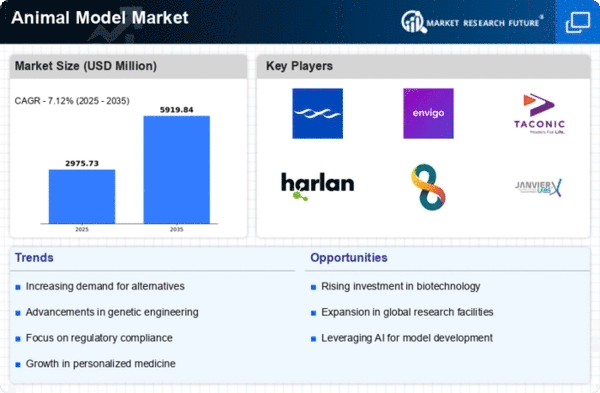
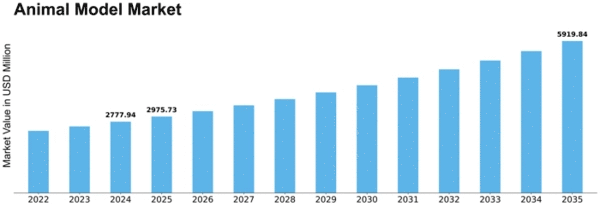
As per MRFR analysis, the Animal Model Market Size was estimated at 2777.94 USD Million in 2024. The Animal Model industry is projected to grow from 2975.74 USD Million in 2025 to 5919.84 USD Million by 2035, exhibiting a compound annual growth rate (CAGR) of 7.12 during the forecast period 2025 - 2035.

Key Market Trends & Highlights

The Animal Model Market is experiencing robust growth driven by technological advancements and increasing demand for personalized medicine.

  • Technological advancements in animal models are enhancing research capabilities and outcomes.
  • North America remains the largest market, while Asia-Pacific is emerging as the fastest-growing region.
  • The drug discovery segment continues to dominate, whereas the disease modeling segment is witnessing rapid growth.
  • Rising demand for personalized medicine and advancements in genetic engineering are key drivers propelling market expansion.

Market Size & Forecast

2024 Market Size 2777.94 (USD Million)
2035 Market Size 5919.84 (USD Million)
CAGR (2025 - 2035) 7.12%
Largest Regional Market Share in 2024 North America

Major Players

<p>Charles River Laboratories (US), Envigo (US), Taconic Biosciences (US), Harlan Laboratories (US), Crown Bioscience (US), Janvier Labs (FR), The Jackson Laboratory (US), Laboratory Animal Resources (US)</p>

Market Trends

The Animal Model Market is currently experiencing a dynamic evolution, driven by advancements in biotechnology and an increasing emphasis on ethical research practices. Researchers and pharmaceutical companies are increasingly relying on animal models to better understand complex biological systems and to develop new therapeutics. This reliance is further fueled by the growing demand for personalized medicine, which necessitates the use of more sophisticated and representative animal models. As a result, the market is witnessing a shift towards more innovative and humane approaches in the selection and use of animal models, aligning with regulatory requirements and public sentiment. Moreover, the Animal Model Market is also influenced by the rising prevalence of chronic diseases and the need for effective treatment options. The integration of technology, such as genetic engineering and advanced imaging techniques, is enhancing the capabilities of animal models, allowing for more accurate predictions of human responses. This trend suggests a potential for increased collaboration between academia and industry, as both sectors seek to leverage animal models for drug discovery and development. Overall, the Animal Model Market appears poised for continued growth, driven by scientific innovation and a commitment to ethical research practices.

Technological Advancements in Animal Models

The Animal Model Market is witnessing a surge in technological innovations that enhance the precision and applicability of animal models. Techniques such as CRISPR gene editing and advanced imaging modalities are enabling researchers to create more accurate representations of human diseases. This trend not only improves the reliability of preclinical studies but also aligns with the growing demand for personalized medicine.

Ethical Considerations and Regulatory Compliance

There is an increasing focus on ethical considerations surrounding the use of animal models in research. Regulatory bodies are emphasizing the need for humane treatment and the reduction of animal use in experiments. This shift is prompting companies to adopt alternative methods and refine their practices, which may lead to the development of more ethical research protocols.

Collaboration Between Academia and Industry

The Animal Model Market is experiencing a trend towards greater collaboration between academic institutions and industry players. This partnership aims to leverage the strengths of both sectors in developing innovative animal models that can accelerate drug discovery processes. Such collaborations may enhance the translation of research findings into clinical applications, ultimately benefiting public health.

Animal Model Market Market Drivers

Emerging Markets and Globalization

Emerging markets are increasingly contributing to the Global Animal Model Market Industry as globalization facilitates collaboration and knowledge exchange. Countries in Asia-Pacific and Latin America are witnessing a rise in research activities, driven by both local and international investments. This trend is fostering the development of regional animal model facilities and research institutions, which are essential for advancing scientific knowledge. The expansion of these markets is expected to enhance the overall growth of the industry, as they adopt advanced animal models for research purposes. The globalization of research initiatives is likely to create new opportunities for market players.

Advancements in Genetic Engineering

Advancements in genetic engineering techniques, such as CRISPR and gene editing, are significantly influencing the Global Animal Model Market Industry. These technologies enable the creation of more precise and relevant animal models that closely mimic human diseases. This precision enhances the predictability of drug responses, thereby improving the efficiency of preclinical trials. As a result, researchers are increasingly adopting these advanced models, which are expected to drive market growth. The integration of genetically modified organisms into research protocols is likely to contribute to the overall expansion of the market, aligning with the projected growth trajectory leading to 2035.

Rising Demand for Biopharmaceuticals

The increasing demand for biopharmaceuticals is a primary driver of the Global Animal Model Market Industry. As the biopharmaceutical sector expands, the need for effective preclinical testing using animal models becomes crucial. In 2024, the market is valued at approximately 2.79 USD Billion, reflecting the industry's reliance on animal models for drug development and safety assessments. This trend is expected to continue, with projections indicating a market growth to 5.93 USD Billion by 2035. The compound annual growth rate (CAGR) of 7.11% from 2025 to 2035 underscores the importance of animal models in facilitating the development of innovative therapies.

Regulatory Support for Animal Research

Regulatory support for animal research plays a pivotal role in the Global Animal Model Market Industry. Governments and regulatory bodies are increasingly recognizing the necessity of animal models in the drug development process. This support manifests through guidelines that promote ethical research practices while ensuring the welfare of animals used in studies. Such frameworks facilitate the approval of new drugs and therapies, thereby fostering innovation. As the market evolves, the alignment of regulatory policies with scientific advancements is likely to enhance the credibility and acceptance of animal models, further driving market growth through 2035.

Increasing Investment in Research and Development

The surge in investment in research and development (R&D) across various sectors is a significant driver of the Global Animal Model Market Industry. Pharmaceutical and biotechnology companies are allocating substantial resources to R&D to discover new therapies and treatments. This trend is reflected in the growing number of preclinical studies utilizing animal models, which are essential for understanding disease mechanisms and testing drug efficacy. The anticipated growth of the market from 2.79 USD Billion in 2024 to 5.93 USD Billion by 2035 highlights the critical role of R&D investments in shaping the future landscape of animal model applications.

Market Segment Insights

By Application: Drug Discovery (Largest) vs. Disease Modeling (Fastest-Growing)

<p>The Animal Model Market is significantly shaped by its application segments, with Drug Discovery commanding the largest market share. This area encompasses a variety of pharmaceuticals and therapies benefiting from animal testing, ensuring safety and efficacy before clinical trials. In contrast, Disease Modeling is emerging rapidly, facilitating understanding of various pathologies through the use of genetically modified animals, and is gaining traction due to increasing investments in biomedical research. Growth trends within the application segment are driven by an increasing prevalence of chronic diseases necessitating innovative therapeutic solutions. Additionally, advancements in genetic research and the need for more accurate toxicology testing have cemented these applications' importance. Notably, the rise of precision medicine and personalized therapies is shaping the demand for Disease Modeling, making it a focal point for future research and funding efforts.</p>

<p>Drug Discovery (Dominant) vs. Toxicology Testing (Emerging)</p>

<p>In the realm of the Animal Model Market, Drug Discovery remains the dominant application, playing a critical role in the pharmaceutical industry's preclinical phase, where safety and efficacy are thoroughly vetted. This segment benefits from a robust pipeline of new drugs and biologics, emphasizing humane and ethical testing methods. On the other hand, Toxicology Testing is an emerging application that gains importance as regulatory requirements become more stringent, leading to increased reliance on animal models for assessing potential toxic effects of drugs. While Drug Discovery continues to set the pace in market demand, Toxicology Testing is increasingly recognized for its role in supporting safer drug development and minimizing adverse effects, establishing itself as a critical area for future investment.</p>

By Type of Animal Model: Rodent Models (Largest) vs. Non-Rodent Models (Fastest-Growing)

<p>In the Animal Model Market, Rodent Models dominate with the largest market share due to their essential role in preclinical research and their anatomical, physiological, and genetic similarities to humans. These models, which include mice and rats, are favored for their rapid reproduction and ease of manipulation, making them invaluable for various studies. On the other hand, Non-Rodent Models, which include species such as dogs, pigs, and monkeys, are witnessing a surge in popularity. These models are critical for more complex biological research and translational medicine, allowing researchers to observe disease progression and treatment efficacy in larger and more closely relating species to humans. The growth trends in this segment are driven by increasing investment in biopharmaceutical research and development, with a notable focus on personalized medicine. Rodent Models continue to serve as the foundational platform for drug discovery and safety assessment due to their well-characterized genomes and availability of genetic modifications. Meanwhile, the Non-Rodent Models segment is expanding rapidly as advancements in veterinary science, better regulatory support, and rising interest in animal welfare lead to greater adoption of these models in drug testing and research.</p>

<p>Rodent Models (Dominant) vs. Transgenic Models (Emerging)</p>

<p>Rodent Models have established themselves as the dominant choice in the Animal Model Market due to their efficiency in experimental setups and comprehensive genetic understanding. They provide a cost-effective means for researchers to replicate human diseases, leading to extensive application in fundamental and applied research. In contrast, Transgenic Models are emerging as a crucial segment, designed to express specific genes that may play significant roles in human diseases. Although their use is more specialized and can be more expensive, these models offer invaluable insights into gene function and regulation, making them essential for targeted therapeutic developments. The shift towards personalized medicine enhances the demand for both segments as each plays a vital role in advancing biomedical research.</p>

By End User: Pharmaceutical Companies (Largest) vs. Biotechnology Firms (Fastest-Growing)

<p>The Animal Model Market showcases a diverse landscape of end users, with pharmaceutical companies constituting the largest segment due to their extensive reliance on animal models for drug discovery and testing. They dominate the market owing to the vast investments in research and development, ensuring a steady demand for advanced animal models. Conversely, biotechnology firms are emerging as a rapidly growing segment, leveraging animal models for innovative therapies and products, driven by an increase in biopharmaceutical research initiatives.</p>

<p>Pharmaceutical Companies (Dominant) vs. Biotechnology Firms (Emerging)</p>

<p>Pharmaceutical companies are characterized by their significant market presence as they utilize animal models extensively in regulatory preclinical testing, which is essential in drug development processes. This dominance stems from their established infrastructure, robust funding channels, and historical data that support their methodologies. In contrast, biotechnology firms, while smaller in market share, are gaining traction due to technological advancements and the surge in the demand for novel therapies. Their agile approach to research allows them to adopt and optimize animal models faster, positioning them as the innovators in areas like gene editing and personalized medicine.</p>

Get more detailed insights about Animal Model Market Research Report - Forecast till 2035

Regional Insights

North America : Market Leader in Animal Models

North America continues to lead the Animal Model Market, holding a significant share of 1390.0 million. The region's growth is driven by robust R&D activities, increasing investments in biotechnology, and a strong regulatory framework that supports animal research. The demand for innovative therapies and personalized medicine is also propelling market expansion, with a focus on ethical standards in animal testing. The United States is the primary contributor, hosting key players like Charles River Laboratories and Envigo. The competitive landscape is characterized by a mix of established firms and emerging biotech companies, all vying for market share. The presence of advanced research institutions further enhances the region's capabilities, ensuring a steady supply of high-quality animal models for various research applications.

Europe : Growing Hub for Research

Europe's Animal Model Market is valued at 800.0 million, reflecting a growing demand for preclinical research and drug development. The region benefits from stringent regulations that ensure ethical treatment of animals, fostering public trust and encouraging investment in animal research. The increasing prevalence of chronic diseases and the need for effective treatments are key drivers of market growth, alongside advancements in genetic engineering and biotechnology. Leading countries such as Germany, France, and the UK are at the forefront, with a strong presence of companies like Janvier Labs and Harlan Laboratories. The competitive landscape is marked by collaborations between academic institutions and industry players, enhancing innovation. The European Union's commitment to animal welfare and research integrity further solidifies the region's position in the global market.

Asia-Pacific : Emerging Market Potential

The Asia-Pacific region, valued at 450.0 million, is witnessing rapid growth in the Animal Model Market, driven by increasing investments in healthcare and biotechnology. The rising prevalence of diseases and the demand for effective therapeutic solutions are propelling the need for animal models in research. Additionally, supportive government policies and funding for biomedical research are enhancing market dynamics, making it a focal point for innovation in the life sciences sector. Countries like China, Japan, and India are leading the charge, with a growing number of research institutions and biotech firms entering the market. The competitive landscape is evolving, with both local and international players striving to establish a foothold. The presence of key companies such as Taconic Biosciences and Crown Bioscience underscores the region's potential for growth and development in animal research.

Middle East and Africa : Developing Research Landscape

The Middle East and Africa region, with a market size of 137.94 million, is gradually developing its Animal Model Market. The growth is primarily driven by increasing investments in healthcare infrastructure and research initiatives aimed at addressing regional health challenges. The demand for animal models is rising as researchers seek to develop effective treatments for diseases prevalent in the region, supported by government initiatives to enhance biomedical research capabilities. Countries like South Africa and the UAE are emerging as key players in this market, with a focus on establishing research facilities and collaborations with international organizations. The competitive landscape is still in its nascent stages, but the presence of local firms and partnerships with global companies is expected to drive growth. As the region continues to invest in research and development, the Animal Model Market is poised for significant expansion.

Key Players and Competitive Insights

The Animal Model Market is characterized by a dynamic competitive landscape, driven by increasing demand for innovative research methodologies and the growing prevalence of chronic diseases. Key players such as Charles River Laboratories (US), Envigo (US), and The Jackson Laboratory (US) are strategically positioned to leverage their extensive portfolios and operational capabilities. Charles River Laboratories (US) focuses on enhancing its service offerings through technological advancements and strategic partnerships, which appear to bolster its market presence. Similarly, Envigo (US) emphasizes sustainability and ethical practices in animal research, aligning its operations with evolving regulatory standards and consumer expectations. The collective strategies of these companies contribute to a moderately fragmented market structure, where innovation and compliance are pivotal for competitive advantage.

In terms of business tactics, companies are increasingly localizing manufacturing and optimizing supply chains to enhance efficiency and responsiveness. The competitive structure of the market remains moderately fragmented, with several players vying for market share. This fragmentation is indicative of a landscape where smaller firms can thrive alongside larger entities, driven by niche offerings and specialized services. The influence of key players is substantial, as they set benchmarks for quality and innovation, thereby shaping market dynamics.

In November 2025, Charles River Laboratories (US) announced a strategic partnership with a leading biotechnology firm to develop advanced gene-editing models. This collaboration is poised to enhance their research capabilities, allowing for more precise and effective drug development processes. The strategic importance of this partnership lies in its potential to position Charles River as a frontrunner in the rapidly evolving field of genetic research, thereby attracting more clients seeking cutting-edge solutions.

In October 2025, Envigo (US) launched a new line of environmentally sustainable animal models, which reflects its commitment to ethical research practices. This initiative not only addresses growing consumer concerns regarding animal welfare but also aligns with global sustainability trends. The introduction of these models is likely to enhance Envigo's competitive edge, appealing to organizations that prioritize ethical considerations in their research methodologies.

In September 2025, The Jackson Laboratory (US) expanded its global footprint by establishing a new facility in Asia, aimed at catering to the increasing demand for animal models in the region. This expansion is strategically significant as it allows The Jackson Laboratory to tap into emerging markets, thereby diversifying its revenue streams and enhancing its operational capabilities. The move underscores the importance of geographical diversification in maintaining competitiveness in a globalized market.

As of December 2025, current trends in the Animal Model Market are increasingly defined by digitalization, sustainability, and the integration of artificial intelligence (AI) in research processes. Strategic alliances are becoming more prevalent, as companies recognize the value of collaboration in driving innovation and enhancing operational efficiencies. Looking ahead, competitive differentiation is likely to evolve from traditional price-based competition to a focus on technological advancements, innovative solutions, and reliable supply chains. This shift suggests that companies that prioritize research and development, alongside sustainable practices, will be better positioned to thrive in the future.

Key Companies in the Animal Model Market include

Industry Developments

  • Q2 2024: Charles River Laboratories Announces Opening of New Preclinical Research Facility in North Carolina Charles River Laboratories opened a new state-of-the-art preclinical research facility in North Carolina to expand its capacity for animal model-based drug development and testing.
  • Q1 2024: GenOway and Merck KGaA Announce Strategic Partnership to Develop Next-Generation Humanized Mouse Models GenOway entered a strategic partnership with Merck KGaA to co-develop advanced humanized mouse models for immuno-oncology and autoimmune disease research.
  • Q2 2024: Taconic Biosciences Launches New CRISPR-Engineered Rat Model for Neurological Disease Research Taconic Biosciences launched a new CRISPR-engineered rat model designed to accelerate preclinical studies in neurological disorders.
  • Q3 2024: Eurofins Scientific Expands Animal Model Market Services with Acquisition of Preclinical CRO in Japan Eurofins Scientific acquired a leading Japanese preclinical contract research organization to strengthen its animal model services and global reach.
  • Q2 2024: The Jackson Laboratory Receives NIH Grant to Develop Rare Disease Mouse Models The Jackson Laboratory was awarded a multi-million dollar NIH grant to develop and distribute new mouse models for rare genetic diseases.
  • Q1 2025: Envigo Appoints New CEO to Lead Global Expansion in Animal Model Market Research Envigo announced the appointment of a new CEO to drive its global expansion and innovation in animal model research services.
  • Q2 2025: Charles River Laboratories Acquires Hera BioLabs to Expand Portfolio of Gene-Edited Animal Models Charles River Laboratories acquired Hera BioLabs, enhancing its portfolio of gene-edited animal models for drug discovery and safety testing.
  • Q1 2024: Biocytogen Raises $60 Million in Series C Funding to Accelerate Development of Humanized Animal Models Biocytogen secured $60 million in Series C funding to expand its pipeline of humanized animal models for pharmaceutical research.
  • Q3 2024: JSR Corporation Announces Strategic Investment in Ozgene to Advance Genetically Modified Animal Model Market Technologies JSR Corporation made a strategic investment in Ozgene to support the development of next-generation genetically modified animal models.
  • Q2 2025: PerkinElmer Launches New Zebrafish Model Platform for High-Throughput Drug Screening PerkinElmer introduced a new zebrafish model platform aimed at enabling high-throughput drug screening for early-stage pharmaceutical research.
  • Q1 2025: Trans Genic Inc. Wins Major Contract to Supply Custom Animal Models for European Biotech Consortium Trans Genic Inc. secured a significant contract to supply custom animal models to a consortium of European biotech firms for collaborative research projects.
  • Q2 2024: Envigo Opens New Animal Model Market Production Facility in Germany Envigo opened a new production facility in Germany to meet growing demand for specialized animal models in European biomedical research.

Future Outlook

Animal Model Market Future Outlook

<p>The Animal Model Market is projected to grow at a 7.12% CAGR from 2024 to 2035, driven by advancements in biotechnology, increasing R&D investments, and regulatory support.</p>

New opportunities lie in:

  • <p>Development of genetically modified animal models for precision medicine</p>
  • <p>Expansion of contract research organizations offering animal model services</p>
  • <p>Integration of AI technologies for enhanced data analysis in animal studies</p>

<p>By 2035, the Animal Model Market is expected to be robust, driven by innovation and strategic partnerships.</p>

Market Segmentation

Animal Model Market End User Outlook

  • Pharmaceutical Companies
  • Biotechnology Firms
  • Academic Institutions
  • Contract Research Organizations
  • Government Research Laboratories

Animal Model Market Application Outlook

  • Drug Discovery
  • Toxicology Testing
  • Genetic Research
  • Disease Modeling
  • Regenerative Medicine

Animal Model Market Type of Animal Model Outlook

  • Rodent Models
  • Non-Rodent Models
  • Transgenic Models
  • Knockout Models
  • Xenograft Models

Report Scope

MARKET SIZE 20242777.94(USD Million)
MARKET SIZE 20252975.74(USD Million)
MARKET SIZE 20355919.84(USD Million)
COMPOUND ANNUAL GROWTH RATE (CAGR)7.12% (2024 - 2035)
REPORT COVERAGERevenue Forecast, Competitive Landscape, Growth Factors, and Trends
BASE YEAR2024
Market Forecast Period2025 - 2035
Historical Data2019 - 2024
Market Forecast UnitsUSD Million
Key Companies ProfiledCharles River Laboratories (US), Envigo (US), Taconic Biosciences (US), Harlan Laboratories (US), Crown Bioscience (US), Janvier Labs (FR), The Jackson Laboratory (US), Laboratory Animal Resources (US)
Segments CoveredApplication, Type of Animal Model, End User
Key Market OpportunitiesAdvancements in genetic engineering enhance precision in the Animal Model Market for drug development.
Key Market DynamicsRising demand for advanced therapies drives innovation and competition in the Animal Model Market.
Countries CoveredNorth America, Europe, APAC, South America, MEA

FAQs

What is the projected growth of the Animal Model market?

The Animal Model market is the expected increase in total market value of 5.92 USD billion over a defined forecast period 2025–2035. It is driven by factors such as demand trends, technological advances, regulatory changes, and geographic expansion.

What is the size of the Animal Model market?

Animal Model market size was valued at approximately 2.78 billion USD in 2024. This figure will reach 5.92 billion USD covering all regions (America, Europe, Asia, MEA and ROW), focusing its segments / services / distribution channels till 2035.

What is the CAGR of the Animal Model market?

Animal Model market is expected to grow at a CAGR of 7.12% between 2025 and 2035.

How much will the Animal Model market be worth by 2035?

Animal Model market is expected to be worth of 5.92 billion USD, reflecting growth driven by usage, technology and global demands by the end of 2035.

How will the Animal Model market perform over the next 10 years?

Over the next 10 years the Animal Model market is expected to shift from usd billion 2.78 to 5.92 billion USD, led by adoption of advanced tech, demographic trends, regulatory approvals, with potential headwinds from 2025 to 2035.

Which region held the largest market share in the animal model market?

North America had the largest share in the market of animal models.

  1. SECTION I: EXECUTIVE SUMMARY AND KEY HIGHLIGHTS
    1. | 1.1 EXECUTIVE SUMMARY
  2. SECTION II: SCOPING, METHODOLOGY AND MARKET STRUCTURE
    1. | 2.1 MARKET INTRODUCTION
    2. | 2.2 RESEARCH METHODOLOGY
  3. SECTION III: QUALITATIVE ANALYSIS
    1. | 3.1 MARKET DYNAMICS
    2. | 3.2 MARKET FACTOR ANALYSIS
  4. SECTION IV: QUANTITATIVE ANALYSIS
    1. | 4.1 Healthcare, BY Application (USD Million)
    2. | 4.2 Healthcare, BY Type of Animal Model (USD Million)
    3. | 4.3 Healthcare, BY End User (USD Million)
    4. | 4.4 Healthcare, BY Region (USD Million)
  5. SECTION V: COMPETITIVE ANALYSIS
    1. | 5.1 Competitive Landscape
    2. | 5.2 Company Profiles
    3. | 5.3 Appendix

Animal Model Market Segmentation

Market Segmentation Overview

  • Detailed segmentation data will be available in the full report
  • Comprehensive analysis by multiple parameters
  • Regional and country-level breakdowns
  • Market size forecasts by segment
Infographic

Free Sample Request

Kindly complete the form below to receive a free sample of this Report

Get Free Sample

Customer Strories

Compare Licence

×
Features License Type
Single User Multiuser License Enterprise User
Price $4,950 $5,950 $7,250
Maximum User Access Limit 1 User Upto 10 Users Unrestricted Access Throughout the Organization
Free Customization
Direct Access to Analyst
Deliverable Format
Platform Access
Discount on Next Purchase 10% 15% 15%
Printable Versions