×
Hero Background
English
Chinese
French
Japanese
Korean
German
Spanish

Addison’s Disease Market Analysis

ID: MRFR/Pharma/5165-HCR
90 Pages
Rahul Gotadki
October 2025

Addison’s Disease Market Research Report by Diagnosis (Laboratory Testing and Imaging Tests), Treatment (Oral Corticosteroid and Corticosteroid Injections), End User (Hospitals and Clinics, Diagnostic Laboratories, and Others)-Forecast till 2035

Share:
Download PDF ×

We do not share your information with anyone. However, we may send you emails based on your report interest from time to time. You may contact us at any time to opt-out.

Addison’s Disease Market Infographic
Purchase Options

Market Analysis

In-depth Analysis of Addison’s Disease Market Industry Landscape

Market dynamics of Addison's disease become prevalent in the realm wherein the scarcely common endocrine disorder merges with the mutable constitution of health care system. The main one affecting the Addison's Disease market is the worldwide increased awareness and acknowledgement of this disease. The spread of medical awareness and the advancement of diagnostic techniques make more cases of Addison's disease detectable, which further heightens the demand for treatment. The rarity of Addison's Disease, which is a condition that arises when adrenal glands don’t produce enough hormones, is one of the defining qualities of this market, highlighting the need for personalized therapies.

Medical research and technology development act as a vital influence on Addison’s Disease market dynamics. Pharmaceutical companies invest in the development of new drug therapies targeting hormonal imbalances, such as glucocorticoid and mineralocorticoid replacement therapies. The appearance of new formulations, convenient dosages, and personalized treatment regimens promote the dynamic emergence of the market. Currently, studies are centered on the best version of hormonal replacement therapy and finding medications that can serve as disease modifying drugs for Addison's Disease.

Regulatory factors are determinant in molding the Addison's Disease market dynamics. Stern laws regulate the process of approving and commercializing medicines for rare diseases providing for their safety and efficiency. Compliance with regulatory standards is a core facet of pharmaceutical companies' new drug development, consequently affecting approval and market entry options. The regulatory landscape is not only a protective shield for patients but also ensures that early and late-stage innovations are in line with market demand in the Addison's Disease space.

Economic considerations create an important part of the accessibility and usage of Addison's Disease treatment solution. The economic burden related to chronic hormone replacement therapy involving the costs of medical care and the requirement for lifelong medications strongly impacts the choices made by patients and healthcare providers regarding the treatment plan. As regards the Addison's Disease medications, the affordability, insurance coverage, and reimbursement policies play a significant role in determining the availability and the frequency of their use in regions that have different healthcare setups. If we want market dynamics to be favorable and help millions of individuals suffering from Addison's disease access quality treatments, we need to tackle the economic factors.

A notable fact about Addison's disease market dynamics is the competitive situation among pharmaceutical companies. Enterprises try to achieve a competitive advantage by innovation of hormone replacement therapies, strategic collaboration and patient support. The fact that the market is niche calls for the work of pharmaceutical companies to partner with healthcare providers and patient advocacy groups to ensure the well-being of the individuals with Addison's Disease at their best.

Author
Rahul Gotadki
Assistant Manager

He holds an experience of about 7+ years in Market Research and Business Consulting, working under the spectrum of Life Sciences and Healthcare domains. Rahul conceptualizes and implements a scalable business strategy and provides strategic leadership to the clients. His expertise lies in market estimation, competitive intelligence, pipeline analysis, customer assessment, etc. In addition to the above, his other responsibility includes strategic tracking of high growth markets & advising clients on the potential areas of focus they could direct their business initiatives

Leave a Comment

FAQs

At what CAGR is the Addison’s disease market projected to grow during the forecast period?

The Addison’s disease market is projected to grow at a 10.84% CAGR between 2024-2035.

Which region is projected to command the largest share in the Addison’s disease market?

North America is projected to command the largest share in the Addison’s disease market.

Which treatment segment will dominate the Addison’s disease market?

Oral corticosteroids segment will dominate the Addison’s disease market.

What are the key factors driving the Addison’s disease market?

Rising healthcare expenditure and growing awareness about the disease is boosting market growth.

Which factors may limit Addison’s disease market growth?

Inability to diagnose Addison’s disease may limit market growth.

Market Summary

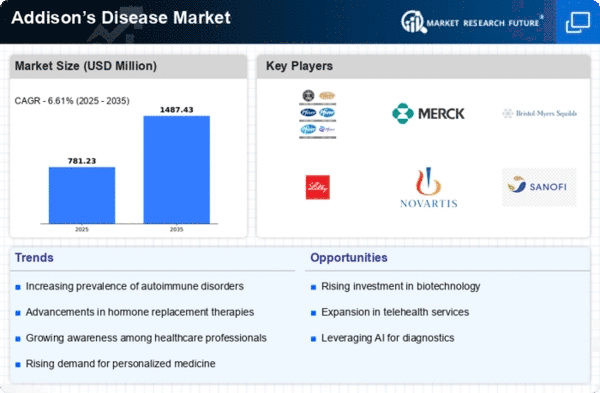
As per MRFR analysis, the Addison’s Disease Market Size was estimated at 732.79 USD Million in 2024. The Addison’s Disease industry is projected to grow from 788.29 in 2025 to 1487.43 by 2035, exhibiting a compound annual growth rate (CAGR) of 6.61 during the forecast period 2025 - 2035.

Key Market Trends & Highlights

The Addison's Disease Market is experiencing notable growth driven by advancements in treatment and increasing awareness.

  • Rising awareness and education about Addison's Disease are fostering a more informed patient population in North America.
  • Advancements in treatment options are enhancing patient outcomes, particularly in the Hormone Replacement Therapy segment, which remains the largest.
  • The shift towards personalized medicine is gaining traction, especially in the Asia-Pacific region, which is the fastest-growing market.
  • Key market drivers include the increasing prevalence of Addison's Disease and the rising demand for hormone replacement therapy, which are shaping market dynamics.

Market Size & Forecast

2024 Market Size 732.79 (USD Million)
2035 Market Size 1487.43 (USD Million)
CAGR (2025 - 2035) 6.61%
Largest Regional Market Share in 2024 North America

Major Players

<p>Pfizer Inc (US), Merck & Co Inc (US), Bristol-Myers Squibb Company (US), Eli Lilly and Company (US), Novartis AG (CH), Sanofi S.A. (FR), AstraZeneca PLC (GB), GlaxoSmithKline PLC (GB), AbbVie Inc (US)</p>

Market Trends

The Addison’s Disease Market is currently experiencing a notable evolution, driven by a combination of increasing awareness and advancements in treatment options. As healthcare professionals and patients alike become more informed about this rare endocrine disorder, the demand for effective therapies is on the rise. This heightened awareness is fostering a more proactive approach to diagnosis and management, which may lead to improved patient outcomes. Furthermore, the integration of innovative technologies in treatment modalities is likely to enhance the overall quality of care for individuals affected by Addison’s disease. In addition to the growing awareness, the Addison’s Disease Market is also witnessing a shift towards personalized medicine. Tailoring treatment plans to individual patient needs appears to be gaining traction, as healthcare providers recognize the importance of addressing the unique characteristics of each case. This trend may result in more effective management strategies and improved adherence to treatment regimens. Overall, the landscape of the Addison’s Disease Market is evolving, with a focus on enhancing patient care and optimizing therapeutic approaches.

Rising Awareness and Education

There is a growing emphasis on educating both healthcare professionals and the general public about Addison's disease. This trend is likely to lead to earlier diagnosis and improved management of the condition, as more individuals recognize symptoms and seek medical advice.

Advancements in Treatment Options

The market is witnessing continuous innovation in treatment methodologies, including the development of new medications and therapies. These advancements may provide patients with more effective options, potentially improving their quality of life.

Shift Towards Personalized Medicine

A notable trend is the movement towards personalized treatment plans that cater to the specific needs of patients. This approach may enhance treatment efficacy and patient satisfaction, as healthcare providers focus on individualized care.

Addison’s Disease Market Market Drivers

Development of Targeted Therapies

The emergence of targeted therapies is reshaping the Global Addison's Disease Market Industry. Pharmaceutical companies are increasingly focusing on developing medications that specifically address the hormonal deficiencies associated with Addison's disease. These targeted treatments aim to improve patient outcomes by providing more effective management of symptoms. As research progresses, new therapies are expected to enter the market, potentially increasing the overall market size. By 2035, the market is anticipated to reach 7.29 USD Billion, driven by the introduction of innovative treatment options that cater to the unique needs of Addison's disease patients.

Advancements in Diagnostic Techniques

Innovations in diagnostic methodologies are significantly impacting the Global Addison's Disease Market Industry. Enhanced imaging techniques and hormonal assays facilitate earlier and more accurate diagnosis of Addison's disease. For instance, the introduction of advanced blood tests allows for the precise measurement of cortisol levels, leading to timely intervention. As diagnostic capabilities improve, healthcare providers can identify patients sooner, which may lead to better management of the disease. This trend is likely to contribute to the market's growth, as early diagnosis correlates with improved patient outcomes and increased demand for treatment options.

Rising Prevalence of Addison's Disease

The Global Addison's Disease Market Industry is experiencing growth due to the increasing prevalence of Addison's disease. This condition, characterized by insufficient production of adrenal hormones, affects approximately 60 to 100 individuals per million globally. As awareness of this rare disorder rises, more patients are being diagnosed, contributing to market expansion. The growing number of diagnosed cases is expected to drive demand for treatment options, thereby enhancing the market's value. In 2024, the market is projected to reach 2.34 USD Billion, reflecting the urgent need for effective therapies and management strategies.

Growing Awareness and Education Initiatives

The Global Addison's Disease Market Industry benefits from increased awareness and educational initiatives aimed at both healthcare professionals and the general public. Organizations and advocacy groups are actively promoting information about Addison's disease, its symptoms, and treatment options. This heightened awareness encourages individuals experiencing symptoms to seek medical attention, leading to more diagnoses. As a result, the market is likely to see an uptick in demand for therapies and management solutions. The ongoing education efforts are crucial in fostering a better understanding of the disease, which may ultimately enhance patient care and treatment adherence.

Increased Investment in Healthcare Infrastructure

Investment in healthcare infrastructure is a critical driver for the Global Addison's Disease Market Industry. Governments and private entities are allocating resources to enhance healthcare facilities, improve access to care, and support research initiatives. This investment is particularly vital in regions where healthcare access is limited, as it enables better diagnosis and treatment of Addison's disease. Improved healthcare infrastructure can lead to a more robust supply chain for medications and therapies, ultimately benefiting patients. As healthcare systems evolve, the market is likely to experience growth, reflecting the positive impact of these investments on patient care.

Market Segment Insights

By Diagnosis Type: Hormonal Testing (Largest) vs. Imaging Techniques (Fastest-Growing)

<p>In the Addison’s Disease Market, the Diagnosis Type segment illustrates distinct market share distributions among various methods. Hormonal Testing stands out as the largest contributing segment, driven by its critical role in accurately identifying cortisol deficiencies in patients. Clinical Assessments also play a significant role, providing essential insights through patient history and symptoms. Imaging Techniques and Genetic Testing follow, with Imaging Techniques emerging as a notable contender due to its advanced applications in assessing adrenal gland anatomy, while Genetic Testing adds valuable genetic insights to the diagnostic process.</p>

<p>Hormonal Testing (Dominant) vs. Imaging Techniques (Emerging)</p>

<p>Hormonal Testing remains the dominant approach in the Addison’s Disease Diagnosis segment, primarily because of its effectiveness in providing rapid and accurate diagnostic results. The method focuses on measuring hormone levels, such as cortisol and aldosterone, which are vital for diagnosing adrenal insufficiency. In contrast, Imaging Techniques are becoming increasingly relevant as an emerging diagnostic tool. These techniques utilize advanced imaging technologies to visualize adrenal structures, aiding in identifying potential adrenal tumors or other abnormalities. The shift towards more sophisticated imaging modalities aligns with rising healthcare demands for precise diagnostics, fostering significant growth in this segment. By integrating these diagnostic approaches, healthcare professionals can ensure comprehensive patient evaluations in Addison’s Disease.</p>

By Treatment Type: Hormone Replacement Therapy (Largest) vs. Medications (Fastest-Growing)

<p>In the Addison's Disease Market, Hormone Replacement Therapy stands as the dominant treatment option, gaining significant traction due to its effectiveness in restoring hormone balance in patients. Medications, particularly those targeting adrenal insufficiency, are rapidly gaining ground, contributing to an expanding market share within the overall treatment landscape. Alongside these, Surgical Interventions and Lifestyle Modifications are also critical, but they hold comparatively smaller shares in terms of consumer preference and application rate. As more patients become aware of treatment options, the distribution among these segment values is expected to evolve, underscoring a shift towards more personalized care pathways.</p>

<p>Hormone Replacement Therapy (Dominant) vs. Medications (Emerging)</p>

<p>Hormone Replacement Therapy (HRT) has established itself as the cornerstone of treatment for Addison's Disease, offering patients a reliable means to manage their condition effectively. HRT involves the administration of glucocorticoids and mineralocorticoids, which replace deficient hormones in the body, ensuring both physiological stability and symptom relief. In contrast, Medications, particularly innovative therapies that enhance adrenal function or adjust hormonal levels, are emerging rapidly. These medications appeal to a broader patient demographic and are often easier to administer, driving their popularity. Together, these two segments illustrate the diverse approaches to treating Addison's Disease, balancing traditional methods with newer therapeutic options to meet patient needs.</p>

By Patient Demographics: Age Group (Largest) vs. Gender (Fastest-Growing)

<p>In the Addison's Disease market, patient demographics play a crucial role in understanding prevalence and treatment accessibility. The Age Group segment reveals significant market share distribution, with older adults (particularly those aged 50 and above) comprising the largest portion of diagnosed cases. Gender demographics further indicate a notable disparity, with female patients accounting for a larger share compared to males, though the male population shows signs of accelerated diagnosis rates.</p>

<p>Age Group: Older Adults (Dominant) vs. Gender: Female Patients (Emerging)</p>

<p>The Age Group segment identifies older adults as the dominant demographic in the Addison's Disease market, which can be attributed to the increasing prevalence of autoimmune disorders with age. These individuals often face complex health challenges, including comorbidities that complicate diagnosis and treatment. In contrast, the Female Patients segment is emerging, reflecting a growing awareness and diagnosis rate among women. This trend is driven by increased screening and the influence of hormonal factors on the onset of Addison's Disease, leading to heightened conversations around women's health.</p>

By Healthcare Setting: Hospitals (Largest) vs. Outpatient Clinics (Fastest-Growing)

<p>In the Addison’s Disease Market, the distribution among the healthcare settings reveals that hospitals capture the largest share, offering comprehensive care and advanced treatment options. Outpatient clinics, while smaller in market share, are emerging as a significant force due to their capacity to provide specialized services at lower costs, catering to the needs of patients requiring ongoing management of chronic conditions like Addison’s disease. Growth trends indicate that hospitals remain the cornerstone for initial diagnosis and treatment. However, the shift towards outpatient care is gaining momentum, driven by increasing patient preference for cost-effective alternatives and advancements in telemedicine. This evolution is reshaping the market dynamics, with outpatient clinics poised to expand rapidly in response to changing healthcare delivery models.</p>

<p>Hospitals (Dominant) vs. Home Healthcare (Emerging)</p>

<p>Hospitals play a dominant role in the Addison’s Disease Market, equipped with the necessary infrastructure, specialist physicians, and a range of therapeutic options for managing the condition. They provide inpatient care, critical for patients facing acute episodes, and comprehensive diagnostic services. In contrast, home healthcare represents an emerging segment where patients benefit from personalized care delivered in the comfort of their homes. This segment is gaining traction due to its focus on long-term management and patient-centered approaches, which improve adherence to treatment regimens while reducing hospital readmissions. The increasing popularity of home monitoring technologies and the emphasis on preventive healthcare further bolster this shift, positioning home healthcare as a vital component of the future Addison’s disease management paradigm.</p>

By Disease Severity: Moderate (Largest) vs. Severe (Fastest-Growing)

<p>In the Addison’s Disease Market, the distribution among disease severity segments shows that the 'Moderate' category accounts for the largest share, capturing a significant portion of the patient population. This indicates a substantial need for management and treatment options in this segment, as patients exhibit varied symptoms that require different therapeutic approaches. Conversely, the 'Severe' segment is gaining momentum, with an increasing number of patients classified as severe. This shift reflects a rising awareness and better diagnostic processes, enabling more individuals to receive accurate assessments. The growth trends within the 'Disease Severity' segment are primarily driven by advancements in diagnostic methodologies that help identify patients earlier in their disease trajectory. Moreover, emerging therapies targeted at severe manifestations of Addison's Disease are fostering rapid growth in this category, attracting attention from pharmaceutical companies. Increased investment in research and development, along with enhanced patient outreach efforts, are also expected to further elevate awareness and treatment opportunities for varying levels of disease severity.</p>

<p>Moderate (Dominant) vs. Severe (Emerging)</p>

<p>The 'Moderate' severity category in Addison’s Disease is characterized by a balanced need for treatment and management, as patients typically experience symptoms that are manageable but still require clinical oversight. This segment remains dominant due to the larger population of patients exhibiting moderate symptoms and the existing treatment options that address their needs effectively. In contrast, the 'Severe' segment is emerging rapidly, driven by a more profound understanding and acknowledgment of the challenges faced by those with severe Addison’s Disease. Patients in this bracket often experience life-threatening symptoms that necessitate immediate medical intervention. This urgency is leading to innovative drug developments and therapeutic strategies tailored specifically for severe cases, highlighting the growing focus on addressing the complexities of this severe condition.</p>

Get more detailed insights about Addison’s Disease Market Research Report- Forecast till 2035

Regional Insights

North America : Market Leader in Innovation

North America is poised to maintain its leadership in the Addison’s Disease market, holding a significant share of 400.0M in 2025. The region benefits from advanced healthcare infrastructure, high awareness levels, and robust regulatory support, driving demand for innovative therapies. The increasing prevalence of autoimmune disorders and the growing focus on personalized medicine are key growth drivers, alongside favorable reimbursement policies that enhance patient access to treatments. The United States stands out as the leading country, hosting major pharmaceutical companies such as Pfizer Inc, Merck & Co, and Bristol-Myers Squibb. The competitive landscape is characterized by continuous R&D investments and strategic collaborations among key players. This dynamic environment fosters innovation, ensuring a steady pipeline of new therapies aimed at improving patient outcomes in Addison’s Disease.

Europe : Emerging Market with Growth Potential

Europe is witnessing a growing market for Addison’s Disease, with a market size of 200.0M projected for 2025. The region's growth is driven by increasing healthcare expenditure, rising awareness of rare diseases, and supportive regulatory frameworks. Initiatives by the European Medicines Agency (EMA) to expedite drug approvals for orphan diseases are also significant catalysts, enhancing the availability of treatments for Addison’s Disease patients. Leading countries such as Germany, France, and the UK are at the forefront of this market, supported by a strong presence of pharmaceutical giants like Novartis AG and Sanofi S.A. The competitive landscape is marked by a mix of established players and emerging biotech firms, all striving to innovate and meet the unmet needs of patients. The collaboration between public and private sectors further strengthens the market's potential for growth.

Asia-Pacific : Emerging Powerhouse in Healthcare

The Asia-Pacific region is emerging as a significant player in the Addison’s Disease market, with a projected size of 100.0M by 2025. Factors such as increasing healthcare investments, rising awareness of autoimmune diseases, and improving healthcare infrastructure are driving market growth. Additionally, government initiatives aimed at enhancing healthcare access and affordability are expected to further stimulate demand for Addison’s Disease treatments in the region. Countries like Japan, Australia, and China are leading the charge, with a growing number of local and international pharmaceutical companies entering the market. The competitive landscape is evolving, characterized by partnerships and collaborations aimed at developing innovative therapies. As the region continues to expand its healthcare capabilities, the potential for growth in the Addison’s Disease market remains promising.

Middle East and Africa : Resource-Rich Frontier for Healthcare

The Middle East and Africa (MEA) region is gradually developing its market for Addison’s Disease, with a size of 32.79M anticipated by 2025. The growth is driven by increasing healthcare investments, rising awareness of rare diseases, and the establishment of healthcare policies aimed at improving patient access to treatments. Additionally, collaborations with international organizations are enhancing the region's healthcare capabilities, fostering a more supportive environment for patients. Countries such as South Africa and the UAE are leading the market, with a growing presence of pharmaceutical companies looking to address the needs of patients with Addison’s Disease. The competitive landscape is characterized by a mix of local and multinational players, all striving to innovate and provide effective treatments. As healthcare infrastructure continues to improve, the potential for market growth in MEA is becoming increasingly evident.

Key Players and Competitive Insights

The Addison’s Disease Market is characterized by a competitive landscape that is increasingly shaped by innovation, strategic partnerships, and a focus on patient-centric solutions. Key players such as Pfizer Inc (US), Merck & Co Inc (US), and Novartis AG (CH) are actively engaged in enhancing their product offerings and expanding their market presence. Pfizer Inc (US) has positioned itself as a leader in the development of novel therapies, emphasizing research and development to address unmet medical needs. Meanwhile, Merck & Co Inc (US) has adopted a strategy of regional expansion, particularly in emerging markets, to tap into new patient populations. Novartis AG (CH) appears to be focusing on digital transformation, leveraging technology to improve patient engagement and streamline operations, which collectively shapes a dynamic competitive environment.

In terms of business tactics, companies are increasingly localizing manufacturing and optimizing supply chains to enhance efficiency and reduce costs. The market structure is moderately fragmented, with several key players exerting influence over various segments. This fragmentation allows for a diverse range of products and services, fostering competition that drives innovation and improves patient outcomes.

In November 2025, Bristol-Myers Squibb Company (US) announced a strategic partnership with a leading biotechnology firm to co-develop a new treatment for Addison’s Disease. This collaboration is significant as it combines Bristol-Myers Squibb's extensive research capabilities with innovative approaches from the biotech sector, potentially accelerating the development of effective therapies. Such partnerships are indicative of a broader trend where established pharmaceutical companies seek to leverage external expertise to enhance their product pipelines.

In October 2025, Eli Lilly and Company (US) launched a new digital health platform aimed at improving the management of Addison’s Disease. This platform integrates real-time data analytics and patient feedback, allowing for personalized treatment plans. The strategic importance of this initiative lies in its potential to enhance patient adherence to treatment regimens, thereby improving health outcomes and positioning Eli Lilly as a forward-thinking leader in the market.

In September 2025, Sanofi S.A. (FR) expanded its portfolio by acquiring a smaller firm specializing in rare endocrine disorders, including Addison’s Disease. This acquisition not only broadens Sanofi's therapeutic offerings but also strengthens its position in the niche market of rare diseases. The strategic move reflects a growing trend of consolidation within the industry, as companies seek to enhance their capabilities and market reach through acquisitions.

As of December 2025, the Addison’s Disease Market is witnessing trends that emphasize digitalization, sustainability, and the integration of artificial intelligence (AI) into healthcare solutions. Strategic alliances are increasingly shaping the competitive landscape, enabling companies to pool resources and expertise. Looking ahead, competitive differentiation is likely to evolve from traditional price-based competition to a focus on innovation, technological advancements, and supply chain reliability. This shift underscores the importance of developing robust, patient-centered solutions that not only meet regulatory standards but also enhance the overall quality of care.

Key Companies in the Addison’s Disease Market market include

Industry Developments

Lupin Ltd (Lupin) is a pharmaceutical company that produces and markets generic and branded pharmaceuticals, as well as active pharmaceutical ingredients (APIs). Cardiovascular, diabetes etc are all part of the company's product range. Oral, ophthalmic, dermatological, and inhalation product research are key priorities for the organization. The company's operations are reported under a single segment, Pharmaceuticals. Formulations, active pharmaceutical ingredients (APIs), generic formulations, and biotechnology products are all part of Lupin's business.

In August 2015, Amgen, a biotechnology corporation located in the United States, launched its significantly enlarged production plant in Dun Laoghaire, Ireland. The $300 million expansion expanded manufacturing facilities to the existing factory, enhancing its capabilities and positioning it as a major hub for Amgen's global operations. The move was part of Amgen's long-term plan to manufacture all of its pharmaceuticals at the Dun Laoghaire facility, ensuring a steady supply of Amgen's medicines for severely sick patients across the world.

Global Addison’s Disease Market, by Diagnosis

  • Laboratory Tests
    • Blood Tests
    • ACTH Stimulation Tests
    • Insulin-Induced Hypoglycemia Test
    • Other Tests
  • Imaging Tests
    • Chest Radiography
    • CT Scan

Global Addison’s Disease Market, by Treatment

  • Oral Corticosteroid
  • Corticosteroid Injections

Global Addison’s Disease Market, by End User

  • Hospitals and Clinics
  • Diagnostic Laboratories
  • Other End Users

Global Addison’s Disease Market, by Region

  • Americas
    • North America
      • US
      • Canada
    • South America
  • Europe
    • Western Europe
      • Germany
      • France
      • Italy
      • Spain
      • UK
      • Rest of Western Europe
    • Eastern Europe
  • Asia-Pacific
    • Japan
    • China
    • India
    • Australia
    • South Korea
    • Rest of Asia-Pacific
  • Middle East & Africa
    • Middle East
    • Africa

Global Addison’s Disease Market, by Key Players

  • Pfizer Inc.
  • Boehringer Ingelheim International GmbH
  • Shire
  • Tocris Bioscience
  • GlaxoSmithKline Plc
  • Merck KGaA
  • Lupin Pharmaceuticals, Inc.
  • Abbott
  • Amgen Limited & Amgen Ireland Limited

Future Outlook

Addison’s Disease Market Future Outlook

<p>The Addison’s Disease Market is projected to grow at a 6.61% CAGR from 2024 to 2035, driven by increasing awareness, advancements in treatment options, and rising healthcare expenditure.</p>

New opportunities lie in:

  • <p>Development of personalized medicine approaches for Addison's Disease treatment.</p>
  • <p>Expansion of telehealth services for remote patient monitoring and management.</p>
  • <p>Investment in educational programs to enhance patient and physician awareness.</p>

<p>By 2035, the Addison’s Disease Market is expected to exhibit robust growth and increased treatment accessibility.</p>

Market Segmentation

Addison’s Disease Market Diagnosis Type Outlook

  • Clinical Assessment
  • Imaging Techniques
  • Hormonal Testing
  • Genetic Testing

Addison’s Disease Market Treatment Type Outlook

  • Hormone Replacement Therapy
  • Medications
  • Surgical Interventions
  • Lifestyle Modifications

Addison’s Disease Market Disease Severity Outlook

  • Mild
  • Moderate
  • Severe
  • Acute

Addison’s Disease Market Healthcare Setting Outlook

  • Hospitals
  • Outpatient Clinics
  • Home Healthcare
  • Pharmaceutical Retail

Addison’s Disease Market Patient Demographics Outlook

  • Age Group
  • Gender
  • Socioeconomic Status
  • Comorbid Conditions

Report Scope

MARKET SIZE 2024732.79(USD Million)
MARKET SIZE 2025788.29(USD Million)
MARKET SIZE 20351487.43(USD Million)
COMPOUND ANNUAL GROWTH RATE (CAGR)6.61% (2024 - 2035)
REPORT COVERAGERevenue Forecast, Competitive Landscape, Growth Factors, and Trends
BASE YEAR2024
Market Forecast Period2025 - 2035
Historical Data2019 - 2024
Market Forecast UnitsUSD Million
Key Companies ProfiledPfizer Inc (US), Merck & Co Inc (US), Bristol-Myers Squibb Company (US), Eli Lilly and Company (US), Novartis AG (CH), Sanofi S.A. (FR), AstraZeneca PLC (GB), GlaxoSmithKline PLC (GB), AbbVie Inc (US)
Segments CoveredDiagnosis Type, Treatment Type, Patient Demographics, Healthcare Setting, Disease Severity
Key Market OpportunitiesAdvancements in personalized medicine enhance treatment options in the Addison’s Disease Market.
Key Market DynamicsRising demand for personalized therapies drives innovation and competition in the Addison’s Disease treatment landscape.
Countries CoveredNorth America, Europe, APAC, South America, MEA

FAQs

At what CAGR is the Addison’s disease market projected to grow during the forecast period?

The Addison’s disease market is projected to grow at a 10.84% CAGR between 2024-2035.

Which region is projected to command the largest share in the Addison’s disease market?

North America is projected to command the largest share in the Addison’s disease market.

Which treatment segment will dominate the Addison’s disease market?

Oral corticosteroids segment will dominate the Addison’s disease market.

What are the key factors driving the Addison’s disease market?

Rising healthcare expenditure and growing awareness about the disease is boosting market growth.

Which factors may limit Addison’s disease market growth?

Inability to diagnose Addison’s disease may limit market growth.

  1. Definition
    1. Scope of the Study
      1. Research Objective
      2. Assumptions
      3. Limitations
    2. Introduction
    3. Primary Research
    4. Secondary Research
    5. Market Size Estimation
    6. Drivers
    7. Restraints
    8. Opportunities
    9. Challenges
    10. Macroeconomic Indicators
    11. Technology Trends & Assessment
    12. Porter’s Five Forces Analysis
      1. Bargaining Power of Suppliers
      2. Bargaining Power of Buyers
      3. Threat of New Entrants
      4. Threat of Substitutes
      5. Intensity of Rivalry
    13. Value Chain Analysis
    14. Investment Feasibility Analysis
    15. Pricing Analysis
  2. Chapter 6. Global Addison’s Disease Market, by Diagnosis
    1. Introduction
    2. Laboratory Testing
      1. Blood Tests
  3. Market Estimates & Forecast, by Region, 2020–2027
  4. Market Estimates & Forecast, by Country, 2020–2027
  5. ACTH Stimulation Test
  6. Market Estimates & Forecast, by Region, 2020–2027
  7. Market Estimates & Forecast, by Country, 2020–2027
  8. Insulin-Induced Hypoglycemia test
  9. Market Estimates & Forecast, by Region, 2020–2027
  10. Market Estimates & Forecast, by Country, 2020–2027
  11. Other Tests
    1. Imaging Tests
      1. Chest Radiography
  12. Market Estimates & Forecast, by Region, 2020–2027
  13. Market Estimates & Forecast, by Country, 2020–2027
  14. CT Scan
  15. Market Estimates & Forecast, by Region, 2020–2027
  16. Market Estimates & Forecast, by Country, 2020–2027
  17. Chapter 7. Global Addison’s Disease Market, by Treatment
    1. Introduction
    2. Oral Corticosteroids
  18. Market Estimates & Forecast, by Region, 2020–2027
  19. Market Estimates & Forecast, by Country, 2020–2027
    1. Corticosteroid Injections
  20. Market Estimates & Forecast, by Region, 2020–2027
  21. Market Estimates & Forecast, by Country, 2020–2027
  22. Chapter 8. Global Addison’s Disease Market, by End User
    1. Introduction
    2. Hospitals and Clinics
  23. Market Estimates & Forecast, by Region, 2020–2027
  24. Market Estimates & Forecast, by Country, 2020–2027
    1. Diagnostic Laboratories
  25. Market Estimates & Forecast, by Region, 2020–2027
  26. Market Estimates & Forecast, by Country, 2020–2027
    1. Other End Users
  27. Market Estimates & Forecast, by Region, 2020–2027
  28. Market Estimates & Forecast, by Country, 2020–2027
  29. Chapter 9. Global Addison’s Disease Market, by Region
    1. Introduction
    2. Americas
      1. North America
      2. South America
    3. Europe
      1. Western Europe
      2. Eastern Europe
    4. Asia-Pacific
      1. Japan
      2. China
      3. India
      4. Australia
      5. South Korea
      6. Rest of Asia-Pacific
    5. Middle East & Africa
      1. Middle East
      2. Africa
    6. Chapter 10. Company Landscape
    7. Introduction
    8. Market Share Analysis
    9. Key Development & Strategies
    10. Chapter 11. Company Profiles
    11. Pfizer Inc.
      1. Company Overview
      2. Product Overview
      3. Financials Overview
      4. Key Developments
      5. SWOT Analysis
    12. Boehringer Ingelheim International GmbH
      1. Company Overview
      2. Product Overview
      3. Financial Overview
      4. Key Developments
      5. SWOT Analysis
    13. Shire
      1. Company Overview
      2. Product Overview
      3. Financial Overview
      4. Key Development
      5. SWOT Analysis
    14. Tocris Bioscience
      1. Company Overview
      2. Product Overview
      3. Financial Overview
      4. Key Development
      5. SWOT Analysis
    15. GlaxoSmithKline plc
      1. Company Overview
      2. Product Overview
      3. Financial overview
      4. Key Developments
      5. SWOT Analysis
    16. Merck KGaA
      1. Company Overview
      2. Product Overview
      3. Financial Overview
      4. Key Developments
      5. SWOT Analysis
    17. Lupin Pharmaceuticals, Inc.
      1. Overview
      2. Product Overview
      3. Financial Overview
      4. Key Developments
      5. SWOT Analysis
    18. Abbott
      1. Overview
      2. Product Overview
      3. Financials
      4. Key Developments
      5. SWOT Analysis
    19. Amgen Limited & Amgen Ireland Limited
      1. Overview
      2. Product Overview
      3. Financials
      4. Key Developments
      5. SWOT Analysis
    20. Bayer AG
      1. Overview
      2. Product Overview
      3. Financials
      4. Key Developments
      5. SWOT Analysis
    21. Biogen
      1. Overview
      2. Product Overview
      3. Financials
      4. Key Developments
      5. SWOT Analysis
    22. Eli Lilly and Company
      1. Overview
      2. Product Overview
      3. Financials
      4. Key Developments
      5. SWOT Analysis
    23. Novartis AG
      1. Overview
      2. Product Overview
      3. Financials
      4. Key Developments
      5. SWOT Analysis
    24. Diurnal
      1. Overview
      2. Product Overview
      3. Financials
      4. Key Developments
      5. SWOT Analysis
    25. Switzer Life science Pvt. Ltd.
      1. Overview
      2. Product Overview
      3. Financials
      4. Key Developments
      5. SWOT Analysis
    26. Chapter 12 MRFR Conclusion
    27. Key Findings
      1. From CEO’s Viewpoint
      2. Unmet Needs of the Market
    28. Key Companies to Watch
    29. Predictions for the Addison’s Disease Industry
    30. Chapter 13. Appendix
  30. LIST OF TABLES
  31. Global Addison’s Disease Market Synopsis, 2020–2027
  32. Global Addison’s Disease Market Estimates and Forecast, 2020–2027
    1. (USD Million)
  33. Global Addison’s Disease Market, by Region, 2020–2027 (USD Million)
  34. Global Addison’s Disease Market, by Diagnosis, 2020–2027 (USD Million)
  35. Global Addison’s Disease Market, by Treatment, 2020–2027 (USD
    1. Million)
  36. Global Addison’s Disease Market, by End User, 2020–2027 (USD
    1. Million)
  37. North America: Addison’s Disease Market, by Diagnosis, 2020–2027
    1. (USD Million)
  38. North America: Addison’s Disease Market, by Treatment, 2020–2027
    1. (USD Million)
  39. North America: Addison’s Disease Market, by End User, 2020–2027
    1. (USD Million)
  40. US: Addison’s Disease Market, by Diagnosis, 2020–2027
    1. (USD Million)
  41. US: Addison’s Disease Market, by Treatment, 2020–2027
    1. (USD Million)
  42. US: Addison’s Disease Market, by End User, 2020–2027 (USD Million)
  43. Canada: Addison’s Disease Market, by Diagnosis, 2020–2027 (USD
    1. Million)
  44. Canada: Addison’s Disease Market, by Treatment, 2020–2027 (USD
    1. Million)
  45. Canada: Addison’s Disease Market, by End User, 2020–2027 (USD
    1. Million)
  46. South America: Addison’s Disease Market, by Diagnosis, 2020–2027
    1. (USD Million)
  47. South America: Addison’s Disease Market, by Treatment, 2020–2027
    1. (USD Million)
  48. South America: Addison’s Disease Market, by End User, 2020–2027
    1. (USD Million)
  49. Europe: Addison’s Disease Market, by Diagnosis, 2020–2027 (USD
    1. Million)
  50. Europe: Addison’s Disease Market, by Treatment, 2020–2027 (USD
    1. Million)
  51. Europe: Addison’s Disease Market, by End User, 2020–2027 (USD
    1. Million)
  52. Western Europe: Addison’s Disease Market, by Diagnosis, 2020–
  53. Western Europe: Addison’s Disease Market, by Treatment, 2020–
  54. Western Europe: Addison’s Disease Market, by End User, 2020–2027
    1. (USD Million)
  55. Eastern Europe: Addison’s Disease Market, by Diagnosis, 2020–
  56. Eastern Europe: Addison’s Disease Market, by Treatment, 2020–2027
    1. (USD Million)
  57. Eastern Europe: Addison’s Disease Market, by End User, 2020–2027
    1. (USD Million)
  58. Asia-Pacific: Addison’s Disease Market, by Diagnosis, 2020–2027
    1. (USD Million)
  59. Asia-Pacific: Addison’s Disease Market, by Treatment, 2020–2027
    1. (USD Million)
  60. Asia-Pacific: Addison’s Disease Market, by End User, 2020–2027 (USD
    1. Million)
  61. Middle East & Africa: Addison’s Disease Market, by Diagnosis,
  62. Middle East & Africa: Addison’s Disease Market, by Treatment, 2020–
  63. Middle East & Africa: Addison’s Disease Market, by End User, 2020–
  64. LIST OF FIGURES
  65. Research Process
  66. Segmentation for Global Addison’s Disease Market
  67. Segmentation Market Dynamics for Global Addison’s Disease Market
  68. Global Addison’s Disease Market Share, by Diagnosis, 2020
  69. Global Addison’s Disease Market Share, by Treatment, 2020
  70. Global Addison’s Disease Market Share, by End User, 2020
  71. Global Addison’s Disease Market Share, by Region, 2020
  72. North America: Addison’s Disease Market Share, by Country, 2020
  73. Europe: Addison’s Disease Market Share, by Country, 2020
  74. Asia-Pacific: Addison’s Disease Market Share, by Country, 2020
  75. Middle East & Africa: Addison’s Disease Market Share, by Country, 201
  76. Global Addison’s Disease Market: Company Share Analysis, 2020 (%)
  77. Pfizer Inc.: Key Financials
  78. Pfizer Inc.: Segmental Revenue
  79. Pfizer Inc.: Geographical Revenue
  80. Boehringer Ingelheim International GmbH: Key Financials
  81. Boehringer Ingelheim International GmbH: Segmental Revenue
  82. Boehringer Ingelheim International GmbH: Geographical Revenue
  83. Shire: Key Financials
  84. Shire: Segmental Revenue
  85. Shire: Geographical Revenue
  86. Tocris Bioscience: Key Financials
  87. Tocris Bioscience: Segmental Revenue
  88. Tocris Bioscience: Geographical Revenue
  89. GlaxoSmithKline Plc: Key Financials
  90. GlaxoSmithKline Plc: Segmental Revenue
  91. GlaxoSmithKline Plc. Geographical Revenue
  92. Merck KGaA : Key Financials
  93. Merck KGaA : Segmental Revenue
  94. Merck KGaA : Geographical Revenue
  95. Lupin Pharmaceuticals, Inc.: Key Financials
  96. Lupin Pharmaceuticals, Inc.: Segmental Revenue
  97. Lupin Pharmaceuticals, Inc.: Geographical Revenue
  98. Abbott: Key Financials
  99. Abbott: Segmental Revenue
  100. Abbott: Geographical Revenue
  101. Amgen Limited & Amgen Ireland Limited: Key Financials
  102. Amgen Limited & Amgen Ireland Limited: Segmental Revenue
  103. Amgen Limited & Amgen Ireland Limited: Geographical Revenue
  104. Bayer AG: Key Financials
  105. Bayer AG: Segmental Revenue
  106. Bayer AG: Geographical Revenue
  107. Biogen: Key Financials
  108. Biogen: Segmental Revenue
  109. Biogen: Geographical Revenue
  110. Eli Lilly and Company: Key Financials
  111. Eli Lilly and Company: Segmental Revenue
  112. Eli Lilly and Company: Geographical Revenue
  113. Novartis AG: Key Financials
  114. Novartis AG: Segmental Revenue
  115. Novartis AG: Geographical Revenue
  116. Diurnal: Key Financials
  117. Diurnal: Segmental Revenue
  118. Diurnal: Geographical Revenue
  119. Switzer Life science Pvt. Ltd.: Key Financials
  120. Switzer Life science Pvt. Ltd.: Segmental Revenue
  121. Switzer Life science Pvt. Ltd.: Geographical Revenue

Addison’s Disease Market Segmentation

Market Segmentation Overview

  • Detailed segmentation data will be available in the full report
  • Comprehensive analysis by multiple parameters
  • Regional and country-level breakdowns
  • Market size forecasts by segment
Infographic

Free Sample Request

Kindly complete the form below to receive a free sample of this Report

Get Free Sample

Customer Strories

Compare Licence

×
Features License Type
Single User Multiuser License Enterprise User
Price $4,950 $5,950 $7,250
Maximum User Access Limit 1 User Upto 10 Users Unrestricted Access Throughout the Organization
Free Customization
Direct Access to Analyst
Deliverable Format
Platform Access
Discount on Next Purchase 10% 15% 15%
Printable Versions