静電容量センサー市場 概要
MRFR分析によると、静電容量センサーの市場規模はat 27.12 USD Billionで2024と推定されました。静電容量センサー業界は、28.67 USD Billionで2025 から 2035 までに 49.97 USD Billion に成長すると予測されており、予測期間 2025 - 2035 中に 5.71% の複合年間成長率 (CAGR) を示します。
主要な市場動向とハイライト
静電容量センサー市場は、技術の進歩とさまざまな分野にわたるアプリケーションの増加によって力強い成長を遂げています。
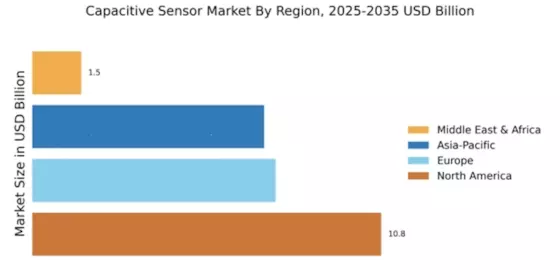
- 北米地域は、主にで家庭用電化製品の需要が高いため、静電容量センサーの最大の市場であり続けています。 アジア太平洋地域は、急速な産業オートメーションとテクノロジーの採用により、最も急速に成長している地域として認識されています。 タッチ スクリーン セグメントが市場を支配している一方で、自動車セグメントは、車両の採用の増加により、最も急成長している分野として浮上しています。 主要な市場推進要因には、タッチ テクノロジーの進歩とでスマート ホーム デバイスの成長が含まれており、市場動向に大きな影響を与えています。
市場規模と予測
| 2024 市場規模 | 27.12 (USD Billion) |
| 2035 市場規模 | 49.97 (USD Billion) |
| CAGR (2025 - 2035) | 5.71% |
| 最大の地域市場シェアで2024 | 北米 |
主要なプレーヤー
Texas Instruments (US)、Analog Devices (US)、NXP Semiconductors (NL)、STMicroelectronics (CH)、Microchip Technology (US)、Infineon Technologies (DE)、ON Semiconductor (US)、Broadcom Inc. (US)、ハネウェル インターナショナル Inc. (US)











 Noah Malgeri
Co-Founder

 Peter Groot koerkamp
Account and Business Manager

 Younghwan Choi
Senior Retail Manager

 Mark Irwin
Management Consultant

 Akif Moroglu
Strategy & Business Development Director

 Guilherme Gomes Martins
Product Management Director

 Joseph Aguayo
Sales Operations & Pricing Manager

 La Terria Dodd
Program Support Specialist

 Rob Kooiker
Group Product Manager HVAC & Fire Protection GMA


