Location-Based Services Market Overview and Advantages
Location-based services (LBS) are an important part of everyday life in today's hyper-connected world. LBS makes things easier by using real-time location tracking. For example, you can order food online or find your way around new places. This new technology finds out where the user is physically and geographically in order to provide services, insights, and experiences that are both personalized and timely.
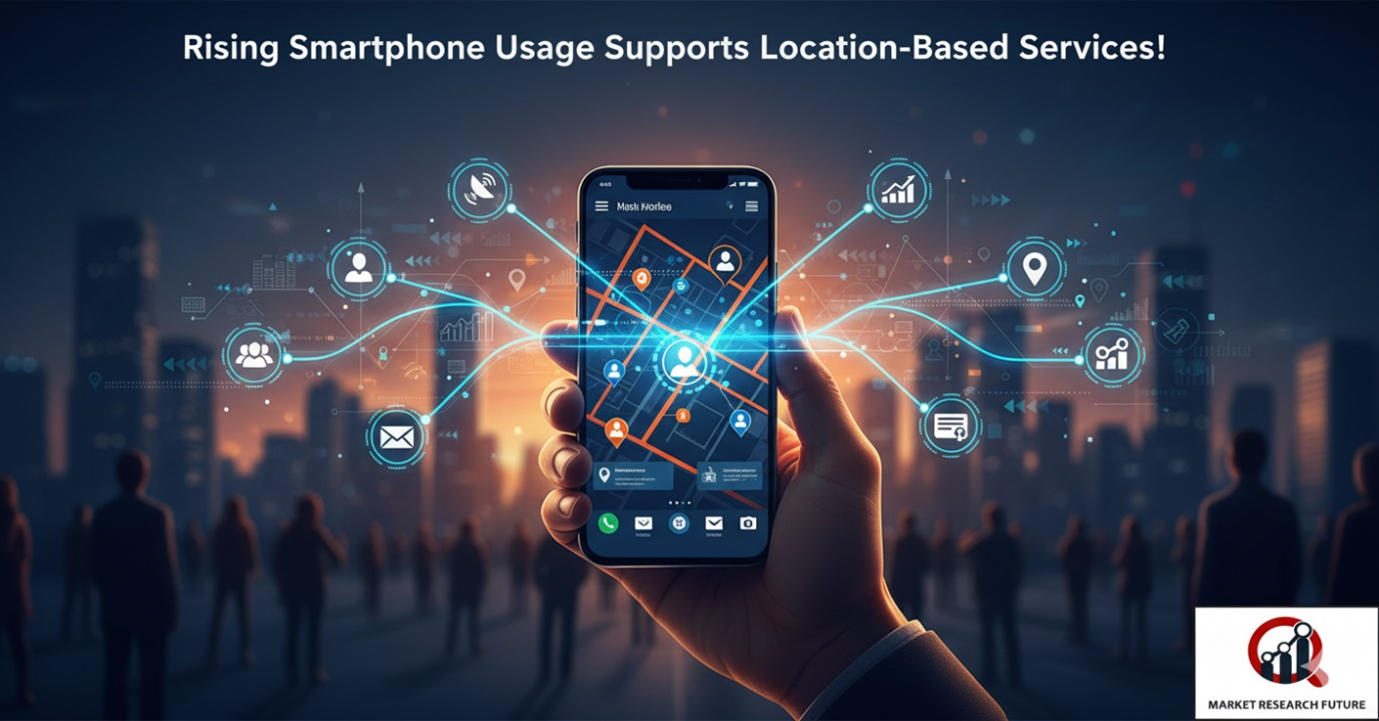
Mobile phones are still the main platform for location-based technology, but LBS can be used on more than just phones. It can also work with other smart devices that can find location data, like desktops, wearables, cars, and more. As smartphones get better, location-based services are being used in more and more industries. This changes how businesses interact with customers and makes their operations more efficient.
LBS uses real-time smartphone data to give users information, entertainment, security, and directions. People can check in at restaurants, malls, or events and get access to special deals or discounts right away. Google Maps, Facebook, Yelp, and Foursquare are all well-known platforms that rely heavily on this technology to make things better for users. Users can let these services find out where they are without having to type anything in by turning on GPS tracking.
Location-Based Services: The Key to Digital Change
The biggest reason for the growth of LBS has been the rise of smartphones and cheap mobile internet. Location-based services are now an important part of modern life because more and more people use their devices for everything from getting to work to shopping. Businesses have also started using LBS to improve their operations, offer personalized marketing, and learn more about how customers act.
During the pandemic, LBS showed that it could be useful for more than just business. Governments and healthcare organizations used this technology to track contacts, keep an eye on movement patterns, and handle public health responses. Since then, the technology has changed quickly and is now a key part of making sure that all industries are safe, efficient, and connected.
LBS's performance has improved greatly since it was combined with 5G networks and cloud computing. Modern networks let you track and analyze things in real time like never before because they connect faster and have less latency. LBS makes it easy to share data and make better decisions, whether you're managing a fleet, tracking logistics, or planning a smart city.
Giving businesses power through location intelligence
Customer experience is everything for businesses today, and LBS is a great way to make that experience unique. Businesses can learn more about how the local market works and improve their strategies by using spatial information, like the size, shape, and location of physical assets. For example, retailers use geofencing to send targeted deals to customers who are close to their store. Logistics companies also use GPS-enabled fleet tracking to make deliveries more accurate and efficient.
Location-based services are now essential in the logistics and transportation industry. Real-time vehicle tracking, route optimization, and asset monitoring have made the supply chain work much better. In the meantime, LBS helps businesses in the hospitality, travel, and entertainment industries offer highly personalized experiences that make customers happy and keep them coming back.
The end
Location-based services are no longer a thing of the future; they are now an important part of the digital world. LBS has become useful in healthcare, retail, logistics, tourism, and other fields as smartphones, GPS, and network infrastructure continue to improve. LBS makes sure that everything is done right and quickly, from helping hospitals cut down on missed appointments to letting people see maps in real time during big events.
As businesses move toward digital transformation, the need for smarter, safer, and faster location-based solutions will keep growing. The future of LBS is to combine AI, data analytics, and cloud technologies to make a system where every action, decision, and movement is based on location intelligence. Location-based services are the hidden force behind innovation all over the world in this time of connectivity.