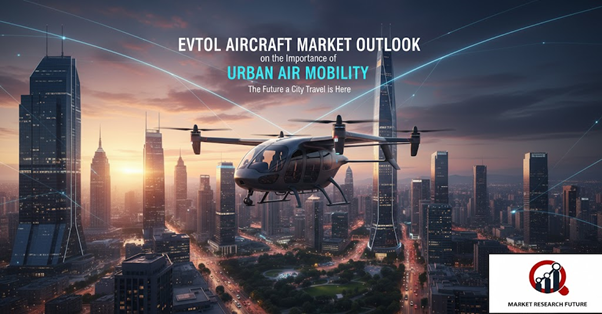
eVTOL Aircraft Market Outlook
The global eVTOL aircraft market is projected to reach USD 4.46 billion by 2030, which was valued at USD 900 million in 2023. The advancement of the ecosystem is expected to occur at a massive CAGR of 30.30% through the forecast period.
An electric vertical take-off and landing (eVTOL) aircraft is a type of vertical take-off and landing aircraft that uses electricity to hover, take off, and land in a vertical manner.
This technology came out because of the major advances in electric propulsion- motors, electronic controllers, batteries, fuel cells, and the growing need for new vehicles for urban air mobility, like air taxis.
The eVTOL industry has gained a lot of importance over the past few years. A surge in the requirement for urban air mobility worldwide from various use cases, such as air ambulances, cargo, air taxis, and personal air vehicles, has driven the demand for eVTOL aircraft during the analysis period of 2023-2030.
These vehicles are another industry breakthrough that has the potential to transform aerial transportation in urban environments. Several of their variants have been prototyped and tested in the past few years.
According to the eVTOL aircraft market analysis, the rising need for noise-free and green energy aircraft is leading to the market's growth. The strive for heightened fuel efficiency and reduction of noise pollution is the primary need to reduce environmental impact.
The energy for eVTOL aircraft is driven by powered lift designs using turbofan engines with augmented and auxiliary lift fans. Most electric-powered aircraft developed today will use distributed electric propulsion (DEP) as a gateway for sustainable aviation.
For example, in March 2020, according to a study, the market is estimated to grow exponentially to an estimated 1.3 billion passengers over 20 years, with a demand for 28,000 aircraft.
Technological advancement is a key point indicator of gaining popularity in the eVTOL aircraft market. The eVTOL aircraft market analysis shows that the major companies operating in the same market are focused on providing technologically advanced solutions to heighten their market position.
These companies are implementing next-generation technologies into their services, such as ultra-edge hydrogen, IoT, and battery cells, along with onboard sensors and collision prevention systems, AI technology, and 5G communication, among others.
In April 2022, Hyundai, an automotive manufacturer, explored hydrogen fuel cell technology for this aircraft segment's electric short take-off and landing. The company estimates that hydrogen fuel cell technology has a long range to complete intercity trips.
The eVTOL market belongs to the coming generation because it is an electric aircraft that provides services like noise reduction during landing and take-off. There is an ever-growing market for quick transportation substitutes to reduce traffic congestion in metropolitan areas.
These are the most important factors for the development and valuation of the eVTOL market over the projected year. Vehicles will be driven by ergonomics and societal acceptance for bringing the general public on board, and individual agreement to acknowledge is more influential in the market.
Moreover, to maintain efficiency and secure the operation of eVTOL aircraft, administrative structures are expanded by government experts to manage upcoming developing concerns. It includes permission authority, air traffic, and so forth.
The unexpected COVID-19 pandemic has significantly impacted various industry sectors, with aerospace and aviation being among the most severely affected. However, the outbreak affected the aviation sector as a whole and not just the eVTOL aircraft business. The aviation industry lost more than USD 84 billion in 2020.
Consequently, the challenge for eVTOL companies was even tougher since the industry was still in its formative stages. Overseas market development, unavailability of raw materials, remote working trends, and dependency on outsourcing were some of the factors that hampered the market on a large scale.
Electric uncrewed aerial vehicles (UAVs) were widely experimented with by administrations and law enforcement organizations, while militaries widely utilized them for various duties, such as border protection.
The global eVTOL market has been segmented based on propulsion type, technology, mode of operation, application payload, and range. By technology, the segment is separated into lift plus cruise, multirotor, and vectored thrust. The market is divided into fully electric, hydrogen electric, and hybrid electric by propulsion type.
By mode of operation, the market is divided into piloted and autonomous. By application, the market is split into military, commercial, and emergency medical services. All leading companies invest in research and development to gain a competitive advantage.
Suppliers have adopted product development strategies and product positioning to establish a foothold in the market. Manufacturers are teaming up with technical service providers to gain technical expertise in this field.