Epoxy Resin Market Overview
Owing to the rising demand for painting and coating across different end-user segments, the global epoxy resin market is expected to hit the mark of USD 21.54 billion by 2035. The progress of the sector is expected to occur at a sluggish CAGR of 3.22% through the forecast period, which will lift the ecosystem from USD 15.2 billion, measured in 2024.
Epoxy resins, also known as polyepoxides, are reactive prepolymers and polymers containing epoxide groups, with the IUPAC name Oxirane. These resins can cross-link with co-reactants such as polyfunctional amines, acids, phenols, alcohols, and thiols, or through catalytic homopolymerization, a process commonly called curing.
The co-reactants, often referred to as hardeners or curatives, enable epoxy resins to form durable, high-performance materials. Renowned for their exceptional adhesive properties, epoxy resins are widely applied across industries, including electrical components, metal coatings, composites, and electronics.
Industrial Applications and Advantages
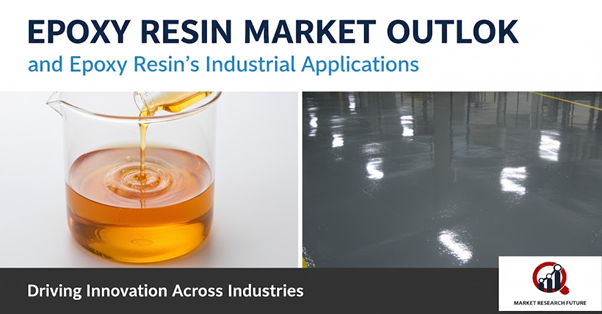
Epoxy coatings, available in two-part and one-part systems, are heavily used in automotive, industrial, and marine applications due to their superior heat resistance compared to latex- or alkyd-based paints.
Two-part coatings provide a hard, protective finish with lower energy requirements than heat-cured powder coatings, while one-part coatings are water-based and easy to clean. Epoxy paints are also used in drinking water systems, although UV exposure can lead to surface degradation.
In renewable energy, epoxy resins protect solar panels and enhance wind turbine blade durability by improving tensile strength, creep resistance, and corrosion resistance. Their versatility extends to plastic tooling, composite manufacturing, granite machine bedding, and fiber-reinforced products, where they reduce costs and improve efficiency.
Despite their higher cost compared to polyester or vinyl ester resins, epoxy resins offer stronger and more temperature-resistant thermoset composite parts. Hardware and marine stores supply them as resin-hardener kits for DIY and repair applications, often requiring overcoating for UV protection.
Market Drivers
The growing demand for high-performance adhesives and composite materials drives the epoxy resin market.
Liquid epoxy resins dominated the market, offering long-term stability, chemical resistance, durability, and superior adhesion. The paint and coating segment also led in volume and value during the same period and is expected to continue its dominance.
Emerging trends include the development of bio-based epoxy resins, which offer sustainable alternatives but face limitations in tensile strength and malleability. Ongoing research aims to enhance their performance, contributing to a circular economy.
China and North America remain key markets due to high-volume manufacturing, cost-effective labor, and strong investment in capacity expansion. These regions provide stable revenue streams and growth opportunities for global epoxy resin manufacturers.