×
Request Free Sample ×

Kindly complete the form below to receive a free sample of this Report

* Please use a valid business email

Leading companies partner with us for data-driven Insights

clients tt-cursor
Hero Background

Wood Flooring Market

ID: MRFR/PCM/6385-HCR
100 Pages
Sakshi Gupta
October 2025

Wood Flooring Market Research Report Information By Product (Solid Wood, Engineered Wood), By Application (Residential, Commercial, and Industrial), And By Region (North America, Europe, Asia-Pacific, And Rest Of The World) – Market Forecast Till 2035

Share:
Download PDF ×

We do not share your information with anyone. However, we may send you emails based on your report interest from time to time. You may contact us at any time to opt-out.

Wood Flooring Market Infographic
×
Wood Flooring Market Infographic Full View
Purchase Options

Wood Flooring Market Summary

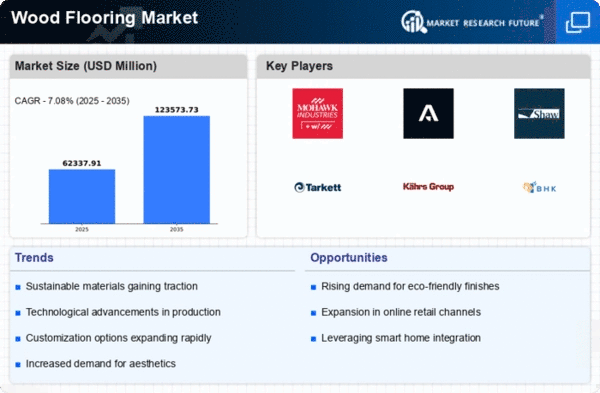
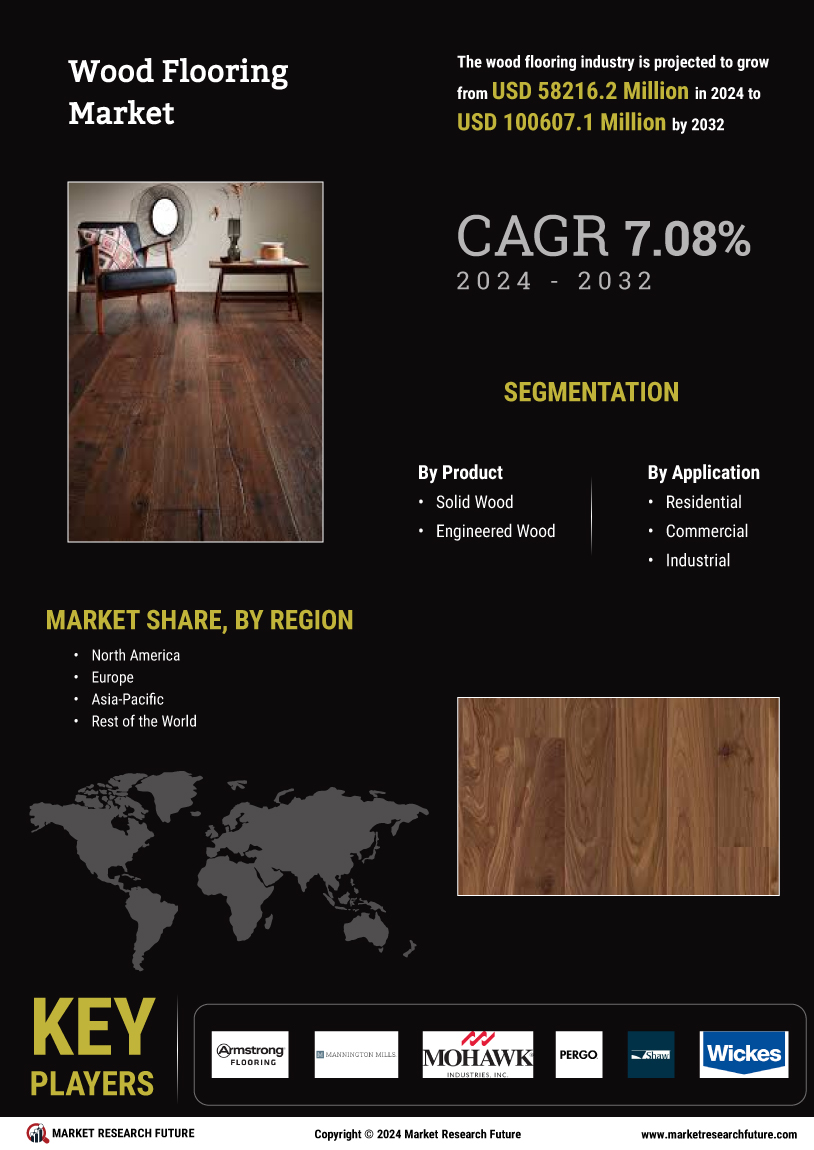
As per MRFR analysis, the Wood Flooring Market Size was estimated at 58216.2 USD Million in 2024. The Wood Flooring industry is projected to grow from 62339.09 USD Million in 2025 to 123573.73 USD Million by 2035, exhibiting a compound annual growth rate (CAGR) of 7.08 during the forecast period 2025 - 2035.

Key Market Trends & Highlights

The wood flooring market is experiencing a dynamic shift towards sustainability and technological innovation.

  • North America remains the largest market for wood flooring, driven by a strong demand for high-quality materials.
  • Asia-Pacific is emerging as the fastest-growing region, reflecting a surge in urbanization and construction activities.
  • The residential segment continues to dominate, while the commercial segment is witnessing rapid growth due to increased office renovations.
  • Key market drivers include a heightened focus on sustainability and advancements in technology, which are shaping consumer preferences.

Market Size & Forecast

2024 Market Size 58216.2 (USD Million)
2035 Market Size 123573.73 (USD Million)
CAGR (2025 - 2035) 7.08%

Major Players

Mohawk Industries (US), Armstrong Flooring (US), Shaw Industries (US), Tarkett (FR), Kahrs Group (SE), BHK (DE), Pergo (US), Mannington Mills (US), BerryAlloc (BE)

Wood Flooring Market Trends

The Wood Flooring Market is currently experiencing a dynamic evolution, driven by a confluence of consumer preferences, technological advancements, and sustainability considerations. As homeowners increasingly seek aesthetic appeal and durability, the demand for high-quality wood flooring options appears to be on the rise. This trend is further bolstered by a growing awareness of environmental issues, prompting manufacturers to adopt sustainable practices in sourcing and production. Consequently, the market landscape is shifting towards eco-friendly materials, which not only cater to consumer desires but also align with regulatory frameworks aimed at reducing carbon footprints. Moreover, innovations in manufacturing processes and design techniques are likely to enhance the versatility of wood flooring products. The introduction of engineered wood flooring, which combines natural wood with composite materials, seems to offer a practical solution for various applications, including residential and commercial spaces. This adaptability may attract a broader customer base, as it provides options that meet diverse aesthetic and functional requirements. Overall, the Wood Flooring Market appears poised for continued growth, with trends indicating a strong inclination towards sustainability and innovation in product offerings.

Sustainability Focus

The Wood Flooring Market is increasingly prioritizing sustainable practices, as consumers become more environmentally conscious. This trend involves the use of responsibly sourced materials and eco-friendly production methods, which not only appeal to buyers but also comply with environmental regulations.

Technological Advancements

Innovations in manufacturing techniques are transforming the Wood Flooring Market. The emergence of engineered wood products, which blend natural wood with synthetic materials, enhances durability and design flexibility, catering to a wider range of consumer preferences.

Aesthetic Versatility

The demand for diverse design options is shaping the Wood Flooring Market. Homeowners and designers are seeking unique styles and finishes, prompting manufacturers to offer a variety of textures, colors, and patterns that can complement different interior aesthetics.

Wood Flooring Market Drivers

Market Growth Projections

The Global Wood Flooring Market Industry is poised for substantial growth, with projections indicating a market value of 58.2 USD Billion in 2024 and an anticipated increase to 123.5 USD Billion by 2035. This growth trajectory suggests a compound annual growth rate of 7.08% from 2025 to 2035. Such figures reflect the increasing consumer preference for wood flooring solutions, driven by factors such as sustainability, technological advancements, and urbanization. The market's expansion is indicative of a broader trend towards quality and aesthetic appeal in flooring choices, positioning wood flooring as a preferred option in both residential and commercial sectors.

Expansion of Distribution Channels

The expansion of distribution channels is a crucial factor driving the Global Wood Flooring Market Industry. Retailers are increasingly adopting omnichannel strategies, allowing consumers to access wood flooring products through various platforms, including online and brick-and-mortar stores. This accessibility enhances consumer engagement and facilitates informed purchasing decisions. Additionally, partnerships between manufacturers and distributors are becoming more prevalent, ensuring a steady supply of diverse wood flooring options. As these distribution networks expand, they are expected to cater to a broader audience, thereby contributing to the market's growth trajectory.

Urbanization and Rising Disposable Incomes

Urbanization trends and increasing disposable incomes are pivotal drivers of the Global Wood Flooring Market Industry. As more individuals move to urban areas, the demand for residential and commercial properties rises, consequently boosting the need for quality flooring solutions. Moreover, with rising disposable incomes, consumers are more inclined to invest in premium wood flooring options that enhance the aesthetic value of their spaces. This trend is particularly evident in emerging economies, where urban development is accelerating. The anticipated compound annual growth rate of 7.08% from 2025 to 2035 underscores the potential for significant market expansion fueled by these socio-economic factors.

Growing Renovation and Remodeling Activities

The Global Wood Flooring Market Industry is benefitting from an upsurge in renovation and remodeling activities across various regions. Homeowners are increasingly opting for wood flooring to enhance the aesthetic appeal and value of their properties. This trend is particularly pronounced in developed markets, where older homes are being updated to meet modern standards. Government incentives for home improvement projects further stimulate this market segment. As a result, the demand for wood flooring is expected to rise, contributing to the overall market growth. The increasing focus on interior design and home aesthetics is likely to sustain this momentum in the coming years.

Technological Advancements in Wood Processing

Technological innovations in wood processing and manufacturing are significantly influencing the Global Wood Flooring Market Industry. Advanced techniques such as engineered wood production and improved finishing processes enhance the durability and aesthetic appeal of wood flooring. These advancements not only increase the product's lifespan but also reduce waste during manufacturing. Furthermore, the integration of digital technologies in design and production processes allows for greater customization, catering to diverse consumer preferences. As a result, these technological developments are expected to drive market growth, potentially leading to a market valuation of 123.5 USD Billion by 2035.

Rising Demand for Sustainable Flooring Solutions

The Global Wood Flooring Market Industry is experiencing a notable shift towards sustainable and eco-friendly flooring options. As consumers become increasingly aware of environmental issues, the demand for wood flooring sourced from responsibly managed forests is on the rise. This trend is supported by various government initiatives promoting sustainable forestry practices. For instance, certifications such as FSC and PEFC are gaining traction, ensuring that wood products meet stringent environmental standards. This growing preference for sustainable materials is likely to contribute to the market's expansion, with projections indicating a market value of 58.2 USD Billion in 2024.
Market Segment Insights

By Application: Residential (Largest) vs. Commercial (Fastest-Growing)

The application segment of the wood flooring market is primarily divided into Residential, Commercial, Industrial, and Institutional uses. Among these, the Residential segment dominates the market, reflecting a significant share of consumer preference due to its aesthetic appeal and durability. Commercial flooring applications are also notable, catering to businesses that prioritize both appearance and functionality in their spaces. The Industrial and Institutional sectors, while vital, showcase lower market shares compared to Residential and Commercial applications. Recent trends indicate that the Commercial segment is rapidly gaining momentum, driven by increasing investments in commercial real estate and an upsurge in renovations of existing spaces. Residential applications continue to thrive because of growing consumer interest in sustainable and eco-friendly flooring options. The demand in the Industrial segment is more stable, focusing on practicality and resilience. Meanwhile, the Institutional applications are influenced by public sector investments in building schools and hospitals, thus slowly increasing their market share over time.

Residential (Dominant) vs. Industrial (Emerging)

The Residential wood flooring segment is characterized by its dominance in aesthetic appeal and durability, catering to homeowners looking for stylish and long-lasting solutions. This segment prioritizes natural aesthetics and variety in finishes, enabling consumers to create personalized living spaces. The demand for eco-friendly and sustainable materials adds to its growing appeal, further solidifying its position as a dominant force in the market. Conversely, the Industrial segment is emerging due to the need for robust flooring options that can withstand heavy usage and harsh conditions. While initially focused on functionality, this segment is now seeing innovations that blend durability with design appeal, making it more competitive in the broader market. As industries evolve, the Industrial segment is adapting by incorporating sustainable practices, which may enhance its growth prospects.

By Material Type: Solid Wood (Largest) vs. Engineered Wood (Fastest-Growing)

The wood flooring market is largely dominated by Solid Wood, recognized for its traditional appeal and durability. Its widespread popularity is attributed to its aesthetic value and long lifecycle, making it a preferred choice for homeowners and builders alike. However, Engineered Wood is emerging as a significant player, gaining traction with a growing share due to its adaptability amidst fluctuating climate conditions and floor installation ease. As such, while Solid Wood maintains the largest share, Engineered Wood continues increasing its presence in residential and commercial spaces.

Solid Wood (Dominant) vs. Engineered Wood (Emerging)

Solid Wood is revered in the wood flooring market for its timeless elegance and strength, often considered a premium option. It boasts natural variations and is favored for its ability to be refinished over time, appealing to consumers looking for longevity. In contrast, Engineered Wood offers versatility, being designed to withstand environmental changes without compromising structural integrity. As a result, it presents a cost-effective alternative without sacrificing style. Its layers provide enhanced stability, making it particularly popular in areas prone to moisture, further driving its momentum as an emerging choice for both residential and commercial applications.

By Finish Type: Prefinished (Largest) vs. Oiled (Fastest-Growing)

The wood flooring market shows a distinct distribution among various finish types, with prefinished flooring taking the lead due to its convenience and aesthetic appeal. Unfinished wood flooring also retains a niche segment focused on customization and craftsmanship, whereas Oiled and UV Coated finishes are gaining traction among homeowners seeking unique designs. This shift highlights a growing consumer preference for versatile and innovative flooring solutions that cater to diverse styles and applications.

Prefinished (Dominant) vs. Oiled (Emerging)

Prefinished wood flooring is dominating the market segment due to its ready-to-install nature, which appeals to both contractors and DIY enthusiasts. It boasts a vast array of designs and finishes that enhance the visual appeal of any space. On the other hand, Oiled finishes are emerging as a popular choice for those looking for natural aesthetics and easy maintenance. Unlike prefinished options, oiled flooring offers the advantage of being refinished multiple times, thereby enhancing its longevity and appeal to eco-conscious consumers. This makes oiled finishes an increasingly popular option for residential spaces, particularly among those valuing sustainability and natural finishes.

By Installation Method: Nail Down (Largest) vs. Floating (Fastest-Growing)

In the wood flooring market, the distribution of market share among the various installation methods reveals that the Nail Down method holds the largest share. This technique has been favored for its durability and traditional installation standards, which appeal to homeowners seeking long-lasting flooring solutions. On the other hand, the Floating method, often touted for its ease of installation and versatility, showcases a significant uptick in market interest, indicating a shift in consumer preferences. As home improvement trends continue to evolve, the growth dynamics of the installation methods are noteworthy. The Floating installation method, in particular, is emerging as the fastest-growing segment owing to its appeal to DIY enthusiasts and its compatibility with various subfloor types. Factors driving this growth include ease of installation, cost-effectiveness, and reduced preparation time, promoting wider adoption across diverse consumer segments looking for convenient yet stylish flooring options.

Nail Down (Dominant) vs. Floating (Emerging)

The Nail Down installation method remains dominant in the wood flooring market, rooted in traditional practices that ensure a secure fit and enhanced durability. This method is often preferred in high-traffic areas and formal settings due to its sturdiness and perceived quality. It appeals particularly to consumers who prioritize long-term investment in their flooring. In contrast, the Floating installation method is quickly emerging, characterized by its straightforward, glue-free process that allows planks to 'float' above the subfloor. This has made it a favored choice among modern homeowners, particularly for renovations and in space-sensitive environments. The growing popularity of laminate and engineered wood products, which often utilize this method, further underscores its rise as a practical and stylish flooring option.

By Thickness: Medium (Largest) vs. Extra Thick (Fastest-Growing)

In the Wood Flooring Market, the thickness segment sees a diverse distribution among various categories. Medium thickness options hold the largest market share, favored by consumers for their balanced durability and aesthetic appeal. Thin and thick wood flooring options follow, each catering to distinct consumer preferences, while the extra thick category, though smaller in overall share, is rapidly gaining popularity among premium buyers who prioritize durability and performance.

Medium (Dominant) vs. Extra Thick (Emerging)

Medium thickness wood flooring has become the dominant choice in the market due to its versatile applications and favorable pricing. It typically offers a balance between aesthetics and durability, making it suitable for both residential and commercial use. On the other hand, extra thick wood flooring is an emerging option, gaining traction for its exceptional durability and luxury appeal. As consumers lean towards high-quality, long-lasting products, this segment is positioned to grow quickly, attracting buyers who prioritize the overall life cycle and performance of their flooring investments.

Get more detailed insights about Wood Flooring Market

Regional Insights

North America : Market Leader in Wood Flooring

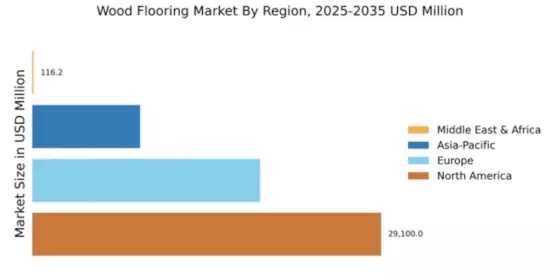
North America continues to lead the wood flooring market, holding a significant share of 29100.0. The growth is driven by rising consumer preferences for sustainable and aesthetically pleasing flooring options. Regulatory support for eco-friendly materials and innovations in manufacturing processes further bolster demand. The region's robust construction and renovation activities also contribute to this upward trend. The United States is the primary market player, with key companies like Mohawk Industries, Shaw Industries, and Armstrong Flooring dominating the landscape. The competitive environment is characterized by continuous product innovation and strategic partnerships. As the market evolves, these companies are focusing on enhancing their product offerings to meet changing consumer demands, ensuring their leadership position in the industry.

Europe : Emerging Trends in Flooring

Europe's wood flooring market is projected to reach 19000.0, driven by increasing urbanization and a shift towards sustainable building practices. Regulatory frameworks promoting energy efficiency and eco-friendly materials are significant catalysts for growth. The demand for engineered wood flooring is particularly strong, as consumers seek durable and stylish options that align with modern design trends. Leading countries in this region include Germany, France, and the UK, where companies like Tarkett and Kahrs Group are prominent. The competitive landscape is marked by innovation and a focus on sustainability, with manufacturers investing in new technologies to enhance product performance. This dynamic environment positions Europe as a key player in The Wood Flooring.

Asia-Pacific : Rapid Growth in Flooring Sector

The Asia-Pacific wood flooring market is valued at 9000.0, reflecting rapid growth driven by urbanization and rising disposable incomes. Countries like China and India are witnessing a surge in demand for wood flooring as consumers increasingly prefer premium flooring solutions. Regulatory initiatives aimed at promoting sustainable materials are also influencing market dynamics positively. China stands out as the largest market, with significant contributions from local manufacturers and international players. The competitive landscape is evolving, with companies focusing on product differentiation and sustainability. As the region continues to develop, the wood flooring market is expected to expand further, driven by both residential and commercial sectors.

Middle East and Africa : Niche Market Opportunities

The Middle East and Africa wood flooring market is relatively small, valued at 116.2, but it presents unique growth opportunities. The demand is primarily driven by increasing construction activities and a growing preference for high-quality flooring solutions. Regulatory support for sustainable building practices is gradually emerging, which could further stimulate market growth in the coming years. Countries like South Africa and the UAE are leading the market, with a mix of local and international players. The competitive landscape is characterized by a focus on luxury and premium products, catering to affluent consumers. As the region develops, the wood flooring market is expected to gain traction, driven by both residential and commercial projects.

Wood Flooring Market Regional Image

Key Players and Competitive Insights

The Wood Flooring Market is currently characterized by a dynamic competitive landscape, driven by factors such as increasing consumer demand for sustainable materials, technological advancements, and a growing emphasis on aesthetic appeal. Major players like Mohawk Industries (US), Shaw Industries (US), and Tarkett (FR) are strategically positioning themselves through innovation and regional expansion. Mohawk Industries (US) focuses on enhancing its product portfolio with eco-friendly options, while Shaw Industries (US) emphasizes digital transformation to streamline operations and improve customer engagement. Tarkett (FR) is actively pursuing partnerships to bolster its sustainability initiatives, collectively shaping a competitive environment that prioritizes innovation and responsiveness to market trends.Key business tactics within the Wood Flooring Market include localizing manufacturing and optimizing supply chains to enhance efficiency and reduce costs. The market structure appears moderately fragmented, with several key players exerting influence over various segments. This fragmentation allows for niche players to thrive, while larger companies leverage their scale to dominate in terms of distribution and brand recognition. The collective influence of these key players fosters a competitive atmosphere where innovation and customer-centric strategies are paramount.

In November Mohawk Industries (US) announced the launch of a new line of sustainable hardwood flooring products, which utilize reclaimed wood and environmentally friendly finishes. This strategic move not only aligns with the growing consumer preference for sustainable options but also positions Mohawk as a leader in eco-conscious flooring solutions. The introduction of these products is likely to enhance brand loyalty and attract environmentally aware consumers, thereby strengthening its market position.

In October Shaw Industries (US) unveiled a state-of-the-art digital platform aimed at enhancing customer experience through virtual design tools and augmented reality. This initiative reflects Shaw's commitment to digital transformation, enabling customers to visualize flooring options in their spaces before making a purchase. By integrating technology into the customer journey, Shaw Industries is poised to differentiate itself in a competitive market, potentially increasing sales and customer satisfaction.

In September Tarkett (FR) entered into a strategic partnership with a leading technology firm to develop smart flooring solutions that integrate IoT capabilities. This collaboration aims to create flooring products that can monitor environmental conditions and provide data analytics for improved indoor air quality. Such innovations not only enhance Tarkett's product offerings but also align with the increasing demand for smart home solutions, positioning the company favorably in a rapidly evolving market.

As of December current competitive trends in the Wood Flooring Market are heavily influenced by digitalization, sustainability, and the integration of AI technologies. Strategic alliances are increasingly shaping the landscape, allowing companies to pool resources and expertise to drive innovation. The shift from price-based competition to a focus on technological advancements and supply chain reliability is evident, suggesting that future competitive differentiation will hinge on the ability to innovate and respond to consumer preferences effectively.

Key Companies in the Wood Flooring Market include

Industry Developments

December 2023: Mohawk Group and Milwaukee, Wisconsin-based smart flooring firm Scanalytics entered into a partnership to reduce emissions from the built environment.

August 2023: Johnson Hardwood announced that The R.A. Siegel Company would act as representation in the Southeast territories, including Florida, Georgia, Alabama, South Carolina, North Carolina and eastern portions of Tennessee. On offer are all of Johnson’s complete floor coverings, such as SPC/rigid core, high-performance laminate and premium hardwood flooring by The R.A. Siegel Company.

In BAU 2023, one of the world’s top laminated flooring manufacturers and polyvinyl chloride (PVC) -free wall and floor coverings producers, The CLASSEN Group introduced four breakthrough ideas. It is Uberwood®, which represents a new generation of floors with sound-absorbing pad features without the need for any underlays anymore.

In 2022, AHF Products completed its purchase of certain assets from Armstrong Flooring Inc., increasing its position as a leader in resilient floor covering solutions and expanding its presence to include industry-leading commercial & residential products like hardwoods, resilient and laminates for its customers.

In March 2022, Lucknow SuperGiants confirmed their partnership with Greenply Industries Limited as an associate partner of the franchise—the first-ever Uttar Pradesh team in the T20 league. Companies that have been able to produce wooden flooring using eco-friendly practices have become more sustainable, thereby outperforming their rivals.

Future Outlook

Wood Flooring Market Future Outlook

The Wood Flooring Market is projected to grow at a 7.08% CAGR from 2025 to 2035, driven by increasing demand for sustainable materials and innovative design solutions.

New opportunities lie in:

  • Expansion into eco-friendly wood sourcing initiatives
  • Development of smart flooring technologies for enhanced user experience
  • Strategic partnerships with interior design firms for exclusive product lines

By 2035, the Wood Flooring Market is expected to achieve robust growth, solidifying its competitive position.

Market Segmentation

Wood Flooring Market Thickness Outlook

  • Thin
  • Medium
  • Thick
  • Extra Thick

Wood Flooring Market Application Outlook

  • Residential
  • Commercial
  • Industrial
  • Institutional

Wood Flooring Market Finish Type Outlook

  • Unfinished
  • Prefinished
  • Oiled
  • UV Coated

Wood Flooring Market Material Type Outlook

  • Solid Wood
  • Engineered Wood
  • Laminate
  • Bamboo

Wood Flooring Market Installation Method Outlook

  • Nail Down
  • Glue Down
  • Floating
  • Staple Down

Report Scope

MARKET SIZE 202458216.2(USD Million)
MARKET SIZE 202562339.09(USD Million)
MARKET SIZE 2035123573.73(USD Million)
COMPOUND ANNUAL GROWTH RATE (CAGR)7.08% (2025 - 2035)
REPORT COVERAGERevenue Forecast, Competitive Landscape, Growth Factors, and Trends
BASE YEAR2024
Market Forecast Period2025 - 2035
Historical Data2019 - 2024
Market Forecast UnitsUSD Million
Key Companies ProfiledMohawk Industries (US), Armstrong Flooring (US), Shaw Industries (US), Tarkett (FR), Kahrs Group (SE), BHK (DE), Pergo (US), Mannington Mills (US), BerryAlloc (BE)
Segments CoveredApplication, Material Type, Finish Type, Installation Method, Thickness
Key Market OpportunitiesIntegration of sustainable materials and smart technology in the Wood Flooring Market presents significant growth opportunities.
Key Market DynamicsRising consumer preference for sustainable materials drives innovation and competition in the wood flooring market.
Countries CoveredNorth America, Europe, APAC, South America, MEA

Market Highlights

Author
Sakshi Gupta
Research Analyst Level II

I have about two years of experience working in the consumer goods and retail industries and I am a biotech graduate.A tech-savvy analytically focused professional with a strong capabilities in identification, concept generation, and strategy evaluation. I can produce data-driven solutions while fusing unusual viewpoints with original concepts. I have been extensively working on business case studies, competitive & comparative analyses, and strategic reports. My primary areas of experience include client management, financial analysis, supply chain evaluation, market entry strategy evaluation, and estimating and forecasting market size.

Leave a Comment

FAQs

How much is the wood flooring market?

Wood Flooring Market was valued at USD 58216.20 Billion in 2024

What is the growth rate of the wood flooring market?

Wood Flooring Market is projected to register a CAGR of 7.08% from 2025-2035

Which region held the largest market share in the wood flooring market?

The residential segment will lead the wood flooring market.

What are the key factors driving the wood flooring market?

North America had the largest share in the market

Who are the key players in the wood flooring market?

The key players in the market are The Armstrong Flooring Inc. (US), Mannington Mills Inc. (US), Mohawk Industries (US), Pergo (US), Shaw Industries Group Inc. (US), E.P. Co.Inc., Wickes Ltd (US), Home Legend LLC, Somerset Hardwood Flooring, and Provenza Floors Inc.

Which product type led the wood flooring market?

The engineered wood flooring category dominated the market in 2024.

Which application had the largest market share in the wood flooring market?

The residential segment had the largest share in the market.

Download Free Sample

Kindly complete the form below to receive a free sample of this Report

Compare Licence

×
Features License Type
Single User Multiuser License Enterprise User
Price $4,950 $5,950 $7,250
Maximum User Access Limit 1 User Upto 10 Users Unrestricted Access Throughout the Organization
Free Customization
Direct Access to Analyst
Deliverable Format
Platform Access
Discount on Next Purchase 10% 15% 15%
Printable Versions