Request Free Sample ×

Kindly complete the form below to receive a free sample of this Report

* Please use a valid business email

Leading companies partner with us for data-driven Insights

clients tt-cursor
Hero Background
English
Chinese
French
Japanese
Korean
German
Spanish

Wholesale Telecom Market Trends

ID: MRFR/ICT/10675-CR
128 Pages
Ankit Gupta
February 2026

Wholesale Telecom Market Research Report Information By Solution (Voice Termination, SMS Messaging Services, VoIP Solutions, Data Roaming Services, International Call Services, SIP Trunking, Mobile Number Portability, Cloud Communication Services, Network Security Solutions, Interconnection Services MPLS (Multiprotocol Label Switching) Solutions, Bandwidth on Demand, Colocation Services, Hosted PBX Services ,Virtual Private Network (VPN) Services, Data Center Services, Ethernet Services, Content Delivery Network (CDN) Services, Mobile Virtual Network Enabler (MVNE) Services, International Data Services, Dark Fiber Services, Internet Exchange Point (IXP) Services, Satellite Communication Services, IoT Connectivity Solutions, Cloud Connectivity Services, Voice over LTE (VoLTE) Services, 5G Network Services, Network Monitoring and Management Services, Disaster Recovery Services, Network Consulting Services, Managed Network Services, Mobile Device Management (MDM) Solutions, Network Virtualization Services, DDoS Protection Services, Internet Transit Services, Mobile Advertising Solutions, Mobile Payment Solutions, Network Equipment Sales and Leasing Video Conferencing Services, Unified Communications Solutions, Network Traffic Optimization Fraud Management Solutions, Network Performance Monitoring Software-Defined Networking (SDN) Solutions, Business Continuity Services, Blockchain-based Telecom Solutions, Wholesale Voice Trading Platforms, Network Capacity Planning, Over-the-Top (OTT) Service Solutions, Network Infrastructure Management Services, Multi-Cloud Connectivity Services, Others), By Organization Size (SMEs, Large Enterprises), By End User Type (Internet Service Providers (ISPS), Mobile Network Operators (MNOs), VoIP Service Providers, Cable TV Operators, Government Agencies, Educational Institutes, Content Providers, Others) By Region (North America, Europe, Asia Pacific, South America, Middle East & Africa) - Forecast to 2035

Share:
Download PDF ×

We do not share your information with anyone. However, we may send you emails based on your report interest from time to time. You may contact us at any time to opt-out.

Wholesale Telecom Market Infographic
Purchase Options

Market Trends

Key Emerging Trends in the Wholesale Telecom Market

The wholesale telecom market goes thru massive modifications pushed through mechanical progressions, changing patron ways of behaving, and advancing administrative scenes. One unmistakable sample forming the market is the short reception of 5G innovation. As the 5th generation of flexible groups, 5G commitments faster speeds, lower inertness, and multiplied restrict, empowering first-rate many programs and administrations. This shift towards 5G is riding extensive hobbies in framework, setting out open doors and problems for wholesale telecom suppliers. To stay extreme, wholesalers need to regulate their groups and administrations to oblige the growing demand for immediate, low-dormancy availability. The growing commonness of cloud-based administrations is likewise impacting market factors. Wholesale telecom suppliers are developing their contributions to consistently incorporate cloud availability preparations, empowering organizations to get to and oversee statistics and packages. This pattern mirrors the developing significance of an associated organic gadget where agencies can use cloud administrations for advanced productivity, adaptability, and price-viability. Wholesale telecom gamers are decisively situating themselves to take unique care of this demand and support extensive community arrangements. Besides, the marketplace is seeing a flood within the demand for Programming SoftwareDefinedNetwork (SDN) and Network capabilities virtualization (NFV). These improvements empower the more adaptable and productive organization of the executive via virtualizing community works and incorporating management. Wholesale telecom suppliers are embracing SDN and NFV to enhance their agencies, diminish purposeful costs, and upgrade management conveyance. The execution of these improvements considers more noteworthy nimbleness in answering converting marketplace requests and purchaser necessities. Network protection has changed into a primary issue in the wholesale telecom marketplace. With the growing recurrence and refinement of virtual risks, making sure the safety and trustworthiness of telecommunications networks is essential. Wholesale suppliers are setting assets into reducing aspect network protection solutions to guard their framework and purchaser statistics. As the business turns out to be more interconnected, addressing network protection challenges is crucial to retaining acceptance as true and dependability within the wholesale telecom surroundings. The market is also seeing a shift in the direction of greater noteworthy, coordinated efforts and companies among wholesale telecom suppliers. This cooperative technique lets organizations pool assets, share basis, and deal with more whole solutions for their clients. Key coalitions empower suppliers to upgrade their management portfolios, grow their geographic attain, and stay cutthroat in a quickly developing market.

Author
Author Profile
Ankit Gupta
Team Lead - Research

Ankit Gupta is a seasoned market intelligence and strategic research professional with over six plus years of experience in the ICT and Semiconductor industries. With academic roots in Telecom, Marketing, and Electronics, he blends technical insight with business strategy. Ankit has led 200+ projects, including work for Fortune 500 clients like Microsoft and Rio Tinto, covering market sizing, tech forecasting, and go-to-market strategies. Known for bridging engineering and enterprise decision-making, his insights support growth, innovation, and investment planning across diverse technology markets.

Leave a Comment

FAQs

What is the current valuation of the Wholesale Telecom Market in 2025?

<p>The Wholesale Telecom Market valuation is approximately 481.29 USD Billion in 2024, and it is expected to grow significantly by 2035.</p>

What is the projected market size for the Wholesale Telecom Market by 2035?

<p>The market is projected to reach approximately 1600.41 USD Billion by 2035, indicating substantial growth.</p>

What is the expected CAGR for the Wholesale Telecom Market during the forecast period?

<p>The expected CAGR for the Wholesale Telecom Market from 2025 to 2035 is 11.54%, suggesting robust growth potential.</p>

Which companies are considered key players in the Wholesale Telecom Market?

<p>Key players include AT&T, Verizon, Deutsche Telekom, NTT Communications, and Orange, among others.</p>

What are the primary segments within the Wholesale Telecom Market?

<p>Primary segments include Voice Termination, SMS, VoIP Solutions, and Cloud Communication Services, among others.</p>

How does the market size for Large Enterprises compare to SMEs in 2025?

In 2025, the market size for Large Enterprises is approximately 385.03 USD Billion, significantly larger than the 96.26 USD Billion for SMEs.

What is the valuation of VoIP Solutions in the Wholesale Telecom Market?

VoIP Solutions are valued at approximately 60.15 USD Billion in 2024, with expectations for growth in the coming years.

What role do Internet Service Providers play in the Wholesale Telecom Market?

Internet Service Providers (ISPs) represent a substantial segment, with a valuation of around 96.39 USD Billion in 2024.

What is the market valuation for Cloud Communication Services?

Cloud Communication Services are valued at approximately 54.14 USD Billion in 2024, indicating their importance in the market.

How do the valuations of Mobile Network Operators compare to VoIP Service Providers?

Mobile Network Operators are valued at approximately 144.19 USD Billion, which is significantly higher than the 36.32 USD Billion for VoIP Service Providers.

Market Summary

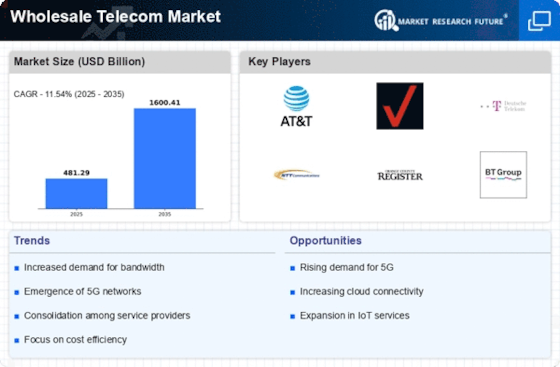
As per Market Research Future analysis, the Wholesale Telecom Market Size was valued at USD 4,87,179.62 million in 2024. The Wholesale Telecom Industry is projected to grow from USD 5,43,400.14 million in 2025 to USD 14,52,096.61million by 2035, exhibiting a compound annual growth rate (CAGR) of 11.54% during the forecast period (2025 - 2035).

Key Market Trends & Highlights

The Wholesale Telecom Market is undergoing rapid transformation driven by technological leaps, shifting business models, and exploding data demands undergoing rapid transformation driven by technological leaps, shifting business models, and exploding data demands.

  • Wholesale providers are racing to offer high-capacity backhaul, slicing, and edge services to enable ultra-low latency for enterprises and operators. Fiber optics and submarine cables underpin this, as data traffic surges annually from video, IoT, and AR/VR applications. Cloud-native architectures propel of wholesale growth, with providers adopting Kubernetes-orchestrated services for auto-scaling interconnects. Hyperscalers like AWS, Google Cloud, and Azure bypass traditional carriers via private peering and direct cable builds, capturing of wholesale capacity. Edge wholesale thrives as 5G private networks proliferate; data centers co-located with base stations enable microsecond latency for autonomous vehicles and industry 4.0. Trends favor "edge-as-a-service" wholesale models. Energy-efficient routing cuts carbon by 30%. Trends include renewable-powered data centers and carbon-offset bandwidth sales. Regulators favor eco-compliant providers in tenders.

Market Size & Forecast

2024 Market Size 4,87,179 (USD Million)
2035 Market Size 14,52,096 (USD Million)
CAGR (2025 - 2035) 11.54%

Major Players

Verizon Communications Inc, AT&amp;T Inc, T-Mobile USA, Inc., Orange, Deutsche Telekom, Telefónica, S.A., Singtel, NTT Communications, BT Wholesale, Rogers Communications, Swisscom, A1 Group, KDDI Corporation, Saudi Telecom Company.

Market Trends

The expected growth in the market can be attributed to the growth in increasing demand for data, cloud and digital services and Affordable tariffs, wider availability, and cost of communication. However, the market is also held back by Decline in International Voice Traffic, the wholesale business is overly mature, Inflation-driven threats lead the list of evolving external pressures, and Changing Regulatory landscape. Nevertheless, it is anticipated that the Innovation in voice and data wholesale, increasing process automation, and Expansion of telecommunications infrastructure, customer services, and new business models will create lucrative opportunities for the players operating in the Wholesale Telecom Market. Wholesalers are becoming more open and efficient in the way they service their retail and other wholesale or next generation communications customers as process automation increases.

The problem of generating revenue growth and profit from wholesale telecoms infrastructure investment remains, but in a quickly expanding communications industry, new opportunities emerge on a regular basis. The evolution of wholesale competition provides a solution to this problem. Partnering and collaboration among wholesale suppliers, network operators, media and content firms, and retail telecoms service providers is a significantly more productive approach than a basic pricing and capacity competition. This allows for the delivery of end-to-end services with streamlined quoting, order management, provisioning and delivery, thus shifting the perception not just about what wholesale s can deliver, but how they deliver it.

Wholesale Telecom Market Market Drivers

Increasing Demand for Data, Cloud and Digital Services

To meet the growing demand, an influx of data in the network simply indicates that there is a market for new fibre lines, more subsea or terrestrial cables, and better networking. Likewise, more data flowing across the network indicates a greater risk and impact in the event of a network outage. To construct more robust network infrastructure, wholesale s are expected to prepare for diversity, resilience, and high availability. Wholesale s is expanding to provide a variety of managed datacentre services, co-location space, and global internet connections. These capabilities are being expanded with cloud, network function virtualization (NFV), and software defined networking (SDN) support. They will become obsolete if they do not adapt in tandem with the digital transition. In this regard, delivering wholesale services entails sustaining a mix of physical and virtualized infrastructure, as well as managing a variety of operations. A wholesale 's customer anticipates using a variety of services, including access to datacentres and co-location facilities, in addition to a globally available wholesale network. This also implies that CAPEX investment is minimised because of infrastructure sharing. More data does not always imply more income or profitability. It does, however, provide a chance for those in a position to rebuild market positions, reimagine corporate processes, and reinvent network and service capabilities. Adoption of new technologies such as SDN or NFV is crucial for optimising CAPEX and OPEX, which aids in market competitiveness. These solutions can help wholesale s overcome architectural challenges and meet expanding connection demand.

Affordable Tariffs, Wider Availability, And Cost Of Communication

The industry has grown exponentially in the last few years due to several factors, including low-cost plans, increased accessibility, the implementation of Mobile Number Portability (MNP), growing 3G and 4G coverage, changing subscriber consumption patterns, government initiatives to support India's domestic telecom manufacturing capacity, and supportive regulatory environments. All sizes of enterprises can benefit from the affordable communications options offered by wholesale voice. This is one method of providing customers with high-quality voice services, and it has number of growth drivers. Features that can be customised to match corporate demands and feature-rich solutions are advantages of the wholesale voice. It is a reliable and successful method of reaching clients throughout the world. There are various advantages to VoIP services that incorporate 5G technology. Higher bandwidth is possible, latency is decreased, and overall performance is enhanced, suggesting that organisations can profit from flawless audio calls and seamless communications even in high-stress settings. To provide flawless voice services, wholesale VoIP providers must stay abreast of the most recent developments in 5G technology and guarantee that the infrastructure can operate to its maximum capacity

Market Segment Insights

By Solution: Voice Termination (Largest) vs. Cloud Communication Services (Fastest-Growing)

<p>In the Wholesale Telecom Market, the solution segment encompasses various service offerings, each contributing uniquely to market dynamics. Voice Termination holds the largest market share due to its critical role in connecting domestic and international calls. Other notable segments include SMS and Messaging Services, which continue to perform steadily, while Data Roaming Services and VoIP Solutions also present significant contributions. The market landscape is characterized by highly competitive segments vying for growth in an evolving telecom environment. Growth trends in the Wholesale Telecom Market are driven by the increasing demand for reliable, high-quality <a href="https://www.marketresearchfuture.com/reports/communication-service-market-35339" target="_blank" title="communication service">communication services</a>. Innovations in Cloud Communication Services and VoIP Solutions are paving the way for enhanced connectivity and flexibility, particularly as businesses adopt <a href="https://www.marketresearchfuture.com/reports/digital-transformation-market-8685" target="_blank" title="digital transformation">digital transformation</a> strategies. The rise of IoT and the transition towards more data-centric services amplify the demand for robust infrastructures and security solutions, assisting the emergence of segments like Network Security Solutions as key players in the market.</p>

<p>Voice Termination: Dominant vs. Cloud Communication Services: Emerging</p>

<p>Voice Termination stands out as a dominant force in the Wholesale Telecom Market, primarily due to its essential function in facilitating communication across networks. This service is pivotal for carriers, ensuring efficient call routing while maintaining optimal voice quality. Meanwhile, Cloud Communication Services, an emerging segment, is gaining traction due to the shift towards cloud-based solutions optimizing communication processes. These services provide scalability and flexibility, making them highly attractive to enterprises seeking efficient communication strategies. The interplay between these segments underscores a transformation in the industry, where established services adapt to the growing demand for innovative solutions.</p>

By Organization Size: SMEs (Largest) vs. Large Enterprises (Fastest-Growing)

<p>In the Wholesale Telecom Market, SMEs hold the largest share, driven by their increasing adoption of advanced communication technologies and cost-effective solutions. Their demand for flexible and scalable services has led to a significant market presence. In contrast, large enterprises, while not holding the highest market share, are experiencing rapid growth as they seek comprehensive telecom solutions to support their expansive operations and complex needs. This segment's growth reflects the demand for ultra-reliable communication networks that can handle significant data loads and facilitate seamless connectivity.</p>

<p>Telecom Solutions: SMEs (Dominant) vs. Large Enterprises (Emerging)</p>

<p>SMEs in the Wholesale Telecom Market are often seen as the dominant force due to their agility and ability to quickly adapt to changing technology trends. They typically require tailored solutions that can cater to their unique business needs and budget constraints. Conversely, large enterprises are classified as the emerging players in this space as their increasing focus on enhancing operational efficiency drives them to invest in more sophisticated and integrated telecom solutions. Large enterprises are in a unique position to leverage their size to negotiate cost-effective deals and demand high-capacity services, thus expanding their telecom service portfolios and driving innovation in the market.</p>

By End User Type: Internet Service Providers (Largest) vs. Mobile Network Operators (Fastest-Growing)

<p>In the Wholesale Telecom Market, the market share distribution reveals that Internet Service Providers (ISPs) dominate the segment, capturing a significant portion of the overall share. Following ISPs, Mobile Network Operators (MNOs) are a pivotal player, though they are currently characterized by robust growth trends, indicating their increasing importance in the market. VoIP Service Providers and Cable TV Operators hold steady portions of the market, while Government Agencies and Educational Institutes demonstrate a consistent, if modest, demand for wholesale telecom services. Meanwhile, content providers and other users contribute diversely, reflecting varied telecom needs.</p>

<p>Internet Service Providers (Dominant) vs. Mobile Network Operators (Emerging)</p>

<p>Internet Service Providers (ISPs) are a dominant force in the Wholesale Telecom Market, characterized by their extensive infrastructure and customer base that includes residential, business, and educational segments. Their ability to offer bundled services, combining internet, telephony, and television, positions them favorably against emerging competitors. Conversely, Mobile Network Operators (MNOs), while currently in a position of rapid growth, are increasingly pivotal due to escalating mobile data consumption and the proliferation of smartphones. MNOs leverage advancements in 5G technology and the expansion of IoT services, driving their growth trajectory. While ISPs enjoy a stable market presence, MNOs are emerging as key players capable of reshaping the competitive landscape.</p>

Get more detailed insights about Wholesale Telecom Market Research Report—Forecast till 2035

Regional Insights

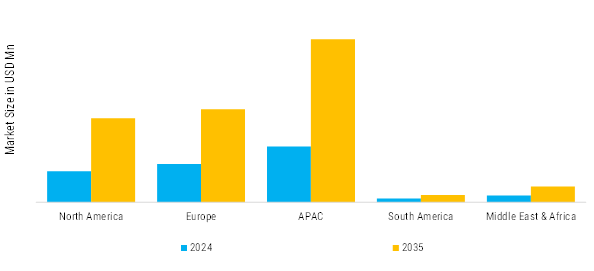
North America: Expanding Wholesale sector

The North American Wholesale Telecom Market has been segmented, by country, into the US, Canada, and Mexico. Rising data and internet service consumption, cloud computing, expanding government efforts, and other factors are driving growth in North America's wholesale Telecom Market. Major market participants including Verizon Wholesale, AT&T Wholesale, T-Mobile Wholesale, Sprint Wholesale, etc. are also present in the region. Large revenue is being spent by these companies on the development of wholesale telecom goods and services to meet a range of needs. Additionally, the region has a high network deployment penetration rate and is predicted to lead the way in the adoption of 5G technology in the years to come. This is also anticipated to fuel the expansion of the North American wholesale Telecom Market. Because of the presence of numerous major operators who are making considerable investments in developing solutions for a variety of applications, the US is a prominent market for wholesale telecom.

Wholesale Telecom Market Regional Insights

Europe: Expansion of wholesale

The European wholesale TELECOM MARKET has been divided, by country, into Germany, the UK, France, Spain, Italy, and the rest of Europe. The main drivers of the expansion of the wholesale telecom industry in Europe are the growing Internet penetration and the growing demand for smart devices. Additionally, reduced latency, simple access to content, and the rising digital transformation of the European tourism sector are driving growth in the wholesale telecom business. Regulating liability and data policy, however, is limiting commercial expansion in the region. One of the most lucrative areas of the IT sector is the telecommunication services market, which covers both landline and wireless services. The major players in the European telecom services market in terms of revenue, Orange, Vodafone, Telefónica, and Deutsche Telekom, are also in the top 30 global telecommunications corporations. The biggest and most successful telecom provider in Europe is Deutsche Telekom, a German business.

Asia-Pacific: Development of Wholesale telecom

The Asia-Pacific wholesale TELECOM MARKET has been divided, by country, into China, India, Japan, South Korea, and Rest of Asia-Pacific. The Asia-Pacific region is leading the world in terms of the adoption of internet services. The need for wholesale telecom services is developing because of mobile operators' requirement to lease capacity from wholesale providers to meet the growing demand for network data. The demand for wholesale telecom services is rising due to the rapid expansion of the cloud computing business in the Asia Pacific region. To ensure that their networks are stable and quick enough to deliver their services, cloud computing providers usually turn to wholesale telecom firms. The Major Tier 1 and Tier 2 s are connected to Asia Telecom's Wholesale Services segment both locally and internationally.

Middle Eat & Africa: Emerging Wholesale Telecom

The Middle East & Africa wholesale TELECOM MARKET has been divided by country, into Saudi Arabia, UAE, South Africa, and Rest of Middle East & Africa. The main players in the Middle East and Africa telecom market include Saudi Telecom Company, Etisalat Group, Ooredoo Group, Zain Group, and Oman Telecommunications Company. The creation of Mobile Virtual Network Operators (MVNO), the growth of fiber-based networks and fixed broadband services, and the completion of telecom sector liberalization are the primary drivers of market growth in the region. Over the past few years, a number of occurrences have caused significant changes in the Middle East's telecom industry. Mobile s in the Gulf Cooperation Council (GCC) countries Bahrain, Kuwait, Oman, Qatar, Saudi Arabia, and the United Arab Emirates have deployed some of the world's first 5G networks, making them the pioneers of 5G in the region. These governments and authorities have awarded spectrum.

South America: Emerging Telecom Market

The South America wholesale TELECOM MARKET has been divided by country, into Brazil, Argentina, and Rest of South America. As more people acquire cellphones, the number of wholesale telecom s in the region has increased. The wholesale telecom is dealing with a few issues. Because of its advantages, businesses in the South American market are moving more and more to over-the-top (OTT) services. In nations like Brazil, Argentina, Chile, and Columbia, there has been a surge in IoT and IIoT projects, which has propelled the expansion of the wholesale telecom industry in the region. Major players in the South American wholesale telecom industry include Telefónica, América Móvil, and Oi (owned by Pharol SGPS and Brazilian investors). Telefónica Brazil, which combines its landline and mobile services under the Vivo brand, is the conduit through which Telefónica operates.

Key Players and Competitive Insights

Many global, regional, and local vendors characterize the Wholesale Telecom Market. The market is highly competitive, with all the players competing to gain market share. Intense competition, rapid advances in technology, frequent changes in government policies, and environmental regulations are key factors that confront market growth. The vendors compete based on cost, product quality, reliability, and government regulations. Vendors must provide cost-efficient, high-quality products to survive and succeed in an intensely competitive market. The major players in the market Include Verizon Communications Inc, AT&T Inc, T-Mobile USA, Inc., Orange, Deutsche Telekom, Telefónica, S.A., Singtel, NTT Communications, BT Wholesale, Rogers Communications, Swisscom, A1 Group, KDDI Corporation, Saudi Telecom Company strategic market developments and decisions to improve operational effectiveness.

Key Companies in the Wholesale Telecom Market include

Industry Developments

July 2023: Wholesale provider Deutsche Telekom has announced the launch of a new Point-of-Presence (PoP) in Miami, Florida, hosted within Equinix's data center. The PoP, hosted within the renowned Equinix data centre, offers bandwidths of 1/10/100 gigabits per second (n x 1, n x 10, n x 100 Gbps). According to the official statement, this expansion aims to strengthen Deutsche Telekom's global IPX and IP network footprint.

May 2023: Eseye has announced that it has entered into an agreement with Orange Wholesale France to expand its IoT connectivity solution offering. This enabled enterprises to avoid permanent roaming challenges and provide them with localisation capabilities. Orange Wholesale France has extensive roaming agreements for IoT use cases across many countries and regions, making it a strong partner for Eseye.

May 2024: Comms Group Limited has announced that it has signed a supply agreement with one of the world's largest telcos KDDI Asia Pacific, a subsidiary of KDDI Corporation, to enable KDDI to provide key unified communications and related telecommunications services to key customers throughout the Asia Pacific region and beyond. The agreement allows for a range of Comms Group's unified communications services, including Microsoft Teams Calling, Comms Group's global provisioning and management platform and related products and services, to be accessed by KDDI via this agreement.

Future Outlook

Wholesale Telecom Market Future Outlook

The Wholesale Telecom Market is projected to grow at a 11.54% CAGR from 2025 to 2035, driven by increasing demand for high-performance computing and enhanced security features.

New opportunities lie in:

  • <p>Innovation In Voice and Data Wholesale</p>
  • <p>Increasing Process Automation</p>
  • <p>Expansion Of Telecommunications Infrastructure, Customer Services, And New Business Models</p>
  • <p> </p>

By 2035, the Wholesale Telecom Market is expected to be robust, driven by innovation and strategic partnerships.

Market Segmentation

Wholesale Telecom Market by Solution Outlook

  • Voice Termination
  • SMS Messaging Services
  • VoIP Solutions
  • Data Roaming Services
  • International Call Services
  • SIP Trunking
  • Mobile Number Portability
  • Cloud Communication Services
  • Network Security Solutions
  • Interconnection Services MPLS (Multiprotocol Label Switching) Solutions
  • Bandwidth on Demand
  • Colocation Services
  • Hosted PBX Services
  • Virtual Private Network (VPN) Services
  • Data Center Services
  • Ethernet Services
  • Content Delivery Network (CDN) Services
  • Mobile Virtual Network Enabler (MVNE) Services
  • International Data Services
  • Dark Fiber Services
  • Internet Exchange Point (IXP) Services
  • Satellite Communication Services
  • IoT Connectivity Solutions
  • Cloud Connectivity Services
  • Voice over LTE (VoLTE) Services
  • 5G Network Services
  • Network Monitoring and Management Services
  • Disaster Recovery Services
  • Network Consulting Services
  • Managed Network Services
  • Mobile Device Management (MDM) Solutions
  • Network Virtualization Services
  • DDoS Protection Services
  • Internet Transit Services
  • Mobile Advertising Solutions
  • Mobile Payment Solutions
  • Network Equipment Sales and Leasing Video Conferencing Services
  • Unified Communications Solutions
  • Network Traffic Optimization Fraud Management Solutions
  • Network Performance Monitoring Software-Defined Networking (SDN) Solutions
  • Business Continuity Services
  • Blockchain-based Telecom Solutions
  • Wholesale Voice Trading Platforms
  • Network Capacity Planning
  • Over-the-Top (OTT) Service Solutions
  • Network Infrastructure Management Services
  • Multi-Cloud Connectivity Services
  • Others

Wholesale Telecom Market by End User Type Outlook

  • Internet Service Providers (ISPS)
  • Mobile Network Operators (MNOs)
  • VoIP Service Providers
  • Cable TV Operators
  • Government Agencies
  • Educational Institutes
  • Content Providers
  • Others)

Wholesale Telecom Market by Organization size Outlook

  • SMEs
  • Large Enterprises

Report Scope

Market Size 2024 4,87,179.62 (USD Million)
Market Size 2025 5,43,400.14 (USD Million)
Market Size 2035 14,52,096.61 (USD Million)
Compound Annual Growth Rate (CAGR) 11.54% (2025 - 2035)
Report Coverage Revenue Forecast, Competitive Landscape, Growth Factors, and Trends
Base Year 2024
Market Forecast Period 2025 - 2035
Historical Data 2019 - 2023
Market Forecast Units USD Million
Key Companies Profiled Verizon Communications Inc, AT&T Inc, T-Mobile USA, Inc., Orange, Deutsche Telekom, Telefónica, S.A., Singtel, NTT Communications, BT Wholesale, Rogers Communications, Swisscom, A1 Group, KDDI Corporation, Saudi Telecom Company
Segments Covered By Solution, By Organization Size, By End User Type
Key Market Opportunities Innovation In Voice and Data Wholesale. Increasing Process Automation. Expansion Of Telecommunications Infrastructure, Customer Services, And New Business Models.              
Key Market Dynamics Inflation-Driven Threats Lead the List of Evolving External Pressures. Increasing Demand for Data, Cloud and Digital Services. Affordable Tariffs, Wider Availability, And Cost of Communication.
Region Covered North America, Europe, APAC, South America, MEA
 

FAQs

What is the current valuation of the Wholesale Telecom Market in 2025?

<p>The Wholesale Telecom Market valuation is approximately 481.29 USD Billion in 2024, and it is expected to grow significantly by 2035.</p>

What is the projected market size for the Wholesale Telecom Market by 2035?

<p>The market is projected to reach approximately 1600.41 USD Billion by 2035, indicating substantial growth.</p>

What is the expected CAGR for the Wholesale Telecom Market during the forecast period?

<p>The expected CAGR for the Wholesale Telecom Market from 2025 to 2035 is 11.54%, suggesting robust growth potential.</p>

Which companies are considered key players in the Wholesale Telecom Market?

<p>Key players include AT&T, Verizon, Deutsche Telekom, NTT Communications, and Orange, among others.</p>

What are the primary segments within the Wholesale Telecom Market?

<p>Primary segments include Voice Termination, SMS, VoIP Solutions, and Cloud Communication Services, among others.</p>

How does the market size for Large Enterprises compare to SMEs in 2025?

In 2025, the market size for Large Enterprises is approximately 385.03 USD Billion, significantly larger than the 96.26 USD Billion for SMEs.

What is the valuation of VoIP Solutions in the Wholesale Telecom Market?

VoIP Solutions are valued at approximately 60.15 USD Billion in 2024, with expectations for growth in the coming years.

What role do Internet Service Providers play in the Wholesale Telecom Market?

Internet Service Providers (ISPs) represent a substantial segment, with a valuation of around 96.39 USD Billion in 2024.

What is the market valuation for Cloud Communication Services?

Cloud Communication Services are valued at approximately 54.14 USD Billion in 2024, indicating their importance in the market.

How do the valuations of Mobile Network Operators compare to VoIP Service Providers?

Mobile Network Operators are valued at approximately 144.19 USD Billion, which is significantly higher than the 36.32 USD Billion for VoIP Service Providers.

  1. SECTION I: EXECUTIVE SUMMARY AND KEY HIGHLIGHTS
    1. | 1.1 EXECUTIVE SUMMARY
    2. | | 1.1.1 Market Overview
    3. | | 1.1.2 Key Findings
    4. | | 1.1.3 Market Segmentation
    5. | | 1.1.4 Competitive Landscape
    6. | | 1.1.5 Challenges and Opportunities
    7. | | 1.1.6 Future Outlook
  2. SECTION II: SCOPING, METHODOLOGY AND MARKET STRUCTURE
    1. | 2.1 MARKET INTRODUCTION
    2. | | 2.1.1 Definition
    3. | | 2.1.2 Scope of the study
    4. | | | 2.1.2.1 Research Objective
    5. | | | 2.1.2.2 Assumption
    6. | | | 2.1.2.3 Limitations
    7. | 2.2 RESEARCH METHODOLOGY
    8. | | 2.2.1 Overview
    9. | | 2.2.2 Data Mining
    10. | | 2.2.3 Secondary Research
    11. | | 2.2.4 Primary Research
    12. | | | 2.2.4.1 Primary Interviews and Information Gathering Process
    13. | | | 2.2.4.2 Breakdown of Primary Respondents
    14. | | 2.2.5 Forecasting Model
    15. | | 2.2.6 Market Size Estimation
    16. | | | 2.2.6.1 Bottom-Up Approach
    17. | | | 2.2.6.2 Top-Down Approach
    18. | | 2.2.7 Data Triangulation
    19. | | 2.2.8 Validation
  3. SECTION III: QUALITATIVE ANALYSIS
    1. | 3.1 MARKET DYNAMICS
    2. | | 3.1.1 Overview
    3. | | 3.1.2 Drivers
    4. | | 3.1.3 Restraints
    5. | | 3.1.4 Opportunities
    6. | 3.2 MARKET FACTOR ANALYSIS
    7. | | 3.2.1 Value chain Analysis
    8. | | 3.2.2 Porter's Five Forces Analysis
    9. | | | 3.2.2.1 Bargaining Power of Suppliers
    10. | | | 3.2.2.2 Bargaining Power of Buyers
    11. | | | 3.2.2.3 Threat of New Entrants
    12. | | | 3.2.2.4 Threat of Substitutes
    13. | | | 3.2.2.5 Intensity of Rivalry
    14. | | 3.2.3 COVID-19 Impact Analysis
    15. | | | 3.2.3.1 Market Impact Analysis
    16. | | | 3.2.3.2 Regional Impact
    17. | | | 3.2.3.3 Opportunity and Threat Analysis
  4. SECTION IV: QUANTITATIVE ANALYSIS
    1. | 4.1 Information and Communications Technology, BY Solution (USD Billion)
    2. | | 4.1.1 Voice Termination
    3. | | 4.1.2 SMS
    4. | | 4.1.3 Messaging Services
    5. | | 4.1.4 VoIP Solutions
    6. | | 4.1.5 Data Roaming Services
    7. | | 4.1.6 International Call Services
    8. | | 4.1.7 SIP Trunking
    9. | | 4.1.8 Mobile Number Portability
    10. | | 4.1.9 Cloud Communication Services
    11. | | 4.1.10 Network Security Solutions
    12. | | 4.1.11 Interconnection Services
    13. | | 4.1.12 MPLS (Multiprotocol Label Switching) Solutions
    14. | | 4.1.13 Bandwidth on Demand
    15. | | 4.1.14 Colocation Services
    16. | | 4.1.15 Hosted PBX Services
    17. | | 4.1.16 Virtual Private Network (VPN) Services
    18. | | 4.1.17 Data Center Services
    19. | | 4.1.18 Ethernet Services
    20. | | 4.1.19 Content Delivery Network (CDN) Services
    21. | | 4.1.20 Mobile Virtual Network Enabler (MVNE) Services
    22. | | 4.1.21 International Data Services
    23. | | 4.1.22 Dark Fiber Services
    24. | | 4.1.23 Internet Exchange Point (IXP) Services
    25. | | 4.1.24 Satellite Communication Services
    26. | | 4.1.25 IoT Connectivity Solutions
    27. | | 4.1.26 Cloud Connectivity Services
    28. | | 4.1.27 Others
    29. | 4.2 Information and Communications Technology, BY Organization Size (USD Billion)
    30. | | 4.2.1 SME’s
    31. | | 4.2.2 Large Enterprises
    32. | 4.3 Information and Communications Technology, BY End User Type (USD Billion)
    33. | | 4.3.1 Internet Service Providers (ISPs)
    34. | | 4.3.2 Mobile Network Operators (MNOs)
    35. | | 4.3.3 VoIP Service Providers
    36. | | 4.3.4 Cable TV Operators
    37. | | 4.3.5 Government Agencies
    38. | | 4.3.6 Educational Institutes
    39. | | 4.3.7 Content Providers
    40. | | 4.3.8 Others
    41. | 4.4 Information and Communications Technology, BY Region (USD Billion)
    42. | | 4.4.1 North America
    43. | | | 4.4.1.1 US
    44. | | | 4.4.1.2 Canada
    45. | | 4.4.2 Europe
    46. | | | 4.4.2.1 Germany
    47. | | | 4.4.2.2 UK
    48. | | | 4.4.2.3 France
    49. | | | 4.4.2.4 Russia
    50. | | | 4.4.2.5 Italy
    51. | | | 4.4.2.6 Spain
    52. | | | 4.4.2.7 Rest of Europe
    53. | | 4.4.3 APAC
    54. | | | 4.4.3.1 China
    55. | | | 4.4.3.2 India
    56. | | | 4.4.3.3 Japan
    57. | | | 4.4.3.4 South Korea
    58. | | | 4.4.3.5 Malaysia
    59. | | | 4.4.3.6 Thailand
    60. | | | 4.4.3.7 Indonesia
    61. | | | 4.4.3.8 Rest of APAC
    62. | | 4.4.4 South America
    63. | | | 4.4.4.1 Brazil
    64. | | | 4.4.4.2 Mexico
    65. | | | 4.4.4.3 Argentina
    66. | | | 4.4.4.4 Rest of South America
    67. | | 4.4.5 MEA
    68. | | | 4.4.5.1 GCC Countries
    69. | | | 4.4.5.2 South Africa
    70. | | | 4.4.5.3 Rest of MEA
  5. SECTION V: COMPETITIVE ANALYSIS
    1. | 5.1 Competitive Landscape
    2. | | 5.1.1 Overview
    3. | | 5.1.2 Competitive Analysis
    4. | | 5.1.3 Market share Analysis
    5. | | 5.1.4 Major Growth Strategy in the Information and Communications Technology
    6. | | 5.1.5 Competitive Benchmarking
    7. | | 5.1.6 Leading Players in Terms of Number of Developments in the Information and Communications Technology
    8. | | 5.1.7 Key developments and growth strategies
    9. | | | 5.1.7.1 New Product Launch/Service Deployment
    10. | | | 5.1.7.2 Merger & Acquisitions
    11. | | | 5.1.7.3 Joint Ventures
    12. | | 5.1.8 Major Players Financial Matrix
    13. | | | 5.1.8.1 Sales and Operating Income
    14. | | | 5.1.8.2 Major Players R&D Expenditure. 2023
    15. | 5.2 Company Profiles
    16. | | 5.2.1 AT&T (US)
    17. | | | 5.2.1.1 Financial Overview
    18. | | | 5.2.1.2 Products Offered
    19. | | | 5.2.1.3 Key Developments
    20. | | | 5.2.1.4 SWOT Analysis
    21. | | | 5.2.1.5 Key Strategies
    22. | | 5.2.2 Verizon (US)
    23. | | | 5.2.2.1 Financial Overview
    24. | | | 5.2.2.2 Products Offered
    25. | | | 5.2.2.3 Key Developments
    26. | | | 5.2.2.4 SWOT Analysis
    27. | | | 5.2.2.5 Key Strategies
    28. | | 5.2.3 Deutsche Telekom (DE)
    29. | | | 5.2.3.1 Financial Overview
    30. | | | 5.2.3.2 Products Offered
    31. | | | 5.2.3.3 Key Developments
    32. | | | 5.2.3.4 SWOT Analysis
    33. | | | 5.2.3.5 Key Strategies
    34. | | 5.2.4 NTT Communications (JP)
    35. | | | 5.2.4.1 Financial Overview
    36. | | | 5.2.4.2 Products Offered
    37. | | | 5.2.4.3 Key Developments
    38. | | | 5.2.4.4 SWOT Analysis
    39. | | | 5.2.4.5 Key Strategies
    40. | | 5.2.5 Orange (FR)
    41. | | | 5.2.5.1 Financial Overview
    42. | | | 5.2.5.2 Products Offered
    43. | | | 5.2.5.3 Key Developments
    44. | | | 5.2.5.4 SWOT Analysis
    45. | | | 5.2.5.5 Key Strategies
    46. | | 5.2.6 BT Group (GB)
    47. | | | 5.2.6.1 Financial Overview
    48. | | | 5.2.6.2 Products Offered
    49. | | | 5.2.6.3 Key Developments
    50. | | | 5.2.6.4 SWOT Analysis
    51. | | | 5.2.6.5 Key Strategies
    52. | | 5.2.7 Telstra (AU)
    53. | | | 5.2.7.1 Financial Overview
    54. | | | 5.2.7.2 Products Offered
    55. | | | 5.2.7.3 Key Developments
    56. | | | 5.2.7.4 SWOT Analysis
    57. | | | 5.2.7.5 Key Strategies
    58. | | 5.2.8 Vodafone (GB)
    59. | | | 5.2.8.1 Financial Overview
    60. | | | 5.2.8.2 Products Offered
    61. | | | 5.2.8.3 Key Developments
    62. | | | 5.2.8.4 SWOT Analysis
    63. | | | 5.2.8.5 Key Strategies
    64. | | 5.2.9 China Telecom (CN)
    65. | | | 5.2.9.1 Financial Overview
    66. | | | 5.2.9.2 Products Offered
    67. | | | 5.2.9.3 Key Developments
    68. | | | 5.2.9.4 SWOT Analysis
    69. | | | 5.2.9.5 Key Strategies
    70. | | 5.2.10 T-Mobile (DE)
    71. | | | 5.2.10.1 Financial Overview
    72. | | | 5.2.10.2 Products Offered
    73. | | | 5.2.10.3 Key Developments
    74. | | | 5.2.10.4 SWOT Analysis
    75. | | | 5.2.10.5 Key Strategies
    76. | 5.3 Appendix
    77. | | 5.3.1 References
    78. | | 5.3.2 Related Reports
  6. LIST OF FIGURES
    1. | 6.1 MARKET SYNOPSIS
    2. | 6.2 NORTH AMERICA MARKET ANALYSIS
    3. | 6.3 US MARKET ANALYSIS BY SOLUTION
    4. | 6.4 US MARKET ANALYSIS BY ORGANIZATION SIZE
    5. | 6.5 US MARKET ANALYSIS BY END USER TYPE
    6. | 6.6 CANADA MARKET ANALYSIS BY SOLUTION
    7. | 6.7 CANADA MARKET ANALYSIS BY ORGANIZATION SIZE
    8. | 6.8 CANADA MARKET ANALYSIS BY END USER TYPE
    9. | 6.9 EUROPE MARKET ANALYSIS
    10. | 6.10 GERMANY MARKET ANALYSIS BY SOLUTION
    11. | 6.11 GERMANY MARKET ANALYSIS BY ORGANIZATION SIZE
    12. | 6.12 GERMANY MARKET ANALYSIS BY END USER TYPE
    13. | 6.13 UK MARKET ANALYSIS BY SOLUTION
    14. | 6.14 UK MARKET ANALYSIS BY ORGANIZATION SIZE
    15. | 6.15 UK MARKET ANALYSIS BY END USER TYPE
    16. | 6.16 FRANCE MARKET ANALYSIS BY SOLUTION
    17. | 6.17 FRANCE MARKET ANALYSIS BY ORGANIZATION SIZE
    18. | 6.18 FRANCE MARKET ANALYSIS BY END USER TYPE
    19. | 6.19 RUSSIA MARKET ANALYSIS BY SOLUTION
    20. | 6.20 RUSSIA MARKET ANALYSIS BY ORGANIZATION SIZE
    21. | 6.21 RUSSIA MARKET ANALYSIS BY END USER TYPE
    22. | 6.22 ITALY MARKET ANALYSIS BY SOLUTION
    23. | 6.23 ITALY MARKET ANALYSIS BY ORGANIZATION SIZE
    24. | 6.24 ITALY MARKET ANALYSIS BY END USER TYPE
    25. | 6.25 SPAIN MARKET ANALYSIS BY SOLUTION
    26. | 6.26 SPAIN MARKET ANALYSIS BY ORGANIZATION SIZE
    27. | 6.27 SPAIN MARKET ANALYSIS BY END USER TYPE
    28. | 6.28 REST OF EUROPE MARKET ANALYSIS BY SOLUTION
    29. | 6.29 REST OF EUROPE MARKET ANALYSIS BY ORGANIZATION SIZE
    30. | 6.30 REST OF EUROPE MARKET ANALYSIS BY END USER TYPE
    31. | 6.31 APAC MARKET ANALYSIS
    32. | 6.32 CHINA MARKET ANALYSIS BY SOLUTION
    33. | 6.33 CHINA MARKET ANALYSIS BY ORGANIZATION SIZE
    34. | 6.34 CHINA MARKET ANALYSIS BY END USER TYPE
    35. | 6.35 INDIA MARKET ANALYSIS BY SOLUTION
    36. | 6.36 INDIA MARKET ANALYSIS BY ORGANIZATION SIZE
    37. | 6.37 INDIA MARKET ANALYSIS BY END USER TYPE
    38. | 6.38 JAPAN MARKET ANALYSIS BY SOLUTION
    39. | 6.39 JAPAN MARKET ANALYSIS BY ORGANIZATION SIZE
    40. | 6.40 JAPAN MARKET ANALYSIS BY END USER TYPE
    41. | 6.41 SOUTH KOREA MARKET ANALYSIS BY SOLUTION
    42. | 6.42 SOUTH KOREA MARKET ANALYSIS BY ORGANIZATION SIZE
    43. | 6.43 SOUTH KOREA MARKET ANALYSIS BY END USER TYPE
    44. | 6.44 MALAYSIA MARKET ANALYSIS BY SOLUTION
    45. | 6.45 MALAYSIA MARKET ANALYSIS BY ORGANIZATION SIZE
    46. | 6.46 MALAYSIA MARKET ANALYSIS BY END USER TYPE
    47. | 6.47 THAILAND MARKET ANALYSIS BY SOLUTION
    48. | 6.48 THAILAND MARKET ANALYSIS BY ORGANIZATION SIZE
    49. | 6.49 THAILAND MARKET ANALYSIS BY END USER TYPE
    50. | 6.50 INDONESIA MARKET ANALYSIS BY SOLUTION
    51. | 6.51 INDONESIA MARKET ANALYSIS BY ORGANIZATION SIZE
    52. | 6.52 INDONESIA MARKET ANALYSIS BY END USER TYPE
    53. | 6.53 REST OF APAC MARKET ANALYSIS BY SOLUTION
    54. | 6.54 REST OF APAC MARKET ANALYSIS BY ORGANIZATION SIZE
    55. | 6.55 REST OF APAC MARKET ANALYSIS BY END USER TYPE
    56. | 6.56 SOUTH AMERICA MARKET ANALYSIS
    57. | 6.57 BRAZIL MARKET ANALYSIS BY SOLUTION
    58. | 6.58 BRAZIL MARKET ANALYSIS BY ORGANIZATION SIZE
    59. | 6.59 BRAZIL MARKET ANALYSIS BY END USER TYPE
    60. | 6.60 MEXICO MARKET ANALYSIS BY SOLUTION
    61. | 6.61 MEXICO MARKET ANALYSIS BY ORGANIZATION SIZE
    62. | 6.62 MEXICO MARKET ANALYSIS BY END USER TYPE
    63. | 6.63 ARGENTINA MARKET ANALYSIS BY SOLUTION
    64. | 6.64 ARGENTINA MARKET ANALYSIS BY ORGANIZATION SIZE
    65. | 6.65 ARGENTINA MARKET ANALYSIS BY END USER TYPE
    66. | 6.66 REST OF SOUTH AMERICA MARKET ANALYSIS BY SOLUTION
    67. | 6.67 REST OF SOUTH AMERICA MARKET ANALYSIS BY ORGANIZATION SIZE
    68. | 6.68 REST OF SOUTH AMERICA MARKET ANALYSIS BY END USER TYPE
    69. | 6.69 MEA MARKET ANALYSIS
    70. | 6.70 GCC COUNTRIES MARKET ANALYSIS BY SOLUTION
    71. | 6.71 GCC COUNTRIES MARKET ANALYSIS BY ORGANIZATION SIZE
    72. | 6.72 GCC COUNTRIES MARKET ANALYSIS BY END USER TYPE
    73. | 6.73 SOUTH AFRICA MARKET ANALYSIS BY SOLUTION
    74. | 6.74 SOUTH AFRICA MARKET ANALYSIS BY ORGANIZATION SIZE
    75. | 6.75 SOUTH AFRICA MARKET ANALYSIS BY END USER TYPE
    76. | 6.76 REST OF MEA MARKET ANALYSIS BY SOLUTION
    77. | 6.77 REST OF MEA MARKET ANALYSIS BY ORGANIZATION SIZE
    78. | 6.78 REST OF MEA MARKET ANALYSIS BY END USER TYPE
    79. | 6.79 KEY BUYING CRITERIA OF INFORMATION AND COMMUNICATIONS TECHNOLOGY
    80. | 6.80 RESEARCH PROCESS OF MRFR
    81. | 6.81 DRO ANALYSIS OF INFORMATION AND COMMUNICATIONS TECHNOLOGY
    82. | 6.82 DRIVERS IMPACT ANALYSIS: INFORMATION AND COMMUNICATIONS TECHNOLOGY
    83. | 6.83 RESTRAINTS IMPACT ANALYSIS: INFORMATION AND COMMUNICATIONS TECHNOLOGY
    84. | 6.84 SUPPLY / VALUE CHAIN: INFORMATION AND COMMUNICATIONS TECHNOLOGY
    85. | 6.85 INFORMATION AND COMMUNICATIONS TECHNOLOGY, BY SOLUTION, 2024 (% SHARE)
    86. | 6.86 INFORMATION AND COMMUNICATIONS TECHNOLOGY, BY SOLUTION, 2024 TO 2035 (USD Billion)
    87. | 6.87 INFORMATION AND COMMUNICATIONS TECHNOLOGY, BY ORGANIZATION SIZE, 2024 (% SHARE)
    88. | 6.88 INFORMATION AND COMMUNICATIONS TECHNOLOGY, BY ORGANIZATION SIZE, 2024 TO 2035 (USD Billion)
    89. | 6.89 INFORMATION AND COMMUNICATIONS TECHNOLOGY, BY END USER TYPE, 2024 (% SHARE)
    90. | 6.90 INFORMATION AND COMMUNICATIONS TECHNOLOGY, BY END USER TYPE, 2024 TO 2035 (USD Billion)
    91. | 6.91 BENCHMARKING OF MAJOR COMPETITORS
  7. LIST OF TABLES
    1. | 7.1 LIST OF ASSUMPTIONS
    2. | | 7.1.1
    3. | 7.2 North America MARKET SIZE ESTIMATES; FORECAST
    4. | | 7.2.1 BY SOLUTION, 2025-2035 (USD Billion)
    5. | | 7.2.2 BY ORGANIZATION SIZE, 2025-2035 (USD Billion)
    6. | | 7.2.3 BY END USER TYPE, 2025-2035 (USD Billion)
    7. | 7.3 US MARKET SIZE ESTIMATES; FORECAST
    8. | | 7.3.1 BY SOLUTION, 2025-2035 (USD Billion)
    9. | | 7.3.2 BY ORGANIZATION SIZE, 2025-2035 (USD Billion)
    10. | | 7.3.3 BY END USER TYPE, 2025-2035 (USD Billion)
    11. | 7.4 Canada MARKET SIZE ESTIMATES; FORECAST
    12. | | 7.4.1 BY SOLUTION, 2025-2035 (USD Billion)
    13. | | 7.4.2 BY ORGANIZATION SIZE, 2025-2035 (USD Billion)
    14. | | 7.4.3 BY END USER TYPE, 2025-2035 (USD Billion)
    15. | 7.5 Europe MARKET SIZE ESTIMATES; FORECAST
    16. | | 7.5.1 BY SOLUTION, 2025-2035 (USD Billion)
    17. | | 7.5.2 BY ORGANIZATION SIZE, 2025-2035 (USD Billion)
    18. | | 7.5.3 BY END USER TYPE, 2025-2035 (USD Billion)
    19. | 7.6 Germany MARKET SIZE ESTIMATES; FORECAST
    20. | | 7.6.1 BY SOLUTION, 2025-2035 (USD Billion)
    21. | | 7.6.2 BY ORGANIZATION SIZE, 2025-2035 (USD Billion)
    22. | | 7.6.3 BY END USER TYPE, 2025-2035 (USD Billion)
    23. | 7.7 UK MARKET SIZE ESTIMATES; FORECAST
    24. | | 7.7.1 BY SOLUTION, 2025-2035 (USD Billion)
    25. | | 7.7.2 BY ORGANIZATION SIZE, 2025-2035 (USD Billion)
    26. | | 7.7.3 BY END USER TYPE, 2025-2035 (USD Billion)
    27. | 7.8 France MARKET SIZE ESTIMATES; FORECAST
    28. | | 7.8.1 BY SOLUTION, 2025-2035 (USD Billion)
    29. | | 7.8.2 BY ORGANIZATION SIZE, 2025-2035 (USD Billion)
    30. | | 7.8.3 BY END USER TYPE, 2025-2035 (USD Billion)
    31. | 7.9 Russia MARKET SIZE ESTIMATES; FORECAST
    32. | | 7.9.1 BY SOLUTION, 2025-2035 (USD Billion)
    33. | | 7.9.2 BY ORGANIZATION SIZE, 2025-2035 (USD Billion)
    34. | | 7.9.3 BY END USER TYPE, 2025-2035 (USD Billion)
    35. | 7.10 Italy MARKET SIZE ESTIMATES; FORECAST
    36. | | 7.10.1 BY SOLUTION, 2025-2035 (USD Billion)
    37. | | 7.10.2 BY ORGANIZATION SIZE, 2025-2035 (USD Billion)
    38. | | 7.10.3 BY END USER TYPE, 2025-2035 (USD Billion)
    39. | 7.11 Spain MARKET SIZE ESTIMATES; FORECAST
    40. | | 7.11.1 BY SOLUTION, 2025-2035 (USD Billion)
    41. | | 7.11.2 BY ORGANIZATION SIZE, 2025-2035 (USD Billion)
    42. | | 7.11.3 BY END USER TYPE, 2025-2035 (USD Billion)
    43. | 7.12 Rest of Europe MARKET SIZE ESTIMATES; FORECAST
    44. | | 7.12.1 BY SOLUTION, 2025-2035 (USD Billion)
    45. | | 7.12.2 BY ORGANIZATION SIZE, 2025-2035 (USD Billion)
    46. | | 7.12.3 BY END USER TYPE, 2025-2035 (USD Billion)
    47. | 7.13 APAC MARKET SIZE ESTIMATES; FORECAST
    48. | | 7.13.1 BY SOLUTION, 2025-2035 (USD Billion)
    49. | | 7.13.2 BY ORGANIZATION SIZE, 2025-2035 (USD Billion)
    50. | | 7.13.3 BY END USER TYPE, 2025-2035 (USD Billion)
    51. | 7.14 China MARKET SIZE ESTIMATES; FORECAST
    52. | | 7.14.1 BY SOLUTION, 2025-2035 (USD Billion)
    53. | | 7.14.2 BY ORGANIZATION SIZE, 2025-2035 (USD Billion)
    54. | | 7.14.3 BY END USER TYPE, 2025-2035 (USD Billion)
    55. | 7.15 India MARKET SIZE ESTIMATES; FORECAST
    56. | | 7.15.1 BY SOLUTION, 2025-2035 (USD Billion)
    57. | | 7.15.2 BY ORGANIZATION SIZE, 2025-2035 (USD Billion)
    58. | | 7.15.3 BY END USER TYPE, 2025-2035 (USD Billion)
    59. | 7.16 Japan MARKET SIZE ESTIMATES; FORECAST
    60. | | 7.16.1 BY SOLUTION, 2025-2035 (USD Billion)
    61. | | 7.16.2 BY ORGANIZATION SIZE, 2025-2035 (USD Billion)
    62. | | 7.16.3 BY END USER TYPE, 2025-2035 (USD Billion)
    63. | 7.17 South Korea MARKET SIZE ESTIMATES; FORECAST
    64. | | 7.17.1 BY SOLUTION, 2025-2035 (USD Billion)
    65. | | 7.17.2 BY ORGANIZATION SIZE, 2025-2035 (USD Billion)
    66. | | 7.17.3 BY END USER TYPE, 2025-2035 (USD Billion)
    67. | 7.18 Malaysia MARKET SIZE ESTIMATES; FORECAST
    68. | | 7.18.1 BY SOLUTION, 2025-2035 (USD Billion)
    69. | | 7.18.2 BY ORGANIZATION SIZE, 2025-2035 (USD Billion)
    70. | | 7.18.3 BY END USER TYPE, 2025-2035 (USD Billion)
    71. | 7.19 Thailand MARKET SIZE ESTIMATES; FORECAST
    72. | | 7.19.1 BY SOLUTION, 2025-2035 (USD Billion)
    73. | | 7.19.2 BY ORGANIZATION SIZE, 2025-2035 (USD Billion)
    74. | | 7.19.3 BY END USER TYPE, 2025-2035 (USD Billion)
    75. | 7.20 Indonesia MARKET SIZE ESTIMATES; FORECAST
    76. | | 7.20.1 BY SOLUTION, 2025-2035 (USD Billion)
    77. | | 7.20.2 BY ORGANIZATION SIZE, 2025-2035 (USD Billion)
    78. | | 7.20.3 BY END USER TYPE, 2025-2035 (USD Billion)
    79. | 7.21 Rest of APAC MARKET SIZE ESTIMATES; FORECAST
    80. | | 7.21.1 BY SOLUTION, 2025-2035 (USD Billion)
    81. | | 7.21.2 BY ORGANIZATION SIZE, 2025-2035 (USD Billion)
    82. | | 7.21.3 BY END USER TYPE, 2025-2035 (USD Billion)
    83. | 7.22 South America MARKET SIZE ESTIMATES; FORECAST
    84. | | 7.22.1 BY SOLUTION, 2025-2035 (USD Billion)
    85. | | 7.22.2 BY ORGANIZATION SIZE, 2025-2035 (USD Billion)
    86. | | 7.22.3 BY END USER TYPE, 2025-2035 (USD Billion)
    87. | 7.23 Brazil MARKET SIZE ESTIMATES; FORECAST
    88. | | 7.23.1 BY SOLUTION, 2025-2035 (USD Billion)
    89. | | 7.23.2 BY ORGANIZATION SIZE, 2025-2035 (USD Billion)
    90. | | 7.23.3 BY END USER TYPE, 2025-2035 (USD Billion)
    91. | 7.24 Mexico MARKET SIZE ESTIMATES; FORECAST
    92. | | 7.24.1 BY SOLUTION, 2025-2035 (USD Billion)
    93. | | 7.24.2 BY ORGANIZATION SIZE, 2025-2035 (USD Billion)
    94. | | 7.24.3 BY END USER TYPE, 2025-2035 (USD Billion)
    95. | 7.25 Argentina MARKET SIZE ESTIMATES; FORECAST
    96. | | 7.25.1 BY SOLUTION, 2025-2035 (USD Billion)
    97. | | 7.25.2 BY ORGANIZATION SIZE, 2025-2035 (USD Billion)
    98. | | 7.25.3 BY END USER TYPE, 2025-2035 (USD Billion)
    99. | 7.26 Rest of South America MARKET SIZE ESTIMATES; FORECAST
    100. | | 7.26.1 BY SOLUTION, 2025-2035 (USD Billion)
    101. | | 7.26.2 BY ORGANIZATION SIZE, 2025-2035 (USD Billion)
    102. | | 7.26.3 BY END USER TYPE, 2025-2035 (USD Billion)
    103. | 7.27 MEA MARKET SIZE ESTIMATES; FORECAST
    104. | | 7.27.1 BY SOLUTION, 2025-2035 (USD Billion)
    105. | | 7.27.2 BY ORGANIZATION SIZE, 2025-2035 (USD Billion)
    106. | | 7.27.3 BY END USER TYPE, 2025-2035 (USD Billion)
    107. | 7.28 GCC Countries MARKET SIZE ESTIMATES; FORECAST
    108. | | 7.28.1 BY SOLUTION, 2025-2035 (USD Billion)
    109. | | 7.28.2 BY ORGANIZATION SIZE, 2025-2035 (USD Billion)
    110. | | 7.28.3 BY END USER TYPE, 2025-2035 (USD Billion)
    111. | 7.29 South Africa MARKET SIZE ESTIMATES; FORECAST
    112. | | 7.29.1 BY SOLUTION, 2025-2035 (USD Billion)
    113. | | 7.29.2 BY ORGANIZATION SIZE, 2025-2035 (USD Billion)
    114. | | 7.29.3 BY END USER TYPE, 2025-2035 (USD Billion)
    115. | 7.30 Rest of MEA MARKET SIZE ESTIMATES; FORECAST
    116. | | 7.30.1 BY SOLUTION, 2025-2035 (USD Billion)
    117. | | 7.30.2 BY ORGANIZATION SIZE, 2025-2035 (USD Billion)
    118. | | 7.30.3 BY END USER TYPE, 2025-2035 (USD Billion)
    119. | 7.31 PRODUCT LAUNCH/PRODUCT DEVELOPMENT/APPROVAL
    120. | | 7.31.1
    121. | 7.32 ACQUISITION/PARTNERSHIP
    122. | | 7.32.1

Information and Communications Technology Market Segmentation

Information and Communications Technology By Solution (USD Billion, 2025-2035)

  • Voice Termination
  • SMS
  • Messaging Services
  • VoIP Solutions
  • Data Roaming Services
  • International Call Services
  • SIP Trunking
  • Mobile Number Portability
  • Cloud Communication Services
  • Network Security Solutions
  • Interconnection Services
  • MPLS (Multiprotocol Label Switching) Solutions
  • Bandwidth on Demand
  • Colocation Services
  • Hosted PBX Services
  • Virtual Private Network (VPN) Services
  • Data Center Services
  • Ethernet Services
  • Content Delivery Network (CDN) Services
  • Mobile Virtual Network Enabler (MVNE) Services
  • International Data Services
  • Dark Fiber Services
  • Internet Exchange Point (IXP) Services
  • Satellite Communication Services
  • IoT Connectivity Solutions
  • Cloud Connectivity Services
  • Others

Information and Communications Technology By Organization Size (USD Billion, 2025-2035)

  • SME’s
  • Large Enterprises

Information and Communications Technology By End User Type (USD Billion, 2025-2035)

  • Internet Service Providers (ISPs)
  • Mobile Network Operators (MNOs)
  • VoIP Service Providers
  • Cable TV Operators
  • Government Agencies
  • Educational Institutes
  • Content Providers
  • Others
Infographic

Free Sample Request

Kindly complete the form below to receive a free sample of this Report

Get Free Sample

Customer Strories

Compare Licence

×
Features License Type
Single User Multiuser License Enterprise User
Price $4,950 $5,950 $7,250
Maximum User Access Limit 1 User Upto 10 Users Unrestricted Access Throughout the Organization
Free Customization
Direct Access to Analyst
Deliverable Format
Platform Access
Discount on Next Purchase 10% 15% 15%
Printable Versions
%>