
×
Request Free Sample ×

Kindly complete the form below to receive a free sample of this Report

* Please use a valid business email

Leading companies partner with us for data-driven Insights

clients tt-cursor
Hero Background
English
Chinese
French
Japanese
Korean
German
Spanish

Visual Positioning System Market Size

ID: MRFR/ICT/10356-HCR
160 Pages
Aarti Dhapte
February 2026

Visual Positioning System Market Size, Share and Trends Analysis Report By Component (Sensors, Camera, Systems, Markers, and Others), Location (Indoor Positioning System and Outdoor Positioning System), Type (1D, 2D, and 3D), Solution (Navigation, Analytics, Tracking, Industrial Solutions, and Others), Platform (UAVs/Drones, AGV, Robotics, AUV, and Others), Application (Commercial Application and Defense Application) And By Region (North America, Europe, Asia-Pacific, And Rest Of The World) –Market Forecast Till 2035

Share:
Download PDF ×

We do not share your information with anyone. However, we may send you emails based on your report interest from time to time. You may contact us at any time to opt-out.

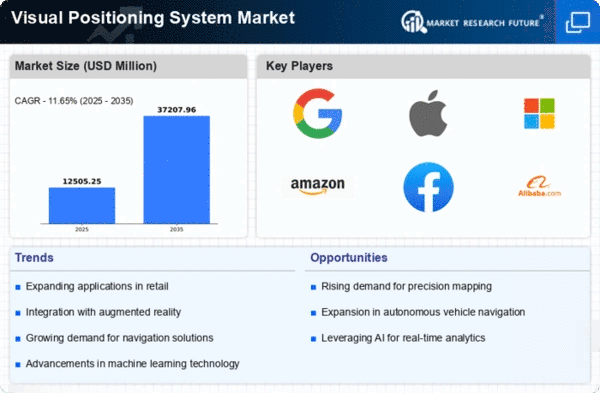
Visual Positioning System Market Infographic
Purchase Options

Visual Positioning System Size

Visual Positioning System Market Growth Projections and Opportunities

The visual positioning system (VPS) market is experiencing dynamic shifts driven by technological advancements and increasing demand across various industries. VPS, a cutting-edge technology, utilizes computer vision, machine learning, and sensor fusion to provide precise location information by analyzing visual data from cameras. One of the key drivers of market growth is the rapid proliferation of smartphones equipped with advanced camera capabilities, enabling the integration of VPS functionalities into mobile applications. This integration has opened up new avenues for location-based services, such as augmented reality navigation, indoor mapping, and location-based advertising, thereby expanding the market potential.

Furthermore, the adoption of VPS technology is gaining momentum in sectors like retail, logistics, and automotive. In retail, VPS enhances the shopping experience by providing personalized recommendations, indoor navigation assistance, and seamless checkout processes. Retailers are leveraging VPS to track customer movements within stores, optimize product placements, and analyze consumer behavior patterns, leading to improved operational efficiency and increased sales. Similarly, logistics companies are deploying VPS solutions to optimize warehouse management, track inventory in real-time, and streamline last-mile delivery operations, thereby reducing costs and enhancing customer satisfaction.

In the automotive industry, VPS is revolutionizing autonomous driving systems by enabling vehicles to accurately perceive and navigate complex urban environments. VPS enhances the perception capabilities of autonomous vehicles by providing precise localization and mapping data, facilitating safe and efficient navigation in challenging scenarios such as crowded streets, parking lots, and construction zones. Moreover, VPS technology plays a crucial role in advanced driver assistance systems (ADAS), enhancing collision avoidance, pedestrian detection, and lane-keeping functionalities, thereby improving overall road safety.

The competitive landscape of the VPS market is characterized by intense rivalry among key players striving to innovate and differentiate their offerings. Established technology giants, startups, and automotive manufacturers are investing heavily in research and development to enhance the accuracy, reliability, and scalability of VPS solutions. Additionally, strategic partnerships, collaborations, and mergers & acquisitions are prevalent in the market as companies seek to expand their product portfolios, enter new markets, and gain a competitive edge.

Moreover, government initiatives promoting the adoption of VPS technology, stringent regulations related to safety and compliance, and increasing consumer awareness about the benefits of location-based services are further driving market growth. However, challenges such as privacy concerns, data security risks, and technical limitations related to environmental factors such as lighting conditions and occlusions pose significant hurdles to widespread adoption."
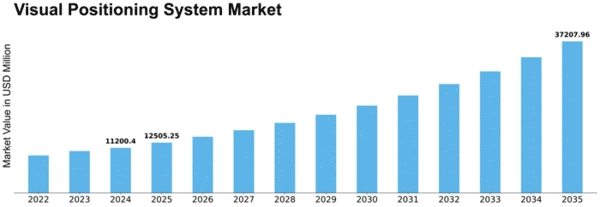
Visual Positioning System Market Size Graph
Author
Aarti Dhapte
AVP - Research

A consulting professional focused on helping businesses navigate complex markets through structured research and strategic insights. I partner with clients to solve high-impact business problems across market entry strategy, competitive intelligence, and opportunity assessment. Over the course of my experience, I have led and contributed to 100+ market research and consulting engagements, delivering insights across multiple industries and geographies, and supporting strategic decisions linked to $500M+ market opportunities. My core expertise lies in building robust market sizing, forecasting, and commercial models (top-down and bottom-up), alongside deep-dive competitive and industry analysis. I have played a key role in shaping go-to-market strategies, investment cases, and growth roadmaps, enabling clients to make confident, data-backed decisions in dynamic markets.

Leave a Comment

FAQs

What is the current valuation of the visual positioning system market as of 2024?

<p>The visual positioning system market was valued at 3.5 USD Billion in 2024.</p>

What is the projected market size for the visual positioning system market in 2035?

<p>The market is projected to reach 10.2 USD Billion by 2035.</p>

What is the expected CAGR for the visual positioning system market during the forecast period 2025 - 2035?

<p>The expected CAGR for the visual positioning system market during 2025 - 2035 is 10.21%.</p>

Which companies are considered key players in the visual positioning system market?

<p>Key players in the market include Google, Apple, Microsoft, Amazon, Facebook, Alibaba, Samsung, Sony, NVIDIA, and Qualcomm.</p>

What are the main application segments of the visual positioning system market?

<p>The main application segments include Retail, Logistics, Healthcare, Manufacturing, and Transportation.</p>

How much is the Retail segment projected to grow by 2035?

<p>The Retail segment is projected to grow from 0.9 USD Billion to 2.5 USD Billion by 2035.</p>

What technologies are utilized in the visual positioning system market?

<p>Technologies utilized include Camera-based Systems, Infrared Systems, Ultrasonic Systems, LiDAR Systems, and Hybrid Systems.</p>

What is the projected growth for Camera-based Systems by 2035?

<p>Camera-based Systems are expected to grow from 1.4 USD Billion to 4.0 USD Billion by 2035.</p>

Which end-use sectors are driving the visual positioning system market?

<p>Driving end-use sectors include Consumer Electronics, Automotive, Aerospace, Industrial, and Smart Cities.</p>

What is the expected growth for the Automotive sector in the visual positioning system market by 2035?

<p>The Automotive sector is projected to grow from 0.9 USD Billion to 2.5 USD Billion by 2035.</p>

Market Summary

As per Market Research Future analysis, the Visual Positioning System Market Size was estimated at 11200.4 USD Million in 2024. The Visual Positioning System industry is projected to grow from USD 12360.86 Million in 2025 to USD 37207.96 Million by 2035, exhibiting a compound annual growth rate (CAGR) of 11.65% during the forecast period 2025 - 2035

Key Market Trends & Highlights

The Visual Positioning System Market is poised for substantial growth driven by technological advancements and increasing demand across various sectors.

  • The market is experiencing a notable integration with Augmented Reality, enhancing user experiences and applications. There is an increased focus on automation, particularly in the automotive segment, which is the largest within the market. Expansion into smart cities is becoming a prominent trend, particularly in North America, which remains the largest market. Rising demand for navigation solutions and advancements in computer vision technology are key drivers propelling market growth.

Market Size & Forecast

2024 Market Size 11200.4 (USD Million)
2035 Market Size 37207.96 (USD Million)
CAGR (2025 - 2035) 11.65%
Largest Regional Market Share in 2024 North America

Major Players

<a href="https://cloud.google.com/blog/products/ai-machine-learning/gemini-3-flash-for-enterprises">Google</a> (US), Apple (US), Microsoft (US), Amazon (US), Facebook (US), Alibaba (CN), Samsung (KR), <a href="https://www.sony.com/en/SonyInfo/blog/2025/12/05/">Sony </a>(JP), NVIDIA (US)

Market Trends

The Visual Positioning System Market is currently experiencing a transformative phase, driven by advancements in technology and increasing demand for precise location-based services. This market encompasses a range of applications, including augmented reality, robotics, and navigation systems, which are becoming integral to various industries. As organizations seek to enhance operational efficiency and improve user experiences, the adoption of visual positioning systems is likely to accelerate. Furthermore, the integration of artificial intelligence and machine learning into these systems appears to enhance their capabilities, making them more adaptable and efficient in real-time environments. In December 2025, the Visual Positioning System Market is characterized by a growing emphasis on user-centric solutions. Companies are increasingly focusing on developing systems that not only provide accurate positioning but also offer seamless integration with existing technologies. This trend suggests a shift towards more collaborative and interactive applications, where users can engage with their surroundings in innovative ways. As the market evolves, it may witness the emergence of new players and technologies, further diversifying the landscape and expanding the potential for growth across various sectors.

Integration with Augmented Reality

The Visual Positioning System Market is witnessing a notable trend towards the integration of augmented reality (AR) technologies. This convergence allows for enhanced user experiences, as AR applications leverage visual positioning to provide contextual information in real-time. Such developments are likely to transform industries like retail and tourism, where interactive experiences can significantly enhance customer engagement.

Increased Focus on Automation

Another emerging trend within the Visual Positioning System Market is the heightened focus on automation. As industries strive for greater efficiency, visual positioning systems are being utilized to automate processes in logistics, manufacturing, and transportation. This shift not only streamlines operations but also reduces human error, thereby improving overall productivity.

Expansion into Smart Cities

The Visual Positioning System Market is also expanding its reach into the realm of smart cities. Urban planners and developers are increasingly incorporating visual positioning technologies to enhance navigation, traffic management, and public safety. This trend indicates a growing recognition of the potential for these systems to contribute to more efficient and sustainable urban environments.

Visual Positioning System Market Market Drivers

Technological Advancements

The Global Visual Positioning System Market Industry is experiencing rapid technological advancements, particularly in artificial intelligence and machine learning. These innovations enhance the accuracy and efficiency of visual positioning systems, enabling applications in various sectors such as retail, logistics, and autonomous vehicles. For instance, AI algorithms can process visual data in real-time, allowing for precise navigation and location tracking. As a result, the market is projected to reach 11.4 USD Billion in 2024, reflecting a growing demand for sophisticated positioning solutions that leverage cutting-edge technology.

Increased Adoption in Retail

The Global Visual Positioning System Market Industry is witnessing increased adoption in the retail sector, driven by the need for enhanced customer experiences. Retailers are utilizing visual positioning systems to provide personalized shopping experiences, such as augmented reality applications that guide customers through stores. This trend is supported by the growing emphasis on customer engagement and satisfaction. As retailers invest in these technologies, the market is expected to grow significantly, with projections indicating a rise to 38.2 USD Billion by 2035, underscoring the potential of visual positioning systems in transforming retail environments.

Integration with IoT Devices

The Global Visual Positioning System Market Industry is benefiting from the integration of visual positioning systems with Internet of Things (IoT) devices. This convergence allows for enhanced data collection and analysis, enabling businesses to optimize operations and improve decision-making processes. For example, IoT-enabled visual positioning systems can provide real-time insights into asset locations and movements, which is particularly valuable in logistics and supply chain management. As organizations increasingly adopt IoT technologies, the demand for integrated visual positioning solutions is expected to rise, further driving market growth.

Growth in Autonomous Vehicles

The Global Visual Positioning System Market Industry is significantly influenced by the growth of autonomous vehicles. As the automotive sector increasingly integrates visual positioning systems for navigation and obstacle detection, the demand for these technologies is likely to surge. Companies are investing heavily in research and development to enhance the capabilities of visual positioning systems in self-driving cars. This trend aligns with the broader shift towards automation in transportation, suggesting a robust market trajectory. The anticipated compound annual growth rate of 11.64% from 2025 to 2035 indicates the potential for substantial growth in this segment.

Urbanization and Smart Cities

The Global Visual Positioning System Market Industry is also propelled by urbanization and the development of smart cities. As urban areas expand, the need for efficient navigation and location-based services becomes increasingly critical. Visual positioning systems play a vital role in smart city initiatives, facilitating traffic management, public safety, and infrastructure development. Governments are investing in these technologies to enhance urban living conditions and improve service delivery. This growing focus on smart city solutions is likely to contribute to the market's expansion, with significant investments expected in the coming years.

Market Segment Insights

By Application: Retail (Largest) vs. Logistics (Fastest-Growing)

<p>In the visual positioning system market, the application segment shows a varied distribution with retail capturing the largest share. Retail uses visual positioning systems to enhance customer experiences and streamline inventory management, leading to significant adoption. Following closely, logistics represents the fastest-growing area as businesses increasingly rely on these technologies to optimize supply chains and improve tracking efficiencies. Other applications such as healthcare, manufacturing, and transportation also contribute to market dynamics, but at slower growth rates.</p>

<p>Logistics: Efficient Tracking (Dominant) vs. Healthcare: Patient Management (Emerging)</p>

<p>In logistics, visual positioning systems are pivotal for efficient tracking and management of assets. These systems facilitate real-time location data, improving supply chain visibility and operational efficiency. The dominant position in logistics is propelled by the demand for automation and accuracy in inventory management. In contrast, the healthcare sector represents an emerging application. Here, visual positioning systems aid in patient management, ensuring safety and resource allocation within healthcare facilities. Although growing, healthcare lags behind logistics due to regulatory hurdles and integration challenges with existing systems.</p>

By Technology: Camera-based Systems (Largest) vs. LiDAR Systems (Fastest-Growing)

<p>The visual positioning system market demonstrates a diverse technology landscape, where camera-based systems hold a substantial market share, driven by their widespread adoption in various applications. Infrared systems and ultrasonic systems also contribute to this market, but their presence is not as dominant. LiDAR systems, known for their precision in real-time positioning, are becoming increasingly popular, particularly in autonomous vehicles and smart city applications. Hybrid systems are also emerging, providing a blend of technologies to enhance overall functionality and performance. Growth trends in this segment are significantly influenced by advancements in technology and increasing demand for automation across industries. The automotive and robotics sectors are key drivers for the adoption of LiDAR systems, as they enhance navigation and safety features. Meanwhile, camera-based systems continue to thrive in surveillance and augmented reality applications, ensuring their dominance. As industries evolve, the integration of these technologies is likely to accelerate, highlighting their potential in various market segments.</p>

<p>Camera-based Systems: Dominant vs. LiDAR Systems: Emerging</p>

<p>Camera-based systems are currently the dominant technology in the visual positioning system market, widely recognized for their versatility in applications such as security monitoring, inventory management, and robotics. Their ability to capture detailed images and process visual data in real-time positions them advantageously, making them a preferred choice for many sectors. On the other hand, LiDAR systems are emerging rapidly, known for their accuracy and efficiency in measuring distances using laser light. This technology is particularly favored in land surveying and autonomous driving due to its ability to create detailed 3D maps and navigate complex environments. While camera systems excel in visual recognition tasks, LiDAR systems are revolutionizing mapping and positioning, indicating a dynamic interaction between these technologies in the market.</p>

By End Use: Consumer Electronics (Largest) vs. Automotive (Fastest-Growing)

<p>The visual positioning system market has seen significant distribution across various end-use segments, with Consumer Electronics holding the largest share. This sector's demand is driven by the integration of advanced technologies in personal gadgets such as smartphones, tablets, and wearable devices. As technology advances, the need for enhanced positioning systems in this sector has evolved, leading to steady market presence and growth. On the other hand, the Automotive segment is emerging as the fastest-growing category. The demand for advanced driver-assistance systems (ADAS) and autonomous vehicles propels growth in this area, driven by technological advancements and increasing consumer safety standards. The shift toward smart transportation solutions is expected to further boost the automotive sector's significance in the visual positioning system market.</p>

<p>Consumer Electronics: Dominant vs. Automotive: Emerging</p>

<p>Within the visual positioning system market, the Consumer Electronics segment stands out as a dominant player. The continuous innovation in devices such as smartphones, drones, and smart wearables necessitates precise positioning technologies, making it a critical component for manufacturers. This segment's strong market position is characterized by high consumer demand for features such as location-based services, augmented reality applications, and seamless navigation systems. Conversely, the Automotive segment, deemed emerging, is rapidly evolving due to the rise of autonomous vehicles and smart city initiatives. The increasing integration of visual positioning systems in vehicles for navigation, traffic management, and enhanced safety features marks its growth trajectory. This sector is expected to capitalize on technological advancements, leading to transformative impacts on transportation.</p>

By Deployment Type: Cloud-Based (Largest) vs. Hybrid (Fastest-Growing)

In the Visual Positioning System Market, the distribution of segments by deployment type indicates a notable dominance of cloud-based solutions, which leverage the flexibility and scalability of the cloud. On-premises systems are gradually being overshadowed due to their higher maintenance costs and limited scalability. Hybrid models, although currently smaller in share, are gaining traction as businesses seek to combine the benefits of both on-premises and cloud-based systems, thus catering to unique operational needs.

Deployment Type: Cloud-Based (Dominant) vs. Hybrid (Emerging)

Cloud-based visual positioning systems have established themselves as the dominant force in the market, offering enhanced flexibility, lower upfront costs, and the ability to integrate advanced analytics capabilities. Their ability to facilitate real-time updates and remote access is appealing for many organizations. Conversely, hybrid models are emerging as key players by allowing companies to maintain some traditional on-premises infrastructure while also taking advantage of cloud benefits. This convergence appeals particularly to those managing sensitive information or requiring high computational power. The adaptability of hybrid solutions makes them increasingly attractive, as they cater to diverse organizational needs.

By Component: Hardware (Largest) vs. Software (Fastest-Growing)

The Visual Positioning System Market exhibits a diverse distribution across its component segments. Hardware holds the largest market share, driven by the continuous demand for advanced positioning technologies. This segment includes essential components such as cameras, sensors, and processing units that provide the fundamental infrastructure needed for visual positioning solutions. On the other hand, Software is emerging as a fast-growing segment, propelling rapid innovation, particularly in areas such as AI-driven algorithms and image processing capabilities that enhance accuracy and usability.

Hardware: Cameras (Dominant) vs. Software: AI Algorithms (Emerging)

In the Visual Positioning System Market, Hardware, specifically cameras, remains the dominant force. Cameras are integral to capturing high-resolution images and data, which is vital for positioning accuracy in various applications like navigation and robotics. As technology advances, the quality and efficiency of cameras have substantially improved, reinforcing their market dominance. In contrast, AI Algorithms in the software segment are rapidly emerging as a transformative force. These cutting-edge algorithms enhance image analysis and decision-making processes, paving the way for smarter visual positioning systems. Their growing adoption across sectors such as retail and logistics exemplifies their potential and signifies a shift towards intelligent and automated solutions.

Get more detailed insights about Visual Positioning System Market Research Report—Global Forecast till 2035

Regional Insights

North America : Innovation and Market Leadership

North America continues to lead the Visual Positioning System market, holding a significant share of 5600.0. The region's growth is driven by rapid technological advancements, increasing demand for augmented reality (AR) applications, and supportive regulatory frameworks. Companies are investing heavily in R&D to enhance their offerings, which is further fueled by a robust consumer base eager for innovative solutions. The presence of major tech firms accelerates market expansion, making it a hub for cutting-edge developments. The competitive landscape in North America is characterized by key players such as Google, Apple, and Microsoft, who are at the forefront of innovation. These companies are leveraging their technological expertise to create advanced visual positioning solutions. The market is also witnessing collaborations and partnerships aimed at enhancing product capabilities. As a result, North America is not only a leader in market size but also in technological advancements, setting trends that influence global markets.

Europe : Emerging Market with Growth Potential

Europe is witnessing a significant rise in the Visual Positioning System market, with a market size of 3200.0. The growth is attributed to increasing investments in smart city initiatives and the integration of AR technologies in various sectors. Regulatory support for digital transformation and sustainability is also a key driver, as governments encourage innovation to enhance urban living. The region's focus on data privacy and security further shapes the market landscape, ensuring consumer trust and compliance with regulations. Leading countries such as Germany, France, and the UK are at the forefront of this growth, with numerous startups and established firms innovating in the visual positioning space. The competitive landscape is vibrant, with companies like Alibaba and Samsung making significant inroads. The presence of a skilled workforce and strong research institutions enhances the region's capabilities, positioning Europe as a competitive player in the global market. "The European market is poised for substantial growth as we embrace digital transformation across industries."

Asia-Pacific : Rapid Growth and Adoption

The Asia-Pacific region is experiencing rapid growth in the Visual Positioning System market, with a size of 2400.0. This growth is driven by increasing smartphone penetration, urbanization, and a rising demand for AR applications in retail and entertainment. Governments are also promoting digital initiatives, which serve as catalysts for market expansion. The region's diverse consumer base is eager for innovative solutions, further propelling demand for visual positioning technologies. Countries like China, Japan, and South Korea are leading the charge, with major tech companies such as Sony and Alibaba investing heavily in this space. The competitive landscape is marked by a mix of established players and emerging startups, fostering innovation and collaboration. As the region continues to embrace digital transformation, the Visual Positioning System market is expected to flourish, making Asia-Pacific a key player in the global arena.

Middle East and Africa : Emerging Market with Untapped Potential

The Middle East and Africa (MEA) region is gradually emerging in the Visual Positioning System market, with a market size of 1000.4. The growth is primarily driven by increasing investments in technology and infrastructure, as well as a growing interest in smart city projects. Governments are recognizing the importance of digital solutions, which is leading to supportive policies and initiatives aimed at fostering innovation. The region's unique challenges also present opportunities for tailored visual positioning solutions. Countries like the UAE and South Africa are taking the lead in adopting these technologies, with various initiatives aimed at enhancing urban living. The competitive landscape is still developing, with both local and international players vying for market share. As the region continues to invest in technology and infrastructure, the Visual Positioning System market is expected to gain momentum, offering significant growth opportunities. "The MEA region is on the brink of a technological revolution, with visual positioning systems playing a crucial role in urban development."

Key Players and Competitive Insights

The Visual Positioning System Market is currently characterized by a dynamic competitive landscape, driven by rapid technological advancements and increasing demand for location-based services. Key players such as Google (US), Apple (US), and Amazon (US) are at the forefront, leveraging their extensive resources to innovate and expand their offerings. Google (US) focuses on enhancing its mapping services through advanced AI algorithms, while Apple (US) emphasizes user privacy and seamless integration across its ecosystem. Amazon (US), on the other hand, is exploring applications of visual positioning in logistics and retail, indicating a strategic pivot towards operational efficiency and customer experience. Collectively, these strategies contribute to a competitive environment that is increasingly centered around technological innovation and user-centric solutions. In terms of business tactics, companies are increasingly localizing manufacturing and optimizing supply chains to enhance responsiveness to market demands. The competitive structure of the Visual Positioning System Market appears moderately fragmented, with several players vying for market share. However, the influence of major companies is substantial, as they set industry standards and drive technological advancements that smaller firms often follow. In November 2025, Google (US) announced the launch of its new visual positioning technology aimed at improving augmented reality experiences in urban environments. This strategic move is significant as it not only enhances user engagement but also positions Google (US) as a leader in the integration of AR with real-world navigation, potentially reshaping how consumers interact with their surroundings. In October 2025, Apple (US) unveiled a partnership with several urban planners to integrate its visual positioning system into smart city initiatives. This collaboration is crucial as it aligns with Apple's commitment to sustainability and urban innovation, suggesting a long-term strategy to embed its technology within the infrastructure of future cities, thereby expanding its market reach and influence. In September 2025, Amazon (US) launched a pilot program utilizing visual positioning systems in its warehouses to streamline inventory management. This initiative is indicative of Amazon's focus on operational efficiency and could lead to significant cost savings and improved service delivery, reinforcing its competitive edge in the logistics sector. As of December 2025, the competitive trends in the Visual Positioning System Market are increasingly defined by digitalization, sustainability, and the integration of AI technologies. Strategic alliances among key players are shaping the landscape, fostering innovation and collaborative solutions. Looking ahead, it is likely that competitive differentiation will evolve from traditional price-based strategies to a focus on technological innovation, reliability in supply chains, and enhanced user experiences, marking a pivotal shift in how companies compete in this burgeoning market.

Key Companies in the Visual Positioning System Market include

Industry Developments

  • Q1 2024: ABB acquires Sevensense to expand its autonomous mobile robot offering ABB announced the acquisition of Sevensense, a Swiss startup specializing in AI-driven 3D visual navigation technology for autonomous mobile robots (AMRs), aiming to enhance its robotics portfolio with advanced visual positioning capabilities.[3]

Future Outlook

Visual Positioning System Market Future Outlook

The Visual Positioning System Market is projected to grow at 11.65% CAGR from 2025 to 2035, driven by advancements in AI, increased demand for automation, and enhanced navigation technologies.

New opportunities lie in:

  • <p>Integration of visual positioning with augmented reality applications Development of customized solutions for logistics and supply chain management Expansion into emerging markets with tailored pricing strategies</p>

By 2035, the Visual Positioning System Market is expected to achieve substantial growth and innovation.

Market Segmentation

Visual Positioning System Market End Use Outlook

  • Automotive
  • Aerospace
  • Consumer Electronics
  • Healthcare
  • Industrial

Visual Positioning System Market Component Outlook

  • Hardware
  • Software
  • Services

Visual Positioning System Market Technology Outlook

  • Computer Vision
  • Artificial Intelligence
  • Machine Learning
  • Sensor Fusion
  • Cloud Computing

Visual Positioning System Market Application Outlook

  • Augmented Reality
  • Navigation
  • Robotics
  • Retail
  • Gaming

Visual Positioning System Market Deployment Type Outlook

  • On-Premises
  • Cloud-Based
  • Hybrid

Report Scope

MARKET SIZE 2024 11200.4(USD Million)
MARKET SIZE 2025 12360.86(USD Million)
MARKET SIZE 2035 37207.96(USD Million)
COMPOUND ANNUAL GROWTH RATE (CAGR) 11.65% (2025 - 2035)
REPORT COVERAGE Revenue Forecast, Competitive Landscape, Growth Factors, and Trends
BASE YEAR 2024
Market Forecast Period 2025 - 2035
Historical Data 2019 - 2024
Market Forecast Units USD Million
Key Companies Profiled Google (US), Apple (US), Microsoft (US), Amazon (US), Facebook (US), Alibaba (CN), Samsung (KR), Sony (JP), NVIDIA (US)
Segments Covered Application, End Use, Technology, Deployment Type, Component
Key Market Opportunities Integration of artificial intelligence enhances accuracy and efficiency in the Visual Positioning System Market.
Key Market Dynamics Rising demand for augmented reality applications drives innovation and competition in the Visual Positioning System market.
Countries Covered North America, Europe, APAC, South America, MEA

FAQs

What is the current valuation of the visual positioning system market as of 2024?

<p>The visual positioning system market was valued at 3.5 USD Billion in 2024.</p>

What is the projected market size for the visual positioning system market in 2035?

<p>The market is projected to reach 10.2 USD Billion by 2035.</p>

What is the expected CAGR for the visual positioning system market during the forecast period 2025 - 2035?

<p>The expected CAGR for the visual positioning system market during 2025 - 2035 is 10.21%.</p>

Which companies are considered key players in the visual positioning system market?

<p>Key players in the market include Google, Apple, Microsoft, Amazon, Facebook, Alibaba, Samsung, Sony, NVIDIA, and Qualcomm.</p>

What are the main application segments of the visual positioning system market?

<p>The main application segments include Retail, Logistics, Healthcare, Manufacturing, and Transportation.</p>

How much is the Retail segment projected to grow by 2035?

<p>The Retail segment is projected to grow from 0.9 USD Billion to 2.5 USD Billion by 2035.</p>

What technologies are utilized in the visual positioning system market?

<p>Technologies utilized include Camera-based Systems, Infrared Systems, Ultrasonic Systems, LiDAR Systems, and Hybrid Systems.</p>

What is the projected growth for Camera-based Systems by 2035?

<p>Camera-based Systems are expected to grow from 1.4 USD Billion to 4.0 USD Billion by 2035.</p>

Which end-use sectors are driving the visual positioning system market?

<p>Driving end-use sectors include Consumer Electronics, Automotive, Aerospace, Industrial, and Smart Cities.</p>

What is the expected growth for the Automotive sector in the visual positioning system market by 2035?

<p>The Automotive sector is projected to grow from 0.9 USD Billion to 2.5 USD Billion by 2035.</p>

  1. SECTION I: EXECUTIVE SUMMARY AND KEY HIGHLIGHTS
    1. | 1.1 EXECUTIVE SUMMARY
    2. | | 1.1.1 Market Overview
    3. | | 1.1.2 Key Findings
    4. | | 1.1.3 Market Segmentation
    5. | | 1.1.4 Competitive Landscape
    6. | | 1.1.5 Challenges and Opportunities
    7. | | 1.1.6 Future Outlook
  2. SECTION II: SCOPING, METHODOLOGY AND MARKET STRUCTURE
    1. | 2.1 MARKET INTRODUCTION
    2. | | 2.1.1 Definition
    3. | | 2.1.2 Scope of the study
    4. | | | 2.1.2.1 Research Objective
    5. | | | 2.1.2.2 Assumption
    6. | | | 2.1.2.3 Limitations
    7. | 2.2 RESEARCH METHODOLOGY
    8. | | 2.2.1 Overview
    9. | | 2.2.2 Data Mining
    10. | | 2.2.3 Secondary Research
    11. | | 2.2.4 Primary Research
    12. | | | 2.2.4.1 Primary Interviews and Information Gathering Process
    13. | | | 2.2.4.2 Breakdown of Primary Respondents
    14. | | 2.2.5 Forecasting Model
    15. | | 2.2.6 Market Size Estimation
    16. | | | 2.2.6.1 Bottom-Up Approach
    17. | | | 2.2.6.2 Top-Down Approach
    18. | | 2.2.7 Data Triangulation
    19. | | 2.2.8 Validation
  3. SECTION III: QUALITATIVE ANALYSIS
    1. | 3.1 MARKET DYNAMICS
    2. | | 3.1.1 Overview
    3. | | 3.1.2 Drivers
    4. | | 3.1.3 Restraints
    5. | | 3.1.4 Opportunities
    6. | 3.2 MARKET FACTOR ANALYSIS
    7. | | 3.2.1 Value chain Analysis
    8. | | 3.2.2 Porter's Five Forces Analysis
    9. | | | 3.2.2.1 Bargaining Power of Suppliers
    10. | | | 3.2.2.2 Bargaining Power of Buyers
    11. | | | 3.2.2.3 Threat of New Entrants
    12. | | | 3.2.2.4 Threat of Substitutes
    13. | | | 3.2.2.5 Intensity of Rivalry
    14. | | 3.2.3 COVID-19 Impact Analysis
    15. | | | 3.2.3.1 Market Impact Analysis
    16. | | | 3.2.3.2 Regional Impact
    17. | | | 3.2.3.3 Opportunity and Threat Analysis
  4. SECTION IV: QUANTITATIVE ANALYSIS
    1. | 4.1 Information and Communications Technology, BY Application (USD Billion)
    2. | | 4.1.1 Retail
    3. | | 4.1.2 Logistics
    4. | | 4.1.3 Healthcare
    5. | | 4.1.4 Manufacturing
    6. | | 4.1.5 Transportation
    7. | 4.2 Information and Communications Technology, BY Technology (USD Billion)
    8. | | 4.2.1 Camera-based Systems
    9. | | 4.2.2 Infrared Systems
    10. | | 4.2.3 Ultrasonic Systems
    11. | | 4.2.4 LiDAR Systems
    12. | | 4.2.5 Hybrid Systems
    13. | 4.3 Information and Communications Technology, BY End Use (USD Billion)
    14. | | 4.3.1 Consumer Electronics
    15. | | 4.3.2 Automotive
    16. | | 4.3.3 Aerospace
    17. | | 4.3.4 Industrial
    18. | | 4.3.5 Smart Cities
    19. | 4.4 Information and Communications Technology, BY Region (USD Billion)
    20. | | 4.4.1 North America
    21. | | | 4.4.1.1 US
    22. | | | 4.4.1.2 Canada
    23. | | 4.4.2 Europe
    24. | | | 4.4.2.1 Germany
    25. | | | 4.4.2.2 UK
    26. | | | 4.4.2.3 France
    27. | | | 4.4.2.4 Russia
    28. | | | 4.4.2.5 Italy
    29. | | | 4.4.2.6 Spain
    30. | | | 4.4.2.7 Rest of Europe
    31. | | 4.4.3 APAC
    32. | | | 4.4.3.1 China
    33. | | | 4.4.3.2 India
    34. | | | 4.4.3.3 Japan
    35. | | | 4.4.3.4 South Korea
    36. | | | 4.4.3.5 Malaysia
    37. | | | 4.4.3.6 Thailand
    38. | | | 4.4.3.7 Indonesia
    39. | | | 4.4.3.8 Rest of APAC
    40. | | 4.4.4 South America
    41. | | | 4.4.4.1 Brazil
    42. | | | 4.4.4.2 Mexico
    43. | | | 4.4.4.3 Argentina
    44. | | | 4.4.4.4 Rest of South America
    45. | | 4.4.5 MEA
    46. | | | 4.4.5.1 GCC Countries
    47. | | | 4.4.5.2 South Africa
    48. | | | 4.4.5.3 Rest of MEA
  5. SECTION V: COMPETITIVE ANALYSIS
    1. | 5.1 Competitive Landscape
    2. | | 5.1.1 Overview
    3. | | 5.1.2 Competitive Analysis
    4. | | 5.1.3 Market share Analysis
    5. | | 5.1.4 Major Growth Strategy in the Information and Communications Technology
    6. | | 5.1.5 Competitive Benchmarking
    7. | | 5.1.6 Leading Players in Terms of Number of Developments in the Information and Communications Technology
    8. | | 5.1.7 Key developments and growth strategies
    9. | | | 5.1.7.1 New Product Launch/Service Deployment
    10. | | | 5.1.7.2 Merger & Acquisitions
    11. | | | 5.1.7.3 Joint Ventures
    12. | | 5.1.8 Major Players Financial Matrix
    13. | | | 5.1.8.1 Sales and Operating Income
    14. | | | 5.1.8.2 Major Players R&D Expenditure. 2023
    15. | 5.2 Company Profiles
    16. | | 5.2.1 Google (US)
    17. | | | 5.2.1.1 Financial Overview
    18. | | | 5.2.1.2 Products Offered
    19. | | | 5.2.1.3 Key Developments
    20. | | | 5.2.1.4 SWOT Analysis
    21. | | | 5.2.1.5 Key Strategies
    22. | | 5.2.2 Apple (US)
    23. | | | 5.2.2.1 Financial Overview
    24. | | | 5.2.2.2 Products Offered
    25. | | | 5.2.2.3 Key Developments
    26. | | | 5.2.2.4 SWOT Analysis
    27. | | | 5.2.2.5 Key Strategies
    28. | | 5.2.3 Microsoft (US)
    29. | | | 5.2.3.1 Financial Overview
    30. | | | 5.2.3.2 Products Offered
    31. | | | 5.2.3.3 Key Developments
    32. | | | 5.2.3.4 SWOT Analysis
    33. | | | 5.2.3.5 Key Strategies
    34. | | 5.2.4 Amazon (US)
    35. | | | 5.2.4.1 Financial Overview
    36. | | | 5.2.4.2 Products Offered
    37. | | | 5.2.4.3 Key Developments
    38. | | | 5.2.4.4 SWOT Analysis
    39. | | | 5.2.4.5 Key Strategies
    40. | | 5.2.5 Facebook (US)
    41. | | | 5.2.5.1 Financial Overview
    42. | | | 5.2.5.2 Products Offered
    43. | | | 5.2.5.3 Key Developments
    44. | | | 5.2.5.4 SWOT Analysis
    45. | | | 5.2.5.5 Key Strategies
    46. | | 5.2.6 Alibaba (CN)
    47. | | | 5.2.6.1 Financial Overview
    48. | | | 5.2.6.2 Products Offered
    49. | | | 5.2.6.3 Key Developments
    50. | | | 5.2.6.4 SWOT Analysis
    51. | | | 5.2.6.5 Key Strategies
    52. | | 5.2.7 Samsung (KR)
    53. | | | 5.2.7.1 Financial Overview
    54. | | | 5.2.7.2 Products Offered
    55. | | | 5.2.7.3 Key Developments
    56. | | | 5.2.7.4 SWOT Analysis
    57. | | | 5.2.7.5 Key Strategies
    58. | | 5.2.8 Sony (JP)
    59. | | | 5.2.8.1 Financial Overview
    60. | | | 5.2.8.2 Products Offered
    61. | | | 5.2.8.3 Key Developments
    62. | | | 5.2.8.4 SWOT Analysis
    63. | | | 5.2.8.5 Key Strategies
    64. | | 5.2.9 NVIDIA (US)
    65. | | | 5.2.9.1 Financial Overview
    66. | | | 5.2.9.2 Products Offered
    67. | | | 5.2.9.3 Key Developments
    68. | | | 5.2.9.4 SWOT Analysis
    69. | | | 5.2.9.5 Key Strategies
    70. | | 5.2.10 Qualcomm (US)
    71. | | | 5.2.10.1 Financial Overview
    72. | | | 5.2.10.2 Products Offered
    73. | | | 5.2.10.3 Key Developments
    74. | | | 5.2.10.4 SWOT Analysis
    75. | | | 5.2.10.5 Key Strategies
    76. | 5.3 Appendix
    77. | | 5.3.1 References
    78. | | 5.3.2 Related Reports
  6. LIST OF FIGURES
    1. | 6.1 MARKET SYNOPSIS
    2. | 6.2 NORTH AMERICA MARKET ANALYSIS
    3. | 6.3 US MARKET ANALYSIS BY APPLICATION
    4. | 6.4 US MARKET ANALYSIS BY TECHNOLOGY
    5. | 6.5 US MARKET ANALYSIS BY END USE
    6. | 6.6 CANADA MARKET ANALYSIS BY APPLICATION
    7. | 6.7 CANADA MARKET ANALYSIS BY TECHNOLOGY
    8. | 6.8 CANADA MARKET ANALYSIS BY END USE
    9. | 6.9 EUROPE MARKET ANALYSIS
    10. | 6.10 GERMANY MARKET ANALYSIS BY APPLICATION
    11. | 6.11 GERMANY MARKET ANALYSIS BY TECHNOLOGY
    12. | 6.12 GERMANY MARKET ANALYSIS BY END USE
    13. | 6.13 UK MARKET ANALYSIS BY APPLICATION
    14. | 6.14 UK MARKET ANALYSIS BY TECHNOLOGY
    15. | 6.15 UK MARKET ANALYSIS BY END USE
    16. | 6.16 FRANCE MARKET ANALYSIS BY APPLICATION
    17. | 6.17 FRANCE MARKET ANALYSIS BY TECHNOLOGY
    18. | 6.18 FRANCE MARKET ANALYSIS BY END USE
    19. | 6.19 RUSSIA MARKET ANALYSIS BY APPLICATION
    20. | 6.20 RUSSIA MARKET ANALYSIS BY TECHNOLOGY
    21. | 6.21 RUSSIA MARKET ANALYSIS BY END USE
    22. | 6.22 ITALY MARKET ANALYSIS BY APPLICATION
    23. | 6.23 ITALY MARKET ANALYSIS BY TECHNOLOGY
    24. | 6.24 ITALY MARKET ANALYSIS BY END USE
    25. | 6.25 SPAIN MARKET ANALYSIS BY APPLICATION
    26. | 6.26 SPAIN MARKET ANALYSIS BY TECHNOLOGY
    27. | 6.27 SPAIN MARKET ANALYSIS BY END USE
    28. | 6.28 REST OF EUROPE MARKET ANALYSIS BY APPLICATION
    29. | 6.29 REST OF EUROPE MARKET ANALYSIS BY TECHNOLOGY
    30. | 6.30 REST OF EUROPE MARKET ANALYSIS BY END USE
    31. | 6.31 APAC MARKET ANALYSIS
    32. | 6.32 CHINA MARKET ANALYSIS BY APPLICATION
    33. | 6.33 CHINA MARKET ANALYSIS BY TECHNOLOGY
    34. | 6.34 CHINA MARKET ANALYSIS BY END USE
    35. | 6.35 INDIA MARKET ANALYSIS BY APPLICATION
    36. | 6.36 INDIA MARKET ANALYSIS BY TECHNOLOGY
    37. | 6.37 INDIA MARKET ANALYSIS BY END USE
    38. | 6.38 JAPAN MARKET ANALYSIS BY APPLICATION
    39. | 6.39 JAPAN MARKET ANALYSIS BY TECHNOLOGY
    40. | 6.40 JAPAN MARKET ANALYSIS BY END USE
    41. | 6.41 SOUTH KOREA MARKET ANALYSIS BY APPLICATION
    42. | 6.42 SOUTH KOREA MARKET ANALYSIS BY TECHNOLOGY
    43. | 6.43 SOUTH KOREA MARKET ANALYSIS BY END USE
    44. | 6.44 MALAYSIA MARKET ANALYSIS BY APPLICATION
    45. | 6.45 MALAYSIA MARKET ANALYSIS BY TECHNOLOGY
    46. | 6.46 MALAYSIA MARKET ANALYSIS BY END USE
    47. | 6.47 THAILAND MARKET ANALYSIS BY APPLICATION
    48. | 6.48 THAILAND MARKET ANALYSIS BY TECHNOLOGY
    49. | 6.49 THAILAND MARKET ANALYSIS BY END USE
    50. | 6.50 INDONESIA MARKET ANALYSIS BY APPLICATION
    51. | 6.51 INDONESIA MARKET ANALYSIS BY TECHNOLOGY
    52. | 6.52 INDONESIA MARKET ANALYSIS BY END USE
    53. | 6.53 REST OF APAC MARKET ANALYSIS BY APPLICATION
    54. | 6.54 REST OF APAC MARKET ANALYSIS BY TECHNOLOGY
    55. | 6.55 REST OF APAC MARKET ANALYSIS BY END USE
    56. | 6.56 SOUTH AMERICA MARKET ANALYSIS
    57. | 6.57 BRAZIL MARKET ANALYSIS BY APPLICATION
    58. | 6.58 BRAZIL MARKET ANALYSIS BY TECHNOLOGY
    59. | 6.59 BRAZIL MARKET ANALYSIS BY END USE
    60. | 6.60 MEXICO MARKET ANALYSIS BY APPLICATION
    61. | 6.61 MEXICO MARKET ANALYSIS BY TECHNOLOGY
    62. | 6.62 MEXICO MARKET ANALYSIS BY END USE
    63. | 6.63 ARGENTINA MARKET ANALYSIS BY APPLICATION
    64. | 6.64 ARGENTINA MARKET ANALYSIS BY TECHNOLOGY
    65. | 6.65 ARGENTINA MARKET ANALYSIS BY END USE
    66. | 6.66 REST OF SOUTH AMERICA MARKET ANALYSIS BY APPLICATION
    67. | 6.67 REST OF SOUTH AMERICA MARKET ANALYSIS BY TECHNOLOGY
    68. | 6.68 REST OF SOUTH AMERICA MARKET ANALYSIS BY END USE
    69. | 6.69 MEA MARKET ANALYSIS
    70. | 6.70 GCC COUNTRIES MARKET ANALYSIS BY APPLICATION
    71. | 6.71 GCC COUNTRIES MARKET ANALYSIS BY TECHNOLOGY
    72. | 6.72 GCC COUNTRIES MARKET ANALYSIS BY END USE
    73. | 6.73 SOUTH AFRICA MARKET ANALYSIS BY APPLICATION
    74. | 6.74 SOUTH AFRICA MARKET ANALYSIS BY TECHNOLOGY
    75. | 6.75 SOUTH AFRICA MARKET ANALYSIS BY END USE
    76. | 6.76 REST OF MEA MARKET ANALYSIS BY APPLICATION
    77. | 6.77 REST OF MEA MARKET ANALYSIS BY TECHNOLOGY
    78. | 6.78 REST OF MEA MARKET ANALYSIS BY END USE
    79. | 6.79 KEY BUYING CRITERIA OF INFORMATION AND COMMUNICATIONS TECHNOLOGY
    80. | 6.80 RESEARCH PROCESS OF MRFR
    81. | 6.81 DRO ANALYSIS OF INFORMATION AND COMMUNICATIONS TECHNOLOGY
    82. | 6.82 DRIVERS IMPACT ANALYSIS: INFORMATION AND COMMUNICATIONS TECHNOLOGY
    83. | 6.83 RESTRAINTS IMPACT ANALYSIS: INFORMATION AND COMMUNICATIONS TECHNOLOGY
    84. | 6.84 SUPPLY / VALUE CHAIN: INFORMATION AND COMMUNICATIONS TECHNOLOGY
    85. | 6.85 INFORMATION AND COMMUNICATIONS TECHNOLOGY, BY APPLICATION, 2024 (% SHARE)
    86. | 6.86 INFORMATION AND COMMUNICATIONS TECHNOLOGY, BY APPLICATION, 2024 TO 2035 (USD Billion)
    87. | 6.87 INFORMATION AND COMMUNICATIONS TECHNOLOGY, BY TECHNOLOGY, 2024 (% SHARE)
    88. | 6.88 INFORMATION AND COMMUNICATIONS TECHNOLOGY, BY TECHNOLOGY, 2024 TO 2035 (USD Billion)
    89. | 6.89 INFORMATION AND COMMUNICATIONS TECHNOLOGY, BY END USE, 2024 (% SHARE)
    90. | 6.90 INFORMATION AND COMMUNICATIONS TECHNOLOGY, BY END USE, 2024 TO 2035 (USD Billion)
    91. | 6.91 BENCHMARKING OF MAJOR COMPETITORS
  7. LIST OF TABLES
    1. | 7.1 LIST OF ASSUMPTIONS
    2. | | 7.1.1
    3. | 7.2 North America MARKET SIZE ESTIMATES; FORECAST
    4. | | 7.2.1 BY APPLICATION, 2025-2035 (USD Billion)
    5. | | 7.2.2 BY TECHNOLOGY, 2025-2035 (USD Billion)
    6. | | 7.2.3 BY END USE, 2025-2035 (USD Billion)
    7. | 7.3 US MARKET SIZE ESTIMATES; FORECAST
    8. | | 7.3.1 BY APPLICATION, 2025-2035 (USD Billion)
    9. | | 7.3.2 BY TECHNOLOGY, 2025-2035 (USD Billion)
    10. | | 7.3.3 BY END USE, 2025-2035 (USD Billion)
    11. | 7.4 Canada MARKET SIZE ESTIMATES; FORECAST
    12. | | 7.4.1 BY APPLICATION, 2025-2035 (USD Billion)
    13. | | 7.4.2 BY TECHNOLOGY, 2025-2035 (USD Billion)
    14. | | 7.4.3 BY END USE, 2025-2035 (USD Billion)
    15. | 7.5 Europe MARKET SIZE ESTIMATES; FORECAST
    16. | | 7.5.1 BY APPLICATION, 2025-2035 (USD Billion)
    17. | | 7.5.2 BY TECHNOLOGY, 2025-2035 (USD Billion)
    18. | | 7.5.3 BY END USE, 2025-2035 (USD Billion)
    19. | 7.6 Germany MARKET SIZE ESTIMATES; FORECAST
    20. | | 7.6.1 BY APPLICATION, 2025-2035 (USD Billion)
    21. | | 7.6.2 BY TECHNOLOGY, 2025-2035 (USD Billion)
    22. | | 7.6.3 BY END USE, 2025-2035 (USD Billion)
    23. | 7.7 UK MARKET SIZE ESTIMATES; FORECAST
    24. | | 7.7.1 BY APPLICATION, 2025-2035 (USD Billion)
    25. | | 7.7.2 BY TECHNOLOGY, 2025-2035 (USD Billion)
    26. | | 7.7.3 BY END USE, 2025-2035 (USD Billion)
    27. | 7.8 France MARKET SIZE ESTIMATES; FORECAST
    28. | | 7.8.1 BY APPLICATION, 2025-2035 (USD Billion)
    29. | | 7.8.2 BY TECHNOLOGY, 2025-2035 (USD Billion)
    30. | | 7.8.3 BY END USE, 2025-2035 (USD Billion)
    31. | 7.9 Russia MARKET SIZE ESTIMATES; FORECAST
    32. | | 7.9.1 BY APPLICATION, 2025-2035 (USD Billion)
    33. | | 7.9.2 BY TECHNOLOGY, 2025-2035 (USD Billion)
    34. | | 7.9.3 BY END USE, 2025-2035 (USD Billion)
    35. | 7.10 Italy MARKET SIZE ESTIMATES; FORECAST
    36. | | 7.10.1 BY APPLICATION, 2025-2035 (USD Billion)
    37. | | 7.10.2 BY TECHNOLOGY, 2025-2035 (USD Billion)
    38. | | 7.10.3 BY END USE, 2025-2035 (USD Billion)
    39. | 7.11 Spain MARKET SIZE ESTIMATES; FORECAST
    40. | | 7.11.1 BY APPLICATION, 2025-2035 (USD Billion)
    41. | | 7.11.2 BY TECHNOLOGY, 2025-2035 (USD Billion)
    42. | | 7.11.3 BY END USE, 2025-2035 (USD Billion)
    43. | 7.12 Rest of Europe MARKET SIZE ESTIMATES; FORECAST
    44. | | 7.12.1 BY APPLICATION, 2025-2035 (USD Billion)
    45. | | 7.12.2 BY TECHNOLOGY, 2025-2035 (USD Billion)
    46. | | 7.12.3 BY END USE, 2025-2035 (USD Billion)
    47. | 7.13 APAC MARKET SIZE ESTIMATES; FORECAST
    48. | | 7.13.1 BY APPLICATION, 2025-2035 (USD Billion)
    49. | | 7.13.2 BY TECHNOLOGY, 2025-2035 (USD Billion)
    50. | | 7.13.3 BY END USE, 2025-2035 (USD Billion)
    51. | 7.14 China MARKET SIZE ESTIMATES; FORECAST
    52. | | 7.14.1 BY APPLICATION, 2025-2035 (USD Billion)
    53. | | 7.14.2 BY TECHNOLOGY, 2025-2035 (USD Billion)
    54. | | 7.14.3 BY END USE, 2025-2035 (USD Billion)
    55. | 7.15 India MARKET SIZE ESTIMATES; FORECAST
    56. | | 7.15.1 BY APPLICATION, 2025-2035 (USD Billion)
    57. | | 7.15.2 BY TECHNOLOGY, 2025-2035 (USD Billion)
    58. | | 7.15.3 BY END USE, 2025-2035 (USD Billion)
    59. | 7.16 Japan MARKET SIZE ESTIMATES; FORECAST
    60. | | 7.16.1 BY APPLICATION, 2025-2035 (USD Billion)
    61. | | 7.16.2 BY TECHNOLOGY, 2025-2035 (USD Billion)
    62. | | 7.16.3 BY END USE, 2025-2035 (USD Billion)
    63. | 7.17 South Korea MARKET SIZE ESTIMATES; FORECAST
    64. | | 7.17.1 BY APPLICATION, 2025-2035 (USD Billion)
    65. | | 7.17.2 BY TECHNOLOGY, 2025-2035 (USD Billion)
    66. | | 7.17.3 BY END USE, 2025-2035 (USD Billion)
    67. | 7.18 Malaysia MARKET SIZE ESTIMATES; FORECAST
    68. | | 7.18.1 BY APPLICATION, 2025-2035 (USD Billion)
    69. | | 7.18.2 BY TECHNOLOGY, 2025-2035 (USD Billion)
    70. | | 7.18.3 BY END USE, 2025-2035 (USD Billion)
    71. | 7.19 Thailand MARKET SIZE ESTIMATES; FORECAST
    72. | | 7.19.1 BY APPLICATION, 2025-2035 (USD Billion)
    73. | | 7.19.2 BY TECHNOLOGY, 2025-2035 (USD Billion)
    74. | | 7.19.3 BY END USE, 2025-2035 (USD Billion)
    75. | 7.20 Indonesia MARKET SIZE ESTIMATES; FORECAST
    76. | | 7.20.1 BY APPLICATION, 2025-2035 (USD Billion)
    77. | | 7.20.2 BY TECHNOLOGY, 2025-2035 (USD Billion)
    78. | | 7.20.3 BY END USE, 2025-2035 (USD Billion)
    79. | 7.21 Rest of APAC MARKET SIZE ESTIMATES; FORECAST
    80. | | 7.21.1 BY APPLICATION, 2025-2035 (USD Billion)
    81. | | 7.21.2 BY TECHNOLOGY, 2025-2035 (USD Billion)
    82. | | 7.21.3 BY END USE, 2025-2035 (USD Billion)
    83. | 7.22 South America MARKET SIZE ESTIMATES; FORECAST
    84. | | 7.22.1 BY APPLICATION, 2025-2035 (USD Billion)
    85. | | 7.22.2 BY TECHNOLOGY, 2025-2035 (USD Billion)
    86. | | 7.22.3 BY END USE, 2025-2035 (USD Billion)
    87. | 7.23 Brazil MARKET SIZE ESTIMATES; FORECAST
    88. | | 7.23.1 BY APPLICATION, 2025-2035 (USD Billion)
    89. | | 7.23.2 BY TECHNOLOGY, 2025-2035 (USD Billion)
    90. | | 7.23.3 BY END USE, 2025-2035 (USD Billion)
    91. | 7.24 Mexico MARKET SIZE ESTIMATES; FORECAST
    92. | | 7.24.1 BY APPLICATION, 2025-2035 (USD Billion)
    93. | | 7.24.2 BY TECHNOLOGY, 2025-2035 (USD Billion)
    94. | | 7.24.3 BY END USE, 2025-2035 (USD Billion)
    95. | 7.25 Argentina MARKET SIZE ESTIMATES; FORECAST
    96. | | 7.25.1 BY APPLICATION, 2025-2035 (USD Billion)
    97. | | 7.25.2 BY TECHNOLOGY, 2025-2035 (USD Billion)
    98. | | 7.25.3 BY END USE, 2025-2035 (USD Billion)
    99. | 7.26 Rest of South America MARKET SIZE ESTIMATES; FORECAST
    100. | | 7.26.1 BY APPLICATION, 2025-2035 (USD Billion)
    101. | | 7.26.2 BY TECHNOLOGY, 2025-2035 (USD Billion)
    102. | | 7.26.3 BY END USE, 2025-2035 (USD Billion)
    103. | 7.27 MEA MARKET SIZE ESTIMATES; FORECAST
    104. | | 7.27.1 BY APPLICATION, 2025-2035 (USD Billion)
    105. | | 7.27.2 BY TECHNOLOGY, 2025-2035 (USD Billion)
    106. | | 7.27.3 BY END USE, 2025-2035 (USD Billion)
    107. | 7.28 GCC Countries MARKET SIZE ESTIMATES; FORECAST
    108. | | 7.28.1 BY APPLICATION, 2025-2035 (USD Billion)
    109. | | 7.28.2 BY TECHNOLOGY, 2025-2035 (USD Billion)
    110. | | 7.28.3 BY END USE, 2025-2035 (USD Billion)
    111. | 7.29 South Africa MARKET SIZE ESTIMATES; FORECAST
    112. | | 7.29.1 BY APPLICATION, 2025-2035 (USD Billion)
    113. | | 7.29.2 BY TECHNOLOGY, 2025-2035 (USD Billion)
    114. | | 7.29.3 BY END USE, 2025-2035 (USD Billion)
    115. | 7.30 Rest of MEA MARKET SIZE ESTIMATES; FORECAST
    116. | | 7.30.1 BY APPLICATION, 2025-2035 (USD Billion)
    117. | | 7.30.2 BY TECHNOLOGY, 2025-2035 (USD Billion)
    118. | | 7.30.3 BY END USE, 2025-2035 (USD Billion)
    119. | 7.31 PRODUCT LAUNCH/PRODUCT DEVELOPMENT/APPROVAL
    120. | | 7.31.1
    121. | 7.32 ACQUISITION/PARTNERSHIP
    122. | | 7.32.1

Information and Communications Technology Market Segmentation

Information and Communications Technology By Application (USD Billion, 2025-2035)

  • Retail
  • Logistics
  • Healthcare
  • Manufacturing
  • Transportation

Information and Communications Technology By Technology (USD Billion, 2025-2035)

  • Camera-based Systems
  • Infrared Systems
  • Ultrasonic Systems
  • LiDAR Systems
  • Hybrid Systems

Information and Communications Technology By End Use (USD Billion, 2025-2035)

  • Consumer Electronics
  • Automotive
  • Aerospace
  • Industrial
  • Smart Cities
Infographic

Free Sample Request

Kindly complete the form below to receive a free sample of this Report

Get Free Sample

Customer Strories

Compare Licence

×
Features License Type
Single User Multiuser License Enterprise User
Price $4,950 $5,950 $7,250
Maximum User Access Limit 1 User Upto 10 Users Unrestricted Access Throughout the Organization
Free Customization
Direct Access to Analyst
Deliverable Format
Platform Access
Discount on Next Purchase 10% 15% 15%
Printable Versions