×
Request Free Sample ×

Kindly complete the form below to receive a free sample of this Report

* Please use a valid business email

Leading companies partner with us for data-driven Insights

clients tt-cursor
Hero Background
English
Chinese
French
Japanese
Korean
German
Spanish

Urinary Incontinence Market Size

ID: MRFR/HC/0591-HCR
200 Pages
Rahul Gotadki
October 2025

Urinary Incontinence Market Research Report: Size, Share, Trend Analysis By Types (Stress Incontinence, Urge Incontinence, Overflow Incontinence, Functional Incontinence, Mixed Incontinence), By Product (Absorbent Products, Surgical Products, Medications, Neuromodulation Devices, Catheters), By End-user (Hospitals, Nursing Homes, Home Care Settings, Ambulatory Surgical Centers), By Gender (Female, Male), and By Region (North America, Europe, South America, Asia Pacific, Middle East and Africa) - Growth Outlook & Industry Forecast 2025 To... read more

Share:
Download PDF ×

We do not share your information with anyone. However, we may send you emails based on your report interest from time to time. You may contact us at any time to opt-out.

Urinary incontinence Market Infographic
×
Urinary incontinence Market Infographic Full View
Purchase Options

Urinary Incontinence Size

Urinary incontinence Market Growth Projections and Opportunities

Extra urine leaks have been found in more people now that they know about them and the different ways to treat them. As the shame that comes with having a condition goes away, people are more likely to get medical help and treatments. This makes the market for products and services that help people who leak urine grow. Exercises for the pelvic floor, biofeedback, and drug therapies are some non-invasive methods that are becoming more popular among people who leak urine. Researchers are working on making solutions that are easier for people to use because there is a greater need for drugs that work and are also simple for patients to take. Laws and rules that affect health care can change how much treatments for urine incontinence cost and how many are available. These changes can happen in the United States or in another country. Very important is how payment policies and insurance benefits for things and services that matter shape the market. A lot of people have problems with urine leaks because of the way people live now, which includes not eating well and doing nothing. Too much weight and not getting enough exercise are just two things that could make the problem worse. As long as people live their lives the way they do now, there will probably be a lot of demand for ways to stop urine from leaking. What people think about culture and how they feel about urine leaks can affect how many people buy and use a product. There is more that could be done to make people less ashamed of their illness and encourage open conversation so that the market pays more attention.

Urinary incontinence Market Size Graph
Author
Rahul Gotadki
Assistant Manager

He holds an experience of about 7+ years in Market Research and Business Consulting, working under the spectrum of Life Sciences and Healthcare domains. Rahul conceptualizes and implements a scalable business strategy and provides strategic leadership to the clients. His expertise lies in market estimation, competitive intelligence, pipeline analysis, customer assessment, etc. In addition to the above, his other responsibility includes strategic tracking of high growth markets & advising clients on the potential areas of focus they could direct their business initiatives

Leave a Comment

FAQs

What is the projected growth of the Urinary Incontinence market?

The Urinary Incontinence market is the expected increase in total market value of 24.88 USD billion over a defined forecast period 2025–2035. It is driven by factors such as demand trends, technological advances, regulatory changes, and geographic expansion.

What is the size of the Urinary Incontinence market?

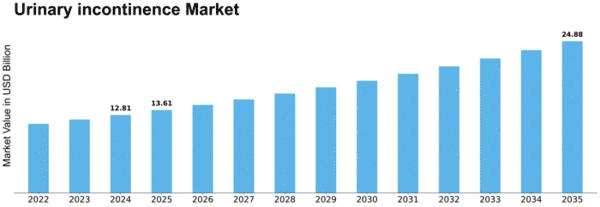
Urinary Incontinence market size was valued at approximately 12.81 billion USD in 2024. This figure will reach 24.88 billion USD covering all regions (America, Europe, Asia, MEA and ROW), focusing its segments / services / distribution channels till 2035.

What is the CAGR of the Urinary Incontinence market?

Urinary Incontinence market is expected to grow at a CAGR of 6.22% between 2025 and 2035.

How much will the Urinary Incontinence market be worth by 2035?

Urinary Incontinence market is expected to be worth of 24.88 billion USD, reflecting growth driven by usage, technology and global demands by the end of 2035.

How will the Urinary Incontinence market perform over the next 10 years?

Over the next 10 years the Urinary Incontinence market is expected to shift from usd billion 12.81 to 24.88 billion USD, led by adoption of advanced tech, demographic trends, regulatory approvals, with potential headwinds from 2025 to 2035.

What was the market size of the Urinary Incontinence Market in 2024?

The Urinary Incontinence Market was valued at 3.27 billion USD in 2024.

Which region held the largest share in the Urinary Incontinence Market in 2024?

In 2024, North America held the largest market share, valued at approximately 1.14 billion USD.

What is the forecasted market size for Europe in 2035?

The European segment of the Urinary Incontinence Market is expected to be valued at about 1.5 billion USD in 2035.

The European segment of the Urinary Incontinence Market is expected to be valued at about 1.5 billion USD in 2035.

Major players in the market include Coloplast, Essity, Stryker, and Johnson & Johnson, among others.

Which region shows the highest growth potential for the Urinary Incontinence Market?

The Asia Pacific region is expected to show significant growth with a market size of 1.2 billion USD anticipated in 2035.

Market Summary

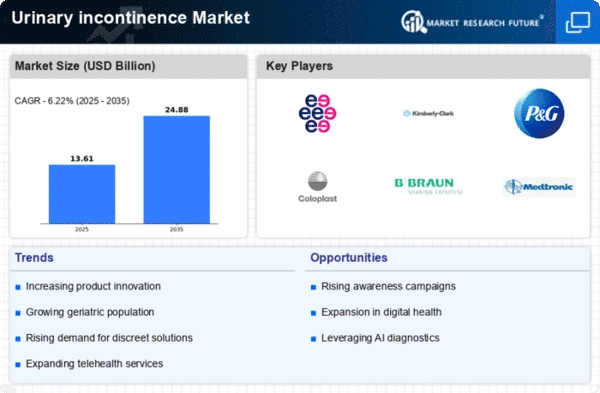
As per MRFR analysis, the Urinary incontinence market was estimated at 12.81 USD Billion in 2024. The Urinary incontinence industry is projected to grow from 13.61 USD Billion in 2025 to 24.88 USD Billion by 2035, exhibiting a compound annual growth rate (CAGR) of 6.22% during the forecast period 2025 - 2035.

Key Market Trends & Highlights

The Urinary Incontinence Market is experiencing robust growth driven by technological advancements and increasing patient-centric approaches.

  • North America remains the largest market for urinary incontinence products, driven by high healthcare expenditure. The Asia-Pacific region is emerging as the fastest-growing market, fueled by rising awareness and education regarding urinary incontinence. Disposable products dominate the market, while reusable products are witnessing the fastest growth due to sustainability trends. Key market drivers include an aging population and increased demand for home healthcare solutions, which are shaping product development.

Market Size & Forecast

2024 Market Size 12.81 (USD Billion)
2035 Market Size 24.88 (USD Billion)
CAGR (2025 - 2035) 6.22%
Largest Regional Market Share in 2024 North America

Major Players

Essity (SE), Kimberly-Clark (US), Procter &amp; Gamble (US), Coloplast (DK), <a href="https://catalogs.bbraun.com/en-01/c/PRODUCTS0000000995/male-urinary-incontinence">B. Braun</a> (DE), Medtronic (IE), Hollister (US), SCA (SE), Attends (US)

Market Trends

The Urinary incontinence market is currently experiencing notable transformations driven by various factors. Increasing awareness regarding urinary incontinence, coupled with a growing aging population, appears to be propelling demand for innovative products and solutions. Healthcare providers are increasingly focusing on patient-centered approaches, which may lead to enhanced treatment options and improved quality of life for individuals affected by this condition. Furthermore, advancements in technology, particularly in wearable devices and telehealth services, suggest a shift towards more accessible and personalized care. This evolution in the market landscape indicates a potential for significant growth and diversification in product offerings. In addition, the Urinary incontinence Market is witnessing a rise in the adoption of minimally invasive surgical procedures. These techniques are perceived as less risky and more effective, which could attract a broader patient demographic. The integration of digital health solutions is also becoming more prevalent, as patients seek convenient ways to manage their conditions. Overall, the Urinary incontinence Market seems poised for continued expansion, driven by innovation, patient engagement, and a commitment to improving healthcare outcomes.

Technological Advancements

The Urinary incontinence Market is increasingly influenced by technological innovations. Developments in wearable devices and mobile applications are enhancing patient monitoring and management. These tools provide real-time data, enabling healthcare providers to tailor treatments more effectively.

Minimally Invasive Procedures

There is a growing trend towards minimally invasive surgical options within the Urinary incontinence Market. These procedures are often associated with reduced recovery times and lower complication rates, making them more appealing to patients and healthcare professionals alike.

Patient-Centric Approaches

The focus on patient-centered care is becoming more pronounced in the Urinary incontinence Market. Healthcare providers are prioritizing individualized treatment plans, which may lead to improved patient satisfaction and adherence to prescribed therapies.

Urinary incontinence Market Market Drivers

Market Growth Projections

The Global Urinary Incontinence Market Industry is projected to experience robust growth in the coming years. By 2024, the market is expected to reach 3.27 USD Billion, with further growth anticipated to 5 USD Billion by 2035. This trajectory indicates a compound annual growth rate of 3.94% from 2025 to 2035. Such projections highlight the increasing demand for urinary incontinence solutions, driven by factors such as technological advancements, demographic shifts, and heightened awareness. The market's expansion reflects the urgent need for effective management strategies to address the challenges faced by individuals living with urinary incontinence.

Growing Geriatric Population

The global increase in the geriatric population is a significant factor influencing the Global Urinary Incontinence Market Industry. As individuals age, the likelihood of experiencing urinary incontinence rises due to physiological changes and comorbidities. According to demographic projections, the number of people aged 65 and older is expected to double by 2050, creating a larger market for urinary incontinence solutions. This demographic shift is likely to drive demand for various products, including absorbent pads, medications, and surgical interventions. Consequently, the market is poised for substantial growth as the needs of this aging population become more pronounced.

Increased Awareness and Education

Increased awareness and education regarding urinary incontinence are crucial drivers of the Global Urinary Incontinence Market Industry. Public health campaigns and educational initiatives are helping to destigmatize the condition, encouraging individuals to seek urinary incontinence treatment. This shift in perception is vital, as many people suffer in silence due to embarrassment. As awareness grows, more individuals are likely to consult healthcare professionals, leading to higher demand for products and services. This trend is expected to contribute to a compound annual growth rate of 3.94% from 2025 to 2035, as more people recognize the importance of addressing urinary incontinence.

Rising Prevalence of Urinary Incontinence

The increasing prevalence of urinary incontinence among various demographics is a primary driver of the Global Urinary Incontinence Market Industry. Factors such as aging populations, obesity, and chronic conditions contribute to this rise. For instance, it is estimated that by 2024, the market will reach 3.27 USD Billion, reflecting the growing need for effective management solutions. The World Health Organization indicates that urinary incontinence affects a significant portion of older adults, with prevalence rates ranging from 15 to 30%. This trend underscores the urgency for innovative products and services tailored to address the needs of affected individuals.
 
Comprehensive care involves pelvic floor muscle training, bladder training, lifestyle modifications, skin care, and emotional support. With proper treatment and care, individuals with urinary incontinence can significantly improve their quality of life and daily confidence.

Regulatory Support and Reimbursement Policies

Regulatory support and favorable reimbursement policies are essential drivers of the Global Urinary Incontinence Market Industry. Governments and health organizations are increasingly recognizing the need for effective management of urinary incontinence, leading to the establishment of supportive frameworks. For instance, many countries are implementing reimbursement policies that cover the costs of urinary incontinence treatments and products for urinary incontinence. This support not only alleviates the financial burden on patients but also encourages manufacturers to innovate and expand their offerings. As a result, the market is likely to experience sustained growth, driven by these favorable conditions.

Advancements in Urinary incontinence Treatment Technologies

Technological advancements in treatment options for urinary incontinence are propelling the Global Urinary Incontinence Market Industry forward. Innovations such as minimally invasive surgical techniques, neuromodulation therapies, and advanced absorbent products are enhancing patient outcomes. For example, the introduction of new devices and surgical methods has improved efficacy and reduced recovery times. As a result, the market is projected to grow to 5 USD Billion by 2035, driven by these advancements. Furthermore, ongoing research and development efforts are likely to yield even more effective solutions, thereby expanding the market and improving quality of life for patients.
 
Medications for urinary incontinence are primarily used to treat overactive bladder and urge incontinence. These include anticholinergic drugs and beta-3 adrenergic agonists, which help relax the bladder muscles, reduce sudden urges, and improve bladder control. In some cases, hormone therapy or botulinum toxin injections may also be recommended.
Urinary incontinence devices play an important role in symptom management. These include urethral inserts, pessaries, external catheters, absorbent pads, and advanced neuromodulation devices that help regulate bladder nerve signals. Such devices provide non-surgical options for improved comfort and independence

Market Segment Insights

By Product Type: Disposable Products (Largest) vs. Reusable Products (Fastest-Growing)

In the Urinary Incontinence Market, the segment of Disposable Products holds the largest market share, given their widespread adoption and convenience among consumers. This category, which includes items like pads and diapers, caters to a significant portion of the market, primarily due to the preference for single-use options that prioritize hygiene. Conversely, Reusable Products have emerged as the fastest-growing segment. Consumers are increasingly leaning towards environmentally sustainable options, leading to a rise in the popularity of washable products, which offer cost savings over time and increased comfort. Growth trends in this segment are shifting as consumer preferences evolve. The Disposable Products segment is still robust, driven by factors such as aging populations and lifestyle changes that necessitate convenient solutions. Meanwhile, the Reusable Products segment is gaining momentum due to rising environmental awareness and the push for sustainable medical solutions. This dual trend is reshaping the market landscape, with innovations in product design and materials further fueling growth in the Reusable category.

Disposable Products (Dominant) vs. Medications (Emerging)

In the Urinary Incontinence Market, Disposable Products remain the dominant choice for consumers, widely recognized for their practicality and effectiveness. This segment includes an array of options such as absorbent pads and adult diapers, which are favored for their ease of use and hygienic properties. On the other hand, Medications represent an emerging segment, gaining traction as new treatments and formulations are developed to address incontinence challenges. While Disposable Products provide a quick and direct solution, Medications cater to those seeking remedial approaches, indicating a shift towards a more comprehensive approach to managing urinary incontinence. As clinical advancements continue, the Medications segment is poised to play a vital role in the evolving landscape of urinary incontinence management.

By Severity Level: Moderate (Largest) vs. Severe (Fastest-Growing)

In the urinary incontinence market, the distribution among the severity levels reveals that the moderate category commands the largest share. This segment accounts for a significant portion of the total market, driven by higher prevalence rates among the aging population and increased awareness of treatment options. Meanwhile, the severe category, while smaller in comparison, is experiencing rapid growth as healthcare providers develop more innovative and effective treatments tailored to this group. The growth trends for urinary incontinence severity levels are influenced by various factors, including demographic shifts, where an aging global population is leading to higher incidences of moderate to severe conditions. Additionally, the increasing recognition and destigmatization of urinary incontinence in society are encouraging patients to seek medical help sooner, propelling the severe category to become the fastest-growing segment as more comprehensive solutions become available.

Moderate (Dominant) vs. Severe (Emerging)

In the urinary incontinence market, moderate severity represents the dominant category, characterized by patients who experience frequent leakage requiring lifestyle adjustments but generally not constant medical intervention. This segment holds a key position due to the higher number of individuals living with moderate symptoms, which encourages product development aimed at enhancing quality of life without invasive treatments. Conversely, the severe segment is emerging as a priority for healthcare innovations, with companies focusing on advanced therapies and devices that provide more aggressive management solutions for patients suffering from debilitating symptoms. The growth in this segment reflects an increasing need for targeted interventions and improved patient outcomes.

By End User: Hospitals (Largest) vs. Home Care Settings (Fastest-Growing)

In the Urinary Incontinence Market, hospitals are currently the largest segment, utilizing advanced diagnostic tools and treatment protocols to manage patients effectively. This dominance is driven by the increasing patient inflow due to the rising prevalence of urinary incontinence, especially among the aging population. Home care settings are catching up rapidly, catering to patient preferences for receiving care in familiar environments, resulting in an enhanced demand for home-based solutions.

Hospitals (Dominant) vs. Home Care Settings (Emerging)

Hospitals play a dominant role in the urinary incontinence market due to their ability to provide comprehensive care, including surgical interventions and specialized expertise. They are equipped with the latest technology and healthcare professionals who can address complex cases. Conversely, home care settings are emerging as a significant player, particularly among patients seeking more comfortable and less institutionalized care. This shift is influenced by patient-centered care trends, where independence and a personalized approach are valued, leading to innovation in home care products and services that effectively manage urinary incontinence.

By Gender: Female (Largest) vs. Male (Fastest-Growing)

In the Urinary Incontinence Market, the gender segment reveals distinct distribution dynamics. Females currently represent the largest share, attributed to higher prevalence rates linked to biological predispositions and life stages such as pregnancy, childbirth, and menopause. This demographic has significantly influenced product development and targeted treatment options in the market, establishing strong brand loyalty and continued demand for innovative solutions addressing their specific needs. Conversely, the male segment is emerging rapidly, reflecting growing awareness and diagnosis of urinary incontinence issues. Factors such as aging populations, increased male health consciousness, and advancements in treatment options have contributed to a perceptible uptick in market share. As societal attitudes shift, men are being more open about seeking treatment, indicating robust growth potential in upcoming years.

Male (Emerging) vs. Female (Dominant)

The female population remains the dominant force in the Urinary Incontinence Market, often being the focus of targeted advertisements and healthcare initiatives. This segment benefits from extensive research on their specific conditions, leading to a variety of specialized products suited for varying severity levels. In contrast, the male segment is emerging, buoyed by rising awareness and decreasing stigma around urinary health issues. Innovative products and treatments tailored for men are starting to penetrate the market, driven by the need for convenient and effective solutions. This transition is making men increasingly significant as a target demographic, allowing them to leverage the advances made for females while carving out a unique space in an evolving marketplace.

Get more detailed insights about Urinary Incontinence Market Research Report-Forecast to 2035

Regional Insights

North America : Market Leader in Innovation

North America holds a commanding market share of 6.84 in the urinary incontinence sector, driven by an aging population and increasing awareness of treatment options. The demand for advanced products is further fueled by regulatory support for innovative healthcare solutions. The region's healthcare policies encourage research and development, leading to a surge in product offerings that cater to diverse consumer needs. The United States is the primary market player, with significant contributions from key companies like Kimberly-Clark and Procter & Gamble. The competitive landscape is characterized by continuous innovation and strategic partnerships among leading firms. This dynamic environment fosters a robust supply chain, ensuring that consumers have access to the latest products designed for comfort and efficacy.

Europe : Emerging Market with Growth Potential

Europe's urinary incontinence market is valued at 3.84, reflecting a growing demand for effective management solutions. Factors such as an increasing elderly population and heightened awareness of urinary health are driving this growth. Regulatory frameworks across the EU are becoming more supportive, facilitating the introduction of innovative products that meet consumer needs while ensuring safety and efficacy. Leading countries in this region include Germany, France, and the UK, where major players like Essity and Coloplast are making significant inroads. The competitive landscape is marked by a mix of established brands and emerging companies, all vying for market share. This competition is fostering innovation, with a focus on developing products that enhance user experience and comfort.

Asia-Pacific : Rapidly Growing Market Segment

The Asia-Pacific urinary incontinence market, valued at 1.92, is witnessing rapid growth due to rising awareness about urinary health and increasing disposable incomes. The region's demographic shift, with a growing elderly population, is a significant driver of demand for incontinence products. Additionally, government initiatives aimed at improving healthcare access are catalyzing market expansion, making products more available to consumers. Countries like Japan, China, and Australia are leading the charge in this market. The competitive landscape features both global players and local manufacturers, with companies like Medtronic and Hollister establishing a strong presence. This mix of competition is fostering innovation and driving down prices, making products more accessible to a broader audience.

Middle East and Africa : Untapped Market Opportunities

The Middle East and Africa urinary incontinence market is currently valued at 0.21, indicating significant untapped potential. Factors such as increasing awareness of urinary health and a growing elderly population are beginning to drive demand for incontinence products. However, the market is still in its infancy, with limited product availability and awareness among consumers. Regulatory bodies are starting to recognize the need for better healthcare solutions, which may catalyze future growth. Countries like South Africa and the UAE are at the forefront of this emerging market. The competitive landscape is characterized by a few key players, but there is ample opportunity for new entrants to establish themselves. As awareness increases and healthcare infrastructure improves, the market is expected to grow, attracting both local and international companies looking to capitalize on this opportunity.


Key Players and Competitive Insights

The Urinary incontinence Market is characterized by a competitive landscape that is increasingly shaped by innovation, strategic partnerships, and a focus on patient-centric solutions. Key players such as Essity (SE), Kimberly-Clark (US), and Coloplast (DK) are actively pursuing strategies that emphasize product development and market expansion. For instance, Essity (SE) has been focusing on enhancing its product portfolio through sustainable practices, which aligns with the growing consumer demand for environmentally friendly options. Meanwhile, Kimberly-Clark (US) has been investing in digital transformation initiatives to improve customer engagement and streamline operations, thereby enhancing its competitive positioning.The market structure appears moderately fragmented, with several players vying for market share. Companies are increasingly localizing manufacturing and optimizing supply chains to respond swiftly to regional demands. This approach not only reduces operational costs but also enhances responsiveness to market fluctuations. The collective influence of these key players suggests a dynamic environment where innovation and operational efficiency are paramount.
In November Coloplast (DK) announced the launch of a new line of absorbent products designed specifically for the elderly population, which is projected to grow significantly in the coming years. This strategic move is likely to strengthen Coloplast's market presence and cater to a demographic that requires specialized solutions, thereby enhancing its competitive edge. The introduction of these products reflects a broader trend towards personalization in healthcare, which is becoming increasingly important in the urinary incontinence sector.
In October Kimberly-Clark (US) unveiled a partnership with a leading telehealth provider to integrate digital health solutions into its product offerings. This collaboration aims to provide consumers with better access to information and support regarding urinary incontinence management. By leveraging technology, Kimberly-Clark is positioning itself as a forward-thinking leader in the market, potentially reshaping how consumers interact with urinary incontinence products and services.
In September Essity (SE) expanded its operations in Asia by establishing a new manufacturing facility in Vietnam. This strategic expansion is indicative of the company's commitment to tapping into emerging markets, where demand for urinary incontinence products is on the rise. By localizing production, Essity not only reduces shipping costs but also enhances its ability to meet local consumer needs more effectively.
As of December the competitive trends in the Urinary incontinence Market are increasingly defined by digitalization, sustainability, and the integration of artificial intelligence (AI) into product development. Strategic alliances are becoming more prevalent, as companies recognize the value of collaboration in driving innovation. The shift from price-based competition to a focus on technological advancements and supply chain reliability is evident. Moving forward, competitive differentiation will likely hinge on the ability to innovate and adapt to changing consumer preferences, with a strong emphasis on sustainability and personalized solutions.

Key Companies in the Urinary incontinence Market include

Industry Developments

An important advancement for a non-surgical, automated artificial urinary sphincter was marked on February 20th, 2025, when UroMems announced successful mid-term results from its first clinical feasibility study of the UroActive smart implant for treating stress urinary incontinence (SUI) in women. The results showed a reduction from 125 g to 4 g in a one-hour pad test.

Medscape announced on April 28, 2025, that UroMems's UroActive device, which offers patients a less invasive and more convenient incontinence therapy, may be implanted robotically and managed remotely.

Under the direction of urogynecologists at Stanford, NYU Langone, and Jefferson Health, Watkins-Conti Products concluded a multicenter clinical study of its Yōni.Fit vaginal insert for stress urine incontinence on April 20, 2023, in order to get ready to submit a 510(k) to the FDA.

The U.S. CDC-funded National Association for Continence (NAFC) and Phreesia, Health.Equity, began a three-year awareness campaign on May 5, 2025.results, and Christina Escobar of NYU to de-stigmatize female incontinence and encourage early intervention.

The PeriCoach, a home-based Kegel training tool with an app that improves pelvic-floor strengthening and patient compliance, was unveiled by Analytica Ltd. in October 2023. These achievements mark important breakthroughs in the treatment of urine incontinence worldwide on the clinical, technical, and educational fronts.

Future Outlook

Urinary incontinence Market Future Outlook

The Urinary Incontinence Market is projected to grow at a 6.22% CAGR from 2025 to 2035, driven by increasing awareness, technological advancements, and an aging population.

New opportunities lie in:

  • <p>Development of smart wearable devices for real-time monitoring Expansion of telehealth services for remote patient management Introduction of biodegradable incontinence products to enhance sustainability</p>

By 2035, the market is expected to achieve substantial growth, driven by innovation and evolving consumer needs.

Market Segmentation

Urinary incontinence Market Gender Outlook

  • Male
  • Female
  • Transgender

Urinary incontinence Market End User Outlook

  • Hospitals
  • Home Care Settings
  • Nursing Homes
  • Rehabilitation Centers

Urinary incontinence Market Product Type Outlook

  • Disposable Products
  • Reusable Products
  • Medications
  • Surgical Devices

Urinary incontinence Market Severity Level Outlook

  • Mild
  • Moderate
  • Severe

Report Scope

MARKET SIZE 2024 12.81(USD Billion)
MARKET SIZE 2025 13.61(USD Billion)
MARKET SIZE 2035 24.88(USD Billion)
COMPOUND ANNUAL GROWTH RATE (CAGR) 6.22% (2025 - 2035)
REPORT COVERAGE Revenue Forecast, Competitive Landscape, Growth Factors, and Trends
BASE YEAR 2024
Market Forecast Period 2025 - 2035
Historical Data 2019 - 2024
Market Forecast Units USD Billion
Key Companies Profiled Essity (SE), Kimberly-Clark (US), Procter & Gamble (US), Coloplast (DK), B. Braun (DE), Medtronic (IE), Hollister (US), SCA (SE), Attends (US)
Segments Covered Product Type, Severity Level, End User, Gender
Key Market Opportunities Advancements in wearable technology enhance management solutions in the Urinary incontinence Market.
Key Market Dynamics Rising demand for innovative urinary incontinence products drives competitive forces and technological advancements in the market.
Countries Covered North America, Europe, APAC, South America, MEA

FAQs

What is the projected growth of the Urinary Incontinence market?

The Urinary Incontinence market is the expected increase in total market value of 24.88 USD billion over a defined forecast period 2025–2035. It is driven by factors such as demand trends, technological advances, regulatory changes, and geographic expansion.

What is the size of the Urinary Incontinence market?

Urinary Incontinence market size was valued at approximately 12.81 billion USD in 2024. This figure will reach 24.88 billion USD covering all regions (America, Europe, Asia, MEA and ROW), focusing its segments / services / distribution channels till 2035.

What is the CAGR of the Urinary Incontinence market?

Urinary Incontinence market is expected to grow at a CAGR of 6.22% between 2025 and 2035.

How much will the Urinary Incontinence market be worth by 2035?

Urinary Incontinence market is expected to be worth of 24.88 billion USD, reflecting growth driven by usage, technology and global demands by the end of 2035.

How will the Urinary Incontinence market perform over the next 10 years?

Over the next 10 years the Urinary Incontinence market is expected to shift from usd billion 12.81 to 24.88 billion USD, led by adoption of advanced tech, demographic trends, regulatory approvals, with potential headwinds from 2025 to 2035.

What was the market size of the Urinary Incontinence Market in 2024?

The Urinary Incontinence Market was valued at 3.27 billion USD in 2024.

Which region held the largest share in the Urinary Incontinence Market in 2024?

In 2024, North America held the largest market share, valued at approximately 1.14 billion USD.

What is the forecasted market size for Europe in 2035?

The European segment of the Urinary Incontinence Market is expected to be valued at about 1.5 billion USD in 2035.

The European segment of the Urinary Incontinence Market is expected to be valued at about 1.5 billion USD in 2035.

Major players in the market include Coloplast, Essity, Stryker, and Johnson &amp; Johnson, among others.

Which region shows the highest growth potential for the Urinary Incontinence Market?

The Asia Pacific region is expected to show significant growth with a market size of 1.2 billion USD anticipated in 2035.

  1. SECTION I: EXECUTIVE SUMMARY AND KEY HIGHLIGHTS |
    1. EXECUTIVE SUMMARY |
      1. Market Overview |
      2. Key Findings |
      3. Market Segmentation |
      4. Competitive Landscape |
      5. Challenges and Opportunities |
      6. Future Outlook 2
  2. SECTION II: SCOPING, METHODOLOGY AND MARKET STRUCTURE |
    1. MARKET INTRODUCTION |
      1. Definition |
      2. Scope of the study |--
    2. RESEARCH METHODOLOGY |
      1. Overview |
      2. Data Mining |
      3. Secondary Research |
      4. Primary Research |--
      5. Forecasting Model |
      6. Market Size Estimation |--
      7. Data Triangulation |
      8. Validation 3
  3. SECTION III: QUALITATIVE ANALYSIS |
    1. MARKET DYNAMICS |
      1. Overview |
      2. Drivers |
      3. Restraints |
      4. Opportunities |
    2. MARKET FACTOR ANALYSIS |
      1. Value chain Analysis |
      2. Porter's Five Forces Analysis |--
      3. COVID-19 Impact Analysis |--
  4. SECTION IV: QUANTITATIVE ANALYSIS |
    1. Healthcare, BY Product Type (USD Billion) |
      1. Disposable Products |
      2. Reusable Products |
      3. Medications |
      4. Surgical Devices |
    2. Healthcare, BY Severity Level (USD Billion) |
      1. Mild |
      2. Moderate |
      3. Severe |
    3. Healthcare, BY End User (USD Billion) |
      1. Hospitals |
      2. Home Care Settings |
      3. Nursing Homes |
      4. Rehabilitation Centers |
    4. Healthcare, BY Gender (USD Billion) |
      1. Male |
      2. Female |
      3. Transgender |
    5. Healthcare, BY Region (USD Billion) |
      1. North America |--
      2. Europe |--
      3. APAC |--
      4. South America |--
      5. MEA |--
  5. SECTION V: COMPETITIVE ANALYSIS |
    1. Competitive Landscape |
      1. Overview |
      2. Competitive Analysis |
      3. Market share Analysis |
      4. Major Growth Strategy in the Healthcare |
      5. Competitive Benchmarking |
      6. Leading Players in Terms of Number of Developments in the Healthcare |
      7. Key developments and growth strategies |--
      8. Major Players Financial Matrix |--
    2. Company Profiles |
      1. Essity (SE) |--
      2. Kimberly-Clark (US) |--
      3. Procter & Gamble (US) |--
      4. Coloplast (DK) |--
      5. B. Braun (DE) |--
      6. Medtronic (IE) |--
      7. Hollister (US) |--
      8. SCA (SE) |--
      9. Attends (US) |--
    3. Appendix |
      1. References |
      2. Related Reports

Healthcare Market Segmentation

Healthcare By Product Type (USD Billion, 2025-2035)

  • Disposable Products
  • Reusable Products
  • Medications
  • Surgical Devices

Healthcare By Severity Level (USD Billion, 2025-2035)

  • Mild
  • Moderate
  • Severe

Healthcare By End User (USD Billion, 2025-2035)

  • Hospitals
  • Home Care Settings
  • Nursing Homes
  • Rehabilitation Centers

Healthcare By Gender (USD Billion, 2025-2035)

  • Male
  • Female
  • Transgender
Infographic

Free Sample Request

Kindly complete the form below to receive a free sample of this Report

Get Free Sample

Customer Strories

Compare Licence

×
Features License Type
Single User Multiuser License Enterprise User
Price $4,950 $5,950 $7,250
Maximum User Access Limit 1 User Upto 10 Users Unrestricted Access Throughout the Organization
Free Customization
Direct Access to Analyst
Deliverable Format
Platform Access
Discount on Next Purchase 10% 15% 15%
Printable Versions