×
Hero Background
English
Chinese
French
Japanese
Korean
German
Spanish

Type 2 Diabetes Mellitus Treatment Market Share

ID: MRFR/Pharma/4214-HCR
85 Pages
Rahul Gotadki
October 2025

Type 2 Diabetes Mellitus Treatment Market Research Report Information By Treatment (Drug (Insulin, Sensitizers, Sglt-2, Alpha-Glucosidase Inhibitors, Others), Devices (Blood Glucose Monitoring, Insulin Delivery Devices)), By The End User – Forecast Till 2035

Share:
Download PDF ×

We do not share your information with anyone. However, we may send you emails based on your report interest from time to time. You may contact us at any time to opt-out.

Type 2 Diabetes Mellitus Treatment Market Infographic
Purchase Options

Market Share

Introduction: Navigating the Competitive Landscape of Type 2 Diabetes Mellitus Treatment

The market for treatment of diabetes mellitus type 2 is experiencing an unprecedented level of competition, driven by a combination of technological advances, regulatory changes, and growing patient expectations for a bespoke approach to diabetes care. Several players, including pharmaceutical companies, digital health companies, and biotechnology companies, are vying for leadership with differentiated offerings. Artificial intelligence (AI) is enabling pharmaceutical companies to enhance the efficacy of their drugs and improve patient adherence. IT companies are developing platforms that combine the use of IoT devices with the use of artificial intelligence. Telemedicine and mobile applications are reshaping patient engagement strategies. The growth opportunities in certain regional markets, particularly in North America and Asia-Pacific, are unique. As a result, the strategic deployment of biometric and automation technology will be critical to winning market share in the coming years. Strategic leaders need to be aware of these developments to effectively navigate the complexities of this evolving landscape.

Competitive Positioning

Full-Suite Integrators

These vendors offer comprehensive solutions encompassing pharmaceuticals, diagnostics, and patient management.

Vendor Competitive Edge Solution Focus Regional Focus
Abbott Laboratories Diverse product portfolio Diagnostics and therapeutics Global
Eli Lilly Innovative diabetes therapies Pharmaceuticals North America, Europe
Novo Nordisk Leader in insulin production Insulin and GLP-1 therapies Global
Sanofi Strong diabetes portfolio Pharmaceuticals Global

Specialized Technology Vendors

These companies focus on innovative technologies and solutions for diabetes management.

Vendor Competitive Edge Solution Focus Regional Focus
Becton Dickinson and Company Advanced delivery systems Injection devices Global
Roche Diagnostics Ltd. Leading in diabetes monitoring Blood glucose monitoring Global
Acon Laboratories, Inc. Rapid testing solutions Diagnostic tests North America, Asia

Pharmaceutical Innovators

These vendors are known for their research and development of new diabetes medications.

Vendor Competitive Edge Solution Focus Regional Focus
Amgen Biotechnology expertise Biopharmaceuticals Global
AstraZeneca Strong pipeline of diabetes drugs Pharmaceuticals Global
Boehringer Ingelheim Innovative combination therapies Pharmaceuticals Global
Merck Established diabetes treatments Pharmaceuticals Global
Novartis & Co. Diverse therapeutic options Pharmaceuticals Global
Takeda Pharmaceuticals Focus on metabolic diseases Pharmaceuticals Global

Emerging Players

These vendors are focused on niche solutions and innovative approaches to diabetes treatment.

Vendor Competitive Edge Solution Focus Regional Focus
Adocia Novel insulin formulations Biopharmaceuticals Europe, North America
Akros Pharma Targeted therapies Pharmaceuticals North America
Biocon Affordable biosimilars Biosimilars Asia, Global
Peptron Innovative drug delivery systems Pharmaceuticals Asia, Global
Sunpharma Cost-effective solutions Pharmaceuticals Asia, Global
Daiichi Sankyo Research-driven approach Pharmaceuticals Global

Emerging Players & Regional Champions

  • Novo Nordisk (Denmark): Focused on GLP-1 receptor agonists and insulin therapies, recently expanded its digital health solutions for diabetes management, challenging established players like Sanofi by integrating technology with treatment.
  • Boehringer Ingelheim (Germany): Offers SGLT2 inhibitors and has partnered with digital health companies to enhance patient engagement, complementing traditional therapies and competing with major brands like AstraZeneca.
  • Zywie (USA): Specializes in remote monitoring solutions for diabetes management, recently secured contracts with healthcare providers to implement their platform, providing a tech-driven alternative to conventional treatment methods.
  • Glooko (USA): Provides a diabetes management platform that integrates data from various devices, recently partnered with health systems to improve patient outcomes, challenging traditional care models by emphasizing data-driven insights.
  • Insulet Corporation (USA): Known for its Omnipod insulin management system, has expanded its offerings to include automated insulin delivery systems, positioning itself as a competitor to established insulin pump manufacturers.

Regional Trends: In 2024 the use of digital health solutions increases, especially in Europe and North America, where the demand for individualized diabetes care is growing. The new players are using technology to increase patient involvement and adherence. The established players respond by integrating similar solutions into their offer. In Asia-Pacific, where there is a growing focus on prevention and lifestyle management, the regional champions develop local solutions that address cultural and dietary differences.

Collaborations & M&A Movements

  • The agreement was made on the basis of a common goal of integrating continuous glucose monitors and insulin delivery systems to improve the patient’s health and diabetes management and thus strengthen their position in the market for type 2 diabetes treatments.
  • Boehringer Ingelheim acquired the rights to a novel oral diabetes medication from a biotech firm, which is expected to expand their product portfolio and increase market share in the Type 2 Diabetes segment amidst growing competition.
  • Sanofi and Google Health collaborated to leverage AI in developing personalized treatment plans for Type 2 Diabetes patients, aiming to improve patient adherence and outcomes, which could significantly enhance their market presence.

Competitive Summary Table

Capability Leading Players Remarks
Biometric Self-Boarding Dexcom, Abbott The continuous glucose monitoring system has been adopted by many patients who wish to keep track of their blood sugar levels. The Freestyle Libre has a simple, friendly design, which has led to an increase in home use, which demonstrates good patient compliance.
AI-Powered Ops Mgmt Roche, Sanofi Roche uses the power of artificial intelligence in its diabetes-management systems to optimize the delivery of insulin and improve patient outcomes. Sanofi’s digital tools for treating diabetes are based on artificial intelligence, which is enabling it to offer new and more individualized treatment plans.
Patient Education and Support Novo Nordisk, Boehringer Ingelheim With a comprehensive education and support, Novo Nordisk enables the patient to take care of his diabetes. With a digital platform, Boehringer Ingelheim is offering patient-tailored education and self-management.
Telehealth Integration Lilly, Merck In its diabetes care programs, Lilly has integrated telemedicine, enabling remote consultation and remote monitoring. Merck's digital health solutions facilitate continuous patient-doctor communication and thus help improve adherence to treatment.
Sustainability Initiatives Johnson & Johnson, AstraZeneca Having committed to sustainable manufacturing, Johnson & Johnson has reduced the environmental impact of its diabetes products. AstraZeneca's programmes for reducing its carbon footprint and promoting responsible sourcing are aligned with its public health goals.

Conclusion: Navigating the Type 2 Diabetes Treatment Landscape

The Type 2 diabetes mellitus market is characterized by a high level of competition and a large number of fragmented segments. In the United States and Europe, the trend towards more individualized approaches to treatment is especially noticeable. Artificial intelligence (AI) for the purpose of predictive analysis, automation for the purpose of efficiency, and initiatives for the environment, meeting both regulatory requirements and consumer demands. These are the developments that will shape the market in the future, and the ability to be flexible in the product range and to respond to changing patient needs will be the most important success factors for market leadership. These companies that can successfully integrate these factors into their strategies will not only increase their competitiveness but also help to improve patient outcomes in the complex treatment landscape.


Author
Rahul Gotadki
Assistant Manager

He holds an experience of about 7+ years in Market Research and Business Consulting, working under the spectrum of Life Sciences and Healthcare domains. Rahul conceptualizes and implements a scalable business strategy and provides strategic leadership to the clients. His expertise lies in market estimation, competitive intelligence, pipeline analysis, customer assessment, etc. In addition to the above, his other responsibility includes strategic tracking of high growth markets & advising clients on the potential areas of focus they could direct their business initiatives

Leave a Comment

Market Summary

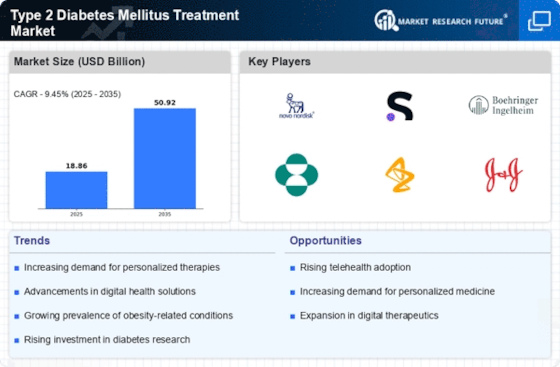
As per MRFR analysis, the Type 2 Diabetes Mellitus Treatment Market was estimated at 18.86 USD Billion in 2024. The Type 2 Diabetes Mellitus Treatment industry is projected to grow from 20.64 USD Billion in 2025 to 50.92 USD Billion by 2035, exhibiting a compound annual growth rate (CAGR) of 9.45% during the forecast period 2025 - 2035.

Key Market Trends & Highlights

The Type 2 Diabetes Mellitus Treatment Market is experiencing a transformative shift towards innovative solutions and preventive care strategies.

  • The rise of digital health solutions is reshaping patient engagement and management in Type 2 diabetes treatment. North America remains the largest market, driven by advancements in pharmacotherapy and increasing healthcare expenditure. The Asia-Pacific region is emerging as the fastest-growing market, fueled by a rising prevalence of Type 2 diabetes and growing awareness initiatives. The insulin segment continues to dominate, while SGLT-2 inhibitors are gaining traction, supported by regulatory backing for innovative therapies.

Market Size & Forecast

2024 Market Size 18.86 (USD Billion)
2035 Market Size 50.92 (USD Billion)
CAGR (2025 - 2035) 9.45%
Largest Regional Market Share in 2024 Americas

Major Players

<p>Novo Nordisk (DK), Sanofi (FR), <a href="https://www.boehringer-ingelheim.com/in/human-health/metabolic-diseases/diabetes">Boehringer Ingelheim</a> (DE), Merck &amp; Co. (US), AstraZeneca (GB), Johnson &amp; Johnson (US), Eli Lilly and Company (US), Pfizer (US), AbbVie (US)</p>

Market Trends

The Type 2 Diabetes Mellitus Treatment Market is currently experiencing a notable evolution, driven by a combination of innovative therapies and a growing awareness of diabetes management. As healthcare systems worldwide increasingly prioritize chronic disease management, the demand for effective treatment options appears to be on the rise. This market encompasses a diverse range of products, including oral medications, insulin therapies, and lifestyle management solutions. The integration of technology, such as telemedicine and mobile health applications, seems to enhance patient engagement and adherence to treatment regimens, potentially leading to improved health outcomes. Moreover, the increasing prevalence of obesity and sedentary lifestyles contributes to the rising incidence of Type 2 diabetes, thereby expanding the market's scope. Pharmaceutical companies are likely to invest in research and development to create novel therapies that address the underlying causes of the disease. Additionally, the emphasis on personalized medicine suggests a shift towards tailored treatment approaches, which may further transform the landscape of the Type 2 Diabetes Mellitus Treatment Market. As stakeholders navigate this dynamic environment, collaboration among healthcare providers, patients, and technology developers appears essential for optimizing treatment strategies and enhancing patient quality of life.

Rise of Digital Health Solutions

The integration of digital health technologies is reshaping the Type 2 Diabetes Mellitus Treatment Market. Mobile applications and telehealth platforms are becoming increasingly popular, enabling patients to monitor their health and communicate with healthcare providers more effectively. This trend suggests a shift towards more personalized and accessible care, potentially improving patient adherence to treatment plans.

Focus on Preventive Care

There is a growing emphasis on preventive care within the Type 2 Diabetes Mellitus Treatment Market. Healthcare providers are increasingly advocating for lifestyle modifications, such as diet and exercise, to prevent the onset of diabetes. This proactive approach may lead to a reduction in the overall burden of the disease and a shift in treatment paradigms.

Advancements in Pharmacotherapy

Recent advancements in pharmacotherapy are significantly influencing the Type 2 Diabetes Mellitus Treatment Market. New classes of medications, including GLP-1 receptor agonists and SGLT2 inhibitors, are emerging, offering improved efficacy and safety profiles. These innovations indicate a potential for better management of the disease and enhanced patient outcomes.

Type 2 Diabetes Mellitus Treatment Market Market Drivers

Rising Healthcare Expenditure

The increase in healthcare spending is a significant factor influencing the Type 2 Diabetes Mellitus Treatment Market. As countries allocate more resources to healthcare, there is a corresponding rise in investments in diabetes care and management. This trend is evident in both developed and developing regions, where governments and private sectors are prioritizing diabetes treatment as a critical public health issue. Enhanced funding allows for the development of new therapies, improved healthcare infrastructure, and better access to treatment for patients. Consequently, the growing healthcare expenditure is likely to facilitate advancements in diabetes management, thereby driving the demand for Type 2 Diabetes treatments.

Increasing Prevalence of Type 2 Diabetes

The rising incidence of Type 2 Diabetes Mellitus is a primary driver for the Type 2 Diabetes Mellitus Treatment Market. According to recent statistics, the number of individuals diagnosed with this condition continues to escalate, with estimates suggesting that over 400 million people are affected worldwide. This alarming trend is attributed to factors such as sedentary lifestyles, unhealthy dietary habits, and increasing obesity rates. As the prevalence of Type 2 Diabetes rises, the demand for effective treatment options, including medications and lifestyle interventions, is likely to grow. Consequently, pharmaceutical companies and healthcare providers are focusing on developing innovative therapies and comprehensive management programs to address this urgent public health challenge.

Growing Awareness and Education Initiatives

Increasing awareness about Type 2 Diabetes and its management is a crucial driver for the Type 2 Diabetes Mellitus Treatment Market. Public health campaigns and educational programs aimed at promoting healthy lifestyles and early detection of diabetes are gaining traction. These initiatives are instrumental in informing individuals about the risks associated with Type 2 Diabetes and the importance of timely intervention. As awareness grows, more individuals are likely to seek medical advice and treatment, thereby expanding the market for diabetes therapies. Additionally, healthcare providers are increasingly emphasizing the need for patient education, which is expected to enhance treatment adherence and improve overall health outcomes.

Regulatory Support for Innovative Therapies

Regulatory bodies are increasingly supporting the development of innovative therapies for Type 2 Diabetes, which serves as a key driver for the Type 2 Diabetes Mellitus Treatment Market. Initiatives aimed at expediting the approval process for new medications and treatment modalities are becoming more common. This regulatory support encourages pharmaceutical companies to invest in research and development, leading to the introduction of novel therapies that can improve patient outcomes. As these innovative treatments enter the market, they are expected to enhance the overall treatment landscape for Type 2 Diabetes, providing patients with more effective options and potentially increasing market growth.

Technological Advancements in Treatment Options

Technological innovations are significantly shaping the Type 2 Diabetes Mellitus Treatment Market. The emergence of advanced treatment modalities, such as continuous glucose monitoring systems and insulin delivery devices, has transformed diabetes management. These technologies not only enhance patient adherence but also improve glycemic control, thereby reducing the risk of complications associated with Type 2 Diabetes. Furthermore, the integration of artificial intelligence and machine learning in treatment protocols appears to optimize personalized care, tailoring interventions to individual patient needs. As these technologies become more accessible and affordable, they are expected to drive market growth by providing patients with more effective and convenient treatment options.

Market Segment Insights

By Treatment: Drug Class (Largest) vs. Devices (Fastest-Growing)

<p>The treatment segment for Type 2 Diabetes Mellitus primarily divides into two key categories: drug classes and devices. Drug classes have historically held the largest market share due to their established effectiveness in glucose control and their extensive availability. These medications, such as GLP-1 receptor agonists and SGLT2 inhibitors, are widely prescribed and dominate the therapeutic landscape. In comparison, diabetes management devices, particularly insulin pumps and continuous glucose monitors, while currently representing a smaller segment, are rapidly growing in popularity as technology advances and consumer awareness increases.</p>

<p>Drug Class (Dominant) vs. Devices (Emerging)</p>

<p>Within the Type 2 Diabetes Mellitus Treatment Market, drug classes serve as the dominant force, being integral to standard treatment protocols. These medications are characterized by their ability to enhance glycemic control and reduce complications associated with diabetes. They are often preferred by healthcare providers due to their clinical efficacy and established safety profiles. On the other hand, devices, categorized as emerging, are witnessing transformative growth driven by innovation and patient-centric solutions. As technology plays a critical role in diabetes self-management, devices like continuous glucose monitors and smart insulin pens are becoming increasingly popular due to their ability to provide real-time data and facilitate proactive healthcare decisions.</p>

By Drug Class: Insulin (Largest) vs. SGLT-2 Inhibitors (Fastest-Growing)

<p>The Type 2 Diabetes Mellitus Treatment Market is diverse, with several drug classes competing for market share. Insulin remains the largest segment, providing critical glucose regulation for patients, followed by SGLT-2 inhibitors, which have been gaining traction due to their dual benefits of glucose control and weight loss. Other notable classes include sensitizers and secretagogues, which focus on improving insulin sensitivity and stimulating insulin secretion, respectively, but they have yet to capture the same level of attention as insulin and SGLT-2 inhibitors.</p>

<p>Insulin (Dominant) vs. SGLT-2 Inhibitors (Emerging)</p>

<p>Insulin therapy continues to dominate the Type 2 Diabetes Mellitus treatment landscape due to its established efficacy and wide use in clinical practice. It is particularly essential for patients with significant beta-cell dysfunction. In contrast, SGLT-2 inhibitors are emerging as a pivotal treatment option, especially for patients concerned about cardiovascular health and weight management. These medications not only lower glucose levels but also provide nephroprotective effects, making them an attractive choice for many healthcare providers. Both segments serve distinct patient needs, with insulin representing traditional therapy and SGLT-2 inhibitors reflecting a progressive shift towards comprehensive diabetes management.</p>

By Devices: Blood Glucose Monitoring Devices (Largest) vs. Insulin Delivery Devices (Fastest-Growing)

<p>In the Type 2 Diabetes Mellitus Treatment Market, Blood Glucose Monitoring Devices hold the largest market share, dominating the segment due to their crucial role in patient self-management. These devices are essential for providing real-time blood glucose level readings, enabling users to make informed decisions about their health. In contrast, Insulin Delivery Devices, while having a smaller market share, are rapidly gaining traction and are recognized as the fastest-growing segment. This growth is driven by an increasing prevalence of Type 2 diabetes and the ongoing innovations in insulin delivery technology.</p>

<p>Blood Glucose Monitoring Devices (Dominant) vs. Insulin Delivery Devices (Emerging)</p>

<p>Blood Glucose Monitoring Devices are pivotal in managing Type 2 diabetes, allowing patients to track their glucose levels, thus aiding in better treatment decisions. These devices come in various forms, including traditional fingerstick meters and continuous glucose monitors, and their adoption is largely driven by the need for accurate and timely data in diabetes management. On the other hand, Insulin Delivery Devices, characterized by advancements such as insulin pens and pumps, represent an emerging technology with significant potential. They are designed to improve patient adherence by simplifying insulin administration, which is crucial for effective diabetes management. The convergence of convenience and reliability in insulin delivery is propelling this segment forward.</p>

By End User: Hospitals (Largest) vs. Clinics (Fastest-Growing)

<p>In the Type 2 Diabetes Mellitus Treatment Market, hospitals represent the largest segment in terms of market share, attributed to their comprehensive treatment facilities and access to advanced technologies. They cater to a diverse patient population, providing a range of services that includes diagnostics, treatment, and ongoing management of diabetes. Following closely, clinics are rapidly increasing their market presence as a preferred option for outpatient care, reflecting a shift towards more accessible and personalized treatment options for patients.</p>

<p>End Users: Hospitals (Dominant) vs. Clinics (Emerging)</p>

<p>Hospitals are the dominant players in the Type 2 Diabetes Mellitus Treatment Market due to their extensive resources and treatment capabilities, offering everything from emergency care to specialized diabetes management programs. They often have well-established relationships with pharmaceutical companies and medical suppliers, ensuring a steady supply of the latest treatments. Conversely, clinics are emerging as significant competitors, focusing on individualized care and diabetes education. Their growing popularity stems from their convenience and the ability to provide tailored treatment plans that meet patients' specific needs, which are becoming increasingly important in managing chronic conditions like diabetes.</p>

Get more detailed insights about Type 2 Diabetes Mellitus Treatment Market Research Report - Forecast to 2035

Regional Insights

Key Companies in the Type 2 Diabetes Mellitus Treatment Market market include

Industry Developments

  • Q2 2025: ADA 2025: Advances in Type 2 Diabetes Management With Tirzepatide At the 85th Scientific Sessions of the American Diabetes Association in June 2025, Eli Lilly's tirzepatide (Mounjaro, Zepbound) was highlighted for its unique mechanism and clinical data supporting its use in type 2 diabetes management. The session provided updated insights into tirzepatide’s FDA-approved indications and its role in personalized treatment plans.

Type 2 Diabetes Mellitus Treatment Market Regional Analysis

The Americas dominate the type 2 diabetes mellitus treatment market owing to the presence of patient population, a well-developed technology, high healthcare expenditure, and the presence of the leading players. Due to the rising prevalence of diabetes, various companies, and government associations are actively participating in improving diabetes care. For instance, The Merck Foundation has provided funding of around USD 10,000,000 for the projects designed to improve diabetes care in the United States.

Europe holds the second position in the type 2 diabetes mellitus treatment market. It is expected that the government support towards research & development expenditure and amendments in reimbursement policies in the healthcare is likely to drive the European market. As per the German maternity guidelines, every pregnant woman can undergo glucose challenge test for the early diagnosis of Gestational diabetes mellitus, and the charges for the test are completely covered by women’s health insurance.

Asia Pacific is the fastest growing type 2 diabetes mellitus treatment market owing to a huge patient pool, increasing demand, and development in healthcare technology.

The Middle East & Africa holds the lowest share of the global market due to low development, lack of technical knowledge, and poor medical facilities.

Type 2 Diabetes Mellitus Treatment Market Key Players

Some of key the players in the global type 2 diabetes mellitus treatment market are: 

  • Abbott Laboratories
  • Acon Laboratories, Inc.
  • Adocia
  • Akros Pharma
  • Amgen
  • AstraZeneca
  • Bayer AG
  • Becton 
  • Dickinson and Company
  • Biocon
  • Boehringer Ingelheim
  • Daiichi Sankyo
  • Eli Lilly
  • Merck
  • Novartis & Co.
  • Novo Nordisk
  • Peptron
  • Pfizer
  • Roche Diagnostics Ltd.
  • Sanofi
  • Sunpharma
  • Takeda Pharmaceuticals

Intended Audience

  • Pharmaceutical Companies
  • Medical Device Companies
  • Research and Development (R&D) Companies
  • Diagnostic Laboratories
  • Government Research Institute
  • Academic Institutes and Universities

Future Outlook

Type 2 Diabetes Mellitus Treatment Market Future Outlook

<p>The Type 2 Diabetes Mellitus Treatment Market is projected to grow at a 9.45% CAGR from 2024 to 2035, driven by increasing prevalence, technological advancements, and rising healthcare expenditure.</p>

New opportunities lie in:

  • <p>Development of personalized medicine solutions for diabetes management.</p>
  • <p>Expansion of telehealth services for remote patient monitoring.</p>
  • <p>Investment in AI-driven analytics for treatment optimization.</p>

<p>By 2035, the market is expected to achieve substantial growth, reflecting evolving treatment paradigms and increased patient engagement.</p>

Market Segmentation

Type 2 Diabetes Mellitus Treatment Market Devices Outlook

  • Blood Glucose Monitoring Devices
  • Insulin Delivery Devices

Type 2 Diabetes Mellitus Treatment Market End User Outlook

  • Hospitals
  • Clinics
  • Diagnostic Centers
  • Drug Stores
  • Pharmacies
  • Others

Type 2 Diabetes Mellitus Treatment Market Treatment Outlook

  • Drug Class
  • Devices

Type 2 Diabetes Mellitus Treatment Market Drug Class Outlook

  • Insulin
  • Sensitizers
  • SGLT-2 Inhibitors
  • Alpha-Glucosidase Inhibitors
  • Secretagogues
  • Peptide Analogs
  • Others

Report Scope

MARKET SIZE 2024 18.86(USD Billion)
MARKET SIZE 2025 20.64(USD Billion)
MARKET SIZE 2035 50.92(USD Billion)
COMPOUND ANNUAL GROWTH RATE (CAGR) 9.45% (2024 - 2035)
REPORT COVERAGE Revenue Forecast, Competitive Landscape, Growth Factors, and Trends
BASE YEAR 2024
Market Forecast Period 2025 - 2035
Historical Data 2019 - 2024
Market Forecast Units USD Billion
Key Companies Profiled Market analysis in progress
Segments Covered Market segmentation analysis in progress
Key Market Opportunities Integration of digital health solutions enhances patient engagement in the Type 2 Diabetes Mellitus Treatment Market.
Key Market Dynamics Rising prevalence of Type 2 Diabetes Mellitus drives demand for innovative treatment options and competitive market strategies.
Countries Covered North America, Europe, APAC, South America, MEA

FAQs

  1. SECTION I: EXECUTIVE SUMMARY AND KEY HIGHLIGHTS
    1. EXECUTIVE SUMMARY
      1. Market Overview
      2. Key Findings
      3. Market Segmentation
      4. Competitive Landscape
      5. Challenges and Opportunities
      6. Future Outlook 2
  2. SECTION II: SCOPING, METHODOLOGY AND MARKET STRUCTURE
    1. MARKET INTRODUCTION
      1. Definition
      2. Scope of the study
    2. RESEARCH METHODOLOGY
      1. Overview
      2. Data Mining
      3. Secondary Research
      4. Primary Research
      5. Forecasting Model
      6. Market Size Estimation
      7. Data Triangulation
      8. Validation 3
  3. SECTION III: QUALITATIVE ANALYSIS
    1. MARKET DYNAMICS
      1. Overview
      2. Drivers
      3. Restraints
      4. Opportunities
    2. MARKET FACTOR ANALYSIS
      1. Value chain Analysis
      2. Porter's Five Forces Analysis
      3. COVID-19 Impact Analysis
  4. SECTION IV: QUANTITATIVE ANALYSIS
    1. Healthcare, BY Treatment (USD Billion)
      1. Drug Class
      2. Devices
    2. Healthcare, BY Drug Class (USD Billion)
      1. Insulin
      2. Sensitizers
      3. SGLT-2 Inhibitors
      4. Alpha-Glucosidase Inhibitors
      5. Secretagogues
      6. Peptide Analogs
      7. Others
    3. Healthcare, BY Devices (USD Billion)
      1. Blood Glucose Monitoring Devices
      2. Insulin Delivery Devices
    4. Healthcare, BY End User (USD Billion)
      1. Hospitals
      2. Clinics
      3. Diagnostic Centers
      4. Drug Stores
      5. Pharmacies
      6. Others
    5. Healthcare, BY Region (USD Billion)
      1. North America
      2. Europe
      3. APAC
      4. South America
      5. MEA
  5. SECTION V: COMPETITIVE ANALYSIS
    1. Competitive Landscape
      1. Overview
      2. Competitive Analysis
      3. Market share Analysis
      4. Major Growth Strategy in the Healthcare
      5. Competitive Benchmarking
      6. Leading Players in Terms of Number of Developments in the Healthcare
      7. Key developments and growth strategies
      8. Major Players Financial Matrix
    2. Company Profiles
      1. Novo Nordisk (DK)
      2. Sanofi (FR)
      3. Boehringer Ingelheim (DE)
      4. Merck & Co. (US)
      5. AstraZeneca (GB)
      6. Johnson & Johnson (US)
      7. Eli Lilly and Company (US)
      8. Pfizer (US)
      9. AbbVie (US)
    3. Appendix
      1. References
      2. Related Reports 6 LIST OF FIGURES
    4. MARKET SYNOPSIS
    5. NORTH AMERICA MARKET ANALYSIS
    6. US MARKET ANALYSIS BY TREATMENT
    7. US MARKET ANALYSIS BY DRUG CLASS
    8. US MARKET ANALYSIS BY DEVICES
    9. US MARKET ANALYSIS BY END USER
    10. CANADA MARKET ANALYSIS BY TREATMENT
    11. CANADA MARKET ANALYSIS BY DRUG CLASS
    12. CANADA MARKET ANALYSIS BY DEVICES
    13. CANADA MARKET ANALYSIS BY END USER
    14. EUROPE MARKET ANALYSIS
    15. GERMANY MARKET ANALYSIS BY TREATMENT
    16. GERMANY MARKET ANALYSIS BY DRUG CLASS
    17. GERMANY MARKET ANALYSIS BY DEVICES
    18. GERMANY MARKET ANALYSIS BY END USER
    19. UK MARKET ANALYSIS BY TREATMENT
    20. UK MARKET ANALYSIS BY DRUG CLASS
    21. UK MARKET ANALYSIS BY DEVICES
    22. UK MARKET ANALYSIS BY END USER
    23. FRANCE MARKET ANALYSIS BY TREATMENT
    24. FRANCE MARKET ANALYSIS BY DRUG CLASS
    25. FRANCE MARKET ANALYSIS BY DEVICES
    26. FRANCE MARKET ANALYSIS BY END USER
    27. RUSSIA MARKET ANALYSIS BY TREATMENT
    28. RUSSIA MARKET ANALYSIS BY DRUG CLASS
    29. RUSSIA MARKET ANALYSIS BY DEVICES
    30. RUSSIA MARKET ANALYSIS BY END USER
    31. ITALY MARKET ANALYSIS BY TREATMENT
    32. ITALY MARKET ANALYSIS BY DRUG CLASS
    33. ITALY MARKET ANALYSIS BY DEVICES
    34. ITALY MARKET ANALYSIS BY END USER
    35. SPAIN MARKET ANALYSIS BY TREATMENT
    36. SPAIN MARKET ANALYSIS BY DRUG CLASS
    37. SPAIN MARKET ANALYSIS BY DEVICES
    38. SPAIN MARKET ANALYSIS BY END USER
    39. REST OF EUROPE MARKET ANALYSIS BY TREATMENT
    40. REST OF EUROPE MARKET ANALYSIS BY DRUG CLASS
    41. REST OF EUROPE MARKET ANALYSIS BY DEVICES
    42. REST OF EUROPE MARKET ANALYSIS BY END USER
    43. APAC MARKET ANALYSIS
    44. CHINA MARKET ANALYSIS BY TREATMENT
    45. CHINA MARKET ANALYSIS BY DRUG CLASS
    46. CHINA MARKET ANALYSIS BY DEVICES
    47. CHINA MARKET ANALYSIS BY END USER
    48. INDIA MARKET ANALYSIS BY TREATMENT
    49. INDIA MARKET ANALYSIS BY DRUG CLASS
    50. INDIA MARKET ANALYSIS BY DEVICES
    51. INDIA MARKET ANALYSIS BY END USER
    52. JAPAN MARKET ANALYSIS BY TREATMENT
    53. JAPAN MARKET ANALYSIS BY DRUG CLASS
    54. JAPAN MARKET ANALYSIS BY DEVICES
    55. JAPAN MARKET ANALYSIS BY END USER
    56. SOUTH KOREA MARKET ANALYSIS BY TREATMENT
    57. SOUTH KOREA MARKET ANALYSIS BY DRUG CLASS
    58. SOUTH KOREA MARKET ANALYSIS BY DEVICES
    59. SOUTH KOREA MARKET ANALYSIS BY END USER
    60. MALAYSIA MARKET ANALYSIS BY TREATMENT
    61. MALAYSIA MARKET ANALYSIS BY DRUG CLASS
    62. MALAYSIA MARKET ANALYSIS BY DEVICES
    63. MALAYSIA MARKET ANALYSIS BY END USER
    64. THAILAND MARKET ANALYSIS BY TREATMENT
    65. THAILAND MARKET ANALYSIS BY DRUG CLASS
    66. THAILAND MARKET ANALYSIS BY DEVICES
    67. THAILAND MARKET ANALYSIS BY END USER
    68. INDONESIA MARKET ANALYSIS BY TREATMENT
    69. INDONESIA MARKET ANALYSIS BY DRUG CLASS
    70. INDONESIA MARKET ANALYSIS BY DEVICES
    71. INDONESIA MARKET ANALYSIS BY END USER
    72. REST OF APAC MARKET ANALYSIS BY TREATMENT
    73. REST OF APAC MARKET ANALYSIS BY DRUG CLASS
    74. REST OF APAC MARKET ANALYSIS BY DEVICES
    75. REST OF APAC MARKET ANALYSIS BY END USER
    76. SOUTH AMERICA MARKET ANALYSIS
    77. BRAZIL MARKET ANALYSIS BY TREATMENT
    78. BRAZIL MARKET ANALYSIS BY DRUG CLASS
    79. BRAZIL MARKET ANALYSIS BY DEVICES
    80. BRAZIL MARKET ANALYSIS BY END USER
    81. MEXICO MARKET ANALYSIS BY TREATMENT
    82. MEXICO MARKET ANALYSIS BY DRUG CLASS
    83. MEXICO MARKET ANALYSIS BY DEVICES
    84. MEXICO MARKET ANALYSIS BY END USER
    85. ARGENTINA MARKET ANALYSIS BY TREATMENT
    86. ARGENTINA MARKET ANALYSIS BY DRUG CLASS
    87. ARGENTINA MARKET ANALYSIS BY DEVICES
    88. ARGENTINA MARKET ANALYSIS BY END USER
    89. REST OF SOUTH AMERICA MARKET ANALYSIS BY TREATMENT
    90. REST OF SOUTH AMERICA MARKET ANALYSIS BY DRUG CLASS
    91. REST OF SOUTH AMERICA MARKET ANALYSIS BY DEVICES
    92. REST OF SOUTH AMERICA MARKET ANALYSIS BY END USER
    93. MEA MARKET ANALYSIS
    94. GCC COUNTRIES MARKET ANALYSIS BY TREATMENT
    95. GCC COUNTRIES MARKET ANALYSIS BY DRUG CLASS
    96. GCC COUNTRIES MARKET ANALYSIS BY DEVICES
    97. GCC COUNTRIES MARKET ANALYSIS BY END USER
    98. SOUTH AFRICA MARKET ANALYSIS BY TREATMENT
    99. SOUTH AFRICA MARKET ANALYSIS BY DRUG CLASS
    100. SOUTH AFRICA MARKET ANALYSIS BY DEVICES
    101. SOUTH AFRICA MARKET ANALYSIS BY END USER
    102. REST OF MEA MARKET ANALYSIS BY TREATMENT
    103. REST OF MEA MARKET ANALYSIS BY DRUG CLASS
    104. REST OF MEA MARKET ANALYSIS BY DEVICES
    105. REST OF MEA MARKET ANALYSIS BY END USER
    106. KEY BUYING CRITERIA OF HEALTHCARE
    107. RESEARCH PROCESS OF MRFR
    108. DRO ANALYSIS OF HEALTHCARE
    109. DRIVERS IMPACT ANALYSIS: HEALTHCARE
    110. RESTRAINTS IMPACT ANALYSIS: HEALTHCARE
    111. SUPPLY / VALUE CHAIN: HEALTHCARE
    112. HEALTHCARE, BY TREATMENT, 2024 (% SHARE)
    113. HEALTHCARE, BY TREATMENT, 2024 TO 2035 (USD Billion)
    114. HEALTHCARE, BY DRUG CLASS, 2024 (% SHARE)
    115. HEALTHCARE, BY DRUG CLASS, 2024 TO 2035 (USD Billion)
    116. HEALTHCARE, BY DEVICES, 2024 (% SHARE)
    117. HEALTHCARE, BY DEVICES, 2024 TO 2035 (USD Billion)
    118. HEALTHCARE, BY END USER, 2024 (% SHARE)
    119. HEALTHCARE, BY END USER, 2024 TO 2035 (USD Billion)
    120. BENCHMARKING OF MAJOR COMPETITORS 7 LIST OF TABLES
    121. LIST OF ASSUMPTIONS
    122. North America MARKET SIZE ESTIMATES; FORECAST
      1. BY TREATMENT, 2025-2035 (USD Billion)
      2. BY DRUG CLASS, 2025-2035 (USD Billion)
      3. BY DEVICES, 2025-2035 (USD Billion)
      4. BY END USER, 2025-2035 (USD Billion)
    123. US MARKET SIZE ESTIMATES; FORECAST
      1. BY TREATMENT, 2025-2035 (USD Billion)
      2. BY DRUG CLASS, 2025-2035 (USD Billion)
      3. BY DEVICES, 2025-2035 (USD Billion)
      4. BY END USER, 2025-2035 (USD Billion)
    124. Canada MARKET SIZE ESTIMATES; FORECAST
      1. BY TREATMENT, 2025-2035 (USD Billion)
      2. BY DRUG CLASS, 2025-2035 (USD Billion)
      3. BY DEVICES, 2025-2035 (USD Billion)
      4. BY END USER, 2025-2035 (USD Billion)
    125. Europe MARKET SIZE ESTIMATES; FORECAST
      1. BY TREATMENT, 2025-2035 (USD Billion)
      2. BY DRUG CLASS, 2025-2035 (USD Billion)
      3. BY DEVICES, 2025-2035 (USD Billion)
      4. BY END USER, 2025-2035 (USD Billion)
    126. Germany MARKET SIZE ESTIMATES; FORECAST
      1. BY TREATMENT, 2025-2035 (USD Billion)
      2. BY DRUG CLASS, 2025-2035 (USD Billion)
      3. BY DEVICES, 2025-2035 (USD Billion)
      4. BY END USER, 2025-2035 (USD Billion)
    127. UK MARKET SIZE ESTIMATES; FORECAST
      1. BY TREATMENT, 2025-2035 (USD Billion)
      2. BY DRUG CLASS, 2025-2035 (USD Billion)
      3. BY DEVICES, 2025-2035 (USD Billion)
      4. BY END USER, 2025-2035 (USD Billion)
    128. France MARKET SIZE ESTIMATES; FORECAST
      1. BY TREATMENT, 2025-2035 (USD Billion)
      2. BY DRUG CLASS, 2025-2035 (USD Billion)
      3. BY DEVICES, 2025-2035 (USD Billion)
      4. BY END USER, 2025-2035 (USD Billion)
    129. Russia MARKET SIZE ESTIMATES; FORECAST
      1. BY TREATMENT, 2025-2035 (USD Billion)
      2. BY DRUG CLASS, 2025-2035 (USD Billion)
      3. BY DEVICES, 2025-2035 (USD Billion)
      4. BY END USER, 2025-2035 (USD Billion)
    130. Italy MARKET SIZE ESTIMATES; FORECAST
      1. BY TREATMENT, 2025-2035 (USD Billion)
      2. BY DRUG CLASS, 2025-2035 (USD Billion)
      3. BY DEVICES, 2025-2035 (USD Billion)
      4. BY END USER, 2025-2035 (USD Billion)
    131. Spain MARKET SIZE ESTIMATES; FORECAST
      1. BY TREATMENT, 2025-2035 (USD Billion)
      2. BY DRUG CLASS, 2025-2035 (USD Billion)
      3. BY DEVICES, 2025-2035 (USD Billion)
      4. BY END USER, 2025-2035 (USD Billion)
    132. Rest of Europe MARKET SIZE ESTIMATES; FORECAST
      1. BY TREATMENT, 2025-2035 (USD Billion)
      2. BY DRUG CLASS, 2025-2035 (USD Billion)
      3. BY DEVICES, 2025-2035 (USD Billion)
      4. BY END USER, 2025-2035 (USD Billion)
    133. APAC MARKET SIZE ESTIMATES; FORECAST
      1. BY TREATMENT, 2025-2035 (USD Billion)
      2. BY DRUG CLASS, 2025-2035 (USD Billion)
      3. BY DEVICES, 2025-2035 (USD Billion)
      4. BY END USER, 2025-2035 (USD Billion)
    134. China MARKET SIZE ESTIMATES; FORECAST
      1. BY TREATMENT, 2025-2035 (USD Billion)
      2. BY DRUG CLASS, 2025-2035 (USD Billion)
      3. BY DEVICES, 2025-2035 (USD Billion)
      4. BY END USER, 2025-2035 (USD Billion)
    135. India MARKET SIZE ESTIMATES; FORECAST
      1. BY TREATMENT, 2025-2035 (USD Billion)
      2. BY DRUG CLASS, 2025-2035 (USD Billion)
      3. BY DEVICES, 2025-2035 (USD Billion)
      4. BY END USER, 2025-2035 (USD Billion)
    136. Japan MARKET SIZE ESTIMATES; FORECAST
      1. BY TREATMENT, 2025-2035 (USD Billion)
      2. BY DRUG CLASS, 2025-2035 (USD Billion)
      3. BY DEVICES, 2025-2035 (USD Billion)
      4. BY END USER, 2025-2035 (USD Billion)
    137. South Korea MARKET SIZE ESTIMATES; FORECAST
      1. BY TREATMENT, 2025-2035 (USD Billion)
      2. BY DRUG CLASS, 2025-2035 (USD Billion)
      3. BY DEVICES, 2025-2035 (USD Billion)
      4. BY END USER, 2025-2035 (USD Billion)
    138. Malaysia MARKET SIZE ESTIMATES; FORECAST
      1. BY TREATMENT, 2025-2035 (USD Billion)
      2. BY DRUG CLASS, 2025-2035 (USD Billion)
      3. BY DEVICES, 2025-2035 (USD Billion)
      4. BY END USER, 2025-2035 (USD Billion)
    139. Thailand MARKET SIZE ESTIMATES; FORECAST
      1. BY TREATMENT, 2025-2035 (USD Billion)
      2. BY DRUG CLASS, 2025-2035 (USD Billion)
      3. BY DEVICES, 2025-2035 (USD Billion)
      4. BY END USER, 2025-2035 (USD Billion)
    140. Indonesia MARKET SIZE ESTIMATES; FORECAST
      1. BY TREATMENT, 2025-2035 (USD Billion)
      2. BY DRUG CLASS, 2025-2035 (USD Billion)
      3. BY DEVICES, 2025-2035 (USD Billion)
      4. BY END USER, 2025-2035 (USD Billion)
    141. Rest of APAC MARKET SIZE ESTIMATES; FORECAST
      1. BY TREATMENT, 2025-2035 (USD Billion)
      2. BY DRUG CLASS, 2025-2035 (USD Billion)
      3. BY DEVICES, 2025-2035 (USD Billion)
      4. BY END USER, 2025-2035 (USD Billion)
    142. South America MARKET SIZE ESTIMATES; FORECAST
      1. BY TREATMENT, 2025-2035 (USD Billion)
      2. BY DRUG CLASS, 2025-2035 (USD Billion)
      3. BY DEVICES, 2025-2035 (USD Billion)
      4. BY END USER, 2025-2035 (USD Billion)
    143. Brazil MARKET SIZE ESTIMATES; FORECAST
      1. BY TREATMENT, 2025-2035 (USD Billion)
      2. BY DRUG CLASS, 2025-2035 (USD Billion)
      3. BY DEVICES, 2025-2035 (USD Billion)
      4. BY END USER, 2025-2035 (USD Billion)
    144. Mexico MARKET SIZE ESTIMATES; FORECAST
      1. BY TREATMENT, 2025-2035 (USD Billion)
      2. BY DRUG CLASS, 2025-2035 (USD Billion)
      3. BY DEVICES, 2025-2035 (USD Billion)
      4. BY END USER, 2025-2035 (USD Billion)
    145. Argentina MARKET SIZE ESTIMATES; FORECAST
      1. BY TREATMENT, 2025-2035 (USD Billion)
      2. BY DRUG CLASS, 2025-2035 (USD Billion)
      3. BY DEVICES, 2025-2035 (USD Billion)
      4. BY END USER, 2025-2035 (USD Billion)
    146. Rest of South America MARKET SIZE ESTIMATES; FORECAST
      1. BY TREATMENT, 2025-2035 (USD Billion)
      2. BY DRUG CLASS, 2025-2035 (USD Billion)
      3. BY DEVICES, 2025-2035 (USD Billion)
      4. BY END USER, 2025-2035 (USD Billion)
    147. MEA MARKET SIZE ESTIMATES; FORECAST
      1. BY TREATMENT, 2025-2035 (USD Billion)
      2. BY DRUG CLASS, 2025-2035 (USD Billion)
      3. BY DEVICES, 2025-2035 (USD Billion)
      4. BY END USER, 2025-2035 (USD Billion)
    148. GCC Countries MARKET SIZE ESTIMATES; FORECAST
      1. BY TREATMENT, 2025-2035 (USD Billion)
      2. BY DRUG CLASS, 2025-2035 (USD Billion)
      3. BY DEVICES, 2025-2035 (USD Billion)
      4. BY END USER, 2025-2035 (USD Billion)
    149. South Africa MARKET SIZE ESTIMATES; FORECAST
      1. BY TREATMENT, 2025-2035 (USD Billion)
      2. BY DRUG CLASS, 2025-2035 (USD Billion)
      3. BY DEVICES, 2025-2035 (USD Billion)
      4. BY END USER, 2025-2035 (USD Billion)
    150. Rest of MEA MARKET SIZE ESTIMATES; FORECAST
      1. BY TREATMENT, 2025-2035 (USD Billion)
      2. BY DRUG CLASS, 2025-2035 (USD Billion)
      3. BY DEVICES, 2025-2035 (USD Billion)
      4. BY END USER, 2025-2035 (USD Billion)
    151. PRODUCT LAUNCH/PRODUCT DEVELOPMENT/APPROVAL
    152. ACQUISITION/PARTNERSHIP

Type 2 Diabetes Mellitus Treatment Market Segmentation

Market Segmentation Overview

  • Detailed segmentation data will be available in the full report
  • Comprehensive analysis by multiple parameters
  • Regional and country-level breakdowns
  • Market size forecasts by segment
Infographic

Free Sample Request

Kindly complete the form below to receive a free sample of this Report

Get Free Sample

Customer Strories

Compare Licence

×
Features License Type
Single User Multiuser License Enterprise User
Price $4,950 $5,950 $7,250
Maximum User Access Limit 1 User Upto 10 Users Unrestricted Access Throughout the Organization
Free Customization
Direct Access to Analyst
Deliverable Format
Platform Access
Discount on Next Purchase 10% 15% 15%
Printable Versions