
Request Free Sample ×

Kindly complete the form below to receive a free sample of this Report

* Please use a valid business email

Leading companies partner with us for data-driven Insights

clients tt-cursor
Hero Background
English
Chinese
French
Japanese
Korean
German
Spanish

Toys Market Share

ID: MRFR/CG/6529-CR
90 Pages
Snehal Singh
October 2025

Toys Market Research Report by Product Type (Traditional Toys, Educational STEM Toys, Electronic Smart Toys, Outdoor Sports Toys, Collectible Toys, Sustainable Eco-Friendly Toys), by Age Group (Infants Toddlers (0-3 years), Preschool (3-5 years), Early Childhood (6-8 years), Pre-Teens (9-12 years), Teenagers (13-18 years), Others), by Material Type (Plastic Toys, Wooden Toys, Metal Toys, Fabric Plush Toys, Biodegradable Sustainable Toys), by Distribution Channel (Offline Retail, Online Retail E-Commerce), by End User (Boys, Girls, Unisex Gender-Neutral Toys), By Region - Forecast to 2035

Share:
Download PDF ×

We do not share your information with anyone. However, we may send you emails based on your report interest from time to time. You may contact us at any time to opt-out.

Toys Market Infographic
Purchase Options

Market Share

Toys Market Share Analysis

With a view of the vibrant and competitive environment in which arises from, market share positioning strategies have become central to influencing success and popularity among toy brands. Companies from the toy industry adopt different strategic approaches to gain market presence, create their own space in the field and become a leader within an industry. Product differentiation and continuous innovation are the fundamental pillars of capturing market share in toys manufacturing. Toys work hard to innovate and provide new products in the market. They specialize in creating toys that have unique characteristics, interactive features, educative value, and fun playing mode. Creative toys that embrace cutting-edge technologies like Artificial Intelligence, Augmented Reality or Robotics have the power to generate consumer interest helping brands stand out from competitors and capture a larger market segment. Market share positioning in the toys industry requires a strong brand presence and recognition. Brands spend money on marketing strategies which create brand identity, loyalty, and awareness from consumers. Consistent brand image, powerful stories and intriguing advertising campaigns leave a lasting impression on consumers that impacts their purchase decisions leading to higher market share. Obtaining licensing agreements and entering partnerships with popular entertainment brands help in gaining a share of the toy market. The relationships with movies, TV shows, video games and other media properties help toy brands to take advantage of the recognition of famous characters together with their storylines. Products which have licensed characters or theme-based properties help in creating brand associations; strong sales and market share is driven by consumer affinity for these entertainment products. Innovative marketing and promotional initiatives are imperative in gaining market share within the competitive toys industry. Brands use digital marketing, social media channels, influencer partnerships and interactive content to reach as well as interact with their target consumer. Successful launch of toys is supported by interactive marketing campaigns, contests, and engaging content creation that creates buzz around its exciting consumers and growing market share. A successful market presence through a strong retail presence and effective distribution strategies is essential to capture the consumer share in the toys industry. Brands make their products easily available in the market and strategically positioned at different retail outlets. This is done through strategic partnerships with retailers and partners such key chain stores, online marketplaces, specialty toy store among others also entail having exclusive distribution agreements that help in widening the market access as well as raise visibility enhancing eventually the overall share of marketing. Focusing on the educational and developmental value of toys is a strategic technique to gain market share.

Author
Author Profile
Snehal Singh
Manager - Research

High acumen in analyzing complex macro & micro markets with more than 6 years of work experience in the field of market research. By implementing her analytical skills in forecasting and estimation into market research reports, she has expertise in Packaging, Construction, and Equipment domains. She handles a team size of 20-25 resources and ensures smooth running of the projects, associated marketing activities, and client servicing.

Leave a Comment

FAQs

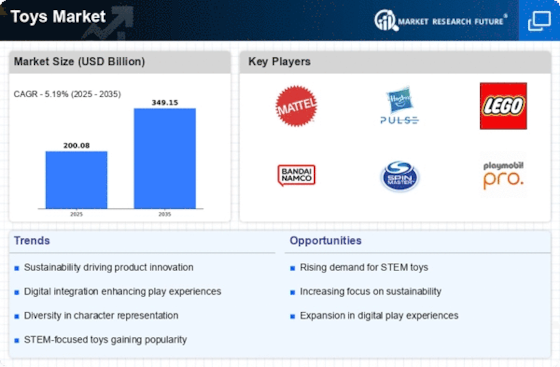
What is the current valuation of the Toys Market as of 2024?

<p>The Toys Market was valued at 200.08 USD Billion in 2024.</p>

What is the projected market valuation for the Toys Market in 2035?

The Toys Market is projected to reach a valuation of 349.15 USD Billion by 2035.

What is the expected CAGR for the Toys Market during the forecast period 2025 - 2035?

The expected CAGR for the Toys Market during the forecast period 2025 - 2035 is 5.19%.

Which segments are included in the Toys Market analysis?

The Toys Market analysis includes segments such as preschool toys, action toys, soft toys, dolls, and vehicles.

What were the valuations for action toys in 2024?

In 2024, the valuation for action toys ranged from 40.0 to 70.0 USD Billion.

How do store-based and non-store-based distribution channels compare in the Toys Market?

In 2024, store-based distribution channels accounted for 120.08 to 200.0 USD Billion, while non-store-based channels ranged from 80.0 to 149.15 USD Billion.

Who are the key players in the Toys Market?

Key players in the Toys Market include Mattel, Hasbro, LEGO, Bandai Namco, Spin Master, Playmobil, Ravensburger, Melissa &amp; Doug, and VTech.

What was the valuation for vehicles in the Toys Market in 2024?

The valuation for vehicles in the Toys Market was 70.08 to 129.15 USD Billion in 2024.

What is the expected growth trend for soft toys in the Toys Market?

The valuation for soft toys is projected to grow from 25.0 to 40.0 USD Billion during the forecast period 2025 - 2035.

How does the valuation of dolls compare to other toy segments?

In 2024, the valuation for dolls ranged from 35.0 to 60.0 USD Billion, indicating a competitive position among other toy segments.

Market Summary

As per Market Research Future analysis, the Toys Market Size Was Valued at USD 112.34 Billion In 2024. The Global Toys Industry Is Projected to grow from USD 117.83 Billion in 2025 to USD 223.74 Billion by 2035, Exhibiting A Compound Annual Growth Rate (CAGR) of 6.62% during the Forecast Period (2025 - 2035).

Key Market Trends & Highlights

The Toys are items made mainly for kids to play with and are meant to amuse, teach, or support their social, emotional, cognitive, or physical development. They can be as basic as dolls, action figures, and puzzles or as sophisticated as robots, educational kits, and games with apps.

  • Toys hold excellent emotional and cultural value and serve as tools for learning, creativity, socialization, and cognitive development in addition to providing entertainment. The toy market serves a variety of age groups, tastes, and developmental needs by offering a broad range of products, such as classic toys, educational games, electronic devices, collectibles, puzzles, and outdoor play equipment. Digital technology is also changing the industry; modern toys use augmented reality, artificial intelligence, and app connectivity to provide more immersive and interactive experiences.

Market Size & Forecast

2024 Market Size 112.34 (USD Billion)
2035 Market Size 223.74 (USD Billion)
CAGR (2025 - 2035) 6.62%

Major Players

<a href="https://www.lego.com/en-in/themes">Lego Group</a>, Bandai Namco Holdings Inc., Tamiya Incorporated, Spin Master Corporation, Hasbro, Inc., Mattel, Inc., Funko Inc., Clementoni S.p.A, Funskool (India) Ltd., Goliath Games, and Others.

Market Trends

With an abundance of untapped potential in areas like Asia-Pacific (apart from developed markets like Japan), Latin America, the Middle East, and portions of Africa and Eastern Europe, emerging markets growth offers the global toy industry a significant opportunity. These economies are becoming increasingly appealing to toy manufacturers and retailers as they grow due to factors like growing middle-class populations, urbanization, smartphone and internet penetration, and better infrastructure. The rise in disposable income and consumer spending among young families in these areas is one of the strongest factors contributing to this growth. Parents are more inclined to spend some of their money on toys and other non-essentials, particularly those that are educational or culturally aspirational, as household incomes rise. This is further reinforced by the increased focus on early childhood education and development, as parents in emerging markets become more conscious of the social, emotional, and cognitive advantages of play.

Additionally, emerging markets' demographics and population growth foster an environment that is conducive to toy sales. With high birth rates and a growing number of children under the age of 14, nations like Brazil, Nigeria, Indonesia, India, and the Philippines have sizable and youthful populations. In contrast, birth rates are stagnant or declining in many developed nations. When combined with positive cultural attitudes toward gift-giving, celebrations, and the growing influence of Western media, a younger population base directly translates into a larger potential customer segment for toys.


“Age-appropriate toys are important for the physical, intellectual, and socioemotional development of children. They can help children learn, develop imaginative capacities, and refine motor coordination. Age determinations can be used to generate an intended age during a toy’s design phase and can be used for age labeling a product accurately, thereby encouraging consumers to purchase and give a toy to a child who is most likely to fully interact with its features.”

Consumer Product Safety Commission

United States of America

Toys Market Market Drivers

Stringent Regulatory Compliance

As toys are primarily made for children, who are a very delicate and vulnerable group, governments everywhere have imposed stringent safety regulations to guarantee that these items are free from mechanical, chemical, and physical risks. Toy manufacturers must comply with these complicated legal and logistical requirements, even though they are crucial for ensuring the health and safety of children. Toys must adhere to intricate and ever-changing safety regulations in developed regions such as North America and Europe. For example, the Consumer Product Safety Improvement Act (CPSIA) in the United States requires toys to adhere to certain standards, such as mandatory labeling, third-party lab testing, and limits on lead and phthalates. Manufacturers in the EU are required to adhere to the EN 71 series of toy safety regulations in order to apply the CE mark, which certifies that the product has undergone thorough safety testing. Manufacturers who sell internationally must negotiate a complicated web of region-specific regulations because other countries, such as Canada, Australia, China, and Japan, also have their own sets of laws and testing requirements.

Increasing Popularity of Educational Toys

These days, educational toys—which combine play and learning—are seen as vital components of a child's development rather than simply extra or optional items. Through entertaining and engaging activities, these toys seek to develop children's motor, social, emotional, and cognitive abilities. The way parents view play has changed significantly over the past ten years. More than ever, they are actively looking for toys that provide both fun and significant educational value because they intend to prepare their kids for a world that is becoming more competitive and changing quickly. This change has its roots in contemporary parenting theories that prioritize experiential learning and holistic growth. Today's parents want toys that support language development, problem-solving skills, critical thinking, creativity, and early literacy and numeracy rather than just providing entertainment for their kids. Because of this, toys that teach STEM (science, technology, engineering, and mathematics) skills—like puzzles, building kits, coding robots, and electronic learning tools—have become increasingly popular in both developed and emerging markets.

Focus on Child Development and Safety Standards

The need for toys that promote healthy growth has increased as parents, educators, and legislators become more conscious of the critical impact that early play has on a child's cognitive, emotional, and physical development. This change reflects a wider cultural recognition that play is not only a recreational activity but also a vital component of early education, with toys acting as instruments to support children's world exploration, socialization, confidence-building, and academic success. Because of this, toy manufacturers are now giving developmental value top priority when designing toys, producing toys that foster creativity, problem-solving, fine motor skills, and language development. Toys like building blocks, puzzles, interactive storybooks, and role-playing sets, for instance, are purposefully made to support particular developmental milestones at various phases of childhood, from infancy to adolescence.

Growing Influence of Social Media and Online Marketing

The global toy industry has undergone a significant transformation due to the increasing impact of social media and online marketing, which has shaped how products are found, advertised, and bought. To reach and interact with their target audiences—children, parents, and even adult collectors—toy brands now depend heavily on social media sites. These platforms provide a quick, interactive, and visually appealing way to introduce new toys, show off how they operate, and establish a personal bond with customers. Social media marketing gives brands the opportunity to interact directly with consumers through relatable, entertaining, and highly shareable content, in contrast to traditional advertising, which mainly relied on print catalogs and television commercials.

The growing influence of peer recommendations and customer reviews in determining brand perception is another significant change brought about by social media. The consumer journey now includes community discussions, online reviews, and ratings. Many parents look to social media for real user reviews before making a purchase, particularly for more expensive or educational toys. As a result, there are now social media pages, parenting communities, and toy review channels where people can exchange stories and develop trust in specific brands. While negative online reviews can seriously harm a toy's reputation, positive reviews can significantly increase a toy's popularity. As a result, brands now need to be active and responsive on the internet, interacting with consumers, resolving issues, and establishing enduring bonds through community management and social listening.

Market Segment Insights

By Type: Soft Toys (Largest) vs. Action Toys (Fastest-Growing)

<p>The Toys Market is diverse, with 'Soft Toys' commanding the largest share among types, appealing especially to younger demographics for their comfort and safety. Following closely are 'Dolls', which remain popular through classic play, while 'Action Toys' have gained substantial traction among children who enjoy role-play and superhero themes. 'Preschool Toys' and 'Vehicles' further enrich the landscape, each holding unique appeals based on age and interests.</p>

<p>Soft Toys: (Dominant) vs. Action Toys (Emerging)</p>

<p>Soft Toys represent the dominant force in the Toys Market due to their emotional connection and versatility, catering to infants and toddlers who seek comfort. They include plush animals, cushions, and interactive toys, which foster imaginative play and comfort. On the other hand, Action Toys are emerging rapidly, driven by innovative products and popular franchises. These toys encourage physical activity and social interaction among children, captivating them with dynamic features and collectability. The increasing interest in superhero-themed play has positioned Action Toys as a significant growth area, appealing to both kids and collectors.</p>

By Distribution Channel: Store-Based (Largest) vs. Non-Store-Based (Fastest-Growing)

<p>In the Toys Market, the distribution channels are primarily categorized into store-based and non-store-based. Store-based channels, which include traditional retail stores, continue to hold a significant share of the market due to their established presence and customer trust. These physical locations allow consumers to experience products firsthand before purchase, which remains a critical aspect in the toy industry where sensory engagement is vital. Conversely, non-store-based channels, including e-commerce platforms, have been gaining momentum, appealing particularly to tech-savvy parents and guardians seeking convenience and a wider selection of products.</p>

<p>Store-Based (Dominant) vs. Non-Store-Based (Emerging)</p>

<p>The store-based segment of the Toys Market remains dominant, offering a tactile shopping experience that resonates well with both children and their parents. Retailers often provide a play area or interactive displays, which enhance customer engagement and encourage impulse buying. In contrast, the non-store-based segment is emerging rapidly, driven by the growing trend of online shopping. E-commerce platforms offer extensive product assortments, ease of comparison, and often competitive pricing, attracting a new generation of shoppers. This segment is characterized by innovations, including augmented reality experiences and subscription services, catering to diverse consumer preferences.</p>

By End User: Unisex Gender-Neutral Toys (Largest) vs. Girls (Smallest)

Unisex Gender-Neutral Toys is the major end user of the market as these toys focus on creativity, learning, and fun, allowing all children to explore a wide range of interests without feeling limited by societal expectations. Girls, as end users of toys, often show diverse interests that reflect creativity, social interaction, and imaginative play. Many girls enjoy toys that encourage storytelling, nurturing, and role-playing, such as dolls, playsets, and craft kits..

By Product Type: Traditional Toys, Arts & Crafts Toys, Electronic Smart Toys, Outdoor Sport Toys, Collectible Toys, and Sustainable & Eco-Friendly Toys

Based on product type, the Toys Market is segmented into Traditional Toys, Arts &amp; Crafts Toys, Electronic Smart Toys, Outdoor Sport Toys, Collectible Toys, and Sustainable &amp; Eco-Friendly Toys. The Traditional Toys segment dominated the market in 2024 whereas electronic smart toys segment is projected to be the fastest-growing segment during the forecast period, 2025–2035.

Traditional toys represent a timeless category of playthings that have been cherished by children for generations. Unlike modern electronic or digital toys, traditional toys are often made from natural materials such as wood, cloth, or metal, emphasizing simplicity and creativity. Examples include spinning tops, wooden blocks, dolls, marbles, and jump ropes. These toys encourage imaginative play, physical activity, and social interaction among children, often requiring minimal supervision or batteries. They also hold cultural significance, reflecting the customs and heritage of different regions through unique designs and craftsmanship. Traditional toys promote sensory development and fine motor skills by engaging children in hands-on activities. Moreover, their durability and eco-friendly materials make them a sustainable choice compared to many plastic, mass-produced alternatives. In a world increasingly dominated by technology, traditional toys offer a refreshing balance, fostering creativity, patience, and interpersonal skills.

Get more detailed insights about Toys Market Research Report - Forecast till 2035

Regional Insights

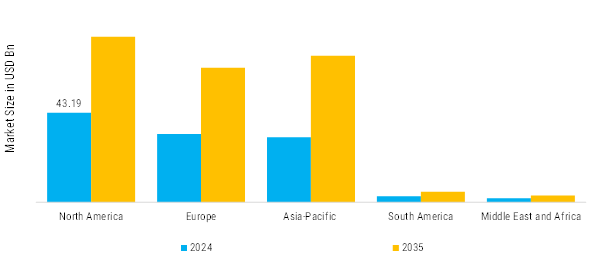
Based on region, the Global Commercial Heat-Treating Market is segmented into North America, Europe, Asia-Pacific, South America and Middle East and Africa. North America accounted for the largest market share in 2024 and is anticipated to reach USD 79.81 Billion by 2035. Asia-Pacific is projected to grow at the highest CAGR of 7.82% during the forecast period.

Toys Market Regional Insights

North America: Expanding operation market

This region is the largest contributor to global Toys and is a dynamic and competitive industry shaped by innovation, media tie-ins, and evolving consumer preferences. Dominated by major players like Hasbro, Mattel, LEGO, and Spin Master, the market thrives on both traditional toys and tech-enhanced products, including app-integrated and AI-powered toys. Licensing agreements with entertainment giants such as Disney, Marvel, and Warner Bros. drive strong demand, particularly around film and streaming releases. Post-pandemic trends have emphasized educational, screen-free play, while adult collectors and nostalgia-based products have expanded the market's demographic reach. E-commerce and social media platforms like Amazon, YouTube, and TikTok have reshaped toy marketing and sales, accelerating the shift to digital-first strategies.

The toy industry has grown substantially over time, with billions of dollars of toys sold each year in the United States alone. Even after safety considerations, injuries can result.

“National Library of Medicine”

Europe: Emerging operation Evolution

The European toys sector is a dynamic and diverse industry, known for its emphasis on safety, innovation, and educational value. Home to globally recognized brands such as LEGO (Denmark), Playmobil (Germany), and Smoby (France), the region combines traditional craftsmanship with modern technology to meet evolving consumer demands. The market is heavily regulated, particularly under EU Toy Safety Directive standards, ensuring high-quality and non-toxic products. Sustainability has become a growing focus, with companies increasingly adopting eco-friendly materials and production methods.

Asia-pacific: Rising internal Demand

The Asia-Pacific toys sector is one of the fastest-growing and most dynamic markets globally, driven by a combination of rising disposable incomes, a growing middle class, and increasing demand for both traditional and tech-enabled toys. Countries like China, Japan, India, and South Korea play a major role in manufacturing and consumption, with China serving as a global hub for toy production.

Rising disposable incomes, government programs like Make in India, and growing consumer demand for toys that are safe, instructive, and made locally are all contributing factors to the steady rise of the India Toy Market.
The market's competitive landscape is changing due to innovation, the growth of e-commerce, and a move toward STEM-based and environmentally friendly products.

South America: Demand for Traditional and Smart Toys

The toys sector in South America is a dynamic and growing industry, driven by a young population and increasing consumer spending. Countries like Brazil, Argentina, and Colombia are key markets, with Brazil being the largest in the region. The industry benefits from a strong demand for both traditional toys and modern, tech-driven products such as educational and electronic toys. Global brands like Mattel and Hasbro maintain a strong presence, but local manufacturers also play a significant role by offering culturally relevant products at more affordable prices. E-commerce is expanding rapidly, especially post-pandemic, giving consumers wider access to international brands.

Middle-East & Africa: Early Childhood Development

The Middle East and Africa (MEA) toys sector is witnessing steady growth, driven by rising disposable incomes, a young population, and increasing awareness of early childhood development. Countries like the UAE and Saudi Arabia are leading the market, with growing demand for educational toys, licensed merchandise, and tech-integrated products such as smart toys and interactive games. In Africa, urbanization and the expansion of retail infrastructure are boosting accessibility to international toy brands. E-commerce is also playing a key role, enabling wider product reach and variety.

Key Players and Competitive Insights

The Toys Market represents a dynamic and intensely competitive landscape shaped by a blend of legacy giants, regionally entrenched manufacturers, and niche innovators, each vying for relevance and market share in an industry driven by rapid consumer shifts, licensing dominance, educational value, and digital convergence. This sector is marked by a complex interplay of brand equity, content integration, product innovation, and distribution muscle — all of which determine success in an increasingly saturated and seasonal market. With rising parental preference for STEM-based learning toys, increasing digital-native child engagement, and evolving safety regulations, the market has transitioned from simple entertainment to purpose-driven play experiences.

The major players in the market Include Lego Group, Bandai Namco Holdings Inc., Tamiya Incorporated, Spin Master Corporation, Hasbro, Inc., Mattel, Inc., Funko Inc., Clementoni S.p.A, Funskool (India) Ltd., Goliath Games, And Others. Together, these companies embody the diversity and complexity of the global toys industry — from precision hobbyism and STEM-focused learning to content-driven mass market appeal. Success in this fragmented yet consolidating market increasingly hinges on IP ownership, innovation speed, omni-platform brand engagement, and the ability to localize globally resonant products — all within the framework of rising sustainability expectations and digitally-native consumer behaviour.

Key Companies in the Toys Market include

Industry Developments

July 2025: The LEGO Group and Universal Products & Experiences are unveiled seven new LEGO Wicked sets inspired by Universal Pictures’ upcoming film, Wicked: For Good, in theaters November 21. The new LEGO Wicked: For Good sets will be available starting September 1, 2025. Following a successful collaboration on the first film, with four LEGO Wicked sets introduced, the two brands are back with seven new playsets inspired by the upcoming Wicked: For Good.

June 2025: Spin Master Corp., a leading global children's entertainment company, announced the launch of an all-new DORA toy collection, inspired by the hit Paramount+ original animated preschool series produced by Nickelodeon Animation. Coinciding with the 25th anniversary of the global pop-culture phenomenon, the innovative toys embody Dora's spirit of curiosity and courage, inviting a new generation of children to explore, play, and learn alongside the groundbreaking Latina heroine.

November 2024: Goliath Games  announced the acquisition of Lucky Duck Games, best known for its industry-leading and award-winning digital hybrid board games such as Chronicles of Crime and Destinies. Goliath, a global leader in kids and family games with multi-generational hits like Sequence, Floor Is Lava, Gooey Louis and Pop the Pig, has been building success in the Adult Games category, published under Endless Games. Notable releases include crime game Unsolved Case Files, TV hit sensation The Traitors and more kidult games slated for release under its global distribution deal with Funko Games announced last month.

Future Outlook

Toys Market Future Outlook

The Toys Market is projected to grow at a 6.62% CAGR from 2025 to 2035, driven by growing demand for eco-friendly products, inclusive play experiences that support children's social, emotional, and cognitive development, and STEAM

New opportunities lie in:

  • <p>Emerging Market Growth</p>
  • <p>Sustainable and Eco-Friendly Products</p>
  • <p>Personalization in Toy Design</p>
  • <p>Cross Industry Collaborations</p>

By 2035, the Toys Market is expected to achieve robust growth, reflecting evolving consumer preferences and innovative product offerings.

Market Segmentation

Toys Market by End User Outlook

  • Boys
  • Girls
  • Unisex Gender-Neutral Toys

Toys Market by Age Group Outlook

  • Infants Toddlers (0-3 years)
  • Preschool (3-5 years)
  • Early Childhood (6-8 years)
  • Pre-Teens (9-12 years)
  • Teenagers (13-18 years)
  • Others

Toys Market by Product Type Outlook

  • Traditional Toys
  • Educational STEM Toys
  • Electronic Smart Toys
  • Outdoor Sports Toys
  • Collectible Toys
  • Sustainable Eco-Friendly Toys

Toys Market by Material Type Outlook

  • Plastic Toys
  • Wooden Toys
  • Metal Toys
  • Fabric Plush Toys
  • Biodegradable Sustainable Toys

Toys Market by Distribution Channel Outlook

  • Offline Retail
  • Online Retail E-Commerce

Report Scope

Market Size 2024 112.34 (USD Billion)
Market Size 2025 117.83 (USD Billion)
Market Size 2035 223.74 (USD Billion)
Compound Annual Growth Rate (CAGR) 6.62% (2025 - 2035)
Report Coverage Revenue Forecast, Competitive Landscape, Growth Factors, and Trends
Base Year 2024
Market Forecast Period 2025 - 2035
Historical Data 2019 - 2023
Market Forecast Units USD Billion
Key Companies Profiled Lego Group, Bandai Namco Holdings Inc., Tamiya Incorporated, Spin Master Corporation, Hasbro, Inc., Mattel, Inc., Funko Inc., Clementoni S.p.A, Funskool (India) Ltd., Goliath Games, And Others.
Segments Covered By Product Type, By Age Group, By Material Type, By Distribution Channel, By End User
Key Market Opportunities Emerging Market Growth Sustainable and Eco-Friendly Products Personalization in Toy Design Cross Industry Collaborations 
Key Market Dynamics Increasing Popularity of Educational Toys Growing Influence of Social Media and Online Marketing Expansion of E-Commerce Platforms Focus on Child Development and Safety Standards
Countries Covered North America, Europe, APAC, South America, MEA

FAQs

What is the current valuation of the Toys Market as of 2024?

<p>The Toys Market was valued at 200.08 USD Billion in 2024.</p>

What is the projected market valuation for the Toys Market in 2035?

The Toys Market is projected to reach a valuation of 349.15 USD Billion by 2035.

What is the expected CAGR for the Toys Market during the forecast period 2025 - 2035?

The expected CAGR for the Toys Market during the forecast period 2025 - 2035 is 5.19%.

Which segments are included in the Toys Market analysis?

The Toys Market analysis includes segments such as preschool toys, action toys, soft toys, dolls, and vehicles.

What were the valuations for action toys in 2024?

In 2024, the valuation for action toys ranged from 40.0 to 70.0 USD Billion.

How do store-based and non-store-based distribution channels compare in the Toys Market?

In 2024, store-based distribution channels accounted for 120.08 to 200.0 USD Billion, while non-store-based channels ranged from 80.0 to 149.15 USD Billion.

Who are the key players in the Toys Market?

Key players in the Toys Market include Mattel, Hasbro, LEGO, Bandai Namco, Spin Master, Playmobil, Ravensburger, Melissa &amp; Doug, and VTech.

What was the valuation for vehicles in the Toys Market in 2024?

The valuation for vehicles in the Toys Market was 70.08 to 129.15 USD Billion in 2024.

What is the expected growth trend for soft toys in the Toys Market?

The valuation for soft toys is projected to grow from 25.0 to 40.0 USD Billion during the forecast period 2025 - 2035.

How does the valuation of dolls compare to other toy segments?

In 2024, the valuation for dolls ranged from 35.0 to 60.0 USD Billion, indicating a competitive position among other toy segments.

  1. SECTION I: EXECUTIVE SUMMARY AND KEY HIGHLIGHTS
    1. | 1.1 EXECUTIVE SUMMARY
    2. | | 1.1.1 Market Overview
    3. | | 1.1.2 Key Findings
    4. | | 1.1.3 Market Segmentation
    5. | | 1.1.4 Competitive Landscape
    6. | | 1.1.5 Challenges and Opportunities
    7. | | 1.1.6 Future Outlook
  2. SECTION II: SCOPING, METHODOLOGY AND MARKET STRUCTURE
    1. | 2.1 MARKET INTRODUCTION
    2. | | 2.1.1 Definition
    3. | | 2.1.2 Scope of the study
    4. | | | 2.1.2.1 Research Objective
    5. | | | 2.1.2.2 Assumption
    6. | | | 2.1.2.3 Limitations
    7. | 2.2 RESEARCH METHODOLOGY
    8. | | 2.2.1 Overview
    9. | | 2.2.2 Data Mining
    10. | | 2.2.3 Secondary Research
    11. | | 2.2.4 Primary Research
    12. | | | 2.2.4.1 Primary Interviews and Information Gathering Process
    13. | | | 2.2.4.2 Breakdown of Primary Respondents
    14. | | 2.2.5 Forecasting Model
    15. | | 2.2.6 Market Size Estimation
    16. | | | 2.2.6.1 Bottom-Up Approach
    17. | | | 2.2.6.2 Top-Down Approach
    18. | | 2.2.7 Data Triangulation
    19. | | 2.2.8 Validation
  3. SECTION III: QUALITATIVE ANALYSIS
    1. | 3.1 MARKET DYNAMICS
    2. | | 3.1.1 Overview
    3. | | 3.1.2 Drivers
    4. | | 3.1.3 Restraints
    5. | | 3.1.4 Opportunities
    6. | 3.2 MARKET FACTOR ANALYSIS
    7. | | 3.2.1 Value chain Analysis
    8. | | 3.2.2 Porter's Five Forces Analysis
    9. | | | 3.2.2.1 Bargaining Power of Suppliers
    10. | | | 3.2.2.2 Bargaining Power of Buyers
    11. | | | 3.2.2.3 Threat of New Entrants
    12. | | | 3.2.2.4 Threat of Substitutes
    13. | | | 3.2.2.5 Intensity of Rivalry
    14. | | 3.2.3 COVID-19 Impact Analysis
    15. | | | 3.2.3.1 Market Impact Analysis
    16. | | | 3.2.3.2 Regional Impact
    17. | | | 3.2.3.3 Opportunity and Threat Analysis
  4. SECTION IV: QUANTITATIVE ANALYSIS
    1. | 4.1 Consumer and Retail, BY Type (USD Billion)
    2. | | 4.1.1 preschool toys
    3. | | 4.1.2 action toys
    4. | | 4.1.3 soft toys
    5. | | 4.1.4 dolls
    6. | | 4.1.5 vehicles
    7. | 4.2 Consumer and Retail, BY Distribution Channel (USD Billion)
    8. | | 4.2.1 store-based
    9. | | 4.2.2 non-store-based
    10. | 4.3 Consumer and Retail, BY Region (USD Billion)
    11. | | 4.3.1 North America
    12. | | | 4.3.1.1 US
    13. | | | 4.3.1.2 Canada
    14. | | 4.3.2 Europe
    15. | | | 4.3.2.1 Germany
    16. | | | 4.3.2.2 UK
    17. | | | 4.3.2.3 France
    18. | | | 4.3.2.4 Russia
    19. | | | 4.3.2.5 Italy
    20. | | | 4.3.2.6 Spain
    21. | | | 4.3.2.7 Rest of Europe
    22. | | 4.3.3 APAC
    23. | | | 4.3.3.1 China
    24. | | | 4.3.3.2 India
    25. | | | 4.3.3.3 Japan
    26. | | | 4.3.3.4 South Korea
    27. | | | 4.3.3.5 Malaysia
    28. | | | 4.3.3.6 Thailand
    29. | | | 4.3.3.7 Indonesia
    30. | | | 4.3.3.8 Rest of APAC
    31. | | 4.3.4 South America
    32. | | | 4.3.4.1 Brazil
    33. | | | 4.3.4.2 Mexico
    34. | | | 4.3.4.3 Argentina
    35. | | | 4.3.4.4 Rest of South America
    36. | | 4.3.5 MEA
    37. | | | 4.3.5.1 GCC Countries
    38. | | | 4.3.5.2 South Africa
    39. | | | 4.3.5.3 Rest of MEA
  5. SECTION V: COMPETITIVE ANALYSIS
    1. | 5.1 Competitive Landscape
    2. | | 5.1.1 Overview
    3. | | 5.1.2 Competitive Analysis
    4. | | 5.1.3 Market share Analysis
    5. | | 5.1.4 Major Growth Strategy in the Consumer and Retail
    6. | | 5.1.5 Competitive Benchmarking
    7. | | 5.1.6 Leading Players in Terms of Number of Developments in the Consumer and Retail
    8. | | 5.1.7 Key developments and growth strategies
    9. | | | 5.1.7.1 New Product Launch/Service Deployment
    10. | | | 5.1.7.2 Merger & Acquisitions
    11. | | | 5.1.7.3 Joint Ventures
    12. | | 5.1.8 Major Players Financial Matrix
    13. | | | 5.1.8.1 Sales and Operating Income
    14. | | | 5.1.8.2 Major Players R&D Expenditure. 2023
    15. | 5.2 Company Profiles
    16. | | 5.2.1 Mattel (US)
    17. | | | 5.2.1.1 Financial Overview
    18. | | | 5.2.1.2 Products Offered
    19. | | | 5.2.1.3 Key Developments
    20. | | | 5.2.1.4 SWOT Analysis
    21. | | | 5.2.1.5 Key Strategies
    22. | | 5.2.2 Hasbro (US)
    23. | | | 5.2.2.1 Financial Overview
    24. | | | 5.2.2.2 Products Offered
    25. | | | 5.2.2.3 Key Developments
    26. | | | 5.2.2.4 SWOT Analysis
    27. | | | 5.2.2.5 Key Strategies
    28. | | 5.2.3 LEGO (DK)
    29. | | | 5.2.3.1 Financial Overview
    30. | | | 5.2.3.2 Products Offered
    31. | | | 5.2.3.3 Key Developments
    32. | | | 5.2.3.4 SWOT Analysis
    33. | | | 5.2.3.5 Key Strategies
    34. | | 5.2.4 Bandai Namco (JP)
    35. | | | 5.2.4.1 Financial Overview
    36. | | | 5.2.4.2 Products Offered
    37. | | | 5.2.4.3 Key Developments
    38. | | | 5.2.4.4 SWOT Analysis
    39. | | | 5.2.4.5 Key Strategies
    40. | | 5.2.5 Spin Master (CA)
    41. | | | 5.2.5.1 Financial Overview
    42. | | | 5.2.5.2 Products Offered
    43. | | | 5.2.5.3 Key Developments
    44. | | | 5.2.5.4 SWOT Analysis
    45. | | | 5.2.5.5 Key Strategies
    46. | | 5.2.6 Playmobil (DE)
    47. | | | 5.2.6.1 Financial Overview
    48. | | | 5.2.6.2 Products Offered
    49. | | | 5.2.6.3 Key Developments
    50. | | | 5.2.6.4 SWOT Analysis
    51. | | | 5.2.6.5 Key Strategies
    52. | | 5.2.7 Ravensburger (DE)
    53. | | | 5.2.7.1 Financial Overview
    54. | | | 5.2.7.2 Products Offered
    55. | | | 5.2.7.3 Key Developments
    56. | | | 5.2.7.4 SWOT Analysis
    57. | | | 5.2.7.5 Key Strategies
    58. | | 5.2.8 Melissa & Doug (US)
    59. | | | 5.2.8.1 Financial Overview
    60. | | | 5.2.8.2 Products Offered
    61. | | | 5.2.8.3 Key Developments
    62. | | | 5.2.8.4 SWOT Analysis
    63. | | | 5.2.8.5 Key Strategies
    64. | | 5.2.9 VTech (HK)
    65. | | | 5.2.9.1 Financial Overview
    66. | | | 5.2.9.2 Products Offered
    67. | | | 5.2.9.3 Key Developments
    68. | | | 5.2.9.4 SWOT Analysis
    69. | | | 5.2.9.5 Key Strategies
    70. | 5.3 Appendix
    71. | | 5.3.1 References
    72. | | 5.3.2 Related Reports
  6. LIST OF FIGURES
    1. | 6.1 MARKET SYNOPSIS
    2. | 6.2 NORTH AMERICA MARKET ANALYSIS
    3. | 6.3 US MARKET ANALYSIS BY TYPE
    4. | 6.4 US MARKET ANALYSIS BY DISTRIBUTION CHANNEL
    5. | 6.5 CANADA MARKET ANALYSIS BY TYPE
    6. | 6.6 CANADA MARKET ANALYSIS BY DISTRIBUTION CHANNEL
    7. | 6.7 EUROPE MARKET ANALYSIS
    8. | 6.8 GERMANY MARKET ANALYSIS BY TYPE
    9. | 6.9 GERMANY MARKET ANALYSIS BY DISTRIBUTION CHANNEL
    10. | 6.10 UK MARKET ANALYSIS BY TYPE
    11. | 6.11 UK MARKET ANALYSIS BY DISTRIBUTION CHANNEL
    12. | 6.12 FRANCE MARKET ANALYSIS BY TYPE
    13. | 6.13 FRANCE MARKET ANALYSIS BY DISTRIBUTION CHANNEL
    14. | 6.14 RUSSIA MARKET ANALYSIS BY TYPE
    15. | 6.15 RUSSIA MARKET ANALYSIS BY DISTRIBUTION CHANNEL
    16. | 6.16 ITALY MARKET ANALYSIS BY TYPE
    17. | 6.17 ITALY MARKET ANALYSIS BY DISTRIBUTION CHANNEL
    18. | 6.18 SPAIN MARKET ANALYSIS BY TYPE
    19. | 6.19 SPAIN MARKET ANALYSIS BY DISTRIBUTION CHANNEL
    20. | 6.20 REST OF EUROPE MARKET ANALYSIS BY TYPE
    21. | 6.21 REST OF EUROPE MARKET ANALYSIS BY DISTRIBUTION CHANNEL
    22. | 6.22 APAC MARKET ANALYSIS
    23. | 6.23 CHINA MARKET ANALYSIS BY TYPE
    24. | 6.24 CHINA MARKET ANALYSIS BY DISTRIBUTION CHANNEL
    25. | 6.25 INDIA MARKET ANALYSIS BY TYPE
    26. | 6.26 INDIA MARKET ANALYSIS BY DISTRIBUTION CHANNEL
    27. | 6.27 JAPAN MARKET ANALYSIS BY TYPE
    28. | 6.28 JAPAN MARKET ANALYSIS BY DISTRIBUTION CHANNEL
    29. | 6.29 SOUTH KOREA MARKET ANALYSIS BY TYPE
    30. | 6.30 SOUTH KOREA MARKET ANALYSIS BY DISTRIBUTION CHANNEL
    31. | 6.31 MALAYSIA MARKET ANALYSIS BY TYPE
    32. | 6.32 MALAYSIA MARKET ANALYSIS BY DISTRIBUTION CHANNEL
    33. | 6.33 THAILAND MARKET ANALYSIS BY TYPE
    34. | 6.34 THAILAND MARKET ANALYSIS BY DISTRIBUTION CHANNEL
    35. | 6.35 INDONESIA MARKET ANALYSIS BY TYPE
    36. | 6.36 INDONESIA MARKET ANALYSIS BY DISTRIBUTION CHANNEL
    37. | 6.37 REST OF APAC MARKET ANALYSIS BY TYPE
    38. | 6.38 REST OF APAC MARKET ANALYSIS BY DISTRIBUTION CHANNEL
    39. | 6.39 SOUTH AMERICA MARKET ANALYSIS
    40. | 6.40 BRAZIL MARKET ANALYSIS BY TYPE
    41. | 6.41 BRAZIL MARKET ANALYSIS BY DISTRIBUTION CHANNEL
    42. | 6.42 MEXICO MARKET ANALYSIS BY TYPE
    43. | 6.43 MEXICO MARKET ANALYSIS BY DISTRIBUTION CHANNEL
    44. | 6.44 ARGENTINA MARKET ANALYSIS BY TYPE
    45. | 6.45 ARGENTINA MARKET ANALYSIS BY DISTRIBUTION CHANNEL
    46. | 6.46 REST OF SOUTH AMERICA MARKET ANALYSIS BY TYPE
    47. | 6.47 REST OF SOUTH AMERICA MARKET ANALYSIS BY DISTRIBUTION CHANNEL
    48. | 6.48 MEA MARKET ANALYSIS
    49. | 6.49 GCC COUNTRIES MARKET ANALYSIS BY TYPE
    50. | 6.50 GCC COUNTRIES MARKET ANALYSIS BY DISTRIBUTION CHANNEL
    51. | 6.51 SOUTH AFRICA MARKET ANALYSIS BY TYPE
    52. | 6.52 SOUTH AFRICA MARKET ANALYSIS BY DISTRIBUTION CHANNEL
    53. | 6.53 REST OF MEA MARKET ANALYSIS BY TYPE
    54. | 6.54 REST OF MEA MARKET ANALYSIS BY DISTRIBUTION CHANNEL
    55. | 6.55 KEY BUYING CRITERIA OF CONSUMER AND RETAIL
    56. | 6.56 RESEARCH PROCESS OF MRFR
    57. | 6.57 DRO ANALYSIS OF CONSUMER AND RETAIL
    58. | 6.58 DRIVERS IMPACT ANALYSIS: CONSUMER AND RETAIL
    59. | 6.59 RESTRAINTS IMPACT ANALYSIS: CONSUMER AND RETAIL
    60. | 6.60 SUPPLY / VALUE CHAIN: CONSUMER AND RETAIL
    61. | 6.61 CONSUMER AND RETAIL, BY TYPE, 2024 (% SHARE)
    62. | 6.62 CONSUMER AND RETAIL, BY TYPE, 2024 TO 2035 (USD Billion)
    63. | 6.63 CONSUMER AND RETAIL, BY DISTRIBUTION CHANNEL, 2024 (% SHARE)
    64. | 6.64 CONSUMER AND RETAIL, BY DISTRIBUTION CHANNEL, 2024 TO 2035 (USD Billion)
    65. | 6.65 BENCHMARKING OF MAJOR COMPETITORS
  7. LIST OF TABLES
    1. | 7.1 LIST OF ASSUMPTIONS
    2. | | 7.1.1
    3. | 7.2 North America MARKET SIZE ESTIMATES; FORECAST
    4. | | 7.2.1 BY TYPE, 2025-2035 (USD Billion)
    5. | | 7.2.2 BY DISTRIBUTION CHANNEL, 2025-2035 (USD Billion)
    6. | 7.3 US MARKET SIZE ESTIMATES; FORECAST
    7. | | 7.3.1 BY TYPE, 2025-2035 (USD Billion)
    8. | | 7.3.2 BY DISTRIBUTION CHANNEL, 2025-2035 (USD Billion)
    9. | 7.4 Canada MARKET SIZE ESTIMATES; FORECAST
    10. | | 7.4.1 BY TYPE, 2025-2035 (USD Billion)
    11. | | 7.4.2 BY DISTRIBUTION CHANNEL, 2025-2035 (USD Billion)
    12. | 7.5 Europe MARKET SIZE ESTIMATES; FORECAST
    13. | | 7.5.1 BY TYPE, 2025-2035 (USD Billion)
    14. | | 7.5.2 BY DISTRIBUTION CHANNEL, 2025-2035 (USD Billion)
    15. | 7.6 Germany MARKET SIZE ESTIMATES; FORECAST
    16. | | 7.6.1 BY TYPE, 2025-2035 (USD Billion)
    17. | | 7.6.2 BY DISTRIBUTION CHANNEL, 2025-2035 (USD Billion)
    18. | 7.7 UK MARKET SIZE ESTIMATES; FORECAST
    19. | | 7.7.1 BY TYPE, 2025-2035 (USD Billion)
    20. | | 7.7.2 BY DISTRIBUTION CHANNEL, 2025-2035 (USD Billion)
    21. | 7.8 France MARKET SIZE ESTIMATES; FORECAST
    22. | | 7.8.1 BY TYPE, 2025-2035 (USD Billion)
    23. | | 7.8.2 BY DISTRIBUTION CHANNEL, 2025-2035 (USD Billion)
    24. | 7.9 Russia MARKET SIZE ESTIMATES; FORECAST
    25. | | 7.9.1 BY TYPE, 2025-2035 (USD Billion)
    26. | | 7.9.2 BY DISTRIBUTION CHANNEL, 2025-2035 (USD Billion)
    27. | 7.10 Italy MARKET SIZE ESTIMATES; FORECAST
    28. | | 7.10.1 BY TYPE, 2025-2035 (USD Billion)
    29. | | 7.10.2 BY DISTRIBUTION CHANNEL, 2025-2035 (USD Billion)
    30. | 7.11 Spain MARKET SIZE ESTIMATES; FORECAST
    31. | | 7.11.1 BY TYPE, 2025-2035 (USD Billion)
    32. | | 7.11.2 BY DISTRIBUTION CHANNEL, 2025-2035 (USD Billion)
    33. | 7.12 Rest of Europe MARKET SIZE ESTIMATES; FORECAST
    34. | | 7.12.1 BY TYPE, 2025-2035 (USD Billion)
    35. | | 7.12.2 BY DISTRIBUTION CHANNEL, 2025-2035 (USD Billion)
    36. | 7.13 APAC MARKET SIZE ESTIMATES; FORECAST
    37. | | 7.13.1 BY TYPE, 2025-2035 (USD Billion)
    38. | | 7.13.2 BY DISTRIBUTION CHANNEL, 2025-2035 (USD Billion)
    39. | 7.14 China MARKET SIZE ESTIMATES; FORECAST
    40. | | 7.14.1 BY TYPE, 2025-2035 (USD Billion)
    41. | | 7.14.2 BY DISTRIBUTION CHANNEL, 2025-2035 (USD Billion)
    42. | 7.15 India MARKET SIZE ESTIMATES; FORECAST
    43. | | 7.15.1 BY TYPE, 2025-2035 (USD Billion)
    44. | | 7.15.2 BY DISTRIBUTION CHANNEL, 2025-2035 (USD Billion)
    45. | 7.16 Japan MARKET SIZE ESTIMATES; FORECAST
    46. | | 7.16.1 BY TYPE, 2025-2035 (USD Billion)
    47. | | 7.16.2 BY DISTRIBUTION CHANNEL, 2025-2035 (USD Billion)
    48. | 7.17 South Korea MARKET SIZE ESTIMATES; FORECAST
    49. | | 7.17.1 BY TYPE, 2025-2035 (USD Billion)
    50. | | 7.17.2 BY DISTRIBUTION CHANNEL, 2025-2035 (USD Billion)
    51. | 7.18 Malaysia MARKET SIZE ESTIMATES; FORECAST
    52. | | 7.18.1 BY TYPE, 2025-2035 (USD Billion)
    53. | | 7.18.2 BY DISTRIBUTION CHANNEL, 2025-2035 (USD Billion)
    54. | 7.19 Thailand MARKET SIZE ESTIMATES; FORECAST
    55. | | 7.19.1 BY TYPE, 2025-2035 (USD Billion)
    56. | | 7.19.2 BY DISTRIBUTION CHANNEL, 2025-2035 (USD Billion)
    57. | 7.20 Indonesia MARKET SIZE ESTIMATES; FORECAST
    58. | | 7.20.1 BY TYPE, 2025-2035 (USD Billion)
    59. | | 7.20.2 BY DISTRIBUTION CHANNEL, 2025-2035 (USD Billion)
    60. | 7.21 Rest of APAC MARKET SIZE ESTIMATES; FORECAST
    61. | | 7.21.1 BY TYPE, 2025-2035 (USD Billion)
    62. | | 7.21.2 BY DISTRIBUTION CHANNEL, 2025-2035 (USD Billion)
    63. | 7.22 South America MARKET SIZE ESTIMATES; FORECAST
    64. | | 7.22.1 BY TYPE, 2025-2035 (USD Billion)
    65. | | 7.22.2 BY DISTRIBUTION CHANNEL, 2025-2035 (USD Billion)
    66. | 7.23 Brazil MARKET SIZE ESTIMATES; FORECAST
    67. | | 7.23.1 BY TYPE, 2025-2035 (USD Billion)
    68. | | 7.23.2 BY DISTRIBUTION CHANNEL, 2025-2035 (USD Billion)
    69. | 7.24 Mexico MARKET SIZE ESTIMATES; FORECAST
    70. | | 7.24.1 BY TYPE, 2025-2035 (USD Billion)
    71. | | 7.24.2 BY DISTRIBUTION CHANNEL, 2025-2035 (USD Billion)
    72. | 7.25 Argentina MARKET SIZE ESTIMATES; FORECAST
    73. | | 7.25.1 BY TYPE, 2025-2035 (USD Billion)
    74. | | 7.25.2 BY DISTRIBUTION CHANNEL, 2025-2035 (USD Billion)
    75. | 7.26 Rest of South America MARKET SIZE ESTIMATES; FORECAST
    76. | | 7.26.1 BY TYPE, 2025-2035 (USD Billion)
    77. | | 7.26.2 BY DISTRIBUTION CHANNEL, 2025-2035 (USD Billion)
    78. | 7.27 MEA MARKET SIZE ESTIMATES; FORECAST
    79. | | 7.27.1 BY TYPE, 2025-2035 (USD Billion)
    80. | | 7.27.2 BY DISTRIBUTION CHANNEL, 2025-2035 (USD Billion)
    81. | 7.28 GCC Countries MARKET SIZE ESTIMATES; FORECAST
    82. | | 7.28.1 BY TYPE, 2025-2035 (USD Billion)
    83. | | 7.28.2 BY DISTRIBUTION CHANNEL, 2025-2035 (USD Billion)
    84. | 7.29 South Africa MARKET SIZE ESTIMATES; FORECAST
    85. | | 7.29.1 BY TYPE, 2025-2035 (USD Billion)
    86. | | 7.29.2 BY DISTRIBUTION CHANNEL, 2025-2035 (USD Billion)
    87. | 7.30 Rest of MEA MARKET SIZE ESTIMATES; FORECAST
    88. | | 7.30.1 BY TYPE, 2025-2035 (USD Billion)
    89. | | 7.30.2 BY DISTRIBUTION CHANNEL, 2025-2035 (USD Billion)
    90. | 7.31 PRODUCT LAUNCH/PRODUCT DEVELOPMENT/APPROVAL
    91. | | 7.31.1
    92. | 7.32 ACQUISITION/PARTNERSHIP
    93. | | 7.32.1

Consumer and Retail Market Segmentation

Consumer and Retail By Type (USD Billion, 2025-2035)

  • preschool toys
  • action toys
  • soft toys
  • dolls
  • vehicles

Consumer and Retail By Distribution Channel (USD Billion, 2025-2035)

  • store-based
  • non-store-based
Infographic

Free Sample Request

Kindly complete the form below to receive a free sample of this Report

Get Free Sample

Customer Strories

Compare Licence

×
Features License Type
Single User Multiuser License Enterprise User
Price $4,950 $5,950 $7,250
Maximum User Access Limit 1 User Upto 10 Users Unrestricted Access Throughout the Organization
Free Customization
Direct Access to Analyst
Deliverable Format
Platform Access
Discount on Next Purchase 10% 15% 15%
Printable Versions