×
Hero Background
English
Chinese
French
Japanese
Korean
German
Spanish

Tinea Corporis Market Trends

ID: MRFR/Pharma/5373-HCR
90 Pages
Rahul Gotadki
October 2025

Tinea Corporis Market Research Report Information By drug type (antifungals and others), by diagnosis (physical exam, imaging test, and others), by treatment (antifungal shampoos and others), by end-users (hospital pharmacies and others)- Forecast till 2035

Share:
Download PDF ×

We do not share your information with anyone. However, we may send you emails based on your report interest from time to time. You may contact us at any time to opt-out.

Tinea Corporis Market Infographic
Purchase Options

Market Trends

Key Emerging Trends in the Tinea Corporis Market

The pharmaceutical industry is witnessing significant trends in the market for tinea corporis or ringworm, a common fungal infection, which reflect changes in attitudes towards antifungal therapies. This red and itchy rash called ringworm has also spurred greater R&D within the pharmaceutical realm. Among these is an upsurge in advanced antifungal formulations, especially topical creams, ointments and oral medication that seeks to improve efficiency of treatment and convenience for patients.

One of these trends include a growing preference for topical antifungal agents as the most preferred means of treating tinea corporis in the pharmaceutical market. Recently, use of such products increased over oral medications due to their direct application and consequent lower systemic exposure levels. Thus, advanced antifungal creams and ointments have become popular owing to their simplicity and ability to target only affected areas on the skin thereby limiting side effects related with drugs acting systemically.

Another trend in this sector is increased focus on novel broad-spectrum antifungals against variety of fungi causing tinea corporis. Fearing resistance from already available antifungals, companies are now putting resources into identifying new molecules that are more effective than previous ones. This development aligns with efforts by industry stakeholders to tackle emerging concerns surrounding mycological infections thus ensuring availability of remedies that work.

A notable feature amongst others is the increase in number of over-the-counter (OTC) anti-fungi products sold in pharmacies intended for dermatophytoses e.g., ringworms. OTC anti-fungal creams and powders have become popular due to increasing numbers of people seeking self-care options for everyday skin problems like athlete’s foot. The reason behind this trend is customer need for easily accessible answers regarding how they can treat dermatophytosis without visiting the doctor hence pushing forward consumer healthcare segment growth.

Pharmaceutical companies are keen on improving antifungal drug formulation and delivery systems for tinea corporis to improve patient compliance and treatment outcomes. Consequently, efforts are being put in place to develop improved penetration of various antifungals into skin layers such as nano-based formulations and lipid carriers. It is important that this trend further seeks to perfect the options of choice through better understanding of patients’ needs.

Also, global rise in the prevalence rates of fungal infections has significant impact on tinea corporis treatments market. Lifestyle changes, climate variations, and an increase in populations with suppressed immunity have resulted in higher occurrences of ringworms. With this end result, pharmaceutical firms are moving swiftly into the market with more antifungal drugs – making it a dynamic competition.

Consumer awareness campaigns regarding tinea corporis treatments play an essential role in determining trends seen within its treatment market. The public is constantly being educated by health care providers and pharmacists about preventive approaches towards mycological problems including early disease recognition and need for prompt medical intervention. Such developments help promote responsible self-medication practices while at the same time ensuring that individuals have information about their choices concerning dermatophytosis therapy.

Among the challenges in the pharmaceutical market for tinea corporis includes misdiagnosis and emergence of antifungal resistance. The similarity of symptoms caused by tinea corporis to that of other skin conditions raises a diagnostic challenge highlighting the importance of correctly identifying and promptly diagnosing this fungal infection. Also, overuse or misuse can render these medications ineffective due to development of resistance hence underlining why prescribers should practice judicious prescribing habits as well as educate patients.


Author
Rahul Gotadki
Assistant Manager

He holds an experience of about 7+ years in Market Research and Business Consulting, working under the spectrum of Life Sciences and Healthcare domains. Rahul conceptualizes and implements a scalable business strategy and provides strategic leadership to the clients. His expertise lies in market estimation, competitive intelligence, pipeline analysis, customer assessment, etc. In addition to the above, his other responsibility includes strategic tracking of high growth markets & advising clients on the potential areas of focus they could direct their business initiatives

Leave a Comment

Market Summary

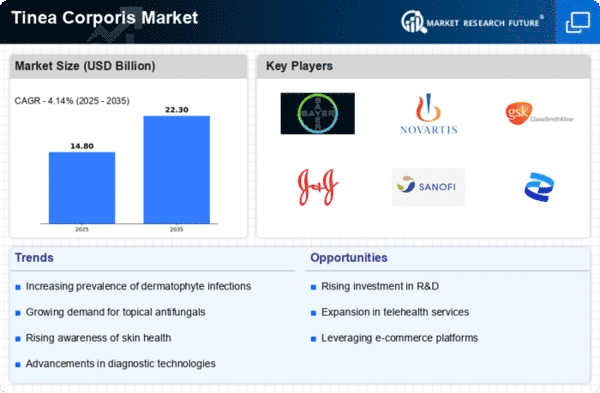
As per MRFR analysis, the Tinea Corporis Market Size was estimated at 14.21 USD Billion in 2024. The Tinea Corporis industry is projected to grow from 14.96 USD Billion in 2025 to 22.3 USD Billion by 2035, exhibiting a compound annual growth rate (CAGR) of 4.14 during the forecast period 2025 - 2035.

Key Market Trends & Highlights

The Tinea Corporis Market is experiencing notable growth driven by increased awareness and advancements in treatment options.

  • Rising awareness of skin health is propelling demand for effective antifungal treatments in North America.
  • Advancements in antifungal treatments are enhancing patient outcomes, particularly in the Asia-Pacific region.
  • The growth of e-commerce in healthcare is facilitating access to topical antifungal products, especially through online retail channels.
  • The increasing incidence of Tinea Corporis and rising demand for over-the-counter treatments are key drivers of market expansion.

Market Size & Forecast

2024 Market Size 14.21 (USD Billion)
2035 Market Size 22.3 (USD Billion)
CAGR (2025 - 2035) 4.14%
Largest Regional Market Share in 2024 North America

Major Players

<p>Bayer AG (DE), Novartis AG (CH), GlaxoSmithKline plc (GB), Johnson & Johnson (US), Pfizer Inc. (US), Sanofi S.A. (FR), Mylan N.V. (US), AbbVie Inc. (US), Merck & Co., Inc. (US)</p>

Market Trends

The Tinea Corporis Market is currently experiencing notable developments, driven by a combination of increasing awareness regarding skin health and the rising prevalence of dermatological conditions. This market encompasses a range of antifungal treatments aimed at addressing Tinea Corporis, a common fungal infection characterized by ring-shaped lesions on the skin. The growing emphasis on personal hygiene and skin care, alongside advancements in pharmaceutical formulations, appears to be propelling the demand for effective treatment options. Furthermore, the expansion of e-commerce platforms has facilitated greater accessibility to these products, allowing consumers to obtain necessary treatments conveniently. In addition, the Tinea Corporis Market is likely to benefit from ongoing research and development efforts aimed at enhancing therapeutic efficacy and minimizing side effects. The emergence of novel antifungal agents and combination therapies may provide healthcare professionals with more effective tools to combat this condition. As public health initiatives continue to promote education about skin infections, it seems that the market will witness sustained growth, driven by both consumer demand and healthcare provider recommendations. Overall, the Tinea Corporis Market is poised for a dynamic evolution, reflecting broader trends in health awareness and pharmaceutical innovation.

Rising Awareness of Skin Health

There is an increasing focus on skin health among consumers, leading to heightened demand for effective treatments for Tinea Corporis. This trend is fueled by educational campaigns and the proliferation of information regarding dermatological conditions.

Advancements in Antifungal Treatments

The Tinea Corporis Market is witnessing innovations in antifungal therapies, with new formulations and delivery methods being developed. These advancements aim to improve treatment outcomes and patient compliance.

Growth of E-commerce in Healthcare

The expansion of online retail platforms is transforming how consumers access Tinea Corporis treatments. This trend enhances convenience and availability, allowing individuals to purchase necessary products with ease.

Tinea Corporis Market Market Drivers

Market Growth Projections

The Global Tinea Corporis Market Industry is projected to experience a compound annual growth rate of 4.1% from 2025 to 2035. This growth trajectory reflects the increasing demand for effective treatment options and the rising incidence of fungal infections. The market is expected to reach a valuation of 22.4 USD Billion by 2035, driven by advancements in treatment modalities and heightened awareness among consumers. As the industry adapts to changing healthcare needs and consumer preferences, the Global Tinea Corporis Market Industry is likely to witness sustained growth in the coming years.

Rising Healthcare Expenditure

The upward trend in healthcare expenditure globally is a significant factor propelling the Global Tinea Corporis Market Industry. As countries invest more in healthcare infrastructure and services, access to dermatological care improves. Increased spending on healthcare allows for better diagnostic tools and treatment options for skin infections, including Tinea Corporis Market. This trend is particularly evident in emerging economies, where rising disposable incomes enable individuals to seek medical attention for skin conditions. The Global Tinea Corporis Market Industry stands to benefit from this increased investment, as it fosters a more robust healthcare environment.

Growing Awareness and Education

Increased awareness and education regarding skin health and fungal infections are driving the Global Tinea Corporis Market Industry. Public health campaigns and educational initiatives by healthcare organizations aim to inform individuals about the symptoms, prevention, and treatment of Tinea Corporis Market. This heightened awareness encourages early diagnosis and treatment, reducing the spread of infections. As more individuals seek medical advice and treatment options, the demand for antifungal products rises. Consequently, the Global Tinea Corporis Market Industry is likely to experience sustained growth, supported by a more informed consumer base.

Rising Incidence of Skin Infections

The increasing prevalence of skin infections, particularly fungal infections like Tinea Corporis Market, is a primary driver of the Global Tinea Corporis Market Industry. Factors such as urbanization, changing lifestyles, and increased exposure to pathogens contribute to this rise. According to health statistics, the incidence of dermatological conditions is on the rise, with Tinea Corporis Market affecting millions globally. This growing burden on healthcare systems necessitates effective treatment options, thereby propelling market growth. The Global Tinea Corporis Market Industry is projected to reach 14.4 USD Billion in 2024, reflecting the urgent need for innovative therapies and preventive measures.

Advancements in Treatment Modalities

Innovations in treatment modalities for Tinea Corporis Market are significantly influencing the Global Tinea Corporis Market Industry. The development of new antifungal agents, topical treatments, and combination therapies enhances treatment efficacy and patient compliance. For instance, the introduction of novel formulations that improve skin penetration and reduce side effects is gaining traction. These advancements not only provide better outcomes for patients but also stimulate market growth. As the industry adapts to these innovations, the Global Tinea Corporis Market Industry is expected to expand, with projections indicating a market value of 22.4 USD Billion by 2035.

Market Dynamics and Competitive Landscape

The competitive landscape of the Global Tinea Corporis Market Industry is characterized by the presence of numerous pharmaceutical companies and emerging startups. This dynamic environment fosters innovation and drives the development of new products aimed at treating Tinea Corporis Market. Companies are increasingly focusing on research and development to create effective and safe antifungal treatments, which enhances their market position. The competition encourages price adjustments and improved accessibility of treatments, ultimately benefiting consumers. As the market evolves, the Global Tinea Corporis Market Industry is poised for growth, driven by these competitive dynamics.

Market Segment Insights

By Treatment Type: Topical Antifungal (Largest) vs. Combination Therapy (Fastest-Growing)

<p>In the Tinea Corporis Market, the primary distribution of market share is led by topical antifungal treatments, which accommodate the vast majority of patients due to their targeted action and ease of application. Oral antifungal options hold a significant share, appealing to those with more severe infections or those unresponsive to topical solutions. Combination therapy has emerged as a promising option, capturing attention for its efficacy, while home remedies cater to individuals seeking alternative solutions, although they represent a smaller section of the market.</p>

<p>Topical Antifungal (Dominant) vs. Combination Therapy (Emerging)</p>

<p>Topical antifungal treatments predominantly dominate the Tinea Corporis market, favored for their direct application to the affected area and often yielding faster results. These treatments include creams, lotions, and gels that are typically easy to use and widely accepted by patients. On the other hand, combination therapy is emerging rapidly, skillfully integrating both topical and oral antifungal agents to enhance treatment outcomes. This approach is especially valuable for patients experiencing persistent infections, as it targets the fungi effectively through different mechanisms. Both segments reflect a growing emphasis on tailored treatment plans that consider patient preferences and clinical guidelines.</p>

By Distribution Channel: Pharmacies (Largest) vs. Online Retail (Fastest-Growing)

<p>The distribution of the Tinea Corporis market among different channels reveals that pharmacies hold the largest share, effectively serving as the primary access point for consumers seeking antifungal treatments. This channel benefits from established consumer trust and convenience, allowing for immediate access to medications. In contrast, the online retail segment has been gaining traction, appealing to a tech-savvy demographic seeking discretion in treatment options and the broader availability of products, thus carving out a significant market niche.</p>

<p>Pharmacies (Dominant) vs. Online Retail (Emerging)</p>

<p>Pharmacies remain the dominant distribution channel in the Tinea Corporis market, leveraging their established presence and customer loyalty. They offer a wide range of antifungal products, often coupled with professional advice, making them a go-to option for consumers. Online retail, while still emerging, is rapidly growing due to shifting consumer preferences for online shopping and the convenience it provides. This channel often offers competitive pricing and home delivery options, attracting a younger demographic and those seeking convenience. As education around fungal infections increases, both channels are likely to adapt and innovate, meeting unique consumer needs in this evolving market.</p>

By Patient Demographics: Age Group (Largest) vs. Gender (Fastest-Growing)

<p>In the Tinea Corporis market, the age group plays a pivotal role, with adults aged 30-50 comprising the largest share of patients. This demographic is significantly affected by lifestyle choices, environmental factors, and increased exposure to dermatophyte infections. Following closely are children and adolescents, who are also vulnerable due to close contact in communal settings such as schools and playgrounds, making up a substantial portion of the market as well. Meanwhile, the gender distribution indicates a rising trend in prevalence among females, particularly attributed to changes in personal hygiene products and increased awareness of skin health. Looking ahead, the Tinea Corporis market is projected to grow steadily, driven by the rising incidence of fungal infections across all age groups. The increasing awareness and proactive health measures, especially among females, are key contributors to this trend. Additionally, the proliferation of digital health platforms is helping in early diagnosis and treatment, further propelling market growth. As healthcare systems evolve, the focus on tailored treatment plans for different demographics is anticipated to enhance patient outcomes and market responsiveness.</p>

<p>Age Group (Dominant) vs. Gender (Emerging)</p>

<p>The Age Group segment is characterized by a dominant market presence, particularly among adults aged 30-50, who are often at higher risk due to lifestyle factors and occupational exposure. This age demographic tends to seek timely medical intervention, driving demand for effective tinea corporis treatments. On the other hand, the Gender segment is emerging as a crucial focus area, with rising cases noted among women, driven by an increase in public awareness and shifts in personal care habits. Targeted marketing and gender-specific treatment solutions are becoming prevalent, as healthcare providers recognize the distinct needs of male and female patients, suggesting that gender-focused strategies could shape the future landscape of the Tinea Corporis market.</p>

By Formulation Type: Cream (Largest) vs. Gel (Fastest-Growing)

<p>In the Tinea Corporis Market, the formulation type segment demonstrates significant diversification, with creams leading the market share due to their broad acceptance and ease of use among consumers. Conventional treatments such as creams have established a strong foothold, attributed to their efficacy and skin compatibility, offering effective solutions for Tinea Corporis treatment. Gels, while currently a smaller segment, are emerging rapidly as users seek alternatives that offer faster absorption and a non-greasy feel, appealing especially to younger demographics.</p>

<p>Cream (Dominant) vs. Gel (Emerging)</p>

<p>Creams dominate the Tinea Corporis market thanks to their longstanding reputation and acceptance among consumers. Their thick consistency allows for better adhesion to the skin, ensuring the active ingredients effectively penetrate the affected areas. Comprising a blend of anti-fungal agents, creams provide comprehensive treatment, making them the preferred choice for many patients. In contrast, gels are gaining traction, primarily among younger consumers looking for quick-drying formulations. These products boast a lightweight texture, facilitating faster absorption and a mess-free application. While creams continue to hold the dominant market position, the increasing popularity of gels suggests a significant shift as consumer preferences evolve.</p>

Get more detailed insights about Tinea Corporis Market Research Report -Forecast till 2035

Regional Insights

North America : Market Leader in Tinea Corporis

North America is poised to maintain its leadership in the Tinea Corporis market, holding a significant market share of 5.5 in 2024. The region's growth is driven by increasing awareness of skin conditions, advancements in treatment options, and a robust healthcare infrastructure. Regulatory support for innovative therapies and a growing aging population further fuel demand for effective antifungal treatments. The competitive landscape in North America is characterized by the presence of major players such as Johnson & Johnson, Pfizer Inc., and Merck & Co., Inc. These companies are investing heavily in research and development to enhance their product offerings. The U.S. market, in particular, is a focal point for new product launches and strategic partnerships aimed at expanding market reach and improving patient outcomes.

Europe : Emerging Market Dynamics

Europe's Tinea Corporis market is projected to grow, with a market size of 4.5 in 2024. Key growth drivers include rising incidences of fungal infections, increased healthcare spending, and a focus on dermatological health. Regulatory bodies are actively promoting awareness campaigns and guidelines to improve treatment accessibility, which is expected to enhance market penetration. Leading countries such as Germany, France, and the UK are at the forefront of this market, supported by established pharmaceutical companies like Bayer AG and GlaxoSmithKline plc. The competitive landscape is evolving, with a mix of established players and emerging biotech firms focusing on innovative treatment solutions. The European Medicines Agency continues to play a crucial role in ensuring the safety and efficacy of new therapies, fostering a conducive environment for market growth.

Asia-Pacific : Rapidly Growing Market Potential

The Asia-Pacific region is witnessing a surge in the Tinea Corporis market, with a market size of 3.5 in 2024. Factors contributing to this growth include increasing urbanization, rising disposable incomes, and a growing awareness of skin health. Additionally, the region's diverse climate conditions create a favorable environment for fungal infections, driving demand for effective treatments. Regulatory frameworks are gradually evolving to support the introduction of new therapies. Countries like China, India, and Japan are leading the market, with a mix of local and international players vying for market share. Companies such as AbbVie Inc. and Mylan N.V. are expanding their presence through strategic collaborations and product launches. The competitive landscape is becoming increasingly dynamic, with a focus on affordability and accessibility of treatments to cater to the large population base.

Middle East and Africa : Emerging Market Opportunities

The Tinea Corporis market in the Middle East and Africa is still in its nascent stages, with a market size of 0.71 in 2024. However, the region presents significant growth opportunities driven by increasing healthcare investments and rising awareness of dermatological conditions. The demand for effective antifungal treatments is expected to rise as healthcare access improves and public health initiatives gain momentum. Countries like South Africa and the UAE are leading the charge, with local and international companies exploring market entry strategies. The presence of key players such as Sanofi S.A. is crucial for establishing a competitive landscape. Regulatory bodies are beginning to implement frameworks to ensure the safety and efficacy of treatments, which will further enhance market growth prospects.

Key Players and Competitive Insights

The Tinea Corporis Market is characterized by a competitive landscape that is increasingly shaped by innovation, strategic partnerships, and a focus on digital transformation. Key players such as Bayer AG (DE), Novartis AG (CH), and Johnson & Johnson (US) are actively pursuing strategies that enhance their market positioning. Bayer AG (DE) has been focusing on expanding its dermatological portfolio, which includes antifungal treatments, while Novartis AG (CH) emphasizes research and development to introduce novel therapies. Johnson & Johnson (US) is leveraging its extensive distribution network to enhance accessibility to its products, thereby solidifying its competitive edge. Collectively, these strategies indicate a market that is not only competitive but also dynamic, with companies striving to differentiate themselves through innovation and operational efficiency.

In terms of business tactics, companies are increasingly localizing manufacturing and optimizing supply chains to respond swiftly to market demands. The Tinea Corporis Market appears moderately fragmented, with several players vying for market share. However, the influence of major companies is substantial, as they set trends that smaller firms often follow. This competitive structure fosters an environment where innovation and strategic collaborations are essential for success.

In November 2025, Bayer AG (DE) announced the launch of a new topical antifungal treatment aimed at enhancing patient compliance through improved formulation. This strategic move is significant as it not only expands Bayer's product line but also addresses the growing demand for effective and user-friendly treatments in dermatology. The introduction of this product is likely to strengthen Bayer's market position and attract a broader patient base.

In October 2025, Novartis AG (CH) entered into a partnership with a leading digital health company to develop a telehealth platform specifically for dermatological consultations. This initiative is indicative of Novartis's commitment to integrating technology into healthcare delivery, potentially improving patient access to treatment and follow-up care. Such a move may enhance patient engagement and adherence to treatment regimens, thereby positively impacting clinical outcomes.

In September 2025, Johnson & Johnson (US) expanded its global reach by acquiring a regional player specializing in antifungal therapies. This acquisition is strategically important as it not only broadens Johnson & Johnson's product offerings but also enhances its market penetration in emerging economies. The integration of local expertise is expected to facilitate tailored marketing strategies that resonate with diverse patient populations.

As of December 2025, the Tinea Corporis Market is witnessing trends that emphasize digitalization, sustainability, and the integration of artificial intelligence in product development and patient engagement. Strategic alliances are increasingly shaping the competitive landscape, allowing companies to pool resources and expertise. Looking ahead, it is anticipated that competitive differentiation will evolve, with a shift from price-based competition to a focus on innovation, technological advancements, and supply chain reliability. This evolution underscores the importance of agility and responsiveness in a market that is continuously changing.

Key Companies in the Tinea Corporis Market market include

Industry Developments

Future Outlook

Tinea Corporis Market Future Outlook

<p>The Tinea Corporis Market is projected to grow at a 4.14% CAGR from 2024 to 2035, driven by increasing awareness, innovative treatments, and rising healthcare expenditures.</p>

New opportunities lie in:

  • <p>Development of targeted antifungal therapies for resistant strains.</p>
  • <p>Expansion of telemedicine platforms for remote consultations.</p>
  • <p>Investment in educational campaigns to raise awareness about skin health.</p>

<p>By 2035, the Tinea Corporis Market is expected to achieve robust growth and enhanced treatment accessibility.</p>

Market Segmentation

Tinea Corporis Market Treatment Type Outlook

  • Topical Antifungal
  • Oral Antifungal
  • Combination Therapy
  • Home Remedies

Tinea Corporis Market Formulation Type Outlook

  • Cream
  • Gel
  • Spray
  • Powder

Tinea Corporis Market Distribution Channel Outlook

  • Pharmacies
  • Online Retail
  • Hospitals
  • Clinics

Tinea Corporis Market Patient Demographics Outlook

  • Age Group
  • Gender
  • Socioeconomic Status
  • Health Status

Report Scope

MARKET SIZE 202414.21(USD Billion)
MARKET SIZE 202514.96(USD Billion)
MARKET SIZE 203522.3(USD Billion)
COMPOUND ANNUAL GROWTH RATE (CAGR)4.14% (2024 - 2035)
REPORT COVERAGERevenue Forecast, Competitive Landscape, Growth Factors, and Trends
BASE YEAR2024
Market Forecast Period2025 - 2035
Historical Data2019 - 2024
Market Forecast UnitsUSD Billion
Key Companies ProfiledBayer AG (DE), Novartis AG (CH), GlaxoSmithKline plc (GB), Johnson & Johnson (US), Pfizer Inc. (US), Sanofi S.A. (FR), Mylan N.V. (US), AbbVie Inc. (US), Merck & Co., Inc. (US)
Segments CoveredTreatment Type, Distribution Channel, Patient Demographics, Formulation Type
Key Market OpportunitiesEmergence of novel antifungal therapies addressing resistance in the Tinea Corporis Market.
Key Market DynamicsRising prevalence of skin infections drives demand for effective treatments in the Tinea Corporis Market.
Countries CoveredNorth America, Europe, APAC, South America, MEA

FAQs

  1. Definition
    1. Scope of the Study
      1. Assumptions
      2. Limitations
    2. Primary Research
    3. Secondary Research
    4. Drivers
    5. Opportunities
    6. Challenges
    7. Macroeconomic Indicators
    8. Technology Trends & Assessment
  2. Market Factor Analysis
    1. Porter’s
      1. Bargaining Power of Suppliers
      2. Bargaining Power of Buyers
      3. Threat
      4. Intensity of Rivalry
    2. Five Forces Analysis
    3. Threat of New Entrants
    4. of Substitutes
    5. Value Chain Analysis
    6. Investment
    7. Feasibility Analysis
    8. Pricing Analysis
  3. Chapter 6. Global Tinea Corporis Market, by Drug
    1. Type
    2. Introduction
    3. Antifungals
  4. Market Estimates & Forecast, by Region, 2020–2027
  5. Market Estimates & Forecast, by Country, 2020–2027
    1. Steroids
    2. Market Estimates & Forecast, by
    3. Region, 2020–2027
    4. Market Estimates & Forecast,
    5. by Country, 2020–2027
    6. Anti-Infective Combinations
  6. Market Estimates & Forecast, by Region, 2020–2027
  7. Market Estimates & Forecast, by Country, 2020–2027
  8. Chapter 7. Global Tinea Corporis Market, by Diagnosis
    1. Introduction
    2. Physical
    3. Exam
  9. Market Estimates & Forecast, by Region, 2020–2027
  10. Market Estimates & Forecast, by Country, 2020–2027
    1. Imaging Tests
  11. Market Estimates & Forecast, by Region, 2020–2027
  12. Market Estimates & Forecast, by Country, 2020–2027
    1. Market
    2. Estimates & Forecast, by Region, 2020–2027
    3. Market
    4. Estimates & Forecast, by Country, 2020–2027
    5. Using Potassium Hydroxide (KOH)
  13. Wood Lamp (Black Light) Examination
  14. Microscopy
  15. Market Estimates & Forecast, by Region,
  16. Market Estimates & Forecast, by Country,
    1. Market
    2. Estimates & Forecast, by Region, 2020–2027
    3. Market
    4. Estimates & Forecast, by Country, 2020–2027
    5. Biopsy
  17. Fungal Culture
  18. Skin
  19. Market Estimates & Forecast, by Region, 2020–2027
  20. Market Estimates & Forecast, by Country, 2020–2027
    1. Others
  21. Market Estimates & Forecast, by Region, 2020–2027
  22. Market Estimates & Forecast, by Country, 2020–2027
  23. Chapter 8. Global Tinea Corporis Market, by Treatmant
    1. Introduction
    2. Antifungal Shampoos
    3. Market Estimates & Forecast,
    4. by Region, 2020–2027
    5. Market Estimates & Forecast,
    6. by Country, 2020–2027
    7. Antifungal Creams
  24. Market Estimates & Forecast, by Region, 2020–2027
  25. Market Estimates & Forecast, by Country, 2020–2027
    1. Drugs
  26. Market Estimates & Forecast, by Region, 2020–2027
  27. Market Estimates & Forecast, by Country, 2020–2027
    1. Others
  28. Market Estimates & Forecast, by Region,
  29. Market Estimates & Forecast, by Country,
    1. Chapter 9. Global Tinea Corporis
  30. Market, by End-Users
    1. Introduction
    2. Hospital Pharmacies
    3. Market
    4. Estimates & Forecast, by Region, 2020–2027
    5. Market
    6. Estimates & Forecast, by Country, 2020–2027
    7. Drug
    8. Stores
  31. Market Estimates & Forecast, by Region, 2020–2027
  32. Market Estimates & Forecast, by Country, 2020–2027
    1. Online Pharmacies
  33. Market Estimates & Forecast, by Region, 2020–2027
  34. Market Estimates & Forecast, by Country, 2020–2027
    1. Dermatology hospitals
    2. Market Estimates &
    3. Forecast, by Region, 2020–2027
    4. Market Estimates &
    5. Forecast, by Country, 2020–2027
    6. Others
  35. Market Estimates & Forecast, by Region, 2020–2027
  36. Market Estimates & Forecast, by Country, 2020–2027
  37. Chapter 10. Global Tinea Corporis Market, by Region
    1. Introduction
    2. Americas
      1. North America
      2. South America
    3. Canada
    4. Europe
      1. Western Europe
      2. Eastern Europe
      3. Japan
      4. China
      5. India
      6. Australia
      7. Rest of Asia-Pacific
      8. Middle East
    5. Spain
    6. of Western Europe
    7. Asia-Pacific
    8. South Korea
    9. Middle East & Africa
    10. Africa
    11. Chapter 11 Company Landscape
    12. Introduction
    13. Market Share Analysis
    14. Key Development & Strategies
    15. Chapter
  38. Company Profiles
    1. Astellas Pharma
    2. Financials Overview
    3. Bayer AG
    4. Financial Overview
    5. Enzon Pharmaceuticals, Inc
    6. Financial Overview
    7. Galderma S.A.
    8. Financial Overview
    9. Gilead
    10. Financial overview
    11. Overview
    12. Key Developments
    13. Financial Overview
    14. Taro Pharmaceutical Industries Ltd
    15. Financials
    16. Teva Pharmaceutical Industries Ltd
    17. Financials
    18. Product Overview
    19. SWOT Analysis
    20. Chapter 13 MRFR
    21. Conclusion
    22. Key Companies to Watch
    23. for the Tinea Corporis Market
    24. Chapter 14. Appendix
  39. Company Overview
  40. Product Overview
  41. Key Developments
  42. SWOT Analysis
  43. Company Overview
  44. Product Overview
  45. Key Developments
  46. SWOT Analysis
  47. Company Overview
  48. Product Overview
  49. Key Development
  50. SWOT Analysis
  51. Company Overview
  52. Product Overview
  53. Key Development
  54. SWOT Analysis
  55. Company Overview
  56. Product Overview
  57. Key Developments
  58. SWOT Analysis
    1. Novartis AG
      1. Company
      2. Product Overview
      3. Financial Overview
      4. SWOT Analysis
    2. Pfizer Inc
      1. Overview
      2. Product Overview
      3. Key Developments
      4. SWOT Analysis
      5. Overview
      6. Product Overview
      7. Key Developments
      8. SWOT Analysis
      9. Overview
      10. Product Overview
      11. Key Developments
      12. SWOT Analysis
    3. Valeant
      1. Overview
      2. Financials
      3. Key Developments
    4. Key Findings
      1. From CEO’s View point
      2. Unmet Needs of the Market
    5. Predictions
  59. LIST OF TABLES
  60. Global
    1. Tinea Corporis Market Synopsis, 2020–2027
    2. Table 2
    3. Global Tinea Corporis Market Estimates and Forecast, 2020–2027 (USD
    4. Million)
  61. Global Tinea Corporis
  62. Market, by Region, 2020–2027 (USD Million)
  63. Global
  64. Tinea Corporis Market, by Drug Type, 2020–2027 (USD Million)
    1. Table 5
  65. Global Tinea Corporis Market, by Diagnosis, 2020–2027
    1. (USD Million)
  66. Global Tinea Corporis
  67. Market, by Treatmant, 2020–2027 (USD Million)
    1. Table 7
  68. Global Tinea Corporis Market, by End-Users, 2020–2027 (USD Million0
  69. North America: Tinea Corporis Market, by Drug Type,
  70. North
  71. America: Tinea Corporis Market, by Diagnosis, 2020–2027 (USD Million)
    1. Table
  72. North America: Tinea Corporis Market, by Treatment, 2020–2027
    1. (USD Million)
  73. North America: Tinea Corporis Market,
    1. by End-Users , 2020–2027 (USD Million)
  74. US:
  75. Tinea Corporis Market, by Drug Type, 2020–2027 (USD Million)
    1. Table 13
  76. US: Tinea Corporis Market, by Diagnosis, 2020–2027 (USD Million)
  77. US: Tinea Corporis Market, by Treatment, 2020–2027
    1. (USD Million)
  78. US: Tinea Corporis Market, by End-Usesr,
  79. Canada: Tinea Corporis
  80. Market, by Drug Type, 2020–2027 (USD Million)
  81. Canada:
  82. Tinea Corporis Market, by Diagnosis, 2020–2027 (USD Million)
    1. Table
  83. Canada: Tinea Corporis Market, by Treatment, 2020–2027
    1. (USD Million)
    2. Table
  84. Canada: Tinea Corporis Market, by End-Users, 2020–2027
    1. (USD Million)
  85. South America:
  86. Tinea Corporis Market, by Drug Type, 2020–2027 (USD Million)
    1. Table 21
  87. South America: Tinea Corporis Market, by Diagnosis, 2020–2027 (USD Million)
  88. South America: Tinea Corporis Market, by Treatment,
  89. South
  90. America: Tinea Corporis Market, by End-Usesr, 2020–2027 (USD Million)
  91. Europe:
  92. Tinea Corporis Market, by Drug Type, 2020–2027 (USD Million)
    1. Table 25
  93. Europe: Tinea Corporis Market, by Diagnosis, 2020–2027 (USD Million)
  94. Europe: Tinea Corporis Market, by Treatment,
  95. Europe: Tinea
  96. Corporis Market, by End-Usesr, 2020–2027 (USD Million)
    1. Table
  97. Western Europe: Tinea Corporis Market, by Drug Type, 2020–2027
    1. (USD Million)
  98. Western Europe: Tinea Corporis Market,
    1. by Diagnosis, 2020–2027 (USD Million)
  99. Western
  100. Europe: Tinea Corporis Market, by Treatment, 2020–2027 (USD Million)
  101. Western Europe: Tinea Corporis Market, by End-Users,
  102. Eastern Europe:
  103. Tinea Corporis Market, by Drug Type, 2020–2027 (USD Million)
    1. Table 33
  104. Eastern Europe: Tinea Corporis Market, by Diagnosis, 2020–2027 (USD
    1. Million)
  105. Eastern Europe: Tinea
  106. Corporis Market, by Treatment, 2020–2027 (USD Million)
  107. Eastern Europe: Tinea Corporis Market, by End-Usesr,
  108. Asia-Pacific:
  109. Tinea Corporis Market, by Drug Type, 2020–2027 (USD Million)
    1. Table 37
  110. Asia-Pacific: Tinea Corporis Market, by Diagnosis, 2020–2027 (USD Million)
  111. Asia-Pacific: Tinea Corporis Market, by Treatment,
  112. Asia-Pacific:
  113. Tinea Corporis Market, by End-Usesr, 2020–2027 (USD Million)
    1. Table
  114. Middle East & Africa: Tinea Corporis Market, by Drug Type,
    1. 20132-2027 (USD Million)
  115. Middle
  116. East & Africa: Tinea Corporis Market, by Diagnosis, 2020–2027 (USD Million)
    1. Table
  117. Middle East & Africa: Tinea Corporis Market, by Treatment,
  118. Middle East & Africa: Tinea
  119. Corporis Market, by End-Usesr, 2020–2027 (USD Million)
  120. LIST OF FIGURES
  121. Research Process
    1. Figure 2
    2. Segmentation for Global Tinea Corporis Market
  122. Segmentation
    1. Market Dynamics for Global Tinea Corporis Market
  123. Global
  124. Tinea Corporis Market Share, by Drug Type, 2020
  125. Global
  126. Tinea Corporis Market Share, by Diagnosis, 2020
  127. Global
  128. Tinea Corporis Market Share, by Treatment, 2020
  129. Global
  130. Tinea Corporis Market Share, by End-Users, 2020
  131. Global
  132. Tinea Corporis Market Share, by Region, 2020
  133. North
  134. America: Tinea Corporis Market Share, by Country, 2020
    1. Figure 10
  135. Europe: Tinea Corporis Market Share, by Country, 2020
    1. Figure 11
  136. Asia-Pacific: Tinea Corporis Market Share, by Country, 2020
    1. Figure 12
  137. Middle East & Africa: Tinea Corporis Market Share, by Country, 2020
  138. Global Tinea Corporis Market: Company Share Analysis,
  139. Astellas Pharma: Key Financials
    1. Figure
  140. Astellas Pharma: Segmental Revenue
    1. Figure 16
    2. Astellas Pharma: Geographical Revenue
    3. Figure 17
    4. Bayer AG : Key Financials
  141. Bayer AG : Segmental
    1. Revenue
  142. Bayer AG : Geographical Revenue
    1. Figure
  143. Enzon Pharmaceuticals, Inc: Key Financials
    1. Figure 21
    2. Enzon Pharmaceuticals, Inc: Segmental Revenue
    3. Figure 22
    4. Enzon Pharmaceuticals, Inc: Geographical Revenue
    5. Figure 23
    6. Galderma S.A. : Key Financials
    7. Figure 24
    8. Galderma S.A. : Segmental Revenue
  144. Galderma
    1. S.A. : Geographical Revenue
  145. Gilead
    1. : Key Financials
  146. Gilead : Segmental Revenue
  147. Gilead . Geographical Revenue
    1. Figure 29
    2. Novartis AG : Key Financials
  148. Novartis AG
    1. : Segmental Revenue
  149. Novartis AG
    1. : Geographical Revenue
  150. Pfizer Inc: Key Financials
  151. Pfizer Inc: Segmental Revenue
    1. Figure 34
    2. Pfizer Inc: Geographical Revenue
  152. Taro
    1. Pharmaceutical Industries Ltd: Key Financials
    2. Figure 36
    3. Taro Pharmaceutical Industries Ltd: Segmental Revenue
    4. Figure 37
    5. Taro Pharmaceutical Industries Ltd: Geographical Revenue
    6. Figure
  153. Teva Pharmaceutical Industries Ltd: Key Financials
  154. Teva Pharmaceutical Industries
    1. Ltd: Segmental Revenue
  155. Teva Pharmaceutical
    1. Industries Ltd: Geographical Revenue
  156. Valeant
    1. : Key Financials
  157. Valeant : Segmental Revenue
  158. Valeant : Geographical Revenue

Tinea Corporis Market Segmentation

Market Segmentation Overview

  • Detailed segmentation data will be available in the full report
  • Comprehensive analysis by multiple parameters
  • Regional and country-level breakdowns
  • Market size forecasts by segment
Infographic

Free Sample Request

Kindly complete the form below to receive a free sample of this Report

Get Free Sample

Customer Strories

Compare Licence

×
Features License Type
Single User Multiuser License Enterprise User
Price $4,950 $5,950 $7,250
Maximum User Access Limit 1 User Upto 10 Users Unrestricted Access Throughout the Organization
Free Customization
Direct Access to Analyst
Deliverable Format
Platform Access
Discount on Next Purchase 10% 15% 15%
Printable Versions