Request Free Sample ×

Kindly complete the form below to receive a free sample of this Report

* Please use a valid business email

Leading companies partner with us for data-driven Insights

clients tt-cursor
Hero Background
English
Chinese
French
Japanese
Korean
German
Spanish

Teleradiology Market Trends

ID: MRFR/HC/9540-HCR
120 Pages
Vikita Thakur
Last Updated: April 17, 2026

Teleradiology Market Research Report By Application (Bone Imaging, Cardiac Imaging, Neuroimaging, Oncology Imaging, Chest Imaging), By Modality (X-Ray, CT Scan, MRI, Ultrasound, Nuclear Medicine), By End Use (Hospitals, Diagnostic Imaging Centers, Research Organizations, Home Healthcare, Emergency Care), By Configuration (Cloud-Based, Web-Based, Standalone) and By Regional (North America, Europe, South America, Asia Pacific, Middle East and Africa) - Growth & Industry Forecast 2025 To 2035

Share:
Download PDF ×

We do not share your information with anyone. However, we may send you emails based on your report interest from time to time. You may contact us at any time to opt-out.

Teleradiology Market Infographic
Purchase Options

Market Trends

Key Emerging Trends in the Teleradiology Market

To keep up with the times, the teleradiology market is going through big changes in the medical imaging and diagnosis services area. There are changes in the teleradiology market because more people want medical readings from away, technology is getting better, and image services can be found all over the world. In the world of image services, the market for teleradiology is growing very quickly. Radiologists can now do exams and scans from away thanks to progress in communication technology. It is now possible for nurses and doctors all over the world to talk to experts and get help. There are more and more teleradiology systems that keep their data in the cloud. This is because it is easy to store, share, and view medical imaging data. Moving to cloud-based systems has made it easier to store and get back a lot of medical images. It has also made it easier for doctors to work together to make decisions, and it has improved the ability to grow. One way that AI is changing the way doctors make assessments is in teleradiology. When used, AI programs help doctors with picture analysis by giving them more accurate results, better explanations, and the chance to find small problems that would usually go ignored. Now that there are mobile teleradiology apps, doctors and other medical workers can use their phones to get updates on diagnoses and pictures of patients. This speeds up and opens up the testing process, which is very helpful when someone's life is at risk. It's becoming more and more important for teleradiology providers to keep an eye on quality and follow the rules for approval. Making sure that standards are met is important for building trust between healthcare organizations and regulatory bodies. This makes sure that remote testing services are accurate and reliable. Getting better at real-time contact makes it easy for radiologists, sending doctors, and other health care workers to get help and talk to each other. Some of the most important tools in teleradiology are these systems. People from different fields can work together better when these tools are used. This means that patients get better care generally. People far away can quickly send and understand medical pictures, which lets doctors quickly figure out what's wrong and decide on a treatment. In cases where time is very important, this skill helps people do better. Teleradiology service providers are working together with each other in other countries so that they can provide their services in more places. Healthcare groups from other countries can work with teleradiology companies to share information and tools that will help them care for patients better. It is becoming more and more common to use hybrid teleradiology methods. Readings are done from away and image services are done on-site in these types. This plan helps healthcare facilities get more done with less, keep their data in-house, and use online reads to reach more people and get more done.


Author
Author Profile
Vikita Thakur
Senior Research Analyst

She holds an experience of about 5+ years in market research and business consulting projects for sectors such as life sciences, medical devices, and healthcare IT. She possesses a robust background in data analysis, market estimation, competitive intelligence, pipeline analysis market trend identification, and consumer behavior insights. Her expertise lies in technical Sales support, client interaction and project management, designing and implementing market research studies, conducting competitive analysis, and synthesizing complex data into actionable recommendations that drive business growth.

Leave a Comment

FAQs

What is the current valuation of the market as of 2024?

The market was valued at 4.806 USD Billion in 2024.

What is the projected market size for the market in 2035?

The market is projected to reach 9.678 USD Billion by 2035.

What is the expected CAGR for the market during the forecast period 2025 - 2035?

The expected CAGR for the market during 2025 - 2035 is 6.57%.

Which segments are expected to show significant growth in the market?

Bone Imaging and Neuroimaging are expected to show significant growth, with valuations projected to reach 1.953 and 2.949 USD Billion respectively by 2035.

What are the leading modalities in the market?

CT Scans and MRIs are leading modalities, with projected valuations of 2.42 and 2.28 USD Billion respectively by 2035.

How do end-use segments contribute to the market?

Hospitals and Diagnostic Imaging Centers are major contributors, with projected valuations of 3.1 and 2.5 USD Billion respectively by 2035.

What configurations are anticipated to dominate the market?

Standalone configurations are anticipated to dominate, with a projected valuation of 4.2 USD Billion by 2035.

Who are the key players in the market?

Key players include Radiology Partners, vRad, and Teleradiology Solutions, among others.

What is the projected growth for Cardiac Imaging in the market?

Cardiac Imaging is projected to grow to 1.469 USD Billion by 2035.

What role does technology play in the market's growth?

Advancements in cloud-based and web-based configurations are likely to enhance market growth, with projected valuations of 3.0 and 2.5 USD Billion respectively by 2035.

Market Summary

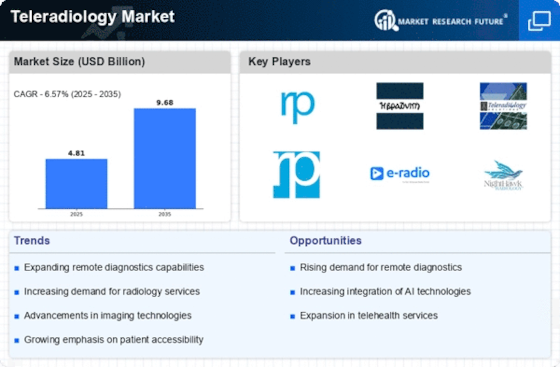
As per MRFR analysis, the Teleradiology Market size was valued at USD 4.806 Billion in 2024. The market is projected to grow from USD 5.122 Billion in 2025 to USD 9.678 Billion by 2035, exhibiting a CAGR of 6.5% during the forecast period 2025-2035. North America led the market with over 45.78% share, generating around USD 2.2 billion in revenue.
 
The Teleradiology Market is growing rapidly, driven by technological advancements like AI‑integrated imaging and cloud platforms that enhance diagnostic accuracy and workflow efficiency, and by rising demand for remote healthcare services and telehealth solutions. Additional growth factors include increasing chronic disease prevalence, favorable reimbursement policies, and expanded access in underserved regions.
 
According to the CDC, more than 795,000 people in the U.S. suffer a stroke annually, increasing urgent neuroimaging demand, a key driver for teleradiology services. WHO highlights that nearly half of the global population lacks access to essential health services, reinforcing remote diagnostic adoption. These gaps strongly support teleradiology expansion.

Key Market Trends & Highlights

The Teleradiology Market is poised for substantial growth driven by technological advancements and increasing demand for remote services.

  • Teleradiology driven by rising imaging demand, AI integration, and global radiologist shortage accelerating remote diagnostics adoption worldwide. CDC reports 795,000 annual stroke cases increasing neuroimaging demand, strongly supporting market expansion globally. Cloud-based systems dominate 58% share due to scalability, enabling real-time imaging access and efficient healthcare delivery. Hospitals hold 55% share driven by high diagnostic volumes and growing reliance on remote radiology reporting systems. North America leads with 45.78% share in 2024, driven by advanced infrastructure and high digital healthcare penetration. Europe holds 30% share valued at USD 1.44 Billion in 2024, supported by regulatory backing and digital transformation.

Market Size & Forecast

2024 Market Size 4.806 (USD Billion)
2035 Market Size 9.678 (USD Billion)
CAGR (2025 - 2035) 6.57%
Largest Regional Market Share in 2024 North America

Major Players

Companies such as <a href="https://telradsol.com/">Radiology Partners </a>(US), vRad (US), Teleradiology Solutions (US), Mednax (US), TeleRadiology (IN), Global Diagnostics (FI), eRAD (US), <a href="https://telradsol.com/nighthawk-teleradiology/">Nighthawk Radiology</a> (US), Agfa HealthCare (BE) are some of the major participants in the global market.

Market Trends

The teleradiology market is currently experiencing a transformative phase, driven by advancements in technology and an increasing demand for remote healthcare services. The integration of artificial intelligence and machine learning into radiology practices appears to enhance diagnostic accuracy and efficiency, particularly for teleradiology interpretations and teleradiology reporting workflows.

Furthermore, the growing prevalence of chronic diseases necessitates timely imaging services, which teleradiology providers can deliver efficiently across regions.. This market seems poised for expansion as healthcare providers seek to optimize their operations and improve patient outcomes through remote consultations and image sharing offered by teleradiology companies.

In addition, the rising adoption of telehealth solutions is likely to bolster the global teleradiology landscape. As healthcare systems worldwide strive to enhance accessibility, all american teleradiology networks and international service models offer viable solutions for patients in remote or underserved areas.

The convenience of receiving expert opinions without the need for physical visits may lead to increased utilization of these services. Overall, the market is on a trajectory of growth, influenced by technological innovations and evolving healthcare needs.

Technological Advancements

The teleradiology industry is witnessing rapid technological advancements that enhance the quality and speed of imaging services. Innovations such as cloud computing and advanced imaging software facilitate seamless data transfer and storage, improving workflow efficiency for teleradiology reporting and real-time collaboration among specialists. These developments may lead to better diagnostic capabilities and increased trust in remote radiology services.

  • Global adoption of AI-based imaging, cloud PACS, and real-time data sharing is improving diagnostic speed and accuracy in radiology workflows. WHO emphasizes that digital health technologies can improve health system efficiency and accessibility, especially in low-resource settings, supporting faster imaging interpretation and collaborative diagnostics across geographies.

Increased Demand for Remote Services

There is a notable increase in demand for remote healthcare services, which is positively impacting the market. Patients and healthcare providers are increasingly recognizing the benefits of remote consultations, particularly in areas with limited access to specialists. This trend suggests a shift towards more flexible healthcare delivery models.

  • Remote healthcare demand is expanding due to workforce shortages and rising chronic disease burden. CDC reports that chronic diseases account for 6 in 10 adult deaths in the U.S., increasing imaging requirements. Telehealth expansion enables faster radiology access in underserved regions, improving diagnosis turnaround times and patient outcomes.

Regulatory Support

Regulatory bodies are increasingly supporting the growth of the market by establishing guidelines that promote the safe and effective use of telehealth technologies. This regulatory backing may encourage healthcare providers to adopt teleradiology solutions, thereby enhancing service delivery and patient care.

  • Regulatory agencies are increasingly enabling telemedicine frameworks, improving teleradiology adoption. WHO supports global digital health governance frameworks to strengthen safe telehealth deployment. Standardized guidelines enhance data privacy, diagnostic accuracy, and cross-border radiology reporting, encouraging healthcare systems to integrate teleradiology into mainstream diagnostic services.

Teleradiology Market Market Drivers

Increased Demand for Remote Services

The Teleradiology Market is witnessing an increased demand for remote services, driven by the need for accessible healthcare solutions. Patients and healthcare providers are increasingly seeking remote consultations and diagnostics, particularly in underserved areas where access to radiologists is limited.
 
This trend is supported by the growing acceptance of telehealth services, which has expanded the reach of radiology services beyond traditional settings. According to recent data, the market for teleradiology is expected to grow significantly, with estimates suggesting a valuation exceeding 5 billion dollars by 2026. This shift towards remote services is reshaping the landscape of the market, making it a crucial driver of growth.

Rising Incidence of Chronic Diseases

The Teleradiology Market is significantly influenced by the rising incidence of chronic diseases, which necessitate regular imaging and monitoring. Conditions such as cancer, cardiovascular diseases, and neurological disorders require timely and accurate radiological assessments. The increasing prevalence of these diseases is driving the demand for teleradiology services, as healthcare providers seek efficient ways to manage patient care.
 
Data suggests that the number of imaging procedures is expected to rise in tandem with the growing patient population suffering from chronic conditions. This trend underscores the importance of teleradiology in providing timely diagnostics and treatment, positioning it as a key driver in the market.

Technological Advancements in Imaging

The Teleradiology Market is experiencing a surge in technological advancements, particularly in imaging modalities such as MRI, CT, and ultrasound. Innovations in artificial intelligence and machine learning are enhancing image analysis, leading to quicker and more accurate diagnoses. For instance, AI algorithms can now assist radiologists by identifying anomalies in images with remarkable precision.
 
This technological evolution not only improves patient outcomes but also increases the efficiency of radiology departments. As a result, the demand for teleradiology services is likely to rise, with projections indicating a compound annual growth rate of over 15% in the coming years. The integration of advanced imaging technologies is thus a pivotal driver in the market.

Regulatory Support and Reimbursement Policies

Regulatory support plays a vital role in the Teleradiology Market, as favorable policies can enhance the adoption of teleradiology services. Governments and health organizations are increasingly recognizing the importance of telemedicine, leading to the establishment of reimbursement policies that support remote radiology services.
 
These policies not only incentivize healthcare providers to adopt teleradiology but also ensure that patients receive necessary imaging services without financial barriers. The implementation of such regulations is likely to bolster the market, with projections indicating a steady increase in teleradiology utilization rates. As regulatory frameworks evolve, they are expected to further drive growth in the market.

Growing Focus on Cost-Effective Healthcare Solutions

The Teleradiology Market is propelled by a growing focus on cost-effective healthcare solutions. As healthcare costs continue to rise, both providers and patients are seeking ways to reduce expenses while maintaining quality care. market offers a viable solution by minimizing the need for physical infrastructure and allowing for remote consultations, which can lead to significant cost savings.
 
Furthermore, studies indicate that teleradiology can reduce the time to diagnosis, thereby potentially lowering overall treatment costs. This emphasis on cost efficiency is likely to drive the adoption of teleradiology services, making it a prominent factor in the market.

Market Segment Insights

By Application: Neuroimaging (Largest) vs. Oncology Imaging (Fastest-Growing)

Neuroimaging holds the largest Teleradiology Market share at 62% among the application segments due to its critical role in diagnosing neurological disorders. This segment is driven by the increasing prevalence of conditions such as stroke, epilepsy, and dementia, leading to a higher demand for advanced imaging techniques. Meanwhile, Oncology Imaging is gaining traction as the fastest-growing segment, spurred by the rising incidence of cancer and the need for timely diagnosis and treatment management in oncology care. These factors significantly influence the allocation of resources and investments in teleradiology services. The growth trends in these application segments are closely tied to technological advancements and the ongoing integration of artificial intelligence in teleradiology. As imaging technology continues to evolve, the efficiency and accuracy of diagnostic procedures improve, driving higher adoption rates. Additionally, an increasing awareness of the benefits of remote diagnostic services, especially in regions with limited access to specialized healthcare, is propelling the expansion of both Neuroimaging and Oncology Imaging within the market. Health systems are increasingly adopting these technologies to enhance patient outcomes, which bodes well for the future growth of these segments.

Neuroimaging (Dominant) vs. Chest Imaging (Emerging)

Neuroimaging has established itself as the dominant application in the market share, characterized by its essential role in diagnosing and monitoring a wide range of neurological conditions. This segment benefits from a comprehensive suite of imaging techniques, such as MRI and CT scans, enabling precise visualization of brain structures and functions. On the other hand, Chest Imaging is viewed as the emerging player in this market, focusing on conditions linked to the respiratory system and thoracic organs, including pulmonary diseases and cardiovascular issues. The rising prevalence of respiratory ailments, combined with a growing emphasis on early detection, is driving up demand for chest imaging services. While Neuroimaging continues to lead in market presence, Chest Imaging's growth indicates a shift towards a more holistic approach to teleradiology, addressing a broader spectrum of health concerns.

By Modality: X-Ray (Largest) vs. MRI (Fastest-Growing)

The market showcases a diverse range of modalities, with X-ray maintaining the largest Teleradiology Market share at 40% due to its widespread usage and established infrastructure in diagnostic imaging. Following closely are CT Scans and Ultrasound, which contribute significantly to the market. MRI and <a href="https://www.marketresearchfuture.com/reports/nuclear-medicine-market-6674">Nuclear Medicine</a>, while they hold smaller shares, are gaining traction as advancements in technology and imaging capabilities increase their adoption across healthcare facilities. In terms of growth trends, MRI is recognized as the fastest-growing modality in the market, driven by the rising demand for non-invasive imaging techniques. The integration of artificial intelligence in imaging analysis, coupled with the expansion of telemedicine, fuels this growth. Furthermore, increasing prevalence of chronic diseases necessitating advanced diagnostic tools propels other modalities, ensuring robust development within the market.

X-Ray (Dominant) vs. Ultrasound (Emerging)

X-Ray, as the dominant force in the Teleradiology Market, is characterized by its widespread acceptance and continuous technological innovations, ensuring its relevance in diverse diagnostic scenarios. Its ability to quickly provide clear images makes it integral for various clinical applications. In contrast, Ultrasound is emerging as a powerful alternative, particularly in obstetrics and gynecology, due to its non-invasive nature and cost-effectiveness. The rapid technological advancements in portable ultrasound devices enhance its accessibility across healthcare settings, thus expanding its market potential. Both modalities reflect distinct advantages and targeted use cases, contributing uniquely to the evolving landscape of <a title="medical imaging" href="https://www.marketresearchfuture.com/reports/medical-imaging-market-1995" target="_blank" rel="noopener">medical imaging</a>.

By End Use: Hospitals (Largest) vs. Diagnostic Imaging Centers (Fastest-Growing)

The hospitals hold the largest Teleradiology Market share at 55%, driven by the increasing demand for remote radiological services. Diagnostic Imaging Centers are catching up, capitalizing on the growing trend of specialized diagnostic services. Together, these segments shape the landscape of teleradiology, highlighting the critical roles they play in healthcare delivery. Research Organizations and <a title="home healthcare" href="https://www.marketresearchfuture.com/reports/home-healthcare-market-2030" target="_blank" rel="noopener">Home Healthcare</a> are also key players, underscoring the diverse applications of teleradiology beyond traditional settings.

Hospitals (Dominant) vs. Home Healthcare (Emerging)

Hospitals are the dominant segment in the market share due to a high volume of imaging needs and the necessity for timely radiological consultations. This demand fuels the integration of teleradiology solutions into hospital systems, enhancing patient care and operational efficiency. On the other hand, Home Healthcare is emerging as a significant player, supported by technological advancements and a growing elderly population preferring remote monitoring. The convenience of accessing radiological services at home is driving this segment forward, leading to innovative collaborations between home care providers and teleradiology services.

By Configuration: Cloud-Based (Largest) vs. Web-Based (Fastest-Growing)

The configuration segment is primarily divided into Cloud-Based, Web-Based, and Standalone systems. Currently, Cloud-Based configurations command a substantial share of the Teleradiology Market, accounting for 58%, owing to their extensive integration capabilities and scalability options. Web-Based systems, while slightly lower in overall market share, are rapidly gaining traction due to their ease of access and low initial investment requirements, making them appealing to smaller practices and hospitals.

Cloud-Based (Dominant) vs. Web-Based (Emerging)

Cloud-Based teleradiology solutions are characterized by their flexibility and robust storage capabilities, catering to healthcare facilities seeking efficient data management and quick access to radiological images. These systems allow for seamless sharing and collaboration between radiologists, leading to enhanced diagnosis and patient care. On the other hand, Web-Based teleradiology platforms offer a more accessible alternative, especially for smaller institutions with limited budgets. They enable healthcare providers to utilize teleradiology services without extensive infrastructure investments and provide essential services like image sharing and viewing from any device with internet connectivity.

Get more detailed insights about Teleradiology Market Size, Growth, Trends, Report 2035

Regional Insights

The Global Teleradiology Market revenue is projected to significantly expand from a valuation of 4.51 USD Billion in 2023 to 8.0 USD Billion by 2032. In this landscape, North America holds a majority share, generating 2.0 USD Billion in 2023 and expected to rise to 3.5 USD Billion in 2032, driven by advanced healthcare infrastructure and demand for remote diagnostics.

  • North America leads due to advanced healthcare infrastructure, high imaging adoption, and strong digital health integration. CDC reports that chronic diseases cause 90% of U.S. healthcare expenditure, significantly increasing diagnostic imaging demand. This supports strong teleradiology expansion for faster and more efficient radiology reporting systems.

Europe follows as a significant player, with market values of 1.2 USD Billion in 2023 and 2.1 USD Billion in 2032, showing steady growth due to increasing regulatory support and technological advancements.

  • Europe’s growth is driven by strong regulatory frameworks and digital healthcare modernization. WHO Europe emphasizes increasing adoption of eHealth systems to improve healthcare access and efficiency. Rising aging population further increases imaging demand, supporting sustained teleradiology adoption across hospitals and diagnostic networks.

APAC, although smaller at 0.8 USD Billion in 2023 and anticipated to grow to 1.4 USD Billion, reflects a growing recognition of telehealth solutions. South America and the MEA regions show smaller but noteworthy contributions, with respective values of 0.3 and 0.21 USD Billion in 2023.

While South America is expected to grow modestly to 0.6 USD Billion, the MEA region's potential is hinged on expanding healthcare access and investments. These global market statistics indicate that healthcare modernization and the need for timely diagnostics constitute significant opportunities across regions, although challenges like infrastructure limitations remain.

Key Players and Competitive Insights

The global teleradiology landscape is highly competitive, characterized by the presence of top 10 teleradiology companies and emerging regional players. These organizations focus on improving turnaround time, accuracy of teleradiology interpretations, and scalability of services. The largest teleradiology companies leverage strong radiologist networks, including american teleradiology consultants, to deliver consistent and high-quality diagnostic services worldwide.
 
Each company aims to address the unique needs of healthcare facilities by providing reliable and prompt teleradiology services, ultimately transforming the way radiological services are delivered. vRad holds a significant position in the global market, renowned for its commitment to leveraging technology to provide superior imaging services.
 
The company boasts a vast network of radiologists, ensuring fast turnaround times and high-quality interpretations across various medical specialties. Its strengths lie in its extensive experience, advanced imaging technology, and a robust infrastructure that supports 24/7 service availability. This continuous accessibility allows it to cater to a diverse client base, including hospitals, outpatient facilities, and imaging centers, thereby solidifying its reputation as a leader in the industry.
 
Additionally, vRad’s focus on integrating artificial intelligence in its workflow enhances diagnostic accuracy and increases operational efficiency, making it a go-to partner for many healthcare providers. RADIOLA, another key player in the global market, stands out for its commitment to delivering tailored solutions that address the needs of specific healthcare settings. The company focuses on providing high-quality radiological services with a strong emphasis on seamless integration with existing medical systems. Its strengths include a dedicated team of experienced radiologists and robust partnerships with healthcare facilities, allowing it to offer personalized support and consultation.
 
RADIOLA's technological innovation, alongside its emphasis on maintaining stringent quality control measures, enables it to provide reliable diagnostic services. The company’s ability to operate effectively across various geographical regions enhances its market presence and makes it an attractive option for healthcare systems seeking reliable teleradiology services.

Key Companies in the Teleradiology Market include

Industry Developments

Recent developments within the teleradiology industry indicate a significant focus on technological advancements and strategic partnerships among teleradiology companies. Key players are expanding AI-enabled diagnostics and cross-border services, strengthening their positions within the global teleradiology market. Notably, RADIOLA has made strides in expanding its services across Europe, responding to the growing demand for remote imaging services due to heightened telehealth practices post-pandemic.

Additionally, market Solutions is continuing to expand its international presence, particularly in underserved regions. In terms of market valuation, reports suggest a steady growth trajectory for companies like RadNet and Carestream Health, driven by increasing investments in healthcare infrastructure and digital health solutions. On the M&A front, there have been notable activities, particularly involving Infinity Radiology and Imaging Advantage, which are exploring joint ventures to optimize radiological services. Such strategic moves reflect the industry's push toward enhancing operational efficiency and expanding market reach.

Overall, the landscape of the global market is evolving, marked by innovation, collaboration, and an unwavering commitment to improving patient care through advanced imaging technology.

Future Outlook

Teleradiology Market Future Outlook

The Teleradiology Market size is projected to reach USD 9.678 Billion by 2035, growing at a CAGR of 6.5%

New opportunities lie in:

  • <p>Integration of AI-driven diagnostic tools for enhanced accuracy Expansion of telehealth partnerships with hospitals and clinics Development of mobile teleradiology applications for remote access</p>

By 2035, the Teleradiology Market is expected to be robust, driven by innovation and strategic partnerships.

Market Segmentation

Teleradiology Market End Use Outlook

  • Hospitals
  • Diagnostic Imaging Centers
  • Research Organizations
  • Home Healthcare
  • Emergency Care

Teleradiology Market Modality Outlook

  • X-Ray
  • CT Scan
  • MRI
  • Ultrasound
  • Nuclear Medicine

Teleradiology Market Application Outlook

  • Bone Imaging
  • Cardiac Imaging
  • Neuroimaging
  • Oncology Imaging
  • Chest Imaging

Teleradiology Market Configuration Outlook

  • Cloud-Based
  • Web-Based
  • Standalone

Report Scope

MARKET SIZE 2024 4.806(USD Billion)
MARKET SIZE 2025 5.122(USD Billion)
MARKET SIZE 2035 9.678(USD Billion)
COMPOUND ANNUAL GROWTH RATE (CAGR) 6.57% (2025 - 2035)
REPORT COVERAGE Revenue Forecast, Competitive Landscape, Growth Factors, and Trends
BASE YEAR 2024
Market Forecast Period 2025 - 2035
Historical Data 2019 - 2024
Market Forecast Units USD Billion
Key Companies Profiled Radiology Partners (US), vRad (US), Teleradiology Solutions (US), Mednax (US), TeleRadiology (IN), Global Diagnostics (FI), eRAD (US), Nighthawk Radiology (US), Agfa HealthCare (BE)
Segments Covered Application, Modality, End Use, Configuration, Regional
Key Market Opportunities Integration of artificial intelligence enhances diagnostic accuracy in the Teleradiology Market.
Key Market Dynamics Rising demand for remote diagnostics drives technological advancements and competitive dynamics in the teleradiology market.
Countries Covered North America, Europe, APAC, South America, MEA

FAQs

What is the current valuation of the market as of 2024?

The market was valued at 4.806 USD Billion in 2024.

What is the projected market size for the market in 2035?

The market is projected to reach 9.678 USD Billion by 2035.

What is the expected CAGR for the market during the forecast period 2025 - 2035?

The expected CAGR for the market during 2025 - 2035 is 6.57%.

Which segments are expected to show significant growth in the market?

Bone Imaging and Neuroimaging are expected to show significant growth, with valuations projected to reach 1.953 and 2.949 USD Billion respectively by 2035.

What are the leading modalities in the market?

CT Scans and MRIs are leading modalities, with projected valuations of 2.42 and 2.28 USD Billion respectively by 2035.

How do end-use segments contribute to the market?

Hospitals and Diagnostic Imaging Centers are major contributors, with projected valuations of 3.1 and 2.5 USD Billion respectively by 2035.

What configurations are anticipated to dominate the market?

Standalone configurations are anticipated to dominate, with a projected valuation of 4.2 USD Billion by 2035.

Who are the key players in the market?

Key players include Radiology Partners, vRad, and Teleradiology Solutions, among others.

What is the projected growth for Cardiac Imaging in the market?

Cardiac Imaging is projected to grow to 1.469 USD Billion by 2035.

What role does technology play in the market's growth?

Advancements in cloud-based and web-based configurations are likely to enhance market growth, with projected valuations of 3.0 and 2.5 USD Billion respectively by 2035.

  1. SECTION I: EXECUTIVE SUMMARY AND KEY HIGHLIGHTS |
    1. EXECUTIVE SUMMARY | |
      1. Market Overview | |
      2. Key Findings | |
      3. Market Segmentation | |
      4. Competitive Landscape | |
      5. Challenges and Opportunities | |
      6. Future Outlook 2
  2. SECTION II: SCOPING, METHODOLOGY AND MARKET STRUCTURE |
    1. MARKET INTRODUCTION | |
      1. Definition | |
      2. Scope of the study | | |
    2. RESEARCH METHODOLOGY | |
      1. Overview | |
      2. Data Mining | |
      3. Secondary Research | |
      4. Primary Research | | |
      5. Forecasting Model | |
      6. Market Size Estimation | | |
      7. Data Triangulation | |
      8. Validation 3
  3. SECTION III: QUALITATIVE ANALYSIS |
    1. MARKET DYNAMICS | |
      1. Overview | |
      2. Drivers | |
      3. Restraints | |
      4. Opportunities |
    2. MARKET FACTOR ANALYSIS | |
      1. Value chain Analysis | |
      2. Porter's Five Forces Analysis | | |
      3. COVID-19 Impact Analysis | | |
  4. SECTION IV: QUANTITATIVE ANALYSIS |
    1. Healthcare, BY Application (USD Billion) | |
      1. Bone Imaging | |
      2. Cardiac Imaging | |
      3. Neuroimaging | |
      4. Oncology Imaging | |
      5. Chest Imaging |
    2. Healthcare, BY Modality (USD Billion) | |
      1. X-Ray | |
      2. CT Scan | |
      3. MRI | |
      4. Ultrasound | |
      5. Nuclear Medicine |
    3. Healthcare, BY End Use (USD Billion) | |
      1. Hospitals | |
      2. Diagnostic Imaging Centers | |
      3. Research Organizations | |
      4. Home Healthcare | |
      5. Emergency Care |
    4. Healthcare, BY Configuration (USD Billion) | |
      1. Cloud-Based | |
      2. Web-Based | |
      3. Standalone |
    5. Healthcare, BY Region (USD Billion) | |
      1. North America | | |
      2. Europe | | |
      3. APAC | | |
      4. South America | | |
      5. MEA | | |
  5. SECTION V: COMPETITIVE ANALYSIS |
    1. Competitive Landscape | |
      1. Overview | |
      2. Competitive Analysis | |
      3. Market share Analysis | |
      4. Major Growth Strategy in the Healthcare | |
      5. Competitive Benchmarking | |
      6. Leading Players in Terms of Number of Developments in the Healthcare | |
      7. Key developments and growth strategies | | |
      8. Major Players Financial Matrix | | |
    2. Company Profiles | |
      1. Radiology Partners (US) | | |
      2. vRad (US) | | |
      3. Teleradiology Solutions (US) | | |
      4. Mednax (US) | | |
      5. TeleRadiology (IN) | | |
      6. Global Diagnostics (FI) | | |
      7. eRAD (US) | | |
      8. Nighthawk Radiology (US) | | |
      9. Agfa HealthCare (BE) | | |
    3. Appendix | |
      1. References | |
      2. Related Reports 6 LIST OF FIGURES |
    4. MARKET SYNOPSIS |
    5. NORTH AMERICA MARKET ANALYSIS |
    6. US MARKET ANALYSIS BY APPLICATION |
    7. US MARKET ANALYSIS BY MODALITY |
    8. US MARKET ANALYSIS BY END USE |
    9. US MARKET ANALYSIS BY CONFIGURATION |
    10. CANADA MARKET ANALYSIS BY APPLICATION |
    11. CANADA MARKET ANALYSIS BY MODALITY |
    12. CANADA MARKET ANALYSIS BY END USE |
    13. CANADA MARKET ANALYSIS BY CONFIGURATION |
    14. EUROPE MARKET ANALYSIS |
    15. GERMANY MARKET ANALYSIS BY APPLICATION |
    16. GERMANY MARKET ANALYSIS BY MODALITY |
    17. GERMANY MARKET ANALYSIS BY END USE |
    18. GERMANY MARKET ANALYSIS BY CONFIGURATION |
    19. UK MARKET ANALYSIS BY APPLICATION |
    20. UK MARKET ANALYSIS BY MODALITY |
    21. UK MARKET ANALYSIS BY END USE |
    22. UK MARKET ANALYSIS BY CONFIGURATION |
    23. FRANCE MARKET ANALYSIS BY APPLICATION |
    24. FRANCE MARKET ANALYSIS BY MODALITY |
    25. FRANCE MARKET ANALYSIS BY END USE |
    26. FRANCE MARKET ANALYSIS BY CONFIGURATION |
    27. RUSSIA MARKET ANALYSIS BY APPLICATION |
    28. RUSSIA MARKET ANALYSIS BY MODALITY |
    29. RUSSIA MARKET ANALYSIS BY END USE |
    30. RUSSIA MARKET ANALYSIS BY CONFIGURATION |
    31. ITALY MARKET ANALYSIS BY APPLICATION |
    32. ITALY MARKET ANALYSIS BY MODALITY |
    33. ITALY MARKET ANALYSIS BY END USE |
    34. ITALY MARKET ANALYSIS BY CONFIGURATION |
    35. SPAIN MARKET ANALYSIS BY APPLICATION |
    36. SPAIN MARKET ANALYSIS BY MODALITY |
    37. SPAIN MARKET ANALYSIS BY END USE |
    38. SPAIN MARKET ANALYSIS BY CONFIGURATION |
    39. REST OF EUROPE MARKET ANALYSIS BY APPLICATION |
    40. REST OF EUROPE MARKET ANALYSIS BY MODALITY |
    41. REST OF EUROPE MARKET ANALYSIS BY END USE |
    42. REST OF EUROPE MARKET ANALYSIS BY CONFIGURATION |
    43. APAC MARKET ANALYSIS |
    44. CHINA MARKET ANALYSIS BY APPLICATION |
    45. CHINA MARKET ANALYSIS BY MODALITY |
    46. CHINA MARKET ANALYSIS BY END USE |
    47. CHINA MARKET ANALYSIS BY CONFIGURATION |
    48. INDIA MARKET ANALYSIS BY APPLICATION |
    49. INDIA MARKET ANALYSIS BY MODALITY |
    50. INDIA MARKET ANALYSIS BY END USE |
    51. INDIA MARKET ANALYSIS BY CONFIGURATION |
    52. JAPAN MARKET ANALYSIS BY APPLICATION |
    53. JAPAN MARKET ANALYSIS BY MODALITY |
    54. JAPAN MARKET ANALYSIS BY END USE |
    55. JAPAN MARKET ANALYSIS BY CONFIGURATION |
    56. SOUTH KOREA MARKET ANALYSIS BY APPLICATION |
    57. SOUTH KOREA MARKET ANALYSIS BY MODALITY |
    58. SOUTH KOREA MARKET ANALYSIS BY END USE |
    59. SOUTH KOREA MARKET ANALYSIS BY CONFIGURATION |
    60. MALAYSIA MARKET ANALYSIS BY APPLICATION |
    61. MALAYSIA MARKET ANALYSIS BY MODALITY |
    62. MALAYSIA MARKET ANALYSIS BY END USE |
    63. MALAYSIA MARKET ANALYSIS BY CONFIGURATION |
    64. THAILAND MARKET ANALYSIS BY APPLICATION |
    65. THAILAND MARKET ANALYSIS BY MODALITY |
    66. THAILAND MARKET ANALYSIS BY END USE |
    67. THAILAND MARKET ANALYSIS BY CONFIGURATION |
    68. INDONESIA MARKET ANALYSIS BY APPLICATION |
    69. INDONESIA MARKET ANALYSIS BY MODALITY |
    70. INDONESIA MARKET ANALYSIS BY END USE |
    71. INDONESIA MARKET ANALYSIS BY CONFIGURATION |
    72. REST OF APAC MARKET ANALYSIS BY APPLICATION |
    73. REST OF APAC MARKET ANALYSIS BY MODALITY |
    74. REST OF APAC MARKET ANALYSIS BY END USE |
    75. REST OF APAC MARKET ANALYSIS BY CONFIGURATION |
    76. SOUTH AMERICA MARKET ANALYSIS |
    77. BRAZIL MARKET ANALYSIS BY APPLICATION |
    78. BRAZIL MARKET ANALYSIS BY MODALITY |
    79. BRAZIL MARKET ANALYSIS BY END USE |
    80. BRAZIL MARKET ANALYSIS BY CONFIGURATION |
    81. MEXICO MARKET ANALYSIS BY APPLICATION |
    82. MEXICO MARKET ANALYSIS BY MODALITY |
    83. MEXICO MARKET ANALYSIS BY END USE |
    84. MEXICO MARKET ANALYSIS BY CONFIGURATION |
    85. ARGENTINA MARKET ANALYSIS BY APPLICATION |
    86. ARGENTINA MARKET ANALYSIS BY MODALITY |
    87. ARGENTINA MARKET ANALYSIS BY END USE |
    88. ARGENTINA MARKET ANALYSIS BY CONFIGURATION |
    89. REST OF SOUTH AMERICA MARKET ANALYSIS BY APPLICATION |
    90. REST OF SOUTH AMERICA MARKET ANALYSIS BY MODALITY |
    91. REST OF SOUTH AMERICA MARKET ANALYSIS BY END USE |
    92. REST OF SOUTH AMERICA MARKET ANALYSIS BY CONFIGURATION |
    93. MEA MARKET ANALYSIS |
    94. GCC COUNTRIES MARKET ANALYSIS BY APPLICATION |
    95. GCC COUNTRIES MARKET ANALYSIS BY MODALITY |
    96. GCC COUNTRIES MARKET ANALYSIS BY END USE |
    97. GCC COUNTRIES MARKET ANALYSIS BY CONFIGURATION |
    98. SOUTH AFRICA MARKET ANALYSIS BY APPLICATION |
    99. SOUTH AFRICA MARKET ANALYSIS BY MODALITY |
    100. SOUTH AFRICA MARKET ANALYSIS BY END USE |
    101. SOUTH AFRICA MARKET ANALYSIS BY CONFIGURATION |
    102. REST OF MEA MARKET ANALYSIS BY APPLICATION |
    103. REST OF MEA MARKET ANALYSIS BY MODALITY |
    104. REST OF MEA MARKET ANALYSIS BY END USE |
    105. REST OF MEA MARKET ANALYSIS BY CONFIGURATION |
    106. KEY BUYING CRITERIA OF HEALTHCARE |
    107. RESEARCH PROCESS OF MRFR |
    108. DRO ANALYSIS OF HEALTHCARE |
    109. DRIVERS IMPACT ANALYSIS: HEALTHCARE |
    110. RESTRAINTS IMPACT ANALYSIS: HEALTHCARE |
    111. SUPPLY / VALUE CHAIN: HEALTHCARE |
    112. HEALTHCARE, BY APPLICATION, 2024 (% SHARE) |
    113. HEALTHCARE, BY APPLICATION, 2024 TO 2035 (USD Billion) |
    114. HEALTHCARE, BY MODALITY, 2024 (% SHARE) |
    115. HEALTHCARE, BY MODALITY, 2024 TO 2035 (USD Billion) |
    116. HEALTHCARE, BY END USE, 2024 (% SHARE) |
    117. HEALTHCARE, BY END USE, 2024 TO 2035 (USD Billion) |
    118. HEALTHCARE, BY CONFIGURATION, 2024 (% SHARE) |
    119. HEALTHCARE, BY CONFIGURATION, 2024 TO 2035 (USD Billion) |
    120. BENCHMARKING OF MAJOR COMPETITORS 7 LIST OF TABLES |
    121. LIST OF ASSUMPTIONS | |
      1. |
    122. North America MARKET SIZE ESTIMATES; FORECAST | |
      1. BY APPLICATION, 2025-2035 (USD Billion) | |
      2. BY MODALITY, 2025-2035 (USD Billion) | |
      3. BY END USE, 2025-2035 (USD Billion) | |
      4. BY CONFIGURATION, 2025-2035 (USD Billion) |
    123. US MARKET SIZE ESTIMATES; FORECAST | |
      1. BY APPLICATION, 2025-2035 (USD Billion) | |
      2. BY MODALITY, 2025-2035 (USD Billion) | |
      3. BY END USE, 2025-2035 (USD Billion) | |
      4. BY CONFIGURATION, 2025-2035 (USD Billion) |
    124. Canada MARKET SIZE ESTIMATES; FORECAST | |
      1. BY APPLICATION, 2025-2035 (USD Billion) | |
      2. BY MODALITY, 2025-2035 (USD Billion) | |
      3. BY END USE, 2025-2035 (USD Billion) | |
      4. BY CONFIGURATION, 2025-2035 (USD Billion) |
    125. Europe MARKET SIZE ESTIMATES; FORECAST | |
      1. BY APPLICATION, 2025-2035 (USD Billion) | |
      2. BY MODALITY, 2025-2035 (USD Billion) | |
      3. BY END USE, 2025-2035 (USD Billion) | |
      4. BY CONFIGURATION, 2025-2035 (USD Billion) |
    126. Germany MARKET SIZE ESTIMATES; FORECAST | |
      1. BY APPLICATION, 2025-2035 (USD Billion) | |
      2. BY MODALITY, 2025-2035 (USD Billion) | |
      3. BY END USE, 2025-2035 (USD Billion) | |
      4. BY CONFIGURATION, 2025-2035 (USD Billion) |
    127. UK MARKET SIZE ESTIMATES; FORECAST | |
      1. BY APPLICATION, 2025-2035 (USD Billion) | |
      2. BY MODALITY, 2025-2035 (USD Billion) | |
      3. BY END USE, 2025-2035 (USD Billion) | |
      4. BY CONFIGURATION, 2025-2035 (USD Billion) |
    128. France MARKET SIZE ESTIMATES; FORECAST | |
      1. BY APPLICATION, 2025-2035 (USD Billion) | |
      2. BY MODALITY, 2025-2035 (USD Billion) | |
      3. BY END USE, 2025-2035 (USD Billion) | |
      4. BY CONFIGURATION, 2025-2035 (USD Billion) |
    129. Russia MARKET SIZE ESTIMATES; FORECAST | |
      1. BY APPLICATION, 2025-2035 (USD Billion) | |
      2. BY MODALITY, 2025-2035 (USD Billion) | |
      3. BY END USE, 2025-2035 (USD Billion) | |
      4. BY CONFIGURATION, 2025-2035 (USD Billion) |
    130. Italy MARKET SIZE ESTIMATES; FORECAST | |
      1. BY APPLICATION, 2025-2035 (USD Billion) | |
      2. BY MODALITY, 2025-2035 (USD Billion) | |
      3. BY END USE, 2025-2035 (USD Billion) | |
      4. BY CONFIGURATION, 2025-2035 (USD Billion) |
    131. Spain MARKET SIZE ESTIMATES; FORECAST | |
      1. BY APPLICATION, 2025-2035 (USD Billion) | |
      2. BY MODALITY, 2025-2035 (USD Billion) | |
      3. BY END USE, 2025-2035 (USD Billion) | |
      4. BY CONFIGURATION, 2025-2035 (USD Billion) |
    132. Rest of Europe MARKET SIZE ESTIMATES; FORECAST | |
      1. BY APPLICATION, 2025-2035 (USD Billion) | |
      2. BY MODALITY, 2025-2035 (USD Billion) | |
      3. BY END USE, 2025-2035 (USD Billion) | |
      4. BY CONFIGURATION, 2025-2035 (USD Billion) |
    133. APAC MARKET SIZE ESTIMATES; FORECAST | |
      1. BY APPLICATION, 2025-2035 (USD Billion) | |
      2. BY MODALITY, 2025-2035 (USD Billion) | |
      3. BY END USE, 2025-2035 (USD Billion) | |
      4. BY CONFIGURATION, 2025-2035 (USD Billion) |
    134. China MARKET SIZE ESTIMATES; FORECAST | |
      1. BY APPLICATION, 2025-2035 (USD Billion) | |
      2. BY MODALITY, 2025-2035 (USD Billion) | |
      3. BY END USE, 2025-2035 (USD Billion) | |
      4. BY CONFIGURATION, 2025-2035 (USD Billion) |
    135. India MARKET SIZE ESTIMATES; FORECAST | |
      1. BY APPLICATION, 2025-2035 (USD Billion) | |
      2. BY MODALITY, 2025-2035 (USD Billion) | |
      3. BY END USE, 2025-2035 (USD Billion) | |
      4. BY CONFIGURATION, 2025-2035 (USD Billion) |
    136. Japan MARKET SIZE ESTIMATES; FORECAST | |
      1. BY APPLICATION, 2025-2035 (USD Billion) | |
      2. BY MODALITY, 2025-2035 (USD Billion) | |
      3. BY END USE, 2025-2035 (USD Billion) | |
      4. BY CONFIGURATION, 2025-2035 (USD Billion) |
    137. South Korea MARKET SIZE ESTIMATES; FORECAST | |
      1. BY APPLICATION, 2025-2035 (USD Billion) | |
      2. BY MODALITY, 2025-2035 (USD Billion) | |
      3. BY END USE, 2025-2035 (USD Billion) | |
      4. BY CONFIGURATION, 2025-2035 (USD Billion) |
    138. Malaysia MARKET SIZE ESTIMATES; FORECAST | |
      1. BY APPLICATION, 2025-2035 (USD Billion) | |
      2. BY MODALITY, 2025-2035 (USD Billion) | |
      3. BY END USE, 2025-2035 (USD Billion) | |
      4. BY CONFIGURATION, 2025-2035 (USD Billion) |
    139. Thailand MARKET SIZE ESTIMATES; FORECAST | |
      1. BY APPLICATION, 2025-2035 (USD Billion) | |
      2. BY MODALITY, 2025-2035 (USD Billion) | |
      3. BY END USE, 2025-2035 (USD Billion) | |
      4. BY CONFIGURATION, 2025-2035 (USD Billion) |
    140. Indonesia MARKET SIZE ESTIMATES; FORECAST | |
      1. BY APPLICATION, 2025-2035 (USD Billion) | |
      2. BY MODALITY, 2025-2035 (USD Billion) | |
      3. BY END USE, 2025-2035 (USD Billion) | |
      4. BY CONFIGURATION, 2025-2035 (USD Billion) |
    141. Rest of APAC MARKET SIZE ESTIMATES; FORECAST | |
      1. BY APPLICATION, 2025-2035 (USD Billion) | |
      2. BY MODALITY, 2025-2035 (USD Billion) | |
      3. BY END USE, 2025-2035 (USD Billion) | |
      4. BY CONFIGURATION, 2025-2035 (USD Billion) |
    142. South America MARKET SIZE ESTIMATES; FORECAST | |
      1. BY APPLICATION, 2025-2035 (USD Billion) | |
      2. BY MODALITY, 2025-2035 (USD Billion) | |
      3. BY END USE, 2025-2035 (USD Billion) | |
      4. BY CONFIGURATION, 2025-2035 (USD Billion) |
    143. Brazil MARKET SIZE ESTIMATES; FORECAST | |
      1. BY APPLICATION, 2025-2035 (USD Billion) | |
      2. BY MODALITY, 2025-2035 (USD Billion) | |
      3. BY END USE, 2025-2035 (USD Billion) | |
      4. BY CONFIGURATION, 2025-2035 (USD Billion) |
    144. Mexico MARKET SIZE ESTIMATES; FORECAST | |
      1. BY APPLICATION, 2025-2035 (USD Billion) | |
      2. BY MODALITY, 2025-2035 (USD Billion) | |
      3. BY END USE, 2025-2035 (USD Billion) | |
      4. BY CONFIGURATION, 2025-2035 (USD Billion) |
    145. Argentina MARKET SIZE ESTIMATES; FORECAST | |
      1. BY APPLICATION, 2025-2035 (USD Billion) | |
      2. BY MODALITY, 2025-2035 (USD Billion) | |
      3. BY END USE, 2025-2035 (USD Billion) | |
      4. BY CONFIGURATION, 2025-2035 (USD Billion) |
    146. Rest of South America MARKET SIZE ESTIMATES; FORECAST | |
      1. BY APPLICATION, 2025-2035 (USD Billion) | |
      2. BY MODALITY, 2025-2035 (USD Billion) | |
      3. BY END USE, 2025-2035 (USD Billion) | |
      4. BY CONFIGURATION, 2025-2035 (USD Billion) |
    147. MEA MARKET SIZE ESTIMATES; FORECAST | |
      1. BY APPLICATION, 2025-2035 (USD Billion) | |
      2. BY MODALITY, 2025-2035 (USD Billion) | |
      3. BY END USE, 2025-2035 (USD Billion) | |
      4. BY CONFIGURATION, 2025-2035 (USD Billion) |
    148. GCC Countries MARKET SIZE ESTIMATES; FORECAST | |
      1. BY APPLICATION, 2025-2035 (USD Billion) | |
      2. BY MODALITY, 2025-2035 (USD Billion) | |
      3. BY END USE, 2025-2035 (USD Billion) | |
      4. BY CONFIGURATION, 2025-2035 (USD Billion) |
    149. South Africa MARKET SIZE ESTIMATES; FORECAST | |
      1. BY APPLICATION, 2025-2035 (USD Billion) | |
      2. BY MODALITY, 2025-2035 (USD Billion) | |
      3. BY END USE, 2025-2035 (USD Billion) | |
      4. BY CONFIGURATION, 2025-2035 (USD Billion) |
    150. Rest of MEA MARKET SIZE ESTIMATES; FORECAST | |
      1. BY APPLICATION, 2025-2035 (USD Billion) | |
      2. BY MODALITY, 2025-2035 (USD Billion) | |
      3. BY END USE, 2025-2035 (USD Billion) | |
      4. BY CONFIGURATION, 2025-2035 (USD Billion) |
    151. PRODUCT LAUNCH/PRODUCT DEVELOPMENT/APPROVAL | |
      1. |
    152. ACQUISITION/PARTNERSHIP | |

Healthcare Market Segmentation

Healthcare By Application (USD Billion, 2025-2035)

  • Bone Imaging
  • Cardiac Imaging
  • Neuroimaging
  • Oncology Imaging
  • Chest Imaging

Healthcare By Modality (USD Billion, 2025-2035)

  • X-Ray
  • CT Scan
  • MRI
  • Ultrasound
  • Nuclear Medicine

Healthcare By End Use (USD Billion, 2025-2035)

  • Hospitals
  • Diagnostic Imaging Centers
  • Research Organizations
  • Home Healthcare
  • Emergency Care

Healthcare By Configuration (USD Billion, 2025-2035)

  • Cloud-Based
  • Web-Based
  • Standalone
Infographic

Free Sample Request

Kindly complete the form below to receive a free sample of this Report

Get Free Sample

Customer Strories

Compare Licence

×
Features License Type
Single User Multiuser License Enterprise User
Price $4,950 $5,950 $7,250
Maximum User Access Limit 1 User Upto 10 Users Unrestricted Access Throughout the Organization
Free Customization
Direct Access to Analyst
Deliverable Format
Platform Access
Discount on Next Purchase 10% 15% 15%
Printable Versions