×
Request Free Sample ×

Kindly complete the form below to receive a free sample of this Report

* Please use a valid business email

Leading companies partner with us for data-driven Insights

clients tt-cursor
Hero Background

Sustainability Management Software Market

ID: MRFR/ICT/2568-HCR
100 Pages
Ankit Gupta
October 2025

Sustainability Management Software Market Research Report Information By Component (Software and Service), By Software (Collaboration and Communication Systems), By Service (Implementation Service and Consulting Service), By Deployment (Cloud Based and On-Premise), and By Region (North America, Europe, Asia-Pacific, and Rest Of The World) - Forecast Till 2035.

Share:
Download PDF ×

We do not share your information with anyone. However, we may send you emails based on your report interest from time to time. You may contact us at any time to opt-out.

Sustainability Management Software Market Infographic
Purchase Options

Sustainability Management Software Market Summary

As per MRFR analysis, the Sustainability Management Software Market was estimated at 0.17 USD Billion in 2024. The Sustainability Management Software industry is projected to grow from 0.2022 in 2025 to 1.144 by 2035, exhibiting a compound annual growth rate (CAGR) of 18.92 during the forecast period 2025 - 2035.

Key Market Trends & Highlights

The Sustainability Management Software Market is experiencing robust growth driven by regulatory compliance and technological advancements.

  • North America remains the largest market for sustainability management software, reflecting a strong emphasis on regulatory compliance.
  • Asia-Pacific is identified as the fastest-growing region, driven by increasing investments in sustainable practices.
  • The software segment dominates the market, while the service segment is rapidly gaining traction due to rising demand for tailored solutions.
  • Key market drivers include the rising demand for transparency and corporate social responsibility initiatives, which are shaping industry dynamics.

Market Size & Forecast

2024 Market Size 0.17 (USD Billion)
2035 Market Size 1.144 (USD Billion)
CAGR (2025 - 2035) 18.92%

Major Players

SAP (DE), IBM (US), Salesforce (US), Enablon (FR), Sphera (US), EcoStruxure (FR), Measurabl (US), Gensuite (US), Sustainability Cloud (US)

Sustainability Management Software Market Trends

The Sustainability Management Software Market is currently experiencing a notable evolution, driven by an increasing awareness of environmental issues and the necessity for organizations to adopt sustainable practices. Companies across various sectors are recognizing the importance of integrating sustainability into their operations, which has led to a growing demand for software solutions that facilitate tracking, reporting, and managing sustainability initiatives. This shift appears to be influenced by regulatory pressures, stakeholder expectations, and a desire to enhance corporate reputation. As a result, organizations are seeking tools that not only streamline compliance but also provide insights into their environmental impact and resource usage. Moreover, the Sustainability Management Software Market seems to be characterized by a diverse range of offerings, from comprehensive platforms that cover multiple aspects of sustainability to specialized tools focusing on specific areas such as carbon footprint management or waste reduction. This variety allows businesses to select solutions that align with their unique sustainability goals. Additionally, the integration of advanced technologies, such as artificial intelligence and data analytics, is likely to enhance the capabilities of these software solutions, enabling organizations to make more informed decisions. Overall, the market is poised for continued growth as sustainability becomes an integral part of business strategy.

Increased Regulatory Compliance

Organizations are increasingly compelled to adhere to stringent environmental regulations, prompting a rise in demand for Sustainability Management Software Market. These tools assist businesses in tracking compliance metrics, thereby reducing the risk of penalties and enhancing operational transparency.

Integration of Advanced Technologies

The incorporation of technologies such as artificial intelligence and machine learning into Sustainability Management Software Market is becoming more prevalent. This trend enables organizations to analyze vast amounts of data, leading to improved decision-making and more effective sustainability strategies.

Focus on Stakeholder Engagement

There is a growing emphasis on engaging stakeholders in sustainability efforts. Companies are utilizing software solutions to communicate their sustainability initiatives and progress, fostering transparency and building trust with customers, investors, and the community.

Sustainability Management Software Market Drivers

Rising Demand for Transparency

The Sustainability Management Software Market is experiencing a notable increase in demand for transparency among organizations. Stakeholders, including consumers and investors, are increasingly seeking detailed insights into corporate sustainability practices. This trend is driven by a growing awareness of environmental issues and the need for companies to demonstrate accountability. As a result, organizations are adopting sustainability management software to track and report their environmental impact effectively. According to recent data, companies utilizing such software have reported a 30% improvement in their sustainability reporting accuracy. This heightened demand for transparency is likely to propel the growth of the Sustainability Management Software Market in the coming years.

Investment in Sustainable Practices

The Sustainability Management Software Market is witnessing a surge in investment directed towards sustainable practices. Organizations are increasingly allocating resources to implement sustainability initiatives, driven by both regulatory pressures and consumer expectations. Recent statistics reveal that companies investing in sustainability report a 25% reduction in operational costs over time. This financial incentive, coupled with the desire to enhance brand image, is propelling the adoption of sustainability management software. As businesses strive to optimize their sustainability efforts, the market for such software is poised for substantial growth. The increasing investment in sustainable practices is likely to be a key driver for the Sustainability Management Software Market.

Growing Consumer Awareness and Preferences

The Sustainability Management Software Market is significantly impacted by the growing consumer awareness and preferences for sustainable products and practices. As consumers become more environmentally conscious, they are increasingly favoring brands that demonstrate a commitment to sustainability. This shift in consumer behavior is prompting companies to adopt sustainability management software to align their operations with market expectations. Data shows that brands perceived as sustainable can command a price premium of up to 15%. This consumer-driven demand for sustainability is likely to catalyze the growth of the Sustainability Management Software Market, as businesses strive to meet evolving consumer preferences.

Corporate Social Responsibility Initiatives

The Sustainability Management Software Market is significantly influenced by the rise of corporate social responsibility (CSR) initiatives. Companies are increasingly recognizing the importance of integrating sustainability into their core business strategies. This shift is not merely a trend but a strategic necessity, as organizations aim to enhance their brand reputation and customer loyalty. Data indicates that firms with robust CSR programs experience a 20% increase in customer retention rates. Consequently, the demand for sustainability management software is expected to surge as businesses seek tools to measure, manage, and report their CSR efforts effectively. This growing emphasis on CSR is likely to drive the expansion of the Sustainability Management Software Market.

Technological Advancements in Data Analytics

The Sustainability Management Software Market is being transformed by technological advancements in data analytics. The integration of sophisticated analytics tools enables organizations to gather, analyze, and interpret vast amounts of sustainability-related data. This capability allows for more informed decision-making and strategic planning. As companies seek to enhance their sustainability performance, the demand for software that incorporates advanced data analytics is on the rise. Recent findings suggest that organizations utilizing data-driven insights can achieve a 40% improvement in their sustainability outcomes. This trend indicates that technological advancements will continue to play a pivotal role in shaping the Sustainability Management Software Market.

Market Segment Insights

Sustainability Management Software Market Component Insights

The Sustainability Management Software Market segmentation has been segmented by component into Software and Service. The service segment dominated the market growth in 2021 and is projected to be the faster-growing segment during the forecast period, 2022-2030. Real-time information, charting and monitoring tools, management services, and other services are offered to users through green technology and sustainability solutions.

Figure 2: Sustainability Management Software Market by component, 2021 & 2030 (USD Billion)

Source: Secondary Research, Primary Research, Market Research Future Database and Analyst Review

Sustainability Management Software Market Software Mode Insights

The Sustainability Management Software Market segmentation has been segmented by software into Collaboration and Communication Systems. The hybrid cloud segment dominated the market in 2021 and is projected to be the faster-growing segment during the forecast period, 2022-2030. A collaboration system enables people to communicate and exchange documents in a digital environment through the use of software and technology. Collaboration tools are used by businesses to address issues including disorganized communication, paper-intensive workflows, and the difficulty to allow employees to work from home.

Sustainability Management Software Market Service Insights

The Sustainability Management Software Market data has been segmented by service into Implementation Service and Consulting Service. The implementation service segment dominated the market in 2021 and is projected to be the faster-growing segment during the forecast period, 2022-2030. Increasing company and organisation knowledge of the advantages of implementation services for sustainability management software.

Sustainability Management Software Market Deployment Insights

The Sustainability Management Software Market data has been segmented by deployment into Cloud-Based and On-Premise. The cloud segment dominated the market in 2021 and is projected to be the faster-growing segment during the forecast period, 2022-2030. SaaS applications can be used on any device with an internet connection and are accessed via the internet. Numerous advantages that on-Cloud solutions provide, including higher scalability, lower operating costs, simple accessibility from anywhere in the globe, and real-time data tracking, have led to a rise in the use of this technology across many different industry sectors.

Get more detailed insights about Sustainability Management Software Market

Regional Insights

North America : Innovation and Leadership Hub

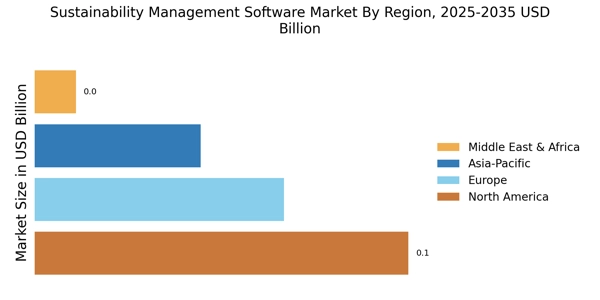
North America is the largest market for Sustainability Management Software Market, holding approximately 45% of the global market share. The region's growth is driven by stringent environmental regulations, increasing corporate sustainability commitments, and a growing demand for transparency in supply chains. The U.S. and Canada are leading this trend, with significant investments in green technologies and software solutions. The competitive landscape is dominated by key players such as SAP, IBM, and Salesforce, which are continuously innovating to meet the evolving needs of businesses. The presence of numerous startups and established firms enhances the market's dynamism. As organizations increasingly prioritize sustainability, the demand for comprehensive management software is expected to rise, further solidifying North America's leadership in this sector.

Europe : Regulatory-Driven Market Expansion

Europe is the second-largest market for Sustainability Management Software Market, accounting for around 30% of the global share. The region's growth is significantly influenced by the European Union's stringent regulations on environmental sustainability and climate change. Initiatives like the European Green Deal are catalyzing demand for software solutions that help organizations comply with these regulations and enhance their sustainability practices. Leading countries in this market include Germany, France, and the UK, where companies are increasingly adopting sustainability management solutions to meet regulatory requirements and improve operational efficiency. Key players such as Enablon and EcoStruxure are well-positioned to capitalize on this trend, offering innovative solutions tailored to the unique needs of European businesses. The competitive landscape is robust, with a mix of established firms and emerging startups driving innovation.

Asia-Pacific : Emerging Market Potential

Asia-Pacific is witnessing rapid growth in the Sustainability Management Software Market, holding approximately 20% of the global share. The region's expansion is driven by increasing awareness of environmental issues, government initiatives promoting sustainability, and the rising demand for corporate social responsibility. Countries like China and India are at the forefront, implementing policies that encourage sustainable practices across various sectors. The competitive landscape is evolving, with both local and international players vying for market share. Companies such as Measurabl and Gensuite are gaining traction by offering tailored solutions that address the specific needs of businesses in the region. As more organizations recognize the importance of sustainability, the demand for effective management software is expected to grow, presenting significant opportunities for innovation and investment in the Asia-Pacific market.

Middle East and Africa : Resource-Rich Market Dynamics

The Middle East and Africa region is gradually emerging in the Sustainability Management Software Market, accounting for about 5% of the global share. The growth is primarily driven by increasing government initiatives aimed at promoting sustainability and environmental conservation. Countries like South Africa and the UAE are leading the charge, implementing policies that encourage businesses to adopt sustainable practices and technologies. The competitive landscape is still developing, with a mix of local and international players entering the market. Companies are beginning to recognize the importance of sustainability management software to enhance operational efficiency and comply with regulations. As awareness grows, the demand for such solutions is expected to rise, paving the way for future growth in the region.

Sustainability Management Software Market Regional Image

Key Players and Competitive Insights

The Sustainability Management Software Market is currently characterized by a dynamic competitive landscape, driven by increasing regulatory pressures and a growing emphasis on corporate social responsibility. Major players such as SAP (DE), IBM (US), and Salesforce (US) are strategically positioning themselves through innovation and partnerships to enhance their offerings. SAP (DE) focuses on integrating sustainability metrics into its enterprise resource planning solutions, while IBM (US) emphasizes artificial intelligence to optimize resource management. Salesforce (US) leverages its customer relationship management platform to provide sustainability insights, thereby shaping a competitive environment that prioritizes technological advancement and customer engagement.

The market structure appears moderately fragmented, with a mix of established players and emerging startups. Key business tactics include localizing software solutions to meet regional compliance requirements and optimizing supply chains for sustainability. This collective influence of major players fosters a competitive atmosphere where innovation and adaptability are paramount. The presence of diverse offerings allows organizations to select solutions that best fit their sustainability goals, thereby enhancing market dynamism.

In August 2025, SAP (DE) announced a partnership with a leading environmental consultancy to develop a new module for its sustainability management software. This strategic move aims to provide clients with enhanced analytics capabilities, enabling them to track and report on their carbon emissions more effectively. The collaboration underscores SAP's commitment to integrating expert insights into its software, thereby enhancing its value proposition in the sustainability space.

In September 2025, IBM (US) launched a new AI-driven tool designed to help companies assess their environmental impact in real-time. This tool utilizes machine learning algorithms to analyze data from various sources, providing actionable insights for businesses seeking to reduce their carbon footprint. The introduction of this technology reflects IBM's focus on leveraging AI to drive sustainability initiatives, positioning the company as a leader in innovative solutions within the market.

In July 2025, Salesforce (US) expanded its Sustainability Cloud by incorporating advanced data visualization features. This enhancement allows organizations to better communicate their sustainability efforts to stakeholders, thereby fostering transparency and accountability. By prioritizing user experience and stakeholder engagement, Salesforce (US) strengthens its competitive edge, appealing to businesses that prioritize sustainability in their operational strategies.

As of October 2025, current trends in the Sustainability Management Software Market indicate a pronounced shift towards digitalization and AI integration. Strategic alliances among key players are increasingly shaping the landscape, fostering innovation and collaboration. The competitive differentiation is likely to evolve from traditional price-based competition to a focus on technological innovation, sustainability solutions, and supply chain reliability. This transition suggests that companies that can effectively integrate advanced technologies into their sustainability strategies will be better positioned to thrive in an increasingly conscientious market.

Key Companies in the Sustainability Management Software Market market include

Industry Developments

October 2020: Open Systems International, Inc. (OSI Inc.) was purchased by Emerson, a US-based manufacturer and provider of engineering services, for $1.6 billion. Emerson expanded its selection of software and automation solutions through this acquisition. By enabling utility customers to increase energy efficiency from generation to customer delivery, cutting-edge modular technology from OSI Inc. and Emerson's Ovation control system helped the industry as a whole achieve its goals of grid stability and the integration of renewable energy sources.

In 2020: A cloud computing business named NordCloud was acquired by IBM, according to a press release. Through this acquisition, IBM will be able to grow its clientele and increase its revenue.

Future Outlook

Sustainability Management Software Market Future Outlook

The Sustainability Management Software Market is projected to grow at an 18.92% CAGR from 2024 to 2035, driven by regulatory pressures, corporate sustainability goals, and technological advancements.

New opportunities lie in:

  • Integration of AI-driven analytics for real-time sustainability reporting.
  • Development of mobile applications for on-the-go sustainability management.
  • Partnerships with renewable energy providers to enhance software capabilities.

By 2035, the market is expected to be robust, reflecting substantial growth and innovation.

Market Segmentation

Sustainability Management Software Market Service Outlook

  • Implementation Service
  • Consulting Service

Sustainability Management Software Market Component Outlook

  • Software
  • Service

Sustainability Management Software Market Deployment Outlook

  • Cloud-Based
  • On-Premise

Sustainability Management Software Market Software Mode Outlook

  • Collaboration and Communication Systems

Report Scope

MARKET SIZE 20240.17(USD Billion)
MARKET SIZE 20250.2022(USD Billion)
MARKET SIZE 20351.144(USD Billion)
COMPOUND ANNUAL GROWTH RATE (CAGR)18.92% (2024 - 2035)
REPORT COVERAGERevenue Forecast, Competitive Landscape, Growth Factors, and Trends
BASE YEAR2024
Market Forecast Period2025 - 2035
Historical Data2019 - 2024
Market Forecast UnitsUSD Billion
Key Companies ProfiledMarket analysis in progress
Segments CoveredMarket segmentation analysis in progress
Key Market OpportunitiesIntegration of artificial intelligence enhances data analytics in the Sustainability Management Software Market.

Key Market DynamicsRising regulatory pressures drive demand for Sustainability Management Software, enhancing corporate accountability and transparency.
Countries CoveredNorth America, Europe, APAC, South America, MEA

Market Highlights

Author
Ankit Gupta
Senior Research Analyst

Ankit Gupta is an analyst in market research industry in ICT and SEMI industry. With post-graduation in "Telecom and Marketing Management" and graduation in "Electronics and Telecommunication" vertical he is well versed with recent development in ICT industry as a whole. Having worked on more than 150+ reports including consultation for fortune 500 companies such as Microsoft and Rio Tinto in identifying solutions with respect to business problems his opinions are inclined towards mixture of technical and managerial aspects.

Leave a Comment

FAQs

What is the current valuation of the Sustainability Management Software Market?

The market valuation was 0.17 USD Billion in 2024.

What is the projected market size for the Sustainability Management Software Market by 2035?

The projected valuation for 2035 is 1.144 USD Billion.

What is the expected CAGR for the Sustainability Management Software Market from 2025 to 2035?

The expected CAGR during the forecast period is 18.92%.

Which companies are considered key players in the Sustainability Management Software Market?

Key players include SAP, IBM, Salesforce, Enablon, Sphera, EcoStruxure, Measurabl, Gensuite, and Sustainability Cloud.

What are the main components of the Sustainability Management Software Market?

The main components include software and services, with software valued at 0.57 USD Billion and services at 0.574 USD Billion.

How is the software segment of the Sustainability Management Software Market performing?

The software segment, particularly collaboration and communication systems, is valued at 0.572 USD Billion.

Download Free Sample

Kindly complete the form below to receive a free sample of this Report

Compare Licence

×
Features License Type
Single User Multiuser License Enterprise User
Price $4,950 $5,950 $7,250
Maximum User Access Limit 1 User Upto 10 Users Unrestricted Access Throughout the Organization
Free Customization
Direct Access to Analyst
Deliverable Format
Platform Access
Discount on Next Purchase 10% 15% 15%
Printable Versions