Request Free Sample ×

Kindly complete the form below to receive a free sample of this Report

* Please use a valid business email

Leading companies partner with us for data-driven Insights

clients tt-cursor
Hero Background
English
Chinese
French
Japanese
Korean
German
Spanish

Sun Protection Products Market Size

ID: MRFR/CG/6615-CR
128 Pages
Pradeep Nandi
February 2021

Sun Protection Products Market Size, Share, Industry Trend & Analysis Research Report: By Product Type (Sunscreen, After-Sun Products, Sun-Protective Clothing, Sun Protection Accessories), By Formulation (Lotion, Gel, Spray, Stick), By SPF Level (Low SPF, Medium SPF, High SPF, Very High SPF), By End Use (Personal Use, Professional Use, Sports Use) and By Regional (North America, Europe, South America, Asia Pacific, Middle East and Africa)- Forecast to 2035

Share:
Download PDF ×

We do not share your information with anyone. However, we may send you emails based on your report interest from time to time. You may contact us at any time to opt-out.

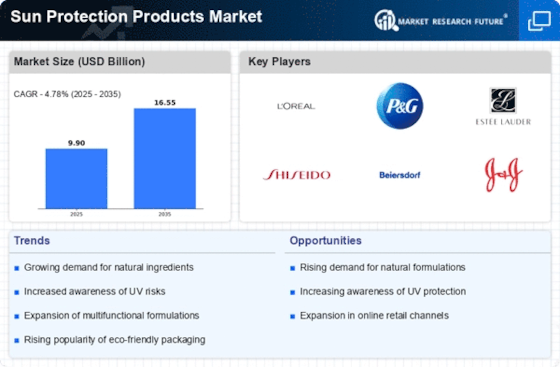
Sun Protection Products Market Infographic
Purchase Options

Sun Protection Products Size

Sun Protection Products Market Growth Projections and Opportunities

Sun Protection Products Market function at the intersection between skincare, health and aesthetic where numerous market forces are present, which cater for the diverse public needs, related to efficient sun care products. Among factors shaping the market for sunscreen, the growing awareness of the seriousness of sunburn in relation to UV exposure and skin cancer risk is the prime driver. With the consumers getting more aware of the ominous impact of UVA and UVB radiations and their sun protection products, the market demand for the same has been skyrocketing. The market targets a spectrum of consumer predilections, which is achieved by supplying a myriad of SPF products, from sunscreens and sunblocks to a whole range of other protectants, in order for communicants to find an answer to their individual holistic sun-care needs.

The sun protection products market is being shaped by the consumer preferences and in general the awareness of sun related risks which not just positively affect the market but in the meantime the demand is rising for the new and better products. The development of sunscreen products by consumers that in addition to protecting your skin from the harmful effects of UVR, can also act as a multi-purpose lotion is one of the trends in the cosmetic industry that has come at a time when consumers are becoming more about maintaining healthy skin and preventing premature skin aging. The market is versatile for all the tastes providing a bulk of sun protection products — lotions, sprays, creams, and so on — with new formulation such as mineral sunscreens included to signify the nature of dynamic skincare and beauty trends nowadays.

Economic factors that determine the changing trends in sunscreen products also influence the sun protection products market. Today, the consumer is very conscious of his or her skin health and therefore, they opt for sunscreens that are of high quality and have improved features. This is the reason why the demand of quality sunscreens has grown. One of the main factors affecting the extent of the market growth is the economic cost-effectiveness of purchasing sunscreen products that correspond to the requested price range with regards to the customers' demand for both low-budget product and premium quality in their everyday cleansing routine. Consumers tend to have price sensitivity, so offering a mixed pallet of budget-friendly and premium suncare products can be beneficial to meet the expectations of men and women from different income levels, which is crucial for running a successful business.

The technological developments in sunscreen formulations form the basis of current sunscreen market’s evolution. Developments, like multi-spectrum barriers, water repellents and lightweight fabrics, improve the existing effectiveness, user experience and aesthetics. Technology is one of critical factors in the sunscreens that satisfy skincare-conscious customer needs on novel developments which give them socially acceptable sun care products in order pattern their daily lifestyle.
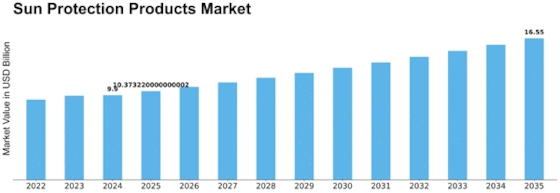

Sun Protection Products Market Size Graph
Author
Author Profile
Pradeep Nandi
Senior Research Analyst

I have a bachelor's degree in mechanical engineering and an MBA. I have more than two years of expertise in the retail, food, and beverage, chemical, and material industries, and hence have developed a sound cross-domain expertise. A firm believer in lifelong learning and sharing of knowledge. Having a proclivity for hatching ideas and trying to absorb as much information as possible in a short amount of time. Introducing corporates to the data and insight, which enables them to move from probability to possibility, has been my key areas of interest. 

Leave a Comment

FAQs

What is the current valuation of the Sun Protection Products Market in 2025?

<p>The Sun Protection Products Market is valued at approximately 9.9 USD Billion in 2024.</p>

What is the projected market size for the Sun Protection Products Market by 2035?

The market is expected to reach a valuation of 16.55 USD Billion by 2035.

What is the expected CAGR for the Sun Protection Products Market during the forecast period 2025 - 2035?

The market is projected to grow at a CAGR of 4.78% from 2025 to 2035.

Which companies are considered key players in the Sun Protection Products Market?

Key players include L'Oreal, Procter &amp; Gamble, Estée Lauder, Shiseido, Beiersdorf, Johnson &amp; Johnson, Revlon, Neutrogena, and Avon.

What are the main product segments within the Sun Protection Products Market?

The main segments include Sunscreen, After-Sun Products, Sun-Protective Clothing, and Sun Protection Accessories.

How much revenue is generated from Sunscreen products in 2025?

Sunscreen products are projected to generate between 3.5 and 5.5 USD Billion in revenue.

What is the revenue range for Sun-Protective Clothing in 2025?

Sun-Protective Clothing is expected to generate between 2.0 and 3.0 USD Billion.

Which formulation type is anticipated to have the highest revenue in the Sun Protection Products Market?

Lotion formulations are expected to generate between 3.0 and 5.0 USD Billion.

What is the expected revenue for Sports Use of sun protection products in 2025?

Sports Use is projected to generate between 3.9 and 7.05 USD Billion.

How does the market for Very High SPF products compare to other SPF levels in 2025?

Very High SPF products are expected to generate between 2.9 and 5.05 USD Billion, indicating a strong demand.

Market Summary

As per Market Research Future analysis, the Sun Protection Products Market was estimated at 9.9 USD Billion in 2024. The sun protection industry is projected to grow from 10.37 USD Billion in 2025 to 16.55 USD Billion by 2035, exhibiting a compound annual growth rate (CAGR) of 4.78% during the forecast period 2025 - 2035

Key Market Trends & Highlights

The Sun Protection Products Market is experiencing a dynamic shift towards natural ingredients and innovative formulations.

  • The demand for natural ingredients in sun protection products is on the rise, reflecting consumer preferences for safer options. Technological advancements in formulations are enhancing product efficacy and user experience, particularly in the sunscreen segment. The male grooming segment is expanding, indicating a broader acceptance of sun protection among men, especially in North America. Rising awareness of skin health and the influence of social media are driving growth in both sunscreen and sun-protective clothing segments.

Market Size & Forecast

2024 Market Size 9.9 (USD Billion)
2035 Market Size 16.55 (USD Billion)
CAGR (2025 - 2035) 4.78%
Largest Regional Market Share in 2024 North America

Major Players

L'Oreal (FR), Procter &amp; Gamble (US), <a href="https://www.esteelauder.in/products/spf-essentials">Estée Lauder</a> (US), Shiseido (JP), Beiersdorf (DE), Johnson &amp; Johnson (US), Revlon (US), Neutrogena (US), <a href="https://www.avon.co.in/products/avon-care-sun-spf-30">Avon</a> (GB)

Market Trends

The Sun Protection Products Market is currently experiencing a notable evolution, driven by increasing awareness regarding skin health and the harmful effects of UV radiation. Consumers are becoming more educated about the importance of sun protection, leading to a surge in demand for various products, including sunscreens, sunblocks, and protective clothing. This heightened awareness is not only influencing purchasing decisions but also prompting manufacturers to innovate and enhance their product offerings. As a result, the market is witnessing a diversification of formulations, catering to different skin types and preferences, which appears to be a strategic response to consumer needs. Moreover, the Sun Protection Products Market is likely to benefit from the growing trend of outdoor activities and travel, as individuals seek to enjoy the sun while prioritizing their skin's safety. The rise of social media and influencer marketing also plays a crucial role in shaping consumer perceptions and driving product visibility. Brands are increasingly leveraging these platforms to promote their sun protection solutions, thereby reaching a broader audience. This dynamic interplay between consumer behavior and marketing strategies suggests a promising outlook for the market, as it adapts to evolving trends and preferences.

Increased Demand for Natural Ingredients

There is a growing preference among consumers for sun protection products that utilize natural and organic ingredients. This trend reflects a broader movement towards clean beauty, where individuals seek formulations free from harmful chemicals. Brands are responding by developing products that emphasize transparency and sustainability, appealing to environmentally conscious consumers.

Technological Advancements in Formulations

Innovations in formulation technology are transforming the Sun Protection Products Market. New delivery systems and enhanced SPF technologies are being introduced, which improve the efficacy and user experience of sun protection products. These advancements may lead to more effective and longer-lasting protection, thereby attracting a wider consumer base.

Expansion of Male Grooming Segment

The male grooming segment within the Sun Protection Products Market is expanding, as more men recognize the importance of sun protection. This shift is prompting brands to create targeted products designed specifically for male consumers, including lightweight sunscreens and after-sun care. The increasing visibility of male skincare routines suggests a potential for growth in this demographic.

Sun Protection Products Market Market Drivers

Rising Awareness of Skin Health

The increasing awareness regarding skin health and the detrimental effects of UV radiation appears to be a primary driver for the Sun Protection Products Market. Consumers are becoming more educated about the risks associated with sun exposure, including skin cancer and premature aging. This heightened awareness is reflected in the growing demand for sunscreen and other protective products. According to recent data, the sunscreen segment alone is projected to reach a market value of approximately 3 billion dollars by 2026. As a result, manufacturers are focusing on developing innovative products that cater to this demand, thereby propelling the growth of the Sun Protection Products Market.

Emergence of Innovative Product Formats

The emergence of innovative product formats is reshaping the Sun Protection Products Market. Consumers are increasingly seeking convenience and multifunctionality in their sun protection solutions. This has led to the development of new formats such as sprays, sticks, and tinted moisturizers that offer sun protection alongside skincare benefits. Market data indicates that the spray segment is experiencing a growth rate of approximately 15% annually, reflecting consumer preference for easy application. As a result, brands are investing in research and development to create diverse product lines that meet these evolving consumer demands, thereby enhancing the overall growth trajectory of the Sun Protection Products Market.

Growth of Outdoor Activities and Tourism

The growth of outdoor activities and tourism is significantly contributing to the demand for sun protection products within the Sun Protection Products Market. As more individuals engage in outdoor sports, travel, and leisure activities, the need for effective sun protection becomes paramount. Data indicates that the outdoor recreation market is expected to reach a valuation of over 900 billion dollars by 2025, which correlates with increased sales of sun protection products. This trend suggests that manufacturers may need to adapt their offerings to cater to active consumers, thereby driving innovation and expansion within the Sun Protection Products Market.

Regulatory Support for Sun Safety Initiatives

Regulatory support for sun safety initiatives is playing a crucial role in the expansion of the Sun Protection Products Market. Governments and health organizations are increasingly advocating for sun safety measures, including the promotion of sunscreen use and the establishment of guidelines for product formulations. This regulatory framework not only enhances consumer trust but also encourages manufacturers to innovate and comply with safety standards. For instance, recent regulations have mandated clearer labeling on sunscreen products, which aids consumers in making informed choices. Such initiatives are likely to bolster the growth of the Sun Protection Products Market as they align with public health objectives.

Influence of Social Media and Celebrity Endorsements

The influence of social media and celebrity endorsements is increasingly shaping consumer behavior in the Sun Protection Products Market. Platforms such as Instagram and TikTok have become vital channels for promoting sun protection products, with influencers showcasing their personal experiences and recommendations. This trend has led to a surge in product visibility and consumer engagement. Data suggests that brands leveraging social media marketing strategies have experienced a sales increase of up to 30%. Consequently, the Sun Protection Products Market is witnessing a shift towards more targeted marketing efforts, aiming to capture the attention of younger demographics who are more active on these platforms.

Market Segment Insights

By Type: Sunscreen (Largest) vs. Sun-Protective Clothing (Fastest-Growing)

In the Sun Protection Products Market, sunscreen occupies the largest share, dominating consumer preferences due to its versatility and wide availability. Sunscreen products cater to various skin types and formulations, ensuring they meet diverse consumer needs. After-sun products and sun protection accessories also contribute to the market but with a comparatively smaller share, focusing on specific consumer requirements post-exposure and added protection. Sun-protective clothing emerges as a notable segment, appealing especially to health-conscious consumers seeking skin protection without daily application of products.

Sunscreen (Dominant) vs. Sun-Protective Clothing (Emerging)

Sunscreen remains the dominant segment in the Sun Protection Products Market, driven by widespread awareness of skin cancer risks and the growing emphasis on daily sun protection. Its formulations range from lotions to sprays, catering to an array of consumer preferences. Conversely, sun-protective clothing is an emerging trend, gaining traction among consumers who prefer convenient, all-day protection from UV rays without the need for constant reapplication. This segment capitalizes on advances in fabric technology and increased consumer education, promoting garments that offer built-in UV protection, thus appealing to fashion-conscious individuals alongside the health-driven market.

By Formulation: Lotion (Largest) vs. Gel (Fastest-Growing)

In the Sun Protection Products Market, the formulation segment is characterized by several key types, with lotion holding a significant share. Lotions are favored for their versatility and ease of application, making them a popular choice among consumers. Meanwhile, gels are rapidly gaining traction due to their lightweight texture and refreshing feel, attracting a younger demographic interested in UV protection without a greasy finish. Overall, the diverse formulation options cater to varying preferences and skin types, solidifying their presence in the market.

Lotion (Dominant) vs. Gel (Emerging)

Lotion formulations are the dominant choice in the Sun Protection Products Market, celebrated for their moisturizing properties and broad applicability across different skin types. These formulations are often enriched with nourishing ingredients that enhance skin health while providing effective sun protection. Conversely, gel formulations are emerging as a favorite among consumers seeking lightweight and non-greasy options. Their quick absorption and refreshing feel make them particularly appealing for those living in warmer climates or engaged in outdoor activities. As consumer preferences shift towards more contemporary formulations, gels are positioning themselves as a strong alternative to traditional lotions, signaling a dynamic evolution in the market.

By SPF Level: Medium SPF (Largest) vs. Very High SPF (Fastest-Growing)

In the Sun Protection Products Market, the SPF Level segment primarily consists of Low SPF, Medium SPF, High SPF, and Very High SPF products. Among these, Medium SPF products hold the largest market share, complemented by a robust variety of formulations catering to diverse consumer preferences. Very High SPF products, on the other hand, are rapidly gaining interest among consumers seeking enhanced protection against UV rays, thus reflecting a dynamic shift in market demands towards higher protection levels.

Medium SPF (Dominant) vs. Very High SPF (Emerging)

Medium SPF products dominate the Sun Protection Products Market due to their balanced protection profile, appealing to a broad demographic that seeks effective sun defense without the heavy formulations often associated with higher SPFs. This segment caters to everyday consumers, making it a staple in <a href="https://www.marketresearchfuture.com/reports/sun-care-products-market-6798">sun care</a> routines. In contrast, Very High SPF products are emerging as a vital segment, driven by increased skin cancer awareness and heightened exposure to UV radiation. They appeal particularly to consumers with fair skin or those who spend prolonged periods outdoors. As skincare evolves, these products are integrating advanced formulations, creating a competitive edge in the market.

By End Use: Personal Use (Largest) vs. Professional Use (Fastest-Growing)

In the Sun Protection Products Market, the end-use segment is prominently divided into personal, professional, and sports use categories. Personal use accounts for the largest share, driven by consumer awareness and the increasing prevalence of skin damage concerns. This segment includes products used by everyday consumers for recreational purposes, contributing significantly to the overall market dynamics. Meanwhile, professional use is rapidly gaining traction, attributed to the rising demand for skin protection in occupational settings, thus marking its place as the fastest-growing segment within this space.

Personal Use (Dominant) vs. Professional Use (Emerging)

The personal use segment of the Sun Protection Products Market is characterized by a wide array of offerings aimed at individual consumers, such as lotions, sprays, and gels for daily use. This segment has solidified its position as dominant due to increasing consumer awareness regarding UV radiation and its harmful effects on skin health. Conversely, the professional use segment is emerging, spurred by heightened safety regulations and awareness in workplaces that necessitate the use of specialized sun protection products. This segment targets industries like healthcare, beauty, and outdoor services, creating tailored solutions that cater to professional demands and thus fostering its rapid growth.

Get more detailed insights about Sun Protection Products Market Research Report – Forecast Till 2035

Regional Insights

North America : Market Leader in Innovation

North America is the largest market for sun protection products, holding approximately 40% of the global market share. The region's growth is driven by increasing awareness of skin health, rising incidences of skin cancer, and stringent regulations promoting the use of sun protection. The demand for high-SPF products and organic formulations is also on the rise, supported by consumer preferences for safer and more effective options. The United States is the leading country in this market, followed by Canada. Major players like L'Oreal, Procter & Gamble, and Johnson & Johnson dominate the competitive landscape, offering a wide range of products. The presence of established brands and continuous innovation in formulations contribute to the region's strong market position. Retail channels, including e-commerce, are also expanding, making products more accessible to consumers.

Europe : Regulatory Focus on Safety

Europe is the second-largest market for sun protection products, accounting for approximately 30% of the global share. The region's growth is fueled by increasing consumer awareness regarding UV protection and skin health, alongside regulatory frameworks that emphasize product safety and efficacy. The European Union's regulations on cosmetic products ensure that only safe and effective formulations reach the market, driving innovation and quality. Leading countries in this region include Germany, France, and the UK, where brands like Beiersdorf and Estée Lauder are prominent. The competitive landscape is characterized by a mix of established brands and emerging players focusing on natural and organic products. The demand for multifunctional products that offer both sun protection and skincare benefits is also rising, reflecting changing consumer preferences.

Asia-Pacific : Rapid Growth and Demand

Asia-Pacific is witnessing rapid growth in the sun protection products market, holding approximately 25% of the global share. The increasing awareness of skin health, rising disposable incomes, and changing lifestyles are key drivers of this growth. Countries like Japan and Australia are leading the market, with a growing demand for high-quality sun protection products, particularly among younger consumers who are more conscious of skincare routines. Japan and Australia are the leading countries in this region, with significant contributions from brands like Shiseido and Neutrogena. The competitive landscape is evolving, with both international and local brands vying for market share. The rise of e-commerce and social media marketing is also influencing consumer purchasing behavior, making sun protection products more accessible and appealing to a broader audience.

Middle East and Africa : Emerging Market Potential

The Middle East and Africa region is emerging as a potential market for sun protection products, holding about 5% of the global share. The growth is driven by increasing awareness of the harmful effects of UV radiation, particularly in countries with high sun exposure. The demand for sun protection is expected to rise as consumers become more health-conscious and seek effective solutions to protect their skin from sun damage. Leading countries in this region include South Africa and the UAE, where the presence of international brands is growing. The competitive landscape is characterized by a mix of local and global players, with an increasing focus on product innovation and marketing strategies tailored to local preferences. The region's unique climate and lifestyle factors also create opportunities for specialized sun protection products.

Key Players and Competitive Insights

The Sun Protection Products Market is currently characterized by a dynamic competitive landscape, driven by increasing consumer awareness regarding skin health and the rising incidence of skin cancer. Major players such as L'Oreal (France), Procter & Gamble (US), and Estée Lauder (US) are strategically positioning themselves through innovation and digital transformation. L'Oreal (France) has been focusing on enhancing its product formulations to include more natural ingredients, which resonates with the growing demand for clean beauty. Procter & Gamble (US) is leveraging its extensive distribution network to expand its reach in emerging markets, while Estée Lauder (US) emphasizes premium product offerings that cater to affluent consumers. Collectively, these strategies contribute to a competitive environment that is increasingly focused on sustainability and consumer-centric innovation.In terms of business tactics, companies are localizing manufacturing to reduce costs and improve supply chain efficiency. The market structure appears moderately fragmented, with a mix of established brands and emerging players vying for market share. The collective influence of key players is significant, as they set trends that smaller companies often follow, thereby shaping the overall market dynamics.
In August L'Oreal (France) announced a partnership with a leading biotech firm to develop a new line of sun protection products that utilize bioengineered ingredients. This strategic move not only enhances L'Oreal's product portfolio but also aligns with the increasing consumer preference for sustainable and innovative solutions. The collaboration is expected to position L'Oreal as a frontrunner in the eco-conscious segment of the market.
In September Procter & Gamble (US) launched a new digital marketing campaign aimed at educating consumers about the importance of sun protection. This initiative reflects the company's commitment to consumer education and engagement, which is crucial in a market where informed choices are becoming increasingly important. By utilizing social media platforms and influencer partnerships, Procter & Gamble is likely to enhance brand loyalty and drive sales.
In July Estée Lauder (US) expanded its product line to include a new range of sun protection products specifically designed for sensitive skin. This strategic expansion not only addresses a niche market but also demonstrates Estée Lauder's responsiveness to consumer needs. By catering to this demographic, the company is likely to capture a larger market share and strengthen its brand reputation.
As of October current trends in the Sun Protection Products Market indicate a strong emphasis on digitalization, sustainability, and the integration of artificial intelligence in product development. Strategic alliances are increasingly shaping the competitive landscape, as companies collaborate to enhance their technological capabilities and product offerings. Looking ahead, competitive differentiation is expected to evolve, with a shift from price-based competition to a focus on innovation, technology, and supply chain reliability. This transition underscores the importance of adapting to consumer preferences and market demands in a rapidly changing environment.

Key Companies in the Sun Protection Products Market include

Industry Developments

Recent developments in the Global Sun Protection Products Market have highlighted a growing focus on skin cancer awareness and the need for effective UV protection. As consumers become more knowledgeable about the risks associated with sun exposure, brands like Neutrogena and L'Oreal have expanded their product offerings to include enhanced formulas that not only protect the skin but also cater to trends in health and wellness.

In terms of mergers and acquisitions, notable activities include Avon entering into strategic partnerships to bolster its sun care range in August 2023, while Shiseido continues to invest in Research and Development for innovative sun protection technologies. Beiersdorf reported a significant increase in its market valuation this year, which has positively impacted its product distribution and global reach. Furthermore, recent research from credible industry sources indicates that consumer spending on sun protection products has risen sharply, with a particular emphasis on eco-friendly options, reflecting a broader trend towards sustainability within the market.

These trends underscore a dynamic landscape where major players like Johnson and Johnson and Estée Lauder are actively adapting to changing consumer preferences and regulatory landscapes.

Future Outlook

Sun Protection Products Market Future Outlook

The Sun Protection Products Market is projected to grow at a 4.78% CAGR from 2025 to 2035, driven by increasing awareness of skin health and rising UV exposure.

New opportunities lie in:

  • <p>Development of eco-friendly, biodegradable sunscreen formulations</p>
  • <p> </p>
  • <p>Expansion of sun protection product lines for children and sensitive skin</p>
  • <p>Integration of smart technology in sun protection applications</p>

By 2035, the market is expected to be robust, reflecting evolving consumer preferences and innovative product offerings.

Market Segmentation

Sun Protection Products Market Type Outlook

  • Sunscreen
  • After-Sun Products
  • Sun-Protective Clothing
  • Sun Protection Accessories

Sun Protection Products Market End Use Outlook

  • Personal Use
  • Professional Use
  • Sports Use

Sun Protection Products Market SPF Level Outlook

  • Low SPF
  • Medium SPF
  • High SPF
  • Very High SPF

Sun Protection Products Market Formulation Outlook

  • Lotion
  • Gel
  • Spray
  • Stick

Report Scope

MARKET SIZE 2024 9.9(USD Billion)
MARKET SIZE 2025 10.37(USD Billion)
MARKET SIZE 2035 16.55(USD Billion)
COMPOUND ANNUAL GROWTH RATE (CAGR) 4.78% (2025 - 2035)
REPORT COVERAGE Revenue Forecast, Competitive Landscape, Growth Factors, and Trends
BASE YEAR 2024
Market Forecast Period 2025 - 2035
Historical Data 2019 - 2024
Market Forecast Units USD Billion
Key Companies Profiled L'Oreal (FR), Procter & Gamble (US), Estée Lauder (US), Shiseido (JP), Beiersdorf (DE), Johnson & Johnson (US), Revlon (US), Neutrogena (US), Avon (GB)
Segments Covered Product Type, Formulation, SPF Level, End Use, Regional
Key Market Opportunities Growing demand for natural ingredients in the Sun Protection Products Market presents significant innovation opportunities.
Key Market Dynamics Rising consumer awareness drives demand for innovative sun protection products amid evolving regulatory standards.
Countries Covered North America, Europe, APAC, South America, MEA

FAQs

What is the current valuation of the Sun Protection Products Market in 2025?

<p>The Sun Protection Products Market is valued at approximately 9.9 USD Billion in 2024.</p>

What is the projected market size for the Sun Protection Products Market by 2035?

The market is expected to reach a valuation of 16.55 USD Billion by 2035.

What is the expected CAGR for the Sun Protection Products Market during the forecast period 2025 - 2035?

The market is projected to grow at a CAGR of 4.78% from 2025 to 2035.

Which companies are considered key players in the Sun Protection Products Market?

Key players include L'Oreal, Procter &amp; Gamble, Estée Lauder, Shiseido, Beiersdorf, Johnson &amp; Johnson, Revlon, Neutrogena, and Avon.

What are the main product segments within the Sun Protection Products Market?

The main segments include Sunscreen, After-Sun Products, Sun-Protective Clothing, and Sun Protection Accessories.

How much revenue is generated from Sunscreen products in 2025?

Sunscreen products are projected to generate between 3.5 and 5.5 USD Billion in revenue.

What is the revenue range for Sun-Protective Clothing in 2025?

Sun-Protective Clothing is expected to generate between 2.0 and 3.0 USD Billion.

Which formulation type is anticipated to have the highest revenue in the Sun Protection Products Market?

Lotion formulations are expected to generate between 3.0 and 5.0 USD Billion.

What is the expected revenue for Sports Use of sun protection products in 2025?

Sports Use is projected to generate between 3.9 and 7.05 USD Billion.

How does the market for Very High SPF products compare to other SPF levels in 2025?

Very High SPF products are expected to generate between 2.9 and 5.05 USD Billion, indicating a strong demand.

  1. SECTION I: EXECUTIVE SUMMARY AND KEY HIGHLIGHTS
    1. | 1.1 EXECUTIVE SUMMARY
    2. | | 1.1.1 Market Overview
    3. | | 1.1.2 Key Findings
    4. | | 1.1.3 Market Segmentation
    5. | | 1.1.4 Competitive Landscape
    6. | | 1.1.5 Challenges and Opportunities
    7. | | 1.1.6 Future Outlook
  2. SECTION II: SCOPING, METHODOLOGY AND MARKET STRUCTURE
    1. | 2.1 MARKET INTRODUCTION
    2. | | 2.1.1 Definition
    3. | | 2.1.2 Scope of the study
    4. | | | 2.1.2.1 Research Objective
    5. | | | 2.1.2.2 Assumption
    6. | | | 2.1.2.3 Limitations
    7. | 2.2 RESEARCH METHODOLOGY
    8. | | 2.2.1 Overview
    9. | | 2.2.2 Data Mining
    10. | | 2.2.3 Secondary Research
    11. | | 2.2.4 Primary Research
    12. | | | 2.2.4.1 Primary Interviews and Information Gathering Process
    13. | | | 2.2.4.2 Breakdown of Primary Respondents
    14. | | 2.2.5 Forecasting Model
    15. | | 2.2.6 Market Size Estimation
    16. | | | 2.2.6.1 Bottom-Up Approach
    17. | | | 2.2.6.2 Top-Down Approach
    18. | | 2.2.7 Data Triangulation
    19. | | 2.2.8 Validation
  3. SECTION III: QUALITATIVE ANALYSIS
    1. | 3.1 MARKET DYNAMICS
    2. | | 3.1.1 Overview
    3. | | 3.1.2 Drivers
    4. | | 3.1.3 Restraints
    5. | | 3.1.4 Opportunities
    6. | 3.2 MARKET FACTOR ANALYSIS
    7. | | 3.2.1 Value chain Analysis
    8. | | 3.2.2 Porter's Five Forces Analysis
    9. | | | 3.2.2.1 Bargaining Power of Suppliers
    10. | | | 3.2.2.2 Bargaining Power of Buyers
    11. | | | 3.2.2.3 Threat of New Entrants
    12. | | | 3.2.2.4 Threat of Substitutes
    13. | | | 3.2.2.5 Intensity of Rivalry
    14. | | 3.2.3 COVID-19 Impact Analysis
    15. | | | 3.2.3.1 Market Impact Analysis
    16. | | | 3.2.3.2 Regional Impact
    17. | | | 3.2.3.3 Opportunity and Threat Analysis
  4. SECTION IV: QUANTITATIVE ANALYSIS
    1. | 4.1 Consumer and Retail, BY Type (USD Billion)
    2. | | 4.1.1 Sunscreen
    3. | | 4.1.2 After-Sun Products
    4. | | 4.1.3 Sun-Protective Clothing
    5. | | 4.1.4 Sun Protection Accessories
    6. | 4.2 Consumer and Retail, BY Formulation (USD Billion)
    7. | | 4.2.1 Lotion
    8. | | 4.2.2 Gel
    9. | | 4.2.3 Spray
    10. | | 4.2.4 Stick
    11. | 4.3 Consumer and Retail, BY SPF Level (USD Billion)
    12. | | 4.3.1 Low SPF
    13. | | 4.3.2 Medium SPF
    14. | | 4.3.3 High SPF
    15. | | 4.3.4 Very High SPF
    16. | 4.4 Consumer and Retail, BY End Use (USD Billion)
    17. | | 4.4.1 Personal Use
    18. | | 4.4.2 Professional Use
    19. | | 4.4.3 Sports Use
    20. | 4.5 Consumer and Retail, BY Region (USD Billion)
    21. | | 4.5.1 North America
    22. | | | 4.5.1.1 US
    23. | | | 4.5.1.2 Canada
    24. | | 4.5.2 Europe
    25. | | | 4.5.2.1 Germany
    26. | | | 4.5.2.2 UK
    27. | | | 4.5.2.3 France
    28. | | | 4.5.2.4 Russia
    29. | | | 4.5.2.5 Italy
    30. | | | 4.5.2.6 Spain
    31. | | | 4.5.2.7 Rest of Europe
    32. | | 4.5.3 APAC
    33. | | | 4.5.3.1 China
    34. | | | 4.5.3.2 India
    35. | | | 4.5.3.3 Japan
    36. | | | 4.5.3.4 South Korea
    37. | | | 4.5.3.5 Malaysia
    38. | | | 4.5.3.6 Thailand
    39. | | | 4.5.3.7 Indonesia
    40. | | | 4.5.3.8 Rest of APAC
    41. | | 4.5.4 South America
    42. | | | 4.5.4.1 Brazil
    43. | | | 4.5.4.2 Mexico
    44. | | | 4.5.4.3 Argentina
    45. | | | 4.5.4.4 Rest of South America
    46. | | 4.5.5 MEA
    47. | | | 4.5.5.1 GCC Countries
    48. | | | 4.5.5.2 South Africa
    49. | | | 4.5.5.3 Rest of MEA
  5. SECTION V: COMPETITIVE ANALYSIS
    1. | 5.1 Competitive Landscape
    2. | | 5.1.1 Overview
    3. | | 5.1.2 Competitive Analysis
    4. | | 5.1.3 Market share Analysis
    5. | | 5.1.4 Major Growth Strategy in the Consumer and Retail
    6. | | 5.1.5 Competitive Benchmarking
    7. | | 5.1.6 Leading Players in Terms of Number of Developments in the Consumer and Retail
    8. | | 5.1.7 Key developments and growth strategies
    9. | | | 5.1.7.1 New Product Launch/Service Deployment
    10. | | | 5.1.7.2 Merger & Acquisitions
    11. | | | 5.1.7.3 Joint Ventures
    12. | | 5.1.8 Major Players Financial Matrix
    13. | | | 5.1.8.1 Sales and Operating Income
    14. | | | 5.1.8.2 Major Players R&D Expenditure. 2023
    15. | 5.2 Company Profiles
    16. | | 5.2.1 L'Oreal (FR)
    17. | | | 5.2.1.1 Financial Overview
    18. | | | 5.2.1.2 Products Offered
    19. | | | 5.2.1.3 Key Developments
    20. | | | 5.2.1.4 SWOT Analysis
    21. | | | 5.2.1.5 Key Strategies
    22. | | 5.2.2 Procter & Gamble (US)
    23. | | | 5.2.2.1 Financial Overview
    24. | | | 5.2.2.2 Products Offered
    25. | | | 5.2.2.3 Key Developments
    26. | | | 5.2.2.4 SWOT Analysis
    27. | | | 5.2.2.5 Key Strategies
    28. | | 5.2.3 Estée Lauder (US)
    29. | | | 5.2.3.1 Financial Overview
    30. | | | 5.2.3.2 Products Offered
    31. | | | 5.2.3.3 Key Developments
    32. | | | 5.2.3.4 SWOT Analysis
    33. | | | 5.2.3.5 Key Strategies
    34. | | 5.2.4 Shiseido (JP)
    35. | | | 5.2.4.1 Financial Overview
    36. | | | 5.2.4.2 Products Offered
    37. | | | 5.2.4.3 Key Developments
    38. | | | 5.2.4.4 SWOT Analysis
    39. | | | 5.2.4.5 Key Strategies
    40. | | 5.2.5 Beiersdorf (DE)
    41. | | | 5.2.5.1 Financial Overview
    42. | | | 5.2.5.2 Products Offered
    43. | | | 5.2.5.3 Key Developments
    44. | | | 5.2.5.4 SWOT Analysis
    45. | | | 5.2.5.5 Key Strategies
    46. | | 5.2.6 Johnson & Johnson (US)
    47. | | | 5.2.6.1 Financial Overview
    48. | | | 5.2.6.2 Products Offered
    49. | | | 5.2.6.3 Key Developments
    50. | | | 5.2.6.4 SWOT Analysis
    51. | | | 5.2.6.5 Key Strategies
    52. | | 5.2.7 Revlon (US)
    53. | | | 5.2.7.1 Financial Overview
    54. | | | 5.2.7.2 Products Offered
    55. | | | 5.2.7.3 Key Developments
    56. | | | 5.2.7.4 SWOT Analysis
    57. | | | 5.2.7.5 Key Strategies
    58. | | 5.2.8 Neutrogena (US)
    59. | | | 5.2.8.1 Financial Overview
    60. | | | 5.2.8.2 Products Offered
    61. | | | 5.2.8.3 Key Developments
    62. | | | 5.2.8.4 SWOT Analysis
    63. | | | 5.2.8.5 Key Strategies
    64. | | 5.2.9 Avon (GB)
    65. | | | 5.2.9.1 Financial Overview
    66. | | | 5.2.9.2 Products Offered
    67. | | | 5.2.9.3 Key Developments
    68. | | | 5.2.9.4 SWOT Analysis
    69. | | | 5.2.9.5 Key Strategies
    70. | 5.3 Appendix
    71. | | 5.3.1 References
    72. | | 5.3.2 Related Reports
  6. LIST OF FIGURES
    1. | 6.1 MARKET SYNOPSIS
    2. | 6.2 NORTH AMERICA MARKET ANALYSIS
    3. | 6.3 US MARKET ANALYSIS BY TYPE
    4. | 6.4 US MARKET ANALYSIS BY FORMULATION
    5. | 6.5 US MARKET ANALYSIS BY SPF LEVEL
    6. | 6.6 US MARKET ANALYSIS BY END USE
    7. | 6.7 CANADA MARKET ANALYSIS BY TYPE
    8. | 6.8 CANADA MARKET ANALYSIS BY FORMULATION
    9. | 6.9 CANADA MARKET ANALYSIS BY SPF LEVEL
    10. | 6.10 CANADA MARKET ANALYSIS BY END USE
    11. | 6.11 EUROPE MARKET ANALYSIS
    12. | 6.12 GERMANY MARKET ANALYSIS BY TYPE
    13. | 6.13 GERMANY MARKET ANALYSIS BY FORMULATION
    14. | 6.14 GERMANY MARKET ANALYSIS BY SPF LEVEL
    15. | 6.15 GERMANY MARKET ANALYSIS BY END USE
    16. | 6.16 UK MARKET ANALYSIS BY TYPE
    17. | 6.17 UK MARKET ANALYSIS BY FORMULATION
    18. | 6.18 UK MARKET ANALYSIS BY SPF LEVEL
    19. | 6.19 UK MARKET ANALYSIS BY END USE
    20. | 6.20 FRANCE MARKET ANALYSIS BY TYPE
    21. | 6.21 FRANCE MARKET ANALYSIS BY FORMULATION
    22. | 6.22 FRANCE MARKET ANALYSIS BY SPF LEVEL
    23. | 6.23 FRANCE MARKET ANALYSIS BY END USE
    24. | 6.24 RUSSIA MARKET ANALYSIS BY TYPE
    25. | 6.25 RUSSIA MARKET ANALYSIS BY FORMULATION
    26. | 6.26 RUSSIA MARKET ANALYSIS BY SPF LEVEL
    27. | 6.27 RUSSIA MARKET ANALYSIS BY END USE
    28. | 6.28 ITALY MARKET ANALYSIS BY TYPE
    29. | 6.29 ITALY MARKET ANALYSIS BY FORMULATION
    30. | 6.30 ITALY MARKET ANALYSIS BY SPF LEVEL
    31. | 6.31 ITALY MARKET ANALYSIS BY END USE
    32. | 6.32 SPAIN MARKET ANALYSIS BY TYPE
    33. | 6.33 SPAIN MARKET ANALYSIS BY FORMULATION
    34. | 6.34 SPAIN MARKET ANALYSIS BY SPF LEVEL
    35. | 6.35 SPAIN MARKET ANALYSIS BY END USE
    36. | 6.36 REST OF EUROPE MARKET ANALYSIS BY TYPE
    37. | 6.37 REST OF EUROPE MARKET ANALYSIS BY FORMULATION
    38. | 6.38 REST OF EUROPE MARKET ANALYSIS BY SPF LEVEL
    39. | 6.39 REST OF EUROPE MARKET ANALYSIS BY END USE
    40. | 6.40 APAC MARKET ANALYSIS
    41. | 6.41 CHINA MARKET ANALYSIS BY TYPE
    42. | 6.42 CHINA MARKET ANALYSIS BY FORMULATION
    43. | 6.43 CHINA MARKET ANALYSIS BY SPF LEVEL
    44. | 6.44 CHINA MARKET ANALYSIS BY END USE
    45. | 6.45 INDIA MARKET ANALYSIS BY TYPE
    46. | 6.46 INDIA MARKET ANALYSIS BY FORMULATION
    47. | 6.47 INDIA MARKET ANALYSIS BY SPF LEVEL
    48. | 6.48 INDIA MARKET ANALYSIS BY END USE
    49. | 6.49 JAPAN MARKET ANALYSIS BY TYPE
    50. | 6.50 JAPAN MARKET ANALYSIS BY FORMULATION
    51. | 6.51 JAPAN MARKET ANALYSIS BY SPF LEVEL
    52. | 6.52 JAPAN MARKET ANALYSIS BY END USE
    53. | 6.53 SOUTH KOREA MARKET ANALYSIS BY TYPE
    54. | 6.54 SOUTH KOREA MARKET ANALYSIS BY FORMULATION
    55. | 6.55 SOUTH KOREA MARKET ANALYSIS BY SPF LEVEL
    56. | 6.56 SOUTH KOREA MARKET ANALYSIS BY END USE
    57. | 6.57 MALAYSIA MARKET ANALYSIS BY TYPE
    58. | 6.58 MALAYSIA MARKET ANALYSIS BY FORMULATION
    59. | 6.59 MALAYSIA MARKET ANALYSIS BY SPF LEVEL
    60. | 6.60 MALAYSIA MARKET ANALYSIS BY END USE
    61. | 6.61 THAILAND MARKET ANALYSIS BY TYPE
    62. | 6.62 THAILAND MARKET ANALYSIS BY FORMULATION
    63. | 6.63 THAILAND MARKET ANALYSIS BY SPF LEVEL
    64. | 6.64 THAILAND MARKET ANALYSIS BY END USE
    65. | 6.65 INDONESIA MARKET ANALYSIS BY TYPE
    66. | 6.66 INDONESIA MARKET ANALYSIS BY FORMULATION
    67. | 6.67 INDONESIA MARKET ANALYSIS BY SPF LEVEL
    68. | 6.68 INDONESIA MARKET ANALYSIS BY END USE
    69. | 6.69 REST OF APAC MARKET ANALYSIS BY TYPE
    70. | 6.70 REST OF APAC MARKET ANALYSIS BY FORMULATION
    71. | 6.71 REST OF APAC MARKET ANALYSIS BY SPF LEVEL
    72. | 6.72 REST OF APAC MARKET ANALYSIS BY END USE
    73. | 6.73 SOUTH AMERICA MARKET ANALYSIS
    74. | 6.74 BRAZIL MARKET ANALYSIS BY TYPE
    75. | 6.75 BRAZIL MARKET ANALYSIS BY FORMULATION
    76. | 6.76 BRAZIL MARKET ANALYSIS BY SPF LEVEL
    77. | 6.77 BRAZIL MARKET ANALYSIS BY END USE
    78. | 6.78 MEXICO MARKET ANALYSIS BY TYPE
    79. | 6.79 MEXICO MARKET ANALYSIS BY FORMULATION
    80. | 6.80 MEXICO MARKET ANALYSIS BY SPF LEVEL
    81. | 6.81 MEXICO MARKET ANALYSIS BY END USE
    82. | 6.82 ARGENTINA MARKET ANALYSIS BY TYPE
    83. | 6.83 ARGENTINA MARKET ANALYSIS BY FORMULATION
    84. | 6.84 ARGENTINA MARKET ANALYSIS BY SPF LEVEL
    85. | 6.85 ARGENTINA MARKET ANALYSIS BY END USE
    86. | 6.86 REST OF SOUTH AMERICA MARKET ANALYSIS BY TYPE
    87. | 6.87 REST OF SOUTH AMERICA MARKET ANALYSIS BY FORMULATION
    88. | 6.88 REST OF SOUTH AMERICA MARKET ANALYSIS BY SPF LEVEL
    89. | 6.89 REST OF SOUTH AMERICA MARKET ANALYSIS BY END USE
    90. | 6.90 MEA MARKET ANALYSIS
    91. | 6.91 GCC COUNTRIES MARKET ANALYSIS BY TYPE
    92. | 6.92 GCC COUNTRIES MARKET ANALYSIS BY FORMULATION
    93. | 6.93 GCC COUNTRIES MARKET ANALYSIS BY SPF LEVEL
    94. | 6.94 GCC COUNTRIES MARKET ANALYSIS BY END USE
    95. | 6.95 SOUTH AFRICA MARKET ANALYSIS BY TYPE
    96. | 6.96 SOUTH AFRICA MARKET ANALYSIS BY FORMULATION
    97. | 6.97 SOUTH AFRICA MARKET ANALYSIS BY SPF LEVEL
    98. | 6.98 SOUTH AFRICA MARKET ANALYSIS BY END USE
    99. | 6.99 REST OF MEA MARKET ANALYSIS BY TYPE
    100. | 6.100 REST OF MEA MARKET ANALYSIS BY FORMULATION
    101. | 6.101 REST OF MEA MARKET ANALYSIS BY SPF LEVEL
    102. | 6.102 REST OF MEA MARKET ANALYSIS BY END USE
    103. | 6.103 KEY BUYING CRITERIA OF CONSUMER AND RETAIL
    104. | 6.104 RESEARCH PROCESS OF MRFR
    105. | 6.105 DRO ANALYSIS OF CONSUMER AND RETAIL
    106. | 6.106 DRIVERS IMPACT ANALYSIS: CONSUMER AND RETAIL
    107. | 6.107 RESTRAINTS IMPACT ANALYSIS: CONSUMER AND RETAIL
    108. | 6.108 SUPPLY / VALUE CHAIN: CONSUMER AND RETAIL
    109. | 6.109 CONSUMER AND RETAIL, BY TYPE, 2024 (% SHARE)
    110. | 6.110 CONSUMER AND RETAIL, BY TYPE, 2024 TO 2035 (USD Billion)
    111. | 6.111 CONSUMER AND RETAIL, BY FORMULATION, 2024 (% SHARE)
    112. | 6.112 CONSUMER AND RETAIL, BY FORMULATION, 2024 TO 2035 (USD Billion)
    113. | 6.113 CONSUMER AND RETAIL, BY SPF LEVEL, 2024 (% SHARE)
    114. | 6.114 CONSUMER AND RETAIL, BY SPF LEVEL, 2024 TO 2035 (USD Billion)
    115. | 6.115 CONSUMER AND RETAIL, BY END USE, 2024 (% SHARE)
    116. | 6.116 CONSUMER AND RETAIL, BY END USE, 2024 TO 2035 (USD Billion)
    117. | 6.117 BENCHMARKING OF MAJOR COMPETITORS
  7. LIST OF TABLES
    1. | 7.1 LIST OF ASSUMPTIONS
    2. | | 7.1.1
    3. | 7.2 North America MARKET SIZE ESTIMATES; FORECAST
    4. | | 7.2.1 BY TYPE, 2025-2035 (USD Billion)
    5. | | 7.2.2 BY FORMULATION, 2025-2035 (USD Billion)
    6. | | 7.2.3 BY SPF LEVEL, 2025-2035 (USD Billion)
    7. | | 7.2.4 BY END USE, 2025-2035 (USD Billion)
    8. | 7.3 US MARKET SIZE ESTIMATES; FORECAST
    9. | | 7.3.1 BY TYPE, 2025-2035 (USD Billion)
    10. | | 7.3.2 BY FORMULATION, 2025-2035 (USD Billion)
    11. | | 7.3.3 BY SPF LEVEL, 2025-2035 (USD Billion)
    12. | | 7.3.4 BY END USE, 2025-2035 (USD Billion)
    13. | 7.4 Canada MARKET SIZE ESTIMATES; FORECAST
    14. | | 7.4.1 BY TYPE, 2025-2035 (USD Billion)
    15. | | 7.4.2 BY FORMULATION, 2025-2035 (USD Billion)
    16. | | 7.4.3 BY SPF LEVEL, 2025-2035 (USD Billion)
    17. | | 7.4.4 BY END USE, 2025-2035 (USD Billion)
    18. | 7.5 Europe MARKET SIZE ESTIMATES; FORECAST
    19. | | 7.5.1 BY TYPE, 2025-2035 (USD Billion)
    20. | | 7.5.2 BY FORMULATION, 2025-2035 (USD Billion)
    21. | | 7.5.3 BY SPF LEVEL, 2025-2035 (USD Billion)
    22. | | 7.5.4 BY END USE, 2025-2035 (USD Billion)
    23. | 7.6 Germany MARKET SIZE ESTIMATES; FORECAST
    24. | | 7.6.1 BY TYPE, 2025-2035 (USD Billion)
    25. | | 7.6.2 BY FORMULATION, 2025-2035 (USD Billion)
    26. | | 7.6.3 BY SPF LEVEL, 2025-2035 (USD Billion)
    27. | | 7.6.4 BY END USE, 2025-2035 (USD Billion)
    28. | 7.7 UK MARKET SIZE ESTIMATES; FORECAST
    29. | | 7.7.1 BY TYPE, 2025-2035 (USD Billion)
    30. | | 7.7.2 BY FORMULATION, 2025-2035 (USD Billion)
    31. | | 7.7.3 BY SPF LEVEL, 2025-2035 (USD Billion)
    32. | | 7.7.4 BY END USE, 2025-2035 (USD Billion)
    33. | 7.8 France MARKET SIZE ESTIMATES; FORECAST
    34. | | 7.8.1 BY TYPE, 2025-2035 (USD Billion)
    35. | | 7.8.2 BY FORMULATION, 2025-2035 (USD Billion)
    36. | | 7.8.3 BY SPF LEVEL, 2025-2035 (USD Billion)
    37. | | 7.8.4 BY END USE, 2025-2035 (USD Billion)
    38. | 7.9 Russia MARKET SIZE ESTIMATES; FORECAST
    39. | | 7.9.1 BY TYPE, 2025-2035 (USD Billion)
    40. | | 7.9.2 BY FORMULATION, 2025-2035 (USD Billion)
    41. | | 7.9.3 BY SPF LEVEL, 2025-2035 (USD Billion)
    42. | | 7.9.4 BY END USE, 2025-2035 (USD Billion)
    43. | 7.10 Italy MARKET SIZE ESTIMATES; FORECAST
    44. | | 7.10.1 BY TYPE, 2025-2035 (USD Billion)
    45. | | 7.10.2 BY FORMULATION, 2025-2035 (USD Billion)
    46. | | 7.10.3 BY SPF LEVEL, 2025-2035 (USD Billion)
    47. | | 7.10.4 BY END USE, 2025-2035 (USD Billion)
    48. | 7.11 Spain MARKET SIZE ESTIMATES; FORECAST
    49. | | 7.11.1 BY TYPE, 2025-2035 (USD Billion)
    50. | | 7.11.2 BY FORMULATION, 2025-2035 (USD Billion)
    51. | | 7.11.3 BY SPF LEVEL, 2025-2035 (USD Billion)
    52. | | 7.11.4 BY END USE, 2025-2035 (USD Billion)
    53. | 7.12 Rest of Europe MARKET SIZE ESTIMATES; FORECAST
    54. | | 7.12.1 BY TYPE, 2025-2035 (USD Billion)
    55. | | 7.12.2 BY FORMULATION, 2025-2035 (USD Billion)
    56. | | 7.12.3 BY SPF LEVEL, 2025-2035 (USD Billion)
    57. | | 7.12.4 BY END USE, 2025-2035 (USD Billion)
    58. | 7.13 APAC MARKET SIZE ESTIMATES; FORECAST
    59. | | 7.13.1 BY TYPE, 2025-2035 (USD Billion)
    60. | | 7.13.2 BY FORMULATION, 2025-2035 (USD Billion)
    61. | | 7.13.3 BY SPF LEVEL, 2025-2035 (USD Billion)
    62. | | 7.13.4 BY END USE, 2025-2035 (USD Billion)
    63. | 7.14 China MARKET SIZE ESTIMATES; FORECAST
    64. | | 7.14.1 BY TYPE, 2025-2035 (USD Billion)
    65. | | 7.14.2 BY FORMULATION, 2025-2035 (USD Billion)
    66. | | 7.14.3 BY SPF LEVEL, 2025-2035 (USD Billion)
    67. | | 7.14.4 BY END USE, 2025-2035 (USD Billion)
    68. | 7.15 India MARKET SIZE ESTIMATES; FORECAST
    69. | | 7.15.1 BY TYPE, 2025-2035 (USD Billion)
    70. | | 7.15.2 BY FORMULATION, 2025-2035 (USD Billion)
    71. | | 7.15.3 BY SPF LEVEL, 2025-2035 (USD Billion)
    72. | | 7.15.4 BY END USE, 2025-2035 (USD Billion)
    73. | 7.16 Japan MARKET SIZE ESTIMATES; FORECAST
    74. | | 7.16.1 BY TYPE, 2025-2035 (USD Billion)
    75. | | 7.16.2 BY FORMULATION, 2025-2035 (USD Billion)
    76. | | 7.16.3 BY SPF LEVEL, 2025-2035 (USD Billion)
    77. | | 7.16.4 BY END USE, 2025-2035 (USD Billion)
    78. | 7.17 South Korea MARKET SIZE ESTIMATES; FORECAST
    79. | | 7.17.1 BY TYPE, 2025-2035 (USD Billion)
    80. | | 7.17.2 BY FORMULATION, 2025-2035 (USD Billion)
    81. | | 7.17.3 BY SPF LEVEL, 2025-2035 (USD Billion)
    82. | | 7.17.4 BY END USE, 2025-2035 (USD Billion)
    83. | 7.18 Malaysia MARKET SIZE ESTIMATES; FORECAST
    84. | | 7.18.1 BY TYPE, 2025-2035 (USD Billion)
    85. | | 7.18.2 BY FORMULATION, 2025-2035 (USD Billion)
    86. | | 7.18.3 BY SPF LEVEL, 2025-2035 (USD Billion)
    87. | | 7.18.4 BY END USE, 2025-2035 (USD Billion)
    88. | 7.19 Thailand MARKET SIZE ESTIMATES; FORECAST
    89. | | 7.19.1 BY TYPE, 2025-2035 (USD Billion)
    90. | | 7.19.2 BY FORMULATION, 2025-2035 (USD Billion)
    91. | | 7.19.3 BY SPF LEVEL, 2025-2035 (USD Billion)
    92. | | 7.19.4 BY END USE, 2025-2035 (USD Billion)
    93. | 7.20 Indonesia MARKET SIZE ESTIMATES; FORECAST
    94. | | 7.20.1 BY TYPE, 2025-2035 (USD Billion)
    95. | | 7.20.2 BY FORMULATION, 2025-2035 (USD Billion)
    96. | | 7.20.3 BY SPF LEVEL, 2025-2035 (USD Billion)
    97. | | 7.20.4 BY END USE, 2025-2035 (USD Billion)
    98. | 7.21 Rest of APAC MARKET SIZE ESTIMATES; FORECAST
    99. | | 7.21.1 BY TYPE, 2025-2035 (USD Billion)
    100. | | 7.21.2 BY FORMULATION, 2025-2035 (USD Billion)
    101. | | 7.21.3 BY SPF LEVEL, 2025-2035 (USD Billion)
    102. | | 7.21.4 BY END USE, 2025-2035 (USD Billion)
    103. | 7.22 South America MARKET SIZE ESTIMATES; FORECAST
    104. | | 7.22.1 BY TYPE, 2025-2035 (USD Billion)
    105. | | 7.22.2 BY FORMULATION, 2025-2035 (USD Billion)
    106. | | 7.22.3 BY SPF LEVEL, 2025-2035 (USD Billion)
    107. | | 7.22.4 BY END USE, 2025-2035 (USD Billion)
    108. | 7.23 Brazil MARKET SIZE ESTIMATES; FORECAST
    109. | | 7.23.1 BY TYPE, 2025-2035 (USD Billion)
    110. | | 7.23.2 BY FORMULATION, 2025-2035 (USD Billion)
    111. | | 7.23.3 BY SPF LEVEL, 2025-2035 (USD Billion)
    112. | | 7.23.4 BY END USE, 2025-2035 (USD Billion)
    113. | 7.24 Mexico MARKET SIZE ESTIMATES; FORECAST
    114. | | 7.24.1 BY TYPE, 2025-2035 (USD Billion)
    115. | | 7.24.2 BY FORMULATION, 2025-2035 (USD Billion)
    116. | | 7.24.3 BY SPF LEVEL, 2025-2035 (USD Billion)
    117. | | 7.24.4 BY END USE, 2025-2035 (USD Billion)
    118. | 7.25 Argentina MARKET SIZE ESTIMATES; FORECAST
    119. | | 7.25.1 BY TYPE, 2025-2035 (USD Billion)
    120. | | 7.25.2 BY FORMULATION, 2025-2035 (USD Billion)
    121. | | 7.25.3 BY SPF LEVEL, 2025-2035 (USD Billion)
    122. | | 7.25.4 BY END USE, 2025-2035 (USD Billion)
    123. | 7.26 Rest of South America MARKET SIZE ESTIMATES; FORECAST
    124. | | 7.26.1 BY TYPE, 2025-2035 (USD Billion)
    125. | | 7.26.2 BY FORMULATION, 2025-2035 (USD Billion)
    126. | | 7.26.3 BY SPF LEVEL, 2025-2035 (USD Billion)
    127. | | 7.26.4 BY END USE, 2025-2035 (USD Billion)
    128. | 7.27 MEA MARKET SIZE ESTIMATES; FORECAST
    129. | | 7.27.1 BY TYPE, 2025-2035 (USD Billion)
    130. | | 7.27.2 BY FORMULATION, 2025-2035 (USD Billion)
    131. | | 7.27.3 BY SPF LEVEL, 2025-2035 (USD Billion)
    132. | | 7.27.4 BY END USE, 2025-2035 (USD Billion)
    133. | 7.28 GCC Countries MARKET SIZE ESTIMATES; FORECAST
    134. | | 7.28.1 BY TYPE, 2025-2035 (USD Billion)
    135. | | 7.28.2 BY FORMULATION, 2025-2035 (USD Billion)
    136. | | 7.28.3 BY SPF LEVEL, 2025-2035 (USD Billion)
    137. | | 7.28.4 BY END USE, 2025-2035 (USD Billion)
    138. | 7.29 South Africa MARKET SIZE ESTIMATES; FORECAST
    139. | | 7.29.1 BY TYPE, 2025-2035 (USD Billion)
    140. | | 7.29.2 BY FORMULATION, 2025-2035 (USD Billion)
    141. | | 7.29.3 BY SPF LEVEL, 2025-2035 (USD Billion)
    142. | | 7.29.4 BY END USE, 2025-2035 (USD Billion)
    143. | 7.30 Rest of MEA MARKET SIZE ESTIMATES; FORECAST
    144. | | 7.30.1 BY TYPE, 2025-2035 (USD Billion)
    145. | | 7.30.2 BY FORMULATION, 2025-2035 (USD Billion)
    146. | | 7.30.3 BY SPF LEVEL, 2025-2035 (USD Billion)
    147. | | 7.30.4 BY END USE, 2025-2035 (USD Billion)
    148. | 7.31 PRODUCT LAUNCH/PRODUCT DEVELOPMENT/APPROVAL
    149. | | 7.31.1
    150. | 7.32 ACQUISITION/PARTNERSHIP
    151. | | 7.32.1

Consumer and Retail Market Segmentation

Consumer and Retail By Type (USD Billion, 2025-2035)

  • Sunscreen
  • After-Sun Products
  • Sun-Protective Clothing
  • Sun Protection Accessories

Consumer and Retail By Formulation (USD Billion, 2025-2035)

  • Lotion
  • Gel
  • Spray
  • Stick

Consumer and Retail By SPF Level (USD Billion, 2025-2035)

  • Low SPF
  • Medium SPF
  • High SPF
  • Very High SPF

Consumer and Retail By End Use (USD Billion, 2025-2035)

  • Personal Use
  • Professional Use
  • Sports Use
Infographic

Free Sample Request

Kindly complete the form below to receive a free sample of this Report

Get Free Sample

Customer Strories

Compare Licence

×
Features License Type
Single User Multiuser License Enterprise User
Price $4,950 $5,950 $7,250
Maximum User Access Limit 1 User Upto 10 Users Unrestricted Access Throughout the Organization
Free Customization
Direct Access to Analyst
Deliverable Format
Platform Access
Discount on Next Purchase 10% 15% 15%
Printable Versions