Research Methodology on Sugar Confectionery Market
INTRODUCTION
1.1 Background
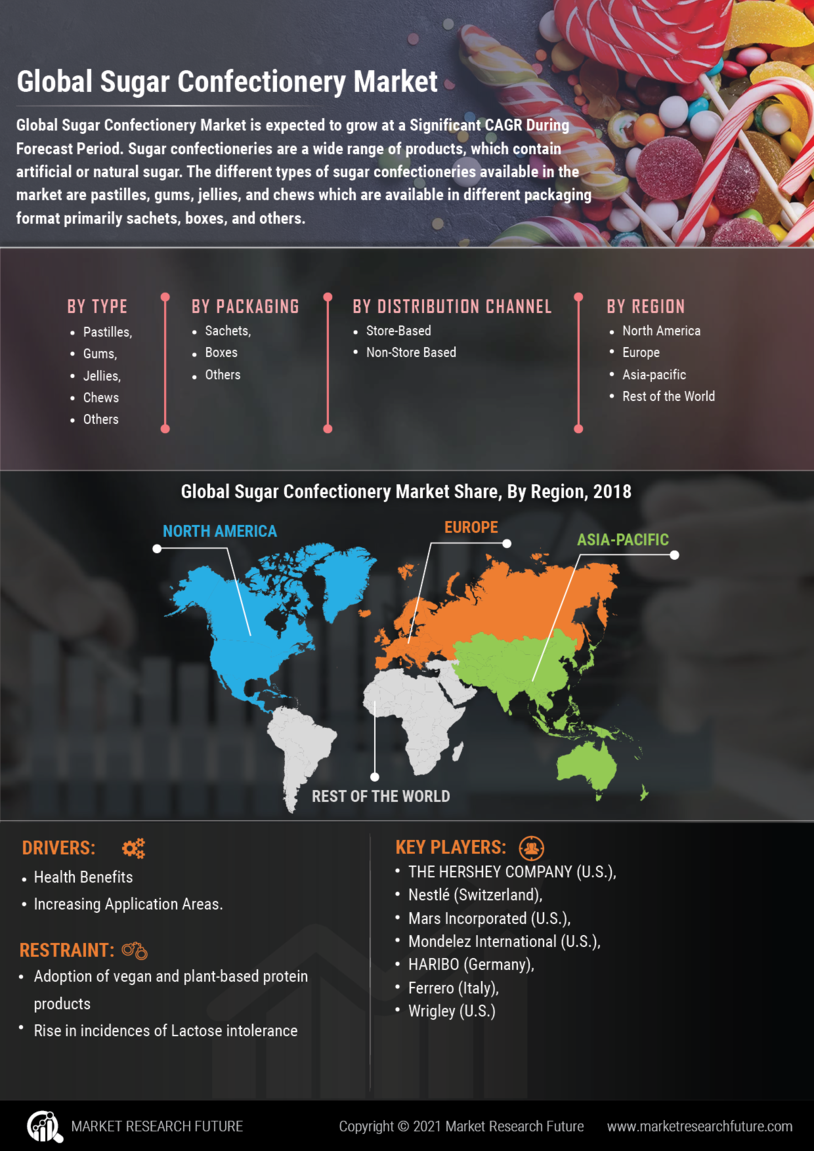
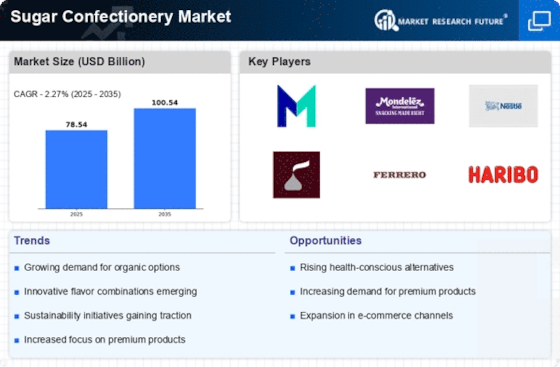
The past decade has seen an increase in the demand for sugar-based confectionery products worldwide, as people become increasingly health-conscious and conscious of the effects of sugar consumption on their health. Natural sweeteners and organic sugars have become a popular choices for many consumers. Sugar confectioneries are defined as ready-to-eat, sweetened products, which consist of a wide variety of candy, gum, chocolate, and other sweet items. Sugar confectionery has several types of products, including chocolate, candy, gum, cereal bars, marshmallows, fondants, and fresh pressed. The said market is estimated to grow at a steady CAGR during the forecast period (2023-2030). Factors such as health-conscious trends, rising disposable income, and changing consumer lifestyles are driving the growth of the global sugar confectionery market.
1.2 Research Objectives
The purpose of this research is to evaluate the global sugar confectionery market and its position in the industry. This study will analyze the current market situation, the growth prospects, key factors affecting the industry, and whether the industry faces any challenges. The research objectives of this study are as follows:
- To analyze the potential of the global sugar confectionery market.
- To identify the key trends affecting the global sugar confectionery market.
- To identify the key growth drivers and challenges of the global sugar confectionery market.
- To research the market segments and sub-segments of the global sugar confectionery market.
- To identify the competitive landscape of key players in the global sugar confectionery market.
- To provide an overview of competitive strategies adopted by leading players in the global sugar confectionery market.
- To identify the historical, current, and forecasted size of the global sugar confectionery market.
RESEARCH METHODOLOGY
2.1 Research Design
A research design is a plan for conducting research. It is divided into two parts: exploratory research and confirmatory research. Exploratory research is an attempt to discover areas of interest, while confirmatory research is used to test theories and hypotheses. For this study, an empirically based, quantitative approach is adopted for collecting data and gaining insights into the global sugar confectionery market.
2.2 Research Questions
The research questions for this report are as follows:
- What are the various factors influencing the global sugar confectionery market?
- What are the current trends and developments in the global sugar confectionery market?
- What is the market size and growth rate of the global sugar confectionery market?
- What are the market segments and sub-segments of the global sugar confectionery market?
- Who are the key players in the global sugar confectionery market and what are their competitive strategies?
2.3 Data Sources
The data sources for this research include both primary and secondary sources. Primary sources include industry-specific experts, industry reports, market research reports from government and non-government organizations, and market research reports from online/offline sources. Secondary sources include financial reports, company websites, trade magazines, and online databases.
2.4 Research Methodology
This research uses a mix of primary and secondary data sources and methods. Primary data collection methods include surveys, interviews, and focus groups. Interviews were conducted with industry experts and industry analysts. The survey was administered to a sample of consumers in the targeted countries. The focus groups were conducted to gain insight into consumer preferences and behaviours.
Secondary data collection methods include desk research, market research reports, online searches, company websites, and trade publications. The information was collected from market research reports, industry experts, and company websites. Online searches and trade magazines were used to identify key market players and their competitive strategies.
The data sources and methods were used together to create a comprehensive understanding of the global sugar confectionery market.
2.5 Data Analysis
The data collected from primary and secondary sources was analyzed using both qualitative and quantitative methods. The qualitative analysis was used to gain an in-depth understanding of the drivers, restraints, opportunities, and challenges of the global sugar confectionery market. The qualitative analysis included text analysis, focus groups, interviews with market experts, and online/offline surveys.
The quantitative analysis was used to analyze and forecast the market size and growth rate of the global sugar confectionery market. The quantitative analysis included market segmentation, market size estimation, and growth rate estimation.
2.6 Challenges Faced
The challenges faced during the research process include difficulty in accessing reliable primary data, limited access to experts, and the time required for data collection.
CONCLUSION
This study provides an in-depth analysis of the global sugar confectionery market and an overview of the market's current and historical trends. The research methodology adopted for the study is based on the synthesis of both primary and secondary data sources. The primary data sources included surveys, interviews, and focus groups, while the secondary data sources included desk research, market research reports, online searches, company websites, and trade publications. The research process included data collection, data analysis, and the development of market projections.