Request Free Sample ×

Kindly complete the form below to receive a free sample of this Report

* Please use a valid business email

Leading companies partner with us for data-driven Insights

clients tt-cursor
Hero Background
English
Chinese
French
Japanese
Korean
German
Spanish

Spongiform Encephalopathy Market Size

ID: MRFR/Pharma/3596-HCR
85 Pages
Vikita Thakur
March 2026

Spongiform Encephalopathy Market Research Report Information By Type (Creutzfeldt Jakob, Vcjd, BSE, Scrapie, CWD), Diagnosis (Histopathology, Immunochemical Detection, Animal Bioassay, others), Treatment (Small Molecule, Immunotherapy), End User - Global Forecast till 2035

Share:
Download PDF ×

We do not share your information with anyone. However, we may send you emails based on your report interest from time to time. You may contact us at any time to opt-out.

Spongiform Encephalopathy Market Infographic
Purchase Options

Spongiform Encephalopathy Size

Spongiform Encephalopathy Market Growth Projections and Opportunities

The market is essentially affected by the predominance and frequency paces of Spongiform Encephalopathy. The quantity of detailed cases, both universally and locally, directly influences the interest for analytic instruments, treatment choices, and steady consideration, driving market growth. Progressions in demonstrative advancements assume a critical part in the Spongiform Encephalopathy market. Improved and more exact analytic instruments upgrade early identification, empowering convenient intercession and management. The market answers decidedly to developments in biomarker identification proof, imaging procedures, and genetic testing. Progressing innovative work drives add to market extension. Interests in figuring out the hidden causes, creating novel helpful methodologies, and improving patient consideration lift the market by offering new arrangements and treatment modalities. Financial variables, both worldwide and territorial, influence the Spongiform Encephalopathy market. Financial steadiness, medical care framework advancement, and government medical services spending influence openness to demonstrative instruments and therapy choices, impacting market elements. The presentation of imaginative treatment modalities essentially shapes the market. Forward leaps in drug improvement, quality treatments, and other treatment approaches add to the extension of accessible choices for patients, cultivating rivalry among drug organizations. Protection inclusion and repayment contracts influence patient admittance to demonstrative tests and medicines. Good repayment strategies can animate market growth by guaranteeing that medical care suppliers are satisfactorily made up for their administrations, empowering interest in Spongiform Encephalopathy management. Segment patterns, like a maturing population, can impact the market. With Spongiform Encephalopathy being more predominant in more seasoned people, segment shifts add to an expanded patient pool, influencing the interest for related medical care administrations and items.
Spongiform Encephalopathy Market Size Graph
Author
Author Profile
Vikita Thakur
Senior Research Analyst

She holds an experience of about 5+ years in market research and business consulting projects for sectors such as life sciences, medical devices, and healthcare IT. She possesses a robust background in data analysis, market estimation, competitive intelligence, pipeline analysis market trend identification, and consumer behavior insights. Her expertise lies in technical Sales support, client interaction and project management, designing and implementing market research studies, conducting competitive analysis, and synthesizing complex data into actionable recommendations that drive business growth.

Leave a Comment

FAQs

What is the current valuation of the Spongiform Encephalopathy Market?

<p>The Spongiform Encephalopathy Market was valued at 0.08 USD Billion in 2024.</p>

What is the projected market size for Spongiform Encephalopathy by 2035?

<p>The market is projected to reach 0.157 USD Billion by 2035.</p>

What is the expected CAGR for the Spongiform Encephalopathy Market during the forecast period?

<p>The expected CAGR for the market from 2025 to 2035 is 6.32%.</p>

Which companies are the key players in the Spongiform Encephalopathy Market?

<p>Key players include Merck & Co., Zoetis Inc., Boehringer Ingelheim, Elanco Animal Health, and others.</p>

What are the main segments of the Spongiform Encephalopathy Market?

<p>The main segments include Type, Diagnosis, Treatment, and End User.</p>

How much was the market valuation for human cases of Spongiform Encephalopathy in 2024?

In 2024, the market valuation for human cases was 0.03 USD Billion.

What is the projected valuation for animal cases of Spongiform Encephalopathy by 2035?

The projected valuation for animal cases is expected to reach 0.092 USD Billion by 2035.

What diagnostic methods are included in the Spongiform Encephalopathy Market?

Diagnostic methods include histopathology, immunohistochemistry, and various bioassays.

What is the expected market size for treatment options in the Spongiform Encephalopathy Market?

The market size for treatment options is projected to grow from 0.03 USD Billion to 0.065 USD Billion by 2035.

Which end users are primarily involved in the Spongiform Encephalopathy Market?

Primary end users include hospitals, clinics, diagnostic centers, and veterinary hospitals.

Market Summary

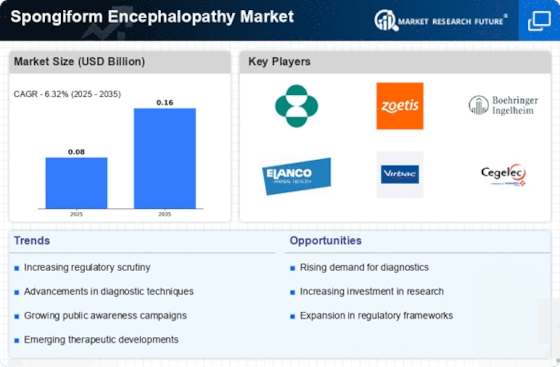
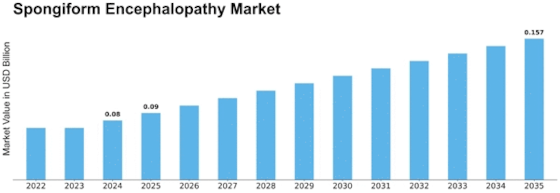
As per Market Research Future analysis, the Spongiform Encephalopathy Market Size was estimated at 0.08 USD Billion in 2024. The Spongiform Encephalopathy industry is projected to grow from USD 0.0851 Billion in 2025 to USD 0.157 Billion by 2035, exhibiting a compound annual growth rate (CAGR) of 6.32% during the forecast period 2025 - 2035

Key Market Trends & Highlights

The Spongiform Encephalopathy Market is experiencing notable growth driven by increased awareness and technological advancements.

  • Rising awareness of prion diseases is shaping public perception and influencing market dynamics in North America. Advancements in research and technology are propelling the development of innovative diagnostic methods, particularly in the Asia-Pacific region. The human segment remains the largest market, while the animal segment is witnessing rapid growth due to heightened focus on animal health. Key market drivers include the rising incidence of prion diseases and increased research funding, which are fostering advancements in diagnostics.

Market Size & Forecast

2024 Market Size 0.08 (USD Billion)
2035 Market Size 0.157 (USD Billion)
CAGR (2025 - 2035) 6.32%
Largest Regional Market Share in 2024 Europe

Major Players

Merck &amp; Co. (US), Zoetis Inc. (US), Boehringer Ingelheim (DE), Elanco Animal Health (US), Virbac (FR), Cegelec (FR), Heska Corporation (US), IDEXX Laboratories (US)

Market Trends

The Spongiform Encephalopathy Market is currently characterized by a complex interplay of factors influencing its dynamics. The increasing awareness regarding prion diseases, particularly among healthcare professionals and the general public, appears to drive demand for diagnostic tools and therapeutic options. Furthermore, advancements in research methodologies and technologies may enhance the understanding of these diseases, potentially leading to innovative treatment solutions. Regulatory bodies are also likely to play a crucial role in shaping the market landscape, as they establish guidelines and standards for the development and approval of related products. In addition, the Spongiform Encephalopathy Market seems to be influenced by the growing emphasis on food safety and animal health. As concerns regarding the transmission of prion diseases through contaminated food sources persist, stakeholders in the agricultural and food industries may invest in preventive measures and surveillance systems. This trend could lead to increased collaboration between public health organizations and private entities, fostering a more robust framework for managing risks associated with spongiform encephalopathies. Overall, the market appears poised for evolution, driven by a combination of scientific advancements and heightened awareness of public health implications.

Rising Awareness of Prion Diseases

There is a noticeable increase in awareness regarding prion diseases among both healthcare professionals and the general public. This heightened understanding is likely to drive demand for diagnostic tools and therapeutic options, as individuals seek more information and solutions related to these conditions.

Advancements in Research and Technology

Ongoing advancements in research methodologies and technologies may significantly enhance the understanding of spongiform encephalopathies. These innovations could lead to the development of novel treatment solutions, thereby influencing the overall landscape of the Spongiform Encephalopathy Market.

Focus on Food Safety and Animal Health

The growing emphasis on food safety and animal health is likely to impact the Spongiform Encephalopathy Market. As concerns about the transmission of prion diseases through contaminated food sources continue, stakeholders may invest in preventive measures and surveillance systems to mitigate risks.

Spongiform Encephalopathy Market Market Drivers

Increased Research Funding

The surge in research funding dedicated to understanding prion diseases is likely to have a profound impact on the Spongiform Encephalopathy Market. Governments and private organizations are recognizing the need for more effective treatments and preventive measures, leading to increased investments in research initiatives. This influx of funding is expected to accelerate the development of novel therapeutic agents and innovative diagnostic technologies. As research progresses, new findings may lead to breakthroughs that could reshape the market landscape. The potential for collaboration between academic institutions and pharmaceutical companies may also enhance the pace of innovation, further driving market growth.

Consumer Awareness and Education

The growing consumer awareness regarding prion diseases and their implications for health and safety is emerging as a significant driver for the Spongiform Encephalopathy Market. Educational campaigns aimed at informing the public about the risks associated with prion diseases are likely to influence consumer behavior and purchasing decisions. As consumers become more informed, they may demand higher standards of food safety and transparency from producers. This shift in consumer expectations could compel manufacturers to invest in better testing and quality assurance measures, thereby expanding the market for diagnostic and therapeutic products. The interplay between consumer awareness and market dynamics may lead to a more robust and responsive industry.

Rising Incidence of Prion Diseases

The increasing incidence of prion diseases, such as Bovine Spongiform Encephalopathy Market (BSE) and Creutzfeldt-Jakob Disease (CJD), appears to be a significant driver for the Spongiform Encephalopathy Market. As more cases are reported, there is a heightened demand for diagnostic tools and therapeutic solutions. The World Health Organization has noted a rise in reported cases, which may lead to increased funding for research and development. This trend suggests that healthcare providers and governments are likely to invest more resources into combating these diseases, thereby expanding the market for related products and services. Furthermore, the potential for zoonotic transmission raises public health concerns, prompting regulatory bodies to enforce stricter measures, which could further stimulate market growth.

Regulatory Framework and Compliance

The stringent regulatory framework surrounding food safety and animal health is a critical driver for the Spongiform Encephalopathy Market. Regulatory agencies are implementing rigorous testing protocols for livestock and food products to prevent the spread of prion diseases. Compliance with these regulations necessitates the use of advanced diagnostic tools and surveillance systems, which in turn fuels market growth. The economic impact of prion diseases on the livestock industry has prompted governments to allocate substantial resources for monitoring and control measures. This proactive approach not only safeguards public health but also enhances consumer confidence in food safety, thereby creating a favorable environment for market expansion.

Technological Innovations in Diagnostics

Technological advancements in diagnostic methods for prion diseases are likely to propel the Spongiform Encephalopathy Market. Innovations such as real-time quaking-induced conversion (RT-QuIC) and other sensitive assays are enhancing the ability to detect prions in various biological samples. These developments not only improve diagnostic accuracy but also reduce the time required for testing, which is crucial in managing outbreaks. The market for diagnostic tools is projected to grow significantly, with estimates suggesting a compound annual growth rate of over 10% in the coming years. As healthcare systems increasingly adopt these technologies, the demand for effective diagnostic solutions will likely continue to rise, thereby benefiting the overall market.

Market Segment Insights

By Type: In Humans (Largest) vs. In Animals (Fastest-Growing)

<p>The Spongiform Encephalopathy Market illustrates a significant market share distribution between cases in humans and animals, with human cases representing the largest segment. This trend is reflective of the longstanding focus on human health and the direct implications of prion diseases, particularly in the context of public health. Meanwhile, the animal segment, although smaller, showcases robust growth as awareness of these diseases in livestock increases, driven by regulatory measures and the impact of prion diseases on agriculture and food safety.</p>

<p>In Humans (Dominant) vs. In Animals (Emerging)</p>

<p>The human aspect of spongiform encephalopathy is characterized by well-documented cases such as variant Creutzfeldt-Jakob Disease (vCJD), which has spurred extensive research and public health initiatives. Awareness campaigns and regulatory frameworks have made this segment particularly dominant as resources are directed to understanding and managing human health risks. In contrast, the animal segment is rapidly emerging, gaining traction due to incidents of Bovine Spongiform Encephalopathy (BSE) and its implications in the food supply chain, resulting in increasing investments for monitoring and prevention.</p>

By Diagnosis: Histopathology and Immunohistochemistry (Largest) vs. Protein Misfolding Cyclic Amplification (Fastest-Growing)

<p>The spongiform encephalopathy market's diagnosis segment is broad, with histopathology and immunohistochemistry leading in market share. Together, these techniques are critical for accurate diagnosis, enabling differentiation between various prion diseases and providing reliable results within pathology labs. Other methods like immunochemical detection and animal bioassays contribute to the market but do not reach the same level of dominance as histopathology. Various technologies, from cell culture assay systems to advanced spectroscopic methods, support diagnostic efforts, reflecting a rich and diverse landscape of tools available to clinicians. Growth in this segment is driven primarily by increasing demand for rapid and accurate diagnostic methods to address the rising incidence of spongiform encephalopathies. Innovations in detection methods, such as protein misfolding cyclic amplification, are capturing significant attention due to their accuracy and potential for fast results. The market also sees a shift towards combining traditional methods with newer assays, enhancing diagnostic efficiencies and outcomes. As research continues and new prion disease variants emerge, the role of advanced diagnostic techniques will become increasingly pivotal, thus propelling market expansion further.</p>

<p>Histopathology and Immunohistochemistry (Dominant) vs. Cell Culture Assay Systems (Emerging)</p>

<p>Histopathology and immunohistochemistry remain dominant in the spongiform encephalopathy diagnosis segment, valued for their ability to provide conclusive identification of prion diseases through tissue examination and immunolabeling. These methods allow for detailed visualization of pathological changes in affected tissues, ensuring reliable and regulated laboratory practices. In contrast, cell culture assay systems represent an emerging technology, demonstrating promise in the detection and propagation of prions in vitro. While they offer potential advantages in terms of sensitivity and speed, they are still in developmental stages compared to the more established histopathology techniques. As the market evolves, the integration of these innovative systems will likely reshape diagnostic standards and practices in detecting spongiform encephalopathy.</p>

By Treatment: Small Molecules (Largest) vs. Immunotherapies (Fastest-Growing)

<p>In the Spongiform Encephalopathy Market, the treatment segment exhibits a diverse landscape with small molecules currently holding a significant share, representing the largest portion of the market. Small molecules are well-established as therapeutic options, due to their ease of administration and effectiveness in targeting specific pathways associated with the disease. In contrast, immunotherapies are gaining traction and are recognized as a promising approach, although still emerging in the clinical landscape. The growth potential for immunotherapies signifies a shift in treatment paradigms as researchers continue to explore their efficacy in combating spongiform encephalopathies.</p>

<p>Treatment: Small Molecules (Dominant) vs. Immunotherapies (Emerging)</p>

<p>Small molecules have long been regarded as dominant players in the treatment of spongiform encephalopathies, primarily because of their targeted action mechanisms and historical usage in various diseases. These therapies often inhibit disease progression by addressing the misfolded proteins associated with spongiform conditions. On the other hand, immunotherapies, while classified as emerging, are increasingly being recognized for their innovative approaches to stimulate the immune system to counteract the pathogenic effects of these diseases. Their collaborative research advancements demonstrate a growing commitment to developing novel treatment strategies, indicating a potential paradigm shift as evidence of their effectiveness continues to accumulate.</p>

By End User: Hospitals & Clinics (Largest) vs. Diagnostic Centers (Fastest-Growing)

<p>In the Spongiform Encephalopathy Market, hospitals and clinics represent the largest segment, significantly contributing to the overall demand. Their established infrastructure and resources allow them to handle severe cases effectively, ensuring patient care aligns with the latest treatment protocols. In contrast, diagnostic centers are witnessing a robust increase in demand, thanks to advancements in diagnostic technologies and an increasing focus on early detection and management of spongiform encephalopathies. This shift is transforming their role in the market.</p>

<p>Hospitals & Clinics (Dominant) vs. Diagnostic Centers (Emerging)</p>

<p>Hospitals and clinics serve as the dominant players in the Spongiform Encephalopathy Market, equipped with comprehensive healthcare services and specialized teams for patient management. This segment thrives on its ability to provide immediate care and facilitate complex treatment plans. On the other hand, diagnostic centers are emerging as critical players, invested in cutting-edge technology for testing and diagnosis, catering to the rising prevalence of spongiform encephalopathies. Their growth is driven by increased awareness and the demand for precise diagnostic capabilities, ensuring they are well-positioned to contribute to early intervention and treatment strategies.</p>

Get more detailed insights about Spongiform Encephalopathy Market Research Report- Global Forecast till 2035

Regional Insights

North America : Leading Market for Innovation

North America is the largest market for Spongiform Encephalopathy Market, holding approximately 45% of the global market share. The region's growth is driven by stringent regulatory frameworks, increasing awareness of animal health, and advancements in veterinary medicine. The demand for effective diagnostics and treatments is rising, fueled by the prevalence of prion diseases in livestock and companion animals. Regulatory bodies like the FDA play a crucial role in ensuring product safety and efficacy, further catalyzing market growth. The United States is the leading country in this market, followed closely by Canada. Major players such as Merck & Co., Zoetis Inc., and Elanco Animal Health are actively involved in research and development to innovate new solutions for Spongiform Encephalopathy Market. The competitive landscape is characterized by collaborations and partnerships among key stakeholders, enhancing the availability of advanced diagnostic tools and therapeutic options. This dynamic environment positions North America as a hub for veterinary innovation.

Europe : Regulatory Frameworks Drive Growth

Europe is the second-largest market for Spongiform Encephalopathy Market, accounting for approximately 30% of the global share. The region's growth is significantly influenced by robust regulatory frameworks established by the European Food Safety Authority (EFSA) and the European Medicines Agency (EMA). These organizations enforce strict guidelines for animal health and safety, which drive demand for effective diagnostic and therapeutic solutions. The increasing incidence of prion diseases in livestock has heightened awareness and regulatory scrutiny, further propelling market growth. Leading countries in Europe include Germany, France, and the United Kingdom, where key players like Boehringer Ingelheim and Virbac are prominent. The competitive landscape is marked by innovation and collaboration among pharmaceutical companies, research institutions, and regulatory bodies. This synergy fosters the development of advanced diagnostic tools and treatments, ensuring that the market remains responsive to emerging challenges in animal health. The commitment to animal welfare and public health continues to shape the market dynamics in Europe.

Asia-Pacific : Emerging Market with Potential

The Asia-Pacific region is witnessing significant growth in the Spongiform Encephalopathy Market, holding approximately 15% of the global share. This growth is driven by increasing livestock production, rising awareness of animal health, and the need for effective disease management strategies. Countries like China and India are experiencing a surge in demand for veterinary services and products, spurred by the growing livestock population and changing dietary preferences. Regulatory bodies are beginning to implement stricter guidelines to ensure animal health, which is expected to further boost market growth. China is the largest market in the region, followed by India and Japan. The competitive landscape is evolving, with both local and international players, including Heska Corporation and IDEXX Laboratories, expanding their presence. The focus on research and development is intensifying, as companies seek to innovate and provide effective solutions for Spongiform Encephalopathy Market. As the region continues to develop, the market is poised for further growth, driven by increasing investments in veterinary healthcare and technology.

Middle East and Africa : Untapped Market Opportunities

The Middle East and Africa represent an emerging market for Spongiform Encephalopathy Market, accounting for approximately 10% of the global share. The growth in this region is primarily driven by increasing livestock farming and a rising awareness of animal health issues. However, the market remains underdeveloped compared to other regions, with significant opportunities for growth as regulatory frameworks evolve. Governments are beginning to recognize the importance of animal health in ensuring food security, which is expected to catalyze market expansion in the coming years. Leading countries in this region include South Africa and Kenya, where the presence of local and international players is gradually increasing. Companies are focusing on establishing partnerships and collaborations to enhance their market presence and develop effective solutions for Spongiform Encephalopathy Market. The competitive landscape is characterized by a mix of established players and new entrants, all aiming to address the growing demand for veterinary services and products in this untapped market.

Key Players and Competitive Insights

The Spongiform Encephalopathy Market is characterized by a complex interplay of competitive dynamics, driven by increasing awareness of animal health and stringent regulatory frameworks. Key players such as Merck & Co. (US), Zoetis Inc. (US), and Boehringer Ingelheim (DE) are at the forefront, each adopting distinct strategies to enhance their market presence. Merck & Co. (US) focuses on innovation in vaccine development, while Zoetis Inc. (US) emphasizes digital transformation and data analytics to optimize animal health solutions. Boehringer Ingelheim (DE) is leveraging strategic partnerships to expand its product portfolio, collectively shaping a competitive environment that is increasingly reliant on technological advancements and collaborative efforts.

In terms of business tactics, companies are localizing manufacturing and optimizing supply chains to enhance efficiency and responsiveness to market demands. The Spongiform Encephalopathy Market appears moderately fragmented, with a mix of established players and emerging companies. The collective influence of these key players is significant, as they drive innovation and set industry standards, thereby influencing market dynamics.

In August 2025, Merck & Co. (US) announced a groundbreaking partnership with a leading biotechnology firm to develop a novel vaccine targeting prion diseases. This strategic move is likely to enhance Merck's product offerings and strengthen its position in the market, reflecting a commitment to addressing unmet needs in animal health. The collaboration may also facilitate accelerated research and development processes, positioning Merck as a leader in innovative solutions.

In September 2025, Zoetis Inc. (US) launched a new digital platform aimed at improving disease management in livestock. This initiative underscores Zoetis's focus on integrating technology into its operations, potentially transforming how veterinarians and farmers monitor and manage animal health. By harnessing data analytics, Zoetis could enhance its service offerings, thereby solidifying its competitive edge in the market.

In July 2025, Boehringer Ingelheim (DE) expanded its product line through the acquisition of a smaller firm specializing in diagnostic tools for prion diseases. This acquisition not only broadens Boehringer's portfolio but also enhances its capabilities in early disease detection, which is crucial for effective management of spongiform encephalopathies. Such strategic actions indicate a trend towards consolidation in the market, as companies seek to enhance their technological capabilities and market reach.

As of October 2025, the competitive landscape is increasingly defined by trends such as digitalization, sustainability, and the integration of artificial intelligence in product development. Strategic alliances are becoming more prevalent, as companies recognize the value of collaboration in driving innovation. Looking ahead, competitive differentiation is likely to evolve, shifting from traditional price-based competition to a focus on technological innovation, supply chain reliability, and sustainable practices. This transition may redefine how companies position themselves in the Spongiform Encephalopathy Market, emphasizing the importance of adaptability and forward-thinking strategies.

Key Companies in the Spongiform Encephalopathy Market include

Industry Developments

Future Outlook

Spongiform Encephalopathy Market Future Outlook

The Spongiform Encephalopathy Market is projected to grow at a 6.32% CAGR from 2025 to 2035, driven by advancements in diagnostic technologies and regulatory frameworks.

New opportunities lie in:

  • <p>Development of rapid diagnostic kits for early detection Expansion of biosecurity measures in livestock management Investment in research for therapeutic interventions</p>

By 2035, the market is expected to achieve robust growth, driven by innovation and strategic investments.

Market Segmentation

Spongiform Encephalopathy Market Type Outlook

  • in humans
  • in animals

Spongiform Encephalopathy Market End User Outlook

  • hospital & clinics
  • diagnostic centers
  • veterinary hospitals
  • research & academic laboratories
  • others

Spongiform Encephalopathy Market Diagnosis Outlook

  • histopathology and immunohistochemistry
  • immunochemical detection methods
  • animal bioassays
  • cell culture assay systems
  • protein misfolding cyclic amplification
  • conformation-dependent immunoassay
  • capillary electrophoresis
  • fluorescent correlation spectroscopy
  • multispectral ultraviolet fluorescence spectroscopy
  • Fourier transform infrared spectroscopy

Spongiform Encephalopathy Market Treatment Outlook

  • small molecules
  • immunotherapies

Report Scope

MARKET SIZE 2024 0.08(USD Billion)
MARKET SIZE 2025 0.0851(USD Billion)
MARKET SIZE 2035 0.157(USD Billion)
COMPOUND ANNUAL GROWTH RATE (CAGR) 6.32% (2025 - 2035)
REPORT COVERAGE Revenue Forecast, Competitive Landscape, Growth Factors, and Trends
BASE YEAR 2024
Market Forecast Period 2025 - 2035
Historical Data 2019 - 2024
Market Forecast Units USD Billion
Key Companies Profiled Merck & Co. (US), Zoetis Inc. (US), Boehringer Ingelheim (DE), Elanco Animal Health (US), Virbac (FR), Cegelec (FR), Heska Corporation (US), IDEXX Laboratories (US)
Segments Covered Type
Key Market Opportunities Advancements in diagnostic technologies enhance early detection in the Spongiform Encephalopathy Market.
Key Market Dynamics Regulatory changes and technological advancements are reshaping the Spongiform Encephalopathy Market landscape.
Countries Covered North America, Europe, APAC, South America, MEA

FAQs

What is the current valuation of the Spongiform Encephalopathy Market?

<p>The Spongiform Encephalopathy Market was valued at 0.08 USD Billion in 2024.</p>

What is the projected market size for Spongiform Encephalopathy by 2035?

<p>The market is projected to reach 0.157 USD Billion by 2035.</p>

What is the expected CAGR for the Spongiform Encephalopathy Market during the forecast period?

<p>The expected CAGR for the market from 2025 to 2035 is 6.32%.</p>

Which companies are the key players in the Spongiform Encephalopathy Market?

<p>Key players include Merck & Co., Zoetis Inc., Boehringer Ingelheim, Elanco Animal Health, and others.</p>

What are the main segments of the Spongiform Encephalopathy Market?

<p>The main segments include Type, Diagnosis, Treatment, and End User.</p>

How much was the market valuation for human cases of Spongiform Encephalopathy in 2024?

In 2024, the market valuation for human cases was 0.03 USD Billion.

What is the projected valuation for animal cases of Spongiform Encephalopathy by 2035?

The projected valuation for animal cases is expected to reach 0.092 USD Billion by 2035.

What diagnostic methods are included in the Spongiform Encephalopathy Market?

Diagnostic methods include histopathology, immunohistochemistry, and various bioassays.

What is the expected market size for treatment options in the Spongiform Encephalopathy Market?

The market size for treatment options is projected to grow from 0.03 USD Billion to 0.065 USD Billion by 2035.

Which end users are primarily involved in the Spongiform Encephalopathy Market?

Primary end users include hospitals, clinics, diagnostic centers, and veterinary hospitals.

  1. SECTION I: EXECUTIVE SUMMARY AND KEY HIGHLIGHTS
    1. | 1.1 EXECUTIVE SUMMARY
    2. | | 1.1.1 Market Overview
    3. | | 1.1.2 Key Findings
    4. | | 1.1.3 Market Segmentation
    5. | | 1.1.4 Competitive Landscape
    6. | | 1.1.5 Challenges and Opportunities
    7. | | 1.1.6 Future Outlook
  2. SECTION II: SCOPING, METHODOLOGY AND MARKET STRUCTURE
    1. | 2.1 MARKET INTRODUCTION
    2. | | 2.1.1 Definition
    3. | | 2.1.2 Scope of the study
    4. | | | 2.1.2.1 Research Objective
    5. | | | 2.1.2.2 Assumption
    6. | | | 2.1.2.3 Limitations
    7. | 2.2 RESEARCH METHODOLOGY
    8. | | 2.2.1 Overview
    9. | | 2.2.2 Data Mining
    10. | | 2.2.3 Secondary Research
    11. | | 2.2.4 Primary Research
    12. | | | 2.2.4.1 Primary Interviews and Information Gathering Process
    13. | | | 2.2.4.2 Breakdown of Primary Respondents
    14. | | 2.2.5 Forecasting Model
    15. | | 2.2.6 Market Size Estimation
    16. | | | 2.2.6.1 Bottom-Up Approach
    17. | | | 2.2.6.2 Top-Down Approach
    18. | | 2.2.7 Data Triangulation
    19. | | 2.2.8 Validation
  3. SECTION III: QUALITATIVE ANALYSIS
    1. | 3.1 MARKET DYNAMICS
    2. | | 3.1.1 Overview
    3. | | 3.1.2 Drivers
    4. | | 3.1.3 Restraints
    5. | | 3.1.4 Opportunities
    6. | 3.2 MARKET FACTOR ANALYSIS
    7. | | 3.2.1 Value chain Analysis
    8. | | 3.2.2 Porter's Five Forces Analysis
    9. | | | 3.2.2.1 Bargaining Power of Suppliers
    10. | | | 3.2.2.2 Bargaining Power of Buyers
    11. | | | 3.2.2.3 Threat of New Entrants
    12. | | | 3.2.2.4 Threat of Substitutes
    13. | | | 3.2.2.5 Intensity of Rivalry
    14. | | 3.2.3 COVID-19 Impact Analysis
    15. | | | 3.2.3.1 Market Impact Analysis
    16. | | | 3.2.3.2 Regional Impact
    17. | | | 3.2.3.3 Opportunity and Threat Analysis
  4. SECTION IV: QUANTITATIVE ANALYSIS
    1. | 4.1 Healthcare, BY Type (USD Billion)
    2. | | 4.1.1 in humans
    3. | | 4.1.2 in animals
    4. | 4.2 Healthcare, BY Diagnosis (USD Billion)
    5. | | 4.2.1 histopathology and immunohistochemistry
    6. | | 4.2.2 immunochemical detection methods
    7. | | 4.2.3 animal bioassays
    8. | | 4.2.4 cell culture assay systems
    9. | | 4.2.5 protein misfolding cyclic amplification
    10. | | 4.2.6 conformation-dependent immunoassay
    11. | | 4.2.7 capillary electrophoresis
    12. | | 4.2.8 fluorescent correlation spectroscopy
    13. | | 4.2.9 multispectral ultraviolet fluorescence spectroscopy
    14. | | 4.2.10 Fourier transform infrared spectroscopy
    15. | 4.3 Healthcare, BY Treatment (USD Billion)
    16. | | 4.3.1 small molecules
    17. | | 4.3.2 immunotherapies
    18. | 4.4 Healthcare, BY End User (USD Billion)
    19. | | 4.4.1 hospital & clinics
    20. | | 4.4.2 diagnostic centers
    21. | | 4.4.3 veterinary hospitals
    22. | | 4.4.4 research & academic laboratories
    23. | | 4.4.5 others
    24. | 4.5 Healthcare, BY Region (USD Billion)
    25. | | 4.5.1 North America
    26. | | | 4.5.1.1 US
    27. | | | 4.5.1.2 Canada
    28. | | 4.5.2 Europe
    29. | | | 4.5.2.1 Germany
    30. | | | 4.5.2.2 UK
    31. | | | 4.5.2.3 France
    32. | | | 4.5.2.4 Russia
    33. | | | 4.5.2.5 Italy
    34. | | | 4.5.2.6 Spain
    35. | | | 4.5.2.7 Rest of Europe
    36. | | 4.5.3 APAC
    37. | | | 4.5.3.1 China
    38. | | | 4.5.3.2 India
    39. | | | 4.5.3.3 Japan
    40. | | | 4.5.3.4 South Korea
    41. | | | 4.5.3.5 Malaysia
    42. | | | 4.5.3.6 Thailand
    43. | | | 4.5.3.7 Indonesia
    44. | | | 4.5.3.8 Rest of APAC
    45. | | 4.5.4 South America
    46. | | | 4.5.4.1 Brazil
    47. | | | 4.5.4.2 Mexico
    48. | | | 4.5.4.3 Argentina
    49. | | | 4.5.4.4 Rest of South America
    50. | | 4.5.5 MEA
    51. | | | 4.5.5.1 GCC Countries
    52. | | | 4.5.5.2 South Africa
    53. | | | 4.5.5.3 Rest of MEA
  5. SECTION V: COMPETITIVE ANALYSIS
    1. | 5.1 Competitive Landscape
    2. | | 5.1.1 Overview
    3. | | 5.1.2 Competitive Analysis
    4. | | 5.1.3 Market share Analysis
    5. | | 5.1.4 Major Growth Strategy in the Healthcare
    6. | | 5.1.5 Competitive Benchmarking
    7. | | 5.1.6 Leading Players in Terms of Number of Developments in the Healthcare
    8. | | 5.1.7 Key developments and growth strategies
    9. | | | 5.1.7.1 New Product Launch/Service Deployment
    10. | | | 5.1.7.2 Merger & Acquisitions
    11. | | | 5.1.7.3 Joint Ventures
    12. | | 5.1.8 Major Players Financial Matrix
    13. | | | 5.1.8.1 Sales and Operating Income
    14. | | | 5.1.8.2 Major Players R&D Expenditure. 2023
    15. | 5.2 Company Profiles
    16. | | 5.2.1 Merck & Co. (US)
    17. | | | 5.2.1.1 Financial Overview
    18. | | | 5.2.1.2 Products Offered
    19. | | | 5.2.1.3 Key Developments
    20. | | | 5.2.1.4 SWOT Analysis
    21. | | | 5.2.1.5 Key Strategies
    22. | | 5.2.2 Zoetis Inc. (US)
    23. | | | 5.2.2.1 Financial Overview
    24. | | | 5.2.2.2 Products Offered
    25. | | | 5.2.2.3 Key Developments
    26. | | | 5.2.2.4 SWOT Analysis
    27. | | | 5.2.2.5 Key Strategies
    28. | | 5.2.3 Boehringer Ingelheim (DE)
    29. | | | 5.2.3.1 Financial Overview
    30. | | | 5.2.3.2 Products Offered
    31. | | | 5.2.3.3 Key Developments
    32. | | | 5.2.3.4 SWOT Analysis
    33. | | | 5.2.3.5 Key Strategies
    34. | | 5.2.4 Elanco Animal Health (US)
    35. | | | 5.2.4.1 Financial Overview
    36. | | | 5.2.4.2 Products Offered
    37. | | | 5.2.4.3 Key Developments
    38. | | | 5.2.4.4 SWOT Analysis
    39. | | | 5.2.4.5 Key Strategies
    40. | | 5.2.5 Virbac (FR)
    41. | | | 5.2.5.1 Financial Overview
    42. | | | 5.2.5.2 Products Offered
    43. | | | 5.2.5.3 Key Developments
    44. | | | 5.2.5.4 SWOT Analysis
    45. | | | 5.2.5.5 Key Strategies
    46. | | 5.2.6 Cegelec (FR)
    47. | | | 5.2.6.1 Financial Overview
    48. | | | 5.2.6.2 Products Offered
    49. | | | 5.2.6.3 Key Developments
    50. | | | 5.2.6.4 SWOT Analysis
    51. | | | 5.2.6.5 Key Strategies
    52. | | 5.2.7 Heska Corporation (US)
    53. | | | 5.2.7.1 Financial Overview
    54. | | | 5.2.7.2 Products Offered
    55. | | | 5.2.7.3 Key Developments
    56. | | | 5.2.7.4 SWOT Analysis
    57. | | | 5.2.7.5 Key Strategies
    58. | | 5.2.8 IDEXX Laboratories (US)
    59. | | | 5.2.8.1 Financial Overview
    60. | | | 5.2.8.2 Products Offered
    61. | | | 5.2.8.3 Key Developments
    62. | | | 5.2.8.4 SWOT Analysis
    63. | | | 5.2.8.5 Key Strategies
    64. | 5.3 Appendix
    65. | | 5.3.1 References
    66. | | 5.3.2 Related Reports
  6. LIST OF FIGURES
    1. | 6.1 MARKET SYNOPSIS
    2. | 6.2 NORTH AMERICA MARKET ANALYSIS
    3. | 6.3 US MARKET ANALYSIS BY TYPE
    4. | 6.4 US MARKET ANALYSIS BY DIAGNOSIS
    5. | 6.5 US MARKET ANALYSIS BY TREATMENT
    6. | 6.6 US MARKET ANALYSIS BY END USER
    7. | 6.7 CANADA MARKET ANALYSIS BY TYPE
    8. | 6.8 CANADA MARKET ANALYSIS BY DIAGNOSIS
    9. | 6.9 CANADA MARKET ANALYSIS BY TREATMENT
    10. | 6.10 CANADA MARKET ANALYSIS BY END USER
    11. | 6.11 EUROPE MARKET ANALYSIS
    12. | 6.12 GERMANY MARKET ANALYSIS BY TYPE
    13. | 6.13 GERMANY MARKET ANALYSIS BY DIAGNOSIS
    14. | 6.14 GERMANY MARKET ANALYSIS BY TREATMENT
    15. | 6.15 GERMANY MARKET ANALYSIS BY END USER
    16. | 6.16 UK MARKET ANALYSIS BY TYPE
    17. | 6.17 UK MARKET ANALYSIS BY DIAGNOSIS
    18. | 6.18 UK MARKET ANALYSIS BY TREATMENT
    19. | 6.19 UK MARKET ANALYSIS BY END USER
    20. | 6.20 FRANCE MARKET ANALYSIS BY TYPE
    21. | 6.21 FRANCE MARKET ANALYSIS BY DIAGNOSIS
    22. | 6.22 FRANCE MARKET ANALYSIS BY TREATMENT
    23. | 6.23 FRANCE MARKET ANALYSIS BY END USER
    24. | 6.24 RUSSIA MARKET ANALYSIS BY TYPE
    25. | 6.25 RUSSIA MARKET ANALYSIS BY DIAGNOSIS
    26. | 6.26 RUSSIA MARKET ANALYSIS BY TREATMENT
    27. | 6.27 RUSSIA MARKET ANALYSIS BY END USER
    28. | 6.28 ITALY MARKET ANALYSIS BY TYPE
    29. | 6.29 ITALY MARKET ANALYSIS BY DIAGNOSIS
    30. | 6.30 ITALY MARKET ANALYSIS BY TREATMENT
    31. | 6.31 ITALY MARKET ANALYSIS BY END USER
    32. | 6.32 SPAIN MARKET ANALYSIS BY TYPE
    33. | 6.33 SPAIN MARKET ANALYSIS BY DIAGNOSIS
    34. | 6.34 SPAIN MARKET ANALYSIS BY TREATMENT
    35. | 6.35 SPAIN MARKET ANALYSIS BY END USER
    36. | 6.36 REST OF EUROPE MARKET ANALYSIS BY TYPE
    37. | 6.37 REST OF EUROPE MARKET ANALYSIS BY DIAGNOSIS
    38. | 6.38 REST OF EUROPE MARKET ANALYSIS BY TREATMENT
    39. | 6.39 REST OF EUROPE MARKET ANALYSIS BY END USER
    40. | 6.40 APAC MARKET ANALYSIS
    41. | 6.41 CHINA MARKET ANALYSIS BY TYPE
    42. | 6.42 CHINA MARKET ANALYSIS BY DIAGNOSIS
    43. | 6.43 CHINA MARKET ANALYSIS BY TREATMENT
    44. | 6.44 CHINA MARKET ANALYSIS BY END USER
    45. | 6.45 INDIA MARKET ANALYSIS BY TYPE
    46. | 6.46 INDIA MARKET ANALYSIS BY DIAGNOSIS
    47. | 6.47 INDIA MARKET ANALYSIS BY TREATMENT
    48. | 6.48 INDIA MARKET ANALYSIS BY END USER
    49. | 6.49 JAPAN MARKET ANALYSIS BY TYPE
    50. | 6.50 JAPAN MARKET ANALYSIS BY DIAGNOSIS
    51. | 6.51 JAPAN MARKET ANALYSIS BY TREATMENT
    52. | 6.52 JAPAN MARKET ANALYSIS BY END USER
    53. | 6.53 SOUTH KOREA MARKET ANALYSIS BY TYPE
    54. | 6.54 SOUTH KOREA MARKET ANALYSIS BY DIAGNOSIS
    55. | 6.55 SOUTH KOREA MARKET ANALYSIS BY TREATMENT
    56. | 6.56 SOUTH KOREA MARKET ANALYSIS BY END USER
    57. | 6.57 MALAYSIA MARKET ANALYSIS BY TYPE
    58. | 6.58 MALAYSIA MARKET ANALYSIS BY DIAGNOSIS
    59. | 6.59 MALAYSIA MARKET ANALYSIS BY TREATMENT
    60. | 6.60 MALAYSIA MARKET ANALYSIS BY END USER
    61. | 6.61 THAILAND MARKET ANALYSIS BY TYPE
    62. | 6.62 THAILAND MARKET ANALYSIS BY DIAGNOSIS
    63. | 6.63 THAILAND MARKET ANALYSIS BY TREATMENT
    64. | 6.64 THAILAND MARKET ANALYSIS BY END USER
    65. | 6.65 INDONESIA MARKET ANALYSIS BY TYPE
    66. | 6.66 INDONESIA MARKET ANALYSIS BY DIAGNOSIS
    67. | 6.67 INDONESIA MARKET ANALYSIS BY TREATMENT
    68. | 6.68 INDONESIA MARKET ANALYSIS BY END USER
    69. | 6.69 REST OF APAC MARKET ANALYSIS BY TYPE
    70. | 6.70 REST OF APAC MARKET ANALYSIS BY DIAGNOSIS
    71. | 6.71 REST OF APAC MARKET ANALYSIS BY TREATMENT
    72. | 6.72 REST OF APAC MARKET ANALYSIS BY END USER
    73. | 6.73 SOUTH AMERICA MARKET ANALYSIS
    74. | 6.74 BRAZIL MARKET ANALYSIS BY TYPE
    75. | 6.75 BRAZIL MARKET ANALYSIS BY DIAGNOSIS
    76. | 6.76 BRAZIL MARKET ANALYSIS BY TREATMENT
    77. | 6.77 BRAZIL MARKET ANALYSIS BY END USER
    78. | 6.78 MEXICO MARKET ANALYSIS BY TYPE
    79. | 6.79 MEXICO MARKET ANALYSIS BY DIAGNOSIS
    80. | 6.80 MEXICO MARKET ANALYSIS BY TREATMENT
    81. | 6.81 MEXICO MARKET ANALYSIS BY END USER
    82. | 6.82 ARGENTINA MARKET ANALYSIS BY TYPE
    83. | 6.83 ARGENTINA MARKET ANALYSIS BY DIAGNOSIS
    84. | 6.84 ARGENTINA MARKET ANALYSIS BY TREATMENT
    85. | 6.85 ARGENTINA MARKET ANALYSIS BY END USER
    86. | 6.86 REST OF SOUTH AMERICA MARKET ANALYSIS BY TYPE
    87. | 6.87 REST OF SOUTH AMERICA MARKET ANALYSIS BY DIAGNOSIS
    88. | 6.88 REST OF SOUTH AMERICA MARKET ANALYSIS BY TREATMENT
    89. | 6.89 REST OF SOUTH AMERICA MARKET ANALYSIS BY END USER
    90. | 6.90 MEA MARKET ANALYSIS
    91. | 6.91 GCC COUNTRIES MARKET ANALYSIS BY TYPE
    92. | 6.92 GCC COUNTRIES MARKET ANALYSIS BY DIAGNOSIS
    93. | 6.93 GCC COUNTRIES MARKET ANALYSIS BY TREATMENT
    94. | 6.94 GCC COUNTRIES MARKET ANALYSIS BY END USER
    95. | 6.95 SOUTH AFRICA MARKET ANALYSIS BY TYPE
    96. | 6.96 SOUTH AFRICA MARKET ANALYSIS BY DIAGNOSIS
    97. | 6.97 SOUTH AFRICA MARKET ANALYSIS BY TREATMENT
    98. | 6.98 SOUTH AFRICA MARKET ANALYSIS BY END USER
    99. | 6.99 REST OF MEA MARKET ANALYSIS BY TYPE
    100. | 6.100 REST OF MEA MARKET ANALYSIS BY DIAGNOSIS
    101. | 6.101 REST OF MEA MARKET ANALYSIS BY TREATMENT
    102. | 6.102 REST OF MEA MARKET ANALYSIS BY END USER
    103. | 6.103 KEY BUYING CRITERIA OF HEALTHCARE
    104. | 6.104 RESEARCH PROCESS OF MRFR
    105. | 6.105 DRO ANALYSIS OF HEALTHCARE
    106. | 6.106 DRIVERS IMPACT ANALYSIS: HEALTHCARE
    107. | 6.107 RESTRAINTS IMPACT ANALYSIS: HEALTHCARE
    108. | 6.108 SUPPLY / VALUE CHAIN: HEALTHCARE
    109. | 6.109 HEALTHCARE, BY TYPE, 2024 (% SHARE)
    110. | 6.110 HEALTHCARE, BY TYPE, 2024 TO 2035 (USD Billion)
    111. | 6.111 HEALTHCARE, BY DIAGNOSIS, 2024 (% SHARE)
    112. | 6.112 HEALTHCARE, BY DIAGNOSIS, 2024 TO 2035 (USD Billion)
    113. | 6.113 HEALTHCARE, BY TREATMENT, 2024 (% SHARE)
    114. | 6.114 HEALTHCARE, BY TREATMENT, 2024 TO 2035 (USD Billion)
    115. | 6.115 HEALTHCARE, BY END USER, 2024 (% SHARE)
    116. | 6.116 HEALTHCARE, BY END USER, 2024 TO 2035 (USD Billion)
    117. | 6.117 BENCHMARKING OF MAJOR COMPETITORS
  7. LIST OF TABLES
    1. | 7.1 LIST OF ASSUMPTIONS
    2. | | 7.1.1
    3. | 7.2 North America MARKET SIZE ESTIMATES; FORECAST
    4. | | 7.2.1 BY TYPE, 2025-2035 (USD Billion)
    5. | | 7.2.2 BY DIAGNOSIS, 2025-2035 (USD Billion)
    6. | | 7.2.3 BY TREATMENT, 2025-2035 (USD Billion)
    7. | | 7.2.4 BY END USER, 2025-2035 (USD Billion)
    8. | 7.3 US MARKET SIZE ESTIMATES; FORECAST
    9. | | 7.3.1 BY TYPE, 2025-2035 (USD Billion)
    10. | | 7.3.2 BY DIAGNOSIS, 2025-2035 (USD Billion)
    11. | | 7.3.3 BY TREATMENT, 2025-2035 (USD Billion)
    12. | | 7.3.4 BY END USER, 2025-2035 (USD Billion)
    13. | 7.4 Canada MARKET SIZE ESTIMATES; FORECAST
    14. | | 7.4.1 BY TYPE, 2025-2035 (USD Billion)
    15. | | 7.4.2 BY DIAGNOSIS, 2025-2035 (USD Billion)
    16. | | 7.4.3 BY TREATMENT, 2025-2035 (USD Billion)
    17. | | 7.4.4 BY END USER, 2025-2035 (USD Billion)
    18. | 7.5 Europe MARKET SIZE ESTIMATES; FORECAST
    19. | | 7.5.1 BY TYPE, 2025-2035 (USD Billion)
    20. | | 7.5.2 BY DIAGNOSIS, 2025-2035 (USD Billion)
    21. | | 7.5.3 BY TREATMENT, 2025-2035 (USD Billion)
    22. | | 7.5.4 BY END USER, 2025-2035 (USD Billion)
    23. | 7.6 Germany MARKET SIZE ESTIMATES; FORECAST
    24. | | 7.6.1 BY TYPE, 2025-2035 (USD Billion)
    25. | | 7.6.2 BY DIAGNOSIS, 2025-2035 (USD Billion)
    26. | | 7.6.3 BY TREATMENT, 2025-2035 (USD Billion)
    27. | | 7.6.4 BY END USER, 2025-2035 (USD Billion)
    28. | 7.7 UK MARKET SIZE ESTIMATES; FORECAST
    29. | | 7.7.1 BY TYPE, 2025-2035 (USD Billion)
    30. | | 7.7.2 BY DIAGNOSIS, 2025-2035 (USD Billion)
    31. | | 7.7.3 BY TREATMENT, 2025-2035 (USD Billion)
    32. | | 7.7.4 BY END USER, 2025-2035 (USD Billion)
    33. | 7.8 France MARKET SIZE ESTIMATES; FORECAST
    34. | | 7.8.1 BY TYPE, 2025-2035 (USD Billion)
    35. | | 7.8.2 BY DIAGNOSIS, 2025-2035 (USD Billion)
    36. | | 7.8.3 BY TREATMENT, 2025-2035 (USD Billion)
    37. | | 7.8.4 BY END USER, 2025-2035 (USD Billion)
    38. | 7.9 Russia MARKET SIZE ESTIMATES; FORECAST
    39. | | 7.9.1 BY TYPE, 2025-2035 (USD Billion)
    40. | | 7.9.2 BY DIAGNOSIS, 2025-2035 (USD Billion)
    41. | | 7.9.3 BY TREATMENT, 2025-2035 (USD Billion)
    42. | | 7.9.4 BY END USER, 2025-2035 (USD Billion)
    43. | 7.10 Italy MARKET SIZE ESTIMATES; FORECAST
    44. | | 7.10.1 BY TYPE, 2025-2035 (USD Billion)
    45. | | 7.10.2 BY DIAGNOSIS, 2025-2035 (USD Billion)
    46. | | 7.10.3 BY TREATMENT, 2025-2035 (USD Billion)
    47. | | 7.10.4 BY END USER, 2025-2035 (USD Billion)
    48. | 7.11 Spain MARKET SIZE ESTIMATES; FORECAST
    49. | | 7.11.1 BY TYPE, 2025-2035 (USD Billion)
    50. | | 7.11.2 BY DIAGNOSIS, 2025-2035 (USD Billion)
    51. | | 7.11.3 BY TREATMENT, 2025-2035 (USD Billion)
    52. | | 7.11.4 BY END USER, 2025-2035 (USD Billion)
    53. | 7.12 Rest of Europe MARKET SIZE ESTIMATES; FORECAST
    54. | | 7.12.1 BY TYPE, 2025-2035 (USD Billion)
    55. | | 7.12.2 BY DIAGNOSIS, 2025-2035 (USD Billion)
    56. | | 7.12.3 BY TREATMENT, 2025-2035 (USD Billion)
    57. | | 7.12.4 BY END USER, 2025-2035 (USD Billion)
    58. | 7.13 APAC MARKET SIZE ESTIMATES; FORECAST
    59. | | 7.13.1 BY TYPE, 2025-2035 (USD Billion)
    60. | | 7.13.2 BY DIAGNOSIS, 2025-2035 (USD Billion)
    61. | | 7.13.3 BY TREATMENT, 2025-2035 (USD Billion)
    62. | | 7.13.4 BY END USER, 2025-2035 (USD Billion)
    63. | 7.14 China MARKET SIZE ESTIMATES; FORECAST
    64. | | 7.14.1 BY TYPE, 2025-2035 (USD Billion)
    65. | | 7.14.2 BY DIAGNOSIS, 2025-2035 (USD Billion)
    66. | | 7.14.3 BY TREATMENT, 2025-2035 (USD Billion)
    67. | | 7.14.4 BY END USER, 2025-2035 (USD Billion)
    68. | 7.15 India MARKET SIZE ESTIMATES; FORECAST
    69. | | 7.15.1 BY TYPE, 2025-2035 (USD Billion)
    70. | | 7.15.2 BY DIAGNOSIS, 2025-2035 (USD Billion)
    71. | | 7.15.3 BY TREATMENT, 2025-2035 (USD Billion)
    72. | | 7.15.4 BY END USER, 2025-2035 (USD Billion)
    73. | 7.16 Japan MARKET SIZE ESTIMATES; FORECAST
    74. | | 7.16.1 BY TYPE, 2025-2035 (USD Billion)
    75. | | 7.16.2 BY DIAGNOSIS, 2025-2035 (USD Billion)
    76. | | 7.16.3 BY TREATMENT, 2025-2035 (USD Billion)
    77. | | 7.16.4 BY END USER, 2025-2035 (USD Billion)
    78. | 7.17 South Korea MARKET SIZE ESTIMATES; FORECAST
    79. | | 7.17.1 BY TYPE, 2025-2035 (USD Billion)
    80. | | 7.17.2 BY DIAGNOSIS, 2025-2035 (USD Billion)
    81. | | 7.17.3 BY TREATMENT, 2025-2035 (USD Billion)
    82. | | 7.17.4 BY END USER, 2025-2035 (USD Billion)
    83. | 7.18 Malaysia MARKET SIZE ESTIMATES; FORECAST
    84. | | 7.18.1 BY TYPE, 2025-2035 (USD Billion)
    85. | | 7.18.2 BY DIAGNOSIS, 2025-2035 (USD Billion)
    86. | | 7.18.3 BY TREATMENT, 2025-2035 (USD Billion)
    87. | | 7.18.4 BY END USER, 2025-2035 (USD Billion)
    88. | 7.19 Thailand MARKET SIZE ESTIMATES; FORECAST
    89. | | 7.19.1 BY TYPE, 2025-2035 (USD Billion)
    90. | | 7.19.2 BY DIAGNOSIS, 2025-2035 (USD Billion)
    91. | | 7.19.3 BY TREATMENT, 2025-2035 (USD Billion)
    92. | | 7.19.4 BY END USER, 2025-2035 (USD Billion)
    93. | 7.20 Indonesia MARKET SIZE ESTIMATES; FORECAST
    94. | | 7.20.1 BY TYPE, 2025-2035 (USD Billion)
    95. | | 7.20.2 BY DIAGNOSIS, 2025-2035 (USD Billion)
    96. | | 7.20.3 BY TREATMENT, 2025-2035 (USD Billion)
    97. | | 7.20.4 BY END USER, 2025-2035 (USD Billion)
    98. | 7.21 Rest of APAC MARKET SIZE ESTIMATES; FORECAST
    99. | | 7.21.1 BY TYPE, 2025-2035 (USD Billion)
    100. | | 7.21.2 BY DIAGNOSIS, 2025-2035 (USD Billion)
    101. | | 7.21.3 BY TREATMENT, 2025-2035 (USD Billion)
    102. | | 7.21.4 BY END USER, 2025-2035 (USD Billion)
    103. | 7.22 South America MARKET SIZE ESTIMATES; FORECAST
    104. | | 7.22.1 BY TYPE, 2025-2035 (USD Billion)
    105. | | 7.22.2 BY DIAGNOSIS, 2025-2035 (USD Billion)
    106. | | 7.22.3 BY TREATMENT, 2025-2035 (USD Billion)
    107. | | 7.22.4 BY END USER, 2025-2035 (USD Billion)
    108. | 7.23 Brazil MARKET SIZE ESTIMATES; FORECAST
    109. | | 7.23.1 BY TYPE, 2025-2035 (USD Billion)
    110. | | 7.23.2 BY DIAGNOSIS, 2025-2035 (USD Billion)
    111. | | 7.23.3 BY TREATMENT, 2025-2035 (USD Billion)
    112. | | 7.23.4 BY END USER, 2025-2035 (USD Billion)
    113. | 7.24 Mexico MARKET SIZE ESTIMATES; FORECAST
    114. | | 7.24.1 BY TYPE, 2025-2035 (USD Billion)
    115. | | 7.24.2 BY DIAGNOSIS, 2025-2035 (USD Billion)
    116. | | 7.24.3 BY TREATMENT, 2025-2035 (USD Billion)
    117. | | 7.24.4 BY END USER, 2025-2035 (USD Billion)
    118. | 7.25 Argentina MARKET SIZE ESTIMATES; FORECAST
    119. | | 7.25.1 BY TYPE, 2025-2035 (USD Billion)
    120. | | 7.25.2 BY DIAGNOSIS, 2025-2035 (USD Billion)
    121. | | 7.25.3 BY TREATMENT, 2025-2035 (USD Billion)
    122. | | 7.25.4 BY END USER, 2025-2035 (USD Billion)
    123. | 7.26 Rest of South America MARKET SIZE ESTIMATES; FORECAST
    124. | | 7.26.1 BY TYPE, 2025-2035 (USD Billion)
    125. | | 7.26.2 BY DIAGNOSIS, 2025-2035 (USD Billion)
    126. | | 7.26.3 BY TREATMENT, 2025-2035 (USD Billion)
    127. | | 7.26.4 BY END USER, 2025-2035 (USD Billion)
    128. | 7.27 MEA MARKET SIZE ESTIMATES; FORECAST
    129. | | 7.27.1 BY TYPE, 2025-2035 (USD Billion)
    130. | | 7.27.2 BY DIAGNOSIS, 2025-2035 (USD Billion)
    131. | | 7.27.3 BY TREATMENT, 2025-2035 (USD Billion)
    132. | | 7.27.4 BY END USER, 2025-2035 (USD Billion)
    133. | 7.28 GCC Countries MARKET SIZE ESTIMATES; FORECAST
    134. | | 7.28.1 BY TYPE, 2025-2035 (USD Billion)
    135. | | 7.28.2 BY DIAGNOSIS, 2025-2035 (USD Billion)
    136. | | 7.28.3 BY TREATMENT, 2025-2035 (USD Billion)
    137. | | 7.28.4 BY END USER, 2025-2035 (USD Billion)
    138. | 7.29 South Africa MARKET SIZE ESTIMATES; FORECAST
    139. | | 7.29.1 BY TYPE, 2025-2035 (USD Billion)
    140. | | 7.29.2 BY DIAGNOSIS, 2025-2035 (USD Billion)
    141. | | 7.29.3 BY TREATMENT, 2025-2035 (USD Billion)
    142. | | 7.29.4 BY END USER, 2025-2035 (USD Billion)
    143. | 7.30 Rest of MEA MARKET SIZE ESTIMATES; FORECAST
    144. | | 7.30.1 BY TYPE, 2025-2035 (USD Billion)
    145. | | 7.30.2 BY DIAGNOSIS, 2025-2035 (USD Billion)
    146. | | 7.30.3 BY TREATMENT, 2025-2035 (USD Billion)
    147. | | 7.30.4 BY END USER, 2025-2035 (USD Billion)
    148. | 7.31 PRODUCT LAUNCH/PRODUCT DEVELOPMENT/APPROVAL
    149. | | 7.31.1
    150. | 7.32 ACQUISITION/PARTNERSHIP
    151. | | 7.32.1

Healthcare Market Segmentation

Healthcare By Type (USD Billion, 2025-2035)

  • in humans
  • in animals

Healthcare By Diagnosis (USD Billion, 2025-2035)

  • histopathology and immunohistochemistry
  • immunochemical detection methods
  • animal bioassays
  • cell culture assay systems
  • protein misfolding cyclic amplification
  • conformation-dependent immunoassay
  • capillary electrophoresis
  • fluorescent correlation spectroscopy
  • multispectral ultraviolet fluorescence spectroscopy
  • Fourier transform infrared spectroscopy

Healthcare By Treatment (USD Billion, 2025-2035)

  • small molecules
  • immunotherapies

Healthcare By End User (USD Billion, 2025-2035)

  • hospital & clinics
  • diagnostic centers
  • veterinary hospitals
  • research & academic laboratories
  • others
Infographic

Free Sample Request

Kindly complete the form below to receive a free sample of this Report

Get Free Sample

Customer Strories

Compare Licence

×
Features License Type
Single User Multiuser License Enterprise User
Price $4,950 $5,950 $7,250
Maximum User Access Limit 1 User Upto 10 Users Unrestricted Access Throughout the Organization
Free Customization
Direct Access to Analyst
Deliverable Format
Platform Access
Discount on Next Purchase 10% 15% 15%
Printable Versions