×
Request Free Sample ×

Kindly complete the form below to receive a free sample of this Report

* Please use a valid business email

Leading companies partner with us for data-driven Insights

clients tt-cursor
Hero Background
English
Chinese
French
Japanese
Korean
German
Spanish

Single-Photon Emission Computed Tomography Market Size

ID: MRFR/HC/5764-HCR
90 Pages
Kinjoll Dey
October 2025

Single-Photon Emission Computed Tomography Market Research Report: Size, Share, Trend Analysis By Types (Hybrid SPECT Systems and Standalone SPECT Systems), Application (Oncology, Cardiology, and Neurology), End-User (Hospitals, Diagnostic Imaging Centers), and By Region (North America, Europe, Asia-Pacific, And Rest Of The World) - Growth Outlook & Industry Forecast 2025 To 2035

Share:
Download PDF ×

We do not share your information with anyone. However, we may send you emails based on your report interest from time to time. You may contact us at any time to opt-out.

Single-Photon Emission Computed Tomography Market Infographic
Purchase Options

Single Photon Emission Computed Tomography Size

Single-Photon Emission Computed Tomography Market Growth Projections and Opportunities

The Single-Photon Emission Computed Tomography (SPECT) market is appreciably motivated by advancements in scientific imaging generation. SPECT, as a nuclear medicine imaging technique, benefits from ongoing technological innovations, mainly in terms of progressed imaging resolution, diagnostic accuracy, and usual performance. These improvements decorate the attraction of SPECT in medical applications, driving the market increase. The expanding applications of SPECT in oncology make contributions appreciably to market dynamics. SPECT is broadly utilized in cancer imaging for staging, restaging, and tracking treatment responses. The increasing occurrence of cancer and the significance of accurate imaging in cancer care power the adoption of SPECT technology in oncological settings. The integration of SPECT with computed tomography (CT) structures complements the skills of each modality and is a top-notch market component. SPECT/CT hybrid imaging presents complete anatomical and useful statistics, enhancing diagnostic accuracy. This incorporated approach is specifically precious in diverse medical specialties, such as cardiology and oncology. Collaborations and partnerships among medical tool manufacturers, research establishments, and healthcare providers contribute to the development and adoption of SPECT generation. Joint efforts in studies and development lead to the advent of more advanced and green SPECT systems, fostering market increase through shared knowledge and sources. Government tasks and investment in healthcare infrastructure affect the adoption of SPECT generation. Financial help, studies presented, and favorable healthcare policies contribute to the accessibility and affordability of SPECT imaging services. Government backing plays a crucial function in shaping the market landscape and ensuring the good-sized availability of SPECT generation. Awareness campaigns and academic packages about the advantages of SPECT imaging affect market dynamics. Healthcare professionals and patients need to be knowledgeable about the abilities and applications of SPECT technology. Efforts to enhance recognition contribute to a more informed selection-making system and pressure the demand for SPECT offerings. The competitive landscape of the SPECT market impacts pricing strategies and product innovations. Market players strive to distinguish their services via features such as stepped-forward picture excellence, reduced experiment times, and more advantageous patient consolation. Competitive pricing and value-delivered capabilities contribute to the market's evolution and increase. Global health challenges, along with the COVID-19 pandemic, highlight the significance of diagnostic imaging in emergency preparedness. SPECT era, with its capacity to offer functional insights, proves treasured in addressing healthcare crises. The stories of such challenges underscore the importance of SPECT in dealing with and responding to rising health threats.
Single-Photon Emission Computed Tomography Market Size Graph
Author
Kinjoll Dey
Research Analyst Level I

He is an extremely curious individual currently working in Healthcare and Medical Devices Domain. Kinjoll is comfortably versed in data centric research backed by healthcare educational background. He leverages extensive data mining and analytics tools such as Primary and Secondary Research, Statistical Analysis, Machine Learning, Data Modelling. His key role also involves Technical Sales Support, Client Interaction and Project management within the Healthcare team. Lastly, he showcases extensive affinity towards learning new skills and remain fascinated in implementing them.

Leave a Comment

FAQs

What is the projected growth of the Single-Photon Emission Computed Tomography market?

The Single-Photon Emission Computed Tomography market is the expected increase in total market value of 3.56 USD billion over a defined forecast period 2025–2035. It is driven by factors such as demand trends, technological advances, regulatory changes, and geographic expansion.

What is the size of the Single-Photon Emission Computed Tomography market?

Single-Photon Emission Computed Tomography market size was valued at approximately 1.71 billion USD in 2024. This figure will reach 3.56 billion USD covering all regions (America, Europe, Asia, MEA and ROW), focusing its segments / services / distribution channels till 2035.

What is the CAGR of the Single-Photon Emission Computed Tomography market?

Single-Photon Emission Computed Tomography market is expected to grow at a CAGR of 6.9% between 2025 and 2035.

How much will the Single-Photon Emission Computed Tomography market be worth by 2035?

Single-Photon Emission Computed Tomography market is expected to be worth of 3.56 billion USD, reflecting growth driven by usage, technology and global demands by the end of 2035.

How will the Single-Photon Emission Computed Tomography market perform over the next 10 years?

Over the next 10 years the Single-Photon Emission Computed Tomography market is expected to shift from usd billion 1.71 to 3.56 billion USD, led by adoption of advanced tech, demographic trends, regulatory approvals, with potential headwinds from 2025 to 2035.

How much is the single-photon emission computed tomography market?

The market size of the single-photon emission computed tomography market was prized at USD 1.5 Billion in 2024.

Market Summary

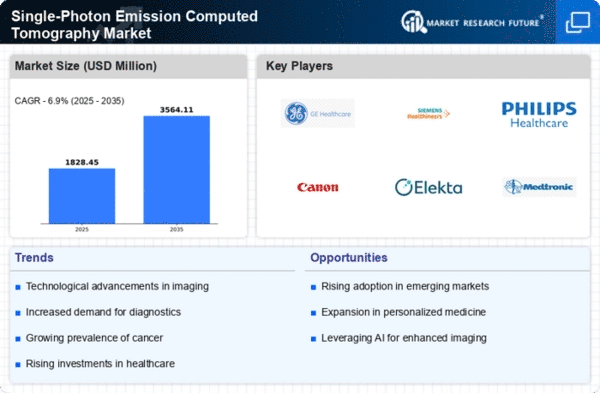
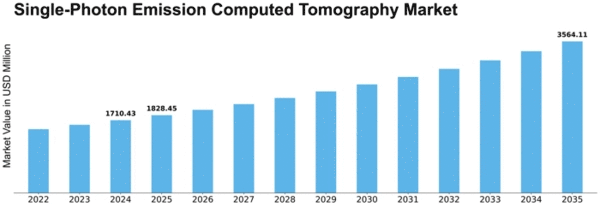
As per MRFR analysis, the Single-Photon Emission Computed Tomography Market Size was estimated at 1710.43 USD Million in 2024. The Single-Photon Emission Computed Tomography industry is projected to grow from 1828.49 USD Million in 2025 to 3564.11 USD Million by 2035, exhibiting a compound annual growth rate (CAGR) of 6.9 during the forecast period 2025 - 2035.

Key Market Trends & Highlights

The Single-Photon Emission Computed Tomography Market is poised for substantial growth driven by technological advancements and increasing demand for early diagnosis.

  • Technological advancements are enhancing imaging capabilities, leading to improved diagnostic accuracy.
  • The demand for early diagnosis is propelling the adoption of single-photon emission computed tomography in various medical fields.
  • North America remains the largest market, while the Asia-Pacific region is emerging as the fastest-growing market for this technology.
  • Key drivers include the rising prevalence of chronic diseases and growing awareness of nuclear medicine, which are fueling market expansion.

Market Size & Forecast

2024 Market Size 1710.43 (USD Million)
2035 Market Size 3564.11 (USD Million)
CAGR (2025 - 2035) 6.9%
Largest Regional Market Share in 2024 North America

Major Players

GE Healthcare (US), Siemens Healthineers (DE), Philips Healthcare (NL), Canon Medical Systems (JP), Elekta (SE), Medtronic (US), Hitachi Medical Corporation (JP), Nuclear Imaging (US)

Market Trends

The Single-Photon Emission Computed Tomography Market is currently experiencing a notable evolution, driven by advancements in imaging technology and increasing applications in various medical fields. This market appears to be expanding as healthcare providers seek more precise diagnostic tools. The integration of artificial intelligence and machine learning into imaging systems seems to enhance the accuracy and efficiency of diagnoses, potentially leading to improved patient outcomes. Furthermore, the growing prevalence of chronic diseases and the aging population are likely to contribute to the rising demand for advanced imaging techniques, including Single-Photon Emission Computed Tomography. In addition, the market is witnessing a shift towards hybrid imaging modalities, which combine Single-Photon Emission Computed Tomography with other imaging techniques. This trend indicates a move towards more comprehensive diagnostic approaches, allowing for better visualization of physiological processes. As healthcare systems continue to prioritize early detection and personalized medicine, the Single-Photon Emission Computed Tomography Market is poised for further growth. The ongoing research and development efforts in this field suggest that innovative solutions will emerge, potentially transforming the landscape of medical imaging in the near future.

Technological Advancements

The Single-Photon Emission Computed Tomography Market is influenced by rapid technological advancements. Innovations in detector technology and image reconstruction algorithms are enhancing image quality and reducing scan times. These improvements may lead to increased adoption among healthcare providers.

Growing Demand for Early Diagnosis

There is a rising demand for early diagnosis of diseases, particularly in oncology and cardiology. The Single-Photon Emission Computed Tomography Market is likely to benefit from this trend, as it provides critical insights into disease progression and treatment efficacy.

Integration with Artificial Intelligence

The integration of artificial intelligence into imaging systems is becoming more prevalent. This trend suggests that AI can assist in image analysis, potentially improving diagnostic accuracy and streamlining workflows in the Single-Photon Emission Computed Tomography Market.

Single-Photon Emission Computed Tomography Market Market Drivers

Market Growth Projections

The Global Single-Photon Emission Computed Tomography Market Industry is projected to experience substantial growth in the coming years. With a market value of 1.71 USD Billion in 2024, it is expected to reach 3.56 USD Billion by 2035. This growth trajectory suggests a compound annual growth rate of 6.89% from 2025 to 2035. Such projections indicate a robust demand for SPECT technology driven by various factors, including technological advancements, rising disease prevalence, and increased healthcare investments. The anticipated growth reflects the critical role of SPECT in modern diagnostics, highlighting its importance in improving patient care and outcomes.

Increasing Geriatric Population

The Global Single-Photon Emission Computed Tomography Market Industry is also driven by the increasing geriatric population. As individuals age, they are more susceptible to various health issues, including neurological disorders and cardiovascular diseases, which necessitate advanced diagnostic imaging. SPECT is particularly valuable in evaluating conditions such as Alzheimer's disease and other dementias, providing critical insights into brain function. The demographic shift towards an older population is prompting healthcare providers to adopt SPECT technology more widely. This trend is expected to support market growth, with a compound annual growth rate of 6.89% projected for the period from 2025 to 2035, indicating a robust demand for diagnostic imaging solutions tailored to the elderly.

Growing Awareness of Early Diagnosis

The Global Single-Photon Emission Computed Tomography Market Industry benefits from the growing awareness of the importance of early diagnosis in disease management. Patients and healthcare providers are increasingly recognizing that early detection can lead to better treatment outcomes and improved quality of life. SPECT imaging provides valuable information that aids in the timely diagnosis of various conditions, including cancers and cardiac diseases. This heightened awareness is driving demand for SPECT technology, as healthcare systems strive to implement more effective diagnostic protocols. Consequently, the market is poised for growth, with the increasing emphasis on preventive healthcare likely to bolster the adoption of SPECT imaging solutions.

Expansion of Healthcare Infrastructure

The Global Single-Photon Emission Computed Tomography Market Industry is positively impacted by the expansion of healthcare infrastructure, particularly in emerging economies. As these regions invest in modernizing their healthcare facilities, there is a growing need for advanced diagnostic imaging technologies, including SPECT. The establishment of new hospitals and diagnostic centers is creating opportunities for the adoption of SPECT systems, which are essential for accurate disease diagnosis and management. This expansion is expected to drive market growth, as healthcare providers seek to enhance their diagnostic capabilities. The increasing availability of SPECT technology in these regions may lead to improved patient outcomes and greater access to quality healthcare.

Rising Prevalence of Cardiovascular Diseases

The Global Single-Photon Emission Computed Tomography Market Industry is significantly influenced by the rising prevalence of cardiovascular diseases. As these conditions become more common, the demand for effective diagnostic tools increases. SPECT plays a crucial role in assessing myocardial perfusion and detecting coronary artery disease, making it an essential tool in cardiology. With the global burden of cardiovascular diseases expected to rise, healthcare systems are likely to invest more in SPECT technology. This trend is anticipated to contribute to the market's growth, with projections indicating a market value of 3.56 USD Billion by 2035, reflecting a growing recognition of the importance of early diagnosis and intervention.

Technological Advancements in Imaging Techniques

The Global Single-Photon Emission Computed Tomography Market Industry is experiencing rapid technological advancements that enhance imaging techniques. Innovations such as hybrid imaging systems, which combine SPECT with CT, are becoming increasingly prevalent. These systems provide improved diagnostic accuracy and better anatomical localization of functional abnormalities. As a result, healthcare providers are more inclined to adopt these advanced systems, which are projected to drive market growth. The integration of artificial intelligence in image analysis further augments the capabilities of SPECT, potentially leading to more precise and efficient patient management. Such advancements are likely to contribute to the market's expansion, with a projected value of 1.71 USD Billion in 2024.

Market Segment Insights

By Application: Cardiology (Largest) vs. Oncology (Fastest-Growing)

The Single-Photon Emission Computed Tomography (SPECT) market demonstrates distinct segmentation regarding application, with cardiology holding the largest share. The significant utilization of SPECT in cardiology is driven by its effectiveness in diagnosing various heart conditions, thereby cementing its status in the medical imaging landscape. In contrast, oncology is emerging rapidly, reflecting increased investments in cancer diagnosis and treatment technologies, leading to a growing adoption of SPECT imaging for tumor detection and management. As healthcare systems worldwide prioritize precision diagnostics, the segment of oncology is anticipated to witness robust growth. Factors contributing to this trend include the rising prevalence of cancer, advancements in imaging techniques, and enhanced healthcare expenditure. The integration of SPECT in oncology offers superior imaging capabilities, improving treatment planning and patient outcomes, thus securing a solid foothold in the market.

Cardiology (Dominant) vs. Neurology (Emerging)

Cardiology remains the dominant application in the SPECT market, leveraging its established role in diagnosing cardiovascular diseases with high accuracy. The extensive deployment of SPECT in cardiology is attributed to its capability to evaluate myocardial perfusion and function, making it a critical tool for clinicians. On the other hand, neurology represents an emerging segment, progressively gaining traction as SPECT imaging becomes integral in diagnosing conditions like Alzheimer's disease and epilepsy. This growing relevance in neurology is driven by ongoing research advancements and increasing recognition of SPECT's utility in neurological disorders, positioning it strategically for future expansion in the diagnostic imaging sector.

By End Use: Hospitals (Largest) vs. Diagnostic Imaging Centers (Fastest-Growing)

The Single-Photon Emission Computed Tomography (SPECT) market displays a diverse distribution of end-use segments, with hospitals commanding the largest share. This dominance is largely attributed to the high volume of diagnostic procedures and advanced infrastructure found in hospitals, enabling extensive usage of SPECT technology. Meanwhile, diagnostic imaging centers are emerging as significant players, appealing to patients seeking specialized imaging services with shorter waiting times than hospitals can often provide. In terms of growth dynamics, diagnostic imaging centers are experiencing the fastest growth rate in the SPECT market. This trend is driven by the increasing demand for early disease detection and a growing preference for non-invasive diagnostic modalities among patients. As healthcare providers focus on enhancing patient experience and streamlining operations, diagnostic imaging centers are becoming integral to the healthcare ecosystem, supporting rapid advancements in imaging technology.

Hospitals (Dominant) vs. Research Institutions (Emerging)

Hospitals maintain their dominant position in the SPECT market, largely due to their comprehensive capability to conduct a wide range of diagnostic imaging procedures and their integrated healthcare services. They typically offer advanced SPECT facilities, resulting in higher patient throughput and more effective treatment pathways. In contrast, research institutions are classified as an emerging segment, where innovation and experimental applications of SPECT technologies play a critical role. These institutions contribute to the SPECT market through research and development of novel imaging techniques, contributing to enhanced healthcare outcomes. The collaboration between hospitals and research institutions fuels a symbiotic relationship that fosters technological advancements and improves patient care.

By Technology: Hybrid Imaging (Largest) vs. Software Solutions (Fastest-Growing)

In the Single-Photon Emission Computed Tomography (SPECT) market, Hybrid Imaging holds the largest market share, driven by its enhanced imaging capabilities that combine functional and anatomical data. This integration of technologies, such as combining SPECT with CT or MRI, offers more accurate diagnostics, which has led to widespread adoption in clinical settings. On the other hand, Software Solutions have emerged as a significant growth driver, as advancements in imaging software enable better data analysis and visualization, thus improving diagnostic accuracy and efficiency.

Technology: Hybrid Imaging (Dominant) vs. Software Solutions (Emerging)

Hybrid Imaging technology has established itself as a dominant force in the SPECT market, leveraging the advantages of multiple imaging modalities to provide comprehensive patient information and support accurate diagnoses. Its capability to address complex diagnostic challenges makes it indispensable in modern medical imaging. On the contrary, Software Solutions are rapidly gaining traction as an essential emerging segment within this market. They empower healthcare providers with advanced analytical tools that facilitate improved decision-making. The ongoing innovations in imaging software are set to propel the growth of this segment, reflecting a trend toward more data-driven and efficient healthcare solutions.

By Radiopharmaceuticals: Technetium-99m (Largest) vs. Gallium-68 (Fastest-Growing)

In the Single-Photon Emission Computed Tomography (SPECT) market, Technetium-99m continues to dominate the radiopharmaceutical segment due to its widespread application in various diagnostic procedures. Its stable supply chain and cost-effectiveness contribute significantly to its market lead. Comparatively, Gallium-68 is rapidly gaining traction among healthcare providers thanks to its emerging role in PET imaging and novel tracer developments, highlighting a powerful shift towards more targeted therapies. Growth trends for the radiopharmaceuticals segment are largely driven by technological advancements in imaging techniques and increasing investments in nuclear medicine. Additionally, the rising incidence of chronic diseases necessitates more efficient diagnostic tools, which further boosts the demand for these radiopharmaceuticals. The shift towards personalized medicine and the introduction of new isotopes also play a critical role in propelling the growth of this segment, particularly for Gallium-68 as it becomes integral for specific diagnostics.

Technetium-99m (Dominant) vs. Iodine-123 (Emerging)

Technetium-99m is celebrated for its versatile applications, particularly in diagnosing cardiovascular and oncological conditions, making it the dominant radiopharmaceutical in SPECT imaging. Its favorable properties, such as optimal half-life and compatibility with various imaging systems, further enhance its market presence. On the other hand, Iodine-123 is emerging as a valuable alternative primarily for thyroid imaging and has gained attention in research settings. While Iodine-123 has a more limited application scope compared to Technetium-99m, its specificity and advancements in formulation are propelling its growth. The continued development in the logistics of these radiopharmaceuticals is also crucial, ensuring their availability and supporting their integration into clinical practice.

Get more detailed insights about Single-Photon Emission Computed Tomography Market Research Report – Forecast till 2035

Regional Insights

North America : Market Leader in Innovation

North America continues to lead the Single-Photon Emission Computed Tomography (SPECT) market, holding a significant share of 850.0M in 2025. The growth is driven by advancements in imaging technology, increasing prevalence of chronic diseases, and supportive regulatory frameworks. The demand for non-invasive diagnostic tools is rising, further propelled by government initiatives aimed at enhancing healthcare infrastructure and technology adoption. The United States is the primary contributor to this market, with key players like GE Healthcare and Medtronic driving innovation and competition. The presence of advanced healthcare facilities and a strong focus on research and development bolster the competitive landscape. As the market evolves, collaborations and partnerships among leading companies are expected to enhance service offerings and expand market reach.

Europe : Emerging Market with Growth Potential

Europe's Single-Photon Emission Computed Tomography market is valued at 450.0M in 2025, reflecting a growing demand for advanced imaging solutions. The region benefits from stringent regulatory standards that ensure high-quality healthcare services. Increased investments in healthcare technology and rising awareness of early disease detection are key growth drivers. Additionally, government initiatives aimed at improving healthcare access are expected to further stimulate market growth. Germany and the UK are leading countries in this market, with significant contributions from Siemens Healthineers and Philips Healthcare. The competitive landscape is characterized by a mix of established players and emerging companies, fostering innovation. The collaboration between public and private sectors is enhancing the development of advanced SPECT technologies, positioning Europe as a vital player in the global market.

Asia-Pacific : Rapidly Growing Healthcare Sector

The Asia-Pacific region is witnessing rapid growth in the Single-Photon Emission Computed Tomography market, projected at 300.0M in 2025. Factors such as increasing healthcare expenditure, rising prevalence of chronic diseases, and growing awareness of advanced diagnostic techniques are driving this growth. Additionally, supportive government policies aimed at enhancing healthcare infrastructure are expected to further boost market demand. Japan and China are the leading countries in this market, with significant contributions from Canon Medical Systems and Hitachi Medical Corporation. The competitive landscape is evolving, with both local and international players striving to capture market share. The increasing focus on research and development, along with strategic partnerships, is expected to enhance the availability of innovative SPECT solutions in the region.

Middle East and Africa : Emerging Market with Challenges

The Middle East and Africa region's Single-Photon Emission Computed Tomography market is valued at 110.43M in 2025, reflecting a nascent but growing demand for advanced imaging technologies. The growth is driven by increasing investments in healthcare infrastructure and rising awareness of diagnostic imaging. However, regulatory challenges and varying healthcare standards across countries pose significant hurdles to market expansion. Countries like South Africa and the UAE are leading the market, with efforts to improve healthcare access and quality. The presence of key players is gradually increasing, but the competitive landscape remains fragmented. As governments focus on enhancing healthcare services, the market is expected to witness gradual growth, driven by both local and international investments.

Key Players and Competitive Insights

The Single-Photon Emission Computed Tomography Market is currently characterized by a dynamic competitive landscape, driven by technological advancements and increasing demand for precise diagnostic imaging. Key players such as GE Healthcare (US), Siemens Healthineers (DE), and Philips Healthcare (NL) are at the forefront, each adopting distinct strategies to enhance their market presence. GE Healthcare (US) focuses on innovation through the development of advanced imaging technologies, while Siemens Healthineers (DE) emphasizes strategic partnerships to expand its product offerings. Philips Healthcare (NL) is actively pursuing digital transformation initiatives, integrating AI capabilities into its imaging solutions, thereby shaping a competitive environment that prioritizes technological superiority and customer-centric solutions.In terms of business tactics, companies are increasingly localizing manufacturing to reduce costs and enhance supply chain efficiency. The market structure appears moderately fragmented, with several players vying for market share. However, the collective influence of major companies like Canon Medical Systems (JP) and Medtronic (US) is notable, as they leverage their extensive distribution networks and technological expertise to maintain competitive advantages.

In November Siemens Healthineers (DE) announced a strategic collaboration with a leading AI firm to enhance its imaging solutions. This partnership aims to integrate cutting-edge AI algorithms into their SPECT systems, potentially improving diagnostic accuracy and operational efficiency. Such a move underscores Siemens' commitment to innovation and positions it favorably in a market increasingly driven by technological advancements.

In October GE Healthcare (US) launched a new line of SPECT imaging systems designed to optimize workflow and enhance patient outcomes. This introduction reflects GE's strategy to address the growing demand for efficient imaging solutions, thereby reinforcing its competitive stance. The launch is expected to attract healthcare providers seeking to improve diagnostic capabilities while managing operational costs.

In September Philips Healthcare (NL) unveiled a comprehensive digital platform aimed at streamlining imaging processes and enhancing data management. This initiative not only aligns with the ongoing trend towards digitalization but also positions Philips as a leader in integrating technology into healthcare solutions. The platform is anticipated to facilitate better patient management and improve overall healthcare delivery.

As of December the competitive trends in the Single-Photon Emission Computed Tomography Market are increasingly defined by digitalization, sustainability, and AI integration. Strategic alliances are becoming pivotal, as companies recognize the need to collaborate to enhance their technological capabilities. Looking ahead, competitive differentiation is likely to evolve from traditional price-based competition to a focus on innovation, advanced technology, and reliable supply chains. This shift suggests that companies prioritizing R&D and strategic partnerships will be better positioned to thrive in an increasingly complex market.

Key Companies in the Single-Photon Emission Computed Tomography Market include

Industry Developments

March 2022 GE Healthcare wants to enhance its product portfolio with two pipeline radiopharmaceuticals, one for Positron Emission Tomography (PET) and the other for single-photon release calculated tomography imaging. According to a report from the business, the first patient in Phase III clinical trial for a PET radiopharmaceutical imaging intermediate that aims to assess adult patients with suspected Parkinsonian disorders, conduct research, and enhance patient maintenance has received medication.

March 2020 Curium announced that the Pulmotech MAA had been authorized by the US Food and Drug Administration (FDA). Pulmotech MAA is a single-photon emission agent for lung imaging when labeled to technetium Tc 99m as an auxiliary in evaluating pulmonary perfusion and, in adults, to aid in evaluating peritoneovenous shunt patency.

Future Outlook

Single-Photon Emission Computed Tomography Market Future Outlook

The Single-Photon Emission Computed Tomography Market is projected to grow at a 6.9% CAGR from 2025 to 2035, driven by technological advancements, increasing demand for diagnostic imaging, and rising prevalence of chronic diseases.

New opportunities lie in:

  • Development of AI-driven imaging analysis software for enhanced diagnostic accuracy.
  • Expansion of mobile SPECT units for remote healthcare services.
  • Partnerships with pharmaceutical companies for radiopharmaceutical development.

By 2035, the market is expected to achieve substantial growth, solidifying its role in advanced diagnostic imaging.

Market Segmentation

Single-Photon Emission Computed Tomography Market End Use Outlook

  • Hospitals
  • Diagnostic Imaging Centers
  • Research Institutions
  • Outpatient Facilities

Single-Photon Emission Computed Tomography Market Technology Outlook

  • Hybrid Imaging
  • Standalone Systems
  • Advanced Imaging Techniques
  • Software Solutions

Single-Photon Emission Computed Tomography Market Application Outlook

  • Cardiology
  • Oncology
  • Neurology
  • Orthopedics
  • Infectious Diseases

Single-Photon Emission Computed Tomography Market Radiopharmaceuticals Outlook

  • Technetium-99m
  • Iodine-123
  • Gallium-68
  • Fluorine-18

Report Scope

MARKET SIZE 20241710.43(USD Million)
MARKET SIZE 20251828.49(USD Million)
MARKET SIZE 20353564.11(USD Million)
COMPOUND ANNUAL GROWTH RATE (CAGR)6.9% (2025 - 2035)
REPORT COVERAGERevenue Forecast, Competitive Landscape, Growth Factors, and Trends
BASE YEAR2024
Market Forecast Period2025 - 2035
Historical Data2019 - 2024
Market Forecast UnitsUSD Million
Key Companies ProfiledGE Healthcare (US), Siemens Healthineers (DE), Philips Healthcare (NL), Canon Medical Systems (JP), Elekta (SE), Medtronic (US), Hitachi Medical Corporation (JP), Nuclear Imaging (US)
Segments CoveredApplication, End Use, Technology, Radiopharmaceuticals
Key Market OpportunitiesAdvancements in imaging technology enhance diagnostic capabilities in the Single-Photon Emission Computed Tomography Market.
Key Market DynamicsTechnological advancements and regulatory changes drive innovation and competition in the Single-Photon Emission Computed Tomography market.
Countries CoveredNorth America, Europe, APAC, South America, MEA

FAQs

What is the projected growth of the Single-Photon Emission Computed Tomography market?

The Single-Photon Emission Computed Tomography market is the expected increase in total market value of 3.56 USD billion over a defined forecast period 2025–2035. It is driven by factors such as demand trends, technological advances, regulatory changes, and geographic expansion.

What is the size of the Single-Photon Emission Computed Tomography market?

Single-Photon Emission Computed Tomography market size was valued at approximately 1.71 billion USD in 2024. This figure will reach 3.56 billion USD covering all regions (America, Europe, Asia, MEA and ROW), focusing its segments / services / distribution channels till 2035.

What is the CAGR of the Single-Photon Emission Computed Tomography market?

Single-Photon Emission Computed Tomography market is expected to grow at a CAGR of 6.9% between 2025 and 2035.

How much will the Single-Photon Emission Computed Tomography market be worth by 2035?

Single-Photon Emission Computed Tomography market is expected to be worth of 3.56 billion USD, reflecting growth driven by usage, technology and global demands by the end of 2035.

How will the Single-Photon Emission Computed Tomography market perform over the next 10 years?

Over the next 10 years the Single-Photon Emission Computed Tomography market is expected to shift from usd billion 1.71 to 3.56 billion USD, led by adoption of advanced tech, demographic trends, regulatory approvals, with potential headwinds from 2025 to 2035.

How much is the single-photon emission computed tomography market?

The market size of the single-photon emission computed tomography market was prized at USD 1.5 Billion in 2024.

  1. SECTION I: EXECUTIVE SUMMARY AND KEY HIGHLIGHTS
    1. EXECUTIVE SUMMARY
      1. Market Overview
      2. Key Findings
      3. Market Segmentation
      4. Competitive Landscape
      5. Challenges and Opportunities
      6. Future Outlook
  2. SECTION II: SCOPING, METHODOLOGY AND MARKET STRUCTURE
    1. MARKET INTRODUCTION
      1. Definition
      2. Scope of the study
    2. RESEARCH METHODOLOGY
      1. Overview
      2. Data Mining
      3. Secondary Research
      4. Primary Research
      5. Forecasting Model
      6. Market Size Estimation
      7. Data Triangulation
      8. Validation
  3. SECTION III: QUALITATIVE ANALYSIS
    1. MARKET DYNAMICS
      1. Overview
      2. Drivers
      3. Restraints
      4. Opportunities
    2. MARKET FACTOR ANALYSIS
      1. Value chain Analysis
      2. Porter's Five Forces Analysis
      3. COVID-19 Impact Analysis
  4. SECTION IV: QUANTITATIVE ANALYSIS
    1. Healthcare, BY Application (USD Million)
      1. Cardiology
      2. Oncology
      3. Neurology
      4. Orthopedics
      5. Infectious Diseases
    2. Healthcare, BY End Use (USD Million)
      1. Hospitals
      2. Diagnostic Imaging Centers
      3. Research Institutions
      4. Outpatient Facilities
    3. Healthcare, BY Technology (USD Million)
      1. Hybrid Imaging
      2. Standalone Systems
      3. Advanced Imaging Techniques
      4. Software Solutions
    4. Healthcare, BY Radiopharmaceuticals (USD Million)
      1. Technetium-99m
      2. Iodine-123
      3. Gallium-68
      4. Fluorine-18
    5. Healthcare, BY Region (USD Million)
      1. North America
      2. Europe
      3. APAC
      4. South America
      5. MEA
  5. SECTION V: COMPETITIVE ANALYSIS
    1. Competitive Landscape
      1. Overview
      2. Competitive Analysis
      3. Market share Analysis
      4. Major Growth Strategy in the Healthcare
      5. Competitive Benchmarking
      6. Leading Players in Terms of Number of Developments in the Healthcare
      7. Key developments and growth strategies
      8. Major Players Financial Matrix
    2. Company Profiles
      1. GE Healthcare (US)
      2. Siemens Healthineers (DE)
      3. Philips Healthcare (NL)
      4. Canon Medical Systems (JP)
      5. Elekta (SE)
      6. Medtronic (US)
      7. Hitachi Medical Corporation (JP)
      8. Nuclear Imaging (US)
    3. Appendix
      1. References
      2. Related Reports

Healthcare Market Segmentation

Healthcare By Application (USD Million, 2025-2035)

  • Cardiology
  • Oncology
  • Neurology
  • Orthopedics
  • Infectious Diseases

Healthcare By End Use (USD Million, 2025-2035)

  • Hospitals
  • Diagnostic Imaging Centers
  • Research Institutions
  • Outpatient Facilities

Healthcare By Technology (USD Million, 2025-2035)

  • Hybrid Imaging
  • Standalone Systems
  • Advanced Imaging Techniques
  • Software Solutions

Healthcare By Radiopharmaceuticals (USD Million, 2025-2035)

  • Technetium-99m
  • Iodine-123
  • Gallium-68
  • Fluorine-18
Infographic

Free Sample Request

Kindly complete the form below to receive a free sample of this Report

Get Free Sample

Customer Strories

Compare Licence

×
Features License Type
Single User Multiuser License Enterprise User
Price $4,950 $5,950 $7,250
Maximum User Access Limit 1 User Upto 10 Users Unrestricted Access Throughout the Organization
Free Customization
Direct Access to Analyst
Deliverable Format
Platform Access
Discount on Next Purchase 10% 15% 15%
Printable Versions